Interviews are more than just a Q&A session—they’re a chance to prove your worth. This blog dives into essential Glass Bending interview questions and expert tips to help you align your answers with what hiring managers are looking for. Start preparing to shine!
Questions Asked in Glass Bending Interview
Q 1. Explain the different methods of glass bending.
Glass bending involves several methods, each chosen based on factors like glass type, desired shape, and production scale. The primary methods are:
- Heat Bending: This is the most common method, involving heating the glass to its softening point and then forming it using molds or gravity. It’s versatile and suitable for mass production.
- Vacuum Bending: A mold is used, and a vacuum pulls the heated glass into the shape of the mold. This offers precise control, especially for complex curves.
- Roller Bending: The heated glass is passed through a series of rollers, which gradually bend it into the desired shape. This method is efficient for large, consistently curved pieces.
- Press Bending: This involves applying pressure to the heated glass, often using a mold, to shape it. It’s useful for creating deeper curves and complex shapes.
The choice of method depends on several project specific factors including the design, the quantity of pieces needed, and the budget.
Q 2. Describe the process of heat bending glass.
Heat bending is a precise process requiring careful control of temperature and time. It typically involves these steps:
- Preheating: The glass is slowly heated in a furnace to an even temperature, just below its softening point. This prevents thermal shock and ensures uniform bending.
- Forming: Once at the softening point, the glass is carefully transferred to a mold or bending fixture. Gravity or air pressure might assist in shaping it. The precise temperature is critical; too low, and it won’t bend; too high, and it’ll sag excessively or break.
- Cooling: After shaping, the glass is slowly cooled in a controlled environment (annealing) to relieve internal stresses. Rapid cooling can cause cracking or breakage.
Imagine blowing glass – heat bending is similar, but on a larger scale and with more precise control. The careful control of the temperature profile is what determines the final shape and the quality of the bent glass.
Q 3. What are the safety precautions involved in glass bending?
Safety is paramount in glass bending. Precautions include:
- Personal Protective Equipment (PPE): Always wear heat-resistant gloves, safety glasses, and long sleeves to protect against burns and flying debris.
- Proper Furnace Operation: Follow all manufacturer’s instructions for furnace operation, including safety interlocks and emergency shut-off procedures.
- Controlled Environment: Work in a well-ventilated area to avoid inhaling fumes or dust. Proper exhaust systems are crucial in industrial settings.
- Safe Handling of Hot Glass: Use specialized tools and handling equipment designed for moving hot glass. Never touch hot glass directly.
- Emergency Procedures: Develop and regularly practice emergency procedures for handling burns, cuts, and equipment malfunctions.
A thorough risk assessment and training are crucial before undertaking any glass bending operation. Safety is not just a precaution – it’s a fundamental requirement.
Q 4. What types of glass are best suited for bending?
Not all glasses are suitable for bending. The best choices offer a good balance of strength, thermal stability, and formability. Commonly used types include:
- Soda-lime glass: This is widely used because it’s relatively inexpensive and easy to bend. However, it’s prone to thermal stress.
- Borosilicate glass (e.g., Pyrex): Its high thermal resistance makes it suitable for applications requiring significant temperature changes. Its better strength allows for creating more complex and thinner shapes.
- Tempered glass: Though not ideal for initial bending, tempered glass can improve the strength of the final bent product by undergoing tempering after the bending process.
The specific glass type will depend on the application’s requirements. For example, a heat-resistant dish would require borosilicate glass, while a simple decorative piece might use soda-lime glass.
Q 5. How do you calculate the bending radius for a given glass type and thickness?
Calculating the bending radius is complex and involves several factors, including glass type, thickness, temperature, and the desired final shape. There is no single formula. Specialized software is often used, incorporating material properties and thermal behavior for precise calculations. It also considers the bending method and the equipment used.
Simplified estimations often involve considering the glass’s viscosity at the bending temperature and applying empirical formulas specific to the bending process. However, practical experimentation and fine-tuning are essential to achieve the desired results. Experienced glass benders often rely on a combination of established formulas, computer modeling and a good deal of experience, learned through countless bends.
Q 6. What are the common defects found in bent glass and how are they prevented?
Common defects in bent glass include:
- Stress Cracks: These occur due to uneven cooling or insufficient annealing. They weaken the glass and can lead to failure.
- Warping: Uneven heating or support can result in warping, distorting the intended shape.
- Surface Imperfections: Scratches, chips, and other surface imperfections can arise from handling or improper tooling.
- Residual Stress: Internal stresses remaining after bending can cause problems later, particularly if exposed to rapid temperature changes.
Preventing these defects requires careful control throughout the entire process: precise temperature control during heating and cooling, the use of appropriate molds and fixtures, and careful handling of the glass at all stages. Proper annealing is absolutely critical to minimize residual stress.
Q 7. Explain the role of annealing in glass bending.
Annealing is a crucial post-bending process where the glass is slowly cooled from its forming temperature to room temperature. This controlled cooling relieves internal stresses that develop during the bending process. Without annealing, residual stresses would weaken the glass, making it prone to cracking or shattering, especially under thermal stress or mechanical impact.
Think of it like slowly releasing tension from a tightly wound spring. Rapid cooling would be like snapping the spring, causing it to break. Annealing allows the glass to cool evenly, ensuring structural integrity and stability. The annealing schedule (the specific cooling rate) is carefully determined based on the type and thickness of the glass and the complexity of the bend.
Q 8. Describe different types of glass bending equipment.
Glass bending equipment varies greatly depending on the scale of operation and the type of glass being processed. Generally, it falls into two main categories: furnaces and forming equipment.
Furnaces: These are crucial for heating the glass to its softening point, enabling bending. Types include:
- Electric furnaces: Precise temperature control, ideal for smaller-scale operations and specialized glass types.
- Gas furnaces: More cost-effective for high-volume production, but offer less precise temperature regulation.
- Infrared furnaces: Efficiently heat the glass surface, often used for specific bending techniques requiring localized heating.
Forming Equipment: This is what shapes the heated glass. Examples include:
- Molds: These are crucial for creating specific shapes and sizes, ranging from simple curves to complex geometries. Materials include steel, ceramic, and graphite, each offering different thermal and surface properties.
- Roller systems: Used for continuous bending of sheet glass, creating curved panels and other architectural elements.
- Vacuum forming systems: Employ vacuum pressure to pull the heated glass against a mold, producing highly accurate shapes.
- Pneumatic bending systems: Utilize compressed air to press the glass against a mold, providing another option for forming complex shapes.
The choice of equipment depends significantly on factors such as the desired shape complexity, production volume, glass type, and budget.
Q 9. How do you ensure the quality of bent glass products?
Ensuring quality in bent glass necessitates a multi-faceted approach, starting from raw material selection and extending to rigorous quality checks throughout the process.
Raw Material Inspection: The quality of the raw glass is paramount. We meticulously check for imperfections, ensuring uniform thickness and composition.
Precise Temperature Control: Accurate temperature monitoring and control within the furnace is critical. Deviations can result in stress fractures or inconsistent bending.
Mold Selection and Maintenance: Molds must be meticulously cleaned and maintained to prevent defects transferring to the glass. Regular inspection and replacement are necessary.
Post-Bending Inspection: Once bent, the glass undergoes thorough inspection for stress fractures, surface imperfections, and dimensional accuracy using techniques like visual inspection, polarized light examination, and non-destructive testing methods.
Annealing Process: After bending, a carefully controlled annealing process is crucial to relieve internal stresses and enhance durability. This is where the glass is slowly cooled to prevent cracks or warping.
By adhering to these stringent quality control measures, we minimize defects and ensure a high-quality, durable end product.
Q 10. What are the limitations of glass bending?
Glass bending, while versatile, has certain inherent limitations.
Glass Type: Not all glass types are equally amenable to bending. Certain compositions are more prone to cracking or deformation at high temperatures. Specialty glasses might require specialized bending techniques.
Thickness Limitations: Very thick glass is difficult to bend evenly due to thermal gradients. Similarly, extremely thin glass is fragile and prone to breakage.
Shape Complexity: While complex shapes are achievable, the difficulty and cost increase significantly with shape complexity. Sharp corners and extremely tight radii are challenging to produce.
Residual Stresses: Even with annealing, some residual stress is unavoidable. This can affect the long-term durability and stability of the bent glass.
Production Rate: Compared to other manufacturing processes, the bending of glass, particularly for complex shapes, is often a relatively slow process.
Understanding these limitations is crucial for designing realistic projects and selecting the appropriate glass and bending method.
Q 11. What are the environmental considerations involved in glass bending?
Environmental considerations in glass bending primarily revolve around energy consumption and emissions. Glass furnaces are energy-intensive, and the choice of fuel (gas, electricity) significantly impacts emissions.
Energy Efficiency: Modern furnaces incorporate technologies designed to maximize energy efficiency, such as advanced insulation and heat recovery systems.
Emission Control: Depending on the type of furnace, emissions like greenhouse gases and particulate matter need to be managed through appropriate filtration and scrubbing technologies.
Waste Management: Proper disposal of broken glass and other waste materials is essential. Recycling is increasingly important to minimize environmental impact.
Material Selection: Choosing environmentally friendly glass formulations, such as those with recycled content, can reduce the overall environmental footprint.
By adopting sustainable practices and technologies, we can minimize the environmental impact of glass bending and contribute to a more eco-friendly manufacturing process.
Q 12. Describe your experience with different types of glass furnaces.
My experience encompasses a range of glass furnaces, each with its strengths and weaknesses. I’ve worked extensively with both electric and gas-fired furnaces, each suited to different applications.
Electric Furnaces: I’ve used several electric furnaces, particularly for smaller-scale projects and specialized glass types requiring precise temperature control. Their advantage lies in their precise control and ability to achieve highly uniform heating. However, they can be more expensive to operate than gas furnaces.
Gas Furnaces: For large-scale production runs, gas furnaces provide a more cost-effective solution. However, achieving the same level of temperature uniformity can be more challenging. I’ve worked with both natural gas and propane-fired furnaces.
Infrared Furnaces: I’ve also had experience with infrared furnaces, which are particularly useful for applications where localized heating is necessary. They excel at surface heating, reducing the overall energy consumption.
My familiarity with these different furnace types allows me to select the most appropriate equipment based on the specific project requirements and budget constraints. Understanding the nuances of each type ensures optimal results and efficiency.
Q 13. How do you troubleshoot common issues during the glass bending process?
Troubleshooting in glass bending involves systematic investigation to identify the root cause of the problem. Common issues include:
Cracking: This can be caused by several factors, such as insufficient annealing, rapid temperature changes, improper mold design, or defects in the raw glass. Troubleshooting involves checking all these factors systematically.
Warping: Uneven heating or cooling, improper mold support, or internal stresses within the glass can lead to warping. Careful review of the heating cycle and mold design are critical.
Surface Defects: Surface defects can result from contamination in the furnace, imperfections in the mold, or improper handling of the glass. Thorough cleaning of the equipment and raw materials is essential.
Dimensional Inaccuracies: These can stem from inaccurate mold design, incorrect temperature profiles, or insufficient pressure during bending. Reviewing the mold specifications and temperature controls is needed.
My troubleshooting approach starts with a thorough visual inspection, followed by analysis of the process parameters (temperature, pressure, time). I often use data loggers to record crucial parameters throughout the bending process, allowing for a detailed analysis and identification of the source of error.
Q 14. What are the different types of molds used in glass bending?
The choice of mold material and design is critical for the success of the glass bending process. Different mold types are used depending on factors like the shape complexity, production volume, and the glass type being processed.
Steel Molds: Steel molds are commonly used for their durability and relatively low cost. They are suitable for a wide range of shapes and glass types. However, they might require more sophisticated surface treatments to prevent sticking.
Ceramic Molds: Ceramic molds offer excellent thermal stability and resistance to corrosion. They are particularly suitable for high-temperature applications and specialized glass types. However, they are typically more expensive and less durable than steel molds.
Graphite Molds: Graphite molds are excellent for applications requiring high temperatures and are often used for bending complex shapes. They can withstand high temperatures without significant deformation but are more susceptible to wear and tear.
Invar Molds: Invar molds are used in specialized applications where precise dimensional control is paramount. Invar (a nickel-iron alloy) has a very low thermal expansion coefficient, ensuring high dimensional stability at varying temperatures.
The design of the mold itself is also crucial. Factors such as the mold’s shape, surface finish, and venting system need to be carefully considered. Often, specialized mold designs are required for complex shapes to ensure the glass conforms accurately without inducing stresses.
Q 15. Explain the importance of proper mold preparation.
Proper mold preparation is paramount in glass bending, directly impacting the final product’s quality and consistency. A poorly prepared mold can lead to defects like surface imperfections, dimensional inaccuracies, or even breakage. Think of the mold as the sculptor’s clay – if it’s not perfectly prepared, the final sculpture will be flawed.
Preparation involves several crucial steps:
- Thorough Cleaning: The mold must be meticulously cleaned to remove any dust, debris, or remnants from previous bending processes. This prevents contamination and ensures a clean, smooth glass surface.
- Lubrication: Applying a suitable release agent (mold lubricant) is critical. This lubricant helps prevent the hot glass from sticking to the mold, making it easier to remove the finished piece and preventing damage to both the glass and the mold.
- Inspection: A detailed inspection before each use is necessary. This involves checking for any cracks, chips, or deformations in the mold surface that could compromise the glass bending process. Even tiny imperfections can result in significant flaws in the finished product.
- Temperature Control: For certain mold materials, preheating or cooling the mold to a specific temperature can optimize the bending process and further reduce defects.
In my experience, neglecting even one of these steps can lead to significant rework, delays, and ultimately, costly waste. A consistent mold preparation routine is essential for maintaining high-quality standards in glass bending.
Career Expert Tips:
- Ace those interviews! Prepare effectively by reviewing the Top 50 Most Common Interview Questions on ResumeGemini.
- Navigate your job search with confidence! Explore a wide range of Career Tips on ResumeGemini. Learn about common challenges and recommendations to overcome them.
- Craft the perfect resume! Master the Art of Resume Writing with ResumeGemini’s guide. Showcase your unique qualifications and achievements effectively.
- Don’t miss out on holiday savings! Build your dream resume with ResumeGemini’s ATS optimized templates.
Q 16. How do you maintain and clean glass bending equipment?
Maintaining and cleaning glass bending equipment is crucial for safety, efficiency, and the longevity of the equipment. Regular maintenance minimizes downtime and prevents costly repairs or replacements.
My maintenance routine typically includes:
- Daily Cleaning: After each bending operation, I thoroughly clean the bending machine’s surfaces, removing any glass fragments or debris. This includes the heating elements, rollers, and the mold itself.
- Regular Lubrication: Moving parts, such as rollers and hinges, require regular lubrication to ensure smooth operation and prevent wear and tear. I use only manufacturer-approved lubricants.
- Periodic Inspections: I conduct more thorough inspections, including checking for any signs of wear, loose connections, or malfunctioning components, at least once a week. This includes verifying the heating elements are functioning correctly and accurately reaching the desired temperatures.
- Preventative Maintenance: This involves scheduled tasks like replacing worn-out parts before they cause major problems. Following the manufacturer’s recommended maintenance schedule is critical.
- Specialized Cleaning: Certain types of glass, like those with specialized coatings, might require specific cleaning agents to avoid damaging the surface. I always consult the manufacturer’s guidelines for such cases.
Proper maintenance not only extends the life of the equipment but also significantly improves the safety of the operation, ensuring consistent high-quality glass bending.
Q 17. How do you interpret technical drawings and specifications related to glass bending?
Interpreting technical drawings and specifications is fundamental to successful glass bending. It’s like reading a recipe – if you don’t understand it, the outcome won’t be as expected.
I approach technical drawings systematically:
- Dimensions: First, I carefully note all dimensions, including the glass thickness, length, width, and radius of the bend. Inaccuracies here can lead to significant errors.
- Bend Radius and Angles: Understanding the desired bend radius and angles is crucial for setting up the bending machine correctly. Different machines might have different requirements for achieving the desired bend.
- Glass Type: The type of glass (tempered, laminated, etc.) is critical, as each type has specific properties that influence the bending parameters, like temperature and heating time.
- Tolerances: Understanding the acceptable tolerances in dimensions and bend angles is vital. It determines the acceptable range of variation from the specified measurements.
- Surface Finish Requirements: The drawings often specify the required surface finish, which influences the choice of mold material and the bending process itself.
I always verify my interpretation with the client or engineer before proceeding to the bending process to ensure there are no misunderstandings and to avoid wasting materials.
Q 18. Describe your experience with CNC controlled glass bending machines.
I have extensive experience operating CNC controlled glass bending machines. These machines offer unparalleled precision and repeatability compared to manual bending processes. They’re like having a highly skilled and consistent artisan working around the clock.
My expertise encompasses:
- Programming: I’m proficient in programming CNC machines using CAM software. This includes creating and modifying programs for various glass bending projects, ensuring accuracy and efficiency.
- Machine Operation: I’m highly skilled in operating different models of CNC glass bending machines, understanding their functionalities, safety protocols, and troubleshooting procedures.
- Quality Control: CNC machines provide greater control over the bending process, allowing for precise monitoring and adjustments to maintain consistency and quality.
- Maintenance: I understand the routine maintenance requirements of CNC machines, ensuring their optimal performance and prolonging their lifespan.
For example, I recently used a CNC machine to bend a large quantity of curved glass panels for a museum project. The precision offered by the CNC machine guaranteed consistent quality across all the panels, something much harder to achieve with manual bending.
Q 19. What are your experience levels with different glass types (e.g., tempered, laminated)?
I have worked with a wide range of glass types, each possessing unique properties that affect the bending process. Understanding these properties is key to achieving the desired results and avoiding breakage.
- Tempered Glass: This glass requires careful handling due to its inherent strength and brittleness. Bending tempered glass requires precise temperature control and specialized molds to avoid shattering during the process.
- Laminated Glass: This type of glass consists of multiple layers, often with an interlayer of polyvinyl butyral (PVB). Bending laminated glass requires understanding how the interlayer behaves under heat and pressure to avoid delamination.
- Annealed Glass: This is the most common type of glass and is relatively easy to bend. However, understanding its softening point and its thermal behavior during the bending process is still crucial.
- Specialty Glasses: I also have experience working with specialty glasses, such as low-iron glass or chemically strengthened glass, which require specific handling procedures.
I always consult the manufacturer’s specifications for any glass type before beginning the bending process to determine the optimal parameters for temperature, time, and pressure. My experience allows me to quickly adapt to new glass types and deliver consistent results.
Q 20. Describe a time you had to solve a problem related to glass bending.
During a recent project involving the bending of a large number of complex curved glass panels for a high-rise building, we encountered a significant challenge. The initial batch of bent panels showed slight variations in their radius, exceeding the acceptable tolerances. This was unacceptable given the architectural significance of the project.
After a thorough investigation, we discovered the problem stemmed from slight inconsistencies in the temperature distribution within the bending oven. We identified a malfunctioning heating element responsible for the uneven heating. We solved this by:
- Identifying the root cause: We used temperature sensors to pinpoint the malfunctioning heating element.
- Repairing the oven: We replaced the faulty heating element and recalibrated the oven’s temperature control system.
- Testing and adjusting parameters: Once the oven was repaired, we conducted test runs with sample glass panels, meticulously adjusting the bending parameters to ensure consistent results.
- Implementing preventative measures: To prevent future occurrences, we implemented a more rigorous preventative maintenance schedule for the oven and installed additional temperature sensors for better monitoring.
This experience highlighted the importance of thorough diagnostics and the use of appropriate testing procedures to identify and resolve issues quickly and efficiently. The successful resolution of this problem showcases my problem-solving skills and dedication to delivering high-quality work.
Q 21. How do you ensure consistency in the quality of bent glass?
Ensuring consistency in the quality of bent glass involves a multi-faceted approach encompassing careful attention to detail throughout the entire process.
My strategies include:
- Precise Control of Parameters: Maintaining precise control over temperature, time, and pressure during the bending process is paramount. Even minor deviations can significantly impact the final product’s quality.
- Calibration and Maintenance: Regular calibration and maintenance of the bending equipment, including the oven, rollers, and molds, are crucial for consistent performance.
- Consistent Material Selection: Using consistent batches of glass from the same supplier helps minimize variations in glass properties that could affect the bending process.
- Quality Control Checks: Implementing rigorous quality control checks at each stage, from mold preparation to the final inspection of the bent glass, is vital. This might involve visual inspections, dimensional measurements, and sometimes stress testing.
- Process Documentation: Detailed documentation of the entire bending process, including parameters used, material specifications, and quality control results, is essential for traceability and improvement.
- Statistical Process Control (SPC): Implementing SPC techniques allows for continuous monitoring of the bending process and the identification of any trends or deviations from the desired quality levels.
By consistently applying these measures, I can ensure that the bent glass produced meets the highest quality standards and maintains consistent characteristics, crucial for large-scale projects or applications where uniformity is vital.
Q 22. What are the key factors that affect the success of the glass bending process?
The success of glass bending hinges on a delicate balance of several key factors. Think of it like baking a cake – you need the right ingredients and the correct temperature to achieve the desired outcome. In glass bending, these ‘ingredients’ include the type of glass (its composition affects its softening point and workability), the chosen bending technique, the temperature profile of the furnace, the mold design (if applicable), and the support system used during the bending process. Getting even one of these wrong can lead to cracking, warping, or other defects. For example, using too high a temperature could cause the glass to sag excessively or even melt, while using too low a temperature may result in insufficient bending or breakage. The mold’s design also significantly influences the final shape, and improper support can cause unwanted stress and cracking in the glass.
- Glass Type: Different glass compositions (soda-lime, borosilicate, etc.) have vastly different softening points and thermal expansion coefficients, requiring tailored bending parameters.
- Bending Technique: Slumping, draping, and other techniques demand different temperature and mold interactions.
- Temperature Control: Precise temperature control is crucial throughout the entire process to avoid thermal shock.
- Mold Design: The mold must be precisely engineered to match the desired shape, with appropriate material and thermal characteristics.
- Support System: A proper support system prevents sagging, stress concentration, and glass deformation.
Q 23. Describe your experience with different types of bending techniques (e.g., slumping, draping).
My experience encompasses a wide range of glass bending techniques, each with its unique challenges and applications. I’ve extensively worked with both slumping and draping, mastering their nuances. Slumping, where the softened glass is allowed to flow into a mold, is ideal for relatively simple shapes and offers a degree of spontaneity in the final form. I’ve used slumping to create curved shelves and decorative pieces, always careful to consider the glass’s weight distribution to prevent uneven sagging. Draping, on the other hand, involves carefully forming the glass over a mold, often requiring more skill and precision. This technique is perfect for producing more complex curved shapes and intricate details. I’ve used draping for custom architectural elements and high-end lighting fixtures, ensuring precise control over the drape’s uniformity and the elimination of air pockets. I’ve also had experience with other techniques like press bending, which involves using mechanical pressure to shape heated glass, and flame bending, which uses highly focused heat to form smaller pieces. Each method requires a different level of precision, and I feel comfortable navigating their demands.
Q 24. How familiar are you with different types of glass coatings and their impact on bending?
Glass coatings significantly impact the bending process. They can alter the glass’s thermal properties, its surface tension, and even its ability to bond with the mold. I’m familiar with various coatings like low-E coatings (for energy efficiency), anti-reflective coatings (for optics), and toughened coatings (for increased durability). Low-E coatings, for instance, can influence the heat absorption during the bending process, requiring adjustments to the temperature profile. This is because they can affect the way the glass interacts with infrared radiation, impacting the rate of heating and cooling. Some coatings can also reduce the glass’s ability to adhere properly to the mold during bending, increasing the risk of surface imperfections or even cracking. Therefore, understanding the specific properties of each coating is essential for selecting appropriate bending parameters and mitigating potential risks.
Q 25. What are your skills in using CAD software for glass bending design?
I’m highly proficient in using CAD software, specifically AutoCAD and SolidWorks, for glass bending design. My skillset extends beyond basic 2D drafting; I can create detailed 3D models of glass components, including their curvature, thickness, and any necessary supports. This allows for precise prediction of the bending process, minimizing material waste and ensuring the final product meets the desired specifications. I also use simulation tools within the CAD software to predict the stress distribution during bending, identifying potential problem areas before initiating the actual bending process. For example, I can model the heat transfer during the bending process, allowing me to optimize the temperature profile to minimize thermal stress and improve the overall quality of the bent glass. This preventative approach saves significant time and resources. A recent project involved designing a complex curved glass facade for a building. Using CAD, I created a detailed model that allowed for precise cutting and bending of the glass panels, ensuring a flawless final product.
Q 26. Describe your experience with different safety protocols and equipment in glass bending.
Safety is paramount in glass bending. I’m experienced in working with various safety protocols and equipment, including personal protective equipment (PPE) such as heat-resistant gloves, safety glasses, and long sleeves, and safety equipment such as fume hoods, and emergency shut-off systems. Working with high temperatures and sharp glass fragments necessitates rigorous adherence to these guidelines. I understand the importance of proper handling procedures to prevent burns, cuts, and other injuries. Beyond personal safety, I’m also familiar with the safe operation of industrial furnaces and bending equipment. This includes regular maintenance checks, emergency procedures, and adherence to all relevant safety regulations. I always ensure that the workspace is well-ventilated and the proper safety equipment is readily available and used correctly.
Q 27. How do you handle variations in glass thickness during the bending process?
Variations in glass thickness pose a significant challenge during bending, as it directly affects the rate of heat transfer and the resulting shape. Thicker glass requires longer heating times and potentially higher temperatures to achieve the desired bend. Conversely, thinner glass is more susceptible to warping or breakage. My approach involves using precise measurements to identify thickness variations before the bending process. I then compensate for these variations by adjusting the temperature profile and mold design. This might involve using locally heated zones within the furnace or employing customized mold supports to evenly distribute stress across varying glass thicknesses. In some cases, I might even segment the glass and bend smaller sections individually to maintain consistency. This precision is vital to producing consistent, high-quality results.
Q 28. What are your strategies for minimizing waste during the glass bending process?
Minimizing waste is a crucial aspect of efficient glass bending. My strategies focus on precise planning and execution. This begins with accurate CAD modeling to optimize material usage and minimize cutting waste. I also carefully consider the glass’s orientation during the bending process to maximize the usable area of each sheet. Furthermore, I diligently monitor the bending process to identify and correct any issues that might lead to rejection of a bent piece. By implementing these strategies, we consistently achieve high yields and minimal material waste in the production of bent glass components. Effective waste management also involves recycling broken or unusable glass, converting it into aggregates or cullet for use in new glass production. It’s a sustainable approach that reduces environmental impact and saves valuable resources.
Key Topics to Learn for Your Glass Bending Interview
- Glass Properties & Behavior: Understanding the thermal and mechanical properties of different glass types (e.g., soda-lime, borosilicate) and how they affect bending processes. This includes concepts like annealing and stress relieving.
- Bending Techniques: Familiarize yourself with various glass bending methods, including flame bending, kiln forming, and gravity bending. Understand the advantages and limitations of each technique and their suitability for different applications.
- Equipment & Tools: Gain a working knowledge of the equipment used in glass bending, such as furnaces, torches, molds, and safety equipment. Be prepared to discuss their operation and maintenance.
- Design & Fabrication: Explore the design considerations for bendable glass components. This includes understanding stress distribution, tolerances, and the impact of design on the bending process.
- Safety Procedures: Demonstrate a strong understanding of safety protocols and best practices related to handling hot glass, using specialized equipment, and working in a glass bending environment.
- Troubleshooting & Problem Solving: Be prepared to discuss common challenges encountered during glass bending (e.g., cracking, warping, uneven heating) and how to troubleshoot and resolve them.
- Quality Control & Inspection: Familiarize yourself with quality control measures used to ensure the final product meets specifications. This might include visual inspection, dimensional measurement, and stress testing.
Next Steps
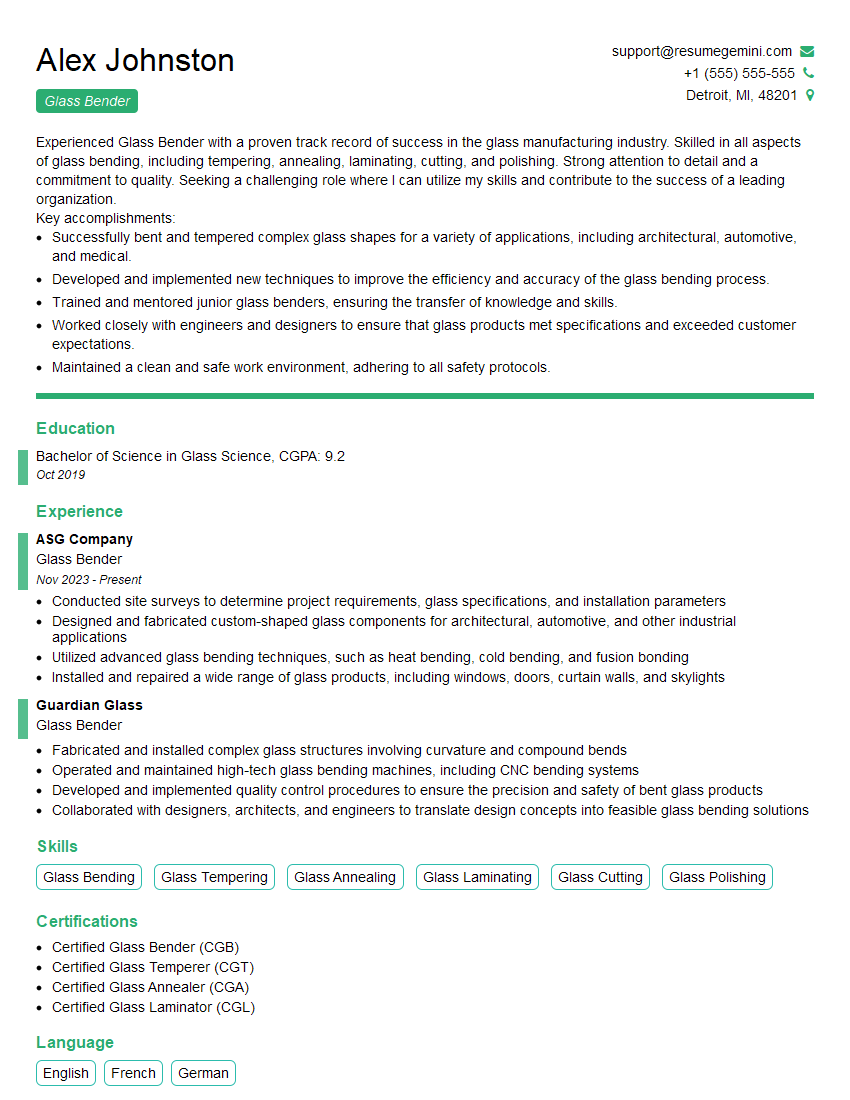
Mastering glass bending opens doors to exciting career opportunities in diverse industries, from architectural design and manufacturing to scientific instrumentation and artistic creation. To maximize your job prospects, a well-crafted, ATS-friendly resume is crucial. ResumeGemini can help you build a professional and impactful resume that highlights your skills and experience effectively. We provide examples of resumes tailored specifically for glass bending professionals to give you a head start. Take the next step in your career journey – create a resume that gets noticed!
Explore more articles
Users Rating of Our Blogs
Share Your Experience
We value your feedback! Please rate our content and share your thoughts (optional).
What Readers Say About Our Blog
Very informative content, great job.
good