The thought of an interview can be nerve-wracking, but the right preparation can make all the difference. Explore this comprehensive guide to Trip Planning and Logistics interview questions and gain the confidence you need to showcase your abilities and secure the role.
Questions Asked in Trip Planning and Logistics Interview
Q 1. Explain your experience with various booking systems (GDS, online booking platforms).
My experience spans a wide range of booking systems, from Global Distribution Systems (GDS) like Amadeus and Sabre to online travel agencies (OTAs) such as Expedia, Booking.com, and Kayak, and specialized platforms for specific transport modes (e.g., airline-specific booking engines). GDS are powerful tools offering access to a vast inventory of flights, hotels, and car rentals through a single interface. They’re especially useful for complex itineraries and corporate travel management. OTAs, on the other hand, offer user-friendly interfaces, often with metasearch capabilities, allowing for price comparisons across multiple providers. I’m proficient in utilizing both types of systems to source the best options for my clients, leveraging the strengths of each platform based on the specific requirements of the trip.
For example, when booking a multi-city international trip with unusual flight routing requirements, I often find GDS to be more effective due to their comprehensive inventory and ability to handle complex fare rules. However, for simpler trips, or when transparency on pricing across multiple sources is paramount, an OTA can be a much more efficient choice.
Q 2. Describe your process for creating a detailed itinerary.
Creating a detailed itinerary is a multi-step process that begins with understanding the client’s needs and preferences. This involves a detailed discussion covering their travel style, budget, interests, and any specific requirements such as accessibility needs. Once I have a clear picture, I begin to build the itinerary, taking a phased approach:
- Destination Research:Thorough research of each destination, including attractions, activities, transportation options, and local customs.
- Flight and Accommodation Booking: Securing flights and accommodations based on the client’s preferences and budget, considering factors like flight duration and hotel amenities.
- Activity Scheduling: Booking tours, activities, and events, strategically scheduling them to maximize the client’s time and interests while avoiding potential conflicts.
- Transportation Planning: Designing the most efficient and cost-effective transportation plan, considering various modes like trains, buses, taxis, or car rentals.
- Contingency Planning: Building in buffer time for unforeseen circumstances and including alternative plans for potential disruptions.
- Documentation and Delivery: Creating a comprehensive, easy-to-read document that includes all the essential details, contact information, maps, and relevant booking confirmations.
For instance, for a family trip to Europe, I might incorporate interactive map links, suggested restaurant options catering to different dietary requirements, and age-appropriate activity suggestions, ensuring a seamless and enjoyable experience for everyone.
Q 3. How do you manage unexpected travel disruptions (delays, cancellations)?
Unexpected travel disruptions are inevitable. My process for handling them involves proactive measures and reactive solutions. Proactively, I advise clients to purchase travel insurance that covers cancellations, delays, and medical emergencies. I also encourage them to allow extra time between connections and to familiarize themselves with airline policies.
When a disruption occurs, my first step is to assess the situation and understand the impact on the itinerary. This often involves contacting the relevant service providers (airlines, hotels, etc.) to obtain information and explore options. I then work to find alternative solutions—e.g., rebooking flights, arranging alternative accommodations, or adjusting the schedule—minimizing inconvenience to the client. Open and transparent communication throughout the process is crucial, keeping the client informed at every step.
For example, if a flight is delayed, I immediately check for alternative flights and inform the client, keeping them updated on the progress. If rebooking isn’t possible, I would explore options like hotel accommodations near the airport and work to adjust the itinerary to minimize the overall impact of the delay.
Q 4. How do you optimize travel routes and schedules for cost-effectiveness?
Optimizing travel routes and schedules for cost-effectiveness involves strategic planning and the use of various tools. I utilize online mapping and routing services to compare different routes, considering factors like travel time, fuel costs (if driving), and transportation fees. I also look for opportunities to bundle travel arrangements, such as purchasing multi-city flight tickets or utilizing rail passes. Flexibility in travel dates can also significantly reduce costs, as prices often fluctuate depending on demand.
For instance, flying mid-week instead of on weekends can often result in lower airfares. Similarly, opting for budget airlines or considering alternative airports can also save significant amounts. I always compare prices across multiple platforms, considering all fees and taxes before making a final decision. Utilizing loyalty programs and discounts where applicable are also integral to my cost-optimization strategy.
Q 5. What strategies do you use to ensure traveler safety and security?
Traveler safety and security are paramount. My strategies involve several layers of protection:
- Pre-Trip Briefing: Providing detailed information about the destination’s safety guidelines, local laws, and potential risks. This includes advice on staying aware of surroundings, avoiding unsafe areas, and practicing responsible travel.
- Emergency Contact Information: Establishing clear communication channels and sharing relevant emergency contact details with the traveler and their family.
- Travel Insurance: Strongly recommending comprehensive travel insurance that covers medical emergencies, evacuations, lost luggage, and other potential unforeseen events.
- Accommodation Selection: Choosing safe and reputable accommodations based on reviews and security measures.
- Transportation Safety: Recommending safe and reliable transportation options and providing information on transportation safety best practices.
- Local Resources: Providing information on local emergency services, embassies, and consulates.
For example, I might advise travelers to register with their country’s embassy or consulate, share their itinerary with loved ones, and download essential safety apps before their trip. I tailor my safety advice to the specific destination and the travelers’ individual needs and risk tolerance.
Q 6. Explain your experience with budget management and cost control for travel.
Budget management and cost control are critical components of successful trip planning. My approach begins with a clear understanding of the client’s budget constraints. I then develop a detailed budget breakdown, categorizing expenses into different sections—flights, accommodation, activities, food, transportation, etc.— allowing for flexible adjustments based on priorities.
I utilize budgeting tools and spreadsheets to track expenses and ensure that the plan stays within the allocated budget. I actively search for discounts, deals, and cost-saving opportunities. I also encourage clients to explore free or low-cost activities to offset the costs of more expensive ventures. Transparency and regular communication with the client are key to ensuring that the budget remains on track throughout the planning process. Throughout, I highlight areas where cost savings can be made without compromising the overall quality of the experience.
Q 7. How do you handle complex travel arrangements involving multiple destinations and travelers?
Managing complex travel arrangements involving multiple destinations and travelers requires meticulous organization and attention to detail. My approach utilizes project management principles, breaking down the itinerary into smaller, manageable tasks and creating a detailed timeline. I use collaboration tools to keep all travelers informed and involved in the planning process. I develop a comprehensive master itinerary that includes individual itineraries for each traveler, addressing their specific needs and preferences.
For example, when planning a group trip to multiple cities in Southeast Asia, I would assign individual responsibilities (such as booking accommodation or arranging transportation within a certain region) to different travelers within the group, facilitating shared accountability. I would also pre-allocate budgets for different travel stages to ensure transparent financial management. Clear communication and regularly scheduled check-ins are crucial to manage potential conflicts or unexpected situations involving several people and varied itineraries.
Q 8. Describe your experience with visa and passport requirements for international travel.
Navigating visa and passport requirements is paramount in international trip planning. It’s not a simple checklist; it’s a deep dive into individual country regulations. My experience involves meticulously researching visa types (tourist, business, transit), determining eligibility criteria based on nationality and purpose of travel, and accurately completing application forms. I understand the nuances of processing times, required supporting documentation (proof of funds, flight itineraries, hotel bookings), and potential interview requirements.
For example, a client travelling to Brazil needs a tourist visa, requiring a completed application form, passport valid for at least six months beyond the travel dates, proof of sufficient funds, and a confirmed return flight. A business trip to Japan would necessitate a different visa category with potentially different supporting documents. I’m adept at managing these complexities, ensuring all requirements are met well in advance to avoid travel delays.
My process includes utilizing official government websites for the most up-to-date information, consulting with visa specialists when needed, and maintaining a detailed tracking system for each client’s visa application progress. This proactive approach minimizes the risk of unforeseen complications and ensures a smooth travel experience.
Q 9. How do you communicate effectively with clients and stakeholders regarding travel arrangements?
Effective communication is the cornerstone of successful trip planning. I employ a multi-faceted approach. Initially, I conduct thorough intake sessions, actively listening to understand my clients’ travel goals, preferences, and budget constraints. This sets the foundation for a personalized itinerary.
Throughout the planning process, I utilize various communication channels – email, phone calls, video conferencing – to provide updates, address concerns, and solicit feedback. For instance, if a flight is delayed, I immediately notify the client, explaining the situation and offering alternative solutions. I use clear, concise language, avoiding jargon, and tailor my communication style to the client’s preferences.
For larger groups or complex projects, I might use project management software to centralize information and facilitate seamless communication with stakeholders. This ensures everyone is kept informed and engaged.
Transparency and responsiveness are key. I aim to build trust by proactively addressing potential issues and keeping clients informed every step of the way.
Q 10. How familiar are you with travel insurance options and their coverage?
I’m highly familiar with various travel insurance options and their coverage levels. Understanding these nuances is critical for protecting clients’ investments and wellbeing. I’m not just aware of the existence of travel insurance; I understand the intricacies of different policy types, including comprehensive plans, medical emergency coverage, trip cancellation insurance, lost luggage protection, and emergency medical evacuation.
For example, a ‘comprehensive’ plan offers broader coverage, including medical expenses, trip interruption, and baggage loss. A ‘basic’ plan might only cover medical emergencies, but with a lower premium. I help clients assess their risk tolerance and budget to choose a plan that best suits their needs. I can explain the different clauses, deductibles, and limitations clearly.
I often recommend working with reputable insurance providers and encourage clients to carefully review the policy documents before purchasing. My role is to guide them through the process, ensuring they understand what is and isn’t covered, empowering them to make informed decisions.
Q 11. What software or tools do you utilize for trip planning and logistics?
My trip planning workflow relies on a suite of software and tools. These aren’t just booking platforms; they’re integrated solutions for maximizing efficiency and ensuring accuracy. I utilize Global Distribution Systems (GDS) like Amadeus and Sabre for accessing real-time flight and hotel availability, comparing prices, and making bookings.
For itinerary creation and client communication, I use specialized travel management software that allows me to build detailed itineraries, send customized documents, and manage client information securely. I also leverage Google Workspace (Docs, Sheets, Calendar) for collaboration and project management.
Other tools include mapping software (Google Maps) for route planning, currency converters for accurate budgeting, and CRM systems for maintaining client records and communication history. My proficiency in these tools streamlines the entire process, resulting in better organization and faster turnaround times.
Q 12. Describe your experience with negotiating rates with airlines, hotels, and other vendors.
Negotiating rates with vendors is a crucial skill that requires a combination of knowledge, relationship building, and strategic timing. My approach involves researching market prices, understanding seasonal fluctuations, and leveraging my experience to identify opportunities for savings.
For example, I might negotiate lower rates with airlines by booking flights in bulk for group tours or securing preferred rates during off-season periods. With hotels, I might negotiate package deals incorporating multiple nights or additional services like complimentary breakfast or upgrades. I build strong relationships with vendors to secure better terms and faster responses.
My negotiation strategy centers on mutual benefit. I present a clear understanding of the market, highlight the volume of business I bring, and clearly state my requirements. Success in negotiation involves persuasive communication, strong preparation, and the ability to adapt to different vendor strategies. It’s less about aggressive bargaining and more about collaborative problem-solving to reach an agreement that works for both parties.
Q 13. How do you stay updated on travel advisories and potential travel risks?
Staying updated on travel advisories and potential risks is a non-negotiable aspect of my role. I monitor multiple sources for reliable information. Government websites (such as the US State Department’s travel advisories) are primary sources. I also subscribe to travel industry news and alerts to receive notifications about potential disruptions like natural disasters, political instability, or health outbreaks.
I actively use reputable news outlets and specialized travel risk assessment companies that provide detailed analyses of specific regions and destinations. This allows me to proactively identify and assess potential risks and implement preventative measures. For example, if a travel advisory is issued for a destination, I immediately inform my clients, discuss alternative options, or advise them on necessary precautions.
My vigilance ensures I can adjust trip plans as needed and make informed decisions to protect the safety and security of my clients. It’s about proactive risk management, not just reactive response.
Q 14. How do you manage travel documentation (tickets, confirmations, etc.)?
Organized travel documentation is essential for smooth travel. I use a systematic approach to manage tickets, confirmations, and other crucial documents. Each client has a dedicated digital folder, securely stored and readily accessible. This folder contains all relevant documents: flight itineraries, hotel confirmations, visa copies, travel insurance policies, car rental agreements, activity bookings, and any other pertinent information.
Additionally, I often create a physical copy of the essential documents, which is given to the client. I use cloud-based storage services with secure access controls to ensure the information’s safety and accessibility. This digitized system not only keeps everything organized but also ensures quick access to information in case of emergencies or unexpected circumstances. This minimizes stress and ensures a seamless travel experience.
Q 15. Explain your approach to problem-solving in high-pressure travel situations.
In high-pressure travel situations, my approach centers on a structured, methodical process. Think of it like a pilot navigating turbulence – calm action is key. First, I assess the situation quickly, identifying the core problem. Is it a missed connection? A lost passport? A sudden weather change? Then, I prioritize actions based on urgency and impact. For example, a missed connection requires immediate action to rebook flights and potentially find alternative accommodations. A lost passport is a bureaucratic hurdle requiring immediate contact with the relevant embassy and client.
Next, I leverage my network of contacts – airlines, hotels, ground transportation – to find quick solutions. I always keep clients informed throughout the process, providing regular updates and managing their expectations. Finally, after resolving the immediate crisis, I conduct a thorough post-incident review to identify areas for improvement in my planning and communication strategies. This might involve adjusting risk mitigation strategies or developing clearer contingency plans.
For instance, I once had a client whose flight was canceled due to an unexpected volcanic eruption. While initially stressful, I quickly secured alternative travel arrangements on a different airline, kept the client continuously updated, and even managed to secure a hotel room closer to their final destination, mitigating a lot of inconvenience. My calm demeanor and proactive problem-solving helped them feel secure even in a chaotic situation.
Career Expert Tips:
- Ace those interviews! Prepare effectively by reviewing the Top 50 Most Common Interview Questions on ResumeGemini.
- Navigate your job search with confidence! Explore a wide range of Career Tips on ResumeGemini. Learn about common challenges and recommendations to overcome them.
- Craft the perfect resume! Master the Art of Resume Writing with ResumeGemini’s guide. Showcase your unique qualifications and achievements effectively.
- Don’t miss out on holiday savings! Build your dream resume with ResumeGemini’s ATS optimized templates.
Q 16. How do you handle customer complaints or dissatisfaction related to travel arrangements?
Handling customer complaints involves empathetic listening and proactive problem-solving. I start by actively listening to the client’s concerns without interruption, validating their feelings. I avoid making excuses and instead focus on understanding their perspective. Once I fully comprehend the issue, I apologize sincerely for any inconvenience caused, even if it’s beyond my direct control.
Then, I take ownership of the problem, outlining the steps I’ll take to resolve it. This might involve rebooking flights, requesting refunds, negotiating with hotels, or offering alternative solutions that meet the client’s needs and expectations. Throughout the process, I maintain open communication, providing regular updates and transparent explanations.
I also view complaints as opportunities for improvement. Following each complaint, I analyze what went wrong and identify measures to prevent similar issues from arising in the future. For example, if a client was unhappy with a specific hotel, I’d update my database to reflect this and incorporate more detailed feedback in future client consultations. This approach transforms negative feedback into valuable insights.
Q 17. What is your experience with sustainable and responsible travel practices?
Sustainable and responsible travel is a core principle in my work. I actively seek out eco-friendly accommodations, transportation options, and tour operators. This includes choosing hotels with certifications like LEED or Green Globe, opting for trains or buses over air travel where feasible, and supporting locally owned businesses and community-based tourism initiatives.
I educate my clients about responsible travel practices, encouraging them to reduce their carbon footprint, minimize waste, respect local cultures, and support conservation efforts. For instance, I might suggest packing reusable water bottles and shopping at local markets to reduce reliance on single-use plastics. I also encourage them to support ethical wildlife tourism operators committed to animal welfare.
I actively research and recommend destinations and activities that prioritize sustainability and minimize negative environmental impact. My goal is to help my clients experience the world responsibly, leaving a positive impact instead of a negative one. I firmly believe that we can explore the world while preserving its beauty for future generations.
Q 18. Describe your experience working with diverse cultural groups while planning trips.
Working with diverse cultural groups is a rewarding aspect of trip planning. Understanding cultural nuances is paramount for crafting personalized and respectful travel experiences. I begin by conducting thorough research on the customs, traditions, and etiquette of each destination and client’s background. This includes considering religious practices, dietary restrictions, and social norms.
During consultations, I engage in open and respectful dialogue, actively listening to my clients’ needs and preferences while considering their cultural backgrounds. I am mindful of potential cultural sensitivities and ensure that my recommendations reflect an understanding and respect for diversity. For instance, I might suggest activities that are culturally appropriate and avoid destinations or activities that may be considered insensitive or offensive.
I actively seek out local guides and tour operators who can provide authentic and insightful cultural experiences. I believe that engaging with local communities is crucial for fostering cultural understanding and promoting responsible tourism. I’ve planned trips for clients from a wide range of backgrounds, including families, individuals, and groups with varying cultural affiliations, each experience enriching my understanding of cultural diversity and enhancing my ability to provide personalized service.
Q 19. How do you ensure compliance with all relevant travel regulations and policies?
Compliance with travel regulations is non-negotiable. I stay up-to-date on all relevant laws, visa requirements, health advisories, and travel restrictions through reputable sources such as government websites and international organizations. Before booking any travel arrangements, I carefully verify passport validity, visa requirements, and any necessary vaccinations.
I utilize specialized software and online resources to check for current travel advisories and restrictions. I meticulously review all booking confirmations to ensure accuracy and compliance with relevant regulations. For example, I make sure that flight bookings comply with baggage allowance regulations and check for any necessary travel insurance policies.
Furthermore, I provide my clients with clear and concise information about necessary travel documents, health precautions, and local regulations. This includes providing detailed packing lists, travel itineraries, and emergency contact information. This proactive approach helps minimize the risk of legal issues or unforeseen complications during the trip. My attention to detail and commitment to compliance ensures smooth and hassle-free travel experiences for my clients.
Q 20. What are your preferred methods for tracking expenses and budgets?
I utilize a combination of methods for tracking expenses and budgets. For smaller trips, I rely on spreadsheets, meticulously documenting all expenses categorized by type – flights, accommodation, activities, meals, etc. For larger, more complex trips involving multiple clients or destinations, I use dedicated project management software or accounting tools. These tools offer more advanced features like automated expense tracking, budget allocation, and financial reporting.
Regardless of the tools, I establish a detailed budget upfront, carefully estimating all costs based on research and client preferences. I communicate this budget transparently with clients and maintain regular updates throughout the planning process. I strive for accuracy in expense tracking, ensuring that all costs are accurately recorded and categorized for proper financial oversight.
For example, I might use a spreadsheet to track expenses for a short trip to Europe, while for a group tour of Southeast Asia, I might use project management software that allows for multiple collaborators and real-time budget updates. Regardless of the scale, the focus remains on accuracy, transparency, and detailed record-keeping.
Q 21. How do you build rapport with clients to understand their travel needs and preferences?
Building rapport with clients is foundational to successful trip planning. I begin by actively listening to their travel aspirations, understanding their motivations for travel, their preferred travel style, and their budget constraints. I ask open-ended questions to encourage them to share their dreams and expectations for their trip.
I tailor my communication style to the client’s personality and communication preferences, aiming for a balance between professionalism and friendliness. I use clear and concise language, avoiding jargon and technical terms. I share personal anecdotes or relevant travel experiences to build trust and establish a connection.
I follow up promptly and keep clients informed throughout the planning process, providing regular updates and seeking their feedback. I make myself readily available to answer questions and address concerns. This attentive and personalized approach helps to build a strong, trusting relationship that leads to a more enjoyable and fulfilling travel experience for my clients.
Q 22. What metrics do you use to measure the success of a trip planning project?
Measuring the success of a trip planning project goes beyond simply completing the itinerary. I use a multi-faceted approach, focusing on both quantitative and qualitative metrics.
- Client Satisfaction: This is paramount. I regularly solicit feedback through surveys and post-trip communication to gauge their overall experience. A high client satisfaction score (e.g., 4.5 out of 5 stars) directly reflects success.
- On-Time and Within-Budget Delivery: Meeting deadlines and adhering to the pre-agreed budget are crucial. I track these meticulously, calculating variances and identifying areas for improvement in future projects.
- Efficiency Metrics: I measure the time spent on various stages of planning (research, booking, communication) to identify bottlenecks and optimize my workflow. This helps improve efficiency in future projects.
- Positive Reviews and Referrals: Positive testimonials and referrals are powerful indicators of success. They demonstrate client trust and loyalty.
- Problem Resolution Rate: Inevitably, unexpected issues arise. Tracking the number of problems encountered and the effectiveness of my solutions demonstrates my problem-solving capabilities and preparedness.
By combining these metrics, I gain a comprehensive understanding of project performance, allowing me to continuously improve my service and client experience. For instance, a recent project saw a 95% on-time delivery rate and a 4.8 client satisfaction rating, which I considered a significant success.
Q 23. Explain your process for selecting appropriate transportation options for different client needs.
Selecting the right transportation is crucial for a seamless trip. My process involves a thorough understanding of the client’s needs, preferences, and budget.
- Needs Assessment: I begin by understanding the trip’s purpose (leisure, business, adventure), the number of travelers, their mobility needs, and preferred travel style (luxury, budget, eco-friendly).
- Destination Analysis: I research the destination’s transportation infrastructure, considering factors like road conditions, public transport reliability, and the availability of car rentals or ride-sharing services.
- Option Evaluation: Based on the assessment, I present various options, including flights (economy, business, first class), trains, buses, car rentals, private drivers, or a combination. I detail the pros and cons of each choice, highlighting factors like cost, travel time, comfort, and convenience.
- Client Consultation: I collaborate closely with the client to make the final decision, ensuring their preferences and budget constraints are met. For example, for a family trip with young children, I might suggest a direct flight with in-flight entertainment options to minimize travel stress.
My goal is to find the optimal balance between cost, efficiency, and comfort, ensuring the client’s travel experience is enjoyable and stress-free.
Q 24. How do you deal with last-minute changes or requests from clients?
Last-minute changes are a reality in trip planning. My approach is to remain flexible, proactive, and maintain clear communication with the client.
- Swift Assessment: I quickly analyze the impact of the change on the existing itinerary, considering factors like flight availability, hotel bookings, and ground transportation.
- Solution Exploration: I actively explore alternative options, considering the feasibility and cost implications. I often utilize real-time booking tools and contact suppliers directly to find the most suitable solution.
- Transparent Communication: I keep the client fully informed throughout the process, explaining the available options, potential costs, and timelines. I manage expectations realistically, highlighting any limitations.
- Documentation: All changes are meticulously documented and updated in the itinerary, ensuring everyone is on the same page. I often use a shared online document to ensure transparency.
For example, if a client needs to change their flight due to a family emergency, I prioritize finding the quickest, most convenient replacement option, even if it means incurring additional costs. Open communication and a collaborative approach are key to handling such situations smoothly.
Q 25. Describe your experience with group travel planning and coordination.
Group travel planning requires meticulous organization and coordination. My experience includes managing trips for groups ranging from 10 to over 50 people.
- Detailed Itinerary: I create a comprehensive itinerary that accounts for the needs and preferences of all participants, including special dietary requirements, accessibility needs, and group activities.
- Accommodation Management: I secure group-rate accommodations, considering proximity to activities and shared transportation needs.
- Transportation Coordination: I arrange efficient and convenient group transportation, whether through private buses, shuttles, or shared taxis.
- Communication Strategy: I establish a clear communication plan, using group messaging apps, email newsletters, and pre-trip briefings to keep everyone informed and updated.
- Contingency Planning: I develop detailed contingency plans to address potential issues, such as delays, cancellations, or medical emergencies.
For a recent group trip to Europe, I successfully coordinated flights, accommodations, and tours for a group of 30 people, ensuring a smooth and enjoyable experience for all participants.
Q 26. How do you balance the client’s budget with their desired travel experience?
Balancing a client’s budget with their desired travel experience is a delicate act, requiring careful negotiation and creative solutions.
- Budget Clarification: I start by having an open conversation about the client’s budget, identifying their financial constraints and priorities.
- Prioritization: We work together to prioritize their must-haves and nice-to-haves. This helps focus resources on the most important elements of the trip.
- Value-Driven Recommendations: I propose cost-effective options without compromising the overall experience. This may involve suggesting alternative accommodations, transportation methods, or activities.
- Flexible Planning: I present different options at various price points, enabling the client to choose a package that fits their budget without sacrificing essential aspects of their trip.
- Negotiation and Research: I actively negotiate with suppliers and leverage my industry knowledge to secure the best possible deals.
For example, I recently helped a client with a limited budget experience a luxurious Thailand vacation by suggesting a mix of high-end and budget-friendly options, resulting in a cost-effective, yet memorable experience.
Q 27. What are some common challenges you face in trip planning and logistics, and how do you overcome them?
Trip planning and logistics present various challenges. However, experience allows for effective mitigation.
- Unexpected Delays and Cancellations: Flights, trains, and other modes of transport can be delayed or canceled. I use real-time tracking tools and have backup plans in place to minimize disruption.
- Supplier Issues: Hotels, tour operators, and other suppliers might encounter problems. Maintaining good communication and having alternative contacts is crucial.
- Client Communication Barriers: Misunderstandings can occur due to unclear communication. I proactively utilize multiple channels for communication and maintain thorough records of all interactions.
- Emergency Situations: Medical emergencies or other unforeseen events require prompt action and well-defined contingency plans. I have established partnerships with local emergency services and travel insurance providers.
- Dynamic Pricing: Flight and hotel prices fluctuate. I use specialized pricing tools and book in advance when possible to secure favorable rates.
By anticipating potential problems, having backup plans, and maintaining clear communication, I effectively overcome these challenges and ensure seamless trip experiences.
Q 28. How do you prioritize tasks and manage your time effectively during peak travel seasons?
Peak travel seasons demand efficient task management. My strategy relies on proactive planning and prioritization.
- Prioritization Matrix: I use a prioritization matrix (e.g., Eisenhower Matrix) to categorize tasks based on urgency and importance. Urgent and important tasks receive immediate attention.
- Project Management Tools: I leverage project management software to track tasks, deadlines, and progress, ensuring all projects are on track.
- Time Blocking: I allocate specific time blocks for different tasks, enhancing focus and reducing interruptions. This helps manage multiple projects simultaneously.
- Automation: I automate repetitive tasks where possible, freeing up time for more complex activities. This involves using tools for automated email responses or itinerary generation.
- Delegation: When possible, I delegate tasks to qualified assistants to optimize workflow and handle increased workload during peak seasons.
This structured approach helps me manage multiple clients and their diverse needs effectively, ensuring timely and high-quality service, even during peak demand periods.
Key Topics to Learn for Trip Planning and Logistics Interview
- Itinerary Development & Optimization: Understanding the principles of creating efficient and cost-effective itineraries, considering factors like travel time, accommodation, and activities. Practical application includes designing itineraries for diverse client needs and budgets.
- Transportation Management: Expertise in booking flights, ground transportation, and other modes of travel, including negotiation of rates and managing potential disruptions. Practical application involves comparing different transportation options and selecting the most suitable one based on factors like cost, time, and comfort.
- Accommodation & Lodging: Skill in sourcing and booking suitable accommodations for clients, understanding various accommodation types and their suitability for different travel styles. Practical application includes negotiating group rates and handling potential accommodation issues.
- Risk Management & Contingency Planning: Proficiency in identifying and mitigating potential risks associated with travel, such as weather delays, safety concerns, and health emergencies. Practical application involves developing comprehensive contingency plans and communicating them effectively to clients.
- Budgeting & Cost Control: Ability to develop and manage travel budgets effectively, tracking expenses and ensuring adherence to allocated funds. Practical application includes creating detailed budget breakdowns and managing unforeseen costs.
- Customer Communication & Service: Exceptional communication and interpersonal skills to effectively interact with clients, addressing their queries and resolving any issues that may arise. Practical application involves providing proactive communication updates and personalized service.
- Technology & Software Proficiency: Familiarity with relevant travel planning software and tools for booking, itinerary management, and communication. Practical application includes demonstrating proficiency in using Global Distribution Systems (GDS) or similar tools.
- Legal & Regulatory Compliance: Understanding of relevant laws and regulations related to travel, including visa requirements, travel insurance, and health advisories. Practical application includes ensuring all travel arrangements comply with legal and ethical standards.
Next Steps
Mastering Trip Planning and Logistics opens doors to exciting career opportunities in the travel industry, offering diverse roles with excellent growth potential. An ATS-friendly resume is crucial for maximizing your job prospects. To make your resume shine and truly reflect your skills and experience, we highly recommend using ResumeGemini. ResumeGemini provides a user-friendly platform for creating professional resumes, and we offer examples of resumes tailored to Trip Planning and Logistics to help you get started.
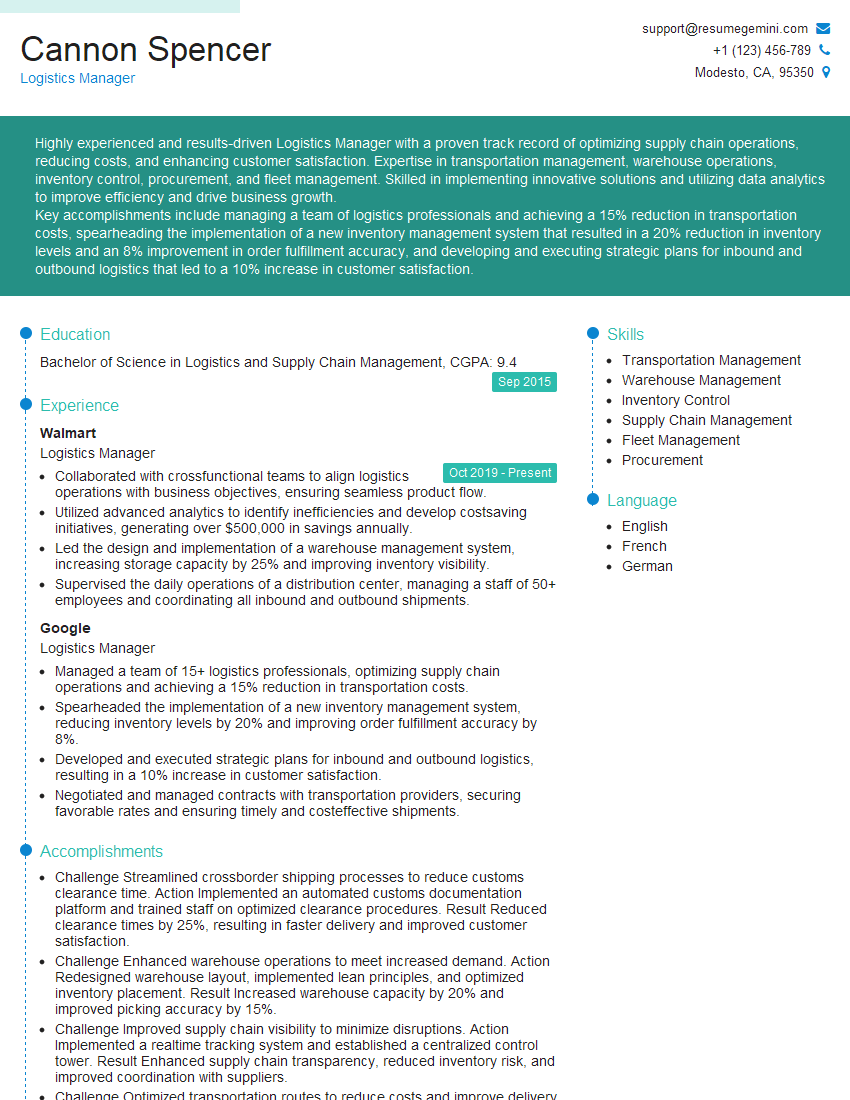
Logistics Manager Resume Sample
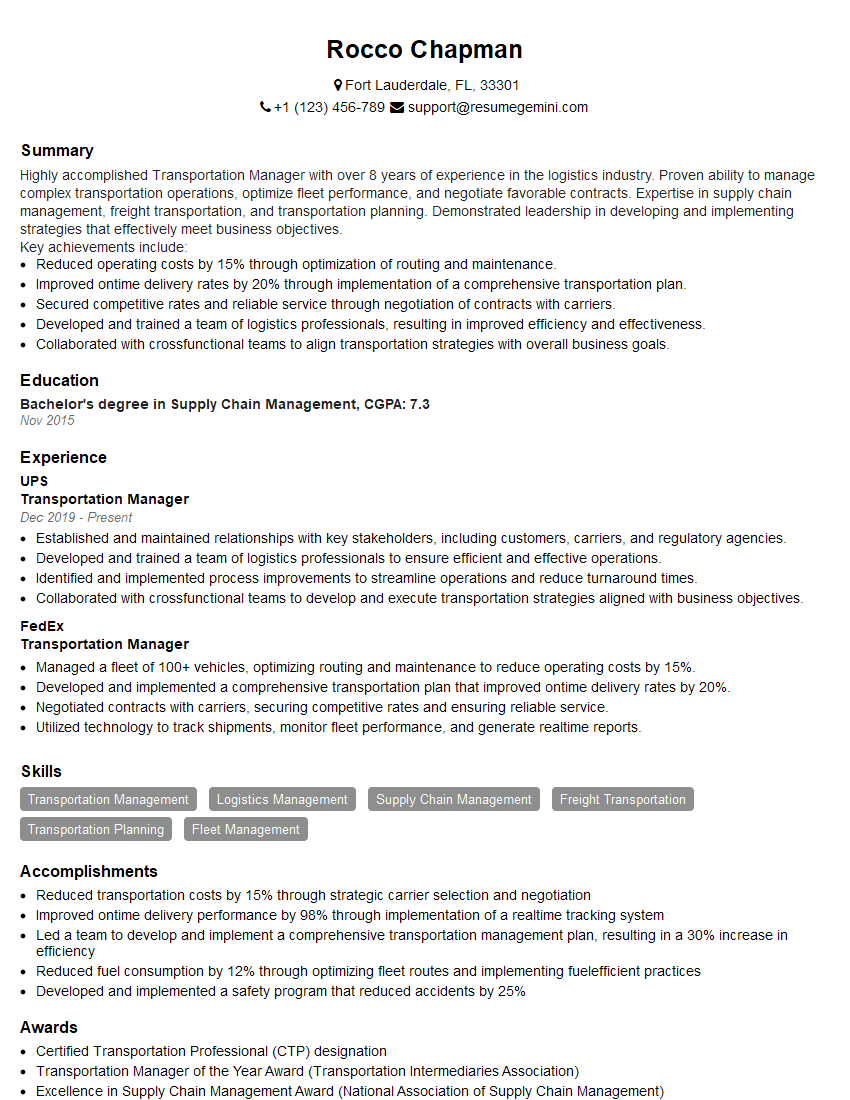
Transportation Manager Resume Sample
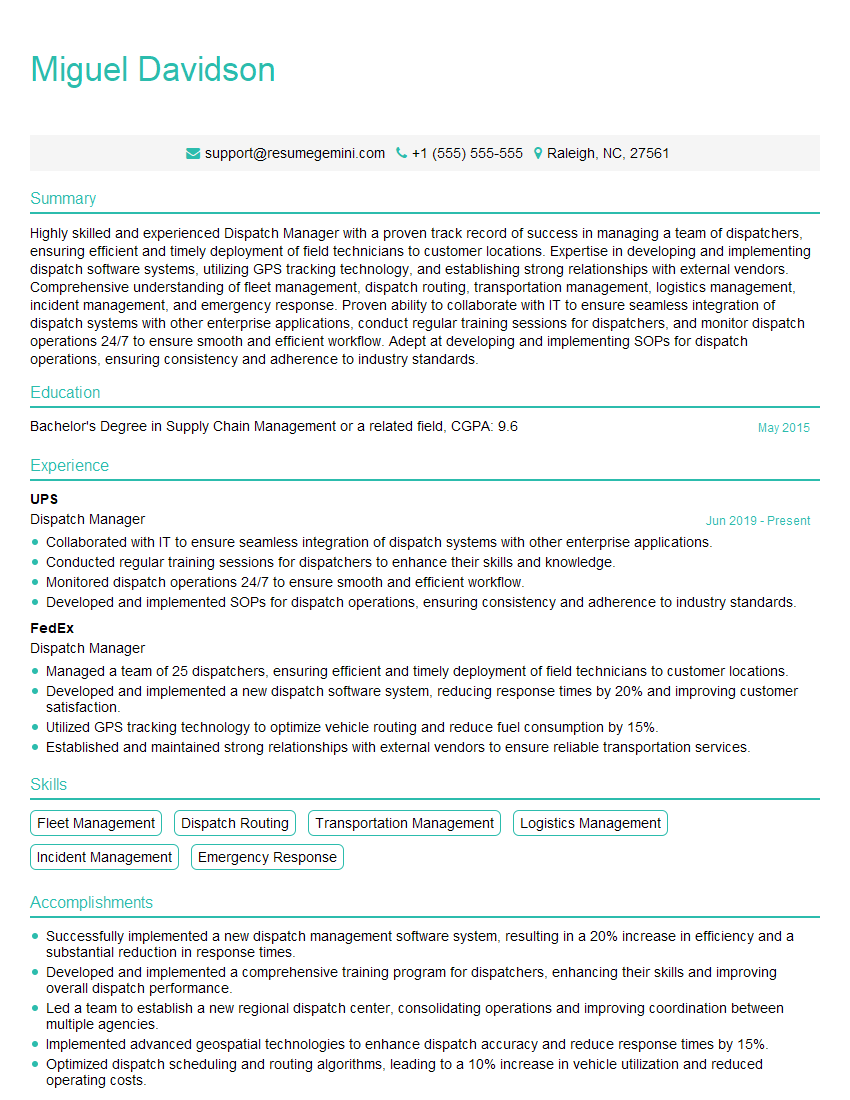
Dispatch Manager Resume Sample
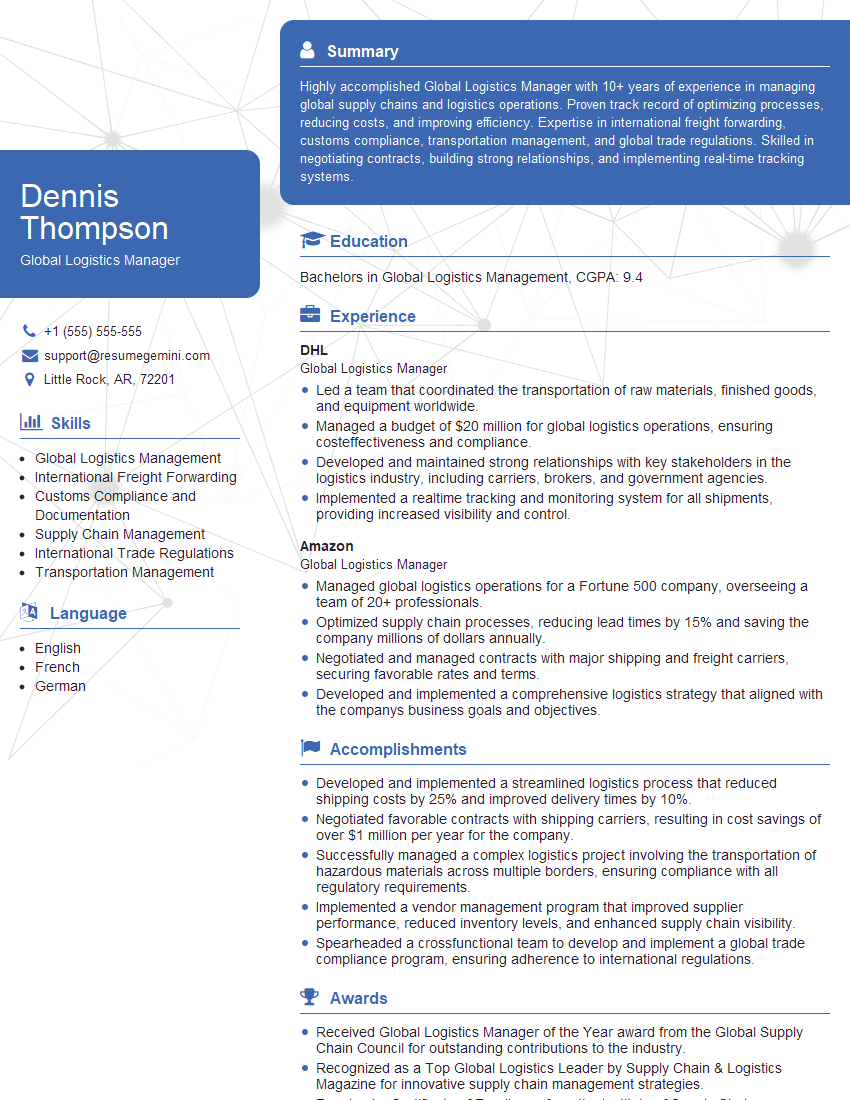
Global Logistics Manager Resume Sample
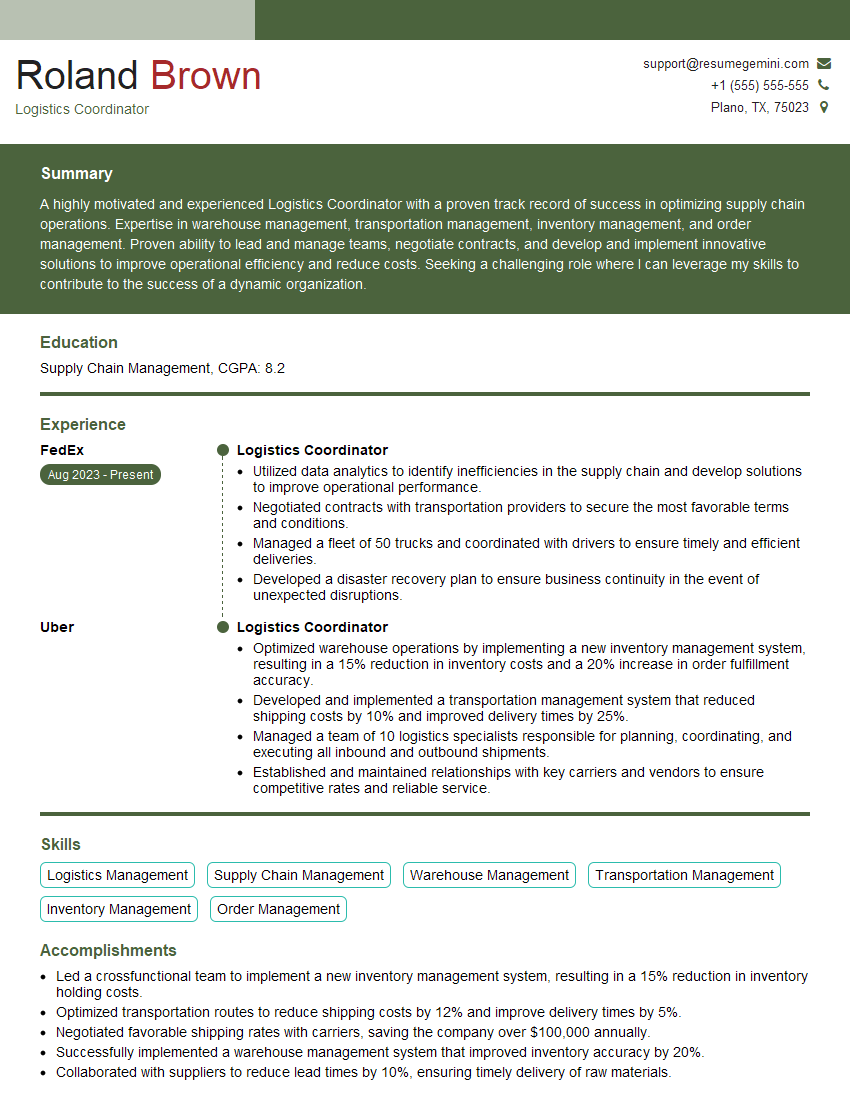
Logistics Coordinator Resume Sample
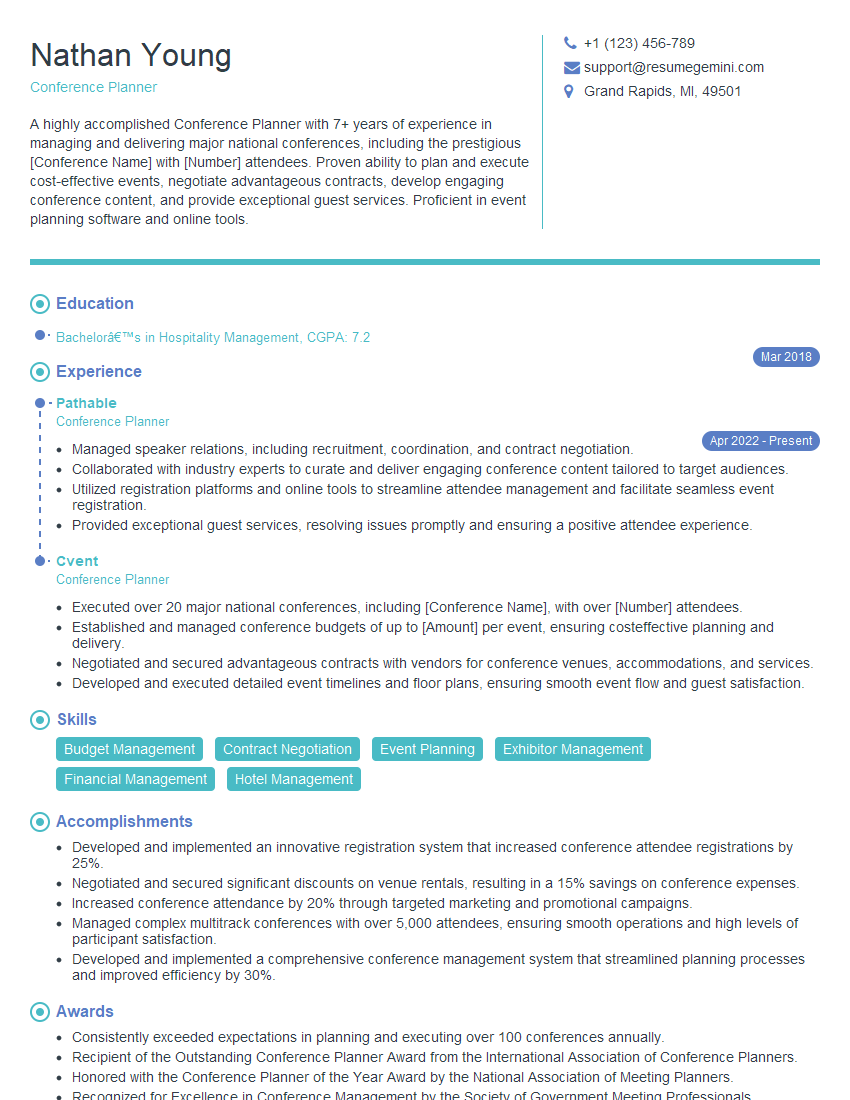
Conference Planner Resume Sample
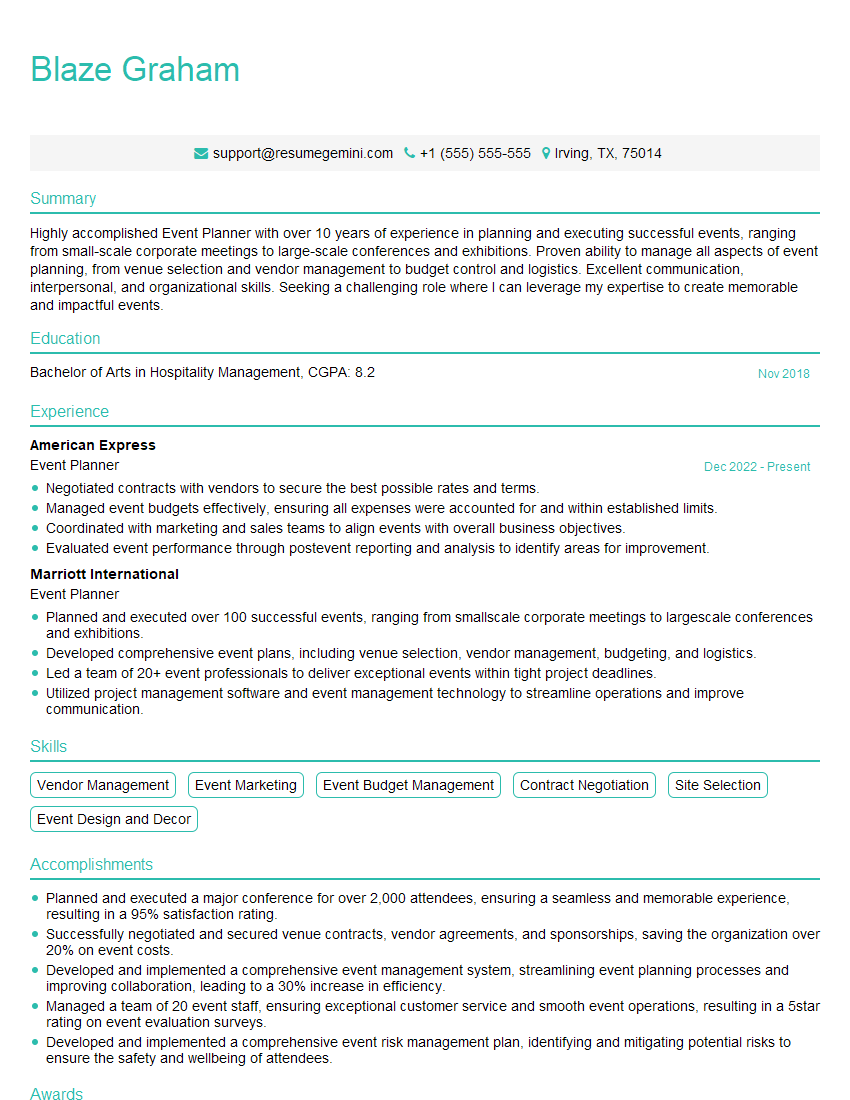
Event Planner Resume Sample
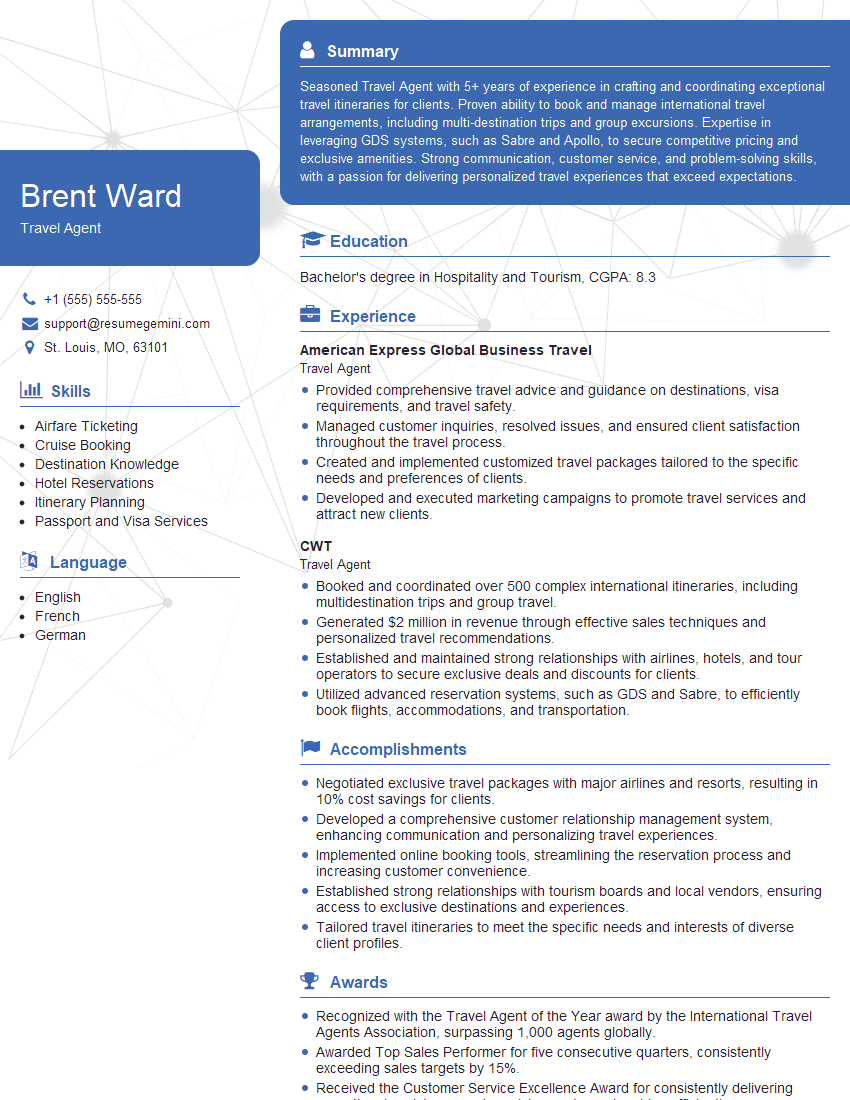
Travel Agent Resume Sample
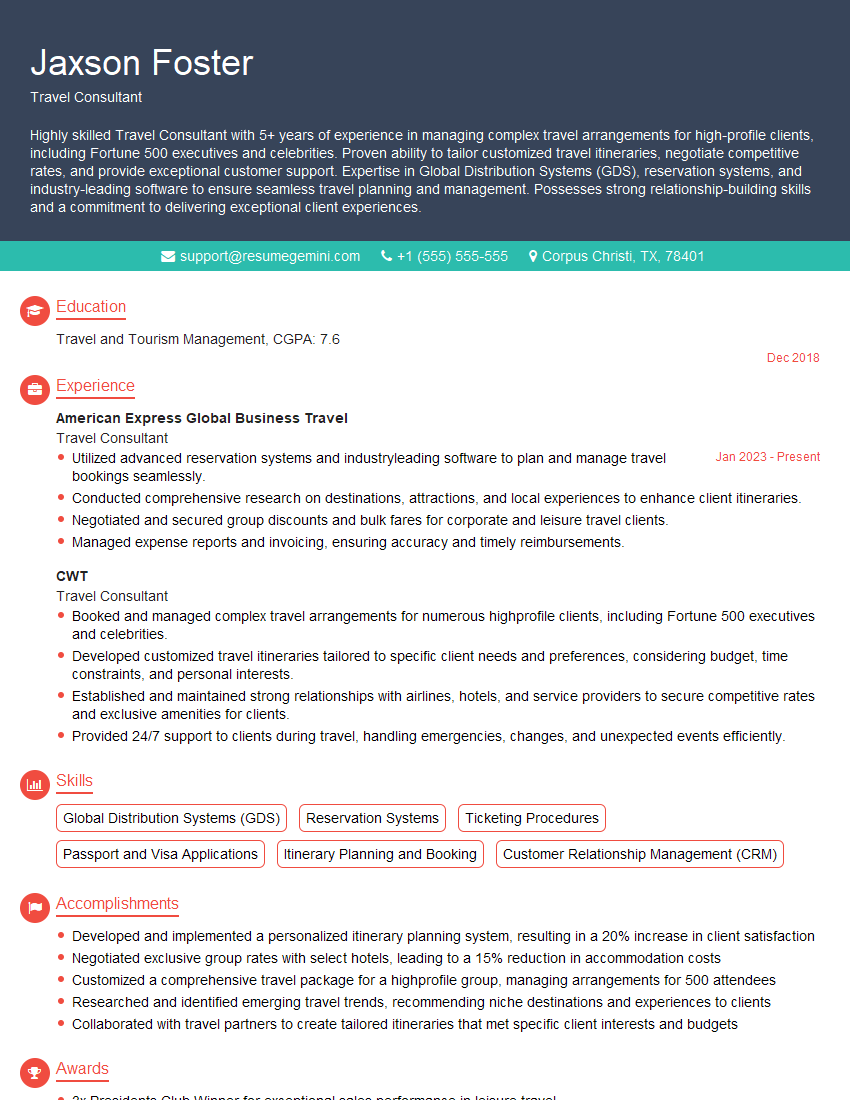
Travel Consultant Resume Sample

Destination Specialist Resume Sample
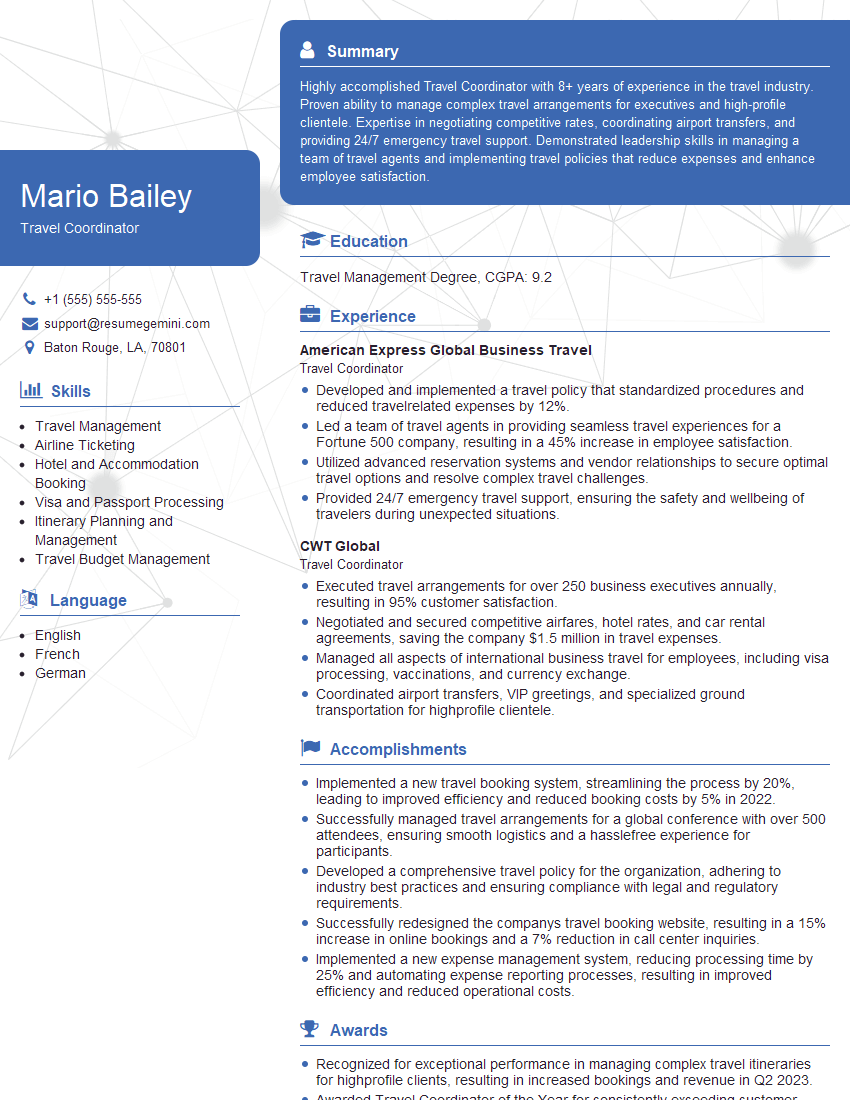
Travel Coordinator Resume Sample
Explore more articles
Users Rating of Our Blogs
Share Your Experience
We value your feedback! Please rate our content and share your thoughts (optional).
What Readers Say About Our Blog
Very informative content, great job.
good