Every successful interview starts with knowing what to expect. In this blog, we’ll take you through the top Glass Handling interview questions, breaking them down with expert tips to help you deliver impactful answers. Step into your next interview fully prepared and ready to succeed.
Questions Asked in Glass Handling Interview
Q 1. Describe your experience with different types of glass (e.g., tempered, laminated, float).
My experience encompasses a wide range of glass types, each with unique properties and handling requirements. Float glass, the most common type, is produced by floating molten glass on a bed of molten tin, resulting in a smooth, flat surface ideal for windows and other applications. I’ve extensively worked with float glass in various thicknesses and sizes, from small panes to large architectural sheets. Tempered glass, on the other hand, is heat-treated to increase its strength significantly. This makes it ideal for safety applications like car windshields and shower doors, but requires careful handling to avoid shattering. I’ve handled tempered glass of various thicknesses and shapes, always adhering to strict safety protocols. Finally, laminated glass consists of two or more layers of glass bonded together with a layer of polyvinyl butyral (PVB) interlayer. This interlayer holds the glass fragments together even if the glass breaks, preventing dangerous shattering. My experience includes working with laminated glass in both automotive and architectural applications, understanding its unique strengths and limitations.
For example, in one project involving a large-scale installation of tempered glass panels, I was responsible for carefully inspecting each panel for defects and ensuring its proper installation to avoid any risk of breakage or injury. The specific handling and installation techniques for each glass type are critical for a successful and safe outcome.
Q 2. Explain the safety precautions you take when handling glass.
Safety is paramount when handling glass. My approach follows a layered safety strategy. Firstly, Personal Protective Equipment (PPE) is non-negotiable. This includes safety glasses with side shields to protect against flying debris, cut-resistant gloves to prevent cuts, and sturdy closed-toe shoes to protect feet from dropped glass. Secondly, proper handling techniques are essential. I always use appropriate lifting techniques and never try to handle glass that’s too heavy on my own. Teamwork and mechanical aids are utilized for larger pieces. Thirdly, work area safety is crucial. The work area must be clean, free of obstructions, and well-lit. Glass should be transported and stored carefully to prevent breakage, and sharp edges should be protected with edge protectors or tape. Finally, regular safety training and awareness programs are essential to remain updated on best practices and identify potential hazards.
For instance, I once averted a potential accident by identifying a loose panel before it could cause injury during a glass installation project, reinforcing the importance of regular inspections and adherence to safety regulations.
Q 3. What are the common tools and equipment used in glass handling?
The tools and equipment used in glass handling vary depending on the task. Basic tools include glass cutters (for scoring and snapping glass), measuring tapes, squares, pencils for marking, and safety glasses. More specialized equipment includes suction cups for lifting larger panes, glass clamps, hand trucks or forklifts for transportation, and grinders or polishers for edge finishing. For larger-scale projects, specialized equipment like automated glass cutting machines and glass handling robots might be necessary. I’m proficient in using all these tools and equipment, adjusting my approach based on the specific task and glass type.
For example, when working on intricate stained glass projects, I primarily rely on hand tools for precise cutting and shaping, while larger commercial window installations necessitate the use of suction cups and hand trucks.
Q 4. How do you ensure the safe transportation and storage of glass?
Safe transportation and storage are critical to prevent damage and ensure worker safety. During transportation, glass sheets are carefully wrapped in protective materials, such as cardboard or foam padding, and secured to prevent shifting or breakage. They are transported using appropriate vehicles equipped with secure straps or other means of restraint. For larger panes, specialized glass carriers are used. In storage, glass is always stored in a clean, dry environment, away from direct sunlight and extreme temperatures. It’s vertically stacked with spacers to prevent scratches and breakage. The storage area must be well-lit and accessible only to authorized personnel. Proper labeling is crucial, identifying the type and thickness of the glass to ensure efficient management.
In a recent project involving the transportation of large, fragile museum display cases, we employed custom-made crates and a specialized transport vehicle to ensure the glass arrived safely at its destination.
Q 5. Describe your experience with glass cutting and measuring techniques.
My experience in glass cutting and measuring is extensive. Accurate measurement is paramount. I use a combination of measuring tapes, squares, and specialized glass rulers for precise measurements. Glass cutting involves scoring the glass with a glass cutter, applying even pressure, and then snapping it along the score line. This requires a steady hand and experience to ensure a clean, straight break. Different techniques are applied based on the glass type and thickness. For curved glass, specialized cutting tools and techniques are employed. I routinely inspect the cut edges to ensure they are smooth and free from sharp edges, addressing any imperfections by grinding or polishing.
For example, in one project that involved creating custom-shaped glass shelves, precise measurements and careful cutting techniques were vital to ensure a perfect fit and a seamless aesthetic integration.
Q 6. What are the different methods for installing glass?
Glass installation methods vary based on the type of glass, the application, and the structural considerations. Common methods include wet glazing, where the glass is set in place using a bed of sealant, and dry glazing, which involves using mechanical fasteners like clips or channels to secure the glass. Silicone glazing is frequently used for its flexibility and sealing properties. In curtain wall installations, specialized systems and components are employed to integrate the glass with the building’s structural framework. I have experience with all these methods, selecting the most appropriate one based on the project’s specifics.
For instance, I’ve successfully installed everything from small window panes using simple putty and glazing techniques to large architectural panels using advanced silicone sealant systems and robust structural framing.
Q 7. How do you identify and address defects in glass?
Identifying and addressing defects in glass is crucial to ensure quality and safety. Common defects include bubbles, stones (small impurities), surface scratches, cracks, and stress marks (visible in tempered glass). Inspection involves visual examination, sometimes supplemented by specialized equipment like microscopes to detect small defects. The severity of the defect determines how it’s addressed. Minor scratches might be acceptable in less visible areas, but major cracks or stress marks necessitate replacement of the glass. The handling of defective glass requires extra care to avoid further damage or injuries.
I’ve encountered several instances where careful inspection has revealed hidden defects that could have led to problems. In one specific case, an early identification of a stress mark in a tempered glass panel prevented a potential hazard. A timely replacement ensured safety and avoided costly repairs later.
Q 8. Explain your experience with glass polishing and finishing techniques.
Glass polishing and finishing are crucial for achieving the desired aesthetic and performance characteristics of glass products. My experience encompasses a wide range of techniques, from traditional hand-polishing methods for intricate, small-scale projects to automated polishing lines for high-volume production.
Hand-polishing, while labor-intensive, allows for exceptional precision and control, particularly on curved or uniquely shaped pieces. I’m proficient in using various abrasives, from coarse grits for initial shaping to fine compounds for a mirror-like finish. This often involves multiple stages, each with progressively finer abrasives and polishing compounds to remove scratches and achieve the desired level of smoothness and clarity.
Automated polishing lines, on the other hand, utilize robotic arms and specialized polishing pads to achieve consistent results at a much faster rate. Programming and optimization of these systems are key to maintaining high quality and minimizing defects. My experience includes working with different types of automated polishing equipment, including those using slurry-fed pads and those incorporating diamond-impregnated tools for particularly hard glasses. I’ve also been involved in the development and refinement of polishing processes to optimize for different glass types and desired finishes.
For example, I once worked on a project requiring a custom-polished glass lens for a high-precision optical instrument. The tolerances were extremely tight, and traditional methods wouldn’t have sufficed. We developed a specialized polishing process using a robotic arm equipped with a pressure-controlled polishing head, resulting in a lens that exceeded the required specifications.
Q 9. Describe your experience with glass tempering or laminating processes.
Glass tempering and laminating are critical processes for enhancing the strength and safety of glass. Tempering involves rapidly heating the glass to a high temperature and then rapidly cooling it, creating compressive stresses on the surface that significantly increase its resistance to impact and thermal stress. Laminating, on the other hand, involves bonding two or more layers of glass with an interlayer, typically polyvinyl butyral (PVB), to create a safety glass that holds together even when shattered.
My experience includes working with both batch and continuous tempering furnaces, understanding the intricacies of controlling the heating and cooling cycles to achieve optimal tempering and minimize the risk of breakage. This includes careful monitoring of temperature profiles, cooling rates, and the detection and mitigation of any defects that may arise during the process, such as roller wave or stress-induced fractures.
With laminating, my experience involves working with different interlayers, each with unique properties influencing the final product’s strength, optical clarity, and UV protection. The process requires precise control over pressure, temperature, and time to ensure a strong, durable bond between the glass layers. I’ve worked with both autoclave and press laminating methods, each requiring different parameter adjustments based on the glass type and interlayer used.
For instance, I was once involved in a project that required laminated glass for a high-rise building façade. The glass needed to withstand extreme weather conditions, including high winds and temperature fluctuations. We carefully selected a high-performance PVB interlayer and optimized the laminating process to ensure the final product met the required strength and safety standards. We also performed rigorous testing to verify the performance of the laminated glass under simulated extreme conditions.
Q 10. How do you maintain the quality and integrity of glass during handling?
Maintaining the quality and integrity of glass during handling requires meticulous attention to detail and adherence to established best practices. This starts with proper storage, using appropriate supports and avoiding stacking glass too high to prevent breakage or scratching. Transportation and handling also require specialized equipment, like vacuum lifters, suction cups, and protective pads, depending on the size and fragility of the glass.
Specific techniques depend on the glass type. For example, tempered glass requires extra care due to its brittle nature and increased risk of breakage from stress concentrations. Laminated glass, while stronger, can still be scratched or damaged if handled improperly. Cleanliness is paramount; avoiding dirt, dust, and other contaminants that could scratch the glass during handling is crucial. Proper use of Personal Protective Equipment (PPE), such as gloves and safety glasses, is also non-negotiable to protect both the handlers and the glass itself.
Implementing a robust quality control system, including regular inspections and documentation of handling procedures, helps identify and address any potential issues promptly. This might involve using specialized sensors to detect subtle cracks or flaws in the glass that are not visible to the naked eye. A system of clearly defined procedures and training for all personnel involved in glass handling is essential.
For example, in a previous project involving large, fragile architectural glass panels, we used specialized vacuum lifters equipped with sensors to detect any slippage or uneven pressure during the lifting and installation process. This precaution prevented potential damage to the expensive panels and ensured a smooth and safe installation.
Q 11. What are your experiences with different types of glass sealant?
My experience with glass sealants encompasses a wide range of products, each with its own advantages and disadvantages depending on the application. Common types include silicones, polyurethane sealants, and butyl sealants. Silicones are popular for their flexibility, weather resistance, and ease of application. They are often used in exterior applications, such as window frames and curtain walls. Polyurethane sealants offer excellent adhesion and are suitable for a variety of substrates. They are often favored for structural glazing applications, where high strength and durability are required. Butyl sealants are known for their excellent water-tightness and are frequently used in insulated glass units (IGUs).
The selection of the appropriate sealant is critical, influenced by factors like the type of glass, the application environment, and the required performance characteristics. For example, a sealant used in an exterior application will require higher UV resistance and weatherability compared to an interior application. Application techniques also vary depending on the sealant type. Some sealants require specific priming or surface preparation to ensure proper adhesion.
My experience also involves understanding the importance of proper curing time for sealants to achieve their full strength and performance. Insufficient curing can lead to sealant failure and potential water ingress or leakage. Moreover, I understand the importance of compatibility between different sealants to avoid issues like chemical reactions or incompatibility between materials.
For instance, in one project, we encountered sealant failure in an IGU due to improper selection of sealant and inadequate curing time. We were able to rectify the issue by replacing the failed sealant with a compatible product and ensuring adequate curing time, thereby avoiding costly replacements and potential damage.
Q 12. Describe your experience with automated glass handling systems.
Automated glass handling systems significantly improve efficiency and safety in glass processing and installation. My experience includes working with various automated systems, ranging from robotic arms for precise glass manipulation to conveyor systems for transporting glass panels through different processing stages. These systems utilize a variety of technologies, including vacuum lifters, sensors, and programmable logic controllers (PLCs) to ensure precise and safe handling of glass throughout the entire process.
Programming and troubleshooting these automated systems often require a detailed understanding of PLC programming languages, such as ladder logic, and the ability to diagnose and resolve mechanical and electrical issues that may arise. I’m proficient in utilizing sensors for accurate positioning, detecting defects, and monitoring the glass’s condition throughout the process. Safety features, such as emergency stops and interlocks, are critical to prevent accidents and damage to the equipment and the glass.
For example, in one project, we integrated a robotic arm into a glass cutting and polishing line, automating the handling of glass sheets of varying sizes and thicknesses. This automated system reduced manual handling, thereby improving efficiency and reducing the risk of human error and damage. We utilized vision sensors to ensure accurate positioning of the glass during cutting and polishing, leading to minimal waste and higher quality products. Proper safety protocols were in place to ensure safe operation.
Q 13. How do you troubleshoot common issues encountered during glass installation?
Troubleshooting during glass installation requires a systematic approach, starting with careful observation and identification of the problem. Common issues include cracked glass, improper sealing, and alignment problems. My experience involves a range of troubleshooting methods, starting with a visual inspection to identify any obvious defects or damage.
Once the problem is identified, the next step is to investigate the root cause. For example, a cracked glass panel might be due to improper handling, excessive stress during installation, or inherent defects in the glass. Improper sealing might be caused by using the wrong sealant, incorrect application techniques, or insufficient curing time. Alignment issues might stem from inaccurate measurements, improper framing, or incorrect installation procedures. Addressing the root cause is critical to prevent recurrence of the problem.
My experience includes using various tools and techniques to diagnose and rectify the issues. This might involve using specialized measuring instruments to check for alignment, testing the strength and integrity of the sealant, and evaluating the structural soundness of the supporting framework. A thorough understanding of the installation process and the properties of the materials involved is crucial for effective troubleshooting. Documentation of the troubleshooting process, including the problem, the solution, and preventive measures, is also crucial to prevent future problems.
For example, I once encountered a situation where a large glass panel cracked during installation. After a thorough investigation, we discovered a small flaw in the glass that had gone unnoticed during the initial inspection. This highlights the importance of thorough inspections and careful handling throughout the entire process.
Q 14. What is your experience with different glass thicknesses and their applications?
Different glass thicknesses are used for various applications, each requiring specific properties and considerations. Thinner glass, such as 3mm or 6mm, is often used in interior applications, like partitions or shelves, where strength requirements are less stringent. Thicker glass, such as 10mm, 12mm, or even thicker laminated glass, is used in exterior applications, such as building facades, windows, or balustrades, where it needs to withstand greater loads and environmental stresses. The choice of glass thickness also influences the overall weight and cost of the project.
My experience includes working with a wide range of glass thicknesses, understanding their respective strengths, weaknesses, and suitability for different applications. For example, I’ve worked with ultra-thin glass for high-precision optical components and extremely thick, laminated safety glass for high-security applications. The selection of appropriate glass thickness necessitates a careful evaluation of factors such as load-bearing capacity, wind resistance, thermal stress, and safety requirements.
Understanding the properties of different glass types, including annealed, tempered, and laminated, is also crucial when selecting the appropriate thickness. Tempered glass, for example, offers significantly higher strength than annealed glass for the same thickness, making it suitable for applications requiring increased impact resistance. Laminated glass provides improved safety and security, particularly in high-traffic areas or buildings where potential breakage could pose a risk.
In one project involving a large skylight, we carefully selected the appropriate thickness of laminated glass to ensure it could withstand the weight of the structure and potential snow loading. Incorrect thickness selection could have led to structural failure and potential injury.
Q 15. How do you handle damaged or broken glass safely and effectively?
Handling broken glass requires meticulous care to prevent injury. The first step is always safety. Never attempt to handle broken glass with bare hands. Instead, use appropriate tools like heavy-duty gloves, thick cardboard, or a dustpan and brush.
For larger pieces, carefully sweep them into a sturdy container. For smaller shards, use a wet dustpan and brush to minimize scattering. The wetness helps bind the fragments. Once collected, dispose of the glass in a designated, puncture-resistant container clearly labeled as broken glass. This is crucial for the safety of waste handlers and prevents accidental injuries.
In the case of large-scale glass breakage, like a shattered window in a high-traffic area, immediately cordon off the area to prevent accidental injury. Contact a professional glass removal service for efficient and safe cleanup. Remember, prevention is key; regular glass inspections and appropriate maintenance can minimize the risk of breakage.
Career Expert Tips:
- Ace those interviews! Prepare effectively by reviewing the Top 50 Most Common Interview Questions on ResumeGemini.
- Navigate your job search with confidence! Explore a wide range of Career Tips on ResumeGemini. Learn about common challenges and recommendations to overcome them.
- Craft the perfect resume! Master the Art of Resume Writing with ResumeGemini’s guide. Showcase your unique qualifications and achievements effectively.
- Don’t miss out on holiday savings! Build your dream resume with ResumeGemini’s ATS optimized templates.
Q 16. What are the common causes of glass breakage and how can they be prevented?
Glass breakage has various causes, often stemming from improper handling, installation, or environmental factors. Common culprits include:
- Impact: Accidental collisions from objects or people are a primary cause. This is particularly true for windows and glass doors in high-traffic areas.
- Thermal Stress: Sudden temperature changes, especially extreme temperature fluctuations, can cause internal stress leading to cracking or shattering. For instance, a hot shower against a cold window is a common scenario.
- Improper Installation: Insufficient support, incorrect fastening, or using inappropriate sealants can compromise the glass’s structural integrity.
- Manufacturing Defects: Although rare, inherent flaws in the glass itself can predispose it to breakage.
- Seismic Activity: Earthquakes and other tremors can cause significant damage to glass structures.
Preventing breakage involves careful handling during transport and installation, using appropriate materials and techniques, and regular inspections to detect any flaws or potential issues. Proper thermal insulation can also help mitigate thermal stress.
Q 17. Explain your knowledge of building codes and regulations related to glass installation.
Building codes and regulations concerning glass installation vary by region and are crucial for ensuring safety and structural integrity. These codes generally specify requirements for glass type, thickness, and installation methods, often depending on the glass’s location and intended purpose. For instance, safety glazing (like laminated or tempered glass) is often mandated for areas at risk of impact, like doors, windows, and partitions, or in public spaces.
Codes often dictate the minimum strength requirements for glass based on factors such as building height, wind load, and potential seismic activity. They may also specify the use of specific safety features like impact-resistant films or protective barriers. Furthermore, proper installation techniques, including appropriate fasteners and sealants, are generally outlined to prevent failures. Staying updated on local and national building codes is paramount for compliance and safety. Ignoring these regulations can result in significant legal and safety liabilities.
Q 18. Describe your experience with working at heights and using safety harnesses.
Working at heights is an inherent part of many glass installation projects. My experience includes extensive work with scaffolding, elevated platforms, and rope access systems. Safety is always the top priority. This includes meticulous planning, risk assessments, and following all safety procedures. I am proficient in using various types of safety harnesses, fall arrest systems, and other personal protective equipment (PPE) designed for work at heights.
I always ensure that my harness is properly fitted and inspected before commencing work. I understand the critical importance of anchor points and their secure installation. Before beginning any task, I perform thorough checks to ensure the stability and safety of my work platform or access system. My experience includes training and certification in working at heights, and I always adhere to strict safety protocols to minimize risk.
Q 19. How do you ensure proper ventilation when working with glass coatings or adhesives?
Many glass coatings and adhesives release volatile organic compounds (VOCs) that can be harmful if inhaled. Ensuring proper ventilation is critical to maintaining a safe working environment. This can involve using mechanical ventilation systems such as exhaust fans or portable ventilation units to remove fumes from the work area.
Natural ventilation, through open windows or doors, can be effective in certain situations, but it’s important to consider wind direction and to avoid drafts that could interfere with the application process. In confined spaces, or when using particularly strong adhesives, respiratory protection, like respirators with appropriate cartridges, may be necessary. Always refer to the safety data sheets (SDS) provided by the manufacturer of the coatings and adhesives for specific ventilation requirements and recommended protective measures.
Q 20. What is your experience with using personal protective equipment (PPE) while handling glass?
Personal Protective Equipment (PPE) is non-negotiable when handling glass. This includes, but is not limited to:
- Safety Glasses or Goggles: To protect eyes from flying debris or sharp fragments.
- Cut-Resistant Gloves: To protect hands from cuts and abrasions.
- Closed-Toe Shoes: To protect feet from falling objects or dropped glass.
- Dust Masks or Respirators: To protect the respiratory system from dust and fumes, especially when working with certain glass coatings or adhesives.
- Hearing Protection: In situations involving noisy equipment.
- High-Visibility Clothing: In environments with heavy machinery or traffic.
The specific PPE required depends on the task and the potential hazards involved. I always ensure my PPE is appropriate, in good condition, and worn correctly throughout the project.
Q 21. How do you calculate the amount of glass needed for a project?
Calculating the amount of glass needed for a project requires precise measurements and careful planning. The process typically involves:
- Detailed Drawings and Specifications: Accurate architectural plans are essential, providing dimensions for all glass components.
- Material Selection: The type of glass (e.g., tempered, laminated, annealed) impacts the calculations due to variations in thickness and potential waste during cutting.
- Waste Factor: Account for inevitable cutting waste (e.g., cuts, breakage). A typical waste factor can range from 5% to 15%, depending on complexity and material. For intricate designs, this percentage may increase.
- Measurements: Accurately measure the dimensions of each glass panel or component. Multiple measurements should be made for accuracy and to catch discrepancies.
- Calculations: Compute the total surface area for all glass components, incorporating the waste factor. Formula: Total Glass Needed = (Total Surface Area) * (1 + Waste Factor)
- Verification: Always double-check your calculations before ordering glass to avoid costly errors or material shortages.
For example, for a project requiring ten 3ft x 5ft rectangular panels with a 10% waste factor: Total Surface Area = 10 panels * 15 sq ft/panel = 150 sq ft; Total Glass Needed = 150 sq ft * 1.10 = 165 sq ft. This accounts for potential waste during the cutting process.
Q 22. Describe your experience with different glass installation techniques (e.g., silicone, glazing tape).
Glass installation hinges on selecting the right adhesive for the job. Silicone and glazing tape are common choices, each with its strengths and weaknesses. Silicone, a versatile sealant, offers excellent adhesion and flexibility, ideal for smaller projects or areas requiring movement accommodation, like expansion joints. However, it can be messy and requires careful application to prevent unsightly beading. I’ve extensively used silicone in installing smaller glass panels in shower enclosures and window applications where a slightly flexible seal is needed to account for building movement.
Glazing tape, on the other hand, provides a cleaner, more precise installation, especially for larger glass units within structural frames like storefront windows. It’s designed for superior UV resistance and watertight sealing, ensuring long-term durability. My experience with glazing tape includes installing large curtain wall systems where precision and consistent sealant performance are critical. The choice between silicone and tape depends heavily on project specifics, the glass type, and the overall structural design.
For instance, a recent project involved installing a large glass atrium roof using glazing tape for its superior weather-resistance and structural integrity. Another project, a smaller bathroom window replacement, used silicone due to its ease of application and ability to adapt to minor irregularities in the frame. Proper surface preparation is crucial regardless of the chosen method, as it ensures optimal adhesion and long-lasting results.
Q 23. What are your skills in using hand tools and power tools for glass handling?
Proficiency with both hand and power tools is essential for precise and efficient glass handling. My expertise includes using hand tools such as suction cups (for safe handling of large sheets), utility knives (for precise cutting of sealants), measuring tapes, and various scrapers for removing old sealant. I’m also skilled in operating power tools like pneumatic drills (for installing fasteners in glass frameworks), wet saws (for accurate cutting of glass to size – always remembering safety glasses!), and angle grinders (for specific shaping or cutting tasks).
Safety is paramount; I always adhere to strict safety protocols, including wearing appropriate personal protective equipment (PPE) like safety glasses, gloves, and dust masks. For example, when using a wet saw, maintaining consistent water flow is critical not only for clean cuts but also to control dust and potential glass fragments. My experience extends to troubleshooting equipment malfunctions and performing routine maintenance on the tools, ensuring they’re always in top working condition for optimal performance and safety.
Q 24. How familiar are you with different types of glass frameworks and support systems?
I’m familiar with a wide range of glass frameworks and support systems, from simple aluminum frames to complex curtain wall systems and structural silicone glazing applications. I understand the structural requirements for different glass types and thicknesses, ensuring the chosen framework provides adequate support and stability.
For instance, I’ve worked with aluminum extrusions in commercial storefront applications, steel frames in more industrial settings, and even custom wood frames in residential projects. Each system requires a unique approach to installation and careful consideration of load-bearing capabilities. Understanding the interplay between the glass, the framework, and the supporting structure is crucial for preventing stress fractures and ensuring the longevity of the installation. My knowledge also extends to different types of glass fasteners, including mechanical fasteners, silicone structural glazing systems, and point-fixed systems, allowing me to select the most appropriate method based on the project demands and building codes.
Q 25. Explain your experience with reading and interpreting blueprints and specifications.
Reading and interpreting blueprints and specifications are fundamental aspects of my work. I can accurately decipher technical drawings, identifying glass types, dimensions, thicknesses, and installation details. I’m adept at understanding structural annotations, load requirements, and other critical information essential for successful installation.
For example, I recently worked on a project where the blueprints specified laminated glass with a specific interlayer for enhanced safety and acoustic properties. Understanding this detail was critical in procuring the correct materials and ensuring compliance with building codes. I meticulously review specifications to confirm the type of sealant, glazing methods, and required hardware, ensuring that every aspect of the installation aligns perfectly with the design intent. My attention to detail allows me to anticipate potential challenges and proactively address them, minimizing the risk of errors and rework.
Q 26. How do you handle customer complaints or issues related to glass installation?
Handling customer complaints is a crucial aspect of providing excellent service. My approach prioritizes clear communication and problem-solving. I listen carefully to understand the customer’s concerns, investigate the issue thoroughly, and explain the findings clearly, whether the problem is due to installation, material defects, or unforeseen circumstances.
For example, I once encountered a complaint about a slight leak around a window. After careful inspection, I discovered a minor gap in the sealant that was easily repaired. I not only resolved the issue but also explained the cause and provided preventative maintenance tips to ensure similar issues wouldn’t occur. In cases involving defects in materials, I work collaboratively with suppliers to arrange replacements or repairs, ensuring customer satisfaction. Maintaining open communication and transparency throughout the process ensures customer trust and strengthens positive relationships.
Q 27. What is your experience with inventory management of glass materials?
Effective inventory management is key to efficient project execution and cost control. My experience includes tracking glass stock, managing orders, and ensuring materials are available as needed, minimizing project delays. I’m familiar with using inventory management software to track stock levels, predict demand, and manage supplier relationships.
I’ve implemented systems that allow for precise tracking of different glass types, sizes, and thicknesses, ensuring materials are readily available when required. Accurate forecasting of material needs prevents overstocking or shortages, reducing storage costs and ensuring projects proceed smoothly. Regular inventory audits and stock rotation strategies minimize waste and prevent damage to stored glass. My experience also covers maintaining accurate records of material costs and managing supplier invoices, contributing to efficient financial management of the projects.
Q 28. Describe your understanding of different glass cleaning and maintenance procedures.
Glass cleaning and maintenance are crucial for preserving the aesthetics and longevity of glass installations. My understanding encompasses various cleaning methods, from simple window washing techniques to specialized cleaning procedures for different glass types. I’m familiar with appropriate cleaning agents and tools to avoid damaging the glass or its coatings.
For instance, I understand that certain cleaning solutions can damage low-E coatings found on energy-efficient glass, requiring specialized cleaning products. I also know that different glass types require different cleaning approaches. For instance, textured glass requires a gentler approach than smooth glass to avoid scratching. Routine cleaning and maintenance, including inspecting seals and framework for damage, contribute significantly to the lifespan of the glass installations. I’m also able to advise clients on appropriate maintenance practices for the different types of glass they’ve had installed, ensuring a long-lasting and beautiful finish.
Key Topics to Learn for Glass Handling Interview
- Glass Properties & Characteristics: Understanding different types of glass (e.g., annealed, tempered, laminated), their strengths, weaknesses, and appropriate handling techniques.
- Safe Handling Practices: Mastering techniques for lifting, carrying, transporting, and storing glass sheets and products to prevent breakage and injury. This includes understanding proper Personal Protective Equipment (PPE) usage.
- Glass Cutting & Fabrication Techniques (if applicable): Familiarize yourself with basic cutting methods, scoring, breaking, and the use of specialized tools. Understanding the importance of precision and safety.
- Damage Prevention & Repair: Knowing how to identify potential damage risks during handling, storage, and transportation. Understanding basic repair techniques or when to seek professional assistance.
- Equipment & Machinery: Familiarize yourself with the common machinery used in glass handling, including suction cups, cranes, and specialized lifting equipment. Understanding safe operation procedures is crucial.
- Quality Control & Inspection: Understanding the importance of inspecting glass for defects and ensuring quality throughout the handling process. Knowing industry standards and quality control measures.
- Logistics & Transportation: Understanding the safe and efficient methods for transporting glass, including appropriate packaging and securing procedures to minimize risks during transit.
- Problem-Solving & Troubleshooting: Developing the ability to identify and resolve issues that may arise during glass handling, such as breakage, damage, or equipment malfunctions.
Next Steps
Mastering glass handling techniques opens doors to exciting career opportunities in manufacturing, construction, and various specialized industries. To maximize your job prospects, creating a strong, ATS-friendly resume is essential. ResumeGemini can help you craft a compelling resume that showcases your skills and experience effectively. Take advantage of their resources and view examples of resumes tailored to the glass handling industry to build a powerful application that sets you apart from the competition.
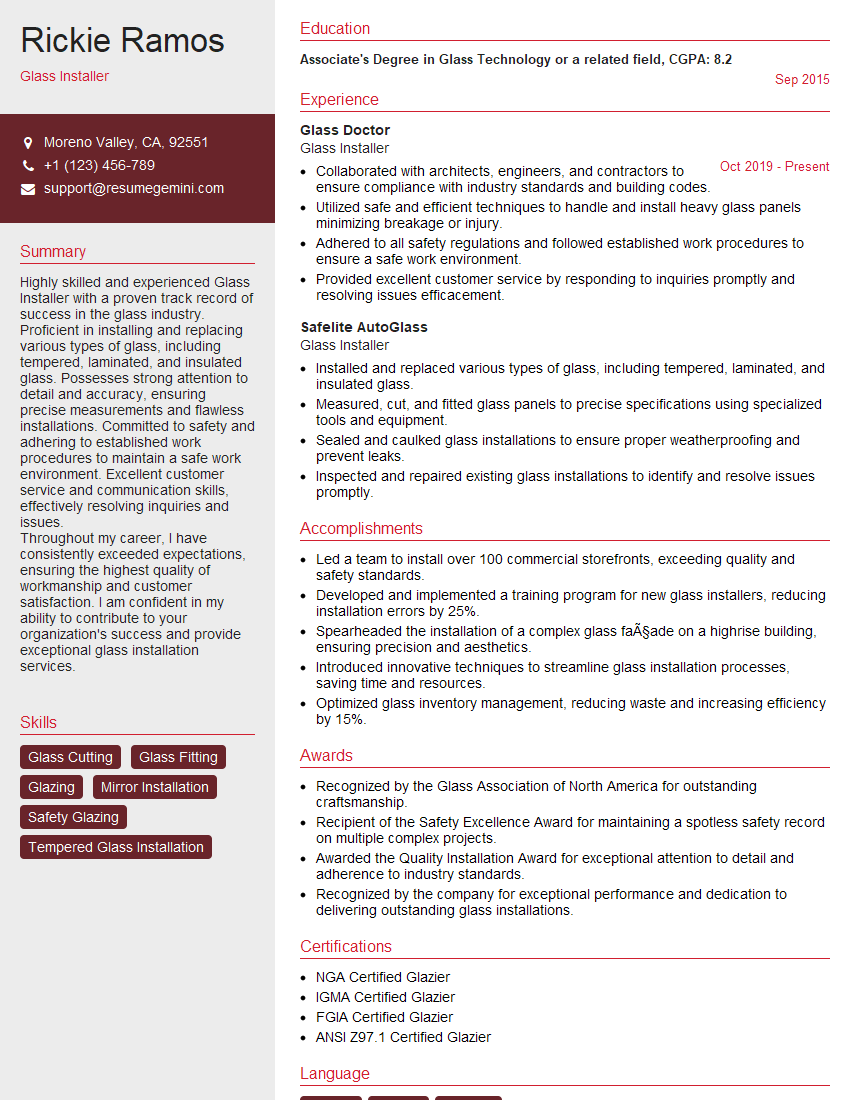
Glass Installer Resume Sample
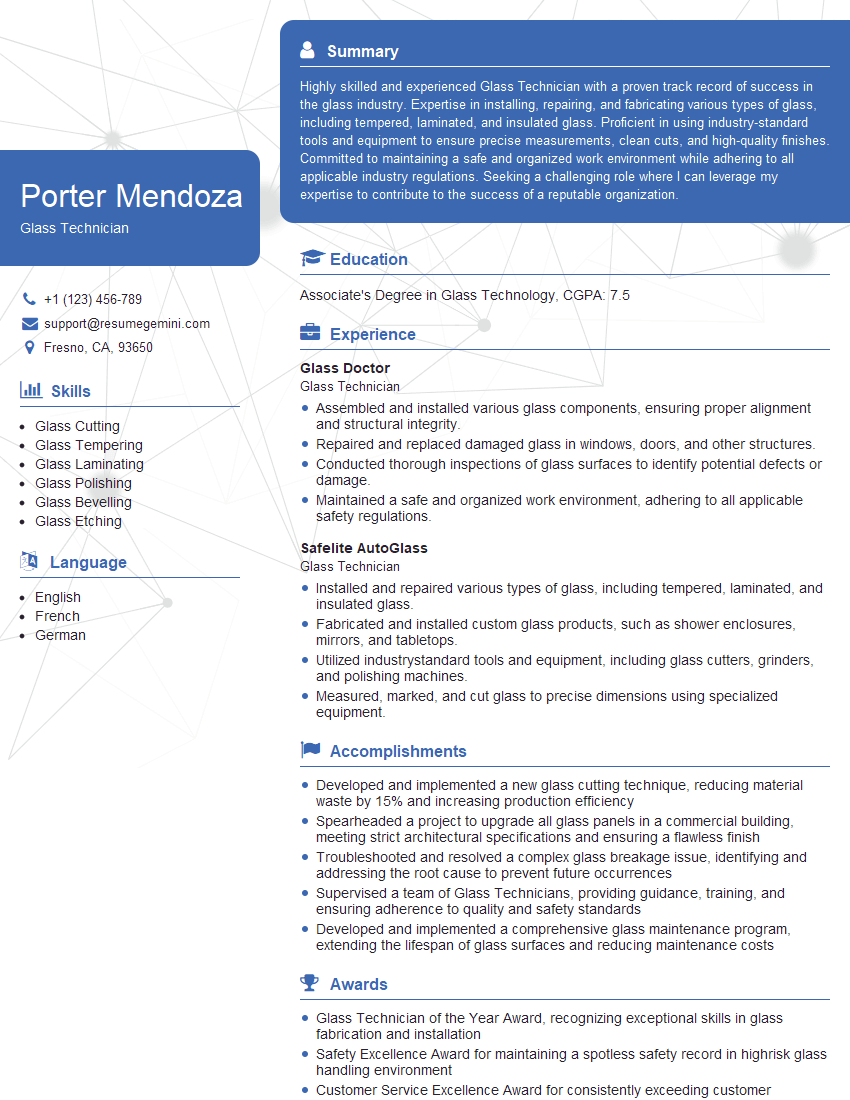
Glass Technician Resume Sample
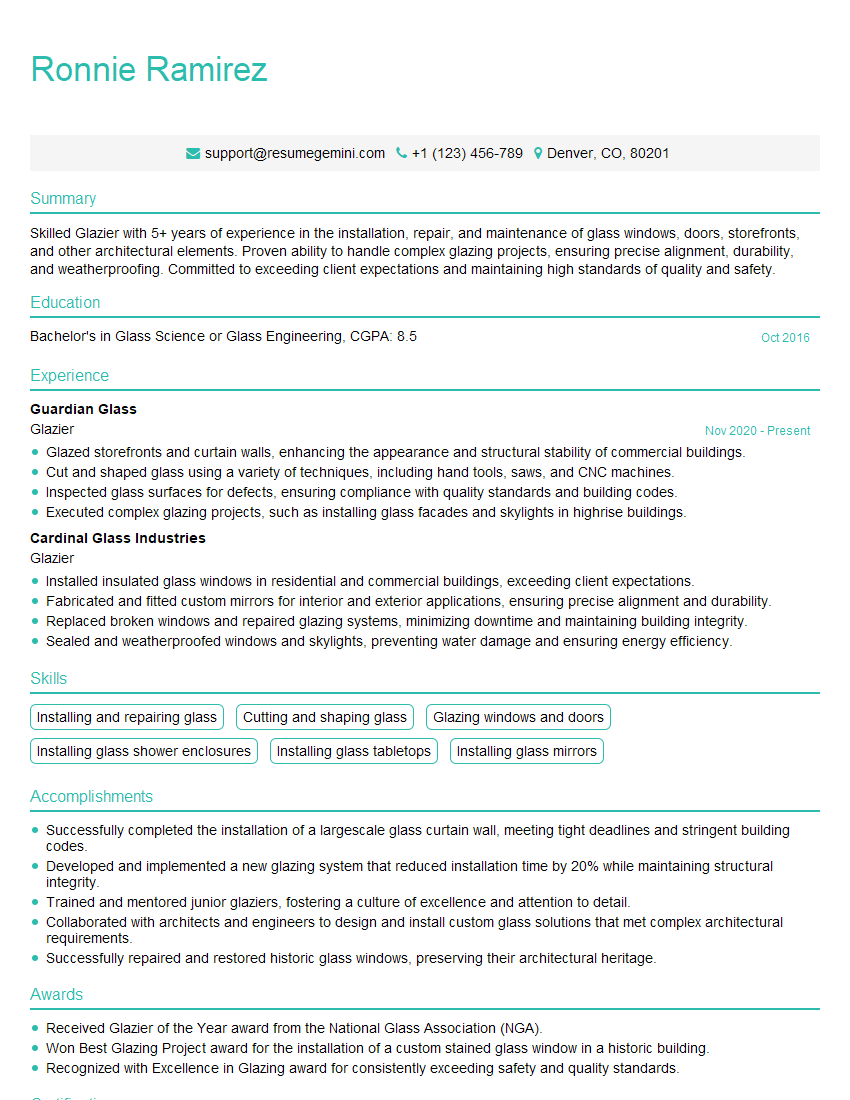
Glazier Resume Sample

Glass Beveler Resume Sample
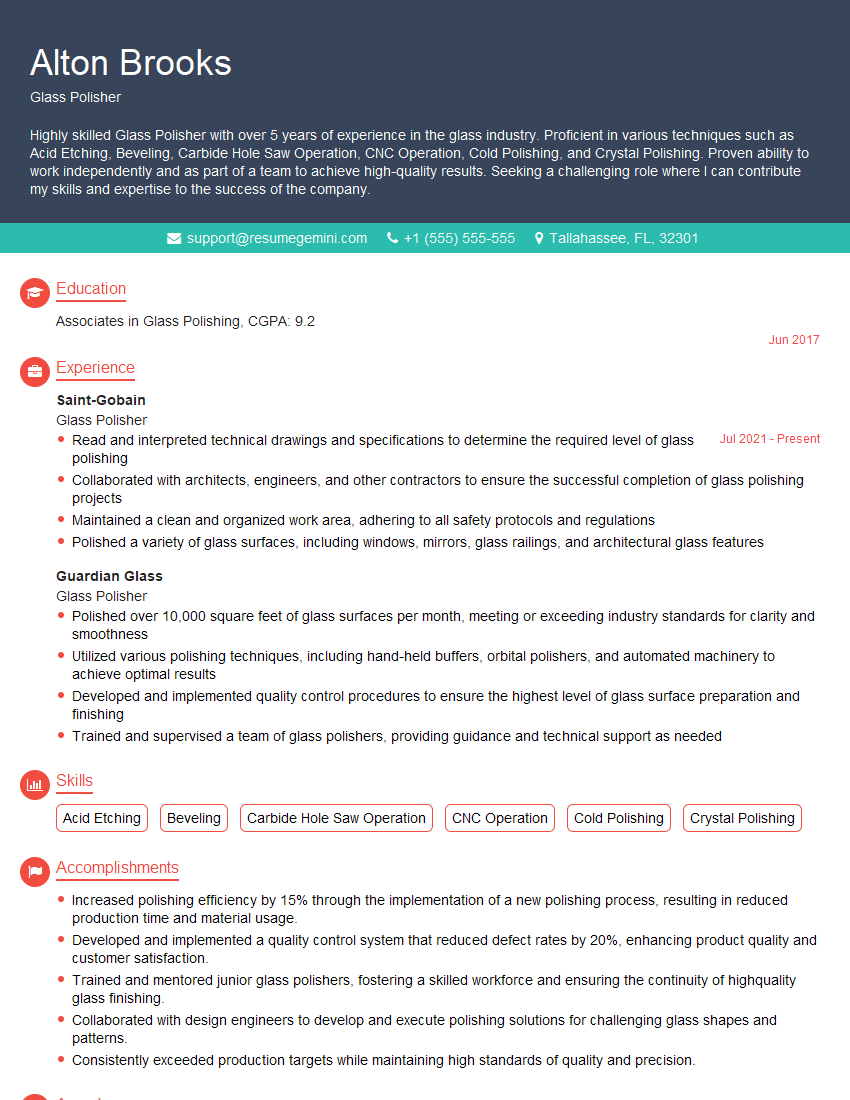
Glass Polisher Resume Sample
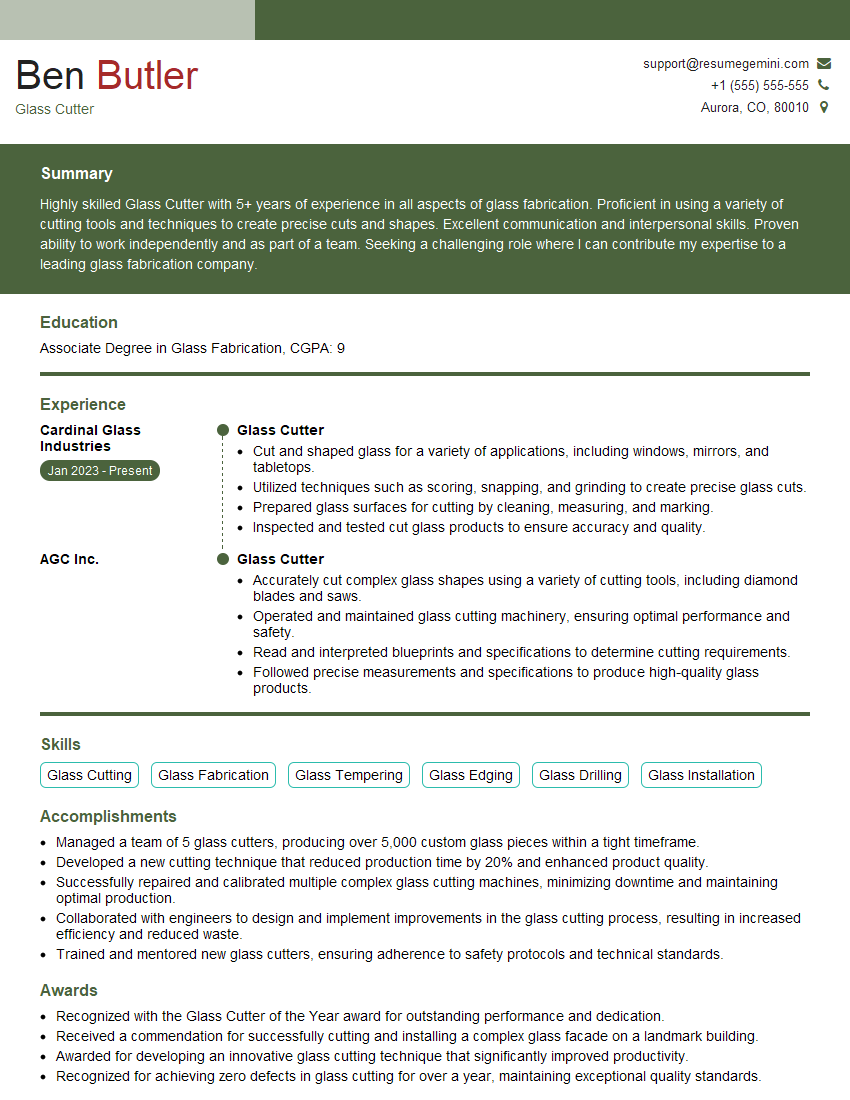
Glass Cutter Resume Sample
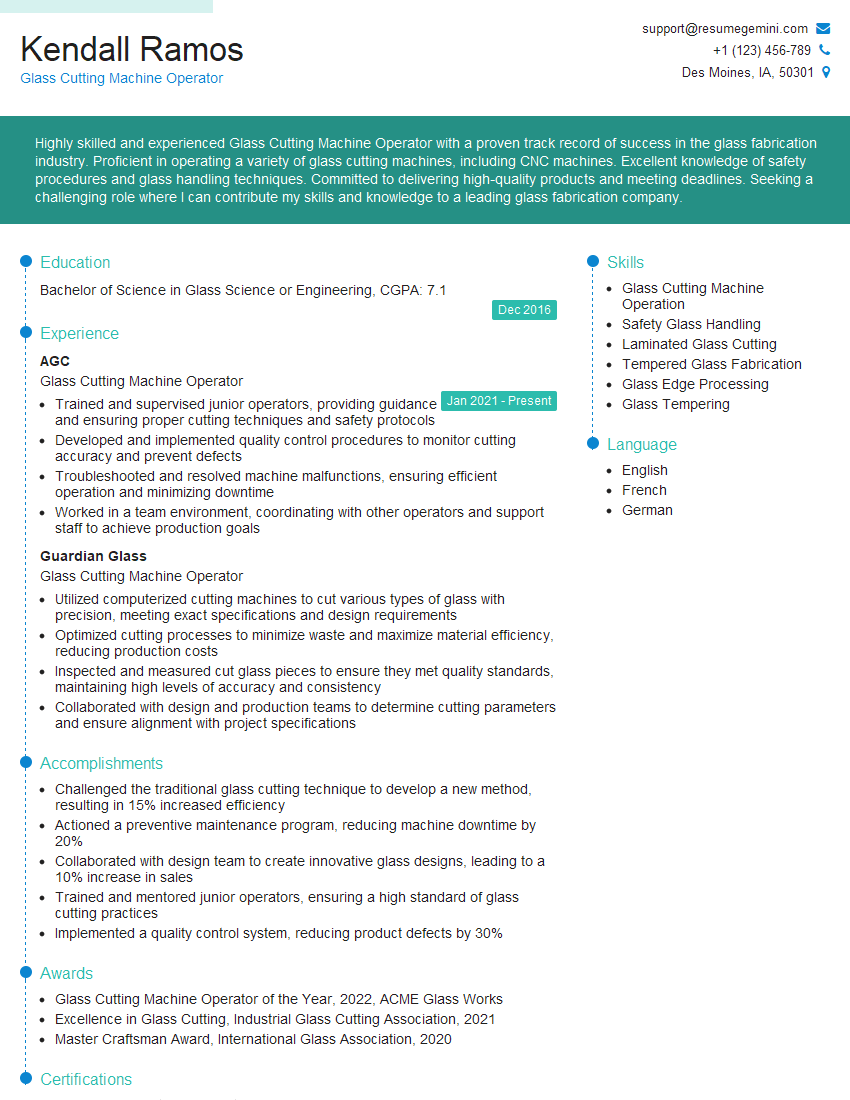
Glass Cutting Machine Operator Resume Sample
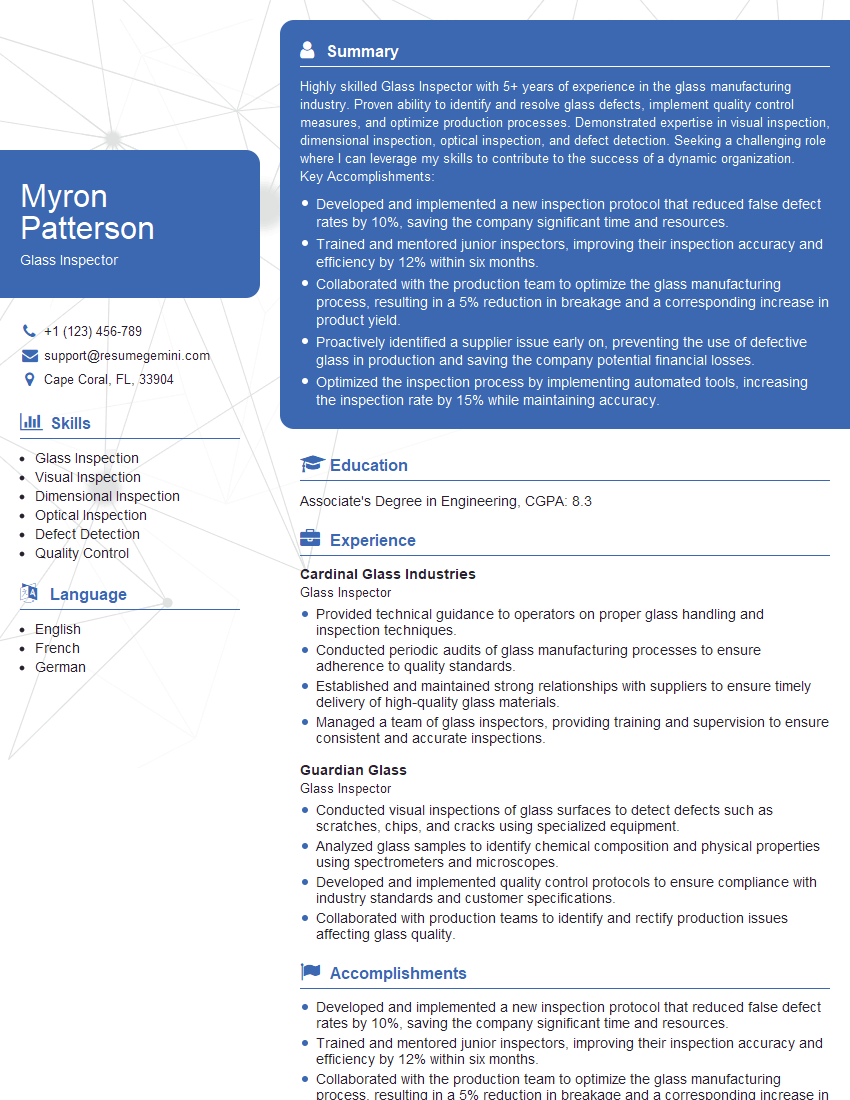
Glass Inspector Resume Sample
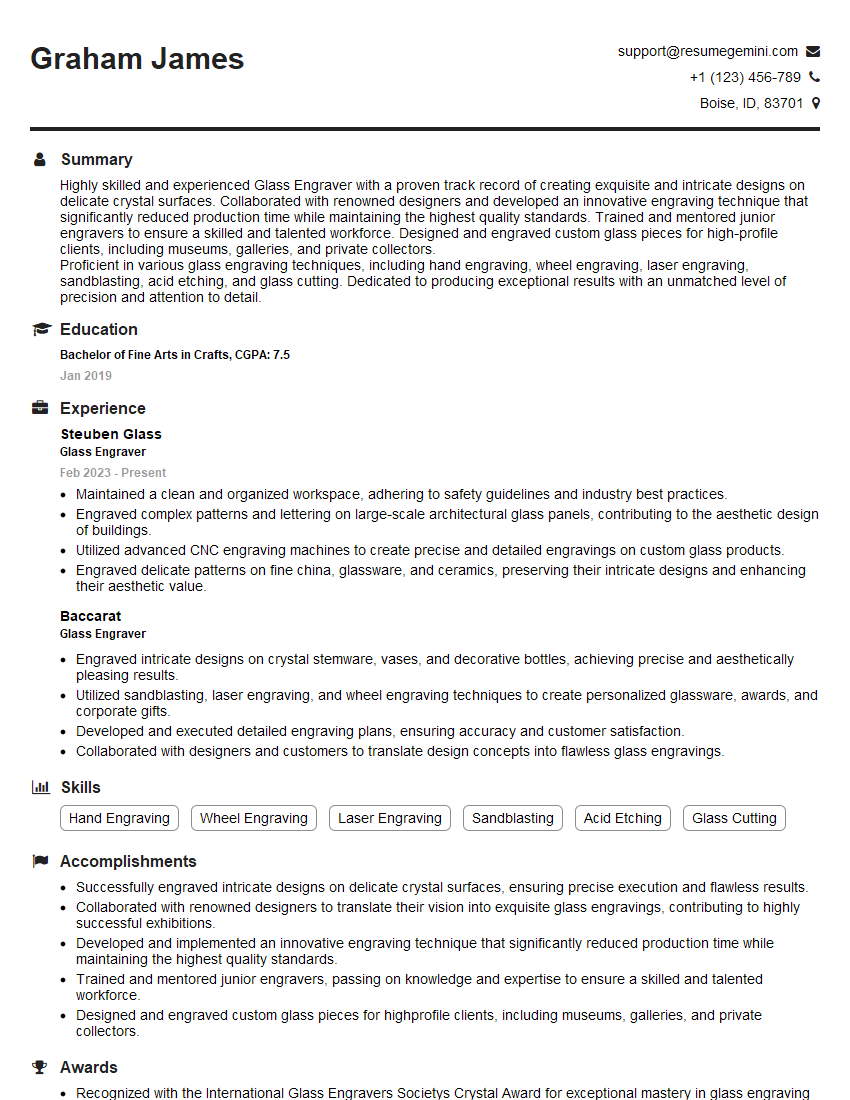
Glass Engraver Resume Sample

Glass Etcher Resume Sample
Explore more articles
Users Rating of Our Blogs
Share Your Experience
We value your feedback! Please rate our content and share your thoughts (optional).
What Readers Say About Our Blog
Very informative content, great job.
good