Interviews are more than just a Q&A session—they’re a chance to prove your worth. This blog dives into essential Glass InDesign interview questions and expert tips to help you align your answers with what hiring managers are looking for. Start preparing to shine!
Questions Asked in Glass InDesign Interview
Q 1. Explain your experience using Glass InDesign’s features for creating and managing master pages.
Master pages in Glass InDesign (assuming this is a fictional software similar to Adobe InDesign) are like templates for your document. They allow you to create consistent elements – headers, footers, page numbers, running heads – that automatically appear on every page. My experience involves creating multiple master pages for different sections of a document, perhaps one for chapters, another for appendices, and a third for the table of contents. I’d carefully plan the layout of each master page, considering the space needed for text, images, and page numbers. I then use layers effectively within the master pages to keep elements organized and easily editable. For example, I might have a separate layer for the header, one for the footer, and another for page numbers, allowing me to modify them independently without affecting other elements.
Managing master pages means regularly checking for consistency and updating them if necessary. If the design of the header needs to be updated, I simply make the changes on the master page, and those changes propagate to all pages linked to that master. This saves significant time and ensures consistent branding.
Q 2. How do you ensure consistent branding and style across multiple pages in a Glass InDesign document?
Maintaining consistent branding across multiple pages hinges on effectively utilizing master pages (as described above), paragraph styles, and character styles. Think of styles as pre-defined templates for your text. I create styles for headings (H1, H2, etc.), body text, captions, and other text elements, each with specific font, size, color, and spacing. This ensures that every H1 heading, for example, looks exactly the same throughout the document. Similarly, I define character styles for elements like emphasized words or specific terms. This method prevents accidental inconsistencies and allows for quick, global changes—changing the font of all H1 headings only requires altering the style definition once.
Beyond styles, I use swatches for consistent color use. Defining brand colors in swatches ensures that everyone on the team uses the precise shades approved for the project. This is critical for maintaining a unified and professional look and feel.
Q 3. Describe your process for importing and editing high-resolution images within Glass InDesign.
Importing high-resolution images is crucial for print quality. I typically use the Place command in Glass InDesign to import images. This command allows for flexible placement and scaling. Before placing, I ensure my images are optimized for print—high resolution (at least 300 DPI for print), appropriate file format (TIFF or JPEG are common choices), and appropriately sized to avoid unnecessary file sizes. Overly large images can significantly slow down the program and increase file size.
Editing images directly within Glass InDesign is limited; therefore, I usually prefer to pre-edit images in dedicated software like Photoshop. I’ll make any color corrections, cropping, or other adjustments there before importing them into Glass InDesign. This workflow ensures the best possible image quality and avoids potentially degrading the image during editing within the layout software.
Q 4. How do you handle color management and color profiles in Glass InDesign?
Color management is crucial, especially for projects destined for print. I always work in a color-managed workflow, making sure that my Glass InDesign document is using a specific color profile, often CMYK, appropriate for the printing process. The choice of color profile depends on the printer and the printing method used. I ensure all images imported have their profiles embedded correctly and match the document’s profile, or, use a color conversion setting in Glass InDesign to convert images to the desired CMYK profile. This process helps ensure that the colors shown onscreen accurately represent the final printed colors.
I also regularly check the color gamut and make sure that no colors used fall outside the printable range, which can lead to unexpected color shifts during printing. This involves verifying the color settings against the printer’s capabilities.
Q 5. Explain your approach to creating and using paragraph and character styles in Glass InDesign.
Paragraph and character styles are the cornerstones of efficient and consistent design in Glass InDesign. Think of them as templates for text formatting. I create paragraph styles for headings, body text, captions, and other text elements, defining their font, size, leading (line spacing), indentation, and alignment. Character styles allow me to apply specific formatting within a paragraph, such as bolding, italicizing, or underlining certain words without altering the overall paragraph style.
For example, I might create a ‘Body Text’ paragraph style with a specific font, size, and leading, and then create a ‘Subheading’ paragraph style with a larger font size and bold formatting. This allows me to apply these styles consistently throughout the document. Any changes to a style automatically update all instances of that style, saving significant time and ensuring consistency. Using Styles is crucial for large projects or projects that require multiple designers to work together.
Q 6. How do you create and manage tables in Glass InDesign?
Creating tables in Glass InDesign is straightforward. I typically use the Table tool to create a table and then specify the number of rows and columns. I find it’s best practice to define table styles before inserting the data, specifying things such as cell padding, cell borders, and overall alignment. This provides consistency. One can use cell styles within the table for even more granular control over specific cells or rows. For example, I might have a header row style that is bold and different from the body cells.
Managing tables involves keeping them organized and easily editable. I always use well-defined styles to maintain a clean and consistent appearance. This allows me to easily change the overall look and feel of all tables in the document simultaneously.
Q 7. Describe your experience working with linked files in Glass InDesign.
Linked files in Glass InDesign are images, graphics, or other files placed into your document without embedding them. This keeps the file size of the Glass InDesign document relatively small, but it also means that the external file must be accessible for the document to work correctly. My experience working with linked files involves meticulous organization. I keep all linked files in a well-defined folder structure so I can easily locate them. I also regularly check the links to ensure that all files are still in their original location, and haven’t been moved or deleted. The ‘Links’ panel in Glass InDesign helps manage and update these links.
Working with linked files requires careful planning, ensuring that the files remain available during the entire project lifecycle. If a linked file is moved or altered, it’s crucial to update the links within the Glass InDesign document to reflect these changes and avoid broken links.
Q 8. How do you create and manage text boxes and frames effectively in Glass InDesign?
Creating and managing text boxes and frames in InDesign (assuming you meant InDesign, not “Glass InDesign” as that’s not a recognized software) is fundamental to page layout. Think of them as containers for your content – text, images, graphics. You create them using the Type tool (T) for text boxes and the Rectangle Frame tool (F) or other frame tools for images and other elements.
Effective management involves using tools like the Transform panel (Window > Transform) for precise size and position adjustments, the Content Grabber tool (a small white square appearing on the edges of a frame) to easily resize content within a frame proportionally, and nested frames for complex layouts. For instance, you might nest a smaller image frame within a larger text frame to create a caption.
- Creating Text Boxes: Click and drag with the Type tool (T) to create a text box of the desired size.
- Creating Frames: Click and drag with the Rectangle Frame tool (F), Ellipse Frame tool (F) or other relevant frame tool to create a frame. Then place your image into it by dragging and dropping the image file or using the Place command (File > Place).
- Using the Transform Panel: Precisely control the size, position, and rotation of your frames and text boxes.
- Master Pages: For consistent page elements across multiple pages, create frames and text boxes on master pages, and then they’ll appear automatically on every page based on that master.
Example: I recently designed a brochure where I used nested frames to place product images within text boxes, each containing a product description. This clean approach ensured that the images scaled consistently and the text flowed beautifully around them, enhancing the visual appeal.
Q 9. Explain your proficiency in using the Glass InDesign object styles.
Object Styles in InDesign are a powerful time-saver. They allow you to create and apply pre-defined formatting to multiple objects. Think of them as templates for your design elements. This ensures consistency in your document’s appearance – crucial for branding and a professional look.
My proficiency includes creating styles for various elements like text boxes, images, and shapes, defining their size, stroke, fill, effects, and paragraph styles. I utilize object styles to quickly apply consistent formatting throughout a project, saving significant time, and ensuring design consistency, even when working on a complex project with multiple pages and design elements.
Example: I often create object styles for callout boxes with specific colors, rounded corners, and drop shadows. This way, I can instantly apply the same style to any callout box in my document without manually adjusting each one individually. One change to the style automatically updates all elements using that style across the document.
Practical Application: During a recent magazine redesign, we used object styles extensively for all our graphic elements—sidebars, pull quotes, and infographic boxes—ensuring a cohesive and visually appealing result. Making a style change was as simple as modifying the style and having it update throughout the document.
Q 10. How do you ensure accurate pagination and page numbering in Glass InDesign?
Accurate pagination and page numbering is vital for print design and readability. In InDesign, this is managed through the Pages panel (Window > Pages) and the Master Pages.
I ensure accuracy by setting up master pages with headers, footers, and page numbers, defining the page numbering style (e.g., Roman numerals for a table of contents, Arabic numerals for chapter pages), and configuring section breaks for specific numbering sequences. I also carefully check the document’s page numbering and order, using the Pages panel to reorganize pages if needed.
- Master Pages: Create consistent headers, footers, and page numbers across your document.
- Page Numbering Styles: Choose the appropriate numbering format for your document sections.
- Section Breaks: Use section breaks to reset page numbering to 1 when starting a new section.
- Pages Panel: View and manage all pages within your document, rearrange pages, and check for errors in pagination.
Example: In a book project, I used different master pages for different sections (chapter pages, introduction, index). Each master page had different headers and footers, and I used section breaks to ensure that each section’s page numbering was correct and started from 1.
Q 11. Describe your experience with creating interactive PDF documents using Glass InDesign.
Creating interactive PDFs from InDesign adds another layer of engagement and functionality. This often involves using InDesign’s features in conjunction with PDF export options and potentially external tools. My experience includes implementing:
- Hyperlinks: Linking text and objects to specific pages, websites, or email addresses within the PDF.
- Buttons and Interactive Elements: Using buttons to trigger actions like going to another page or playing a sound (often requiring additional software like Acrobat Pro).
- Bookmarks: Creating bookmarks for easy navigation within the long PDF documents.
- Forms: Creating fillable forms in the PDF for data collection.
- Animations: (Using third-party plugins, if needed) to create simple animations to enhance the experience.
Workflow: I typically start by designing the layout in InDesign, adding interactive elements and hyperlinks. Then, I export to PDF using the appropriate settings in InDesign, and in some cases, I use Acrobat Pro to further enhance interactivity or add security features.
Example: I created an interactive brochure for a client where clicking on a product image would open a link to the product page on their website. Using buttons made it very user-friendly.
Q 12. How do you troubleshoot common Glass InDesign errors or issues?
Troubleshooting InDesign issues often involves a systematic approach. I start by identifying the error message, its context within the document, and recent actions. Here’s my strategy:
- Check Error Messages: Carefully read InDesign error messages as they frequently provide clues to the root cause of the problem.
- Restart InDesign: A simple restart often resolves temporary glitches.
- Check for Corrupted Files: If the issue persists, try opening a backup copy of the file or creating a new document and importing the contents.
- Update InDesign and Drivers: Ensure that InDesign and your computer’s drivers are up-to-date.
- Memory and Performance: Check to ensure your computer has sufficient RAM to handle the large InDesign file. Close unnecessary applications running on your computer.
- Font Issues: Font conflicts are a common source of errors. Try substituting fonts if necessary.
- Check Preferences: Incorrect preferences can cause problems. Reset preferences or try a different preferences set.
Example: I once encountered a problem where images weren’t appearing correctly. After checking the image links, I found that the problem was due to a corrupted image file. Replacing the file resolved the issue.
Q 13. What are your preferred methods for creating and managing layers in Glass InDesign?
Managing layers in InDesign is critical for organizing complex designs. I use a well-defined approach to ensure clarity and efficiency:
- Logical Layer Naming: I use clear and descriptive names for layers (e.g., ‘Background,’ ‘Header,’ ‘Body Text,’ ‘Images’).
- Grouping Related Elements: I group related elements together within layers to keep things organized.
- Color-Coding Layers: I often use color-coding to visually distinguish layers.
- Layer Locking: I selectively lock layers to prevent accidental modifications.
- Layer Visibility: I control the visibility of individual layers to focus on specific parts of the document.
Example: In a multi-page brochure design, I might have separate layers for background images, text content, graphic elements, and even individual illustrations, allowing me to work on different elements without disturbing others.
Practical Application: This structured layering approach is essential for collaborative projects, allowing multiple designers to work on the same document without conflicting changes.
Q 14. Describe your workflow for exporting files from Glass InDesign for various print and digital formats.
My workflow for exporting files from InDesign depends on the intended use – print or digital.
For Print:
- High-Resolution PDF: I typically export to a high-resolution PDF (PDF/X-1a for press-ready files) ensuring that all fonts, images, and colors are embedded and ready for professional printing.
- Image Resolution: I ensure that all images have appropriate resolutions (at least 300 dpi) for optimal print quality.
- Color Space: I use CMYK color space for print, avoiding RGB as the latter is designed for screen display and does not translate well into print.
- Prepress Checks: Before sending a final file to print, I run preflight checks within InDesign to catch any potential issues.
For Digital:
- Interactive PDF: For interactive documents (as discussed earlier), I export to an interactive PDF with bookmarks, links, and buttons.
- JPEG/PNG Images: For web use, I export images as JPEGs (for photos) or PNGs (for graphics with transparent backgrounds) at appropriate web resolutions.
- HTML, EPUB: For online publication or ebooks, I may use InDesign’s export options for HTML or EPUB format to maintain the formatting and layout while adapting it to different screen sizes.
Example: For a client’s annual report, I exported a PDF/X-1a for the print version and provided high-resolution JPEG images for use on their website.
Q 15. How do you use Glass InDesign’s preflight features?
Preflighting in Adobe InDesign (assuming ‘Glass InDesign’ is a typo and refers to Adobe InDesign) is a crucial step before sending a document to print or exporting it. It’s like a final quality check that identifies potential problems early on, preventing costly reprints or embarrassing errors. The preflight feature analyzes your document for issues like missing fonts, low-resolution images, overset text, and color inconsistencies.
My process involves creating a custom preflight profile tailored to specific project requirements. For instance, for a print job, I’d include checks for CMYK color mode, appropriate image resolutions (at least 300 DPI), and the presence of all linked assets. For web export, I would focus on RGB color mode and ensuring all elements are optimized for screen viewing. I then run the preflight check, address any warnings or errors that appear, and ensure a clean report before proceeding.
For example, if a missing font is flagged, I replace it with a suitable alternative. If an image is low-resolution, I either replace it with a higher-resolution version or adjust its usage. This proactive approach saves time and resources in the long run, making me more efficient and ensuring consistently high-quality output.
Career Expert Tips:
- Ace those interviews! Prepare effectively by reviewing the Top 50 Most Common Interview Questions on ResumeGemini.
- Navigate your job search with confidence! Explore a wide range of Career Tips on ResumeGemini. Learn about common challenges and recommendations to overcome them.
- Craft the perfect resume! Master the Art of Resume Writing with ResumeGemini’s guide. Showcase your unique qualifications and achievements effectively.
- Don’t miss out on holiday savings! Build your dream resume with ResumeGemini’s ATS optimized templates.
Q 16. How experienced are you with creating and using stylesheets in Glass InDesign?
I have extensive experience creating and utilizing stylesheets in InDesign. They are the cornerstone of efficient and consistent document design. Think of stylesheets as templates for your text and graphic elements. They ensure uniformity across a document and simplify future edits. For instance, I’ll create paragraph styles for headings, body text, captions, etc., each with its own defined font, size, spacing, and alignment. Similarly, I create character styles for things like emphasized words or drop caps.
Consider a multi-page brochure. With stylesheets, if the client decides to change the font for headings, I can simply update the heading paragraph style, and the change automatically propagates throughout the entire document, saving hours of manual work. I frequently use nested styles for complex formatting, allowing for finer control and better organization. My style sheets are meticulously documented, allowing me and other collaborators to effortlessly understand their purpose and usage.
Q 17. Describe your process for creating and using templates in Glass InDesign.
My template creation process in InDesign begins with understanding the project’s specific needs. I thoroughly analyze the client’s requirements, considering page size, content structure, branding elements, and intended use. For example, if designing a newsletter, I’d ensure the template accommodates columns, headers, footers, image placements, and call-to-action areas.
I then build the template, meticulously organizing layers and master pages, ensuring all design elements are consistent and easily editable. I frequently use master pages to create reusable elements that appear across all pages, such as headers, footers, page numbers, and consistent margins. Once created, the templates are thoroughly tested and refined before distribution to ensure seamless functionality and minimal errors. Before I start any project, I carefully review the existing brand guidelines to ensure accuracy and consistency. My templates are often saved in a well-organized folder structure, allowing for easy retrieval and management.
Q 18. Explain your understanding of bleeds and margins in Glass InDesign.
Bleeds and margins are fundamental concepts in page layout crucial for professional printing. Margins define the safe area within the page where content should reside, preventing crucial elements from being cut off during trimming. Bleeds extend the design beyond the trim edge, compensating for potential inaccuracies during the printing and cutting process. Think of bleeds as an insurance policy that ensures your design isn’t incomplete after trimming.
For example, a background color or image should extend beyond the trim marks to allow for a clean cut. Incorrect bleed settings can result in visible white borders or incomplete designs. I always meticulously set up bleeds according to the printer’s specifications (usually 0.125 inches or 3mm), and I double-check that all images and background elements extend into the bleed area. Similarly, I carefully define margins to ensure that text and important elements are safely placed away from the edge. Understanding and correctly implementing bleeds and margins is key to achieving professional-looking printed materials.
Q 19. How familiar are you with Glass InDesign’s scripting capabilities?
While I’m not a dedicated InDesign scripter, I possess a working knowledge of its scripting capabilities, primarily using JavaScript and AppleScript. This knowledge allows me to automate repetitive tasks and customize workflows. I have used scripts to automate tasks such as generating page numbers in a specific format, applying styles consistently, or even exporting documents in a variety of formats.
For instance, I’ve written scripts to rename files based on specific attributes, thus saving time and reducing manual error during batch processing. This isn’t a core part of my daily workflow, but it’s an invaluable tool that increases my efficiency when tackling large-scale projects or highly repetitive tasks. I am always open to learning and expanding my scripting proficiency. I find online tutorials and community forums are excellent resources for learning and problem-solving.
Q 20. Describe your experience using Glass InDesign’s typography tools.
InDesign’s typography tools are a cornerstone of my design process. I have extensive experience utilizing InDesign’s advanced typography features to create visually appealing and readable documents. I understand the importance of kerning, tracking, leading, and the various typographic nuances that contribute to a professional outcome. I often utilize OpenType features and ligatures to enhance the visual appeal of text.
Consider a title; proper kerning ensures the spacing between individual letters is visually pleasing. Accurate leading (line spacing) provides clear visual separation and improved readability. I consistently leverage paragraph and character styles for maintaining consistency, allowing for efficient modifications of typeface and formatting across entire documents. I also pay close attention to font pairings and understand the difference between serif and sans-serif fonts and their applications. My goal is always to create text that is not just readable but aesthetically pleasing and reflects the overall branding and message.
Q 21. How do you handle version control and collaboration when using Glass InDesign?
Version control and collaboration are essential in a professional setting. For InDesign projects, I typically rely on a combination of cloud-based solutions and robust file naming conventions. Cloud storage services like Dropbox, Google Drive, or Creative Cloud Libraries allow multiple team members to access and work on the same files simultaneously. I use clear, descriptive file names including project names, version numbers, and dates to avoid confusion.
For larger, more complex projects, a version control system may be used. However, often, for projects where a team may only have one or two designers, simple cloud solutions along with consistent communication and clearly defined roles keeps projects well-organized and efficient. Frequent check-ins, and well-defined tasks, ensures everyone is aware of the progress and any potential conflicts or issues are swiftly addressed. This collaborative approach minimizes conflicts and maximizes efficiency, leading to a superior final product.
Q 22. How do you manage large and complex documents in Glass InDesign efficiently?
Managing large and complex InDesign documents efficiently hinges on a structured approach. Think of it like building a skyscraper – you wouldn’t just start throwing bricks together! Here’s my strategy:
- Master Pages: I heavily leverage master pages for consistent styles and elements across the document. This avoids repetitive work and ensures uniformity. For example, if you’re designing a magazine, your master page would contain the header, footer, and page numbers.
- Templates: Creating templates for recurring sections (like chapter starts or case studies) saves significant time and maintains consistency. Imagine having a template for a product description; you just populate the specific product details.
- Paragraph and Character Styles: I meticulously define styles to control typography, ensuring consistent formatting across the document. This is crucial for large documents where consistency is paramount. Once a style is set, you just apply it; updating a style instantly updates all elements using that style.
- Layers and Layer Groups: Organizing elements into layers and groups makes navigation easy and allows for selective editing. It’s like having labeled drawers in a filing cabinet. This is particularly useful when working with many complex elements such as infographics.
- Libraries: InDesign Libraries are incredible for reusing elements across documents or even projects. You can store graphics, text boxes, and even entire page elements, creating a central repository for your commonly used assets. This promotes consistency and efficiency.
- Checkboxes & Conditional Text: Leveraging these features allows for creating dynamic documents where content visibility depends on the conditions set by the user.
- Version Control: Regularly saving different versions with descriptive file names is crucial for collaborative projects or to revert to previous edits if needed. It’s like having multiple checkpoints in your project.
Q 23. Explain your understanding of the differences between print and digital workflows in Glass InDesign.
Print and digital workflows in InDesign differ significantly, primarily due to the output medium. Print focuses on high-resolution output for physical materials, while digital emphasizes interactivity and online viewing.
- Print Workflow: This involves preparing files for professional printing. This includes high-resolution images (300 DPI or higher), accurate color profiles (CMYK), proper bleed and trim marks, and ensuring all fonts are embedded. It also considers factors like paper selection and press limitations.
- Digital Workflow: The emphasis is on creating interactive PDFs, e-books, or web-ready content. We focus on optimized file size, embedding interactive elements like buttons, hyperlinks, and animations. Color space (RGB) is generally used and screen resolution is adjusted to match the intended display.
Consider a client requiring both a printed brochure and an online version. The printed brochure needs high-resolution images and CMYK color for professional printing. The online version, however, can utilize lower-resolution images, RGB color for vibrant screen display, and interactive elements to enhance user engagement. I would manage these separately, creating variations of the content as needed.
Q 24. Describe your process for creating and using interactive elements (buttons, hyperlinks) in Glass InDesign.
Creating interactive elements in InDesign is straightforward, and often involves using interactive PDF features.
- Buttons: I typically use image frames or text boxes and assign them actions like opening a URL, going to a specific page, or playing an audio clip. This is done in the ‘Interactive’ panel. I would always carefully test the functionality to ensure it works flawlessly across different PDF readers.
- Hyperlinks: Adding hyperlinks is equally easy. Select the text or object, open the Hyperlinks panel, and enter the URL. Again, testing across multiple PDF readers is crucial.
- Interactive Forms: For complex interactivity, I use interactive forms for user input, such as checkboxes, radio buttons, and text fields. This enables data collection and submission which is particularly useful for surveys or applications.
For example, in a digital brochure, I might add a button linking to a product page on the company website, or incorporate interactive maps which allow users to explore the location of the business branches.
Q 25. How proficient are you with using Glass InDesign’s automation features?
I’m highly proficient with InDesign’s automation features. I regularly use:
- Scripts: I’ve written and adapted scripts using AppleScript or JavaScript to automate repetitive tasks like batch processing images, creating specific page layouts, or exporting files in various formats. This significantly boosts productivity. For instance, a script can automatically resize and place images into predefined frames.
- GREP Styles: GREP styles enable finding and styling text based on patterns, crucial for consistently formatting complex content like technical manuals or legal documents. Imagine automatically formatting all instances of section headings or legal citations.
- Data Merge: I utilize data merge extensively to personalize mass mailings, create personalized certificates, or populate data into templates, saving countless hours of manual input. This is useful for creating hundreds of personalized greeting cards.
My experience with scripting allows for a high degree of customization, tailoring InDesign to meet very specific project demands.
Q 26. Describe your experience working with XML and data merging in Glass InDesign.
My experience with XML and data merging in InDesign is extensive. I utilize this capability to dynamically populate InDesign documents with data from external sources. This simplifies creating documents with variable content such as product catalogs, personalized brochures or reports.
- XML Structure: I’m adept at working with XML structures, understanding how to map data fields from XML files to corresponding elements in the InDesign document. This involves careful planning and a precise understanding of the XML schema.
- Data Mapping: I precisely map data fields to InDesign text and image frames, creating a dynamic link. A change in the XML data will reflect in the InDesign document.
- Error Handling: I’m proficient at troubleshooting errors that might arise during the data merge process, ensuring a smooth workflow.
For instance, working on a product catalog, I’d use an XML file containing product information (name, description, price, image path). This XML data would then be dynamically imported into an InDesign template to generate individual product pages quickly and accurately.
Q 27. How do you optimize Glass InDesign files for efficient file size and performance?
Optimizing InDesign files for efficient file size and performance is vital, especially for large documents or digital distribution. My strategies include:
- High-Resolution Images: Using images with appropriate resolution (300 DPI for print, 72 DPI for web) is crucial. Oversized images significantly bloat file size.
- Image Compression: Employing lossy compression (JPEG) for photographs and lossless compression (PNG) for graphics and text helps reduce file sizes without noticeable quality loss. It’s like having a zip file containing only necessary content.
- Vector Graphics: Utilizing vector graphics (AI, EPS, SVG) for logos and illustrations keeps file sizes small and ensures sharp scalability. Resizing them doesn’t degrade quality.
- Font Embedding: Embed only necessary fonts; embedding too many increases file size unnecessarily. Using web-safe fonts often is a smart strategy for online publications.
- PDF Optimization: When exporting PDFs, I utilize compression settings to balance file size with quality. High compression is great for online use, whereas print-quality often needs less compression.
- Unnecessary Objects: Regularly checking for and removing unused objects, empty frames, and unnecessary layers minimizes file size and improves performance.
Q 28. What are some of the best practices you follow when working with Glass InDesign?
My best practices for working with InDesign revolve around efficiency, consistency, and maintainability:
- Consistent Naming Conventions: Using a logical and consistent naming convention for layers, styles, and files makes the document more organized and easier to navigate.
- Regular Backups: This goes without saying – regularly backing up files is essential to avoid data loss. Use a version control system or cloud storage.
- Modular Design: Breaking down complex documents into smaller, manageable components makes the work easier to handle, and changes can be implemented more efficiently.
- Collaboration Tools: If working on a team, we utilize version control systems like Git or cloud-based collaboration platforms to ensure efficient collaboration.
- Thorough Proofreading: Always take time for proofreading and spell-checking before finalizing the document.
- Testing: Rigorous testing throughout the design process helps ensure that interactive elements work correctly and the final output meets the client’s expectations.
By adhering to these practices, I ensure that the design process is efficient, resulting in high-quality, error-free documents that meet client requirements.
Key Topics to Learn for Glass InDesign Interview
- Understanding Glass InDesign’s Core Functionality: Grasp the fundamental principles of the software, including its strengths and limitations compared to other design applications.
- Mastering Layout and Typography: Demonstrate proficiency in creating clean, well-structured layouts and applying typographic principles for optimal readability and visual appeal. Practice with various text styles and formatting options.
- Image and Graphics Handling: Learn how to efficiently import, edit, and manipulate images within Glass InDesign. Understand resolution, color modes, and image optimization techniques.
- Working with Color and Styles: Develop skills in creating and managing color palettes, styles, and swatches to maintain design consistency and efficiency across projects.
- Prepress and Print Production: Understand the workflow for preparing files for print, including color management, bleed, and other prepress considerations. This showcases your practical knowledge of professional design processes.
- Advanced Features & Automation: Explore advanced features like scripting, automation, and plugins to demonstrate your ability to optimize workflows and increase productivity. This showcases initiative and a commitment to efficiency.
- Problem-solving and Troubleshooting: Be prepared to discuss how you approach common design challenges and troubleshooting within Glass InDesign. Explain your process and demonstrate critical thinking skills.
Next Steps
Mastering Glass InDesign opens doors to exciting opportunities in the graphic design and publishing industries. Proficiency in this software is highly valued, significantly enhancing your career prospects. To maximize your job search success, creating an ATS-friendly resume is crucial. ResumeGemini is a trusted resource that can help you build a professional and impactful resume tailored to showcase your Glass InDesign skills. Examples of resumes specifically tailored to Glass InDesign positions are available within ResumeGemini to help guide you.
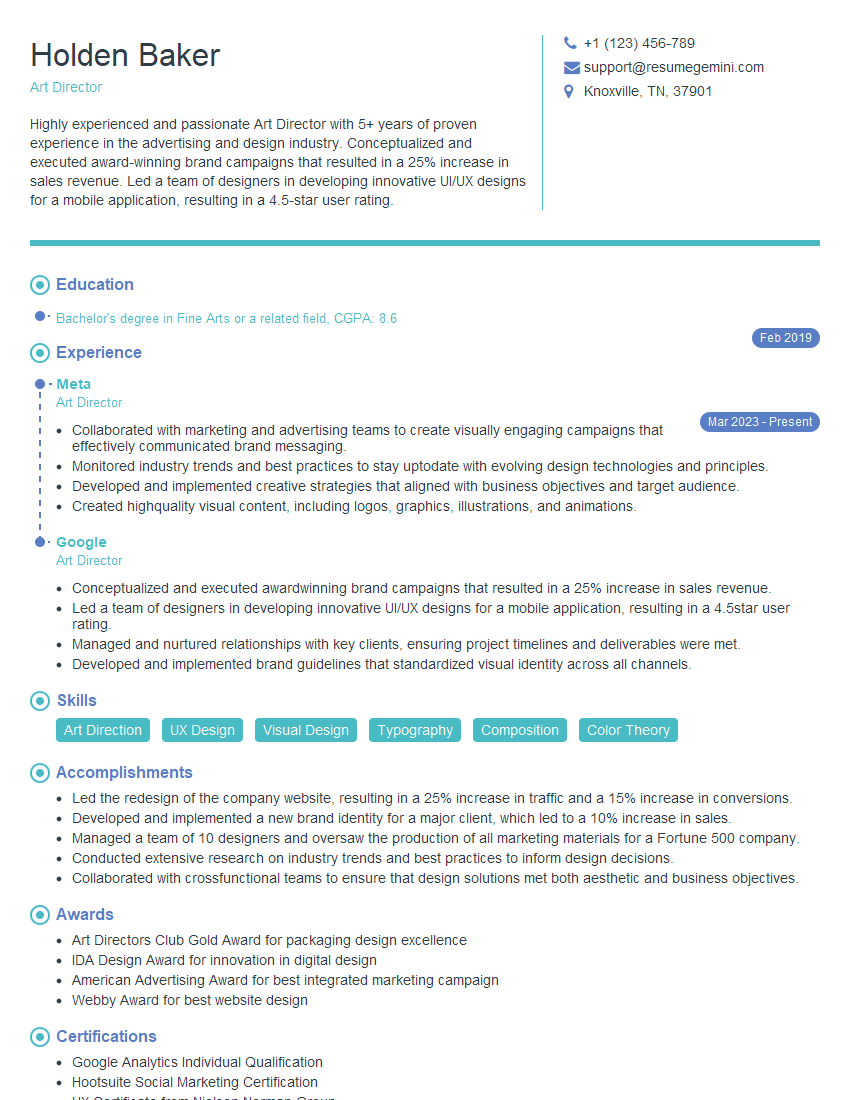
Art Director Resume Sample

Creative Director Resume Sample
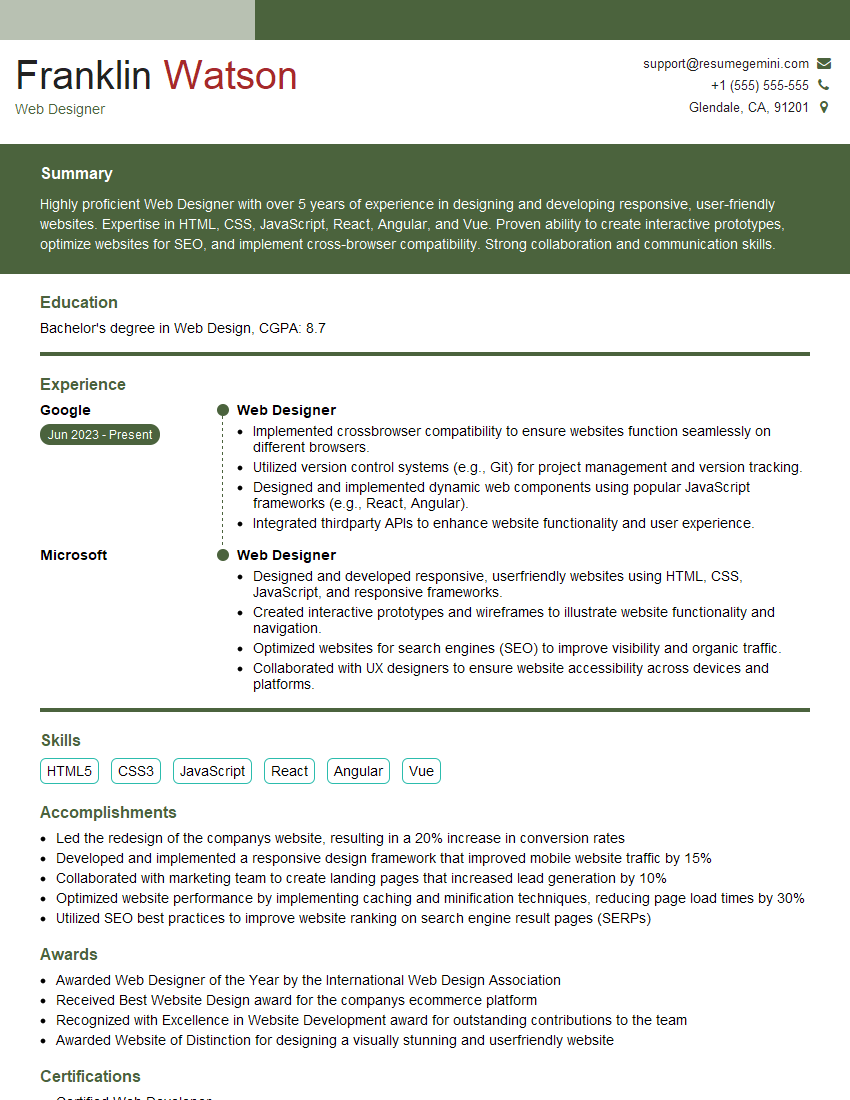
Web Designer Resume Sample
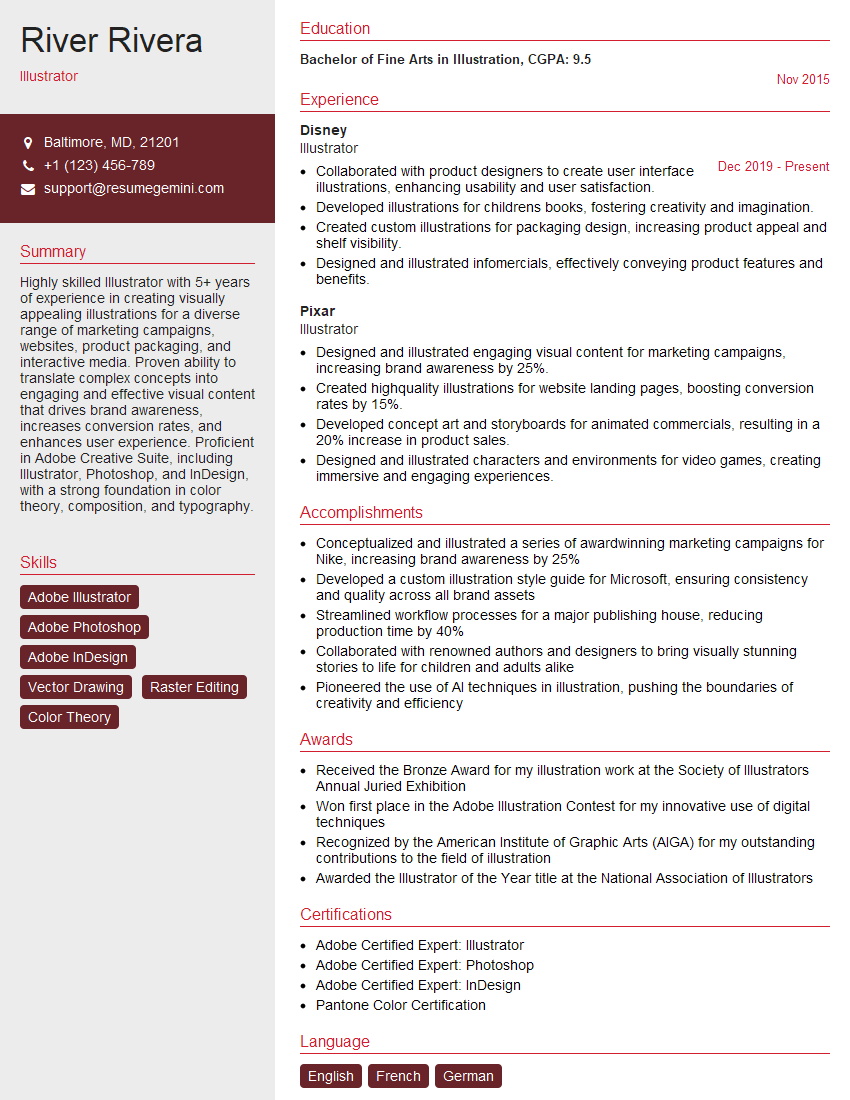
Illustrator Resume Sample
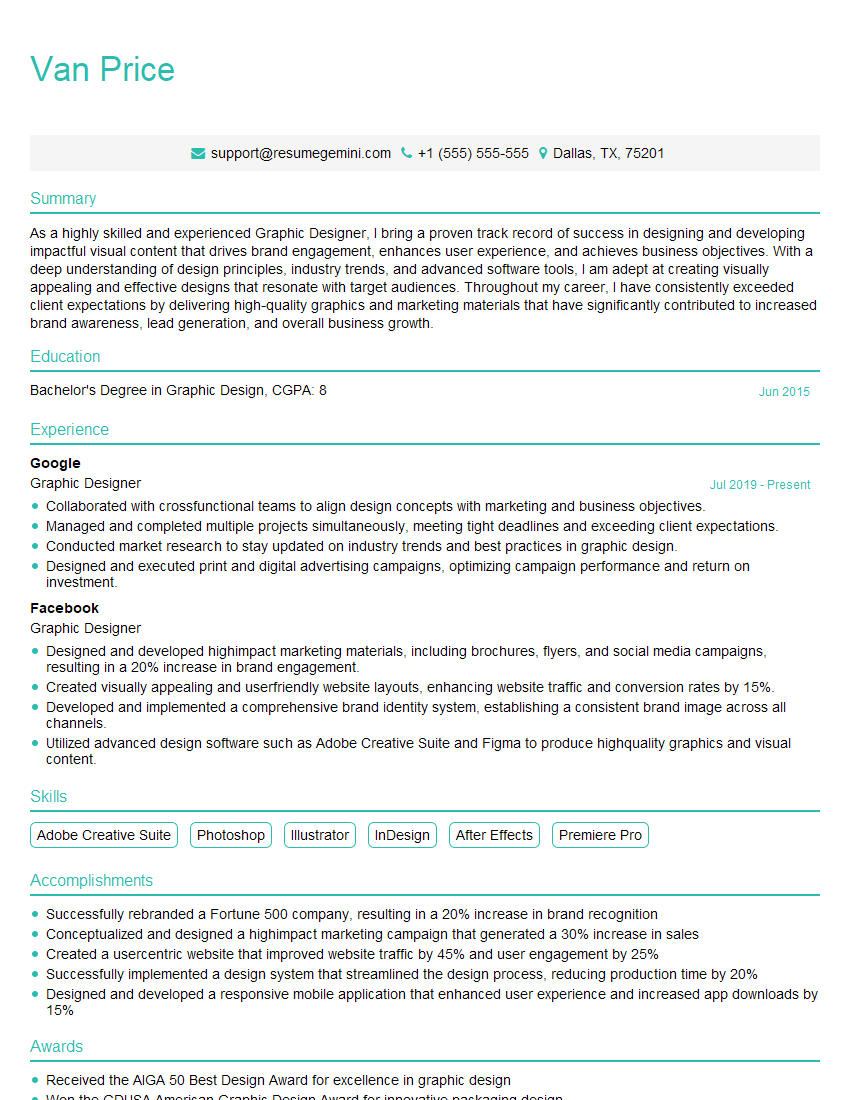
Graphic Designer Resume Sample
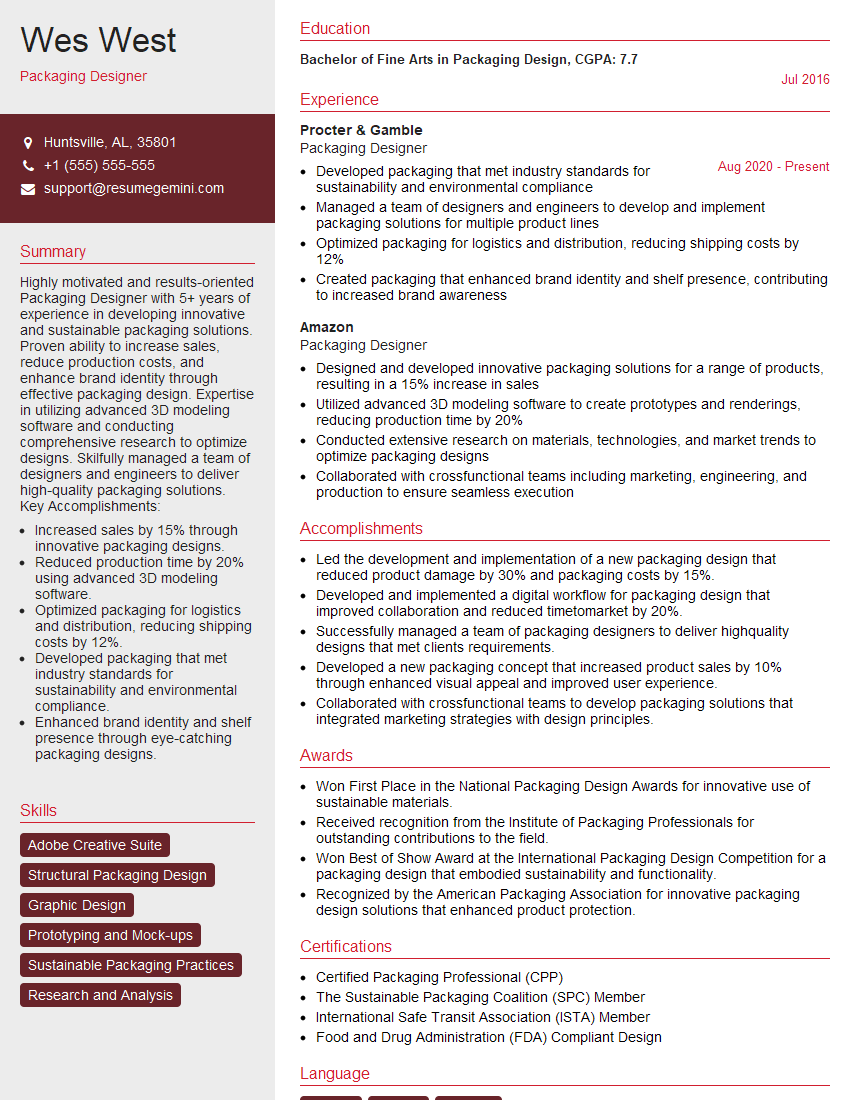
Packaging Designer Resume Sample
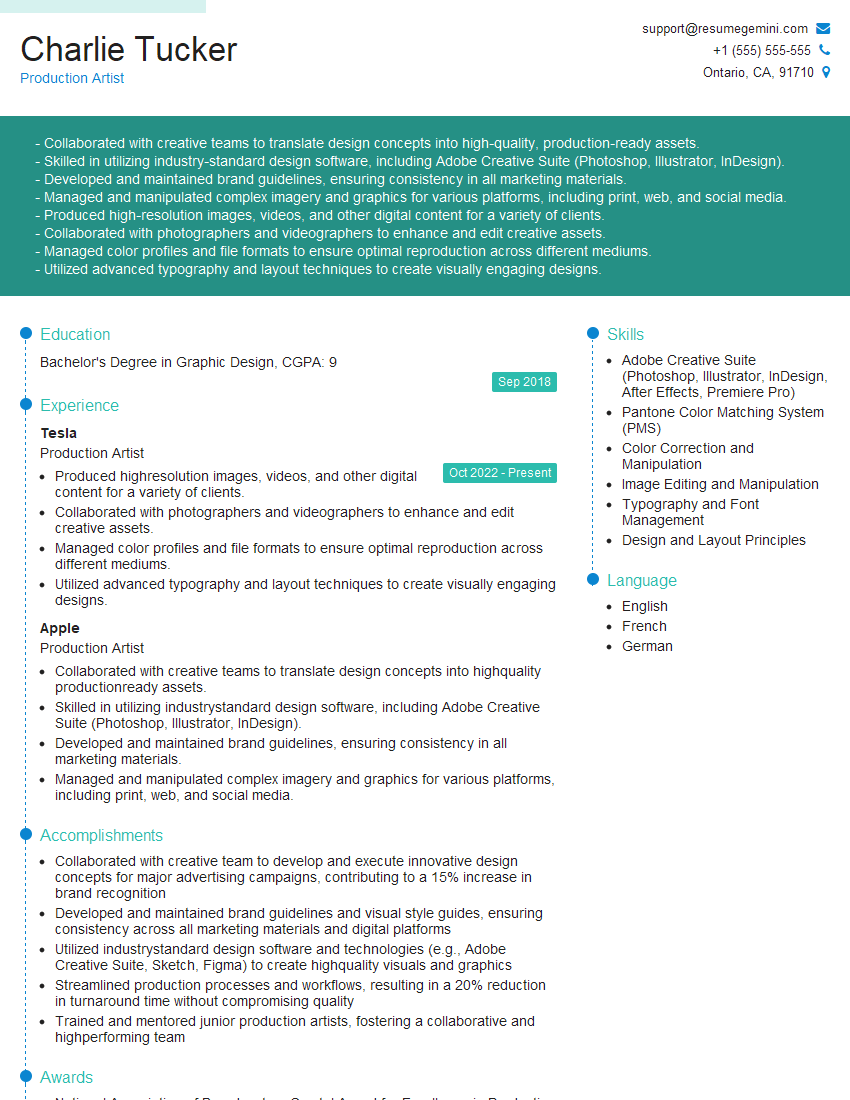
Production Artist Resume Sample
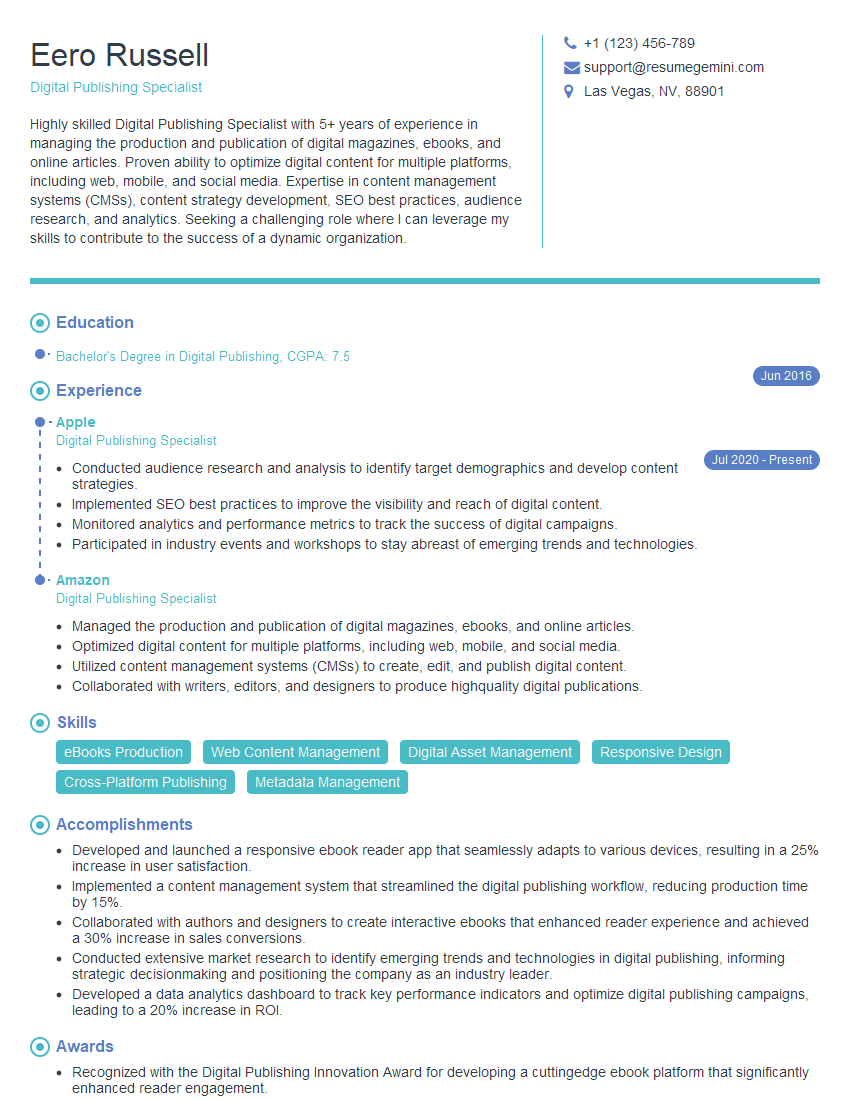
Digital Publishing Specialist Resume Sample
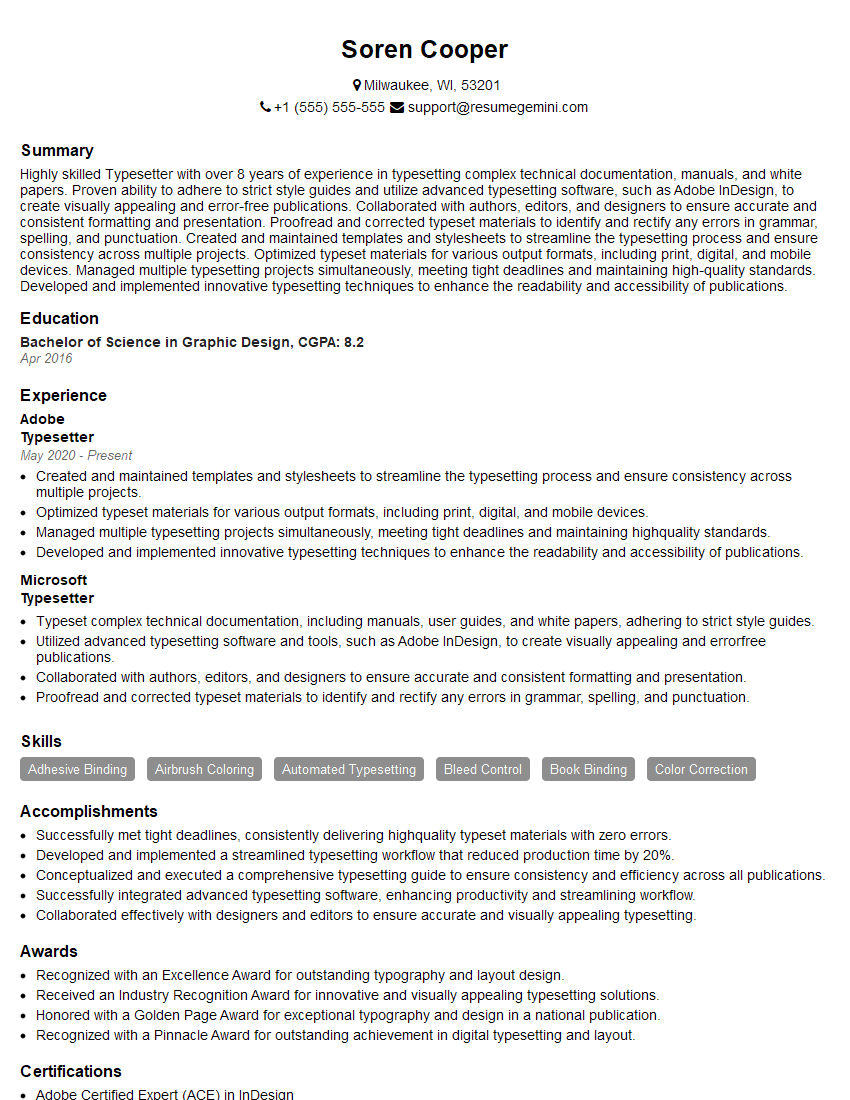
Typesetter Resume Sample
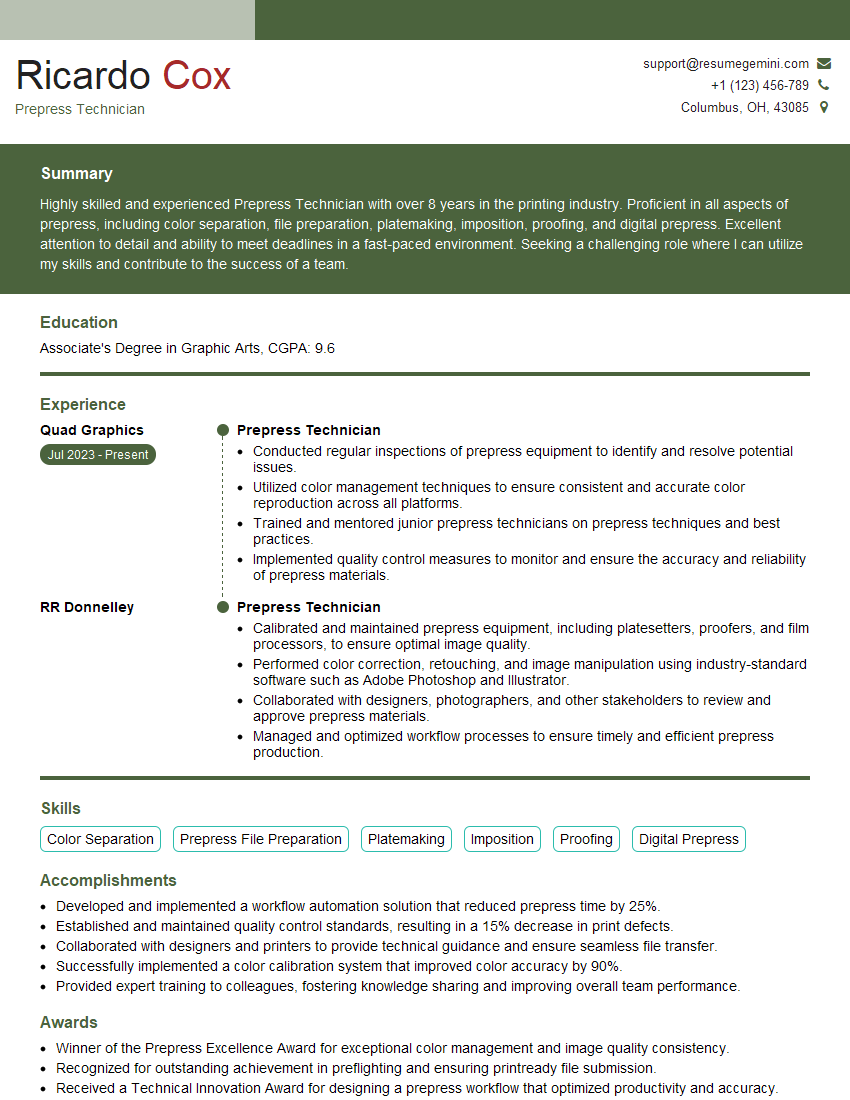
Prepress Technician Resume Sample
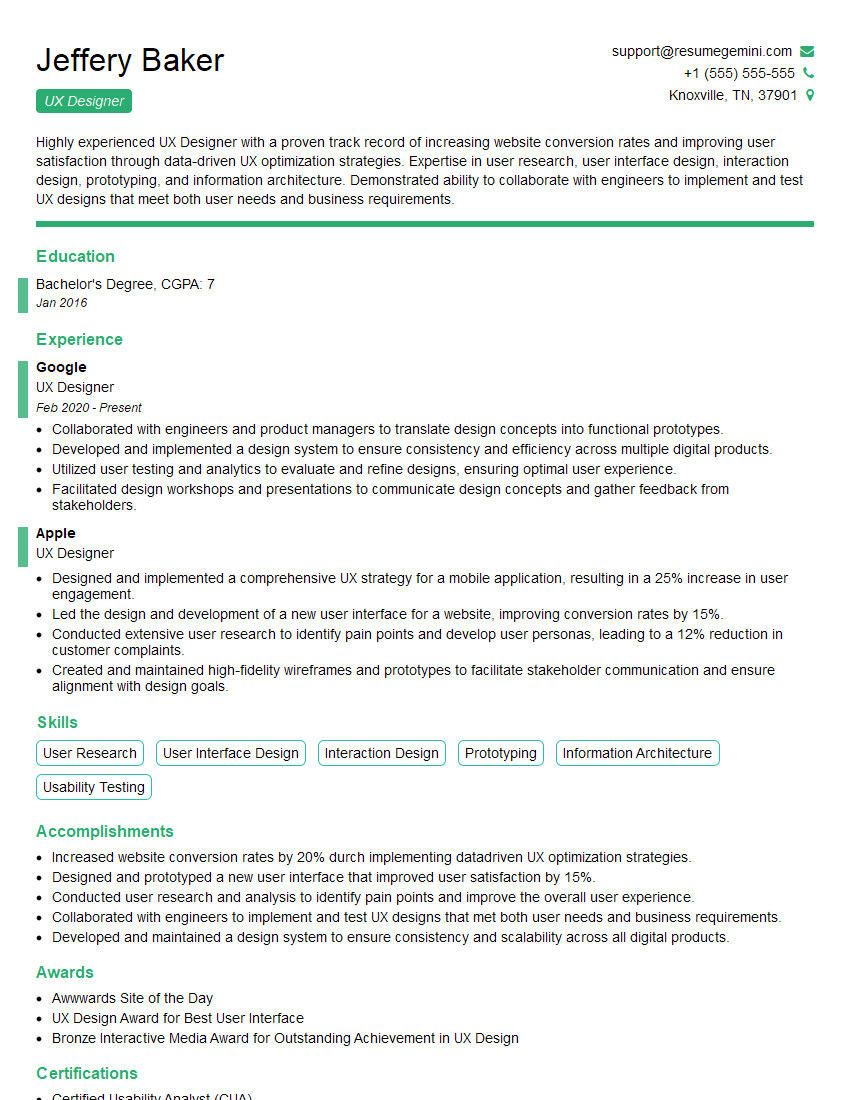
UX Designer Resume Sample
Explore more articles
Users Rating of Our Blogs
Share Your Experience
We value your feedback! Please rate our content and share your thoughts (optional).
What Readers Say About Our Blog
Very informative content, great job.
good