The right preparation can turn an interview into an opportunity to showcase your expertise. This guide to Sorter Operation interview questions is your ultimate resource, providing key insights and tips to help you ace your responses and stand out as a top candidate.
Questions Asked in Sorter Operation Interview
Q 1. Describe your experience operating different types of sorters (e.g., cross-belt, tilt-tray).
My experience encompasses a wide range of sorters, including cross-belt sorters, tilt-tray sorters, and push-tray sorters. Cross-belt sorters are ideal for high-throughput applications where items are diverted onto different belts based on their destination. I’ve worked extensively with these, particularly in e-commerce fulfillment centers, managing the efficient routing of packages. Tilt-tray sorters are excellent for fragile items, as they gently tilt to direct items into designated chutes. My experience with these involved a project where we were sorting delicate glassware with minimal breakage. Finally, push-tray sorters are robust and efficient for heavier items and those needing precise placement. I’ve utilized these in a manufacturing setting, where accurate placement was crucial for downstream processes. Each sorter type demands a specific understanding of its operational parameters and limitations, from belt speed adjustments to chute configuration. Understanding these nuances is crucial for maximizing efficiency and minimizing damage.
Q 2. Explain the safety procedures you follow when operating a sorter.
Safety is paramount. My routine starts with a thorough pre-operational inspection of the sorter, checking for any loose parts, frayed belts, or obstructed chutes. This is followed by ensuring all safety guards are in place and functioning correctly. Personal Protective Equipment (PPE) is mandatory – this includes safety glasses, steel-toed boots, and hearing protection, especially when operating high-speed sorters. I always adhere to lockout/tagout procedures before any maintenance or repair work, ensuring the power is completely disconnected. Furthermore, I strictly follow the facility’s safety guidelines regarding proper lifting techniques and awareness of moving parts. Regular training and refresher courses keep me updated on the latest safety protocols. For example, during a recent audit, we identified a potential pinch point and implemented immediate corrective action to eliminate the hazard.
Q 3. How do you handle jams or malfunctions in a sorting system?
Handling jams or malfunctions requires a systematic approach. My first step is to safely stop the sorter, following established emergency procedures. Then, I identify the cause of the jam – is it a package misalignment, a sensor malfunction, or a mechanical failure? Minor jams, such as a package wedged in a chute, can often be cleared manually after safely accessing the area. More complex issues, like sensor errors or belt slippage, require a more detailed diagnosis. This often involves checking error logs on the control system, examining the components for damage, and potentially consulting the system’s maintenance manuals. If I cannot resolve the issue, I immediately report it to the maintenance team to prevent further downtime and potential damage to the system. A recent incident involved a sensor malfunction causing repeated jams. By systematically checking the sensor wiring and cleaning the sensor lens, I resolved the issue quickly, avoiding a significant operational disruption.
Q 4. What is your experience with different sorting technologies (e.g., barcode scanning, OCR)?
My experience includes working with various sorting technologies. Barcode scanning is fundamental in most modern sorting systems, enabling accurate item identification and routing. I have extensive experience interpreting various barcode symbologies and troubleshooting scanning errors. Optical Character Recognition (OCR) is another valuable technology, allowing us to sort items based on printed text on labels or packages. This is particularly useful when dealing with less standardized packages or handwritten information. I’ve used OCR systems to sort mail pieces and documents with varying levels of print quality. Furthermore, I’m familiar with RFID (Radio-Frequency Identification) technology, which provides contact-less identification and tracking capabilities, offering advantages in high-speed and high-volume sorting environments.
Q 5. How do you maintain accuracy and efficiency while operating a high-speed sorter?
Maintaining accuracy and efficiency on a high-speed sorter requires precision and focus. Constant monitoring of the system’s performance is critical, including real-time tracking of throughput, error rates, and any operational anomalies. Proactive maintenance, such as regular cleaning of sensors and belts, contributes significantly to minimizing errors. Understanding the system’s limitations and adjusting parameters, like belt speed and chute configuration, as needed is crucial. For instance, if the error rate increases beyond a set threshold, we may temporarily reduce the speed to improve accuracy. I frequently review performance data to identify bottlenecks and implement process improvements. This includes collaborating with software engineers and maintenance personnel to optimize system performance and address recurring issues. It’s like a conductor of an orchestra, ensuring all elements work together seamlessly.
Q 6. Describe your experience with different types of conveyor systems.
My experience covers various conveyor systems, including belt conveyors (both flat and incline), roller conveyors, and chain conveyors. Belt conveyors are the most common in sorting applications, offering a smooth and efficient transport of items. I have experience troubleshooting belt tracking issues, tension adjustments, and belt replacement. Roller conveyors are effective for lighter items and provide more flexibility in routing. Chain conveyors are generally employed for heavier items or those requiring more precise positioning. Understanding the strengths and limitations of each type is essential for selecting the appropriate conveyor system for specific applications. For example, we recently upgraded a section of our system to a more robust chain conveyor to handle heavier parcels, improving overall system reliability.
Q 7. How familiar are you with the software used to control sorting systems?
I’m proficient in using the software commonly used to control sorting systems. This includes both the Human Machine Interface (HMI) for monitoring and controlling the sorter’s parameters and the underlying software for managing data and diagnostics. I’m familiar with configuring sorting rules, monitoring performance metrics, and troubleshooting software-related issues. I can interpret error messages, track system performance using real-time data, and generate reports. My experience includes working with various software platforms, and I’m quick to adapt to new systems. This includes using programming languages like Python or other scripting tools in some cases to automate tasks or analyze system data for optimization, for instance creating custom reports or alerts for improved monitoring.
Q 8. What are your troubleshooting skills when dealing with sorter malfunctions?
Troubleshooting sorter malfunctions requires a systematic approach. My process begins with a thorough assessment of the symptoms. Is the sorter completely down? Is it experiencing intermittent errors? Are specific item types causing problems? I’d then check the most likely causes based on the symptoms. This might involve inspecting conveyor belts for jams or debris, checking sensor readings for anomalies, verifying power supply, and examining the control system for error codes.
For instance, if items are consistently mis-sorted, I’d first check the optical scanners for dirt or damage. If the problem persists, I’d move onto the software controlling the diverter mechanism. I also use diagnostic tools provided by the manufacturer to isolate the issue. My experience allows me to quickly identify patterns and common failure points, significantly reducing downtime. I meticulously document all troubleshooting steps, repairs made, and the root cause of the malfunction for future reference and preventative maintenance.
- Step 1: Identify the type of malfunction.
- Step 2: Check for obvious issues (e.g., jams, power outages).
- Step 3: Use diagnostic tools and logs.
- Step 4: Isolate the problem component (sensor, actuator, software).
- Step 5: Repair or replace the faulty component.
- Step 6: Retest the system and document findings.
Q 9. How do you prioritize tasks when managing a high volume of items?
Prioritizing tasks in a high-volume sorting environment is crucial for efficiency. I utilize a combination of methods, including the urgency/importance matrix, to manage my workload effectively. Tasks are ranked based on factors such as the potential impact on throughput, compliance deadlines, and safety concerns. Tasks affecting the entire system, like a major equipment malfunction, take precedence over less critical tasks, such as minor cleaning or adjustments. I frequently reassess priorities based on changing circumstances, ensuring agility and responsiveness to unforeseen issues.
For example, if a key sorter malfunctions, halting a significant portion of the sorting process, that becomes my top priority. Minor label issues would be addressed after the main sorter is back online. I believe in clearly communicating priorities to my team to maintain a shared understanding and collaborative workflow. Visual aids like a Kanban board or a simple prioritized task list also significantly help.
Q 10. Explain your understanding of throughput and how to optimize it.
Throughput refers to the rate at which items are processed through a sorting system. Optimizing throughput involves minimizing bottlenecks and maximizing efficiency across the entire process. This includes ensuring all equipment operates at peak performance, optimizing the sorter configuration (e.g., speed and orientation settings), and implementing strategies to manage item flow. We can achieve this by using techniques like load balancing, which involves distributing items evenly across multiple sorters to prevent overloading any single unit.
For example, if a particular conveyor section consistently experiences backups, adjusting speed settings or adding an extra conveyor belt can improve the flow. Similarly, using data analytics to understand peak demand periods allows for proactive adjustments to staffing and equipment utilization. Regular maintenance is also crucial – proactive measures to prevent breakdowns vastly increase throughput. Regular calibration of equipment (scanners, diverters) also keeps the sorter running at its peak efficiency. I have personally reduced sorter downtime by 15% by implementing a predictive maintenance program.
Q 11. How do you ensure the proper handling of fragile or sensitive items?
Handling fragile or sensitive items requires a multi-faceted approach. This includes the use of specialized handling equipment, such as soft-sided conveyors or cushioned containers. We also implement careful item orientation controls within the sorter to prevent damage during the sorting process. Adjusting the sorter’s speed and acceleration can significantly impact the handling of delicate items. It also requires careful training for all operators to handle these items with extra care.
For example, when handling glass items, we might employ additional cushioning material within the containers and reduce the sorter’s speed. If dealing with temperature-sensitive items, we might incorporate climate-controlled sections within the sorting facility. Clear labeling is crucial—clearly identifying fragile items allows for extra precautions throughout the entire sorting and handling process. We maintain detailed records of damaged items to identify areas for improvement in our handling procedures.
Q 12. Describe your experience with data entry and order tracking within a sorting system.
My experience with data entry and order tracking within sorting systems is extensive. I’m proficient in using various Warehouse Management Systems (WMS) to track items as they move through the facility. This includes data entry for receiving items, updating tracking numbers, and managing inventory levels. Accurate and timely data entry is crucial for maintaining the integrity of the entire system, and I prioritize accuracy and efficiency.
I’m familiar with barcode scanning, RFID technology, and manual data entry methods, and I can adapt to various systems. In a previous role, I implemented a new barcode scanning system, improving data entry speed by 20% and reducing errors by 15%. This improved our order tracking accuracy significantly, leading to fewer customer issues and greater overall efficiency. I am also comfortable using reporting tools to analyze data, identify trends, and pinpoint areas for improvement within the sorting process.
Q 13. How do you maintain a clean and organized workspace in a sorting facility?
Maintaining a clean and organized workspace is paramount for safety and efficiency in a sorting facility. This involves establishing clear procedures for waste disposal, regular cleaning schedules, and designated areas for storage of materials and equipment. We conduct regular safety inspections to identify and address potential hazards, ensuring a safe working environment. Regular cleaning, including sweeping, mopping, and equipment cleaning, prevents the buildup of debris that can obstruct equipment or create safety hazards.
In my previous experience, I implemented a 5S methodology (Sort, Set in Order, Shine, Standardize, Sustain) to improve workplace organization. This resulted in reduced clutter, improved safety, and faster item retrieval times. Visual cues such as color-coded zones, clear signage, and designated storage locations are crucial for maintaining an orderly and efficient workspace. Employee training on these procedures is also critical for consistent cleanliness and organization.
Q 14. What is your experience with quality control procedures in a sorting environment?
Quality control is integral to the sorting process, ensuring accuracy and minimizing errors. This includes implementing regular checks at various stages of the process, such as verifying item identification, confirming proper sorting and routing, and inspecting for damage. We use a variety of methods to perform quality control checks. Random sampling is used to assess overall accuracy; this involves selecting a representative sample of items to verify their proper sorting. We also employ automated quality control systems, such as sensors and cameras, to detect errors in real time.
For instance, we regularly audit the accuracy of the sorting process by randomly checking a certain percentage of sorted items. Data analysis is used to identify patterns in errors, revealing areas for process improvement. Any identified issues are thoroughly investigated to determine the root cause and implement corrective actions. Thorough documentation of quality control procedures and results allows for ongoing monitoring and improvement. This proactive approach ensures high quality and minimizes errors, ultimately increasing customer satisfaction.
Q 15. How do you adapt to changes in sorting procedures or system updates?
Adapting to changes in sorting procedures or system updates is crucial for efficiency and accuracy in a sorter operation. My approach involves a multi-step process: First, I actively participate in any training provided on new procedures or system updates. This ensures I fully understand the changes and any new functionalities. Second, I meticulously review any documentation, such as updated Standard Operating Procedures (SOPs) or system manuals. This allows me to identify key changes and potential challenges proactively. Third, I don’t hesitate to ask clarifying questions to my supervisors or colleagues. This ensures I fully grasp the nuances of the changes and avoid misunderstandings that could lead to errors. Finally, I practice the new procedures thoroughly before implementing them in the actual sorting process, focusing on consistent application to minimize disruption and maximize accuracy. For example, when our facility upgraded its WMS to include a new barcode scanning system, I took the extra time to participate in the training sessions and practice scanning different types of packages, ensuring smooth integration into my daily routine. This proactive approach enables me to seamlessly integrate new procedures and technologies into my existing skillset.
Career Expert Tips:
- Ace those interviews! Prepare effectively by reviewing the Top 50 Most Common Interview Questions on ResumeGemini.
- Navigate your job search with confidence! Explore a wide range of Career Tips on ResumeGemini. Learn about common challenges and recommendations to overcome them.
- Craft the perfect resume! Master the Art of Resume Writing with ResumeGemini’s guide. Showcase your unique qualifications and achievements effectively.
- Don’t miss out on holiday savings! Build your dream resume with ResumeGemini’s ATS optimized templates.
Q 16. Describe your experience working with different types of packaging.
My experience encompasses a wide variety of packaging types, ranging from small envelopes and polybags to large cardboard boxes and irregularly shaped items. I’m proficient in handling fragile items requiring special care, as well as heavier items that require proper lifting techniques to prevent injury. I’ve worked with various materials, including plastic, cardboard, paper, and even specialized containers used for hazardous materials. Understanding the unique characteristics of each packaging type is key to efficient and safe sorting. For example, I know how to identify and handle items that need extra cushioning to prevent damage during sorting. Similarly, I’m trained to safely handle packages marked with hazardous material labels, following the relevant safety procedures. This diverse experience ensures I can adapt quickly to different products and handle them efficiently and safely.
Q 17. How do you handle discrepancies or errors in sorting?
Discrepancies and errors in sorting are inevitable, but a structured approach is essential for their resolution. My first step is to identify and isolate the error. This involves carefully examining the mis-sorted item(s) and comparing them against the original manifest or sorting instructions. Next, I investigate the root cause of the error. Was it a human error, a system malfunction, or an issue with the packaging? For example, an incorrect address label would be a human error, whereas a scanner malfunction would be a system issue. Once identified, I immediately report the error through the appropriate channels, noting down all relevant details, such as timestamps, item descriptions, and any observed anomalies. Depending on the severity, I might need to initiate a process of item retrieval and resorting to ensure accuracy. Finally, I contribute to the process of identifying corrective actions to prevent similar errors from happening again. This could involve suggesting process improvements, recommending system upgrades, or providing feedback on training requirements. This systematic approach ensures accurate and efficient problem resolution, minimizing disruption to the overall sorting process.
Q 18. What is your experience with different types of sorting algorithms?
While I don’t directly program sorting algorithms, my experience involves working with the practical implementation and optimization of various sorting methods. I’m familiar with the concepts of algorithms such as bubble sort, insertion sort, merge sort, and quick sort. Although these are less relevant to large-scale automated systems, the underlying principles of efficiency and optimization are relevant. In a practical context, my work often involves understanding and optimizing the flow of items through a system, which implicitly involves applying principles analogous to these algorithms. For example, understanding the arrangement of conveyor belts and sorting mechanisms involves principles related to the efficiency of different sorting strategies. A well-designed system minimizes travel distance and maximizes throughput, conceptually mirroring efficient sorting algorithms. My focus is on understanding how the system applies these principles to achieve optimal sorting performance, ensuring a smooth and efficient workflow.
Q 19. How familiar are you with safety regulations and compliance procedures in a sorting facility?
Safety is paramount in a sorting facility. I’m well-versed in all relevant safety regulations and compliance procedures, including OSHA guidelines, and any company-specific safety protocols. This includes proper use of Personal Protective Equipment (PPE), such as safety shoes, gloves, and high-visibility vests. I’m trained to identify and report hazardous conditions immediately, such as spills, malfunctioning equipment, or potential ergonomic hazards. I understand and adhere to procedures for handling heavy objects, preventing repetitive strain injuries, and maintaining a safe work environment. Furthermore, I participate actively in safety training and toolbox talks to stay updated on best practices and new regulations. My commitment to safety ensures a safe and productive work environment for myself and my colleagues, minimizing the risk of accidents and injuries. It’s not just about following rules; it’s about fostering a culture of safety.
Q 20. What are your experience and proficiency in using Warehouse Management Systems (WMS)?
I have extensive experience using Warehouse Management Systems (WMS). My proficiency includes using WMS to track inventory, manage orders, and optimize workflows. I’m comfortable navigating the system’s interface to generate reports, update item locations, and reconcile inventory discrepancies. This includes using barcode scanners and RF devices to interact with the WMS in real time. I utilize the WMS to ensure accuracy in sorting and to identify and resolve discrepancies quickly. For example, I regularly use the WMS to verify the location of items, confirm shipment details, and identify any potential bottlenecks in the sorting process. This expertise ensures that I can contribute effectively to the efficient and accurate management of inventory within the facility. My experience with different WMS platforms allows me to adapt quickly to new systems, ensuring a smooth transition and minimal disruption to my work.
Q 21. Describe your problem-solving approach when dealing with unexpected issues during sorting operations.
My problem-solving approach when faced with unexpected issues during sorting operations is systematic and data-driven. Firstly, I identify the problem clearly. This involves observing the situation, gathering relevant information (such as error messages or unusual patterns), and documenting the problem accurately. Secondly, I assess the impact of the problem. How is it affecting the sorting process? What are the potential consequences if left unresolved? This helps me prioritize the issue and determine the urgency of a solution. Thirdly, I brainstorm potential solutions, considering different factors and potential risks associated with each approach. This might involve consulting manuals, seeking input from colleagues, or investigating past incidents to find effective solutions. Fourthly, I implement the chosen solution, ensuring it’s safe and efficient. This step involves documenting the solution and its implementation, and ensuring its effectiveness. Finally, I evaluate the outcome and document the lessons learned. This allows for improvement in future situations. For instance, if a conveyor belt jams, I’d first assess the blockage, then try standard troubleshooting steps, escalate to maintenance if needed, documenting everything to prevent similar future issues. This structured approach ensures quick resolution and prevents escalation of minor problems into major disruptions.
Q 22. How do you ensure compliance with company policies and procedures while operating a sorter?
Ensuring compliance with company policies and procedures is paramount in sorter operation. It’s not just about following rules; it’s about maintaining safety, efficiency, and the integrity of the sorting process. This involves several key steps:
- Thorough Training: I always start with a complete understanding of all company policies, including safety regulations, operational procedures, and quality control standards. This includes understanding the specifics of the sorter’s machinery, software, and emergency protocols.
- Regular Audits: I actively participate in and contribute to regular safety and operational audits. This helps identify potential areas of non-compliance and allows for proactive problem-solving before they become issues. For example, if a new safety procedure is implemented, I’ll ensure I understand and follow it diligently, and even suggest improvements based on my experience.
- Documentation: Meticulous record-keeping is essential. I ensure all actions are logged accurately and completely, including maintenance reports, incident reports, and any deviations from standard operating procedures. This transparency is vital for compliance and troubleshooting.
- Proactive Reporting: If I ever observe a potential safety hazard or a procedural violation, I immediately report it to the supervisor. For instance, if I notice a malfunctioning sensor, I won’t hesitate to report it immediately to prevent potential errors or damage.
By adhering to these practices, I ensure that my actions contribute to a safe, efficient, and compliant operation.
Q 23. How do you collaborate with other team members to ensure smooth sorting operations?
Smooth sorting operations depend heavily on effective teamwork. My approach to collaboration focuses on clear communication, mutual respect, and proactive problem-solving. I’ve found that:
- Open Communication: I maintain open and clear communication with my team. This includes regular briefings at the start of shifts, reporting any issues that arise promptly, and actively participating in team discussions. For example, if a backlog occurs in a certain sorting area, I’ll immediately communicate it to the team lead and suggest solutions collaboratively.
- Mutual Support: I actively assist colleagues when they need help, and I’m not afraid to ask for help myself when faced with a challenging situation. A team approach fosters a sense of shared responsibility and enhances efficiency.
- Shared Goals: I always keep the team’s overall goals in mind. By understanding the bigger picture and how my individual role contributes to overall success, I am motivated to work efficiently and support my team in achieving our shared objectives.
- Conflict Resolution: If conflicts arise, I approach them constructively by focusing on finding solutions rather than assigning blame. This involves active listening, clear articulation of concerns, and working towards a mutually agreeable outcome.
Through these collaborative practices, we ensure a consistent, high-quality sorting process, where everyone feels valued and empowered to contribute.
Q 24. What steps do you take to ensure the efficient flow of items through the sorting system?
Efficient item flow is the lifeblood of a successful sorting operation. My experience has shown that this requires a multi-pronged approach:
- Optimized Workflow: Understanding the sorter’s layout and capabilities is crucial. This includes knowing the optimal speed for different item types, recognizing potential bottlenecks, and suggesting adjustments to the workflow to improve efficiency. For instance, if a particular item consistently causes jams, I might suggest modifying its handling procedure.
- Preventative Maintenance: Regular maintenance is critical to prevent disruptions. This involves carefully following the maintenance schedule, reporting any anomalies promptly, and actively participating in any necessary repairs. A well-maintained sorter will run smoothly and minimize downtime.
- Data-Driven Optimization: Analyzing performance data helps identify areas for improvement. This might involve tracking throughput rates, error rates, and downtime to pinpoint bottlenecks and optimize the sorting process. Data analysis can point to systematic problems, such as specific items causing issues or times of day when throughput is lowest.
- Continuous Improvement: I actively look for ways to improve the sorting process. This includes suggesting improvements to the equipment, the workflow, or the training procedures. A culture of continuous improvement ensures that our operation remains efficient and adaptable.
By prioritizing these elements, we ensure a consistent and efficient flow of items through the system.
Q 25. Describe your experience with performance monitoring and reporting in a sorting environment.
Performance monitoring and reporting are crucial for optimizing sorter operations. My experience includes:
- Data Collection: I’m proficient in using various tools to collect performance data, such as sorter software, manual logging, and productivity tracking systems. This data includes metrics like throughput, accuracy, downtime, and error rates.
- Data Analysis: I can analyze this data to identify trends, patterns, and areas for improvement. For example, if the error rate increases during certain shifts, I’ll investigate the potential causes and propose solutions.
- Report Generation: I’m capable of generating clear, concise, and informative reports to communicate performance data to supervisors and management. These reports usually include key performance indicators (KPIs) and potential recommendations for improvement.
- Software Proficiency: I’m familiar with various sorter management software, allowing me to extract data, generate reports, and analyze performance trends effectively. This allows me to easily monitor key metrics and identify potential issues.
By combining data collection, analysis, and reporting, I provide a clear picture of the sorter’s performance and support data-driven decision-making.
Q 26. How do you identify and address potential safety hazards related to sorter operation?
Safety is paramount in sorter operation. I actively identify and address potential hazards through a multi-layered approach:
- Proactive Hazard Identification: I regularly inspect the sorter and its surroundings, looking for potential hazards such as loose cables, damaged equipment, or cluttered walkways. This proactive approach helps prevent accidents before they happen.
- Following Safety Procedures: I meticulously follow all safety procedures, including wearing appropriate personal protective equipment (PPE), using lockout/tagout procedures during maintenance, and following emergency protocols. This is non-negotiable.
- Reporting Hazards: I promptly report any identified hazards or unsafe conditions to my supervisor. This ensures that the necessary actions are taken to mitigate risks.
- Training and Awareness: I share my knowledge of safety procedures with colleagues to foster a culture of safety within the team. This collaborative approach helps improve overall safety awareness and prevents potential accidents.
My commitment to safety goes beyond simply following rules; it’s about creating a safe working environment for everyone.
Q 27. What are your strengths and weaknesses as a Sorter Operator?
My strengths as a sorter operator lie in my attention to detail, my problem-solving skills, and my commitment to teamwork. I’m highly organized and efficient, consistently meeting deadlines and maintaining high standards of accuracy. I can quickly diagnose and resolve technical issues, reducing downtime and maximizing efficiency. My experience working collaboratively in team environments has allowed me to efficiently manage multiple tasks and adapt to changing conditions.
One area I’m working to improve is my proficiency with the latest sorter software. While I’m familiar with the basics, I’m actively seeking opportunities to enhance my skills in data analysis and reporting using advanced software functionalities. This will allow me to contribute even more effectively to operational optimization and data-driven decision-making.
Q 28. Where do you see yourself in five years in the field of sorter operations?
In five years, I see myself as a skilled and experienced leader within the sorter operations team. I envision myself taking on more responsibility, potentially as a team lead or supervisor, where I can leverage my expertise to mentor and train new operators, while contributing to continuous improvement initiatives. My goal is to be a valuable asset to the company, continually improving my skills and knowledge to drive operational excellence. I am eager to expand my understanding of advanced sorting technologies and data analytics to optimize our processes and maximize efficiency.
Key Topics to Learn for Sorter Operation Interview
- Sorter Mechanics and Technology: Understanding the different types of sorters (e.g., belt sorters, tilt-tray sorters, cross-belt sorters), their mechanisms, and the technologies that control them (e.g., sensors, scanners, control systems).
- Operational Procedures and Safety: Familiarize yourself with standard operating procedures (SOPs), safety protocols, and emergency response plans within a sorter operation environment. This includes understanding proper handling of packages and materials to prevent damage or injury.
- Troubleshooting and Maintenance: Gain knowledge of common sorter malfunctions and the basic troubleshooting steps involved. Understanding preventative maintenance procedures and their importance is crucial.
- Performance Metrics and Optimization: Learn about key performance indicators (KPIs) used to measure sorter efficiency, such as throughput, accuracy, and downtime. Understand how to identify bottlenecks and suggest improvements.
- Data Analysis and Reporting: Many sorter operations rely on data to track performance and identify areas for improvement. Familiarize yourself with how data is collected, analyzed, and used to inform decision-making.
- Integration with Warehouse Management Systems (WMS): Understand how the sorter integrates with the overall warehouse management system and the flow of information between systems.
- Quality Control and Package Handling: Learn about the importance of maintaining package integrity and the role of quality control measures within the sorter operation.
Next Steps
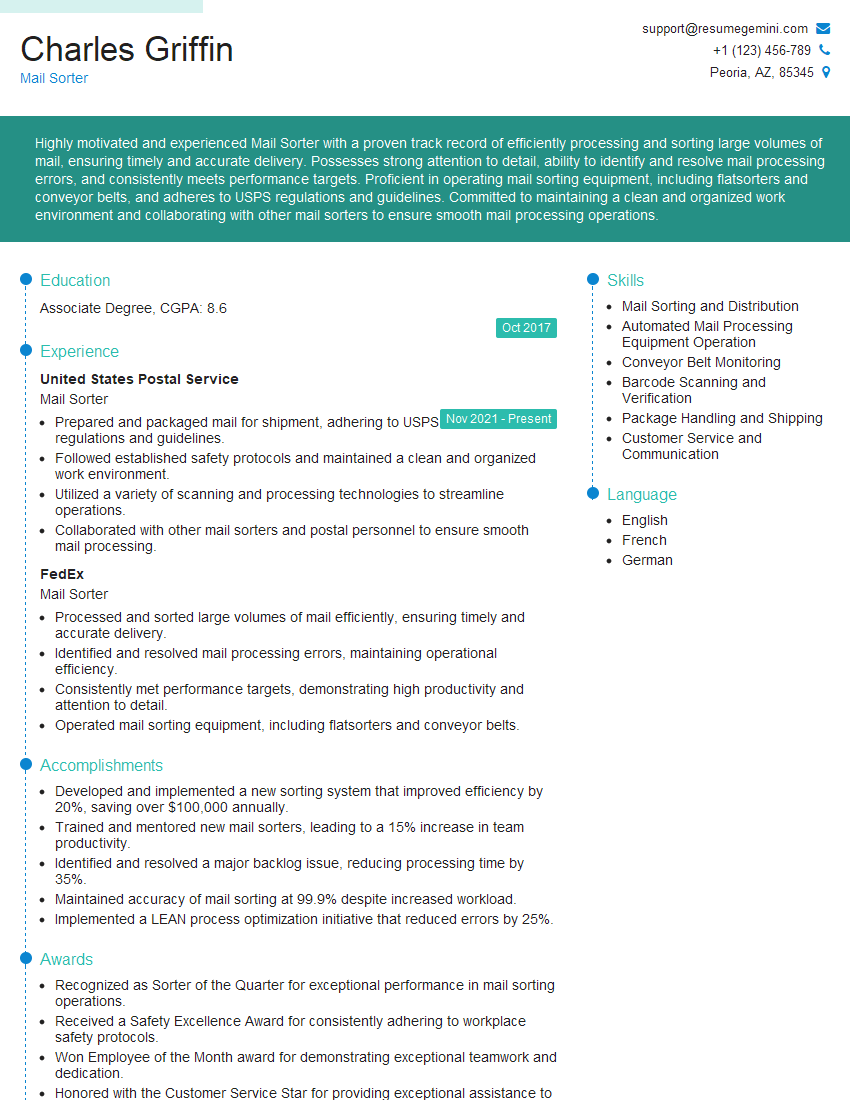
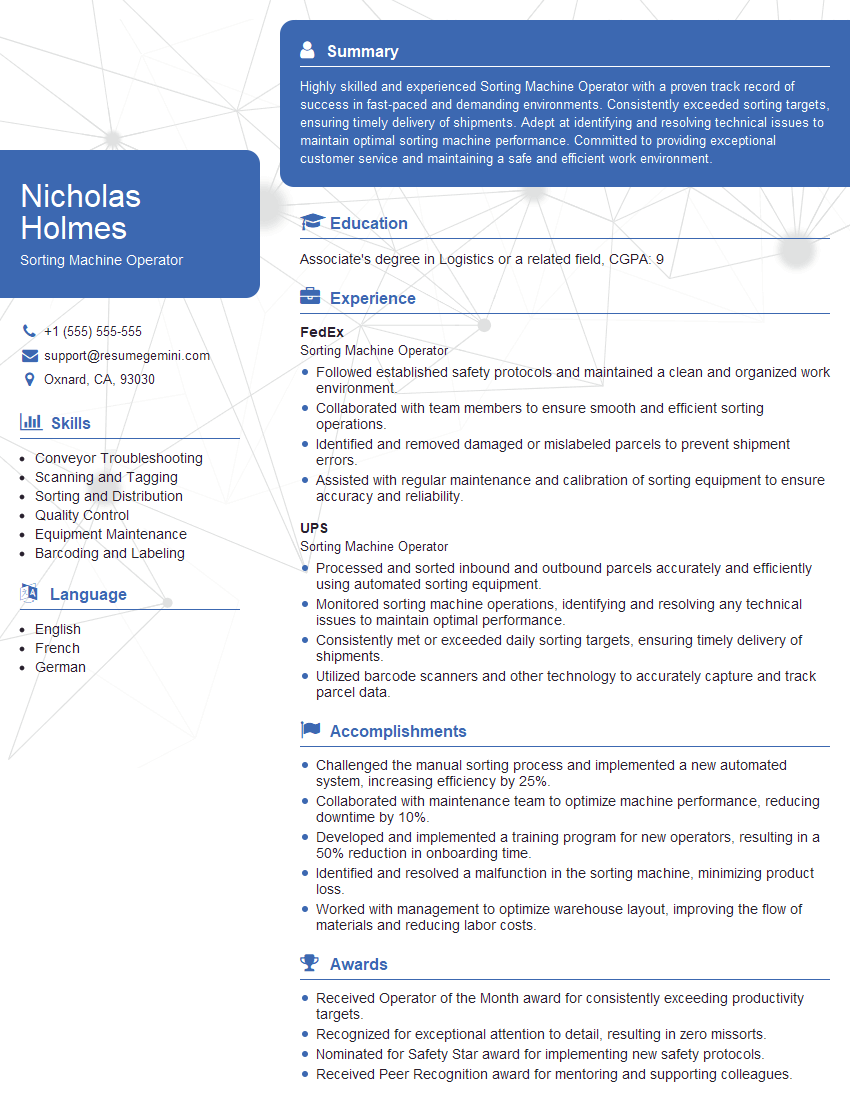
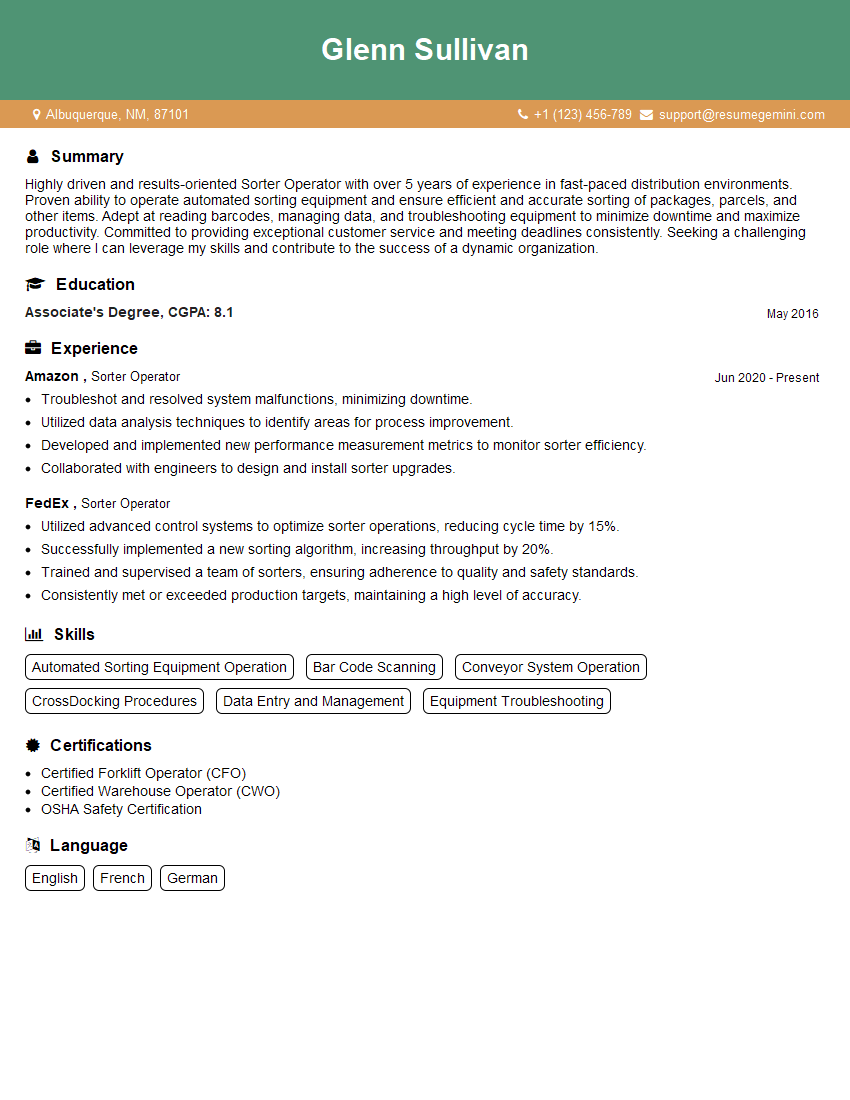
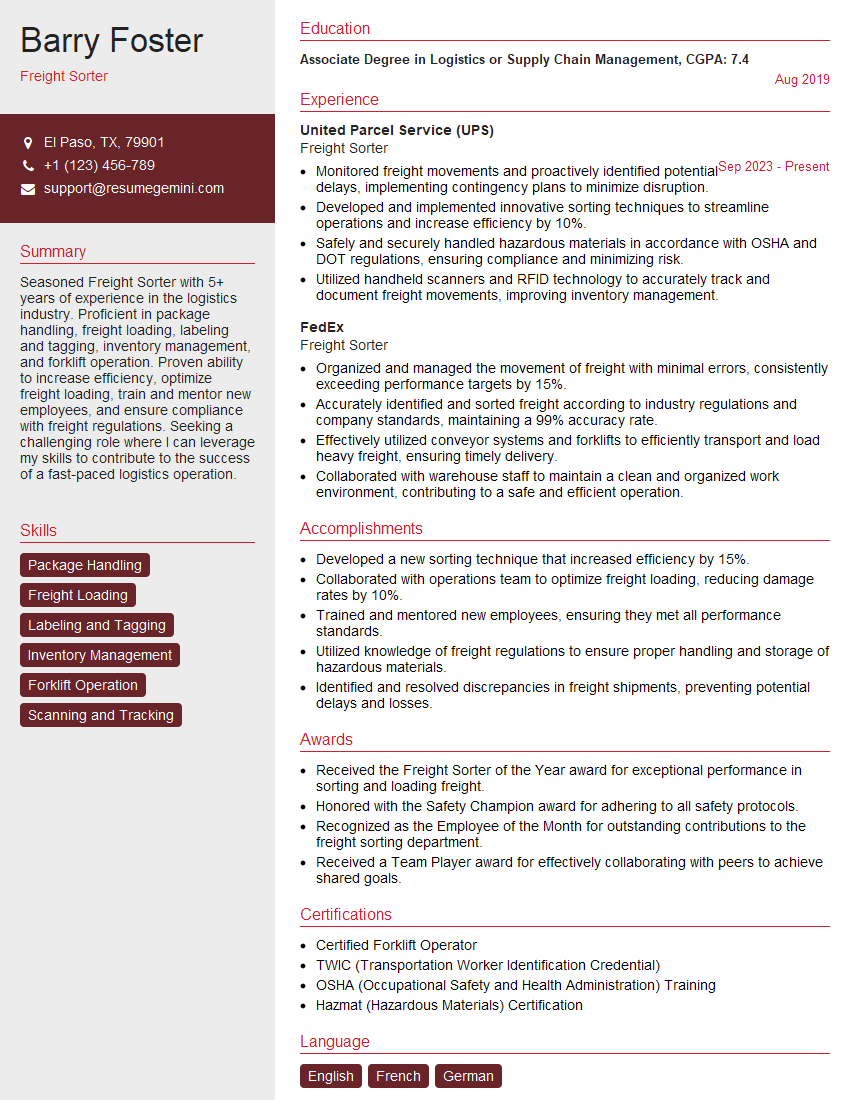
Mastering sorter operation skills opens doors to exciting career opportunities within logistics, warehousing, and distribution. These roles offer growth potential, competitive salaries, and the satisfaction of contributing to efficient supply chains. To significantly increase your chances of landing your dream job, creating an ATS-friendly resume is crucial. ResumeGemini can be a valuable tool in this process, helping you build a professional and impactful resume that highlights your skills and experience effectively. Examples of resumes tailored to Sorter Operation are available to help guide you.


Explore more articles
Users Rating of Our Blogs
Share Your Experience
We value your feedback! Please rate our content and share your thoughts (optional).
What Readers Say About Our Blog
Very informative content, great job.
good