Interviews are more than just a Q&A session—they’re a chance to prove your worth. This blog dives into essential Glass Repair and Replacement interview questions and expert tips to help you align your answers with what hiring managers are looking for. Start preparing to shine!
Questions Asked in Glass Repair and Replacement Interview
Q 1. Describe your experience with different types of glass (e.g., tempered, laminated, annealed).
My experience encompasses a wide range of glass types, each with unique properties impacting their application and repair. Let’s look at three common types:
- Annealed Glass: This is the most basic type, relatively inexpensive, and shatters into sharp, unpredictable shards when broken. Think of your standard window pane in an older home. Repairing it is usually not feasible; replacement is necessary.
- Tempered Glass (also known as toughened glass): Significantly stronger than annealed glass, tempered glass breaks into small, relatively harmless granules when fractured. This is crucial for safety applications like car side windows and shower doors. Repairing is generally not an option; replacement is the only safe course of action.
- Laminated Glass: This consists of two or more layers of glass bonded together with a layer of interlayer, typically polyvinyl butyral (PVB). When broken, it cracks but the interlayer holds the fragments together, preventing shattering. This is commonly found in car windshields and security glass. Small chips can sometimes be repaired, while larger cracks often necessitate replacement.
Understanding these differences is key to making informed decisions regarding repair versus replacement and choosing the appropriate glass for a particular job. For instance, using annealed glass in a storefront would be a safety hazard, while using laminated glass for a simple picture frame would be unnecessarily expensive.
Q 2. Explain the process of repairing a chipped windshield.
Repairing a chipped windshield involves a process called resin injection. It’s crucial to note that this is only suitable for small chips, not cracks. Larger damage requires replacement. The process usually involves:
- Cleaning: Thoroughly cleaning the chip to remove debris and contaminants.
- Preparation: Preparing the chip by creating a small injection point, usually by slightly etching the surface near the chip.
- Resin Injection: Carefully injecting a special resin into the chip using a syringe. The resin fills the chip, bonds with the glass, and cures to restore the structural integrity of the glass.
- Curing: Allowing the resin to cure completely according to the manufacturer’s instructions. This often involves using a UV light to speed up the process.
- Finishing: Once cured, any excess resin is carefully removed and the surface is smoothed and polished.
It is important to emphasize that not all chips are repairable. Factors like the size, location, and depth of the chip play a vital role. If the damage compromises the structural integrity of the windshield, replacement is absolutely necessary for safety.
Q 3. How do you handle a cracked window pane replacement?
Replacing a cracked window pane is a more involved process that requires careful measurement and precision. The steps typically include:
- Removal of the old pane: Carefully removing the broken glass pane, taking precautions to avoid further damage or injury. Often this involves removing the glazing beads (the small strips of wood or metal holding the glass in place).
- Measurement: Accurately measuring the opening to ensure the new pane fits perfectly. Any discrepancies can lead to installation problems.
- Glass Cutting (if necessary): If a custom-sized pane is needed, the appropriate type of glass is cut to the precise dimensions using specialized tools like a glass cutter and snapping pliers. It’s essential to use safety glasses during this process.
- Installation: Carefully inserting the new pane into the opening and securing it in place using glazing compound, putty, or other appropriate sealant. Glazing beads are then reinstalled.
- Finishing: Cleaning up any excess sealant and ensuring a smooth, professional finish.
The specific approach depends on the type of window and its frame. For instance, replacing a simple single-pane window in a wooden frame is different from replacing a double- or triple-paned window unit in a more complex frame.
Q 4. What safety measures do you take when working with glass?
Safety is paramount when working with glass. My standard safety procedures always include:
- Eye Protection: Always wearing safety glasses or a face shield to protect against flying fragments.
- Gloves: Using appropriate cut-resistant gloves to prevent cuts and abrasions.
- Proper Clothing: Wearing long sleeves and pants to protect skin from cuts.
- Appropriate Tools: Using specialized tools designed for glass cutting and handling, ensuring they are in good working order.
- Careful Handling: Handling glass carefully, avoiding sudden movements or dropping the glass.
- Clean-up Procedures: Following proper procedures for disposing of broken glass, using a dustpan and brush, and placing the fragments in a rigid container to prevent injuries.
These precautions are not just recommended; they are essential to prevent accidents and ensure a safe working environment for myself and others. I’ve seen firsthand the serious consequences of not following these procedures.
Q 5. What are the common causes of glass breakage?
Glass breakage has various causes, ranging from accidental impacts to environmental factors and inherent material weaknesses. Common causes include:
- Impact Damage: This is the most frequent cause, from accidental bumps to intentional vandalism or stones thrown against windows.
- Temperature Fluctuations: Extreme temperature changes can cause stress on the glass, leading to cracking, particularly in annealed glass.
- Improper Installation: Incorrect installation, such as using inappropriate sealants or applying too much pressure, can weaken the glass and make it more susceptible to breakage.
- Manufacturing Defects: Although rare, manufacturing defects in the glass can weaken it and contribute to breakage.
- Seismic Activity: Earthquakes and other seismic activities can cause significant glass damage.
Understanding these causes helps in preventative measures, like using tempered or laminated glass in high-risk areas, and ensuring proper installation techniques.
Q 6. Describe your experience with different glass cutting tools and techniques.
My experience with glass cutting tools and techniques includes a variety of methods for different situations. Here are some I commonly use:
- Glass Cutter: A handheld tool with a hardened wheel that scores the surface of the glass, creating a controlled break line. Precision is crucial to avoid jagged edges.
- Snapping Pliers: Used to break the glass along the scored line, providing a cleaner break than simply applying force.
- Wet Saw: A motorized saw with a diamond blade, used for cutting thicker glass and intricate shapes. Water keeps the blade cool and prevents damage to the glass.
- Glass Grinder: Used for smoothing rough edges and shaping the glass after cutting. This is necessary for safety and a polished look.
The choice of tool and technique depends on the thickness, type, and desired shape of the glass. For example, a wet saw would be necessary for cutting a thick piece of tempered glass, while a simple glass cutter might suffice for a thinner pane of annealed glass.
Q 7. How do you determine the appropriate type of glass for a specific application?
Determining the appropriate type of glass requires considering several factors:
- Safety Requirements: Areas with high foot traffic or potential impact require stronger glass like tempered or laminated glass for safety. For instance, storefront windows or shower enclosures need safety glass to mitigate the risk of injury from shattering.
- Security Concerns: Laminated glass offers a higher level of security than annealed glass, resisting forced entry.
- Insulation Needs: Double or triple-paned glass improves insulation and reduces noise, which are crucial for energy efficiency and comfort. This is often seen in modern residential and commercial windows.
- Aesthetics: Certain applications may require specific glass tints or textures to match the design aesthetic.
- Budget Constraints: Annealed glass is the most affordable, while laminated and tempered glass are more expensive.
A thorough assessment of these factors ensures the selection of glass that provides the necessary performance characteristics, safety features, and aesthetic appeal while remaining within budget constraints.
Q 8. How do you measure and cut glass accurately?
Accurate glass measurement and cutting are crucial for a perfect fit and a professional finish. It’s a multi-step process that begins with precise measurements of the existing frame or opening. I use a variety of tools, including a steel tape measure, a square, and a level, to ensure accuracy. For irregular shapes, I might employ a flexible measuring tape and create a template from cardboard or heavy-duty paper. Once measurements are confirmed, I transfer them to the glass sheet. Then, I use a glass cutter – a specialized tool with a diamond or carbide tip – to score the glass along the marked lines. This score creates a weak point. Then, using a pair of glass tongs or running the score line over a cushioned edge, I snap the glass along the score, creating a clean break. Finally, I smooth any rough edges with a glass grinder to eliminate sharp points, ensuring safety and a high-quality finish.
For example, recently I was replacing a curved windowpane in an antique door. I created a precise paper template, meticulously tracing the curve, before transferring those measurements to the new glass. This careful approach guaranteed a perfect fit, preserving the door’s historical integrity.
Q 9. Explain the process of installing a shower door.
Shower door installation is a more complex process than simple glass cutting and involves several critical steps. It starts with a thorough assessment of the shower enclosure to ensure proper measurements and to identify any existing problems, like uneven walls or faulty framing. Next, the frame is meticulously installed, making sure it’s perfectly level and plumb using shims and a level. This is vital for proper door operation and water sealing. The shower door glass is then carefully fitted into the frame, ensuring that it sits properly and is not stressed. Next, the hinges and handles are mounted securely. Finally, the crucial step of sealing is performed, preventing water leakage. I typically use high-quality silicone sealant, applied neatly and smoothly, creating a watertight seal between the glass and the frame. The final check includes confirming the door swings smoothly and freely without any binding.
I remember one job where the shower wall was slightly bowed. To compensate, I used carefully placed shims to level the frame before installing the door. This attention to detail prevented future problems with water leakage or door malfunction.
Q 10. Describe your experience with installing insulated glass units (IGUs).
Insulated glass units (IGUs), or double-pane windows, require specialized handling. My experience includes the careful measurement and ordering of IGUs to the exact specifications of the opening. The installation process involves preparing the frame, ensuring it’s clean, dry, and properly sealed. Then, the IGU is carefully lifted into place, avoiding any damage. I pay close attention to the spacer bar within the IGU, as this maintains the air gap and the window’s insulating properties. I also carefully seal the IGU into the frame using a suitable sealant, again ensuring a weather-tight and airtight seal. I’ve worked with various types of IGUs, including those with argon or krypton gas fills for enhanced energy efficiency.
One challenging project involved replacing IGUs in a historic building. The frames were old and somewhat warped. Careful measurement and the use of flexible sealants were essential to ensure a good fit and prevent drafts. I also took the time to educate the homeowner about the importance of regularly inspecting the seals on the IGUs to maintain their efficiency.
Q 11. What are the different types of sealants used in glass installation?
The choice of sealant depends largely on the application and the materials involved. Common sealants used in glass installation include silicone, polyurethane, and butyl. Silicone is excellent for its flexibility and water resistance, making it ideal for shower doors and other wet areas. Polyurethane offers superior adhesion and strength but is less flexible than silicone. Butyl is a durable sealant often used in IGUs to maintain the hermetic seal between the glass panes. The correct sealant choice is paramount for longevity and functionality; a poor choice could lead to leaks or premature failure of the installation. I always prioritize using high-quality sealants that meet industry standards for durability and weather resistance.
For example, in a recent exterior window installation, I opted for a high-quality polyurethane sealant due to its excellent adhesion to the aluminum frame and superior resistance to weathering. However, for a shower door, I’d always use silicone to ensure waterproofness.
Q 12. How do you handle a job with unusually shaped glass?
Handling unusually shaped glass requires a more meticulous and precise approach. I start by creating a highly accurate template, often using multiple measurements and even creating a 3D model for extremely complex shapes. This template serves as a guide for cutting the new glass, ensuring an exact fit. Precise cutting techniques with the appropriate tools are paramount, and I often use a combination of hand tools and potentially specialized cutting equipment for intricate shapes. The installation process also needs careful planning to ensure the glass is supported properly and securely fastened. The choice of sealant is also critical; a flexible sealant is often necessary to accommodate irregular shapes and avoid stress on the glass.
I once worked on a project where the glass was a complex, multi-faceted design for a skylight. Creating the precise template and cutting the glass required many hours of careful work, and final installation ensured secure fitting with appropriate structural support.
Q 13. Explain your troubleshooting skills related to glass installation problems.
Troubleshooting in glass installation involves a systematic approach. I first identify the problem, carefully examining the installation to pinpoint the cause. Is there a leak? Is the door binding? Is the glass cracked? After identifying the issue, I systematically check all aspects of the installation: the frame’s alignment, the seal’s integrity, and the glass’s seating. Common problems might include improper sealing, a poorly leveled frame, or stress on the glass from an ill-fitting frame. I use appropriate tools, such as a level and a caulking gun, to address these issues, and often utilize my knowledge of different materials and their properties to determine a course of action. Sometimes, a small adjustment is all it takes; in other cases, a more significant repair or replacement might be necessary.
For instance, I had a job where a shower door was leaking. After careful inspection, I found a small gap in the sealant. Applying new silicone sealant in that area resolved the leak immediately. However, I also always ensure to explain potential issues and causes to clients, allowing them to understand the process and potential remedies.
Q 14. Describe your experience working with different types of frames (e.g., wood, metal, vinyl).
My experience encompasses working with various frame materials—wood, metal, and vinyl. Each material presents unique challenges and requires different techniques. Wood frames require careful preparation to ensure they’re clean, dry, and structurally sound before installation. Metal frames often need to be aligned precisely, using shims and levels, to avoid stressing the glass. Vinyl frames, due to their flexibility, might require special attention to ensure a watertight seal. I’m adept at selecting appropriate sealants and fasteners for each frame type to ensure a secure and long-lasting installation. Understanding the characteristics of each material is key for achieving a successful installation, ensuring the glass is properly supported and won’t be damaged over time.
For example, installing glass in an older wood frame required additional attention due to the wood’s potential for expansion and contraction with changes in humidity and temperature. I used a specialized sealant to accommodate this, ensuring a weathertight seal and preventing damage to the glass.
Q 15. How do you handle customer complaints or issues?
Handling customer complaints is paramount to maintaining a positive reputation. My approach involves active listening, empathy, and a problem-solving mindset. I begin by letting the customer fully explain their issue without interruption. Then, I carefully assess the situation, asking clarifying questions to understand the root cause of their dissatisfaction. This could range from a minor scratch to a more significant issue with the glass repair or replacement. Once I have a clear understanding, I clearly outline the steps I’ll take to resolve the problem, offering realistic timelines and keeping the customer updated throughout the process. For example, if a customer complains about a poorly sealed window, I would first inspect the window to pinpoint the exact problem (faulty sealant, improper installation etc.). Then, I will provide options for repair (re-sealing) or replacement, explaining the pros and cons of each and getting the customer’s approval before proceeding. Finally, I follow up with the customer to ensure their satisfaction and address any remaining concerns. Open communication and a commitment to finding solutions are key.
Career Expert Tips:
- Ace those interviews! Prepare effectively by reviewing the Top 50 Most Common Interview Questions on ResumeGemini.
- Navigate your job search with confidence! Explore a wide range of Career Tips on ResumeGemini. Learn about common challenges and recommendations to overcome them.
- Craft the perfect resume! Master the Art of Resume Writing with ResumeGemini’s guide. Showcase your unique qualifications and achievements effectively.
- Don’t miss out on holiday savings! Build your dream resume with ResumeGemini’s ATS optimized templates.
Q 16. What is your experience with using specialized glass repair equipment?
My experience with specialized glass repair equipment is extensive. I’m proficient in using tools such as glass cutters with various blade types (for precise cuts on different glass thicknesses), suction cups (for safe handling of large glass sheets), diamond grinding tools (for smoothing rough edges), and specialized sealant applicators (for ensuring a clean and even application). I also have experience with CNC glass cutting machines for intricate or high-volume projects. For instance, I’ve used a CNC machine to precisely cut tempered glass for a complex storefront design where millimeter accuracy was critical. Furthermore, I’m familiar with the safety protocols associated with each tool, including proper maintenance and the importance of using personal protective equipment (PPE) like safety glasses and gloves. Understanding the capabilities and limitations of each piece of equipment is essential to perform high-quality repairs and replacements efficiently and safely.
Q 17. Describe your understanding of building codes related to glass installation.
Building codes regarding glass installation are crucial for safety and structural integrity. My understanding encompasses various aspects, including the type of glass required for specific applications (e.g., tempered glass for safety glazing in certain areas), the proper methods for installing and securing glass, and the required safety features such as laminated glass or safety films. I’m familiar with the impact resistance requirements for different glass types in various locations, including those near exits or in high-traffic areas. I also understand the importance of meeting energy efficiency standards, which might dictate the type of glass coating used. For example, I’ve had to work with specific building codes that mandated the use of laminated glass with a specific impact resistance rating in a school project to meet safety regulations. Staying updated on these codes through professional development is crucial for compliance and to ensure the safety of building occupants.
Q 18. How do you ensure the safety of yourself and others during glass installation?
Safety is my top priority. I meticulously follow safety procedures throughout the entire glass installation process. This begins with a thorough site assessment to identify potential hazards and plan the work accordingly. I always use appropriate personal protective equipment (PPE), including safety glasses, gloves, and cut-resistant clothing. When handling large or heavy glass sheets, I use suction cups, lifting straps, and appropriate lifting techniques to avoid injuries. I always have a spotter when handling large glass panes and take extra precautions in confined spaces. For example, when working at heights, I use harnesses and other fall protection equipment. Clear communication with other workers on site is vital to prevent accidents. Before starting any work, I also ensure the area is properly cordoned off to prevent accidental contact with the work area. Regular safety training and adherence to best practices are paramount to maintaining a safe working environment.
Q 19. How do you maintain a clean and organized work area?
Maintaining a clean and organized work area is essential for efficiency and safety. Before starting any project, I organize my tools and materials logically, ensuring easy access to the items I will need. I use designated containers for different types of glass fragments and debris. I also utilize drop cloths or protective barriers to safeguard the surrounding areas from damage. After completing each step of the process, I clean up any mess immediately, including sweeping up glass fragments and disposing of them properly. A clean and organized workspace also improves my concentration and reduces the risk of accidents. For instance, having a clear path around my work area minimizes the chance of tripping over debris, ensuring my own safety and the safety of others on the jobsite. This systematic approach translates into completing work in a timely fashion and delivering quality results.
Q 20. Describe your experience with repairing or replacing storefront glass.
I possess extensive experience in storefront glass repair and replacement. This includes working with various types of glass, from standard annealed glass to more specialized options like tempered or laminated glass. My work has involved everything from replacing a single broken pane to completely refitting an entire storefront facade. I’m adept at assessing the damage, determining the best course of action (repair or replacement), and performing the work efficiently and discreetly, minimizing disruption to the business. For example, I once successfully repaired a large storefront window that had been damaged by vandalism, ensuring minimal downtime for the client. The project involved careful assessment of the existing framework, sourcing replacement glass with the same specifications, and ensuring a seamless installation that maintained the storefront’s aesthetic appeal. I’m also familiar with different storefront glass framing systems, which allows me to work across a range of architectural designs.
Q 21. Explain your familiarity with different types of glass coatings and films.
My familiarity with glass coatings and films is comprehensive. I understand the properties and applications of various coatings, including low-E coatings (for improved energy efficiency), reflective coatings (for heat reduction), and self-cleaning coatings. I also have experience working with various safety films, such as those designed to enhance impact resistance or hold shattered glass together in the event of breakage, preventing injuries. For example, I have installed low-E coated glass in numerous residential and commercial projects, improving energy efficiency and reducing costs. The type of coating chosen depends on the specific needs of the client and the environmental conditions. Understanding the advantages and limitations of each coating allows me to recommend the most suitable option for each project. Moreover, I am aware of the proper installation techniques and considerations for each film and coating to ensure optimal performance and longevity.
Q 22. What is your experience with working at heights?
Safety is my utmost priority. I’ve worked extensively at heights throughout my career, always adhering to strict safety protocols. This includes using appropriate harnesses, fall protection systems, and ensuring secure anchor points before commencing any work. My experience encompasses both interior and exterior high-rise projects, working on everything from replacing skylight panes to repairing exterior storefront windows. I’m fully certified in fall protection and regularly attend refresher courses to stay abreast of best practices and updated regulations.
For example, on a recent project involving a multi-story office building, I meticulously planned the access and rigging systems to ensure a safe and efficient replacement of several large window panes. This included detailed risk assessments and communication with the building management and fellow team members to ensure everyone was aware of potential hazards.
Q 23. How do you handle emergency glass repair calls?
Emergency glass repair calls require immediate action and a calm, decisive approach. My process begins with a quick assessment of the situation over the phone – locating the damage, determining the severity, and assessing any immediate safety hazards. I then prioritize the call based on the urgency and potential for further damage or injury. For example, a shattered storefront window needs immediate attention to prevent theft and further damage from weather, while a small crack in an interior window can often wait until a scheduled appointment. Once on-site, I quickly secure the area, using temporary measures like boarding or taping to prevent further damage or injury, before beginning the repair or replacement. My toolbox is always fully stocked with emergency supplies for immediate stabilization.
Q 24. What are your salary expectations?
My salary expectations are commensurate with my experience and skills in the field. I’m flexible and open to discussion based on the specifics of the role and the overall compensation package. I am confident that my skills and proven track record justify a competitive salary that reflects my contribution to your company’s success. My expectation is also based on industry benchmarks and the average salary for similar roles in this geographic area.
Q 25. Why are you interested in this position?
I’m interested in this position because of your company’s reputation for high-quality workmanship and commitment to client satisfaction. I’ve been consistently impressed by your projects, and I believe my skills and dedication to precision would be a valuable asset to your team. I’m also excited by the opportunity to work on challenging projects and to learn and grow within a dynamic environment.
Q 26. Describe a challenging glass repair project and how you overcame it.
One of the most challenging projects I faced involved repairing a large, intricately designed stained-glass window in a historic church. The damage was extensive, with several cracked and missing pieces. The challenge wasn’t just the repair itself, but the preservation of the window’s historical integrity. To overcome this, I meticulously documented the damage, researched the original techniques used in its construction, and sourced appropriate materials for the repair. I collaborated with a stained-glass conservator to ensure accuracy and authenticity. The process was time-consuming, requiring precise cutting, fitting, and leadwork, but the final result was a restoration that met the highest standards of preservation and craftsmanship. The client was incredibly pleased with the outcome and appreciative of the attention to detail.
Q 27. What are your strengths and weaknesses?
My strengths lie in my meticulous attention to detail, problem-solving abilities, and commitment to safety. I’m also a highly effective communicator, able to clearly explain technical information to both technical and non-technical audiences. I am proficient in various glass repair and replacement techniques, and I’m always eager to learn new skills.
A weakness I’m actively working on is delegation. I sometimes find it difficult to relinquish control, especially on complex projects. However, I recognize this and am actively improving my ability to trust and empower my team members. I’m currently participating in a workshop focused on leadership and delegation skills to better address this.
Q 28. Do you have any questions for me?
I have a few questions. First, what are the company’s expectations regarding continuing education and professional development? Second, what opportunities exist for career advancement within the company? Finally, what are some of the most challenging projects your team is currently working on?
Key Topics to Learn for Glass Repair and Replacement Interview
- Types of Glass: Understanding the properties and applications of various glass types (e.g., annealed, tempered, laminated) is crucial for selecting appropriate repair or replacement solutions.
- Damage Assessment: Learn to accurately assess the extent and type of glass damage to determine the best repair or replacement strategy. This includes identifying cracks, chips, and other imperfections.
- Repair Techniques: Master various glass repair methods, including resin injection, for minor cracks and chips. Understand the limitations of repair versus replacement.
- Replacement Procedures: Familiarize yourself with the complete process of glass replacement, from accurate measurements and cutting to installation and sealant application for various applications (auto, residential, commercial).
- Safety Procedures: Demonstrate a strong understanding of safety protocols related to handling glass, using tools, and working at heights. This is paramount in this field.
- Tools and Equipment: Become proficient with the various tools and equipment used in glass repair and replacement, showcasing your practical experience.
- Customer Interaction: Explain how you handle customer communication, address concerns, and manage expectations during the repair or replacement process. Professionalism is key.
- Troubleshooting: Be prepared to discuss common problems encountered during repairs and replacements, and the problem-solving skills you utilize to overcome them.
- Industry Regulations and Codes: Demonstrate awareness of relevant building codes, safety regulations, and industry best practices related to glass installation.
Next Steps
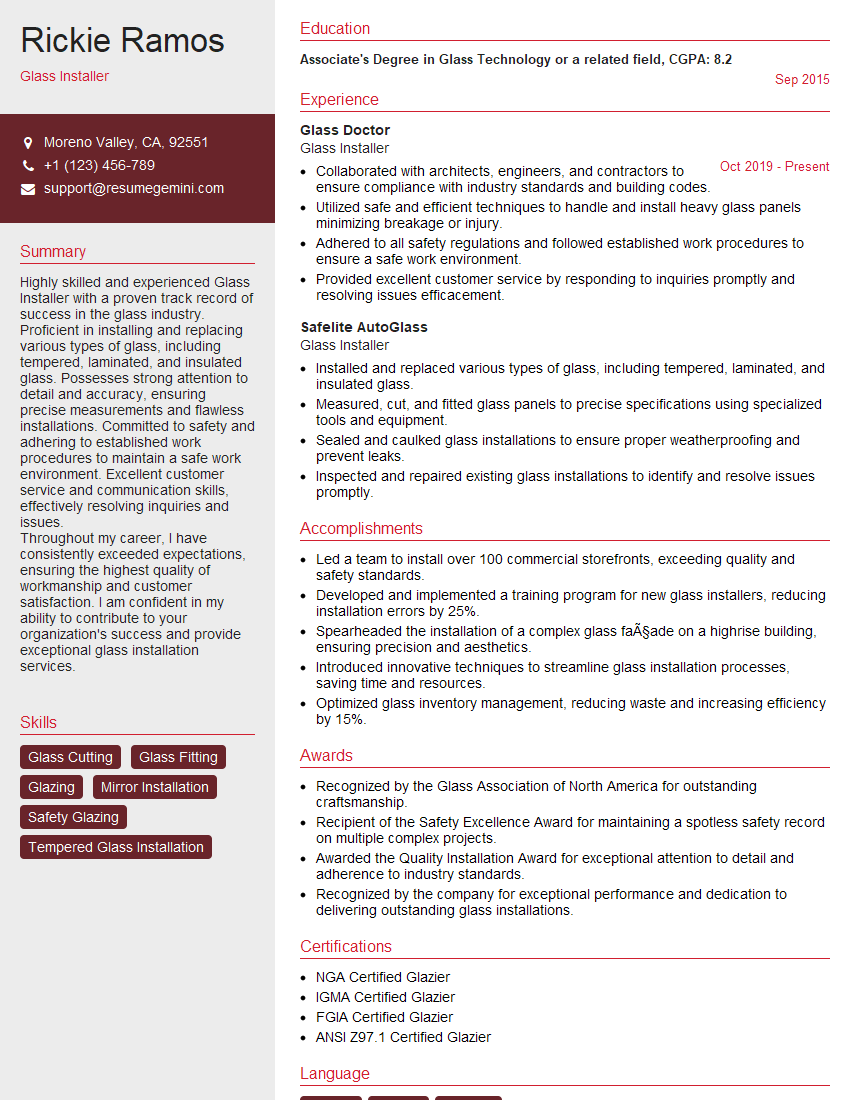
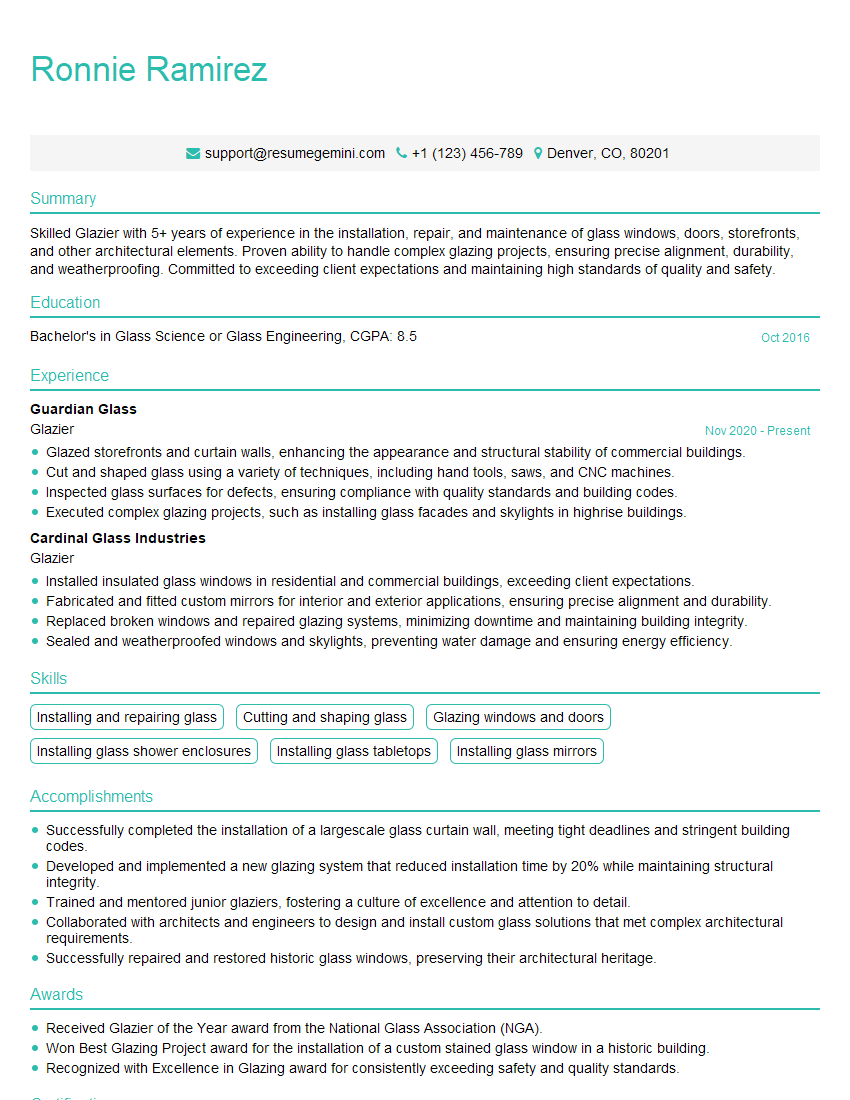
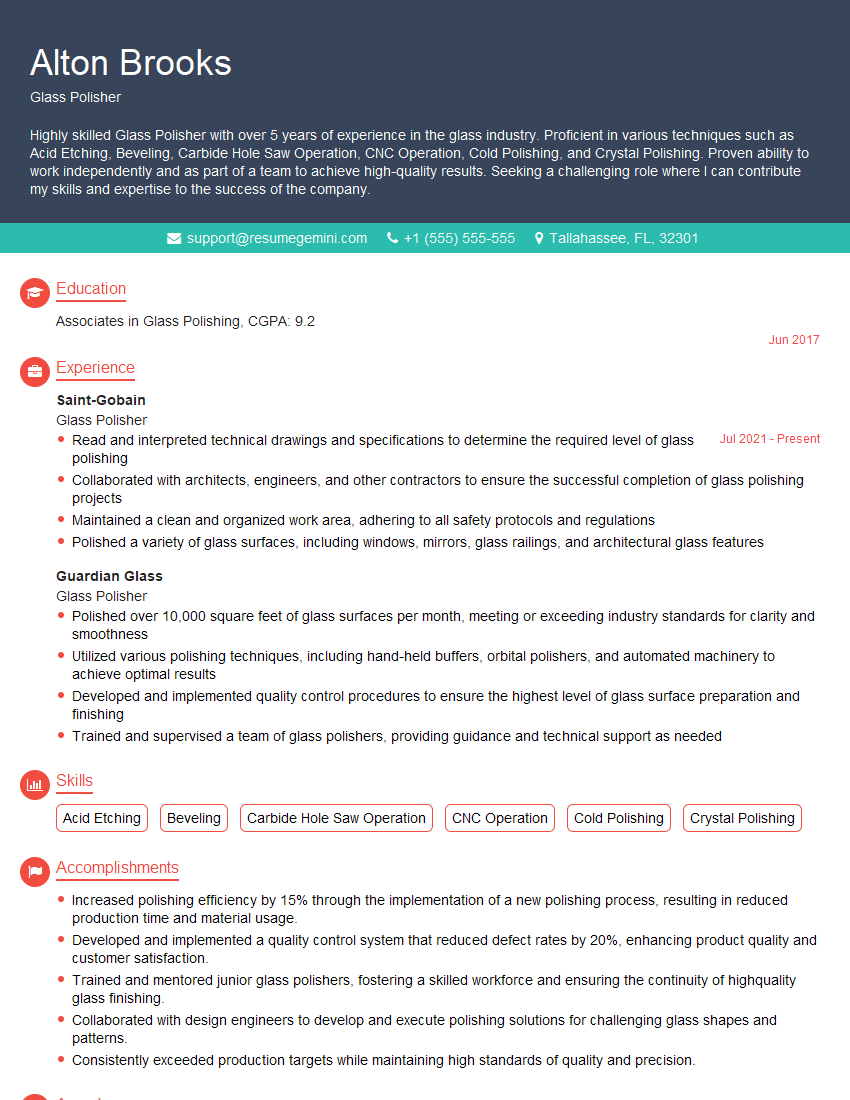
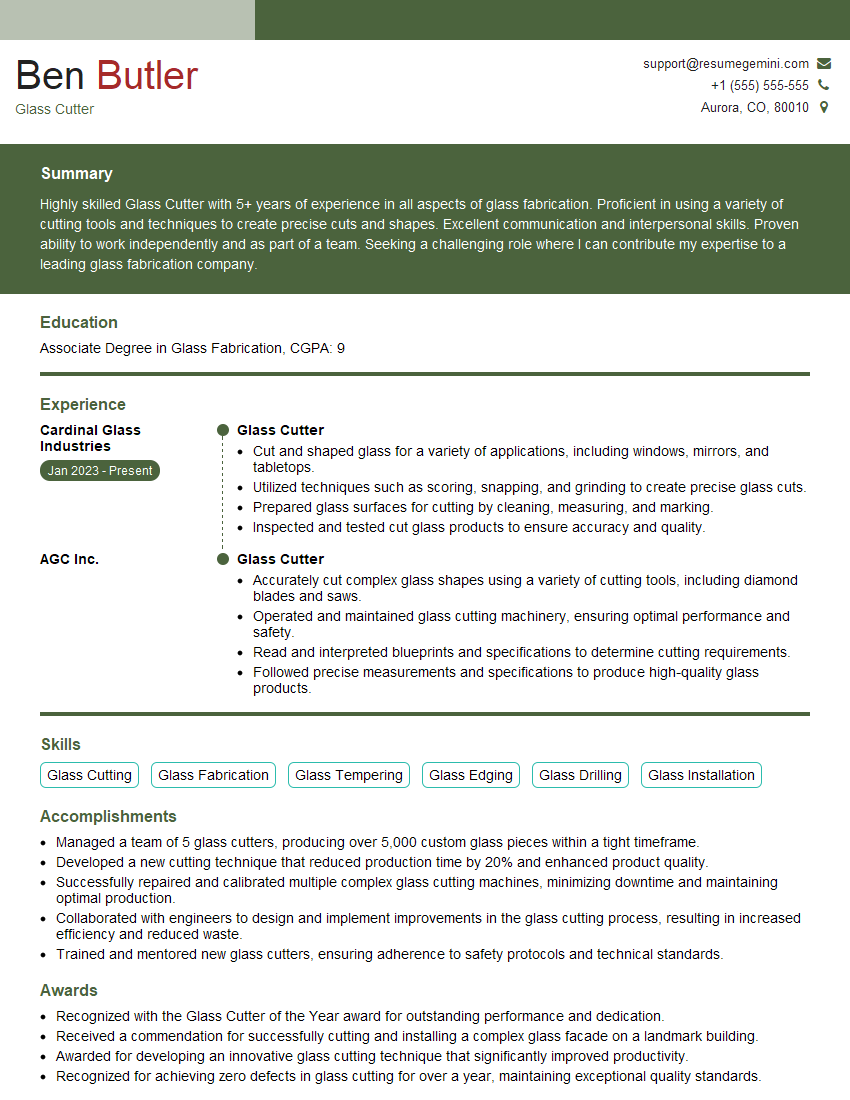
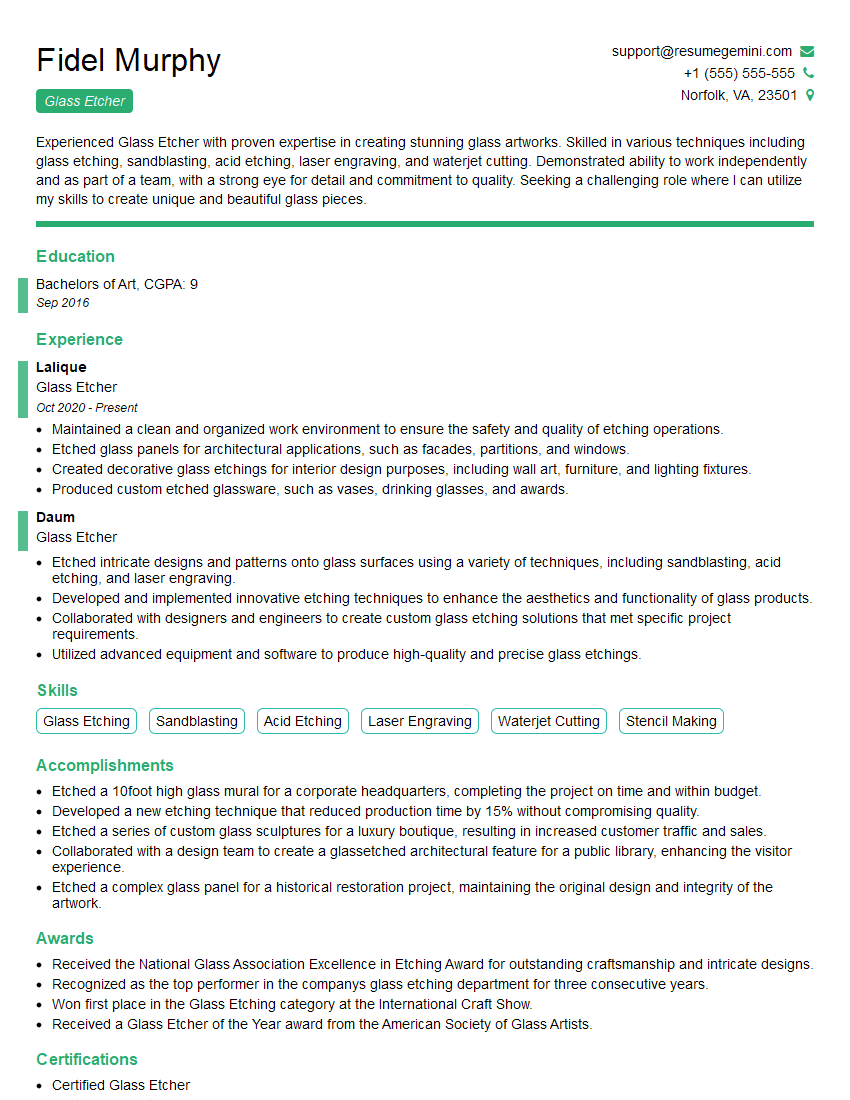
Mastering glass repair and replacement skills opens doors to a rewarding career with excellent growth potential. Building a strong and ATS-friendly resume is essential for maximizing your job prospects. ResumeGemini is a trusted resource to help you craft a professional and impactful resume that highlights your skills and experience. Examples of resumes tailored to Glass Repair and Replacement are available to guide you, ensuring your application stands out.
Explore more articles
Users Rating of Our Blogs
Share Your Experience
We value your feedback! Please rate our content and share your thoughts (optional).
What Readers Say About Our Blog
Very informative content, great job.
good