Unlock your full potential by mastering the most common Grain Shipping interview questions. This blog offers a deep dive into the critical topics, ensuring you’re not only prepared to answer but to excel. With these insights, you’ll approach your interview with clarity and confidence.
Questions Asked in Grain Shipping Interview
Q 1. Explain the process of chartering a vessel for grain transport.
Chartering a vessel for grain transport involves securing a ship to move your grain from an origin port to a destination port. It’s a complex process, but essentially boils down to negotiating a contract, the charter party, with the ship owner or their representative. This contract outlines all the crucial details of the shipment.
- Finding a suitable vessel: This involves considering vessel size, type, and availability based on the volume of grain and the voyage’s parameters.
- Negotiating the charter party: This is a legally binding document that specifies the terms of the agreement, including freight rates, loading and discharge ports, laytime (time allowed for loading and unloading), and responsibilities of each party.
- Securing financing (if needed): Often, large grain shipments require substantial financing, and securing loans or lines of credit is a critical step.
- Finalizing the contract: Once all terms are agreed upon, the charter party is signed, and the vessel is officially booked for the shipment.
- Loading and monitoring the shipment: The chartering process doesn’t end with the contract signing. It extends to overseeing loading, ensuring proper stowage and care of the cargo, and tracking the vessel’s progress.
For example, a company shipping 50,000 tons of wheat from Argentina to China would engage in a detailed negotiation process, specifying the required vessel size (likely a Panamax or larger), the exact ports, and the expected delivery timeframe. The charter party would clearly outline the freight rate (often per ton or per metric ton), penalties for delays, and the liability for cargo damage or spoilage.
Q 2. What are the key considerations when selecting a vessel for grain shipment?
Selecting the right vessel for a grain shipment is crucial for efficiency and minimizing risks. Several key factors influence this decision:
- Cargo Capacity: The vessel must have sufficient capacity to carry the entire grain shipment. This is usually expressed in metric tons or cubic meters.
- Vessel Type: Different vessel types (e.g., Handysize, Panamax, Capesize) are suited for different cargo volumes and port accessibility. We’ll discuss these types in the next question.
- Draft and Size Restrictions: The vessel’s draft (depth of the hull below the waterline) must be suitable for the loading and unloading ports. Certain ports have limitations on vessel size, especially in terms of overall length and beam (width).
- Condition of the Vessel: A well-maintained vessel is essential to minimize the risk of damage or spoilage during transit. The condition should be thoroughly checked through surveys and inspections.
- Cost and Availability: Freight rates vary depending on vessel type, market demand, and fuel prices. Availability also plays a significant role in determining which vessel to choose.
- Reputation of the Shipowner: Selecting a reputable shipowner is essential to ensure compliance with contracts, timely delivery, and responsible handling of the cargo.
Imagine you are shipping a smaller volume of corn from a smaller port. A Handysize bulk carrier would be more suitable than a larger Capesize vessel, which may not be able to navigate the port or load efficiently.
Q 3. Describe different types of grain vessels and their suitability for various cargo.
Grain vessels are categorized based on their size and carrying capacity. Each type has its strengths and weaknesses, making them suitable for different cargoes and trade routes:
- Handysize: Smaller vessels, typically carrying between 30,000 and 50,000 DWT (deadweight tonnage). Ideal for smaller shipments and ports with restricted access.
- Panamax: Larger than Handysize, these vessels can carry up to approximately 65,000 DWT. Named for their ability to transit the Panama Canal.
- Supramax: Slightly larger than Panamax, offering more carrying capacity but often still suitable for a wider range of ports.
- Capesize: The largest bulk carriers, capable of transporting over 150,000 DWT. Their large size means they need deeper ports and are typically used for long-haul routes.
- Specialized Grain Carriers: Some vessels are designed specifically for grain, incorporating features like improved cargo handling systems and climate control to enhance the preservation of the grain.
For instance, transporting a large amount of wheat from the Black Sea to Asia would likely involve a Capesize vessel due to its capacity and suitability for long distances. However, shipping a smaller quantity of rice to a port with depth restrictions would necessitate a Handysize vessel.
Q 4. How do you manage risks associated with grain transportation (e.g., spoilage, damage)?
Managing risks in grain transportation is crucial to avoid losses and maintain the quality of the cargo. Key risk mitigation strategies include:
- Pre-Shipment Inspection: Inspecting the grain before loading ensures it meets quality standards and is free from pests or diseases. This reduces the risk of spoilage in transit.
- Proper Stowage: Correctly stowing the grain minimizes the risk of damage and spoilage. This involves proper ventilation, segregation of different grain types to prevent cross-contamination and ensuring adequate trim (the grain’s distribution in the hold).
- Vessel Condition: As mentioned earlier, ensuring that the vessel is well-maintained reduces the risk of leaks or structural issues leading to cargo damage. Pre-shipment inspections of the vessel are necessary.
- Insurance: Cargo insurance protects against risks such as damage, loss, or spoilage during transit. This is a critical aspect of risk management.
- Monitoring and Tracking: Monitoring the vessel’s position and the cargo’s condition throughout the voyage, which can be achieved through modern tracking systems and sensors, provides early warning of potential problems.
- Experienced Crew: A skilled and experienced crew is critical in preventing accidents, maintaining the vessel and handling cargo properly.
For example, a shipment of soybeans could be at risk of overheating if not properly ventilated. Regular monitoring of temperature and humidity within the cargo hold is crucial, and appropriate ventilation systems must be employed to mitigate this risk. Adequate insurance coverage is also essential to offset potential losses if the shipment is damaged or lost.
Q 5. What are Incoterms and how do they apply to grain shipping contracts?
Incoterms (International Commercial Terms) are a set of standardized trade terms published by the International Chamber of Commerce (ICC). They clarify the responsibilities of buyers and sellers in international trade transactions, including who is responsible for what costs, risks, and delivery processes.
In grain shipping, Incoterms define which party is responsible for freight, insurance, and other aspects of transportation. Common Incoterms used in grain shipping include:
- FOB (Free On Board): The seller delivers the goods on board the vessel at the named port of shipment. The buyer is responsible for freight and insurance from that point onwards.
- CFR (Cost and Freight): Similar to FOB, but the seller also pays the freight to the named port of destination. The buyer is still responsible for insurance.
- CIF (Cost, Insurance, and Freight): The seller covers all costs, including freight and insurance, to the named port of destination. The risk transfers to the buyer once the goods are on board the vessel.
- DAP (Delivered at Place): The seller is responsible for delivering the goods to a named place of destination, including all costs except for the unloading.
Choosing the right Incoterm is crucial. For instance, using CIF allows the buyer to focus solely on the arrival of the goods, while the seller takes care of most of the transport details. However, FOB places more responsibility and risk on the buyer for the shipment’s journey after loading.
Q 6. Explain the process of grain cargo inspection and quality control.
Grain cargo inspection and quality control are critical to ensure the shipment meets the agreed-upon quality standards and to minimize disputes.
The inspection process typically involves:
- Pre-shipment Inspection: Before loading, samples of the grain are taken to verify quality parameters such as moisture content, impurities, and presence of pests or diseases.
- Loading Supervision: Inspectors monitor the loading process to ensure proper stowage and prevent contamination or damage.
- Discharge Inspection: Upon arrival at the destination port, samples are taken to verify the grain’s condition after transport. This checks for any deterioration or damage that might have occurred during the voyage.
- Quality Testing: Various tests are conducted on the samples to determine factors like moisture content, protein level, weight, and other relevant quality parameters. These results are compared with pre-shipment data.
- Documentation: Detailed inspection reports and certificates are prepared documenting the findings. These documents serve as evidence of the grain’s condition and are vital for resolving disputes.
A discrepancy between pre-shipment and post-shipment inspections can lead to claims or adjustments in the price or quantity. Thorough and documented inspections are therefore vital to both the buyer and seller, ensuring transparency and accountability throughout the process.
Q 7. How do you handle delays or disruptions in grain shipping schedules?
Delays and disruptions in grain shipping schedules can significantly impact profitability and buyer-seller relationships. Effective management requires proactivity and a structured approach:
- Identifying the Cause: Pinpointing the cause of the delay is crucial. This could involve issues with port congestion, bad weather, vessel breakdowns, or even geopolitical events.
- Communication: Open communication between the shipper, receiver, and other stakeholders is essential. This minimizes misunderstandings and allows for collaborative problem-solving.
- Contingency Planning: Having a well-defined contingency plan for various disruptions is crucial. This may involve finding alternative transport routes or vessels.
- Force Majeure Clause: Reviewing and understanding the Force Majeure clause in the charter party is essential. This clause addresses potential delays or disruptions caused by events beyond anyone’s control.
- Negotiation and Claim Management: If delays result in financial losses, negotiation between the parties is essential, with claims managed according to the contract terms.
- Risk Mitigation strategies: Diversifying shipping routes and using weather forecasting tools are proactive strategies that reduce the impact of delays.
For example, a port strike could cause significant delays. By communicating with all involved parties and exploring alternative ports or transportation methods, the impact can be minimized. Proper documentation of the delay and its impact is crucial for any subsequent claims processing.
Q 8. Describe your experience with grain handling and storage facilities.
My experience encompasses the entire grain handling and storage lifecycle, from farm to port. I’ve worked with various facilities, from small-scale elevators using traditional methods to large, automated terminals employing advanced technologies like pneumatic conveying systems and sophisticated monitoring equipment. This includes hands-on experience in:
- Receiving and cleaning: Inspecting incoming grain for quality, removing impurities, and ensuring proper moisture content.
- Storage: Managing grain storage in various types of silos and bins, considering factors like aeration, pest control, and temperature regulation to prevent spoilage.
- Handling and processing: Overseeing the loading and unloading of grain using conveyors, augers, and other specialized equipment. This also involves managing blending and conditioning processes to meet specific customer requirements.
- Quality control: Implementing rigorous quality control procedures throughout the entire process, including regular testing and documentation to ensure the grain maintains its quality and meets international standards.
For instance, I was instrumental in implementing a new aeration system at a terminal that significantly reduced grain spoilage and improved efficiency. This involved not only the technical aspects of installation but also staff training and procedural changes to ensure optimal system utilization.
Q 9. What are the main factors affecting grain freight rates?
Grain freight rates are influenced by a complex interplay of factors. Think of it like a delicate balance scale – if one factor shifts, the entire system adjusts.
- Supply and Demand: The fundamental driver. High global demand coupled with reduced supply (due to poor harvests, geopolitical instability, etc.) will push rates upward. Conversely, plentiful supplies generally lead to lower rates.
- Fuel Prices: Fuel is a major operational expense for vessels. Increases in bunker fuel costs directly translate to higher freight rates, as shipping companies pass these costs onto clients.
- Vessel Availability: A shortage of available ships, particularly specialized grain carriers (e.g., Panamax, Supramax), can lead to higher chartering costs and elevated freight rates. This is often influenced by seasonal peaks in grain movement or disruptions in global trade routes.
- Currency Fluctuations: International trade involves multiple currencies. Changes in exchange rates can impact the overall cost and profitability of grain shipments, leading to adjustments in freight rates.
- Geopolitical Factors: Conflicts, port congestion, or sanctions can disrupt shipping routes, create uncertainty, and increase freight rates due to higher risk premiums and alternative route usage.
- Seasonal Factors: Grain harvest seasons influence availability. Higher volume during harvests can sometimes *lower* rates initially due to increased competition, but this depends heavily on global demand.
For example, during the 2022 Ukraine conflict, grain freight rates from the Black Sea region spiked dramatically due to disruptions in supply and increased geopolitical risk.
Q 10. How do you manage documentation for grain shipments (e.g., bills of lading, certificates)?
Managing grain shipment documentation is critical for smooth and compliant operations. It’s akin to a well-orchestrated symphony – each document plays its part for a successful outcome. My approach involves:
- Bills of Lading (B/L): These are crucial transport contracts, serving as proof of ownership and shipment details. I ensure accuracy in recording the quantity, quality, origin, and destination of the grain.
- Certificates of Origin (CO): These verify the origin of the grain, often essential for customs clearance and trade compliance.
- Certificates of Quality and Phytosanitary Certificates: These confirm the grain’s quality, confirming it meets the buyer’s specifications and is free from pests or diseases. This is especially important for international shipments.
- Insurance Policies: Detailed coverage for potential risks throughout the shipment journey, providing financial protection against losses or damage.
- Electronic Data Interchange (EDI): Utilizing electronic systems to exchange shipping documents efficiently and securely, reducing manual errors and improving speed.
I employ a robust filing and tracking system, both physical and digital, ensuring all documents are readily accessible for audits or in case of disputes. Any discrepancies are addressed promptly and meticulously documented.
Q 11. What are your strategies for optimizing grain shipping costs?
Optimizing grain shipping costs requires a multi-faceted approach. It’s not just about finding the cheapest option; it’s about finding the most *cost-effective* solution while maintaining quality and timely delivery. My strategies include:
- Route Optimization: Analyzing different shipping routes and vessel types to identify the most efficient and economical path, considering factors like transit time, canal tolls, and potential delays.
- Vessel Selection: Choosing the appropriate vessel size to maximize cargo capacity and minimize empty space. This requires careful consideration of port infrastructure and draft limitations.
- Cargo Consolidation: Combining multiple smaller shipments into larger, consolidated ones to leverage economies of scale and negotiate better freight rates.
- Negotiation and Contracting: Building strong relationships with shipping companies and negotiating favorable contracts that reflect current market conditions.
- Efficient Port Operations: Working closely with terminal operators to streamline loading and unloading processes, minimizing demurrage charges (fees for delayed vessel turn-around).
- Risk Management: Implementing strategies to mitigate potential delays or losses, such as utilizing weather forecasting and hedging against fuel price fluctuations.
For example, in one project I successfully reduced shipping costs by 15% by shifting from a smaller vessel to a more efficient Panamax vessel and optimizing the route to avoid congestion in a certain canal.
Q 12. Explain the role of insurance in grain shipping.
Insurance plays a crucial role in mitigating financial risks associated with grain shipping. It’s a safety net protecting against unforeseen circumstances. Key types of insurance include:
- Cargo Insurance: Covers losses or damage to the grain during transit, from various causes such as fire, water damage, or pilferage.
- Hull and Machinery Insurance: Protects the vessel itself against damage or loss.
- Freight Insurance: Covers the cost of freight in case of loss or damage to the cargo.
- Liability Insurance: Protects against claims arising from accidents or damage caused by the shipment.
Choosing the appropriate insurance coverage depends on the value of the cargo, the length of the voyage, the inherent risks of the route, and the specific terms of the contract. It is crucial to select an insurer with experience in maritime and agricultural commodities.
Q 13. How do you ensure compliance with relevant regulations and standards in grain shipping?
Compliance is paramount in grain shipping. It involves adhering to a range of regulations and standards to ensure safe, legal, and ethical operations. My approach involves:
- International Maritime Organization (IMO) Regulations: Complying with all relevant IMO conventions and codes pertaining to vessel safety, pollution prevention, and crew welfare.
- Food Safety Regulations: Adhering to international food safety standards (e.g., HACCP, GMP) to ensure grain quality and safety.
- Customs Regulations: Meeting all customs requirements for import and export, including documentation, tariffs, and inspections.
- Phytosanitary Regulations: Following plant protection regulations to prevent the spread of pests and diseases across borders.
- Environmental Regulations: Adhering to regulations related to ballast water management and marine pollution prevention.
I maintain up-to-date knowledge of all relevant regulations and proactively implement procedures to ensure continuous compliance. This includes regular training for staff, record-keeping, and external audits to identify and address any compliance gaps.
Q 14. Describe your experience with different types of grain cargo.
My experience extends across a wide variety of grain types, each with its unique handling characteristics. I’ve worked with:
- Wheat: A staple grain requiring careful management of moisture content to prevent spoilage during storage and transport.
- Corn: Often shipped in bulk, requiring robust handling to prevent damage and loss.
- Soybeans: Susceptible to insect infestation and requires careful storage and handling to maintain quality.
- Rice: Delicate and requires specialized handling and packaging to prevent breakage and maintain quality.
- Barley: Used for animal feed and brewing, with specific quality requirements impacting handling processes.
Understanding the specific properties of each grain type is essential for selecting the appropriate storage, handling, and transportation methods. This knowledge helps optimize efficiency and minimize losses throughout the supply chain. For instance, handling delicate rice requires gentler processes compared to more robust grains like corn.
Q 15. How do you use data analysis to improve efficiency in grain shipping operations?
Data analysis is crucial for optimizing grain shipping. We leverage data from various sources – vessel tracking systems, weather forecasts, port congestion reports, historical freight rates, and grain quality assessments – to identify bottlenecks and inefficiencies.
For example, by analyzing historical data on vessel transit times and weather patterns along specific routes, we can predict potential delays and proactively adjust schedules. Similarly, analyzing grain quality data helps us optimize storage and handling, minimizing spoilage and maximizing value.
We use statistical modeling and predictive analytics to forecast demand, optimize vessel loading, and improve route planning. This often involves using software that can process large datasets and generate actionable insights. For instance, we might use regression analysis to predict freight rates based on market conditions, fuel prices, and seasonal factors.
- Predictive maintenance: Analyzing equipment performance data allows for predictive maintenance, preventing costly breakdowns and delays.
- Inventory management: Tracking grain inventory levels in real-time helps optimize storage capacity and minimize losses due to spoilage or deterioration.
- Route optimization: Analyzing historical data on weather patterns, port congestion, and fuel prices allows for the selection of the most efficient shipping routes.
Career Expert Tips:
- Ace those interviews! Prepare effectively by reviewing the Top 50 Most Common Interview Questions on ResumeGemini.
- Navigate your job search with confidence! Explore a wide range of Career Tips on ResumeGemini. Learn about common challenges and recommendations to overcome them.
- Craft the perfect resume! Master the Art of Resume Writing with ResumeGemini’s guide. Showcase your unique qualifications and achievements effectively.
- Don’t miss out on holiday savings! Build your dream resume with ResumeGemini’s ATS optimized templates.
Q 16. What are your strategies for managing relationships with suppliers, customers, and shipping agents?
Building and maintaining strong relationships is fundamental in grain shipping. We foster collaboration with suppliers, customers, and shipping agents through clear communication, transparency, and mutual respect. We regularly meet with our key partners to discuss market trends, challenges, and opportunities.
With suppliers, we prioritize long-term contracts that guarantee stable supply and price predictability. This involves thorough due diligence, including site visits and quality checks. Open communication is crucial to address any potential issues promptly.
With customers, we focus on understanding their needs and providing tailored solutions. This includes flexible delivery options, transparent pricing, and prompt communication regarding shipment status. Building trust and reliability is paramount.
With shipping agents, we work closely to ensure smooth operations, from booking vessels to handling documentation. This involves selecting reliable agents with proven track records and strong local networks. Regular performance reviews and open communication are essential to maintaining high standards.
Q 17. Describe your experience with using freight rate forecasting tools.
Freight rate forecasting is critical for effective cost management. We use specialized software and platforms that integrate various data points, such as fuel prices, market demand, vessel availability, and geopolitical factors, to generate predictive models.
These tools often employ sophisticated statistical techniques, including time series analysis and machine learning algorithms, to forecast future freight rates with varying degrees of certainty. We use these forecasts to negotiate favorable freight contracts, optimize shipment timing, and make informed financial decisions.
For example, if the forecast suggests a sharp increase in freight rates in the coming months, we might consider chartering vessels earlier or securing contracts with fixed rates to mitigate risk. Conversely, if rates are projected to decline, we may delay shipments to take advantage of lower costs.
However, it’s crucial to remember that these forecasts are not perfect; they are subject to uncertainty and external factors. We therefore always maintain a degree of flexibility in our planning and risk mitigation strategies.
Q 18. Explain your understanding of different types of shipping contracts.
Grain shipping involves various contract types, each with specific terms and conditions. Some common ones include:
- Voyage Charter: The vessel owner agrees to transport a cargo of grain on a single voyage between specified ports. This is usually for a fixed price.
- Time Charter: The vessel is chartered for a specific period, during which the charterer has control over the vessel’s operations. The charterer pays a daily or monthly rate.
- Bareboat Charter: The charterer takes over full responsibility for operating the vessel, including crew and maintenance. This is less common in grain shipping.
- Contract of Affreightment (COA): This is a long-term agreement between a shipper and vessel owner to transport a specific quantity of grain over a defined period. It offers price certainty but lacks flexibility.
Choosing the right contract depends on factors such as market conditions, cargo volume, shipping distance, and risk tolerance. Legal expertise is vital in understanding the implications of each type of contract.
Q 19. How do you manage cargo claims and disputes?
Managing cargo claims and disputes requires a systematic approach. We maintain meticulous documentation throughout the shipping process, including loading certificates, bills of lading, and insurance policies. If a claim arises – for example, damage or loss of cargo – we initiate a thorough investigation.
This investigation often involves collecting evidence from various sources, such as vessel logs, port inspection reports, and surveyor assessments. We then work with the involved parties – insurers, shipping agents, and other stakeholders – to resolve the issue fairly and efficiently. Documentation is key to substantiating our claims or defending against disputes.
In some cases, mediation or arbitration may be necessary to reach a mutually acceptable resolution. We strive to resolve disputes amicably, minimizing legal costs and preserving business relationships. However, if necessary, we are prepared to pursue legal action to protect our interests.
Q 20. How do you ensure the safety and security of grain shipments?
Ensuring safety and security is paramount. We implement rigorous measures at every stage of the shipping process, from loading to unloading. This starts with ensuring proper storage and handling of grain to prevent contamination and spoilage.
During transit, we utilize vessel tracking systems to monitor the ship’s location and status in real-time. We also employ advanced security measures, such as GPS tracking, to deter theft or piracy. Our vessels adhere to stringent safety regulations and undergo regular inspections to ensure compliance.
Furthermore, we collaborate with port authorities and security agencies to ensure safe and secure handling of cargo in ports. This includes working with customs officials to ensure compliance with import and export regulations. We also regularly review and update our security protocols to address evolving threats.
Q 21. What are your strategies for mitigating the impact of weather conditions on grain shipping?
Weather significantly impacts grain shipping, potentially causing delays, damage, and increased costs. We employ various strategies to mitigate these risks. This includes utilizing advanced weather forecasting tools to predict storms, hurricanes, and other adverse weather events.
Based on these forecasts, we can proactively adjust shipping schedules, reroute vessels, and take other necessary precautions. For example, we might choose to delay departure if a major storm is anticipated along the planned route. We also have contingency plans in place to address unexpected weather disruptions.
We carefully monitor weather conditions throughout the voyage and communicate regularly with vessel crews to ensure their safety and the safety of the cargo. Vessel captains have the authority to alter courses or seek shelter as needed to avoid hazardous weather conditions. Insurance coverage is also crucial to mitigate potential losses from weather-related incidents.
Q 22. How do you stay current with developments in the grain shipping industry?
Staying current in the dynamic grain shipping industry requires a multi-faceted approach. I regularly follow industry-specific news sources like the Journal of Commerce and Reuters, focusing on articles concerning market trends, regulatory changes, and technological advancements in vessel design and port operations. I also actively participate in industry conferences and webinars hosted by organizations like the International Grains Council (IGC) and the National Grain and Feed Association (NGFA). These events provide invaluable opportunities to network with peers and learn about the latest innovations and challenges firsthand. Finally, I maintain a robust network of contacts within the industry – brokers, port authorities, and fellow professionals – allowing for the informal exchange of vital information and insights.
Think of it like following a river – you need multiple viewpoints (news, conferences, networking) to understand its flow (industry trends) and avoid hidden rocks (unexpected challenges). This holistic approach allows me to anticipate market shifts and adapt my strategies accordingly.
Q 23. What is your experience with using port and terminal information systems?
My experience with port and terminal information systems (PTIS) is extensive. I’m proficient in using various systems, including those that manage vessel scheduling, cargo tracking, and berth allocation. For example, I’ve worked extensively with systems that provide real-time updates on vessel arrival times, cargo handling progress, and available storage capacity. This allows for proactive problem-solving and efficient logistics planning. I’m familiar with both proprietary systems specific to individual ports and more generalized platforms. Understanding the nuances of different PTIS is critical for seamless operations; knowing which system a port uses allows me to anticipate potential delays or bottlenecks and adjust my shipping schedule accordingly. I’ve even contributed to the development and implementation of PTIS integrations with our internal logistics software, improving data visibility and coordination across our operations.
Q 24. How do you handle customs procedures for grain shipments?
Navigating customs procedures for grain shipments involves meticulous attention to detail and a deep understanding of international regulations. The process typically begins with preparing and submitting the necessary documentation, including commercial invoices, packing lists, certificates of origin, and, critically, phytosanitary certificates (discussed later). I’m adept at using online customs portals to submit declarations, track shipment progress, and manage any necessary amendments or corrections. I’ve successfully managed shipments through various customs authorities worldwide, adapting my approach to each country’s specific requirements. Effective customs management requires proactivity; anticipating potential delays and preparing for thorough inspections is crucial to avoiding costly disruptions. A key element is maintaining excellent communication with customs brokers and agents to ensure a smooth and efficient clearance process.
Imagine it as assembling a complex puzzle – each document is a piece, and the correct placement (accurate information and timely submission) leads to a complete, correctly cleared shipment.
Q 25. Describe your experience with different payment methods in grain trading.
Grain trading involves a variety of payment methods, each with its own advantages and risks. I have experience with Letters of Credit (LCs), which provide secure payment for both buyers and sellers. LCs mitigate credit risk by guaranteeing payment once the seller fulfills the contract terms. I also work with documentary collections, a more streamlined method suitable for established business relationships with a lower level of risk. Furthermore, I’m familiar with open account terms, usually reserved for long-standing clients with proven track records. The selection of payment method depends on factors like the buyer’s creditworthiness, the buyer and seller’s relationship, and the overall market conditions. Effective management of payment methods requires a clear understanding of the associated risks and a robust system for tracking payments and ensuring timely settlements.
Choosing the right payment method is like choosing the right tool for a job – an LC offers maximum security but can be more complex, while an open account provides greater flexibility but entails higher risk.
Q 26. Explain your understanding of phytosanitary certificates and their importance in grain shipping.
Phytosanitary certificates are crucial documents in international grain shipping. These certificates, issued by the exporting country’s plant protection organization, confirm that the grain shipment is free from harmful pests and diseases. They are essential for meeting the import requirements of the destination country, preventing the introduction of invasive species that could damage crops or ecosystems. Without a valid phytosanitary certificate, a grain shipment may be rejected at the border, leading to significant financial losses and delays. My experience includes ensuring the timely acquisition of these certificates, verifying their authenticity, and understanding the specific requirements of various importing countries. I’m also aware of the potential for phytosanitary regulations to change, and I proactively monitor these changes to avoid any unexpected issues.
Think of it as a passport for your grain shipment – without it, it cannot enter the destination country legally.
Q 27. How do you manage the environmental impact of grain transportation?
Managing the environmental impact of grain transportation is paramount. This involves several key strategies. First, we prioritize efficient vessel utilization, optimizing cargo loading to reduce the number of voyages required. Second, we work to reduce fuel consumption through route optimization and adherence to optimal vessel speeds. Third, we support the use of more sustainable fuels and technologies within the shipping industry. Moreover, we focus on reducing emissions through careful cargo handling practices and minimizing waste generated during loading and unloading processes. Collaborating with our partners across the supply chain to adopt environmentally responsible practices is a core tenet of our approach. Finally, we continually assess and report on our environmental performance, actively seeking ways to minimize our overall carbon footprint.
We strive for sustainable practices, aiming to minimize our impact on the environment throughout the entire grain transportation process.
Q 28. Describe your experience with using route optimization software for grain shipping.
I have considerable experience using route optimization software for grain shipping. These sophisticated tools analyze various factors like weather patterns, fuel costs, canal transit times, and potential delays to determine the most efficient and cost-effective route. I’ve utilized software capable of simulating different scenarios, allowing us to make informed decisions based on real-time data and predictive modeling. This helps us avoid unnecessary delays and reduce overall transportation costs. For instance, we might use the software to compare different port options, considering factors like congestion levels and handling fees, ultimately selecting the route that balances speed and cost. The ability to visualize routes and track shipments in real-time provides significant advantages in terms of operational efficiency and risk management.
Imagine it as using a GPS for a vast ocean journey – it helps navigate the most efficient path, avoiding storms and finding the fastest route to the destination.
Key Topics to Learn for Grain Shipping Interview
- Global Grain Trade Dynamics: Understanding the major players, import/export routes, and seasonal fluctuations impacting grain supply and demand.
- Vessel Chartering and Operations: Familiarize yourself with different vessel types (e.g., Panamax, Supramax), charter party contracts (e.g., Voyage Charter, Time Charter), and the operational aspects of grain handling and transportation.
- Cargo Handling and Logistics: Learn about grain storage, loading, and unloading procedures, including safety regulations and efficiency optimization techniques.
- Quality Control and Standards: Understand the importance of grain quality assessment, testing methods, and adherence to international standards (e.g., ISO, GAFTA) to ensure product integrity throughout the shipping process.
- Risk Management and Insurance: Explore various risks associated with grain shipping (e.g., weather, market volatility, cargo damage) and the role of insurance in mitigating these risks.
- Documentation and Compliance: Become familiar with the essential documentation required for grain shipments, including bills of lading, certificates of origin, and other regulatory compliance requirements.
- Supply Chain Management: Understand the entire grain supply chain from farm to consumer, including the role of various stakeholders and the optimization strategies for efficient transportation and delivery.
- Market Analysis and Forecasting: Develop skills in analyzing market trends, predicting future prices, and understanding their impact on shipping strategies and profitability.
- Problem-solving and Decision-making in Grain Shipping: Practice applying your knowledge to solve hypothetical scenarios related to delays, damages, disputes, and other common challenges.
Next Steps
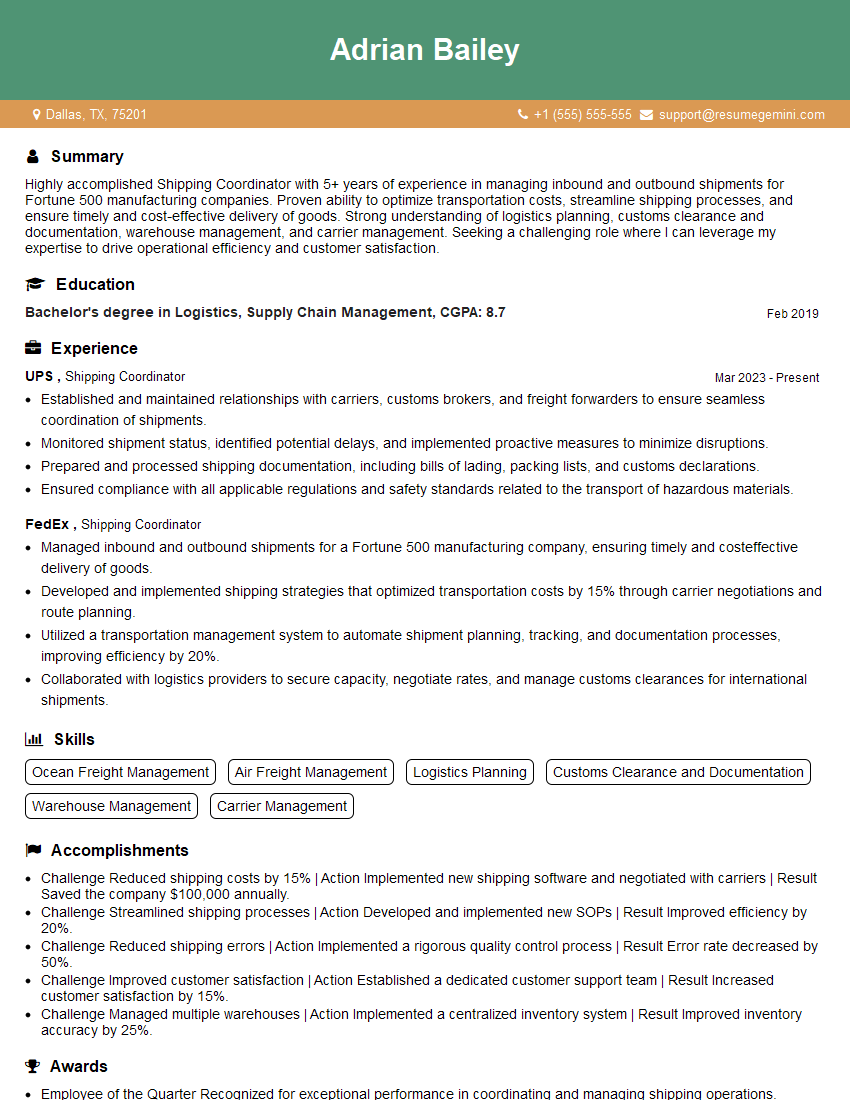
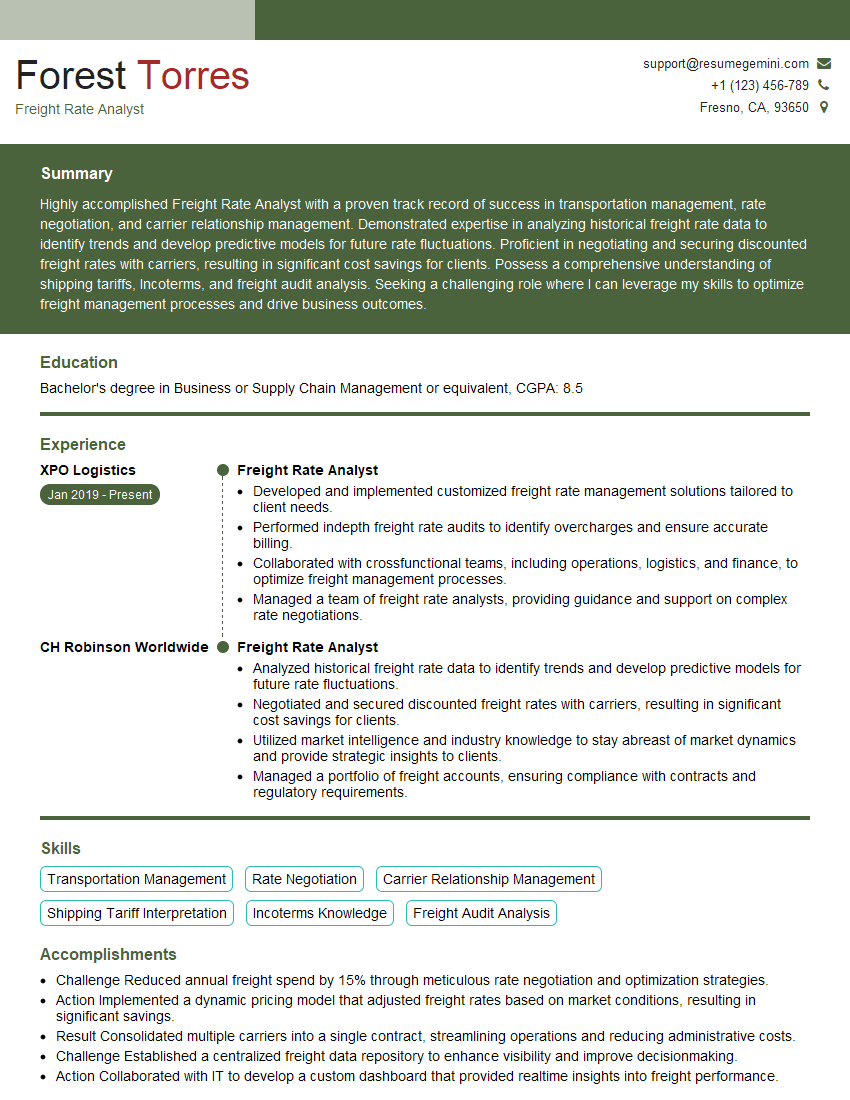
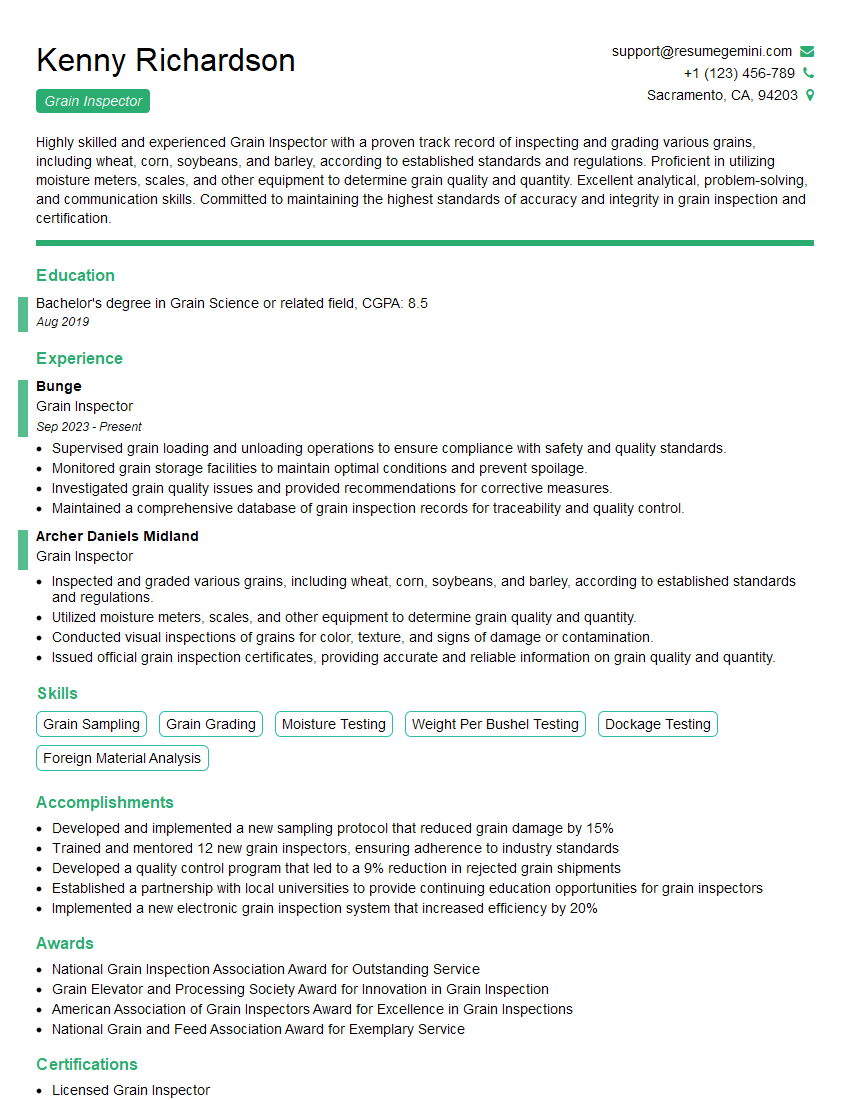
Mastering the intricacies of grain shipping opens doors to exciting career opportunities within a dynamic and globally connected industry. To maximize your job prospects, it’s crucial to present yourself effectively. Building an ATS-friendly resume is paramount for getting your application noticed. We highly recommend using ResumeGemini to craft a professional and impactful resume tailored to the grain shipping sector. Examples of resumes optimized for this industry are available to help guide your creation. Invest the time to build a strong resume – it’s your first impression and a key element to securing your dream role.
Explore more articles
Users Rating of Our Blogs
Share Your Experience
We value your feedback! Please rate our content and share your thoughts (optional).
What Readers Say About Our Blog
Very informative content, great job.
good