Cracking a skill-specific interview, like one for Grape Harvesting, requires understanding the nuances of the role. In this blog, we present the questions you’re most likely to encounter, along with insights into how to answer them effectively. Let’s ensure you’re ready to make a strong impression.
Questions Asked in Grape Harvesting Interview
Q 1. Describe your experience with different grape harvesting methods.
Grape harvesting methods vary greatly depending on factors like vineyard size, terrain, grape variety, and desired quality. Over my career, I’ve extensively used both manual and mechanical harvesting techniques.
Manual Harvesting: This traditional method involves hand-picking bunches of grapes, selectively removing undesirable berries or leaves. It’s labor-intensive but allows for precise selection, ensuring only the ripest and highest-quality grapes are harvested. This is crucial for premium wines where even minor defects can impact the final product. For example, I’ve worked harvests where we carefully sorted out any sun-damaged berries before placing them into small crates.
Mechanical Harvesting: This method utilizes specialized machinery to harvest grapes more quickly and efficiently. Machines shake the vines, causing the grapes to fall onto a conveyor belt. While faster, it requires careful consideration of vine health and can lead to damage or inclusion of unwanted material if not properly managed. I’ve used various types of mechanical harvesters, from smaller, more agile machines suitable for hilly vineyards to larger, high-capacity harvesters for flat, expansive vineyards. The choice depends on the specific vineyard characteristics. Post-harvest sorting is crucial to eliminate stems, leaves, and damaged berries.
I firmly believe that choosing the appropriate method requires a nuanced understanding of the tradeoffs between speed, cost, and quality.
Q 2. What are the key indicators of grape ripeness?
Determining grape ripeness is a critical aspect of successful winemaking. It’s not just about the sugar content; it’s a complex interplay of several factors.
Brix Level (Sugar Content): Measured using a refractometer, this indicates the sugar concentration. The desired Brix level varies depending on the grape variety and desired wine style.
Acidity: Measured as pH or titratable acidity, this affects the wine’s balance and longevity. Proper ripeness involves a balance between sugar and acidity.
Phenolic Ripeness (Tannins & Flavors): This determines the color, flavor intensity, and tannins in red wines. Proper phenolic ripeness is crucial for the quality and complexity of the wine.
Berry Aroma and Taste: Experienced harvesters and winemakers can assess ripeness through sensory evaluation, looking for characteristic aromas and flavors in the berries. For instance, a Cabernet Sauvignon should have distinct blackcurrant notes at optimal ripeness.
Ideally, we conduct regular sampling and testing in the weeks leading up to harvest, charting the progress of these parameters to determine the precise harvest date. I always advocate for a multi-faceted approach, combining scientific measurements with sensory analysis.
Q 3. How do you ensure the quality of harvested grapes?
Maintaining grape quality throughout the harvest is paramount. Several key strategies are employed:
Careful Handling: Minimizing damage to the berries is crucial. Gentle handling during manual harvesting and careful machine operation are essential. This minimizes the risk of enzymatic reactions that can spoil the grapes.
Rapid Cooling: After harvest, the grapes are rapidly cooled to prevent fermentation from starting prematurely. This is especially important for red grapes, as temperature control is vital in preserving their qualities.
Prompt Transportation: Grapes are transported to the winery promptly after harvest to prevent spoilage or quality degradation. Use of temperature-controlled trucks is commonplace.
Sorting and Cleaning: Removing unwanted material such as leaves, stems, and damaged berries is a crucial step both before and after processing to enhance quality.
I’ve seen firsthand how proper handling and processing can significantly impact the final wine’s quality, so these measures are always meticulously followed.
Q 4. Explain your experience with different types of harvesting equipment.
My experience encompasses a wide range of harvesting equipment, each with its strengths and limitations.
Self-propelled harvesters: These are versatile machines designed for various vineyard terrains and vine configurations. They can navigate slopes and adjust to different row widths. I’ve worked with harvesters equipped with GPS guidance systems for improved efficiency and reduced overlap.
Trailing harvesters: Pulled by a tractor, these machines are cost-effective for larger, flatter vineyards. However, their maneuverability in hilly or uneven terrain is limited.
Hand-held grape harvesters (small-scale): These are used for smaller vineyards or sections with limited access. They are less efficient but offer increased control and selectivity.
Beyond the harvester itself, I’m also familiar with various support equipment, such as grape bins, conveyors, and trucks equipped for temperature control, all playing a critical role in the efficient and quality-preserving handling of harvested grapes.
Q 5. What are the common challenges faced during grape harvesting?
Grape harvesting presents several challenges:
Weather conditions: Rain can significantly damage grapes, leading to rot and disease. Extreme heat can also negatively impact quality. Precise timing is critical.
Labor availability and cost: Manual harvesting relies heavily on seasonal labor, which can be difficult to secure and manage. Mechanical harvesting reduces this reliance but incurs significant equipment costs.
Bird damage: Birds can cause significant losses in certain vineyards, requiring strategies such as netting to protect the grapes.
Disease and pest pressure: Infections and pests can impact grape quality and yield, requiring proactive management throughout the growing season.
Uneven ripening: Grapes within a vineyard may not ripen uniformly, necessitating selective harvesting techniques or multiple passes through the vineyard.
Successfully navigating these challenges requires careful planning, adaptive strategies, and a flexible approach.
Q 6. How do you manage a harvest crew effectively?
Effective crew management during harvest is crucial for efficiency and quality. My approach involves:
Clear communication: Maintaining open and consistent communication is essential. This involves daily briefings, clear instructions, and providing ample opportunity for questions and feedback.
Proper training: Crew members should be properly trained on safe harvesting techniques, quality standards, and the use of equipment. This ensures consistent results and minimizes the risk of accidents or damage.
Fair compensation and incentives: Providing competitive wages and incentives, such as bonuses tied to quality or productivity, boosts morale and productivity.
Team building: Cultivating a positive team atmosphere contributes to morale, cooperation, and overall success.
Monitoring and support: Regularly monitoring crew progress, offering assistance when needed, and addressing concerns promptly are crucial for smooth operations.
I’ve found that a supportive and well-managed team leads to a more productive and successful harvest.
Q 7. Describe your experience with yield estimation techniques.
Accurate yield estimation is crucial for planning resources and setting realistic expectations. Techniques include:
Sampling: Random sampling of vines throughout the vineyard provides data on average bunch weight and berry count, extrapolated to estimate total yield. This is often supplemented by historical data and adjustments for specific growing conditions.
Visual estimation: Experienced vineyard managers can make reasonably accurate estimates based on visual observation of vine size, bunch development, and overall canopy density. While subjective, this is a valuable quick assessment tool.
Remote sensing: Technologies such as aerial photography and satellite imagery provide data on canopy cover, vegetation indices, and other parameters that can be used to create yield models. These methods are becoming increasingly sophisticated.
A combination of these methods, refined through years of experience and adjusted for specific vineyard characteristics, is generally used to give a reliable estimate. Underestimating or overestimating yields has significant financial implications, so accuracy is vital.
Q 8. How do you handle adverse weather conditions during harvest?
Adverse weather during harvest is a significant challenge. My approach is multifaceted and depends on the specific threat. For example, during a predicted rain event, we might accelerate harvesting of particularly susceptible varieties, prioritizing those nearing optimal ripeness. This requires careful monitoring of weather forecasts and precise berry assessments. We might also employ protective measures like using tarps to cover exposed clusters or selectively harvesting in drier sections of the vineyard. In the case of extreme heat, we’ll adapt harvesting times to cooler periods, perhaps starting earlier or working later into the evening. We also prioritize hydration breaks for the harvesting crew to prevent heatstroke. For hail, our strategy focuses on preparedness. Using hail nets is an effective preventive measure, but if hail occurs, we must rapidly assess the damage and prioritize rescuing the salvageable fruit. Each situation requires a swift, well-informed decision based on the specific weather condition and the vineyard’s unique circumstances.
Q 9. Explain your understanding of grape varietal characteristics and their impact on harvesting.
Grape varietal characteristics are crucial for determining optimal harvest timing. For example, Cabernet Sauvignon, known for its thick skins and high tannins, typically requires longer hang time on the vine than Pinot Noir, which has thinner skins and ripens more quickly. Understanding these varietal differences is key to ensuring the grapes achieve their desired sugar levels, acidity, and phenolic ripeness. Early-ripening varieties like Gamay might be harvested earlier in the season, while late-ripening varieties like Zinfandel require patience and careful monitoring until they reach peak quality. Each variety exhibits unique characteristics that dictate the best time to pick to achieve the desired flavor profile in the wine. This understanding is vital in planning the harvest schedule, allocating resources, and ultimately achieving the highest quality fruit.
Q 10. What safety protocols do you follow during grape harvesting?
Safety is paramount during grape harvest. We adhere to a strict protocol including providing all harvesters with appropriate safety equipment such as gloves, sturdy footwear with good traction, sun hats, and safety glasses. Regular safety briefings are conducted before each harvest period to emphasize safe work practices, including proper lifting techniques to avoid back injuries, and procedures for handling equipment and machinery. We strictly enforce the use of personal protective equipment (PPE) to minimize the risk of cuts from pruning shears or exposure to pesticides. We also emphasize awareness of potential hazards such as uneven terrain, potential for insect stings, and risks associated with working in hot conditions. First aid kits are strategically positioned throughout the vineyard, and clear communication channels are maintained between the harvesting crew and supervisory personnel to ensure prompt responses to any safety concerns.
Q 11. How do you maintain the quality of grapes during transportation?
Maintaining grape quality during transportation is crucial. We use refrigerated trucks to keep the grapes cool, slowing down the metabolic processes and preventing spoilage. The grapes are carefully sorted and placed in containers that provide adequate ventilation to minimize the build-up of moisture and heat. Transportation times are kept as short as possible to minimize stress on the fruit. We often use smaller bins to reduce the weight and stress on individual grapes. The trucks are regularly inspected to ensure optimal temperature control, and the entire process is carefully monitored to ensure the grapes arrive at the winery in pristine condition. Accurate temperature logging and documentation form a crucial part of our quality control system.
Q 12. What is your experience with post-harvest handling of grapes?
My experience with post-harvest handling encompasses a broad range of activities, from receiving the harvested fruit at the winery to sorting and destemming. We conduct thorough inspections to identify and remove any damaged or diseased berries. Rapid processing is key to minimizing the risk of spoilage. We utilize efficient sorting lines and equipment to ensure that only the highest quality fruit is used for winemaking. Proper sanitation and hygiene protocols are strictly enforced throughout the process to prevent contamination. Accurate record-keeping is crucial to track yields, quality assessments, and processing parameters, which helps optimize wine production and inform future vineyard management strategies. The goal is to ensure the fruit maintains its integrity and quality, translating into exceptional wines.
Q 13. Describe your experience with different pruning techniques and their impact on harvest.
Pruning techniques significantly influence grape yield and quality. I have extensive experience with various methods, including spur pruning (leaving short spurs with a few buds), cane pruning (leaving longer canes), and cordon pruning (training vines along horizontal wires). The choice of technique depends on the grape variety, vineyard conditions, and desired yield. For instance, spur pruning tends to produce smaller yields but with higher quality grapes. Cane pruning can increase yields but may require more rigorous canopy management to avoid over-cropping and maintain fruit quality. Cordon pruning is beneficial for mechanical harvesting and allows for greater control over vine development. Each technique impacts the number of buds, the distribution of fruit along the vine, and ultimately, the size and quality of the harvest. Careful planning and execution of the pruning method are crucial for achieving the desired harvest outcomes.
Q 14. How do you identify and address issues such as rot or disease in harvested grapes?
Identifying and addressing rot or disease in harvested grapes is crucial for maintaining quality. Regular vineyard monitoring throughout the growing season is key to early detection. We employ visual inspection techniques, checking for signs such as discoloration, lesions, and mold growth. Sampling methods are used to assess the extent of infection. Once harvested, careful sorting and removal of affected berries are paramount. We often employ optical sorting machines to identify and remove visually flawed grapes. In cases of severe infection, we might adjust winemaking practices to mitigate the impact. For instance, careful yeast selection and fermentation management might be employed to neutralize undesirable compounds. Implementing strict sanitation protocols during harvesting and processing also reduces the risk of disease spread. Maintaining accurate records of disease incidence helps to guide future disease management practices and minimize losses.
Q 15. What are the key factors that determine the optimal harvesting time?
Optimal grape harvesting time hinges on achieving the perfect balance of sugar accumulation, acidity, and phenolic ripeness. Think of it like baking a cake – you need the right amount of each ingredient for the perfect result. We use a combination of factors to determine this:
- Sugar levels (Brix): Measured with a refractometer, this indicates the potential alcohol content of the wine. Target Brix levels vary depending on the grape variety and desired wine style. For example, a Cabernet Sauvignon might need higher Brix than a Pinot Grigio.
- Acidity (pH and titratable acidity): Acidity provides freshness and balance to the wine. Too low, and the wine will taste flat; too high, and it will be overly tart. We monitor pH and titratable acidity throughout ripening to ensure it’s within the ideal range.
- Phenolic ripeness: This refers to the development of tannins and other flavor compounds. Proper phenolic ripeness contributes to the wine’s structure, complexity, and aging potential. We assess this through sensory evaluation (tasting) and sometimes lab analysis.
- Weather conditions: A warm, dry spell just before harvest can significantly improve sugar accumulation and concentration of flavors. Conversely, rain can dilute sugars and increase the risk of disease.
By carefully monitoring all these factors, we can pinpoint the precise moment when each grape is at its peak potential, maximizing the quality of the final product. It’s a delicate balancing act, but crucial to producing exceptional wines.
Career Expert Tips:
- Ace those interviews! Prepare effectively by reviewing the Top 50 Most Common Interview Questions on ResumeGemini.
- Navigate your job search with confidence! Explore a wide range of Career Tips on ResumeGemini. Learn about common challenges and recommendations to overcome them.
- Craft the perfect resume! Master the Art of Resume Writing with ResumeGemini’s guide. Showcase your unique qualifications and achievements effectively.
- Don’t miss out on holiday savings! Build your dream resume with ResumeGemini’s ATS optimized templates.
Q 16. Describe your experience with using harvest data to improve future harvests.
Harvest data is absolutely crucial for continuous improvement. Over the years, I’ve implemented a system where we meticulously record every aspect of the harvest, from the yield per vine to the sugar levels and acidity of each block. This data is then analyzed to identify trends and patterns.
For example, we discovered that a specific vineyard block consistently produced grapes with lower sugar levels than expected. By analyzing historical data alongside soil analysis reports, we found that the rootstock in that block wasn’t thriving optimally. We subsequently adjusted soil management techniques, resulting in a significant improvement in sugar accumulation in subsequent harvests.
Moreover, we use this data to refine our predictions for future harvests. We’ve developed predictive models that factor in weather patterns, historical yields, and other relevant variables to estimate the optimal harvest timing and overall yield for each vineyard. This allows us to optimize labor scheduling and resource allocation.
Q 17. What are the environmental considerations in grape harvesting?
Environmental considerations are paramount in grape harvesting. Sustainable practices are essential for preserving the environment and ensuring the long-term health of the vineyards.
- Water conservation: We employ efficient irrigation techniques to minimize water usage. This includes using drip irrigation and soil moisture sensors to ensure the vines receive only the necessary amount of water.
- Pest and disease management: We prioritize integrated pest management (IPM) strategies, using biological controls and minimal pesticides to protect both the environment and the grapes. This includes monitoring pest populations and using natural predators where possible.
- Energy efficiency: We utilize fuel-efficient machinery and optimize transportation routes to reduce our carbon footprint. Investing in electric or alternative fuel vehicles is also being considered.
- Waste management: We compost grape pomace (the leftover skins and seeds) and other organic materials to reduce landfill waste and create nutrient-rich soil amendments.
Our commitment to environmental sustainability is crucial, not only for ethical reasons but also to preserve the quality of our grapes and the longevity of our vineyards.
Q 18. How do you manage labor scheduling during peak harvest periods?
Managing labor during peak harvest is a complex logistical challenge. Careful planning is key to ensuring we have the right number of skilled workers at the right time. We use a multi-pronged approach:
- Accurate yield forecasting: By utilizing our harvest data and predictive models, we anticipate our labor needs with a high degree of accuracy.
- Pre-harvest crew training: We conduct comprehensive training sessions to familiarize our team with best practices in grape harvesting, ensuring efficiency and consistent quality.
- Flexible scheduling: We build flexibility into our schedules to accommodate unexpected changes in weather or unforeseen delays.
- Incentive programs: We offer competitive wages and incentive programs to attract and retain skilled workers, especially during the busy harvest season. This includes overtime pay and potential bonuses for exceeding performance metrics.
- Technology integration: We explore utilizing technology such as labor management software to track worker productivity and optimize scheduling in real-time.
Effective labor management ensures that the harvest proceeds smoothly and efficiently, preserving the quality of the grapes and minimizing losses.
Q 19. Explain your understanding of grape sugar levels and their importance.
Grape sugar levels, typically measured as Brix, are of paramount importance as they directly influence the potential alcohol content and sweetness of the wine. Higher Brix levels generally result in higher alcohol content.
The importance goes beyond just alcohol. Sugar is one of the primary sources of energy for yeast during fermentation, determining the efficiency and outcome of the process. Sugar also interacts with acidity and other compounds, affecting the final flavor profile. A balanced level of sugar is crucial for producing a well-rounded wine with the desired characteristics.
For example, a winemaker aiming for a dry, crisp white wine will want to harvest grapes with slightly lower Brix levels than one crafting a rich, full-bodied red. Understanding the relationship between sugar levels and the desired wine style is critical in planning the harvest.
Q 20. What are the common pests and diseases affecting grapevines and how do you mitigate their effects on harvest?
Grapevines are susceptible to a range of pests and diseases that can significantly impact yield and quality. Some common culprits include:
- Powdery mildew: A fungal disease that coats leaves and grapes with a white powdery substance, reducing fruit quality and yield. We mitigate this using preventative fungicide applications and ensuring good vineyard ventilation.
- Downy mildew: Another fungal disease, this one appearing as oily spots on leaves and grapes. Again, preventative fungicide applications and vineyard management techniques are crucial.
- Phylloxera: A tiny insect that attacks the roots of grapevines, severely impacting their growth and productivity. We prevent this by using resistant rootstocks.
- Birds and insects: Birds and insects can damage grapes during ripening. We employ netting to protect the crops and use sustainable pest control methods to manage insect populations.
Our approach centers on integrated pest management (IPM). This involves monitoring pest and disease populations, employing preventative measures, and resorting to chemical intervention only as a last resort. The goal is to minimize environmental impact while protecting the grapes from damage.
Q 21. What is your experience with soil analysis and how does it relate to grape harvesting?
Soil analysis plays a crucial role in informing our grape harvesting strategies. By analyzing the soil’s chemical composition, we get insights into its nutrient levels, pH, and overall health.
This information helps us make informed decisions regarding fertilization, irrigation, and pest management. For example, if soil analysis reveals a deficiency in potassium, we adjust our fertilization program accordingly, ensuring the vines have the nutrients they need to produce high-quality grapes. Similarly, understanding the soil’s pH can help us select appropriate rootstocks and adjust irrigation strategies.
Soil analysis also provides insights into potential limitations. If the soil is excessively compacted, this might hinder root growth and affect the vines’ ability to uptake nutrients, potentially reducing yields or affecting the quality of the grapes. This allows us to implement soil improvement strategies well in advance of the harvest.
In essence, soil analysis provides a foundational understanding of the vineyard’s health, allowing for proactive management decisions that directly influence the quantity and quality of our harvest.
Q 22. How do you ensure compliance with all relevant health and safety regulations during harvesting?
Ensuring health and safety during grape harvesting is paramount. It’s not just about complying with regulations; it’s about creating a safe work environment for everyone involved. My approach is multifaceted and begins with thorough training. All team members receive comprehensive instruction on safe operating procedures for all equipment, including machinery safety, personal protective equipment (PPE) use, and hazard recognition. We conduct regular safety meetings to reinforce these procedures and address any emerging concerns. We meticulously maintain all equipment, performing regular inspections and preventative maintenance to minimize the risk of mechanical failures. Furthermore, we strictly adhere to all relevant OSHA (or equivalent local authority) regulations regarding pesticide handling, sun protection, heat stress prevention, and emergency response planning. For example, we provide ample shade and hydration breaks, especially during peak heat, and have clearly defined emergency procedures and communication systems in place. Finally, we keep detailed records of safety training, equipment maintenance, and any incidents, contributing to a culture of continuous improvement and proactive risk management.
Q 23. Describe your proficiency in using specific harvesting equipment (e.g., harvesters, sorting tables).
My experience encompasses a wide range of harvesting equipment. I’m proficient in operating both mechanical harvesters and employing traditional hand-harvesting techniques. With mechanical harvesters, I’m skilled in pre-harvest setup, including proper adjustment of shaking mechanisms and berry-handling systems to minimize damage and optimize yield for different grape varieties. Post-harvest, I’m adept at cleaning and maintaining these machines to prolong their lifespan and ensure optimal performance for subsequent harvests. My expertise extends to using sorting tables, where I efficiently sort grapes based on size, ripeness, and visual quality. This involves quick identification of damaged or diseased berries, ensuring only top-quality fruit makes it to the processing stage. I’m familiar with different sorting table technologies, including optical sorters that use cameras and sensors for automated quality control. I’m also experienced in managing the team working on the sorting tables, ensuring consistent quality standards are maintained throughout the process. I can even troubleshoot and fix minor mechanical issues on the equipment, minimizing downtime.
Q 24. How do you handle unexpected issues or delays during the harvest?
Unexpected issues during harvest are inevitable. My approach is proactive and focuses on preparedness and swift, decisive action. For example, if a mechanical harvester malfunctions, we have backup plans, including a rapid response team for repairs and, if necessary, switching to hand harvesting for affected sections. Delays due to inclement weather are addressed with flexible scheduling and possibly the prioritization of the most ripe blocks. We regularly monitor weather forecasts and adapt harvesting schedules accordingly. If we encounter quality issues within a specific area, such as unexpected rot or disease, we isolate and handle that section carefully, minimizing impact on the overall harvest. Communication is key—we maintain clear lines of communication amongst the entire harvest team, allowing for rapid assessment of the situation and effective problem-solving. Detailed record-keeping allows us to identify potential patterns of issues for future planning. We are also always prepared with contingency plans, including alternative transportation or processing facilities, minimizing the impact of unexpected problems on the yield.
Q 25. Describe your experience with inventory management and record-keeping during harvest.
Inventory management and record-keeping are critical for efficient and successful harvests. We use a combination of physical and digital systems to track every aspect of the process, from the initial assessment of yield potential to the final delivery to the winery. Each block of vines is carefully mapped, and its yield is meticulously documented throughout the growing season. During harvest, we use handheld devices or dedicated harvest management software to record the quantity and quality of grapes picked from each block. This data informs our decisions regarding sorting and processing. We track the weight, sugar content (Brix), pH, and any other relevant quality parameters at each stage. This detailed inventory provides a complete picture of the harvest, allowing for accurate forecasting, efficient resource allocation, and accountability. At the end of the harvest, we generate comprehensive reports that are useful for future planning and analysis. The data collected informs decisions about pruning, fertilization, and vineyard management for the following year, facilitating continuous improvement.
Q 26. Explain your understanding of different grape varieties and their specific harvesting requirements.
Understanding grape varieties and their specific harvesting requirements is fundamental to maximizing quality and yield. Different varieties ripen at different rates and have unique characteristics affecting optimal harvest time. For example, Cabernet Sauvignon typically requires longer hang time to achieve optimal flavor complexity compared to early-ripening varieties like Pinot Noir. This requires careful monitoring of sugar levels (Brix), acidity, and phenolic maturity using various techniques such as refractometry and sensory evaluation. Some varieties are more susceptible to certain diseases or weather conditions requiring attentive monitoring and perhaps earlier harvesting to prevent quality issues. Experience allows me to recognize the subtle signs of ripeness in different varieties—visual cues, aroma profiles, and even the feel of the berries. For instance, I know the characteristic berry firmness and color changes that signal optimal ripeness for Merlot versus Cabernet Franc. Adapting harvesting techniques and timing to meet the unique needs of each variety is essential for producing high-quality wines.
Q 27. How do you determine the best sorting criteria for grape quality control?
Determining the best sorting criteria is crucial for maintaining consistent quality. It’s a multifaceted process that depends on several factors, including the intended use of the grapes (winemaking style), market demand, and the overall quality of the harvest. Basic criteria include berry size, ripeness (Brix levels), and visual defects like rot, sunburn, or damage from insects. More sophisticated sorting might involve assessing things like berry color uniformity (for certain wine styles), or even using technologies like near-infrared spectroscopy to assess internal berry characteristics not readily visible to the naked eye. The precise criteria are determined collaboratively with winemakers, often using sensory evaluation of samples to establish ideal quality benchmarks. We might use a tiered system, separating grapes into different quality grades based on the sorting criteria. The outcome of this is a precise and consistent product that meets the client’s specifications and achieves high quality in the final product.
Q 28. What is your experience with using technology (e.g., GPS, sensors) to optimize grape harvesting?
Technology plays an increasingly important role in optimizing grape harvesting. GPS-guided machinery allows for precise navigation through vineyards, minimizing overlaps and ensuring complete harvesting. Sensors monitoring factors like yield, sugar levels, and weather conditions provide real-time data which enables informed, data-driven decision-making. For instance, we use sensors to monitor the Brix levels of individual grape clusters, enabling targeted harvesting based on ripeness, ensuring consistent quality across the vineyard. Remote sensing technologies, like aerial imagery and multispectral cameras, offer a bird’s-eye view of the vineyard and can highlight areas requiring more attention. Data from these technologies can be integrated into harvest management software, creating a centralized platform for planning and execution. This integration enhances precision farming, optimizing resources and maximizing both quantity and quality in the harvest.
Key Topics to Learn for Grape Harvesting Interview
- Vineyard Management & Health: Understanding vine health, disease identification, and preventative measures crucial for optimal yield.
- Harvest Timing & Techniques: Knowing the optimal time to harvest based on sugar levels and berry characteristics; mastering various harvesting methods (hand-harvesting, machine harvesting).
- Grape Quality Assessment: Developing skills in evaluating grape ripeness, assessing berry quality (size, color, flavor), and identifying potential defects.
- Post-Harvest Handling: Understanding the importance of careful handling to minimize damage and maintain grape quality during transportation and processing.
- Safety Procedures & Regulations: Familiarity with relevant safety regulations, equipment operation, and potential hazards in the vineyard environment.
- Teamwork & Communication: Demonstrating the ability to work effectively within a team, communicate clearly with supervisors and colleagues, and contribute to a productive harvest.
- Problem-Solving & Decision-Making: Showcasing your ability to identify and resolve issues related to vineyard conditions, equipment malfunctions, and unexpected challenges during harvest.
- Yield Optimization Strategies: Understanding techniques for maximizing yield while maintaining grape quality.
- Environmental Considerations: Demonstrating knowledge of sustainable harvesting practices and environmental impact.
Next Steps
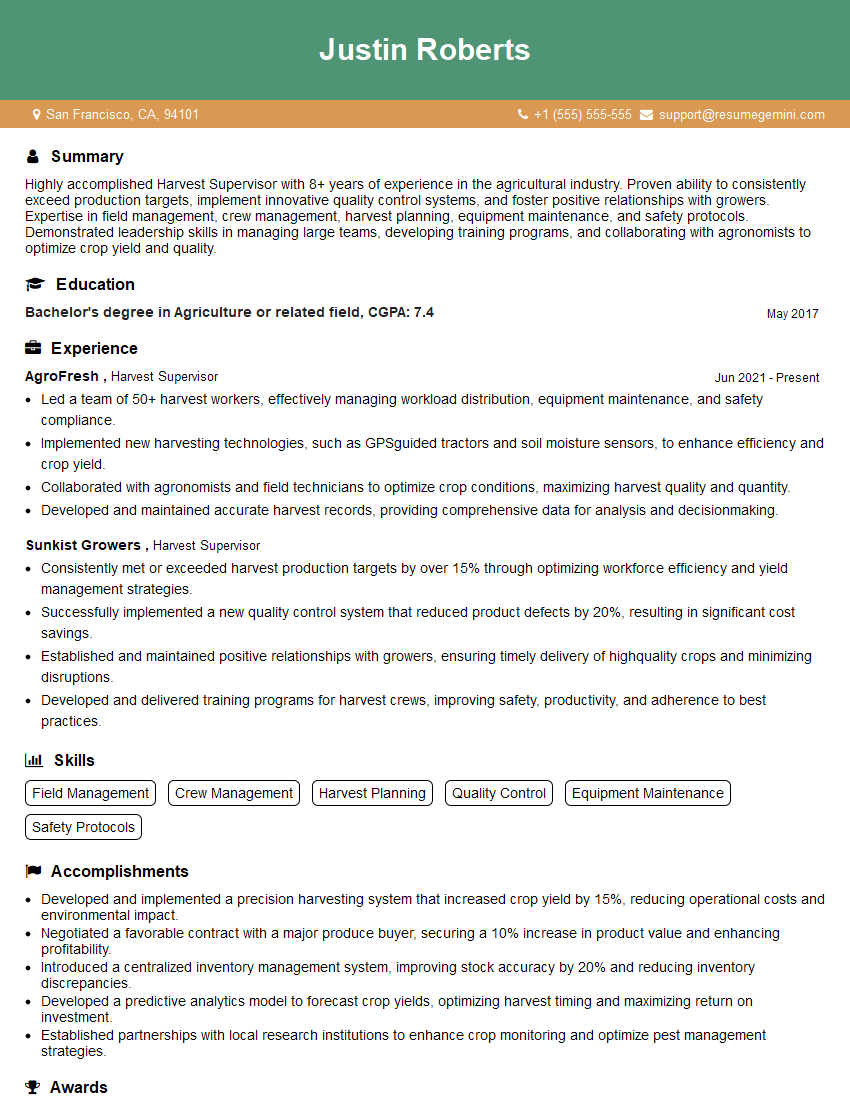
Mastering grape harvesting opens doors to a rewarding career in the wine industry, offering opportunities for growth and specialization. A strong resume is your key to unlocking these opportunities. Creating an ATS-friendly resume is crucial for getting your application noticed. To help you build a compelling and effective resume, we recommend using ResumeGemini. ResumeGemini provides a user-friendly platform to craft professional resumes, and we offer examples of resumes tailored to the grape harvesting industry to guide you.

Explore more articles
Users Rating of Our Blogs
Share Your Experience
We value your feedback! Please rate our content and share your thoughts (optional).
What Readers Say About Our Blog
Very informative content, great job.
good