Unlock your full potential by mastering the most common Green Building Design (LEED) interview questions. This blog offers a deep dive into the critical topics, ensuring you’re not only prepared to answer but to excel. With these insights, you’ll approach your interview with clarity and confidence.
Questions Asked in Green Building Design (LEED) Interview
Q 1. Explain the different LEED rating systems (e.g., Building Design and Construction, Interior Design & Construction, etc.).
LEED, or Leadership in Energy and Environmental Design, offers various rating systems catering to different building types and project scopes. The most common are:
- LEED Building Design and Construction (BD+C): This is for new construction and major renovations of buildings. It covers various building types, from commercial offices to schools and residential high-rises. Think of a completely new office building or a significant overhaul of an existing hospital.
- LEED Interior Design and Construction (ID+C): This focuses on the interior spaces within existing buildings. It’s perfect for tenant improvements, where you’re modifying an existing space without impacting the building’s structure significantly. For example, renovating an office suite within a larger office complex.
- LEED for Existing Buildings: Operations & Maintenance (EBOM): This is for existing buildings looking to improve their operational efficiency and environmental performance. It focuses on optimizing energy use, waste management, and water conservation in already-built structures. Think of an existing apartment building aiming to reduce its carbon footprint.
- LEED for Homes: Specifically designed for new and existing residential buildings, this system addresses sustainability in homes, promoting energy efficiency, water conservation, and the use of sustainable materials.
- LEED for Core & Shell: This system concentrates on the building’s base structure – the core and shell – leaving the tenant fit-out to be addressed separately. It’s used when a developer is building the basic structure, and future tenants will handle the interior design.
Each system has its specific prerequisites and credits, aligning with the unique challenges and opportunities presented by each building type.
Q 2. Describe the LEED certification process.
The LEED certification process is a multi-stage journey that involves meticulous planning and documentation. It generally follows these steps:
- Project Registration: The project is registered with the Green Building Certification Institute (GBCI) to begin tracking progress.
- Design and Construction/Renovation: The design and construction team implements strategies to earn LEED points based on the chosen rating system.
- Documentation: Throughout the process, extensive documentation is collected to support the achievement of LEED credits. This includes specifications, drawings, test results, and invoices.
- LEED Review: Once the project is complete, a comprehensive review of all the collected documentation is undertaken by a LEED Accredited Professional (LEED AP).
- Certification: Based on the review, GBCI awards a certification level: Certified, Silver, Gold, or Platinum, reflecting the project’s performance. The higher the level, the greater the sustainability achievement.
The process requires careful planning and attention to detail throughout the project’s lifecycle. A successful certification hinges on proactive engagement and collaboration among all project stakeholders.
Q 3. What are the key strategies for reducing energy consumption in buildings?
Reducing energy consumption in buildings is crucial for environmental sustainability and cost savings. Key strategies include:
- High-Performance Building Envelope: This involves using high-performance windows, insulation, and air sealing to minimize heat loss in winter and heat gain in summer. Think of it as wrapping the building in a thermal blanket.
- Efficient HVAC Systems: Implementing energy-efficient heating, ventilation, and air conditioning systems, including variable refrigerant flow (VRF) systems, heat recovery ventilators, and optimized controls. These systems intelligently manage heating and cooling based on occupancy and climate.
- Renewable Energy Sources: Integrating renewable energy sources like solar panels, wind turbines, or geothermal energy to generate on-site power. This reduces reliance on the grid and lowers carbon emissions.
- Energy-Efficient Lighting: Using LED lighting, daylight harvesting (maximizing natural light), and occupancy sensors to minimize energy used for lighting. Motion sensors, for example, automatically switch off lights in unoccupied areas.
- Building Automation Systems (BAS): Implementing advanced building automation systems that monitor and control energy usage in real-time, optimizing performance and reducing waste. Imagine a system that dynamically adjusts temperature and lighting based on real-time needs.
A holistic approach integrating these strategies significantly reduces a building’s energy footprint.
Q 4. How do you incorporate sustainable materials in building design?
Incorporating sustainable materials is essential for minimizing environmental impact and promoting healthy indoor environments. Strategies include:
- Locally Sourced Materials: Using materials sourced within a close radius reduces transportation emissions and supports local economies. This reduces the carbon footprint associated with transportation.
- Recycled and Reclaimed Materials: Utilizing recycled content in materials reduces the demand for virgin resources and minimizes waste. Reclaimed wood, for instance, adds character while reducing landfill waste.
- Rapidly Renewable Materials: Choosing materials from rapidly renewable sources, such as bamboo or straw bales, helps conserve forests and other natural resources. These materials grow quickly and sustainably.
- Low-Embodied Carbon Materials: Opting for materials with low embodied carbon—the carbon emissions associated with their production, transport, and installation—minimizes the overall carbon footprint of the building. This takes into account the entire life cycle of the material.
- Material Health Product Declarations: Utilizing material health product declarations (MHPDs) to understand the chemical composition and potential health impacts of building materials. Transparency in material composition is crucial for IEQ.
A careful material selection process ensures that the building’s materials contribute positively to both its environmental and human health performance.
Q 5. Explain the importance of water efficiency in green building design.
Water efficiency is paramount in green building design, both to conserve a precious resource and minimize environmental impact. It reduces strain on water supplies, lowers operational costs, and minimizes the building’s environmental footprint.
Strategies for achieving water efficiency include:
- Low-Flow Fixtures: Installing low-flow toilets, faucets, and showerheads to reduce water consumption without compromising functionality. These fixtures use less water while maintaining performance.
- Water-Efficient Landscaping: Using drought-tolerant plants, rainwater harvesting systems, and greywater recycling to minimize potable water use for irrigation. This reduces demand on municipal water supplies.
- Water Metering: Implementing water meters to monitor water usage accurately, identify leaks, and encourage conservation. Real-time monitoring helps pinpoint water waste areas.
- Reduced Water Use in HVAC Systems: Using technologies like evaporative cooling or air-cooled chillers that minimize water consumption in building climate control systems. This reduces water used for cooling processes.
- Process Water Recycling: Recycling water used in various building processes, such as laundry or dishwashing, for non-potable purposes like toilet flushing or irrigation. This maximizes water usage and minimizes waste.
A water-conscious approach dramatically reduces the building’s water footprint and contributes significantly to sustainability goals.
Q 6. What are some strategies for improving indoor environmental quality (IEQ)?
Indoor Environmental Quality (IEQ) focuses on creating a healthy and comfortable indoor environment for occupants. Key strategies include:
- Good Ventilation: Providing adequate ventilation with outdoor air to dilute pollutants and ensure sufficient oxygen levels. This helps maintain fresh air quality.
- Thermal Comfort: Maintaining comfortable temperatures and humidity levels using efficient HVAC systems and building envelope design. Comfort plays a huge role in productivity and well-being.
- Daylighting and Views: Maximizing natural light and views to improve occupant mood and productivity. Studies show these factors enhance well-being significantly.
- Acoustic Control: Implementing noise reduction strategies to create a quiet and productive work or living environment. Noise pollution can impact health and productivity.
- Indoor Air Quality (IAQ): Using low-emitting materials, implementing effective air filtration systems, and controlling moisture levels to prevent mold and mildew growth. Poor IAQ can lead to serious health issues.
- Controllability: Giving occupants control over their environment, such as individual temperature and lighting controls, to enhance satisfaction and comfort. Personalized control leads to higher satisfaction.
These strategies create a healthy, productive, and enjoyable indoor environment that supports the well-being of building occupants.
Q 7. Describe your experience with building commissioning.
Building commissioning is a quality assurance process that verifies that building systems are designed, installed, and operated as intended. My experience includes leading commissioning efforts on several projects, from small office renovations to large-scale hospital constructions. I’ve been involved in all phases, from pre-design commissioning to post-occupancy evaluations.
My role typically involves:
- Developing the commissioning plan: This outlines the scope, procedures, and schedule for the commissioning process, ensuring it aligns with project goals.
- Reviewing design documents: Thoroughly reviewing design documents to identify potential issues and ensure that systems are designed for optimal performance.
- Witnessing testing and inspection: Observing functional performance tests and inspections to verify that systems are installed and operating correctly.
- Preparing commissioning reports: Documenting the commissioning process, including test results and recommendations, to provide a comprehensive record.
- Following up post-occupancy: Conducting post-occupancy evaluations to assess building performance and identify areas for improvement.
Building commissioning is crucial for ensuring that buildings operate efficiently and meet their intended performance goals, minimizing operational costs and maximizing energy efficiency. It’s a vital element in achieving LEED certification and creating sustainable, high-performing buildings. One memorable project involved commissioning a large LEED Platinum-certified office tower where meticulous commissioning significantly reduced energy consumption during the first year of operation.
Q 8. How do you approach life cycle assessment (LCA) in your projects?
Life Cycle Assessment (LCA) is a crucial tool in green building design. It’s a comprehensive analysis of a building’s environmental impacts, from material extraction and manufacturing to construction, operation, and ultimately, demolition and disposal. My approach involves a multi-stage process.
- Scoping: Defining the system boundaries – what aspects of the building’s life cycle will be included in the analysis. This includes specifying functional units (e.g., square meters of floor area per year of use).
- Inventory Analysis: Identifying and quantifying all materials, energy, and waste associated with each stage of the building’s lifecycle. This often involves using specialized LCA software and databases.
- Impact Assessment: Evaluating the environmental impacts of the identified inputs and outputs. Common impact categories include global warming potential, acidification, eutrophication, and resource depletion. We use established impact assessment methodologies like ReCiPe or TRACI.
- Interpretation: Analyzing the results to identify significant environmental hotspots and develop strategies for improvement. This stage involves making informed decisions, balancing competing environmental concerns and budgetary realities.
For instance, in a recent project, our LCA revealed that the embodied carbon in the structural steel was a major contributor to the building’s overall carbon footprint. This led us to explore alternatives, such as using recycled steel or mass timber, significantly reducing the environmental impact.
Q 9. What is embodied carbon and how can it be reduced in construction?
Embodied carbon refers to the greenhouse gas emissions associated with the manufacturing, transportation, installation, and end-of-life management of building materials. It’s a significant portion of a building’s overall carbon footprint, often exceeding operational carbon emissions over the building’s lifespan. Reducing embodied carbon requires a holistic approach.
- Material Selection: Choosing low-carbon materials such as recycled content steel, reclaimed wood, or locally sourced materials reduces transportation emissions. Embodied carbon calculators and databases help inform these choices.
- Design Optimization: Minimizing material use through efficient design and construction techniques reduces the overall embodied carbon. This includes optimizing structural systems, reducing waste during construction, and considering prefabrication.
- Carbon Offsetting: While not ideal, purchasing carbon offsets can help neutralize some of the embodied carbon associated with unavoidable high-carbon materials.
- Demolition and Reuse: Planning for the building’s deconstruction and the reuse of materials significantly reduces the end-of-life carbon impact.
For example, in one project we successfully reduced embodied carbon by 30% by opting for cross-laminated timber (CLT) over traditional steel framing, combined with careful material selection and waste reduction strategies.
Q 10. What is your experience with energy modeling software (e.g., EnergyPlus, eQUEST)?
I have extensive experience with EnergyPlus and eQUEST, two leading energy modeling software packages. EnergyPlus is known for its detailed modeling capabilities, while eQUEST offers a more user-friendly interface, suitable for quicker assessments. My proficiency involves more than just running simulations; it includes:
- Developing accurate building models: This includes geometry, materials, construction details, HVAC systems, and occupancy patterns.
- Calibrating models: Using real-world data to refine model accuracy and ensure reliable results.
- Analyzing results: Identifying areas for energy efficiency improvements and evaluating the impact of design changes.
- Creating optimization strategies: Leveraging the software’s capabilities to explore different design scenarios and find optimal energy performance solutions.
I’ve used these tools extensively to design highly energy-efficient buildings, demonstrating compliance with codes and LEED requirements. For example, in a recent project, EnergyPlus simulations guided the selection of high-performance glazing and optimized HVAC system design, resulting in a 40% reduction in predicted energy consumption compared to a baseline design.
Q 11. How do you integrate renewable energy sources into building design?
Integrating renewable energy sources requires careful consideration of the building’s design, location, and energy needs. My approach involves a multi-faceted strategy.
- Photovoltaic (PV) Systems: Rooftop or facade-integrated PV systems are common solutions. Design considerations include maximizing solar access, minimizing shading, and ensuring structural integrity.
- Solar Thermal Systems: For heating water or space heating, solar thermal collectors can be highly effective. Orientation and shading analyses are critical for optimizing performance.
- Wind Energy: For larger buildings or locations with high wind speeds, wind turbines can be viable options. However, careful consideration of noise and visual impact is essential.
- Geothermal Energy: Ground-source heat pumps can provide efficient heating and cooling, minimizing reliance on fossil fuels. Site-specific geological surveys are necessary to assess feasibility.
In a recent project, we integrated a rooftop PV system capable of generating 30% of the building’s annual energy demand. We also incorporated a geothermal system to further reduce reliance on grid electricity, enhancing both the energy efficiency and environmental sustainability of the building.
Q 12. What are some common challenges in achieving LEED certification?
Achieving LEED certification often presents several challenges.
- Cost: Upfront costs for sustainable materials and technologies can be higher than conventional options, although long-term cost savings can offset these initial expenses.
- Time: The LEED certification process requires meticulous documentation and often takes longer than conventional construction.
- Coordination: Integrating various sustainable strategies requires careful coordination among design teams, contractors, and suppliers.
- Accessibility of Materials and Technologies: Sourcing sustainable materials and technologies can be challenging in some regions, especially for niche products.
- Lack of Awareness: A lack of understanding of sustainable building practices amongst all project stakeholders can hinder the process.
Overcoming these challenges requires proactive planning, comprehensive budgeting, effective communication, and a commitment to sustainability from all project stakeholders. Successfully navigating these challenges leads to not only LEED certification but also a more efficient and environmentally friendly building.
Q 13. Describe your experience with sustainable site development strategies.
Sustainable site development focuses on minimizing the environmental impact of a building’s footprint. My experience includes implementing strategies like:
- Brownfield Redevelopment: Reusing previously developed land helps reduce urban sprawl and avoids disturbing undeveloped ecosystems.
- Site Selection: Choosing sites with access to public transportation, minimizing the need for vehicle travel and promoting walkability and bikeability.
- Minimizing Land Disturbance: Protecting existing vegetation and minimizing soil erosion during construction.
- Stormwater Management: Implementing strategies like bioswales, rain gardens, and permeable pavements to manage stormwater runoff and reduce water pollution.
- Light Pollution Reduction: Using appropriate lighting designs to minimize light trespass and preserve nocturnal ecosystems.
In one project, we successfully reduced the project’s impact on the surrounding ecosystem by incorporating a significant portion of the building’s landscaping with native plant species, supporting local biodiversity.
Q 14. How do you manage construction waste during a project?
Managing construction waste is crucial for both environmental and economic reasons. My approach emphasizes a multi-pronged strategy:
- Waste Reduction Planning: Developing a detailed waste management plan at the beginning of the project, incorporating strategies for minimizing waste generation through careful design and material selection.
- Waste Segregation: Implementing systems for sorting and separating construction waste into recyclable and reusable materials, reducing landfill waste.
- Material Reuse and Recycling: Prioritizing the reuse of materials on-site or donating them to other projects. Partnering with recycling facilities for efficient processing of recyclable materials.
- Waste Tracking and Reporting: Monitoring the amount of waste generated and recycled to track progress and identify areas for improvement.
- Educating Workers: Training construction workers on proper waste handling procedures and encouraging responsible waste management practices.
On a recent project, through diligent waste management, we achieved a 90% diversion rate—significantly reducing landfill waste and achieving significant cost savings through material reuse and recycling.
Q 15. Explain your understanding of green building standards beyond LEED.
LEED, while a prominent green building rating system, isn’t the only game in town. Many other standards and certifications exist, each with its own focus and criteria. These often address aspects LEED might not fully cover, or offer alternative approaches to sustainability. For example, the
Building Research Establishment Environmental Assessment Method (BREEAM) is a widely used standard in Europe and other regions, emphasizing a holistic approach to sustainability, encompassing broader social and economic considerations.
Green Globes offers a more flexible, customizable rating system, allowing for project-specific tailoring.
Living Building Challenge is a very stringent standard pushing the boundaries of what’s possible, aiming for net-positive impact on the environment.
Passive House Standard focuses intently on energy efficiency through superior building envelope design and construction. Each of these provides different lenses through which to evaluate a building’s environmental performance, and often projects seek multiple certifications to demonstrate a holistic commitment to sustainability.
Career Expert Tips:
- Ace those interviews! Prepare effectively by reviewing the Top 50 Most Common Interview Questions on ResumeGemini.
- Navigate your job search with confidence! Explore a wide range of Career Tips on ResumeGemini. Learn about common challenges and recommendations to overcome them.
- Craft the perfect resume! Master the Art of Resume Writing with ResumeGemini’s guide. Showcase your unique qualifications and achievements effectively.
- Don’t miss out on holiday savings! Build your dream resume with ResumeGemini’s ATS optimized templates.
Q 16. How familiar are you with WELL Building Standard?
I am very familiar with the WELL Building Standard. Unlike LEED, which primarily focuses on environmental impact, WELL concentrates on the health and well-being of building occupants. It covers aspects like air and water quality, light, thermal comfort, acoustics, and even the building’s impact on mental health. I’ve worked on several projects incorporating WELL principles, including designing spaces with improved ventilation systems to enhance air quality, selecting low-VOC materials to minimize indoor air pollution, and optimizing natural light strategies to reduce reliance on artificial lighting and improve occupant mood. The integration of WELL with LEED often creates synergistic effects, resulting in a building that is both environmentally responsible and promotes human health and well-being. For example, optimizing daylighting for WELL also reduces energy consumption, contributing to LEED points.
Q 17. How would you assess the environmental impact of a building material?
Assessing the environmental impact of a building material involves a multifaceted approach known as Life Cycle Assessment (LCA). This analyzes the material’s entire life cycle, from raw material extraction and manufacturing to its use and eventual disposal or recycling. Key factors considered include:
- Embodied carbon: The greenhouse gas emissions associated with the material’s production, transport, and installation.
- Energy consumption: The energy used throughout the material’s life cycle.
- Water consumption: The amount of water used in the material’s production and transportation.
- Toxicity: Potential health and environmental risks associated with the material’s composition and manufacturing processes.
- Recyclability and end-of-life management: Options for reuse, recycling, or responsible disposal.
Q 18. Explain the concept of passive design strategies.
Passive design strategies leverage natural forces – such as sunlight, wind, and thermal mass – to minimize energy consumption for heating, cooling, and lighting. They are essentially design choices that work with nature rather than against it. Examples include:
- Optimal building orientation and siting: Maximizing solar gain in winter and minimizing it in summer.
- Shading devices: Overhangs, awnings, and strategically planted trees to reduce solar heat gain.
- Thermal mass: Using materials like concrete or brick to store heat during the day and release it at night.
- Natural ventilation: Designing the building to utilize natural airflow for cooling.
- High-performance insulation: Minimizing heat transfer through the building envelope.
Q 19. Describe different types of green roofs and their benefits.
Green roofs, also known as living roofs, are roofs covered with vegetation and a growing medium. There are several types:
- Extensive green roofs: Shallow, requiring minimal maintenance, typically using drought-tolerant plants. They are lighter weight and easier to install.
- Intensive green roofs: Deeper, supporting a wider variety of plants, even shrubs and small trees. They require more maintenance and structural support.
- Semi-intensive green roofs: A compromise between extensive and intensive, offering a balance of plant diversity and maintenance requirements.
Q 20. What is the role of daylighting in sustainable building design?
Daylighting plays a crucial role in sustainable building design by maximizing the use of natural light to reduce the need for artificial lighting. This reduces energy consumption, lowers operating costs, and improves the occupant’s well-being through better visual comfort and improved mood. Effective daylighting strategies include:
- Strategic window placement and size: Optimizing window placement to capture maximum daylight while minimizing glare and heat gain.
- Light shelves and reflectors: Directing daylight deeper into the building.
- Light tubes and shafts: Bringing daylight into interior spaces.
- Transparent insulation: Allowing daylight penetration while providing excellent insulation.
Q 21. Explain your experience with sustainable landscaping and irrigation.
My experience with sustainable landscaping and irrigation involves designing and implementing water-wise and ecologically sound landscapes. Key aspects include:
- Xeriscaping: Utilizing drought-tolerant native plants that require minimal irrigation.
- Water-efficient irrigation systems: Employing drip irrigation or smart irrigation controllers to minimize water waste.
- Rainwater harvesting: Collecting rainwater for irrigation purposes.
- Permeable paving: Allowing rainwater to infiltrate the ground, reducing runoff and replenishing groundwater.
- Bioretention areas: Incorporating vegetated areas to filter stormwater and improve water quality.
Q 22. How do you incorporate thermal comfort considerations into building design?
Thermal comfort is paramount in green building design, aiming to create an indoor environment where occupants feel neither too hot nor too cold. It’s not just about temperature; it also encompasses humidity, air movement, and radiant temperature (the temperature of surrounding surfaces).
We achieve this through a multi-pronged approach:
- Passive Design Strategies: Optimizing building orientation to minimize solar heat gain in summer and maximize it in winter. Utilizing shading devices like overhangs and strategically placed trees. Designing for natural ventilation to utilize cool breezes and reduce reliance on mechanical systems.
- High-Performance Building Envelope: Employing superior insulation in walls, roofs, and floors to minimize heat transfer. Using high-performance windows with low-U values to reduce heat loss in winter and solar gain in summer. Implementing airtight construction to minimize drafts and energy loss.
- Building Systems: Installing efficient HVAC systems with advanced controls. Employing radiant heating or cooling systems for even temperature distribution. Integrating thermal mass materials like concrete or brick to moderate temperature fluctuations.
- Occupant Control: Providing individual control over temperature and ventilation, empowering occupants to adjust their microclimate to their preferences. This often involves smart thermostats and operable windows.
For example, in a recent project, we used a combination of passive solar design, high-performance glazing, and a geothermal HVAC system to create a consistently comfortable indoor environment while reducing energy consumption by over 50%.
Q 23. How do you ensure transparency and traceability in sustainable building materials sourcing?
Transparency and traceability in sustainable building materials sourcing are critical for ensuring environmental integrity and ethical practices. We achieve this by implementing a rigorous system of documentation and verification at every stage of the supply chain.
Our process involves:
- Material Selection Criteria: Defining clear criteria based on environmental impact, recycled content, local sourcing, and responsible forestry practices. We prioritize materials with Environmental Product Declarations (EPDs) and Health Product Declarations (HPDs) to gain a clear understanding of their life cycle impacts.
- Chain-of-Custody Certification: Requiring suppliers to provide certifications like Forest Stewardship Council (FSC) for wood products, ensuring that materials come from responsibly managed forests. Similar certifications exist for recycled materials.
- Third-Party Verification: Employing independent auditors to verify claims made by suppliers regarding the sustainability of their materials and manufacturing processes. This helps mitigate risks associated with greenwashing.
- Detailed Documentation: Maintaining meticulous records of the origin, transportation, and processing of all materials. This information is readily available for audits and stakeholder review.
- Digital Platforms: Utilizing Building Information Modeling (BIM) and other digital tools to track material flow and manage the supply chain effectively. This enhances transparency and accountability.
For instance, in a past project, we used a blockchain-based platform to track the origin and transport of timber, ensuring full traceability from the forest to the construction site, demonstrating our commitment to responsible sourcing.
Q 24. How would you approach the integration of smart technologies for energy efficiency?
Smart technologies offer significant opportunities for enhancing energy efficiency in buildings. Our approach to integration is holistic and considers the building’s overall performance.
Key strategies include:
- Smart Building Management Systems (BMS): Implementing a centralized BMS to monitor and control building systems like HVAC, lighting, and shading devices in real-time. This allows for optimized operation based on occupancy, weather conditions, and energy pricing.
- Smart Sensors and IoT Devices: Deploying sensors to monitor energy consumption, occupancy patterns, and environmental conditions. Data collected is used to fine-tune building operations and identify areas for improvement.
- Smart Lighting Controls: Utilizing occupancy sensors and daylight harvesting systems to optimize lighting usage, reducing energy consumption and improving visual comfort.
- Renewable Energy Integration: Integrating renewable energy sources such as solar panels and wind turbines, often managed by smart inverters and energy storage systems.
- Predictive Analytics: Employing data analytics to predict energy consumption and identify potential issues before they impact building performance. This proactive approach helps prevent energy waste.
In a recent project, we used a smart BMS with predictive analytics to optimize HVAC operation, resulting in a 20% reduction in energy consumption compared to a conventionally controlled building.
Q 25. Describe your experience with sustainable procurement practices.
Sustainable procurement is integral to our approach. It’s not merely about finding the cheapest materials but selecting those that minimize environmental impact and promote social equity throughout their lifecycle.
Our sustainable procurement practices include:
- Life Cycle Cost Analysis (LCCA): Evaluating the total cost of materials over their entire lifecycle, including manufacturing, transportation, installation, maintenance, and disposal. This ensures long-term economic and environmental value.
- Environmental Product Declarations (EPDs) and Health Product Declarations (HPDs): Requiring EPDs and HPDs to understand the environmental and health impacts of materials throughout their life cycle.
- Local Sourcing: Prioritizing locally sourced materials to reduce transportation emissions and support local economies. This reduces embodied carbon significantly.
- Recycled and Recovered Materials: Specifying recycled content in materials whenever feasible, diverting waste from landfills and reducing the demand for virgin materials.
- Fair Labor Practices: Ensuring that materials are sourced from suppliers committed to fair labor practices and ethical production standards. This aspect is crucial for social sustainability.
For example, in one project, we opted for locally sourced timber with FSC certification, reducing transportation emissions while supporting sustainable forestry practices. The reduced carbon footprint and improved community support were considerable advantages.
Q 26. How do you manage and mitigate risks related to sustainability in construction?
Sustainability risks in construction are diverse, ranging from material shortages to unexpected environmental impacts. Proactive risk management is crucial.
Our approach involves:
- Risk Identification and Assessment: Identifying potential sustainability risks throughout the project lifecycle, including material availability, regulatory changes, and potential environmental impacts.
- Mitigation Strategies: Developing strategies to mitigate identified risks. This might include securing alternative material sources, developing contingency plans for regulatory changes, and implementing environmental monitoring programs.
- Insurance and Bonding: Securing appropriate insurance coverage to address potential financial losses resulting from sustainability-related issues.
- Stakeholder Engagement: Engaging with stakeholders, including contractors, suppliers, and regulatory authorities, to identify and address risks collaboratively.
- Contingency Planning: Developing detailed contingency plans to address unforeseen events, such as material shortages or environmental incidents.
For example, we developed a detailed contingency plan to address potential delays in material delivery caused by supply chain disruptions, ensuring project timelines remained on track.
Q 27. Explain your understanding of circular economy principles in construction.
The circular economy focuses on minimizing waste and maximizing resource utilization. In construction, this translates to designing buildings for deconstruction and reuse, prioritizing materials with high recyclability, and reducing reliance on virgin materials.
Our approach to circular economy principles in construction includes:
- Design for Deconstruction: Designing buildings with readily separable components, allowing for easy dismantling and reuse of materials at the end of the building’s life. This reduces waste and minimizes landfill disposal.
- Material Selection: Prioritizing materials with high recycled content and recyclability at the end of their service life. This reduces demand for virgin materials and minimizes environmental impact.
- Reuse and Repurposing: Exploring opportunities to reuse and repurpose existing building materials, reducing the need for new materials and minimizing waste.
- Waste Management: Implementing comprehensive waste management strategies on construction sites to minimize waste generation and maximize recycling and reuse.
- Material Passports: Creating digital material passports that track the origin, composition, and end-of-life options for each material used in a building. This improves transparency and facilitates efficient material reuse and recycling.
For instance, in one project we used reclaimed timber for flooring, reducing the environmental impact of the project and demonstrating a tangible commitment to the circular economy.
Q 28. How would you evaluate the performance of a building after LEED certification?
LEED certification is a significant milestone, but it’s not the end goal. Post-certification performance monitoring is crucial to ensure the building continues to perform sustainably.
Our post-certification performance evaluation typically involves:
- Energy Monitoring and Analysis: Tracking energy consumption and identifying areas for improvement through regular data analysis.
- Water Consumption Monitoring: Monitoring water usage and identifying opportunities for water conservation.
- Waste Management Audits: Conducting regular audits to assess the effectiveness of waste management practices.
- Occupant Surveys: Conducting occupant surveys to assess thermal comfort, indoor environmental quality, and overall satisfaction.
- Performance Reporting: Producing regular performance reports summarizing key sustainability metrics and identifying areas requiring attention.
- Retrofitting and Upgrades: Implementing retrofitting and upgrades based on post-occupancy evaluation findings to enhance building performance.
By continuously monitoring and evaluating building performance, we can identify areas for improvement and ensure that the building continues to achieve its sustainability goals long after LEED certification.
Key Topics to Learn for Green Building Design (LEED) Interview
- LEED Rating Systems: Understand the different LEED rating systems (BD+C, ID+C, O+M, etc.) and their specific requirements. Be prepared to discuss the differences and when each is applicable.
- Sustainable Site Development: Discuss strategies for minimizing land impact, protecting biodiversity, and improving site access and transportation. Consider practical examples like permeable pavements or rainwater harvesting systems.
- Water Efficiency: Explain strategies for reducing water consumption in buildings, including fixtures, fittings, and landscaping. Be ready to discuss technologies like low-flow toilets and greywater recycling.
- Energy and Atmosphere: Understand energy modeling, renewable energy sources, and energy-efficient building design principles. Be able to discuss practical applications like building orientation, daylighting, and high-performance HVAC systems.
- Materials and Resources: Discuss strategies for selecting sustainable building materials, minimizing construction waste, and promoting recycled content. Be prepared to discuss lifecycle assessments (LCAs) and embodied carbon.
- Indoor Environmental Quality: Explain strategies for improving indoor air quality, thermal comfort, and daylighting. Be ready to discuss the importance of ventilation, thermal mass, and acoustics.
- Innovation in Design: Showcase your understanding of emerging technologies and innovative approaches to green building. This could include discussions on building automation systems (BAS) or smart building technologies.
- LEED Application Process: Familiarize yourself with the LEED certification process, including documentation requirements and strategies for achieving high scores.
- Problem-Solving in Green Building: Practice applying your knowledge to solve real-world challenges related to sustainability, budget constraints, and site limitations. Prepare to discuss trade-offs and decision-making processes.
Next Steps
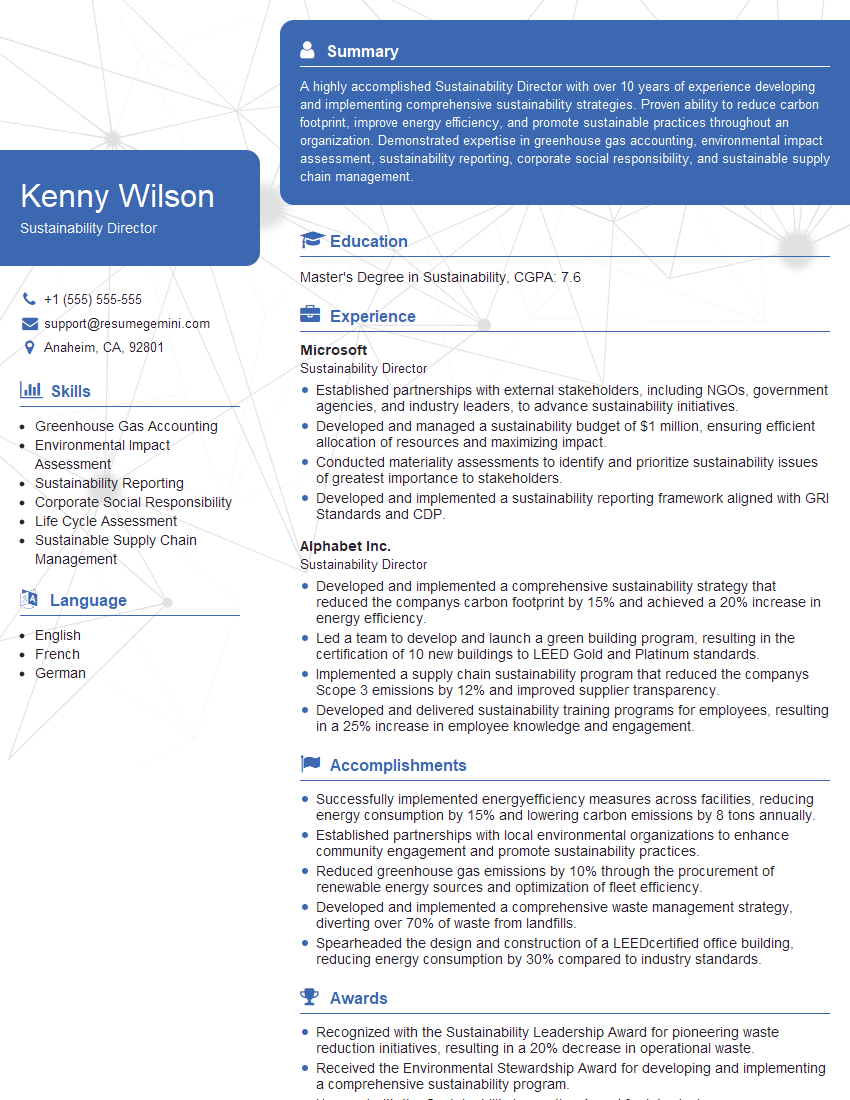
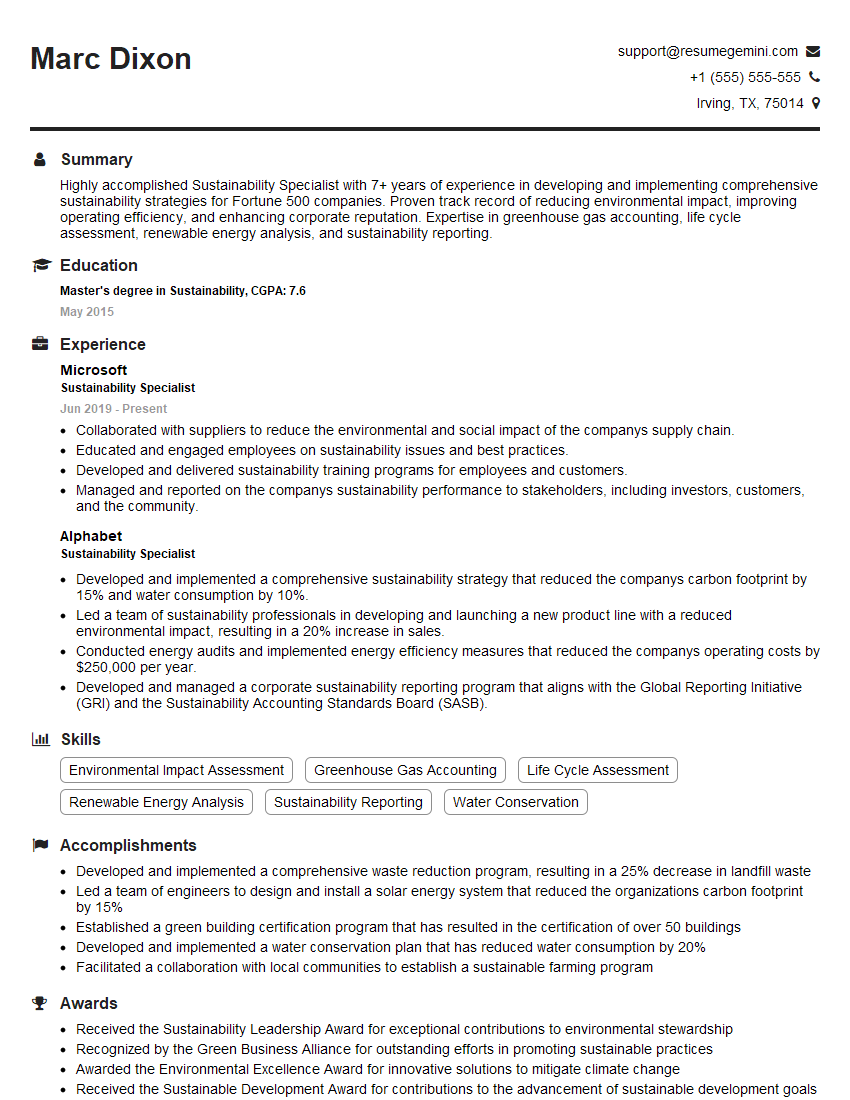
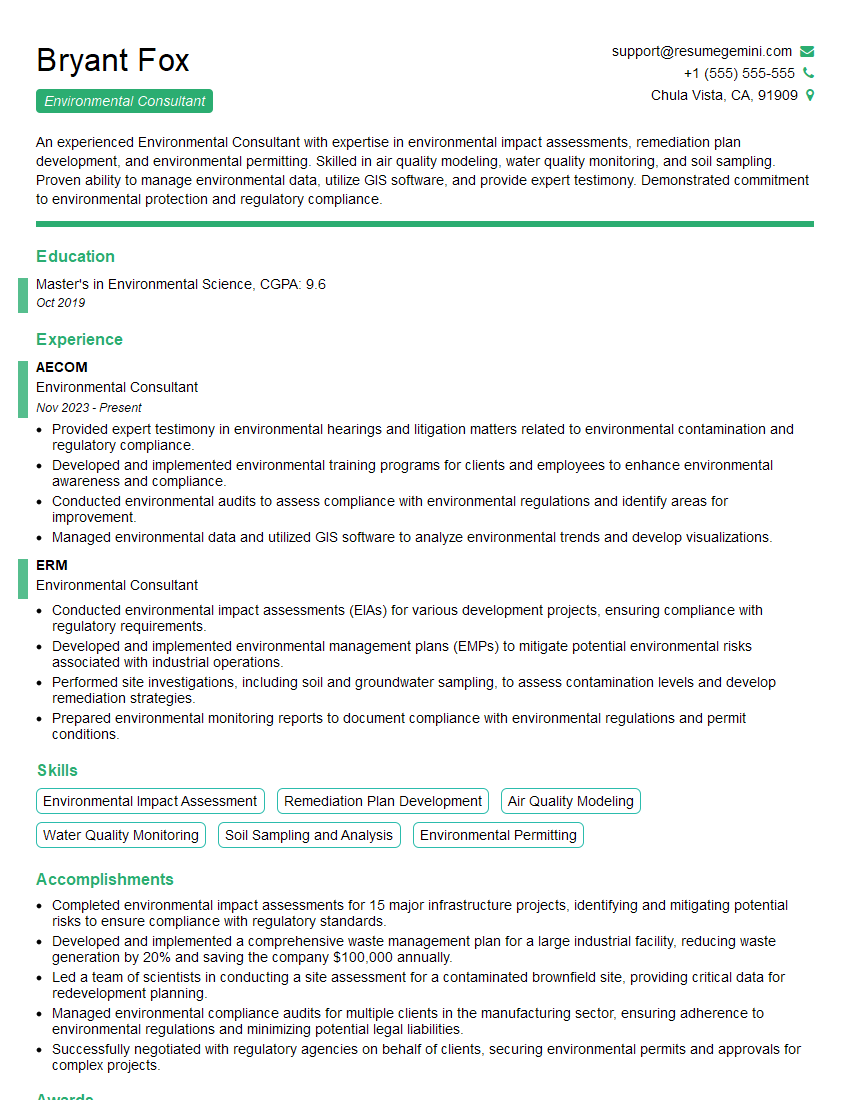
Mastering Green Building Design (LEED) principles significantly enhances your career prospects in a rapidly growing field. It demonstrates a commitment to sustainability and positions you as a valuable asset to any organization. To maximize your chances of landing your dream job, create a compelling and ATS-friendly resume that showcases your skills and experience effectively. ResumeGemini is a trusted resource that can help you build a professional resume tailored to the specific requirements of Green Building Design (LEED) roles. Examples of resumes tailored to this field are available to help guide you.

Explore more articles
Users Rating of Our Blogs
Share Your Experience
We value your feedback! Please rate our content and share your thoughts (optional).
What Readers Say About Our Blog
Very informative content, great job.
good