Unlock your full potential by mastering the most common Security Governance and Compliance interview questions. This blog offers a deep dive into the critical topics, ensuring you’re not only prepared to answer but to excel. With these insights, you’ll approach your interview with clarity and confidence.
Questions Asked in Security Governance and Compliance Interview
Q 1. Explain the difference between Security Governance and Compliance.
Security Governance and Compliance are closely related but distinct concepts. Think of it like this: Governance is the why and what of security, while Compliance is the how.
Security Governance is the overall framework for managing and overseeing an organization’s security posture. It encompasses the strategic planning, decision-making, and accountability for all aspects of security. It defines the organization’s security objectives, assigns responsibilities, and establishes the processes for achieving those objectives. It’s a proactive approach, focusing on risk management and continuously improving security practices.
Compliance, on the other hand, is the process of adhering to specific rules, regulations, and standards. It’s a reactive approach, focusing on meeting external mandates and avoiding penalties. Compliance often addresses specific legal or contractual requirements, such as HIPAA for healthcare or PCI DSS for payment card processing.
For example, a governance initiative might be to establish a comprehensive data loss prevention (DLP) strategy. Compliance would then involve implementing specific DLP tools and procedures to meet the requirements of a relevant data privacy regulation (e.g., GDPR).
Q 2. Describe a framework you have used for Security Governance (e.g., NIST, ISO 27001).
I’ve extensively used the NIST Cybersecurity Framework. It’s a voluntary framework, which makes it adaptable to organizations of all sizes and sectors. It provides a flexible approach to managing cybersecurity risk, focusing on five core functions: Identify, Protect, Detect, Respond, and Recover.
Identify involves understanding your organization’s assets, data flows, and existing security capabilities. Protect focuses on developing and implementing safeguards to limit or contain the impact of a cybersecurity event. Detect emphasizes establishing processes to identify the occurrence of a cybersecurity event. Respond outlines how to take action regarding a detected cybersecurity event. Finally, Recover focuses on restoring any capabilities or services that were impaired due to a cybersecurity event.
In my previous role, we used the NIST framework to develop a comprehensive security program. We mapped our existing security controls to the NIST framework’s functions and identified gaps. This allowed us to prioritize our efforts and invest in areas where we needed the most improvement. For instance, through ‘Identify’, we mapped all our critical assets, and through ‘Protect’ we implemented multi-factor authentication and access controls, leading to a significant reduction in security incidents.
Q 3. How do you ensure alignment between security controls and business objectives?
Aligning security controls with business objectives is crucial for demonstrating the value of security investments. I achieve this through a collaborative approach, engaging with stakeholders across various departments – from finance and operations to marketing and product development.
My strategy involves these key steps:
- Understanding Business Objectives: I start by clearly defining the organization’s strategic goals and objectives. This includes understanding key business processes, revenue streams, and critical dependencies.
- Identifying Critical Assets: We then identify the assets that directly support the achievement of these objectives. This could involve data, systems, applications, or even physical infrastructure.
- Assessing Risks: A comprehensive risk assessment is conducted to identify threats and vulnerabilities affecting the critical assets. This helps prioritize security controls based on their impact on business operations.
- Mapping Controls to Objectives: Security controls are then mapped to specific business objectives and assets. For example, if a key objective is maintaining customer trust, then implementing robust data privacy controls becomes a priority.
- Communicating Value: It’s important to clearly communicate the link between security controls and business objectives to all stakeholders. This helps demonstrate the return on investment (ROI) of security initiatives.
For example, in a financial institution, a business objective might be to maintain regulatory compliance. Alignment would involve implementing controls such as access management, data encryption, and audit logging to ensure adherence to regulations like PCI DSS and SOX.
Q 4. What are the key components of a robust security policy?
A robust security policy serves as the foundation of an organization’s security program. It needs to be comprehensive, clear, enforceable, and regularly reviewed.
Key components include:
- Purpose and Scope: Clearly stating the policy’s intent and which individuals and systems it applies to.
- Definitions: Defining key terms used throughout the policy, ensuring consistent understanding.
- Roles and Responsibilities: Specifying the responsibilities of each role in maintaining security.
- Acceptable Use Policy (AUP): Outlining acceptable and unacceptable use of company resources, including computers, networks, and data.
- Data Security Policies: Defining how sensitive data is to be handled, protected, and accessed.
- Password Management Policy: Establishing requirements for password complexity, length, and rotation.
- Incident Response Policy: Outlining procedures for handling security incidents and breaches.
- Access Control Policy: Describing how access to systems and data is granted, modified, and revoked.
- Enforcement and Penalties: Clearly outlining the consequences of violating the policy.
- Review and Updates: A process for regular review and updates to ensure the policy remains current and effective.
A well-crafted policy should be easy to understand and readily available to all employees. Regular training and awareness programs are essential to ensure compliance.
Q 5. Explain your experience with risk assessment methodologies.
My experience with risk assessment methodologies includes using both qualitative and quantitative methods. Qualitative methods, such as the likelihood and impact matrix, are useful for quickly assessing risks based on subjective judgments. I’ve also used quantitative methods, such as Fault Tree Analysis (FTA) and Failure Mode and Effects Analysis (FMEA), to assign numerical values to risk likelihood and impact, allowing for a more precise risk assessment and prioritization.
For qualitative assessments, I often use a simple matrix where I rate likelihood (e.g., low, medium, high) and impact (e.g., low, medium, high) for each identified risk. Multiplying the likelihood and impact scores provides a risk score, which guides prioritization.
Quantitative methods are more complex but provide a more precise picture of risk. For instance, FTA helps visualize how multiple events can lead to a system failure, allowing for a focused and detailed assessment. FMEA helps identify potential failure modes in a system or process and analyze their potential effects, allowing for proactive mitigation.
The choice of methodology depends on the context, available resources, and the level of detail required. In many cases, a combined approach, using both qualitative and quantitative methods, offers the most comprehensive assessment.
Q 6. How do you prioritize security risks?
Prioritizing security risks involves a combination of technical analysis and business judgment. I typically use a risk scoring system, often combining a qualitative assessment of likelihood and impact with quantitative data where available.
The process usually involves these steps:
- Risk Identification: Identifying all potential risks to the organization’s assets and operations.
- Risk Analysis: Assessing the likelihood and potential impact of each risk.
- Risk Scoring: Assigning a numerical score to each risk based on its likelihood and impact. This could involve a simple scale (e.g., 1-5) or a more sophisticated model.
- Risk Ranking: Ranking the risks according to their scores, with the highest-scoring risks receiving the highest priority.
- Risk Response Planning: Developing appropriate responses to each risk, which might include mitigation, avoidance, transfer, or acceptance.
Prioritization also considers the context. A high-impact, low-likelihood risk might still demand attention if the consequences are catastrophic. For instance, a low probability of a major data breach might be assigned a high priority due to the potentially severe reputational damage and financial losses.
Q 7. Describe your experience with vulnerability management processes.
My vulnerability management process follows a lifecycle approach encompassing identification, assessment, prioritization, remediation, and verification. This is often supported by using vulnerability scanners and penetration testing.
Here’s a breakdown:
- Vulnerability Identification: Regularly scanning systems and applications to identify known vulnerabilities using automated tools. This includes both internal and external scanning.
- Vulnerability Assessment: Analyzing identified vulnerabilities to determine their severity and potential impact. This considers factors such as exploitability, the presence of patches, and the sensitivity of affected data.
- Vulnerability Prioritization: Prioritizing vulnerabilities based on their risk score, considering factors like severity, likelihood of exploitation, and potential impact on business operations. Critical vulnerabilities are addressed immediately, while less critical ones are scheduled for remediation based on their risk score and resource availability.
- Vulnerability Remediation: Implementing appropriate security controls to address identified vulnerabilities. This might involve applying patches, configuring security settings, or implementing compensating controls.
- Vulnerability Verification: After remediation, verifying that the vulnerability has been successfully addressed. This might involve rescanning the system or performing targeted penetration testing to ensure the vulnerability has been effectively mitigated.
Regular reporting and monitoring are critical to track progress, identify trends, and adjust the vulnerability management program accordingly. In my previous role, implementing this process led to a significant reduction in successful exploits and improved the overall security posture of the organization.
Q 8. How do you ensure compliance with relevant regulations (e.g., GDPR, HIPAA, SOX)?
Ensuring compliance with regulations like GDPR, HIPAA, and SOX requires a multi-faceted approach. It’s not just about ticking boxes; it’s about embedding a culture of compliance within the organization.
- Risk Assessment: We begin with a thorough assessment to identify all relevant regulations applicable to our operations and data processing activities. This helps pinpoint specific areas requiring attention.
- Policy and Procedure Development: Clear, concise policies and procedures are crucial. These documents outline how we meet regulatory requirements, from data handling practices to incident response protocols. Regular reviews and updates are vital to maintain relevance.
- Implementation and Monitoring: Effective implementation involves training employees, integrating security controls into systems, and establishing monitoring mechanisms to track compliance. This could involve regular audits of systems and processes.
- Data Mapping and Governance: Understanding where personal data resides and how it’s processed is essential. Data mapping allows for effective risk management and ensures the appropriate controls are in place to meet regulatory obligations. This is particularly important for GDPR.
- Vendor Management: If we use third-party vendors, it’s critical to ensure they also comply with relevant regulations. This often involves contract clauses specifying security and compliance obligations.
- Audits and Reporting: Regular internal and external audits are key to verifying compliance and identifying any gaps. Detailed reporting allows for continuous improvement and transparency.
For example, to comply with GDPR, we’d implement measures like Data Subject Access Requests (DSAR) processes, ensuring data breaches are reported promptly, and having a designated Data Protection Officer (DPO).
Q 9. What is your experience with audit preparation and management?
My experience with audit preparation and management is extensive. I’ve led teams through numerous internal and external audits, covering a range of regulatory frameworks. My approach is proactive and systematic.
- Pre-Audit Planning: This phase involves identifying the scope of the audit, gathering relevant documentation (policies, procedures, risk assessments, etc.), and conducting internal pre-assessments to highlight potential issues.
- Documentation Management: We maintain a centralized repository for all audit-relevant documentation. This ensures easy access for auditors and minimizes delays during the audit process.
- Remediation Planning: Identifying and addressing potential audit findings proactively is crucial. We develop remediation plans that address identified vulnerabilities, detailing actions, timelines, and responsible parties.
- Collaboration and Communication: Effective communication with the audit team is essential. This involves regular meetings, prompt responses to queries, and transparent reporting of progress.
- Post-Audit Follow-up: After the audit, we carefully review the findings, implement necessary corrections, and monitor the effectiveness of implemented remediation plans. We also use the findings to improve our security posture.
In one instance, we were preparing for a SOC 2 audit. By meticulously documenting our processes and proactively addressing identified gaps, we achieved an unqualified opinion, showcasing a strong security control environment.
Q 10. Describe a situation where you had to manage conflicting priorities in a security project.
In one project involving implementing multi-factor authentication (MFA) across the organization, we faced conflicting priorities. The security team prioritized a rapid rollout of MFA due to an increasing threat landscape, while the IT operations team emphasized a phased approach to minimize disruption to end-users.
To manage this, I facilitated a series of meetings involving representatives from both teams. We prioritized high-risk users and systems first, allowing for a rapid rollout in critical areas while minimizing disruption. We also developed a detailed communication plan to keep users informed and address concerns. This compromise satisfied both security needs and operational realities, ensuring a successful and less disruptive deployment.
Q 11. How do you handle security incidents?
Handling security incidents requires a swift, coordinated response. My approach follows a structured framework, often based on NIST’s Cybersecurity Framework or similar methodologies.
- Preparation: This includes developing incident response plans, defining roles and responsibilities, and establishing communication protocols.
- Detection and Analysis: Identifying the incident, determining its nature and scope, and collecting evidence are critical steps.
- Containment: Containing the incident to limit its impact is paramount. This might involve isolating affected systems, blocking malicious actors, or temporarily disabling services.
- Eradication: Removing the root cause of the incident, such as malware or vulnerabilities, is essential to prevent recurrence.
- Recovery: Restoring affected systems and data to their operational state is the next step.
- Post-Incident Activity: This includes conducting a thorough review of the incident, identifying lessons learned, and implementing improvements to prevent similar incidents in the future. This often involves updating policies, procedures, and security controls.
For example, in a phishing incident, we’d isolate compromised accounts, change passwords, conduct a forensic analysis to determine the extent of the breach, and launch a communication campaign to inform users and mitigate further damage.
Q 12. What is your experience with security awareness training programs?
I have extensive experience designing, implementing, and evaluating security awareness training programs. I believe effective training is a crucial layer of defense.
- Needs Assessment: We start by identifying the organization’s specific security risks and the knowledge gaps of employees. This forms the basis of our training curriculum.
- Content Development: Engaging, relevant training materials are key. We use a mix of methods including interactive modules, videos, simulations, and real-world examples to capture attention and foster knowledge retention.
- Delivery Method: The delivery method should suit the audience and resources. Options include online modules, in-person workshops, or a blended approach.
- Assessment and Measurement: We incorporate quizzes, simulations, or other assessments to gauge employee understanding. Regular feedback is vital for continuous improvement.
- Ongoing Reinforcement: Security awareness is not a one-time event. We provide ongoing reminders, newsletters, and updates to reinforce learning and maintain vigilance.
For example, we developed a phishing simulation to train employees to identify malicious emails, incorporating gamification to boost engagement and learning retention. Post-simulation analysis showed a significant improvement in user awareness and response to phishing attempts.
Q 13. Explain your understanding of data classification and access control.
Data classification and access control are foundational elements of a robust security program. Data classification involves categorizing data based on its sensitivity and criticality. Access control ensures that only authorized individuals have access to specific data, based on their roles and responsibilities.
- Data Classification Scheme: We use a well-defined scheme, often including categories such as Confidential, Internal, Public, etc., each with associated handling and protection requirements. This scheme must align with relevant regulations (e.g., HIPAA’s protected health information).
- Access Control Mechanisms: These mechanisms restrict access to sensitive data. This includes role-based access control (RBAC), attribute-based access control (ABAC), and other methods that implement the principle of least privilege.
- Access Control Lists (ACLs): ACLs are used to explicitly define who can access specific data or resources. Regular review and updates of ACLs are crucial.
- Data Loss Prevention (DLP): DLP tools are employed to monitor and prevent sensitive data from leaving the organization’s controlled environment.
For example, patient health information (PHI) would be classified as ‘Confidential’ under HIPAA, and access would be restricted to authorized healthcare professionals based on their roles. Implementing RBAC ensures a nurse only sees patient information relevant to their assigned tasks, while a doctor has broader access.
Q 14. How do you measure the effectiveness of security controls?
Measuring the effectiveness of security controls is vital to ensure their continued efficacy. We use a variety of methods:
- Key Performance Indicators (KPIs): These metrics track the performance of security controls. Examples include mean time to detect (MTTD), mean time to respond (MTTR), number of security incidents, successful phishing attempts, etc. Setting benchmarks allows us to assess improvement or degradation over time.
- Vulnerability Assessments and Penetration Testing: Regular assessments and penetration tests help identify weaknesses in security controls and measure their effectiveness against real-world threats.
- Security Audits: Internal and external audits provide an independent assessment of the security posture and the effectiveness of controls in achieving compliance objectives.
- Security Information and Event Management (SIEM): SIEM systems aggregate security logs from various sources, enabling analysis of security events and assessment of the effectiveness of security controls in detecting and responding to threats.
- Metrics Reporting and Analysis: Regular reporting and analysis of KPIs and other metrics allows us to identify trends, areas for improvement, and the overall effectiveness of our security program.
For example, by tracking the number of successful phishing attacks over time, we can assess the effectiveness of our security awareness training and phishing simulation programs. A decrease in successful attacks would indicate improved user awareness and, consequently, the effectiveness of our training.
Q 15. What metrics do you use to track security performance?
Tracking security performance requires a multifaceted approach, using key metrics categorized across several domains. We can’t rely on a single number; it’s about understanding the overall security posture.
- Vulnerability Management: Metrics like the number of critical vulnerabilities discovered, the time to remediate vulnerabilities (MTTR), and the vulnerability remediation rate. A low MTTR indicates efficient patching processes. For example, tracking a reduction in critical vulnerabilities from 100 to 20 over a quarter demonstrates improvement.
- Incident Response: Key metrics include the mean time to detect (MTTD), mean time to contain (MTTC), and the mean time to recovery (MTTR) for security incidents. A decrease in these times highlights improved incident response capabilities. For instance, reducing MTTD from 72 hours to 24 hours shows significant progress.
- Security Awareness: Measuring employee participation in security awareness training, successful phishing test completion rates, and reported security incidents by employees helps assess the effectiveness of security awareness initiatives. High participation and low successful phishing attempts indicate a successful program.
- Compliance: Tracking the number of audits performed, the number of findings and their severity, and the time taken to address audit findings ensures consistent compliance with relevant regulations and standards, like GDPR or HIPAA. A low number of critical findings demonstrates strong compliance.
- System Uptime and Availability: Monitoring system uptime and availability directly impacts security. Downtime can expose vulnerabilities. We use metrics like system uptime percentage and the frequency and duration of outages. 99.99% uptime is a common target.
By regularly reviewing these metrics and analyzing trends, we can identify areas for improvement and demonstrate the effectiveness of security controls over time. It’s crucial to set realistic baselines and goals and then continuously monitor progress.
Career Expert Tips:
- Ace those interviews! Prepare effectively by reviewing the Top 50 Most Common Interview Questions on ResumeGemini.
- Navigate your job search with confidence! Explore a wide range of Career Tips on ResumeGemini. Learn about common challenges and recommendations to overcome them.
- Craft the perfect resume! Master the Art of Resume Writing with ResumeGemini’s guide. Showcase your unique qualifications and achievements effectively.
- Don’t miss out on holiday savings! Build your dream resume with ResumeGemini’s ATS optimized templates.
Q 16. How do you communicate security risks to non-technical stakeholders?
Communicating security risks to non-technical stakeholders requires translating complex technical jargon into clear, concise, and relatable language. The key is to focus on the impact, not the technical details. I typically use a three-step approach:
- Identify the impact: Instead of focusing on the details of a vulnerability, I would highlight the potential consequences, such as financial loss, reputational damage, or legal liabilities. For example, ‘A successful data breach could expose customer data and lead to fines of up to $X million.’
- Use visuals: Charts, graphs, and simple diagrams help non-technical audiences quickly grasp the key information. For example, a bar chart showing the relative risk of different threats is more effective than a lengthy report.
- Focus on solutions and ROI: Frame the discussion around solutions and the return on investment (ROI) of security measures. For example, explain how investing in a specific security control will prevent potential losses and improve overall business efficiency. This makes the cost of security more justifiable.
Finally, tailoring the communication to the audience’s level of understanding is essential. I always ensure I use clear and concise language, avoiding technical jargon as much as possible. This makes the information easier to understand and absorb, facilitating more effective risk management.
Q 17. Describe your experience with security incident response planning.
My experience with security incident response planning involves developing and implementing comprehensive plans aligned with industry best practices like NIST Cybersecurity Framework. This includes:
- Preparation: Defining roles and responsibilities, establishing communication protocols, creating playbooks for various incident types (e.g., phishing attacks, ransomware), and conducting regular tabletop exercises to test the plan’s effectiveness. For example, we role-play a ransomware attack scenario, documenting response actions and identifying areas needing improvement.
- Detection and Analysis: Implementing monitoring tools and processes to detect security incidents promptly. This involves analyzing logs, security alerts, and other indicators of compromise to understand the nature and scope of the incident.
- Containment and Eradication: Isolating affected systems, removing malware, and taking steps to prevent further damage. This might involve disabling compromised accounts, patching vulnerabilities, and implementing network segmentation.
- Recovery and Post-Incident Activity: Restoring affected systems and data, reviewing the incident to identify areas for improvement, and updating the incident response plan accordingly. This phase focuses on lessons learned and enhancing future preparedness.
- Communication: Establishing communication channels with stakeholders (internal and external) and communicating the incident’s impact, remediation efforts, and mitigation strategies in a timely and transparent manner.
I’ve led incident response efforts in several organizations, successfully mitigating various threats and minimizing their impact. My experience highlights the importance of a well-defined plan, regular testing, and effective communication during an incident.
Q 18. Explain your understanding of penetration testing and vulnerability assessments.
Penetration testing and vulnerability assessments are both crucial aspects of proactive security. They complement each other, but they serve different purposes.
- Vulnerability Assessment: This is a passive process that identifies potential security weaknesses in systems and networks. Tools automatically scan systems to find known vulnerabilities, often based on publicly available databases like the National Vulnerability Database (NVD). Think of it like a health check-up; it identifies potential problems but doesn’t exploit them.
- Penetration Testing: This is an active process that simulates real-world attacks to exploit identified vulnerabilities. It tests the effectiveness of security controls by attempting to breach systems and gain unauthorized access. This is like a stress test, pushing the system’s limits to reveal weaknesses.
For example, a vulnerability assessment might reveal a web server running an outdated version of software with known vulnerabilities. A penetration test would then attempt to exploit those vulnerabilities, such as trying to inject malicious code or gain unauthorized access to the server. The results of both processes are critical for prioritizing remediation efforts and improving overall security posture.
Both are valuable, and their combination provides a comprehensive view of an organization’s security.
Q 19. What are your experiences with implementing security controls in cloud environments?
Implementing security controls in cloud environments requires a different approach than traditional on-premise environments. The shared responsibility model is critical; understanding which security responsibilities belong to the cloud provider and which remain with the organization is paramount.
- Identity and Access Management (IAM): Implementing strong IAM controls, including multi-factor authentication (MFA), role-based access control (RBAC), and least privilege access, is crucial. This limits access to only authorized users and resources.
- Data Encryption: Encrypting data at rest and in transit is essential to protect sensitive information. This includes using encryption keys managed by the cloud provider or utilizing customer-managed keys.
- Network Security: Utilizing virtual private clouds (VPCs), security groups, and network firewalls to segment network traffic and protect resources. This controls access and limits the impact of breaches.
- Security Information and Event Management (SIEM): Implementing a SIEM solution to monitor cloud resources, detect suspicious activities, and respond to security threats promptly. This enhances threat detection and incident response.
- Regular Security Assessments: Conducting regular vulnerability assessments and penetration tests to identify and address security weaknesses in cloud infrastructure and applications.
My experience includes designing and implementing security controls for various cloud platforms, such as AWS, Azure, and GCP. I’ve worked on projects involving the migration of on-premise infrastructure to the cloud, ensuring seamless security during and after the transition. Understanding the shared responsibility model and the unique security challenges of cloud environments is crucial for success.
Q 20. How do you stay current with evolving security threats and best practices?
Staying current with evolving security threats and best practices is an ongoing process, requiring continuous learning and adaptation. My approach involves a multi-pronged strategy:
- Following Industry News and Publications: Regularly reading security blogs, industry publications (like SANS Institute resources), and following reputable security researchers on social media helps me stay informed about emerging threats and vulnerabilities.
- Participating in Professional Development Activities: Attending security conferences, webinars, and workshops provides valuable insights and networking opportunities. Certifications like CISSP, CISM, or Cloud Security certifications demonstrate ongoing commitment to professional development and knowledge expansion.
- Leveraging Threat Intelligence Platforms: Utilizing threat intelligence platforms to receive alerts about emerging threats and vulnerabilities. This enables proactive mitigation strategies.
- Monitoring Security Forums and Communities: Engaging in online security forums and communities allows for knowledge sharing and staying abreast of the latest discussions and real-world experiences.
This continuous learning ensures I am equipped with the latest knowledge and techniques to effectively address emerging threats and adopt best practices in securing systems and data. Staying informed is critical in the ever-evolving landscape of cybersecurity.
Q 21. Explain your experience with developing and implementing security policies.
Developing and implementing security policies requires a structured approach to ensure they are comprehensive, effective, and aligned with business objectives. My process generally includes:
- Needs Assessment: Identifying the organization’s security requirements, considering regulatory compliance, industry best practices, and business needs. This forms the foundation for the policy’s scope and objectives.
- Policy Development: Drafting clear, concise, and easily understandable policies, addressing key areas such as access control, data security, incident response, and acceptable use. Using plain language and avoiding technical jargon where possible is key.
- Stakeholder Engagement: Collaborating with various stakeholders (technical and non-technical) to gain input and ensure alignment with business needs. This ensures buy-in and supports policy adoption.
- Review and Approval: Submitting the policies for review and approval by relevant authorities within the organization. This involves obtaining legal and management sign-off.
- Dissemination and Training: Distributing the policies to employees and providing appropriate training on their implications and requirements. This ensures understanding and compliance.
- Monitoring and Enforcement: Monitoring compliance with the policies and taking appropriate action when violations occur. This is done via regular audits and reviews.
- Regular Review and Update: Regularly reviewing and updating the policies to reflect changes in technology, threats, and regulatory requirements. This ensures ongoing relevance and effectiveness.
I’ve successfully developed and implemented security policies in various organizations, encompassing diverse industries and regulatory landscapes. My experience emphasizes the importance of aligning security policies with business goals and fostering a security-conscious culture.
Q 22. How do you ensure that security controls are effectively monitored and reviewed?
Effective monitoring and review of security controls is crucial for maintaining a robust security posture. It’s not enough to simply implement controls; we need to ensure they’re functioning as intended and adapting to evolving threats. My approach involves a multi-layered strategy.
Regular Automated Checks: I leverage Security Information and Event Management (SIEM) systems and other automated tools to continuously monitor logs, alerts, and system performance for anomalies. These tools can detect unusual activity patterns, potential breaches, and control failures far more efficiently than manual processes.
Scheduled Audits and Reviews: Regular, scheduled audits, both internal and potentially external, are essential. These audits rigorously assess the effectiveness of controls against established benchmarks and industry best practices. We use checklists, questionnaires, and vulnerability scans to identify gaps.
Vulnerability Management Program: A proactive vulnerability management program is critical. This involves regularly scanning for vulnerabilities, prioritizing remediation efforts based on risk, and tracking progress until vulnerabilities are resolved. We also incorporate penetration testing to simulate real-world attacks and identify weaknesses.
Performance Metrics and Reporting: Key performance indicators (KPIs) are essential. We track metrics like mean time to detect (MTTD), mean time to respond (MTTR), and the number of security incidents to measure the effectiveness of our monitoring and response efforts. Regular reporting to management ensures transparency and accountability.
Continuous Improvement: Finally, security monitoring is not a static process. We regularly review the effectiveness of our monitoring procedures, incorporate lessons learned from past incidents, and adapt to changes in the threat landscape. This iterative approach ensures that our security posture remains strong.
Q 23. Describe your experience with security automation and orchestration tools.
I have extensive experience with various security automation and orchestration tools. My experience spans across several categories:
Security Orchestration, Automation, and Response (SOAR) platforms: I’ve worked with platforms like Splunk SOAR, IBM Resilient, and Palo Alto Networks Cortex XSOAR to automate incident response processes, threat hunting, and vulnerability management. These platforms enable us to significantly reduce the time it takes to respond to incidents and improve the overall efficiency of our security operations.
Configuration Management tools: Tools like Ansible, Chef, and Puppet allow for automated configuration and deployment of security settings across various systems. This ensures consistency and reduces the risk of misconfigurations.
Vulnerability Scanners and Penetration Testing Tools: I’m proficient in using tools like Nessus, OpenVAS, Metasploit, and Burp Suite to automate vulnerability scanning, penetration testing, and security assessments. This allows for rapid identification of weaknesses and accelerates the remediation process.
Log Management and SIEM systems: I have significant experience with Splunk, QRadar, and other SIEM systems to collect, analyze, and correlate security logs from various sources. This helps in detecting and responding to threats in real-time.
For example, in a previous role, I implemented a SOAR platform that automated our incident response process, reducing our MTTR by 75%. This was achieved by automating tasks such as threat intelligence gathering, malware analysis, and system isolation.
Q 24. What is your experience with third-party risk management?
Third-party risk management is crucial because organizations often rely on external vendors and partners, introducing significant security risks. My experience in this area involves a structured approach:
Vendor Risk Assessment: I develop and implement a robust vendor risk assessment process, evaluating potential risks based on factors like the vendor’s security posture, data handling practices, and the sensitivity of the data they access.
Due Diligence: This involves thorough due diligence, including reviewing security questionnaires, performing background checks, and conducting site visits when appropriate.
Contractual Agreements: We incorporate strong security clauses into contracts with third-party vendors, outlining responsibilities and obligations regarding data protection and security compliance.
Ongoing Monitoring: Regular monitoring and review of vendor performance is key. We track key performance indicators (KPIs), review security reports, and maintain open communication to address any emerging risks.
Risk Mitigation: Based on our assessments, we implement strategies to mitigate identified risks. This might involve requiring vendors to implement specific security controls, providing security training, or limiting the scope of access to sensitive data.
For instance, in a previous role, we implemented a standardized vendor risk assessment questionnaire that significantly streamlined the process and improved the consistency of our assessments. This resulted in a more accurate identification and mitigation of risks from our third-party vendors.
Q 25. How do you ensure compliance with data privacy regulations?
Ensuring compliance with data privacy regulations like GDPR, CCPA, and HIPAA requires a multi-faceted approach. It’s not just about ticking boxes; it’s about embedding data privacy into the culture of the organization. My experience involves:
Data Mapping and Inventory: We first conduct a thorough mapping and inventory of all data assets, identifying the type of data, its sensitivity, and where it’s stored and processed. This provides a foundation for our compliance efforts.
Data Privacy Policies and Procedures: Clear and comprehensive data privacy policies and procedures are essential. These policies should guide how data is collected, used, stored, and protected, ensuring they align with relevant regulations.
Data Subject Rights: We establish processes for handling data subject requests, such as access, rectification, and erasure requests (right to be forgotten). This requires implementing efficient mechanisms to locate, process, and respond to these requests promptly.
Data Security Controls: Robust data security controls are vital to protect data from unauthorized access, use, disclosure, disruption, modification, or destruction. These controls include encryption, access control, data loss prevention (DLP) mechanisms, and regular security audits.
Employee Training and Awareness: Regular training and awareness programs are critical to educate employees on data privacy best practices and compliance requirements. This is an ongoing process to reinforce responsible data handling practices.
Incident Response Plan: Having a well-defined incident response plan is crucial for promptly handling data breaches and other security incidents. The plan outlines procedures for containment, investigation, remediation, and notification.
For example, I led the implementation of a GDPR compliance program in a previous role which included developing comprehensive data privacy policies, establishing data subject request handling processes, and conducting employee training programs. This involved significant collaboration across departments to ensure a holistic approach.
Q 26. Describe a time you had to justify a security investment to senior management.
I once had to justify a significant investment in a new endpoint detection and response (EDR) solution to senior management. The existing antivirus software was outdated and insufficient to address the evolving threat landscape.
My approach involved presenting a strong business case, focusing on both the financial and operational impacts. I demonstrated:
The financial risks of NOT investing: I quantified potential losses from data breaches, downtime, and legal repercussions using industry benchmarks and case studies. I showed that the cost of a single successful attack could far exceed the cost of the EDR solution.
The return on investment (ROI): I highlighted the EDR’s capabilities in preventing attacks, detecting threats faster, and reducing the mean time to resolution (MTTR) of incidents. This demonstrated a clear return on investment through reduced operational costs and improved productivity.
The improved security posture: I explained how the EDR would strengthen our security posture by providing advanced threat detection capabilities, enhancing incident response, and improving overall visibility into our IT infrastructure.
A phased implementation plan: Instead of proposing a large, upfront investment, I presented a phased implementation plan, allowing management to see the value gradually and assess the solution’s effectiveness before committing to the full deployment.
The presentation was well-received, and the investment was approved. The successful implementation of the EDR solution significantly improved our security posture and demonstrated the value of proactive security investments.
Q 27. How do you balance security with operational efficiency?
Balancing security and operational efficiency is a constant challenge. It’s about finding the optimal level of security that minimizes risks without unduly hindering productivity. My approach is based on several key principles:
Risk-Based Approach: We prioritize security controls based on their effectiveness and the potential impact of a security incident. This ensures that resources are allocated to the most critical areas.
Automation: Automating security tasks through SOAR, SIEM, and other tools dramatically improves efficiency. This reduces manual effort, freeing up security personnel to focus on more strategic activities.
Integration: Integrating security tools and processes into existing workflows reduces friction and improves operational efficiency. This ensures that security is not a separate, siloed function.
Education and Training: Educating users on security best practices empowers them to take ownership of their security responsibilities. This reduces the burden on the security team and fosters a culture of security awareness.
Continuous Improvement: Regularly evaluating and optimizing security controls and processes is crucial to maintain a balance between security and efficiency. This is an ongoing process of refinement and adaptation.
For instance, in a past role, we implemented a multi-factor authentication (MFA) system. While it added a minor layer of inconvenience for users, the significant reduction in the risk of credential theft justified the trade-off. We also automated the onboarding process for new MFA accounts to minimize the additional workload.
Q 28. What is your experience with security architecture and design?
Security architecture and design is about building a robust and secure foundation for an organization’s IT infrastructure. My experience in this area involves:
Understanding Business Requirements: I start by understanding the organization’s business objectives and risk tolerance. This ensures that the security architecture aligns with business needs.
Risk Assessment and Threat Modeling: A thorough risk assessment and threat modeling exercise identifies potential threats and vulnerabilities and informs the design of appropriate security controls.
Security Control Selection: Based on the risk assessment, I select appropriate security controls, considering their effectiveness, cost, and operational impact. This involves choosing from a range of controls, such as firewalls, intrusion detection systems, access control mechanisms, and data loss prevention tools.
System Design and Implementation: I participate in the design and implementation of secure systems, ensuring that security controls are properly integrated into the infrastructure. This involves working closely with development and operations teams.
Security Standards and Frameworks: I leverage established security standards and frameworks like NIST Cybersecurity Framework, ISO 27001, and CIS Controls to guide the design and implementation of the security architecture.
Documentation and Communication: Clear and comprehensive documentation is crucial for maintaining and evolving the security architecture. This includes documenting security controls, policies, and procedures.
For example, in a previous engagement, I designed a zero-trust architecture for a client, incorporating strong authentication, authorization, and micro-segmentation to significantly improve their security posture. This involved careful consideration of their specific business requirements and a phased implementation to minimize operational disruption.
Key Topics to Learn for Security Governance and Compliance Interview
- Risk Management Frameworks: Understand frameworks like NIST Cybersecurity Framework, ISO 27001, and COBIT. Be prepared to discuss their practical application in assessing and mitigating organizational risks.
- Compliance Regulations: Familiarize yourself with relevant regulations such as GDPR, CCPA, HIPAA, and PCI DSS. Know how these regulations impact security practices and the potential consequences of non-compliance.
- Security Policies and Procedures: Discuss the development, implementation, and enforcement of security policies. Be ready to explain how to create effective policies that align with business objectives and regulatory requirements.
- Auditing and Monitoring: Understand the importance of regular security audits and continuous monitoring. Be prepared to discuss different auditing methodologies and the role of security information and event management (SIEM) systems.
- Incident Response and Management: Know the key phases of incident response and how to effectively manage security incidents. Discuss incident reporting, investigation, containment, eradication, recovery, and post-incident activity.
- Data Security and Privacy: Understand data classification, access control, data loss prevention (DLP), and encryption techniques. Be ready to discuss how these concepts contribute to data security and privacy compliance.
- Vulnerability Management: Discuss the process of identifying, assessing, and remediating security vulnerabilities. Understand the role of vulnerability scanners and penetration testing.
- Security Awareness Training: Explain the importance of security awareness training programs and how to design effective training for employees at all levels.
- Metrics and Reporting: Understand how to measure the effectiveness of security programs and communicate security performance to stakeholders.
Next Steps
Mastering Security Governance and Compliance is crucial for career advancement in the cybersecurity field. It demonstrates a deep understanding of organizational risk and regulatory compliance, opening doors to leadership roles and higher earning potential. To significantly boost your job prospects, creating a strong, ATS-friendly resume is essential. ResumeGemini is a trusted resource that can help you build a professional and impactful resume tailored to highlight your unique skills and experience. Examples of resumes specifically designed for Security Governance and Compliance professionals are available to help guide you.
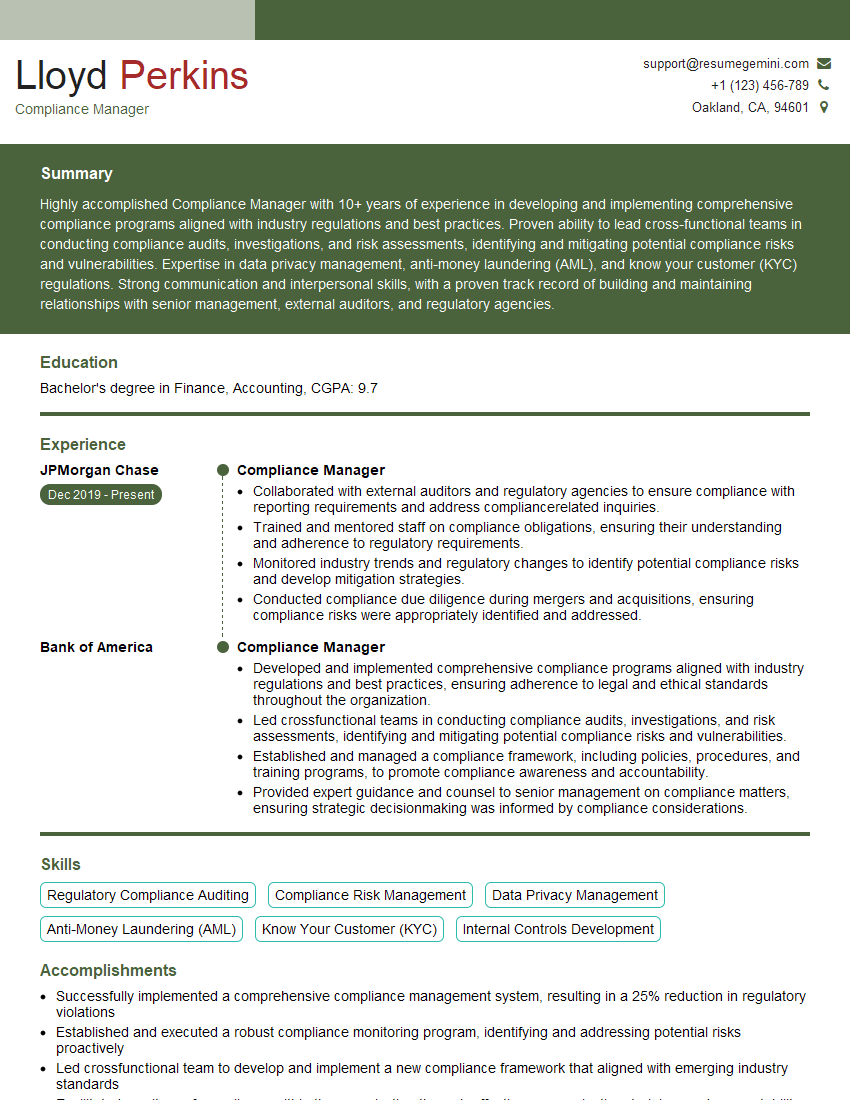
Compliance Manager Resume Sample

Compliance Officer Resume Sample
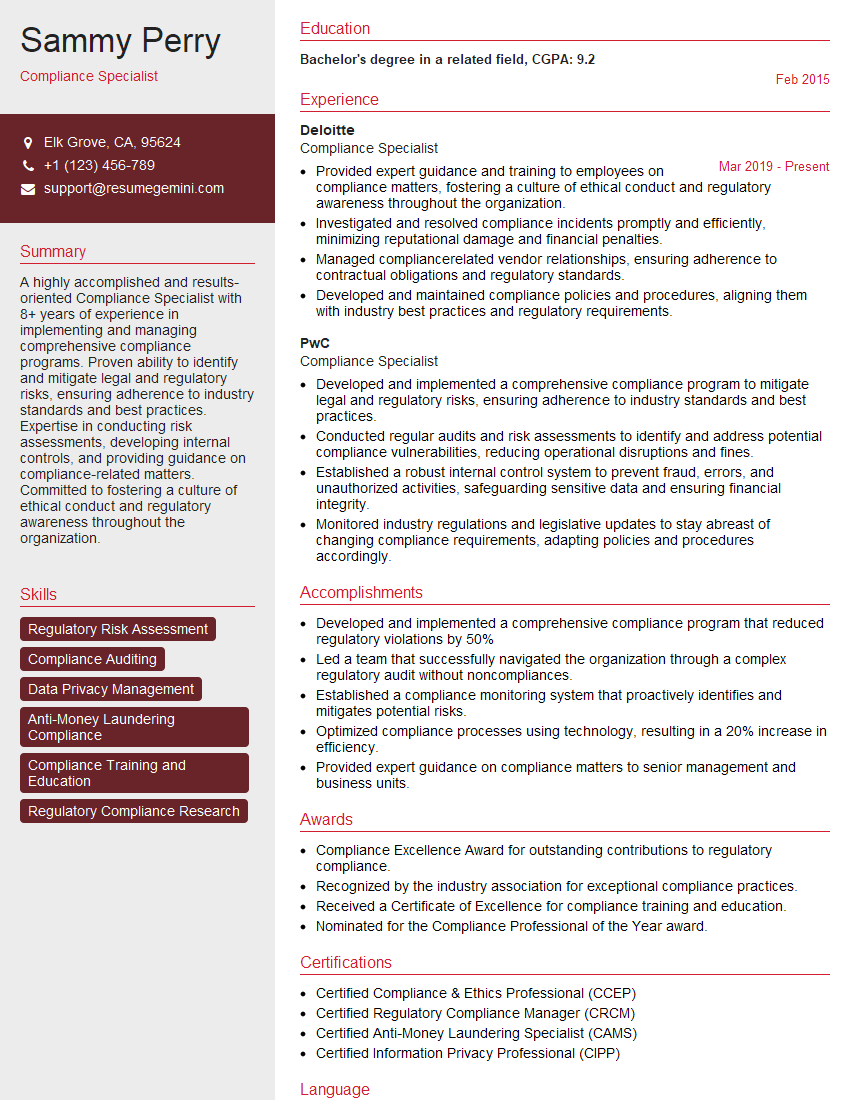
Compliance Specialist Resume Sample
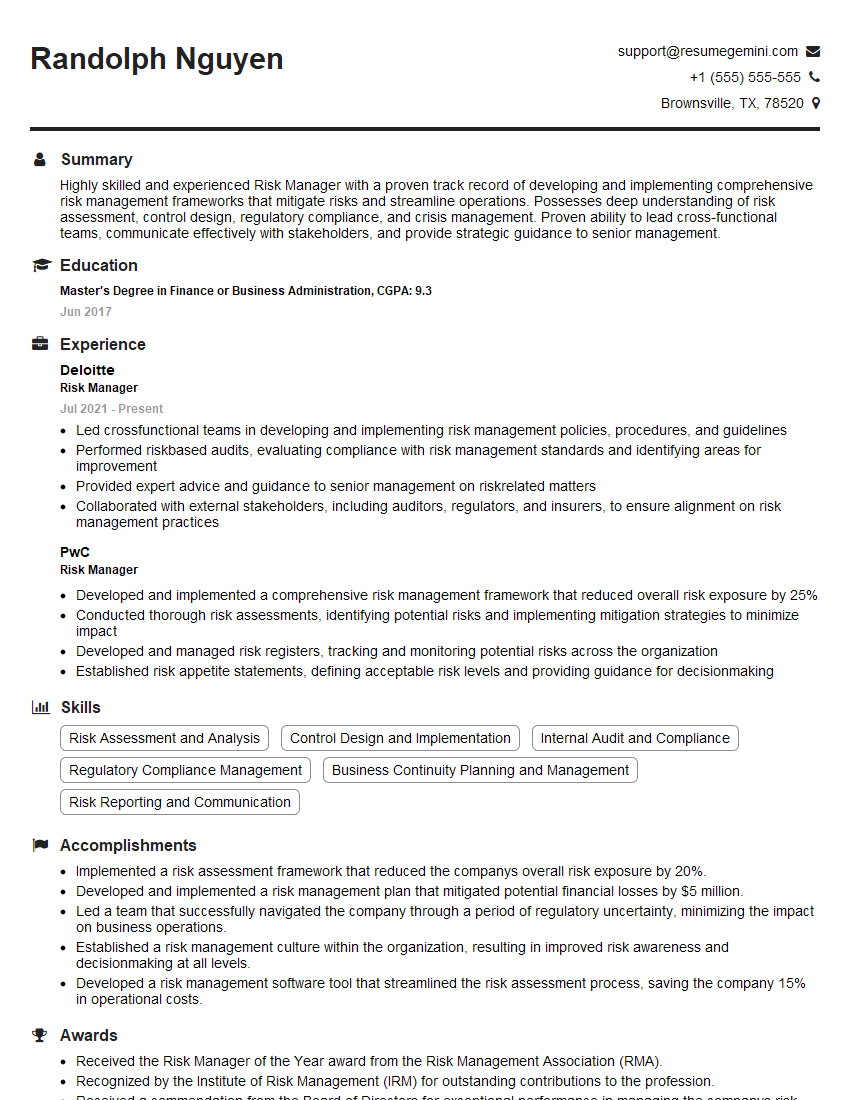
Risk Manager Resume Sample
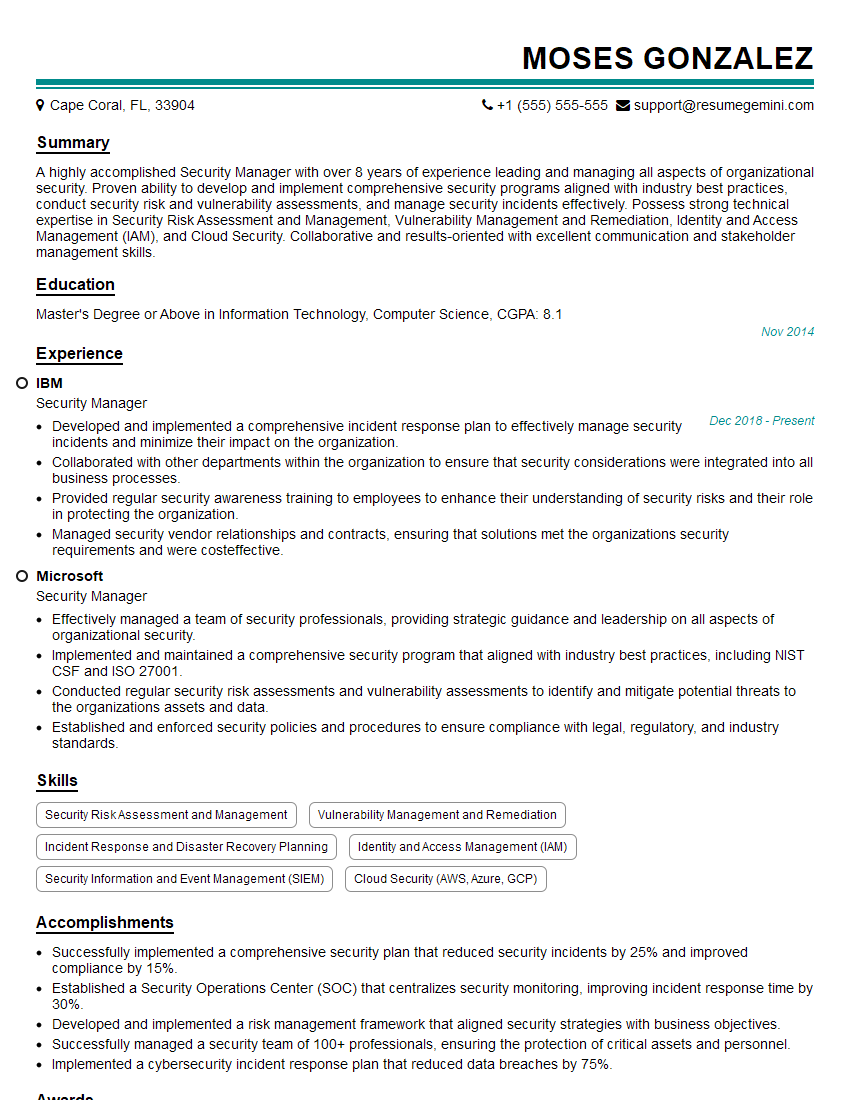
Security Manager Resume Sample
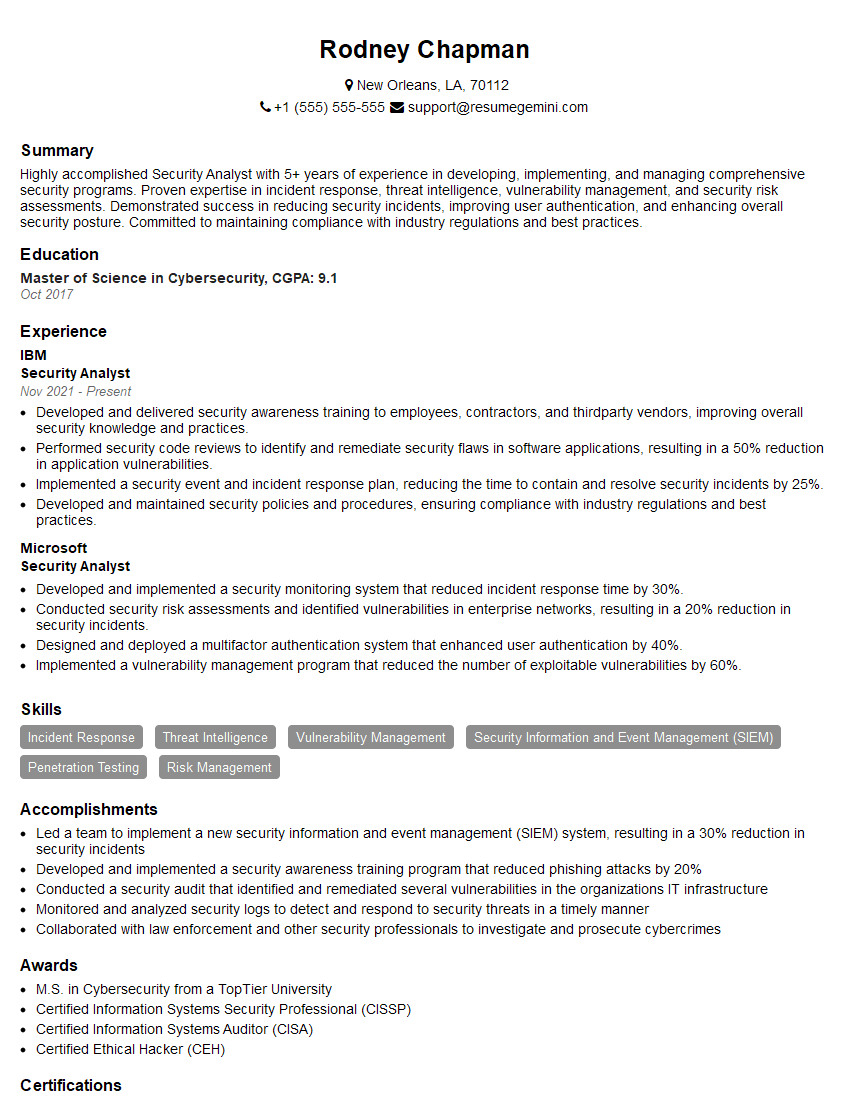
Security Analyst Resume Sample
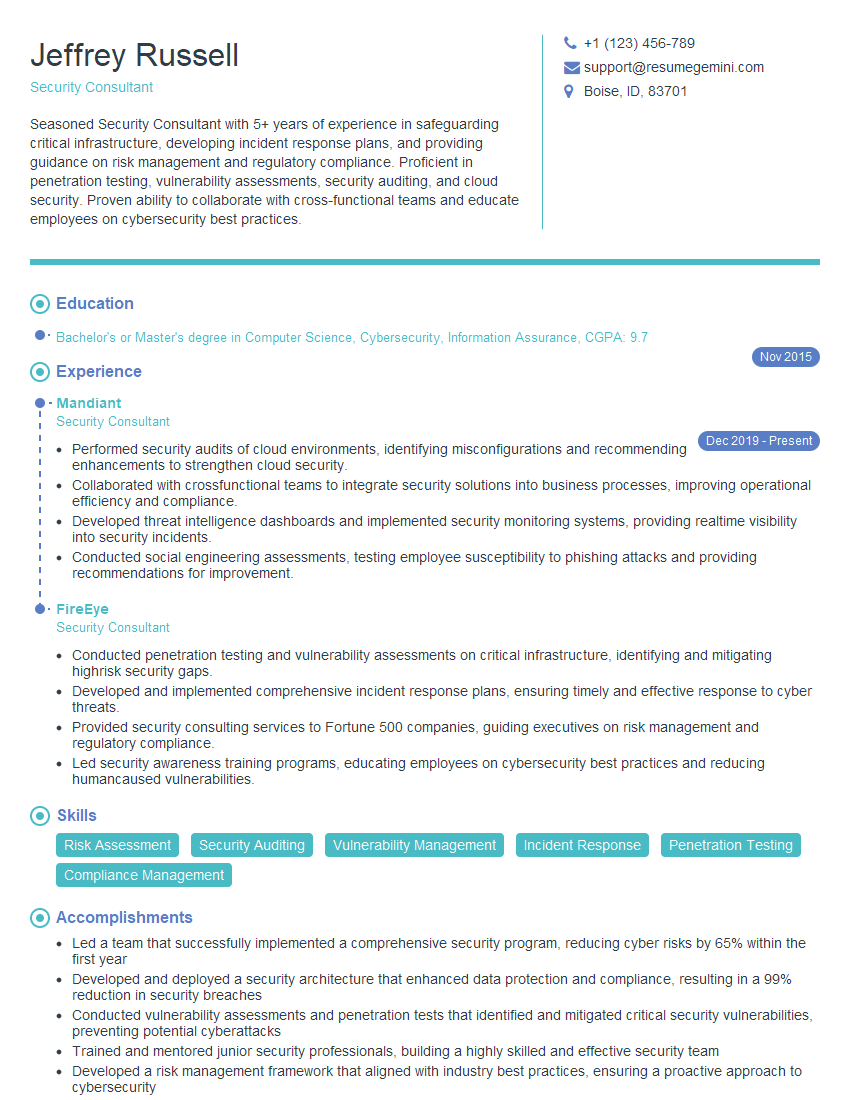
Security Consultant Resume Sample
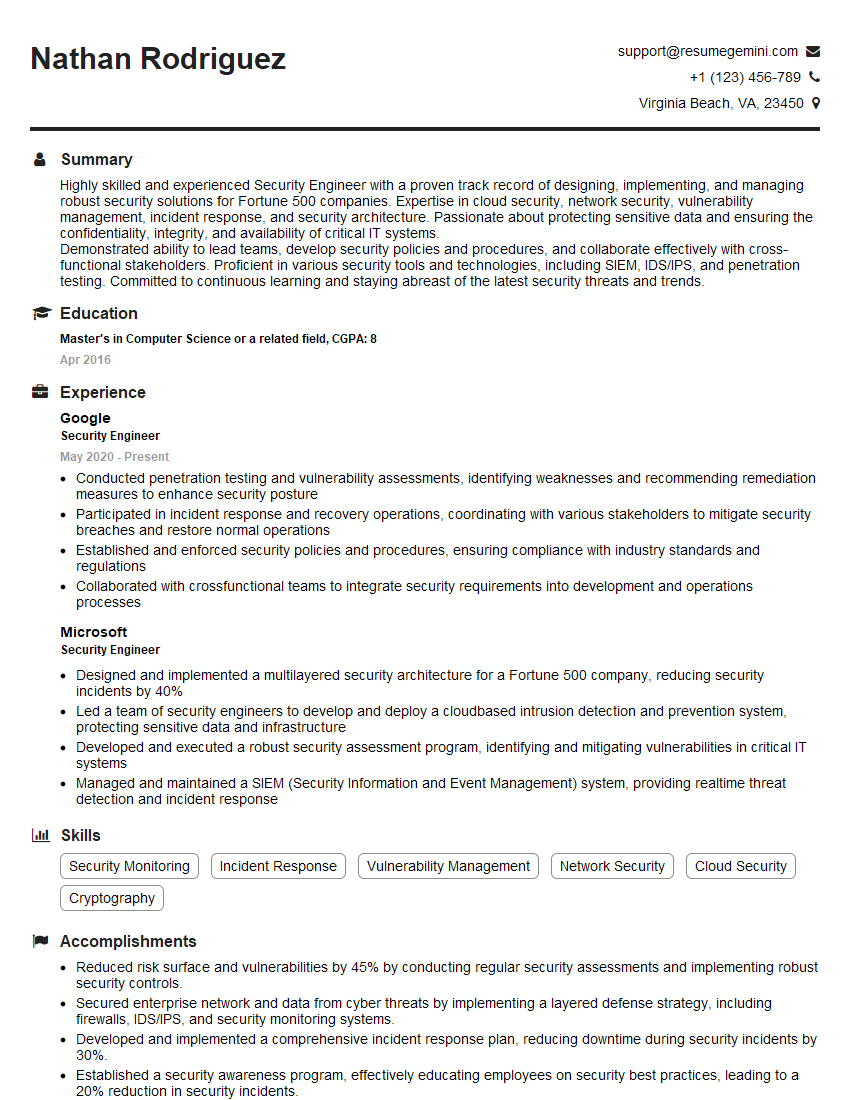
Security Engineer Resume Sample
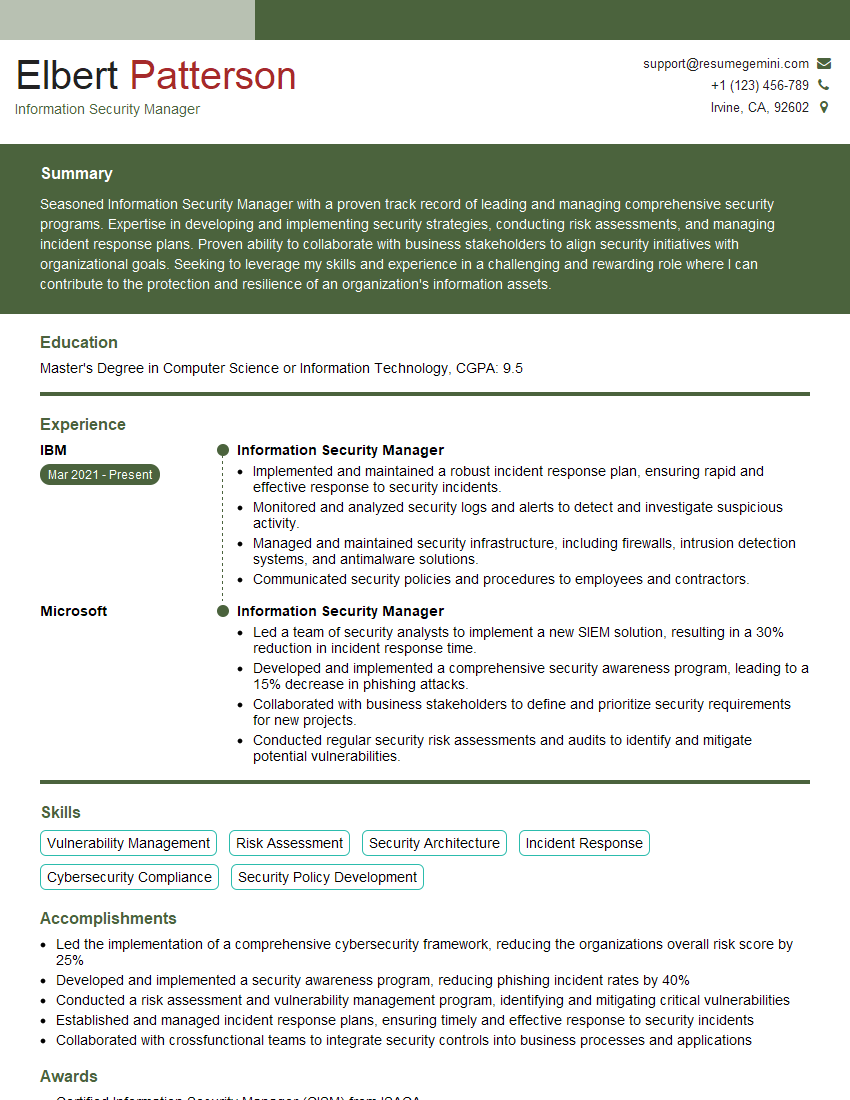
Information Security Manager Resume Sample
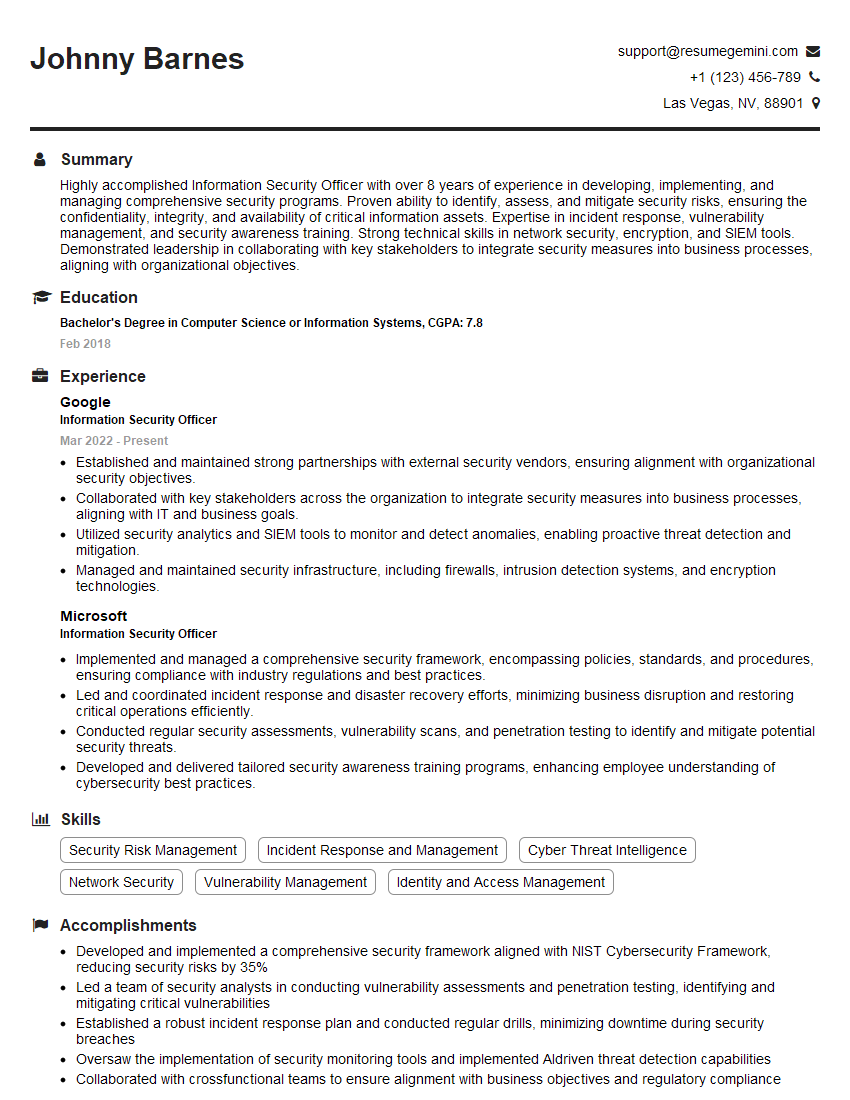
Information Security Officer Resume Sample
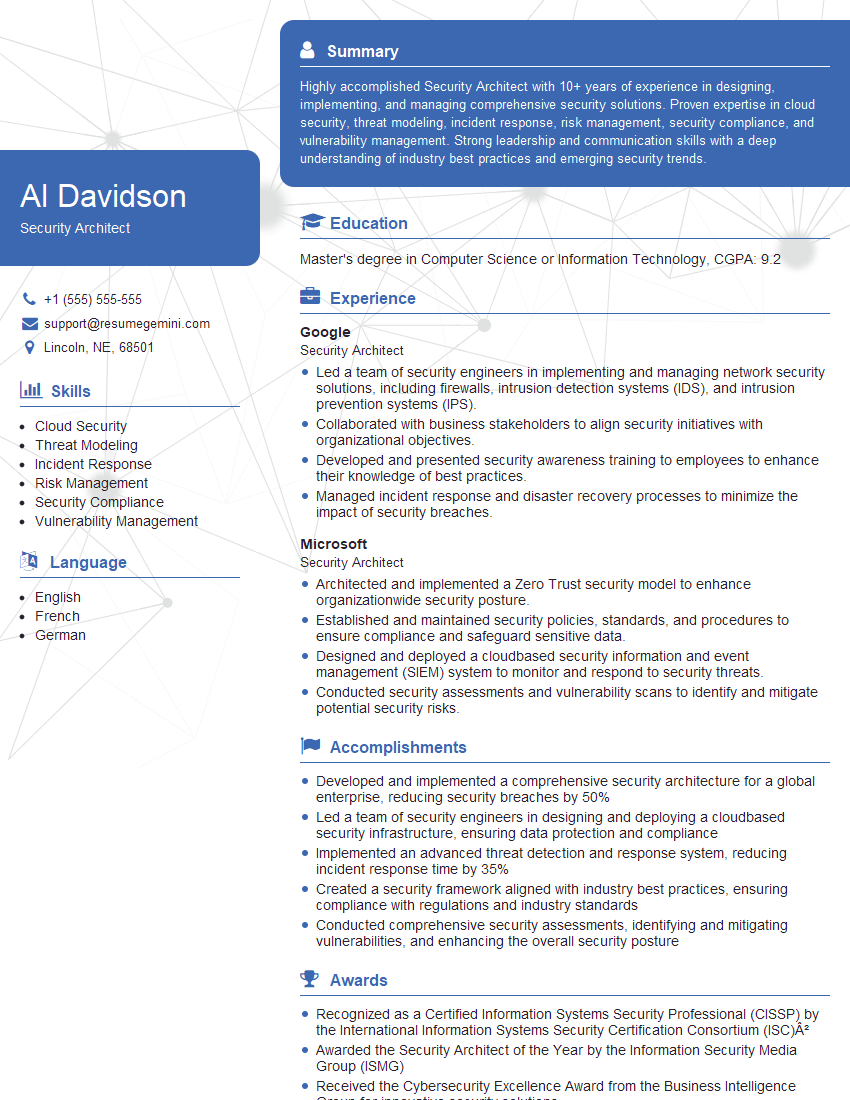
Security Architect Resume Sample
Explore more articles
Users Rating of Our Blogs
Share Your Experience
We value your feedback! Please rate our content and share your thoughts (optional).
What Readers Say About Our Blog
Very informative content, great job.
good