Every successful interview starts with knowing what to expect. In this blog, we’ll take you through the top Grid-Connected and Off-Grid Solar Systems interview questions, breaking them down with expert tips to help you deliver impactful answers. Step into your next interview fully prepared and ready to succeed.
Questions Asked in Grid-Connected and Off-Grid Solar Systems Interview
Q 1. Explain the difference between grid-connected and off-grid solar systems.
The core difference between grid-connected and off-grid solar systems lies in their reliance on the main electricity grid. A grid-connected system is tied to the utility grid, meaning it can both supply power to your home and draw power from the grid when solar generation is insufficient. Think of it like having a backup power source. An off-grid system, on the other hand, operates independently of the grid. It’s a completely self-sufficient system, using batteries to store solar energy for use when the sun isn’t shining. This is analogous to having a standalone power supply, often found in remote locations.
In essence, grid-tied systems offer convenience and reliability by leveraging the grid, while off-grid systems prioritize energy independence, often at a higher initial cost and with increased complexity.
Q 2. Describe the components of a typical grid-connected solar PV system.
A typical grid-connected solar PV system comprises several key components working in concert:
- Solar Panels (PV Modules): These capture sunlight and convert it into direct current (DC) electricity.
- Inverters: These convert the DC electricity from the solar panels into alternating current (AC) electricity, compatible with household appliances.
- Mounting System: This securely attaches the solar panels to your roof or ground.
- Wiring and Conduits: These safely channel the electricity from the panels to the inverter and then to your home’s electrical panel.
- Meters and Monitoring System (optional): These track energy production and consumption, allowing you to monitor your system’s performance.
- Disconnects: These safety devices allow you to quickly isolate the system from the grid.
Imagine a simple water pump analogy: Solar panels are like the sun collecting water, the wires are like the pipes carrying the water, the inverter is like a water wheel converting the water’s potential energy into usable energy and the electrical panel is where the water is distributed throughout the home.
Q 3. What are the key considerations for sizing a solar PV system for a specific load?
Sizing a solar PV system involves carefully considering your energy needs and available sunlight. Here’s a step-by-step approach:
- Calculate your energy consumption: Analyze your electricity bills to determine your average daily or monthly kilowatt-hour (kWh) usage.
- Determine your solar potential: Use online tools or consult a solar installer to estimate the solar irradiance (amount of sunlight) at your location.
- Consider system efficiency: Account for losses in the system, such as those due to inverter efficiency and panel degradation.
- Factor in future growth: Consider any anticipated increases in energy consumption in the future.
- Choose appropriate panel size and quantity: Based on the calculations, select the number and type of solar panels to meet your needs.
For instance, a household using 20 kWh per day might require a system generating approximately 25-30 kWh daily to account for losses and future needs. Overestimating is generally preferred to ensure sufficient power, although it may increase the initial investment.
Q 4. Explain the role of inverters in grid-connected systems.
Inverters are crucial components in grid-connected systems, acting as the bridge between DC electricity generated by solar panels and the AC electricity used in our homes. They perform several vital functions:
- DC to AC Conversion: The primary function is converting the DC power from the solar panels into AC power, which is compatible with your home’s electrical system.
- Maximum Power Point Tracking (MPPT): Many inverters use MPPT to optimize the power extraction from the solar panels, ensuring they operate at their peak efficiency even in changing light conditions.
- Grid Synchronization: The inverter synchronizes the solar power with the grid frequency and voltage, ensuring seamless integration with the utility’s electricity supply.
- Safety Features: Modern inverters incorporate safety features like islanding protection, which automatically disconnects the system from the grid in case of a power outage, protecting utility workers.
Think of the inverter as a highly sophisticated transformer – adapting the raw solar energy into a form usable by your home’s appliances. Without it, the solar energy would be unusable.
Q 5. How do you determine the optimal tilt and azimuth angles for solar panels?
Optimizing tilt and azimuth angles maximizes solar panel energy capture. The tilt angle refers to the angle of the panels relative to the horizontal plane, while the azimuth angle refers to the direction the panels face (south in the Northern Hemisphere, north in the Southern Hemisphere).
The optimal tilt angle is generally close to the latitude of the location, but this can vary depending on seasonal variations in sun angle. An online solar calculator or specialized software can be used to determine the optimal tilt angle. The optimal azimuth angle typically faces directly south in the Northern Hemisphere and north in the Southern Hemisphere. However, factors such as shading from trees or buildings might necessitate adjustments to this optimal orientation.
For example, a location at 34 degrees latitude might benefit from a tilt angle around 34 degrees, facing south to maximize year-round energy generation. However, this is just a starting point, and more detailed analysis may yield slight improvements.
Q 6. What are the different types of batteries used in off-grid systems?
Off-grid solar systems rely on batteries to store solar energy for nighttime or cloudy-day use. Several battery technologies are commonly employed:
- Lead-Acid Batteries: These are the most common and affordable, but have a shorter lifespan and lower energy density compared to other types.
- Lithium-ion Batteries: These offer higher energy density, longer lifespan, and faster charge/discharge rates, making them a popular choice despite higher initial cost. Different chemistries within Lithium-ion (like LFP, NMC) have varying properties.
- Flow Batteries: These are less common in residential off-grid systems but offer very long lifespans and high energy storage capacity, suited for large-scale applications.
The choice depends on factors like budget, available space, required storage capacity, and desired lifespan. For smaller off-grid systems, lead-acid batteries might be sufficient, whereas larger systems or those requiring longer backup times may benefit from Lithium-ion batteries.
Q 7. Explain the concept of MPPT (Maximum Power Point Tracking).
Maximum Power Point Tracking (MPPT) is a crucial technique used in solar charge controllers and inverters to maximize the energy harvested from solar panels. Solar panels don’t output their maximum power at a constant voltage and current; this varies with sunlight intensity and panel temperature. The MPPT algorithm continuously monitors the voltage and current output of the solar panel and adjusts the load to operate at the point where the power is maximized – the maximum power point.
Imagine a water pump again. MPPT acts like a clever valve that continuously adjusts the flow to maximize the water pumped, even if the water pressure (voltage) fluctuates.
Without MPPT, the solar panel might operate at a lower power output, reducing the overall energy harvested. MPPT algorithms ensure optimal power extraction under varying conditions, leading to increased energy yield and improved system efficiency.
Q 8. How do you calculate the energy generated by a solar panel array?
Calculating the energy generated by a solar panel array involves several factors. The most fundamental is the panel’s rated power, usually measured in watts (W) or kilowatts (kW), which indicates its power output under standard test conditions (STC). However, real-world energy generation varies significantly. We need to account for solar irradiance (sunlight intensity), temperature, and the panel’s efficiency.
The basic calculation is: Total Energy (kWh) = (Panel Power (kW) * Peak Sun Hours (hours) * Number of Panels * System Efficiency (decimal))
Let’s break it down:
- Panel Power (kW): This is the rated power of a single solar panel, usually found on its specification sheet.
- Peak Sun Hours (hours): This represents the number of hours during a day when the sun’s intensity is high enough to provide peak power output. This varies by location and time of year and is usually obtained from solar resource maps or online tools. For example, a location might have 4 peak sun hours on average in a particular month.
- Number of Panels: This is simply the total number of solar panels in the array.
- System Efficiency (decimal): This accounts for losses throughout the system, including those due to wiring, inverter efficiency, shading, soiling, and other factors. A typical range is 0.7 to 0.9 (70% to 90%).
Example: Let’s say you have an array of 10 panels, each rated at 300W (0.3kW), located in an area with 5 peak sun hours, and your system has an efficiency of 80% (0.8). The total daily energy generation would be:
Total Energy = (0.3 kW * 5 hours * 10 panels * 0.8) = 12 kWh
Remember, this is just an estimate. Actual energy generation will fluctuate due to weather conditions and other variables. Sophisticated software tools use more complex calculations, incorporating real-time data like weather forecasts and panel angle optimization for more precise predictions.
Q 9. Describe the safety procedures for working with solar PV systems.
Safety is paramount when working with solar PV systems, as they involve high voltages that can be lethal. Here are some crucial procedures:
- Lockout/Tagout (LOTO): Before any work on the system, disconnect it completely from the grid using a LOTO procedure to prevent accidental re-energization. This should be done according to local safety regulations and best practices.
- Personal Protective Equipment (PPE): Always wear appropriate PPE, including insulated gloves, safety glasses, and safety footwear. This will protect you from electrical shocks and other hazards.
- Voltage Testing: Before touching any part of the system, use a non-contact voltage tester to confirm that the circuit is truly de-energized. Never rely solely on the breaker being switched off.
- Working at Heights: If working on a rooftop or elevated structure, use appropriate fall protection equipment and follow all safety guidelines for working at heights.
- Arc Flash Protection: If working on energized systems (e.g., during maintenance), implement measures to mitigate the risks of arc flashes, including using arc flash suits and proper procedures.
- Fire Safety: Be aware of the potential for fire hazards, especially when working with batteries. Have fire extinguishers readily available.
- Training: All personnel involved should receive proper training and certification in solar PV system safety procedures.
Following these procedures is not just a matter of compliance; it’s essential for ensuring the safety of yourself and others. A single mistake can have devastating consequences.
Q 10. What are the common causes of solar panel system failures?
Solar panel system failures can stem from various causes, broadly categorized into:
- Panel Issues:
- Cell Degradation: Over time, solar cells lose efficiency due to exposure to UV radiation, heat, and other environmental factors.
- Physical Damage: Hail, snow, or accidental damage can crack cells, leading to reduced output or complete failure.
- Shading: Even partial shading of a panel can significantly reduce its overall power output due to the series connection of cells.
- Hot Spots: Faulty cells can create hot spots, potentially causing further damage to the panel.
- Inverter Issues:
- Overheating: Inverters can overheat due to poor ventilation or excessive load.
- Component Failure: Various components within the inverter can fail due to age, wear, or voltage spikes.
- Software Glitches: Software issues can sometimes cause inverters to malfunction.
- Battery Issues (for off-grid systems):
- Overcharging/Overdischarging: Incorrect charge controller settings or faulty battery management can damage batteries.
- Cell Failure: Individual battery cells can fail due to age, extreme temperatures, or manufacturing defects.
- Sulfation (Lead-Acid Batteries): Lead-acid batteries can suffer from sulfation, a build-up of lead sulfate crystals that reduces their capacity.
- Wiring and Connections:
- Corrosion: Corrosion in wiring connections can lead to high resistance and power losses.
- Loose Connections: Loose connections can cause intermittent power outages or overheating.
Regular maintenance and monitoring, including visual inspections, thermal imaging, and performance analysis, can help identify and address potential issues before they lead to system failure.
Q 11. Explain the different types of solar charge controllers.
Solar charge controllers regulate the flow of electricity from solar panels to batteries, preventing overcharging and protecting the battery’s lifespan. The main types are:
- PWM (Pulse Width Modulation): PWM controllers use a switching technique to adjust the voltage applied to the battery. They are simpler and less expensive but less efficient than MPPT controllers. Think of it like turning a faucet on and off rapidly to control the water flow. The average flow rate is adjusted, but some energy is lost in the process.
- MPPT (Maximum Power Point Tracking): MPPT controllers use algorithms to constantly monitor the solar panel’s voltage and current to extract the maximum possible power, regardless of variations in sunlight intensity or battery voltage. They are more efficient than PWM controllers, leading to greater energy harvesting. Imagine a smart pump that adjusts its speed based on the water pressure to maximize the water flow.
- Series and Parallel Controllers: Some controllers handle series or parallel battery banks, each optimized for specific configurations. This allows for flexible battery system design.
- Flooded Lead Acid vs. AGM/Gel Controllers: Different battery chemistries (e.g., flooded lead-acid, AGM, gel) require specific charging profiles. Controllers are often tailored to specific battery types to optimize their charging process.
The choice between PWM and MPPT depends on budget and desired efficiency. MPPT is generally preferred for optimal performance and long-term cost savings, although the price difference is diminishing as MPPT controllers become more common.
Q 12. What are the advantages and disadvantages of using lithium-ion batteries?
Lithium-ion batteries are increasingly popular in solar PV systems due to their many advantages, but they also have drawbacks:
- Advantages:
- High Energy Density: They store more energy per unit of weight and volume compared to lead-acid batteries.
- Long Cycle Life: They can withstand many more charge-discharge cycles than lead-acid batteries.
- Low Self-Discharge Rate: They lose less charge when not in use.
- Faster Charging: They can charge much faster than lead-acid batteries.
- Lightweight and Compact: Their size and weight are significantly less than equivalent lead-acid solutions.
- Disadvantages:
- Higher Initial Cost: They are significantly more expensive than lead-acid batteries.
- Sensitivity to Temperature: Extreme temperatures can negatively impact their performance and lifespan.
- Safety Concerns: They can pose a fire hazard if damaged or improperly handled; a Battery Management System (BMS) is critical.
- Depth of Discharge Limitations: Excessive discharge can damage them, requiring more careful monitoring and management than lead-acid.
The decision to use lithium-ion batteries involves a trade-off between initial cost and long-term benefits. Their advantages in terms of energy density, lifespan, and performance often outweigh the higher initial investment for many applications, particularly in off-grid systems and grid-tied homes with high energy needs and limited space.
Q 13. How do you perform a site assessment for a solar PV system installation?
A thorough site assessment is crucial for successful solar PV system installation. It involves several key steps:
- Sunlight Analysis: Determining the amount of sunlight the site receives throughout the year. This involves analyzing shading from trees, buildings, or other obstructions. Utilizing tools such as Google Earth, specialized software, and potentially on-site sun path analysis is important.
- Roof Assessment (for rooftop systems): Examining the roof’s structure, orientation, angle, load-bearing capacity, and condition to ensure it can safely support the solar panels and mounting system. This might require an inspection from a structural engineer.
- Electrical System Evaluation: Assessing the existing electrical system’s capacity to handle the added load of the solar PV system. This includes checking the panel, wiring, and breaker sizes. Upgrades may be needed to ensure the safety and functionality of the system.
- Ground Conditions: Evaluating the soil composition and ground stability for ground-mount systems to ensure appropriate foundation design.
- Local Regulations: Checking local building codes, zoning regulations, and permitting requirements for solar PV installations. Many areas require permits and inspections.
- Environmental Considerations: Identifying any potential impacts on local wildlife, vegetation, or other environmental aspects.
- Access and Site Conditions: Assessing the accessibility of the site for equipment and personnel during installation and maintenance.
The site assessment provides essential data for designing an optimized system that maximizes energy production while complying with safety and regulatory standards.
Q 14. Explain the process of grounding a solar PV system.
Grounding a solar PV system is crucial for safety, protecting against electrical shocks and preventing damage from lightning strikes. The process involves creating a low-resistance path to the earth for any stray currents.
The grounding process generally involves these steps:
- Grounding Electrode: Driving a ground rod (typically copper-clad steel) deep into the earth to provide a stable connection to ground. The depth and material depend on local soil conditions and regulations. Multiple ground rods may be necessary for low-impedance grounding.
- Grounding Wire: Using a suitably sized copper grounding wire to connect the grounding electrode to the solar panel array’s grounding point, typically at the inverter or combiner box. The wire should be adequately sized to carry the fault current.
- Grounding Connections: Securely connecting the grounding wire to all metallic components of the system, including the panel frames, mounting structures, and the inverter’s grounding terminal. All connections should be tight and corrosion-resistant.
- Grounding Conductor: Often, the metallic conduit is used as part of the grounding system.
- Bonding: In some cases, additional bonding of metal components is needed to ensure a continuous path to ground.
- Testing: After installation, a ground resistance test should be performed using a ground resistance tester to verify that the ground resistance is within acceptable limits (typically less than 5 ohms). This ensures the effectiveness of the grounding system.
Proper grounding is critical to protect both the equipment and the people working near or with the system. Failure to adequately ground a system can result in serious injury or equipment damage.
Q 15. What are the regulations and codes related to solar installations in your area?
Solar installations are subject to a complex web of regulations and codes that vary significantly by location. These regulations are designed to ensure public safety, prevent damage to the power grid, and promote efficient system design. In my area, key regulations typically involve:
- Permitting and Inspections: Before any work begins, permits are required from the local building department and often the utility company. Inspections are conducted at various stages to verify compliance with codes. This might include checks on wiring, grounding, and the overall system’s adherence to safety standards.
- Electrical Codes: We strictly adhere to the National Electrical Code (NEC), which provides detailed guidelines for safe electrical installations. Specific articles related to renewable energy sources, such as Article 690 (Solar Photovoltaic Systems), are crucial. This ensures proper grounding, overcurrent protection, and safe interconnection to the grid.
- Interconnection Standards: For grid-tied systems, the utility company dictates interconnection standards. These standards detail how the solar system must interface with the grid, including requirements for inverters, disconnects, and anti-islanding protection. They ensure safe operation and prevent back-feeding into the grid during outages.
- Building Codes: The local building codes may govern aspects like roof penetrations, structural loads, and aesthetic considerations. These regulations ensure that the solar installation does not compromise the building’s structural integrity or violate local zoning rules.
Non-compliance can lead to fines, delays, and even system rejection. Thorough familiarity with the relevant codes and regulations is essential for successful and legal solar installations.
Career Expert Tips:
- Ace those interviews! Prepare effectively by reviewing the Top 50 Most Common Interview Questions on ResumeGemini.
- Navigate your job search with confidence! Explore a wide range of Career Tips on ResumeGemini. Learn about common challenges and recommendations to overcome them.
- Craft the perfect resume! Master the Art of Resume Writing with ResumeGemini’s guide. Showcase your unique qualifications and achievements effectively.
- Don’t miss out on holiday savings! Build your dream resume with ResumeGemini’s ATS optimized templates.
Q 16. How do you troubleshoot a grid-tied inverter malfunction?
Troubleshooting a grid-tied inverter malfunction requires a systematic approach. First, safety is paramount—always disconnect the system from the grid before beginning any troubleshooting. Here’s a common troubleshooting flow:
- Check for obvious issues: Inspect the inverter for any visible damage, loose connections, or tripped circuit breakers. Check the AC and DC disconnects to ensure they are properly engaged. Often a simple visual inspection solves the problem.
- Review the inverter’s display: Most inverters have a display showing fault codes or error messages. Consulting the inverter’s manual to understand these codes is crucial to pinpoint the source of the malfunction. For example, a code might indicate low DC voltage or a ground fault.
- Monitor DC input voltage and current: Use a multimeter to check the voltage and current coming from the solar panels. Low voltage could point to shading, faulty panels, or wiring problems. Low current might indicate panel issues or a problem in the DC wiring.
- Inspect the AC output: Using a multimeter, verify that the inverter is producing AC voltage at the expected level. Lack of output could signal a problem with the inverter itself or the AC wiring.
- Check the communication signals: If your inverter communicates via WiFi or other means, ensure the communication link is operational and review any error logs through the monitoring system. A communication failure can be a symptom of a deeper problem.
- Consult the inverter’s manual: Inverter manuals provide detailed troubleshooting guides and diagrams, including schematics and component locations. This is an indispensable resource.
If the issue persists after these steps, contacting the inverter manufacturer’s support or a qualified technician is recommended. Attempting complex repairs without proper training can be dangerous.
Q 17. Describe the different types of solar panel technologies (e.g., monocrystalline, polycrystalline).
Solar panels are categorized based on their crystalline structure and manufacturing process. Here are some of the key types:
- Monocrystalline Silicon: These panels are made from a single, large silicon crystal. This results in a dark blue color and higher efficiency (typically 18-22%). They are more expensive but produce more power per unit area. Think of them as the ‘performance’ cars of the solar world.
- Polycrystalline Silicon: These panels are made from multiple silicon crystals melted together. This gives them a characteristic mottled blue appearance and slightly lower efficiency (typically 15-17%). They are generally less expensive than monocrystalline panels, making them a good cost-effective option. They’re like the reliable, everyday vehicles.
- Thin-Film Solar Panels: These panels use a thin layer of photovoltaic material deposited on a substrate. Amorphous silicon, cadmium telluride (CdTe), and copper indium gallium selenide (CIGS) are common materials. They are generally less efficient than crystalline silicon panels but are flexible and can be used in various applications where their adaptability is critical.
The choice of panel technology depends on factors such as budget, available space, aesthetic preferences, and climate. Each technology has its strengths and weaknesses; understanding these differences is vital for selecting the appropriate panels for a particular project.
Q 18. What are the environmental impacts of solar PV systems?
While solar PV systems are environmentally friendly, their impact isn’t entirely without consequences. The environmental impacts can be categorized into manufacturing, operation, and end-of-life stages:
- Manufacturing: The production of solar panels involves energy-intensive processes and the use of materials like silicon, which requires significant energy and water. There are also concerns about the potential release of toxic substances during manufacturing. However, manufacturing techniques are continually improving, leading to reduced environmental impacts.
- Operation: The operational phase is generally quite clean, as solar panels produce electricity with minimal emissions. However, land use for large-scale solar farms can affect ecosystems. Smart placement and environmentally sensitive design can mitigate these effects.
- End-of-Life: Proper disposal and recycling of solar panels at the end of their lifespan is critical. Panels contain materials that can be harmful if not managed responsibly. Recycling programs are developing to recover valuable materials and minimize environmental damage.
Overall, the lifecycle environmental impact of solar PV systems is significantly less than fossil fuel-based power generation. Continued technological advancement and responsible practices will further reduce the environmental footprint of solar energy.
Q 19. Explain the importance of system monitoring in solar PV installations.
System monitoring is essential for optimizing the performance of solar PV installations and ensuring long-term reliability. Monitoring allows for early detection of problems and proactive maintenance, preventing costly repairs or system failures. Key benefits include:
- Performance Optimization: Monitoring allows you to identify issues that reduce energy output, such as shading, panel failures, or inverter malfunctions. This enables timely corrective actions, maximizing energy production.
- Predictive Maintenance: By tracking key parameters like panel temperature, voltage, and current, you can anticipate potential problems before they lead to system failure. This avoids costly downtime and unexpected repair expenses.
- Energy Consumption Analysis: Monitoring provides valuable insights into energy consumption patterns, allowing users to optimize their energy usage and identify areas for potential savings. This data empowers informed decision-making on energy efficiency.
- Fault Detection and Diagnostics: Real-time monitoring instantly alerts you to system malfunctions, allowing for swift troubleshooting and minimizing disruption. It’s like having a ‘check-engine’ light for your solar system.
- Warranty Claims: Data logs from monitoring systems can be crucial evidence in making warranty claims should issues arise with panels or inverters.
Many modern inverters are equipped with built-in monitoring capabilities, or you can use third-party monitoring systems to gain comprehensive insights into your solar system’s performance.
Q 20. How do you design a solar system for a remote location with limited access?
Designing a solar system for a remote location requires careful consideration of several unique challenges, primarily limited access and potentially unreliable transportation. Key design aspects include:
- System Sizing: Accurate energy load calculations are crucial. We need to account for all energy consumption, considering appliances, lighting, and other electrical equipment. Oversizing the system is often more cost-effective than undersizing, especially given the difficulty of future upgrades in remote areas.
- Component Selection: Robust and reliable components are critical. Choose panels and inverters with a proven track record of durability and resilience. Consider components with built-in protection against extreme weather conditions, which are common in remote regions.
- Transportation and Installation: The weight and size of components must be optimized for ease of transport to the site. Pre-assembled or modular systems can simplify installation, reducing labor costs and time. Careful planning of transportation logistics is crucial to ensure timely delivery.
- Battery Bank Sizing: A well-sized battery bank is essential for providing energy storage during periods of low sunlight or equipment malfunction. The capacity should be sufficient to cover peak demand and anticipated periods of cloudy weather.
- Maintenance and Accessibility: Plan for easy maintenance and component replacement. Consider factors such as potential wear and tear and the feasibility of replacements given the site’s remoteness.
- Safety: Remote installations often lack readily available emergency services. Prioritize safety through proper grounding, overcurrent protection, and clear safety procedures for maintenance and operation.
Designing for remoteness often requires more up-front investment, but the increased resilience and self-sufficiency can outweigh the initial costs.
Q 21. What is the role of a battery bank in an off-grid solar system?
In an off-grid solar system, the battery bank serves as the crucial energy storage component. It acts as a buffer between the solar panels and the loads, ensuring a continuous power supply even when the sun isn’t shining. Its roles include:
- Energy Storage: The battery bank stores the excess energy generated by the solar panels during daylight hours. This stored energy is then used to power loads during the night or periods of low sunlight.
- Power Regulation: Batteries help regulate the voltage and current to ensure consistent power delivery to the loads. They provide a stable DC power source, even if the voltage output from the panels fluctuates.
- Load Balancing: The battery bank helps to balance the load demand with the solar panel output. This prevents overloading the solar panels and ensures efficient energy usage.
- System Backup: In case of solar panel malfunction, the battery bank can provide backup power for critical loads, ensuring system reliability.
- Extended System Operation: The battery bank allows the system to operate even in extended periods of cloudy weather or when solar panels are partially obstructed by shadows.
Choosing the right battery bank involves careful consideration of capacity, type (e.g., lead-acid, lithium-ion), and depth of discharge. Proper battery maintenance, including regular charging and monitoring, is vital to extend its lifespan and ensure system reliability.
Q 22. Explain different types of off-grid system configurations (e.g., series, parallel).
Off-grid solar systems rely on battery storage to provide power when the sun isn’t shining. The configuration of solar panels and batteries impacts system performance and efficiency. Two primary configurations are series and parallel connections.
Series Configuration: In a series configuration, solar panels are connected end-to-end, adding their voltages. This increases the system voltage but keeps the current the same. Think of it like stacking batteries in a flashlight – each battery adds to the overall voltage.
Example: Five 12V panels in series would produce a 60V system. This is advantageous for long distances where voltage drop is significant, but a single panel failure can shut down the entire string.
Parallel Configuration: In a parallel configuration, solar panels are connected side-by-side, adding their currents. This increases the system current but keeps the voltage the same. Imagine adding more batteries to a circuit, all providing the same voltage but increasing the total amperage.
Example: Five 12V panels in parallel would still produce a 12V system, but with five times the current. This configuration provides better fault tolerance because a single panel failure doesn’t affect the rest of the system. It’s usually preferred for lower voltage applications.
Hybrid Configurations: Most real-world off-grid systems employ a combination of series and parallel connections to optimize voltage and current for specific needs and equipment compatibility. You might see panels connected in series to form strings, and those strings then connected in parallel to the battery bank.
Q 23. How do you manage energy storage and consumption in an off-grid system?
Managing energy storage and consumption in an off-grid system requires careful planning and often involves sophisticated control systems. Think of it like managing a household budget – you need to balance income (solar energy generation) and expenses (energy consumption).
Battery Bank Sizing: The battery bank must be sized to store enough energy to meet the household’s needs during periods of low or no solar generation (nights, cloudy days).
Charge Controller: A charge controller regulates the flow of electricity from the solar panels to the batteries, preventing overcharging and damage. It’s like a valve controlling water flow into a tank, ensuring it doesn’t overflow.
Inverter: An inverter converts the DC electricity from the batteries into AC electricity needed for most household appliances. This is the crucial component that allows you to use household devices that require alternating current.
Load Management: Careful load management is crucial. Prioritizing essential loads (refrigerator, lights) over non-essential ones during periods of low battery charge helps extend battery life. Smart load controllers can automate this process.
Energy Monitoring: Monitoring systems provide real-time data on solar generation, battery charge levels, and energy consumption, allowing for adjustments and proactive management. It’s like having a financial dashboard that keeps track of your income and expenses.
Q 24. What are the challenges of integrating renewable energy sources into a microgrid?
Integrating renewable energy sources into a microgrid presents several challenges:
Intermittency: Solar and wind power are intermittent; their output fluctuates depending on weather conditions. This requires robust energy storage or backup power sources to ensure consistent supply.
Grid Stability: The variable nature of renewable energy can destabilize the microgrid’s voltage and frequency, requiring sophisticated control systems to maintain stability. Think of it as balancing a seesaw – you need to constantly adjust to keep it level.
Power Quality: Renewable energy sources can introduce harmonics and other power quality issues into the microgrid, potentially damaging sensitive equipment. Careful filtering and power conditioning are crucial.
Protection and Safety: Robust protection systems are essential to prevent islanding (the microgrid operating independently from the main grid), which can be dangerous for utility workers.
Cost: The initial investment in renewable energy infrastructure, including energy storage, can be substantial.
Q 25. Describe different types of energy storage solutions (besides batteries).
While batteries are the most common energy storage solution, several other options exist:
Pumped Hydro Storage: This technology uses excess electricity to pump water uphill, storing potential energy. When electricity is needed, the water flows downhill, driving a turbine to generate power. This is a large-scale solution suitable for areas with appropriate topography.
Thermal Energy Storage: This involves storing energy as heat (e.g., in molten salt) or cold (e.g., in ice). This heat or cold can later be used to generate electricity or provide heating/cooling.
Compressed Air Energy Storage (CAES): This technology stores energy by compressing air into underground caverns or tanks. When energy is needed, the compressed air is released to drive a turbine.
Flywheels: These store energy as kinetic energy by spinning a massive flywheel at high speed. When energy is needed, the flywheel slows down, generating electricity.
Hydrogen Storage: Excess electricity can be used to produce hydrogen through electrolysis. The hydrogen can be stored and later used in fuel cells to generate electricity.
Q 26. Explain the concept of net metering.
Net metering is a billing mechanism that credits solar energy system owners for the excess electricity their systems generate and feed back into the grid. Essentially, it’s like a barter system for electricity.
Example: If your solar panels generate 15 kWh of electricity during the day, and you only use 10 kWh, the remaining 5 kWh is sent back to the grid, and your utility company credits you for this excess generation, reducing your electricity bill. The credit amount usually matches the retail price you pay for electricity, offsetting your energy consumption. This encourages solar adoption by reducing the financial burden of installing a system.
Q 27. What are the financial incentives available for solar energy installations?
Financial incentives for solar energy installations vary by location and government policies. These incentives aim to accelerate the adoption of renewable energy:
Tax Credits: Many governments offer tax credits or deductions to reduce the upfront cost of solar installations. This directly lowers the financial burden of the investment.
Rebates: Some regions offer cash rebates or subsidies based on the size or type of solar system installed.
Net Metering Programs: As discussed earlier, net metering provides a direct financial benefit by crediting excess solar energy production.
Property Tax Exemptions: Certain jurisdictions offer property tax exemptions or reductions for homes with solar installations, adding to long-term savings.
Renewable Energy Certificates (RECs): These certificates represent the environmental benefits of producing renewable energy. They can be sold in the market, generating additional revenue for solar system owners.
Financing Options: Special financing options like solar loans or Power Purchase Agreements (PPAs) can make solar installations more affordable by reducing the upfront capital expenditure.
It’s crucial to research the specific incentives available in your area. Government agencies and local utility companies are excellent resources for this information.
Q 28. What are the future trends in solar energy technology?
The solar energy technology landscape is constantly evolving. Key future trends include:
Perovskite Solar Cells: These emerging solar cells offer the potential for higher efficiency and lower manufacturing costs compared to traditional silicon-based cells.
Floating Solar Farms: These systems place solar panels on bodies of water, minimizing land use and potentially improving efficiency by reducing temperature effects.
Building-Integrated Photovoltaics (BIPV): Integrating solar cells directly into building materials (roof tiles, windows) creates aesthetically pleasing and efficient energy generation solutions.
Solar Tracking Systems: Advanced tracking systems optimize solar panel orientation throughout the day to maximize energy capture, especially beneficial in regions with variable sunlight angles.
Artificial Intelligence (AI) in Solar Energy Management: AI algorithms can optimize energy production, storage, and consumption in real-time, improving system efficiency and reducing costs.
Improved Energy Storage Technologies: Ongoing research and development aim to improve the energy density, lifespan, and cost-effectiveness of battery technologies and explore alternative energy storage solutions.
Key Topics to Learn for Grid-Connected and Off-Grid Solar Systems Interview
- Grid-Connected Systems: Understanding system components (solar panels, inverters, meters, etc.), net metering, grid interaction, safety regulations, and troubleshooting common issues.
- Off-Grid Systems: Designing off-grid systems based on energy needs, battery bank sizing and selection, charge controllers, inverters, system monitoring, and understanding limitations.
- Solar Panel Technology: Different types of solar panels (monocrystalline, polycrystalline, thin-film), their efficiency, performance characteristics, and degradation factors.
- Energy Storage: Battery chemistry (lead-acid, lithium-ion), battery management systems (BMS), energy storage sizing, and lifecycle considerations.
- Power Electronics: Understanding the role of inverters, charge controllers, and other power electronic components in solar systems. Analyzing their specifications and operational characteristics.
- System Design and Sizing: Calculating energy needs, selecting appropriate components, and designing efficient and cost-effective solar systems for various applications.
- Economic Analysis: Performing levelized cost of energy (LCOE) calculations, understanding payback periods, and evaluating the financial viability of solar projects.
- Practical Applications: Discussing real-world examples of grid-tied and off-grid solar installations in residential, commercial, and industrial settings.
- Troubleshooting and Maintenance: Identifying and resolving common problems in solar systems, performing routine maintenance, and ensuring optimal system performance.
- Safety Regulations and Standards: Understanding relevant codes and standards for safe design, installation, and operation of solar energy systems.
Next Steps
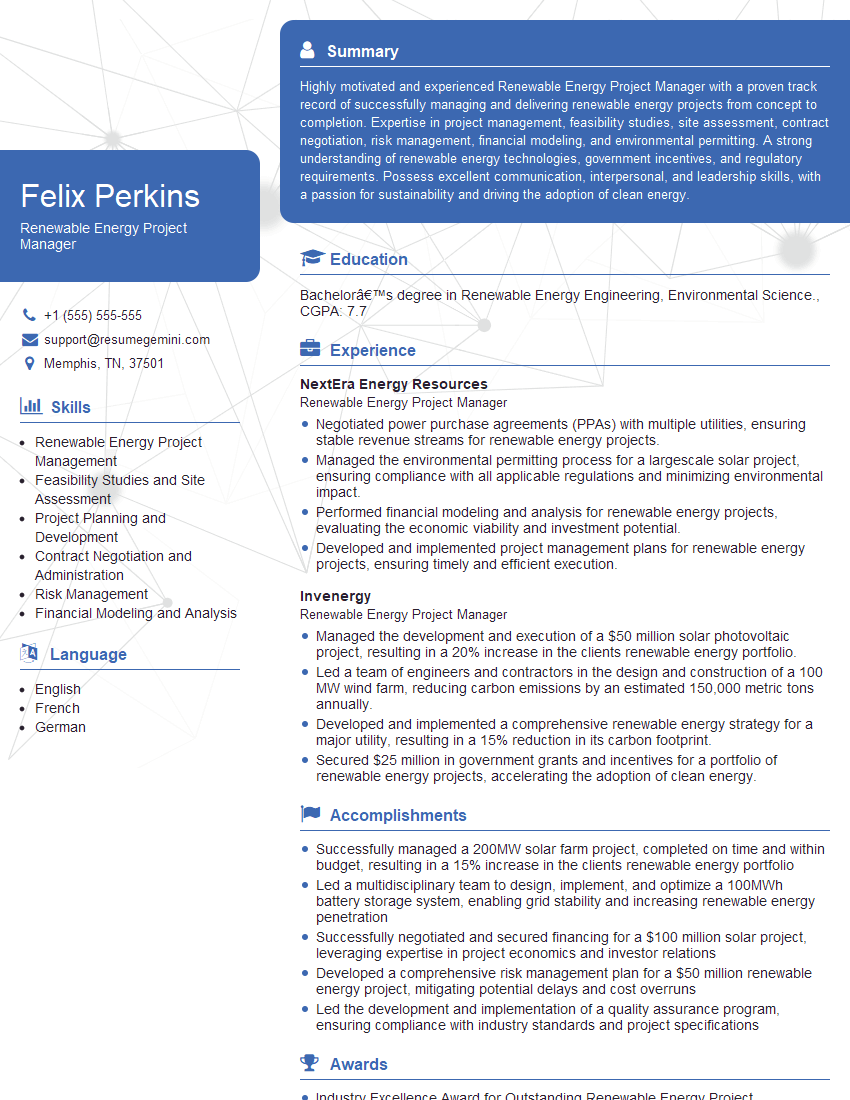
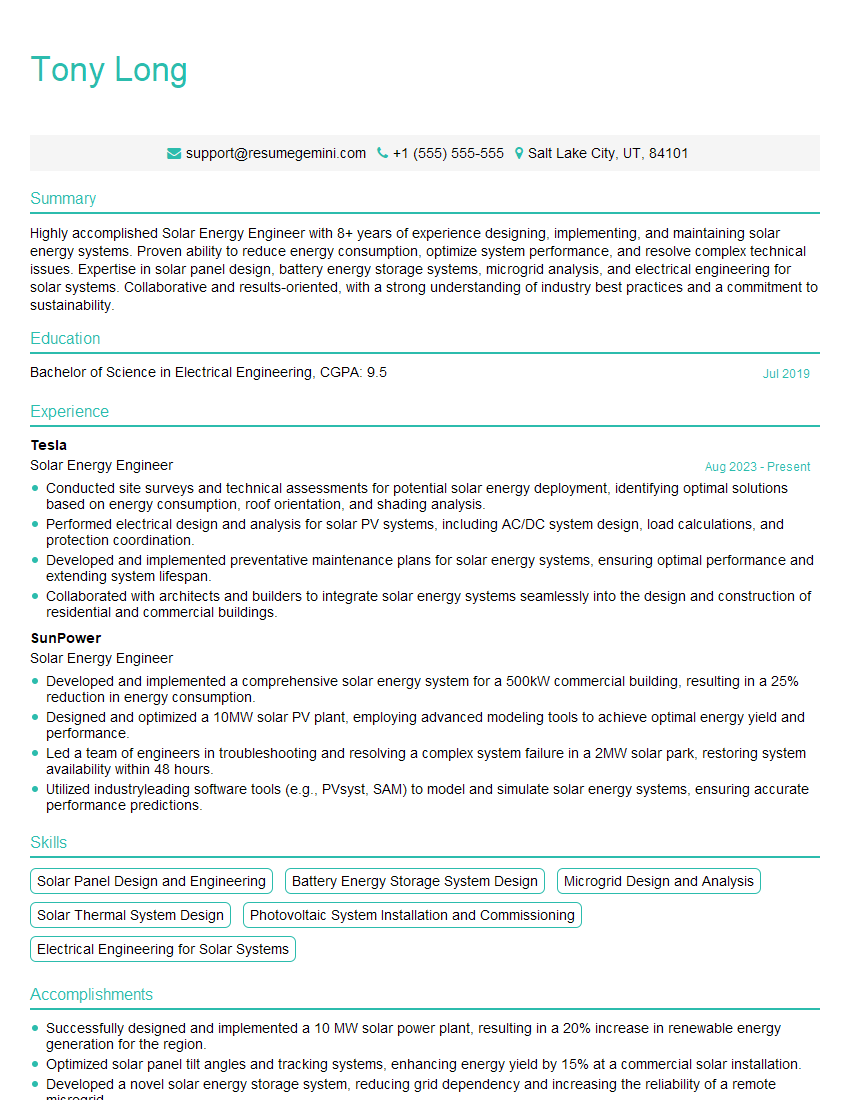
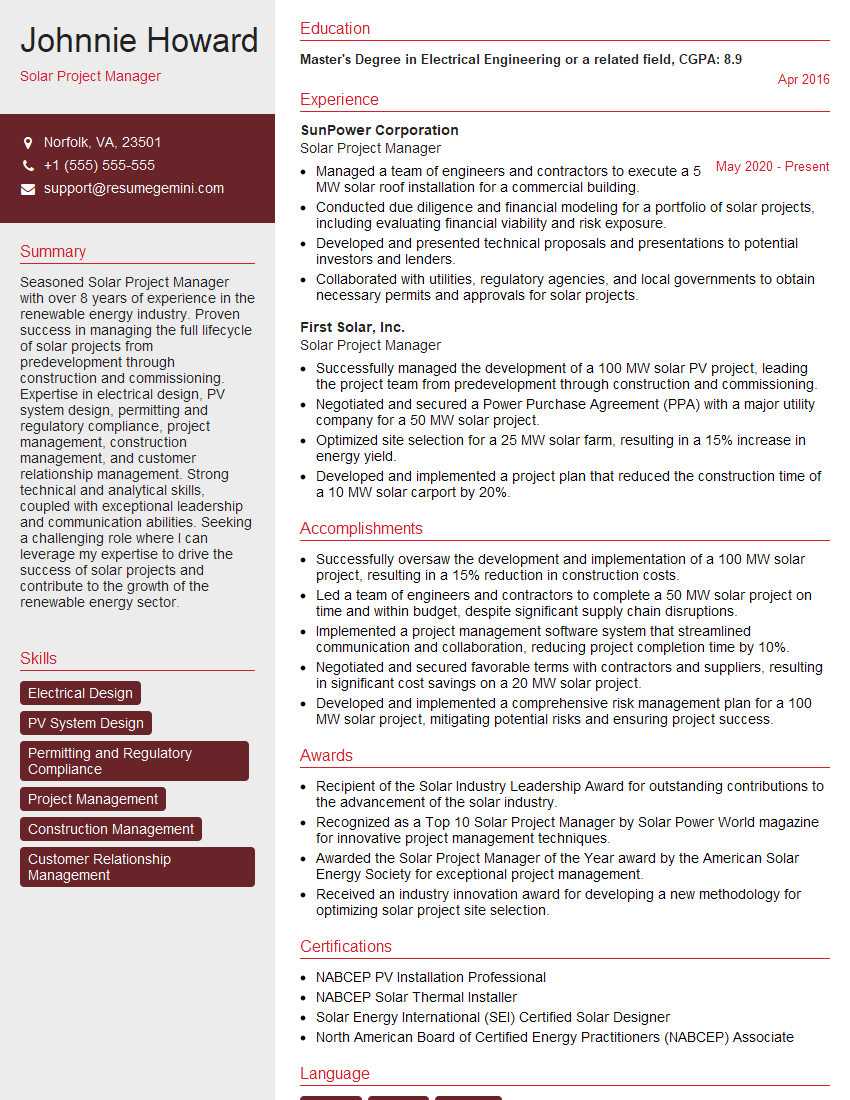
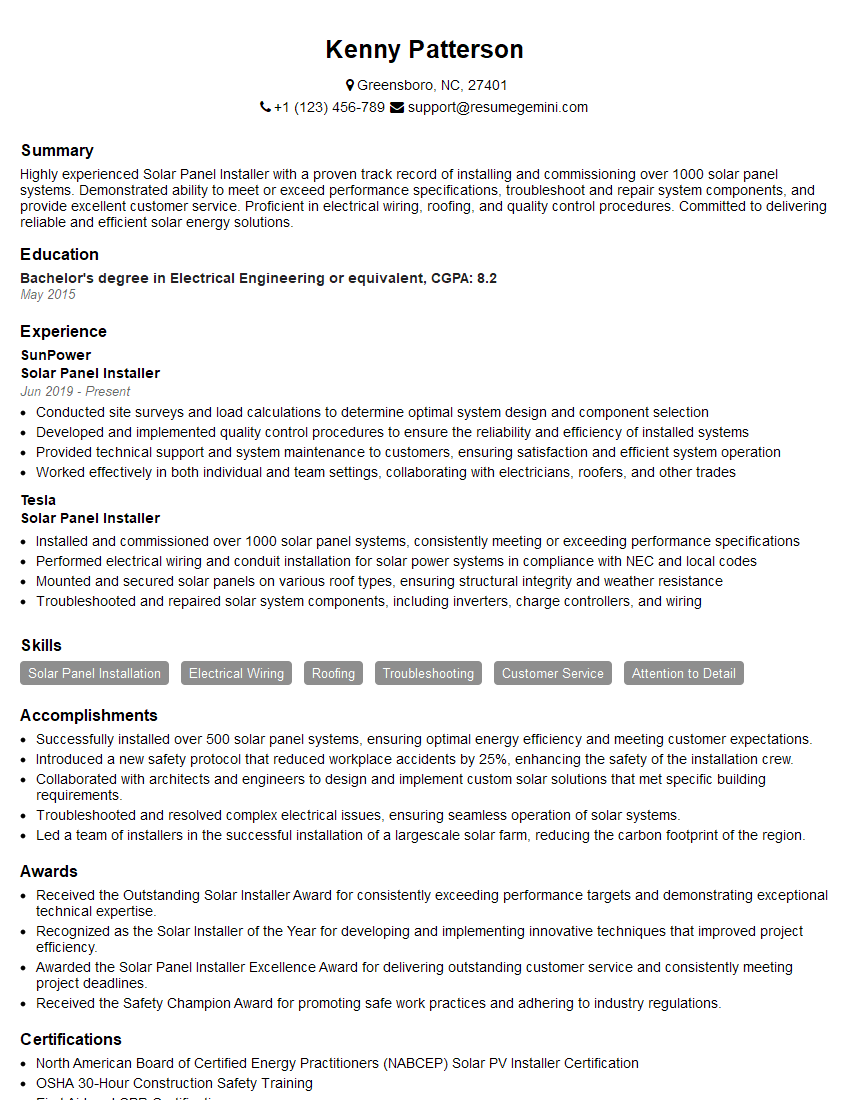
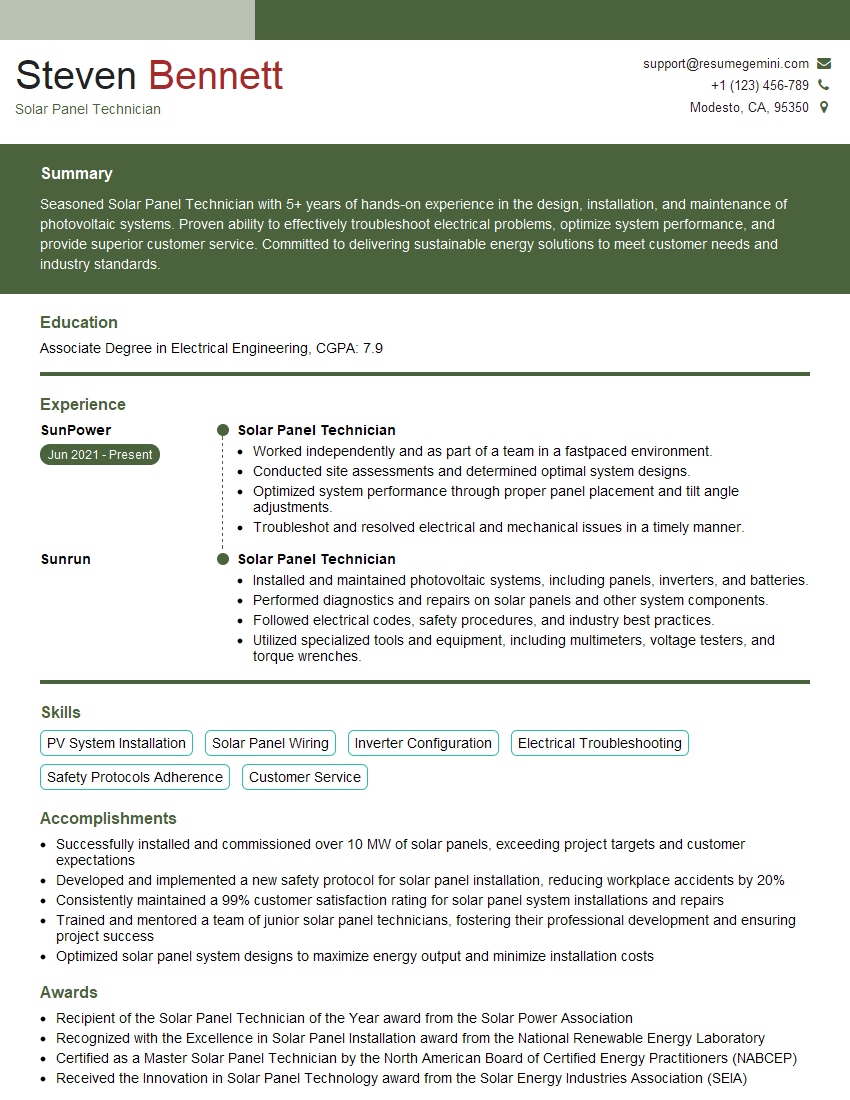
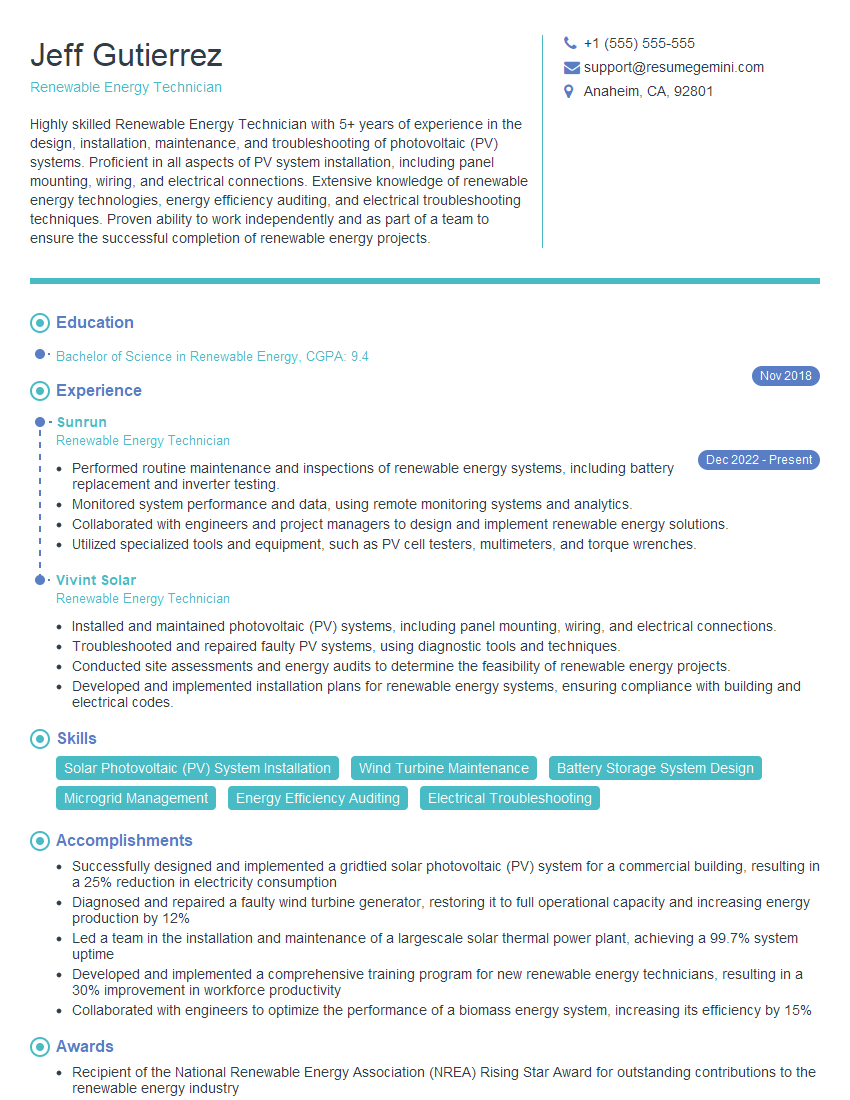
Mastering grid-connected and off-grid solar systems is crucial for a successful career in the renewable energy sector. This knowledge opens doors to exciting opportunities and positions you at the forefront of a rapidly growing industry. To maximize your job prospects, crafting a strong, ATS-friendly resume is essential. ResumeGemini is a trusted resource that can help you build a compelling resume highlighting your skills and experience. We provide examples of resumes specifically tailored to the Grid-Connected and Off-Grid Solar Systems field to guide you in showcasing your expertise effectively. Take the next step toward your dream career by creating a professional resume that grabs the attention of potential employers.

Explore more articles
Users Rating of Our Blogs
Share Your Experience
We value your feedback! Please rate our content and share your thoughts (optional).
What Readers Say About Our Blog
Very informative content, great job.
good