The thought of an interview can be nerve-wracking, but the right preparation can make all the difference. Explore this comprehensive guide to Grief Management interview questions and gain the confidence you need to showcase your abilities and secure the role.
Questions Asked in Grief Management Interview
Q 1. Describe your experience working with individuals experiencing different types of grief.
My experience spans a wide range of grief presentations, from the anticipated grief of a terminal illness to the sudden and unexpected loss associated with accidents or violence. I’ve worked with individuals grieving the loss of a loved one – spouse, child, parent, sibling, friend – as well as those experiencing the loss of a pet, a job, a relationship, or a significant life transition. Each type of grief carries its unique challenges and requires a nuanced approach. For example, the grief following a sudden death often presents with shock and disbelief, requiring immediate support and crisis intervention, while the grief associated with a prolonged illness allows for more anticipatory preparation, though it can be emotionally draining in its own way. I’ve found that understanding the context of the loss and the individual’s relationship with what has been lost is crucial in tailoring my therapeutic interventions.
One client I worked with, for instance, experienced complicated grief after the sudden loss of her husband. She was overwhelmed by feelings of guilt and anger, which significantly hampered her ability to process her loss. In contrast, another client, whose spouse had a prolonged illness, struggled with the emotional exhaustion of caregiving and the gradual loss of their companion. The therapeutic approach needed to accommodate these distinct experiences was radically different. It highlights the importance of individualised care in grief management.
Q 2. Explain your understanding of the Kubler-Ross model of grief and its limitations.
The Kübler-Ross model, proposing five stages of grief – denial, anger, bargaining, depression, and acceptance – is a widely recognized framework, but it’s crucial to understand its limitations. While it describes common emotional responses, it doesn’t represent a linear or universal process. Not everyone experiences all stages, nor do they necessarily experience them in this order. The model can be overly simplistic, potentially leading to pressure on individuals to conform to a specific timeline or emotional trajectory. It can also inadvertently pathologize normal grief responses, creating unnecessary anxiety for those who don’t fit the model.
For instance, a person might skip the bargaining stage entirely or experience anger intensely at the beginning and later, during acceptance. The model should be viewed as a potential description of emotional responses, not a prescriptive pathway. A more helpful approach focuses on understanding the individual’s unique experience and supporting their coping mechanisms, rather than forcing them into a predefined framework.
Q 3. How do you assess a client’s level of grief and coping mechanisms?
Assessing a client’s level of grief and coping mechanisms is a multifaceted process. It involves a combination of techniques, including clinical interviews, questionnaires (like the Inventory of Complicated Grief), and observation of nonverbal cues. I pay close attention to their emotional expression, their ability to function in daily life, and their social support networks. For instance, I might ask about their sleep patterns, appetite changes, and ability to focus on tasks. I also explore their thoughts and feelings about the loss, how they are coping with their emotions, and what resources they’re utilizing.
Coping mechanisms can range from adaptive (e.g., seeking social support, engaging in healthy activities) to maladaptive (e.g., substance abuse, isolation, self-harm). Identifying these is crucial for guiding intervention. A client’s responses to questions about their daily life can reveal functional impairment and their coping strategies. For example, if a client is consistently unable to attend to basic self-care due to their grief, it indicates a severe level of grief requiring intensive intervention. It is also essential to understand their prior coping mechanisms and resilience, which are significant predictors of their ability to navigate their grief.
Q 4. What therapeutic interventions do you utilize when working with grieving clients?
My therapeutic interventions are tailored to the individual’s needs and are informed by evidence-based practices. These include:
- Cognitive Behavioral Therapy (CBT): To identify and challenge maladaptive thought patterns contributing to prolonged grief.
- Acceptance and Commitment Therapy (ACT): To help clients accept difficult emotions and commit to valued actions.
- Trauma-Informed Therapy: If the loss involved trauma, this approach prioritizes safety and empowerment.
- Grief Counseling Groups: Providing a supportive environment for sharing experiences and learning from others.
- Mindfulness-Based Interventions: Such as meditation and yoga to manage emotional distress.
- Expressive Arts Therapies: Such as writing, art, or music therapy, allowing alternative ways of processing emotions.
The selection of interventions is dependent on the individual’s circumstances and unique needs. For example, CBT might be very effective in helping a client who is ruminating on negative thoughts about their loss, while ACT could help a client struggling with feelings of acceptance of their loss.
Q 5. How do you tailor your approach to clients with diverse cultural backgrounds and beliefs?
Cultural sensitivity is paramount in grief work. Grief expressions vary significantly across cultures. What might be considered a healthy expression in one culture may be viewed differently in another. Some cultures emphasize outward displays of emotion, while others prioritize stoicism. Understanding the client’s cultural background helps me to tailor my approach to respect their beliefs and traditions. This includes considering their religious or spiritual beliefs, their family dynamics, and community support systems.
For instance, when working with a client from a culture that emphasizes community mourning rituals, I would actively explore ways to incorporate those practices into their healing process, while also being mindful of not imposing my own cultural perspectives. Active listening and a genuine interest in understanding their unique cultural context are essential for building trust and facilitating effective intervention. It’s important to avoid making assumptions and to be open to learning about their customs.
Q 6. Describe your experience working with children and adolescents who are grieving.
Working with grieving children and adolescents requires a specialized approach. Their understanding of death and loss differs significantly from adults, and their emotional expression may be less articulated. I use age-appropriate language and techniques, incorporating play therapy, art therapy, or storytelling to help them express their feelings. It’s essential to involve caregivers and create a safe and supportive environment where they feel comfortable sharing their experiences without judgment.
I might use creative methods like drawing or storytelling to help a child express their grief, or engage in role-playing to help an adolescent explore their feelings about the loss. Maintaining open communication with parents or guardians is crucial for providing consistent support and ensuring the child receives appropriate care. Understanding their developmental stage influences the therapeutic approach significantly. For example, young children might express their grief through regressive behaviors, while adolescents might display anger or withdrawal.
Q 7. How do you handle situations where a client is resistant to seeking help or participating in therapy?
Resistance to seeking help or participating in therapy is common, particularly in grief. It often stems from fear, shame, or a belief that therapy won’t be helpful. My approach involves building a strong therapeutic alliance, demonstrating empathy, and validating their feelings. I avoid pressure and instead focus on establishing trust and mutual understanding. I may explore their reasons for resistance collaboratively, exploring what concerns they have about therapy.
Sometimes, starting with a single session to assess their needs and address their initial concerns can be helpful. I might offer different therapeutic modalities to see which feels like a better fit for them. Engaging family members in the process can also be beneficial, providing additional support and encouragement. The key is to work collaboratively with the client, respecting their autonomy and pacing the therapy to match their comfort level. Persistence, patience, and a genuine commitment to understanding their perspectives are crucial in overcoming resistance.
Q 8. What are some ethical considerations when working with grieving individuals?
Ethical considerations in grief work are paramount. They center around maintaining client autonomy, confidentiality, and ensuring the therapeutic relationship is built on trust and respect. This means carefully considering the client’s wishes regarding their treatment, avoiding imposing personal beliefs or values, and always prioritizing their well-being. For example, if a client expresses a desire to not discuss certain aspects of their loss, I would respect that boundary. Similarly, if a client is considering difficult choices, such as whether to pursue legal action or make medical decisions, my role is to help them explore their options and make informed decisions, not to influence their choices. Maintaining professional boundaries is also crucial to avoid blurring the lines between therapist and friend, safeguarding both the client and myself from potential harm. A key ethical consideration is also cultural sensitivity, ensuring the approach to grief respects the unique cultural beliefs and practices of the individual.
Q 9. How do you maintain your own emotional well-being while supporting grieving clients?
Supporting grieving clients is emotionally demanding work. Self-care is not a luxury but a necessity. To maintain my own well-being, I prioritize regular self-reflection, supervision, and engaging in activities that promote relaxation and rejuvenation. This might include exercise, spending time in nature, practicing mindfulness, or pursuing hobbies. I also utilize a strong support system of colleagues and friends with whom I can discuss cases and process difficult emotions. Regular supervision with a qualified professional allows me to debrief sessions, explore countertransference (my own emotional reactions to clients’ experiences), and gain support in navigating complex cases. Without actively nurturing my well-being, burnout is a very real risk, and my effectiveness as a therapist would diminish. It’s like a pilot before a flight; a pre-flight check of my emotional state is crucial for safe and effective ‘flying.’
Q 10. Describe your experience with crisis intervention related to grief and loss.
My experience with crisis intervention in grief often involves situations where individuals are experiencing acute distress following a sudden and unexpected loss. This could range from a suicide of a loved one to a sudden accident. In such situations, my immediate priority is to ensure the individual’s safety and stabilize their emotional state. This may involve helping them access immediate support services such as emergency medical care, crisis hotlines, or inpatient psychiatric care if needed. My approach is grounded in empathetic listening, validation of their feelings, and providing practical assistance. For example, I might help them connect with family members, arrange for childcare, or find temporary housing. After the immediate crisis subsides, the focus shifts to helping the individual develop coping mechanisms, processing their trauma, and navigating the long-term grief process. A crucial component is establishing a safety plan to prevent further crisis escalation.
Q 11. How do you address complicated grief in your practice?
Complicated grief is characterized by prolonged and intense grief that significantly impairs an individual’s functioning. My approach involves a multi-faceted strategy that addresses both the emotional and practical challenges. This may include Cognitive Behavioral Therapy (CBT) techniques to challenge unhelpful thought patterns and develop coping skills. Eye Movement Desensitization and Reprocessing (EMDR) therapy can be particularly effective in processing traumatic aspects of the loss. A key component is helping the client explore unresolved issues related to the deceased or the circumstances of the death. It is essential to rule out other conditions like depression or PTSD that could be contributing to the complicated grief. I often work collaboratively with other professionals such as psychiatrists or medical doctors to ensure a holistic approach. The therapeutic relationship itself is crucial; trust and a sense of safety are paramount for progress.
Q 12. What resources do you utilize to supplement your therapy sessions (support groups, community resources, etc.)?
I utilize a variety of resources to supplement therapy sessions, recognizing that grief support benefits from a multi-pronged approach. This includes connecting clients with local support groups, which provide a safe space to connect with others who understand their experience. I also recommend appropriate community resources, such as grief counseling centers, hospices, or bereavement programs offered by religious organizations or hospitals. Online resources offering self-help materials, guided meditations, or peer-to-peer forums can provide additional support. I carefully assess each client’s needs and preferences before making recommendations, ensuring the resources align with their individual circumstances and cultural background. These supplemental resources don’t replace individual therapy but function as valuable tools in the overall healing process.
Q 13. Explain your understanding of trauma-informed care in relation to grief.
Trauma-informed care is crucial in grief work, especially when the loss involves trauma, abuse, or sudden unexpected death. This approach acknowledges that grief can be deeply intertwined with past traumas, impacting how individuals process their loss. Instead of retraumatizing clients, a trauma-informed approach focuses on safety, trustworthiness, choice, collaboration, and empowerment. This includes creating a safe and supportive therapeutic environment, allowing clients to set the pace of the therapy, and avoiding any pressure to disclose details before they feel ready. Understanding the client’s history and its impact on their grief response is essential. For instance, if a client experienced childhood abuse and their parent dies, this past trauma might significantly color their grief response, making a standard grief approach insufficient. A trauma-informed approach would address both the past trauma and the current grief, working to heal both simultaneously.
Q 14. How do you work with families who are grieving the loss of a loved one?
Working with families experiencing grief requires a nuanced approach that acknowledges the unique dynamics and complexities within each family system. I begin by creating a safe space for open communication and validating each family member’s unique grief experiences. Understanding family roles, hierarchies, and communication patterns is crucial. Families may experience grief differently, with some expressing their emotions openly, while others internalize their feelings. My goal is to facilitate healthy communication and support each family member in their own grieving process. Family therapy sessions can be incredibly helpful to address dysfunctional patterns, resolve conflicts, and develop strategies for supporting one another during this challenging time. Providing education on the stages of grief and normalizing diverse reactions within the family is also a key aspect of my approach. If there are significant conflicts or unresolved issues, I may recommend individual therapy alongside family sessions to facilitate the healing process more effectively.
Q 15. Describe your experience documenting client progress and maintaining professional records.
Maintaining accurate and detailed client progress notes is paramount in grief counseling. It’s not just about ticking boxes; it’s about building a comprehensive narrative that reflects the client’s journey. My documentation meticulously records each session, including the presenting issues, progress towards goals, therapeutic interventions used, and the client’s emotional and behavioral responses. I use a SOAP note format (Subjective, Objective, Assessment, Plan), ensuring clarity and consistency. For example, under ‘Subjective,’ I might note a client’s verbal expression of feeling overwhelmed by guilt, while ‘Objective’ could detail observable signs like tearfulness and decreased eye contact. The ‘Assessment’ section would analyze these observations, and the ‘Plan’ would outline strategies for the next session, such as exploring the root of the guilt or introducing coping mechanisms. All records are stored securely, adhering to HIPAA regulations and maintaining client confidentiality.
Beyond SOAP notes, I also document significant events outside of sessions, such as phone calls, emails (with client consent), and any relevant medical information shared by the client or their family. This holistic approach ensures a complete picture of the client’s progress and allows for effective continuity of care, even if another professional takes over.
Career Expert Tips:
- Ace those interviews! Prepare effectively by reviewing the Top 50 Most Common Interview Questions on ResumeGemini.
- Navigate your job search with confidence! Explore a wide range of Career Tips on ResumeGemini. Learn about common challenges and recommendations to overcome them.
- Craft the perfect resume! Master the Art of Resume Writing with ResumeGemini’s guide. Showcase your unique qualifications and achievements effectively.
- Don’t miss out on holiday savings! Build your dream resume with ResumeGemini’s ATS optimized templates.
Q 16. How do you handle the termination of therapy with a grieving client?
Terminating therapy with a grieving client requires sensitivity and careful planning. It’s not a sudden cut-off but a gradual process. First, we discuss the termination well in advance, acknowledging the potential emotional impact of ending our work together. We collaboratively review the progress made, celebrate achievements, and address any lingering concerns or anxieties. This process often involves revisiting coping mechanisms we’ve developed and reinforcing their self-sufficiency. For instance, if a client has learned to utilize mindfulness techniques, we might practice those during our final sessions to build confidence in their ability to self-soothe independently.
I also provide resources for continued support, such as referrals to support groups, community resources, or other mental health professionals. A detailed summary of our sessions, along with recommendations for future care, is provided to the client (with consent). Post-termination check-ins, with the client’s permission, can be crucial to ensure they are coping well and offer a sense of continued support. This compassionate and planned approach minimizes the risk of relapse and fosters a positive lasting impact.
Q 17. What is your experience with different grief support groups and models?
My experience encompasses a variety of grief support groups and models. I’ve facilitated both open and closed groups, each with its own dynamics and benefits. Open groups allow for new members to join at any time, offering a diverse range of experiences and perspectives. Closed groups, on the other hand, provide a more intimate and consistent environment for members to build deep connections, but have limited capacity. I am familiar with various theoretical models underpinning these groups, including the stages of grief (Kübler-Ross), attachment-based approaches, and narrative therapies.
For instance, I’ve used narrative therapy to help group members reframe their grief stories, empowering them to find meaning and strength in their experiences. I’ve also facilitated groups focusing on specific loss types, such as the loss of a child or the death of a spouse, tailoring interventions to the unique challenges faced by these groups. My understanding of these various models allows me to adapt my facilitation style and choose the most suitable approach for a particular group’s needs, ensuring a safe and supportive environment for sharing and healing.
Q 18. How do you incorporate spirituality or faith into your grief counseling if applicable?
While maintaining a secular approach in my practice, I recognize the significant role spirituality and faith can play in navigating grief for many individuals. I believe that integrating a client’s spiritual beliefs into the therapeutic process can enhance their healing journey when appropriately addressed. This involves creating a safe space where clients feel comfortable discussing their beliefs without judgment. I might ask open-ended questions to understand how their faith informs their understanding of death, loss, and the afterlife. For example, I might ask, “How does your faith help you cope with your grief?” or “Are there any religious or spiritual practices that bring you comfort during this time?”
It’s crucial to avoid imposing my personal beliefs. Instead, I act as a guide, helping clients explore how their spirituality can provide solace, meaning, and hope. This might involve helping them connect with faith-based support groups, incorporating prayer or meditation into their coping strategies, or exploring spiritual literature relevant to their experiences. Ultimately, the goal is to empower clients to leverage their spiritual resources to find strength and resilience in the face of their grief.
Q 19. How do you differentiate between normal grief and complicated grief?
Differentiating between normal grief and complicated grief involves understanding the intensity, duration, and impact of grief symptoms. Normal grief, while intensely painful, is generally characterized by a gradual decrease in symptom severity over time. Individuals experiencing normal grief may feel sadness, anger, guilt, or denial, but these emotions eventually lessen, allowing them to gradually resume their daily lives. Complicated grief, on the other hand, is characterized by persistent and debilitating symptoms that significantly impair functioning.
For instance, someone with complicated grief may experience intense yearning, intrusive thoughts of the deceased, avoidance of reminders of the loss, and difficulties functioning at work or in relationships, for an extended period, often exceeding a year. While normal grief allows for eventual adaptation and acceptance, complicated grief requires professional intervention to address the overwhelming symptoms and improve functioning. This intervention often involves techniques like cognitive behavioral therapy (CBT) to modify maladaptive thought patterns and acceptance and commitment therapy (ACT) to help clients accept their painful emotions.
Q 20. How do you address secondary loss experienced by family members?
Secondary loss, the loss experienced by family members due to the death or illness of a loved one, often gets overlooked. It’s crucial to acknowledge and address this. Family members may experience a ripple effect of grief, including changes in family dynamics, financial strain, and emotional exhaustion. They may grapple with their own sadness, but also with the added burden of supporting the primary griever.
Addressing this involves providing space for family members to voice their individual experiences and acknowledging the legitimacy of their pain. I might employ family therapy techniques, providing a safe and structured environment for open communication and shared processing of grief. For example, I might guide family members in developing strategies for supporting each other, delegating tasks, and fostering healthy communication. Education about the different phases of grief and the importance of self-care is also crucial in mitigating the impact of secondary loss and promoting family resilience.
Q 21. Describe your understanding of the impact of grief on physical and mental health.
Grief significantly impacts both physical and mental health. The mental health consequences can include depression, anxiety, post-traumatic stress disorder (PTSD), and complicated grief, as discussed earlier. These can manifest as persistent sadness, irritability, sleep disturbances, difficulty concentrating, and social withdrawal. The physical toll is equally significant. Prolonged grief can weaken the immune system, leading to increased susceptibility to illness. Physical symptoms like fatigue, changes in appetite, headaches, and gastrointestinal problems are also common.
Understanding this holistic impact is critical for providing comprehensive care. For instance, I would encourage clients to seek medical attention if they experience persistent physical symptoms, and I might collaborate with physicians or other healthcare professionals to ensure holistic management of their needs. Additionally, incorporating mindfulness practices, physical activity, and healthy lifestyle choices into the therapeutic plan can contribute significantly to both mental and physical well-being, facilitating a healthier path through grief.
Q 22. How do you help clients identify and utilize their support systems?
Helping clients identify and utilize their support systems is crucial in grief management. It’s about empowering them to leverage the inherent strength within their existing relationships and communities. I begin by gently exploring their current social networks, asking open-ended questions like, ‘Who are the people you feel closest to?’ or ‘Who do you usually turn to in times of difficulty?’
I then help them categorize these relationships: family, friends, colleagues, faith communities, etc. We discuss the strengths and limitations of each connection. For example, a close friend might offer emotional support, while a family member might provide practical assistance. It’s vital to acknowledge that support systems aren’t always perfect; some relationships may be strained or unavailable. In those cases, I help clients explore alternative resources such as support groups, therapists, or online communities.
Finally, we collaboratively create a personalized support plan, outlining specific individuals or groups and the type of support they can offer. This plan is fluid and can adapt as the client’s needs evolve. For example, one client, widowed unexpectedly, found immense comfort in a local grief support group, where she connected with others who understood her experience. Another leaned heavily on a close friend who provided practical help with household tasks, allowing the client to focus on their emotional healing. This individualized approach ensures that the client feels empowered and equipped to navigate their grief journey with the support they need.
Q 23. Explain your approach to working with clients who have experienced sudden or unexpected loss.
Working with clients experiencing sudden or unexpected loss requires a particularly sensitive and nuanced approach. The shock and disorientation associated with such events can be profoundly destabilizing. My initial focus is on validating their feelings, acknowledging the surreal nature of their experience, and offering a safe space for them to express their raw emotions – be it anger, disbelief, or numbness. It’s crucial to avoid minimizing their pain or offering unsolicited advice during this acute phase of grief.
I emphasize the importance of self-care and encourage practical strategies for managing daily life. This might include helping them navigate practical tasks like arranging funeral arrangements, dealing with paperwork, or obtaining financial support. I collaborate with them to establish realistic goals and expectations, recognizing that their capacity for emotional processing will likely be limited initially. Trauma-informed care is integral here, ensuring that we progress at a pace comfortable for the client, avoiding re-traumatization.
It’s also vital to monitor for signs of complicated grief or PTSD. If needed, I will make appropriate referrals for specialized care. For instance, a client who lost a loved one in a tragic accident may benefit from trauma-focused therapy alongside grief counseling. The key is to provide a supportive, understanding presence while guiding them towards building resilience and finding their path through the complexities of unexpected loss.
Q 24. How do you handle difficult conversations with clients about death and dying?
Difficult conversations about death and dying require empathy, respect, and a genuine desire to understand the client’s perspective. I approach these conversations with a framework that prioritizes open communication and active listening. I begin by gauging the client’s comfort level, respecting their need for control in the conversation. I ask open-ended questions such as, ‘What are your thoughts and feelings about what’s happening?’, rather than making assumptions.
I avoid using euphemisms or jargon. I believe in using clear and honest language, adapting my approach based on the client’s understanding and emotional state. If the client is struggling with the concept of death, I utilize analogies or metaphors to facilitate comprehension, being mindful not to trivialize their experience. For instance, I might describe death as a natural transition rather than an ending. I always remain patient and receptive to their emotional responses, even if they are painful or challenging.
Creating a safe and non-judgmental environment is paramount. I allow the client to lead the conversation, validating their feelings without imposing my own beliefs or judgments. If a client expresses a specific fear or concern, I address it directly, offering support and resources as appropriate. The goal is not just to discuss death, but to help the client process their complex emotions and come to terms with their reality, whatever that may be.
Q 25. What strategies do you use to help clients develop coping skills for long-term grief?
Developing coping skills for long-term grief is an ongoing process requiring a multi-faceted approach. I focus on empowering clients to develop their resilience and self-regulation abilities. This involves teaching them techniques for managing their emotional responses, such as mindfulness meditation, deep breathing exercises, and progressive muscle relaxation.
We also explore healthy ways to express their grief, including journaling, creative expression (art, music, writing), or engaging in physical activities. I encourage them to connect with their support system, emphasizing the importance of social connection and mutual support. Cognitive restructuring techniques can help challenge negative thought patterns and replace them with more adaptive and realistic perspectives.
Furthermore, I guide clients in establishing healthy routines, emphasizing regular sleep, balanced nutrition, and physical activity. I might introduce them to resources like grief support groups, or refer them to specialists if needed, such as a psychiatrist for medication management or a somatic therapist for body-centered approaches to trauma. The key is to develop a personalized toolbox of strategies that clients can use to navigate their grief effectively over time, supporting their journey towards healing and integration.
Q 26. Describe your experience with working in a team-based approach to grief support.
Team-based approaches to grief support offer significant advantages. In my experience, collaborative work with other professionals, such as medical doctors, social workers, clergy, or other therapists, greatly enhances the quality of care. The team approach allows for a more comprehensive assessment of the client’s needs, considering both physical and emotional aspects of their wellbeing.
For example, a client experiencing complicated grief after a prolonged illness might benefit from collaboration between a grief counselor (myself), a medical doctor monitoring any physical symptoms, and a social worker assisting with practical needs such as insurance claims. The team can share relevant information, coordinate care plans, and provide a more holistic support system for the client. Regular team meetings provide opportunities to discuss progress, adjust treatment strategies as needed, and ensure continuity of care.
Moreover, team collaboration allows for a sharing of expertise and perspectives, preventing burnout and improving the overall quality of service provided. In my experience, these collaborative settings foster a more enriched environment for learning and mutual support amongst professionals, leading to improved outcomes for our clients navigating their grief journeys.
Q 27. How do you maintain confidentiality and adhere to professional ethical guidelines?
Maintaining confidentiality and adhering to professional ethical guidelines is paramount in my practice. I am bound by strict ethical codes, including HIPAA regulations and the ethical guidelines of my professional organizations. This means I treat all client information with the utmost discretion, ensuring it is only accessible to those directly involved in their care with appropriate consent.
Client information is stored securely, both physically and digitally, following all relevant data privacy protocols. I clearly explain confidentiality limits to clients at the outset of our relationship, outlining situations where I might be legally obligated to disclose information, such as suspicion of child abuse or harm to self or others. I obtain informed consent for all interventions and document all sessions thoroughly, maintaining accurate and ethical records.
I participate in regular continuing education to stay abreast of updated regulations and best practices in confidentiality and ethical conduct. I am also committed to ongoing self-reflection and supervision, to ensure that I maintain the highest standards of professional integrity in my work with grieving individuals. I believe maintaining trust is crucial for effective grief management.
Q 28. What are your professional development goals related to grief management?
My professional development goals focus on continually expanding my expertise in grief management and enhancing my capacity to serve clients effectively. I am particularly interested in further developing my skills in working with clients experiencing complicated grief, trauma-related grief, and grief in diverse cultural contexts.
I plan to pursue advanced training in trauma-informed care and explore innovative therapeutic approaches such as EMDR (Eye Movement Desensitization and Reprocessing) to address the complex interplay between grief and trauma. I also aim to deepen my understanding of the cultural nuances of grief, ensuring that my practice is sensitive and responsive to the diverse needs of my clients. I am committed to ongoing professional development through attending workshops, conferences, and engaging in peer supervision.
Finally, I aspire to contribute to the field through research and publication, sharing my expertise and helping to advance the knowledge base in grief management. My ultimate goal is to provide the highest level of compassionate and effective care for individuals and families navigating the complexities of loss.
Key Topics to Learn for Grief Management Interview
- The Grief Process: Understanding the Kubler-Ross model and its variations, recognizing individual differences in grieving, and the impact of cultural and religious factors on grief expression.
- Types of Grief: Differentiating between complicated grief, anticipatory grief, disenfranchised grief, and other forms; understanding the unique challenges presented by each.
- Therapeutic Approaches: Familiarity with various therapeutic interventions, such as grief counseling, support groups, and other evidence-based practices. Consider the ethical considerations involved.
- Communication & Empathy: Developing effective communication strategies for supporting grieving individuals, practicing active listening, and demonstrating empathy and compassion.
- Trauma-Informed Care: Understanding the interplay between grief and trauma, and adapting therapeutic approaches accordingly. How to recognize signs of PTSD and other trauma-related disorders.
- Ethical Considerations: Navigating ethical dilemmas related to confidentiality, boundaries, and dual relationships within a grief counseling context.
- Assessment & Diagnosis: Methods for assessing grief and identifying potential mental health concerns that may co-occur with grief. Differentiating normal grief from clinical disorders.
- Practical Application: Case studies, role-playing scenarios, and examples of how to apply theoretical knowledge in real-world grief management situations.
- Self-Care for Professionals: Strategies for maintaining professional well-being and preventing burnout when working with grieving individuals.
Next Steps
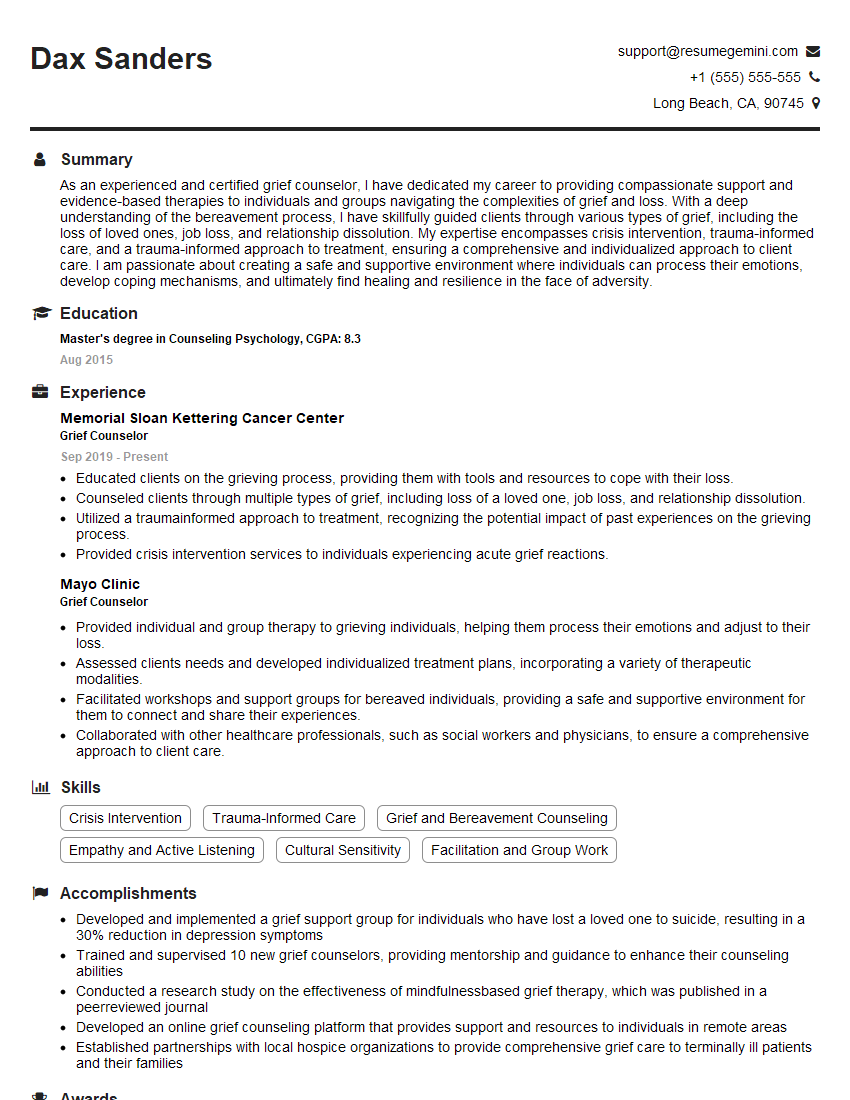
Mastering Grief Management skills opens doors to rewarding and impactful careers. In today’s competitive job market, a strong resume is crucial. An ATS-friendly resume ensures your qualifications are highlighted effectively by Applicant Tracking Systems, maximizing your chances of landing an interview. To create a compelling and effective resume that showcases your expertise in Grief Management, we highly recommend using ResumeGemini. ResumeGemini provides a user-friendly platform and offers examples of resumes tailored specifically to the Grief Management field, helping you present your skills and experience in the best possible light.
Explore more articles
Users Rating of Our Blogs
Share Your Experience
We value your feedback! Please rate our content and share your thoughts (optional).
What Readers Say About Our Blog
Very informative content, great job.
good