The thought of an interview can be nerve-wracking, but the right preparation can make all the difference. Explore this comprehensive guide to Grooming and Coat Care interview questions and gain the confidence you need to showcase your abilities and secure the role.
Questions Asked in Grooming and Coat Care Interview
Q 1. Describe your experience with various dog breeds and their specific grooming needs.
My experience spans over a decade, encompassing a wide variety of dog breeds, from the short-coated, low-maintenance breeds like Labradors and Boxers to the long, double-coated breeds like Huskies and Golden Retrievers, and even the more challenging breeds such as Poodles and Shih Tzus that require specialized techniques. Each breed presents unique grooming challenges. For instance, Labradors require regular brushing to manage shedding, while Poodles need regular haircuts to prevent matting. Huskies require careful brushing to avoid damaging their double coat. Understanding breed-specific coat characteristics is crucial for choosing the right tools and techniques.
- Short-coated breeds: Focus on brushing to remove loose hair and maintain a healthy coat. Regular bathing is also important to keep them clean.
- Long-coated breeds: Require more frequent brushing to prevent matting and tangles. Detangling spray may be necessary. Regular haircuts are often recommended.
- Wire-haired breeds: Need stripping or hand-stripping to remove dead hair and maintain their unique texture. This technique requires specialized skills and tools.
This knowledge allows me to tailor my grooming approach to meet the specific needs of each individual dog, ensuring both safety and optimal results.
Q 2. Explain your process for safely handling and restraining animals during grooming.
Safety is paramount. My process begins with a thorough assessment of the dog’s temperament. I start by letting the dog sniff my hand and get comfortable with my presence. Gentle, positive reinforcement using treats and praise is key. For anxious dogs, a slow, gradual approach is essential. I avoid sudden movements or loud noises. Restraint techniques are employed only when necessary and always in a way that is both safe and humane.
- For cooperative dogs: Gentle handling is sufficient. I use a grooming loop or table to allow easy access to all parts of the body.
- For nervous dogs: I use calming techniques, such as soft talking and gentle stroking, while providing ample opportunities for breaks. A muzzle may be used if necessary, but always in a way that doesn’t cause stress or discomfort. A helper can be beneficial.
- For aggressive dogs: Experienced assistance is vital. Proper muzzling and restraint techniques are crucial, and I will always prioritize the safety of both the dog and myself. In some cases, referring the owner to a veterinary behaviorist might be necessary.
My goal is to create a positive grooming experience, minimizing stress and maximizing comfort for the animal.
Q 3. What are the different types of coat textures, and how do you adapt your grooming techniques accordingly?
Coat texture significantly influences grooming techniques. Understanding the different types is crucial for selecting appropriate tools and avoiding damage.
- Short and smooth: These coats require regular brushing to remove loose hair and dirt. Examples include Labradors and Boxers. Minimal grooming is usually needed other than bathing and brushing.
- Long and silky: These coats are prone to matting and tangles, requiring daily brushing and the use of detangling sprays. Examples include Yorkshire Terriers and Afghan Hounds. Regular haircuts are often beneficial.
- Double coats: These coats have an outer and inner layer. Regular brushing is necessary to remove dead undercoat, preventing matting and skin problems. Huskies and Golden Retrievers are examples. Specific techniques are needed to avoid damaging the outer coat.
- Wirehaired coats: These coats require stripping or hand-stripping to remove dead hair. This technique removes the dead hair naturally and helps maintain the coat’s texture. Examples include Terriers like Wire Fox Terriers.
- Curly coats: These coats are prone to matting. Regular brushing and detangling are crucial. Examples include Poodles and Bichon Frises.
Adapting techniques is not just about the tools; it’s about the pressure applied, the direction of brushing, and the overall sensitivity shown to the animal’s skin.
Q 4. How do you identify and address skin conditions or parasites during a grooming session?
Identifying and addressing skin conditions or parasites is a crucial part of responsible grooming. I carefully examine the dog’s skin during each session, looking for any signs of abnormalities.
- Skin conditions: These can include redness, irritation, scaling, lesions, or excessive scratching. If I suspect a skin problem, I will recommend a veterinary examination. I would not proceed with grooming until the vet has given clearance.
- Parasites: Fleas, ticks, and other parasites can be detected through visual inspection and by carefully examining the coat for signs of irritation or infestations. I will inform the owner and recommend appropriate treatment strategies.
Early detection and responsible management of these issues are vital for maintaining a dog’s overall health and well-being. A thorough examination is also important to look for any signs of allergies.
Q 5. Describe your experience with different grooming tools and techniques (e.g., clipping, scissoring, brushing).
My experience encompasses a wide range of grooming tools and techniques. I am proficient in using clippers, shears, and a variety of brushes. The choice of tools depends heavily on the breed and coat type.
- Clippers: Used for short, even haircuts on short-coated breeds or for specific areas such as around the feet and sanitary areas. Different blade sizes are selected based on the desired length and coat type.
- Shears: Used for more precise haircuts, blending, and shaping, particularly useful for long-coated breeds and creating stylish cuts. Different types of shears exist for different purposes (e.g., thinning shears).
- Brushes: A variety of brushes are used for different coat types, including slicker brushes for removing mats, undercoat rakes for double-coated breeds, and bristle brushes for short-haired dogs.
Techniques vary significantly depending on the coat type. For example, clipping a double-coated breed incorrectly can damage the coat, whereas proper thinning shear technique on a long-haired breed can improve coat flow and prevent matting. My expertise allows me to select and effectively use these tools for optimal results.
Q 6. How do you maintain hygiene and sanitation standards in a grooming environment?
Maintaining hygiene and sanitation standards is non-negotiable. My grooming environment is meticulously cleaned and disinfected between each dog. I use hospital-grade disinfectants to sanitize all surfaces, tools, and equipment. This ensures a safe and healthy environment for both the animals and myself.
- Surface disinfection: All surfaces, including the grooming table, floor, and walls, are thoroughly disinfected after each dog.
- Tool sterilization: All grooming tools, including clippers, shears, and brushes, are cleaned and disinfected using appropriate methods after every use.
- Waste disposal: Hair and other waste are disposed of properly and hygienically.
- Personal hygiene: I maintain high standards of personal hygiene, including handwashing and the use of protective clothing.
Following these procedures minimizes the risk of cross-contamination and prevents the spread of infections or parasites.
Q 7. What are your methods for dealing with aggressive or anxious animals during grooming?
Handling aggressive or anxious animals requires patience, understanding, and a tailored approach. I prioritize the safety of both the animal and myself.
- Aggressive dogs: I work with experienced assistants, use muzzles if necessary, and maintain a calm, confident demeanor. I never force a dog into a situation that will make them more stressed. In extreme cases, referral to a veterinary behaviorist might be necessary.
- Anxious dogs: I use calming techniques such as soft talking, gentle stroking, and providing breaks as needed. I work slowly and methodically, allowing the dog to adjust gradually. Treats and praise are used extensively as positive reinforcement.
My goal is to create a safe, positive, and minimally stressful environment. It’s crucial to understand that every animal is an individual, and adjusting my techniques to suit their needs is essential for success.
Q 8. Explain your knowledge of breed-specific grooming standards and styles.
Breed-specific grooming is paramount. Each breed has unique coat characteristics – length, texture, density – and therefore requires a tailored approach. For instance, a Yorkshire Terrier’s long, silky coat needs frequent brushing to prevent matting, regular trims to maintain its flowing appearance, and potentially even a professional ‘show cut’. Conversely, a Boxer’s short, smooth coat demands less maintenance, focusing on regular baths and brushing to remove loose hair. Understanding breed standards, whether it’s the AKC standards for show dogs or simply the owner’s preferences for their pet, informs every decision from the tools used to the styling techniques applied. I’ve worked with numerous breeds, from the delicate Persian cat to the robust Newfoundland dog, and adapting my techniques to each is second nature. I always discuss the owner’s goals and expectations beforehand, to ensure we are on the same page regarding the final look.
- Example: A Poodle’s coat requires regular trimming and styling, and I offer a variety of cuts including the traditional ‘puppy cut’, a ‘lion cut’ for warmer months, or intricate ‘show cuts’ requiring significant skill and precision.
- Example: A Siberian Husky’s double coat needs deshedding twice yearly, a process that requires specialized tools and techniques to remove undercoat without damaging the outer coat.
Q 9. How do you assess the condition of a pet’s coat and skin before starting a grooming session?
Before any grooming session, a thorough assessment is crucial. I begin by visually inspecting the coat and skin. I look for signs of dryness, excessive oiliness, parasites (fleas, ticks, etc.), skin irritations (rashes, hot spots), lumps, or any other abnormalities. I also check for matting or tangles, paying close attention to areas like behind the ears, under the armpits, and on the legs. Then, I palpate the skin, checking its elasticity and identifying any areas of tenderness or inflammation. The pet’s overall demeanor is also taken into account; a stressed or anxious pet may require extra care and a gentler approach. This assessment informs my choice of shampoos, conditioners, and grooming techniques to ensure the pet’s comfort and safety throughout the procedure. In case of any serious skin or coat issues, I always advise the owner to consult a veterinarian.
Q 10. What are the common coat problems (e.g., matting, tangles) and how do you address them?
Matting and tangles are common coat problems, particularly in long-haired breeds. Matting occurs when hair becomes densely intertwined, forming tight knots that can pull on the skin and cause discomfort. Tangles are less severe, but if left untreated, they can progress to matting. Addressing these issues requires patience and the right tools. I start by carefully brushing the coat with a wide-toothed comb, working from the tips to the roots to gently untangle the hair. For stubborn mats, I may use a mat splitter or, in extreme cases where the mat is severely tight, may need to carefully trim it out with clippers. Prevention is key; regular brushing is essential to avoid these problems altogether. I always explain to the owners the importance of consistent at-home brushing and provide tips on how to do so effectively. A proper diet and hydration also contributes significantly to coat health.
Q 11. Describe your experience with nail trimming, ear cleaning, and anal gland expression.
Nail trimming, ear cleaning, and anal gland expression are essential aspects of pet grooming. I use a high-quality guillotine-style clipper for nail trimming, carefully avoiding the quick (the pink part containing nerves and blood vessels) to prevent bleeding and pain. For ear cleaning, I use a veterinarian-approved ear cleaner and cotton balls, gently wiping the inside of the ear flap to remove dirt and debris. I never insert anything deeply into the ear canal. Anal gland expression should only be performed by someone trained and experienced, and only when needed. I assess the need for this procedure based on the pet’s symptoms (such as scooting or excessive licking of the rear). If expression is necessary, I use a gentle, yet firm technique to avoid causing any injury or discomfort.
Q 12. How do you select appropriate shampoos and conditioners based on coat type and skin condition?
Shampoo and conditioner selection is critical and depends on the coat type and skin condition. For example, a dog with a dry, flaky coat will benefit from a moisturizing shampoo and a deep conditioner. A dog with an oily coat may require a clarifying shampoo to remove excess oil. I use hypoallergenic, pH-balanced shampoos to avoid irritating sensitive skin. I also have shampoos specifically designed for different coat types (e.g., long hair, curly hair, short hair) and for specific conditions such as flea and tick infestations. I always discuss the pet’s specific needs with the owner before selecting products.
Q 13. How do you use different types of clippers and shears to achieve desired styles?
I use a variety of clippers and shears depending on the desired style and coat type. Clippers are used for shorter cuts and for removing bulk. They come in different blade sizes, and I select the appropriate blade based on the length of the desired cut. I also use different types of shears – thinning shears for blending and texturizing, and regular shears for precise cutting and shaping. I always ensure the blades are sharp and well-maintained for a clean, even cut. Safety is paramount; I use clipper guards to control cut length and work carefully to avoid accidental nicks or cuts. For instance, using a #10 blade on clippers will provide a very short, close shave, whereas a #4 blade will leave a longer, coarser cut.
Q 14. What are your techniques for styling different dog breeds?
Styling techniques vary widely depending on the breed. For example, I might use a combination of clippers and shears to achieve the desired look for a Poodle, potentially creating a precise and symmetrical cut. For a Terrier, I would focus on maintaining the coat’s natural texture while tidying up any stray hairs. For a longhaired breed like a Shih Tzu, my approach would focus on preventing matting and tangles, possibly trimming excess hair around the eyes and feet. I always aim to enhance the breed’s natural beauty and characteristics while ensuring the pet’s comfort and health. Every dog is unique and will need a tailored approach based on their specific coat and breed characteristics, always respecting the pet’s comfort levels and respecting owner’s requests.
Q 15. Describe your experience with drying techniques (e.g., forced air, towel drying).
Drying a pet thoroughly after bathing is crucial for preventing skin issues and ensuring a healthy coat. I utilize a combination of techniques tailored to the individual pet’s breed, coat type, and temperament. Towel drying is always my first step, gently blotting rather than rubbing to avoid matting. This removes the bulk of the water. For forced air drying, I use a high-velocity dryer, keeping it a safe distance from the pet’s skin to avoid burning. The temperature and airflow are adjusted depending on the coat thickness and the pet’s reaction. For instance, a delicate long-haired breed like a Persian cat would require a lower temperature and gentler airflow than a short-haired, double-coated breed like a Labrador Retriever. I always monitor the pet closely for signs of discomfort or overheating during this process.
For pets with particularly dense or thick coats, I might incorporate a low-heat setting and use a grooming mitt to distribute the air and help the coat dry evenly. The key is to be patient and methodical, ensuring complete dryness to prevent the growth of bacteria and yeast. I also consider the pet’s overall health – for instance, a senior pet might be more sensitive to the heat and require even more careful monitoring.
Career Expert Tips:
- Ace those interviews! Prepare effectively by reviewing the Top 50 Most Common Interview Questions on ResumeGemini.
- Navigate your job search with confidence! Explore a wide range of Career Tips on ResumeGemini. Learn about common challenges and recommendations to overcome them.
- Craft the perfect resume! Master the Art of Resume Writing with ResumeGemini’s guide. Showcase your unique qualifications and achievements effectively.
- Don’t miss out on holiday savings! Build your dream resume with ResumeGemini’s ATS optimized templates.
Q 16. How do you handle customer complaints or concerns about grooming services?
Handling customer complaints is a critical part of building trust and maintaining a positive reputation. I approach each concern with empathy and a commitment to finding a resolution. I start by actively listening to the customer’s concerns without interruption. Once I understand their perspective, I explain the grooming process that was followed, highlighting any specific challenges encountered. I strive for open and honest communication, avoiding defensive language. If a mistake was made on my part, I acknowledge it and apologize sincerely. If the concern is about the pet’s reaction to the grooming, I explain the possible underlying causes and provide suggestions for future sessions.
For example, if a customer feels their dog’s haircut was uneven, I will carefully examine the dog’s coat and explain the challenges posed by its unique texture or density. I offer solutions, such as a touch-up appointment at no extra cost, or demonstrate how to maintain the style at home. I always strive for a win-win outcome, aiming to leave the client feeling heard, understood, and satisfied. If the issue is something outside of my control, like an allergic reaction that develops later, I suggest consulting with a veterinarian. The objective is to provide excellent customer service and ensure everyone leaves with a positive experience.
Q 17. Explain your knowledge of canine and feline anatomy and physiology relevant to grooming.
A strong understanding of canine and feline anatomy and physiology is paramount in safe and effective grooming. Knowing the location of sensitive areas like eyes, ears, and genitals helps me prevent injuries during grooming. Understanding the structure of the skin and coat is critical for choosing appropriate tools and techniques. For instance, I know that certain breeds are prone to skin conditions and require specific shampoos and conditioners.
I am aware of the different types of coat textures (e.g., single coat, double coat, wiry), their growth patterns, and how to handle each type without causing damage. Understanding the skeletal structure helps me assess posture and identify any potential orthopedic issues. Additionally, knowing about the circulatory and nervous systems is essential in preventing stress and injury during the grooming process. I am adept at recognizing signs of discomfort or pain in pets. For example, I can recognize subtle signs of anxiety or pain through their body language and adjust my approach accordingly. This might involve taking more frequent breaks, using calming techniques, or consulting with the pet owner to explore underlying medical issues.
Q 18. What safety measures do you implement to prevent accidents during grooming?
Safety is my top priority. I utilize several measures to prevent accidents: First, I always muzzle aggressive or anxious pets, using a muzzle that is comfortable and allows them to pant. I secure the pet properly using non-slip mats and restraints. Sharp tools like scissors and clippers are used with utmost care and precision. I frequently check tools for sharpness and damage before and during each grooming session. The grooming environment is kept clean and organized, preventing tripping hazards.
I never leave a pet unattended while using grooming tools or in potentially hazardous situations. Before beginning any procedure, I carefully inspect the pet’s skin and coat for any cuts, sores, or skin irritations. I’m also always mindful of the pet’s overall health and well-being. If I detect anything unusual, I will always advise the owner to consult with a veterinarian before proceeding with any grooming procedures. My workspace is well-ventilated to reduce the risk of inhaling hair or aerosol sprays. Regular cleaning and disinfection of equipment and surfaces prevent the spread of disease.
Q 19. What is your experience with grooming different types of fur (e.g., long-haired, short-haired, wiry)?
My experience encompasses a wide range of coat types. Long-haired breeds require careful detangling and de-shedding to prevent matting. I use specialized tools, such as wide-tooth combs and de-shedding rakes, to work through the coat gently. I am adept at identifying and removing mats without causing pain. Short-haired breeds require a different approach, focusing on achieving a smooth and even coat. This often involves using clippers with appropriate guards and paying attention to the grain of the hair. Wiry-haired breeds require a unique style of trimming and styling, often involving stripping or hand-stripping techniques to remove the dead coat and enhance the natural texture.
For example, a Poodle’s long, curly coat needs regular brushing to prevent matting, and proper scissoring techniques to maintain its stylish appearance. A Labrador’s short, double coat requires regular brushing and de-shedding, especially during shedding seasons. A terrier’s wiry coat requires specialized techniques such as stripping or plucking to maintain its texture. I’m proficient with all of these techniques. Each breed requires tailored care and I’m dedicated to delivering the best possible grooming service according to breed standards and owner preferences.
Q 20. How do you communicate effectively with pet owners about grooming needs and recommendations?
Effective communication with pet owners is essential for a successful grooming experience. I begin by actively listening to their concerns and preferences, asking about the pet’s health history and any specific grooming requirements. I clearly explain the grooming process step-by-step, addressing any questions or concerns they might have. I use plain language, avoiding technical jargon whenever possible.
I provide realistic expectations for the grooming outcome, taking into account the breed, coat type, and the pet’s overall condition. I might show the owner before-and-after photos of other pets with similar coat types to demonstrate my capabilities. I will show them grooming tools so they understand the process better and can help them continue at home. After the grooming session, I offer follow-up advice on maintaining the coat, including recommended brushing schedules and product suggestions. I welcome feedback and strive to ensure they are happy with the service provided. I always follow up after the appointment to see if everything is satisfactory and if they have any questions or concerns.
Q 21. How do you stay updated with current trends and techniques in pet grooming?
Staying current in the pet grooming field is crucial for providing the best possible care. I regularly attend workshops, seminars, and grooming competitions to learn about new techniques and products. I subscribe to industry magazines and follow reputable online resources and social media pages of grooming experts. I actively participate in online forums and communities to connect with other groomers and share knowledge and experiences.
I’m also committed to ongoing education, regularly reviewing the latest research on canine and feline health and coat care. For instance, I am constantly learning about new hypoallergenic shampoos and conditioners, along with sustainable grooming products. I’m also interested in the latest research on animal welfare and handling techniques to ensure I provide a comfortable experience for each pet. This combination of practical experience and continuous learning keeps my skills sharp and ensures I am providing the highest quality grooming services.
Q 22. What is your experience with specialty grooming services, such as breed-specific trimming?
Breed-specific trimming is a crucial aspect of professional grooming, requiring a deep understanding of various breeds’ unique coat types and show standards. My experience encompasses a wide range of breeds, from the meticulous hand-stripping of a terrier to the precise scissoring of a poodle or the careful trimming of a Shih Tzu’s face. I’ve worked with many breeds, learning the proper techniques for each, including the proper tools needed for achieving the ideal look and maintaining the dog’s health and comfort. For example, I understand the importance of maintaining the natural leg feathering of a Setter, which requires a different approach compared to the neat, sculpted look required for a Poodle. This involves meticulous attention to detail and a keen eye for balance and symmetry, always taking into account the animal’s unique conformation and individual needs.
Q 23. Explain your knowledge of different types of grooming products (e.g., shampoos, conditioners, detanglers).
My knowledge of grooming products is extensive. Shampoos, for instance, range from gentle, moisturizing formulas for sensitive skin to clarifying shampoos for removing dirt and build-up from heavily coated breeds. Conditioners add moisture and manageability, essential for detangling and preventing breakage. Detanglers are vital for preventing painful pulling, especially in long-haired breeds prone to matting. I carefully select products based on the individual dog’s coat type, skin condition, and any allergies they may have. For example, a dog with dry skin would benefit from a moisturizing shampoo and conditioner, while a dog with oily skin would require a clarifying shampoo. I’m also familiar with specialized products such as medicated shampoos for skin conditions and leave-in conditioners for extra coat protection. Choosing the right products is critical for achieving a healthy, shiny, and manageable coat.
Q 24. How do you manage your time effectively during a busy grooming day?
Effective time management on a busy grooming day is essential. I prioritize appointments based on the complexity of each groom, ensuring that dogs requiring more extensive work are scheduled accordingly. I maintain a detailed schedule and communicate any potential delays proactively. My workflow is organized and efficient; I’ve streamlined tasks to minimize wasted time. For example, I often prepare all the necessary tools and products before starting each grooming session, making the transition between dogs quick and easy. I also make use of multitasking where appropriate, like prepping a dog’s coat while another is drying. Furthermore, careful planning helps me to work smoothly throughout the day and avoid unnecessary stress or delays.
Q 25. Describe your experience with working independently and as part of a team.
I am comfortable working both independently and as part of a team. When working independently, I am self-motivated and able to manage my time efficiently. As part of a team, I’m a collaborative team player who readily shares my expertise and contributes to a positive work environment. In a team setting, this might involve assisting colleagues with difficult grooms or sharing product knowledge. For example, I have previously mentored junior groomers, sharing my experience and ensuring the well-being of the dogs under our collective care. Collaboration in team-based settings always prioritizes the safety and comfort of the animal, ensuring efficiency without compromise.
Q 26. What are your career goals within the field of pet grooming?
My career goals include becoming a recognized expert in canine coat care and potentially mentoring others in the field. I am also interested in specializing in a particular breed or type of coat. I see myself continuing to expand my knowledge, perhaps through advanced training courses or workshops on specialized grooming techniques. I want to contribute to the broader grooming community by sharing my skills and expertise, fostering a culture of excellence and continuous learning within the profession. Continual education is a key aspect of staying at the forefront of industry best practices.
Q 27. How do you handle unexpected situations or emergencies during a grooming session?
Handling unexpected situations requires calmness and quick thinking. If a dog becomes anxious or aggressive during grooming, I employ calming techniques, such as speaking softly and using gentle, reassuring touches. If there is a minor injury, I know how to assess and treat the wound, and when to call for veterinary assistance. For example, if a dog accidentally cuts its paw, I’d immediately stop the grooming session, clean and bandage the wound, and monitor for any signs of infection, knowing when veterinary intervention is necessary. Maintaining a calm and composed demeanor is crucial in ensuring the safety and comfort of the pet.
Q 28. What steps do you take to ensure the safety and well-being of pets under your care?
The safety and well-being of the pets in my care are my top priorities. I always ensure a clean and sanitary grooming environment. I use appropriate handling techniques to minimize stress and discomfort. Before starting any grooming session, I thoroughly assess each dog for any health issues, paying particular attention to skin conditions or injuries. I take extra care with fearful or anxious dogs, employing techniques to build their trust and create a positive experience. Proper restraint techniques are employed and I use high-quality, well-maintained grooming equipment to minimize the risk of injury. Regularly reviewing safety procedures and maintaining a clean workspace are important parts of a safe grooming environment.
Key Topics to Learn for Your Grooming and Coat Care Interview
- Breed-Specific Grooming Needs: Understanding the unique coat types, grooming requirements, and potential health concerns of various breeds (e.g., shedding patterns, matting tendencies, skin sensitivities).
- Practical Application: Demonstrate your ability to discuss appropriate tools and techniques for different coat types (e.g., brushing, bathing, trimming, drying). Be prepared to explain the importance of safe and ethical handling practices.
- Coat Care Products and Their Application: Knowledge of shampoos, conditioners, detanglers, and other grooming products, including their proper use and potential side effects. Understanding ingredient lists and selecting products based on coat type and skin condition.
- Skin and Coat Health: Identifying common skin and coat problems (e.g., parasites, allergies, infections) and discussing appropriate preventative measures and treatment options. This includes recognizing when professional veterinary intervention is necessary.
- Safety and Hygiene: Detailing safe grooming practices, including sterilization of tools, maintaining a clean workspace, and adhering to health and safety regulations.
- Client Communication and Consultation: Explain how you would effectively communicate with clients about their pet’s grooming needs, address concerns, and provide recommendations. Demonstrate your understanding of client expectations and building rapport.
- Advanced Techniques: Explore specialized grooming techniques like breed-specific trimming styles, hand-stripping, and creative grooming. This showcases your commitment to continuous learning and skill development.
Next Steps
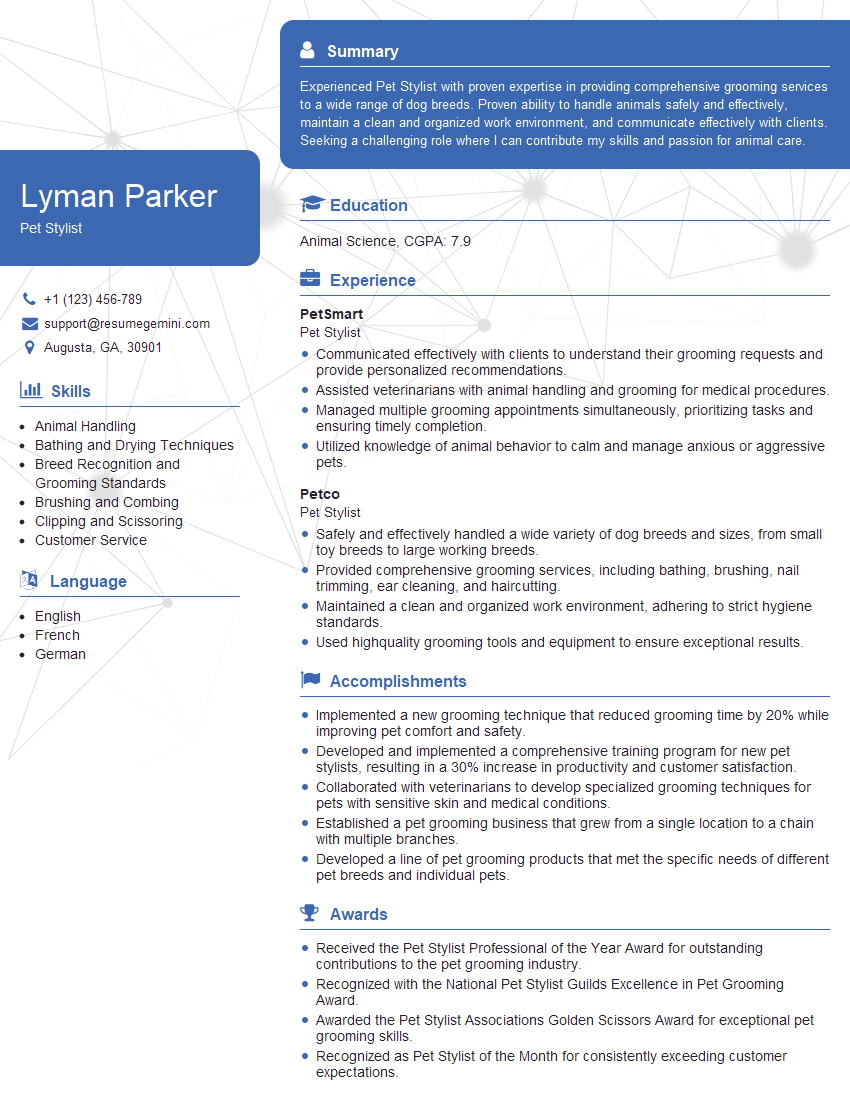
Mastering grooming and coat care is crucial for a successful and rewarding career. A strong understanding of these topics demonstrates your commitment to animal welfare and your professionalism. To enhance your job prospects, create an ATS-friendly resume that highlights your skills and experience effectively. ResumeGemini is a trusted resource for building professional resumes that stand out. They provide examples of resumes tailored to the Grooming and Coat Care industry, helping you showcase your expertise and secure your dream role.



Explore more articles
Users Rating of Our Blogs
Share Your Experience
We value your feedback! Please rate our content and share your thoughts (optional).
What Readers Say About Our Blog
Very informative content, great job.
good