Interviews are opportunities to demonstrate your expertise, and this guide is here to help you shine. Explore the essential Ground Combat interview questions that employers frequently ask, paired with strategies for crafting responses that set you apart from the competition.
Questions Asked in Ground Combat Interview
Q 1. Describe your experience with different types of small arms.
My experience with small arms encompasses a wide range of weapons, from pistols and submachine guns to rifles, shotguns, and light machine guns. I’ve received extensive training in their safe handling, maintenance, and effective employment in various combat scenarios. For example, I’ve extensively used the M4 Carbine, appreciating its versatility in close-quarters combat and at longer ranges with the appropriate optic. Similarly, my experience with the M249 light machine gun involved understanding its sustained fire capabilities and its role in providing suppressive fire for advancing elements. Beyond proficiency in their operation, I understand the ballistic characteristics of each weapon, including effective ranges, accuracy, and ammunition types. This understanding is crucial for selecting the appropriate weapon for a specific tactical situation.
My training also includes weapon system malfunctions and their troubleshooting, a critical skill for maintaining combat effectiveness in the field. I understand the importance of weapons cleaning and lubrication for ensuring reliability under harsh conditions. Finally, I’m proficient in employing different sighting systems, ranging from iron sights to advanced optics, adapting to varying environmental conditions and light levels. This holistic approach ensures I can effectively utilize any small arm within my arsenal.
Q 2. Explain the principles of maneuver warfare.
Maneuver warfare is a military doctrine that emphasizes speed, flexibility, and deception to achieve decisive results on the battlefield. It’s about using mobility and surprise to exploit enemy weaknesses and avoid their strengths. The core principles revolve around:
- Tempo and Rhythm: Varying the pace of operations to confuse the enemy and create opportunities. A rapid advance followed by a deliberate pause can disrupt enemy plans.
- Concentration of Force: Massing combat power at the decisive point of the battlefield to overwhelm the enemy. This doesn’t always mean sheer numbers, it can involve concentrated firepower or a combined arms approach.
- Exploitation of Success: Quickly capitalizing on breakthroughs to expand gains and achieve a decisive victory. Hesitation after a successful attack can allow the enemy to recover.
- Security and Reconnaissance: Ensuring the safety of one’s own forces while gathering information about the enemy. Intelligence is key to successful maneuver warfare.
- Deception: Misleading the enemy about one’s intentions, strengths, and weaknesses. This can involve feints, diversions, or other ruses.
Think of it like a chess game. You wouldn’t just move your pieces in a predictable manner; you’d use strategy and deception to outmaneuver your opponent. In a real-world example, a swift flanking maneuver during an offensive could isolate enemy units and force their surrender.
Q 3. What are the key elements of a successful ambush?
A successful ambush hinges on several key elements:
- Intelligence and Planning: Thorough reconnaissance to identify enemy movement patterns, strengths, and weaknesses is paramount. Knowing the enemy’s routine and selecting an ambush site that offers cover, concealment, and good fields of fire is critical.
- Surprise: The element of surprise is key. The enemy should not be aware of the ambush until it is too late to react effectively.
- Preparation and Rehearsal: The ambush plan must be meticulously rehearsed, ensuring everyone understands their roles and responsibilities. Clear communication is essential, particularly in the execution phase.
- Selection of Ambush Site: The site must offer cover and concealment for the ambushing force, while also providing good fields of fire to engage the enemy. Escape routes must be planned for both success and potential failure.
- Control and Discipline: Strict control and discipline are essential during the execution of the ambush. Premature engagement can compromise the entire operation.
- Withdrawal: Having a well-defined and practiced withdrawal plan is critical to avoid becoming trapped after the ambush.
For instance, a successful ambush might involve using natural terrain features to conceal the ambush force, engaging the enemy with a concentrated burst of fire, and then withdrawing quickly before reinforcements arrive.
Q 4. How would you conduct a reconnaissance patrol?
Conducting a reconnaissance patrol requires careful planning and execution. The first step is defining the mission’s objective. What specific information is needed? This dictates the patrol’s size, route, and equipment. Next, detailed route planning is vital, considering terrain, potential enemy activity, and available cover. This often involves studying maps and satellite imagery. The patrol should adhere to established patrolling techniques, such as utilizing bounding overwatch to ensure security and maintain situational awareness. This involves one element moving forward while the other provides cover. Communications are paramount, with pre-determined signals and procedures to ensure effective coordination. During the patrol, detailed observations and note-taking are critical. All relevant information is recorded, including enemy activity, terrain features, and potential obstacles.
Upon returning, a comprehensive after-action report is prepared, detailing the patrol’s findings and any lessons learned. This information is crucial for updating mission plans and making informed decisions. For example, a reconnaissance patrol might be tasked with identifying enemy positions before a larger-scale assault. The information they gather would be crucial in determining the assault plan’s success.
Q 5. Describe your experience with land navigation using map and compass.
My experience with land navigation using map and compass is extensive and includes both classroom instruction and extensive field training under various conditions, ranging from clear sunny days to dense fog and nighttime operations. I am proficient in using a military-style map and compass to determine my location, plan routes, and navigate to specific points. This includes understanding map symbols, scales, and contours. I can accurately orient a map, take bearings, and use pace count to estimate distances. I understand the concepts of resection and intersection for determining location and am skilled in using hand-held GPS devices as a supplemental navigation tool.
I’ve practiced land navigation in diverse terrains, including forests, deserts, and mountainous regions. This experience has taught me how to overcome challenges such as limited visibility, difficult terrain, and changing weather conditions. I’m skilled in using natural features for navigation and am adept at adapting my navigation techniques to different circumstances. For instance, I’ve successfully navigated through dense forests using only a compass and map, relying on my understanding of terrain features to pinpoint my location and correct for any drift in my heading.
Q 6. Explain your understanding of fire and maneuver tactics.
Fire and maneuver tactics are fundamental to ground combat operations. They involve the coordinated use of firepower and movement to achieve tactical objectives. Firepower suppresses or destroys the enemy, while maneuver exploits the resulting opportunities to gain ground or isolate the enemy. This integration is crucial for success. It’s not simply firing weapons and then moving; it’s a continuous, synchronized interaction. For instance, one element might lay down suppressive fire while another element advances to a better position, followed by a switch in roles. This cycle continues until the objective is achieved. Effective communication and coordination are essential, with clear signals and procedures to ensure both fire and maneuver elements work seamlessly together.
Considerations include the type of terrain, the enemy’s strength and disposition, and available assets. In open terrain, maneuver might be emphasized more, while in built-up areas, fire support might take precedence due to the limitations of movement. The tactical application is not static; the ratio of fire to maneuver needs to be adjusted according to the situation.
Q 7. How would you react to an enemy ambush?
My immediate reaction to an enemy ambush would be dictated by the specific circumstances. However, the overarching principles remain consistent: immediate action to break contact, assess casualties, and establish a secure defensive position. This process has a defined sequence. First, I would return fire to suppress the enemy, seeking to disrupt their attack and create an opportunity to escape or counterattack. Simultaneously, I would direct my team to take cover, consolidating our position and reporting our situation. This ensures that all are safe and that we can share critical information.
Next, I would assess the situation, considering the enemy’s numbers, location, and capabilities. This assessment informs the course of action: if the ambush is light and we have the advantage, a counterattack might be feasible; otherwise, we would prioritize breaking contact and establishing a defensive perimeter. This might involve calling for close air support or artillery, depending on the availability of these assets and the severity of the situation. This initial, decisive action sets the stage for any subsequent actions, including a coordinated withdrawal or sustained defense.
Q 8. What are the different types of terrain and how do they affect tactical operations?
Terrain significantly impacts tactical operations. Understanding its characteristics is paramount for successful mission planning and execution. We broadly categorize terrain into several types:
- Open Terrain: Characterized by a lack of significant obstacles, offering good visibility but limited cover and concealment. Examples include deserts, plains, and open fields. Tactical considerations here focus on maneuverability, fire superiority, and the risk of ambushes.
- Built-Up Areas (Urban): These present a complex maze of buildings, streets, and alleyways, dramatically reducing visibility and maneuverability. Fighting in urban areas requires specialized tactics, emphasizing close-quarters combat (CQB), precise communication, and the exploitation of urban features for cover and concealment.
- Wooded Areas: Forests and jungles offer excellent concealment and cover, but restrict movement and visibility. Navigational challenges are increased, and the risk of ambushes is high. Tactical approaches focus on controlled movement, utilizing pathfinding techniques and utilizing superior observation assets.
- Mountainous Terrain: This presents challenges due to steep slopes, limited access routes, and extreme weather conditions. Movement is slow and difficult, making resupply a logistical nightmare. Tactical planning must account for altitude, the weather, and limited visibility.
- Desert Terrain: Characterized by extreme temperatures, sandstorms, and limited water sources. Challenges involve maintaining operational tempo under adverse conditions and managing hydration. Camouflage and mobility are heavily affected.
In each case, the type of terrain dictates the most effective tactics, weapons, and equipment. A strategy effective in open terrain will likely be disastrous in an urban environment. Careful terrain analysis is a fundamental aspect of mission planning.
Q 9. Describe your experience with casualty evacuation procedures.
Casualty evacuation (CASEVAC) procedures are critical in ground combat. My experience includes establishing and executing CASEVAC plans across diverse terrains and combat scenarios. This involves:
- Immediate Action: The first step is immediate first aid to stabilize the casualty, minimizing further injury and potentially saving lives.
- Assessment: Determining the nature and severity of the injuries guides the choice of CASEVAC method—ranging from self-aid/buddy aid to evacuation by helicopter, ground vehicle, or litter carry.
- Securing the Area: Establishing security around the casualty is essential to prevent further injury and ensure safe extraction.
- Communication: Clear and concise communication with higher headquarters is vital to coordinate the CASEVAC, including the casualty’s location, condition, and required resources.
- Evacuation Route Selection: Choosing the safest and most efficient route to the nearest medical facility, considering terrain, enemy presence, and available assets.
- Execution: Coordinated movement of the casualty to the evacuation point, with emphasis on speed, safety, and the avoidance of enemy contact.
I have personally overseen and participated in multiple CASEVAC operations, ranging from simple litter carries to complex helicopter extractions in hostile environments. Successful CASEVAC relies on teamwork, clear communication, rapid decision-making, and comprehensive prior planning.
Q 10. Explain the importance of communication in ground combat.
Communication is the lifeblood of any ground combat operation. Effective communication ensures coordinated actions, minimizes fratricide, and maximizes combat effectiveness. Breakdown in communication can lead to chaos, mission failure, and casualties.
This includes:
- Situational Awareness: Real-time updates on enemy positions, friendly locations, and the overall tactical situation. This is crucial for commanders to make informed decisions.
- Coordination: Effective communication allows different units to work together seamlessly, supporting each other’s actions and maximizing their collective impact.
- Command and Control: Clear communication channels between commanders and their subordinate units ensure that orders are relayed quickly and accurately.
- Fire Support Coordination: Precise communication is essential to ensure that artillery and air support are accurately placed to avoid friendly fire and effectively neutralize enemy targets.
- CAS Support (Close Air Support): Communication protocols for directing air support units to effectively engage targets and minimize risk to friendly forces.
Modern ground combat relies on a multitude of communication systems, from radios to satellite communications, enabling information sharing across diverse terrains and situations. Redundancy is key to maintaining communication, even under duress.
Q 11. How would you plan and execute a raid?
Planning and executing a raid involves meticulous preparation and precise execution. The process generally follows these steps:
- Intelligence Gathering: Thorough reconnaissance of the target, including its layout, defenses, and potential enemy activity. Intelligence gathering includes satellite imagery, aerial reconnaissance and human intelligence.
- Planning: Developing a detailed plan outlining the objectives, timeline, routes, fire support requirements, and contingency plans. This includes task organization and assigning roles to each member of the raiding party.
- Rehearsal: Conducting dry runs of the raid plan to identify potential problems and refine procedures. The more familiar a team is with the plan, the higher likelihood of success.
- Execution: Precise execution of the plan, with emphasis on speed, stealth, and surprise. This often involves breaching, clearing, and securing the objective, followed by a swift exfiltration.
- Post-Raid Assessment: Analyzing the results of the raid, including its success or failure, identifying lessons learned, and refining future procedures.
Successful raids require exceptional teamwork, precise timing, adaptability, and resilience in the face of unexpected challenges. The element of surprise is crucial; if detected, the raid may need to be aborted or transition to a different plan.
Q 12. Describe your understanding of urban warfare tactics.
Urban warfare (UW) presents unique challenges demanding specialized tactics and training. Key elements of UW include:
- 360-Degree Security: Maintaining constant awareness of all surroundings, as threats can emerge from any direction. Teams must be vigilant and prepared for close-quarters combat.
- Clearance Procedures: Systematically clearing buildings and structures room by room, floor by floor, to eliminate enemy combatants and secure the area. This often involves breaching techniques and methodical searches.
- Use of Cover and Concealment: Exploiting urban features, such as buildings, walls, and debris, to provide protection from enemy fire. This often involves utilizing unexpected urban elements for flanking maneuvers.
- Communication: Maintaining clear and concise communication between team members, especially in confined spaces where visibility is limited.
- Improvised Explosive Devices (IEDs): Awareness of and protection against IEDs, which are often employed in urban environments.
- Civilian Interaction: Careful consideration of civilian presence and potential collateral damage.
UW tactics differ significantly from open-terrain combat, requiring specialized training and equipment. The urban environment is a complex and unpredictable battlefield, necessitating adaptability, and meticulous planning to achieve objectives while minimizing casualties.
Q 13. Explain the importance of risk assessment in ground combat operations.
Risk assessment is fundamental to ground combat operations. Failure to properly assess risks can lead to mission failure, unnecessary casualties, and strategic setbacks. A robust risk assessment process involves:
- Identifying Potential Hazards: Identifying all potential threats and challenges, including enemy activity, environmental factors, and logistical constraints. This is often supported by intelligence briefings and terrain analysis.
- Analyzing Risks: Assessing the likelihood and severity of each identified hazard. This frequently involves establishing probability and impact matrices to quantify risk levels.
- Developing Mitigation Strategies: Implementing measures to reduce or eliminate identified risks. This includes utilizing specialized equipment, employing specific tactics, or modifying the mission plan.
- Contingency Planning: Developing backup plans to address unexpected events or circumstances. This could include alternative routes, communication protocols, and rapid response plans.
- Continuous Monitoring and Adjustment: Regularly reassessing risks throughout the operation and making necessary adjustments based on new information or changing circumstances.
Risk assessment is an iterative process that ensures mission success through proactive hazard identification and mitigation. It’s a critical component of mission planning and helps prevent preventable losses.
Q 14. How would you manage your team under stressful conditions?
Managing a team under stressful conditions requires a combination of leadership skills, training, and experience. My approach focuses on:
- Maintaining Calm and Control: Setting a positive example by remaining calm and composed under pressure. This allows subordinates to remain focused even when experiencing heightened stress.
- Clear and Concise Communication: Providing clear instructions and maintaining open communication channels to ensure that everyone understands their roles and responsibilities.
- Delegation: Effectively delegating tasks to ensure that responsibilities are appropriately distributed and workload is managed.
- Empowerment: Empowering team members to make decisions within their areas of expertise, fostering initiative and a sense of ownership. Team members must be well trained and trusted.
- Providing Support: Offering encouragement and support to team members, recognizing their efforts and ensuring their well-being.
- Debriefing: Following any stressful incident, debriefing with the team to process the experience, identify areas for improvement, and reinforce lessons learned. Post-operational evaluations can support future planning and risk mitigation.
Managing stress effectively is as important as combat skills. Effective leaders recognize the limitations of their team and provide the resources, support, and appropriate training to address stress, preventing exhaustion and maintaining effective operations.
Q 15. What are your strengths and weaknesses in a combat environment?
My greatest strengths in a combat environment are adaptability and tactical awareness. I excel at quickly assessing situations, identifying threats, and formulating effective responses. I’m also a strong team player, capable of coordinating actions with others seamlessly. My experience includes leading and participating in numerous complex exercises and operations, honing my decision-making under pressure. However, like everyone, I have weaknesses. One is a tendency to push myself too hard, potentially leading to burnout or overlooking minor details under extreme stress. I actively mitigate this by practicing self-care techniques and implementing rigorous self-checks during operations. Another is that I occasionally struggle with delegating tasks, preferring to handle everything myself. I am actively working on improving my delegation skills to more effectively utilize team members’ strengths.
Career Expert Tips:
- Ace those interviews! Prepare effectively by reviewing the Top 50 Most Common Interview Questions on ResumeGemini.
- Navigate your job search with confidence! Explore a wide range of Career Tips on ResumeGemini. Learn about common challenges and recommendations to overcome them.
- Craft the perfect resume! Master the Art of Resume Writing with ResumeGemini’s guide. Showcase your unique qualifications and achievements effectively.
- Don’t miss out on holiday savings! Build your dream resume with ResumeGemini’s ATS optimized templates.
Q 16. Describe your experience with different types of explosives.
My experience with explosives encompasses a wide range, from conventional high explosives like C4 and TNT to less common types such as shaped charges and demolition materials. I’ve received extensive training on their safe handling, detonation techniques, and the effects of various blasts. I understand the principles of blast overpressure, fragmentation, and crater formation. Furthermore, I am proficient in calculating demolition charges for specific objectives, ensuring precise and controlled demolitions while minimizing collateral damage. For instance, during a training exercise, I successfully demolished a simulated structure using a carefully calculated charge of C4, minimizing damage to adjacent buildings, demonstrating accurate assessment and execution.
Q 17. Explain your understanding of combat first aid.
My understanding of combat first aid extends beyond basic first aid. It’s a comprehensive approach focusing on stabilizing casualties under fire, prioritizing life-threatening injuries using the MARCH mnemonic (Massive hemorrhage, Airway, Respiration, Circulation, Hypothermia). I’m skilled in wound management, including controlling bleeding using tourniquets and pressure dressings. I can also manage traumatic injuries such as fractures and head wounds. I’ve administered intravenous fluids and medication in field settings. Furthermore, my training encompasses casualty evacuation procedures and proper documentation of medical treatment provided. During a field exercise, I successfully stabilized a simulated casualty with a severe leg injury, controlling bleeding, splinting the fracture, and coordinating evacuation. This underscores the importance of decisive action and efficient techniques in a high-pressure environment.
Q 18. How would you respond to a chemical, biological, radiological, or nuclear attack?
Responding to a CBRN attack requires immediate and coordinated action. The first step is recognizing the type of attack. This might involve identifying unusual symptoms, atmospheric changes, or visible signs of contamination. After identifying the threat, the next step is to immediately take protective measures, such as donning appropriate personal protective equipment (PPE) according to the specific threat. Decontamination procedures would follow. This could involve using specialized solutions or methods to remove contaminants from personnel and equipment. Then, casualty care and evacuation are prioritized. The injured are treated and moved away from the affected area. Finally, reporting is critical – providing accurate information to higher authorities facilitates effective response and resource allocation. For example, during a CBRN training exercise, I successfully directed my team to shelter in place, don gas masks, and initiate a coordinated evacuation after detecting a simulated nerve agent release.
Q 19. Describe your experience with close-quarters combat.
My experience with close-quarters combat (CQC) is extensive, incorporating various techniques and weapon systems. I am proficient in hand-to-hand combat, using both striking and grappling techniques. Furthermore, I’m trained in the use of close-range firearms, including shotguns and submachine guns, understanding the tactics and limitations of using these weapons in confined spaces. I’ve participated in numerous simulations and exercises that tested my skills in navigating complex indoor environments while neutralizing threats effectively and safely. During a recent training scenario, I successfully navigated a multi-room building, clearing each room systematically, and neutralizing multiple simulated adversaries using a combination of firearms and hand-to-hand combat, emphasizing the importance of surprise and decisive action in CQC.
Q 20. Explain your understanding of military law and rules of engagement.
My understanding of military law and rules of engagement (ROE) is thorough. I am familiar with the Uniform Code of Military Justice (UCMJ) and its implications for conduct on and off duty. I understand the specific ROE governing the use of force in different scenarios, recognizing the necessity of proportionality and distinguishing between combatants and non-combatants. Understanding the legal framework is critical for maintaining discipline and accountability within a military unit, preventing unnecessary escalation, and ensuring adherence to international humanitarian law. Knowing the ROE prevents misunderstandings that could lead to unintended consequences and ensures actions are legal and ethical. For example, I can accurately assess if lethal force is justified based on the immediate threat and the overall situation.
Q 21. How would you lead a team in a complex combat situation?
Leading a team in a complex combat situation requires a blend of decisive action, clear communication, and situational awareness. I use a leadership style that balances strong direction with empowering my team. My approach involves assessing the situation, establishing clear objectives, assigning roles based on individual strengths, and maintaining constant communication. I emphasize situational awareness, encouraging my team to constantly observe and adapt their actions. Furthermore, I foster a culture of trust and mutual respect, knowing that a cohesive and confident team is critical in a high-pressure environment. For instance, during a simulated ambush scenario, I successfully guided my team through a complex extraction, emphasizing clear communication, decisive action, and utilizing cover and concealment to minimize casualties. The outcome demonstrated the effectiveness of clear planning, adaptable strategies, and a collaborative team approach.
Q 22. Describe your experience with different types of military vehicles.
My experience encompasses a wide range of military vehicles, from light tactical vehicles like the High Mobility Multipurpose Wheeled Vehicle (HMMWV), or ‘Humvee,’ used for reconnaissance and troop transport, to heavier armored personnel carriers (APCs) such as the Bradley Fighting Vehicle, offering superior protection in combat zones. I’ve also operated and maintained main battle tanks (MBTs) like the M1 Abrams, experiencing firsthand their firepower and survivability in challenging terrains. Each vehicle presents unique operational characteristics; for instance, the Humvee’s agility is crucial for rapid deployment, while the Bradley’s firepower and armor are essential for assaulting fortified positions. My experience extends to logistical vehicles like the heavy expanded mobility tactical truck (HEMTT), crucial for resupply in remote areas. Understanding the capabilities and limitations of each vehicle type is critical for effective mission planning and execution.
Q 23. Explain your understanding of logistics in a ground combat environment.
Logistics in ground combat is the lifeblood of any successful operation. It’s not just about moving supplies; it’s a complex system encompassing the planning, procurement, transportation, storage, and distribution of everything a fighting force needs – fuel, ammunition, food, water, medical supplies, and even spare parts for vehicles. Think of it like the circulatory system of a body; if the flow is disrupted, the whole system suffers. Effective logistics requires meticulous planning, real-time tracking of supplies, robust communication networks, and flexible adaptation to ever-changing battlefield conditions. For example, during a prolonged operation, accurately forecasting fuel consumption and ensuring timely replenishment is paramount. A breakdown in logistics can cripple even the best-trained fighting force, leading to shortages, reduced combat effectiveness, and increased casualties.
Q 24. How would you conduct a security patrol?
Conducting a security patrol requires a systematic approach. It begins with thorough mission planning, including defining the patrol’s objective, route, and expected duration. Team members should receive clear instructions, including communication protocols and contingency plans. The patrol itself would utilize proven tactical formations, such as a diamond or wedge, depending on the terrain and threat assessment. Constant observation is critical – looking for suspicious activity, potential ambush sites, and escape routes. Communication within the patrol is vital; using hand signals and radio communication to maintain situational awareness. After the patrol, a detailed after-action report documents findings and lessons learned. For instance, if we are patrolling a perimeter, we would systematically clear each sector, maintaining visual contact and utilizing cover and concealment. A thorough sweep would involve searching buildings and other potential hiding places. This patrol pattern ensures thorough coverage and minimizes the chance of overlooking threats.
Q 25. Describe your experience with weapons maintenance.
Weapons maintenance is not just about cleaning; it’s about ensuring the reliability and safety of the equipment. My experience covers various weapons systems, from small arms like rifles and pistols to crew-served weapons like machine guns and grenade launchers. This involves regular cleaning, lubrication, and inspection to identify and correct malfunctions. Beyond routine maintenance, I’ve conducted more complex tasks like troubleshooting malfunctions, performing repairs, and conducting preventative maintenance checks. Proper maintenance extends the lifespan of weapons systems, ensures their reliability under stress, and prevents accidents. I’ve seen firsthand the devastating consequences of neglecting weapons maintenance; a malfunctioning weapon in combat can be catastrophic. Regular and diligent maintenance is a non-negotiable aspect of ground combat readiness.
Q 26. Explain the importance of intelligence gathering in ground combat.
Intelligence gathering is absolutely vital in ground combat. It provides the critical information necessary for informed decision-making at all levels, from strategic planning to tactical execution. Accurate intelligence allows commanders to anticipate enemy actions, identify vulnerabilities, and optimize resource allocation. This intelligence can come from various sources, including human intelligence (HUMINT), signals intelligence (SIGINT), imagery intelligence (IMINT), and open-source intelligence (OSINT). For example, knowing the enemy’s strength, disposition, and likely avenues of approach is crucial for designing effective defensive positions. Without reliable intelligence, commanders are essentially operating blind, increasing the risks of casualties and mission failure. Accurate intelligence reduces uncertainty and increases the chances of success.
Q 27. How would you coordinate with other units in a combined arms operation?
Coordinating with other units in a combined arms operation is essential for success. It requires clear communication, mutual understanding of capabilities and limitations, and a shared operational objective. This often involves close collaboration with infantry, armor, artillery, and air support units. Effective coordination involves utilizing standardized communication protocols, establishing clear chains of command, and maintaining a shared situational awareness. For instance, coordinating with artillery units requires precise targeting information and a clear understanding of the engagement area to avoid fratricide. Combined arms operations leverage the strengths of different units to achieve a synergistic effect that is far greater than the sum of its parts. Failure to coordinate effectively can lead to confusion, missed opportunities, and even catastrophic consequences.
Q 28. Describe your experience with defensive operations.
Defensive operations focus on deterring or repelling enemy attacks while minimizing casualties. My experience includes establishing and maintaining defensive positions, employing camouflage and concealment, integrating obstacles to channel enemy movements, and utilizing early warning systems. This involves utilizing the terrain to our advantage, creating strongpoints, and establishing effective kill zones. A critical element is the integration of fire support and reserves to counter enemy attacks. For example, establishing interlocking fields of fire ensures overlapping coverage, minimizing gaps where enemy forces could exploit weaknesses. Successful defensive operations aren’t just about reacting to attacks; they’re about proactively shaping the battlefield to our advantage, making it extremely costly for the enemy to advance.
Key Topics to Learn for Ground Combat Interview
- Tactical Planning & Execution: Understanding mission planning, risk assessment, and adapting to changing battlefield conditions. Practical application includes scenario-based problem-solving and explaining your decision-making process in high-pressure situations.
- Weapons Systems & Equipment: Demonstrate familiarity with various ground combat weaponry, their capabilities, limitations, and maintenance. Practical application includes explaining your experience with specific systems and outlining troubleshooting procedures.
- Teamwork & Leadership: Highlight your ability to collaborate effectively within a team, provide leadership when necessary, and follow orders while contributing constructively. Practical application includes providing examples of successful teamwork and leadership in challenging environments.
- Situational Awareness & Decision-Making: Emphasize your ability to assess threats, make rapid yet informed decisions under pressure, and adapt to unforeseen circumstances. Practical application includes describing a challenging situation and the steps you took to overcome it.
- Navigation & Orientation: Demonstrate understanding of map reading, compass use, GPS technology, and terrain analysis. Practical application includes describing your experience navigating unfamiliar terrain and using various navigation tools.
- Survival & First Aid: Showcase your knowledge of survival techniques, field medicine, and emergency procedures in combat settings. Practical application involves explaining your training and experience in these areas.
- Communication & Reporting: Highlight your proficiency in clear and concise communication, both verbally and in writing, particularly in reporting mission updates and critical information. Practical application includes describing your experience in communicating under pressure.
Next Steps
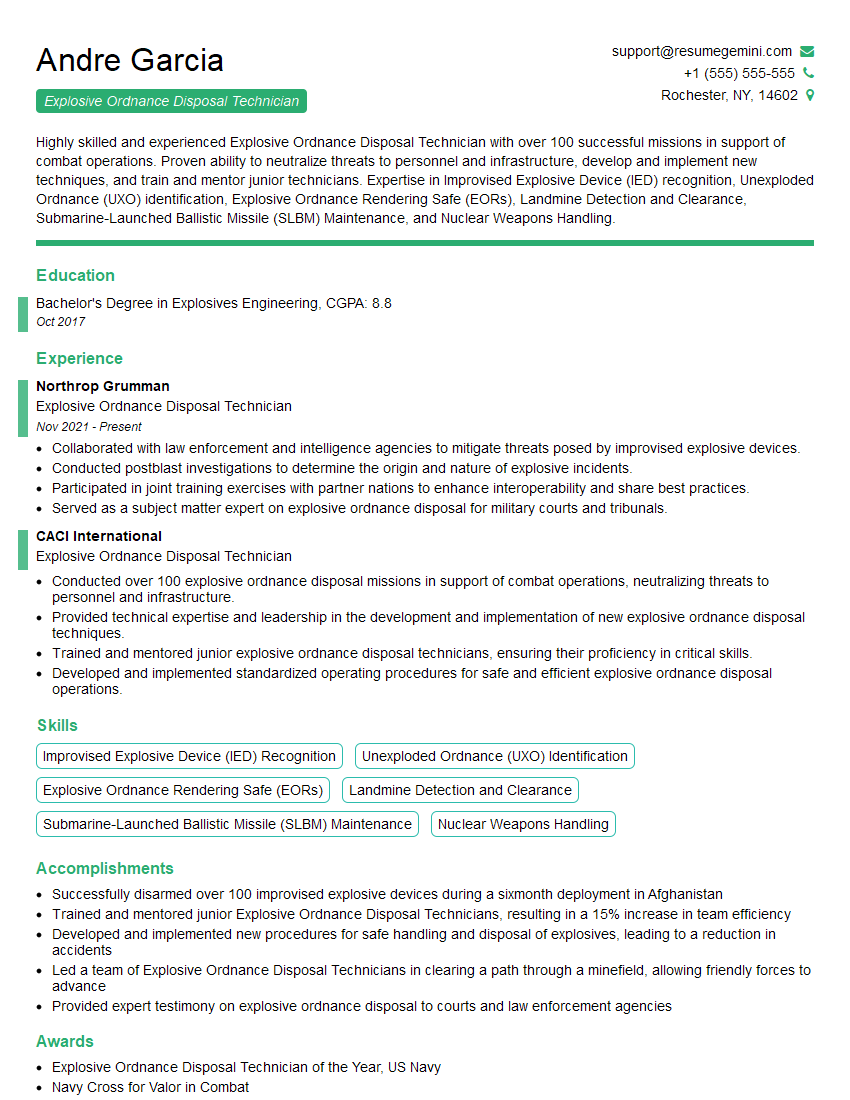
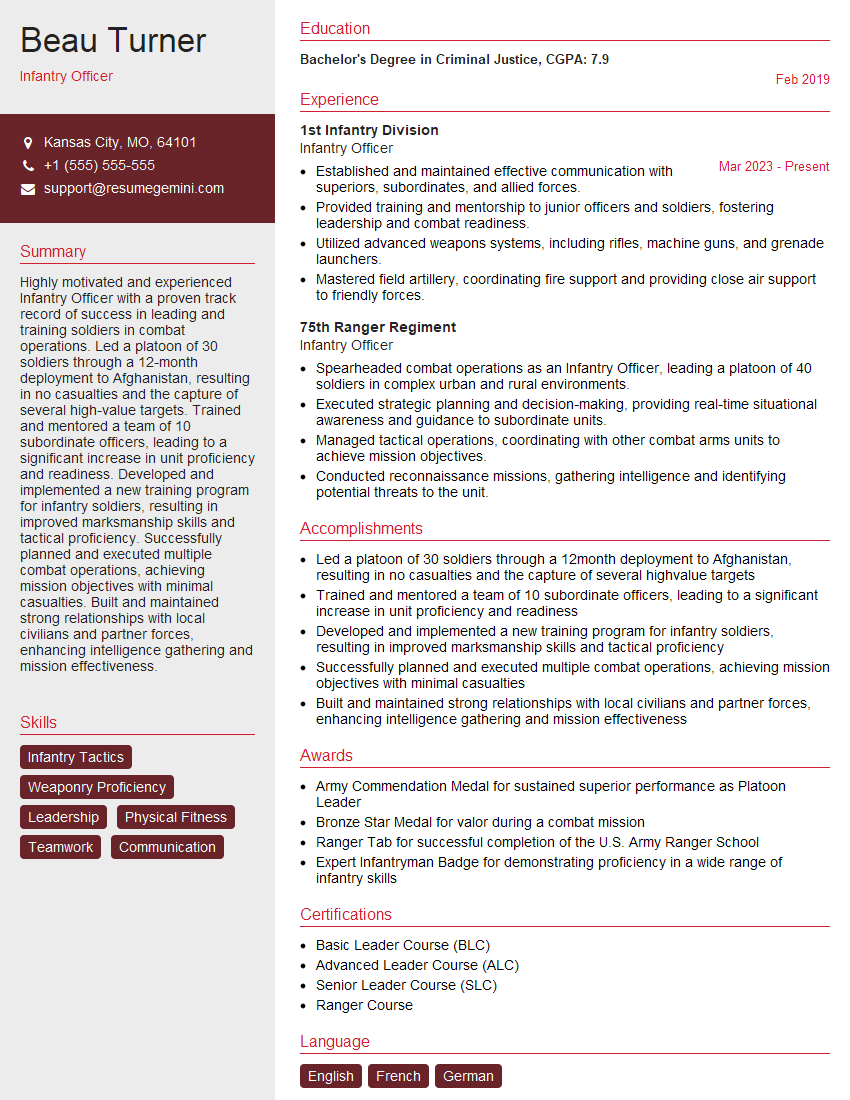
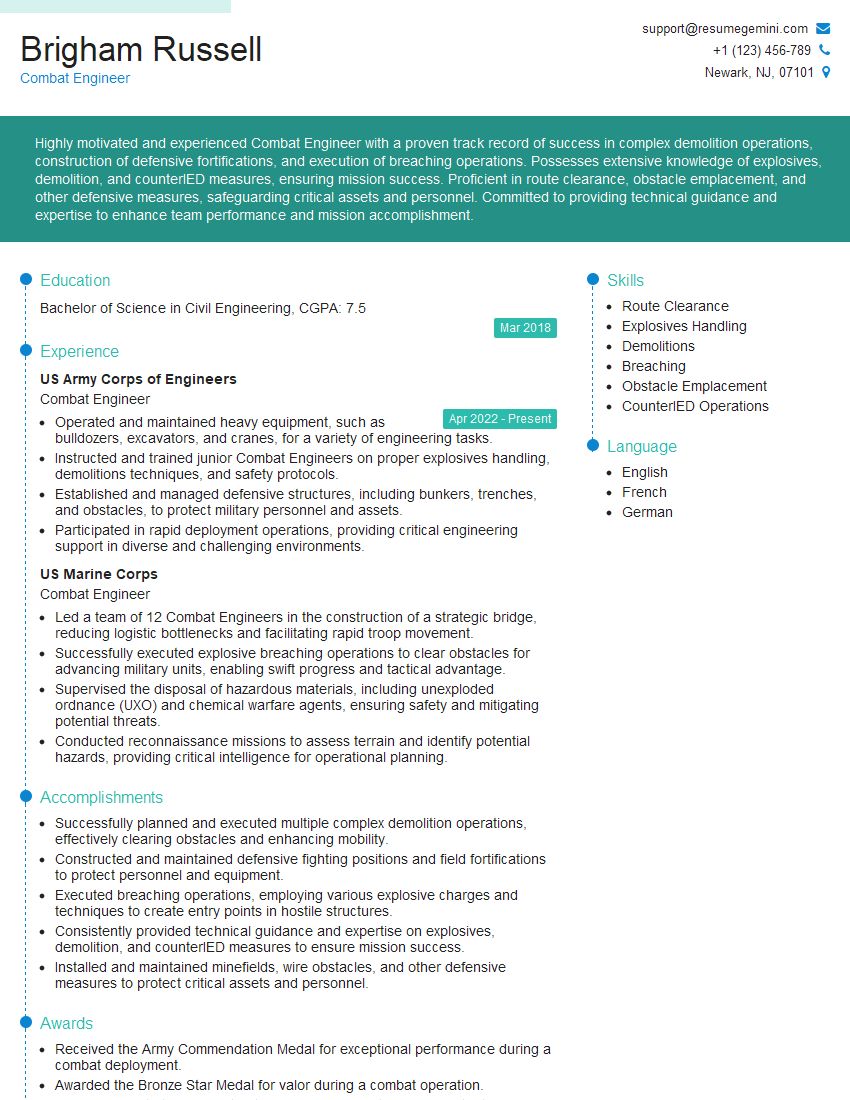
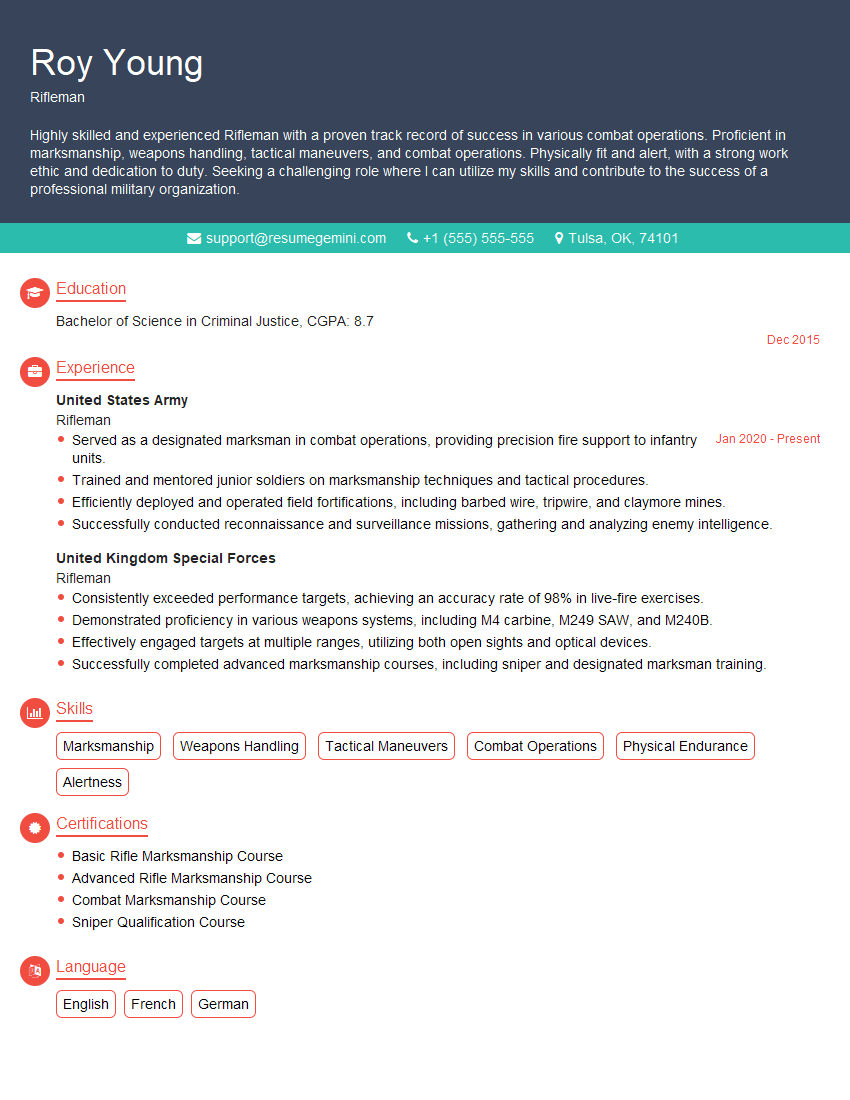
Mastering ground combat skills is crucial for career advancement, opening doors to leadership roles and specialized units. To maximize your job prospects, a well-crafted, ATS-friendly resume is essential. ResumeGemini is a trusted resource to help you build a professional resume that showcases your skills and experience effectively. Examples of resumes tailored to Ground Combat are available to guide you. Invest time in building a strong resume – it’s your first impression on potential employers.
Explore more articles
Users Rating of Our Blogs
Share Your Experience
We value your feedback! Please rate our content and share your thoughts (optional).
What Readers Say About Our Blog
Very informative content, great job.
good