The thought of an interview can be nerve-wracking, but the right preparation can make all the difference. Explore this comprehensive guide to Ground Preparation interview questions and gain the confidence you need to showcase your abilities and secure the role.
Questions Asked in Ground Preparation Interview
Q 1. Describe your experience with different soil types and their impact on ground preparation.
Soil type significantly impacts ground preparation. Different soils have varying strengths, drainage properties, and compaction characteristics. For example, clay soils are notoriously difficult to work with because they’re prone to shrinking and swelling with moisture changes, requiring specialized techniques like pre-wetting or adding amendments to improve workability. Sandy soils, conversely, drain quickly but may lack stability, requiring careful compaction. Silty soils offer a middle ground but can still be challenging depending on their composition. My experience includes working with all three, and I’ve tailored my approach based on the specific soil profile. On one project, we encountered expansive clay, so we implemented a controlled moisture content strategy during excavation and compaction to prevent future settlement issues. On another, the sandy soil required significant additional compaction to meet project specifications for load-bearing capacity. Understanding the soil’s plasticity index and its bearing capacity are vital in determining appropriate preparation strategies.
Q 2. Explain the process of site clearing and grubbing.
Site clearing and grubbing is the initial phase of ground preparation, focused on removing all unwanted vegetation, debris, and obstructions from the project site. It involves a systematic process: Firstly, we survey the area to identify and mark any underground utilities or environmentally sensitive areas. Then, we begin clearing vegetation using methods appropriate to the size and type of vegetation: This might include hand clearing for smaller areas, or mechanical clearing with excavators and bulldozers for larger sites. Grubbing follows, removing tree stumps, roots, and other buried debris using specialized equipment like stump grinders or excavators with grapple attachments. The goal is to leave a clear, level surface ready for further ground preparation. Proper disposal of debris is crucial, following all environmental regulations.
Q 3. How do you ensure proper soil compaction?
Proper soil compaction is essential for ensuring the stability and load-bearing capacity of the ground. We achieve this through a combination of methods and careful monitoring. The process typically involves several passes with heavy machinery like compactors – vibratory or static rollers, depending on the soil type and project requirements. The compaction level is monitored using a nuclear density gauge or sand cone method, ensuring we achieve the specified dry density and optimum moisture content. This is often done in layers, compacting each layer before adding the next to prevent voids and uneven settlement. Over-compaction can be as problematic as under-compaction, potentially leading to cracking or reduced flexibility of the soil, so precision is crucial. The specific equipment and number of passes are adjusted based on factors like soil type, required density, and the project’s load requirements. For instance, on a large highway project, we’d use larger, heavier rollers; for a smaller residential project, smaller, more maneuverable equipment would suffice.
Q 4. What are the key considerations for grading a site?
Grading is the process of shaping the land to a specific design, ensuring proper drainage, stability, and suitability for construction. Key considerations include the project’s design specifications, which detail the required slopes, elevations, and drainage patterns. We use surveying equipment to establish benchmarks and check grade conformance throughout the process. Understanding drainage is critical; proper grading directs surface water away from structures, preventing erosion and water damage. Local regulations and environmental concerns also influence the grading process, ensuring compliance with permits and minimizing environmental impact. The design plans frequently incorporate swales or ditches for water management. For example, on a hillside project, we carefully calculated slopes to avoid erosion and ensure the stability of the foundations. Incorrect grading can lead to significant problems such as flooding or structural damage down the line, so accuracy is paramount.
Q 5. What safety measures are crucial during ground preparation?
Safety is paramount during ground preparation. We begin with a thorough site safety plan, including risk assessments specific to the project and potential hazards. This involves identifying and mitigating risks associated with heavy machinery, excavation, working at heights, and potential exposure to hazardous materials. Daily toolbox talks are essential, reminding the team of safe work practices and addressing specific concerns. Personal protective equipment (PPE) such as hard hats, safety glasses, high-visibility clothing, and steel-toed boots are mandatory. Regular machine inspections and maintenance are crucial to prevent equipment failures. We also implement traffic control measures to protect workers and the public, especially on sites near roadways. Emergency procedures, including communication protocols and first-aid access, are clearly defined and practiced regularly. Consistent safety monitoring throughout the project is absolutely vital.
Q 6. Describe your experience with different excavation techniques.
My experience encompasses various excavation techniques, chosen based on factors like soil conditions, depth, and project requirements. For shallow excavations, hand digging or small excavators may suffice. For deeper or larger projects, larger excavators with different attachments (e.g., buckets, rippers) are used. Trenching is often done with specialized trenching machines to ensure safe and efficient excavation of narrow trenches for utilities. Rock excavation requires specialized equipment like rock breakers or hydraulic hammers. In challenging ground conditions like bedrock, blasting may be necessary (under strict regulatory compliance). I’ve used different techniques on many projects, adapting to the specific circumstances. For instance, on a project involving sensitive utilities, we employed hand excavation to avoid damage to underground pipes and cables. On another project, we used a combination of mechanical excavation and blasting to remove a large quantity of rock, ensuring worker safety and efficient progress.
Q 7. How do you manage utilities during ground preparation?
Managing utilities during ground preparation is critical to prevent damage and ensure safety. We begin with a thorough utility locate and mark-out, contacting relevant utility companies to identify the location of underground services (water, gas, electricity, telecommunications etc.). This information is used to establish a safe working distance around these utilities. Hand excavation is often preferred near utilities to minimize the risk of damage. If mechanical excavation is necessary, we employ special equipment and techniques to work safely close to utilities. Ongoing monitoring and regular communication with utility companies are also essential. For example, during a recent road widening project, we used non-destructive methods like ground-penetrating radar to precisely locate utilities buried underground and then employed hand excavation techniques for the precise trenching required around these utilities, preventing any potential harm or damage.
Q 8. Explain your understanding of site drainage and erosion control.
Site drainage and erosion control are crucial aspects of ground preparation, ensuring the stability and longevity of any construction project. Effective drainage prevents water accumulation, which can lead to soil erosion, foundation instability, and project delays. Erosion control methods protect the soil from being washed away by rainfall or runoff, safeguarding the environment and the project’s budget.
Drainage involves strategically directing water away from the construction site using techniques like grading (sloping the land), installing drainage ditches or swales, and utilizing underground drainage systems (pipes, perforated drains). The choice of method depends on the site’s topography, soil type, and the amount of rainfall. For instance, a site with heavy clay soil might require a more extensive system of underground drains compared to a site with sandy soil which drains more naturally.
Erosion control employs various methods to stabilize the soil, such as seeding, mulching, using erosion control blankets (geotextiles), and building retaining walls. For example, hydroseeding (spraying a mix of seed, mulch, and fertilizer) is a quick way to establish vegetation on a slope, preventing erosion while also helping establish a stable landscape.
Proper site drainage and erosion control are not only environmentally responsible but also economically beneficial, preventing costly repairs and project delays down the line. A well-planned strategy minimizes the risk of damage to the environment and reduces the need for expensive remediation efforts.
Q 9. What is your experience with surveying and leveling?
Surveying and leveling are fundamental to ground preparation. Surveying establishes the site’s boundaries, topography, and existing features (utilities, etc.). Leveling ensures a consistent elevation across the site, which is crucial for creating stable foundations and ensuring proper drainage. My experience encompasses the use of both traditional surveying methods (using levels and theodolites) and modern techniques (GPS and total stations).
I’ve extensively used total stations to perform precise topographic surveys, creating detailed digital terrain models (DTMs). This allows for accurate calculation of cut and fill quantities – essential for efficient earthmoving. I’ve also used GPS for larger sites, leveraging its ability to cover vast areas rapidly. For smaller, more intricate sections, precise leveling with a self-leveling instrument ensures the foundation is perfectly level and ready for construction.
In one project, accurate leveling was critical for constructing a large retaining wall. Slight variations in the base elevation could have compromised the wall’s stability. Through meticulous leveling and careful planning, we ensured a perfectly level base, leading to a stable and successful project.
Q 10. How do you handle unexpected subsurface conditions?
Unexpected subsurface conditions, such as bedrock, unstable soils, or buried utilities, are common challenges in ground preparation. My approach involves a multi-step process to mitigate risk and prevent delays.
- Thorough Site Investigation: Before commencing any work, I advocate for comprehensive site investigations, including geotechnical surveys and utility locates. This helps identify potential subsurface issues early on.
- Contingency Planning: We develop contingency plans to address potential challenges. This might include having alternative excavation methods ready or incorporating modifications to the original design.
- Communication and Collaboration: Open communication with the client, engineers, and subcontractors is vital. We discuss the implications of unexpected findings and work collaboratively to find the most efficient and cost-effective solutions.
- Adaptability: I’m adept at adapting to changing circumstances. If we encounter unexpected conditions, we adjust our approach accordingly, potentially utilizing specialized equipment or techniques.
For example, during a recent project, we encountered unexpected bedrock closer to the surface than indicated in the initial surveys. We quickly adapted by utilizing specialized rock-breaking equipment and modifying the foundation design to accommodate the bedrock, minimizing project delays.
Q 11. Describe your experience with various earthmoving equipment.
My experience with earthmoving equipment includes a wide range of machines, from excavators and bulldozers to loaders and graders. I’m proficient in operating and managing these machines, understanding their capabilities and limitations.
- Excavators: Used for digging trenches, foundations, and other excavations. I’m experienced with different sizes and types, from small mini-excavators for tight spaces to larger machines for large-scale excavations.
- Bulldozers: Excellent for moving large volumes of earth, grading, and clearing land. I understand different blade types and their applications.
- Loaders: Essential for loading and transporting materials. I’m familiar with various loader types, such as wheel loaders and skid steers.
- Graders: Used for creating smooth, level surfaces for roads, parking lots, and other areas.
Understanding the capabilities and limitations of each piece of equipment is crucial for optimizing efficiency and safety. For example, selecting the right excavator bucket size for the specific excavation task can significantly impact productivity and reduce unnecessary fuel consumption.
Q 12. How do you ensure the quality of your work during ground preparation?
Ensuring quality during ground preparation requires a combination of meticulous planning, rigorous execution, and consistent monitoring. My approach involves:
- Adherence to Specifications: Strict adherence to the project specifications and engineering drawings is paramount. This ensures that the ground preparation work meets the required standards.
- Regular Inspections: Conducting regular inspections throughout the process, checking for compliance with specifications, and identifying potential issues early.
- Quality Control Measures: Implementing quality control measures such as compaction testing to verify the density and stability of the prepared ground.
- Documentation: Maintaining detailed records, including daily reports, test results, and photographs, to track progress and ensure accountability.
- Experienced Team: Working with a skilled and experienced team is critical for maintaining high-quality standards.
For instance, ensuring proper compaction is crucial for preventing settlement problems later on. We utilize compaction equipment and perform regular density tests to verify that the compacted soil meets the specified density requirements before proceeding with further construction.
Q 13. Explain your experience with site preparation for different types of construction.
My experience spans various construction types, including residential, commercial, and infrastructure projects. Each project demands a tailored approach to ground preparation.
- Residential: Focuses on site clearing, excavation for foundations, and grading for landscaping. Efficiency and cost-effectiveness are key concerns.
- Commercial: Often involves larger-scale earthmoving, requiring careful planning and coordination with various subcontractors. Precision and adherence to stringent timelines are paramount.
- Infrastructure: Can involve complex earthworks, including road construction, utility installations, and site preparation for large-scale buildings. Detailed engineering and surveying are critical for success.
For example, preparing a site for a large commercial building requires meticulous coordination with structural engineers to ensure the foundation is correctly prepared to support the building’s weight and withstand the environmental conditions. This includes excavation, compaction, and potentially ground improvement techniques.
Q 14. How do you manage a team during a ground preparation project?
Managing a team during ground preparation requires strong leadership, clear communication, and a focus on safety. My approach involves:
- Clear Roles and Responsibilities: Defining roles and responsibilities clearly to avoid confusion and ensure accountability.
- Effective Communication: Maintaining open communication channels, providing regular updates, and addressing concerns promptly. Daily briefings help keep everyone informed and aligned.
- Safety First: Prioritizing safety by providing thorough safety training, enforcing safety regulations, and conducting regular safety inspections.
- Motivation and Teamwork: Fostering a positive and collaborative work environment, encouraging teamwork, and recognizing accomplishments.
- Problem-Solving: Proactively identifying and resolving problems, utilizing a structured approach to find solutions and make decisions.
A collaborative approach, where team members feel valued and involved in the decision-making process, enhances productivity and creates a safer work environment, ultimately leading to successful project delivery.
Q 15. What are the environmental considerations related to ground preparation?
Environmental considerations in ground preparation are paramount. They involve minimizing disruption to the existing ecosystem and complying with relevant environmental regulations. This includes protecting water resources, managing soil erosion, and handling potentially contaminated soil.
- Water Management: Preventing runoff and erosion by implementing measures like silt fences, sediment basins, and proper drainage systems is crucial. For example, on a hillside construction site, we’d use contour plowing to minimize water flow and erosion.
- Soil Erosion Control: We use techniques like hydroseeding (spraying seeds mixed with mulch and fertilizer) or using erosion control blankets to stabilize the soil and prevent erosion during and after construction. I’ve personally seen projects where improper erosion control led to significant siltation of nearby streams.
- Contaminated Soil: Identifying and managing contaminated soil is vital. This might involve soil testing, excavation and removal of contaminated material to a designated hazardous waste facility, and remediation strategies. In one project, we discovered asbestos-containing materials and had to halt work until a certified contractor could safely remove it.
- Protected Species and Habitats: Before commencing work, we always conduct thorough site assessments to identify and protect any endangered species or their habitats. On a recent project near a wetland, we adjusted our plans to avoid disturbing a protected bird species’ nesting area.
Career Expert Tips:
- Ace those interviews! Prepare effectively by reviewing the Top 50 Most Common Interview Questions on ResumeGemini.
- Navigate your job search with confidence! Explore a wide range of Career Tips on ResumeGemini. Learn about common challenges and recommendations to overcome them.
- Craft the perfect resume! Master the Art of Resume Writing with ResumeGemini’s guide. Showcase your unique qualifications and achievements effectively.
- Don’t miss out on holiday savings! Build your dream resume with ResumeGemini’s ATS optimized templates.
Q 16. How do you interpret and follow site plans and specifications?
Interpreting site plans and specifications is fundamental. I begin by meticulously reviewing the drawings, noting key details like existing ground levels, proposed grades, utilities, and any environmental constraints. I cross-reference the plans with the specifications document, which provides detailed information about materials, tolerances, and construction methods.
For example, a site plan might show a required excavation depth of 6 feet. The specifications would detail the type of soil expected, the allowable deviation from the specified depth, and the disposal method for the excavated material. I then use this information to develop a detailed ground preparation plan, ensuring all requirements are met. I always clarify any ambiguities with the engineers or project managers before starting the work to prevent costly mistakes later.
Q 17. Explain your experience with different types of ground stabilization techniques.
My experience encompasses a range of ground stabilization techniques, chosen based on soil conditions and project requirements. These include:
- Compaction: Using rollers and compactors to increase soil density and bearing capacity. This is frequently used for road construction and building foundations. The choice of compactor (e.g., smooth drum, vibratory, sheep’s foot) depends on the soil type and desired density.
- Soil Stabilization: Improving soil properties using additives like lime, cement, or fly ash. This can increase strength, reduce permeability, and improve workability. For instance, we used lime stabilization on a project with highly expansive clay soils, significantly improving its load-bearing capacity.
- Geosynthetics: Using geotextiles, geogrids, or geomembranes to improve soil stability, drainage, or separation. Geotextiles are often used to separate different soil layers, preventing mixing and improving drainage. Geogrids enhance the strength of weak soils and are frequently used in retaining walls.
- Deep Soil Mixing: Incorporating binding agents into the soil at depth, creating columns of stabilized soil. This is effective for stabilizing soft or weak soils, preparing the ground for heavier structures. This is more complex and is usually used in projects with challenging soil conditions.
Q 18. Describe your experience with the use of GPS and other surveying technologies.
GPS and surveying technologies are indispensable tools for accurate ground preparation. I’m proficient in using GPS receivers for precise site surveying, setting out control points, and monitoring excavation progress. This ensures that the excavation is to the correct depth and alignment, which is crucial for the overall success of the project.
We also use total stations and laser levels for precise measurements and setting out. For example, on a large-scale project, we used a robotic total station to automate the measurement process, significantly increasing speed and accuracy. We then utilize this data to create detailed as-built drawings, ensuring a complete and accurate record of the work completed. This information is then used to update the project’s BIM model.
Q 19. How do you ensure compliance with safety regulations and permits?
Safety and regulatory compliance are non-negotiable. Before starting any ground preparation project, I ensure all necessary permits are obtained. This includes contacting relevant authorities for excavation permits, environmental permits, and any other permits required based on the specific project and its location.
On-site, we strictly adhere to safety regulations, implementing measures such as:
- Regular toolbox talks to address safety concerns and best practices.
- Providing appropriate personal protective equipment (PPE) such as hard hats, safety boots, and high-visibility clothing.
- Implementing traffic management plans to control vehicle and pedestrian movement on the site.
- Using appropriate safety signage and barriers to protect workers and the public.
- Regular site inspections to ensure adherence to safety standards and to identify potential hazards.
Q 20. How do you estimate materials and labor costs for ground preparation?
Accurate cost estimation is vital. I begin by carefully reviewing the site plans and specifications to determine the quantities of materials required, such as topsoil, aggregates, and binding agents.
I then consider the type and amount of equipment needed, factoring in hourly rates or rental costs. Labor costs are estimated based on the anticipated time required for each task, considering crew size and labor rates. I also include contingency factors to account for unforeseen circumstances, such as unexpected soil conditions or weather delays. I regularly consult with equipment suppliers and subcontractors to obtain the most up-to-date pricing information, ensuring accuracy in my estimates.
For example, to estimate the cost of excavating a specific volume of soil, I would calculate the volume, multiply it by the appropriate excavation rate (considering soil type and equipment), and add the cost of disposal of the excavated material.
Q 21. How do you manage the timeline and budget for a ground preparation project?
Managing timelines and budgets effectively requires careful planning and monitoring. I start by developing a detailed project schedule, breaking down the work into smaller, manageable tasks. This schedule outlines the sequence of activities, their durations, and dependencies.
This schedule is then used to create a cost breakdown structure, allocating budget amounts to each task. I regularly monitor progress against the schedule and budget, using project management software to track milestones and identify potential delays or cost overruns. If issues arise, I develop contingency plans and work with the project team to find solutions. Regular communication with clients and stakeholders is key to keeping everyone informed and ensuring everyone is on the same page. For example, using Gantt charts helps visualize the schedule and identify potential conflicts or critical paths needing special attention.
Q 22. What are your problem-solving skills related to ground preparation challenges?
My problem-solving approach to ground preparation challenges is systematic and data-driven. I begin by thoroughly assessing the site conditions, including soil type, topography, and potential subsurface issues. This often involves reviewing geological surveys, conducting site investigations (e.g., test pits, boreholes), and analyzing existing site documentation. Then, I identify the specific challenges – is it poor soil bearing capacity? High water table? Unexpected utilities? Once the problems are clearly defined, I develop several potential solutions, weighing their feasibility, cost-effectiveness, and environmental impact. This often involves utilizing specialized software for ground modeling and stability analysis. Finally, I implement the chosen solution, monitor its effectiveness, and make adjustments as needed. For example, if I encounter expansive clay, I might recommend deep soil stabilization techniques like lime columns, rather than simply relying on surface compaction, which could fail in the long run.
I also prioritize proactive problem-solving. By anticipating potential issues early in the project lifecycle, I can mitigate risks and prevent costly delays. This might involve recommending detailed site investigations before construction begins or suggesting alternative designs to accommodate challenging ground conditions.
Q 23. Explain your experience with working in challenging weather conditions.
Working in challenging weather conditions is an integral part of ground preparation. I’ve managed projects during extreme heat, heavy rainfall, and even periods of frost. My approach focuses on safety first, always prioritizing worker wellbeing and adherence to relevant safety regulations. We use appropriate protective equipment and adjust work schedules to avoid peak conditions. For example, during extreme heat, we’ll shorten workdays and increase hydration breaks. In heavy rain, we might focus on indoor tasks or employ dewatering techniques to keep the site operational. If frost is a concern, we’ll delay earthworks until the ground thaws to avoid damage to equipment and prevent instability. Detailed weather forecasting and contingency planning are crucial in such scenarios. We often have backup plans in place for equipment failure or material delays due to weather.
Furthermore, we document weather-related delays and impacts meticulously. This data is essential for accurate cost estimations and project scheduling in future similar projects. This meticulous record-keeping contributes to improved project management in challenging climates.
Q 24. How do you ensure effective communication with other project stakeholders?
Effective communication is paramount in ground preparation. I utilize a multi-faceted approach to ensure all stakeholders – engineers, contractors, clients, and regulatory bodies – are kept informed. This includes regular meetings, both formal and informal, where progress is discussed, challenges are addressed, and decisions are made collaboratively. I leverage digital tools such as project management software and cloud-based document sharing platforms to maintain transparency and ensure everyone has access to the latest information. Clear, concise reporting, both written and verbal, is vital. This includes daily progress reports, weekly summary reports, and regular updates on any significant changes or challenges. I also prioritize active listening and feedback mechanisms to ensure open communication channels and to address any concerns promptly.
For example, I use visual aids like site maps and progress photos to facilitate understanding, especially when communicating with clients who may not have a technical background. I strive to tailor my communication style to the audience, making complex information understandable and readily accessible.
Q 25. Describe your experience with quality control inspections for ground preparation.
Quality control inspections are a critical aspect of my work. I oversee all aspects of the ground preparation process, ensuring compliance with project specifications and relevant standards. This involves regular inspections at every stage, from initial site clearance and excavation to compaction and backfilling. We use both visual inspections and instrumental testing (e.g., density tests, plate bearing tests) to verify the quality of the work. These inspections are documented meticulously, with any deviations from specifications clearly noted and addressed. Any non-conformances are documented using a standardized reporting system, ensuring prompt corrective action. The data collected from these inspections feeds into a continuous improvement process, allowing us to identify areas for improvement in our processes and techniques.
For example, if compaction levels fall below the specified standard, we’ll investigate the cause and implement corrective measures, such as adjusting equipment settings or employing additional compaction passes. Maintaining accurate records of these inspections is critical for demonstrating compliance with regulatory requirements and avoiding potential disputes later in the project.
Q 26. How do you handle conflict resolution on a ground preparation site?
Conflict resolution on a ground preparation site requires a proactive and collaborative approach. My strategy begins with fostering a positive and respectful work environment. Open communication, transparency, and mutual respect are fundamental to preventing conflicts from arising in the first place. However, if conflicts do occur, I address them promptly and fairly. I utilize active listening skills to understand all perspectives, before facilitating a discussion to find a mutually agreeable solution. If a compromise cannot be reached through direct discussion, I might involve mediation from a neutral third party. In all cases, I strive to maintain professionalism and preserve working relationships.
For example, if a disagreement arises between subcontractors regarding responsibility for a particular task, I would facilitate a meeting where all parties involved can present their viewpoints and we can review the contract documents together to determine the correct course of action. The goal is always to find a solution that aligns with the overall project objectives and ensures the highest quality of work.
Q 27. What are your strengths and weaknesses related to ground preparation work?
My strengths lie in my thorough understanding of soil mechanics, my ability to assess and mitigate risks effectively, and my experience in managing complex projects in challenging environments. I am adept at problem-solving, detail-oriented in my approach, and possess excellent communication and teamwork skills. I also have a strong commitment to safety and quality.
One area for development is my delegation skills. While I can effectively manage multiple tasks, I sometimes find myself taking on too much responsibility. I’m actively working on delegating more efficiently to empower my team members and improve overall project workflow. I am confident that with continued experience and training, I can further strengthen this aspect of my professional capabilities.
Q 28. Describe a situation where you had to overcome a significant challenge during ground preparation.
On a recent project, we encountered unexpected bedrock during excavation. This was not indicated in the initial site investigation reports. The bedrock was significantly harder than anticipated, causing delays and increasing the cost of excavation. To overcome this challenge, I first convened a meeting with the engineering team, the contractor, and the client to assess the situation and discuss alternative solutions. We evaluated several options, including blasting, specialized drilling techniques, and modifying the foundation design. Considering the cost and time implications of each option, we opted for a modified foundation design that minimized the need for extensive excavation in the bedrock area. This required close collaboration with the structural engineer to ensure the integrity of the modified design. The new approach successfully mitigated the problem, minimizing delays and avoiding costly rework.
This experience highlighted the importance of comprehensive site investigations and the need for flexibility and adaptability in the face of unforeseen challenges. It also underscored the value of collaborative problem-solving and open communication with all project stakeholders.
Key Topics to Learn for Ground Preparation Interview
- Soil Mechanics: Understanding soil composition, classification, and behavior under various conditions. This includes concepts like shear strength, compaction, and permeability.
- Site Investigation Techniques: Familiarize yourself with methods like drilling, sampling, and in-situ testing. Be prepared to discuss the practical applications and limitations of each technique.
- Earthwork Calculations: Mastering volume calculations, cut and fill estimations, and earthmoving equipment productivity is crucial. Practice applying these calculations to real-world scenarios.
- Ground Improvement Techniques: Explore various methods like compaction, drainage, stabilization, and reinforcement. Understand the principles behind each technique and their suitability for different soil conditions.
- Health and Safety Regulations: Demonstrate a strong understanding of relevant health and safety regulations and best practices related to ground preparation activities. This includes personal protective equipment (PPE) and risk assessment procedures.
- Sustainable Ground Preparation Practices: Be prepared to discuss environmentally friendly approaches to ground preparation, minimizing waste and conserving resources.
- Problem-solving and Decision-Making: Develop your ability to analyze complex situations, identify potential problems, and propose effective solutions. Prepare examples from your experience demonstrating these skills.
Next Steps
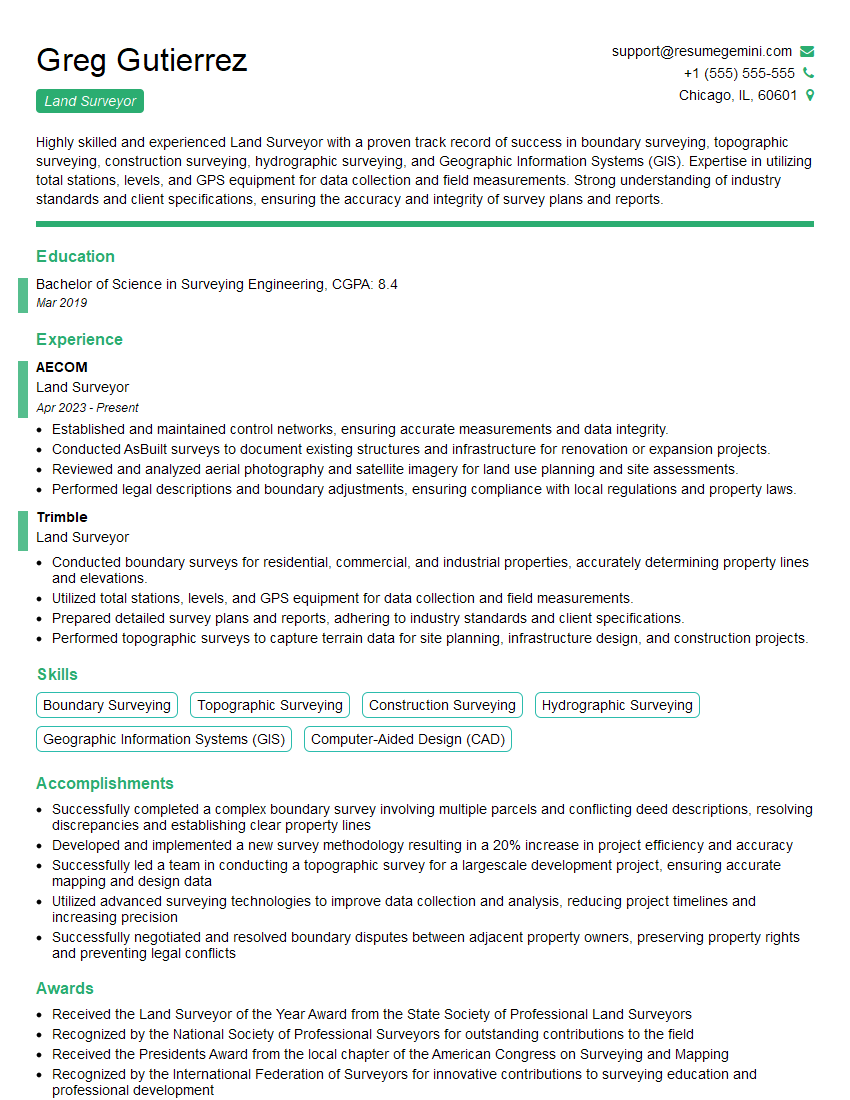
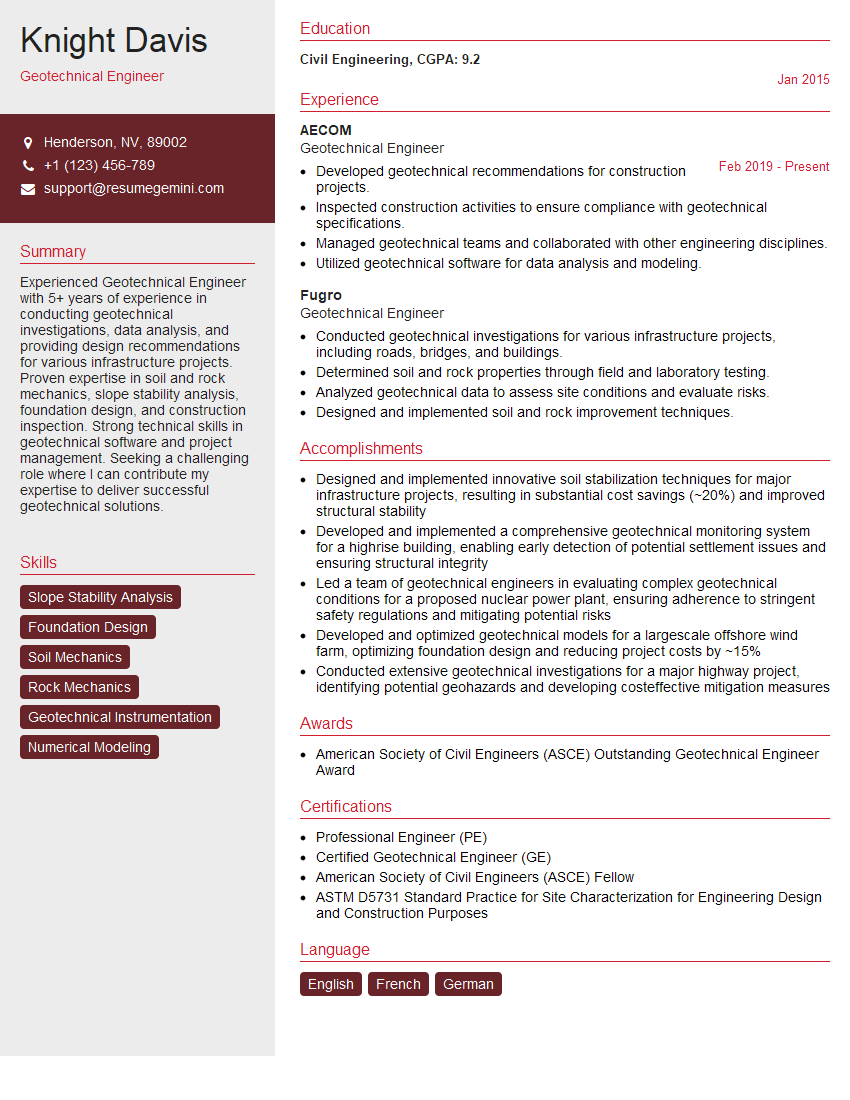
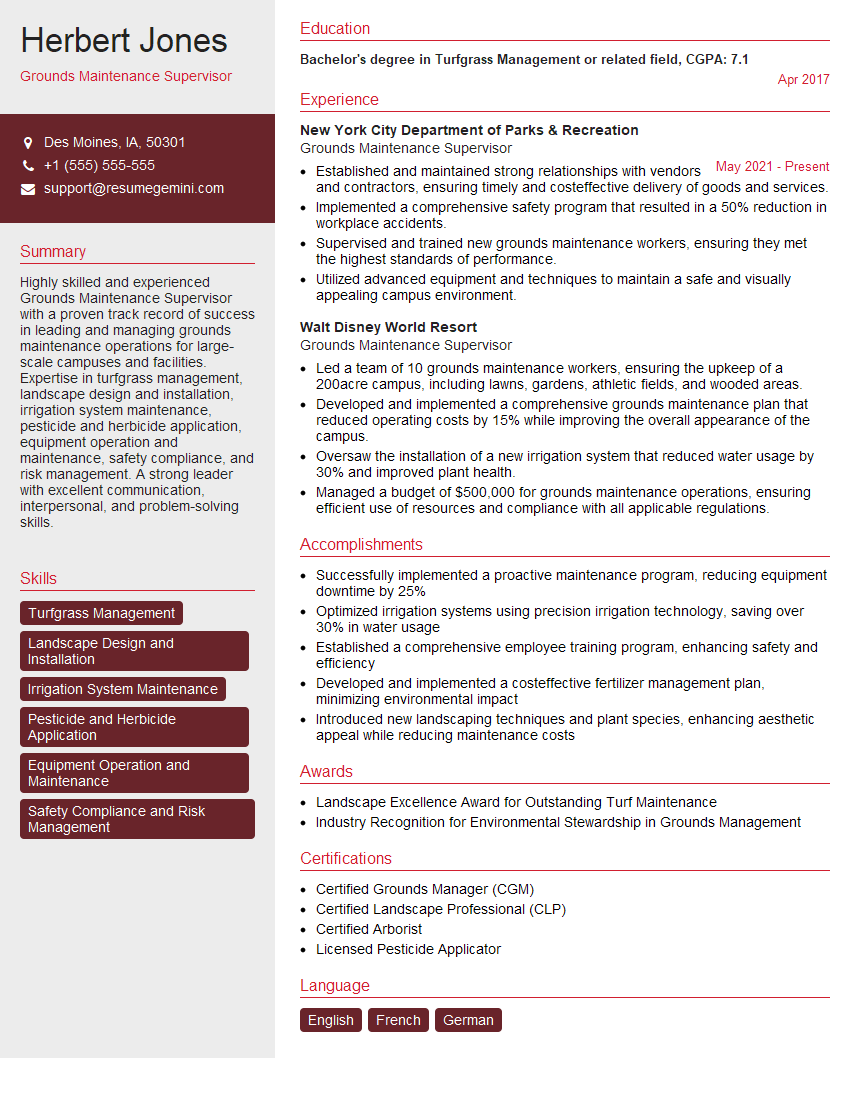
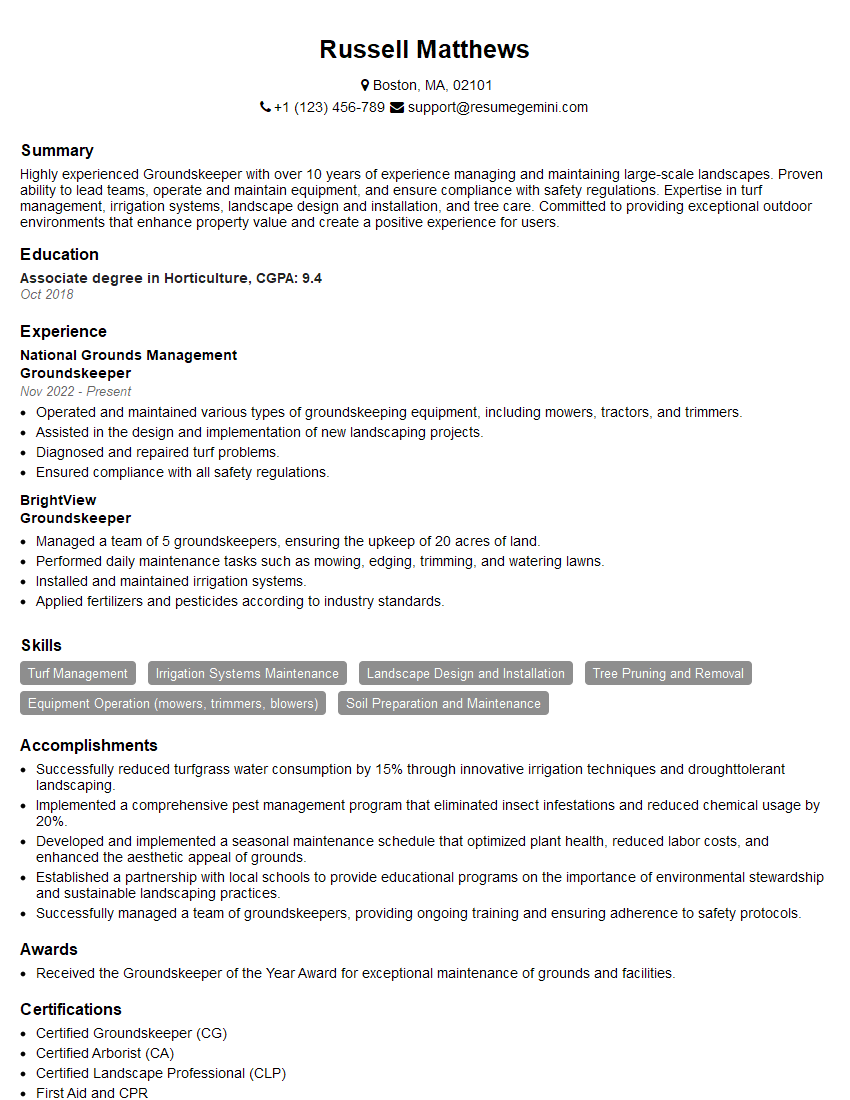
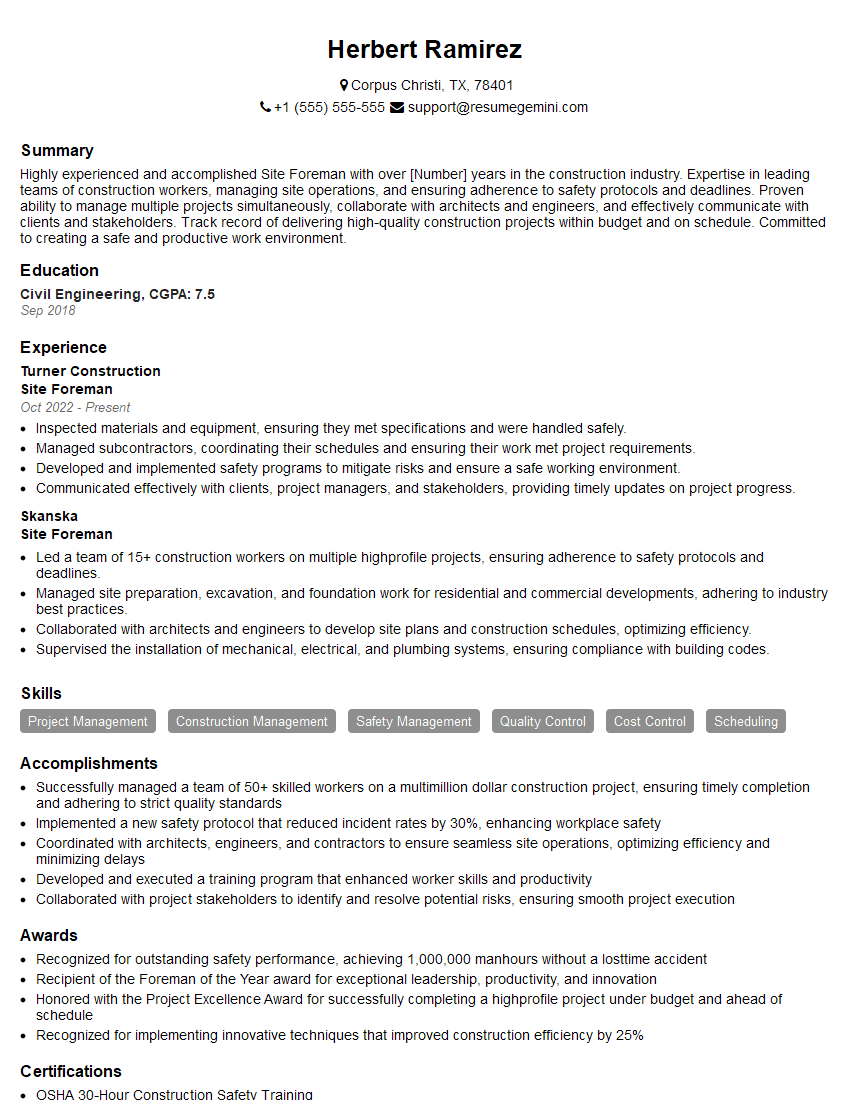
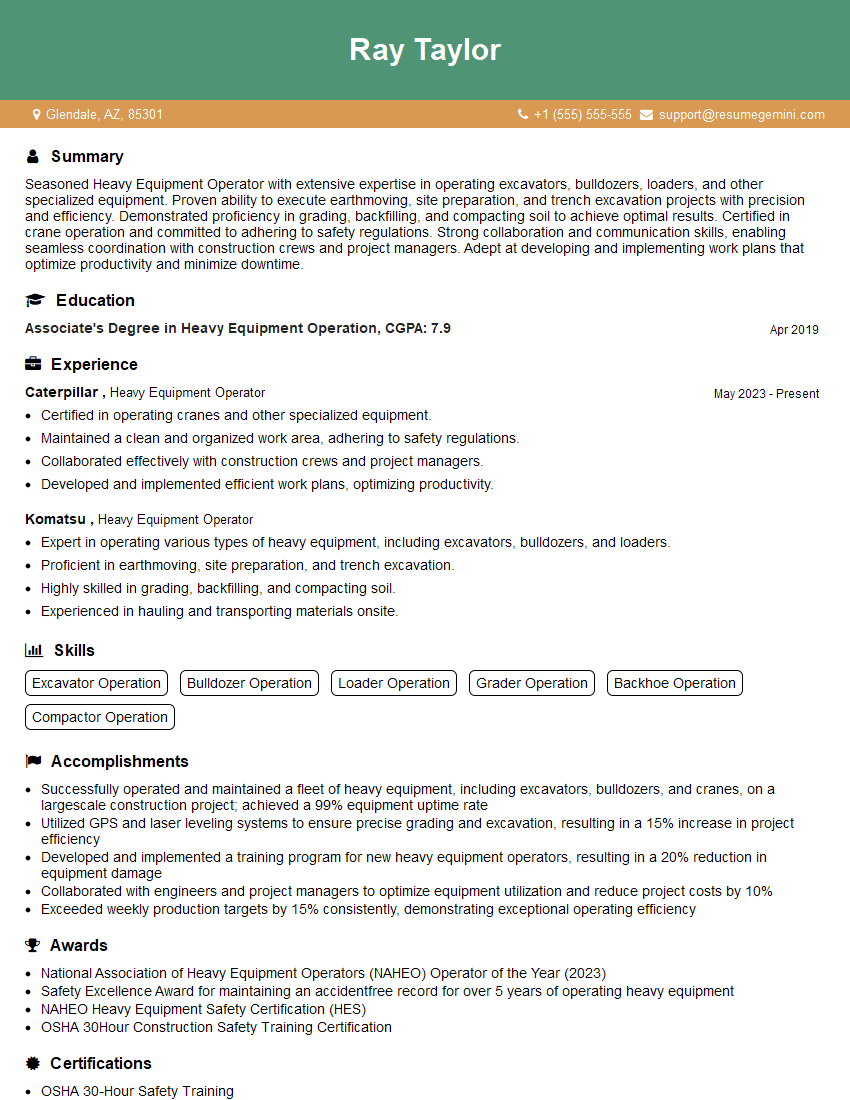
Mastering ground preparation techniques is vital for career advancement in the construction and engineering industries. A strong understanding of these concepts will significantly enhance your job prospects and open doors to exciting opportunities. To maximize your chances of securing your dream role, creating an ATS-friendly resume is essential. ResumeGemini is a trusted resource to help you build a professional and impactful resume that will catch the eye of recruiters. We provide examples of resumes tailored specifically to Ground Preparation to give you a head start. Invest time in crafting a compelling resume—it’s your first impression!

Explore more articles
Users Rating of Our Blogs
Share Your Experience
We value your feedback! Please rate our content and share your thoughts (optional).
What Readers Say About Our Blog
Very informative content, great job.
good