The thought of an interview can be nerve-wracking, but the right preparation can make all the difference. Explore this comprehensive guide to Media liaison skills interview questions and gain the confidence you need to showcase your abilities and secure the role.
Questions Asked in Media liaison skills Interview
Q 1. Describe your experience crafting press releases.
Crafting a compelling press release is about more than just announcing news; it’s about strategically conveying information to garner media attention. My process begins with identifying the key message – the single, most important takeaway I want journalists to understand. I then structure the release using the inverted pyramid style, leading with the most crucial information in the first paragraph. This ensures the core message is absorbed even if the journalist only reads the first few sentences.
Next, I carefully select supporting facts and quotes to bolster the key message. Strong quotes from credible sources, like executives or experts, add weight and authority. I ensure the release is concise, accurate, and free of jargon. Finally, I meticulously proofread for errors in grammar and style before distribution. For example, when announcing a new product launch, I would focus on the product’s unique selling proposition (USP), highlighting what differentiates it from competitors and providing quantifiable results to support claims.
I also tailor the release to the target publication. A tech magazine will appreciate technical details, while a business publication will focus on financial implications. I’ve had success with press releases that not only announce news but also offer exclusive information or compelling angles to entice journalists to cover the story. A recent campaign for a sustainable clothing brand involved a press release highlighting not only the new eco-friendly collection but also the brand’s partnership with a rainforest conservation organization, resulting in widespread positive media coverage.
Q 2. How do you build and maintain relationships with journalists?
Building and maintaining relationships with journalists requires a genuine approach. It’s not about pitching every single story; it’s about establishing trust and understanding their needs and beats. I regularly reach out to journalists – not just to pitch stories, but also to share relevant industry news or insights I think they might find valuable. This approach builds rapport and demonstrates my understanding of their work.
I personalize my communication. I research each journalist to understand their coverage area and writing style. This allows me to tailor my pitches to their interests and to avoid sending generic press releases. Attending industry events and conferences provides valuable opportunities for networking and face-to-face interaction. Building these personal connections makes a significant difference in gaining credibility and media attention.
Maintaining relationships is an ongoing process. Regular follow-ups after pitches (without being intrusive) and a consistent delivery of accurate and valuable information contribute greatly. I always strive to be responsive to their inquiries, offering prompt and helpful support. Transparency and honesty are key; even when bad news needs to be shared, open and honest communication maintains trust.
Q 3. Explain your process for responding to media inquiries.
My process for responding to media inquiries prioritizes speed and accuracy. I acknowledge the inquiry promptly, even if I don’t have all the answers immediately. This shows respect for the journalist’s time and sets a positive tone. I then gather all the necessary information, including relevant data and expert opinions, before crafting a detailed response. Accuracy is paramount; I meticulously check all facts and figures to avoid misreporting.
Depending on the complexity of the inquiry, I might delegate parts of the research to relevant teams, ensuring everyone is aligned and the information provided is consistent. If the inquiry involves sensitive information, I follow established protocols and potentially involve legal counsel for review before responding. For example, if a journalist inquires about a pending lawsuit, I provide a statement that acknowledges the situation while respecting legal confidentiality.
I try to anticipate potential follow-up questions and include relevant details proactively. This prevents the need for multiple back-and-forth communications. Following up after sending my response helps ensure the journalist received my communication and if further assistance is required. Finally, I maintain a record of all media inquiries and responses for future reference and for tracking media relationships.
Q 4. How do you manage media crises?
Managing media crises requires a swift, decisive, and transparent approach. The first step is to assess the situation quickly and accurately, understanding the extent of the damage and identifying the key stakeholders. We establish a dedicated crisis communication team, composed of individuals with expertise in media relations, legal, and public affairs. This team develops a clear and concise communication plan that outlines key messages and spokesperson roles.
We then prepare a series of statements and Q&A documents that address anticipated questions. Transparency and honesty are crucial; attempting to hide or downplay the issue will only exacerbate the situation. We proactively reach out to key media outlets and offer our side of the story, providing accurate and timely information. Simultaneously, we monitor media coverage closely and address misinformation promptly and accurately.
For example, if a product recall is necessary, we would proactively announce it, outlining the steps taken to rectify the situation and supporting affected customers. After the crisis subsides, we conduct a thorough post-mortem analysis to identify lessons learned and improve our crisis management protocols for the future. This continuous improvement process enhances our preparedness for future crises.
Q 5. What metrics do you use to measure the success of your media relations efforts?
Measuring the success of media relations efforts involves both qualitative and quantitative metrics. Quantitative measures include: media mentions (total number of times the organization is mentioned in media outlets), reach (total audience reached through media coverage), and sentiment analysis (measuring the positive, negative, or neutral tone of media coverage). We use media monitoring tools to track these metrics and analyze trends.
Qualitative metrics focus on the impact of media coverage. This includes assessing whether the coverage helped achieve the organization’s communication objectives, such as increasing brand awareness, improving public perception, or driving sales. We also analyze the tone and quality of the coverage, considering factors like whether the message was accurately conveyed and whether the coverage influenced public opinion in a positive way. Client feedback and surveys can provide valuable insights into the qualitative impact of our work.
By combining quantitative and qualitative data, we gain a holistic understanding of the effectiveness of our media relations campaigns. This allows us to optimize our strategies, refine our targeting, and demonstrate the ROI of our efforts to clients. A successful campaign might show a significant increase in brand awareness, a positive shift in public sentiment, and a measurable increase in website traffic or sales resulting from the media coverage.
Q 6. How do you adapt your communication style to different media outlets?
Adapting my communication style to different media outlets is vital for effective media relations. I understand that different publications have unique audiences, editorial styles, and deadlines. A science journal will require a completely different approach than a general-interest newspaper or a social media platform.
For example, when pitching a story to a highly specialized publication, I use technical language and focus on the specific data relevant to their readers. With a general-interest publication, I simplify the information and emphasize the wider impact of the topic, using clear and concise language. Social media requires short, attention-grabbing content with strong visuals. Understanding the preferred style and format of each platform – whether it’s a press release, an interview, a tweet, or an infographic – is crucial.
Additionally, I respect deadlines and understand the pressure journalists are under. I ensure prompt responses to their inquiries and provide them with the information they need in a timely and accessible format. Building strong relationships with editors and reporters is also critical, as it helps me to understand their individual preferences and tailor my communication effectively.
Q 7. Describe a time you had to negotiate with a journalist.
In one instance, I was negotiating with a journalist who was writing a critical article about our company’s new product. His initial draft contained some inaccurate information and an overall negative tone. Instead of immediately reacting defensively, I approached the situation strategically. I scheduled a call with him and listened patiently to his concerns.
I addressed his inaccuracies by providing supporting data and evidence. I acknowledged some of his valid points while also highlighting the positive aspects of the product that he’d overlooked. I offered him access to our experts for further clarification, emphasizing transparency and cooperation. The negotiation process was about building mutual understanding and finding common ground. It wasn’t about winning or losing, but about ensuring the article presented a balanced and accurate picture.
As a result of this negotiation, the final article, while still critical to some extent, was significantly more accurate and nuanced than the initial draft. This demonstrates the value of engaging with journalists directly and professionally, even when facing difficult situations. It illustrates that open communication and collaboration can lead to a more favourable outcome than confrontation.
Q 8. How do you identify key media targets for a specific campaign?
Identifying key media targets is crucial for a successful campaign. It’s about pinpointing the journalists, bloggers, influencers, and publications most likely to be interested in your story and reach your target audience. This isn’t a shotgun approach; it’s precision targeting.
My process involves a multi-step approach:
- Understanding the Campaign: First, I deeply analyze the campaign goals, target audience, and key messages. What are we trying to achieve? Who needs to hear this message? What’s the unique selling point?
- Media Landscape Research: Next, I research relevant media outlets. This goes beyond simply looking at the obvious choices. I consider niche publications, blogs, podcasts, and even social media influencers that align with the campaign’s theme and audience. Tools like Cision and Meltwater are invaluable here.
- Journalist/Influencer Research: I then delve into the individual journalists and influencers. What are their beats? What kind of stories have they covered before? What’s their audience like? LinkedIn and media outlet websites are crucial for this.
- Prioritizing Targets: Finally, I prioritize targets based on their reach, relevance, and engagement. Some outlets might have a huge audience but might not be the best fit for the story. I focus on quality over quantity.
Example: For a campaign launching a new eco-friendly product, I wouldn’t just target major newspapers. I’d also look at sustainability blogs, environmental podcasts, and relevant influencers on platforms like Instagram.
Q 9. What is your experience with media monitoring tools?
I have extensive experience using media monitoring tools like Cision, Meltwater, and Brandwatch. These tools are indispensable for tracking media coverage, identifying emerging trends, and understanding public perception of a brand or campaign. They allow for proactive identification of potential issues and opportunities.
Beyond basic monitoring, I utilize the advanced features of these platforms to analyze sentiment, track mentions across various media channels (online, print, broadcast, social media), and generate reports to demonstrate the impact of media relations efforts. I’m proficient in setting up alerts for specific keywords, brands, and competitors, ensuring that any relevant coverage is immediately brought to my attention. This proactive approach allows for swift response to positive or negative press and allows for data-driven decision-making.
For example, I once used Meltwater to identify a negative trend related to a client’s product. The early warning provided by the tool allowed us to address the issue promptly and minimize potential damage.
Q 10. How do you handle negative media coverage?
Handling negative media coverage requires a calm, strategic, and proactive approach. It’s about mitigating damage and turning a potentially disastrous situation into an opportunity to learn and improve.
My approach involves:
- Rapid Response: Address the issue quickly and directly. The longer you wait, the more the story can spread.
- Accurate Information: Gather all the facts before responding. Inaccurate information only compounds the problem.
- Empathy and Transparency: Show empathy for those affected and be transparent about the situation. Acknowledge mistakes and take responsibility.
- Develop a Response Strategy: This might include issuing a press release, reaching out to the publication directly, or creating a social media post.
- Long-term Strategy: Focus on rebuilding trust and reputation through consistent positive messaging and actions.
Example: In a past role, a client faced negative press regarding a product defect. We immediately issued a press release acknowledging the issue, detailing the steps taken to rectify the situation, and outlining the compensation plan for affected customers. This proactive and transparent approach helped mitigate the damage and reassured customers.
Q 11. Explain your understanding of media pitching.
Media pitching is the art of crafting compelling narratives and delivering them to journalists to secure media coverage. It’s about finding the right story for the right journalist at the right time. It’s not about spamming journalists with press releases; it’s about building relationships and providing value.
Effective pitching requires:
- Understanding the Journalist: Research their work to understand their beat, writing style, and audience.
- Crafting a Compelling Story: The pitch needs to be newsworthy, relevant, and engaging. It should answer the who, what, when, where, why, and how.
- Personalization: Tailor each pitch to the specific journalist and publication.
- Following Up: Don’t be afraid to follow up, but don’t be pushy.
- Building Relationships: Nurture relationships with journalists through regular communication and providing valuable information.
Example: Instead of a generic press release about a new product, a strong pitch would highlight a unique feature of the product that solves a specific problem for the journalist’s audience. It would also mention any prior work they’ve done on similar topics.
Q 12. How do you create a media kit?
A media kit is a collection of materials designed to provide journalists with everything they need to write a story about your organization, product, or campaign. It’s essentially a one-stop shop for information.
A comprehensive media kit typically includes:
- Press Release: A concise and well-written summary of the news.
- Fact Sheet: Key facts and figures about your organization or product.
- Executive Biographies: Brief biographies of key personnel.
- High-Resolution Images: Professional photos and graphics.
- Website Link: A link to your website with more information.
- Contact Information: Contact details for media inquiries.
Example: For a new product launch, the media kit might include specifications, images of the product in use, testimonials from satisfied customers, and a detailed press release.
Q 13. What is your experience with social media in media relations?
Social media plays a vital role in modern media relations. It’s no longer enough to rely solely on traditional media outlets. Social media offers opportunities to engage directly with journalists, influencers, and the public, building relationships and disseminating information in a more immediate and interactive way.
My experience includes:
- Social Media Listening: Monitoring social media conversations to identify relevant trends, potential crises, and opportunities.
- Influencer Outreach: Collaborating with relevant influencers to amplify campaign messages.
- Content Creation and Sharing: Developing compelling social media content to engage audiences and drive traffic to media coverage.
- Social Media Crisis Management: Responding to negative comments and managing online reputation.
- Social Media Reporting: Tracking the reach and engagement of social media campaigns to measure their effectiveness.
Example: I’ve successfully used Twitter to build relationships with journalists covering specific industry beats, leading to increased media coverage for clients. I’ve also utilized Instagram to engage with influencers for product reviews and promotions.
Q 14. How do you measure the ROI of media relations activities?
Measuring the ROI of media relations activities is crucial to demonstrate its value and justify future investment. It’s not always straightforward, as the impact isn’t always directly quantifiable, like sales figures. However, there are ways to effectively assess the return.
My approach includes:
- Media Mentions Tracking: Counting the number of media mentions across different platforms.
- Reach and Impressions: Determining the total number of people reached through media coverage.
- Sentiment Analysis: Analyzing the tone and sentiment of media coverage (positive, negative, neutral).
- Website Traffic: Monitoring website traffic originating from media coverage.
- Lead Generation: Tracking leads generated through media coverage.
- Sales Lift: If applicable, measuring any increase in sales attributable to media coverage.
- Brand Awareness: Assessing changes in brand awareness and perception through surveys or social listening.
Example: I’ve used Google Analytics to track website traffic driven by media mentions. I’ve also compared sales figures before and after major media campaigns to assess their direct impact. Qualitative measures like increased brand awareness and improved customer sentiment are also important indicators.
Q 15. Describe your experience working with different stakeholders (e.g., executives, marketing).
My experience working with diverse stakeholders, from C-suite executives to marketing teams, hinges on clear communication and relationship building. I understand that each group has unique priorities and communication styles. For example, executives require concise, high-level summaries focusing on strategic impact, while marketing teams need detailed information for campaign development and execution.
With executives, I prioritize building trust by demonstrating my understanding of their strategic goals and providing them with data-driven insights and proactive communication. I’ve successfully positioned company announcements with senior leadership, ensuring alignment and buy-in before public release. With marketing, I collaborate closely, ensuring that all media materials are aligned with the overall marketing strategy. I’ve helped refine messaging to resonate with target audiences and provided data feedback to optimize campaign performance.
I employ active listening, tailoring my approach to meet each individual’s needs. I proactively seek feedback and ensure alignment on messaging and key performance indicators. This collaborative approach fosters trust and efficiency, ensuring everyone is informed and working towards the same objectives.
Career Expert Tips:
- Ace those interviews! Prepare effectively by reviewing the Top 50 Most Common Interview Questions on ResumeGemini.
- Navigate your job search with confidence! Explore a wide range of Career Tips on ResumeGemini. Learn about common challenges and recommendations to overcome them.
- Craft the perfect resume! Master the Art of Resume Writing with ResumeGemini’s guide. Showcase your unique qualifications and achievements effectively.
- Don’t miss out on holiday savings! Build your dream resume with ResumeGemini’s ATS optimized templates.
Q 16. How do you stay updated on media trends and best practices?
Staying abreast of media trends and best practices is crucial in this dynamic field. My strategy involves a multi-faceted approach.
- Industry Publications and Newsletters: I subscribe to key publications like PRWeek, The Holmes Report, and others focusing on media relations, journalism, and communications. These provide insightful analysis of industry trends, best practices and emerging technologies.
- Conferences and Webinars: Attending industry conferences and webinars, both online and in-person, allows for networking and exposure to cutting-edge techniques and strategies. I actively participate in Q&A sessions to deepen my understanding and engage with peers.
- Social Media Monitoring: I actively monitor relevant hashtags and influencers on platforms like Twitter and LinkedIn to keep my finger on the pulse of real-time conversations and emerging trends. This helps identify potential issues and opportunities proactively.
- Competitive Analysis: Regularly reviewing the communications strategies of competitors helps me identify best practices and adjust our approaches accordingly.
This continuous learning keeps me informed and allows me to adapt to ever-changing media landscapes and apply innovative strategies for impactful communication.
Q 17. Describe your experience in writing and editing media materials.
I have extensive experience in crafting and editing media materials, ranging from press releases and media kits to blog posts and social media content. My experience encompasses various industries and communications goals.
For instance, I’ve written numerous press releases announcing product launches, company partnerships, and awards. I’ve also crafted compelling narratives for media kits, which include background information, key messages, and high-resolution imagery, to support journalists in their reporting. I have experience with editing, ensuring accuracy, clarity and consistency across all communications. I ensure adherence to journalistic style guidelines (AP style preferred) and brand voice guidelines. I have a keen eye for detail and the ability to adapt my writing style to suit various audiences.
My approach prioritizes clarity, conciseness, and compelling storytelling. I use data and research to support claims and ensure accuracy in all my writing. I focus on generating engagement by using strong headlines, compelling narratives, and relevant visuals.
Q 18. How do you handle difficult or challenging journalists?
Handling challenging journalists requires a combination of tact, diplomacy, and preparedness. The key is to remain calm and professional, even under pressure.
- Proactive Preparation: Thoroughly researching the journalist and their previous work helps anticipate potential questions and tailor responses accordingly.
- Transparency and Honesty: Addressing difficult questions directly and honestly is often the best approach. If you don’t know the answer, it’s better to admit it and offer to find out.
- Active Listening: Listen carefully to the journalist’s concerns and questions. Understanding their perspective is crucial in crafting effective responses.
- Relationship Building: Even with challenging interviews, maintaining a professional relationship with the journalist is essential. This may lead to more positive interactions in the future.
- Strategic Off-the-Record Communication: In some instances, providing background information or context off the record can help clarify matters without compromising sensitive information.
My approach emphasizes building rapport and trust, even when dealing with difficult inquiries. It’s about managing the situation professionally to achieve a positive outcome.
Q 19. What is your experience with media training?
I have extensive experience in media training, both as a trainer and a participant. I understand the importance of preparing spokespeople to handle media interviews confidently and effectively.
My approach to media training includes role-playing, message development, and crisis communication simulations. I equip individuals with the skills and confidence to answer questions clearly, concisely, and persuasively. I’ve trained executives, subject matter experts, and PR teams in effective messaging, handling difficult questions, and managing media interactions in crisis situations. I’ve seen firsthand how strategic media training can improve an organization’s reputation and ability to manage challenging situations.
I adapt my training methods to the individual’s experience level and communication style. The training always includes an assessment of their strengths and weaknesses, followed by tailored exercises and feedback to enhance their performance.
Q 20. How do you work under pressure and meet tight deadlines?
Working under pressure and meeting tight deadlines is a regular part of media relations. My approach prioritizes organization, prioritization, and effective time management.
- Prioritization: I identify the most critical tasks and focus on completing them first. This ensures that essential deliverables are met, even with limited time.
- Effective Time Management: I utilize project management tools and techniques to track progress, allocate time efficiently, and avoid delays.
- Proactive Communication: Open and honest communication with stakeholders keeps everyone informed of deadlines and potential challenges.
- Teamwork: When necessary, I collaborate effectively with colleagues to delegate tasks and ensure timely completion of projects.
I thrive in fast-paced environments and consistently deliver high-quality work, even under significant time constraints. My experience has honed my ability to prioritize, manage multiple projects simultaneously and perform effectively under pressure.
Q 21. What is your experience with media monitoring and analysis software?
I have extensive experience utilizing various media monitoring and analysis software, including tools like Meltwater, Cision, and Brandwatch. These tools are indispensable for tracking media coverage, analyzing sentiment, and identifying opportunities and threats.
I use these platforms to monitor media mentions across various channels (online news, social media, blogs, etc.), gauge public perception of our clients, and identify potential reputational risks. The data gathered provides valuable insights for strategic communication planning and helps measure the effectiveness of PR campaigns. I’m proficient in using these tools to generate reports, identify key influencers, and track campaign performance metrics.
Beyond simply tracking mentions, I utilize the analytical features of these platforms to understand the context of the coverage, identify emerging trends and inform strategic decision-making. I leverage this data to refine messaging, improve media relations strategies and provide valuable insights to clients.
Q 22. How familiar are you with different media types (print, broadcast, online)?
My familiarity with different media types spans across print, broadcast, and online platforms. I understand the nuances of each. Print media, such as newspapers and magazines, requires concise, well-written press releases and strong visuals. Broadcast media (television and radio) demands compelling soundbites, engaging narratives, and a focus on delivering information quickly and effectively. Online media, encompassing social media, websites, and blogs, necessitates a multi-faceted approach, leveraging SEO, engaging visuals, and interactive content tailored to different platforms. For example, a short, impactful video might be ideal for Twitter, while a detailed blog post could be better suited for a company website. I’m adept at adapting my communication style and message to resonate with the specific audience and characteristics of each medium.
Q 23. Describe your experience in developing a media strategy.
Developing a media strategy involves a systematic approach. It begins with defining clear objectives – what message do we want to convey, and what outcomes are we hoping to achieve? Next, I identify the target audience and the most effective media channels to reach them. This often involves conducting thorough research to understand media consumption habits and preferences. Then, I craft a compelling narrative that aligns with the brand’s voice and resonates with the audience. This is followed by creating a content calendar, outlining the types of content (press releases, blog posts, social media updates, etc.) and their scheduled release. A robust media strategy also includes a plan for monitoring media coverage, measuring its impact, and making adjustments as needed. For example, during a crisis, the media strategy might need a complete overhaul to focus on damage control and restoring public trust. I have successfully implemented strategies that led to increased brand awareness, positive media coverage, and strengthened relationships with journalists.
Q 24. How would you approach securing media coverage for a new product launch?
Securing media coverage for a new product launch requires a proactive and multifaceted approach. First, I would craft a compelling press release highlighting the unique selling points of the product and its benefits to consumers. This would be distributed strategically to relevant journalists and media outlets. A well-designed media kit, including high-resolution images, product specifications, and background information, would accompany the press release. I would also proactively reach out to journalists and influencers in the relevant industry, pitching exclusive interviews or product demonstrations. Pre-launch media briefings and events can be powerful tools for generating early interest. Utilizing social media to build anticipation and generate buzz is also crucial. Finally, I’d closely monitor the media coverage following the launch and address any negative feedback promptly and professionally. For instance, I once secured significant national coverage for a client’s new sustainable product by targeting environmentally focused publications and journalists, resulting in a surge in sales and brand recognition.
Q 25. How do you handle conflicting priorities in a fast-paced media environment?
The fast-paced media environment often presents conflicting priorities. My approach involves prioritizing tasks based on their urgency and importance using a system like the Eisenhower Matrix (urgent/important). I clearly communicate these priorities to my team and stakeholders, ensuring everyone is aligned. Effective time management, delegation where appropriate, and leveraging technology for efficient communication are essential. Proactive planning, such as developing detailed timelines and contingency plans, minimizes the impact of unexpected events. Maintaining a calm and organized demeanor is crucial under pressure, as is the ability to make swift but informed decisions. For example, during a breaking news crisis, I might need to prioritize crisis communication over a scheduled marketing campaign.
Q 26. What is your approach to managing a company’s reputation?
Managing a company’s reputation is a continuous process, not a one-time event. It involves actively monitoring media coverage, social media mentions, and online reviews to identify potential issues. Proactive communication is key; we need to address concerns quickly and transparently. This often involves building strong relationships with journalists and influencers to foster open communication. A crisis communication plan should be in place to address any negative publicity efficiently and effectively. Furthermore, consistently delivering on promises and maintaining high ethical standards are crucial for building and preserving a positive reputation. For instance, I’ve helped a company recover from a negative product review by initiating a transparent dialogue with the customer, demonstrating responsiveness and empathy.
Q 27. How do you ensure consistent messaging across all media channels?
Ensuring consistent messaging across all media channels requires a centralized communication strategy. This starts with developing a clear brand message and key talking points. These talking points should be communicated to all team members involved in media interactions. Using a style guide to maintain consistency in tone and language across all platforms is vital. Regular internal communication and training help ensure everyone understands and adheres to the messaging guidelines. Tracking and measuring the performance of the messaging across channels allows for adjustments and refinements as needed. For example, a consistent tagline and brand voice across a company’s website, social media, and press releases reinforce brand identity and enhance memorability.
Q 28. How familiar are you with relevant media regulations and laws?
I am familiar with relevant media regulations and laws, including libel and defamation laws, copyright regulations, and privacy laws. Understanding these regulations is essential for ensuring ethical and legal compliance in media relations. My understanding includes the implications for press releases, social media content, and other forms of media communication. I always prioritize accuracy and responsible reporting to avoid legal repercussions. I stay informed about updates in media laws and best practices through continuous professional development. For instance, I ensure our press releases accurately represent facts and avoid making unsubstantiated claims to prevent potential libel lawsuits.
Key Topics to Learn for Media Liaison Skills Interview
- Media Relations Strategy: Developing and implementing effective strategies to build and maintain positive relationships with journalists and media outlets. Consider how you would tailor your approach to different types of media (print, broadcast, online).
- Crisis Communication Management: Preparing for and effectively handling negative media situations. Think through scenarios requiring quick thinking, calm responses, and strategic communication to mitigate damage.
- Message Development & Dissemination: Crafting compelling and accurate messages tailored to specific audiences and media channels. Practical application includes writing press releases, developing key talking points, and understanding the importance of consistent messaging.
- Media Training & Spokesperson Guidance: Preparing individuals to confidently and effectively interact with the media. This includes understanding how to handle difficult questions and maintain a consistent brand message.
- Social Media Engagement & Monitoring: Leveraging social media platforms to build relationships with journalists and engage with audiences. This includes understanding social listening and responding appropriately to online commentary.
- Media Pitching & Relationship Building: Developing compelling pitches to secure media coverage. Explore different pitching strategies and how to build rapport with journalists over time.
- Metrics & Evaluation: Tracking and analyzing media coverage to measure the effectiveness of media relations efforts. Think about quantifiable metrics and how they demonstrate ROI.
Next Steps
Mastering media liaison skills is crucial for career advancement in today’s competitive landscape. Strong communication and relationship-building skills are highly valued across many industries, opening doors to leadership roles and increased influence. To maximize your job prospects, creating an ATS-friendly resume is paramount. A well-structured resume helps your application stand out and ensures your skills are clearly highlighted for recruiters and hiring managers. We encourage you to use ResumeGemini, a trusted resource, to build a professional resume that effectively showcases your abilities. Examples of resumes tailored to media liaison skills are available to help guide you through the process.

Communications Director Resume Sample

Communications Manager Resume Sample

Marketing Communications Manager Resume Sample
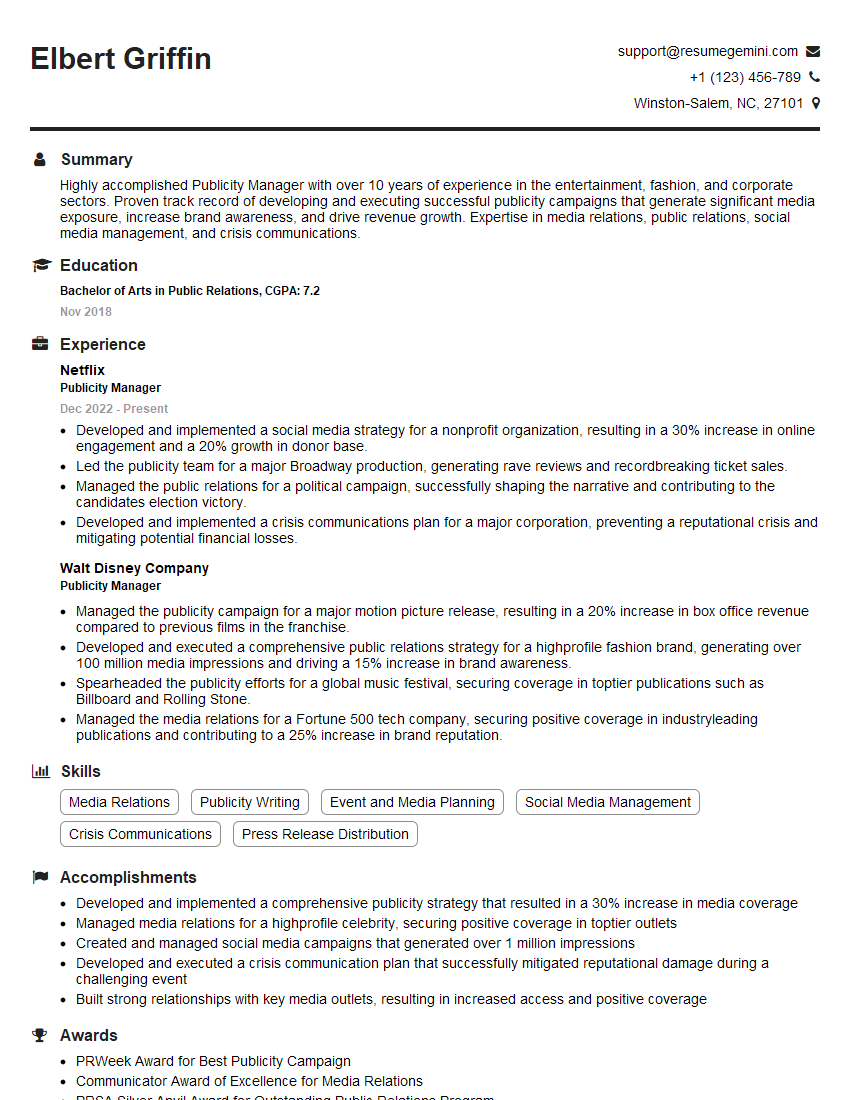
Publicity Manager Resume Sample
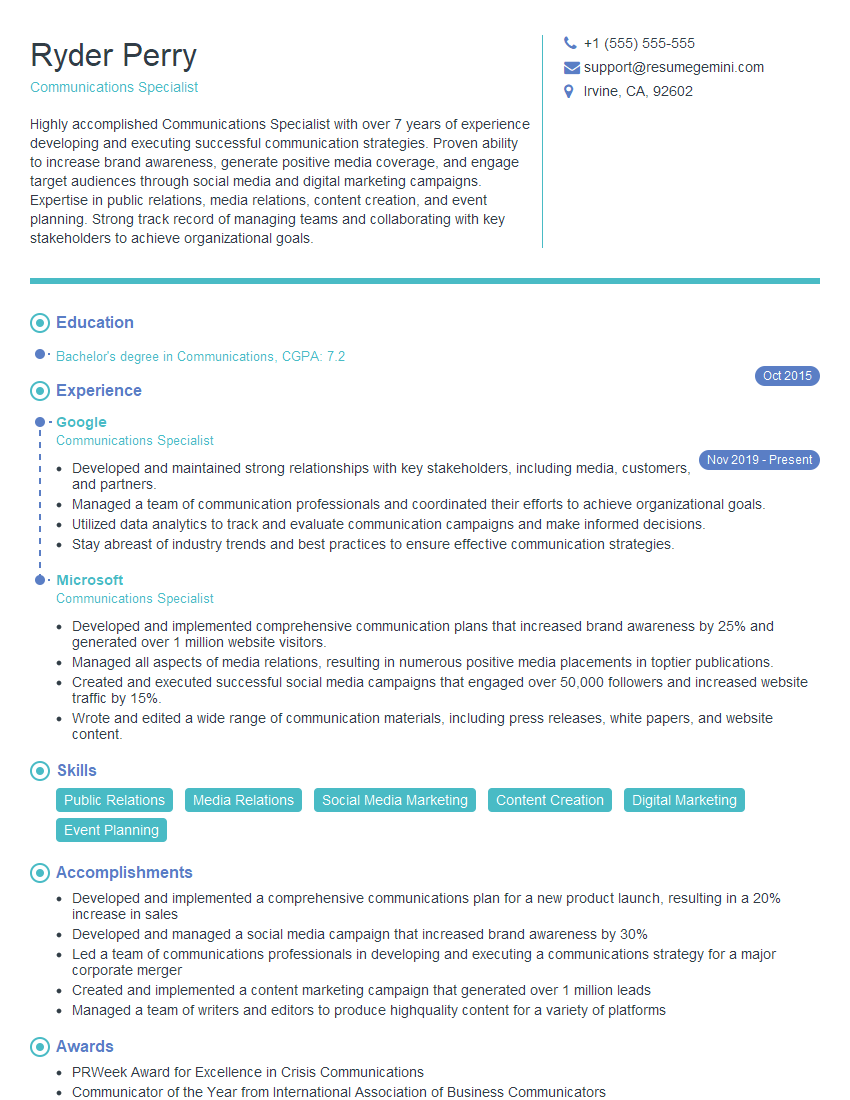
Communications Specialist Resume Sample

Social Media Manager Resume Sample

Content Strategist Resume Sample
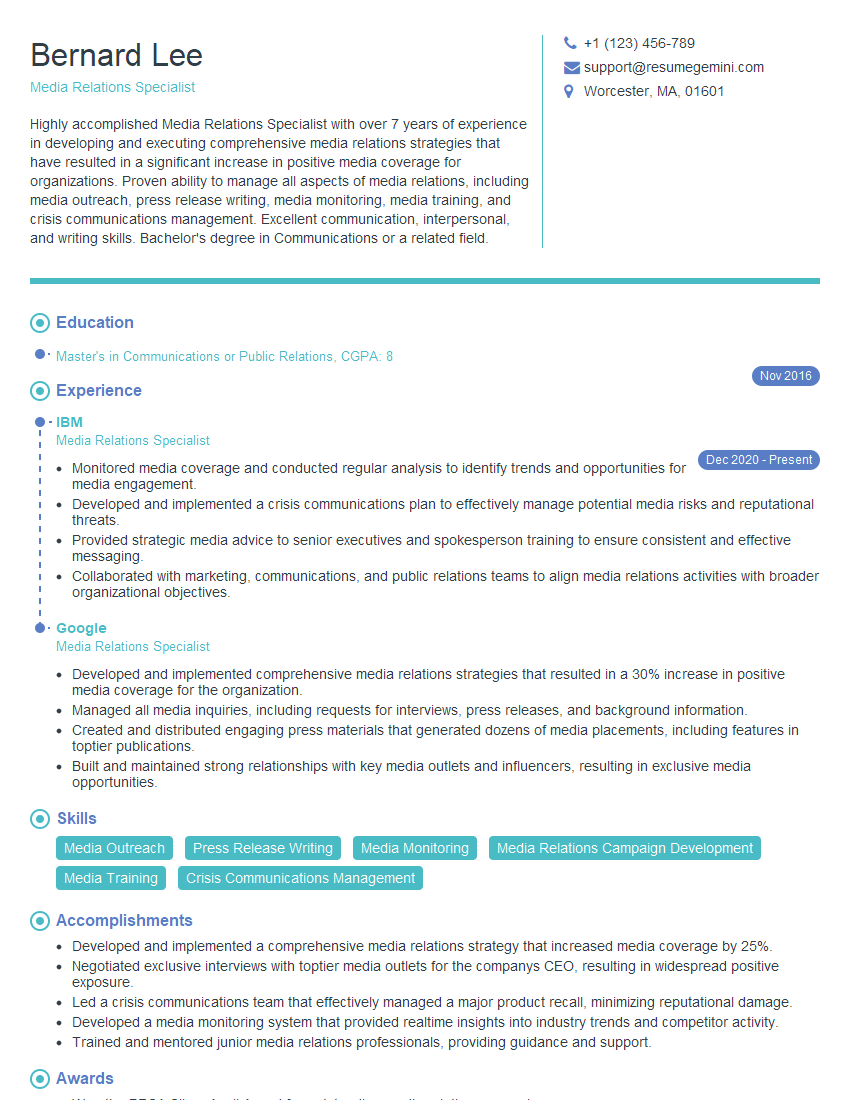
Media Relations Specialist Resume Sample
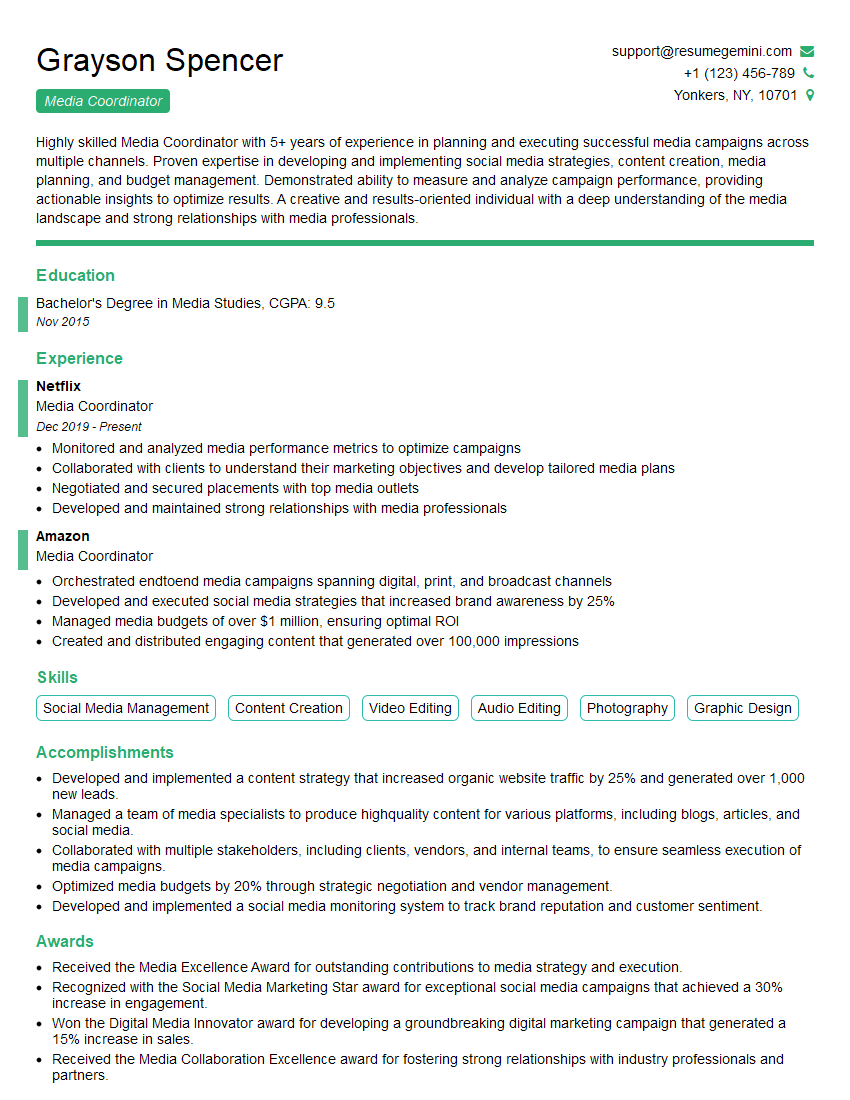
Media Coordinator Resume Sample
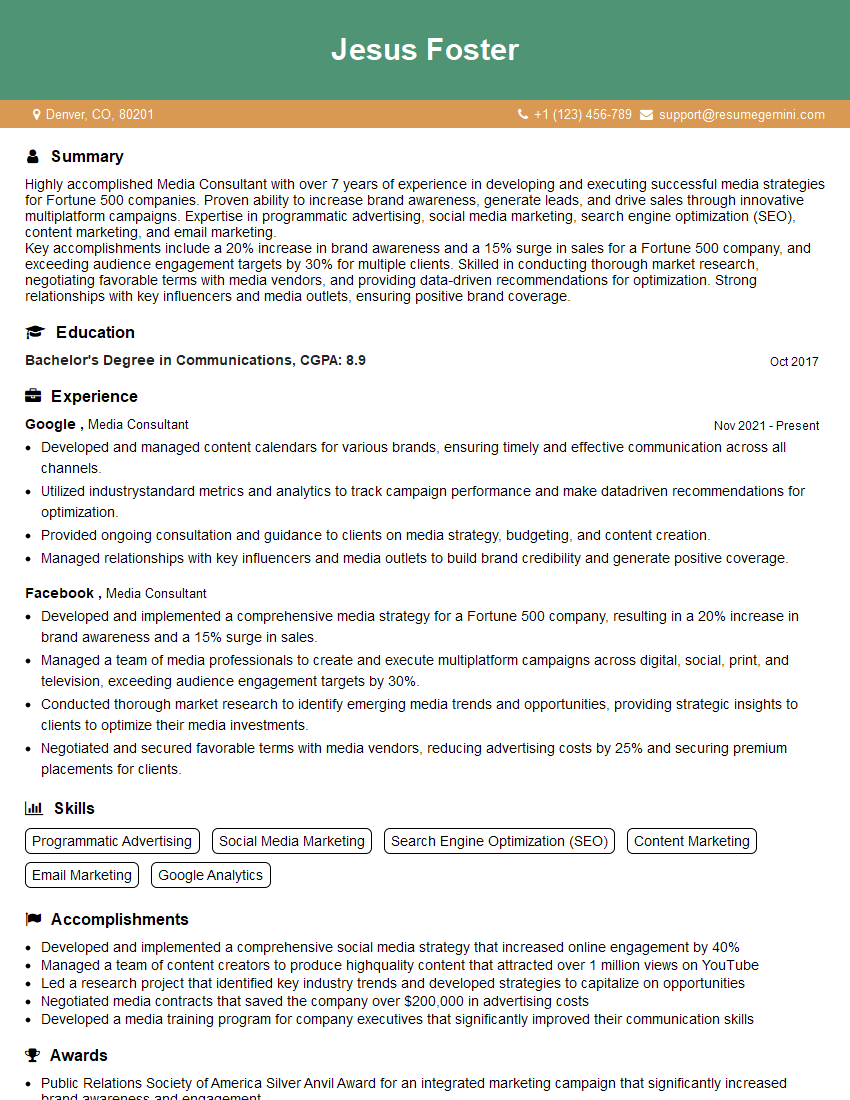
Media Consultant Resume Sample
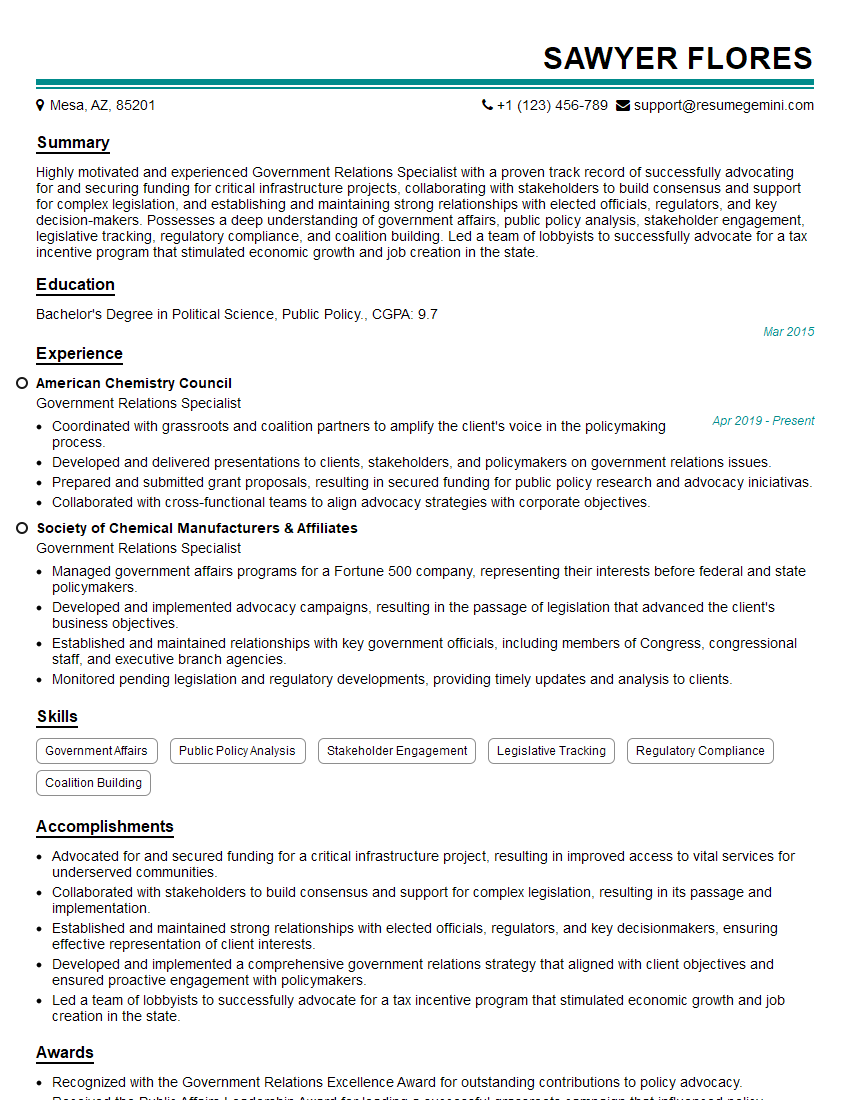
Government Relations Specialist Resume Sample
Explore more articles
Users Rating of Our Blogs
Share Your Experience
We value your feedback! Please rate our content and share your thoughts (optional).
What Readers Say About Our Blog
Very informative content, great job.
good