Every successful interview starts with knowing what to expect. In this blog, we’ll take you through the top Gypsum Board Application interview questions, breaking them down with expert tips to help you deliver impactful answers. Step into your next interview fully prepared and ready to succeed.
Questions Asked in Gypsum Board Application Interview
Q 1. Explain the different types of gypsum board and their applications.
Gypsum board, or drywall, comes in various types, each suited for specific applications. The most common types include:
- Standard Gypsum Board: This is the workhorse of the industry, ideal for general-purpose wall and ceiling applications. It offers good fire resistance and sound dampening properties.
- Moisture-Resistant Gypsum Board (MR): Designed for areas with higher humidity, like bathrooms and kitchens. It features a green-colored core and a water-resistant face paper, preventing moisture absorption and mold growth. I’ve used this extensively in bathroom renovations, preventing costly future problems.
- Fire-Resistant Gypsum Board (Type X): Provides superior fire protection, often required in commercial buildings and areas with strict fire codes. It’s thicker and denser than standard board, and its core is formulated to withstand higher temperatures. In one project, using Type X board was crucial to meeting the building’s fire safety requirements.
- Water-Resistant Gypsum Board (Water Resistant): This goes beyond MR board; it has a significantly higher resistance to water damage, particularly useful in wet locations such as shower stalls or areas prone to flooding. The differences between MR and Water Resistant boards often become apparent in situations with prolonged water exposure.
- Sound-Deadening Gypsum Board: This specialized board contains added materials to improve sound absorption and reduce noise transmission between rooms. It’s perfect for home theaters or apartments where noise control is crucial. I remember using it once in a high-rise apartment building to significantly reduce noise complaints between units.
Choosing the right type of gypsum board is vital for a successful project. Using standard board in a bathroom, for example, could lead to mold and structural damage.
Q 2. Describe the process of hanging gypsum board on walls.
Hanging gypsum board is a precise process requiring careful planning and execution. Here’s a step-by-step guide:
- Preparation: Ensure the wall framing is plumb and level. Any inconsistencies will show through the finished surface. This is often the most overlooked step, but it’s the foundation for a great result.
- Cutting: Measure and cut the gypsum boards to fit the wall spaces, making sure to account for any obstacles like electrical outlets or plumbing. Always score and snap, rather than sawing, for a clean break.
- Fastening: Use appropriate screws to secure the boards to the wall studs. The screws should be driven slightly below the surface, preventing them from poking through the finished surface. I prefer using self-tapping screws that are designed specifically for gypsum board.
- Spacing and Staggering: Ensure the edges of adjacent boards align at the studs. Stagger the seams to prevent weak points and ensure greater structural integrity. A consistent pattern across an entire wall makes a big difference.
- Handling: Never drop the board; it could crack or damage the edges. Two people are typically needed to handle larger sheets. Safety is paramount.
Q 3. How do you ensure proper spacing between gypsum board sheets?
Proper spacing between gypsum board sheets is critical for preventing cracking and ensuring a smooth finish. The most important element is that the seams between sheets should always be aligned with a stud. This provides structural support for the joint compound, preventing it from cracking under stress. I often see novice installers fail to account for this crucial detail.
Furthermore, joints should be staggered, meaning the seams of adjacent sheets shouldn’t align. This helps distribute stress across the entire wall, further reducing the risk of cracks. Aim for a pattern where the seams are offset by roughly 24 inches.
Using a spacing tool or a level to align the boards against the studs will help in maintaining consistent spacing.
Q 4. What are the different methods for taping and mudding drywall joints?
Taping and mudding drywall joints is a multi-step process crucial for creating a seamless, smooth surface. There are two primary methods:
- Traditional Method (3-Coat): This involves applying three coats of joint compound, with each coat serving a specific purpose:
- First Coat: Apply a thin coat of joint compound over the taped seams, embedding the tape completely.
- Second Coat: Feather the edges of the first coat to create a smooth transition into the surrounding wall.
- Third Coat: This finishing coat removes any imperfections, preparing the surface for painting or texturing.
- All-Purpose Lightweight Joint Compound: This is a one-step compound that has the ability to be applied as a thin coat, which offers time savings, but may require more applications to achieve the same degree of smoothness as the traditional method.
Regardless of the method chosen, using a taping knife and a broad knife is essential for achieving a smooth, even finish. I recommend starting with a 6-inch taping knife and progressing to wider knives (12 inches) as coats are built up. The application needs to be consistent for a seamless final product.
Q 5. Explain the importance of using proper joint compound.
Using the proper joint compound is paramount for achieving a durable and aesthetically pleasing finish. The type of compound used depends on the application and the desired finish. All-purpose compounds are often sufficient for standard applications, offering a good balance of workability and drying time. However, there are different formulations that should be chosen wisely.
Using a low-quality compound can lead to cracking, poor adhesion, and an uneven surface, requiring significant rework. For example, if you use a compound that’s too thick, it may not adhere properly and cause cracks. Conversely, using one that is too thin will require more coats, extending the project time considerably. A premium quality compound, while slightly more expensive, saves money in the long run by avoiding costly repairs and reducing the time needed to complete the project.
Q 6. How do you achieve a smooth, even finish on drywall?
Achieving a smooth, even finish on drywall requires patience, attention to detail, and the right tools. The key is to apply thin, even coats of joint compound, allowing each coat to dry completely before applying the next. Using a broad knife (12-inch or larger) helps to feather the edges and blend the compound seamlessly into the surrounding surface.
Sanding between coats is crucial for removing any imperfections and creating a smooth base for the next layer. I use progressively finer grits of sandpaper, starting with a coarser grit to remove major imperfections and finishing with a finer grit for a smooth finish.
It’s vital to be meticulous during each step; rushing this process can negatively affect the final result. Always start with the right tools and materials, and use careful, consistent application techniques. A final, light sanding can often make all the difference.
Q 7. Describe your experience with different types of drywall finishing tools.
Over the years, I’ve worked with a variety of drywall finishing tools, each with its strengths and weaknesses. My essential toolkit includes:
- Taping Knives: These come in various sizes, typically 4”, 6” and 12”. I find the 6-inch knife useful for initial taping and the 12-inch for broader feathering and smoothing.
- Putty Knives: Useful for filling small holes and imperfections. Having a selection of sizes helps to tackle various challenges.
- Broad Knives: These wider knives (typically 12” and larger) are essential for creating smooth, even coats of joint compound and feathering the edges.
- Sanding Blocks and Screens: Essential for smoothing out the dried compound. Different grits allow for efficient sanding at each stage.
- Corner Tools: These specialized tools are used to create sharp, clean corners. They are indispensable for any project requiring crisp angles.
Knowing which tool to use and how to use it effectively makes a massive difference in the final quality and the speed at which the project is completed. I also invest in high-quality tools, as they are significantly more durable and comfortable to use over long periods.
Q 8. How do you handle corners and edges when installing gypsum board?
Handling corners and edges is crucial for a clean, professional drywall finish. We use specialized techniques to ensure strength and avoid unsightly gaps. For inside corners, we use corner bead, a metal or plastic L-shaped profile. This bead is fastened to the studs before the drywall is installed, creating a strong, straight corner. The drywall is then carefully butted against the bead, taped, and mudded, resulting in a perfectly smooth inside corner. For outside corners, we use outside corner bead, which is similarly fastened and then the drywall is applied, ensuring a crisp, sharp edge. For edges not involving corners, we might use edge trim or simply ensure the drywall is properly butted and secured to the studs, paying close attention to proper taping and mudding techniques to avoid cracking. Think of it like building with LEGOs—the edges need to be properly aligned and secured for a sturdy and visually appealing final product.
Q 9. What safety precautions do you take when working with drywall?
Safety is paramount in drywall installation. We always wear safety glasses to protect our eyes from dust and debris. Dust masks are essential to prevent inhaling gypsum dust, which can be irritating. Working at heights requires harnesses and proper fall protection equipment, and we use sturdy scaffolding or ladders. We also wear gloves to prevent cuts and abrasions from sharp drywall edges and tools, as well as steel-toe boots to protect our feet from dropped objects. Proper handling of tools, such as utility knives and saws, is crucial. We ensure the work area is well-lit and free of obstructions to prevent trips and falls. Finally, we’re always mindful of others working nearby and maintain clear communication to avoid accidents.
Q 10. Explain the process of repairing damaged drywall.
Repairing damaged drywall depends on the extent of the damage. For small holes, we can use a patching compound and mesh tape. We clean the area, apply the tape, and then apply multiple thin coats of compound, sanding smooth between each coat. For larger holes, we need to cut out the damaged section, creating a clean, square opening. We then install a backing piece of drywall to provide support, and then fit a new piece of drywall into the opening, securing it to the studs. Finally, we tape and mud the seams, sanding until smooth. Remember, the key is patience and meticulous attention to detail, ensuring a flawless blend with the existing surface. This is where experience in matching existing textures and paint comes into play.
Q 11. How do you work with different types of drywall fasteners?
Drywall fasteners come in various types. The most common are drywall screws, which are self-tapping and provide a strong, secure hold without requiring pre-drilling in most situations. We select screw length appropriate to the thickness of the drywall and the stud spacing. Nails are also used, although screws are generally preferred due to their greater holding power and reduced risk of nail pops. Specialty fasteners include self-drilling screws for harder surfaces and longer screws for specific applications. Using the wrong fastener can lead to problems, such as loose drywall or nail pops, so careful selection is vital. We always check the screw or nail is properly driven to prevent gaps, ensuring the drywall is flush against the framing member.
Q 12. What are the common problems encountered during drywall installation?
Common problems during drywall installation include nail pops, caused by improper fastening or movement in the structure; cracks, due to settling or stress on the wall; gaps between drywall sheets, stemming from improper measuring and cutting; and uneven surfaces, resulting from inconsistent fastening or inadequate preparation. Improper taping and mudding techniques can also lead to imperfections. Moisture intrusion is a serious issue that can cause mold growth and buckling. Environmental conditions, such as extreme temperatures and humidity, can affect the drying process and the overall quality of the installation. Addressing these issues requires careful attention to detail throughout the entire process.
Q 13. How do you troubleshoot issues such as nail pops or cracks?
Troubleshooting nail pops involves carefully removing the popped nail, adding a small amount of construction adhesive to the back of the drywall and then re-nailing or screwing it firmly in place. For cracks, the approach depends on the size and cause of the crack. Smaller cracks can often be filled with patching compound, while larger cracks may require wider repair work, involving cutting out the damaged section and patching it like a larger hole repair. In both cases, proper taping and multiple coats of mud, followed by careful sanding are essential. It’s like a tiny surgery that needs precision and the right tools and materials. The source of the problem—whether it’s movement in the structure or simply a poor installation—should be addressed to prevent recurrence.
Q 14. Describe your experience with installing drywall in various environments (e.g., high humidity, cold temperatures).
My experience encompasses various environments. In high-humidity areas, we use moisture-resistant drywall and ensure proper ventilation to prevent mold growth and damage. We need to account for slower drying times in humid conditions. In cold temperatures, we need to be mindful of the potential for material damage and slower curing times. We often use heaters or temporary enclosures to maintain suitable working temperatures. I always adapt my techniques to the specific environmental conditions and material properties, ensuring optimal performance and longevity of the finished product. This involves selecting the appropriate type of drywall and adjusting the installation techniques to accommodate the climate challenges. It’s essential to understand how different conditions affect the drying process and material behavior.
Q 15. How do you ensure proper moisture control during drywall installation?
Proper moisture control is paramount in drywall installation to prevent mold growth, warping, and premature failure of the drywall. Think of it like keeping a delicate cake moist but not soggy – you need the right balance.
Before Installation: The environment needs to be properly conditioned. This includes ensuring that the framing lumber has reached its proper moisture content (usually around 15-19%). High humidity can lead to issues with the drywall absorbing excessive moisture, causing it to swell and buckle. We always use moisture meters to check the framing before starting any work, and I often recommend a delay if conditions are unsuitable.
During Installation: Maintaining good ventilation is key. Open windows and doors where possible and use dehumidifiers if necessary. Avoiding installation in extremely hot or humid conditions is essential. I remember one project where we had to reschedule due to unexpectedly high humidity – this prevented potentially costly problems later.
After Installation: Allow adequate drying time before finishing. This often requires careful monitoring of the humidity levels and temperature within the space. Over-application of joint compound in humid conditions can trap moisture, leading to problems. Using low-moisture drywall in particularly damp environments can be extremely beneficial.
Career Expert Tips:
- Ace those interviews! Prepare effectively by reviewing the Top 50 Most Common Interview Questions on ResumeGemini.
- Navigate your job search with confidence! Explore a wide range of Career Tips on ResumeGemini. Learn about common challenges and recommendations to overcome them.
- Craft the perfect resume! Master the Art of Resume Writing with ResumeGemini’s guide. Showcase your unique qualifications and achievements effectively.
- Don’t miss out on holiday savings! Build your dream resume with ResumeGemini’s ATS optimized templates.
Q 16. What is your experience with fire-resistant drywall?
I have extensive experience with fire-resistant drywall, or Type X drywall, which is a crucial component in meeting fire codes and ensuring building safety. It’s not just about installing it; it’s about understanding its specific properties and applications.
Types: I’m familiar with various fire-rated boards, including those with different thicknesses and fire-resistance ratings. The rating is usually indicated on the board itself, specifying the time it can withstand fire exposure.
Applications: I’ve worked on projects requiring Type X in fire-rated walls, shaft enclosures, and other critical areas where fire containment is vital. I understand the importance of proper joint sealing and the need for careful attention to detail to maintain the integrity of the fire rating. One project I worked on involved a multi-story building where we meticulously followed the specifications to ensure the fire-rated assemblies met the stringent code requirements.
Installation nuances: Type X often requires slightly different techniques than standard drywall, particularly regarding screw placement and joint compound application to ensure the fire barrier remains intact. For example, we use more screws per sheet and we make sure there are no gaps around the edges to seal the fire-rated system.
Q 17. What is your experience with soundproofing drywall?
Soundproofing drywall is all about reducing sound transmission. This goes beyond just installing drywall; it involves understanding the science of acoustics and selecting the right materials and techniques. It’s like building a sound barrier to ensure maximum privacy.
Materials: I’ve worked with various sound-dampening drywall products, including those with increased mass and those with special sound-absorbing properties. These often have denser cores or are combined with other sound-reducing materials such as resilient channels.
Techniques: Effective soundproofing requires more than just the drywall itself; it involves creating a decoupled system. This frequently includes using resilient channels, which are metal channels that break the sound transmission path between the drywall and the framing. This is particularly effective in reducing low-frequency sounds.
Examples: I’ve been involved in numerous projects, such as home theaters and recording studios, where minimizing sound transmission was crucial. In these cases, we often employed double layers of drywall with resilient channels and even added layers of insulation in the wall cavity.
Q 18. Describe your experience working with different types of wall angles and profiles.
Wall angles and profiles are essential for creating clean, finished corners and transitions. My experience encompasses a wide range of these, from standard metal corner beads to more specialized profiles. Think of them as the finishing touches that create professional-looking results.
Types: I’m proficient with various corner beads (metal, plastic, paper-faced), J-channels, and other profiles used for transitions between different wall materials or to create specific design elements.
Applications: I’ve used these in a variety of settings, including interior and exterior corners, window and door frames, and transitions between walls and ceilings. Selecting the right profile is crucial; using an exterior corner bead inside is a common mistake I’ve had to rectify on several occasions.
Installation: Proper installation is key to avoiding cracking and ensuring a smooth, durable finish. I’ve learned that embedding the beads correctly into the joint compound and paying attention to the finishing layers is vital for long-lasting quality. One instance I particularly remember was installing a radius corner bead in a commercial setting – the precise application made all the difference to the clean and sophisticated lines.
Q 19. How do you manage your time and resources effectively during a drywall project?
Effective time and resource management is critical for successful drywall projects, especially when working under tight deadlines and budgets. I use several techniques that have worked effectively for me on all types of projects.
Planning and Sequencing: I always start with a detailed plan, breaking down the project into manageable phases. I map out tasks, accounting for materials, labor, and equipment needs.
Teamwork and Communication: Clear and constant communication with the team, including subcontractors, is essential for efficient workflow. We plan work schedules together, which improves collaboration and eliminates potential delays.
Inventory Management: I make sure to order the appropriate materials on time to minimize project disruptions. It’s a balancing act, preventing costly delays from waiting for orders and also keeping inventory low to avoid unnecessary storage space.
Waste Reduction: Careful planning and precise cutting techniques help in minimizing material waste. I teach the team proper cutting and measuring techniques, reducing overall project costs.
Q 20. How do you ensure that your work meets quality standards and building codes?
Meeting quality standards and building codes is not optional; it’s a fundamental aspect of responsible drywall installation. It’s about ensuring the safety and longevity of the structure. I treat quality control as a continuous process that starts before the first sheet is installed.
Code Compliance: I have a thorough understanding of relevant building codes and regulations, ensuring all work adheres to those standards. Each project has a set of plans, drawings, and specifications that are reviewed in detail, with local codes noted.
Regular Inspections: I conduct regular self-inspections throughout the project to monitor quality and address any potential issues promptly. These inspections often are documented with photos to track progress and highlight any corrective work needed.
Material Quality: I only use high-quality drywall and materials that meet or exceed industry standards. We meticulously inspect deliveries and reject any substandard materials. Using poor quality materials is a shortcut that will result in costly repairs later on.
Proper Finishing: The finishing work is critical to the overall look and longevity of the drywall. I ensure that the taping, mudding, and sanding are done to the highest standards, resulting in a flawless and durable surface.
Q 21. Describe your experience with working from blueprints or plans.
Working from blueprints or plans is fundamental to my work. It’s the roadmap that guides the entire process from start to finish. Understanding these documents is crucial for successful execution.
Interpretation: I can accurately interpret architectural plans, including wall layouts, specifications, and details related to drywall installation. This includes understanding the type of drywall, fire ratings, and locations for electrical and plumbing.
Measurements and Calculations: I’m adept at taking accurate measurements from the plans and calculating the quantities of materials needed. This ensures we order the correct amount, avoiding waste and delays.
Coordination: Working from plans allows for proper coordination with other trades, such as electricians and plumbers, to ensure proper installation without conflicts.
Problem Solving: Occasionally, there are inconsistencies or omissions in plans. My experience allows me to identify these issues and work with the project team to find effective solutions without compromising the project quality or schedule. I once discovered a conflict on a set of drawings; addressing this in the planning stage prevented a costly mid-project revision.
Q 22. How do you handle unexpected problems or changes during a drywall project?
Unexpected problems are part and parcel of construction. My approach is systematic and proactive. First, I assess the situation calmly, identifying the root cause of the problem. This could range from discovering faulty materials to encountering unforeseen structural issues. Then, I carefully evaluate the options, considering the impact on the project timeline and budget. For example, if I find damaged drywall, I would determine the extent of the damage, decide whether repair or replacement is more efficient, and discuss the best course of action with the project supervisor or client. Open communication is vital. Finally, I implement the chosen solution, documenting all changes and adjustments made. If a significant change arises, I always propose alternative solutions, comparing cost and time implications to ensure the best outcome.
Let’s say I discover a hidden electrical conduit during installation. I wouldn’t just try to force the drywall around it; I’d carefully mark its location, inform the electrician, and adjust my cutting pattern accordingly. This minimizes damage and ensures safety compliance.
Q 23. What is your experience with using different types of drywall finishing materials (e.g., primer, paint)?
My experience encompasses a wide range of drywall finishing materials. I’m proficient in using various primers, from basic oil-based primers to specialized moisture-resistant primers for bathrooms and kitchens. I understand the importance of selecting the right primer for the specific substrate and the topcoat. This ensures optimal adhesion and prevents problems like peeling or cracking. Regarding paints, I have experience with latex, acrylic, and enamel paints, choosing the right type based on the desired finish (matte, satin, gloss), durability requirements, and the environment.
For example, in a high-moisture area like a bathroom, I would use a mold-resistant primer followed by a high-quality, scrubbable paint to ensure longevity and easy cleaning. In a living room, a standard latex primer and a paint with a desired sheen would be appropriate.
Q 24. What are your strengths and weaknesses as a drywall installer?
My strengths lie in my meticulous attention to detail, my ability to work efficiently and independently, and my problem-solving skills. I take pride in producing high-quality, professional finishes. I’m also a quick learner, always eager to adapt to new techniques and technologies. For instance, I recently learned a new taping method that significantly improved my efficiency while maintaining the same quality of finish.
A weakness I’m actively working on is delegating tasks effectively within a team. While I am capable of handling all aspects of a project myself, I recognize the benefits of teamwork and efficient delegation. I’m currently improving this skill by proactively participating in team projects and seeking feedback on my delegation strategies.
Q 25. How do you prioritize tasks in a busy work environment?
In a busy environment, prioritization is crucial. I use a combination of techniques. First, I always review the project plan to understand the overall deadlines and dependencies. Then, I break down the tasks into smaller, manageable units, using a system like a Kanban board or a simple checklist. I prioritize tasks based on urgency and importance using a matrix approach. Urgent and important tasks are tackled first, followed by important but less urgent, then urgent but less important. Less urgent and less important tasks are scheduled accordingly. This allows me to manage my time effectively and avoid being overwhelmed.
For example, if I have multiple projects with different deadlines, I would focus on the tasks with the closest deadlines first, ensuring timely completion of critical stages.
Q 26. Describe your experience working as part of a team.
I thrive in team environments. Effective communication and collaboration are essential in drywall installation. I’ve worked on numerous projects where teamwork has been pivotal to success. I value each team member’s input and contribute proactively to discussions, sharing my knowledge and experience while actively listening to others. My experience includes collaborative projects with electricians, plumbers, and other tradespeople, requiring careful coordination to avoid conflicts and ensure a smooth workflow.
In one project, our team was behind schedule due to an unexpected supply delay. By working together, we re-prioritized tasks, adjusted our schedules, and successfully delivered the project on time, demonstrating adaptability and collaborative problem-solving.
Q 27. Describe a challenging drywall project and how you overcame the difficulties.
One particularly challenging project involved installing drywall in a historic building with uneven walls and ceilings. The existing structure had significant imperfections, requiring meticulous preparation and specialized techniques. Simply hanging the drywall was insufficient; we had to address the uneven surfaces first. This involved extensive patching, skim coating, and sanding to create a smooth surface suitable for finishing. The time constraints were also significant, as the client had a strict deadline.
To overcome these difficulties, we employed a multi-stage approach. We started by creating a detailed plan, including material estimations and task assignments. We used a combination of techniques, such as using thicker drywall in areas with more unevenness and applying multiple coats of compound to ensure a smooth finish. Communication was key—regular meetings with the project manager and the client ensured everyone was informed and any arising issues were addressed promptly. Through careful planning and teamwork, we successfully completed the project on time and to the client’s satisfaction.
Q 28. What are your salary expectations?
My salary expectations are commensurate with my experience and skills, and align with the industry standards for experienced drywall installers in this region. I am open to discussing a competitive compensation package that reflects my contributions to the success of the project and the company.
Key Topics to Learn for Gypsum Board Application Interview
- Types of Gypsum Board: Understanding the different types of gypsum board (e.g., standard, fire-resistant, moisture-resistant) and their appropriate applications.
- Installation Techniques: Mastering the practical skills of hanging, taping, and finishing gypsum board, including proper tool usage and safety procedures.
- Surface Preparation: Knowing how to properly prepare surfaces before installation, addressing issues like uneven walls or existing damage.
- Joint Compound Application: Understanding the different types of joint compound and their application methods for achieving smooth, seamless finishes.
- Code Compliance and Regulations: Familiarity with building codes and regulations related to gypsum board installation and fire safety.
- Troubleshooting Common Issues: Developing problem-solving skills to address common installation challenges, such as cracks, nail pops, or uneven surfaces.
- Estimating and Material Calculations: Ability to accurately estimate material needs based on project specifications and blueprints.
- Tools and Equipment: Demonstrating knowledge of various tools and equipment used in gypsum board application, and their proper maintenance.
- Safety Procedures and Best Practices: Highlighting a commitment to workplace safety and adherence to industry best practices.
Next Steps
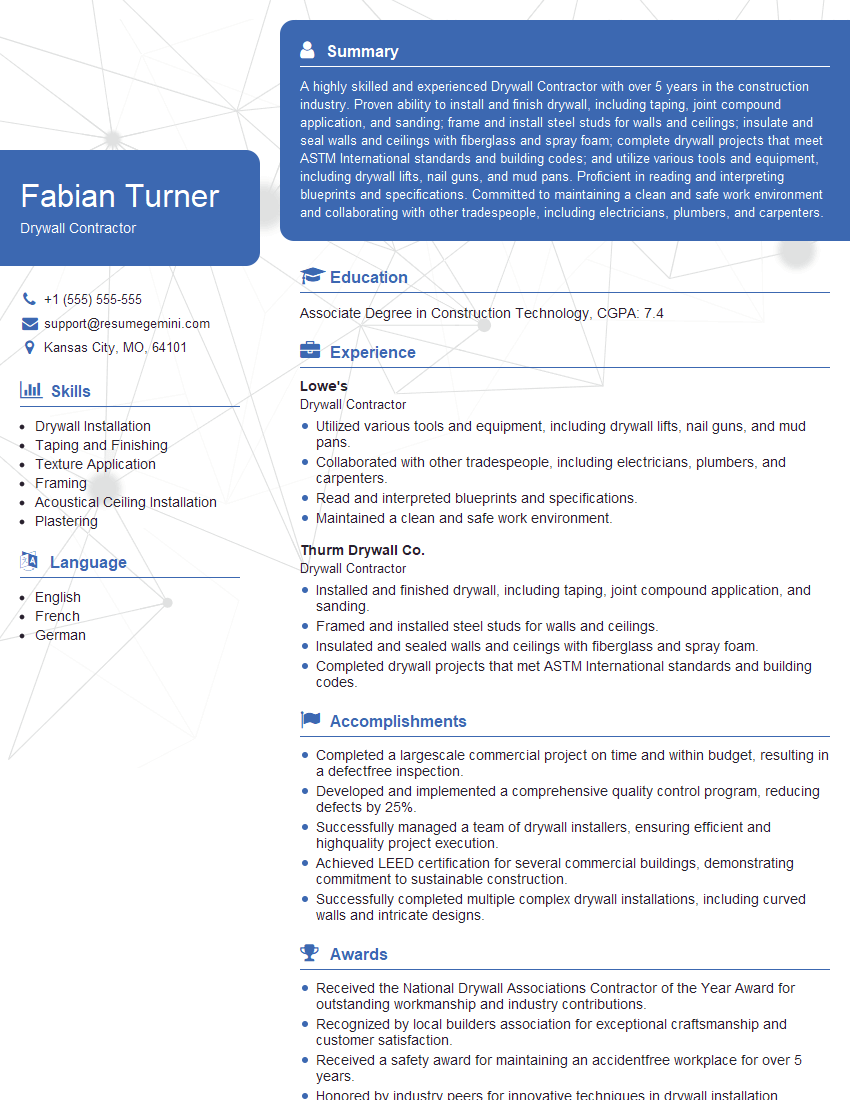
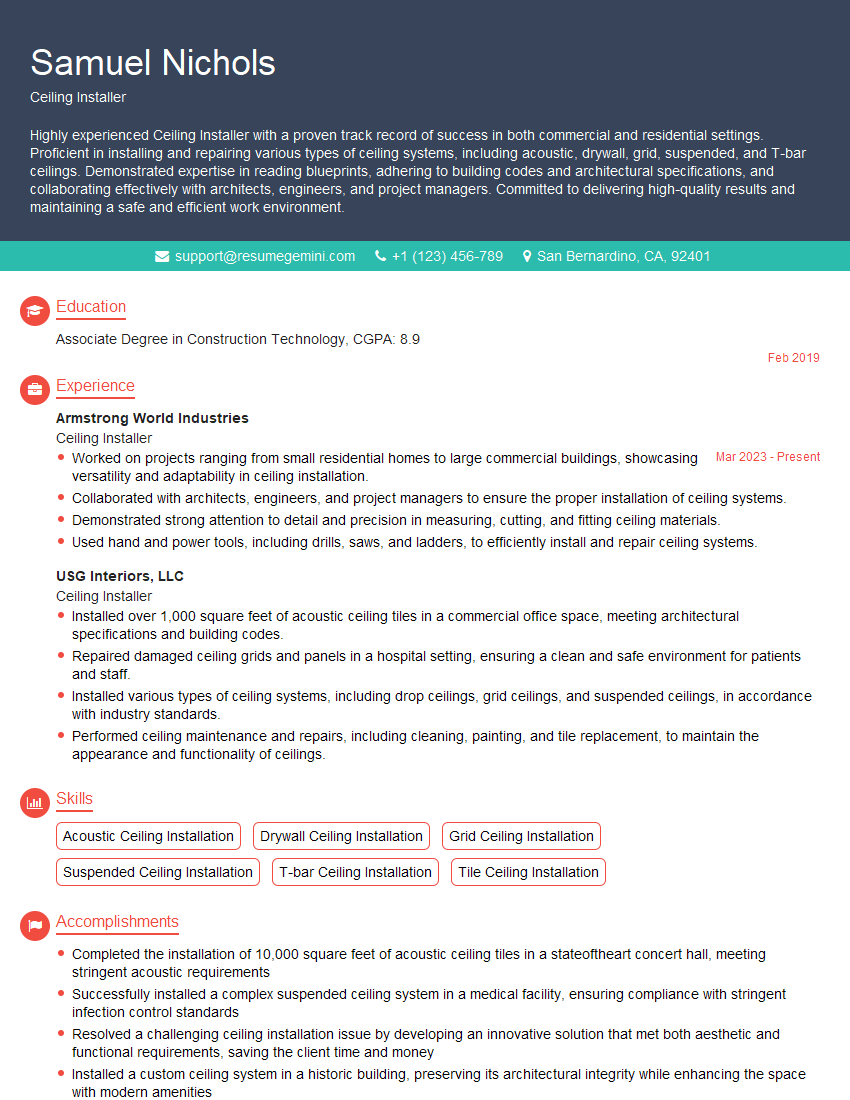
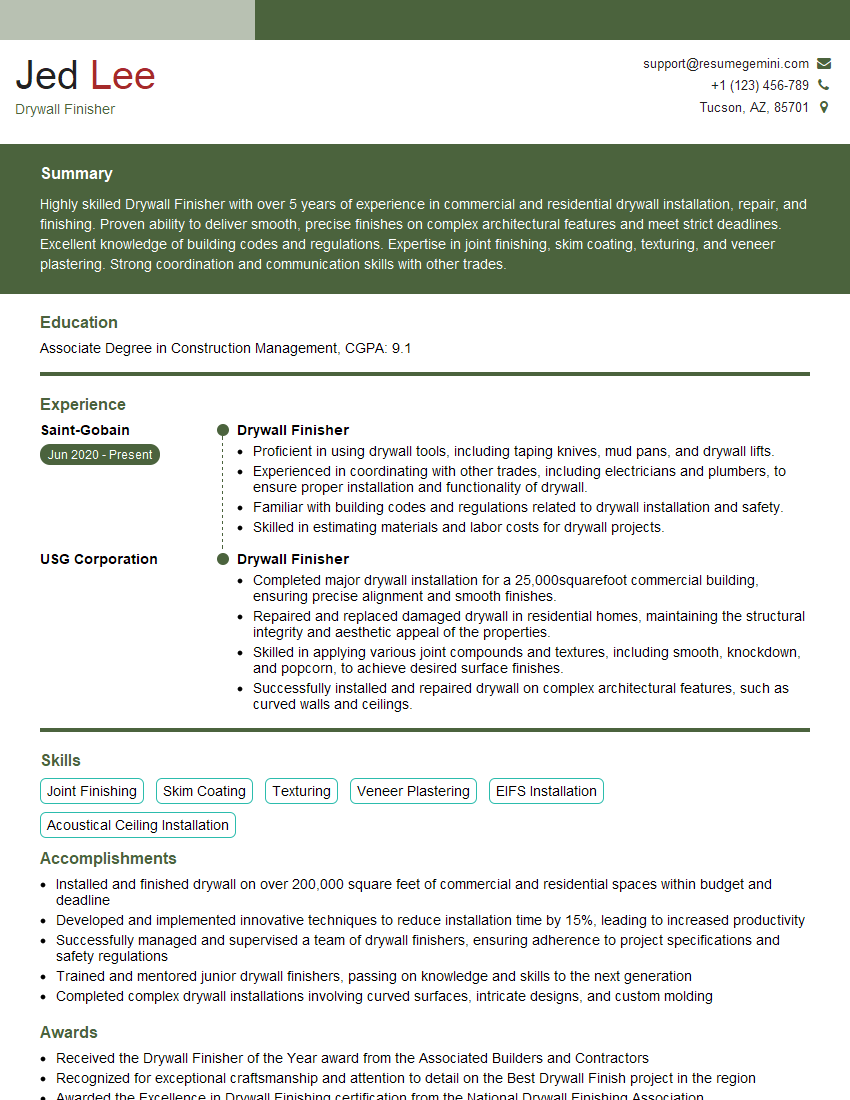
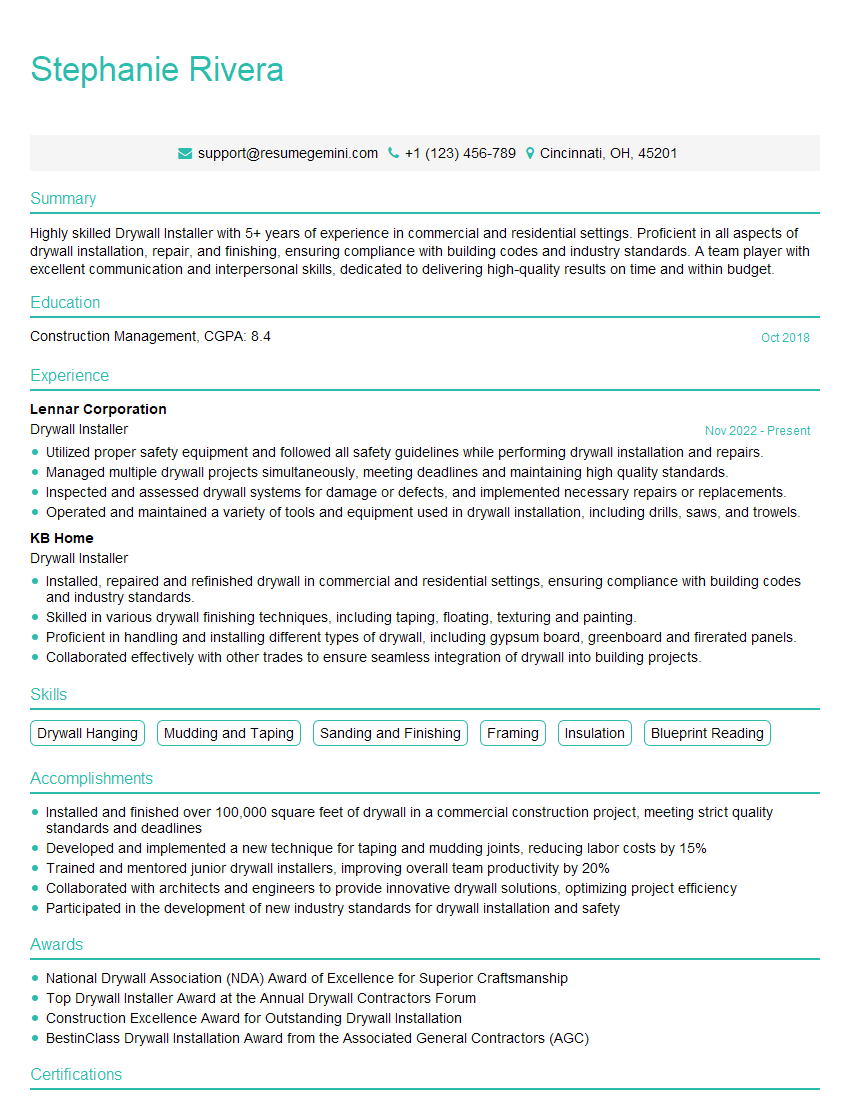
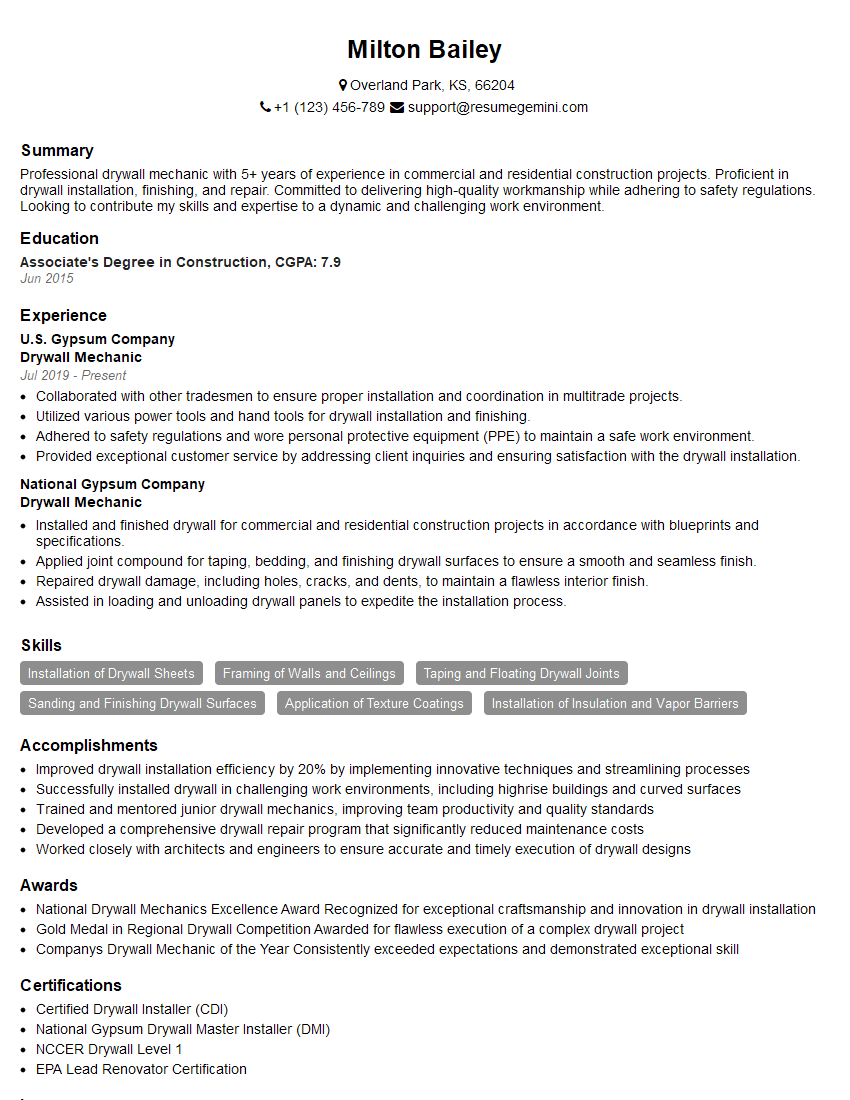
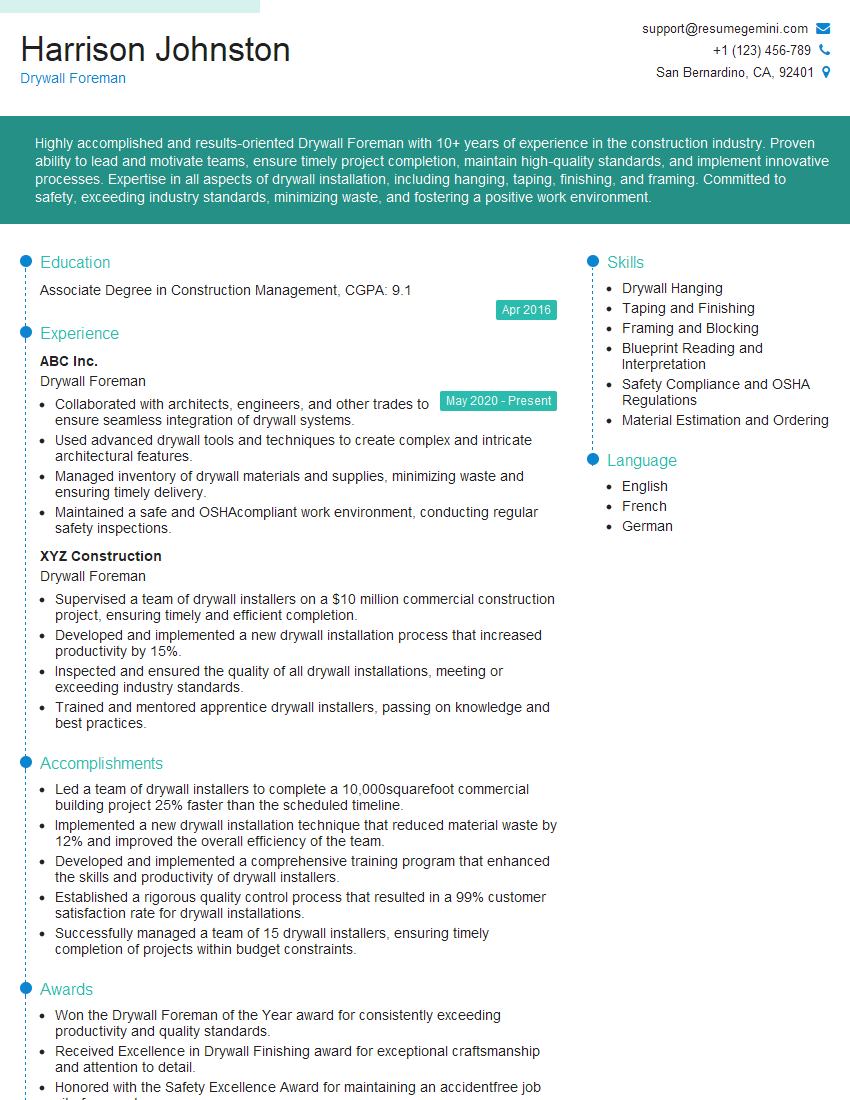
Mastering gypsum board application opens doors to a wide range of exciting career opportunities in construction and interior finishing. A strong understanding of these techniques is highly valued by employers and directly translates to career advancement. To maximize your job prospects, create an ATS-friendly resume that effectively showcases your skills and experience. ResumeGemini is a trusted resource that can help you build a professional and impactful resume. We provide examples of resumes tailored to gypsum board application to guide you through the process. Invest in crafting a compelling resume – it’s your first impression and a crucial step toward landing your dream job.
Explore more articles
Users Rating of Our Blogs
Share Your Experience
We value your feedback! Please rate our content and share your thoughts (optional).
What Readers Say About Our Blog
Very informative content, great job.
good