Are you ready to stand out in your next interview? Understanding and preparing for Hair management interview questions is a game-changer. In this blog, we’ve compiled key questions and expert advice to help you showcase your skills with confidence and precision. Let’s get started on your journey to acing the interview.
Questions Asked in Hair management Interview
Q 1. Explain the different hair types and textures and how you would tailor your approach to each.
Hair typing systems categorize hair based on its shape, texture, and density. The most common system uses a three-number system (e.g., 2b, 3c) describing curl pattern, thickness, and density. Type 1 is straight, Type 2 is wavy, Type 3 is curly, and Type 4 is coily. Within each type are subtypes (a, b, c) indicating the curl’s tightness and shape. For example, 2a is loose waves, 2b is more defined waves, and 2c is tighter, almost curly waves. 3a are loose spirals, 3b are tighter spirals, and 3c are tight corkscrew curls. 4a has tight, soft curls, 4b is wiry, and 4c is tightly packed zig-zag curls. Thickness refers to the diameter of the individual hair strand, and density is the number of hairs per square inch of the scalp.
My approach is highly personalized. For straight hair (Type 1), I focus on creating volume and shine, perhaps using volumizing products and techniques like layering. For wavy hair (Type 2), I concentrate on enhancing the natural wave pattern using diffusing techniques and products designed to reduce frizz. Curly hair (Type 3) requires moisture-rich products and techniques to avoid dryness and breakage. This might involve using curl creams and avoiding harsh brushing. Finally, coily hair (Type 4) needs gentle handling and products that provide maximum hydration and definition, focusing on techniques like finger coiling or using protective styles. Before starting any treatment, a thorough consultation focusing on hair goals and hair history is critical.
Q 2. Describe your experience with various hair coloring techniques (balayage, highlights, ombre).
I’m proficient in various coloring techniques, including balayage, highlights, and ombre. Balayage is a freehand painting technique that creates a natural, sun-kissed look with soft transitions. It’s ideal for clients seeking low-maintenance color. Highlights involve lightening specific strands to add dimension and brightness. This can range from fine, delicate highlights to bolder, chunky highlights, depending on the desired effect. Ombre features a gradual transition from a darker root to a lighter end. I carefully consider the client’s skin tone, hair type, and desired outcome before determining which technique is most appropriate. For example, balayage is great for low-maintenance clients, highlights can add depth to finer hair, and ombre often suits those who want a dramatic change but avoid constant touch-ups.
My experience includes customizing these techniques; for instance, I’ve combined balayage with lowlights to achieve a rich, multi-tonal effect, or tailored highlights to specifically enhance a client’s facial features. I always prioritize the health of the hair, using low-damage products and applying techniques to minimize stress on the hair shaft. The application method, the developer strength, and the processing time are key factors that I carefully manage. I always do a strand test before proceeding with the full application.
Q 3. How do you handle challenging client requests or difficult hair situations?
Handling challenging client requests or difficult hair situations requires patience, clear communication, and problem-solving skills. If a client’s request is unrealistic, I explain why (e.g., the desired style might damage their hair) and offer realistic alternatives. I actively listen to their concerns and try to understand their vision, even if I initially disagree with their approach. For instance, if a client requests a dramatic color change that could damage their hair, I would propose a phased approach to achieve the desired look while minimizing risk. If a client experiences a hair mishap (e.g., a chemical reaction), I immediately assess the damage, take appropriate steps to mitigate the situation, and offer solutions, possibly using restorative treatments or referring them to a specialist if needed. Transparency and honesty are key in these circumstances.
Involving the client in the decision-making process is crucial. I aim for a collaborative approach where we both work towards a mutually agreeable solution. Maintaining a calm and professional demeanor, even in stressful situations, is essential for de-escalation and positive outcome.
Q 4. What are the different types of hair extensions, and what are the pros and cons of each?
Several types of hair extensions exist, each with its pros and cons. Weft extensions are wefts of hair sewn or glued onto natural hair. They are relatively affordable but can be bulky and require more maintenance. Tape-in extensions are pre-taped wefts applied to the hair, offering a more seamless look but needing more frequent re-application. Clip-in extensions are the most convenient; they clip onto the hair and are easily removed, but they may not be as long-lasting or as natural-looking. Sew-in extensions are sewn onto cornrows, providing a secure and long-lasting solution but demanding more time and skill for application and removal. Finally, individual bonds, like micro-rings or keratin bonds, involve attaching single strands of hair to the individual strands of the client’s hair. These offer a natural look but can be time-consuming and expensive.
The best type depends on the client’s hair type, lifestyle, budget, and desired look. For example, a client with thin hair might benefit from tape-ins for volume without bulk, while someone with thick, long hair might prefer clip-ins for occasional use. I always discuss the pros and cons of each option with the client to help them make an informed decision. Proper aftercare is crucial to extend the lifespan of any type of extension.
Q 5. Detail your experience with hair loss solutions and treatments.
My experience with hair loss solutions and treatments includes assessing the cause of hair loss (e.g., hormonal imbalances, stress, genetics, medical conditions) to determine the best course of action. I am knowledgeable about various treatments, including scalp massages to improve circulation, recommending specific shampoos and conditioners to stimulate hair growth, and discussing potential referrals to dermatologists or trichologists for more advanced treatments like minoxidil or low-level laser therapy (LLLT). I also advise clients on nutritional strategies that support hair health, such as ensuring adequate protein and vitamin intake.
It’s vital to be realistic about the possibilities. In cases of significant hair loss, I explain the limitations of over-the-counter solutions and recommend professional medical advice. My role is to provide support and information, tailoring my advice to the individual’s specific situation and collaborating with other healthcare professionals when necessary. Maintaining a supportive and empathetic approach is vital during this often emotional process.
Q 6. Describe your approach to client consultations – how do you determine their needs and expectations?
Client consultations are the cornerstone of my work. I begin by building rapport, creating a comfortable environment for open communication. I ask detailed questions about their hair history (past treatments, products used, health conditions), their hair goals (length, style, color), and their lifestyle (washing frequency, styling habits). I carefully examine their hair and scalp to assess its condition, identifying any potential issues such as dryness, damage, or scalp conditions. I show them examples of previous work and utilize visual aids (images, magazines) to clarify their preferences and help them envision the possibilities. Throughout the consultation, I actively listen to their concerns and answer their questions openly and honestly.
My goal is to collaboratively create a realistic plan that meets their needs and expectations while considering the health of their hair. I clearly communicate the process, the timeline, and the potential costs associated with their desired outcome. A well-structured consultation ensures a positive experience and successful outcome.
Q 7. What sanitation and hygiene practices do you follow to maintain a clean and safe work environment?
Maintaining a clean and safe work environment is paramount. I adhere to strict sanitation and hygiene practices, including sterilizing all tools (scissors, combs, brushes) using an autoclave or hospital-grade disinfectant after each client. I use disposable capes, towels, and applicators to prevent cross-contamination. I wash my hands thoroughly before and after each service. My workspace is kept clean and organized, with all products properly labeled and stored. I use air purifiers to filter the air and minimize dust and airborne particles, especially crucial when working with chemicals. I also maintain detailed records of my sanitation practices and undergo regular professional development in infection control.
The health and safety of both my clients and myself are my top priorities. I proactively address potential risks and ensure compliance with all relevant health and safety regulations. This commitment creates a trustworthy and secure environment for my clientele.
Q 8. Explain your knowledge of various hair products and their chemical compositions.
My understanding of hair products encompasses a wide range, from simple shampoos and conditioners to complex chemical treatments like perms and colorants. Let’s break down some key chemical compositions:
- Shampoos: Primarily composed of surfactants (like sodium lauryl sulfate) to cleanse, along with conditioners, preservatives, and fragrances. The pH level is crucial; too alkaline can damage hair.
- Conditioners: Contain emollients (e.g., silicones, oils) to smooth the hair cuticle and humectants (like glycerin) to attract and retain moisture. They often include proteins for strength and repair.
- Hair dyes: These are complex mixtures. Permanent dyes use ammonia to lift the cuticle and allow artificial pigments to penetrate the cortex, resulting in a lasting color change. Semi-permanent and temporary dyes work by coating the hair shaft.
- Perms (permanent waves): Involve thioglycolic acid or other reducing agents that break and reform disulfide bonds in the hair, changing its shape. Neutralizers, often hydrogen peroxide-based, are then used to reset the bonds.
- Relaxers: These use strong alkalis like sodium hydroxide (lye) or guanidine hydroxide to break down protein bonds, straightening the hair. They require careful application and precise timing to avoid damage.
Understanding these chemical compositions is crucial for selecting the right products for different hair types and conditions, and for assessing potential risks and allergies.
Q 9. How do you stay updated with the latest trends and techniques in hair styling and coloring?
Staying current in this dynamic field requires a multi-pronged approach. I consistently attend industry conferences and workshops, like those offered by the American Academy of Cosmetology, to learn about new techniques and product innovations. I also subscribe to professional hairdressing magazines and follow influential stylists and colorists on social media platforms like Instagram and YouTube.
Furthermore, I actively participate in online forums and communities dedicated to hairdressing, which enables me to engage in discussions, exchange insights and stay abreast of the latest research findings. Continuous learning is integral to my professional development and enables me to offer my clients the most up-to-date and effective services.
Q 10. Describe your experience with different hair cutting techniques (e.g., blunt cut, layered cut).
My experience encompasses a variety of hair cutting techniques tailored to individual hair types and facial features.
- Blunt cuts: These create a strong, uniform line and work well for thick, straight hair, offering a polished, modern look. Precision is key; even slight variations can affect the overall shape.
- Layered cuts: These involve cutting the hair at various lengths, creating texture and movement. They are suitable for a wide range of hair types and can add volume or soften heavier styles. The number of layers and their placement depend on the desired outcome.
- Texturizing techniques: Methods such as point cutting, slide cutting, and carving are used to remove bulk, create texture, and add subtle movement to the hair. This often complements other cutting techniques for a more customized result.
I adapt my approach based on each client’s unique hair texture, density, and desired style. For example, a layered cut might be ideal for fine hair to boost volume, whereas a blunt cut might suit thick hair for a sleek look.
Q 11. What is your approach to maintaining the health and integrity of your clients’ hair?
Maintaining the health and integrity of my clients’ hair is paramount. My approach focuses on three key aspects:
- Hair analysis: I begin with a thorough consultation to assess the client’s hair type, condition, and styling habits. This includes checking for damage, dryness, or other concerns.
- Product selection: Based on the analysis, I recommend products tailored to their specific needs. This might involve selecting gentle, sulfate-free shampoos and conditioners for delicate hair, or using protein treatments to strengthen damaged hair.
- Styling techniques: I emphasize using low-heat styling tools, minimizing chemical treatments, and recommending protective styles to reduce stress and damage. I also educate my clients on proper hair care practices at home.
I always prioritize preventing damage over correcting it. A proactive approach using the right products and techniques ensures long-term hair health.
Q 12. How do you handle client complaints or negative feedback?
Handling client complaints is a crucial part of my job. My approach is centered around active listening and empathy. I begin by patiently hearing their concerns without interruption.
Then, I try to understand the root cause of their dissatisfaction. Was there a miscommunication about the desired style? Was there an issue with the service itself? Once the problem is identified, I strive to find a resolution. This might involve offering a complimentary service, adjusting the style, or even providing a refund.
Throughout the process, I maintain a professional and respectful demeanor. My goal is not just to resolve the immediate issue but to rebuild the client’s trust and ensure their future satisfaction.
Q 13. Describe your experience with managing a team or working collaboratively in a salon environment.
In my previous role at [Salon Name], I worked collaboratively with a team of stylists, colorists, and assistants. We worked together to create a positive and efficient salon environment. I actively participated in team meetings, where we discussed client feedback, upcoming trends, and scheduling.
I also mentored junior stylists, providing guidance and support on technical skills and client management. My experience involved tasks like delegating responsibilities, resolving scheduling conflicts, and fostering a supportive team dynamic. This collaborative environment enhances productivity and ensures quality client service.
Q 14. What are the safety precautions associated with the use of chemicals in hair treatments?
Safety is paramount when using chemical hair treatments. Several precautions must be followed:
- Proper ventilation: Always work in a well-ventilated area to minimize exposure to fumes, particularly with ammonia-based products.
- Protective gear: Gloves, eye protection, and a mask are essential to prevent skin and respiratory irritation. Protective clothing is advisable for certain treatments.
- Patch tests: Before applying any chemical treatment, perform a patch test on a small area of skin to check for allergic reactions.
- Accurate mixing and application: Follow product instructions meticulously regarding mixing ratios and application techniques. Improper mixing or application can lead to uneven results or damage.
- Emergency preparedness: Keep appropriate emergency supplies, such as eye washes and neutralizing agents, readily available.
- Proper disposal: Dispose of chemicals responsibly according to local regulations.
By adhering to strict safety protocols, we minimize potential risks and ensure a safe working environment for both the stylist and the client. Regular training on safe handling practices is vital to maintain this standard.
Q 15. How do you handle difficult clients or those with unrealistic expectations?
Managing clients with unrealistic expectations requires a delicate balance of empathy and professionalism. I begin by actively listening to their concerns and understanding their desired outcome. Then, I use my expertise to explain realistically what can be achieved with their hair type and condition. For example, if a client with very fine hair wants extremely long, thick extensions, I’ll explain the potential damage and offer alternative, more achievable styles. I present a range of options, highlighting the pros and cons of each, so they feel involved in the decision-making process. Sometimes, compromise is key; we might adjust the style slightly to achieve a similar look while maintaining the health of their hair. Open and honest communication is paramount; I avoid making promises I can’t keep to avoid disappointment. If the client remains inflexible, it’s okay to politely decline the service to avoid a negative experience for both of us. Ultimately, building rapport and managing expectations are crucial to resolving these situations.
Career Expert Tips:
- Ace those interviews! Prepare effectively by reviewing the Top 50 Most Common Interview Questions on ResumeGemini.
- Navigate your job search with confidence! Explore a wide range of Career Tips on ResumeGemini. Learn about common challenges and recommendations to overcome them.
- Craft the perfect resume! Master the Art of Resume Writing with ResumeGemini’s guide. Showcase your unique qualifications and achievements effectively.
- Don’t miss out on holiday savings! Build your dream resume with ResumeGemini’s ATS optimized templates.
Q 16. Describe your problem-solving skills in a high-pressure salon setting.
A high-pressure salon environment demands quick thinking and resourcefulness. My problem-solving approach follows a structured process. First, I assess the situation: Is it a technical issue (e.g., a damaged hair extension), a scheduling conflict, or a client concern? Once identified, I prioritize the problem based on urgency and potential impact. For example, a client experiencing an allergic reaction requires immediate attention, while a minor styling adjustment can wait. Then, I develop and implement a solution, drawing from my knowledge and experience. If a solution isn’t immediately apparent, I consult with senior colleagues or use online resources to find the best course of action. Finally, I document the solution and any lessons learned to prevent similar issues in the future. For instance, a recurring issue of delayed appointments might be addressed by implementing a new scheduling system or improving client communication. My aim is to resolve issues efficiently and effectively, minimizing disruption and maintaining client satisfaction.
Q 17. What is your understanding of different scalp conditions and their treatments?
Understanding scalp conditions is fundamental to providing effective hair care. Common conditions include dandruff (seborrheic dermatitis), psoriasis, eczema, and fungal infections. Dandruff, characterized by flaking and itching, often responds to anti-dandruff shampoos containing ingredients like selenium sulfide or zinc pyrithione. Psoriasis, a chronic autoimmune disease, manifests as red, scaly patches, and requires specialized treatments like medicated shampoos or topical corticosteroids prescribed by a dermatologist. Eczema, another inflammatory skin condition, presents with dry, itchy skin and may benefit from gentle, moisturizing shampoos and conditioners. Fungal infections, like tinea capitis, require antifungal treatments, typically prescribed by a doctor. I always emphasize that I am not a medical professional. If a client presents with a severe or persistent scalp condition, I recommend they consult a dermatologist or trichologist for proper diagnosis and treatment. My role is to provide gentle, appropriate hair care that complements, not interferes with, medical treatment.
Q 18. How do you manage your time efficiently when working with multiple clients?
Efficient time management is crucial in a busy salon. I use a combination of techniques to stay organized. Firstly, I meticulously review appointments beforehand, noting the services required and estimated timeframes. Secondly, I prioritize tasks based on appointment length and complexity. For example, I might schedule color treatments earlier in the day, allowing ample drying time. Thirdly, I prepare the necessary tools and products beforehand, reducing time spent searching during client appointments. Finally, I maintain a clean and organized workspace to avoid delays. I also communicate clearly with clients about appointment times and any potential delays. Building a rapport with clients so that they are aware of your workflow and any potential slight wait times is important in reducing any stress or frustration on their part. Overall, proactive planning, organization, and communication are key to maximizing efficiency and minimizing client wait times.
Q 19. Explain your knowledge of various hair styling tools and their proper usage.
My expertise encompasses a wide range of hair styling tools, each with its unique application. For example, flat irons are excellent for straightening hair, but improper use can cause heat damage. I ensure clients understand the importance of using heat protectant sprays before straightening and employing the correct temperature setting for their hair type. Curling irons create various curls and waves, the size depending on the barrel diameter. I demonstrate proper techniques to prevent burns and create consistent curls. Blow dryers offer styling versatility, from sleek blowouts to voluminous looks, but excessive heat can dehydrate hair. I explain the importance of using a nozzle attachment for directional airflow and maintaining a safe distance from the scalp. Knowing the intricacies of each tool allows me to tailor the styling process to achieve the desired look while safeguarding the health of the client’s hair. In addition to the proper usage of each tool, I also educate clients on the aftercare they should practice with their hair depending on what was done.
Q 20. What are the key differences between natural and chemically treated hair?
Natural and chemically treated hair differ significantly in structure and properties. Natural hair retains its original texture and elasticity, while chemically treated hair undergoes structural changes. Chemical processes like perms, relaxers, and color treatments alter the hair’s protein bonds, leading to changes in texture, elasticity, and porosity. Natural hair is more resistant to damage and breakage but may be less versatile in terms of styling. Chemically treated hair may be more easily styled but is more prone to damage, dryness, and breakage. Understanding these differences is vital in selecting appropriate hair care products and styling techniques. Natural hair often benefits from moisturizing and strengthening treatments, while chemically treated hair may require products designed to repair damage and restore moisture balance. Ultimately, tailoring the care routine to the specific needs of the hair type—natural or chemically treated—is crucial to maintaining its health and integrity.
Q 21. How would you handle a client allergic reaction to a hair product?
Handling a client allergic reaction requires immediate action and calm professionalism. My first step is to stop the application of the offending product immediately. Next, I assess the severity of the reaction, noting symptoms like redness, swelling, itching, or difficulty breathing. For mild reactions, I would apply a cool compress to soothe the affected area. For more severe reactions, involving swelling or difficulty breathing, I would call emergency services (911) immediately. While waiting for help to arrive, I would monitor the client’s vital signs and provide comfort. Once the situation is stabilized, I would thoroughly document the incident, including the product used, the client’s symptoms, and the steps taken. I would also obtain the necessary medical information after the incident. In the future, I would be sure to conduct a thorough patch test before applying any new products to a client’s hair, even if it is just a new product being used on existing client hair. Preventing allergic reactions through thorough testing is paramount in maintaining client safety.
Q 22. How do you promote and maintain client loyalty and retention?
Client loyalty and retention are paramount in the hair industry. It’s built on trust and a consistently positive experience. I approach this through a multi-pronged strategy:
- Personalized Service: I take the time to understand each client’s hair type, lifestyle, and desired look. This involves detailed consultations, actively listening to their needs and concerns, and offering tailored advice, not just a standard service.
- Consistent High-Quality Work: This is foundational. I maintain a meticulous approach to every appointment, ensuring precise cuts, color applications, and styling, always striving for perfection and exceeding expectations.
- Building Relationships: I aim to create a friendly and comfortable atmosphere. Remembering details about clients’ lives, their preferences, and even their families, helps foster a genuine connection. Regular check-ins between appointments, even a simple text message, show that I value them as individuals.
- Loyalty Programs and Rewards: Offering discounts or exclusive services to repeat clients is a great incentive. This could involve birthday specials, referral bonuses, or early access to new treatments.
- Excellent Communication: Clear and proactive communication is crucial. This includes confirming appointments, managing expectations regarding wait times, and always being available to answer questions or address concerns promptly.
- Seeking Feedback: Regularly soliciting feedback – positive or negative – helps identify areas for improvement and shows clients that their opinion matters. Constructive criticism allows for continuous professional development and improved service.
For instance, I once had a client who was consistently dissatisfied with the color services offered at a previous salon. By taking the time to understand the chemical history of her hair, her desired outcome, and her concerns about damage, I was able to create a custom color plan that exceeded her expectations. This attention to detail solidified our client-stylist relationship.
Q 23. What are your strengths and weaknesses as a hair stylist/cosmetologist?
My strengths lie in my technical skills, my creativity, and my ability to connect with clients. I’m highly proficient in various cutting, coloring, and styling techniques, including balayage, highlighting, and advanced hair cutting methods. I’m also adept at adapting to different hair types and textures. I’m very creative and enjoy experimenting with new styles and trends while ensuring the look complements the client’s features and personality.
However, my weakness is sometimes taking on too much at once. I’m very passionate about my work and want to give every client my full attention. I’m actively working on improving my time management skills and learning to delegate tasks more effectively when needed. I’ve recently implemented a scheduling system that prioritizes tasks and ensures that I’m not overbooking my appointments.
Q 24. Describe a time you had to handle a difficult or unexpected situation in the salon.
One time, a client arrived for a balayage appointment with hair that had been previously treated with a box dye. This significantly altered the hair’s porosity and texture. It was clear that the desired balayage would result in damage if applied directly.
Instead of proceeding as planned, I sat down with the client and explained the situation. I demonstrated why the current hair condition was unsuitable for the initial plan and presented various solutions, including a corrective color treatment to improve the hair’s health before moving to the balayage. The client appreciated my honesty and proactive problem-solving skills. We ultimately created a different timeline for achieving her desired look, one that prioritized hair health over immediate results. This experience reinforced the importance of thorough consultations and adapting to unexpected circumstances.
Q 25. What are your salary expectations?
My salary expectations are in line with the industry standard for a stylist with my experience and skill set. I’m flexible and open to discussion based on the specifics of the position and benefits package.
Q 26. Why are you interested in this specific position?
I’m interested in this position because of [Salon Name]’s reputation for excellence, its commitment to using high-quality products, and its focus on providing a luxury client experience. I’m particularly drawn to [mention specific aspect of the salon, e.g., its sustainable practices, its team culture, or a specific stylist whose work you admire]. I believe my skills and passion for hair styling would be a great asset to your team, and I’m excited about the opportunity to contribute to your salon’s continued success.
Q 27. Where do you see yourself in five years?
In five years, I envision myself as a highly skilled and respected stylist at [Salon Name], potentially leading a team or mentoring junior stylists. I’m eager to continue developing my expertise in advanced techniques and potentially specializing in a niche area such as [mention specific area, e.g., textured hair or bridal styling]. I also aim to actively participate in industry events and maintain a strong professional network.
Q 28. Do you have any questions for me?
Yes, I have a few questions. First, can you tell me more about the salon’s ongoing training opportunities and professional development programs? Second, what are the typical client demographics and the range of services offered? Lastly, could you describe the salon’s culture and team dynamic?
Key Topics to Learn for Hair Management Interview
- Scalp Health & Analysis: Understanding common scalp conditions (e.g., dandruff, seborrheic dermatitis), their causes, and appropriate treatment approaches. Practical application: Diagnosing scalp issues during a client consultation and recommending suitable products or treatments.
- Hair Structure & Chemistry: Knowledge of hair components (keratin, etc.), the effects of chemical processes (perms, coloring), and the importance of pH balance. Practical application: Explaining the chemical processes involved in hair coloring to a client, and recommending appropriate aftercare.
- Hair Styling Techniques: Mastering various cutting, coloring, and styling techniques, including updos, braids, and blow-drying. Practical application: Demonstrating proficiency in a range of styling techniques during a practical assessment or interview.
- Hair Care Product Knowledge: Familiarity with different hair product categories (shampoos, conditioners, styling products), their ingredients, and their effects on different hair types. Practical application: Recommending the right products for specific client needs based on hair type and concerns.
- Client Consultation & Communication: Effective communication skills to understand client needs, offer professional advice, and build rapport. Practical application: Conducting a thorough consultation to ascertain client preferences and recommend appropriate services.
- Salon Management & Hygiene: Understanding salon protocols, hygiene standards, and safety procedures. Practical application: Maintaining a clean and organized workstation, adhering to safety regulations, and managing client flow efficiently.
- Trend Awareness & Continuing Education: Keeping abreast of the latest hair trends, techniques, and product innovations. Practical application: Demonstrating knowledge of current trends and incorporating them into client services.
Next Steps
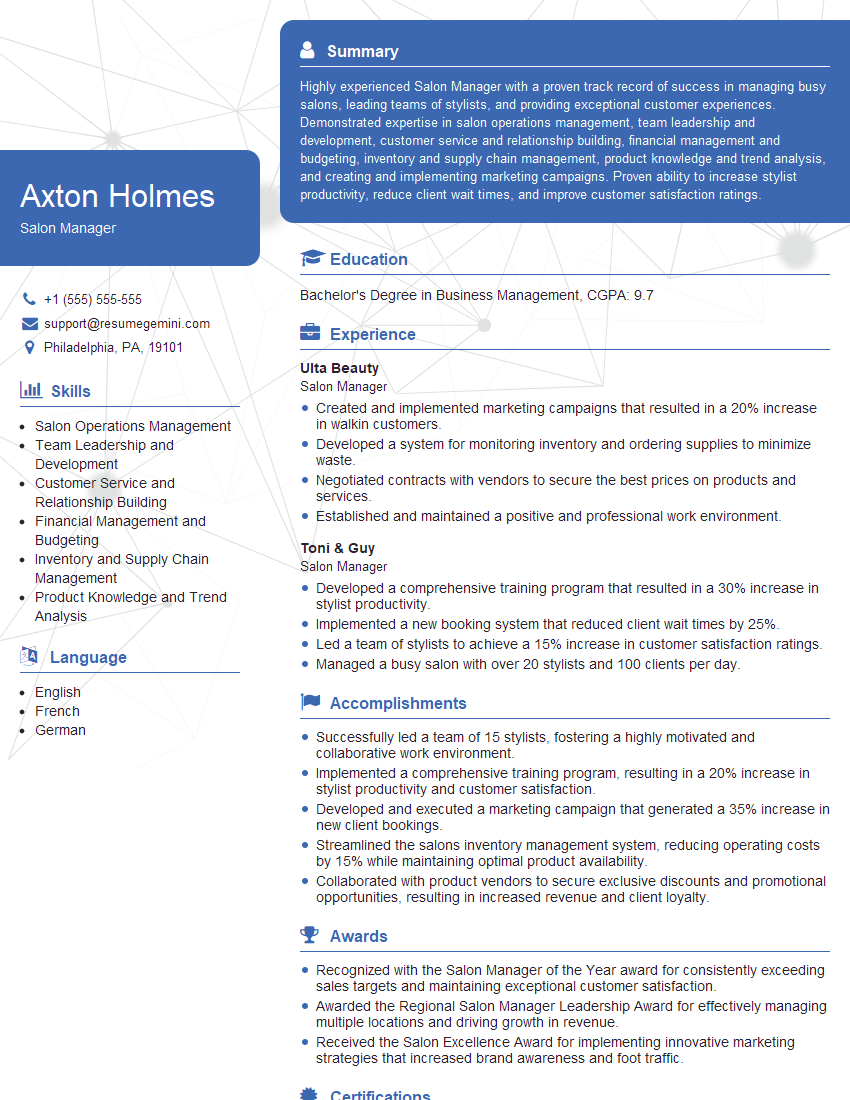
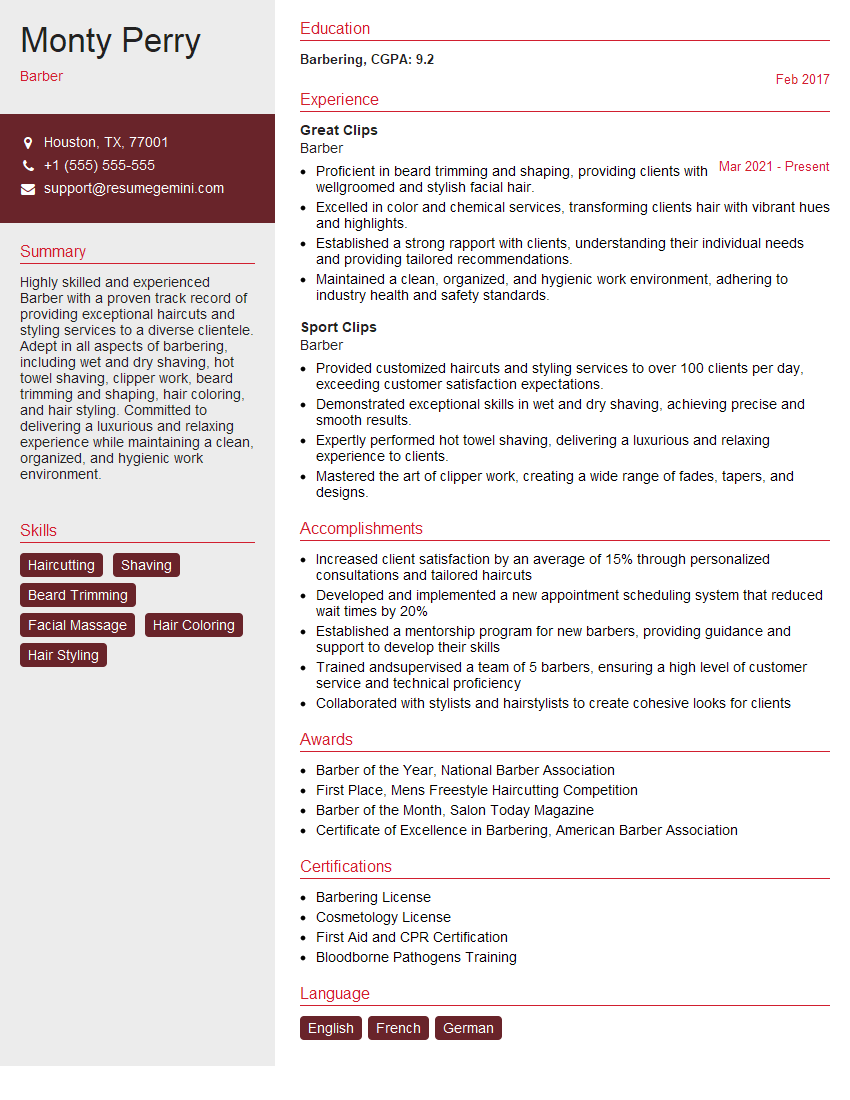
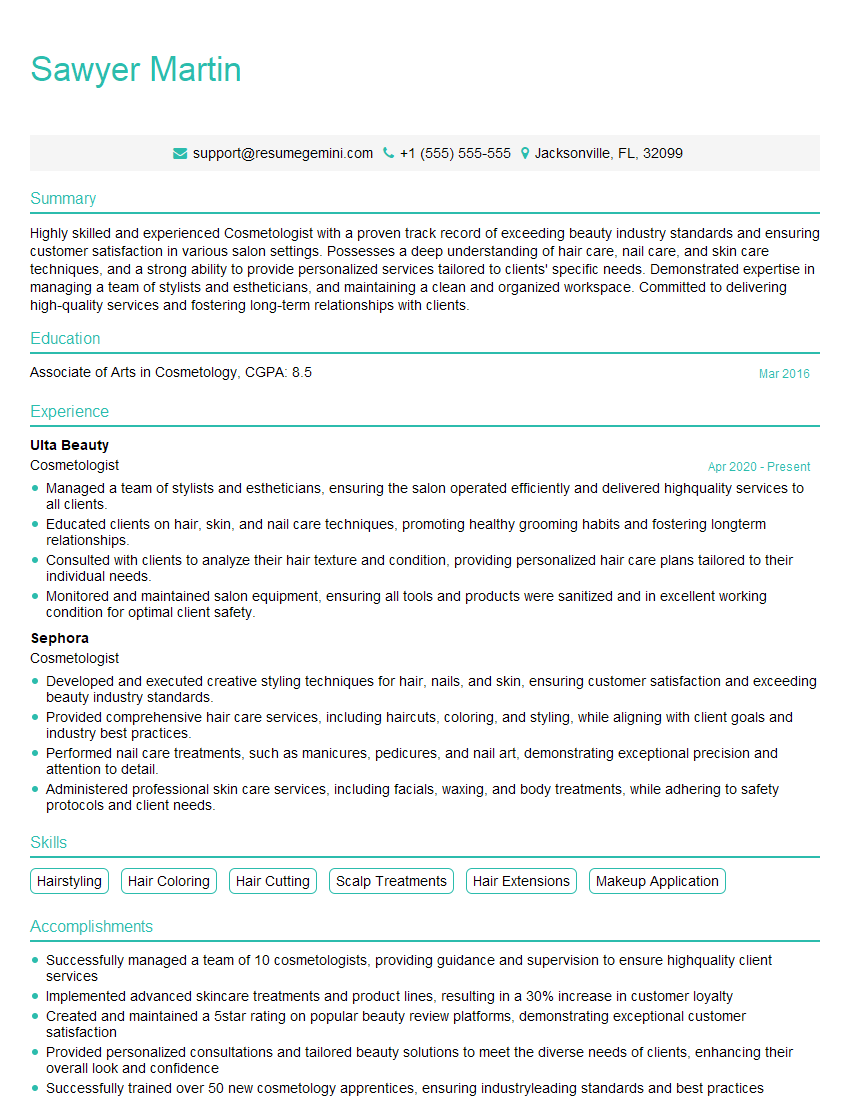
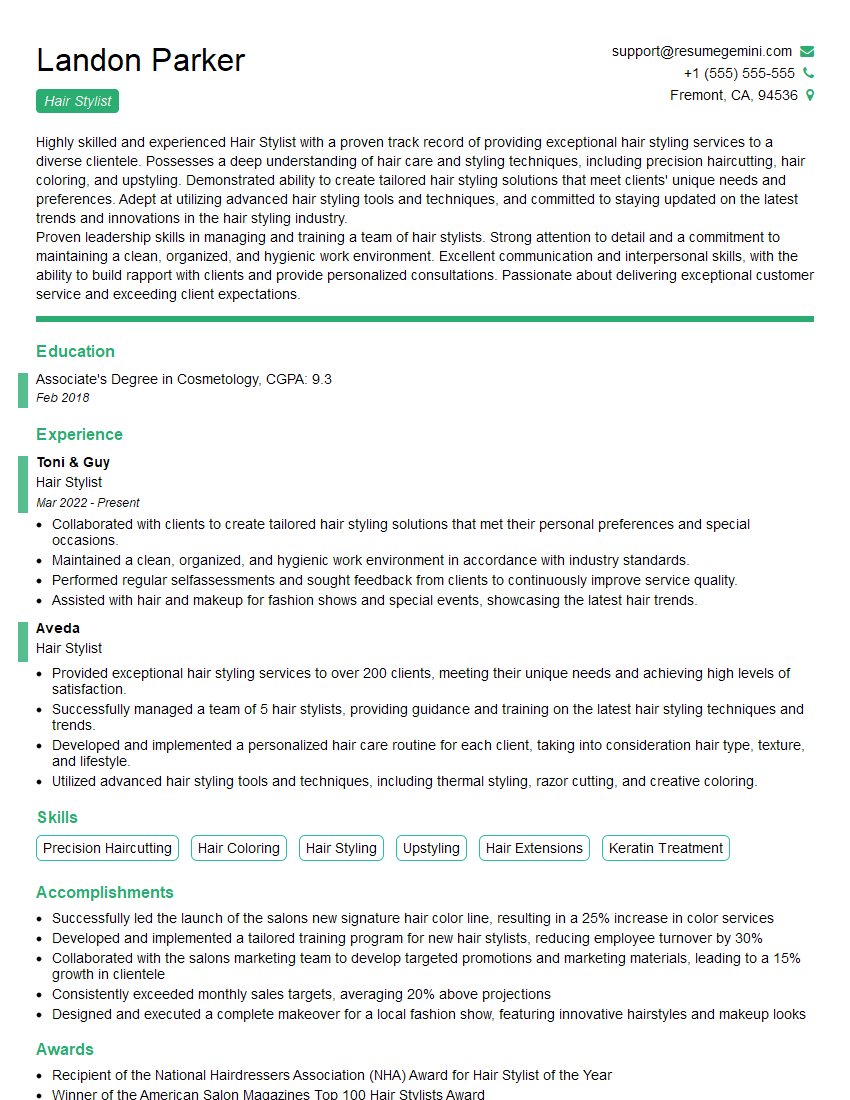
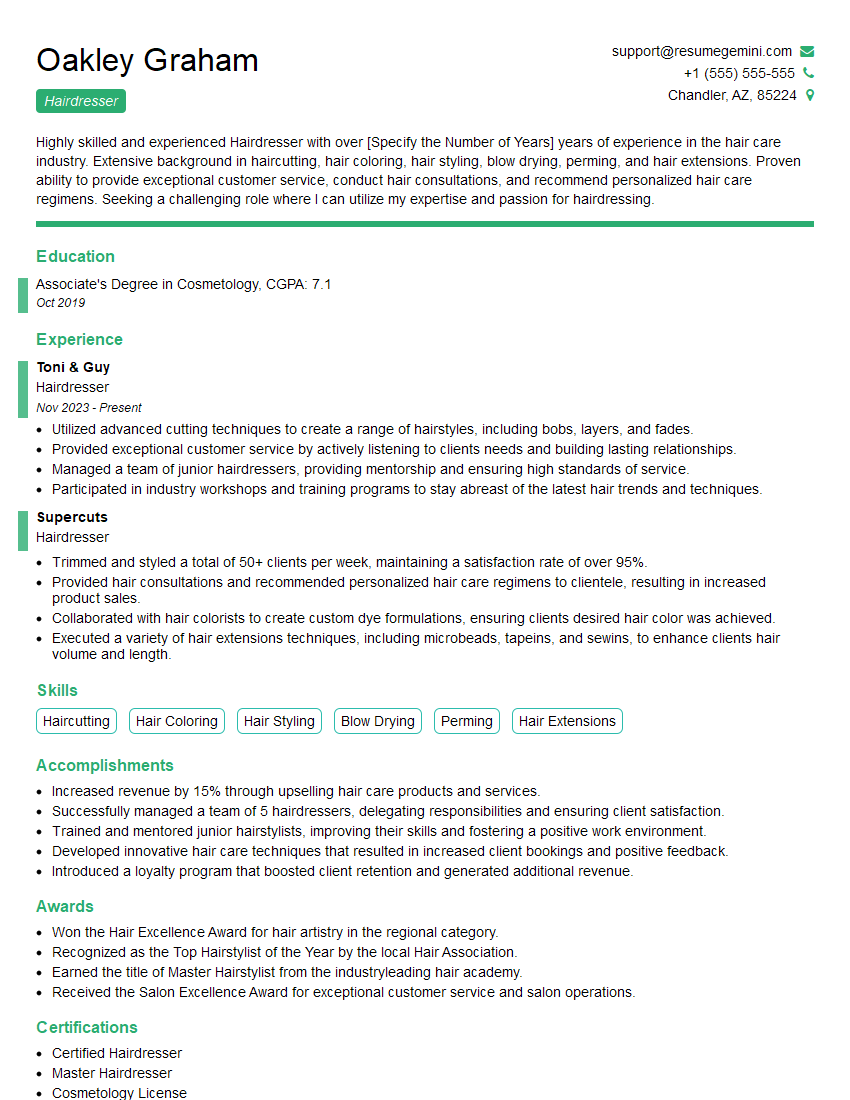
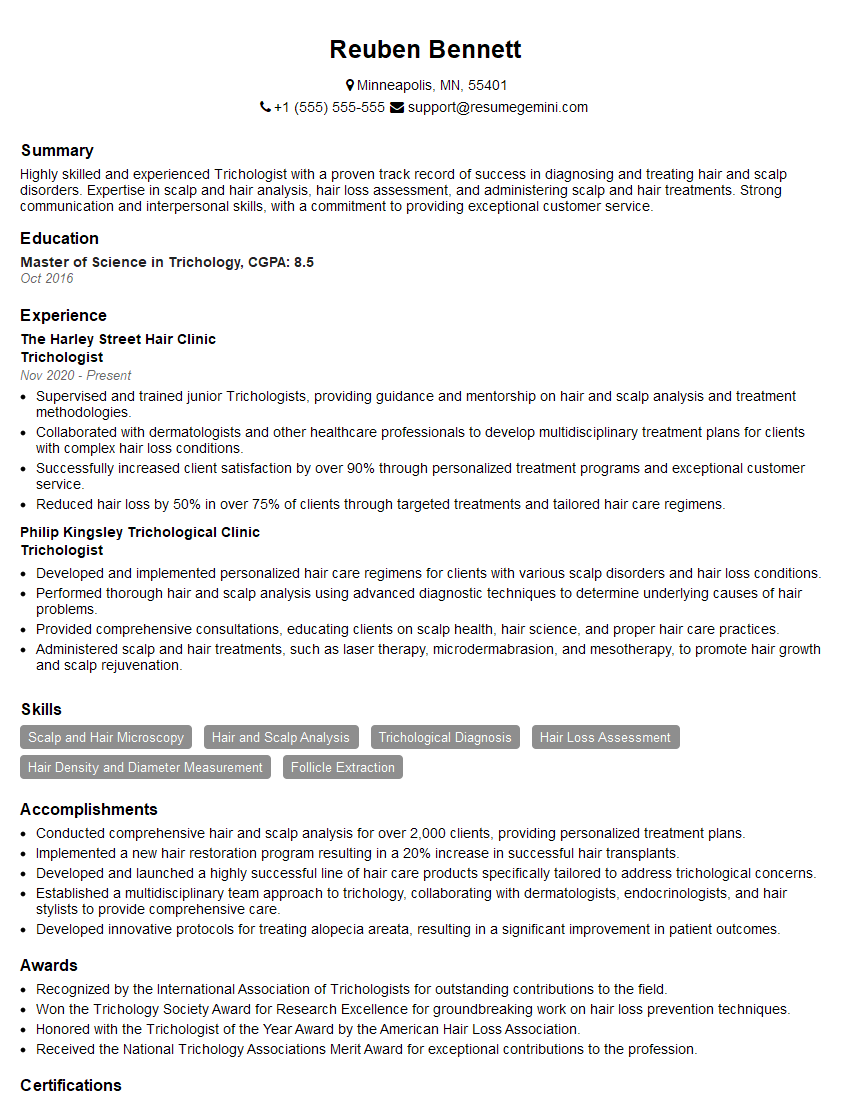
Mastering hair management is crucial for career advancement in this dynamic industry. A strong understanding of these key areas will significantly boost your interview performance and open doors to exciting opportunities. To further enhance your job prospects, create an ATS-friendly resume that highlights your skills and experience effectively. ResumeGemini is a trusted resource to help you build a professional and impactful resume. We offer examples of resumes tailored to the hair management industry to guide you in creating a winning application.
Explore more articles
Users Rating of Our Blogs
Share Your Experience
We value your feedback! Please rate our content and share your thoughts (optional).
What Readers Say About Our Blog
Very informative content, great job.
good