Unlock your full potential by mastering the most common Hand Binding interview questions. This blog offers a deep dive into the critical topics, ensuring you’re not only prepared to answer but to excel. With these insights, you’ll approach your interview with clarity and confidence.
Questions Asked in Hand Binding Interview
Q 1. Describe the different types of sewing techniques used in hand binding.
Hand binding employs several sewing techniques, each impacting the book’s durability and aesthetic. The choice depends on the project’s scale and desired outcome.
- Kettle Stitch: This is a classic and robust method, creating a strong spine. The thread passes through the center of each section’s folded signatures, creating a series of loops. It’s ideal for larger books needing significant durability.
- Coptic Stitch: Known for its flexibility and decorative potential, this stitch involves sewing through the spine’s outer edges. Each signature is stitched individually, offering a very unique look. It’s well-suited for smaller books and journals.
- Long Stitch: A simple and quick method where the thread goes through the spine’s edge, attaching each signature sequentially. While less durable than kettle stitch, it’s faster and suitable for books where aesthetics aren’t paramount.
- French Link Stitch: A more complex technique creating decorative stitching on the spine, offering both strength and visual appeal. It’s often seen in high-end books.
The choice between these methods often comes down to a balance of time, desired strength, and aesthetic outcome. For example, I’d use a kettle stitch for a large, heavy-duty reference book, but opt for a Coptic stitch for a smaller, handcrafted journal.
Q 2. Explain the process of preparing a book section for sewing.
Preparing book sections for sewing is crucial for a well-bound book. Accuracy here directly translates to the final product’s quality.
- Folding Signatures: The printed sheets are folded into signatures, ensuring all pages align perfectly. This often involves precise creasing and careful handling to avoid damage.
- Gathering Signatures: The folded signatures are gathered and carefully aligned along the spine. Precise alignment at this stage is vital to avoid crooked text blocks in the finished book.
- Sewing Holes: Consistent holes are created along the spine. These holes will guide the stitching. A pricking tool with multiple needles assures accuracy. Spacing needs careful consideration based on the chosen sewing method.
- Checking Alignment: Before sewing, a final alignment check is critical. An uneven or improperly aligned spine leads to a poorly bound book.
Imagine trying to sew a quilt with poorly aligned fabric pieces – the result would be uneven and messy. Preparing book sections is just as vital, requiring attention to detail at every step.
Q 3. What are the advantages and disadvantages of using different adhesives in hand binding?
Adhesives play a significant role in hand binding, particularly in adhering the cover boards and lining the spine. Different adhesives offer varying advantages and disadvantages.
- Animal Glue: A traditional choice, it’s reversible (though challenging) and ages well, providing excellent adhesion. However, it’s relatively expensive, requires careful application and preparation, and its usage is subject to environmental considerations.
- PVA (Polyvinyl Acetate): A modern, readily available, and inexpensive adhesive, it’s easy to use and strong. However, it’s not reversible and can yellow or become brittle over time.
- Wheat Paste: A non-toxic and biodegradable option, it offers strong bonding but is sensitive to humidity, requiring meticulous storage and application techniques. It can also be somewhat messy.
The choice depends on the project’s nature. For a high-end, archival book, I might prefer animal glue for its reversibility and aging properties. For a more budget-conscious project, PVA might be a suitable alternative.
Q 4. How do you select appropriate materials (paper, boards, thread) for a specific binding project?
Material selection is paramount in hand binding. The paper, boards, and thread choice significantly impact the final book’s look, feel, and durability.
- Paper: The paper’s weight, texture, and acidity influence the book’s feel and longevity. Acid-free paper is essential for archival purposes. Heavier papers are suitable for larger, more robust books.
- Boards: Cover boards provide structure and protection. Common options include binder’s board (a strong, yet flexible board), and heavier chipboard for more robust protection. The board’s thickness depends on the book size and weight.
- Thread: Linen thread is widely favored for its strength and durability; it’s crucial that the thread is the appropriate weight to hold the book together. Consider the thread color based on the project’s aesthetic. Cotton thread may be a more economic choice, but it is less durable.
For a delicate journal, I might use a lighter weight paper and thin, flexible boards. Conversely, a large, reference volume would require heavier paper and thicker boards for adequate support.
Q 5. Describe your experience with different types of book covers (e.g., cloth, leather).
My experience with various book covers is extensive. The choice depends on the project’s requirements and aesthetic goals.
- Cloth Covers: Offer a good balance of durability, aesthetics, and cost-effectiveness. Buckram or linen are popular choices, available in a wide range of colors and textures. They are relatively easy to work with and provide a professional finish.
- Leather Covers: Provide superior durability, a luxurious feel, and age beautifully, developing a unique patina over time. However, they are more expensive and require specialized tools and skills. Full-grain leather is the most durable option, offering excellent longevity.
I’ve worked on projects ranging from simple cloth-covered notebooks to intricate, hand-tooled leather books. The process and skills involved vary significantly, making each project a unique challenge.
Q 6. Explain the process of creating a case for a book.
Creating a book case involves several crucial steps, transforming the sewn text block into a finished book.
- Preparing the Cover Boards: Measure and cut cover boards to the precise dimensions, ensuring proper fit around the text block. The boards should be slightly larger than the text block to ensure adequate coverage.
- Covering the Boards: The boards are covered in cloth or leather, carefully wrapping and adhering the material with careful smoothing to eliminate wrinkles or bubbles.
- Creating the Spine Lining: This involves applying a layer of flexible material (such as paper or fabric) to the spine’s inside to reinforce it and provide a smooth surface for the text block’s attachment.
- Attaching the Text Block: The prepared text block is carefully glued and pressed into the spine lining, ensuring perfect alignment.
- Finishing the Case: The case might require additional finishing, like headbands (decorative caps at the top and bottom of the spine) and endpapers (decorative pages between the cover and text block).
This is a delicate process, where any mistake can mar the entire project. Precise measurements and careful execution are essential.
Q 7. How do you ensure the accurate alignment of text blocks during the binding process?
Accurate text block alignment is crucial for a professional-looking, well-functioning book. Several techniques ensure this alignment.
- Precise Folding and Gathering: As previously mentioned, careful folding and gathering of signatures is essential to begin with well-aligned sections.
- Using a Bone Folder or other tools: These tools help to create crisp folds and ensure the signatures are neatly aligned before sewing.
- Careful Sewing: Consistent stitching and even spacing between stitches contribute to maintaining alignment during the sewing process.
- Regular Checks During Binding: Throughout the binding process, regular checks for alignment are needed to catch errors promptly.
- Clamping and Pressing: After sewing, the text block is often clamped or pressed to ensure the spine is flat and the pages are aligned.
Think of it like building a brick wall – each brick needs to be placed carefully for the wall to stand straight and strong. Similarly, each step in aligning a text block is essential for a perfect result.
Q 8. What are the common issues encountered during hand binding, and how do you address them?
Common issues in hand binding often arise from material inconsistencies, improper techniques, or unforeseen challenges. For instance, uneven sewing can lead to a weak spine, while using incorrect adhesives can result in pages detaching. Poorly prepared covers might warp or crack over time.
- Uneven Sewing: Addressing this involves careful planning and consistent tension throughout the sewing process. Using a consistent stitch length and ensuring the sections are firmly attached are crucial. Think of it like weaving a tight, strong fabric – each stitch contributes to the overall strength.
- Adhesive Issues: Selecting the right adhesive for the specific materials is key. Animal glue is a traditional choice but requires specific application and drying conditions. Modern PVA glues offer more convenient application, but their suitability must be assessed for the book’s materials. Incorrect adhesive can lead to warping and yellowing. A trial application on a test piece is essential.
- Covering Problems: Warping or cracking of the cover boards can stem from using unsuitable boards, poor glue application, or improper pressing during the finishing process. The solution involves selecting appropriately sized and prepared boards and applying even pressure during the drying phase. Using a pressing board to ensure even weight distribution is often necessary.
Proactive measures, such as careful material selection and thorough preparation, significantly minimize these issues. Regular quality checks during each stage of the binding process are also vital.
Q 9. Describe your experience with gilding and other decorative techniques.
Gilding and other decorative techniques significantly enhance the aesthetic appeal and value of a hand-bound book. My experience encompasses both traditional methods and contemporary approaches. I’m proficient in applying gold leaf using various techniques, including the traditional oil gilding method for edges and spine, and the more modern adhesive methods.
Beyond gilding, I’ve worked with a range of decorative elements, such as hand-tooled leather covers, marbling of endpapers, and incorporating various coloured papers into the structure. I’ve even incorporated small, historically appropriate elements (such as tiny brass plates) as decorative details in very particular restoration projects.
For example, I once restored a 19th-century journal where I used a combination of traditional oil gilding on the spine and modern acrylic paints to carefully recreate faded decorative elements on the cover. The result was both aesthetically pleasing and historically respectful.
Q 10. How do you assess the condition of a book needing repair or restoration?
Assessing the condition of a book needing repair involves a methodical approach encompassing a visual inspection and careful handling. I start with a general overview, noting any external damage such as tears, stains, or missing sections. Then, I carefully examine the spine, paying close attention to its structure and the integrity of the sewing. I check for loose sections, broken hinges, and the presence of any pests or mold.
The next step is a detailed internal examination. I carefully check the condition of the pages, paying attention to tears, foxing, and other signs of deterioration. I assess the paper type and its fragility. Finally, I check the binding structure, carefully examining the stitching, and identify any areas of weakness.
This holistic approach allows me to create a comprehensive report which will also include my suggested approach to repair, restoration and preservation, keeping in mind the book’s age, materials, and historical significance.
Q 11. What are the ethical considerations when working with rare or valuable books?
Ethical considerations are paramount when dealing with rare or valuable books. The primary ethical responsibility is to prioritize the preservation of the book’s integrity. Any intervention should be reversible, meaning that the original structure and materials are not irreversibly altered. Documentation of all processes is crucial, detailing materials used and methods employed. This creates a transparent record of the work done, which is invaluable for the future conservation of the book.
Using appropriate conservation-grade materials is also crucial. The work should adhere to the highest standards of craftsmanship, ensuring that any repairs or restorations are undertaken by experienced and qualified professionals. The goal is not just to make the book look better, but to safeguard it for future generations. It’s about careful stewardship, not just skilled artistry.
Q 12. Explain your understanding of different spine structures (e.g., flat, round).
Spine structures are fundamental to a book’s durability and aesthetic appeal. A flat spine is created when the sections are sewn together with minimal shaping, resulting in a flat, unraised back. This is often found in modern paperback books or books intended for casual reading. A round spine, on the other hand, involves shaping the sewn sections and gluing them to create a rounded spine, which is typical of many traditionally bound books. The round spine allows for better flexibility and usually looks more elegant.
There are other variations, such as the hollow spine, which is typical of very large or heavy books, created to maintain the book’s integrity without excessive stress on the binding. Understanding these structures is essential for selecting the appropriate binding method for a specific project and ensuring the longevity of the finished product.
Q 13. How do you determine the appropriate number of signatures for a particular book?
Determining the number of signatures (folded sheets of paper) for a book depends on several factors: the total page count, the paper size, and the desired thickness of the finished book. I typically calculate the number of pages per signature (usually 8, 16, or 32, depending on the paper format) and then divide the total page count by the pages per signature to get the total number of signatures.
For instance, a book with 256 pages using 16-page signatures would require 16 signatures (256/16 = 16). However, this is an initial estimate, and adjustments might be necessary depending on the paper’s thickness and the desired final book size and weight. A larger paper size might necessitate fewer signatures, or the contrary could be true. Practical experience and careful consideration of the material properties play a significant role in refining this calculation.
Q 14. Describe the process of headbanding.
Headbanding is the process of attaching a decorative and protective band of fabric to the top and bottom of a book’s spine. It is both decorative and functional. The headbands protect the spine from damage and add a refined aesthetic touch. The process generally involves several steps:
- Preparing the Headband Material: This typically involves cutting strips of linen or other suitable material to the correct size.
- Attaching the Headband: The material is meticulously glued onto the spine head, carefully aligning it with the book’s cover boards. This is a delicate process where precision is key.
- Forming the Headband: The glued headband is then carefully pressed and shaped to ensure its structural integrity and a neat, professional appearance.
- Finishing: Any excess material is trimmed, ensuring a clean, finished look to the top and bottom of the book.
The headbands are a seemingly small detail but are an important element of a well-crafted hand-bound book, contributing to both its aesthetic appeal and its durability. It’s a subtle detail that reveals the quality of the craftsmanship.
Q 15. What tools and equipment are essential for your hand binding practice?
The tools for hand binding are surprisingly simple, yet crucial for achieving a professional finish. Essential tools include:
- Bone Folder: Used to crease and burnish paper and fabric, ensuring sharp folds and a smooth surface. Think of it as a bookbinder’s essential smoothing iron!
- Awl: For puncturing holes in the book’s sections accurately and consistently. Precision is key here – uneven holes lead to an uneven spine.
- Cutting Mat and Utility Knife: For accurately trimming materials like paper, board, and fabric. A sharp blade is paramount for clean cuts.
- Pliers: Various types for handling needles, tightening cords, and shaping components.
- Needles: Different sizes for various threads and projects. A thin needle for delicate work and a sturdier one for heavier materials are necessary.
- Measuring Tools: A ruler and measuring tape are essential for accuracy in cutting and board preparation.
- Book Press: While not strictly essential for all projects, a book press is invaluable for flattening the finished book and ensuring a strong spine. You can improvise with heavy weights if you don’t have a press.
- Glue: High-quality PVA (polyvinyl acetate) glue is perfect for its strength and flexibility.
- Various Threads and Cords: Linen thread is a classic choice for its strength and aesthetic appeal. Different weights and colors allow for creative expression.
Beyond these, you might also include items like a hammer (for certain book press setups), a scoring tool, and various types of brushes for glue application.
Career Expert Tips:
- Ace those interviews! Prepare effectively by reviewing the Top 50 Most Common Interview Questions on ResumeGemini.
- Navigate your job search with confidence! Explore a wide range of Career Tips on ResumeGemini. Learn about common challenges and recommendations to overcome them.
- Craft the perfect resume! Master the Art of Resume Writing with ResumeGemini’s guide. Showcase your unique qualifications and achievements effectively.
- Don’t miss out on holiday savings! Build your dream resume with ResumeGemini’s ATS optimized templates.
Q 16. How do you maintain and care for your hand binding tools?
Maintaining your tools is vital for both their longevity and the quality of your work. Sharpen your utility knife blade regularly. A dull blade leads to ragged edges and uneven cuts. For the awl, ensure it stays clean and free from glue buildup. Clean it with a damp cloth after each use. Regularly check your bone folder for cracks or damage – replace it if necessary.
Keep your needles organized to prevent loss or damage. Store your tools in a case or organized container to protect them from damage and keep your workspace tidy. For your book press, always ensure it’s clean and properly tightened.
Cleaning your tools after each use is crucial – this prevents glue and other materials from hardening and damaging your tools. A simple wipe with a damp cloth is usually enough. Protecting your tools from moisture and extreme temperature fluctuations also ensures their lifespan. Think of it like caring for your favorite paintbrushes – keeping them clean and stored properly ensures they last for years!
Q 17. What are your preferred sources for materials used in hand binding?
My preferred sources for materials vary depending on the project’s needs and budget. For paper, I often source from specialist paper suppliers who offer a wide range of options – from high-quality archival papers to more affordable alternatives. I also explore options like recycled papers for environmentally conscious projects.
For boards, I look for sturdy, acid-free options that won’t damage the book over time. Many art supply stores carry suitable boards. Finding a reliable supplier for high-quality linen thread is also crucial. Online suppliers often provide a wider variety than local stores. For fabrics like buckram or linen for the cover, I look for durable and aesthetically pleasing options from fabric stores and online vendors.
Experimentation is also important! I often explore different paper weights, textures, and colors to add variety and personality to my projects. The key is to find suppliers who offer high-quality, durable materials suitable for bookbinding.
Q 18. Explain the difference between case binding and pamphlet binding.
Case binding and pamphlet binding are two distinct approaches with different applications. Case binding is a robust method best suited for books with many pages or those needing a durable cover. It involves sewing the book sections together to form a text block, preparing the cover (the ‘case’) separately, and attaching the text block to the case. The spine is then glued and covered with cloth or leather. This creates a professional, durable, and visually appealing finish.
Pamphlet binding, conversely, is simpler and faster, ideal for smaller booklets or pamphlets. It typically involves folding the sheets of paper to create pages and then securing them with staples, stitches, or glue along the spine. While less durable than case binding, it is more economical and quicker to execute. Think of a simple brochure – that’s an example of pamphlet binding.
In essence, the choice depends on the project’s requirements. A lengthy novel would benefit from case binding for durability, while a short marketing leaflet is perfectly suitable for pamphlet binding.
Q 19. Describe your experience with different types of endpapers.
Endpapers are the sheets of paper that connect the book’s cover to its text block. They serve both a functional and aesthetic purpose. I’ve experimented with various types, each offering unique characteristics:
- Plain endpapers: These are simple, unprinted sheets, often made from a neutral-colored paper. They are cost-effective and work well for many projects.
- Patterned endpapers: These can add a decorative touch, often using marbled or printed papers to complement the book’s theme or design. I’ve used marbled papers to create a really striking effect.
- Colored endpapers: Adding a pop of color or a subtle tone that ties in with the book’s design. This is a good approach for enhancing the visual impact.
- Speciality endpapers: Some are made from more substantial materials like handmade paper, offering a luxurious feel. It depends on the type of book and its intended purpose, offering a different tactile experience.
The choice of endpaper depends greatly on the aesthetic I’m aiming for, the budget of the project, and the overall design of the book. They are a subtle yet important detail.
Q 20. How do you measure the appropriate size of boards for a particular book?
Accurately measuring boards is vital for a professional-looking book. I first determine the size of the text block after it’s been sewn and prepared. The boards need to extend slightly beyond the text block to create a clean and professional look.
Typically, I add approximately 1/4 inch (6 mm) to both the height and width of the text block. This allows for the cover material to wrap around the text block neatly, creating a well-defined edge and avoiding any unsightly gaps. However, this can be adjusted depending on the thickness of the cover material.
For example, if the text block measures 6 inches in height and 4 inches in width, I’d cut the boards to approximately 6 1/4 inches in height and 4 1/4 inches in width. Precise measurement is essential to ensure the cover fits the book perfectly.
Q 21. What is your approach to troubleshooting problems during a binding project?
Troubleshooting is an inevitable part of hand binding. My approach involves a systematic process:
- Identify the problem: Is the spine uneven? Is the glue not adhering properly? Clearly defining the issue is the first step.
- Review the process: Carefully examine each stage of the binding process leading up to the problem. Did I miss a step? Was there a mistake in measurement or material preparation?
- Consult resources: If I can’t pinpoint the issue, I’ll refer to my notes, books, or online resources on hand binding. Sometimes a fresh perspective from another source can be helpful.
- Test solutions: Based on my research, I’ll try potential solutions on a small scale before applying them to the entire project. This helps avoid costly mistakes.
- Adjust techniques: Based on the outcome, I adjust my technique to avoid repeating the problem. This is a learning process; each mistake offers an opportunity to improve.
For instance, if the spine is uneven, it might be due to inconsistent stitching or incorrect board preparation. Carefully reviewing each step and potentially re-stitching the text block or re-cutting the boards would be necessary. Experience is the best teacher in this craft, and each challenge adds to my skillset.
Q 22. Explain the importance of proper preparation of materials before starting a project.
Proper material preparation is paramount in hand binding; it’s the foundation upon which a successful project is built. Think of it like preparing ingredients before baking a cake – neglecting this step leads to a subpar result. This involves several key steps:
- Paper Selection and Assessment: Choosing the right paper (weight, texture, age) is crucial. I always check for inconsistencies like tears, discoloration, or excessive moisture. For example, using lightweight paper for a large, heavily illustrated book might lead to weak pages that easily tear.
- Text Preparation: This includes checking for accurate pagination, ensuring text blocks are properly aligned, and confirming the desired page margins. I often create a test signature (a folded section of pages) before proceeding to the entire project to avoid costly mistakes later.
- Cover Material Selection: The cover material must be durable and aesthetically pleasing. Considerations include the material’s thickness, texture, and suitability for the chosen binding style. For instance, a sturdy linen would be ideal for a hardback book, while a softer material might be better suited for a pamphlet.
- Tool Preparation and Organization: Having the right tools – bone folders, sewing needles, awls, etc. – and keeping them sharp and clean is essential for efficiency and a precise finish. Organizing my workspace is also key; a cluttered space leads to frustration and mistakes. For example, a misplaced awl can interrupt the flow of work and even lead to accidental punctures.
Q 23. What are the key considerations when selecting a particular binding style for a project?
Selecting the right binding style depends on several factors: the project’s content, size, intended use, and aesthetic goals. It’s like choosing the right tool for a specific job.
- Number of Pages: A simple saddle stitch is suitable for a small booklet, while a more robust binding like case binding is required for a large book.
- Content: A book with many illustrations might benefit from a binding that allows for the pages to lie flat, such as Japanese binding, while a journal might be best suited for a simpler stitch binding.
- Aesthetic Goals: The desired look and feel influence the choice. For instance, a concertina binding offers a visually unique presentation, whereas a perfect binding creates a modern, clean look.
- Budget and Time Constraints: Some binding styles are more time-consuming and require more materials than others. This is a practical consideration for project planning. For instance, long stitch binding is beautifully intricate but significantly more time-intensive than perfect binding.
I always discuss these factors with clients to ensure the chosen binding style meets their needs and expectations.
Q 24. Describe your experience working independently and as part of a team in a bindery setting.
My experience in bindery settings has been a blend of independent work and collaborative teamwork. I thrive in both environments. Working independently allows me to focus and develop meticulous attention to detail, crucial for hand binding’s precision. For example, I often undertake smaller, specialized projects independently, allowing for complete control over every stage. However, teamwork is essential for larger, more complex projects. I’ve collaborated on several projects involving multiple binders, each specializing in different aspects of the process. For instance, one person might focus on sewing, another on case making, and yet another on finishing. Such collaborative projects foster a shared learning experience and enhance efficiency. The division of labor allows us to utilize each person’s strengths and complete projects much more swiftly and effectively.
Q 25. How do you manage your time effectively when working on multiple binding projects?
Managing multiple binding projects efficiently involves meticulous planning and organization. I use a project management system that tracks deadlines, materials required, and project phases. Prioritizing tasks based on deadlines and complexity is crucial. I often break down large projects into smaller, manageable tasks to avoid feeling overwhelmed. For example, I might dedicate a certain block of time each day to one specific project, ensuring consistent progress across multiple projects. I also use time-blocking techniques to allocate specific periods to certain tasks. This helps avoid distractions and enables me to meet each project’s deadline.
Q 26. What are your strategies for staying up-to-date on current trends and techniques in hand binding?
Staying current in hand binding requires a proactive approach. I regularly attend workshops and conferences, connecting with other binders and learning new techniques. Exploring online resources, such as blogs, forums, and online courses, is equally important. I actively engage with online communities of bookbinders, sharing knowledge and receiving feedback on my work. Studying historic binding techniques and contemporary interpretations is also crucial for maintaining a breadth of knowledge and inspiration. This ensures my understanding remains current, enabling me to offer clients a diverse range of binding styles and methods.
Q 27. How do you estimate the time required for a specific hand binding project?
Estimating time for a hand binding project involves considering several factors. It’s not just about the number of pages but also the complexity of the binding style and the materials used. I’ve developed a framework where I break down the process into its individual stages (e.g., preparing the text, sewing, creating the cover, finishing). I assign an estimated time to each stage, based on my experience and the project’s specifications. For example, a simple pamphlet might take a few hours, while a complex hand-bound book with intricate designs might take several days or even weeks. I always add a buffer for unexpected delays. With experience, I’ve become quite accurate in my time estimations.
Q 28. Describe your approach to quality control in hand binding.
Quality control is an ongoing process, not just a final check. It starts with careful material selection and continues throughout each stage. I meticulously inspect every step, from ensuring accurate pagination to checking the tightness of the sewing and the alignment of the cover. I use quality control checkpoints at various stages to ensure the project remains on track. A final inspection is crucial before delivery, confirming the finished product meets the highest standards. This includes checking for any inconsistencies in stitching, glue marks, or cover imperfections. For example, if I notice an uneven stitch, I would immediately rectify it, rather than proceeding with the next stage. This commitment to quality control ensures client satisfaction and reflects the pride I take in my work.
Key Topics to Learn for Hand Binding Interview
- Materials and Tools: Understanding the properties of various binding materials (e.g., thread, adhesives, cover stock) and the function of different hand binding tools (e.g., needles, awls, bone folders).
- Sewing Techniques: Mastering different hand-sewing techniques such as kettle stitch, pamphlet stitch, and long stitch, including their applications for various book structures and thicknesses.
- Book Structures: Familiarity with different bookbinding structures (e.g., case binding, concertina binding, Japanese binding) and their suitability for different projects and aesthetic requirements.
- Adhesive Application: Proper techniques for applying adhesives, including understanding the drying times and potential issues related to different adhesive types and their impact on binding integrity.
- Covering and Finishing: Techniques for covering books with various materials (cloth, leather, paper) and achieving a professional finish, including headbands and spine lettering.
- Troubleshooting and Repair: Identifying common binding problems (e.g., uneven stitching, loose sections, adhesive bleed-through) and employing effective repair methods.
- Design Considerations: Understanding how binding choices impact the overall design and functionality of a book, including spine width calculations and gutter allowances.
- Historical Context and Evolution: A basic understanding of the history and evolution of hand binding techniques.
Next Steps
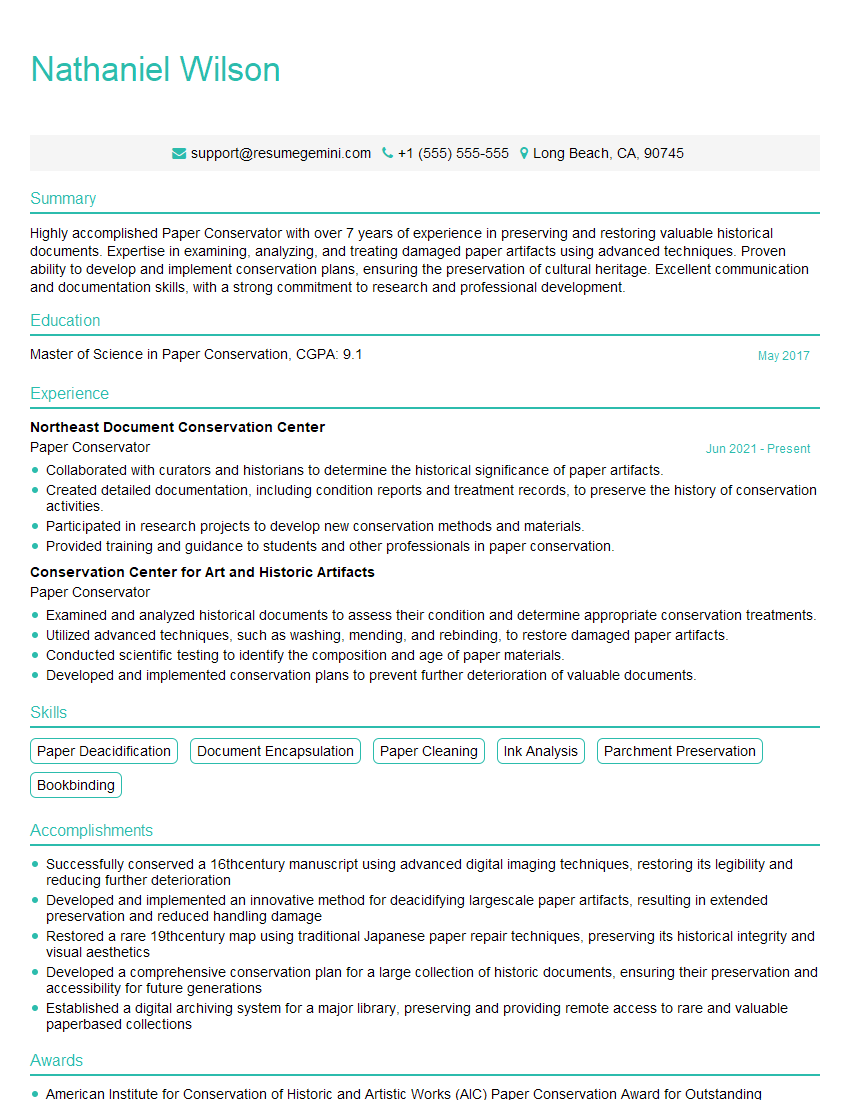
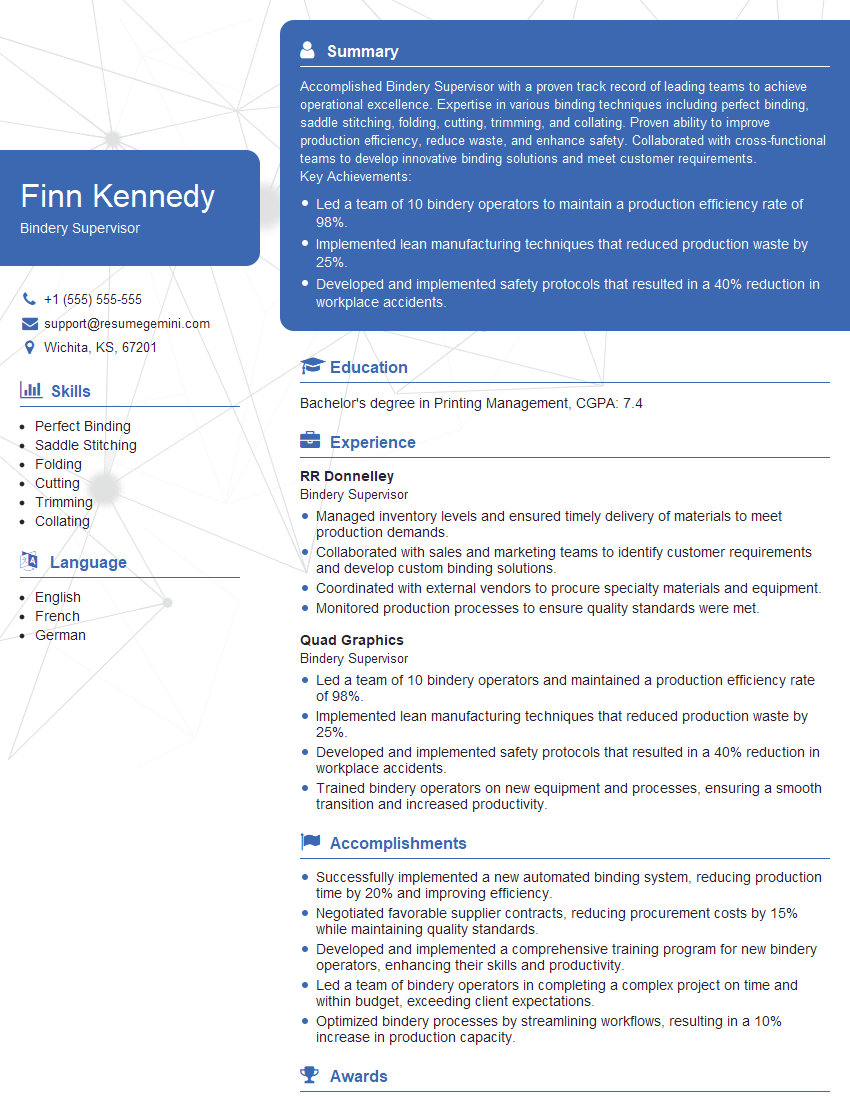
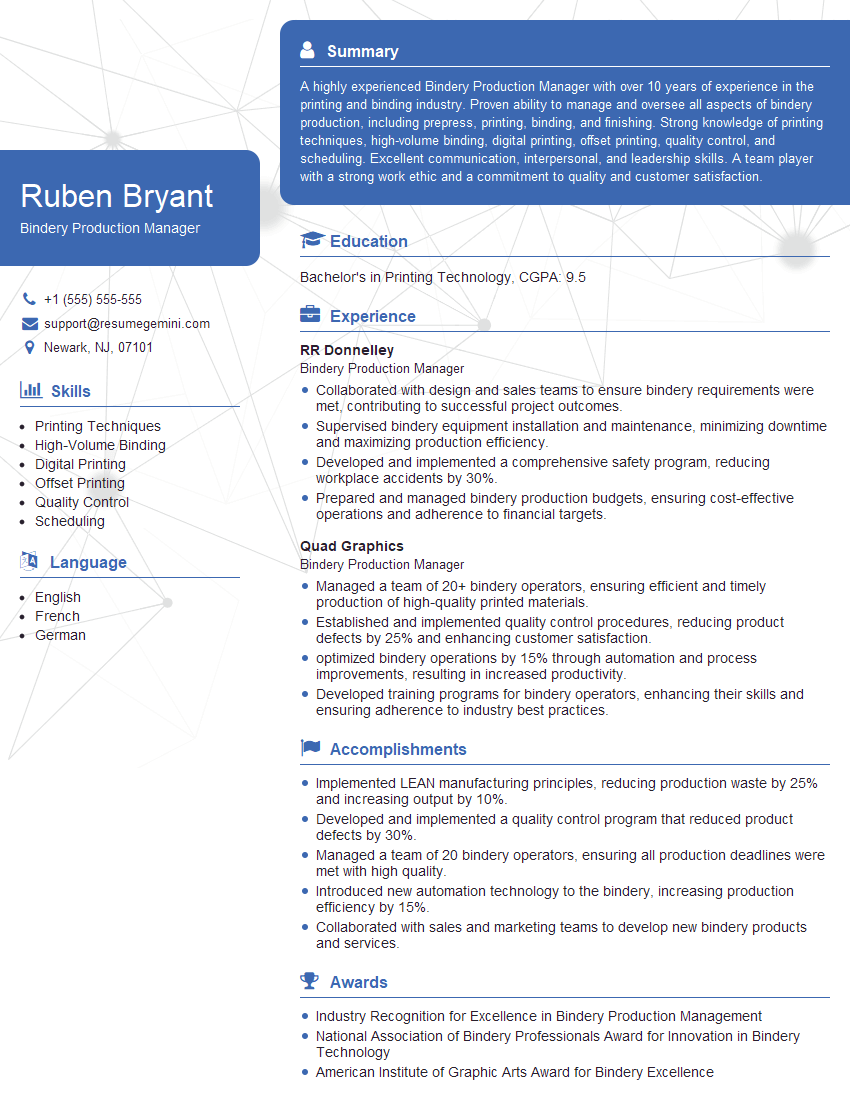
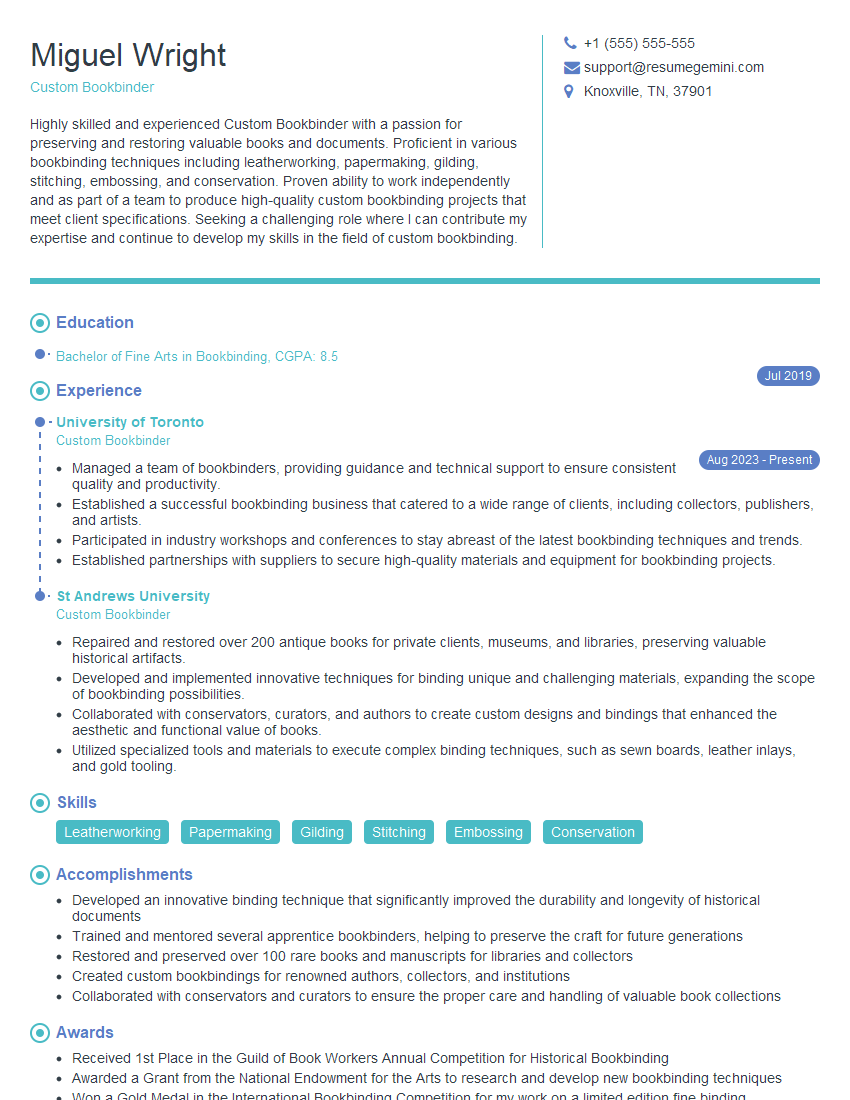
Mastering hand binding opens doors to exciting career opportunities in publishing, archiving, book restoration, and artisan crafts. To maximize your job prospects, create a compelling and ATS-friendly resume that highlights your skills and experience effectively. ResumeGemini is a trusted resource that can help you build a professional and impactful resume. We provide examples of resumes tailored to the Hand Binding field to guide you in crafting a document that showcases your unique qualifications. Invest time in crafting a strong resume – it’s your first impression on potential employers.
Explore more articles
Users Rating of Our Blogs
Share Your Experience
We value your feedback! Please rate our content and share your thoughts (optional).
What Readers Say About Our Blog
Very informative content, great job.
good