The thought of an interview can be nerve-wracking, but the right preparation can make all the difference. Explore this comprehensive guide to Hand-Tying Knots interview questions and gain the confidence you need to showcase your abilities and secure the role.
Questions Asked in Hand-Tying Knots Interview
Q 1. What are the five most important knots for securing a load?
Selecting the right knot for securing a load is crucial for safety and efficiency. The five most important knots for this purpose are highly dependent on the specific application (e.g., securing a boat to a dock vs. tying down cargo). However, five versatile and reliable knots frequently used include:
- Bowline: Forms a strong, reliable loop that won’t slip. Excellent for creating a fixed loop at the end of a rope.
- Clove Hitch: Quick and easy to tie around a post or ring, excellent for temporary fastening.
- Figure Eight Knot: Simple knot creating a secure loop, often used as a stopper knot to prevent rope from running through a system.
- Half Hitch and variations (e.g., double half hitch): Used in combination with other knots to create extra security around a post or object.
- Truckers Hitch: Provides significant mechanical advantage, allowing for tight securing of heavy loads with less effort.
Remember to always double-check your knots after tying and re-tighten as needed. The best knot is the one you can tie consistently and correctly.
Q 2. Explain the difference between a bowline and a slip knot.
Both bowlines and slip knots create loops, but they function very differently. A bowline creates a fixed, reliable loop that won’t easily slip or tighten under load. Think of it as a strong, permanent loop. It’s easy to untie even after being under tension. A slip knot, on the other hand, is designed to easily adjust and tighten or loosen. It’s more of a temporary loop, often used for creating adjustable lengths or traps. It’s crucial to choose the right knot for your application; a slip knot where a fixed loop is needed would be dangerous.
Imagine tying a dog to a tree. A bowline would be safest – creating a secure, un-slipping loop. A slip knot would be disastrous, as the dog could easily escape.
Q 3. How would you tie a secure knot in wet conditions?
Wet conditions significantly reduce friction, making knots more prone to slipping. To mitigate this, focus on these strategies:
- Extra Wraps: Add more wraps around the object being secured than you normally would. This increases the friction and grip.
- Overhand Knots: Incorporate additional overhand knots within the main knot to increase its bulk and grip.
- Tightening: Ensure the knot is exceptionally tight – after securing it, pull all the strands firmly again to remove any slack.
- Backup Knots: Always add a backup knot, such as a second clove hitch or half hitch to improve security.
- Different Knot Choice: Some knots, like the bowline, are inherently more resistant to slipping in wet conditions than others.
In extremely challenging wet conditions, consider using specialized waterproof rope coatings or wraps to enhance grip.
Q 4. Describe the process of tying a clove hitch.
The clove hitch is a simple yet incredibly useful knot ideal for quickly fastening a rope to a post, ring, or other object. Here’s how to tie it:
- Make a loop around the object.
- Bring the working end of the rope over the standing part (the main length of the rope), and under itself.
- Wrap the working end around the object, creating another loop.
- Tuck the working end under the first loop, tightening the knot around the object.
Note: It’s important to ensure both loops are snug against the object. This makes the knot more secure.
The beauty of the clove hitch lies in its simplicity and speed. I’ve used it countless times securing equipment during outdoor expeditions.
Q 5. What are the safety considerations when working with heavy ropes?
Safety is paramount when working with heavy ropes. Consider these crucial aspects:
- Proper Training: Understand knot tying, rope handling, and load limits before working with heavy ropes.
- Personal Protective Equipment (PPE): Always wear gloves to protect your hands from abrasion and rope burn. Eye protection is also recommended.
- Load Capacity: Never exceed the rope’s rated load capacity. This information is usually printed on the rope itself.
- Inspection: Carefully inspect the rope for wear, cuts, or damage before each use.
- Teamwork: When handling heavy loads, always work as a team and communicate clearly to prevent accidents.
- Safe Workspace: Ensure the working area is clear of obstacles and hazards.
Ignoring these precautions can lead to serious injury or damage. Remember, safety should never be compromised.
Q 6. How do you assess the strength and integrity of a rope before using it?
Assessing rope strength and integrity is crucial for safety. Follow these steps:
- Visual Inspection: Examine the rope for any signs of wear and tear, such as fraying, cuts, abrasions, or discoloration. Look for signs of UV damage (especially in ropes that have been exposed to sunlight).
- Feel the Rope: Run your hands along the length of the rope to detect any unusual stiffness, softness, or weak spots.
- Check for Knots or Damage: Carefully examine the rope for any pre-existing knots or damage that may weaken it.
- Check Manufacturer’s Information: Look for labels on the rope indicating its material, strength rating, and recommended applications.
- Smell Test: In cases of potential chemical damage or degradation, a subtle off-putting smell can be a warning sign.
If you have any doubts about the rope’s condition, replace it immediately. It’s far safer to use a new rope than risk injury or equipment damage.
Q 7. Explain how to tie a figure-eight knot and its applications.
The figure-eight knot is a simple yet effective knot used primarily as a stopper knot to prevent rope from slipping through a system. Here’s how to tie it:
- Form a loop.
- Make a figure-eight shape with the rope around the standing part.
- Bring the working end back through the loop that is formed on the opposite side of the eight.
- Tighten firmly.
Note: The figure eight is particularly useful at the end of a rope to prevent it from running through a pulley or other system. It’s less bulky than a bowline and relatively easy to untie even after substantial tension.
Applications range from rock climbing (as a stopper knot in belaying systems) to securing lines in sailing or securing equipment in any application requiring a simple, effective stopper knot.
Q 8. Describe different types of hitches and their uses.
Hitches are temporary knots used to secure a rope to a ring, post, or another rope. They are easily adjustable and quickly released. Several types exist, each suited for specific tasks.
- Clove Hitch: A simple hitch excellent for securing a rope to a post or ring. It’s easy to adjust and undo. Think of it as a quick, temporary anchor. Imagine securing a boat to a dock; a clove hitch would be ideal for a fast, secure, but readily removable connection.
- Bowline: While not strictly a hitch, it forms a secure loop at the end of a rope and is frequently used as such in various applications. It’s a fundamental knot known for its strength and reliability. This forms a strong, fixed loop without slipping.
- Rolling Hitch: Used to secure a rope to another rope, often employed in climbing or rigging. It offers significant friction, preventing slippage, making it suitable for heavier loads. This hitch secures one rope to another, distributing weight evenly.
- Fisherman’s Hitch: Used to temporarily join two ropes of different diameters. Very versatile and secure for temporary connections.
The choice of hitch depends entirely on the application, the load, and the materials involved. A clove hitch is sufficient for light loads, but a rolling hitch is necessary for heavier weight or critical situations. Always check your hitch before trusting your weight or equipment to it.
Q 9. How do you identify and remedy common knotting mistakes?
Identifying knotting mistakes requires a keen eye and understanding of knot construction. Common mistakes include:
- Incorrect wraps or turns: A missed wrap or an extra one can significantly weaken a knot or make it unreliable. For instance, an improperly tied bowline can easily slip.
- Uneven tension: Applying inconsistent tension during tying leads to weak points in the knot. A properly tied knot should be uniformly tight across all its parts.
- Over-tightening: Excessive tightening can damage the rope fibers, especially with synthetic ropes. Aim for a secure but not overly compressed knot.
Remedying these requires untying the knot and restarting. If it’s impossible to completely untie the knot due to tightness or jamming, carefully loosen it with tools if safe to do so (such as using a marlinspike, which helps to separate the rope fibers). If the rope is damaged, it must be replaced.
Q 10. What are some advanced knotting techniques used in your field?
Advanced knotting techniques often involve complex combinations of knots, intricate weaves, and specialized tools. Examples include:
- Sailmaking knots: These are highly specialized knots used in creating durable and weather-resistant sails. They often use multiple strands and require precision.
- Masting and rigging knots: Used in securing masts and rigging on ships. They often involve intricate hitches and bends designed to withstand significant stress.
- Surgical knotting: Specific knots used in surgery to create secure and easily untied closures. These demand both speed and precision in tying, without causing damage to the tissue.
- Splicing: Joining two ropes end-to-end without knots, creating a seamless and strong connection. This requires advanced knowledge of fiber structure and manipulation.
These techniques require significant practice and knowledge of rope properties to master. They often demand a high level of dexterity and an understanding of load distribution to maintain structural integrity and safety.
Q 11. Describe the benefits and drawbacks of different knot types.
Different knot types offer various advantages and disadvantages. Consider the following:
- Bowline (Benefits): Forms a stable, easily untied loop; strong and reliable. (Drawbacks): Can be difficult to tie under pressure or with thick rope.
- Clove Hitch (Benefits): Simple to tie and untie; readily adjustable. (Drawbacks): Not as strong as a bowline; can slip under significant load.
- Figure Eight (Benefits): Simple, secure stopper knot; easily inspected. (Drawbacks): Not ideal for heavy loads.
- Sheet Bend (Benefits): Joins two ropes of different diameters securely. (Drawbacks): Can be difficult to untie if heavily loaded.
The best knot for a given task is determined by the required strength, ease of tying and untying, the type of rope, and the load it will bear. Always prioritize safety and select the knot that best suits the specific needs of the job.
Q 12. How would you troubleshoot a knot that has become jammed or untied?
Troubleshooting a jammed knot often involves careful manipulation. Avoid excessive force, which could damage the rope. Here’s a step-by-step approach:
- Assess the situation: Determine the type of knot and why it’s jammed (e.g., excessive tightening, knots intertwined).
- Loosen the knot: Gently work on the knot, trying to unravel the sections that are causing the jam. Use a marlinspike or similar tool if necessary to separate the rope fibers.
- Apply lubrication (if safe): If the rope is made of a material compatible with lubrication (avoiding damage), a lubricant like soap and water can help reduce friction and allow easier untying.
- Work slowly and patiently: Rushing can worsen the situation. Take your time and systematically untangle the knot.
- If unsuccessful: If the knot cannot be untied safely, consider cutting the rope above the knot to salvage a usable length. Always prioritize safety over retrieving a jammed knot.
Prevention is key. Proper knot tying techniques and choosing the right knot for the application are crucial for minimizing the risk of jammed knots.
Q 13. What knot would you use to create a secure loop at the end of a rope?
To create a secure loop at the end of a rope, the bowline is the most recommended knot. It’s strong, reliable, and relatively easy to tie and untie, even under load. It forms a fixed loop that won’t slip, which is essential for many applications including climbing, sailing and rescue work.
Other options exist, such as the eye splice (a more permanent solution) or a simple overhand loop (less secure), but the bowline is the gold standard for a strong, readily untied, secure loop.
Q 14. How do different rope materials affect knot tying?
Different rope materials significantly impact knot tying and performance. Here’s how:
- Synthetic ropes (nylon, polyester): These are generally stronger and more resistant to abrasion than natural fibers. However, they can be more prone to damage from over-tightening. They hold knots well.
- Natural fibers (hemp, manila): These ropes are more pliable, which makes some knots easier to tie. However, they are weaker and more susceptible to water damage, causing them to lose strength over time. They can be more prone to slippage depending on the knot used.
- Wire rope: Requires specialized knotting techniques. It is significantly stiffer and has greater strength, but more caution is required in tying to avoid kinking. Some knots may not be appropriate.
Understanding the properties of your rope material is crucial for selecting appropriate knots and tying them correctly to ensure safety and effectiveness. Always consult a comprehensive knot-tying guide specific to the rope material you are using.
Q 15. What knots are suitable for climbing and rappelling?
For climbing and rappelling, you need knots that are incredibly strong, reliable, and easy to untie even after significant load. The most crucial knots are the figure eight, the bowline, and the clove hitch.
- Figure Eight: This is a fundamental stopper knot, excellent for attaching a rope to a harness or anchor point. Its symmetrical design distributes load evenly, making it exceptionally secure. I always double-check my figure eight before any climb.
- Bowline: A classic knot forming a fixed loop that won’t slip. It’s exceptionally useful for creating anchors or attaching a rope to a ring or other strongpoint. I’ve used it countless times for securing climbing ropes to trees in controlled environments.
- Clove Hitch: This is a quick and easy adjustable knot ideal for attaching a rope to a fixed object. It’s crucial to double or triple this knot for security, especially under load, because it can slip if not correctly tensioned. I usually use a clove hitch to attach my climbing rope to a belay device.
Remember, always inspect your knots carefully before relying on them for your safety. Practice tying these knots repeatedly until you can do so quickly and flawlessly under pressure.
Career Expert Tips:
- Ace those interviews! Prepare effectively by reviewing the Top 50 Most Common Interview Questions on ResumeGemini.
- Navigate your job search with confidence! Explore a wide range of Career Tips on ResumeGemini. Learn about common challenges and recommendations to overcome them.
- Craft the perfect resume! Master the Art of Resume Writing with ResumeGemini’s guide. Showcase your unique qualifications and achievements effectively.
- Don’t miss out on holiday savings! Build your dream resume with ResumeGemini’s ATS optimized templates.
Q 16. Explain the importance of proper knot tension.
Proper knot tension is paramount for safety and efficacy. Insufficient tension creates slack, increasing the risk of the knot slipping or failing under load. Think of it like tying your shoelaces – a loosely tied knot will come undone quickly. Over-tensioning, however, can damage the rope or make the knot difficult to untie. The goal is to achieve a snug, secure knot without compromising the rope’s integrity.
I always ensure that there’s no slack in the knot before applying any significant load. This process requires a feel for the rope and an understanding of how different materials react under tension. I often use a controlled tightening technique, incrementally increasing the tension until the knot is snug but not overstressed.
Q 17. How do you ensure a knot is securely fastened and won’t come undone under stress?
Securing a knot involves several crucial steps. First, choose the right knot for the specific application. Then, tie the knot methodically and precisely, following the correct steps. Next, visually inspect the knot for any flaws, such as loose strands or uneven loops. Finally, I employ the “tug test”: I gently pull on the knot from different directions, feeling for any resistance or slippage. If the knot feels secure and doesn’t show any signs of weakness, it’s ready for use. Remember that using a locking carabiner, where appropriate, can significantly enhance the security of your setup.
For critical applications, I often use a backup knot. For example, I might follow a clove hitch with a second clove hitch, or back up a figure-eight knot with a stopper knot. This redundancy significantly reduces the chances of failure.
Q 18. Describe your experience with different types of rope and cordage.
My experience encompasses a wide range of ropes and cordage, including static ropes, dynamic ropes, kernmantle ropes, and various types of cord.
- Static ropes have minimal stretch and are ideal for rescue and rigging applications. Their rigidity requires a slightly different knot-tying approach compared to more flexible ropes.
- Dynamic ropes are designed to stretch and absorb shock during falls, a critical factor in climbing. Their elasticity influences the way knots behave, requiring additional attention to tensioning.
- Kernmantle ropes have a core (kern) surrounded by a sheath (mantle), offering strength and durability. Understanding the interaction between the core and sheath is vital for proper knotting, as the sheath can sometimes interfere with knot formation.
- Various cords, including paracord and nylon cord, have unique properties that affect knot-tying. Their diameter, material, and flexibility dictate knot selection and tightening techniques.
I have worked extensively with these materials in diverse settings, always adapting my techniques based on the specific rope’s properties and the application’s demands.
Q 19. How would you adapt your knot-tying technique to different rope diameters?
Adapting knot-tying techniques to different rope diameters is essential. Larger diameter ropes require adjustments in the size and shape of the loops and bends used in the knots. For instance, with thicker rope, you might need to make larger loops to prevent the knot from becoming too tight or compacted, while smaller diameters might need more precise manipulation to ensure proper seating.
I always adjust my hand movements accordingly; the technique remains the same, but the physical effort and precision varies. For example, a bowline on a 1/2 inch rope needs less effort than one on a 1 inch diameter rope.
Q 20. What is the difference between a running knot and a stopper knot?
A running knot is designed to slide along a rope. It’s commonly used for temporary adjustments or securing objects that need to move along the rope. A good example is a bowline on a bight (where you make a loop in the standing part of the rope).
Conversely, a stopper knot is designed to prevent the rope from running or slipping through a system. It’s typically used to secure a rope to an anchor point or to prevent the rope from moving past a specific point. The figure eight is a classic example of a stopper knot.
The key difference lies in their intended function: running knots provide adjustability, while stopper knots provide security and restraint.
Q 21. How do you maintain your knot-tying tools and equipment?
Maintaining knot-tying tools and equipment is crucial for safety and reliability. I always inspect my ropes for wear and tear before each use, carefully checking for cuts, frays, and general deterioration. Damaged or worn ropes should be replaced immediately.
My tools, such as climbing knives and gloves, are kept clean and sharp. A sharp knife is essential for easily unknotting ropes, while clean tools help prevent abrasion. Regular cleaning and proper storage help prolong the life and effectiveness of all my equipment.
Q 22. Describe your experience in tying knots under pressure or time constraints.
My experience with knot-tying under pressure involves years of practical application in various settings, including emergency response simulations and demanding fieldwork. The key under pressure isn’t speed, but accuracy and efficiency. I’ve learned to prioritize a methodical approach, even in high-stress situations. For example, during a simulated search and rescue operation, I needed to quickly secure a heavy load to a helicopter in strong winds. Instead of rushing, I systematically double-checked each step of tying a bowline, ensuring a secure and reliable knot before committing to the lift. This methodical approach minimizes errors, which are far more costly under pressure than a slightly slower knotting time. Another instance involved rigging a complex system of knots to stabilize a damaged structure during a storm. Here, I relied on my mastery of various knots like the clove hitch and figure eight to ensure structural integrity, consistently checking each knot for slippage or weakness. My training emphasizes that speed comes from practice and understanding, not from haste.
Q 23. How would you teach someone else to tie a specific type of knot?
Teaching someone to tie a knot, let’s say a bowline, requires a structured approach. I’d start with a clear visual demonstration, possibly using a piece of rope of a contrasting color to highlight the steps. I would then break down the process into simple, sequential steps:
- Form a loop.
- Bring the working end across the standing part and through the loop.
- Pass the working end under and around the standing part.
- Pull the working end through the loop.
I find that using simple language and avoiding jargon is crucial. I would guide the learner through each step, providing tactile assistance if needed. I emphasize the importance of feeling the knot tighten and ensuring that it is secure. I wouldn’t just demonstrate once; we’d repeat the process several times until the learner can tie the knot confidently and consistently, even without my guidance. I’d encourage them to practice different rope thicknesses and materials. Finally, we’d discuss the bowline’s applications and its limitations, so they understand not only *how* to tie it, but also *when* to use it.
Q 24. What are the limitations of certain knots in specific applications?
Knots, while seemingly simple, have inherent limitations depending on the application and material. For instance, a simple overhand knot, while easy to tie, is notoriously weak and prone to slippage under load; it’s unsuitable for anything requiring significant strength. The type of material also plays a significant role. A knot that holds well on a synthetic rope might fail on a natural fiber rope due to differences in texture and strength. Moreover, environmental factors such as moisture and temperature can affect a knot’s performance. For example, a knot tied on a wet rope might loosen as the rope dries. A specific example is using a bowline for climbing. While generally strong, a poorly tied bowline can easily fail under the extreme loads encountered during a climb, leading to dangerous consequences. Understanding these limitations, from material properties to environmental conditions, is vital for safe and effective knot tying.
Q 25. How familiar are you with various knot-tying standards or certifications?
My familiarity with knot-tying standards and certifications is extensive. I’m well-versed in various industry-specific standards, including those used in sailing, climbing, and rigging. While there isn’t a single, universally recognized certification for all knot tying, many organizations offer specialized certifications based on specific applications. For example, I am familiar with the certifications offered by the American Alpine Club for climbing knots. Understanding these standards allows me to adapt my knowledge to various professional contexts and ensures that I’m consistently using the most appropriate and safest techniques for the task at hand.
Q 26. Describe a challenging knot-tying situation and how you resolved it.
One challenging situation involved securing a heavy piece of equipment during a storm. The wind was incredibly strong, making it difficult to maintain control of the ropes and the equipment. The initial knot I attempted to use, a simple bowline, started to slip under the strain. Instead of forcing the issue, I reassessed the situation and decided to use a combination of a clove hitch and a double figure eight to provide additional security and distribute the load more effectively. This involved carefully adjusting the angles of the ropes to minimize stress points. After securing the equipment, I continuously monitored the knots, making small adjustments as needed throughout the storm to compensate for shifting wind patterns and load distribution. This experience highlighted the importance of adaptability and having a broad range of knot-tying skills available to ensure that the task is accomplished safely and securely.
Q 27. What are some resources you use to stay up-to-date on knot-tying techniques?
Staying current in knot-tying techniques requires continuous learning. I utilize a variety of resources. This includes professional journals focusing on specific applications of knot tying, attending workshops and seminars conducted by experienced instructors, and participating in online forums and communities where I can exchange ideas and learn from other practitioners. Additionally, I regularly consult various handbooks and manuals on knot tying, ensuring that I am up to date with the latest techniques and best practices. I also actively seek out opportunities to practice knot tying in real-world scenarios, constantly refining my skills and knowledge.
Key Topics to Learn for Hand-Tying Knots Interview
- Fundamental Knots: Mastering the basic knots – from the overhand to the square knot – forms the foundation of your skillset. Understanding their construction and applications is crucial.
- Knot Strength and Security: Learn to analyze the strength and security of various knots under different loads and conditions. This includes understanding factors affecting knot slippage and failure.
- Knot Tying Techniques: Develop efficient and consistent techniques for tying knots quickly and accurately, even under pressure. Practice makes perfect!
- Specialized Knots: Explore knots with specific applications, such as climbing knots, fishing knots, or those used in sailing or other relevant fields. Showcase your adaptability.
- Problem-Solving & Troubleshooting: Be prepared to discuss how you would approach untying complex knots or resolving issues that arise during knot tying. Highlight your analytical skills.
- Materials and their Impact: Understand how different rope materials (e.g., nylon, polyester, natural fibers) affect knot performance and the appropriate knot selection for each.
- Safety Procedures: Demonstrate an understanding of safety protocols related to knot tying in various contexts. This shows responsibility and awareness.
Next Steps
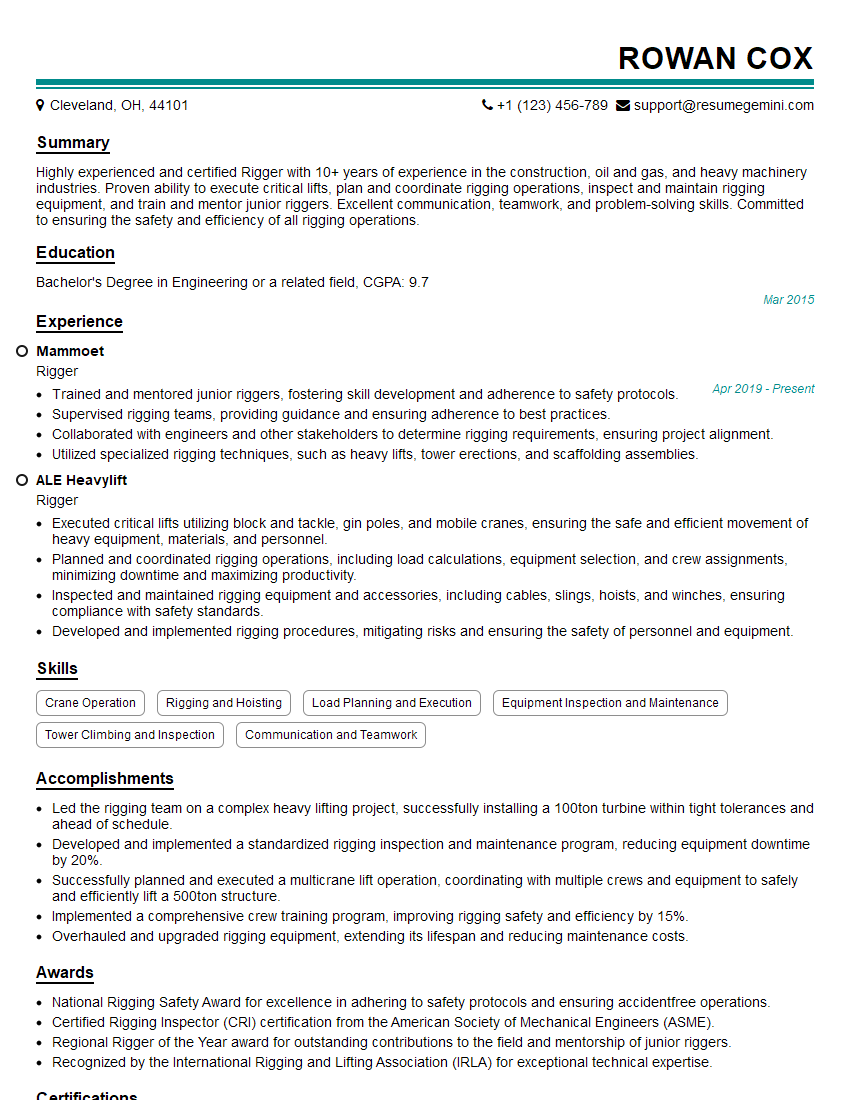
Mastering hand-tying knots opens doors to diverse and rewarding career opportunities, showcasing your precision, problem-solving abilities, and dexterity. To maximize your job prospects, crafting an ATS-friendly resume is essential. ResumeGemini can help you build a professional, impactful resume that highlights your skills effectively. We provide examples of resumes tailored to Hand-Tying Knots professionals to help you get started. Take the next step towards your dream career today!
Explore more articles
Users Rating of Our Blogs
Share Your Experience
We value your feedback! Please rate our content and share your thoughts (optional).
What Readers Say About Our Blog
Very informative content, great job.
good