The right preparation can turn an interview into an opportunity to showcase your expertise. This guide to Handicapping Techniques interview questions is your ultimate resource, providing key insights and tips to help you ace your responses and stand out as a top candidate.
Questions Asked in Handicapping Techniques Interview
Q 1. Explain your understanding of various handicapping methods.
Handicapping methods vary greatly depending on the sport, but generally aim to level the playing field by assigning a numerical advantage or disadvantage to each competitor. This allows for a more accurate prediction of the outcome, even when competitors have vastly different inherent strengths.
Point Spread (e.g., in basketball, football): This method adjusts the score to create a more even matchup. A stronger team might be given a -7 point spread, meaning they need to win by more than 7 points to cover the spread and win the bet.
Moneyline Odds: This system uses odds to reflect the probability of each outcome. A favorite might have odds of -200, indicating you’d need to bet $200 to win $100, while the underdog might offer +150, meaning a $100 bet could win you $150.
Handicapping Ratings: Many sports use complex rating systems (like Elo ratings in chess or Power Rankings in sports journalism) to quantify a team’s relative strength. These ratings inform betting lines and can be used directly in handicapping models.
Statistical Models: Advanced techniques use regression analysis or machine learning to predict outcomes based on a wide variety of statistical inputs. For example, in baseball, models may incorporate things like batting average, on-base percentage, ERA, etc.
Understanding these methods requires careful consideration of their strengths and weaknesses, as well as the specific context of the sporting event.
Q 2. Describe your experience with statistical software for sports data analysis.
I’ve extensively used statistical software like R and Python (with libraries like pandas, scikit-learn, and statsmodels) for years in sports data analysis. R’s powerful statistical capabilities are excellent for modeling and visualization, while Python’s versatility allows me to handle large datasets and integrate with other tools. For example, I used R to build a logistic regression model predicting NFL game outcomes based on various team statistics and weather conditions. Python is perfect for scraping data from websites and cleaning it for analysis. My experience also includes working with specialized sports analytics platforms that offer pre-built functions for specific sports.
#Example Python code snippet (data cleaning):
import pandas as pd
data = pd.read_csv('game_data.csv')
data.dropna(inplace=True) #Remove rows with missing data
Q 3. How do you identify and quantify biases in sports data?
Identifying and quantifying biases in sports data is crucial for building accurate models. Biases can stem from various sources, like:
Sampling Bias: Using a non-representative sample (e.g., only analyzing games played in a specific stadium) can skew results.
Selection Bias: Teams might adjust their strategies against certain opponents, leading to biased statistics. For instance, a team might play more conservatively against a historically strong opponent.
Measurement Bias: Errors in data collection can introduce inaccuracies. Human error in recording statistics or inconsistencies in how stats are gathered can create this bias.
Reporting Bias: Certain events might be more prominently reported than others, skewing perceived trends.
Quantifying bias involves rigorous statistical techniques. We can use control variables to adjust for potential confounding factors, look for patterns in residuals (the differences between observed and predicted values), and compare different data sources to identify discrepancies. Visualizations, such as residual plots, are also invaluable for spotting patterns that might indicate bias.
Q 4. What are the key factors you consider when handicapping a horse race?
Handicapping a horse race is a complex endeavor that goes beyond simply looking at past performance. Here’s a breakdown of my process:
Past Performance: I examine recent races, looking at speed figures, finishing positions, and track conditions. I pay close attention to the horse’s consistency and how it performs under various circumstances.
Jockey and Trainer: The jockey’s skill and the trainer’s record are essential factors. A skilled jockey can make a significant difference, particularly in close finishes.
Track Conditions: The track surface (dirt, turf), weather conditions (rain, wind), and track bias (some tracks may favor certain running styles) dramatically influence outcomes.
Post Position and Pace: The starting position can impact a horse’s chances, as can the expected pace of the race. A horse that needs to lead early might struggle if stuck on the outside of the track.
Class and Form: I analyze the class of the race (level of competition) and the horse’s recent form (improving, declining, or consistent).
Odds and Betting Value: Analyzing the betting odds helps in identifying value bets – opportunities where a horse’s odds don’t accurately reflect its chances of winning.
I often combine these factors into a weighted rating system to arrive at a final assessment of each horse’s chances.
Q 5. Explain your process for building a predictive model for sports outcomes.
Building a predictive model for sports outcomes involves several steps:
Data Collection: Gather relevant historical data. This might involve scraping websites, using APIs, or accessing specialized sports databases.
Data Cleaning and Preprocessing: Clean the data by handling missing values, outliers, and inconsistencies. Transform the data into a suitable format for modeling (e.g., one-hot encoding categorical variables).
Feature Engineering: Create new variables that might improve predictive accuracy. This might involve combining existing variables, calculating ratios, or using domain expertise to create features not directly available in the dataset.
Model Selection: Choose a suitable statistical or machine learning model. Options include linear regression, logistic regression, decision trees, support vector machines, or neural networks. The choice depends on the nature of the outcome variable (continuous or categorical) and the complexity of the relationships in the data.
Model Training and Validation: Train the model using a portion of the data and validate its performance on a separate hold-out set. This helps to avoid overfitting, where the model performs well on the training data but poorly on unseen data.
Model Evaluation: Evaluate the model using appropriate metrics (e.g., accuracy, precision, recall, AUC). This step helps in assessing the reliability of the model.
Model Deployment and Monitoring: Once validated, deploy the model and continuously monitor its performance. Regular updates are crucial as conditions change and new data becomes available.
Throughout this process, careful consideration of potential biases is crucial for the model’s accuracy.
Q 6. How do you assess the reliability of different data sources for handicapping?
Assessing data source reliability is critical. I consider several factors:
Source Reputation: Is the source known for accuracy and reliability? Reputable sports statistics websites or official league data are generally preferred.
Data Consistency: Are the data consistent over time and across different datasets? Inconsistent data might indicate errors or biases.
Data Completeness: Are there significant gaps in the data? Incomplete data can hinder the development of accurate models.
Data Accuracy: Are there any known errors or biases in the data? Checking against multiple sources is important to identify inconsistencies.
Data Methodology: Understanding how the data was collected and processed can help assess potential biases.
I often compare data from multiple sources to identify inconsistencies and improve data quality. Triangulation – comparing data from several independent sources – is a key strategy for ensuring reliability.
Q 7. Describe your experience with different types of sports betting markets.
My experience encompasses a wide range of sports betting markets:
Moneyline: Simply betting on the winner of a game or event.
Spread Betting: Betting on whether a team will win or lose by a certain margin (the spread).
Over/Under: Betting on whether the combined score of both teams will be over or under a specific total.
Futures: Betting on future outcomes, such as who will win a championship.
Props (Proposition Bets): Bets on specific events within a game, such as a particular player scoring a touchdown or a team reaching a certain number of points.
Parlays: Combining multiple bets into one, increasing potential payouts but requiring all bets to win.
In-Play (Live) Betting: Betting on events while the game is in progress.
Understanding the nuances of each market is crucial for effective handicapping. For example, the implied probabilities in moneyline odds can inform decisions on spread betting, and evaluating in-play betting involves considering real-time changes in game dynamics.
Q 8. How do you interpret and utilize odds and lines in your handicapping process?
Odds and lines are the foundation of any successful handicapping strategy. They represent the bookmaker’s assessment of the probability of an outcome and the implied payout. My process involves a multi-step interpretation. First, I convert odds (whether fractional, decimal, or American) into implied probabilities. For example, +200 odds imply a 33.3% implied probability (1/3.0). Then, I compare these implied probabilities to my own calculated probabilities based on my model. A significant difference suggests a potential value bet. If my model suggests a higher probability than the implied probability, it’s a potential opportunity. Next, I analyze the line movement. Sharp money often moves lines, so observing shifts can indicate a change in the consensus view of the game and can help identify opportunities or risks. Finally, I incorporate the line into my model as a variable to understand the market’s expectations and refine my own prediction.
For instance, if a team is heavily favored (say -200 odds), but my model predicts a significantly higher probability of them winning, it might be a valuable opportunity. Conversely, if the line heavily favors an outcome my model believes less likely, it’s an area to avoid or even explore betting the underdog.
Q 9. Explain how you would handle inconsistent or incomplete data in a handicapping model.
Inconsistent or incomplete data is a common challenge in sports handicapping. My approach involves a combination of data imputation and model robustness techniques. For missing data, I use several methods depending on the nature of the data. Simple imputation replaces missing values with the mean, median, or mode of the available data. For more complex scenarios, I may use k-Nearest Neighbors (KNN) imputation, which predicts missing values based on similar data points. For inconsistent data, I carefully examine the potential causes (data entry errors, changes in team composition etc). Outliers are investigated before removal and are handled by applying robust regression techniques less sensitive to extreme values.
To ensure my model is robust to missing data, I use techniques like multiple imputation and cross-validation. Multiple imputation creates several plausible imputed datasets, which allows for more accurate uncertainty estimation. Cross-validation helps evaluate how well the model generalizes to unseen data, making it more resistant to overfitting on incomplete datasets. The goal isn’t to find a ‘perfect’ dataset but to understand how to deal with imperfections to make the best possible predictions.
Q 10. How do you incorporate qualitative factors into your quantitative handicapping model?
While quantitative data forms the backbone of my model, qualitative factors are crucial for refining predictions. These are incorporated through expert judgment and sentiment analysis. I might consider factors such as: player injuries, coaching changes, team morale (perhaps gleaned from news reports and social media), weather conditions, and the impact of playing at home or away. These qualitative factors are often assigned scores or weights based on my experience and research.
For example, while my quantitative model might favor team A, news of a key player’s injury might significantly reduce my confidence in this prediction, adjusting my final probability downward. I might use a simple scoring system: 1 for negligible impact, 3 for moderate impact, and 5 for significant impact on the predicted outcome. These scores are then integrated into my final prediction, weighted according to their relative importance based on the specific situation.
Q 11. Describe your experience with different types of regression analysis for sports data.
I’ve used various regression techniques for sports data analysis, each with its strengths and weaknesses. Linear regression is a starting point for simple relationships, but its assumption of linearity often fails with sports data. Generalized Linear Models (GLMs) provide flexibility to handle non-normal distributions (e.g., Poisson regression for goals scored, binomial regression for win/loss outcomes). I’ve found GLMs especially useful when the dependent variable isn’t continuous. More advanced methods include Random Forest and Gradient Boosting Machines (GBMs) which excel at capturing complex non-linear relationships. These tree-based methods are less prone to overfitting than traditional regression techniques when dealing with a high number of variables.
For example, I’ve used Poisson regression to model the number of goals scored by a soccer team based on factors like possession, shots on goal, and opponent defensive strength. Similarly, I’ve used logistic regression to predict win probabilities in basketball based on things like points differential and free throw percentage.
Q 12. How do you evaluate the accuracy and efficiency of your handicapping models?
Evaluating model accuracy and efficiency is done through a combination of metrics and techniques. Key metrics include: accuracy (proportion of correct predictions), precision (proportion of true positives among positive predictions), recall (proportion of true positives identified among all actual positives), and F1-score (harmonic mean of precision and recall). These metrics provide a comprehensive view of the model’s performance. I also use cross-validation, as previously mentioned, to avoid overfitting and ensure generalizability to new data.
Beyond simple metrics, I regularly track the model’s long-term performance – its ROI over many games. This provides a real-world assessment of profitability. Further, I analyze the model’s efficiency by examining its computational cost and the time required to generate predictions. Efficiency is important as it dictates the speed at which insights can be generated. A model that takes a long time to run might miss valuable betting opportunities.
Q 13. What strategies do you use to manage risk in sports betting or handicapping?
Risk management is paramount in sports betting. My strategy focuses on diversification, bankroll management, and understanding probabilities. Diversification involves placing bets on various games and sports, reducing exposure to any single event. Bankroll management is crucial – I use a fixed percentage of my bankroll per bet, never risking more than 1-5% on any single wager (depending on my confidence). I employ Kelly Criterion calculations in some scenarios to optimize bet sizes, but it’s always with a conservative application.
Understanding probabilities is key. I never bet on an outcome with a probability significantly lower than my predicted probability, avoiding low-value bets. I always consider the potential downside. My system also incorporates a stop-loss mechanism, which means I’ll stop betting after a certain number of consecutive losses or if my bankroll drops below a defined threshold. This system helps maintain discipline and prevents catastrophic losses.
Q 14. Explain your understanding of different statistical distributions relevant to sports.
Several statistical distributions are relevant to sports data. The most common are: the normal distribution (for continuous variables like player heights or weights), the binomial distribution (for binary outcomes like win/loss), the Poisson distribution (for count data like goals scored or points in a game), and the negative binomial distribution (similar to Poisson but accounts for overdispersion). Understanding these distributions helps me choose the appropriate statistical models and interpret the results.
For example, the Poisson distribution is very useful for modeling events that occur independently within a certain time interval or location, like goals in a soccer match. The binomial distribution is ideal for modelling events with only two possible outcomes, such as the result of a coin flip or whether a team wins or loses a game. Understanding these underlying distributions helps me build accurate models and interpret the results correctly, informing confident and informed bets.
Q 15. How do you account for home-field advantage in your handicapping predictions?
Home-field advantage is a significant factor in many sports, impacting team performance and outcomes. I account for it by incorporating a quantitative adjustment into my handicapping models. This adjustment isn’t a fixed number; it varies based on the sport, the specific teams involved, and even the specific stadium. For example, a loud and passionate home crowd in basketball might be quantified differently than a similar advantage in baseball.
My approach involves analyzing historical data to determine the average point swing or win probability increase a team experiences when playing at home versus away. I’ll look at factors such as the team’s historical performance at home, their opponents’ performance on the road, and even things like officiating tendencies in the specific arena. This data helps me establish a baseline for the home-field advantage for each team. This isn’t a one-size-fits-all approach. A team consistently dominant at home will have a higher quantified home advantage than a team that struggles regardless of location. This individualized approach ensures a more accurate prediction.
For instance, if historical data suggests Team A wins an average of 2.5 more points at home than away against a particular opponent, I’ll adjust my prediction model accordingly. This means a predicted score of 90-85 might be revised to 92.5-85 in favor of Team A when they play at home.
Career Expert Tips:
- Ace those interviews! Prepare effectively by reviewing the Top 50 Most Common Interview Questions on ResumeGemini.
- Navigate your job search with confidence! Explore a wide range of Career Tips on ResumeGemini. Learn about common challenges and recommendations to overcome them.
- Craft the perfect resume! Master the Art of Resume Writing with ResumeGemini’s guide. Showcase your unique qualifications and achievements effectively.
- Don’t miss out on holiday savings! Build your dream resume with ResumeGemini’s ATS optimized templates.
Q 16. How do you stay updated on the latest trends and developments in sports and handicapping?
Staying current in sports handicapping requires a multifaceted approach. It’s not enough to just follow game results; I need to delve deeper. My strategy includes several key components:
- Dedicated News Sources: I subscribe to reputable sports news outlets and specialized handicapping websites for daily updates on player injuries, team news, and overall league trends.
- Statistical Databases: Access to advanced sports statistics is crucial. I utilize platforms that offer in-depth data beyond the basic box scores, tracking metrics like possession time, shot accuracy in specific zones, and advanced pitching statistics.
- Social Media and Forums: While I carefully vet information, social media can offer real-time insights and discussions from other analysts, coaches, and even fans. Forums dedicated to sports betting often reveal trends or subtle changes that might otherwise be missed.
- Injury Reports and Expert Analyses: Detailed injury reports are paramount. I pay close attention to the severity and projected recovery timelines of significant injuries. Furthermore, I seek out expert opinions from respected analysts and commentators to assess how injuries might impact performance.
Continuous learning is key. I regularly participate in webinars and workshops related to sports analytics and handicapping to stay informed about new techniques and approaches.
Q 17. Explain your experience with using machine learning algorithms in sports analysis.
Machine learning algorithms have become invaluable tools in sports analysis and handicapping. I’ve incorporated several algorithms into my workflow, primarily focusing on prediction models and pattern recognition.
I’ve worked extensively with algorithms like logistic regression and support vector machines (SVMs) to predict game outcomes. These algorithms use historical data (e.g., team statistics, player performance, game results) to train models that estimate the probability of a particular team winning or covering a point spread. I also utilize neural networks for more complex predictions, factoring in a wider range of variables.
The process starts with data cleaning and feature engineering. I carefully select relevant variables, such as recent performance trends, home-field advantage, player matchups, and even weather conditions. Then, I train the algorithm on a historical dataset, carefully validating the model’s accuracy using techniques like cross-validation to avoid overfitting. The trained model then generates probability estimates which inform my handicapping decisions.
For example, one project involved using a recurrent neural network (RNN) to predict the outcome of NBA games by taking into account player fatigue levels based on their minutes played over a rolling 10-game window. The RNN demonstrated a significant improvement in accuracy compared to simpler models that didn’t factor in fatigue.
Q 18. How do you handle unexpected events or injuries when handicapping an event?
Unexpected events and injuries are inherent risks in sports handicapping. My approach to managing these disruptions involves a combination of real-time monitoring and adjusted prediction models.
First, I rely on real-time information. As soon as an injury occurs or an unexpected event unfolds (e.g., a key player ejection, a sudden weather change), I immediately update my model. This often involves adjusting key variables in my prediction algorithms. For instance, if a star quarterback is injured, I would revise the offensive projections downward, accounting for the reduced passing efficiency and overall scoring potential.
Second, I employ a Bayesian approach to update my predictions. Bayesian methods allow me to incorporate new information in a principled way, adjusting my prior beliefs in light of the new evidence. This approach helps me account for uncertainty and avoids overly reacting to short-term fluctuations.
Third, I monitor the betting markets. The movement in the betting lines can sometimes offer valuable insights into how the market is reacting to unforeseen circumstances. Observing such market fluctuations can aid in fine-tuning my predictions. The key is to strike a balance; I shouldn’t blindly follow market movements but should consider them as an additional data point in my assessment.
Q 19. Describe your approach to developing and testing new handicapping strategies.
Developing and testing new handicapping strategies is an iterative process requiring meticulous planning and rigorous evaluation.
My approach begins with identifying potential areas for improvement in existing models or exploring novel approaches based on recent trends or changes in the sport. For example, the increased importance of analytics in professional sports might inspire new strategies incorporating advanced statistical metrics.
Once a potential strategy is identified, I develop a detailed algorithm or set of rules that codifies the strategy. Then, I rigorously test the strategy using backtesting techniques. Backtesting involves applying the strategy to a historical dataset to simulate its performance under past conditions. This helps to gauge its effectiveness and identify potential flaws. It’s crucial to use a large and representative dataset to ensure robust and reliable results.
The testing process is not limited to backtesting. I also employ forward testing, using the strategy to predict outcomes in a live setting with real money wagering on a small scale to monitor actual performance. This allows for a real-world assessment of the strategy’s effectiveness, revealing any limitations or unexpected biases not apparent in backtesting. Continual refinement is crucial; based on the results, I modify and improve the strategy iteratively, striving for enhanced accuracy and profitability.
Q 20. What are the ethical considerations in sports handicapping?
Ethical considerations in sports handicapping are paramount. The integrity of the process and the fairness of the system are crucial.
- Transparency and Honesty: I believe in complete transparency in my methods and predictions. I avoid misleading claims or guarantees of success.
- Responsible Gambling: Promoting responsible gambling is essential. My work should never encourage or enable problem gambling. I advocate for setting budgets, understanding risk, and seeking help when needed.
- Data Integrity: Using accurate and reliable data is fundamental. I avoid manipulating data or using biased information to favor certain outcomes.
- Avoiding Insider Information: Utilizing insider information or engaging in any activity that might compromise the integrity of a game is unethical and illegal. My predictions are based solely on publicly available data and analysis.
- Compliance with Regulations: I always ensure compliance with all relevant gambling regulations and laws.
Ultimately, ethical handicapping is about maintaining fairness, upholding integrity, and promoting responsible behavior within the sports betting ecosystem.
Q 21. How do you use historical data to inform your predictions?
Historical data is the foundation of my handicapping approach. I use it to identify trends, patterns, and relationships that can inform future predictions. My use of historical data is not simply looking at win-loss records. It’s about in-depth analysis.
First, I gather comprehensive data including team statistics (e.g., points scored, rebounds, passing yards, strikeouts), player performance metrics, head-to-head records, game locations, and even weather conditions. This data forms the basis for statistical modeling and analysis.
Second, I employ statistical methods such as regression analysis to identify relationships between variables and predict future outcomes. For example, a regression model might reveal a strong correlation between a team’s average points per game and their win percentage, allowing me to estimate their probability of winning based on their projected points scored.
Third, I use historical data to assess the stability and reliability of trends. A trend observed over a short period might be a random fluctuation, while one persisting over several years suggests a more fundamental factor.
Fourth, I look at contextual factors. Historical data allows me to understand how teams or players perform in specific situations or against particular opponents. For example, a team’s historical performance against a division rival reveals valuable insight into potential outcomes in future games between these two teams. In short, historical data provides a valuable context for understanding the dynamics of the sport and making informed predictions.
Q 22. How do you identify value bets in different sports?
Identifying value bets, essentially finding bets where the odds offered are higher than the actual probability of the event occurring, is the cornerstone of successful handicapping. It requires a deep understanding of the sport and a sophisticated approach to analyzing data.
In different sports, the process varies, but the fundamental principles remain consistent. For example, in basketball, I’d look at factors like team statistics (points per game, rebounds, assists), opponent matchups (historical performance against specific teams), injuries, and even coaching strategies. If the odds suggest a 50% chance of a team winning but my analysis suggests a 60% chance, that’s a value bet. Similarly, in horse racing, I analyze past performances, track conditions, jockey form, and the betting odds themselves to identify undervalued horses.
My approach is data-driven, but also incorporates qualitative elements. I use statistical models to quantify the likelihood of certain outcomes, but I also factor in intangible elements such as team morale or unexpected weather conditions. It’s about combining quantitative analysis with qualitative insight to get a clearer picture than the general betting market.
Q 23. Describe your experience with different types of visualizations for sports data.
Visualization is crucial for understanding complex sports data. I’ve extensively used various tools, from simple bar charts and scatter plots to more sophisticated heatmaps and network graphs.
- Bar charts are excellent for comparing team statistics across different seasons or games.
- Scatter plots help identify correlations between variables, for example, the relationship between points scored and win percentage.
- Heatmaps are useful for visualizing spatial data, such as player positioning on a football field or shot charts in basketball. They show patterns and hot spots very effectively.
- Network graphs are particularly helpful for understanding team dynamics and relationships between players. They can reveal key players or weak links in a team.
I often use these visualizations in tandem, combining them to get a holistic view of the data. For example, I might use a scatter plot to show the correlation between a pitcher’s ERA and wins, then complement it with a bar chart comparing the ERA across different teams. The selection of the right visualization depends on the specific question I’m trying to answer.
Q 24. How do you communicate complex handicapping analysis to a non-technical audience?
Communicating complex handicapping analysis to a non-technical audience requires clear, concise language and avoiding jargon. I often use analogies and relatable examples to explain complex concepts.
For instance, instead of saying “the team’s adjusted net rating suggests a significant advantage,” I might say “based on how they’ve performed against similar opponents, this team is expected to score more points than their opponent.” I focus on telling a story with the data, highlighting key findings and avoiding overwhelming the audience with too much detail. Visualizations play a key role here. A simple chart illustrating a team’s win-loss record is far more impactful than a lengthy statistical report.
I also tailor my communication to the audience’s knowledge level. If I’m talking to casual fans, I’ll keep the explanation simple, focusing on the key takeaways. If I’m talking to more experienced bettors, I can delve into the more nuanced aspects of my analysis.
Q 25. Explain your understanding of different types of betting systems.
Betting systems are approaches to wagering that aim to increase profitability. Many systems are based on flawed premises and ultimately lead to losses. However, understanding them can illuminate potential pitfalls and improve your overall strategy.
- Martingale System: This involves doubling your bet after every loss, aiming to recoup losses with a win. It’s extremely risky, as a long losing streak can lead to significant financial losses. This is a prime example of a statistically unsound system.
- Paroli System: The opposite of the Martingale system, this involves doubling your bet after every win. While less risky than the Martingale, it’s still vulnerable to variance.
- Kelly Criterion: This is a more sophisticated system that calculates the optimal bet size based on the probability of winning and the potential payout. It aims to maximize long-term profits while minimizing risk, but requires accurate probability estimation.
- Fibonacci System: This system uses the Fibonacci sequence to determine bet sizes, increasing the bet after a loss and resetting after a win. Again, prone to significant losses during extended losing streaks.
I generally avoid strict betting systems, preferring a more flexible approach that adapts to the specific circumstances of each bet. The key is sound handicapping, not relying on a rigid system to guarantee wins.
Q 26. How do you define and measure the success of your handicapping predictions?
Success in handicapping is measured by consistent profitability over the long term, not by short-term wins or losses. I track several key metrics to assess my performance.
- Return on Investment (ROI): This is the most important metric, representing the percentage profit or loss relative to the total amount wagered. A positive ROI indicates profitability.
- Win Rate: The percentage of winning bets out of the total number of bets placed. While a high win rate is desirable, it’s less important than ROI if the average payout is low.
- Yield: This takes into account the odds and the payout for each bet, providing a more comprehensive measure of profitability.
I maintain detailed records of every bet placed, including the odds, the stake, and the outcome. This data is essential for calculating these metrics and identifying areas for improvement in my handicapping process. Tracking my performance is crucial for continuous learning and adaptation.
Q 27. How do you deal with situations where your predictions are inaccurate?
Inaccurate predictions are inevitable in handicapping. The key is to learn from mistakes and refine my approach. When a prediction is wrong, I meticulously review the factors that led to the error. This involves analyzing the game itself, checking my data sources for any errors, and evaluating if there were any unforeseen circumstances that influenced the outcome.
For example, if I underestimated the impact of a key injury on a team’s performance, I’ll adjust my models to account for such factors more accurately in the future. I also keep a detailed log of my incorrect predictions, categorizing the errors to understand recurring patterns. Over time, this helps me develop more robust handicapping models and make more informed decisions.
The process is iterative; it’s about constantly refining my understanding of the game and adjusting my methods based on the feedback from past results. It’s a continuous learning process.
Q 28. Describe your experience with working under pressure and tight deadlines in handicapping.
Handicapping often involves working under pressure, especially when deadlines are tight, such as during live betting or major sporting events. I’ve developed strategies to manage this pressure effectively.
I prioritize organization and efficiency. I use data management tools and automate processes where possible. I also break down large tasks into smaller, more manageable steps. This structured approach reduces stress and improves the accuracy of my analysis. Knowing that I have a solid process in place reduces the pressure and allows me to focus on the core aspects of the handicapping. Finally, remaining calm and focused under pressure is vital, and experience helps build this crucial skill.
In high-pressure situations, I rely on the robustness of my existing models and my understanding of the sports involved. It’s about being prepared, and knowing that while some things are uncertain, I can control my workflow and maintain composure.
Key Topics to Learn for Handicapping Techniques Interview
- Understanding Racing Fundamentals: Mastering the basics of different racing types (e.g., Thoroughbred, Harness), track conditions, and race formats is crucial. This forms the foundation for all subsequent analysis.
- Form Analysis and Speed Figures: Learn to interpret past performance data, including speed figures, Beyer Speed Figures, or Brisnet Speed Ratings. Understand how these metrics reflect a horse’s potential and predict future performance.
- Pace Analysis and Running Styles: Develop the ability to analyze the anticipated pace of a race and how individual horses’ running styles (front-runners, closers, etc.) will impact their chances of winning.
- Trainer and Jockey Statistics: Recognize the importance of analyzing the performance history of trainers and jockeys and identifying trends that can indicate potential success.
- Class Analysis and Weight Considerations: Understand how a horse’s class, weight assignments, and claiming status influence its competitive edge.
- Track Bias and Conditions: Learn to identify track biases (e.g., favoring certain running styles or positions) and how changing track conditions (e.g., rain, fast track) affect race outcomes.
- Data Analysis and Statistical Modeling: Explore the application of statistical methods and data analysis techniques for improving the accuracy of handicapping predictions.
- Developing a Handicapping System: Understand the process of building a consistent and repeatable handicapping system, incorporating your chosen techniques and metrics.
- Risk Management and Bankroll Management: Learn to manage risk effectively through proper betting strategies and bankroll management techniques to ensure long-term success.
- Staying Updated on Industry News: Discuss the importance of keeping abreast of changes in the racing industry, including rule changes and news affecting individual horses or trainers.
Next Steps
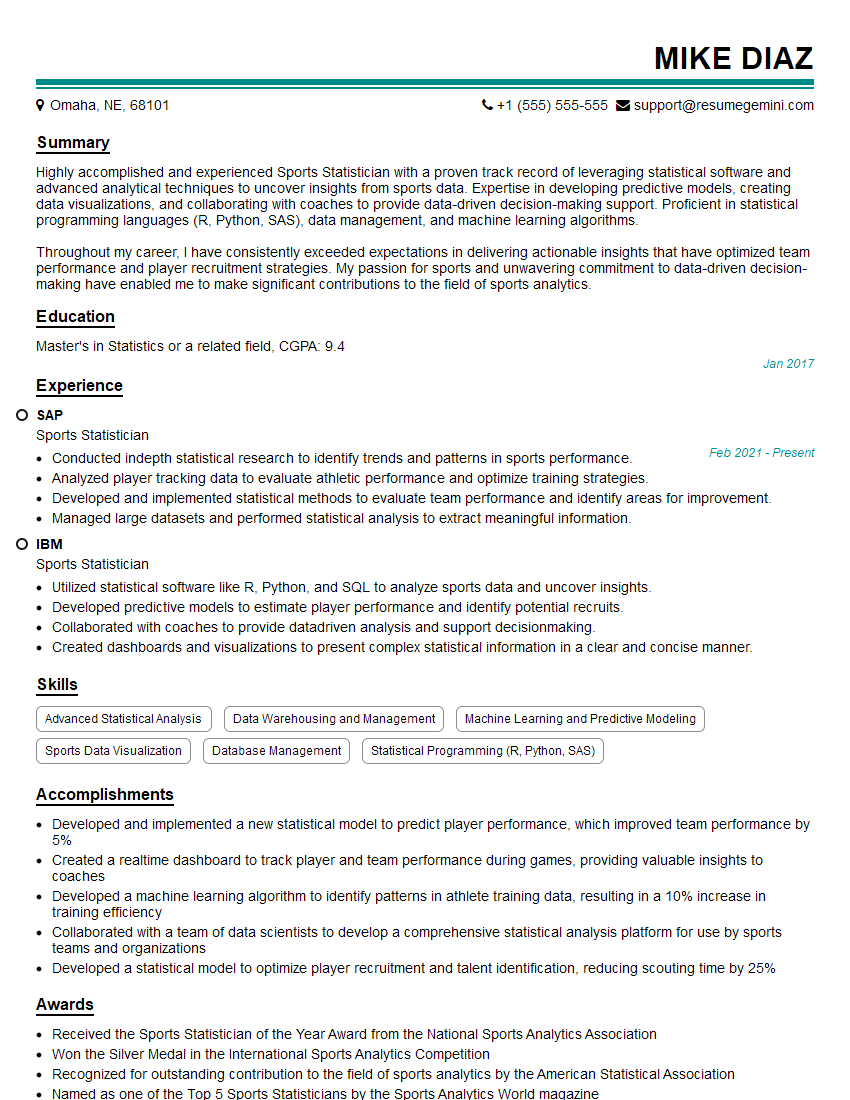
Mastering Handicapping Techniques significantly enhances your career prospects in the racing industry, opening doors to diverse roles and increased earning potential. To maximize your job search success, it’s crucial to have a strong, ATS-friendly resume. ResumeGemini is a trusted resource to help you build a professional and effective resume that highlights your skills and experience. Examples of resumes tailored to Handicapping Techniques are available to further guide your preparation. Take the initiative to craft a resume that showcases your unique strengths and experience in this exciting field.


Explore more articles
Users Rating of Our Blogs
Share Your Experience
We value your feedback! Please rate our content and share your thoughts (optional).
What Readers Say About Our Blog
Hello,
we currently offer a complimentary backlink and URL indexing test for search engine optimization professionals.
You can get complimentary indexing credits to test how link discovery works in practice.
No credit card is required and there is no recurring fee.
You can find details here:
https://wikipedia-backlinks.com/indexing/
Regards
NICE RESPONSE TO Q & A
hi
The aim of this message is regarding an unclaimed deposit of a deceased nationale that bears the same name as you. You are not relate to him as there are millions of people answering the names across around the world. But i will use my position to influence the release of the deposit to you for our mutual benefit.
Respond for full details and how to claim the deposit. This is 100% risk free. Send hello to my email id: [email protected]
Luka Chachibaialuka
Hey interviewgemini.com, just wanted to follow up on my last email.
We just launched Call the Monster, an parenting app that lets you summon friendly ‘monsters’ kids actually listen to.
We’re also running a giveaway for everyone who downloads the app. Since it’s brand new, there aren’t many users yet, which means you’ve got a much better chance of winning some great prizes.
You can check it out here: https://bit.ly/callamonsterapp
Or follow us on Instagram: https://www.instagram.com/callamonsterapp
Thanks,
Ryan
CEO – Call the Monster App
Hey interviewgemini.com, I saw your website and love your approach.
I just want this to look like spam email, but want to share something important to you. We just launched Call the Monster, a parenting app that lets you summon friendly ‘monsters’ kids actually listen to.
Parents are loving it for calming chaos before bedtime. Thought you might want to try it: https://bit.ly/callamonsterapp or just follow our fun monster lore on Instagram: https://www.instagram.com/callamonsterapp
Thanks,
Ryan
CEO – Call A Monster APP
To the interviewgemini.com Owner.
Dear interviewgemini.com Webmaster!
Hi interviewgemini.com Webmaster!
Dear interviewgemini.com Webmaster!
excellent
Hello,
We found issues with your domain’s email setup that may be sending your messages to spam or blocking them completely. InboxShield Mini shows you how to fix it in minutes — no tech skills required.
Scan your domain now for details: https://inboxshield-mini.com/
— Adam @ InboxShield Mini
Reply STOP to unsubscribe
Hi, are you owner of interviewgemini.com? What if I told you I could help you find extra time in your schedule, reconnect with leads you didn’t even realize you missed, and bring in more “I want to work with you” conversations, without increasing your ad spend or hiring a full-time employee?
All with a flexible, budget-friendly service that could easily pay for itself. Sounds good?
Would it be nice to jump on a quick 10-minute call so I can show you exactly how we make this work?
Best,
Hapei
Marketing Director
Hey, I know you’re the owner of interviewgemini.com. I’ll be quick.
Fundraising for your business is tough and time-consuming. We make it easier by guaranteeing two private investor meetings each month, for six months. No demos, no pitch events – just direct introductions to active investors matched to your startup.
If youR17;re raising, this could help you build real momentum. Want me to send more info?
Hi, I represent an SEO company that specialises in getting you AI citations and higher rankings on Google. I’d like to offer you a 100% free SEO audit for your website. Would you be interested?
Hi, I represent an SEO company that specialises in getting you AI citations and higher rankings on Google. I’d like to offer you a 100% free SEO audit for your website. Would you be interested?
good