Unlock your full potential by mastering the most common Hardcover binding interview questions. This blog offers a deep dive into the critical topics, ensuring you’re not only prepared to answer but to excel. With these insights, you’ll approach your interview with clarity and confidence.
Questions Asked in Hardcover binding Interview
Q 1. Describe the different types of hardcover binding methods.
Hardcover binding methods are crucial for creating durable and aesthetically pleasing books. Several techniques exist, each with its own strengths and weaknesses. The most common are:
- Case Binding: This is the most prevalent method for high-quality hardcover books. It involves sewing the book’s sections together, creating a text block, then attaching this block to a separately manufactured cover (the ‘case’). Think of classic novels or textbooks – they’re almost certainly case bound.
- Perfect Binding: While often associated with paperback books, perfect binding can be used for hardcover books with relatively thin text blocks. The pages are glued together along the spine’s edge, and a cover is wrapped around the glued block. This method is less durable than case binding for thicker books.
- Saddle Stitch Binding: This method involves folding sheets of paper in half and stapling them along the spine. It’s not suitable for hardcover books, as it only works for very thin publications.
- Spiral Binding (Coil Binding): This uses plastic or metal coils to hold the pages together, again unsuitable for hardcover books due to its visible and less robust nature.
- Concertina Binding (Accordion Binding): This involves folding pages in a zig-zag pattern to create a booklet. While creative, it’s not typically used for standard hardcover books.
The choice of binding method depends on factors like the book’s thickness, budget, and desired aesthetic.
Q 2. What are the advantages and disadvantages of Smyth-sewing?
Smyth-sewing, a type of case binding, involves sewing the sections together through small holes along the spine. This creates a very strong and durable binding, allowing the book to lay flat and withstand frequent use. Let’s explore its pros and cons:
- Advantages:
- Exceptional Durability: Smyth-sewn books are incredibly robust, capable of withstanding repeated opening and closing without damage.
- Lay-Flat Capability: The stitching allows the book to lay completely flat, facilitating easy reading and note-taking.
- Prestige and Quality: Smyth-sewing is often associated with high-quality, long-lasting books, enhancing their perceived value.
- Disadvantages:
- Higher Cost: Smyth-sewing is a more labor-intensive process than other methods, making it more expensive.
- Less Flexible with Page Count: While adaptable, it can be less efficient for extremely thin or thick books compared to other binding options.
- Visible Stitching: The stitching on the spine is visible, which might not be desirable for all designs.
For instance, a high-end art book or a limited edition first novel would benefit from Smyth-sewing’s durability and aesthetic appeal, while a mass-market paperback wouldn’t justify the added expense.
Q 3. Explain the process of creating a case for a hardcover book.
Creating a hardcover book case is a meticulous process involving several steps. It’s like tailoring a perfect jacket for the book’s text block:
- Board Preparation: The cover boards (typically greyboard or binder’s board) are cut to the exact size needed. This is crucial for a proper fit.
- Cover Material Selection & Cutting: The chosen cover material (cloth, leather, paper) is measured and cut, allowing for sufficient overlap onto the boards.
- Case Covering: The cover material is carefully adhered to the boards, ensuring neat corners and edges. This often involves specialized adhesives and techniques to prevent wrinkles or bubbling.
- Spine Rounding and Backing: The spine of the case is carefully rounded using specialized tools to create a curve that conforms to the book’s text block. This prepares it for the glue and hinge that binds to the text block. The spine is then backed (given a thicker layer of material) for added stability.
- Headband Grooves: Small grooves are created at the top and bottom of the spine to accommodate the headbands.
- Finishing Touches: This stage might include adding decorative elements like foil stamping, embossing, or other embellishments to enhance the book’s aesthetics.
Each step demands precision and attention to detail. A poorly executed case can ruin an otherwise perfect book.
Q 4. How do you ensure accurate spine measurements during casemaking?
Accurate spine measurements are paramount in casemaking. An improperly sized case will result in a poorly fitting book, creating a sloppy and unprofessional finish. We ensure accuracy using these methods:
- Precise Calculations: The spine width is meticulously calculated based on the thickness of the text block, allowing for the addition of glue and the cover material.
- Test Printing and Mock-ups: Creating a mock-up of the text block allows for precise measurement before the final printing and binding commence.
- Specialized Tools and Gauges: Bindery professionals use specialized tools and gauges for precise measurement of the spine and other components to maintain consistency.
- Quality Control Checks: Thorough checks are performed at each stage to catch any discrepancies in size, ensuring every case is correctly made.
Imagine a perfectly tailored suit: it needs to fit perfectly. The same logic applies to the relationship between a hardcover book’s case and its text block.
Q 5. What materials are commonly used in hardcover book binding?
The materials used in hardcover book binding are carefully chosen for their durability, aesthetic appeal, and cost-effectiveness:
- Cover Boards: Greyboard and binder’s board are commonly used for their strength and ability to hold their shape.
- Cover Materials:
- Cloth: Various types of cloth, such as linen, buckram, and cotton, are used for their durability and ability to accept printing or embossing.
- Leather: Leather offers a luxurious look and feel and exceptional durability, often reserved for high-end or special edition books.
- Paper: Paper covers are less durable but can be cost-effective for some applications.
- Text Block: The text block consists of the printed pages, often bound with thread during the stitching process.
- Endpapers: These are the sheets of paper that connect the text block to the cover.
- Adhesives: High-quality, durable adhesives are crucial for ensuring the longevity of the binding.
- Headbands: These decorative pieces cover the top and bottom of the spine, enhancing the aesthetic appearance and protecting the book’s edges.
The selection of materials significantly impacts the final book’s quality, appearance, and longevity.
Q 6. Describe the process of applying headbands and endpapers.
Applying headbands and endpapers enhances both the aesthetic appeal and the structural integrity of a hardcover book. It’s a crucial step in the process:
- Headbands:
- Preparation: The headbands, usually made of cloth or fabric, are cut and prepared to fit the spine’s width.
- Adhesive Application: A thin layer of adhesive is applied to the headband and the grooves at the top and bottom of the spine.
- Attachment: The headband is carefully pressed into the grooves, ensuring a neat and secure fit.
- Drying: The adhesive is allowed to fully dry before proceeding to the next step.
- Endpapers:
- Attachment to Text Block: The endpapers are carefully adhered to the text block using paste or adhesive. This forms a smooth transition between the text block and the cover.
- Attachment to Case: The endpapers are then glued to the inside of the book case, connecting the text block to the cover.
- Careful Pressing: The attached endpapers are pressed firmly to ensure a strong and even bond.
Think of headbands as decorative trim and endpapers as a strong, visually appealing ‘glue’ that strengthens the connection between the text block and the cover. A poorly applied headband or endpaper can result in a weakened or unattractive book.
Q 7. How do you identify and resolve common binding defects?
Identifying and resolving binding defects requires a keen eye and an understanding of the binding process. Common defects include:
- Loose Sections: This indicates inadequate stitching or glue application. Resolution involves restitching or regluing the affected sections.
- Uneven Spine: This often results from improper rounding and backing. It can be corrected using specialized tools and techniques to create a consistent curve.
- Wrinkled Cover: This is caused by improper application of the cover material or insufficient drying time. Recovering the case might be necessary in severe cases.
- Crooked Headbands: Improper application leads to crooked headbands. Careful reapplication is required for correction.
- Poorly Adhered Endpapers: This can lead to the text block becoming detached from the case. Regluing is the solution.
Careful inspection at each stage of the process is essential to prevent defects. Experience and knowledge are key to identifying and rectifying these issues, ensuring the final product meets the highest quality standards.
Q 8. What are the key considerations when selecting adhesives for hardcover binding?
Selecting the right adhesive is crucial for the durability and longevity of a hardcover book. The choice depends on several factors, including the type of paper, cover material, binding method, and the desired aesthetic outcome.
- Paper Type: Porous papers might require a more penetrating adhesive, while coated papers might need a less aggressive one to prevent damage. Think of it like choosing the right glue for wood versus metal – the surface dictates the adhesive’s properties.
- Cover Material: Cloth, leather, or synthetic materials all react differently to adhesives. Some adhesives might cause discoloration or damage certain materials. For example, a solvent-based adhesive could potentially damage delicate leather.
- Binding Method: Case-bound books require strong, flexible adhesives that can withstand repeated opening and closing. Perfect-bound books, however, might need a different type of adhesive with more immediate tack.
- Aesthetic Outcome: The adhesive’s color and clarity can affect the final look of the book. A yellowish adhesive showing through a thin cover is certainly undesirable.
- Environmental Considerations: Choosing a non-toxic, environmentally friendly adhesive is vital for both the worker’s health and sustainability.
In practice, we often conduct adhesive tests on samples before committing to a large-scale project. This involves testing the adhesive’s strength, flexibility, drying time, and its compatibility with the specific materials used in the book.
Q 9. Explain the process of applying foil stamping or embossing.
Foil stamping and embossing are post-production techniques that enhance the visual appeal and tactile quality of a hardcover book. They’re often used for creating logos, titles, or decorative elements on the cover.
Foil Stamping: This involves pressing heated foil against the cover material using a die. The heat and pressure transfer the foil’s design onto the surface, creating a shiny, metallic effect. Think of it as a sophisticated, high-pressure sticker.
Embossing: This technique creates a raised or indented design on the cover without the use of foil. A heated die is used to press the design into the material, resulting in a three-dimensional effect. Imagine pressing a coin into clay to create an impression.
The Process: Both techniques generally follow these steps:
- Die Creation: A metal die is created with the desired design, either through engraving or computer-numerical control (CNC) machining.
- Setup: The die is mounted in a stamping or embossing press, and the cover material is positioned accurately.
- Application: For foil stamping, foil is placed between the die and the cover material. Heat and pressure are applied simultaneously. For embossing, only heat and pressure are used.
- Inspection: The finished product is inspected for any imperfections.
Proper pressure and temperature control are vital to achieve a clean, crisp result. Insufficient pressure may lead to a faint imprint, while excessive pressure can damage the cover material. Improper temperature can cause the foil to not adhere properly or the cover to scorch.
Q 10. How do you maintain and troubleshoot bookbinding equipment?
Maintaining and troubleshooting bookbinding equipment is essential for ensuring efficient and high-quality production. Regular maintenance not only extends the equipment’s lifespan but also prevents costly downtime.
- Regular Cleaning: Dust, paper scraps, and adhesive residue can clog mechanisms and reduce performance. Daily cleaning of critical components is vital.
- Lubrication: Moving parts require regular lubrication to prevent wear and tear. Using the correct type and amount of lubricant is important; otherwise it can cause more damage.
- Calibration: Precise settings are critical for consistent results. Regular calibration ensures accurate cuts, folds, and adhesive application.
- Inspections: Regular inspections help identify potential problems before they escalate into major malfunctions. Look for wear and tear on belts, rollers, and other moving parts.
- Troubleshooting: A thorough understanding of the equipment’s mechanics allows for quick diagnosis and resolution of common problems. Keeping detailed operation manuals and maintenance logs is helpful.
For example, if a sewing machine is jamming, it could be due to a dull needle, tangled thread, or incorrect tension settings. Systematic troubleshooting, starting with the simplest possibilities, is critical. If the problem persists, consulting a qualified technician is crucial.
Q 11. What safety precautions are essential in a bookbinding environment?
Safety is paramount in a bookbinding environment, where sharp tools, heavy machinery, and potentially hazardous materials are commonly used.
- Personal Protective Equipment (PPE): This includes safety glasses, gloves, and hearing protection, depending on the task. Cut-resistant gloves are essential when working with sharp tools.
- Machine Guards: All machinery should have proper safety guards in place to prevent accidental contact with moving parts.
- Proper Training: All employees should receive thorough training on the safe operation of all equipment and the handling of hazardous materials.
- Emergency Procedures: Clear emergency procedures and a well-stocked first-aid kit are crucial. Employees should know how to respond to accidents and emergencies.
- Housekeeping: A clean and organized workspace minimizes the risk of slips, trips, and falls. Proper disposal of hazardous materials is also vital.
- Adhesive Safety: Adhesives should be stored and used according to manufacturer’s instructions, with proper ventilation to avoid inhaling fumes.
Ignoring safety procedures can lead to serious injuries. A simple lapse in attention while operating a cutting machine, for instance, can result in severe cuts. A proactive safety culture is essential in a bookbinding operation.
Q 12. What is the role of quality control in hardcover binding?
Quality control is an integral part of hardcover binding, ensuring that the finished product meets the highest standards of quality and consistency. This involves meticulous checks at each stage of the process.
- Incoming Material Inspection: Checking the quality of paper, cover materials, and other supplies before they enter the production process.
- In-Process Inspection: Monitoring each step of the binding process, such as sewing, gluing, and casing-in, to identify and correct any defects early on. This might involve regular checks on the stitching quality, adhesive application, and the alignment of covers.
- Final Inspection: Thorough examination of the finished books to identify any imperfections, such as misaligned pages, crooked covers, or damage to the spine.
- Statistical Process Control (SPC): Employing statistical methods to track and analyze process variability, allowing for proactive identification of potential quality issues.
A rigorous quality control system minimizes waste, rework, and customer complaints, maintaining the reputation for excellent craftsmanship. Finding a small flaw during the in-process inspection is much better than discovering it after a large batch has been completed.
Q 13. How do you handle large-scale bookbinding projects?
Handling large-scale bookbinding projects requires careful planning, efficient workflow, and robust quality control measures. Effective project management is paramount.
- Project Breakdown: Dividing the project into smaller, manageable tasks. This allows for better tracking of progress and efficient allocation of resources.
- Resource Allocation: Ensuring sufficient personnel, equipment, and materials are available to meet deadlines. This may involve bringing in extra equipment or staff, or outsourcing certain aspects of the project.
- Scheduling and Tracking: Using project management software to track progress, deadlines, and resource allocation. This may include Gantt charts or Kanban boards.
- Communication: Maintaining open communication among team members and clients to address any issues promptly and keep everyone informed. Regular progress reports are crucial.
- Quality Control Systems: Implementing rigorous quality control measures throughout the project to ensure consistency and high quality.
For instance, a large-scale academic textbook project would be broken down into stages: printing, gathering, sewing, casing-in, finishing. Each stage would have its own timeline and quality checkpoints, ensuring the project remains on schedule and within budget.
Q 14. What is the significance of spine finishing techniques?
Spine finishing techniques are crucial for both the aesthetic appeal and durability of a hardcover book. The spine is a prominent feature, often the first thing a reader notices.
- Adhesive Application: The way adhesive is applied to the spine impacts both its strength and the appearance of the spine’s lettering or design.
- Head and Tail Bands: These decorative bands at the top and bottom of the spine protect the text block and add a touch of elegance. They add to the overall aesthetic.
- Lettering and Design: The spine often features the book’s title and author’s name, and the design and placement of this information impact the overall look.
- Case-Making: Precision in case-making ensures that the cover perfectly encloses the text block. A poorly fitted case can compromise the durability and visual appeal.
- Cover Material Selection: The choice of cover material (cloth, leather, etc.) strongly influences the spine’s texture and appearance.
For example, a well-executed spine with elegantly embossed lettering conveys quality and craftsmanship, while a poorly finished spine can detract from the book’s overall impression. Spine finishing represents a significant portion of the overall aesthetic value of a hardcover book.
Q 15. How do you calculate material costs for hardcover binding?
Calculating material costs for hardcover binding requires a detailed breakdown of each component. Think of it like a recipe – you need precise measurements for each ingredient to get the final product right. First, you need a precise count of the number of books to be bound. Then, you meticulously list each material: cover boards (considering size and type), cover cloth (accounting for waste and design specifics), endsheets (weight and quantity), thread (type and length per book), adhesives (type and estimated usage), headbands (size and quantity), and any additional embellishments like stamping foil or decorative elements.
For each material, you need to determine the unit cost from your suppliers. This includes not only the raw material price but also any shipping and handling fees. Once you have the unit cost, multiply it by the total quantity needed. Finally, add up the cost of all materials to arrive at the total material cost. Don’t forget to factor in waste – cover cloth, for instance, often needs extra material for cutting and matching patterns.
Example: Let’s say we’re binding 100 books. We need 100 cover boards at $0.50 each, 110 yards of cover cloth at $5 per yard (extra for waste), and 200 endsheets at $0.10 each. The total material cost for these three components alone would be (100 * $0.50) + (110 * $5) + (200 * $0.10) = $50 + $550 + $20 = $620. This process is repeated for every component, and any potential additional costs like special tooling or printing need to be carefully accounted for.
Career Expert Tips:
- Ace those interviews! Prepare effectively by reviewing the Top 50 Most Common Interview Questions on ResumeGemini.
- Navigate your job search with confidence! Explore a wide range of Career Tips on ResumeGemini. Learn about common challenges and recommendations to overcome them.
- Craft the perfect resume! Master the Art of Resume Writing with ResumeGemini’s guide. Showcase your unique qualifications and achievements effectively.
- Don’t miss out on holiday savings! Build your dream resume with ResumeGemini’s ATS optimized templates.
Q 16. Describe your experience with different types of cover boards.
My experience encompasses a wide range of cover boards, each with unique properties affecting the final book’s durability and aesthetic appeal. The choice of cover board depends heavily on the book’s intended use, budget, and desired aesthetic.
- Standard Board: This is the workhorse – affordable and suitable for many books. It offers adequate rigidity and is readily available in various thicknesses.
- Chipboard: A less expensive option, but it’s less durable and less aesthetically pleasing. I often use it for internal components where strength isn’t paramount.
- Illustration Board: This offers a smoother surface, ideal for printing and embossing. It’s pricier but results in a higher-quality, more luxurious-looking book.
- Recycled Board: An eco-friendly alternative, increasingly popular. The quality can vary, so careful sourcing is crucial. I’ve found that some recycled boards offer comparable strength and finish to traditional boards.
Choosing the right board involves considering factors like the book’s size and weight, the printing method (e.g., screen printing might require a smoother surface), and the overall design and feel the publisher wants to achieve. For example, a heavy academic text might need a thicker, more robust board compared to a lighter novel.
Q 17. Explain the process of preparing book sections for binding.
Preparing book sections for binding is a crucial step, influencing the book’s final strength and appearance. It’s a meticulous process that involves several key steps.
- Gathering and Collating: The printed sheets are gathered in the correct sequence and carefully checked for any missing or misprinted pages. This is often done using automated systems for efficiency and accuracy.
- Folding and Sectioning: Printed sheets are folded to create sections (also called signatures). The number of pages per section depends on the book’s size and the chosen sewing method. The accuracy here is critical as even a slight misalignment can affect the final binding quality.
- Sewing Preparation: Depending on the sewing method (see next answer), this can involve perforating the sections or preparing them for specific stitching techniques. This includes ensuring that the sections are consistently aligned and that the stitching will hold them together securely.
- Section Trimming: Once sections are sewn, excess paper is trimmed to achieve a neat, consistent edge. This helps the pages sit flat against each other and contributes to a tidy appearance.
Each step is quality-controlled to minimize errors. Inconsistent folding or uneven trimming can significantly affect the final product’s aesthetics and overall binding integrity. A good binder anticipates potential issues in each stage and has systems in place to prevent and rectify them.
Q 18. How do you ensure consistent quality across multiple bookbinding projects?
Maintaining consistent quality across multiple projects hinges on a combination of standardized procedures, rigorous quality checks, and well-trained personnel. Think of it like a well-oiled machine – every part must function perfectly for consistent output.
Firstly, we develop and adhere to detailed Standard Operating Procedures (SOPs) for every step of the binding process. These SOPs cover everything from material selection and preparation to stitching, gluing, and finishing. This ensures everyone follows the same method consistently. Secondly, we implement thorough quality checks at every stage. This includes visual inspections as well as using precision measuring tools to verify dimensions and ensure consistency. This could involve sampling at different stages. We also utilize statistical process control (SPC) techniques to track and monitor key performance indicators (KPIs) and identify any variations in quality. Regular calibration and maintenance of our equipment are also essential. Finally, a well-trained workforce is invaluable. Regular training and ongoing professional development programs are essential to ensure our team is equipped to maintain high standards of work across all projects.
Q 19. What is your experience with different types of sewing methods?
My experience covers several sewing methods, each suited to different book types and aesthetic preferences. Sewing is the backbone of hardcover binding, determining the book’s durability and longevity.
- Smyth Sewing: This is the gold standard, renowned for its strength and durability. Sections are sewn through the fold using a needle and thread, creating a strong spine. It’s ideal for larger, high-value books.
- Perfect Binding: While technically not a sewing method, it’s often used for paperback and less expensive hardcovers. The edges of sections are glued together, creating a smoother spine. It’s suitable for books with a smaller page count.
- Case Binding: Sections are sewn together separately and then adhered to the cover boards. This is commonly used for higher-quality hardcovers. It allows for enhanced spine flexibility.
- Concertina Binding: Pages are folded and then joined in a zig-zag manner to create a continuous loop. This is not generally used for hardcovers.
The choice of sewing method impacts not only the book’s strength but also its cost and production time. For example, Smyth sewing is more time-consuming and thus more expensive but creates the most durable spine. Perfect binding is faster and cheaper but is less durable. The optimal method depends on the client’s budget and the intended longevity of the book.
Q 20. Explain the process of applying cover cloth.
Applying cover cloth is an art as much as it is a technical process. It requires precision and attention to detail to ensure a professional finish. The process typically involves several key steps:
- Preparing the Cover Boards: The cover boards must be clean and free of any debris or imperfections. This may involve sanding or cleaning depending on the specific board.
- Cutting the Cloth: The cover cloth is accurately cut to the required dimensions, leaving sufficient extra material for wrapping around the edges. Patterns and design often require careful alignment.
- Adhesive Application: An appropriate adhesive is applied evenly to the cover boards. The choice of adhesive is crucial; it needs to be strong enough to hold the cloth securely but not seep through and stain the cloth.
- Cloth Application: The cloth is carefully and smoothly wrapped around the cover boards, ensuring no wrinkles or bubbles are visible. It’s crucial to smooth the cloth meticulously to ensure no gaps or air pockets remain.
- Trimming and Finishing: Once the cloth is securely adhered, any excess cloth is carefully trimmed to create a neat and clean edge. This may involve specialized tools for precision trimming.
The overall aesthetic is heavily dependent on the skill and experience of the binder. A beautifully applied cover cloth adds significantly to the book’s quality and visual appeal.
Q 21. How do you manage deadlines and prioritize tasks in a bindery?
Managing deadlines and prioritizing tasks in a busy bindery requires a well-organized approach and effective project management. It’s a bit like conducting an orchestra – you need to ensure all sections work together harmoniously to deliver the final product on time.
We use a combination of project management software and established workflow procedures. Each project is assigned a deadline, and we break down the entire process into smaller, manageable tasks. This allows for better tracking of progress and identification of potential delays early on. A Kanban board (or similar system) helps visualize task progress, making it simple to identify potential bottlenecks or resource conflicts. We utilize prioritization techniques like the MoSCoW method (Must have, Should have, Could have, Won’t have) to focus on the essential tasks first and manage expectations around the less critical ones. Regular team meetings are vital for communication and coordination, to ensure everyone is aligned with the project schedule and any potential adjustments due to unforeseen circumstances. Effective communication between the bindery, the client, and internal teams is paramount to ensure that everyone is well-informed and aligned on the timeline and deliverables.
Q 22. Describe your experience with different types of glues and adhesives.
Glue selection is crucial in hardcover binding, as it directly impacts the book’s longevity and aesthetic appeal. My experience encompasses a wide range of adhesives, each with its own properties and applications.
- Animal glues: These traditional glues, often made from hide or bone, offer excellent strength and flexibility, but require careful preparation and application. I’ve used them extensively in restoring antique books, where their archival qualities are unmatched. The drawback is their longer drying time.
- Polyvinyl Acetate (PVAc) glues (white glue): These are common, versatile, and relatively inexpensive. I use PVAc frequently for casemaking and text block adhesion, particularly for large-scale projects due to their efficient application. However, they are less water-resistant than other options.
- Hot melt adhesives: These glues are applied in a molten state, providing rapid bonding. I utilize hot melt for covering boards and spine construction, valuing their speed and precision. Careful temperature control is essential to prevent scorching or uneven adhesion.
- Ethylene Vinyl Acetate (EVA) hot melt: I find this option provides a superior bond strength and flexibility compared to standard hot melt, especially beneficial for heavily illustrated books.
- Casein glues: These protein-based adhesives are excellent for archival work, offering good strength and water resistance. I primarily use them for conservation projects, where the durability and archival properties are paramount.
The choice of glue depends on factors like the book’s intended use, the materials involved, and the desired aesthetic outcome. For example, a high-end, limited-edition book might demand the archival quality of casein glue, while a mass-market paperback could effectively use PVAc.
Q 23. Explain your experience using various bookbinding tools and machinery.
My experience with bookbinding tools and machinery spans decades. From basic hand tools to sophisticated automated equipment, I am proficient in their operation and maintenance.
- Hand tools: I’m adept at using ploughs, bone folders, backing boards, and various types of knives and cutters for accurate and precise work. Hand tools provide fine control, especially crucial in intricate tasks such as headbanding or cover board preparation.
- Casemaking machines: I’ve operated automated casemaking machinery, which significantly increases efficiency in large-scale production. These machines allow for precise and consistent case construction, streamlining the process and reducing human error.
- Stitching machines: I’m experienced in using both traditional sewing machines for sewn bindings and automated section sewing machines for higher volume output. Understanding the nuances of different stitching methods—such as Smyth-sewing or perfect binding—is vital for selecting the best approach for each project.
- Guillotine cutters: Accurate cutting is crucial, and my expertise with guillotine cutters ensures precise trimming of pages and cover boards, maintaining a professional finish.
- Glue application equipment: I’m familiar with various glue application tools, from hand-held glue applicators to automated systems used for large-scale projects. Consistent glue application is key to a strong and durable bind.
My experience includes both manual and automated processes, allowing me to adapt my techniques based on the project’s scale and requirements.
Q 24. What is your experience with digital printing and its impact on bookbinding?
Digital printing has revolutionized bookbinding, offering new possibilities and challenges. While traditional offset printing remains relevant, digital printing has significantly impacted the industry.
- On-Demand Printing: Digital printing enables on-demand publishing, making small-run or personalized books economically feasible. This allows for greater flexibility in design and content.
- Print-on-Demand Services: I’ve worked extensively with print-on-demand platforms, integrating their workflows into my bookbinding processes. This facilitates rapid turnaround times and reduces warehousing costs.
- Short-Run Production: Digital printing enables efficient short-run production, eliminating the high setup costs associated with traditional methods. This is particularly beneficial for authors self-publishing or producing limited editions.
- Variable Data Printing: This allows for the inclusion of personalized elements directly on the page or the cover, adding a unique touch for each book. I’ve used this in projects such as personalized children’s books or yearbooks.
- Paper Considerations: Digital printing may require specific types of paper which impact the book’s overall strength and suitability for hardcover binding. This often demands closer attention to the paper’s thickness and coating when choosing adhesives.
While digital printing offers numerous advantages, bookbinders need to be aware of the potential differences in paper characteristics and adjust their techniques accordingly to achieve the same level of durability and aesthetic quality as with traditionally printed books. For instance, digitally printed pages might be slightly thinner, requiring adjustments in stitching and gluing.
Q 25. How do you handle customer complaints or unexpected problems?
Handling customer complaints or unexpected problems requires a calm and systematic approach. My strategy focuses on effective communication, problem analysis, and finding solutions.
- Active Listening: First, I listen carefully to the customer’s concerns, ensuring I fully understand the problem.
- Thorough Assessment: I then thoroughly examine the book or binding issue, identifying the root cause of the problem. This often involves a meticulous analysis of the materials, the binding process, and potentially, the printing techniques used.
- Collaborative Problem Solving: Depending on the situation, I work closely with the customer to find a mutually acceptable solution. This might involve repairs, replacements, or offering suitable alternative options. Transparency is paramount during this stage.
- Documentation: I maintain detailed records of the complaint, investigation, and resolution. This not only helps with future reference but also demonstrates professional accountability.
- Preventative Measures: Following the resolution, I reflect on the issue to identify potential improvements in my processes or to identify areas where better quality control measures might be implemented to prevent similar issues from arising again.
For example, I once had a complaint about cover boards separating from the text block. By carefully examining the problem, I discovered that a particular batch of glue hadn’t adhered properly. I implemented additional checks during future projects and addressed the issue with the glue supplier.
Q 26. Describe your experience with different types of paper and their suitability for hardcover binding.
Paper selection is paramount in hardcover binding. The paper’s weight, texture, and composition significantly influence the book’s final quality and durability.
- Weight: Heavier papers (e.g., 80lb or higher) are generally preferred for hardcover books to ensure sufficient thickness and strength. Lighter papers might lead to a flimsy text block.
- Texture: The texture of the paper impacts the printing results and overall feel of the book. Textured papers, such as laid or wove, might require special handling to ensure smooth glue application.
- Composition: The paper’s composition (e.g., acid-free, recycled) affects its longevity and archival properties. Acid-free papers are essential for books intended for long-term preservation. Choosing appropriate adhesives is crucial as the composition of paper may impact their effectiveness.
- Coated vs. Uncoated: Coated papers provide sharper printing results but can pose challenges for some binding techniques, potentially affecting glue adhesion. Uncoated papers offer a more natural look and feel, but their absorption can impact drying times of some glues.
For example, a high-quality art book featuring heavy images might demand a heavier, coated paper stock, while a scholarly text might benefit from an acid-free, uncoated paper for optimum readability and archival preservation. The choice depends on the type of content, the intended audience, and the desired aesthetic outcome.
Q 27. What is your experience with different finishing techniques like gilding and edge staining?
Finishing techniques add a layer of sophistication and elegance to hardcover books. My experience includes various finishing methods that enhance both the visual appeal and the tactile experience.
- Gilding: I’m skilled in applying gold leaf to the page edges (edge gilding) or to the cover’s design elements (cover gilding). This time-consuming process requires precision and attention to detail to achieve a luxurious finish. I’m familiar with different gilding methods, including water gilding and oil gilding.
- Edge Staining: Edge staining involves dyeing the page edges, creating a vibrant color contrast. I can achieve a range of effects through varying the staining techniques and colors, from subtle to dramatic.
- Head and Tail Bands: I’m proficient in creating head and tail bands, which are decorative fabric bands applied to the top and bottom of the spine. These bands offer both aesthetic appeal and structural support.
- Case stamping: I’m familiar with both blind and foil stamping techniques for decorating the book cover. This involves precisely pressing designs or lettering onto the cover using heat and pressure.
The choice of finishing techniques is often dictated by the book’s genre, target audience, and overall design. For example, a classic literature edition might benefit from elegant edge gilding, while a modern cookbook might use a more minimalist approach with simple cover stamping.
Q 28. How do you stay up-to-date with the latest trends and technologies in bookbinding?
Staying current in bookbinding requires a proactive approach. I regularly utilize various methods to stay abreast of the latest trends and technologies.
- Professional Organizations: I’m an active member of several bookbinding associations and attend their conferences and workshops. These events offer opportunities to network with other professionals, learn about new techniques, and see the latest equipment demonstrations.
- Trade Publications: I subscribe to several trade publications and journals that provide insights into industry trends, new technologies, and emerging practices.
- Online Resources: I regularly consult online resources such as blogs, websites, and online forums dedicated to bookbinding. This includes exploring educational videos that provide detailed explanations of intricate techniques.
- Continuing Education: I actively seek out continuing education opportunities through workshops, courses, and seminars. This ensures I can keep my skills sharp and learn about new materials and methods.
- Experimentation: I believe in hands-on learning. I regularly experiment with new materials, techniques, and tools, integrating the successful outcomes into my work.
By continuously expanding my knowledge and adapting my methods, I can maintain a high standard of quality and innovation in my bookbinding practice.
Key Topics to Learn for Hardcover Binding Interview
- Materials Science: Understanding the properties of different cover materials (cloth, leather, paperboard), adhesives, and their suitability for various book formats and applications.
- Case Making Processes: Detailed knowledge of the steps involved in creating the book cover, including cutting, scoring, pasting, and adhering the cover boards to the text block.
- Binding Techniques: Familiarity with different case binding methods, such as case-bound, perfect bound, and adhesive binding, and their respective strengths and weaknesses.
- Finishing Techniques: Understanding various finishing options like embossing, debossing, foil stamping, and their impact on the final product’s aesthetics and durability.
- Quality Control: Proficiency in identifying defects in hardcover books and implementing quality control measures throughout the production process.
- Equipment and Machinery: Familiarity with common equipment used in hardcover binding, such as casemakers, gluing machines, and finishing presses.
- Production Planning and Scheduling: Understanding the workflow and scheduling aspects of hardcover book production, including managing timelines and resources efficiently.
- Cost Estimation and Budgeting: Ability to estimate the costs associated with different hardcover binding processes and materials.
- Troubleshooting: Practical experience in identifying and resolving common problems encountered during hardcover binding production.
- Sustainability and Environmental Considerations: Understanding environmentally friendly materials and practices within the hardcover binding industry.
Next Steps
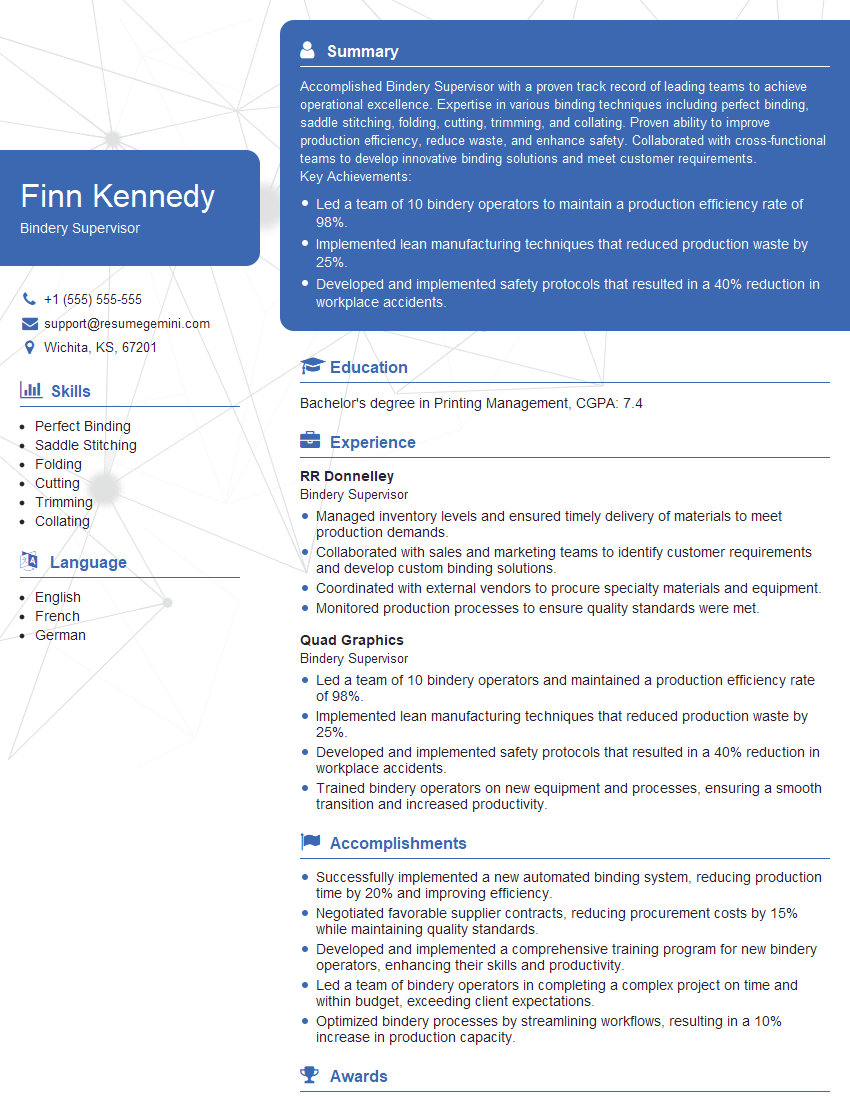
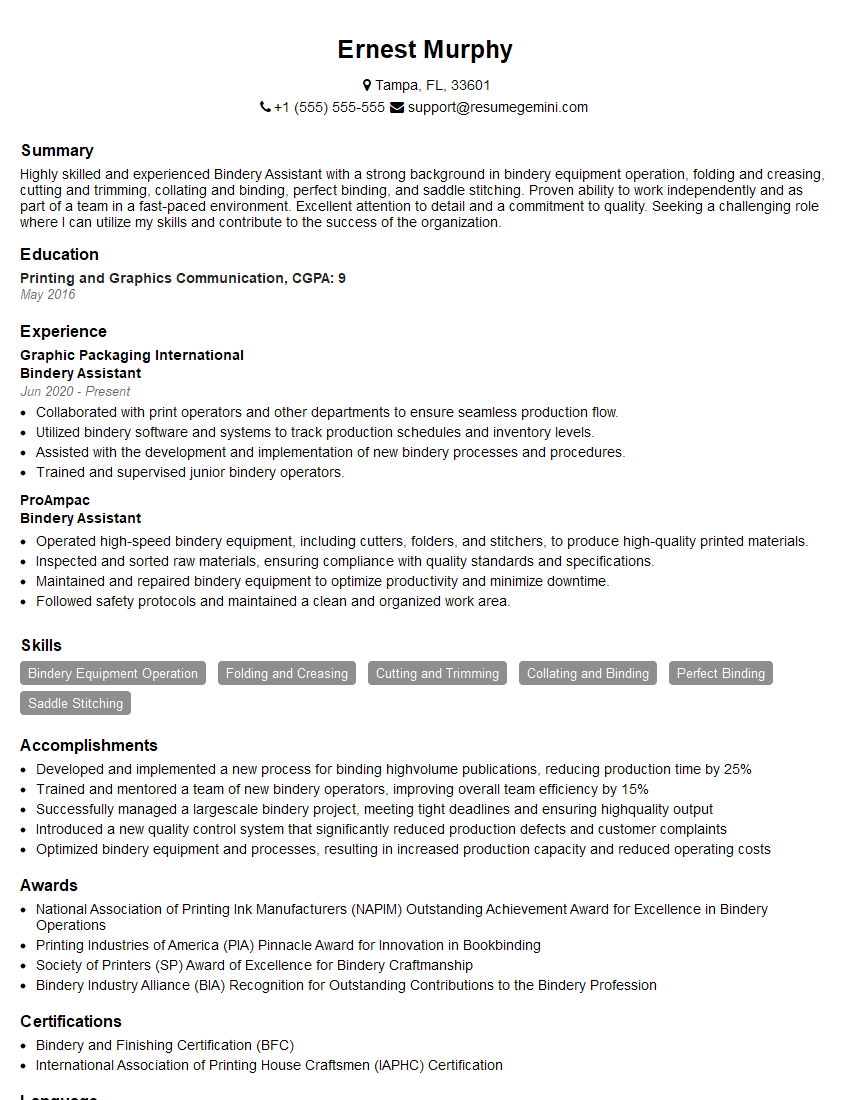
Mastering hardcover binding opens doors to exciting career opportunities in publishing, print management, and related fields. A strong understanding of these processes demonstrates valuable technical skills and attention to detail, highly sought after by employers. To maximize your job prospects, it’s crucial to present your skills effectively. Create an ATS-friendly resume that highlights your expertise. ResumeGemini is a trusted resource that can help you build a professional and impactful resume. Examples of resumes tailored to the hardcover binding industry are available to guide you. Invest time in crafting a compelling resume; it’s your first impression on potential employers.
Explore more articles
Users Rating of Our Blogs
Share Your Experience
We value your feedback! Please rate our content and share your thoughts (optional).
What Readers Say About Our Blog
Very informative content, great job.
good