Interviews are more than just a Q&A session—they’re a chance to prove your worth. This blog dives into essential Understanding of Social Media Platforms for Casting interview questions and expert tips to help you align your answers with what hiring managers are looking for. Start preparing to shine!
Questions Asked in Understanding of Social Media Platforms for Casting Interview
Q 1. Name three social media platforms most effective for casting and explain why.
Three social media platforms highly effective for casting are Instagram, Facebook, and LinkedIn. Each offers unique advantages depending on the type of role and target audience.
- Instagram: Ideal for visually driven casting, especially for roles requiring a strong online presence or specific aesthetic. Its visual focus allows showcasing headshots, reels demonstrating talent (acting, singing, dancing), and behind-the-scenes glimpses of projects. The platform’s strong emphasis on hashtags makes it easier to reach specific demographics and talent pools.
- Facebook: Provides broader reach and allows for targeted advertising campaigns. Facebook groups dedicated to casting calls can be valuable for finding niche talent. The ability to create detailed posts with longer descriptions makes it suitable for more complex roles with specific requirements.
- LinkedIn: Particularly effective for casting professionals, corporate roles, or projects requiring specific skill sets (e.g., voice-over artists). LinkedIn’s professional focus allows for targeted searches based on experience and credentials. It’s also a great place to connect with agents and casting directors.
The choice of platform depends on the specific needs of the project. For example, a short film might benefit most from Instagram’s visual appeal, while a corporate video might prioritize LinkedIn’s professional network. A comprehensive strategy often involves a multi-platform approach to maximize reach.
Q 2. Describe your experience using social media analytics to track casting campaign performance.
My experience with social media analytics in casting involves using built-in platform tools (like Facebook Insights and Instagram Insights) as well as third-party analytics platforms. I track key metrics to evaluate campaign performance. For example:
- Reach and Impressions: How many unique users saw the casting call post?
- Engagement: Likes, comments, shares – indicators of interest and the post’s appeal.
- Website Clicks/Application Submissions: Tracks the effectiveness of the call to action, driving applicants to the application portal.
- Demographics and Location of Audience: Helps to understand who’s seeing the casting call and refine targeting for future campaigns.
This data helps me understand what types of content resonate best with my target audience and allows for iterative improvements in the casting strategy. For instance, if engagement is low on a specific post, I analyze the content and format to identify areas for improvement; perhaps a video would be more engaging than a simple text post. By consistently monitoring these analytics, I optimize campaigns for maximum impact and efficiency.
Q 3. How do you identify and vet potential candidates through social media?
Identifying and vetting potential candidates through social media requires a careful and ethical approach. I begin by searching relevant hashtags and keywords related to the specific role on platforms like Instagram and LinkedIn. I then review profiles, paying close attention to:
- Relevant Skills and Experience: Do their posts showcase skills relevant to the role (e.g., acting reels, writing samples, design portfolios)?
- Professionalism and Online Presence: Is their profile consistent with the image of the project? Are their posts professional and appropriate?
- Portfolio and Previous Work: Links to online portfolios or previous projects are vital in evaluating their suitability.
Vetting involves verifying information through other sources, such as their website or online resume. It’s crucial to remember that social media is just one piece of the puzzle. Background checks and formal interviews remain essential steps in the selection process. Respecting candidates’ privacy and avoiding biases based on social media content are crucial ethical considerations.
Q 4. What strategies do you employ to build a strong online presence for casting calls?
Building a strong online presence for casting calls involves a multi-faceted approach:
- Consistent Branding: Maintaining a consistent brand image across all social media platforms (using a consistent tone, logo, and color scheme).
- High-Quality Visuals: Using professional-quality headshots, video content, and behind-the-scenes glimpses to make casting calls visually appealing.
- Targeted Advertising: Utilizing social media advertising to reach specific demographics (e.g., age, location, interests).
- Engaging Content: Sharing posts that are interesting, informative, and relevant to the target audience. This could include tips for auditioning or insights into the project.
- Community Building: Engaging with potential candidates and fostering a sense of community around the casting process.
For example, running targeted Facebook ads to reach specific acting communities or using Instagram Reels to showcase exciting elements of the project can significantly increase the reach and effectiveness of casting calls.
Q 5. Explain your approach to managing negative feedback or comments on casting social media posts.
Managing negative feedback requires a prompt, professional, and empathetic response. I avoid deleting negative comments unless they are abusive or violate community guidelines. My approach:
- Acknowledge the Feedback: Respond to the comment, acknowledging the user’s feelings and concerns. Example: “We appreciate your feedback and understand your perspective.”
- Address the Concerns: Attempt to address the specific concerns raised by the commenter. This may involve explaining the casting process, clarifying selection criteria, or offering an alternative way to engage.
- Maintain Professionalism: Respond in a calm, respectful tone, even if the feedback is harsh. Avoid engaging in arguments or escalating the situation.
- Offer a Solution (if possible): If the concern is valid, offer a solution or pathway to address it. For instance, if there are concerns about transparency, you could create a FAQ section or offer more updates.
Addressing negative feedback transparently can actually enhance credibility and build trust with potential candidates.
Q 6. How would you handle a situation where a candidate’s social media profile conflicts with the role’s image?
If a candidate’s social media profile conflicts with the role’s image, a careful and nuanced approach is required. I would first assess the severity of the conflict. Is it a minor discrepancy or something that directly contradicts the role’s requirements?
- Minor Discrepancies: For minor discrepancies, I’d weigh the candidate’s overall talent and suitability against the online content. Context matters. Some past actions might be explained or irrelevant to the current role.
- Significant Conflicts: If the conflict is significant (e.g., promoting views against the project’s values or demonstrating behavior incompatible with the role), I’d likely exclude the candidate. It’s crucial to prioritize aligning the project’s image with its representatives.
It’s essential to document the decision-making process and ensure that the decision is not based on discriminatory biases. Transparency and fairness throughout the process are paramount.
Q 7. What are the legal and ethical considerations when using social media for casting?
Legal and ethical considerations are paramount when using social media for casting. Key areas of concern include:
- Privacy: Respecting candidates’ privacy rights. Avoid requesting access to private information or making assumptions based on limited online data. Ensure compliance with data protection laws (like GDPR).
- Discrimination: Avoiding bias based on age, gender, race, religion, etc. Social media should be used to assess skills and experience, not to make discriminatory judgments.
- Defamation: Refraining from making false or damaging statements about candidates. All information shared should be accurate and fair.
- Consent: Obtaining consent before using any candidate’s social media content in the casting process or promotional materials. Clear communication about how their data will be used is crucial.
- Copyright: Respecting copyright laws when using any images or videos from candidates’ profiles.
Prioritizing ethical practices not only safeguards against legal issues but also fosters a positive and inclusive casting environment.
Q 8. How do you leverage hashtags and relevant keywords to increase reach on social media for casting?
Hashtags and keywords are fundamental for expanding your casting reach on social media. Think of them as signposts guiding potential candidates to your casting calls. They allow you to categorize your posts and make them easily discoverable through social media searches. For example, if casting for a period drama, relevant hashtags could include #periodpiececasting, #historicaldrama, #actorcasting, #auditions, and location-specific tags such as #londoncasting. Keywords are similarly crucial in your post descriptions and titles. Don’t just use common terms; conduct thorough keyword research to find niche terms your target demographic actively searches for. Tools like Google Keyword Planner or social media analytics can aid in this. A strategic combination of broad and niche hashtags and keywords ensures maximum visibility.
For optimal effectiveness, use a mix of popular and niche hashtags. Too many broad hashtags can dilute visibility, while too many niche ones might reach too few people. A balanced approach, regularly reviewed and updated based on analytics, is key to success. Also, consider using relevant keywords naturally within your post content; don’t just stuff them in haphazardly.
Q 9. Describe your experience using paid social media advertising for casting purposes.
Paid social media advertising is incredibly powerful for targeted casting. I’ve extensively used platforms like Facebook Ads and LinkedIn Ads to reach specific demographics. For instance, when casting for a young adult drama, I’d target Facebook users within a specific age range, location, and with interests related to acting, theatre, or film. The detailed targeting options allow for precise reach, minimizing wasted ad spend and maximizing the quality of applicants. LinkedIn offers similar precision targeting for more experienced professionals.
My strategy typically involves A/B testing different ad creatives and targeting parameters to optimize performance. I track key metrics like click-through rates (CTR), cost-per-click (CPC), and conversion rates (applications received). This allows me to continuously refine my campaigns, improving return on investment (ROI). I’ve found that visually compelling ad creatives, featuring strong calls to action, significantly improve results. For example, using a captivating behind-the-scenes image or short video showcasing the project’s tone. The key is to not just blast ads, but to create engaging content that resonates with the target audience.
Q 10. What metrics do you use to measure the success of your social media casting efforts?
Measuring the success of social media casting requires a multi-faceted approach. I don’t solely rely on vanity metrics like likes or shares. Instead, I focus on key performance indicators (KPIs) directly related to casting outcomes. These include:
- Application Volume: The number of applications received through each social media platform.
- Application Quality: Assessment of the suitability of received applications, based on relevant experience and skill sets.
- Cost per Application: The cost of each application received via paid social media campaigns (applicable to paid advertising).
- Time to Fill: The time taken to fill the roles through social media casting compared to traditional methods.
- Candidate Engagement: The level of interaction with posts, comments, and messages.
By tracking these metrics, I can gauge the effectiveness of my strategies, identify areas for improvement, and justify the ROI of my social media casting efforts.
Q 11. How do you maintain a consistent brand voice and tone across all social media channels related to casting?
Maintaining a consistent brand voice and tone across all social media platforms is essential for building a recognizable and trustworthy identity. It creates a unified experience for potential candidates and reinforces the project’s personality. This means defining a clear brand personality – is it formal, playful, edgy, professional? Then, ensure all communications, from captions and comments to ad copy, align with that persona. I use style guides with examples of appropriate language, tone, and imagery. This guide helps maintain consistency, especially when multiple team members manage different accounts.
For example, If casting for a light-hearted comedy, the tone should be fun and engaging, whereas for a serious drama, a more professional and thoughtful tone is appropriate. Regular reviews and feedback sessions help ensure the consistent application of the brand voice and tone across all social media channels.
Q 12. What are some best practices for engaging with potential candidates on social media?
Engaging with potential candidates on social media is crucial for building relationships and showcasing your project. It’s not just about broadcasting casting calls; it’s about creating a two-way conversation. Respond promptly and professionally to all messages and comments. This shows you value potential candidates’ time and interest.
Some best practices include:
- Personalized Responses: Avoid generic replies; address individual inquiries specifically.
- Proactive Engagement: Interact with relevant posts and comments in your niche, even if not directly related to your current casting.
- Transparency: Be clear about the casting process and timelines.
- Showcasing Project Details: Use engaging content (photos, videos, behind-the-scenes glimpses) to create excitement and attract suitable candidates.
- Community Building: Foster a sense of community among potential applicants through interactive Q&A sessions or polls.
Treat every interaction as an opportunity to build a positive association with your project and attract top-tier talent.
Q 13. How familiar are you with social listening tools for monitoring social media conversations related to casting?
Social listening tools are invaluable for monitoring online conversations related to my casting projects. These tools allow me to track mentions of relevant keywords, hashtags, and the project itself, enabling me to identify potential candidates, gauge public perception, and address any negative feedback proactively. I frequently use Brandwatch, Talkwalker, and Hootsuite Insights. These tools provide real-time alerts and sentiment analysis, enabling swift responses to potential issues or opportunities.
For example, If I see negative feedback about the project’s casting process online, I can address those concerns promptly and transparently, mitigating potential damage to the project’s reputation. Conversely, if I notice a surge in interest around a particular skill or talent profile, I can adjust my casting strategy accordingly.
Q 14. Describe your experience with using different social media scheduling and management tools.
I’m proficient with several social media scheduling and management tools, including Hootsuite, Buffer, and Sprout Social. These tools streamline the process of creating, scheduling, and publishing content across multiple platforms, ensuring consistent engagement and saving significant time. They also offer analytics dashboards that provide valuable insights into post performance. My choice of tool often depends on the specific project’s needs and budget. For smaller projects, Buffer might suffice, while larger projects requiring advanced analytics might necessitate Hootsuite or Sprout Social.
The ability to schedule posts in advance is particularly beneficial for coordinating casting announcements and other crucial information. It also allows for strategic content distribution across different time zones to maximize reach. The analytics features within these platforms help to optimize content strategy and ensure our messages are seen by the right audience at the right time.
Q 15. What are the key differences between using LinkedIn, Instagram, and TikTok for casting?
LinkedIn, Instagram, and TikTok, while all social media platforms, cater to different audiences and offer distinct advantages for casting. LinkedIn is ideal for professionals, particularly those with established careers in acting, film, or related fields. Its focus on professional networking allows for direct outreach to agents, casting directors, and industry professionals. Instagram is visually driven and excellent for showcasing talent through headshots, reels, and behind-the-scenes content. It’s a strong platform for building a personal brand and reaching a broader audience, including potential casting directors who actively scout talent. TikTok, known for its short-form video content, provides a powerful opportunity to demonstrate acting range, comedic timing, or other relevant skills in a dynamic and engaging way, appealing to a younger, more diverse audience. Think of it as a digital audition reel constantly available. Each platform necessitates a tailored approach; LinkedIn requires a polished professional profile, Instagram calls for visually compelling content, and TikTok necessitates creativity and trend awareness.
- LinkedIn: Targeted networking, professional connections.
- Instagram: Visual storytelling, brand building, wider reach.
- TikTok: Short-form video auditions, showcasing skills, reaching younger audiences.
Career Expert Tips:
- Ace those interviews! Prepare effectively by reviewing the Top 50 Most Common Interview Questions on ResumeGemini.
- Navigate your job search with confidence! Explore a wide range of Career Tips on ResumeGemini. Learn about common challenges and recommendations to overcome them.
- Craft the perfect resume! Master the Art of Resume Writing with ResumeGemini’s guide. Showcase your unique qualifications and achievements effectively.
- Don’t miss out on holiday savings! Build your dream resume with ResumeGemini’s ATS optimized templates.
Q 16. How do you ensure compliance with data privacy regulations when collecting information through social media for casting?
Data privacy is paramount when using social media for casting. We must adhere to regulations like GDPR and CCPA. This means being transparent about what data we collect (e.g., name, contact information, demo reel links), obtaining explicit consent before collecting and using any data, and ensuring data security through secure platforms and practices. We never collect sensitive personal data unless absolutely necessary and always have clear data retention policies. For example, we might use a dedicated, secure form on a website linked from our social media rather than directly collecting information through platform DMs to maintain control and auditability. We clearly state how the data will be used, who will have access, and how long it will be retained in our privacy policy, which is easily accessible via our social media profiles and website.
Furthermore, we always respect individuals’ rights to access, correct, or delete their data upon request. Transparency and user control are essential in building trust and complying with data privacy regulations.
Q 17. Describe your experience with A/B testing different social media ad creatives for casting.
A/B testing is crucial for optimizing social media ad campaigns. In a recent casting call for a comedic short film, we tested different ad creatives on Instagram. One ad featured a still image from the script with a brief, intriguing caption. The second ad used a short, engaging video clip showcasing the film’s tone and style. We also varied the targeting parameters, such as age and location, for each ad. We tracked key metrics like click-through rates (CTR), engagement (likes, comments, shares), and ultimately, the number of qualified applicants we received through each ad. The video ad significantly outperformed the image ad in terms of CTR and engagement, indicating a stronger connection with the target audience and ultimately leading to more applications from suitable candidates.
This data informed our strategy for future campaigns, allowing us to refine our messaging and visual approach. We continuously iterate, testing different visuals, copy, and targeting options to maximize reach and efficiency.
Q 18. How do you identify and mitigate risks associated with using social media for casting?
Risks associated with using social media for casting include misinformation, scams, and potential legal issues related to copyright and data privacy. We mitigate these risks by:
- Verifying information: Always cross-referencing information received through social media with other sources.
- Using secure platforms: Favoring established platforms with robust privacy settings.
- Establishing clear communication channels: Providing official contact information to avoid scams.
- Protecting intellectual property: Clearly stating copyright and usage rights.
- Implementing robust data privacy policies: Complying with all relevant regulations.
Proactive risk management and a clear understanding of best practices are crucial for minimizing these potential issues. Regular reviews of our processes and policies help to identify and address emerging threats.
Q 19. What are the benefits and drawbacks of using social media for casting compared to traditional methods?
Social media offers a wider reach and cost-effectiveness compared to traditional casting methods like print ads or casting agencies. It allows for direct engagement with potential talent, and provides an easily accessible platform for showcasing projects. However, the sheer volume of submissions can be overwhelming, and the quality control can be less rigorous than traditional methods. Furthermore, social media casting necessitates a strong online presence and digital marketing expertise.
- Benefits: Wider reach, cost-effectiveness, direct engagement.
- Drawbacks: Overwhelming volume of submissions, potential for lower quality control, requires digital marketing skills.
The best approach often combines both traditional and social media casting methods to leverage their respective strengths.
Q 20. Explain your experience with collaborating with social media influencers for casting purposes.
Collaborating with social media influencers can significantly amplify a casting call’s reach. For a recent project targeting a younger demographic, we partnered with a popular TikTok influencer known for their comedic sketches. They created a short, engaging video promoting the casting call, directing their followers to our application portal. This resulted in a substantial increase in the number of applications, and many of those applications were from individuals fitting our target demographic and possessing the necessary skills. Key to successful collaboration is selecting influencers whose audience aligns with the project’s target demographic and whose style and values are congruent with the project.
We always ensure clear communication regarding expectations, deliverables, and payment terms. Transparency and mutual respect are crucial for a positive and productive partnership.
Q 21. How do you stay updated on the latest social media trends and best practices for casting?
Staying updated on social media trends and best practices for casting is an ongoing process. I actively follow industry blogs, attend webinars and conferences focused on casting and social media marketing, and participate in online communities dedicated to these topics. I also closely monitor the algorithms and updates of different social media platforms. This requires continuous learning and adaptation, ensuring our casting strategies remain relevant and effective. Experimentation, analyzing results, and learning from both successes and failures are crucial parts of this iterative process.
Q 22. How would you adapt your social media strategy for casting a specific type of role (e.g., comedic actor, serious drama lead)?
Adapting a social media strategy for a specific role type requires a nuanced understanding of the target audience and the role’s demands. For a comedic actor, the strategy should emphasize lightheartedness, humor, and showcasing comedic timing. This could involve using platforms like TikTok or Instagram Reels to share short, funny clips, or utilizing Twitter for witty interactions and engagement. The visual aesthetic should also be bright and playful. For a serious drama lead, the approach is dramatically different. Platforms like Instagram and Facebook might be used to share more serious headshots and showreels highlighting emotional range and dramatic intensity. The visual aesthetic would be more subdued and sophisticated. Content should focus on showcasing versatility and depth. The key is to match the platform’s tone and audience with the persona and requirements of the role.
Example: For a comedic role, I might create a series of short, comedic videos on TikTok using trending audio and showcasing the actor’s improvisational skills. For a serious drama role, I’d curate a professional Instagram page highlighting their experience in dramatic roles with high-quality images and a carefully crafted bio.
Q 23. What is your experience with using social media to build relationships with talent agencies?
Building relationships with talent agencies on social media is crucial for successful casting. I actively engage with agencies’ social media accounts by liking and commenting on relevant posts, showcasing my understanding of their clients and their brand. I also participate in relevant industry conversations and share insightful content related to casting and acting. This allows me to establish myself as someone who is knowledgeable and proactive, building a professional rapport. Direct messaging is used sparingly, only when appropriate and after having established some level of connection. I prioritize building genuine relationships, not just seeking quick connections. It’s about creating a long-term presence and demonstrating my expertise and commitment to finding the right talent.
Example: I recently engaged with a major agency’s post about their latest acting workshops by sharing my thoughts on the importance of such initiatives for up-and-coming actors. This led to a follow and several interactions, which helped in establishing a professional connection.
Q 24. Describe a time you had to troubleshoot a problem related to social media during a casting campaign.
During a casting campaign for a period drama, we experienced an unexpected surge of negative comments on a post promoting the casting call. The comments were largely centered around concerns about historical inaccuracies in the costumes depicted in our promotional image. To troubleshoot, we immediately responded to each comment individually, acknowledging the concerns and explaining our reasoning and research behind the costume design choices. We also posted a clarifying statement addressing the issues directly, emphasizing our commitment to accuracy while explaining the creative liberties taken. We further engaged with positive comments and shared behind-the-scenes content showing the research process. The strategy worked – the negative comments subsided, and the campaign regained momentum.
Q 25. How would you handle a situation where a casting call goes viral on social media, both positively and negatively?
Handling a viral casting call, whether positive or negative, requires a swift and thoughtful response. For positive virality, we need to amplify the good buzz. This includes responding to comments and messages promptly, sharing user-generated content (with permission), and potentially running targeted ads to reach a wider audience. For negative virality, it’s vital to address concerns transparently and promptly. This means acknowledging criticism, explaining any misconceptions, and taking corrective measures where necessary. Maintaining a calm and professional tone throughout is crucial. Monitoring and managing the conversation, and engaging directly with both positive and negative comments is key. Transparency is essential to build trust.
Example: If a casting call sparks controversy over a perceived lack of diversity, a prompt and transparent response acknowledging the issue, outlining steps towards improved inclusion in future projects, and possibly revisiting casting criteria is vital.
Q 26. What are some examples of successful social media casting campaigns that you have seen or been involved in?
One successful campaign involved using Instagram to cast diverse extras for a major historical film. We leveraged location-based targeting to reach individuals within the filming region, and utilized a visually appealing campaign that showcased the exciting aspects of being part of the production. We also partnered with local community groups to further broaden our reach, and this resulted in an overwhelmingly positive response and a diverse pool of applicants. Another successful campaign used TikTok to cast a comedic lead. Short, engaging videos showcasing the film’s tone and the character’s personality attracted a large pool of applicants matching our vision. This also increased brand awareness and generated excitement.
Q 27. How do you ensure diversity and inclusion in your social media casting strategies?
Ensuring diversity and inclusion is paramount in social media casting strategies. This goes beyond simply stating a commitment to diversity; it requires actively seeking out underrepresented groups. This can be done by partnering with organizations dedicated to promoting diversity in the arts, using inclusive language in casting calls, and deliberately targeting diverse communities on social media platforms. Using diverse imagery and representation in promotional materials is also crucial. Carefully considering the platform used also plays a part, as certain platforms may reach specific demographic groups more effectively than others. Finally, regularly auditing our reach and results to assess our success in reaching diverse talent is a critical component.
Q 28. What software or tools are you proficient in for managing social media for casting purposes?
For managing social media for casting, I’m proficient in using several tools. Hootsuite and Buffer are excellent for scheduling posts across multiple platforms, saving significant time and ensuring consistent messaging. Sprout Social offers advanced analytics capabilities, allowing me to track engagement and campaign performance effectively. I utilize Google Analytics to track website traffic generated from social media campaigns, providing further data-driven insight into campaign success. For image and video editing, I rely on tools like Adobe Photoshop and Premiere Pro to create high-quality visual content tailored for different platforms.
Key Topics to Learn for Understanding of Social Media Platforms for Casting Interview
- Identifying Suitable Platforms: Understanding the nuances of various social media platforms (Instagram, TikTok, Facebook, Twitter, LinkedIn) and their suitability for different casting needs. Consider reach, target audience demographics, and content formats.
- Content Strategy & Creation: Developing engaging content strategies tailored to specific casting calls. This includes understanding visual storytelling, hashtag strategies, and community engagement techniques.
- Talent Discovery & Management: Exploring methods for identifying and managing talent through social media. This involves utilizing search functions, analyzing profiles, and engaging with potential candidates ethically and effectively.
- Legal & Ethical Considerations: Understanding copyright, privacy, and data protection regulations related to social media casting. This also encompasses best practices for respectful and inclusive communication.
- Performance Measurement & Analytics: Utilizing platform analytics to track campaign performance, measure engagement, and optimize future casting strategies. Understanding key metrics relevant to casting success.
- Crisis Management & Reputation: Developing strategies to address negative comments or crises that may arise on social media in relation to casting processes.
- Emerging Trends & Technologies: Staying updated on the latest social media trends and technologies relevant to casting, such as the use of AI tools or emerging platforms.
Next Steps
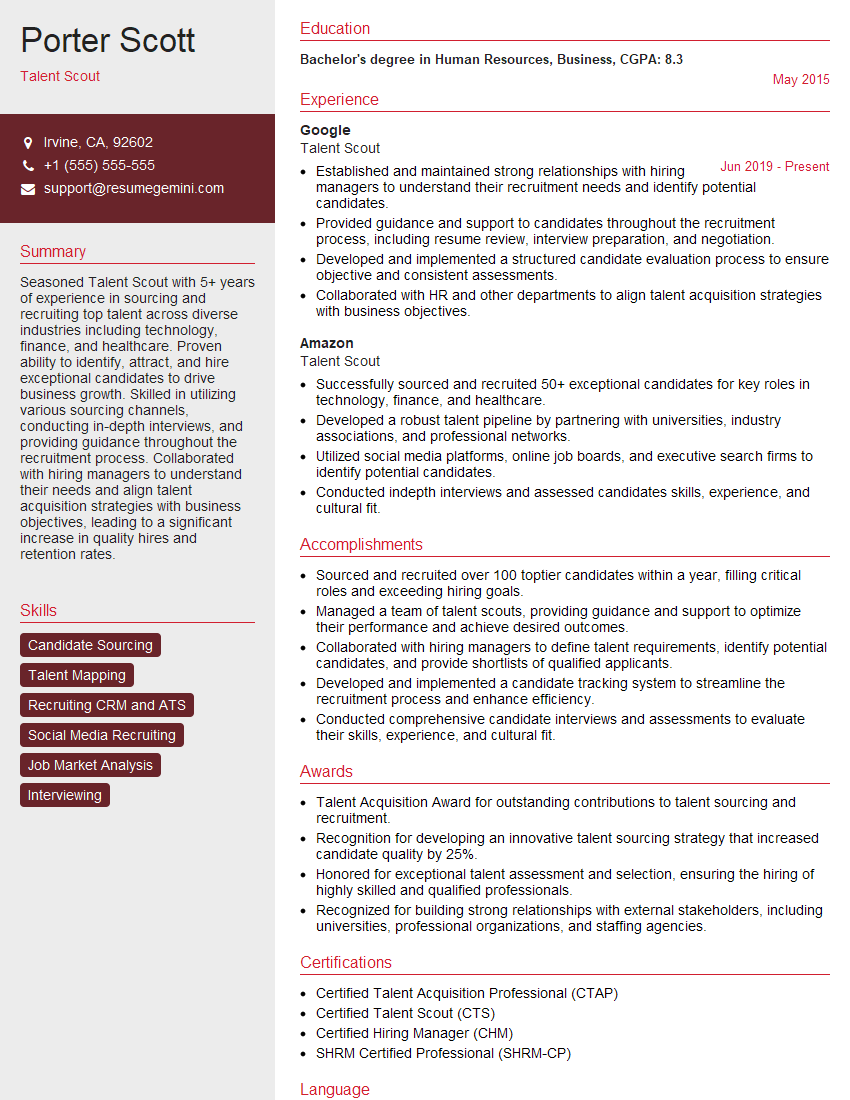
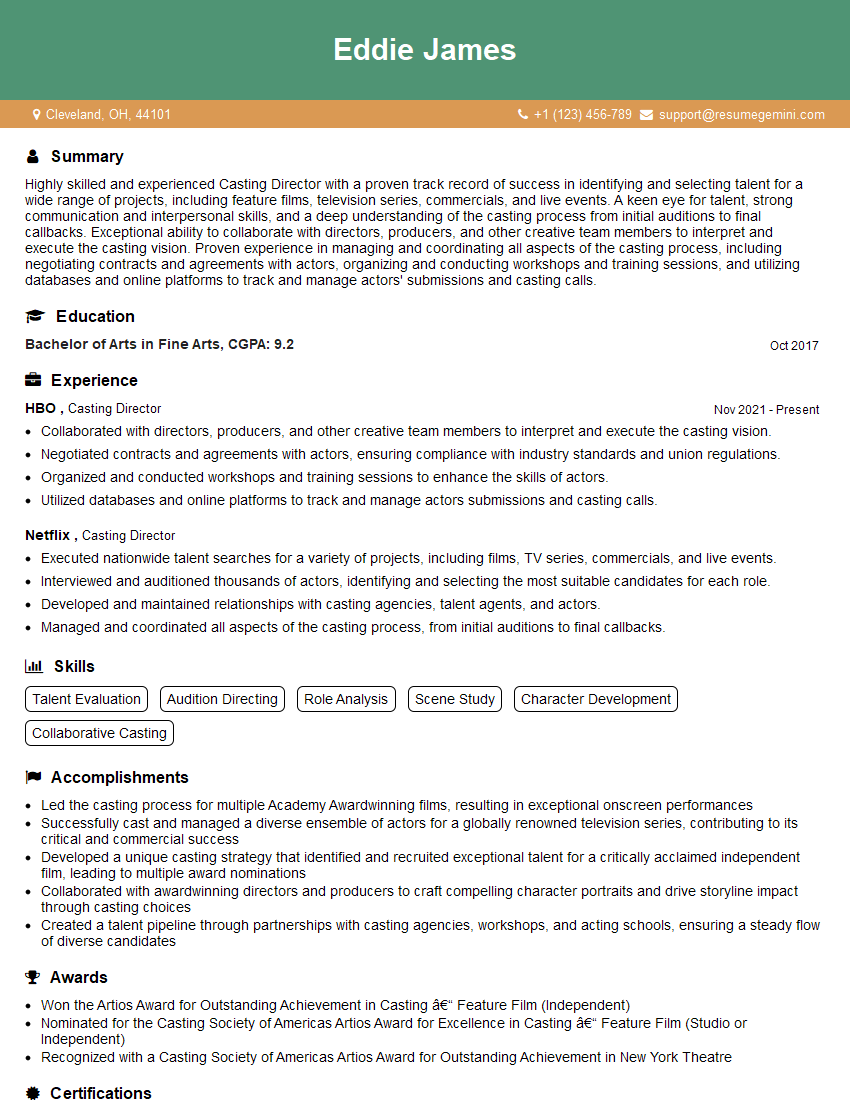
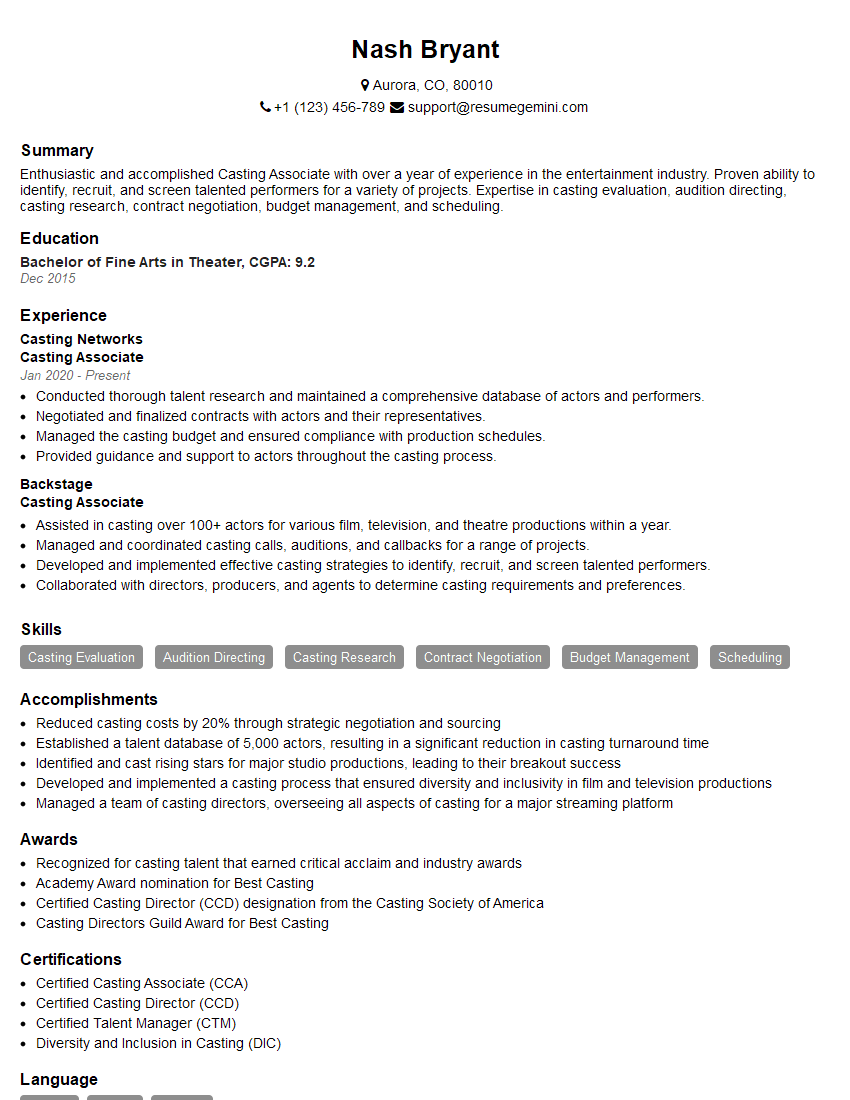
Mastering the understanding of social media platforms for casting is crucial for career advancement in the entertainment industry. It showcases your adaptability, digital literacy, and ability to leverage cutting-edge tools for effective talent acquisition. To significantly enhance your job prospects, creating an ATS-friendly resume is essential. This ensures your application stands out and is easily parsed by applicant tracking systems. ResumeGemini is a trusted resource to help you build a professional and impactful resume. Examples of resumes tailored to showcasing expertise in Understanding of Social Media Platforms for Casting are available, providing you with a strong template to build upon.
Explore more articles
Users Rating of Our Blogs
Share Your Experience
We value your feedback! Please rate our content and share your thoughts (optional).
What Readers Say About Our Blog
Very informative content, great job.
good