Are you ready to stand out in your next interview? Understanding and preparing for Harvest Planning and Scheduling interview questions is a game-changer. In this blog, we’ve compiled key questions and expert advice to help you showcase your skills with confidence and precision. Let’s get started on your journey to acing the interview.
Questions Asked in Harvest Planning and Scheduling Interview
Q 1. Explain the importance of accurate yield forecasting in harvest planning.
Accurate yield forecasting is the cornerstone of efficient harvest planning. It allows us to estimate the quantity of crops expected from a field, enabling optimized resource allocation, scheduling, and ultimately, maximizing profitability. Without accurate forecasting, we risk over- or under-estimating resources, leading to delays, increased costs, and potential crop spoilage.
For example, if we underestimate the yield, we might not have enough harvesting equipment or personnel, causing delays and potentially leading to losses due to overripe crops. Conversely, overestimating yields can lead to unnecessary costs associated with excessive equipment and labor.
Accurate forecasting relies on various factors including historical yield data, soil analysis, weather patterns, crop growth monitoring (using tools like NDVI satellite imagery), and expert knowledge of the specific crop and growing conditions. Sophisticated models incorporating these factors provide a much more accurate picture than simple guesswork.
Q 2. Describe your experience with different harvest scheduling methods.
My experience encompasses several harvest scheduling methods, each with its strengths and weaknesses. I’ve worked with both forward scheduling, where we plan the harvest based on projected readiness dates, and backward scheduling, where we work backward from a desired completion date. Forward scheduling is generally preferred for crops with staggered maturity, allowing flexibility to prioritize fields based on ripeness.
I also have extensive experience with critical path method (CPM) scheduling. This method identifies the sequence of tasks that directly impacts the overall project timeline, allowing us to focus resources on those critical tasks to minimize delays. For example, if transportation is a bottleneck, CPM would highlight this, allowing us to allocate additional trucks or optimize routes.
Finally, I’ve utilized simulation software to model different scheduling scenarios, considering factors like equipment availability, weather probabilities, and labor constraints. This allows for a data-driven approach, helping us identify the optimal strategy before implementing it in the field.
Q 3. How do you optimize resource allocation during harvest?
Optimizing resource allocation during harvest is a complex process requiring careful consideration of several factors. It starts with a thorough inventory of available resources: harvesting equipment (combines, tractors, trucks), labor, storage facilities, and transportation networks. This inventory is then matched to the yield forecasts and the harvest schedule.
We use techniques like linear programming to allocate resources efficiently, considering factors like travel time between fields, equipment capacity, and labor availability. For example, we might assign a specific combine to a group of fields based on proximity to minimize travel time and maximize harvesting efficiency. Similarly, we analyze labor requirements for different tasks (e.g., operating equipment, transporting produce) and schedule personnel accordingly to ensure optimal productivity without causing fatigue or bottlenecks.
Regular monitoring and adjustments are crucial. Unexpected issues like equipment breakdowns or adverse weather may require real-time reallocation of resources to maintain the harvest schedule and minimize potential losses.
Q 4. What are the key factors influencing harvest timing?
Harvest timing is a critical decision heavily influenced by several interconnected factors. Crop maturity is paramount; harvesting too early results in lower yields and quality, while harvesting too late can lead to losses due to spoilage, disease, or weather damage. We use various methods to assess maturity, including visual inspection, testing for sugar content (in fruits), and monitoring moisture levels (in grains).
Weather conditions are another major factor. Adverse weather (rain, wind, frost) can significantly disrupt the harvest process, causing delays and damage. We monitor weather forecasts closely to plan harvesting activities around favorable conditions and mitigate potential risks.
Market demands also influence harvest timing. The optimal harvest timing might be adjusted to meet specific market demands, such as the need to supply fresh produce to retailers or meet deadlines for processing.
Finally, available resources (labor, equipment, and storage capacity) play a significant role. The timing must be feasible within the constraints of available resources to ensure a smooth and efficient harvest.
Q 5. How do you manage risks associated with weather during harvest?
Managing weather-related risks during harvest is a key aspect of successful harvest planning. This involves a multi-pronged approach starting with accurate and timely weather forecasting. We use weather data from various sources (local meteorological stations, satellite imagery, specialized agricultural weather apps) to anticipate potential issues.
Contingency planning is crucial. This involves developing alternative plans to address various weather scenarios, such as delaying harvest until weather improves, adjusting harvesting procedures (e.g., using specific attachments to handle wet conditions), or securing temporary storage in case of unexpected rain.
Crop insurance can mitigate some of the financial risks associated with adverse weather events. Understanding the terms and conditions of the insurance policy and ensuring adequate coverage are crucial aspects of risk management.
Technology plays a vital role. GPS-guided harvesting equipment, remote sensing, and other technologies can provide real-time data on crop conditions and weather, helping us make informed decisions and optimize our response to unexpected weather events.
Q 6. Explain your experience with harvest equipment scheduling and maintenance.
Effective harvest equipment scheduling and maintenance are vital for maximizing efficiency and minimizing downtime. This begins with a comprehensive pre-harvest equipment inspection and maintenance program. We ensure that all equipment is in optimal working order, conducting preventative maintenance tasks such as oil changes, lubrication, and inspections of key components.
Scheduling involves creating a detailed plan for equipment utilization, assigning specific pieces of equipment to designated fields based on their capabilities and proximity. We use specialized software to optimize equipment scheduling, considering factors like travel time, field size, and equipment capacity. This helps to minimize idle time and maximize overall efficiency.
During the harvest, a robust maintenance and repair system is in place to address any breakdowns or malfunctions quickly. This might involve having spare parts on hand, employing skilled mechanics, or establishing agreements with local repair shops to minimize downtime. Regular communication between field crews and the maintenance team is crucial to identify and address problems promptly.
Q 7. How do you track and analyze harvest data to improve future planning?
Tracking and analyzing harvest data is crucial for continuous improvement. We use various methods to collect data, including GPS tracking of equipment, yield monitors on combines, and manual data entry of relevant information. This data includes yield per acre, harvesting time, equipment utilization, fuel consumption, and labor hours.
Data analysis involves using statistical tools and software (e.g., spreadsheet software, specialized agricultural data analysis software) to identify trends, patterns, and areas for improvement. For example, comparing yield data from different fields helps identify the most productive fields and pinpoint factors contributing to variations in yields. Analyzing fuel consumption data can highlight potential inefficiencies and guide decisions regarding equipment selection and optimization of operations.
This analysis informs future planning by allowing us to refine yield forecasting models, improve resource allocation strategies, and optimize harvesting procedures. It is a continuous cycle of data collection, analysis, and improvement, enabling us to increase efficiency and profitability year after year.
Q 8. Describe your process for developing a harvest budget.
Developing a harvest budget requires a meticulous approach, combining forecasting, cost analysis, and resource allocation. It’s like creating a financial roadmap for the entire harvest operation.
My process begins with forecasting yield based on historical data, crop surveys, and weather predictions. This informs estimates of the volume to be harvested. Next, I meticulously detail all associated costs. This includes labor (including overtime and potential bonuses), machinery (fuel, maintenance, repairs), transportation, storage, processing, and any potential unforeseen expenses. I build in contingency buffers to account for unexpected events, like equipment malfunction or weather disruptions. For instance, if historical data shows a 10% chance of rain delaying harvest for a day, I factor in the cost of that delay. Finally, I align the budget with the overall business goals, ensuring profitability and efficient resource use. A detailed breakdown helps track spending and identify areas for potential savings. For example, comparing fuel costs between different machinery models could reveal significant savings over a season.
Q 9. How do you ensure efficient post-harvest handling and storage?
Efficient post-harvest handling and storage are critical to minimizing losses and maintaining product quality. Think of it as the delicate phase where the fruits of your labor are most vulnerable.
My approach emphasizes speed and precision. Rapid handling minimizes damage and reduces spoilage. This involves optimized field transportation, efficient unloading and sorting procedures, and rapid processing or storage. Appropriate storage conditions are essential – temperature, humidity, and ventilation need to be carefully controlled, tailored to the specific crop. For example, apples require cool, controlled atmosphere storage to maintain freshness, whereas onions benefit from dry, well-ventilated areas. Regular quality checks are vital. This involves inspecting for spoilage, pests, or any signs of deterioration. Addressing these issues promptly prevents widespread problems. Implementing a robust first-in, first-out (FIFO) system for inventory management prevents older produce from spoiling before newer stock.
Q 10. How do you manage labor resources during peak harvest periods?
Managing labor during peak harvest is a constant balancing act between meeting demand and optimizing costs. It’s like orchestrating a large-scale event with a complex workforce.
My strategy involves a multi-pronged approach. First, accurate forecasting helps estimate the labor needed. We analyze historical data, considering factors like yield and harvest speed. Second, we implement a flexible staffing model. This could involve hiring temporary workers, utilizing seasonal labor pools, or coordinating with neighboring farms to share resources. Third, we utilize technology to enhance productivity. GPS-guided machinery reduces labor needs by increasing efficiency. Fourth, effective communication and clear task assignments are crucial. Proper training and clear instructions minimize confusion and improve efficiency. Fifth, we implement incentive programs to boost worker morale and improve productivity. Finally, monitoring daily labor needs and making adjustments as needed ensures we’re appropriately staffed without unnecessary costs.
Q 11. Explain your experience with different harvest technologies (e.g., GPS, sensors).
Harvest technology has revolutionized the industry, offering significant improvements in efficiency and precision. I’ve had extensive experience leveraging GPS, sensors, and other technologies.
GPS-guided machinery significantly improves harvesting accuracy, reducing losses and increasing yield. It allows for precise navigation and minimizes overlapping or missed rows. I’ve used this in vineyards and orchards, resulting in significant efficiency gains. Yield monitoring sensors provide real-time data on crop yield and quality, allowing for immediate adjustments to harvesting strategies. This helps optimize harvesting timing and ensures consistent product quality. Remote sensing technologies, such as drones equipped with multispectral cameras, can assess crop health and maturity from above, providing valuable insights for planning and optimizing harvest operations. Data from these technologies allows us to make data-driven decisions, reducing waste and increasing profits.
Q 12. How do you prioritize tasks during a busy harvest season?
Prioritizing tasks during a busy harvest season requires a clear understanding of what needs to be done and when. It’s about working smarter, not harder.
My approach follows a structured method. First, I create a harvest schedule based on crop maturity, weather forecasts, and available resources. Tasks are categorized by urgency and importance using a matrix. Time-sensitive tasks, like harvesting a crop nearing its optimal maturity, take precedence. I use a visual management system – often a Kanban board – to track progress and identify bottlenecks. Regular meetings with the team help maintain alignment and address challenges promptly. Utilizing technology, like field management software, further aids in task management and resource allocation. Focusing on critical paths helps avoid delays and ensures the smoother flow of the entire operation.
Q 13. How do you handle unexpected challenges or delays during harvest?
Unexpected challenges are inevitable during harvest. The key is to have contingency plans in place and the ability to adapt quickly. It’s about being proactive, not reactive.
My approach focuses on preparedness. This includes having backup equipment readily available, establishing alternative transportation routes in case of road closures, and having a flexible workforce that can handle unexpected demands. When challenges arise – such as equipment malfunctions or adverse weather conditions – I immediately assess the situation, identify the impact, and assemble a team to address the issue. Open communication is crucial; keeping everyone informed mitigates anxieties and facilitates collaboration. We then implement a revised schedule, adjusting priorities based on the new constraints, and document lessons learned for future improvement. For example, during a severe storm, we’ve shifted resources to prioritize saving a threatened crop, even if it meant temporarily delaying other tasks.
Q 14. Describe your experience with quality control measures during harvest.
Quality control is not an afterthought; it’s integrated throughout the entire harvest process. Maintaining quality from field to storage is essential for market success and brand reputation. Think of it as upholding a promise to the consumer.
My quality control measures begin in the field with regular inspections to check for ripeness, damage, and disease. We use standardized grading protocols to ensure consistency. During harvest, we utilize selective harvesting techniques to minimize damage and sort out substandard produce. In post-harvest handling, we employ temperature and humidity monitoring in storage facilities to prevent spoilage. Regular sampling and testing identify any issues early. We maintain detailed records of all quality checks, allowing for traceability and continuous improvement. Finally, regular staff training on quality control procedures ensures everyone understands their role in maintaining product excellence.
Q 15. How do you collaborate with other departments during harvest planning?
Effective harvest planning necessitates seamless collaboration across various departments. I typically initiate this by holding regular pre-harvest meetings involving representatives from operations, logistics, quality control, and sales. This ensures everyone is aligned on production targets, anticipated yields, and logistical requirements. For instance, with the operations team, we finalize the harvesting equipment assignments and maintenance schedules, coordinating to prevent downtime. With logistics, we determine storage capacity needs, transportation routes, and delivery schedules to ensure produce reaches its destination in optimal condition. Quality control personnel are essential in establishing harvest protocols to guarantee product quality. Finally, the sales team informs us about market demands and anticipated pricing, enabling us to optimize our harvest schedule and volumes. Open communication channels using project management software and regular updates are crucial for maintaining this collaboration throughout the harvest season.
Career Expert Tips:
- Ace those interviews! Prepare effectively by reviewing the Top 50 Most Common Interview Questions on ResumeGemini.
- Navigate your job search with confidence! Explore a wide range of Career Tips on ResumeGemini. Learn about common challenges and recommendations to overcome them.
- Craft the perfect resume! Master the Art of Resume Writing with ResumeGemini’s guide. Showcase your unique qualifications and achievements effectively.
- Don’t miss out on holiday savings! Build your dream resume with ResumeGemini’s ATS optimized templates.
Q 16. How do you measure the success of your harvest planning strategies?
Measuring the success of harvest planning involves a multifaceted approach, focusing on key performance indicators (KPIs). Yield per hectare is a primary metric; comparing it against past harvests and industry benchmarks reveals the effectiveness of our strategies. We also track post-harvest losses, aiming for minimal spoilage through efficient handling and timely processing. Another critical measure is the on-time delivery rate to processing facilities or customers, highlighting the efficacy of our logistical planning. Financial performance, including profit margins and return on investment, provides a crucial overall evaluation. Customer satisfaction surveys and feedback add a qualitative dimension to our evaluation, enhancing our understanding of the impact of our planning on final product quality. Continuous monitoring of these KPIs allows for data-driven adjustments and refinements to our strategies for future harvests.
Q 17. Describe your experience with supply chain management during harvest.
My experience in supply chain management during harvest centers on optimizing the flow of produce from field to market. This involves coordinating with farmers, transportation providers, and processing facilities. I’ve leveraged technology, including GPS tracking of trucks and real-time inventory management systems, to monitor product location and status throughout the supply chain. This minimizes delays and ensures product freshness. For instance, in one project, implementing a just-in-time delivery system reduced our storage costs and minimized spoilage, leading to a significant increase in profitability. I’ve also developed strong relationships with key supply chain partners, fostering mutual trust and enabling proactive problem-solving. Risk management is another crucial aspect; identifying and mitigating potential disruptions like adverse weather conditions or equipment malfunctions is key to maintaining supply chain resilience.
Q 18. How do you ensure compliance with safety regulations during harvest?
Safety is paramount during harvest operations. My approach begins with thorough pre-harvest safety training for all personnel involved, covering topics such as equipment operation, hazard identification, and emergency procedures. We enforce strict adherence to personal protective equipment (PPE) regulations, ensuring everyone uses appropriate safety gear, including helmets, gloves, and safety glasses. Regular equipment inspections are crucial for preventing malfunctions. We also implement clear communication protocols, including standardized hand signals, to prevent accidents during harvesting activities. Furthermore, I’ve implemented a robust reporting system for near misses and accidents, allowing us to identify and address potential hazards proactively. Finally, regular safety audits ensure compliance with all relevant regulations and identify areas for improvement. A safe harvest is not only ethically responsible but also crucial for maintaining productivity and avoiding costly interruptions.
Q 19. Explain your understanding of different crop varieties and their harvesting requirements.
Understanding crop varieties and their harvesting requirements is fundamental to effective planning. Different crops have varying maturity times, optimal harvest windows, and unique sensitivity to mechanical harvesting. For example, delicate berries require gentler handling than robust root vegetables. Factors such as ripeness indicators, susceptibility to damage, and optimal moisture content significantly impact harvesting methods and timing. My experience includes working with a wide range of crops, including grapes, tomatoes, potatoes, and apples. For each, I adapt our strategies to minimize losses and maximize quality. This includes selecting appropriate harvesting equipment, determining optimal ripeness levels, and implementing efficient post-harvest handling procedures. Detailed knowledge of each crop’s specific needs forms the bedrock of successful harvest planning and execution.
Q 20. How do you use data analytics to inform your harvest decisions?
Data analytics plays a crucial role in informing harvest decisions. We utilize historical yield data, weather forecasts, soil analysis, and even remote sensing technologies to create predictive models. This allows us to optimize planting schedules, predict harvest yields, and refine resource allocation. For instance, analyzing historical yield data combined with weather patterns can identify ideal planting times to maximize yields. Similarly, using soil nutrient maps informs fertilizer application strategies, which directly impacts crop quality and yields. Real-time data from sensors in the field can monitor crop health and identify potential issues early, enabling timely intervention and minimizing losses. By combining this data with advanced analytical techniques, we can optimize harvesting schedules, reduce waste, and improve overall efficiency.
Q 21. What software or tools do you use for harvest planning and scheduling?
We utilize a combination of software and tools for harvest planning and scheduling. Geographic Information Systems (GIS) software helps visualize fields, manage planting layouts and optimize harvesting routes. Farm management software integrates data from various sources, providing a comprehensive overview of crop health, yields, and labor requirements. Scheduling software aids in assigning equipment and personnel, optimizing labor allocation and preventing conflicts. We also utilize weather forecasting applications to predict potential weather-related disruptions and adjust our harvest plans accordingly. Furthermore, communication tools, like project management platforms, facilitate collaboration among various teams, enhancing coordination during the harvest season. The choice of specific software depends on the scale of the operation and the type of crops being harvested, but the goal is always to leverage technology to improve efficiency, productivity, and decision-making.
Q 22. Describe your experience with developing and implementing a harvest plan.
Developing and implementing a harvest plan is a meticulous process that begins long before the harvest season. It involves a detailed assessment of various factors to ensure a smooth and efficient operation. First, we conduct a thorough field survey to determine crop maturity, yield estimations, and any potential challenges like pest infestations or weather conditions. This data informs the creation of a detailed schedule, specifying the optimal harvesting windows for each field based on factors like variety and predicted weather. We then allocate resources—equipment, personnel, and transportation—optimally to match the harvesting schedule. For example, if we anticipate high yields in a specific field, we’ll dedicate more harvesters and trucks to that area. Finally, we create contingency plans to deal with unforeseen circumstances, such as equipment malfunction or sudden weather changes.
In a recent project, we successfully implemented a harvest plan for a large-scale apple orchard. By using predictive modeling based on historical weather data and yield assessments, we were able to optimize harvesting operations and reduce post-harvest losses significantly. We even incorporated drone technology to monitor the orchard’s health and identify ripe fruit more efficiently.
Q 23. How do you ensure the timely delivery of harvested crops?
Timely delivery is critical to maintain the quality and market value of harvested crops. This requires a well-coordinated logistics plan that starts with precise scheduling of harvesting activities. We use specialized software to track the progress of each harvesting team and ensure that harvested produce is moved to storage or processing facilities without delay. Factors like transportation capacity, storage availability, and processing schedules are carefully considered and integrated into the overall plan. We frequently employ real-time tracking systems for trucks and other transportation assets to monitor their location and ensure prompt delivery. Furthermore, we establish clear communication channels between the harvesting crews, transportation teams, and the receiving facilities to proactively address and resolve any potential bottlenecks. For example, if a truck breaks down, we have backup trucks ready to ensure minimal disruption.
Q 24. How do you handle conflicts between different harvesting priorities?
Harvesting priorities can sometimes conflict, particularly when dealing with multiple crops with varying maturity schedules or when facing unexpected weather events. To manage these conflicts, we prioritize using a scoring system that weighs factors like crop value, perishability, and market demand. For instance, if we have both a high-value, short-shelf-life crop and a less valuable crop ready for harvest at the same time, the high-value crop takes precedence. We also employ buffer zones in our scheduling—allowing for slight flexibility—to accommodate unexpected events. Open communication among the harvesting teams, management, and sales teams is key to resolving conflicts fairly and efficiently. Transparency about priorities and potential trade-offs ensures everyone understands the rationale behind the decisions made.
Q 25. Describe your approach to optimizing the efficiency of harvesting operations.
Optimizing harvesting efficiency involves focusing on several key areas. First, we invest in the latest harvesting technologies, such as automated harvesters and precision GPS guidance systems, to minimize labor costs and maximize output. Second, we train and equip our harvesting crews effectively. Proper training on equipment operation and harvesting techniques is critical to minimize damage to the crops and increase productivity. Third, regular maintenance of equipment is essential to minimize downtime and ensure smooth operations. Fourth, we constantly monitor our harvesting operations and use data analytics to identify areas for improvement. We might track harvesting speed, yield per hour, and equipment utilization to pinpoint bottlenecks or inefficiencies. For example, analyzing data showed that a slight adjustment in the harvester settings improved yield by 5%, making our operations far more efficient.
Q 26. What are the key performance indicators (KPIs) you use to monitor harvest performance?
We use a suite of key performance indicators (KPIs) to monitor harvest performance, providing real-time feedback and allowing us to make adjustments as needed. These include:
- Yield per acre: Measures the amount of crop harvested per unit of land.
- Harvesting speed: Tracks the rate at which crops are harvested per hour.
- Post-harvest losses: Monitors the percentage of harvested crops that are damaged or spoiled.
- Equipment utilization rate: Measures the percentage of time equipment is actively used during the harvest.
- Labor productivity: Calculates the amount of crop harvested per labor hour.
- Timely delivery rate: Tracks the percentage of crops delivered on time.
Q 27. How do you adapt your harvest plan in response to changing market conditions?
Adapting to changing market conditions requires a flexible and responsive harvest plan. We continuously monitor market prices, demand trends, and competitor activities to anticipate potential shifts. This information is used to adjust the harvest schedule, potentially prioritizing crops with higher market value or focusing on specific varieties in higher demand. For example, if the price of a specific crop increases unexpectedly, we might re-allocate resources to harvest that crop more quickly. We also maintain strong relationships with buyers and distributors to understand their needs and adjust our harvest plan accordingly. This proactive approach minimizes losses due to market fluctuations and ensures optimal profitability.
Q 28. How do you ensure the sustainability of your harvest practices?
Sustainability is a core principle in our harvest practices. We employ various strategies to minimize environmental impact and ensure responsible resource management. These include:
- Reduced tillage farming: Minimizes soil erosion and improves soil health.
- Integrated pest management: Reduces reliance on chemical pesticides and promotes biodiversity.
- Water conservation techniques: Optimizes irrigation practices to reduce water usage.
- Efficient fuel management: Minimizes fuel consumption through equipment optimization and route planning.
- Waste reduction and recycling: Minimizes waste generation during harvesting and processing.
Key Topics to Learn for Harvest Planning and Scheduling Interview
- Yield Forecasting and Estimation: Understanding various forecasting models and their application to predict harvest yields based on historical data, weather patterns, and crop conditions. Practical application includes analyzing historical data to create realistic yield projections.
- Harvest Optimization Strategies: Exploring techniques for maximizing harvest efficiency, minimizing losses, and optimizing resource allocation (labor, equipment, transportation). Practical application involves designing harvest schedules that consider field conditions, equipment capacity, and labor availability.
- Logistics and Transportation Management: Mastering the intricacies of planning and managing the efficient movement of harvested crops from fields to storage or processing facilities. This includes understanding transportation routes, capacity constraints, and potential bottlenecks.
- Resource Allocation and Crew Management: Developing strategies for effectively allocating resources such as personnel, machinery, and storage facilities. This also involves optimizing crew assignments and scheduling based on skill sets and workload.
- Risk Management and Contingency Planning: Identifying and mitigating potential risks such as weather disruptions, equipment malfunctions, and labor shortages. This includes creating contingency plans to address unexpected challenges during the harvest season.
- Data Analysis and Reporting: Utilizing data analytics tools to monitor harvest progress, identify areas for improvement, and generate reports for stakeholders. This involves interpreting data to inform decision-making and optimize future harvests.
- Technology Integration in Harvest Planning: Familiarity with various technologies used in modern harvest planning and scheduling, such as GPS, GIS, and farm management software. Understanding how these tools enhance efficiency and decision-making.
Next Steps
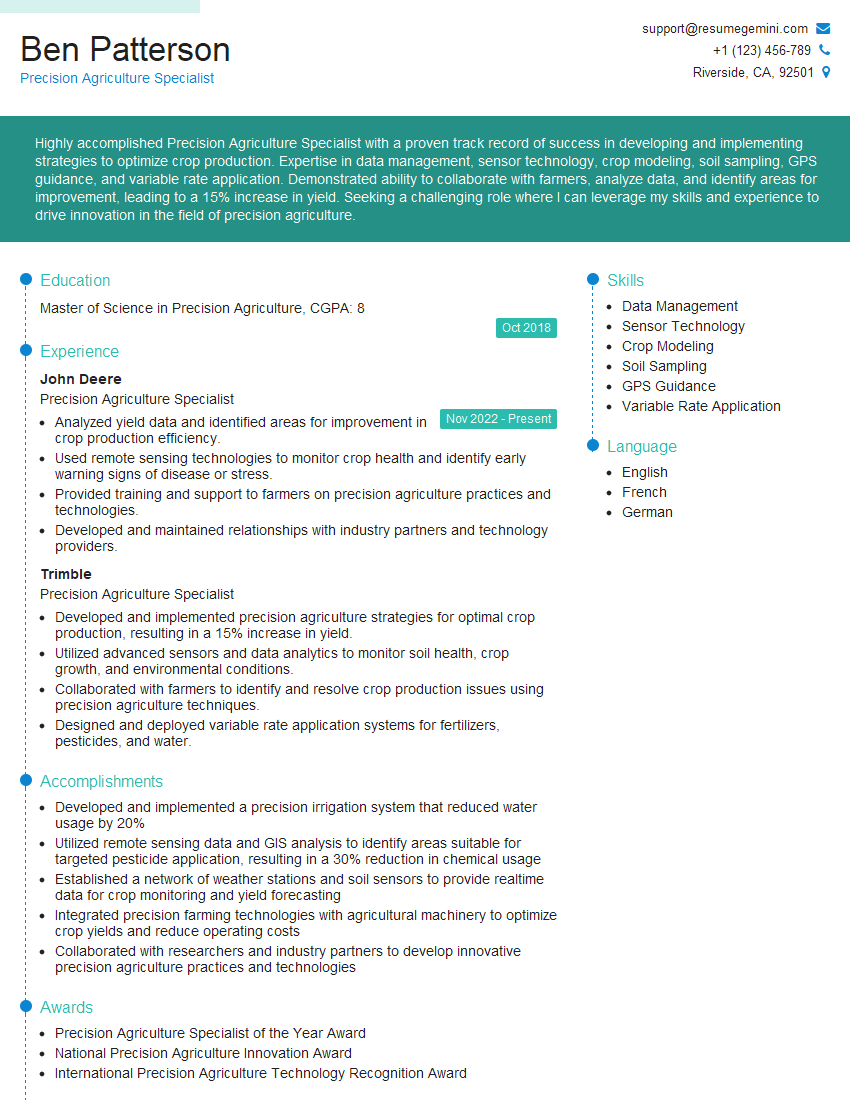
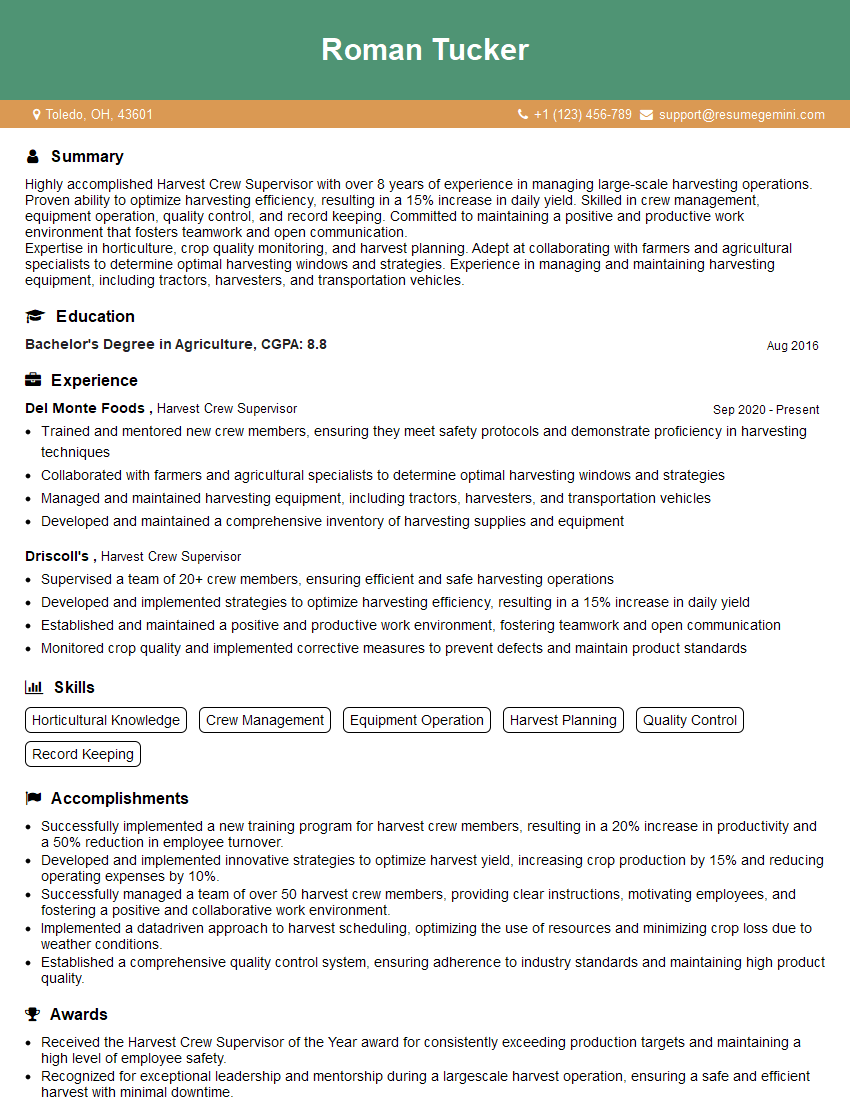
Mastering Harvest Planning and Scheduling is crucial for career advancement in agriculture and related industries. It showcases your ability to manage complex operations, optimize resource utilization, and deliver results under pressure. To significantly enhance your job prospects, create a strong, ATS-friendly resume that highlights your skills and experience. We recommend using ResumeGemini, a trusted resource for building professional resumes. ResumeGemini provides examples of resumes tailored to Harvest Planning and Scheduling to help you craft a compelling application.
Explore more articles
Users Rating of Our Blogs
Share Your Experience
We value your feedback! Please rate our content and share your thoughts (optional).
What Readers Say About Our Blog
Very informative content, great job.
good