Interviews are opportunities to demonstrate your expertise, and this guide is here to help you shine. Explore the essential Harvesting Equipment Repair interview questions that employers frequently ask, paired with strategies for crafting responses that set you apart from the competition.
Questions Asked in Harvesting Equipment Repair Interview
Q 1. Describe your experience diagnosing and repairing hydraulic systems in harvesting equipment.
Diagnosing and repairing hydraulic systems in harvesting equipment requires a systematic approach. It’s like detective work, tracing the flow of hydraulic fluid to pinpoint the problem. I begin by visually inspecting hoses, lines, and fittings for leaks, damage, or loose connections. A small leak might seem insignificant, but over time it can drain the system and compromise performance. Next, I’ll check the hydraulic fluid level and condition. Dirty or contaminated fluid can wreak havoc on the system. Then, I’ll use diagnostic tools, such as pressure gauges and flow meters, to measure the system’s pressure and flow rates. These readings will help me identify if there’s a problem with the pump, valves, cylinders, or other components. For instance, low pressure could indicate a pump failure, while restricted flow could point to a clogged filter or damaged valve. Once the faulty component is identified, I’ll perform the necessary repairs – this could involve replacing seals, hoses, or even entire components. Safety is paramount, so I always ensure the system is depressurized before working on it.
I remember one instance where a combine’s unloading auger wasn’t functioning properly. After inspecting the system, I discovered a leak in a high-pressure hydraulic hose. Replacing the hose restored the auger’s functionality, highlighting the importance of regular maintenance and timely repairs.
Q 2. Explain the process of troubleshooting a malfunctioning combine header.
Troubleshooting a malfunctioning combine header involves a methodical process, starting with the most obvious issues and working towards the more complex ones. First, I’d check the obvious: Is the header properly engaged? Are there any obvious blockages in the feed system (e.g., tangled vines, rocks)? Is the knife drive operating correctly? A visual inspection often reveals the culprit. Next, I’d move onto the hydraulics. Is there sufficient hydraulic pressure reaching the header? Are there any leaks in the hydraulic lines? Low pressure might indicate a problem with the hydraulic pump or a blockage in the system. Then, I’d examine the electrical system, verifying the proper function of the various sensors and switches. If everything appears to be working correctly, I’d consult the machine’s manual or diagnostic codes to pinpoint the problem. Modern combines have sophisticated electronic diagnostic systems that can provide valuable clues. A systematic approach ensures that you don’t miss subtle issues which can cause significant problems down the line.
For example, I once encountered a combine header that wasn’t cutting evenly. After inspecting the knife, I found that the knife sharpening mechanism wasn’t adjusting the cutting knife properly, resulting in uneven cutting. Repairing this mechanism solved the problem.
Q 3. How do you identify and repair electrical faults in agricultural machinery?
Identifying and repairing electrical faults in agricultural machinery requires a blend of systematic testing and a good understanding of basic electrical principles. I start by visually inspecting wiring harnesses for damaged or frayed wires, loose connections, and corrosion. I often use a multimeter to test voltage, current, and continuity. This allows me to pinpoint broken circuits, short circuits, or other problems. A wiring diagram is invaluable in tracing circuits and identifying components. I often use schematics provided by the manufacturer to diagnose these problems, and sometimes this will involve using specialized diagnostic tools specific to the make and model of the equipment. Sometimes replacing a simple fuse or relay resolves the issue. More complex issues may require tracing the wiring harness or replacing faulty components.
For instance, a tractor’s lights might not be working. I would first check the fuses and the bulbs. If those are fine, I’d use a multimeter to check the voltage at the switch and at the lights. A lack of voltage at the switch might indicate a problem with the switch itself, while a lack of voltage at the lights might indicate a break in the wiring.
Q 4. What are the common causes of engine overheating in harvesting equipment?
Engine overheating in harvesting equipment is a common problem often stemming from several potential causes. A major culprit is insufficient coolant. This could be due to a leak in the cooling system (radiator, hoses, water pump), or low coolant levels from evaporation. Another common cause is a malfunctioning cooling fan, which is vital for dissipating heat. A faulty thermostat can also cause overheating as it prevents the coolant from circulating properly. A clogged radiator, preventing adequate heat transfer, is another frequent issue. Finally, problems with the engine itself, such as a failing water pump or a blown head gasket, can also lead to overheating. Regular maintenance, including coolant flushes and inspections, is crucial to prevent these issues.
I recall a case where a combine’s engine was overheating. After thorough investigation, we discovered a small but significant leak in a radiator hose. Replacing the hose and refilling the coolant resolved the issue completely.
Q 5. Describe your experience with repairing and maintaining baler components.
My experience with baler repair and maintenance encompasses a wide range of components. I’m proficient in diagnosing and fixing problems related to the pickup, feed system, chamber, and knotting mechanisms. A major focus is on the proper functioning of the pickup tines, ensuring they are aligned and free from damage to prevent feeding issues. I regularly inspect and adjust the feed rolls and the plunger, making sure these components are functioning correctly to create consistent and properly formed bales. The knotters are a critical part of the baling process, and I have experience in replacing and repairing needles, knotters, and related parts. Regular lubrication is essential for the longevity of the components and preventing damage. I also deal with issues related to the bale ejection mechanism to prevent jams. Maintenance of the belts and chains is also vital for proper operation and reduced wear and tear. Regular greasing and tightening are part of preventive maintenance.
One time, I was dealing with a baler that wasn’t tying the bales properly. After meticulous inspection, we discovered a small piece of wire had become lodged in the knotter, jamming the mechanism. Removing the obstruction solved the problem. This highlights the importance of meticulous maintenance to prevent small problems from becoming significant breakdowns.
Q 6. How do you troubleshoot a planter that is not planting seeds accurately?
Troubleshooting an inaccurate planter involves a systematic approach. The first step is to check the seed metering mechanism to see if the correct amount of seed is being released. Are the seed plates correctly sized for the seed type? Is the seed metering mechanism properly calibrated? Are the seed tubes clear and free from blockages? Next, I inspect the seed distribution system to make sure that seeds are evenly dispersed to each row unit. Are there any blockages or inconsistencies in the seed delivery tubes? Then, I’d check the planting depth. Is the planting depth consistent across all rows? Is the depth setting accurate and appropriate for the soil type and seed? I’d examine the furrow openers and closing wheels to make sure they are functioning properly and creating appropriate furrows and seed coverage. Issues here could involve worn or damaged components.
A common problem is a faulty seed metering mechanism. I’ve encountered cases where a worn seed plate was causing the planter to not drop the correct seed population. Replacing this plate resolved the issue. This highlights the need to check and calibrate all aspects of a planter’s function to ensure accuracy.
Q 7. What are the safety precautions you take when repairing harvesting equipment?
Safety is my paramount concern when repairing harvesting equipment. Before starting any repair, I always ensure the machine is completely shut down and the power source (engine, electricity) is disconnected. This prevents accidental start-ups that could cause serious injury. I use lockout/tagout procedures to ensure that the equipment cannot be accidentally activated during repairs. I wear appropriate personal protective equipment (PPE), including safety glasses, gloves, and hearing protection. When working with hydraulic systems, I always depressurize the system before starting any work to prevent unexpected movements or fluid spray. I also use jack stands and other safety supports whenever necessary to prevent injury from falling parts or heavy equipment. I’m very careful when handling sharp objects like knives and blades, always using the correct tools and techniques. Awareness of the surroundings and potential hazards is critical; I avoid working under raised equipment unless it is properly secured. Finally, I stay informed about the latest safety practices and regulations, constantly refining my techniques to maintain the highest safety standards.
Q 8. Explain the function of a combine’s threshing mechanism and common problems.
The threshing mechanism in a combine is the heart of the grain separation process. It’s responsible for separating the grain from the plant material (straw and chaff). This typically involves a rotating drum with concave bars that strike the crop, releasing the grain. The separated grain then falls through sieves and other cleaning mechanisms.
Common problems with the threshing mechanism include:
- Cylinder wear and tear: Over time, the threshing cylinder’s bars can become worn down, reducing their effectiveness at separating the grain. This leads to losses in the field. I’ve often seen this in combines that have been used extensively in tough, rocky conditions.
- Concave adjustments: Incorrect spacing between the cylinder and the concave can result in either excessive grain damage (too tight) or insufficient separation (too loose). Finding the optimal setting is crucial for efficiency. We regularly check and adjust this based on crop type and moisture content.
- Sieve clogging: Material buildup on the sieves can prevent proper separation and cleaning. This is common in wet or damp conditions. Regular cleaning is essential, and I always emphasize this during preventative maintenance.
- Rotor issues (in rotor combines): Rotor combines utilize a rotor instead of a traditional cylinder. Problems here might involve rotor speed adjustments, rotor wear, or improper airflow through the machine.
- Broken components: Anything from broken bars to damaged bearings can disrupt the entire threshing process. Regular inspections, especially pre-harvest, help identify and address potential issues proactively.
Diagnosing these problems often involves visual inspection, checking for wear, assessing the grain and straw samples from the combine, and listening for unusual noises. Repair can range from simple adjustments to replacing worn components.
Q 9. How do you diagnose and repair problems related to the grain tank in a combine?
Diagnosing grain tank problems starts with a visual inspection for leaks, damage, or blockages. I’ll check the auger system for functionality and look for any signs of wear or damage on the auger flighting. I often use a probe to check for clogs inside the tank. Listening for unusual sounds during operation can also provide valuable clues.
Common problems include auger motor failure, jammed augers, leaks in the tank itself (often weld failures or cracks), and problems with the unloading mechanism (e.g., blocked discharge chute). I’ve worked on numerous instances of auger component failure caused by debris ingestion. These issues are often due to poorly maintained cleaning procedures.
Repair might involve replacing a faulty motor, clearing a blockage (often requiring disassembly), repairing or replacing a damaged section of the tank, or fixing a faulty unloading mechanism. In some cases, replacing worn-out auger flights is necessary. This usually needs specific tools and specialized knowledge of the tank structure and auger design.
Q 10. What is your experience with different types of harvesting equipment?
My experience spans a wide range of harvesting equipment, including various combine models from different manufacturers (John Deere, Case IH, Claas), forage harvesters (both self-propelled and pull-type), balers (round and square), and even specialized equipment like cotton pickers. I’ve worked on both older, mechanically simpler machines and newer machines with advanced electronics and GPS systems. I’m equally comfortable troubleshooting hydraulic systems, engine problems, and electrical faults across this diverse equipment range. My experience also covers different crop types, from grains like wheat and corn to forage crops such as alfalfa and silage.
Q 11. Describe your experience working with GPS guidance systems on agricultural equipment.
I have significant experience with GPS guidance systems, primarily using systems like Trimble and John Deere’s AutoTrac. My work has involved troubleshooting GPS receiver issues, calibrating guidance systems, and working with the various software interfaces. I’ve also helped farmers optimize their GPS settings for maximum efficiency. One example involved fixing a GPS signal dropout issue on a combine that was significantly impacting harvest speed – we identified a faulty antenna connection and resolved the problem quickly. Another common issue I address is the accurate calibration of the steering sensors to avoid drift and ensure straight lines.
Beyond troubleshooting, I’m involved in educating farmers on the best practices for using GPS systems, including proper setup, data management, and how to integrate the guidance system with other farm management software.
Q 12. How do you perform preventative maintenance on harvesting equipment?
Preventative maintenance is crucial for extending the lifespan of harvesting equipment and minimizing costly breakdowns during the harvest season. My approach involves a structured process:
- Pre-harvest inspection: A thorough visual inspection of all critical components, including belts, chains, bearings, hydraulic lines, and lubrication systems.
- Lubrication: Regularly lubricating all components according to the manufacturer’s recommendations. I use the correct type and grade of grease and oil for optimal performance and wear reduction.
- Belt and chain adjustments: Ensuring proper tension and alignment to prevent slippage and premature wear.
- Engine maintenance: This includes oil changes, filter replacements, and checking the cooling system.
- Cleaning: Thoroughly cleaning the machine, especially the grain tank, separating components, and cooling systems to prevent blockages and maintain efficient operation.
- Software updates: Updating GPS and other control system software to ensure optimal performance and resolve potential software bugs.
I strongly believe in documenting all maintenance activities, creating a historical record that helps with future diagnostics and maintenance planning. For instance, keeping a log book that notes oil changes, filter replacements, and any repairs or adjustments helps with future preventative planning.
Q 13. What are the common causes of breakdowns in forage harvesters?
Forage harvester breakdowns often stem from issues with the cutting system (knives, drums), the chopping system (knives, impeller), or the feeding system (rollers, intake). These machines operate under high stress, processing large volumes of material.
Common causes include:
- Knife damage: Rocks or foreign objects can severely damage knives, affecting chopping quality and potentially causing blockages. I often find that improper knife sharpening contributes to increased wear.
- Impeller wear: The impeller, which accelerates and chops the material, can wear down, affecting performance. Improper maintenance and excessive loading can speed up this wear.
- Roller issues: The rollers in the feeding system can experience wear, damage or slippage, compromising the even feeding of material into the cutting and chopping system. This often leads to blockages and uneven chopping.
- Hydraulic problems: Leaks or failures in the hydraulic system can affect machine operation, especially the knife and impeller drives.
- Engine problems: Overheating, lack of lubrication, or mechanical failures can lead to major breakdowns.
Diagnosing these problems often involves inspecting the cutting and chopping mechanisms for wear and damage, checking the hydraulic pressure, and assessing the overall condition of the feeding system. Repairs often include replacing damaged knives, repairing or replacing worn components in the impeller and rollers, and addressing hydraulic and engine issues.
Q 14. Explain the different types of lubrication systems used in harvesting equipment.
Harvesting equipment uses a variety of lubrication systems to ensure smooth operation and prevent wear. These include:
- Grease lubrication: This is common for bearings, joints, and other moving parts that require infrequent but substantial lubrication. Grease fittings are strategically placed, enabling easy lubrication access.
- Oil lubrication: Engines, transmissions, and hydraulic systems rely on oil lubrication for constant lubrication and cooling. Different grades of oil are used based on component requirements and operating conditions.
- Centralized lubrication systems: These systems deliver lubricants to multiple points in the machine automatically, eliminating the need for manual greasing at each point. They’re particularly useful on large, complex machines where manual lubrication would be time-consuming and inefficient.
- Hydraulic systems: Many harvesting equipment components use hydraulic fluid for lubrication and power transfer. Maintaining the correct hydraulic fluid level and condition is paramount.
The choice of lubrication system depends on factors like the machine’s design, operating conditions, and maintenance requirements. Understanding these systems is crucial for effective maintenance and preventative measures. For example, using the incorrect grease can severely damage bearings and lead to premature failure. I always refer to the manufacturer’s specifications to ensure the right lubricants are used in each application.
Q 15. How do you diagnose and repair problems with the cutterbar on a combine?
Diagnosing and repairing a combine’s cutterbar requires a systematic approach. Think of the cutterbar as a finely tuned cutting instrument; any misalignment or damage significantly impacts its performance. First, I visually inspect the entire cutterbar for obvious damage like broken knives, bent sections, or worn-out guards. Then, I check the knife sections for sharpness and proper alignment. Dull knives lead to poor cutting and increased power consumption, while misalignment causes uneven cutting and crop damage. I’d use a knife gauge to precisely measure knife sharpness and section alignment. For alignment, I’d consult the combine’s service manual to follow the manufacturer’s specified procedures for adjusting the knives and guards. This might involve using shims or adjusting bolts to achieve the correct clearance.
Further investigation involves checking the cutterbar’s drive system – belts, chains, and sprockets – for wear or damage. A slipping belt or broken chain would obviously prevent proper cutting. Testing the hydraulic system for proper pressure and flow is also crucial since hydraulics often power the cutterbar’s lift and reel functions. Sometimes, the problem isn’t mechanical; it could be related to operator settings. Incorrect reel speed, for example, could lead to uneven cutting. Finally, if the problem persists after addressing these points, I’d delve deeper into more complex components like the main drive shaft, bearings, and even the hydraulic pump itself, utilizing appropriate diagnostic equipment.
For example, I once worked on a combine whose cutterbar was producing uneven swaths. Through careful inspection, I found a bent section in the cutterbar near one of the reel sections, that I was able to straighten, followed by realignment of the knives. This restored the cutterbar’s performance.
Career Expert Tips:
- Ace those interviews! Prepare effectively by reviewing the Top 50 Most Common Interview Questions on ResumeGemini.
- Navigate your job search with confidence! Explore a wide range of Career Tips on ResumeGemini. Learn about common challenges and recommendations to overcome them.
- Craft the perfect resume! Master the Art of Resume Writing with ResumeGemini’s guide. Showcase your unique qualifications and achievements effectively.
- Don’t miss out on holiday savings! Build your dream resume with ResumeGemini’s ATS optimized templates.
Q 16. What is your experience with diesel engine repair in agricultural equipment?
My experience with diesel engine repair in agricultural equipment spans over 15 years. I’m proficient in diagnosing and resolving issues related to various engine components, from fuel systems to turbochargers and electronic control units (ECUs). I’ve worked on a wide range of engines, including those from John Deere, Case IH, and New Holland.
Diagnosing diesel engine problems starts with a thorough inspection, looking for signs of leaks, unusual noises, or smoke. I use diagnostic tools to read engine codes (such as utilizing a John Deere Techmate or similar diagnostic software) that pinpoint problems within the engine’s computer control system, allowing me to identify the root cause of the issue. Common problems include fuel injector failures, issues with the turbocharger, problems with the crankshaft position sensor, or even issues with the cooling system. I’m skilled in performing tasks like fuel system cleaning, injector testing and replacement, turbocharger repair or replacement, and ECU diagnostics and reprogramming.
I remember one instance where a tractor experienced a sudden loss of power. By using a diagnostic tool, I identified a faulty crankshaft position sensor. Replacing the sensor immediately restored the engine’s performance, a simple fix that prevented further and more costly issues.
Q 17. How do you troubleshoot problems with the transmission system in tractors?
Troubleshooting tractor transmission problems requires a methodical approach, much like diagnosing a complex mechanical puzzle. I begin by assessing the symptoms: is the tractor unable to shift gears smoothly, experiencing slippage, making unusual noises, or is there a complete lack of power transfer? This initial assessment guides my further investigation.
I’d start with a visual inspection, checking for fluid leaks – the presence of hydraulic fluid on the ground signals a potentially serious leak. The color and consistency of the fluid can provide clues about the nature of the problem. Next, I check the transmission fluid level and quality. Low fluid or contaminated fluid can directly impact transmission performance. Then, I test the operation of the shift levers and linkages to rule out any mechanical issues within the shift system itself.
More in-depth diagnostics might involve using pressure gauges to measure hydraulic pressure within the transmission system. Low pressure can point to problems with the hydraulic pump or valves. If mechanical problems are suspected, further disassembly of the transmission might be necessary, following proper service procedures. I’d carefully inspect gears, clutches, and bearings for wear, damage, or breakage. Throughout this process, maintaining precise records of measurements and observations is critical.
For example, I once dealt with a tractor that had difficulty shifting into reverse. After checking the fluid levels and finding no leaks, I traced the issue to a faulty shift linkage. A simple adjustment resolved the problem.
Q 18. Describe your experience with repairing and maintaining augers and conveyors.
My experience with augers and conveyors involves both repair and preventative maintenance. I’m familiar with the various types used in harvesting, from grain augers to belt conveyors for handling crops. The key to maintaining these systems is regular inspection and lubrication. I always start by checking the structural integrity of the auger or conveyor. I look for bent or damaged components, ensuring proper alignment and stability.
I carefully inspect the chain or belt drives for wear and tension. Loose or worn chains or belts can lead to slippage or premature failure. I frequently check bearings for proper lubrication and signs of wear. Over-lubrication or lack of lubrication are both serious issues. I also assess the condition of the auger flights or conveyor belts for wear or damage; replacing worn or damaged flights and sections is essential. Any signs of material build-up or foreign objects that could cause damage are carefully removed. I also check the motors and electrical connections, ensuring proper voltage and amperage draw. Overloaded motors might signal underlying issues.
One challenging case involved a grain auger that was jamming frequently. It turned out that the auger flights were slightly bent, causing friction and binding. After replacing the bent flights, the auger operated smoothly.
Q 19. What are the common problems with harvesting equipment in different weather conditions?
Different weather conditions significantly impact harvesting equipment performance. Extreme heat can lead to overheating issues in engines and hydraulic systems, while excessive moisture or humidity can cause electrical short circuits or corrosion. Cold weather affects engine starting and lubricant viscosity, making it harder for equipment to operate efficiently.
In hot conditions, I emphasize regular engine oil changes and careful monitoring of engine temperatures. Regular cleaning of radiators helps prevent overheating. In wet conditions, I focus on proper sealing of electrical connections to prevent short circuits. I use appropriate lubricants to combat the negative effects of moisture on bearings and moving parts. In cold weather, I use low-viscosity engine oils and pre-heaters to facilitate easier starting. I also check fuel lines for the presence of ice or water that might cause issues.
For instance, during a particularly wet harvest season, I noticed an increased number of electrical faults due to water ingress into the wiring harnesses. Implementing better waterproofing measures significantly reduced those issues.
Q 20. Explain your experience with using diagnostic tools and software for agricultural machinery.
I have extensive experience using diagnostic tools and software for agricultural machinery. I’m proficient with various makes and models, and commonly use diagnostic software and hardware, for example, John Deere’s Techmate, Case IH’s Merlin, and generic OBD-II scanners. These tools allow me to access fault codes, monitor engine parameters (like fuel pressure, temperature, and rpm), and perform system tests on different components. This significantly speeds up the diagnostic process, reducing downtime and leading to more efficient repairs.
The software offers detailed information about various systems, letting me analyze data and identify trends that might suggest potential problems. This proactive approach helps with preventative maintenance as well. I’m adept at interpreting the data provided by these tools and using it to pinpoint the source of problems with considerable accuracy, avoiding unnecessary repairs. For instance, if the engine’s fuel injectors are showing low performance, it would be clearly highlighted in the diagnostic data, letting me confirm my diagnosis.
Using these tools, I once successfully resolved a seemingly complex transmission problem on a tractor. The diagnostic software pointed to a faulty solenoid valve, a component that would’ve been difficult to identify without the tool. Replacing the valve quickly fixed the transmission.
Q 21. How do you ensure the accuracy of calibration in planting and harvesting equipment?
Ensuring accurate calibration in planting and harvesting equipment is crucial for maximizing yield and minimizing waste. Calibration procedures vary depending on the type of equipment and crop, but a few key principles remain constant. For planters, accurate seed spacing and depth are paramount. I use precision measuring tools like rulers and calibrated seed counters to verify seed spacing and rate. Seed depth is checked with a depth gauge to ensure uniform planting. These measurements are compared against manufacturer specifications to identify any discrepancies.
Harvesting equipment calibration focuses on ensuring consistent cutting and threshing. For combines, I check the cutting height with a measuring device, ensuring optimal harvesting height based on the crop’s growth stage. I’d check the rotor speed and threshing drum clearance, adjusting these settings to minimize losses and maximize grain quality. I use grain loss meters to quantify harvest losses and make adjustments as needed. Regular checks for wear and tear in cutting components and appropriate adjustments are essential. Detailed maintenance records and keeping track of these settings for future reference is a best practice.
During one harvest, I recalibrated a combine’s threshing mechanism, and the result was a significant reduction in grain loss – an improvement that directly translated into increased yield and profit for the farmer.
Q 22. What is your experience with repairing and maintaining PTO systems?
PTO, or Power Take-Off, systems are crucial for transferring power from a tractor’s engine to driven implements like harvesting equipment. My experience encompasses diagnosing and repairing a wide range of PTO issues, from simple clutch adjustments to complex hydraulic system malfunctions. I’m proficient in troubleshooting problems like slipping clutches, worn splines, damaged shafts, and malfunctioning PTO switches. For example, I recently repaired a combine where the PTO wasn’t engaging. After systematically checking the PTO switch, wiring, and hydraulic connections, I discovered a faulty hydraulic pump which caused the issue, replacing this component resolved the problem. I also have experience working with different types of PTOs including independent, live, and ground-drive systems.
- Diagnostics: I use diagnostic tools and my knowledge of PTO system schematics to pinpoint malfunctions accurately.
- Repair: My repair work includes replacing worn parts, aligning shafts, bleeding hydraulic systems, and performing necessary adjustments.
- Maintenance: I perform preventative maintenance such as lubrication and inspection of components to ensure optimal PTO performance and to prevent breakdowns.
Q 23. Describe your experience with working on different brands of harvesting equipment.
Throughout my career, I’ve worked extensively on various brands of harvesting equipment, including John Deere, Case IH, Claas, New Holland, and Massey Ferguson. This experience has given me a broad understanding of different designs, common problems, and specific maintenance requirements for each brand. For instance, while John Deere combines might have a particular weakness in a certain hydraulic component, Case IH might show different wear patterns in the feeder house. Knowing these brand-specific nuances is critical for effective and efficient repairs. I’m comfortable working on both older models and the latest technologically advanced machines. I’m adept at interpreting manuals and troubleshooting manuals for various makes and models, and I’m comfortable accessing electronic troubleshooting systems available in some newer models.
Q 24. How do you handle emergency repairs in a field setting?
Emergency repairs in the field demand quick thinking and problem-solving skills. My approach is systematic and prioritizes safety. First, I assess the situation to determine the severity of the problem and any immediate safety risks. I always ensure the machine is properly shut down and secured before starting any repair. Next, I conduct a quick diagnosis, often relying on my experience to identify the most likely culprit. If needed, I’ll use basic troubleshooting tools available on-site. I prioritize repairs that allow for at least partial functionality to minimize downtime. For example, a broken auger flight on a combine might be temporarily fixed using welding techniques to allow harvest to continue while a proper replacement is ordered. A fully documented temporary fix is imperative so a lasting solution can be applied when time allows.
- Safety First: This is paramount. Ensuring the equipment and personnel are safe is the top priority.
- Rapid Assessment: A quick analysis of the problem to find the root cause and implement the quickest effective solution.
- Resourcefulness: Making effective use of available tools and materials to implement a timely fix.
Q 25. Explain your understanding of agricultural machinery regulations and safety standards.
Understanding agricultural machinery regulations and safety standards is essential for responsible and legal operation. I’m familiar with OSHA (Occupational Safety and Health Administration) regulations pertaining to agricultural machinery, as well as relevant state and local laws. I also stay updated on manufacturer safety guidelines and best practices. These regulations cover aspects such as personal protective equipment (PPE), machine guarding, lockout/tagout procedures, and safe operating procedures. For instance, I’m aware of the regulations regarding guarding moving parts on harvesters. I ensure all safety protocols are followed during repairs and maintenance, including proper use of lockout/tagout procedures to prevent accidental start-ups. I regularly attend training to keep abreast of any new regulations or updates to existing ones.
Q 26. What are the common wear points in a combine, and how do you address them?
Combines have several common wear points that require regular attention. These include the rotor and concave, which experience abrasion from grain and other debris; the feeder house components, prone to wear from material processing and harsh operating conditions; and the cutter bar, experiencing wear and tear from cutting the crop and impact with the ground. I address these issues through regular inspections, lubrication, and timely replacement of worn parts. For example, regular checks of the concave for wear and tear, adjusting clearances as needed, prolongs its useful lifespan. Similarly, I check the cutter bar for damaged or worn sections and replace or repair the damaged parts before they cause more extensive problems such as significant yield losses or further damage to the machine.
- Concave and Rotor: Regular inspection and clearance adjustments to prevent excessive wear.
- Feeder House: Check for wear and tear on chains, sprockets, and bearings.
- Cutter Bar: Regular sharpening and replacement of sections as needed.
- Engine: Regular oil changes, air filter replacements and other engine maintenance to prevent catastrophic engine failure.
Q 27. How do you prioritize repairs when facing multiple equipment issues?
Prioritizing repairs when facing multiple equipment issues involves a structured approach. I assess the severity of each issue, considering its impact on the overall harvest operation and its potential safety implications. I prioritize repairs that directly affect the functionality of the equipment, causing significant yield loss or representing safety risks. For example, if a combine has a faulty engine and a minor leak, the engine repair is prioritized as this would completely stop harvesting operation. A matrix is developed that assesses the severity, impact, and safety risk of each issue to aid in making informed decisions. I then create a repair schedule based on the order of priority, ensuring efficient use of time and resources.
Q 28. Describe your experience with documenting repair procedures and maintaining service records.
Meticulous documentation is critical for effective equipment management. After each repair or maintenance procedure, I create detailed records, including the date, time, problem description, diagnostic steps, parts replaced, labor hours, and any special notes. I use a combination of digital and paper-based record-keeping depending on the specific equipment and available technology. This allows for easy tracking of repair history, which is beneficial for future troubleshooting and preventative maintenance planning. It also facilitates communication with other technicians and farm management. Digital records are easily searchable and sharable which is extremely helpful when dealing with large-scale harvesting operations.
Key Topics to Learn for Harvesting Equipment Repair Interview
- Hydraulic Systems: Understanding hydraulic components (pumps, valves, cylinders), troubleshooting hydraulic leaks and malfunctions, and performing preventative maintenance.
- Engine Diagnostics and Repair: Diagnosing engine performance issues, understanding combustion systems, performing engine tune-ups and repairs, and utilizing diagnostic tools effectively.
- Electrical Systems: Troubleshooting electrical wiring harnesses, diagnosing problems with sensors and actuators, working with various electrical schematics, and repairing electrical components.
- Mechanical Components: Understanding gearboxes, transmissions, drivetrains, and other mechanical systems. Knowing how to diagnose and repair mechanical failures, including wear and tear issues.
- Safety Procedures and Regulations: Demonstrating knowledge of safe work practices, proper use of personal protective equipment (PPE), and adherence to relevant industry safety regulations.
- Preventive Maintenance: Explaining the importance of regular maintenance schedules, detailing common preventative maintenance tasks, and understanding the impact of preventative maintenance on equipment lifespan and operational efficiency.
- Troubleshooting and Problem-solving: Describing systematic approaches to diagnosing complex equipment failures, utilizing diagnostic tools and resources efficiently, and effectively communicating repair solutions.
- Specific Equipment Knowledge: Demonstrating familiarity with common harvesting equipment brands and models, highlighting experience with specific types of harvesters (e.g., combines, headers, forage harvesters).
- Welding and Fabrication: Understanding basic welding techniques and their application in repairing damaged equipment components, as well as basic fabrication skills for creating or modifying parts.
Next Steps
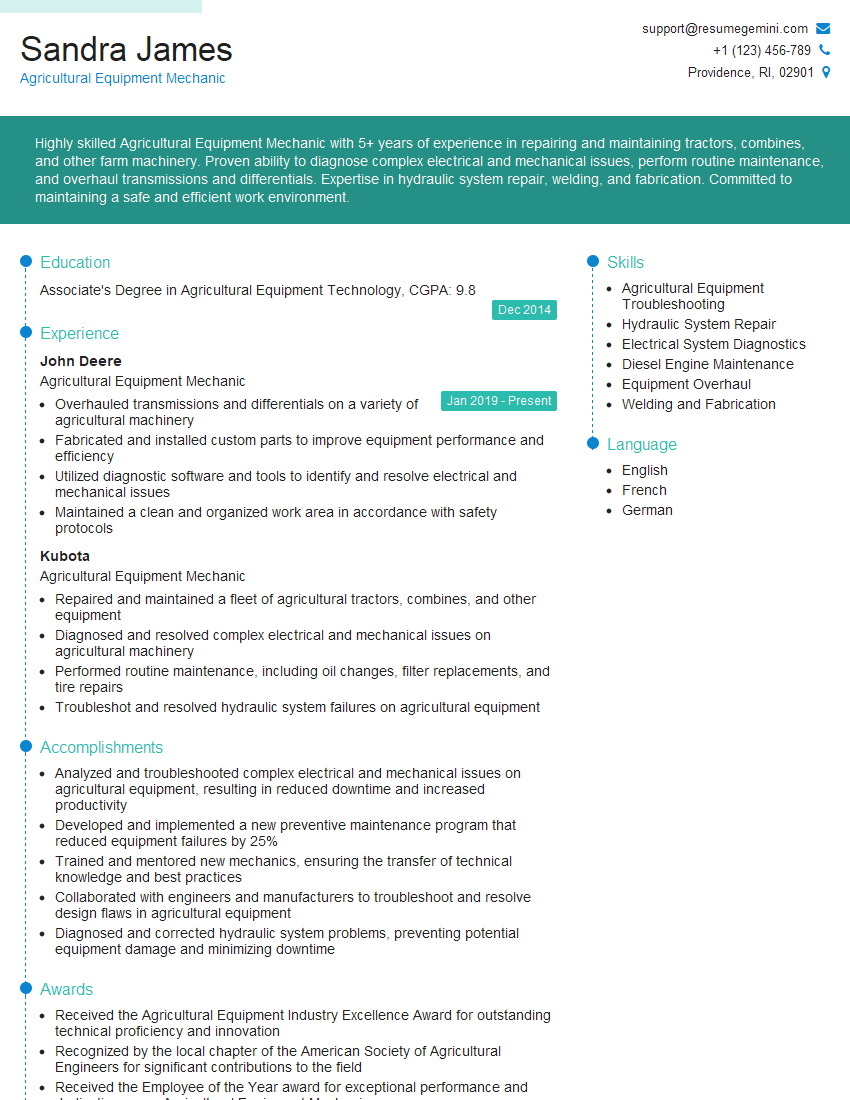
Mastering Harvesting Equipment Repair opens doors to a rewarding career with excellent growth potential. Your expertise is highly sought after, and the right resume can significantly boost your job prospects. Creating an ATS-friendly resume is crucial in today’s job market. ResumeGemini is a trusted resource that can help you craft a professional and effective resume designed to catch the eye of recruiters. They offer examples of resumes tailored to the Harvesting Equipment Repair field, ensuring your qualifications shine.

Explore more articles
Users Rating of Our Blogs
Share Your Experience
We value your feedback! Please rate our content and share your thoughts (optional).
What Readers Say About Our Blog
Very informative content, great job.
good