Cracking a skill-specific interview, like one for Headstone Design, requires understanding the nuances of the role. In this blog, we present the questions you’re most likely to encounter, along with insights into how to answer them effectively. Let’s ensure you’re ready to make a strong impression.
Questions Asked in Headstone Design Interview
Q 1. Describe your experience with various stone types used in headstone creation.
My experience encompasses a wide range of stone types commonly used in headstone creation. The choice of stone significantly impacts the final aesthetic, durability, and cost. Here are some key examples:
- Granite: A highly durable and popular choice, granite offers a vast array of colors and patterns, allowing for intricate designs and detailed inscriptions. Its resistance to weathering ensures longevity. For example, I’ve worked with several families to select specific granite types, from the classic black granite to more unique options like red or grey granite, each with its unique character.
- Marble: Known for its elegant appearance and ability to accept detailed carving, marble is a softer stone than granite and requires more careful handling. Its susceptibility to weathering means it may need more frequent cleaning and maintenance. A recent project involved designing a marble headstone with delicate floral carvings, showcasing its suitability for intricate designs but requiring careful consideration of its long-term care.
- Sandstone: A more porous stone than granite or marble, sandstone offers a rustic and earthy aesthetic. It’s generally less expensive but requires more frequent sealing to protect against erosion. I’ve utilized sandstone in creating headstones with a more natural, understated look, particularly fitting for certain landscapes and family preferences.
- Bronze: While not a stone, bronze is a frequently used material for headstone plaques and markers offering an alternative to traditional stone. Its longevity and ability to be cast into detailed shapes make it a popular choice. I have extensive experience designing both bronze plaques to be affixed to stone headstones and standalone bronze memorials.
Understanding the properties of each stone type – its durability, workability, and aesthetic qualities – is crucial for successful headstone design and client satisfaction.
Q 2. Explain the process of designing a headstone from initial concept to final rendering.
The headstone design process is a collaborative journey, starting with initial consultations and culminating in the final rendering. It typically involves these key steps:
- Client Consultation: This crucial first step involves understanding the client’s vision, including budget, preferred stone type, desired inscription, and any specific design elements. I always encourage open communication and listen carefully to their personal preferences and emotional needs.
- Concept Development & Sketching: Based on the consultation, I create initial sketches exploring different design options, experimenting with layout, font choices, and symbolic elements. This phase often involves several iterations based on client feedback.
- Digital Design: Once a preferred concept is selected, I use specialized software (as detailed in question 4) to create a digital rendering of the headstone, providing a highly accurate visual representation of the final product. This allows clients to visualize the design in detail before fabrication.
- Refinement and Approval: The digital rendering undergoes a thorough review and revision process, ensuring all details meet the client’s expectations and adhere to relevant regulations. We may incorporate additional elements or adjustments based on client feedback during this iterative process.
- Final Rendering and Production: Once the client approves the final rendering, the design is prepared for production. This includes precise measurements and specifications passed to the stone mason or fabricator for execution.
This structured approach ensures a smooth and satisfying process, resulting in a headstone that is both beautiful and meaningful to the client.
Q 3. How do you ensure the accuracy and legibility of inscriptions on headstones?
Accuracy and legibility are paramount in headstone inscriptions. We employ several strategies to ensure these qualities:
- High-Resolution Digital Fonts: I use specialized fonts designed for stone carving, ensuring optimal readability even at a distance. These fonts are carefully selected for their clarity and elegance.
- Proofreading and Verification: Every inscription is meticulously proofread multiple times to avoid errors. Clients are always presented with a final proof for their review and approval before fabrication.
- Template Creation and Placement: Detailed templates are created based on the chosen font and inscription length, ensuring proper spacing and placement on the headstone. This minimizes errors during the carving process.
- Collaboration with Stonemasons: Close communication with experienced stonemasons is essential. I ensure they have clear, precise instructions and templates to guide their work and minimize the possibility of misinterpretations.
- Quality Control Checks: After carving, a final inspection is performed to verify the accuracy and legibility of the inscription. Any discrepancies are promptly addressed before the headstone is installed.
This multi-layered approach ensures that the inscription is not only accurate but also remains legible for generations to come.
Q 4. What software and tools are you proficient in for headstone design?
My proficiency includes a range of software and tools crucial for precise and aesthetically pleasing headstone design:
- AutoCAD: Used for creating precise 2D drawings and technical plans for the stonemasons, ensuring accurate dimensions and placement of design elements.
- Adobe Photoshop and Illustrator: Essential for creating and manipulating high-resolution images, developing detailed color palettes, and incorporating client-provided imagery or logos.
- SketchUp: This 3D modeling software allows me to create realistic renderings of the headstone design, providing clients with a comprehensive preview of the finished product (further details in question 7).
- Vectorworks: I use this CAD software for creating detailed 3D models, especially beneficial when designing complex shapes or reliefs.
- Specialized Font Libraries: I have access to extensive libraries of fonts specifically designed for stone carving, ensuring clarity and aesthetic appeal of the inscriptions.
These software applications and tools are integral to my design process, combining technical precision with creative artistry.
Q 5. Describe your understanding of different design styles and their historical contexts.
My understanding of headstone design styles and their historical contexts is extensive. Headstone design reflects evolving artistic trends and cultural beliefs throughout history:
- Victorian Era (1837-1901): Characterized by ornate designs, elaborate carvings (angels, weeping willows), and sentimental inscriptions. These designs often conveyed deep grief and a strong focus on religious symbolism.
- Art Deco (1920s-1930s): Geometric shapes, clean lines, and stylized motifs were common, reflecting the modern aesthetic of the time. Inscriptions were often concise and elegant.
- Mid-Century Modern (1940s-1960s): Simpler designs, often featuring abstract forms or minimal lettering, reflect the post-war era’s focus on functionality and simplicity. Natural materials were frequently used.
- Contemporary Styles: Today, headstone design is highly diverse, reflecting individual preferences. Styles range from minimalist designs with simple lettering to more personalized designs incorporating photographs, artwork, or unique inscriptions.
Understanding these historical contexts allows me to work with clients who desire headstones reflective of particular historical periods or to create unique designs that blend elements from different eras, creating a truly personalized memorial.
Q 6. How do you handle client requests that conflict with design principles or regulations?
Handling client requests that conflict with design principles or regulations requires careful diplomacy and communication. My approach focuses on:
- Education and Explanation: I calmly explain the reasons behind design limitations, whether stemming from structural integrity concerns, material properties, or legal regulations. I highlight the potential negative consequences of deviating from established principles.
- Exploration of Alternatives: I propose alternative solutions that achieve the client’s overall vision while adhering to necessary constraints. This often involves creative problem-solving and adapting the design to make it feasible.
- Compromise and Collaboration: I strive for a compromise that meets both the client’s needs and the practical limitations. Open communication and collaboration are essential in finding a mutually acceptable solution.
- Documentation and Transparency: I thoroughly document all modifications and explanations, ensuring both the client and I have a clear understanding of the decisions made. This minimizes potential misunderstandings or disputes later on.
In some cases, it may be necessary to inform clients that certain requests are simply not possible. Providing alternative suggestions and options ensures that even in these instances, the design process remains constructive and satisfying.
Q 7. Explain your experience with 3D modeling and rendering in headstone design.
3D modeling and rendering are invaluable tools in my headstone design process. They allow clients to visualize the final product accurately and make informed decisions before fabrication. My experience with 3D modeling involves:
- Realistic Renderings: I use SketchUp and Vectorworks to create highly realistic renderings that accurately depict the headstone’s shape, size, color, and texture. This includes simulating the chosen stone’s appearance and the effect of light and shadow.
- Detailed Carvings and Lettering: 3D modeling allows me to precisely model intricate carvings and lettering, providing clients with a clear view of the details before the work is undertaken by stonemasons.
- Virtual Prototyping: The digital model functions as a virtual prototype, allowing for adjustments and refinements to be made without incurring physical costs or delays. This minimizes revisions and saves valuable time and resources.
- Client Presentations: 3D renderings are a crucial element of client presentations, enhancing communication and facilitating informed decision-making. They allow clients to visualize the final headstone from various angles and in different lighting conditions. I frequently use virtual walkthroughs to enhance the client experience.
The integration of 3D modeling has dramatically improved the accuracy, efficiency, and client satisfaction throughout the headstone design process.
Q 8. How do you manage multiple projects simultaneously while meeting deadlines?
Managing multiple headstone design projects simultaneously requires a structured approach. I utilize project management software to track deadlines, client communication, and material orders. This allows me to visualize the workflow of each project and identify potential bottlenecks early. I prioritize tasks based on urgency and deadlines, focusing on the most critical elements of each project first. For instance, if one project requires a complex carving that needs more time, I’ll adjust the timeline for other simpler projects accordingly, ensuring all clients receive timely updates and meet deadlines without compromising quality.
Furthermore, I delegate tasks where possible, working with skilled assistants for aspects like lettering and etching. This allows me to concentrate on the design and client interaction aspects of each project. Regular check-ins with clients and team members keep everyone informed and ensures that any issues are addressed proactively. Think of it like a conductor of an orchestra – each musician (project) has a role, and I ensure they’re in sync to deliver a harmonious final product (completed projects).
Q 9. Describe your understanding of material sourcing and cost estimation for headstones.
Material sourcing is crucial for headstone design. I consider factors like durability, aesthetic appeal, and budget constraints when selecting materials. Common options include granite, marble, and bronze, each with its unique properties. Granite, for example, is highly durable and weather-resistant, making it ideal for long-term outdoor exposure. Marble, on the other hand, is known for its elegance and ability to accept intricate carvings, but it requires more maintenance. Bronze offers a more artistic feel and is suitable for smaller elements.
Cost estimation involves calculating material costs, labor, and any additional services, such as installation or lettering. I obtain quotes from suppliers and factor in potential price fluctuations. For example, a complex design carved into granite will inherently cost more than a simpler inscription on a smaller marble headstone. Detailed sketches and specifications are created for accurate quoting. I always provide clients with a transparent breakdown of all costs, ensuring complete understanding and preventing unexpected expenses.
Q 10. How do you ensure the longevity and durability of headstone designs?
Ensuring longevity and durability requires careful material selection and proper construction techniques. I choose materials known for their resistance to weathering and erosion, such as high-quality granite or bronze. The design itself should be structurally sound, with appropriate reinforcement to prevent cracking or chipping. Proper installation, including a secure foundation, is crucial. I also advise clients on routine maintenance, such as cleaning with appropriate materials to prevent staining and damage.
For example, I often suggest using a specialized granite sealer to protect against water damage, especially in areas with harsh weather conditions. Choosing a less porous material is another significant factor. Over the years, I’ve learned that meticulous attention to detail, from material selection to installation, translates directly to a headstone’s longevity. Think of it like building a house; a solid foundation and quality materials are key to long-lasting beauty.
Q 11. Explain your knowledge of relevant building codes and regulations regarding headstones.
My knowledge of building codes and regulations regarding headstones is comprehensive. I am familiar with local and state regulations concerning dimensions, materials, and placement within cemeteries. This includes understanding restrictions on height, depth, and the types of materials permitted. Regulations vary widely depending on location, so it’s critical to research these for every project.
For example, some cemeteries may have restrictions on the use of certain types of metal or stone, or may require specific foundation preparations. I ensure all designs meet the applicable requirements to avoid delays or rejection. This is a crucial part of the design process; it’s like getting the necessary permits before constructing a building. I always work closely with cemetery officials to guarantee compliance with their specific guidelines.
Q 12. How do you incorporate symbolic elements or personal touches into headstone designs?
Incorporating symbolic elements and personal touches is a core element of creating meaningful headstones. I work closely with families to understand the deceased’s life, hobbies, and personality. This information informs the design choices. For example, a loved one who was a passionate gardener might have a headstone featuring floral motifs, while a musician could have musical notes or an instrument incorporated into the design.
I use a variety of techniques, such as etching, carving, and the inclusion of personalized inscriptions and images to reflect the unique personality of the deceased. I might incorporate religious symbols, favorite quotes, or images significant to the family. Every detail is carefully considered to create a lasting memorial that truly reflects the individual’s life. I see this as an art form, taking something deeply personal and transforming it into a beautiful and enduring tribute.
Q 13. Describe your experience with collaborating with clients to create personalized headstones.
Collaborating with clients is a vital part of my process. I begin by actively listening to their needs, expectations, and memories of their loved ones. This allows me to understand their vision and interpret their sentiments into a design. We discuss various design options, materials, and stylistic elements, ensuring they are comfortable and involved throughout the entire design process.
I present design mock-ups and revisions until we reach a mutually satisfying outcome. Open communication is key, addressing their concerns and answering their questions. I always maintain a sensitive and compassionate approach, recognizing that this is a deeply personal experience for the family. My role is to guide them through the process, helping them create a fitting and meaningful tribute to their loved one. I always say it’s a partnership, and the final design is a collaboration of ideas.
Q 14. Explain your understanding of different lettering styles and their applications.
My understanding of lettering styles is extensive. I’m proficient in various styles, including traditional serif fonts, elegant scripts, modern sans-serif styles, and even hand-carved lettering. The choice of lettering style is significant, reflecting the era, personality, and desired aesthetic.
For example, a traditional serif font might be suitable for a classic, timeless design, while a modern sans-serif font could offer a cleaner, contemporary feel. Script lettering lends itself to a more elegant and personal touch. I guide clients through these options, considering the overall design and the desired tone to choose the most appropriate style. The scale and spacing of the lettering also plays a vital role in the overall aesthetic impact and readability of the inscription.
Q 15. How do you address design challenges related to difficult terrain or environmental factors?
Addressing design challenges posed by difficult terrain or environmental factors requires a multifaceted approach. The key is to anticipate potential issues before the installation. This involves careful site surveys to assess soil type, drainage, and potential for erosion or shifting. For example, a headstone intended for a sloped hillside might require a more substantial base or anchoring system to prevent settling or toppling. In areas prone to freeze-thaw cycles, I’d specify materials with high resistance to cracking from expansion and contraction. For coastal areas, I would consider materials highly resistant to salt spray corrosion. We might also adapt the design itself. A lower profile headstone might be more stable on unstable ground than a tall, slender monument. Detailed engineering plans are crucial, and sometimes consulting a geotechnical engineer is necessary to ensure the headstone’s long-term stability.
For example, I once worked on a project where the burial site was located on a steep, rocky incline. The solution was a custom-engineered foundation using reinforced concrete and angled supports to secure the headstone. This prevented any risk of movement due to the unstable terrain.
Career Expert Tips:
- Ace those interviews! Prepare effectively by reviewing the Top 50 Most Common Interview Questions on ResumeGemini.
- Navigate your job search with confidence! Explore a wide range of Career Tips on ResumeGemini. Learn about common challenges and recommendations to overcome them.
- Craft the perfect resume! Master the Art of Resume Writing with ResumeGemini’s guide. Showcase your unique qualifications and achievements effectively.
- Don’t miss out on holiday savings! Build your dream resume with ResumeGemini’s ATS optimized templates.
Q 16. Describe your process for creating detailed drawings and specifications for headstone production.
My process for creating detailed drawings and specifications begins with a thorough consultation with the client to understand their vision and preferences. This involves discussions about the desired size, shape, material, inscription, and any symbolic elements or embellishments. I then translate this information into detailed scale drawings using CAD software. These drawings precisely detail all dimensions, angles, curves, and the placement of inscriptions and carvings. The specifications document accompanying the drawings lists the chosen material (e.g., granite, marble), its color and finish, and any special requirements for the manufacturing process, like specific lettering styles or carving techniques. The documents also specify the type and dimensions of the base and any additional components, such as vases or plaques. This meticulous approach ensures that the final product matches the client’s expectations and is manufacturable.
Think of it like an architect’s blueprint for a house—except instead of a dwelling, we’re building a lasting memorial. The accuracy and completeness of these documents are essential to ensure a seamless manufacturing process and a flawless end product.
Q 17. How do you handle revisions and feedback from clients during the design process?
Handling revisions and feedback is a collaborative process. I encourage open communication and provide multiple opportunities for clients to review and approve the design. Initial sketches and digital renderings allow for early feedback, enabling adjustments before moving to detailed drawings. Revisions are incorporated systematically, with each change clearly documented and communicated to the client. We use a version control system to track all changes and keep everyone informed. I find that building rapport with the client, listening actively, and presenting revisions clearly and efficiently minimizes misunderstandings and ensures client satisfaction.
For example, if a client wants to change the font of the inscription after the initial design is approved, I update the drawings accordingly, clearly showing the revised design with a new revision number, and get their final approval before proceeding.
Q 18. Explain your understanding of the manufacturing process for headstones.
My understanding of headstone manufacturing encompasses several key processes. It typically begins with selecting and preparing the raw material—usually granite or marble—which is quarried, cut into blocks, and then further processed. Computer-controlled machinery then shapes the stone according to my precise specifications. This involves cutting, shaping, and polishing the surface to achieve the desired dimensions and finish. Letters and designs are then carved or etched into the stone, often using CNC routers for precision and consistency. After the carving is complete, the headstone is further polished and inspected for flaws. Finally, the headstone is sealed to protect it from weathering. Different materials and designs will slightly alter the exact process, but the core stages remain consistent.
I have visited several headstone manufacturing facilities to ensure I understand the entire production chain, from raw materials to finished product. This allows me to create designs that are both aesthetically pleasing and feasible to manufacture.
Q 19. How do you ensure the accuracy of the final product compared to the initial design?
Ensuring accuracy between the initial design and the final product is paramount. This is achieved through rigorous quality control measures at every stage. Digital templates are used to guide the manufacturing process, ensuring precise dimensions and placement of inscriptions. Regular checks are carried out throughout production, comparing the work-in-progress to the digital model to ensure alignment and accuracy. Final inspection before shipment confirms that the finished headstone meets all specifications. We often use digital photography and 3D scanning to document the entire process, creating a record of every stage that can be reviewed if needed.
I always maintain close contact with the manufacturers, attending to any discrepancies or questions that arise during production. I even occasionally visit the manufacturing site to oversee the critical stages of production for complex designs.
Q 20. Describe your experience with quality control measures in headstone production.
Quality control in headstone production is a crucial aspect of my work, and it starts with selecting reputable manufacturers who adhere to stringent quality standards. My involvement begins with reviewing the manufacturing processes of prospective partners. I then ensure that my designs are compatible with their capabilities and equipment. During production, quality control measures include regular inspections at various stages, checking for dimensional accuracy, surface quality, and the integrity of carvings and inscriptions. Detailed documentation, including photographs and digital scans, keeps a record of the headstone’s production progress. Final inspection verifies the headstone’s adherence to the design specifications before shipping to ensure the client receives a product that matches their expectations and meets the highest standards of craftsmanship and durability.
Imagine it like a chef meticulously inspecting each dish before it leaves the kitchen. Each step is critical in ensuring that the final product is perfect.
Q 21. Explain your knowledge of different types of finishes and their impact on the headstone’s appearance.
Different finishes significantly impact a headstone’s appearance and durability. A polished finish provides a high gloss, reflecting light and showcasing the stone’s color and pattern vividly. However, it is more susceptible to scratching. A honed finish provides a smooth, matte appearance, reducing glare but still showcasing the stone’s texture and color. This is a more durable option than a polished finish. A flamed finish creates a rough, textured surface by applying intense heat to the stone. This is very durable and less prone to staining. Sandblasted finishes create a more subtle, uniform matte texture. The choice of finish depends on factors such as the client’s aesthetic preferences, the type of stone, and the desired level of durability and maintenance. I guide clients through the different options, explaining the pros and cons of each, to help them make informed decisions.
For example, a client might prefer a polished finish for its elegant look on a light-colored granite, while a darker granite might better suit a honed finish to highlight its deep color and texture without excessive glare. A flamed finish might be ideal for a headstone placed in a harsh outdoor environment.
Q 22. How do you balance aesthetics with functionality and structural integrity in your designs?
Balancing aesthetics, functionality, and structural integrity in headstone design is a delicate dance. It’s about creating a beautiful and lasting tribute that also withstands the elements for generations. This involves careful consideration of material selection, design elements, and construction techniques.
Material Selection: Choosing the right material is crucial. Granite, for example, is known for its durability and resistance to weathering, making it a popular choice. However, softer stones like marble, while beautiful, may require more frequent maintenance. The material’s inherent properties directly impact the longevity and aesthetic outcome.
Design Elements: Intricate carvings and detailed inscriptions are aesthetically pleasing, but overly complex designs can weaken the stone’s structure, making it more susceptible to cracking or damage. A skilled designer will balance artistic expression with structural soundness, often incorporating simpler designs in areas of high stress.
Construction Techniques: The way a headstone is constructed significantly affects its longevity. Proper anchoring and installation are vital to ensure stability and prevent shifting or settling over time. Using appropriate adhesives and reinforcement techniques helps maintain the integrity of the design.
For instance, a recent project involved a client who wanted a highly detailed bas-relief carving on a relatively thin slab of marble. To address this, I proposed using a stronger, thicker piece of marble and simplifying certain design elements to prevent structural compromise. The final design was both beautiful and robust.
Q 23. How do you stay updated on current trends and technologies in headstone design?
Staying current in headstone design requires a multi-faceted approach. The industry is constantly evolving, with new materials, technologies, and artistic styles emerging.
Trade Publications & Conferences: I regularly subscribe to industry journals and attend design conferences. These events allow me to learn about new materials, techniques, and trends firsthand, network with other professionals, and see the latest innovations.
Online Resources: I actively follow relevant online forums, blogs, and social media groups dedicated to memorial design and stonework. This provides valuable insights into current practices and emerging trends.
Competitor Analysis: I study the work of other headstone designers to stay aware of different approaches and designs. This allows me to identify best practices and innovative solutions.
Material Suppliers: Maintaining strong relationships with material suppliers provides me with access to the latest products and technologies in the market. They often offer workshops and training sessions on new materials and techniques.
For example, I recently discovered a new type of laser etching technology that allows for incredibly detailed and precise inscriptions, significantly enhancing the artistic possibilities.
Q 24. Describe your experience with working within budget constraints.
Working within budget constraints is an essential part of headstone design. It requires a collaborative approach with clients and a thorough understanding of material costs and labor expenses.
Detailed Cost Estimates: I provide clients with comprehensive cost estimates at the beginning of each project, outlining material costs, labor fees, and any additional expenses. This transparency ensures that clients understand the total cost upfront.
Material Alternatives: I often present several material options at various price points, allowing clients to choose the best fit for their budget. This might involve suggesting a less expensive stone or a simpler design to reduce costs without significantly compromising aesthetics.
Value Engineering: I actively seek ways to optimize designs to reduce costs without sacrificing quality or design integrity. This might involve simplifying some design elements or finding more cost-effective manufacturing methods.
In one project, a client had a limited budget, but they wanted a unique design. Through careful planning and material selection, I was able to create a stunning headstone within their budget by opting for a more affordable, yet equally durable, stone type and slightly simpler design elements.
Q 25. How do you handle client expectations that exceed budget or timeframe?
Handling client expectations that exceed budget or timeframe requires clear and proactive communication. The key is to manage expectations early and collaboratively explore solutions.
Open Communication: I maintain open and honest communication with clients from the outset, clearly outlining the budget and timeframe constraints. This prevents misunderstandings and sets realistic expectations.
Prioritization: If client requests exceed the budget, I work with them to prioritize essential design elements and potentially adjust less critical aspects. This ensures that the most important aspects of the design are met within the budget.
Phased Approach: In some cases, a phased approach can be helpful. We can implement the core design elements initially, within the budget, and add additional features later, as the budget allows.
Alternative Options: I present alternative options that meet their artistic vision while staying within the budget and timeframe. This could involve suggesting different materials, simpler designs, or adjusting the project scope.
For example, a client once wanted intricate hand-carved details that would have significantly increased the cost and timeline. We collaborated to achieve a similar aesthetic effect using a cost-effective combination of laser etching and hand-painting, meeting their vision while staying on budget.
Q 26. Explain your approach to problem-solving when faced with unexpected challenges during a project.
Problem-solving in headstone design often involves unexpected challenges like material defects, weather delays, or unforeseen logistical issues. My approach centers on a systematic and methodical process.
Assessment: First, I thoroughly assess the problem, identifying its root cause and potential impact on the project.
Brainstorming: I brainstorm potential solutions, considering various alternatives and their implications. This involves exploring both technical and logistical solutions.
Consultation: I consult with relevant stakeholders, such as clients, contractors, and material suppliers, to get their input and collaboration.
Implementation: Once a viable solution is identified, I implement it effectively, ensuring meticulous attention to detail and quality control.
Documentation: I maintain detailed records of the problem, the solution, and the lessons learned. This ensures better project management in future projects.
In one instance, a severe storm damaged a partially completed headstone. We quickly assessed the damage, contacted the supplier for replacement materials, and adjusted the project timeline to accommodate the unexpected delay. The final product was delivered on time, despite the initial setback.
Q 27. Describe your experience with managing communication with clients, contractors, and suppliers.
Effective communication is crucial in headstone design. It involves clear, concise, and timely interaction with clients, contractors, and suppliers.
Client Communication: I prioritize regular communication with clients, keeping them informed about project progress, any challenges encountered, and decisions made. This includes using various communication channels—emails, phone calls, and in-person meetings.
Contractor Communication: I ensure clear communication with contractors regarding design specifications, deadlines, and quality expectations. This often involves detailed drawings, specifications, and regular site visits.
Supplier Communication: Maintaining strong relationships with material suppliers ensures prompt delivery of high-quality materials. This involves clear order specifications, timely communication about delivery schedules, and quality control checks upon receipt.
Documentation: I meticulously document all communication, including emails, meeting notes, and project updates. This provides a clear audit trail and avoids misunderstandings.
For instance, I recently used project management software to maintain a central hub for all communication, documents, and project updates, streamlining information flow among all parties involved in a large-scale memorial project.
Q 28. How do you ensure your designs comply with all applicable regulations and standards?
Compliance with regulations and standards is paramount in headstone design. It involves understanding and adhering to local, state, and sometimes even federal regulations concerning material safety, installation, and cemetery guidelines.
Local Regulations Research: I thoroughly research all relevant regulations and standards before commencing any project. This includes local cemetery regulations, building codes, and any relevant environmental or safety standards.
Material Safety: I ensure that all materials used meet safety standards and are suitable for outdoor use, considering factors such as weather resistance, durability, and potential health hazards.
Installation Standards: I follow proper installation techniques to ensure the headstone’s stability and longevity. This often involves working closely with certified installers to meet all local regulations regarding foundation, depth, and anchoring.
Permits and Approvals: I obtain all necessary permits and approvals from relevant authorities before starting the installation, ensuring the project complies with all regulations.
For example, certain cemeteries have strict regulations regarding the size, material, and placement of headstones. I carefully review these guidelines before designing and installing any headstone, ensuring that it meets the specific requirements and adheres to all applicable rules.
Key Topics to Learn for Headstone Design Interview
- Design Principles and Aesthetics: Understanding the principles of design as they apply to headstones, including balance, proportion, symmetry, and asymmetry. Consider the emotional impact of different design choices.
- Material Selection and Properties: Knowledge of common materials used in headstone creation (e.g., granite, marble, bronze) and their properties (durability, weather resistance, workability). Explore the implications of material choice on the final design and cost.
- Carving and Lettering Techniques: Familiarity with traditional and modern carving methods, including hand-carving, sandblasting, and laser etching. Understand the nuances of lettering styles and their historical context.
- Manufacturing Processes: Understanding the entire process from initial design to final installation, including template creation, cutting, polishing, and inscription. Consider the role of technology in modern headstone manufacturing.
- Regulatory Compliance and Legal Aspects: Awareness of relevant regulations and legal requirements related to cemetery design and headstone placement. This includes size restrictions, material limitations, and inscription guidelines.
- Client Communication and Collaboration: Understanding how to effectively communicate with clients to understand their needs and preferences, and translate those into a thoughtful and meaningful headstone design. Consider the sensitive nature of this work and how to approach client conversations with empathy.
- Sketching and CAD Proficiency: Demonstrating skills in sketching and using Computer-Aided Design (CAD) software to create detailed and accurate headstone designs. Showcase your ability to translate concepts into technical drawings.
- Project Management and Timelines: Understanding the importance of managing projects effectively, meeting deadlines, and working within budget constraints. This includes coordinating with various stakeholders and suppliers.
Next Steps
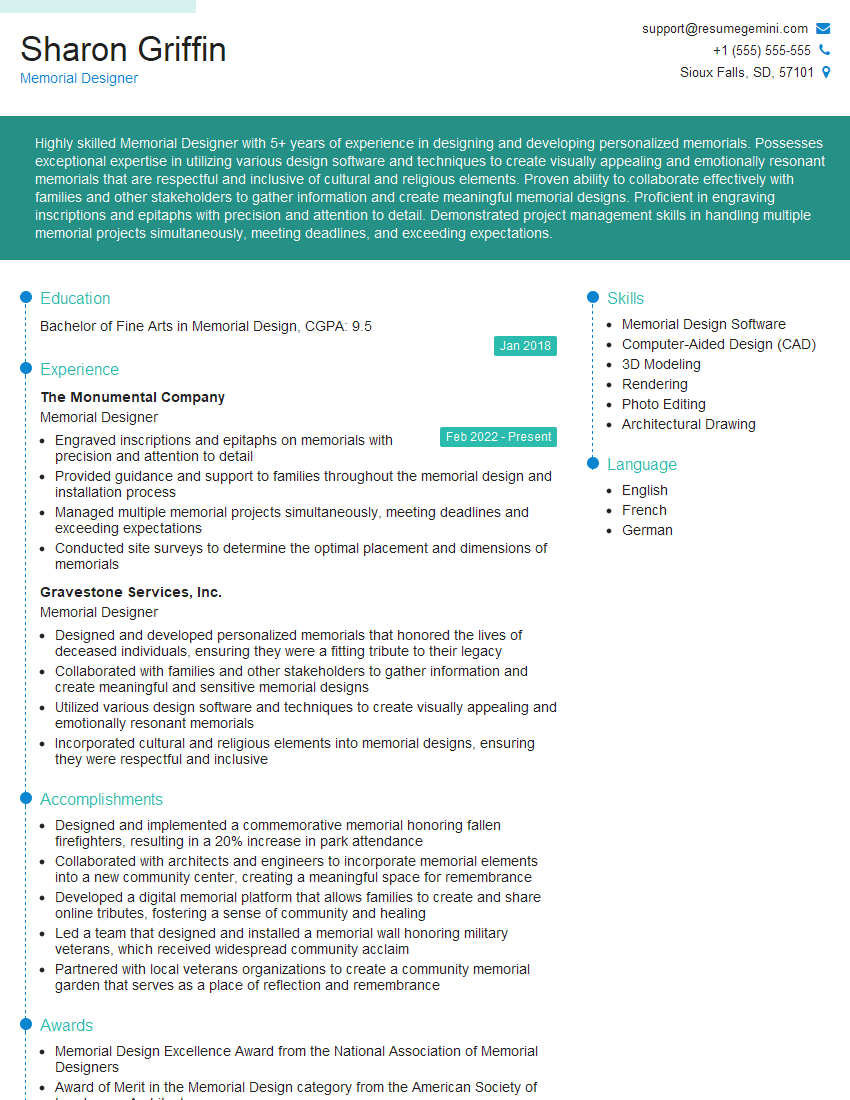
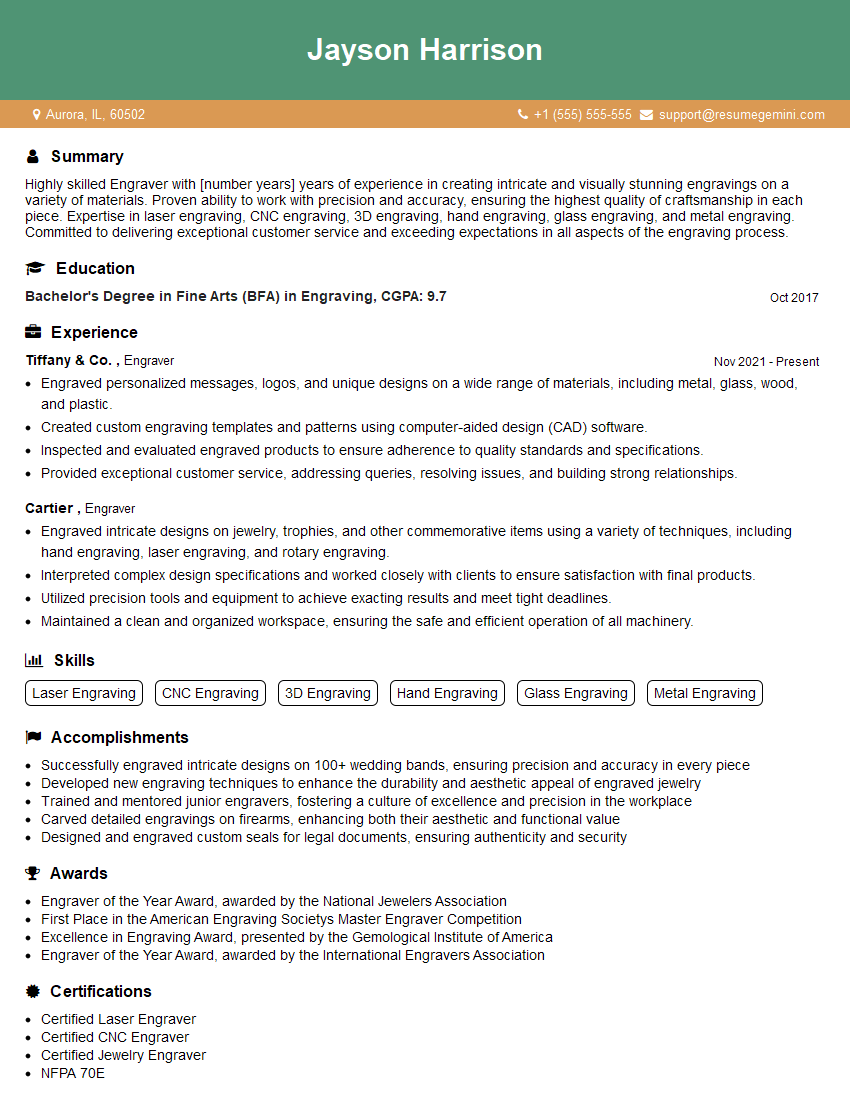
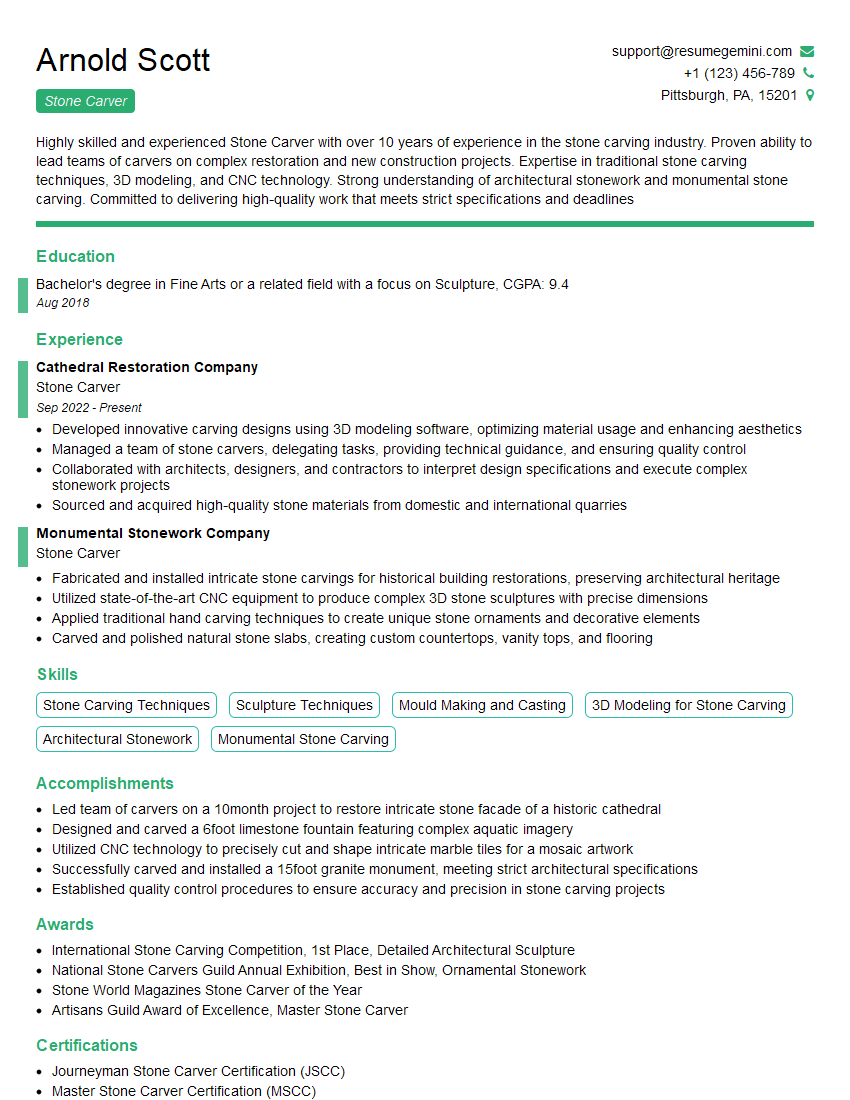
Mastering Headstone Design opens doors to a fulfilling career in a unique and meaningful industry. To stand out, you need a compelling resume that showcases your skills and experience effectively. Building an ATS-friendly resume is crucial for increasing your job prospects. We highly recommend using ResumeGemini to craft a professional resume that gets noticed. Examples of resumes tailored to Headstone Design are available to help you get started.
Explore more articles
Users Rating of Our Blogs
Share Your Experience
We value your feedback! Please rate our content and share your thoughts (optional).
What Readers Say About Our Blog
Very informative content, great job.
good