The thought of an interview can be nerve-wracking, but the right preparation can make all the difference. Explore this comprehensive guide to Helicopter Maintenance Management interview questions and gain the confidence you need to showcase your abilities and secure the role.
Questions Asked in Helicopter Maintenance Management Interview
Q 1. Describe your experience with helicopter maintenance scheduling and resource allocation.
Helicopter maintenance scheduling and resource allocation is a critical aspect of ensuring operational safety and efficiency. It involves meticulously planning all maintenance tasks, considering factors like flight hours, calendar time, component life limits, and regulatory requirements. This process balances the need for proactive maintenance with minimizing downtime and optimizing the use of personnel, tools, and parts.
My approach typically begins with a comprehensive review of the helicopter’s maintenance history and the manufacturer’s recommendations. I then utilize specialized software, often integrated with a Computerized Maintenance Management System (CMMS), to create a detailed schedule. This schedule outlines all necessary inspections, repairs, and overhauls, assigning them to specific technicians based on their expertise and availability. The CMMS also helps track parts inventory, predict potential shortages, and manage the overall budget.
For instance, in a recent project involving a fleet of five Bell 206 helicopters, I implemented a predictive maintenance strategy using data analytics. By analyzing historical maintenance data and correlating it with flight parameters, we were able to anticipate potential failures and schedule maintenance proactively, reducing unscheduled downtime by 15% and saving significant costs on emergency repairs.
Q 2. Explain the process of conducting a pre-flight inspection on a helicopter.
A pre-flight inspection is a crucial safety check conducted before every helicopter flight. It’s a systematic visual examination and functional test of various components to ensure airworthiness and identify any potential problems before takeoff. Think of it as a thorough health check for the helicopter.
The process generally involves a checklist-driven approach, covering areas such as:
- Exterior Examination: Checking for any damage to the airframe, rotor blades, landing gear, and other external components. This includes looking for dents, cracks, corrosion, or any loose parts.
- Engine and Rotor System Checks: Inspecting the engine for leaks, checking oil levels, and verifying the integrity of the rotor system, including blade pitch and tracking.
- Flight Controls: Verifying the smooth and proper operation of the cyclic, collective, and anti-torque pedals. This involves checking for free movement and proper response.
- Avionics and Instruments: Ensuring all instruments and avionics systems are functioning correctly, including communication radios, navigation systems, and flight instruments.
- Fuel System: Checking fuel levels and looking for leaks.
Any discrepancies found during the inspection must be documented, and appropriate corrective actions need to be taken before flight clearance is granted. Failure to perform a thorough pre-flight inspection can have serious safety consequences.
Q 3. What are the common causes of helicopter engine malfunctions, and how are they diagnosed?
Helicopter engine malfunctions can stem from a variety of causes, often related to mechanical wear, inadequate maintenance, or environmental factors. Accurate diagnosis is paramount to ensure effective repairs and prevent recurrences.
Common causes include:
- Compressor blade failures: Caused by foreign object damage (FOD), fatigue, or erosion.
- Turbine blade erosion: Resulting from the ingestion of sand, dust, or other debris.
- Lubrication system problems: Insufficient oil pressure, oil leaks, or contamination can severely damage engine components.
- Fuel system malfunctions: Problems with fuel pumps, injectors, or filters can lead to incomplete combustion or engine shutdown.
- Ignition system issues: Faulty spark plugs or ignition modules can cause misfires and reduced power.
Diagnosis involves a combination of techniques:
- Visual Inspection: Checking for signs of damage, leaks, or contamination.
- Data Analysis: Reviewing engine performance data recorded by the onboard monitoring systems to identify anomalies such as high vibration, temperature excursions, or fuel consumption irregularities.
- Non-destructive testing (NDT): Employing methods like dye penetrant inspection or ultrasonic testing to detect internal flaws in engine components.
- Engine run-up tests: Performing controlled engine runs to evaluate performance parameters under various conditions.
A systematic approach to diagnosis, coupled with the use of specialized tools and diagnostic equipment, helps pinpoint the root cause of the malfunction and allows for targeted repairs.
Q 4. How do you ensure compliance with FAA regulations regarding helicopter maintenance?
Ensuring compliance with FAA regulations is paramount for safe and legal helicopter operations. This involves meticulous adherence to a comprehensive set of rules and regulations that cover all aspects of helicopter maintenance.
My approach focuses on several key areas:
- Maintenance Tracking: Utilizing a CMMS to meticulously track all maintenance activities, ensuring that all scheduled inspections, repairs, and overhauls are completed on time and in accordance with the manufacturer’s instructions and FAA regulations. This includes accurate record-keeping of all parts used, labor hours, and any discrepancies found during maintenance.
- Airworthiness Directives (ADs): Staying abreast of all applicable ADs issued by the FAA and ensuring that all required modifications or repairs are implemented promptly. ADs address known safety issues and prevent potential accidents.
- Pilot Records: Maintaining accurate records of all maintenance performed, including signatures of certified mechanics and inspection dates, which are essential for audits and inspections.
- Regulatory Audits: Collaborating with FAA inspectors during scheduled audits, ensuring that all maintenance practices and documentation meet regulatory standards. This proactive approach minimizes potential issues and demonstrates a commitment to compliance.
- Continuous Training: Regularly updating my knowledge and skills through industry training programs to ensure that I am aware of the latest maintenance procedures and regulations.
Proactive compliance is not just about avoiding penalties; it’s about building a safety culture that prioritizes the well-being of passengers, crew, and the public.
Q 5. Explain your understanding of helicopter airframe maintenance and repair.
Helicopter airframe maintenance encompasses all aspects of maintaining the structural integrity of the helicopter’s body and components. It’s crucial for ensuring the safe and reliable operation of the aircraft, as the airframe is subjected to significant stress during flight.
Maintenance tasks include:
- Corrosion Control: Regularly inspecting for and treating corrosion, which can weaken the airframe. This might involve cleaning, painting, or applying corrosion inhibitors.
- Damage Repair: Repairing any damage to the airframe, such as dents, cracks, or punctures, using approved methods. This could involve patching, welding, or composite repairs.
- Non-Destructive Testing (NDT): Utilizing techniques like ultrasonic testing or dye penetrant inspection to detect hidden damage or flaws in the airframe structure.
- Periodic Inspections: Conducting scheduled inspections to check for wear, damage, and fatigue. This includes checking fasteners, rivets, and other structural components.
- Overhauls: Performing major overhauls of the airframe at specific intervals, involving detailed inspections and repairs or replacements of components as needed.
Airframe maintenance requires specialized knowledge and skills. Technicians must be familiar with materials science, structural mechanics, and FAA regulations to ensure the structural integrity of the helicopter is maintained at all times. For example, repairing a crack in a critical airframe component might require a complex process involving careful preparation, precise welding, and post-repair NDT to verify the structural integrity.
Q 6. Describe your experience with helicopter avionics troubleshooting and repair.
Helicopter avionics troubleshooting and repair involves diagnosing and fixing problems with the aircraft’s electronic systems. This is a complex field that requires a deep understanding of electronics, computer systems, and the specific avionics equipment used in helicopters.
My approach to troubleshooting avionics problems is systematic and data-driven. It typically begins with a thorough review of the aircraft’s maintenance logs and any pilot reports describing the problem. I might then use built-in diagnostic tools, such as those found in modern glass cockpits, to pinpoint the source of the malfunction. Specialized test equipment may also be necessary, such as multimeters, oscilloscopes, and signal generators.
For example, if a helicopter experiences an intermittent GPS failure, I might start by checking the GPS antenna connections, power supply, and GPS receiver itself. I would use a multimeter to check for voltage, continuity, and ground connections. If these initial tests are inconclusive, I might employ more advanced diagnostic tools to analyze the GPS data signals and identify any patterns of failure. This could involve working with sophisticated troubleshooting software to isolate faulty components or diagnose communication issues.
Repairing avionics systems can involve replacing faulty components, repairing circuit boards, or reprogramming software. It is crucial to follow FAA regulations for avionics maintenance, including using only certified parts and documenting all repairs meticulously.
Q 7. How do you manage helicopter maintenance records and documentation?
Managing helicopter maintenance records and documentation is vital for ensuring compliance with FAA regulations and maintaining a comprehensive history of the aircraft’s maintenance. This involves more than just keeping paper records – it’s about leveraging technology to ensure efficiency and accuracy.
My approach usually involves using a CMMS (Computerized Maintenance Management System). These systems are designed to track maintenance activities, parts inventory, and other critical information. The CMMS acts as a central repository for all maintenance data, providing a detailed history of the helicopter’s maintenance status, including:
- Maintenance Logs: Detailed records of all inspections, repairs, and overhauls performed on the helicopter, including dates, personnel involved, parts used, and any discrepancies identified.
- Airworthiness Directives (ADs): Records of compliance with all applicable ADs issued by the FAA.
- Parts Inventory: Tracking of all parts used in maintenance, helping to ensure adequate stock levels and prevent delays.
- Technical Publications: Access to the aircraft’s maintenance manuals and other technical documentation.
The CMMS also allows for the generation of reports, such as maintenance schedules, parts usage reports, and compliance reports. This data is crucial for forecasting maintenance needs, managing budgets, and ensuring regulatory compliance. Furthermore, having readily available electronic records makes audits more efficient and demonstrates a proactive approach to safety management.
Q 8. What are your strategies for preventing corrosion in helicopter components?
Preventing corrosion in helicopter components is paramount for safety and longevity. My strategy is multifaceted and focuses on proactive measures, regular inspections, and meticulous maintenance.
- Material Selection: Choosing corrosion-resistant materials like stainless steel or aluminum alloys wherever feasible is a fundamental starting point. We also utilize specialized coatings designed for helicopter environments.
- Cleaning and Drying: Regular cleaning of components, especially after exposure to saltwater or harsh environments, is critical. Thorough drying prevents the accumulation of moisture, a key contributor to corrosion. We use specialized cleaning agents and pressurized air to ensure complete dryness.
- Protective Coatings: Applying appropriate corrosion-inhibiting paints and coatings, following manufacturer’s specifications, creates a barrier against environmental factors. Regular inspections for coating damage and timely repainting are crucial.
- Corrosion Inhibitors: Using corrosion inhibitors in lubrication systems and storage areas further protects components from degradation. We carefully select inhibitors compatible with the specific materials in use.
- Environmental Control: Storing helicopters in climate-controlled hangars whenever possible minimizes exposure to moisture and temperature fluctuations, slowing down corrosion processes. Proper ventilation is also essential.
- Regular Inspections: Implementing a robust visual inspection program at various maintenance checks is vital. Early detection of corrosion allows for timely intervention, preventing widespread damage. We utilize specialized inspection tools and techniques, including boroscopes, to detect hidden corrosion.
For example, during a recent inspection, we discovered minor surface corrosion on a landing gear component. Immediate cleaning, application of a corrosion inhibitor, and repainting prevented the corrosion from spreading and compromised structural integrity.
Q 9. Explain the different types of helicopter maintenance checks (A, B, C, D checks).
Helicopter maintenance checks are a tiered system, typically categorized as A, B, C, and D checks, each with increasing scope and depth. Think of it like a car’s service schedule, but much more rigorous and detailed.
- A-Check: This is the most basic check, focusing on visual inspections of readily accessible components. It’s akin to a quick visual inspection – checking fluid levels, looking for obvious damage, ensuring nothing is loose or broken. It’s usually performed daily or before each flight.
- B-Check: More extensive than an A-check, it involves more detailed inspections of systems and components, including operational checks of certain systems. This is similar to a regular oil change and safety check for your car.
- C-Check: A more comprehensive inspection and often involves partial disassembly of components for closer inspection, testing, and potentially minor repairs or replacements. It’s like a major service for a car – more detailed, potentially involving some component replacements.
- D-Check: The most comprehensive maintenance check, a complete overhaul of the helicopter. This is comparable to a complete engine rebuild and refurbishment for a car – a significant undertaking involving substantial disassembly, inspection, repair, or replacement of almost all components.
The specific tasks included in each check vary depending on the helicopter type and manufacturer’s maintenance manual. Adherence to these manuals is crucial for maintaining airworthiness.
Q 10. How do you handle discrepancies found during a helicopter inspection?
Discrepancies found during inspections are addressed through a systematic process that ensures safety and compliance.
- Documentation: Any discrepancy, no matter how minor, is meticulously documented using standardized forms or software. This includes a description of the issue, location, severity, and any immediate actions taken.
- Assessment: The severity of the discrepancy is assessed based on its potential impact on flight safety. We use a standardized system (often based on the manufacturer’s guidelines) to categorize discrepancies as minor, major, or critical.
- Immediate Actions: For critical discrepancies that pose immediate safety risks, the aircraft is grounded until the issue is resolved. Minor discrepancies may be deferred, but must be tracked and addressed within a specified timeframe.
- Repair or Replacement: Based on the assessment, the appropriate repair or replacement is performed. This may involve simple adjustments, part replacements, or more extensive repairs. All repairs must follow manufacturer’s specifications and be documented.
- Verification: After repairs or replacements, a thorough verification process ensures the rectification of the discrepancy and the restoration of the aircraft to airworthy condition.
- Reporting: A comprehensive report detailing all discrepancies, actions taken, and verification results is generated and submitted to the relevant authorities.
For example, if a crack is found in a rotor blade, the helicopter is immediately grounded. A detailed report is created, the blade is replaced with a certified component, and the replacement is thoroughly inspected and verified before the helicopter is cleared for flight.
Q 11. What is your experience with helicopter component overhaul and replacement?
My experience encompasses a wide range of helicopter component overhaul and replacement activities. This includes working on various components, from engines and gearboxes to hydraulic systems and avionics.
- Engine Overhaul: I have extensive experience in disassembling, inspecting, repairing, and reassembling helicopter engines, following strict manufacturer guidelines and using specialized tools and equipment. This includes detailed inspection of components, replacing worn parts, and performing rigorous testing to ensure functionality.
- Gearbox Overhaul: I am proficient in the overhaul of main and tail rotor gearboxes, a critical aspect of helicopter maintenance. This involves meticulous inspection of bearings, gears, and seals, addressing any wear or damage.
- Component Replacement: I have successfully managed the replacement of numerous components, ensuring correct installation and adherence to safety protocols. This includes accurate part selection, proper installation procedures, and verification of proper functioning.
- Troubleshooting: A key part of my role involves identifying the root cause of component failures. This requires analytical skills, a thorough understanding of helicopter systems, and experience in using diagnostic tools.
In one instance, I led the overhaul of a main gearbox which was exhibiting unusual vibration. By meticulously inspecting each component, we discovered a failing bearing that was causing the problem. Replacing the bearing solved the issue and prevented potential catastrophic failure.
Q 12. Describe your experience with helicopter maintenance budgeting and cost control.
Effective helicopter maintenance budgeting and cost control are critical for efficient operations. My approach combines accurate forecasting, proactive planning, and meticulous tracking.
- Budget Forecasting: I utilize historical data, maintenance schedules, and projected flight hours to develop accurate budget forecasts. This includes estimating the costs of parts, labor, and specialized tools.
- Cost Tracking: Regular tracking of actual maintenance costs against the budget allows for early detection of variances. We use specialized software to monitor expenditure and identify areas for potential savings.
- Vendor Management: Negotiating favorable contracts with vendors for parts and services can significantly impact overall costs. We strategically leverage our purchasing power and relationships to secure competitive pricing.
- Preventive Maintenance: Focusing on preventive maintenance minimizes the need for costly corrective actions. By addressing minor issues before they escalate, we avoid more expensive repairs.
- Inventory Management: Efficient inventory management prevents stockpiling of unnecessary parts, reducing storage costs and minimizing obsolescence. We utilize a just-in-time inventory approach where feasible.
Through implementing these strategies, we have consistently managed to maintain our maintenance budget within allocated funds, while ensuring the highest standards of aircraft maintenance.
Q 13. How do you prioritize maintenance tasks in a busy helicopter maintenance environment?
Prioritizing maintenance tasks in a busy environment requires a systematic approach. I typically employ a risk-based prioritization system.
- Safety Criticality: Tasks that directly impact flight safety are given the highest priority. This includes addressing any discrepancies that could compromise the aircraft’s airworthiness.
- Urgency: Tasks with impending deadlines, such as scheduled maintenance checks or mandatory AD compliance, are prioritized based on their urgency.
- Impact on Operations: Tasks that could significantly disrupt flight operations, such as major component repairs, are given higher priority.
- Cost-Benefit Analysis: When multiple tasks compete for resources, a cost-benefit analysis is conducted to determine the most efficient allocation of resources.
- Scheduling Software: We utilize specialized maintenance management software to schedule tasks, track progress, and manage resources effectively.
For instance, if we have both a minor discrepancy and a critical engine issue, the engine issue gets immediate attention, even if it disrupts other scheduled work. The scheduling software helps us coordinate the repairs and prevent further delays.
Q 14. What is your experience with helicopter maintenance software and databases?
My experience with helicopter maintenance software and databases is extensive. I am proficient in using various systems designed for managing maintenance tasks, tracking parts, and ensuring compliance with regulations.
- Maintenance Management Systems (MMS): I am familiar with several MMS platforms, including [mention specific software examples if comfortable, otherwise omit]. These systems allow for efficient scheduling, tracking, and reporting of maintenance activities.
- Parts Tracking: I use database systems to manage inventory, track part usage, and ensure accurate procurement and ordering. This involves precise record keeping and the ability to identify potential obsolescence issues.
- Compliance Tracking: I use software to ensure compliance with Airworthiness Directives (ADs), manufacturer’s recommendations, and regulatory requirements. This includes tracking outstanding ADs and ensuring timely compliance.
- Data Analysis: I leverage data analytics capabilities within the software to identify trends in maintenance requirements, optimize maintenance schedules, and improve overall efficiency.
Using these systems, we can accurately track the maintenance history of each component, predict potential failures, and proactively schedule maintenance, thus improving aircraft availability and minimizing downtime.
Q 15. Describe your experience with working with various helicopter models and manufacturers.
Throughout my career, I’ve had the privilege of working on a diverse range of helicopter models, from light single-engine aircraft like the Robinson R44 to heavy-lift helicopters such as the Sikorsky CH-53E. This experience spans multiple manufacturers including Airbus Helicopters (formerly Eurocopter), Bell Helicopter Textron, and Sikorsky. This exposure wasn’t just limited to maintenance; I’ve been involved in pre-delivery inspections, troubleshooting complex malfunctions, and overseeing major overhauls. For example, I led a team that successfully diagnosed and repaired a critical gearbox issue on a Bell 407, preventing a potential catastrophic failure. Another memorable experience involved assisting in the maintenance of Airbus H145s used for emergency medical services, highlighting the critical importance of precision and speed in this context.
- Robinson R44: Extensive experience with routine maintenance, engine troubleshooting, and component replacements.
- Bell 407: Expertise in complex systems maintenance, including avionics and transmission overhauls.
- Sikorsky CH-53E: Involved in heavy maintenance tasks, including rotor system inspections and major component replacements.
- Airbus H145: Experience in maintaining aircraft used for emergency medical services, emphasizing swift and precise maintenance practices.
Career Expert Tips:
- Ace those interviews! Prepare effectively by reviewing the Top 50 Most Common Interview Questions on ResumeGemini.
- Navigate your job search with confidence! Explore a wide range of Career Tips on ResumeGemini. Learn about common challenges and recommendations to overcome them.
- Craft the perfect resume! Master the Art of Resume Writing with ResumeGemini’s guide. Showcase your unique qualifications and achievements effectively.
- Don’t miss out on holiday savings! Build your dream resume with ResumeGemini’s ATS optimized templates.
Q 16. How do you ensure the safety of helicopter maintenance personnel?
Safety is paramount in helicopter maintenance. We employ a multi-layered approach, starting with rigorous training programs that cover safety protocols, hazard identification, and the proper use of personal protective equipment (PPE). This includes mandatory safety briefings before every task and regular refresher courses on updated safety regulations. We implement a comprehensive safety management system (SMS) that includes regular safety audits, incident reporting procedures, and a system for proactively addressing potential hazards. The workspace is meticulously organized to prevent accidents – tools are accounted for, work areas are clearly marked, and potential hazards are mitigated proactively. For example, we use lockout/tagout procedures to prevent accidental energization of equipment during maintenance, and we adhere strictly to confined space entry protocols. Beyond this, fostering a strong safety culture where everyone feels empowered to report hazards and voice concerns is crucial. We regularly conduct safety meetings, where incidents are analyzed, lessons learned are shared, and best practices are reinforced.
Q 17. How do you handle emergency maintenance situations?
Emergency maintenance situations demand swift, decisive action. Our response starts with a clear communication chain, immediately notifying relevant personnel and assessing the situation’s severity. We follow established emergency procedures, prioritizing the safety of personnel and the aircraft. This might involve temporarily grounding the helicopter, isolating faulty components, and making temporary repairs to allow for safe transport to a maintenance facility. Prioritization is key; we focus on critical failures first, ensuring airworthiness before addressing less critical issues. A clear understanding of the aircraft’s systems and the ability to quickly diagnose problems is essential. For example, if a hydraulic leak is discovered, immediate steps are taken to contain the leak and determine its source to prevent further damage. The use of a detailed checklist for emergency procedures ensures consistency and efficiency in our response.
Q 18. Explain your experience with helicopter maintenance training and development.
My experience in helicopter maintenance training and development is extensive. I’ve been involved in designing and delivering training programs, mentoring junior technicians, and developing standardized procedures. We use a blend of classroom instruction, hands-on practical training, and simulated scenarios to ensure comprehensive skill development. Regular competency assessments and certifications are critical to maintaining high standards. I’ve also worked on creating customized training modules to address specific needs, like new technologies or updates to maintenance procedures. For instance, I developed a training module on the use of advanced diagnostic tools that significantly improved the efficiency of troubleshooting complex issues. Staying up-to-date with the latest industry regulations and technological advancements is also crucial; we incorporate this into our continuous professional development programs.
Q 19. What is your understanding of helicopter rotor system maintenance?
Helicopter rotor system maintenance is incredibly critical, as it’s the core of the aircraft’s lift and control. Maintenance involves regular inspections for wear and tear, damage assessment, blade tracking and balancing, and lubrication. We use specialized tools and techniques for these tasks and always follow the manufacturer’s maintenance manuals to the letter. This includes non-destructive testing methods, such as ultrasonic inspection, to detect internal blade damage. Rotor system maintenance requires a meticulous approach, as even small discrepancies can compromise safety. For example, improper blade tracking can lead to vibrations that damage the entire aircraft. Regular lubrication of bearings and hinges is crucial to avoid premature wear and tear and potential failure.
Q 20. Describe your experience with helicopter transmission maintenance.
Helicopter transmission maintenance is equally critical, given its role in transferring power from the engine to the rotor system. These are complex systems with numerous gears, bearings, and shafts. Maintenance involves regular lubrication checks, gear mesh inspections, vibration analysis, and oil sampling for contaminant analysis. Advanced diagnostic tools are used to detect subtle anomalies that might indicate impending failure. Overhauls are conducted periodically, requiring specialized tools and a deep understanding of the transmission’s internal workings. I’ve personally overseen several transmission overhauls, employing precise procedures to ensure proper assembly and optimal performance. Regular oil analysis provides crucial insight into the transmission’s health, allowing for proactive maintenance and preventing catastrophic failures.
Q 21. How do you manage and resolve conflicts within a helicopter maintenance team?
Conflict resolution within a maintenance team requires a proactive and fair approach. Open communication is key; I encourage team members to express their concerns and perspectives openly. I strive to create a collaborative environment where disagreements are viewed as opportunities for improvement rather than personal attacks. My approach focuses on understanding the root cause of conflicts – are there misunderstandings, skill gaps, or resource limitations? Once the root cause is identified, I work with the team to find mutually agreeable solutions. Sometimes, this involves mediation, facilitating a constructive dialogue between conflicting parties. In other cases, it might require additional training or a reallocation of resources. The goal is always to resolve conflicts efficiently and fairly, while maintaining a positive and productive work environment. A clear understanding of roles and responsibilities also helps to prevent conflicts.
Q 22. What are your experience with different helicopter hydraulic systems?
My experience encompasses a wide range of helicopter hydraulic systems, from simpler systems found in older models to the sophisticated, fly-by-wire systems in modern helicopters. I’ve worked extensively on systems using both electro-hydraulic and fully hydraulic actuation for flight controls, landing gear, and other essential components. This includes troubleshooting malfunctions, performing preventative maintenance, and executing major overhauls. For example, I’ve diagnosed and repaired leaks in servo actuators on an AS350, a process requiring precise understanding of hydraulic pressures, fluid types, and component interactions. I’m also familiar with various hydraulic components like pumps, accumulators, selectors, and valves, and have experience with different maintenance techniques including flushing, filtration, and leak detection using specialized tools and procedures. Understanding the nuances of hydraulic schematics and system diagrams is crucial for effective troubleshooting, and I’ve consistently utilized this knowledge to quickly identify and resolve hydraulic issues, minimizing downtime and ensuring flight safety.
Q 23. Explain your experience with helicopter lubrication systems and maintenance.
Helicopter lubrication systems are critical for preventing wear and tear on moving parts, and maintaining their proper functionality. My experience covers a variety of lubrication systems, from simple gravity feed systems to more complex ones with pumps and filtration. I’m proficient in oil analysis – interpreting the results to identify potential problems like contamination or wear. A specific example is my involvement in a project where we implemented a predictive maintenance program based on oil analysis, enabling us to schedule maintenance proactively rather than reactively. This significantly reduced unscheduled downtime and increased overall operational efficiency. I’m also familiar with various lubrication procedures, including oil changes, filter replacements, and lubrication of bearings and other critical components. Proper lubrication is crucial in ensuring the longevity and reliability of the helicopter’s various systems and adhering strictly to manufacturer recommendations is paramount. We also pay close attention to the environmental impact of lubricants and their proper disposal.
Q 24. How do you manage the procurement and inventory of helicopter parts?
Effective parts procurement and inventory management is crucial for minimizing downtime. My approach involves utilizing a combination of computerized maintenance management systems (CMMS) and established inventory control procedures. We maintain a detailed database of all parts, including their part numbers, suppliers, lead times, and criticality levels. This enables us to accurately forecast demand, optimize stock levels, and prevent stockouts. I’ve successfully implemented a just-in-time inventory strategy for certain commonly used parts, reducing storage costs while ensuring timely availability. For less frequently used or specialized parts, we utilize strategic partnerships with suppliers to ensure timely procurement. We also prioritize vendor relationships, negotiating favorable pricing and lead times. This system not only ensures part availability but also helps manage costs effectively, which is vital in today’s competitive helicopter maintenance market.
Q 25. Explain your understanding of different types of helicopter landing gear and their maintenance.
Helicopter landing gear systems vary considerably, from simple tail-wheel configurations to complex, multi-wheel systems with shock absorbers and steering mechanisms. I have experience maintaining both types. I am familiar with the different types of shock absorbers (e.g., oleo struts, air springs) and their maintenance requirements, including servicing, inspection, and replacement. I understand the critical safety implications of proper landing gear functionality, and therefore, detailed inspections and maintenance are a high priority. For instance, I’ve been responsible for overseeing the complete overhaul of a main landing gear strut, a process that involves meticulous inspection, component replacement, and rigorous testing to ensure safety. Understanding the hydraulic and mechanical aspects of the landing gear system is essential, and this understanding allows me to troubleshoot effectively and perform precise repairs, preventing potential safety hazards.
Q 26. Describe your experience with helicopter fuel system maintenance.
Maintaining a helicopter’s fuel system is crucial for safe and efficient operation. This includes regular inspections for leaks, corrosion, and contamination. My experience covers a range of tasks, from simple fuel filter replacements to more complex tasks such as fuel tank inspections and repairs. I am familiar with the various components of the fuel system, including tanks, pumps, filters, lines, and valves, and I’m trained to identify potential problems and ensure adherence to stringent safety regulations. I’ve managed several fuel system maintenance projects where we implemented strict fuel quality control procedures and upgraded fuel system components to enhance safety and reduce the risk of fuel-related incidents. This included meticulous cleaning and inspection of fuel tanks, adhering to precise procedures to prevent contamination and ensure the integrity of the fuel system. The safety aspect of fuel system maintenance is paramount, requiring thorough understanding of flammability hazards and safe handling practices.
Q 27. How do you ensure the quality of helicopter maintenance work?
Ensuring quality in helicopter maintenance is paramount. We use a multi-faceted approach that includes rigorous adherence to manufacturer’s maintenance manuals, implementing strict quality control checks at each stage of maintenance, and employing qualified and experienced technicians. We utilize a comprehensive documentation system that tracks all maintenance activities and ensures traceability. Furthermore, regular audits and internal inspections are conducted to verify compliance with safety standards and identify areas for improvement. We also actively encourage a culture of continuous learning and professional development within our maintenance team to enhance skills and knowledge. Finally, we participate in industry best practices and benchmarking exercises to ensure that our maintenance processes are aligned with the latest industry standards and innovations. This holistic approach allows us to maintain the highest levels of quality and safety.
Q 28. What are your strategies for continuous improvement in helicopter maintenance operations?
My strategies for continuous improvement in helicopter maintenance operations focus on several key areas. First, we leverage data analysis to identify trends and patterns in maintenance needs, allowing for proactive adjustments in our procedures and resource allocation. For example, by analyzing maintenance logs, we might identify a particular component prone to failure, prompting us to investigate the root cause and implement preventive measures. Second, we actively encourage feedback from our maintenance technicians and pilots, allowing us to identify areas where improvements are needed. Third, we actively seek out and implement new technologies and techniques to improve efficiency and effectiveness. This might include adopting new diagnostic tools, incorporating predictive maintenance techniques, or streamlining our maintenance procedures. Finally, we participate in industry events and training programs to stay abreast of the latest advancements in helicopter maintenance. This iterative approach to improvement ensures that our operations remain efficient, safe, and cost-effective.
Key Topics to Learn for Helicopter Maintenance Management Interview
- Regulatory Compliance: Understanding and applying FAA, EASA, or other relevant aviation regulations concerning maintenance, inspections, and airworthiness directives. Practical application includes demonstrating knowledge of record-keeping procedures and compliance audits.
- Maintenance Planning & Scheduling: Developing and implementing effective maintenance schedules, optimizing resource allocation, and managing preventative and corrective maintenance tasks. Practical application involves discussing experience with CMMS software and strategies for minimizing downtime.
- Inventory Management: Efficiently managing spare parts inventory, minimizing costs, and ensuring timely availability of critical components. Practical application includes describing methods for forecasting demand, optimizing stock levels, and managing supply chain relationships.
- Budgeting & Cost Control: Developing and managing maintenance budgets, tracking expenses, and identifying cost-saving opportunities. Practical application involves explaining experience with cost analysis, variance reporting, and budget justification.
- Team Leadership & Communication: Effectively leading and motivating maintenance teams, fostering collaboration, and ensuring clear communication across departments. Practical application includes describing experience in conflict resolution, performance management, and delegation of tasks.
- Troubleshooting & Problem Solving: Diagnosing and resolving complex maintenance issues, utilizing diagnostic tools and technical expertise. Practical application includes describing your approach to troubleshooting and decision-making in high-pressure situations.
- Safety Management Systems (SMS): Understanding and implementing SMS principles to proactively identify and mitigate risks. Practical application involves discussing experience with hazard identification, risk assessment, and safety reporting.
- Helicopter Specific Systems: Demonstrating a strong understanding of the unique maintenance challenges posed by various helicopter systems (e.g., rotor systems, transmissions, avionics).
Next Steps
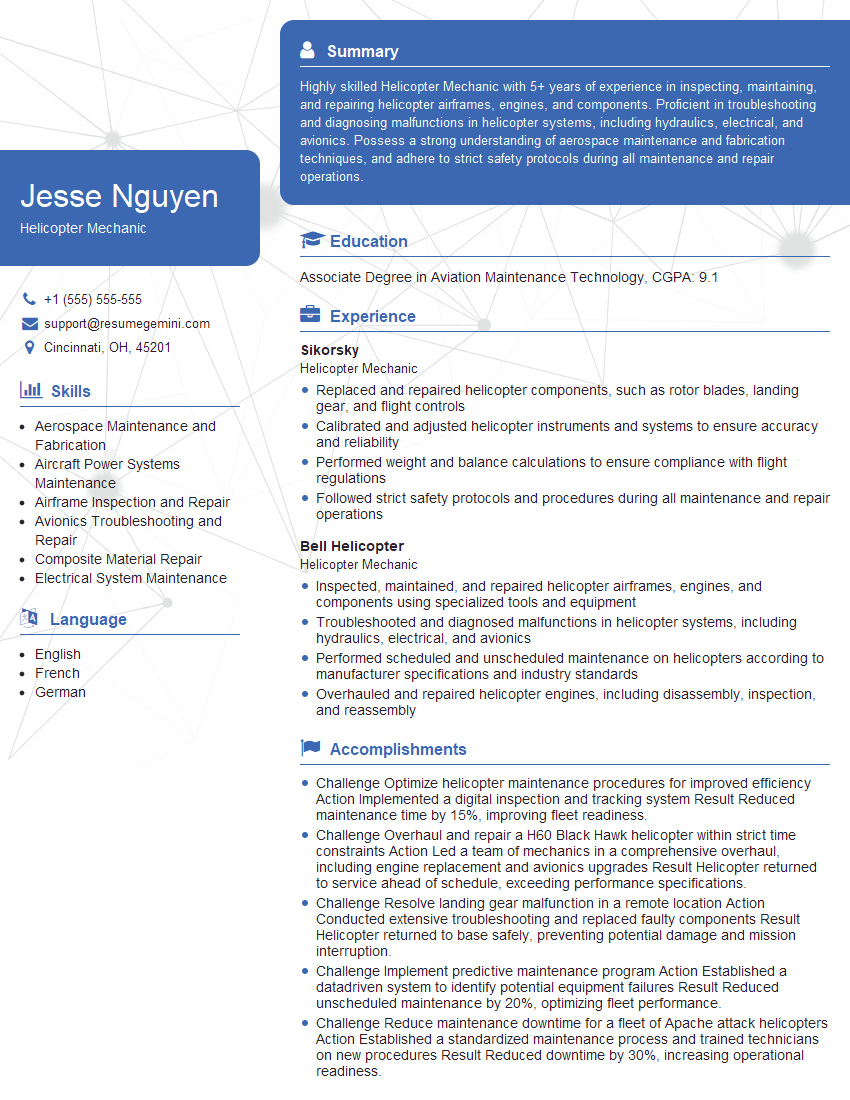
Mastering Helicopter Maintenance Management is crucial for career advancement in the aviation industry, opening doors to leadership roles and increased earning potential. A well-crafted, ATS-friendly resume is key to showcasing your skills and experience to potential employers. To significantly boost your job prospects, we strongly recommend using ResumeGemini to create a professional and impactful resume. ResumeGemini provides tools and resources to help you build a winning resume, and we offer examples of resumes tailored specifically to Helicopter Maintenance Management positions to help you get started.


Explore more articles
Users Rating of Our Blogs
Share Your Experience
We value your feedback! Please rate our content and share your thoughts (optional).
What Readers Say About Our Blog
Very informative content, great job.
good