Feeling uncertain about what to expect in your upcoming interview? We’ve got you covered! This blog highlights the most important Helicopter Maintenance Safety interview questions and provides actionable advice to help you stand out as the ideal candidate. Let’s pave the way for your success.
Questions Asked in Helicopter Maintenance Safety Interview
Q 1. Describe the importance of regular helicopter maintenance inspections.
Regular helicopter maintenance inspections are paramount to ensuring flight safety and operational reliability. Think of it like a regular health check-up for a human; preventative maintenance prevents small problems from escalating into major, costly, and potentially life-threatening failures. These inspections identify potential issues before they become critical, reducing the risk of in-flight malfunctions and accidents. They also extend the lifespan of the helicopter by catching wear and tear before it leads to component failure.
The frequency and depth of inspections vary according to the type of helicopter, its operational hours, and regulatory requirements. However, a comprehensive approach always includes visual inspections, functional tests, and often non-destructive testing methods.
Q 2. Explain the process of conducting a pre-flight inspection on a helicopter.
A pre-flight inspection is a crucial safety check conducted before every helicopter flight. It’s a systematic visual and functional check of critical components and systems. Imagine it as a pilot’s final checklist before embarking on a journey. The process typically involves:
- Walkaround Inspection: A thorough visual examination of the exterior, checking for damage to the airframe, rotor blades, landing gear, and other external components. This includes looking for cracks, corrosion, loose parts, and any signs of fluid leaks.
- Cockpit Check: Verification of all instruments, controls, and communication systems. This ensures that all gauges are functioning correctly and that there are no malfunctions in the avionics suite.
- Engine Check: Checking engine oil levels, looking for any leaks or unusual signs of wear and tear. A pre-flight check may also involve checking fuel levels and ensuring that all fuel system components are in good working order.
- Rotor System Check: Verification that the main and tail rotor blades are securely fastened and are free from damage. A blade imbalance could be disastrous during flight.
- Hydraulic System Check: Checking fluid levels and looking for leaks in the hydraulic system, responsible for essential functions like controlling the flight controls.
Documentation of the inspection is essential and forms part of the flight log. Any issues found must be addressed before flight.
Q 3. What are the common causes of helicopter accidents related to maintenance?
Many helicopter accidents stem from inadequate or negligent maintenance. Common causes include:
- Component Failure: Failure to detect or address minor issues during routine inspections can lead to catastrophic component failure during flight, such as engine failure or main rotor failure. For example, a small crack in a rotor blade that’s not repaired can grow and lead to catastrophic failure.
- Improper Repairs: Inadequate repair techniques or the use of substandard parts can compromise the structural integrity of the helicopter and lead to accidents. Improperly tightened bolts or incorrect part installation are significant risks.
- Lack of Preventive Maintenance: Neglecting routine maintenance and inspections can lead to a gradual deterioration of the helicopter’s systems, increasing the likelihood of failure. Regularly scheduled lubrication is a key element of this.
- Human Error: Errors during maintenance procedures, such as incorrect assembly or misinterpretation of technical publications, can have severe consequences. Poorly trained technicians may misdiagnose a problem or perform a repair incorrectly.
- Corrosion: Corrosion, particularly in high-humidity environments, can severely weaken airframe components, leading to structural failures. This is why regular corrosion checks are so critical.
These are just some examples. A meticulous approach to maintenance is fundamental to mitigating these risks.
Q 4. How do you identify and address potential maintenance-related hazards?
Identifying and addressing potential maintenance-related hazards involves a multi-faceted approach.
- Risk Assessments: Conducting thorough risk assessments to identify potential hazards associated with specific maintenance tasks. This includes evaluating the likelihood and severity of potential accidents or incidents.
- Safety Procedures: Implementing robust safety procedures and protocols to minimize the risk of human error during maintenance. This can include checklists, lock-out/tag-out procedures, and detailed work instructions.
- Training and Competency: Ensuring that all maintenance personnel are properly trained and competent to perform their duties. Regular training updates and competency assessments are vital.
- Quality Control: Establishing rigorous quality control procedures to ensure that maintenance tasks are performed correctly and to the required standards. This includes inspections and audits of maintenance work.
- Continuous Improvement: Continuously reviewing maintenance processes and procedures to identify areas for improvement and to implement preventive measures based on lessons learned from incidents or near misses.
For instance, if a specific repair task has a high risk of injury, additional safety measures, such as specialized equipment or extra personnel, should be implemented to minimize the danger.
Q 5. Describe your experience with helicopter maintenance documentation and record-keeping.
My experience with helicopter maintenance documentation and record-keeping is extensive. I’ve been involved in implementing and managing maintenance tracking systems for several years. Accurate and complete record-keeping is non-negotiable. It’s the backbone of maintaining a helicopter’s airworthiness and legal compliance. This includes:
- Maintenance Logs: Maintaining detailed and accurate logs of all maintenance activities, including inspections, repairs, and component replacements.
- Component Tracking: Tracking the lifespan and maintenance history of each component, allowing for efficient planning of replacements.
- Airworthiness Directives: Ensuring compliance with all applicable Airworthiness Directives (ADs) issued by regulatory authorities.
- Technical Records: Maintaining accurate records of all technical publications and manuals.
- Digitalization of Records: I’ve also been involved in the transition to digital maintenance records management systems, which enhances accessibility, search capabilities, and reporting features.
The reliability of these records is critical, not only for operational safety but also for regulatory compliance and insurance purposes.
Q 6. Explain the different types of helicopter maintenance checks (A, B, C checks).
Helicopter maintenance checks are categorized into different levels, typically A, B, and C checks, with increasing complexity and scope. Think of them as different levels of medical check-ups: A check is a quick check-up, B a more thorough examination, and C a comprehensive review.
- A-Checks: These are the most frequent and basic inspections, focusing on visual checks, functional tests, and operational checks of critical systems. They are often performed after each flight or a specified number of flight hours.
- B-Checks: More comprehensive than A-checks, B-checks involve a more in-depth examination of various systems and components. They often include detailed inspections of specific components and functional tests of major systems. The frequency of B-checks is generally less frequent than A-checks.
- C-Checks: These are major overhaul checks, requiring the helicopter to be extensively disassembled and inspected for wear, tear, and potential failures. They are the most comprehensive and require specialized tools, equipment, and skilled technicians. C-checks are conducted at longer intervals.
The specific tasks performed during each check vary depending on the helicopter type and manufacturer’s maintenance manual.
Q 7. What are your experiences with using helicopter maintenance manuals and technical publications?
Helicopter maintenance manuals and technical publications are essential tools for maintaining aircraft airworthiness and safety. They serve as the definitive source of information on the helicopter’s design, specifications, maintenance procedures, and troubleshooting guidelines. Imagine them as the instruction manuals for a highly complex machine.
My experience includes extensively using these publications for various maintenance tasks, including troubleshooting problems, interpreting maintenance procedures, and understanding specific component designs. I am proficient in navigating these manuals to find specific information quickly and efficiently. The ability to correctly interpret these manuals is vital for safe and compliant maintenance practices.
I’m also familiar with various forms of technical publications, including Illustrated Parts Catalogs (IPCs), Service Bulletins, and Airworthiness Directives (ADs), each providing a unique type of information vital for the correct maintenance execution.
Q 8. How familiar are you with FAA or EASA regulations pertaining to helicopter maintenance?
I possess extensive familiarity with both FAA and EASA regulations concerning helicopter maintenance. My understanding encompasses Part 43 for the FAA and Part-M for EASA, including their respective maintenance manuals, airworthiness directives (ADs), and continuing airworthiness management (CAM) requirements. I’m well-versed in the documentation requirements, the regulations regarding maintenance tracking, and the specific requirements for different helicopter types and their components. For instance, I understand the detailed inspection procedures for critical components like main and tail rotor gearboxes, engines, and flight controls, ensuring compliance with the relevant regulations. I’ve personally handled numerous instances where regulatory compliance was critical to ensuring safe and legal operation. One example was working on a helicopter requiring an AD; I meticulously followed the prescribed procedures, documenting every step and ensuring complete compliance before returning the aircraft to service.
Q 9. Describe your troubleshooting skills related to helicopter mechanical or electrical systems.
My troubleshooting skills in helicopter mechanical and electrical systems are built on a foundation of systematic problem-solving. I approach issues using a structured methodology, starting with a thorough visual inspection, followed by the use of diagnostic tools and relevant technical publications. For example, if a helicopter experiences a loss of power, I’d systematically check fuel flow, engine instrumentation, and ignition systems. If an electrical fault occurs, I would utilize multimeters and circuit diagrams to isolate the problem, possibly employing logic probes to trace signals and identify faulty components. I’ve successfully resolved many complex issues, including a hydraulic leak that I traced to a faulty seal by carefully analyzing fluid loss patterns and using specialized dye penetrant inspection, and an intermittent electrical fault that turned out to be a corroded connector in a hard-to-reach area. My approach is always prioritizes safety, ensuring that I don’t inadvertently cause further damage during the troubleshooting process.
Q 10. How do you handle discrepancies found during a helicopter maintenance inspection?
Discrepancies found during a helicopter maintenance inspection are handled with a strict adherence to safety protocols and regulatory compliance. The first step involves accurately documenting each discrepancy, including its location, nature, and severity using standardized forms and digital maintenance tracking systems. Then, I assess the discrepancy’s impact on airworthiness, determining whether it constitutes a major or minor defect. For major discrepancies, immediate corrective action is necessary; it might include temporarily grounding the helicopter until the problem is resolved. For minor discrepancies, I may decide to defer corrective action if it poses no immediate safety risk, but this decision is carefully documented with a clear justification and a planned schedule for correction. I’ve frequently encountered discrepancies ranging from loose fasteners to more complex issues like cracks in components. Each is handled methodically, ensuring that the aircraft is safe and legal to operate. Each case is documented following strict company procedures, and the work is always performed adhering to all applicable regulations and best practices.
Q 11. What is your experience with Non-Destructive Testing (NDT) methods in helicopter maintenance?
I have considerable experience with Non-Destructive Testing (NDT) methods in helicopter maintenance, including dye penetrant inspection, magnetic particle inspection, ultrasonic testing, and eddy current testing. I am certified in several NDT methods and proficient in interpreting the results. For example, I use dye penetrant inspection to detect surface cracks in critical components, magnetic particle inspection to find subsurface flaws in ferrous metals, and ultrasonic testing to evaluate the thickness and integrity of various parts. Eddy current testing is employed to detect corrosion and other defects in conductive materials. During a recent inspection, I used ultrasonic testing to identify hidden fatigue cracks in a main rotor hub, preventing a potentially catastrophic failure. The accuracy and reliability of NDT methods are paramount in ensuring the airworthiness of helicopters. I strictly adhere to industry standards and best practices in performing NDT tests.
Q 12. Explain the importance of proper torque procedures during helicopter maintenance.
Proper torque procedures are absolutely critical in helicopter maintenance. Applying incorrect torque can lead to component failure, potentially resulting in catastrophic consequences. This is because many helicopter components require precise tightening to ensure proper function and prevent loosening in flight. I always use calibrated torque wrenches to ensure that fasteners are tightened to the manufacturer’s specifications. Torque values are critical for many applications, like engine mounts, rotor components, and landing gear assemblies. The use of correct torque wrenches and adherence to specified torque values is non-negotiable in my work, because failure to do so is a serious safety concern. I am meticulous in recording all torque values as evidence of correct maintenance procedures. Failure to use proper torque values can result in a compromised assembly with potentially dangerous consequences, and therefore, is never overlooked.
Q 13. Describe your experience with corrosion control and prevention in helicopters.
Corrosion control and prevention are fundamental to maintaining the structural integrity and airworthiness of helicopters. My experience includes applying corrosion preventative coatings, performing regular inspections for corrosion, and implementing remediation procedures. Helicopters operate in diverse and often harsh environments, making them susceptible to corrosion, especially in coastal areas or high-humidity regions. I utilize various methods for corrosion prevention, including applying specialized coatings, cleaning and degreasing components, and implementing regular lubrication schedules. I’ve frequently addressed instances of corrosion, from minor surface rust to more extensive pitting. My strategy always includes carefully documenting all instances of corrosion and the subsequent corrective actions, so the issues can be tracked and addressed proactively to prevent future issues.
Q 14. How do you ensure compliance with maintenance schedules and regulatory requirements?
Compliance with maintenance schedules and regulatory requirements is achieved through a combination of meticulous record-keeping, proactive scheduling, and adherence to industry best practices. I use computerized maintenance management systems (CMMS) to track maintenance tasks, ensuring that inspections and repairs are performed on time. The CMMS enables me to generate reports for compliance audits and track the history of all maintenance events. I’m intimately familiar with the maintenance tracking requirements of both FAA and EASA, always ensuring that all work is documented accurately and completely. I frequently cross-reference maintenance schedules with relevant ADs and other regulatory documents, ensuring that all necessary actions are taken in a timely manner. Proactive maintenance planning is key to minimizing unscheduled downtime and ensuring the continued airworthiness of the helicopters under my care.
Q 15. How do you manage and prioritize multiple maintenance tasks simultaneously?
Managing multiple maintenance tasks in helicopter maintenance requires a structured approach. I utilize a task management system, often a combination of digital tools and physical checklists, prioritizing tasks based on urgency and criticality. This involves considering factors like flight safety, airworthiness directives (ADs), scheduled maintenance, and unscheduled repairs.
For example, an AD requiring immediate attention will always supersede a routine inspection. I employ methods like the Critical Path Method (CPM) to visualize dependencies between tasks and optimize the workflow. This means identifying tasks that must be completed before others can begin and scheduling them accordingly. I also regularly review the schedule, making adjustments as needed, and communicate any delays or changes to the team proactively. Think of it like a conductor leading an orchestra – each musician (maintenance task) has a part to play, and the conductor (me) ensures harmony and timely completion.
- Urgency: Immediate safety concerns always take precedence.
- Criticality: Tasks impacting flight safety are prioritized over those affecting comfort or minor functionality.
- Dependencies: Some tasks must be finished before others can start.
- Resources: Availability of parts, tools, and personnel are factored in.
Career Expert Tips:
- Ace those interviews! Prepare effectively by reviewing the Top 50 Most Common Interview Questions on ResumeGemini.
- Navigate your job search with confidence! Explore a wide range of Career Tips on ResumeGemini. Learn about common challenges and recommendations to overcome them.
- Craft the perfect resume! Master the Art of Resume Writing with ResumeGemini’s guide. Showcase your unique qualifications and achievements effectively.
- Don’t miss out on holiday savings! Build your dream resume with ResumeGemini’s ATS optimized templates.
Q 16. Describe your understanding of helicopter weight and balance calculations.
Helicopter weight and balance calculations are critical for safe flight. They ensure the aircraft’s center of gravity remains within acceptable limits throughout the flight. Incorrect calculations can lead to handling difficulties, reduced performance, or even catastrophic accidents.
The process involves meticulously calculating the weight of the helicopter’s empty weight, payload (passengers, cargo), fuel, and any additional equipment. These weights are then input into a weight and balance computer program or calculation sheet, which determines the aircraft’s center of gravity (CG) location. This location is then compared against the manufacturer’s specified limits to ensure it falls within the safe operating range. Any deviation requires adjustments, possibly involving shifting cargo or fuel to bring the CG back within the limits. I have extensive experience using both digital and manual calculation methods and thoroughly document every step of the process to ensure traceability and accountability.
For instance, if we add a heavy component, like a specialized piece of equipment, a recalculation is essential to ensure the center of gravity doesn’t shift beyond safe parameters. Failure to do so could lead to unstable flight characteristics and risk an accident.
Q 17. How do you work effectively as part of a helicopter maintenance team?
Effective teamwork is essential in helicopter maintenance. Open communication, mutual respect, and a shared commitment to safety are paramount. I actively contribute to a collaborative environment by sharing information, actively listening to colleagues’ input, and offering assistance where needed.
During maintenance operations, I regularly communicate progress, challenges, and potential safety hazards to the team. I participate in pre-job briefings to coordinate tasks, ensure everyone understands their roles, and to identify potential risks. Post-job briefings allow us to share lessons learned and improve future procedures. I am also proactive in identifying and resolving conflicts before they escalate. Think of it as a sports team – we each have a crucial role, and clear communication and collaboration ensures the success of the mission (safe and efficient maintenance).
Q 18. Explain the safety procedures you follow when working on a helicopter.
Safety is paramount in helicopter maintenance. Before commencing any task, I always ensure the helicopter is properly secured, using wheel chocks and ensuring the rotor blades are secured. Lockout/Tagout (LOTO) procedures are religiously followed on all systems being worked on, preventing accidental energization. I meticulously follow the manufacturer’s maintenance manual and any relevant Airworthiness Directives (ADs). I wear appropriate personal protective equipment (PPE), including safety glasses, gloves, hearing protection, and sometimes even a respirator, depending on the task.
Furthermore, I conduct thorough pre-task inspections to identify potential hazards and ensure I have the necessary tools and equipment. If a situation feels unsafe at any point, I immediately halt the work and communicate my concern to my supervisor or team. A thorough understanding of the helicopter’s systems and procedures is vital to safely conduct maintenance. For example, before entering the main rotor area, I always double-check the blade securing mechanisms to ensure they are properly engaged. This proactive approach ensures everyone’s safety and minimizes risk.
Q 19. Describe your experience with helicopter engine maintenance.
My experience in helicopter engine maintenance includes a wide range of tasks, from routine inspections and oil changes to complex repairs and overhauls. I’m proficient in troubleshooting engine malfunctions, using diagnostic tools to pinpoint the source of problems and implementing appropriate corrective actions. This includes understanding various engine systems, such as fuel injection, lubrication, and ignition.
I have hands-on experience working on various engine types, including both turbine and piston engines, and I’m familiar with their specific maintenance requirements. I adhere strictly to the manufacturer’s specifications and guidelines for engine maintenance, ensuring that every procedure is carried out accurately and safely. For instance, I’ve performed borescope inspections to assess the internal condition of turbine engines and have carried out detailed inspections on the components of piston engines after engine removal for overhaul.
Q 20. What are your skills in using diagnostic tools and equipment for helicopter maintenance?
I am skilled in using a wide range of diagnostic tools and equipment, including engine analyzers, borescopes, vibration analyzers, and specialized test equipment for various helicopter systems. I understand how to interpret data from these tools to diagnose faults and troubleshoot problems.
For example, I use engine analyzers to monitor engine parameters such as temperature, pressure, and fuel flow, identifying anomalies that might indicate a developing problem. I use borescopes to inspect hard-to-reach areas of engines and other systems for damage or wear. My proficiency with these tools allows for efficient fault detection and rapid problem resolution, minimizing downtime and enhancing overall safety. Further, I am adept at using specialized software to interpret data and generate reports.
Q 21. How do you identify and report unsafe conditions or practices in a helicopter maintenance environment?
Identifying and reporting unsafe conditions or practices is a crucial aspect of my role. I am trained to recognize potential hazards, such as faulty equipment, inadequate safety procedures, or unsafe working conditions. When I identify a potential hazard, I immediately take steps to mitigate the risk, if possible. Then, I report the issue through the established channels using the company’s reporting system. This might involve notifying my supervisor, completing a safety report form, or alerting the relevant authorities, depending on the severity of the issue.
For example, if I notice a crack in a critical component, I’ll immediately report it, ground the aircraft, and take steps to prevent further use of the potentially unsafe part until it can be repaired or replaced. This proactive approach is critical in maintaining a safe working environment and preventing accidents. Proactive identification and reporting of unsafe conditions are paramount, and I firmly believe in the power of a safety-conscious culture within the maintenance team.
Q 22. What is your experience with hydraulic systems maintenance on helicopters?
My experience with helicopter hydraulic system maintenance is extensive, encompassing both scheduled maintenance and troubleshooting. Hydraulic systems are critical for flight controls, landing gear, and other essential functions. My work involves meticulous inspections for leaks, wear, and tear on components like pumps, actuators, and lines. I’m proficient in using specialized tools for pressure testing, fluid sampling, and component replacement. For instance, I once diagnosed a subtle leak in a swashplate actuator on an AS350, using a fluorescent dye to pinpoint the source and ultimately preventing a potential catastrophic failure. I’m also experienced in performing preventative maintenance tasks such as flushing and filter changes, adhering strictly to manufacturer’s guidelines and maintaining detailed logbooks.
- Regular inspection of hydraulic lines for leaks and wear.
- Testing system pressure and flow rates using specialized equipment.
- Troubleshooting system malfunctions by analyzing system pressures and flow.
- Replacing faulty components, such as pumps, actuators, and valves.
- Performing preventative maintenance tasks, such as flushing the system and changing filters.
Q 23. How do you handle emergency situations during helicopter maintenance?
Handling emergencies during helicopter maintenance requires a calm and methodical approach. My priority is always safety. The first step is to immediately secure the area, ensuring no one is at risk. This often involves isolating power and preventing unauthorized access. Then, I assess the situation, determining the nature of the emergency and its potential impact on safety. I immediately report the incident to the appropriate supervisor and follow established emergency procedures. This may involve contacting emergency services if necessary. For instance, if I discovered a significant fuel leak during maintenance, I would immediately shut down all power sources, evacuate the area, and contact the fire department. Clear communication is crucial in emergency situations; I ensure all relevant personnel are aware of the situation and the steps being taken. Post-incident, a thorough investigation is conducted to determine the root cause and prevent future occurrences. Documentation is critical in this process.
Q 24. Explain your understanding of helicopter flight control systems maintenance.
Helicopter flight control systems are incredibly complex and safety-critical. My understanding encompasses the entire system, from the pilot’s controls to the actuators and linkages that move the rotor blades and other control surfaces. I’m experienced in maintaining both mechanical and electro-hydraulic systems. This includes inspecting linkages for play or damage, checking servo-actuator functionality, calibrating sensors, and diagnosing electrical faults using specialized diagnostic equipment. Troubleshooting these systems often involves a systematic approach, carefully checking each component and tracing the signal flow to pinpoint the problem. For example, I once resolved an issue with inconsistent cyclic control by identifying a faulty potentiometer in the control stick. Regular preventative maintenance is paramount, involving thorough inspections, lubrication, and careful checks of all connections and wiring.
Q 25. What is your experience with rotor system maintenance and inspection?
Rotor system maintenance and inspection is arguably the most critical aspect of helicopter maintenance, given its direct impact on flight safety. My experience includes detailed inspections of the main and tail rotor blades, hubs, and related components. This involves checking for cracks, corrosion, wear, and damage to the airfoils and structural components. I’m familiar with various Non-Destructive Testing (NDT) methods, such as visual inspection, dye penetrant testing, and ultrasonic testing, to detect hidden flaws. Balancing the rotor system is a crucial aspect of my work, ensuring smooth and vibration-free operation. I’ve worked on various rotor systems, from simple teetering systems to more complex articulated and hingeless rotors. For instance, during a recent inspection, I discovered a small crack in a main rotor blade using dye penetrant testing, which was promptly repaired to avoid a potentially catastrophic failure.
Q 26. Describe your understanding of helicopter transmission maintenance.
Helicopter transmissions are high-stress components that require meticulous maintenance. My understanding encompasses both the main and tail rotor transmissions, including gearboxes, bearings, and lubrication systems. Maintenance includes regular oil changes, filter replacements, and careful inspections for wear, leaks, and damage to gears and bearings. I’m experienced in performing vibration analysis to detect early signs of gear wear or misalignment. Specialized tools and procedures are necessary for dismantling, inspecting, and reassembling these complex units. Troubleshooting transmission issues can be challenging and often requires specialized knowledge and diagnostic equipment. A thorough understanding of lubrication systems is vital, including the selection of appropriate lubricants and ensuring proper lubrication levels. For example, I once used vibration analysis to identify a slight imbalance in the main gearbox of a Bell 206, which was corrected before it could lead to a major failure.
Q 27. How do you ensure the proper disposal of hazardous materials in helicopter maintenance?
Proper disposal of hazardous materials is paramount in helicopter maintenance. We strictly adhere to all relevant environmental regulations and utilize licensed waste disposal companies. Hazardous materials commonly encountered include used oils, hydraulic fluids, solvents, and batteries. Each material has specific disposal requirements, which we carefully follow. This includes proper labeling, containment, and transportation to ensure safety and environmental compliance. We maintain detailed records of all hazardous waste generated, including the type, quantity, and disposal method. Regular training on proper handling and disposal procedures is mandatory for all maintenance personnel. Our facility also has designated areas for the storage of hazardous materials to prevent accidental spills or exposure. This responsible approach ensures safety and protects the environment.
Q 28. What are your skills in using computerized maintenance management systems (CMMS)?
I’m proficient in using various computerized maintenance management systems (CMMS). My experience includes using software to schedule maintenance tasks, track parts inventory, manage work orders, and generate reports. This has significantly improved our efficiency and helped us maintain a comprehensive record of maintenance activities. I’m familiar with data entry, report generation, and troubleshooting software issues. I’m capable of creating customized reports to monitor key performance indicators (KPIs), such as maintenance costs and aircraft downtime. For instance, I use the CMMS to track the maintenance history of each aircraft, making it easier to schedule inspections and preventative maintenance based on flight hours or calendar time. This allows for better resource allocation and proactive maintenance, thereby minimizing downtime and improving safety.
Key Topics to Learn for Helicopter Maintenance Safety Interview
- Regulatory Compliance: Understanding and applying relevant FAA (or equivalent international) regulations and maintenance manuals specific to helicopter operations. This includes understanding airworthiness directives and their impact on maintenance schedules.
- Risk Management & Hazard Identification: Practical application of risk assessment methodologies (e.g., HAZOP, FMEA) to identify potential hazards during maintenance procedures and implementing appropriate mitigation strategies. Consider examples from your experience.
- Maintenance Procedures & Documentation: Thorough understanding of proper maintenance procedures, including detailed inspection techniques, troubleshooting methodologies, and accurate record-keeping. Be prepared to discuss specific maintenance tasks and the documentation required.
- Human Factors in Maintenance: Analyzing the role of human error in maintenance incidents, and discussing strategies to minimize risks associated with fatigue, stress, and communication breakdowns within the maintenance team.
- Safety Equipment & Procedures: Detailed knowledge of the use and maintenance of safety equipment (e.g., lockout/tagout procedures, personal protective equipment). Be ready to discuss practical applications and troubleshooting issues.
- Corrosion Control & Prevention: Understanding the causes and consequences of corrosion in helicopter components, and outlining preventative measures and inspection techniques. Prepare examples of corrosion control practices you’ve utilized.
- Emergency Procedures: Knowledge of emergency response procedures in the event of a maintenance-related incident, including reporting protocols and safety protocols.
- Materials and Processes: Understanding the properties of various materials used in helicopter construction and their impact on maintenance procedures and safety. Consider composites, alloys, etc.
Next Steps
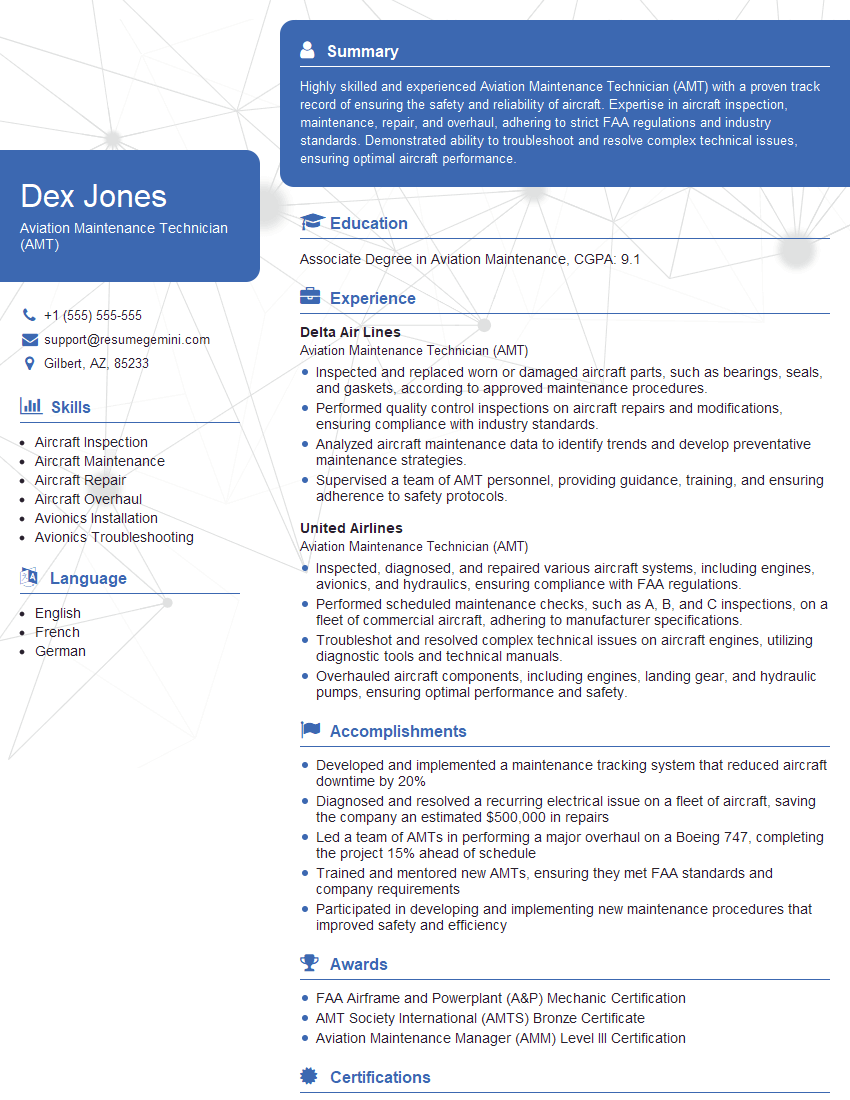
Mastering Helicopter Maintenance Safety is crucial for a successful and fulfilling career in aviation. It demonstrates your commitment to safety and your ability to contribute to a safe and efficient operation. To significantly improve your job prospects, it’s essential to create an ATS-friendly resume that highlights your skills and experience effectively. ResumeGemini is a trusted resource that can help you build a professional and impactful resume tailored to the aviation industry. Examples of resumes specifically tailored to Helicopter Maintenance Safety are available to guide you through this process. Invest the time to create a strong application—it’s an investment in your future.
Explore more articles
Users Rating of Our Blogs
Share Your Experience
We value your feedback! Please rate our content and share your thoughts (optional).
What Readers Say About Our Blog
Very informative content, great job.
good