Interviews are opportunities to demonstrate your expertise, and this guide is here to help you shine. Explore the essential High-Reach Equipment Operation interview questions that employers frequently ask, paired with strategies for crafting responses that set you apart from the competition.
Questions Asked in High-Reach Equipment Operation Interview
Q 1. Describe your experience operating different types of high-reach equipment.
My experience encompasses a wide range of high-reach equipment, including tower cranes, mobile cranes (both crawler and wheeled), and articulated boom lifts. I’ve operated these machines in diverse settings, from large-scale construction projects like skyscrapers and bridges to smaller industrial applications such as warehouse construction and wind turbine maintenance. For example, on a recent skyscraper project, I was responsible for lifting and positioning prefabricated concrete sections weighing upwards of 20 tons using a Liebherr tower crane. In a different project, I utilized a rough-terrain crane to lift and set heavy HVAC units onto a high-rise building rooftop. Each machine demands a unique set of skills and operational knowledge, and my experience has allowed me to adapt and excel in varied situations.
Q 2. Explain the pre-operational checks you perform before operating a crane.
Pre-operational checks are crucial for safety and efficient crane operation. My checklist is rigorous and follows industry best practices. It includes:
- Visual Inspection: Thorough examination of the crane’s structure for any signs of damage, wear, or leaks (hydraulic, fuel). I check cables, sheaves, hooks, and the entire boom structure carefully.
- Mechanical Check: Testing all movement mechanisms (hoisting, slewing, luffing), ensuring smooth and responsive operation without unusual noises or vibrations. I also verify the proper function of all safety devices such as brakes and limit switches.
- Hydraulic System Check: Checking fluid levels and pressure, looking for leaks or unusual noises in the hydraulic system. I inspect hoses and connections for wear and tear.
- Electrical System Check: Checking the functionality of the control panel, lights, and emergency stop systems. I ensure proper ground connections for electrical safety.
- Load Chart Review: Confirming the crane’s capacity and checking that the load chart for the specific configuration is readily available and understood.
- Work Area Assessment: Inspecting the work area for obstructions, overhead power lines, underground utilities, and safe load-handling space.
Only after completing all these checks and ensuring everything is functioning correctly do I proceed with the operation. It’s a systematic approach that prioritizes safety above all else.
Q 3. What are the different types of crane hooks and their applications?
Crane hooks are critical components, and different types are designed for specific applications. Common hook types include:
- Standard Hook: The most common type, suitable for general lifting. It has a simple design and is relatively inexpensive.
- Clevis Hook: Features a clevis pin for easy attachment and detachment of slings or chains. This provides a safer and faster rigging process.
- Grab Hooks: Designed to securely grab and lift irregular or unusually shaped objects. They offer a strong grip and are essential for handling materials with uneven surfaces.
- Alloy Steel Hooks: Made from high-strength alloy steel for lifting heavier loads. Their superior strength makes them suitable for demanding applications.
The choice of hook depends on the load’s characteristics, weight, and shape, and the overall lifting plan. For example, a grab hook would be ideal for lifting large bundles of steel rebar, while a clevis hook would be preferred for attaching a chain sling to lift a prefabricated concrete panel.
Q 4. How do you calculate the safe working load of a crane?
Calculating the safe working load (SWL) of a crane isn’t a simple calculation; it’s a complex process that involves multiple factors. It’s never a matter of simply looking at the crane’s maximum capacity. You need to consult the crane’s load chart, which provides SWL ratings for various boom lengths, angles, and radii. The chart accounts for the crane’s structural integrity and stability under different loading conditions. For example, the SWL will be significantly reduced as the boom is extended further or the angle is increased. Furthermore, environmental factors like wind speed can further reduce the SWL, as excessive wind creates destabilizing forces. Therefore, I always ensure I am well-versed in utilizing the load chart correctly and applying any relevant derating factors provided based on the specific conditions of the lift.
Q 5. Describe your experience with load charts and weight calculations.
My experience with load charts is extensive. I’m proficient in interpreting load charts to determine the safe working load for various crane configurations and load conditions. I’m also skilled in weight calculations, considering not only the weight of the load itself but also the weight of any lifting accessories like slings, shackles, and other rigging gear. For instance, when lifting a large piece of equipment, I meticulously calculate the weight of the equipment, the weight of the lifting sling, and any additional attachments and then refer to the load chart to determine the safest and most efficient configuration to execute the lift. This is often done using specialized software for complex lifts and to create lift plans. Any discrepancies between calculated weight and the load chart’s limits would require adjusting the lift plan or choosing a different crane altogether.
Q 6. Explain the procedures for rigging and unrigging loads.
Rigging and unrigging procedures are critical for preventing accidents. Rigging involves attaching the load to the crane hook, while unrigging is the reverse. My rigging procedures include:
- Proper Sling Selection: Choosing the correct type and size of slings (chains, wire ropes, or synthetic webbing) based on the load’s weight, shape, and material.
- Secure Attachment: Ensuring the slings are properly attached to both the load and the hook, using appropriate securing devices like shackles, and ensuring that the sling angles are within acceptable limits to minimize stress and maximize safety.
- Load Distribution: Distributing the load evenly across all slings to prevent over-stressing any single sling.
- Visual Inspection: Carefully inspecting all rigging gear for wear, damage, or defects before and after each lift.
Unrigging follows a similar careful and methodical approach, ensuring that the load is lowered and detached safely and securely. Every step is performed with precision and attention to detail; safety is paramount throughout the entire process.
Q 7. How do you handle unexpected situations or emergencies during operation?
Handling unexpected situations requires quick thinking and decisive action. My training emphasizes emergency response procedures. Examples include:
- Equipment Malfunction: If the crane malfunctions, I immediately shut down the machine and initiate the emergency shutdown procedures. I would then contact maintenance personnel and report the incident.
- Load Shift: If the load starts to shift during the lift, my immediate response is to carefully lower the load using the emergency stops and then reassess the situation, adjusting rigging as necessary and determining the best course of action to complete the lift safely.
- Weather Changes: If the weather suddenly deteriorates (strong winds, heavy rain), I immediately halt operations and secure the crane according to emergency procedures. I would wait until the weather is deemed safe before resuming the lift.
Clear communication is key; I always keep my supervisor informed of any issues or concerns, particularly in emergency situations. My primary focus is always on the safety of myself, my colleagues, and the surrounding environment.
Q 8. What are the common causes of crane accidents and how can they be prevented?
Crane accidents, unfortunately, are too common. They stem from a variety of factors, often stemming from a breakdown in safety procedures. Let’s look at some key causes and prevention strategies.
- Human Error: This is the biggest culprit – improper rigging, inadequate training, ignoring safety protocols, operating under duress, and poor communication. Prevention: Rigorous training programs, pre-job safety briefings, enforcing strict adherence to safety rules, and promoting a strong safety culture are vital.
- Mechanical Failure: Malfunctioning equipment, inadequate maintenance, and insufficient inspections can lead to catastrophic failures. Prevention: Regular and thorough inspections, proactive maintenance schedules, and using certified technicians for repairs are crucial. Think of it like regular checkups for a car – essential to prevent breakdowns.
- Environmental Factors: Wind, rain, or unstable ground conditions can impact stability and safety. Prevention: Thorough site assessments before operation, incorporating weather forecasts, and employing appropriate countermeasures (like ground stabilization) are necessary.
- Inadequate Planning: Insufficient load calculations, poorly planned lifting operations, and lack of communication among the team are recipe for disaster. Prevention: Detailed lift plans, proper load calculations, clear communication channels, and regular communication checkpoints are paramount.
For instance, I once witnessed a near-miss where an improperly secured load shifted during lifting, due to inadequate planning. Thankfully, the safety protocols in place, combined with swift action by the rigger, prevented a serious accident.
Q 9. Explain your understanding of different types of crane movements (e.g., swinging, luffing).
Crane movements are diverse and precise, requiring a good understanding of terminology and safe operating procedures. Here are some key movements:
- Swinging: Rotation of the crane’s boom horizontally, allowing the load to be moved laterally. Think of it like a pendulum, controlled by the operator.
- Luffing: Changing the length of the boom, typically done by adjusting the length of the hoisting rope. This raises or lowers the boom’s tip and modifies the load’s height.
- Hoisting: Vertically lifting or lowering the load using the crane’s hoist mechanism. This is a fundamental movement in almost every crane operation.
- Traveling (for mobile cranes): Movement of the entire crane, including the boom and load. Careful planning of the path is critical, considering ground conditions and obstacles.
- Derricking: Changing the boom’s angle relative to the base, which affects its lifting capacity and reach.
Understanding these movements and their interrelation is vital for safe and efficient operation. For example, swinging a heavy load at maximum reach requires caution, as the load’s momentum can easily cause instability.
Q 10. Describe your experience with different types of load securing devices.
Securing loads is paramount to prevent accidents. I’ve extensive experience with various load securing devices, including:
- Chains: Durable and versatile, requiring proper attachment and tensioning. Critical to check for wear and tear.
- Wire Ropes: High strength-to-weight ratio, but susceptible to damage if not handled carefully. Regular inspection for fraying or kinking is essential.
- Synthetic Webbing Slings: Lightweight and easy to handle, but prone to damage from abrasion and sharp edges. Require careful selection based on load and environmental conditions.
- Clamps and Hooks: Critical to ensure proper engagement and locking mechanisms. Regular inspections are vital to prevent accidental disengagement.
Each device requires careful selection based on the load’s characteristics, weight, shape, and environmental conditions. A critical aspect is always ensuring proper tensioning and securing, preventing slippage or movement during hoisting and transit. In one instance, I correctly identified the need for additional chain slings to improve load distribution and prevented a load from shifting during a challenging lift.
Q 11. How do you ensure the safety of yourself and others during high-reach equipment operation?
Safety is paramount, both for myself and everyone on site. I always adhere to a multi-layered approach:
- Pre-Operation Checklists: Thorough inspection of the crane, rigging equipment, and the work area. This is my first step, always.
- Personal Protective Equipment (PPE): Always wearing appropriate PPE, including hard hats, safety glasses, high-visibility clothing, and safety harnesses. This is non-negotiable.
- Communication Protocols: Clear communication with riggers and signal persons using standardized hand signals and verbal communication. Miscommunication is a leading cause of accidents.
- Awareness of Surroundings: Maintaining constant awareness of the crane’s movements, load stability, and the presence of personnel and obstacles in the vicinity. Situational awareness is critical.
- Emergency Procedures: Familiarity with and readiness to execute emergency procedures, including crane shutdown and evacuation protocols.
I always approach operation with a mindset of risk assessment and mitigation. For example, I’ve paused lifts several times due to unpredictable wind gusts or unsafe ground conditions, even when it meant minor delays. The safety of everyone involved always comes first.
Q 12. What are the regulations and safety standards you adhere to?
I strictly adhere to all applicable regulations and safety standards, including (but not limited to):
- OSHA (Occupational Safety and Health Administration) standards: For crane operation, rigging, and all aspects of jobsite safety. These are the foundation of my practice.
- ASME (American Society of Mechanical Engineers) standards: For crane design, manufacturing, and inspection. This ensures I work with safe and properly maintained equipment.
- Manufacturer’s specifications: I always consult and follow the manufacturer’s specifications for each crane model, considering its capacity limits and operational parameters.
- Company safety policies: Following the company’s safety policies and procedures, which may include specific site rules and protocols.
Regular training and certifications keep me updated with changes in regulations and best practices. I see compliance not just as a requirement, but as a cornerstone of safe and responsible operation.
Q 13. Explain your understanding of load stability and how to prevent load sway.
Load stability is about preventing load sway and ensuring the load remains secure throughout the lifting operation. Several factors influence this:
- Center of Gravity: Understanding and accounting for the load’s center of gravity is critical for safe lifting. Improperly balanced loads are prone to sway.
- Wind Speed and Direction: Wind can exert significant forces on the load, particularly at height. Strong winds may necessitate postponing the lift until conditions improve.
- Boom Angle and Radius: The boom angle and radius directly affect the crane’s stability and load-carrying capacity. Operating within the crane’s safe working limits is essential.
- Load Weight and Distribution: Ensuring the load is evenly distributed and within the crane’s specified capacity. Overloading the crane is a significant hazard.
To prevent load sway, techniques include:
- Smooth Crane Operations: Avoiding jerky movements, keeping speeds low, and making gradual adjustments.
- Proper Rigging Techniques: Ensuring proper sling angles and load distribution to minimize swing.
- Using Outriggers (for mobile cranes): Extending outriggers for enhanced stability, particularly on uneven ground.
- Anti-Sway Systems: Utilizing anti-sway mechanisms if available on the crane.
For example, I’ve used outriggers extensively on uneven terrains to significantly reduce the risk of crane tip-over and load sway.
Q 14. How do you communicate effectively with riggers and signal persons?
Effective communication is vital for preventing accidents. With riggers and signal persons, I rely on a combination of:
- Standardized Hand Signals: Using clearly defined hand signals, which are universally recognized within the industry. This minimizes ambiguity and ensures everyone is on the same page.
- Verbal Communication: Using clear, concise verbal instructions, especially when hand signals might be obscured or ineffective.
- Two-Way Communication: Ensuring there’s a two-way flow of information, checking for understanding and confirming instructions before proceeding.
- Regular Check-ins: Communicating frequently throughout the lift, especially during critical phases.
In one situation, a slight misinterpretation of a hand signal could have resulted in a costly mistake. However, by using a combination of hand signals and confirming verbally, we were able to avoid any problems and complete the lift safely. Establishing a clear, trusting communication environment is a cornerstone of a safe and successful high-reach equipment operation.
Q 15. Describe your experience with troubleshooting mechanical issues in high-reach equipment.
Troubleshooting mechanical issues in high-reach equipment requires a systematic approach combining practical experience with a deep understanding of the machine’s mechanics. My approach always begins with a thorough safety check, ensuring the area is secure and the machine is properly isolated. I then carefully assess the problem, listening for unusual noises, checking for leaks, and visually inspecting components for damage or wear.
For instance, I once diagnosed a persistent hydraulic leak in a boom lift by meticulously tracing the hydraulic lines, eventually identifying a small crack in a fitting near the boom articulation point. Replacing that fitting resolved the issue. In another case, a faulty pressure sensor on a crane caused erratic boom movement. By using diagnostic tools to check the sensor readings against the expected values, I identified the problem and replaced the faulty sensor. My experience includes working with various diagnostic tools, hydraulic systems, and electrical schematics to pinpoint and resolve issues efficiently and safely.
Career Expert Tips:
- Ace those interviews! Prepare effectively by reviewing the Top 50 Most Common Interview Questions on ResumeGemini.
- Navigate your job search with confidence! Explore a wide range of Career Tips on ResumeGemini. Learn about common challenges and recommendations to overcome them.
- Craft the perfect resume! Master the Art of Resume Writing with ResumeGemini’s guide. Showcase your unique qualifications and achievements effectively.
- Don’t miss out on holiday savings! Build your dream resume with ResumeGemini’s ATS optimized templates.
Q 16. What are the signs of a malfunctioning component in a crane or aerial lift?
Malfunctioning components in high-reach equipment often present themselves through several telltale signs. These can range from subtle indications to outright failures.
- Unusual Noises: Grinding, squealing, or banging sounds usually indicate problems with bearings, gears, or other moving parts.
- Leaks: Hydraulic fluid leaks point to potential issues with hoses, pumps, or seals. Similarly, fuel or oil leaks require immediate attention.
- Erratic Movement: Uncontrolled or jerky movements of the boom, arm, or platform might indicate problems with the hydraulic system, control systems, or sensors.
- Warning Lights or Alarms: Modern equipment is equipped with warning lights and alarms that indicate specific faults. Understanding these signals is crucial for timely intervention.
- Reduced Power or Capacity: A noticeable decrease in lifting capacity or slower operational speeds can be a sign of various issues, such as hydraulic pressure loss, worn-out components, or engine problems.
- Unusual Vibrations: Excessive vibrations could indicate issues with the engine, drivetrain, or structural components.
Ignoring these signs can lead to catastrophic failure and serious safety hazards. Regular inspections and prompt attention to these warning signs are crucial for maintaining the safety and efficiency of the equipment.
Q 17. How do you perform preventative maintenance on high-reach equipment?
Preventative maintenance is the cornerstone of safe and efficient operation of high-reach equipment. My routine includes a multi-faceted approach encompassing regular inspections, lubrication, and component replacement based on manufacturer recommendations and usage hours.
- Visual Inspections: I regularly inspect all components for wear, tear, cracks, or any other damage. This includes checking cables, hoses, hydraulic lines, and structural members.
- Lubrication: Regular lubrication of moving parts is vital for reducing friction and extending the lifespan of components. This involves using the correct type and amount of lubricant as specified by the manufacturer.
- Fluid Checks and Changes: Regularly checking and changing hydraulic fluid, engine oil, and other fluids ensures optimal performance and prevents premature wear.
- Component Replacements: Replacing worn-out parts, such as filters, belts, and hoses, prevents potential failures and ensures continued safe operation. This is often based on scheduled maintenance intervals or usage hours.
- Functional Testing: Testing the functionality of all systems, including brakes, emergency stops, and safety devices, is essential to ensure they are in working order.
Properly documented maintenance logs are kept to track all performed procedures and to identify any potential recurring issues.
Q 18. What are the emergency shutdown procedures for various high-reach equipment?
Emergency shutdown procedures vary slightly depending on the type of high-reach equipment. However, the overarching principle remains the same: prioritize safety and immediately cease operations.
- Cranes: The emergency stop button is typically located in a readily accessible position within the operator’s cabin. This initiates a controlled lowering of the load and boom, followed by a complete power shutdown.
- Aerial Lifts: Similar to cranes, aerial lifts have an easily accessible emergency stop button. This usually triggers the immediate lowering of the platform to the ground, followed by a complete system shutdown.
- Boom Lifts: These also have an emergency stop button and may have additional safety features, such as emergency lowering mechanisms in case of power failure.
After initiating the emergency shutdown, it’s crucial to assess the situation, identify the cause of the emergency, and ensure the safety of personnel before attempting any further operation. Clear communication with ground personnel is paramount throughout this process.
Q 19. Describe your experience working at heights and how you mitigate risks.
Working at heights is an inherent part of operating high-reach equipment, and safety is my utmost priority. I have extensive experience working at significant heights, always adhering to strict safety protocols.
- Fall Protection: I always utilize appropriate fall protection equipment, including harnesses, lanyards, and safety lines, whenever working at heights.
- Pre-operational Checks: Before any operation commences, I conduct thorough inspections of all safety equipment, including ensuring that harnesses are properly fitted and that all components of the fall protection system are in good working order.
- Awareness of Surroundings: Maintaining constant awareness of my surroundings is essential. This includes being mindful of overhead power lines, obstructions, and any potential hazards within the work area.
- Proper Training and Certification: I hold all necessary certifications and training for working at heights, ensuring I am fully competent and knowledgeable about relevant safety procedures.
- Communication: Clear and consistent communication with ground personnel is crucial to ensure safe operations. This involves signaling intentions and reporting any potential hazards.
A key aspect is understanding and mitigating the risks associated with various environmental factors and equipment limitations. For instance, wind speeds significantly impact the stability of aerial lifts, so understanding these limitations and suspending operations under adverse weather conditions is crucial.
Q 20. How do you manage different weather conditions while operating high-reach equipment?
Weather conditions significantly impact the safe and efficient operation of high-reach equipment. My experience includes managing operations across a variety of weather scenarios, always prioritizing safety.
- Wind: High winds can significantly destabilize equipment, posing a serious risk. Operations are suspended when wind speeds exceed the manufacturer’s specified limits. This limit is usually clearly stated in the equipment’s operating manual.
- Rain: Rain can reduce visibility and create slippery surfaces. In heavy rain, operations are often suspended due to safety concerns. Additional caution must be exercised to avoid electrical hazards.
- Snow and Ice: Snow and ice can create extremely hazardous conditions, significantly reducing traction and potentially causing structural damage to the equipment. Operations are usually suspended during such conditions.
- Extreme Temperatures: Extreme heat or cold can impact the performance of the equipment and reduce operator comfort and safety. Adjustments may be required, such as breaks in hot weather, or special attention to the potential for frostbite and hypothermia in very cold environments.
Careful monitoring of weather forecasts is crucial to anticipate potential disruptions and plan operations accordingly.
Q 21. What are your experiences with different types of ground conditions and their impact on operation?
Ground conditions significantly impact the stability and operational safety of high-reach equipment. My experience involves assessing ground conditions before initiating any operation.
- Soil Type: Soft or unstable soil can lead to equipment sinking or tipping. I ensure that the ground is firm and level before deploying the equipment and avoid operating on soft ground whenever possible.
- Slope: Operating on slopes increases the risk of tipping. I always check the ground slope and ensure it is within the operational limits of the equipment. Proper outrigger placement is crucial for stability on slopes.
- Obstacles: Hidden obstacles like underground utilities or uneven surfaces can create significant risks. Thorough site inspections are done to identify and mitigate such hazards. This often involves calling utility companies to confirm underground lines.
- Load Bearing Capacity: The ground’s load-bearing capacity must be sufficient to support the weight of the equipment and any load being lifted. If unsure, I consult geotechnical experts to assess the ground’s capabilities.
Understanding and respecting the limitations imposed by different ground conditions is essential for maintaining safety and preventing accidents. Proper assessment is vital before any operation begins.
Q 22. How do you use technology like load moment indicators (LMIs) and other safety devices?
Load Moment Indicators (LMIs) are crucial safety devices on high-reach equipment. They continuously monitor the load weight, boom angle, and radius to calculate the load moment – essentially, the tipping risk. I use LMIs by first ensuring they are calibrated and functioning correctly before each operation. This involves a visual inspection of the display and a functional test to ensure readings are accurate. During operation, I constantly monitor the LMI display, keeping the load moment well within the safe operating limits displayed. If the LMI indicates an unsafe condition, I immediately cease operations, reposition the equipment, or reduce the load weight, always prioritizing safety. Other safety devices, like outriggers, emergency stops, and load restraints, are checked and used according to manufacturer’s instructions and site-specific safety protocols. For example, on a recent project lifting heavy HVAC units, the LMI alerted me to an unsafe load moment due to uneven ground. By carefully repositioning the crane, I prevented a potentially dangerous situation.
Q 23. Explain your understanding of different types of high-reach equipment certifications.
High-reach equipment certifications vary depending on the type of equipment and the governing authority. Common certifications include those for specific machines like cranes, boom lifts, and scissor lifts. These certifications often involve both theoretical knowledge tests covering safety regulations, operational procedures, and machine specifics, and practical assessments demonstrating safe and competent operation. Some certifications are nationally recognized, while others might be company-specific or related to specialized tasks. For example, I hold certifications for operating telescopic cranes, including those requiring specialized attachments, and for working at heights. These certifications ensure I possess the required skills and knowledge to operate the equipment safely and effectively. Regular refresher training is essential to stay up-to-date on best practices and any changes in regulations.
Q 24. Describe your experience working within confined spaces using high-reach equipment.
Working within confined spaces using high-reach equipment requires extra caution and meticulous planning. Before entering a confined space, a thorough risk assessment is crucial, including evaluating atmospheric conditions for hazardous gases or oxygen deficiency. I ensure appropriate personal protective equipment (PPE) like respirators and harnesses is used, and I always have a spotter outside the confined space to maintain communication and assist in case of emergencies. The high-reach equipment itself needs careful positioning to avoid damaging surrounding structures and ensure the safe movement of the load within the confined area. Communication with ground personnel is key to prevent any accidents. During one project, we were installing ventilation systems in a confined basement using a small articulated boom lift. Careful planning, communication and adherence to confined space entry protocols were essential to the successful and safe completion of the task.
Q 25. How do you conduct a thorough inspection of high-reach equipment before operation?
A pre-operational inspection is paramount for high-reach equipment safety. My inspection follows a detailed checklist, systematically examining all components. This includes visually checking for any signs of damage, wear and tear, or leaks in hydraulic systems; verifying the functionality of safety devices like brakes, emergency stops, and alarms; checking fluid levels (hydraulic oil, engine oil); confirming the proper functioning of lights and indicators; and ensuring all load-securing mechanisms are in place and operable. I also inspect tires, chains, and other components for wear or damage. Documentation of this pre-operational inspection is crucial, ensuring that any defects are recorded and addressed before commencing operations. Ignoring even minor issues can lead to catastrophic failures. Imagine overlooking a small crack in a boom – that small crack could cause the whole boom to fail under load.
Q 26. Explain your experience with working permits and safety documentation.
Working permits and safety documentation are integral parts of my job. I ensure all necessary permits, including confined space permits, hot work permits (if applicable), and lift plans, are obtained and reviewed before starting any work. I meticulously maintain accurate records of all inspections, maintenance logs, and operational details. These records not only contribute to safety but also demonstrate compliance with regulations and help in tracing any incidents. For example, a lift plan details the load weight, lifting method, location, and safety precautions. I carefully review these plans and make sure they’re understood by everyone involved. Any deviations from the plan are documented and approved through the appropriate channels. This detailed record-keeping is critical for auditing and preventing future errors.
Q 27. How do you ensure compliance with environmental regulations during operation?
Environmental regulations are strictly adhered to during operations. This involves preventing fuel spills and leaks through regular checks and maintenance, using appropriate techniques for handling potentially hazardous materials, and implementing measures to minimize noise pollution and exhaust emissions. We often work in sensitive areas such as near waterways or residential communities, so minimizing environmental impact is essential. I also ensure proper disposal of waste materials and use environmentally-friendly cleaning agents. For example, we always use absorbent pads to catch any potential hydraulic fluid leaks during maintenance, and we utilize environmentally-friendly hydraulic fluids where possible. Compliance with these regulations protects the environment and prevents penalties.
Q 28. Describe your experience working as part of a team on high-reach equipment projects.
Teamwork is essential in high-reach equipment operations. I’ve worked extensively in teams, including riggers, signal persons, spotters, and supervisors. Effective communication is crucial, using clear hand signals, radio communication, and pre-job briefings to coordinate activities. Everyone on the team has specific roles and responsibilities, and a clear understanding of these roles helps prevent misunderstandings and ensures a safe and productive workflow. A recent project involved the installation of large solar panels on a high-rise building. The coordinated efforts of the crane operator, riggers, and spotters, coupled with excellent communication, ensured the project was completed safely and efficiently, underscoring the importance of effective teamwork.
Key Topics to Learn for High-Reach Equipment Operation Interview
- Equipment Specifics: Understanding the mechanics, capabilities, and limitations of various high-reach equipment (e.g., boom lifts, scissor lifts, cranes). This includes knowing safety features and operational controls.
- Safety Procedures and Regulations: Demonstrate a thorough grasp of OSHA regulations, pre-operational checks, fall protection, and emergency protocols specific to high-reach equipment operation. Be prepared to discuss real-world scenarios and your approach to safety.
- Job Site Assessment and Planning: Explain your process for evaluating job site conditions, identifying potential hazards, and developing a safe and efficient operational plan. This includes understanding load limits, ground conditions, and environmental factors.
- Operational Techniques and Maneuvering: Discuss your experience with precise maneuvering, load handling, and working at height. Be ready to describe techniques for optimizing efficiency and minimizing risk.
- Maintenance and Troubleshooting: Show your understanding of routine maintenance procedures, identifying potential mechanical issues, and basic troubleshooting techniques. Knowing preventative maintenance best practices is crucial.
- Communication and Teamwork: Highlight your ability to communicate effectively with ground personnel, supervisors, and other team members to ensure a safe and productive work environment. Explain your approach to collaborative problem-solving.
- Advanced Concepts (depending on experience): If applicable, be prepared to discuss more advanced topics such as load charts, advanced rigging techniques, or specific software used for operational planning.
Next Steps
Mastering High-Reach Equipment Operation opens doors to exciting career opportunities with excellent growth potential. Building a strong resume is crucial to showcasing your skills and experience to potential employers. An ATS-friendly resume increases your chances of getting noticed by recruiters. We strongly recommend using ResumeGemini to create a professional and impactful resume that highlights your expertise in High-Reach Equipment Operation. ResumeGemini provides examples of resumes tailored to this field, ensuring your resume stands out from the competition. Take the next step towards your dream career today!
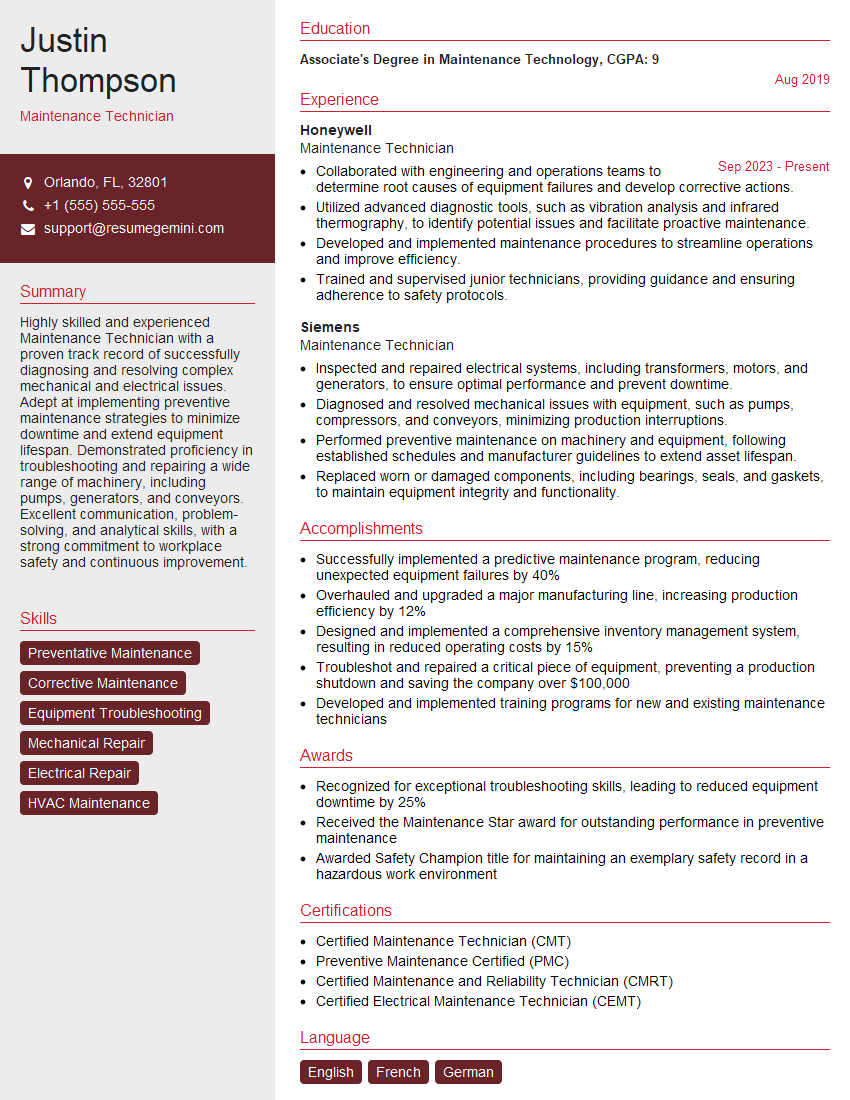
Maintenance Technician Resume Sample

Crane Operator Resume Sample

Heavy Equipment Operator Resume Sample
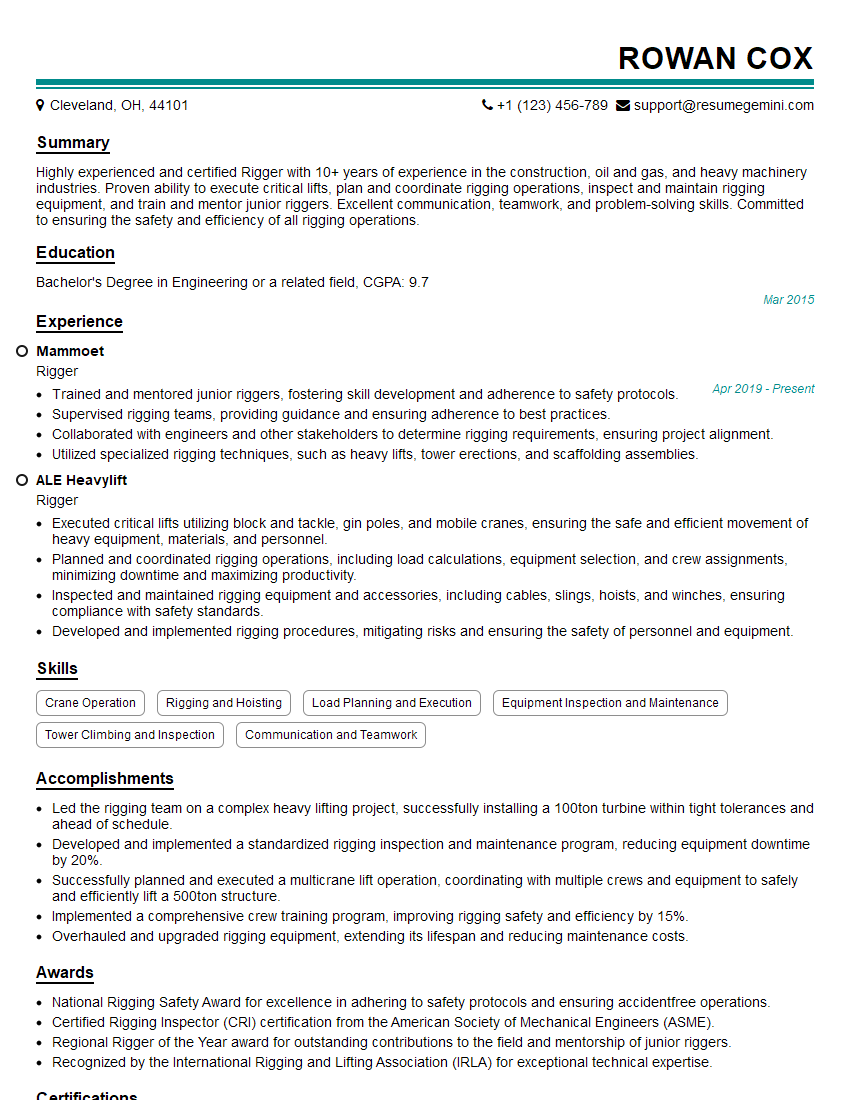
Rigger Resume Sample
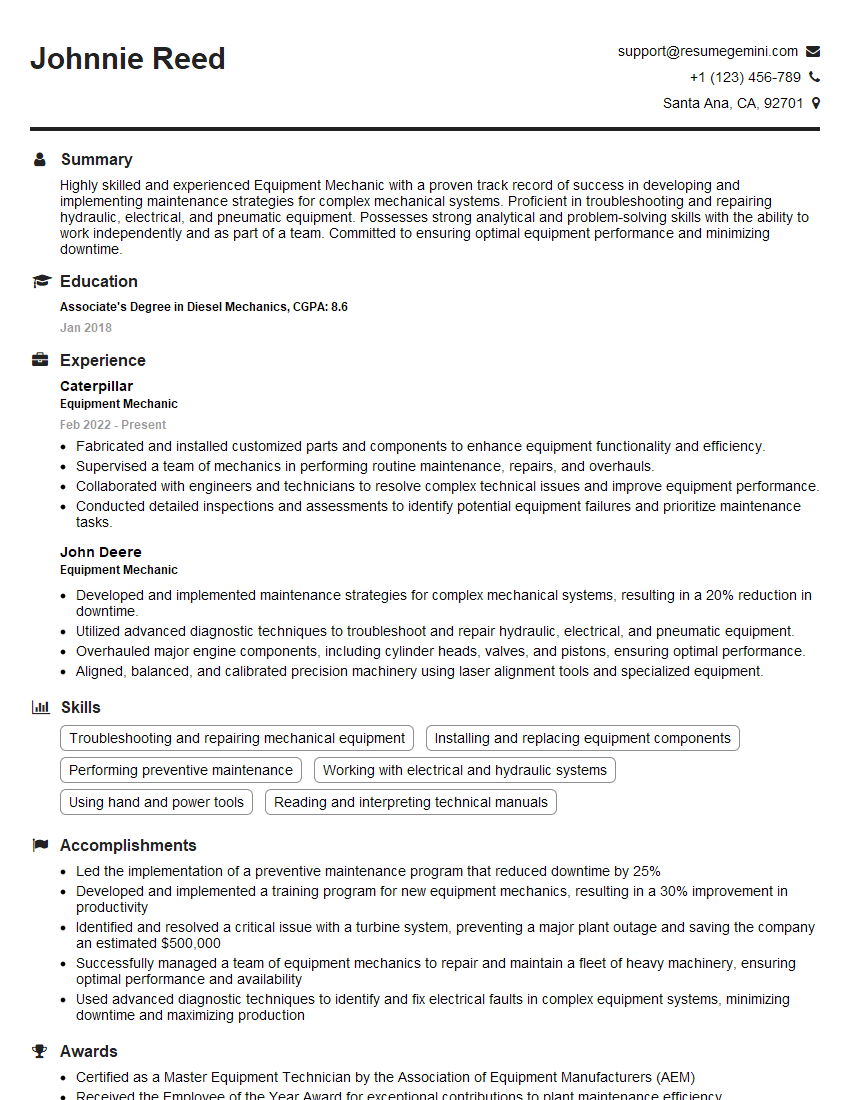
Equipment Mechanic Resume Sample

Signal Person Resume Sample
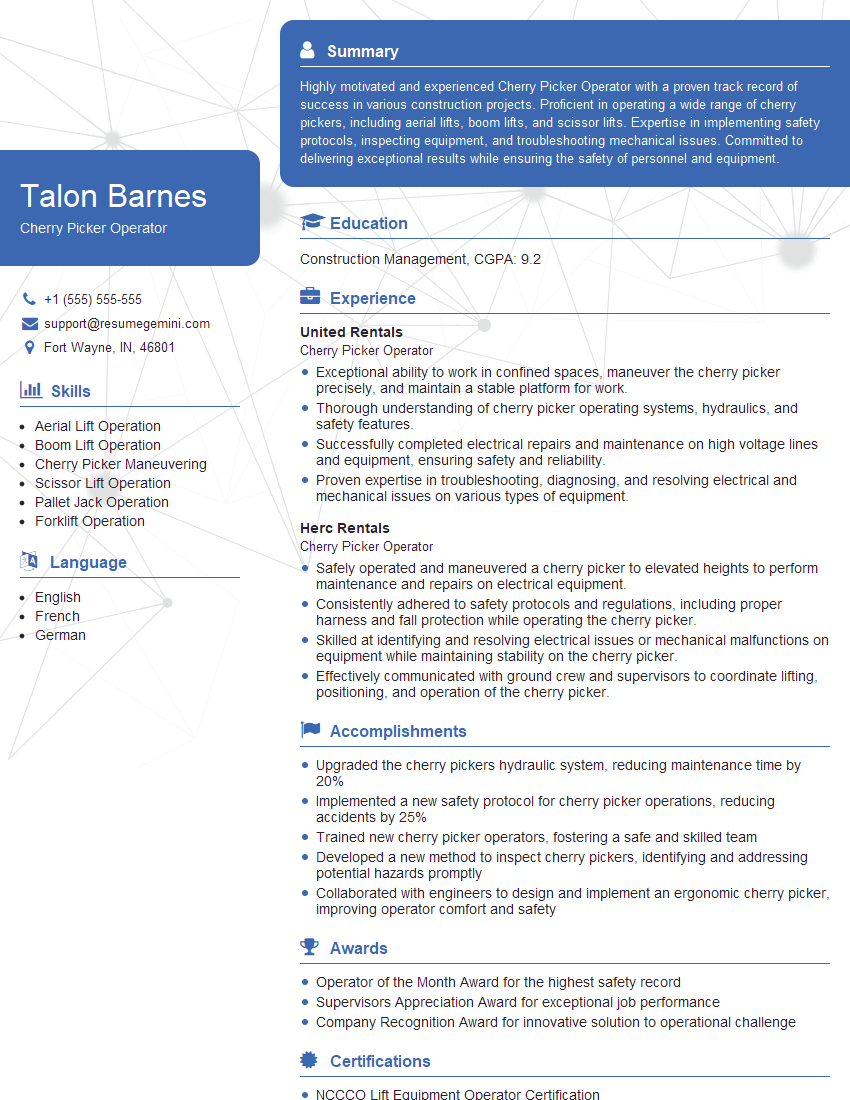
Cherry Picker Operator Resume Sample

Mobile Crane Operator Resume Sample
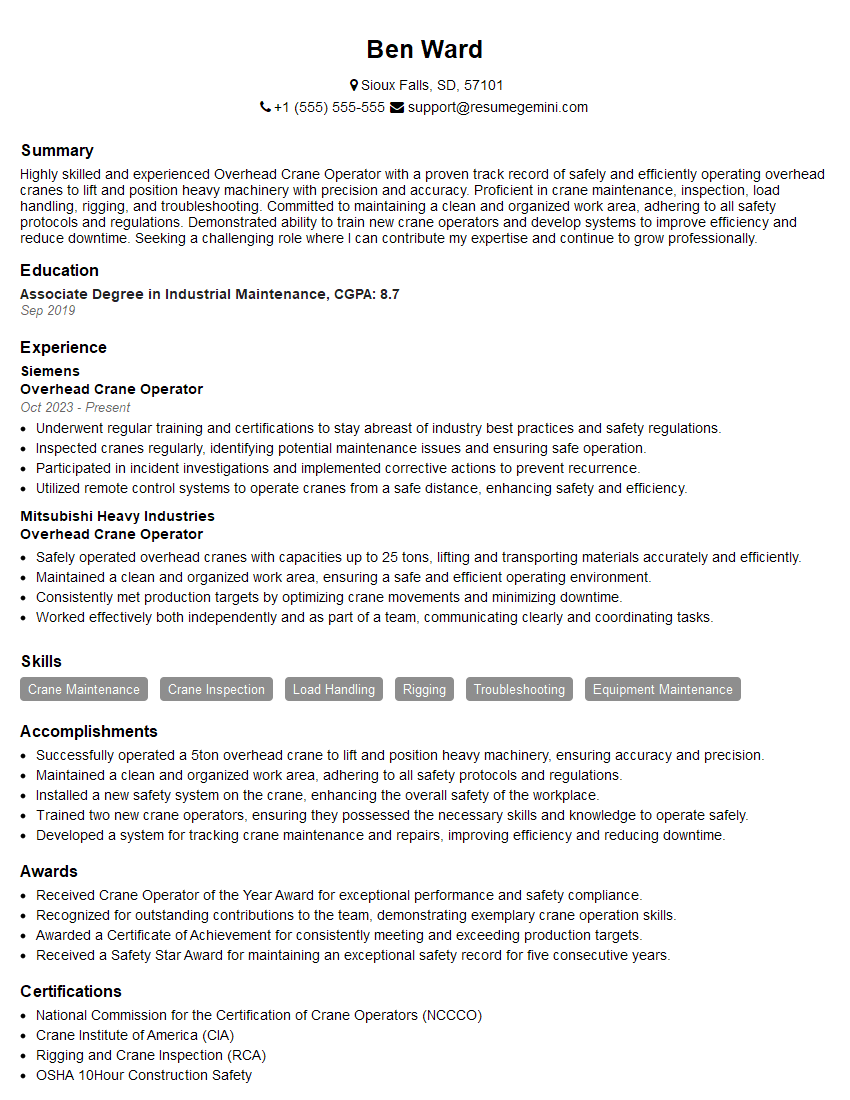
Overhead Crane Operator Resume Sample

Tower Crane Operator Resume Sample
Explore more articles
Users Rating of Our Blogs
Share Your Experience
We value your feedback! Please rate our content and share your thoughts (optional).
What Readers Say About Our Blog
Very informative content, great job.
good