Interviews are opportunities to demonstrate your expertise, and this guide is here to help you shine. Explore the essential Innovation and Technology Integration interview questions that employers frequently ask, paired with strategies for crafting responses that set you apart from the competition.
Questions Asked in Innovation and Technology Integration Interview
Q 1. Describe your experience in integrating new technologies into existing systems.
Integrating new technologies into existing systems is a multifaceted process requiring careful planning and execution. It’s not simply about plugging in new software; it’s about ensuring seamless interoperability, minimizing disruption, and maximizing the value of the new technology. My approach focuses on a thorough understanding of both the existing infrastructure and the capabilities of the new technology. This includes a comprehensive assessment of compatibility, data migration strategies, and potential integration points.
For example, in a previous role, we integrated a new CRM system into an existing ERP system. This involved mapping data fields, developing custom APIs for seamless data exchange, and creating robust error-handling mechanisms. We employed a phased rollout approach, starting with a pilot group to identify and resolve any unforeseen issues before a full-scale deployment. The result was a significantly improved workflow and enhanced data management capabilities with minimal downtime.
Another example involved integrating a machine learning model into a legacy manufacturing system. Here, the challenge was not only in connecting the model but also in ensuring the data fed to the model was accurate, complete, and correctly formatted. We used a combination of ETL (Extract, Transform, Load) processes and custom data cleaning scripts to achieve this.
Q 2. Explain your approach to identifying and evaluating innovative solutions.
Identifying and evaluating innovative solutions requires a structured approach combining creativity, critical thinking, and rigorous analysis. My process typically involves several key steps: First, I define the problem clearly and thoroughly, outlining specific needs and desired outcomes. Then I conduct extensive research, exploring both existing solutions and emerging technologies. This involves market analysis, competitor research, and reviewing academic literature and industry publications.
Next, I assess potential solutions using a range of criteria, including cost-effectiveness, scalability, security, and ease of integration with existing systems. This often involves prototyping and proof-of-concept development to validate the feasibility and effectiveness of potential solutions. Finally, I conduct a thorough risk assessment, identifying potential challenges and developing mitigation strategies. This includes assessing both technical risks (e.g., system compatibility) and business risks (e.g., market changes).
For instance, when evaluating cloud-based solutions, I carefully consider factors like data sovereignty, security certifications (like SOC 2), vendor lock-in, and the long-term cost implications of cloud subscriptions. For AI-driven solutions, I carefully examine the model’s accuracy, bias, and explainability, ensuring it aligns with ethical considerations and regulatory requirements.
Q 3. How do you measure the success of a technology integration project?
Measuring the success of a technology integration project requires a multi-faceted approach that goes beyond simply completing the integration on time and within budget. Key performance indicators (KPIs) should be defined upfront, aligned with the project’s overall goals. These metrics should cover technical performance, user adoption, and business impact.
Examples of KPIs include:
- Technical Performance: System uptime, data accuracy, processing speed, integration error rate
- User Adoption: User satisfaction scores, training completion rates, frequency of system usage
- Business Impact: Cost savings, efficiency improvements, revenue growth, customer satisfaction
Regular monitoring and reporting are crucial to track progress against these KPIs and identify potential issues early on. Post-implementation reviews are essential to gather feedback from users and stakeholders, identify areas for improvement, and refine the integration strategy over time. For instance, in one project involving a supply chain optimization system, success was measured by a reduction in inventory costs and a demonstrable improvement in order fulfillment time.
Q 4. What methodologies do you use for managing innovation projects?
I utilize a combination of Agile and Lean methodologies for managing innovation projects. Agile allows for flexibility and iterative development, enabling us to adapt to changing requirements and incorporate feedback throughout the process. Lean principles focus on eliminating waste and maximizing value, ensuring the project stays focused on its core objectives.
Specifically, I often employ Scrum for project management, using sprints to deliver incremental value and regular retrospectives to refine the process. This involves daily stand-up meetings, sprint planning sessions, and sprint reviews to maintain transparency and accountability. I also leverage Kanban boards for visualizing workflow and managing tasks. For larger projects, a phased approach might be utilized, breaking down the project into smaller, manageable modules.
Furthermore, I integrate Design Thinking principles to ensure the solution meets user needs effectively. This involves empathizing with users, defining the problem, ideating solutions, prototyping, and testing.
Q 5. Describe a time you had to overcome a significant technical challenge during an integration project.
During a project integrating a new e-commerce platform with a legacy accounting system, we encountered a significant challenge with data synchronization. The legacy system used a proprietary database format, and there wasn’t any readily available integration tool. The initial attempts at using third-party integration tools failed due to incompatibility issues.
To overcome this, we employed a two-pronged approach. First, we developed a custom ETL (Extract, Transform, Load) process to convert data from the proprietary format into a standard format compatible with the new e-commerce platform. This involved writing custom scripts to handle data transformations and error handling. Second, we implemented a robust data validation mechanism to ensure data accuracy and consistency during the migration process. This involved developing automated checks and alerts to identify and address data discrepancies.
This solution involved extensive collaboration with the development teams of both systems and required a deep understanding of both databases. The result was a successful integration, although it took longer than initially planned, demonstrating the importance of flexibility and problem-solving skills in complex integration projects.
Q 6. How do you prioritize competing technology integration initiatives?
Prioritizing competing technology integration initiatives requires a systematic approach. I typically use a weighted scoring system based on a set of predefined criteria. These criteria might include strategic alignment with business goals, potential ROI (Return on Investment), risk level, resource availability, and urgency. Each criterion is assigned a weight reflecting its importance, and each initiative is scored against each criterion.
For example, a project with high strategic alignment and a high potential ROI, but a lower risk level, might receive a higher overall score compared to a project with lower strategic alignment but a higher urgency. This scoring system provides a quantitative basis for prioritization, enabling objective decision-making. This process also involves engaging key stakeholders to ensure alignment on the chosen priorities and to address concerns or potential conflicts. Regular review and reassessment are crucial, especially in dynamic environments where priorities may shift.
Q 7. How do you stay abreast of emerging technologies and their potential applications?
Staying abreast of emerging technologies and their potential applications requires a multifaceted approach. I actively engage in continuous learning through a variety of channels:
- Industry publications and research papers: I regularly read industry publications such as MIT Technology Review, Wired, and journals focused on specific technology areas to stay up-to-date on the latest advancements.
- Conferences and workshops: Attending industry conferences and workshops provides opportunities to network with experts and learn about cutting-edge technologies firsthand.
- Online courses and webinars: Platforms like Coursera, edX, and Udemy offer a wealth of online courses and webinars on various technologies.
- Industry networks and communities: Participating in professional organizations and online communities allows me to connect with peers, share knowledge, and learn from others’ experiences.
- Technology scouting and trend analysis: I actively scan the technology landscape for potential breakthroughs and analyze emerging trends to identify their potential applications in my field.
This continuous learning allows me to anticipate future technology trends and proactively identify opportunities for innovation and integration within my projects.
Q 8. What is your experience with Agile development methodologies in the context of technology integration?
Agile methodologies are crucial for successful technology integration. Instead of rigid, waterfall-style plans, Agile embraces iterative development, frequent feedback loops, and adaptability to change. In technology integration, this translates to breaking down complex projects into smaller, manageable sprints. Each sprint focuses on delivering a working increment of the integrated system. This allows for early detection of integration issues, quicker responses to unforeseen challenges, and a higher level of stakeholder satisfaction.
For example, in a recent project integrating a new CRM system with our existing ERP, we utilized Scrum. Each sprint focused on integrating a specific module (e.g., customer contact information, order processing). This allowed us to test and refine the integration incrementally, rather than waiting until the entire system was supposedly complete.
- Benefits: Increased flexibility, faster time to market, reduced risk, improved collaboration.
- Tools: Jira, Trello, Azure DevOps are commonly used for Agile project management in this context.
Q 9. How do you manage stakeholder expectations during a technology integration project?
Managing stakeholder expectations is paramount. I employ a multi-pronged approach. Firstly, I establish clear communication channels, providing regular updates through meetings, email reports, and dashboards that visually track progress against milestones. Transparency is key – proactively addressing potential issues and roadblocks is vital.
Secondly, I work to define realistic expectations upfront, collaboratively establishing project scope, timelines, and deliverables. This includes defining success metrics and involving stakeholders in the planning process. A well-defined project charter with agreed-upon goals is essential. Finally, I actively solicit feedback throughout the project, using it to make adjustments and ensure the solution meets the evolving needs of the stakeholders.
For instance, in a recent project integrating a new e-commerce platform, I held weekly stand-up meetings with key stakeholders from marketing, sales, and IT. This ensured everyone was informed and could voice concerns or suggest improvements. This proactive approach minimized misunderstandings and fostered a collaborative environment.
Q 10. Explain your understanding of cloud-based technology integration.
Cloud-based technology integration leverages cloud platforms (like AWS, Azure, or GCP) to connect different systems and applications. This offers several advantages over on-premise integration. It allows for scalability, flexibility, and reduced infrastructure costs. Cloud providers offer various services such as Integration Platform as a Service (iPaaS) which simplifies the integration process by providing pre-built connectors, tools for data transformation, and managed infrastructure.
For instance, using an iPaaS, we can connect our on-premise legacy system to a cloud-based CRM using APIs and pre-built connectors, minimizing the need for custom code and reducing implementation time. Cloud integration often utilizes technologies like message queues (e.g., Amazon SQS, Azure Service Bus) for asynchronous communication, enhancing the robustness and scalability of the integrated system.
- Key Advantages: Scalability, cost-effectiveness, enhanced security features offered by cloud providers, easier maintenance.
- Challenges: Data security and compliance concerns, vendor lock-in, reliance on internet connectivity.
Q 11. How do you ensure data security and compliance during technology integration?
Data security and compliance are non-negotiable. My approach involves a multi-layered strategy. Firstly, I ensure compliance with relevant regulations (GDPR, HIPAA, etc.) from the project’s inception. This includes conducting thorough risk assessments to identify potential vulnerabilities. We utilize encryption for data in transit and at rest, access control mechanisms (role-based access control, for example) and implement robust auditing capabilities to track data access and modifications.
Secondly, I leverage the security features offered by cloud providers (or on-premise security solutions). This includes implementing firewalls, intrusion detection systems, and data loss prevention measures. Penetration testing and security audits are performed regularly to identify and remediate vulnerabilities.
For example, in a recent healthcare project, we ensured all data transfers adhered to HIPAA guidelines using secure protocols and encryption, and we implemented rigorous access controls to protect patient information.
Q 12. Describe your experience with different integration patterns (e.g., message queues, APIs).
I have extensive experience with various integration patterns. Message queues (like RabbitMQ, Kafka) are excellent for asynchronous communication, enabling decoupled systems. This means that systems can communicate without being directly dependent on each other’s availability, making the integration more resilient and scalable. APIs (Application Programming Interfaces – RESTful APIs are most common) allow for direct, synchronous communication between systems, often providing finer-grained control.
I’ve also worked with Enterprise Service Bus (ESB) architectures for complex integration scenarios, which provide central routing and transformation of messages between diverse systems. Choosing the right pattern depends on factors such as the complexity of the integration, the need for real-time processing, and the scalability requirements.
For instance, in a supply chain integration project, we used message queues to handle order updates asynchronously, allowing for better fault tolerance and scalability. For integrating with a third-party payment gateway, we leveraged RESTful APIs for real-time transaction processing.
Q 13. What are your strategies for mitigating risks associated with technology integration?
Mitigating risks is a proactive process. I start by identifying potential risks through thorough risk assessments, considering factors like technical challenges, data security vulnerabilities, and stakeholder conflicts. This involves brainstorming sessions and leveraging previous experience to anticipate potential problems.
Next, I develop mitigation strategies for each identified risk. This might include implementing robust error handling mechanisms, using redundant systems to prevent outages, establishing clear escalation paths for resolving issues, and conducting thorough testing (unit, integration, and user acceptance testing). Contingency plans are crucial in case of unforeseen events.
For example, in a large-scale database migration, we developed a rollback plan to revert to the previous database state if issues arose during the migration. This ensured we could recover quickly and minimize downtime.
Q 14. How do you handle conflicts between different departments during technology integration projects?
Conflicts between departments are common in technology integration projects. My strategy focuses on open communication and collaboration. I facilitate workshops and meetings to identify the root causes of the conflict and bring together representatives from different departments to find a mutually agreeable solution. Active listening, empathy, and a focus on shared goals are essential.
If necessary, I involve senior management to mediate disputes and ensure alignment on priorities. Clearly defined roles and responsibilities, along with a well-defined decision-making process, can minimize the likelihood of conflicts. Documenting agreements and decisions is vital to maintaining transparency and accountability.
For instance, during a recent CRM implementation, there was conflict between the sales and marketing departments regarding data ownership and reporting. Through facilitated discussions and compromise, we developed a data governance plan that addressed both departments’ concerns.
Q 15. How do you foster a culture of innovation within a team or organization?
Fostering a culture of innovation isn’t a one-time event; it’s a continuous process of cultivating the right mindset and environment. It’s like gardening – you need to nurture the seeds of creativity and provide the right conditions for them to flourish.
Psychological Safety: Team members must feel safe to take risks, experiment, and even fail without fear of retribution. This requires open communication, active listening, and a leadership style that embraces mistakes as learning opportunities. For example, I once implemented a ‘failure review’ process where we analyzed failed projects not to blame individuals, but to identify systemic issues and improve future efforts.
Empowerment and Autonomy: Give teams the authority and resources to pursue innovative ideas. Micromanagement stifles creativity. Instead, provide clear objectives and let teams determine the best approach. I’ve successfully implemented this by giving teams ‘innovation budgets’ to explore new technologies or approaches independently.
Collaboration and Knowledge Sharing: Encourage cross-functional collaboration and knowledge sharing through regular brainstorming sessions, hackathons, or internal knowledge platforms. This creates a synergistic environment where diverse perspectives spark new ideas. We once organized a cross-departmental ‘idea incubator’ where employees from various teams pitched their innovative concepts, receiving feedback and mentorship from senior leaders.
Incentivization and Recognition: Reward and recognize innovative contributions. This can be through formal awards, bonuses, or simply public acknowledgement of successful innovations. This keeps the momentum going and reinforces the value placed on creativity.
Continuous Learning and Development: Invest in training and development opportunities that equip employees with the skills and knowledge they need to innovate. This could include workshops on design thinking, agile methodologies, or specific technological advancements.
Career Expert Tips:
- Ace those interviews! Prepare effectively by reviewing the Top 50 Most Common Interview Questions on ResumeGemini.
- Navigate your job search with confidence! Explore a wide range of Career Tips on ResumeGemini. Learn about common challenges and recommendations to overcome them.
- Craft the perfect resume! Master the Art of Resume Writing with ResumeGemini’s guide. Showcase your unique qualifications and achievements effectively.
- Don’t miss out on holiday savings! Build your dream resume with ResumeGemini’s ATS optimized templates.
Q 16. Describe your experience in developing and implementing an innovation strategy.
In my previous role, I led the development and implementation of an innovation strategy for a mid-sized manufacturing company. The process involved several key stages:
Needs Assessment: We started by identifying the company’s strategic goals and challenges, analyzing market trends, and understanding our competitive landscape. This involved extensive stakeholder interviews, surveys, and market research.
Innovation Roadmap: Based on the assessment, we developed a detailed roadmap outlining key initiatives, timelines, resource allocation, and key performance indicators (KPIs). This roadmap served as our guiding document.
Resource Allocation: We secured funding and allocated resources (personnel, budget, technology) to support the innovation initiatives. This included establishing a dedicated innovation team and securing partnerships with external research institutions.
Implementation and Monitoring: We implemented the initiatives, regularly monitored progress against the KPIs, and made adjustments as needed. This involved utilizing project management tools and agile methodologies.
Evaluation and Iteration: We continuously evaluated the success of the initiatives, learned from our experiences, and iterated on the strategy to improve its effectiveness. This involved regular performance reviews and post-project assessments.
This resulted in a 15% increase in new product development within two years and a significant improvement in overall market competitiveness.
Q 17. How do you identify and assess the ROI of technology integration projects?
Assessing the ROI of technology integration projects requires a multifaceted approach that goes beyond simply calculating financial returns. We need to consider both tangible and intangible benefits.
Tangible ROI: This includes quantifiable financial benefits such as cost savings (e.g., reduced labor costs, improved efficiency), increased revenue (e.g., new product sales, improved customer satisfaction), and reduced operational expenses.
Intangible ROI: This includes less easily quantifiable benefits such as improved employee morale, enhanced customer experience, increased market share, improved decision-making, and reduced risk.
Methods for Assessment:
Cost-Benefit Analysis (CBA): This involves comparing the total costs of the project (development, implementation, maintenance) with the total benefits (financial and non-financial).
Return on Investment (ROI) Calculation: A simple calculation of (Net Profit / Total Investment) * 100% provides a percentage return. However, we must accurately account for both tangible and intangible benefits where possible, perhaps using a weighted scoring system for intangible benefits.
Key Performance Indicators (KPIs): Tracking relevant KPIs such as reduced error rates, faster processing times, increased customer satisfaction scores, and improved employee productivity allows for continuous monitoring and evaluation of the project’s impact.
For instance, in one project, we implemented a new CRM system. We measured the tangible ROI through increased sales efficiency and reduced customer service costs. The intangible ROI was assessed through improved customer satisfaction surveys and employee feedback indicating increased job satisfaction.
Q 18. What is your experience with change management related to technology integration?
Change management is crucial for successful technology integration. It involves managing the people side of change to ensure smooth adoption and minimize disruption. I utilize a structured approach that considers various aspects of the change process.
Communication: Proactive and transparent communication is vital throughout the entire process. This involves keeping stakeholders informed about the project’s progress, addressing their concerns, and providing training and support.
Stakeholder Engagement: Identifying and engaging key stakeholders early on is critical. This involves understanding their needs, addressing their concerns, and actively involving them in the implementation process.
Training and Support: Providing comprehensive training and ongoing support to users is essential for ensuring successful adoption of the new technology. This might include workshops, online tutorials, and dedicated help desk support.
Resistance Management: Addressing resistance to change is inevitable. This requires actively listening to concerns, addressing them empathetically, and providing clear explanations of the benefits of the new technology. In one instance, we used a phased rollout approach, starting with a pilot group to address early concerns before a full-scale implementation.
Monitoring and Evaluation: Continuously monitoring the impact of the change and making adjustments as needed is crucial. This includes tracking user adoption rates, collecting feedback, and addressing any issues that arise.
Q 19. How do you ensure the scalability and maintainability of integrated systems?
Scalability and maintainability are paramount in integrated systems. Designing for these aspects from the outset prevents costly rework and ensures long-term success.
Modular Design: Building systems using modular components allows for easier scalability and maintenance. Individual modules can be upgraded or replaced without affecting the entire system. Think of LEGO bricks – you can easily add or remove components to build different structures.
Cloud-Based Architecture: Utilizing cloud-based infrastructure offers inherent scalability. Resources can be easily scaled up or down as needed, adapting to changing demands. This eliminates the need for large upfront investments in hardware.
API-Driven Integration: Using APIs (Application Programming Interfaces) for system integration promotes flexibility and scalability. New systems or functionalities can be added easily through API integration without extensive code changes.
Automated Testing and Deployment: Implementing automated testing and deployment processes improves system reliability and reduces maintenance costs. This allows for faster deployment of updates and bug fixes, ensuring system stability.
Comprehensive Documentation: Maintaining thorough documentation of the system architecture, codebase, and operational procedures is essential for maintainability. This makes it easier for developers and support personnel to understand and maintain the system over time.
Q 20. How do you balance innovation with operational efficiency?
Balancing innovation with operational efficiency is a delicate act, but crucial for sustainable growth. It’s about finding the sweet spot where innovation enhances efficiency, rather than disrupting it.
Prioritization: Focus innovation efforts on areas that offer the highest potential ROI and align with strategic goals. Not every innovative idea needs to be pursued; prioritize those with the greatest potential impact.
Incremental Innovation: Adopt an incremental approach, focusing on making small, iterative improvements to existing processes and systems, rather than pursuing radical changes that could disrupt operations.
Automation and Optimization: Leverage automation and optimization technologies to improve efficiency while freeing up resources for innovative pursuits. This might involve using robotic process automation (RPA) or advanced analytics tools to streamline operations.
Agile Methodologies: Employ agile methodologies to manage innovation projects, allowing for flexibility and iterative development. This ensures that innovation efforts remain aligned with operational needs and can adapt to changing priorities.
Data-Driven Decision Making: Use data analytics to measure the impact of innovation initiatives on operational efficiency. This enables informed decision-making, ensuring that innovation efforts are producing tangible improvements.
Q 21. Describe your experience working with cross-functional teams on technology integration projects.
My experience working with cross-functional teams on technology integration projects has been extensive and rewarding. Effective collaboration is key to success.
Clear Communication and Shared Understanding: Establishing a shared understanding of project goals, roles, and responsibilities is paramount. Regular communication, including status updates, meetings, and progress reports, helps maintain alignment and avoid misunderstandings.
Shared Decision-Making: Involving team members from various departments in the decision-making process fosters a sense of ownership and commitment. This helps ensure buy-in from all stakeholders.
Conflict Resolution: Addressing conflicts promptly and effectively is crucial. This involves establishing clear processes for resolving disagreements and fostering a culture of mutual respect and collaboration.
Utilizing Collaboration Tools: Employing project management tools, communication platforms, and shared document repositories improves collaboration and facilitates information sharing.
Team Building Activities: Occasionally engaging in team-building activities can enhance team cohesion and improve collaboration. This fosters a sense of camaraderie and shared purpose.
For example, in a recent project involving integrating a new supply chain management system, we had team members from IT, operations, procurement, and finance. By establishing clear communication channels, regular meetings, and shared decision-making processes, we successfully integrated the system within the planned timeline and budget.
Q 22. What tools and technologies are you proficient in for technology integration?
My proficiency in technology integration spans a wide range of tools and technologies. I’m highly skilled in project management software like Jira and Asana for tracking progress and managing tasks. For collaboration, I utilize platforms such as Microsoft Teams and Slack, fostering seamless communication among stakeholders. My technical expertise encompasses cloud platforms like AWS and Azure, along with various programming languages such as Python and Java, which are crucial for integrating different systems. I’m also well-versed in API integration techniques using REST and SOAP protocols. Furthermore, I’m adept at using data analysis tools like Tableau and Power BI to visualize the impact of integration projects. Finally, I have experience with various database systems, including SQL and NoSQL databases, enabling me to handle diverse data structures efficiently.
- Project Management: Jira, Asana
- Collaboration: Microsoft Teams, Slack
- Cloud Platforms: AWS, Azure
- Programming Languages: Python, Java
- API Integration: REST, SOAP
- Data Analysis: Tableau, Power BI
- Databases: SQL, NoSQL
Q 23. How do you address resistance to change during technology implementation?
Addressing resistance to change during technology implementation requires a multifaceted approach focusing on communication, training, and change management. Firstly, I prioritize transparent and consistent communication, ensuring all stakeholders understand the ‘why’ behind the change and how it benefits them. This includes addressing concerns proactively and providing regular updates on the progress. Secondly, comprehensive training programs are essential to equip users with the necessary skills and confidence to utilize the new technology effectively. Thirdly, a well-defined change management plan, including clear roles, responsibilities, and timelines, ensures a structured approach. I also leverage early adopters within the organization as champions to influence others and address their questions and concerns. Finally, I actively seek feedback and make adjustments based on user input, making the process iterative and collaborative rather than top-down.
For example, in a past project, we encountered resistance to a new CRM system. We addressed this by holding workshops demonstrating its benefits through real-life scenarios, providing personalized training sessions based on individual roles, and establishing a dedicated feedback channel to address immediate concerns. This approach significantly reduced resistance and improved user adoption.
Q 24. How do you measure the impact of technology integration on business outcomes?
Measuring the impact of technology integration on business outcomes requires a well-defined set of Key Performance Indicators (KPIs) aligned with the project’s objectives. These KPIs should be measurable, achievable, relevant, and time-bound (SMART). For example, if the goal is to improve customer service, KPIs could include metrics such as customer satisfaction scores, resolution time for issues, and call center efficiency. If the goal is to increase sales, relevant KPIs could be conversion rates, average order value, and sales growth. We employ data analytics tools to track these KPIs before, during, and after the integration, enabling us to assess the effectiveness of the implemented technology. A before-and-after comparison helps quantify the improvement. Furthermore, qualitative feedback from users and stakeholders provides valuable insights into the overall impact.
For instance, we tracked the impact of a new inventory management system by measuring the reduction in stockouts, the improvement in order fulfillment time, and the overall decrease in inventory costs. The quantitative data clearly demonstrated the positive impact on efficiency and profitability.
Q 25. Describe a time you had to make a difficult decision regarding technology choices.
In a previous project, we needed to choose between two different ERP systems. Both systems offered similar core functionalities, but one (System A) was a more established, albeit more expensive, solution with extensive support and a larger user community. The other (System B) was a newer, more agile platform with a potentially lower total cost of ownership but lacked the same level of established support. The decision was complex because it involved balancing long-term cost, risk mitigation, and the potential for future scalability. After careful analysis of both systems, including cost-benefit analysis, risk assessments, and consultation with stakeholders, we opted for System A. Although initially more expensive, its proven reliability, strong community support, and lower risk of unforeseen issues outweighed the potential cost savings of System B. The decision proved prudent as System A’s stability and robust support minimized disruptions and accelerated user adoption.
Q 26. How do you identify and evaluate potential risks associated with implementing a new technology?
Identifying and evaluating potential risks associated with implementing a new technology is a crucial aspect of successful integration. I use a structured risk assessment process involving several steps. First, I brainstorm potential risks through workshops and discussions with stakeholders. This includes technical risks (system compatibility, data migration issues), operational risks (user adoption, process disruptions), and financial risks (cost overruns, budget constraints). Next, I assess the likelihood and impact of each identified risk. This involves assigning probability scores and severity levels to each risk. Based on this assessment, I prioritize risks according to their potential impact. Finally, I develop mitigation strategies for the high-priority risks. This might include developing contingency plans, securing additional resources, or implementing robust testing procedures. The entire process is documented and regularly reviewed to ensure that potential risks are addressed effectively throughout the project lifecycle.
Q 27. What is your experience with different software development life cycle models (SDLC) and how do they impact integration projects?
I have extensive experience with various software development life cycle (SDLC) models, including Waterfall, Agile (Scrum, Kanban), and DevOps. The choice of SDLC significantly impacts integration projects. The Waterfall model, with its sequential phases, is suitable for well-defined projects with minimal anticipated changes. However, for integration projects involving complex systems and evolving requirements, Agile methodologies are often more effective. Agile allows for iterative development and adaptation, ensuring that the integration process can respond to changing needs and feedback. DevOps practices, emphasizing collaboration and automation, are particularly beneficial for continuous integration and continuous deployment (CI/CD) in complex integration scenarios. The selected SDLC model influences project timelines, budget allocation, risk management, and ultimately the overall success of the integration.
For example, in a recent project involving the integration of several legacy systems, we utilized an Agile approach with Scrum. The iterative nature of Scrum allowed us to address unforeseen complexities, incorporate stakeholder feedback, and deliver incremental value throughout the project lifecycle. This ensured the project stayed on track and met its objectives despite initial uncertainties.
Q 28. How would you approach integrating legacy systems with modern cloud-based applications?
Integrating legacy systems with modern cloud-based applications often presents significant challenges. My approach involves a phased strategy. First, I conduct a thorough assessment of the legacy systems, identifying their functionalities, data structures, and limitations. Next, I determine the best approach for integration, which could involve building custom connectors, utilizing enterprise service buses (ESBs), or employing application programming interfaces (APIs). If APIs are feasible, I focus on creating well-defined APIs to expose the necessary functionalities of the legacy systems to the cloud applications. Data migration is a crucial aspect; I develop a robust strategy for migrating data from the legacy systems to the cloud, ensuring data integrity and minimizing downtime. Testing is critical; I employ thorough testing procedures to ensure seamless data flow and functionality between the legacy and cloud systems. Finally, I establish monitoring and maintenance procedures to ensure long-term stability and performance.
For example, in one project, we integrated a legacy on-premise accounting system with a modern cloud-based CRM system by building a custom API. This allowed the CRM system to access relevant financial data from the accounting system, improving sales team efficiency and reporting accuracy. The phased approach, coupled with rigorous testing, ensured a smooth transition and minimal disruption to the business.
Key Topics to Learn for Innovation and Technology Integration Interview
- Strategic Innovation Frameworks: Understanding models like Design Thinking, Lean Startup, and Agile methodologies for integrating technology effectively. Explore their practical application in different organizational contexts.
- Technology Assessment & Selection: Evaluating the feasibility, cost-effectiveness, and potential impact of various technologies. Consider case studies of successful and unsuccessful technology integrations.
- Change Management & Adoption: Developing strategies to overcome resistance to change and ensure smooth technology adoption within teams and organizations. Analyze strategies for training and support.
- Data-Driven Decision Making: Utilizing data analytics to inform technology integration decisions and measure the success of implemented solutions. Explore key performance indicators (KPIs) relevant to technology integration.
- Cybersecurity & Risk Management: Understanding the security implications of integrating new technologies and implementing appropriate safeguards. Discuss risk assessment methodologies and mitigation strategies.
- Future Trends in Technology Integration: Staying abreast of emerging technologies like AI, IoT, and cloud computing and their potential impact on various industries. Analyze their potential applications and ethical considerations.
- Project Management & Execution: Applying project management principles to successfully implement technology integration projects, including planning, execution, monitoring, and closure.
- Communication & Collaboration: Effectively communicating technical concepts to both technical and non-technical stakeholders. Highlight the importance of teamwork and collaboration throughout the integration process.
Next Steps
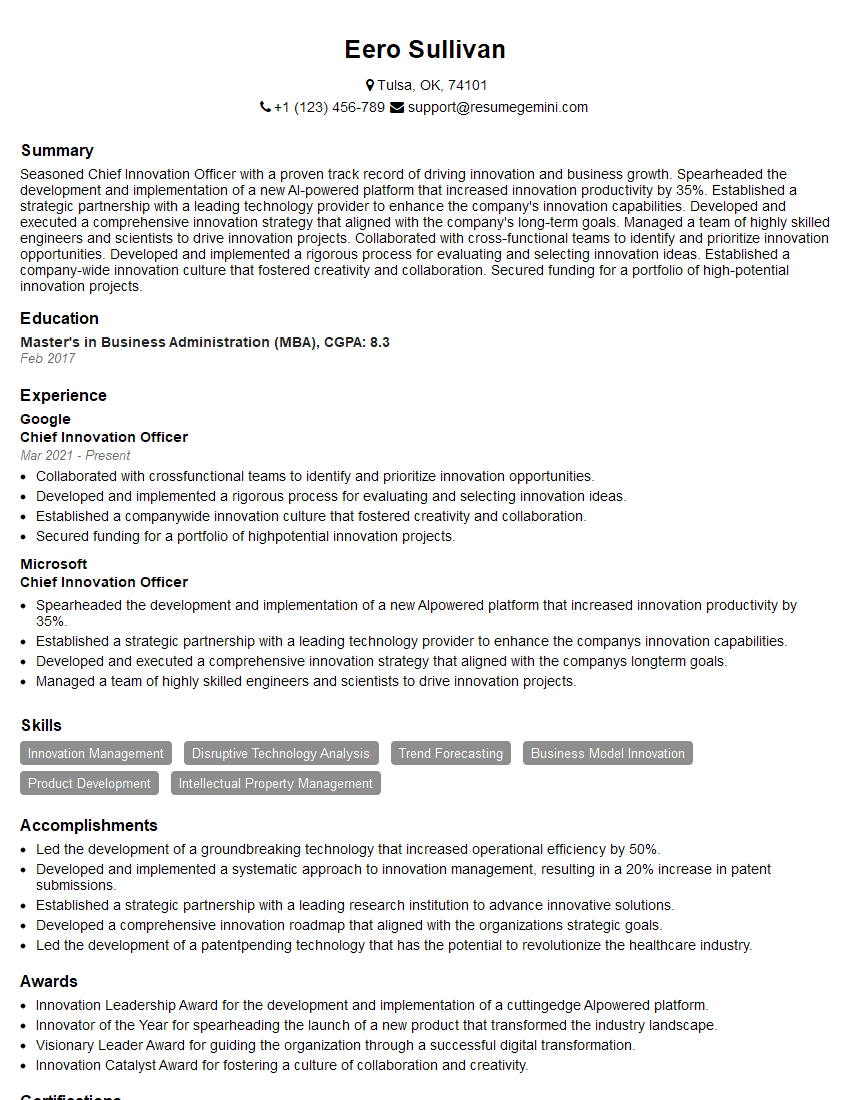
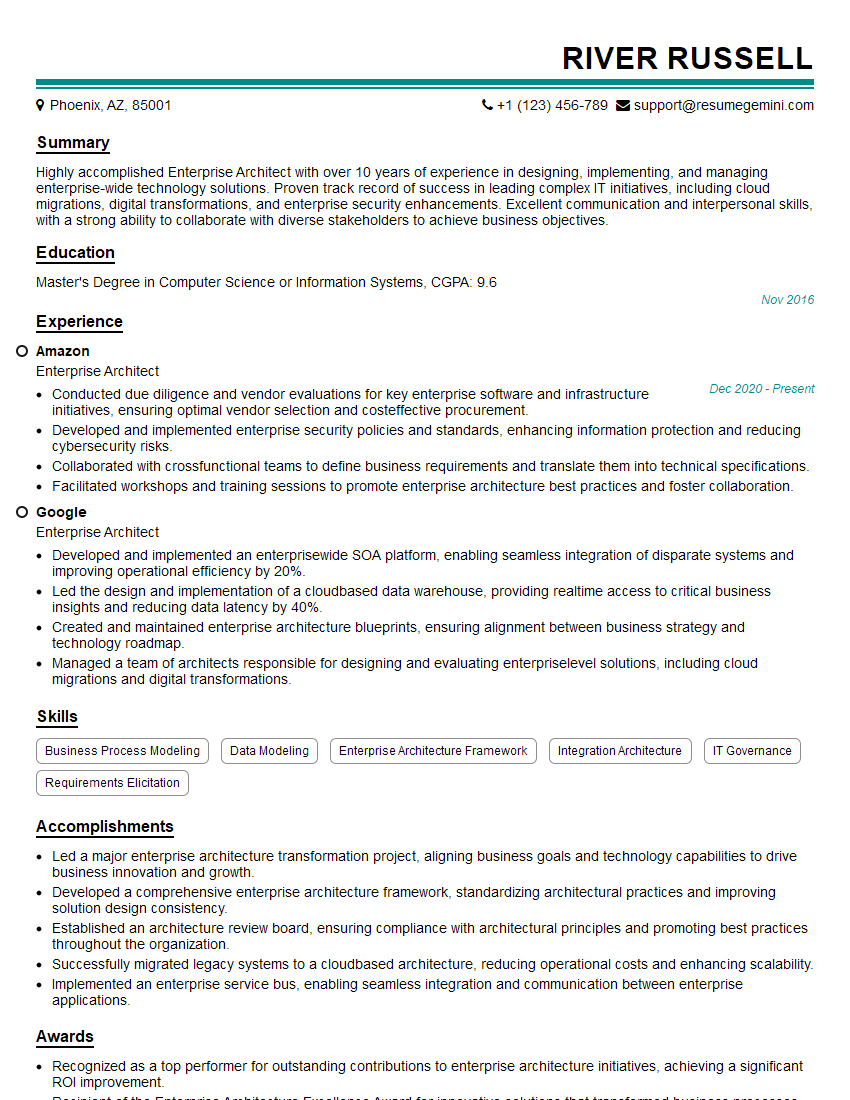
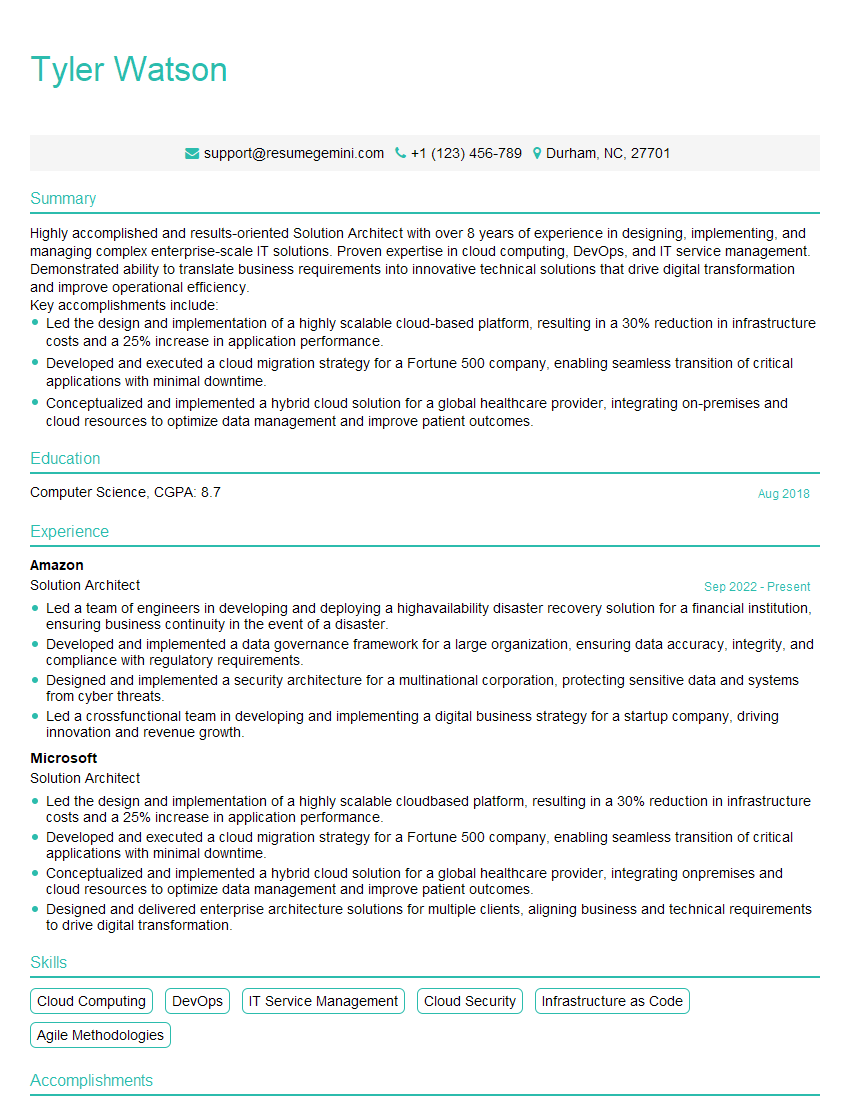
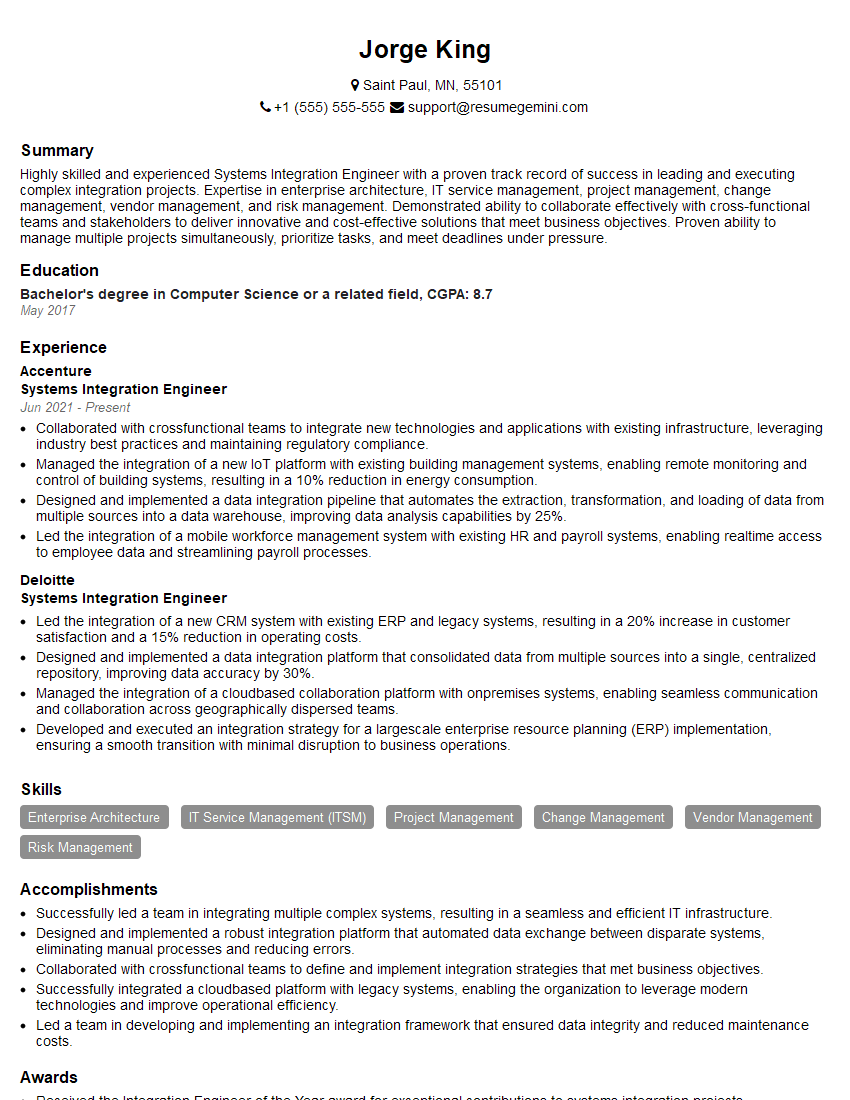
Mastering Innovation and Technology Integration is crucial for career advancement in today’s rapidly evolving digital landscape. It demonstrates a valuable skillset highly sought after by organizations across diverse sectors. To significantly boost your job prospects, create an ATS-friendly resume that effectively showcases your expertise. We highly recommend using ResumeGemini, a trusted resource, to build a professional and impactful resume. ResumeGemini provides examples of resumes tailored to Innovation and Technology Integration, helping you present your skills and experience in the best possible light. Take the next step towards your dream career today!
Explore more articles
Users Rating of Our Blogs
Share Your Experience
We value your feedback! Please rate our content and share your thoughts (optional).
What Readers Say About Our Blog
Very informative content, great job.
good