Unlock your full potential by mastering the most common History and Culture Interpretation interview questions. This blog offers a deep dive into the critical topics, ensuring you’re not only prepared to answer but to excel. With these insights, you’ll approach your interview with clarity and confidence.
Questions Asked in History and Culture Interpretation Interview
Q 1. Explain your understanding of the role of context in historical interpretation.
Context is paramount in historical interpretation. It’s not enough to simply recount events; we must understand the social, political, economic, and cultural factors that shaped them. Think of it like a puzzle: the historical event is the picture, but the context provides all the individual pieces needed to assemble it correctly and understand its meaning. Without context, we risk misinterpreting events and drawing inaccurate conclusions.
For example, understanding the religious fervor of the Crusades requires examining the socio-political climate of medieval Europe, the prevailing theological beliefs, and the economic motivations of participants. Focusing solely on the military campaigns ignores the deeper social and religious currents driving the events. Similarly, interpreting the American Civil War requires acknowledging the complex interplay of slavery, states’ rights, and economic differences between the North and the South.
Ignoring context leads to ahistorical interpretations. For instance, judging historical figures solely by modern standards is an example of lacking historical context. Their actions must be analyzed within the framework of their time period, considering the prevailing norms and values.
Q 2. Describe your experience in developing engaging educational materials for diverse audiences.
I have extensive experience developing educational materials for diverse audiences, from school children to senior citizens. My approach prioritizes accessibility and engagement. I use various methods like interactive exhibits, storytelling, digital media, and hands-on activities. For example, I developed a digital storytelling project where students could create their own narratives based on primary source documents from the Industrial Revolution. This allowed them to engage with the material on a personal level and to develop their own interpretations.
For younger audiences, I focus on visual learning and interactive components. For older audiences, I incorporate deeper analysis and encourage discussion. I always adapt my materials to the specific needs and interests of the audience, ensuring inclusivity and avoiding jargon where possible. I firmly believe that history should be accessible to everyone.
One successful project involved adapting historical texts into graphic novels, making complex historical narratives more accessible to visually-oriented learners and reluctant readers. This demonstrated the power of creative adaptation in disseminating historical knowledge effectively.
Q 3. How would you handle conflicting interpretations of a historical event?
Conflicting interpretations of historical events are common and even healthy. They demonstrate the complexity of history and the limitations of our sources. Instead of suppressing differing viewpoints, I encourage a nuanced approach that acknowledges multiple perspectives.
My approach involves a multi-step process: First, I meticulously examine the evidence supporting each interpretation, identifying the sources, methodologies, and biases involved. Second, I analyze the strengths and weaknesses of each argument, looking for inconsistencies or gaps in reasoning. Third, I synthesize the different interpretations, highlighting areas of agreement and disagreement. Finally, I present these findings to the audience in a clear and objective manner, encouraging critical thinking and informed discussion rather than prescribing a single “correct” interpretation.
For instance, the interpretation of the French Revolution varies widely. Some focus on its revolutionary ideals, while others highlight its violence and instability. By presenting both perspectives with their supporting evidence, I allow audiences to form their own informed conclusions, fostering a deeper understanding of the event’s complexities.
Q 4. Discuss your approach to preserving cultural heritage in a changing world.
Preserving cultural heritage in a changing world necessitates a multifaceted strategy that balances preservation with accessibility and adaptation. Simply archiving artifacts isn’t enough; we must actively engage communities in safeguarding their heritage.
My approach involves collaboration with communities and stakeholders to identify and protect significant cultural sites and artifacts. This includes working with indigenous communities to protect their traditional knowledge and practices, supporting initiatives for digital preservation, and developing innovative strategies for making cultural heritage accessible to wider audiences through virtual tours and digital archives. Furthermore, I advocate for sustainable practices in preservation, minimizing environmental impact and utilizing modern technologies responsibly. The goal isn’t simply to preserve the past, but to make it relevant and accessible for future generations.
A successful example of this involves working with a local community to digitally document and archive their oral histories, thereby preserving a valuable cultural legacy that might otherwise be lost. This also empowered the community by giving them ownership of their history.
Q 5. Explain your familiarity with different historical methodologies.
I am familiar with a range of historical methodologies, including:
- Traditional Historical Method: This involves primary and secondary source analysis, focusing on textual evidence and historical narratives.
- Social History: This approach emphasizes the experiences of ordinary people and marginalized groups, often utilizing oral histories and demographic data.
- Cultural History: This focuses on the shared beliefs, practices, and meanings within a society, examining cultural artifacts, rituals, and traditions.
- Quantitative History: This employs statistical methods and data analysis to explore historical trends and patterns.
- Postmodern History: This critically examines the nature of historical knowledge and power structures, acknowledging the subjectivity and interpretation inherent in historical writing.
My ability to utilize different methodologies allows me to approach historical questions from various angles, providing a more comprehensive understanding.
Q 6. How do you ensure accuracy and objectivity in your interpretations?
Ensuring accuracy and objectivity in historical interpretation is crucial. It requires rigorous methodology and critical thinking. I always begin with a thorough review of primary source materials whenever possible, recognizing their potential biases and limitations. I cross-reference these sources with secondary literature to gain a broader perspective, carefully considering the author’s background and potential biases. Furthermore, I employ a rigorous process of fact-checking, comparing different accounts and seeking corroboration of evidence.
Acknowledging my own biases is equally important. I strive for transparency, acknowledging any potential influence my own background or perspectives may have on my interpretations. Presenting different perspectives, even those that challenge my own conclusions, is paramount to maintaining intellectual honesty. The goal isn’t to present a definitive, unchallengeable truth but rather a well-supported and nuanced understanding of the past.
Q 7. Describe your experience with audience engagement techniques in a museum or historical setting.
My experience with audience engagement in museum and historical settings is extensive. I believe that making history come alive requires more than simply presenting facts; it requires creating an immersive and interactive experience.
I’ve utilized various techniques: interactive exhibits with hands-on components, incorporating multimedia elements like videos and audio recordings, creating engaging docent-led tours that utilize storytelling and interactive questioning, and designing educational programs that cater to different learning styles. I’ve also incorporated theatrical performances, living history reenactments, and participatory workshops to make learning more engaging. For instance, I developed a historical cooking demonstration that immersed participants in the culinary culture of a specific time period.
Measuring the success of engagement strategies is equally important. I regularly collect feedback from visitors through surveys and informal conversations, using this information to refine future exhibits and programs. The goal is always to create a memorable and educational experience that encourages visitors to think critically and engage with history on a personal level.
Q 8. How would you adapt your interpretive approach for different age groups?
Adapting my interpretive approach for different age groups is crucial for effective communication. I believe in tailoring the narrative, language, and presentation style to resonate with each audience’s developmental stage and prior knowledge. For younger children (e.g., pre-school to elementary), I focus on storytelling, hands-on activities, and visual aids. My approach incorporates imaginative elements and simple language, keeping information concise and engaging. For example, when interpreting a historical battle, I might use puppets or interactive games to illustrate events. With older children (middle and high school), I integrate more complex concepts, critical thinking exercises, and age-appropriate discussions of cause and effect. I encourage questioning and debate, fostering a deeper understanding of historical context. With adults, I aim for in-depth analysis, nuanced perspectives, and potentially challenging discussions, inviting them to engage with multiple interpretations. For example, a museum exhibit on the American Revolution could include primary source analysis activities for older children, while adults might be presented with more complex arguments regarding the social and economic aspects of the war.
Q 9. Discuss the ethical considerations involved in interpreting sensitive historical events.
Interpreting sensitive historical events demands a profound ethical awareness. Accuracy and balance are paramount. We must acknowledge all perspectives, including those of marginalized or victimized groups, and avoid perpetuating harmful stereotypes or biases. For instance, interpreting the Holocaust requires sensitivity and nuance. It’s crucial to represent the experiences of victims accurately, without sensationalizing the brutality. We need to engage with difficult themes and challenge simplistic narratives while being mindful of potential trauma for visitors who may have personal connections to the events. Transparency is vital; clearly stating the limitations of the interpretation and acknowledging any gaps in knowledge is essential to build trust. Active collaboration with relevant community groups and descendants of those affected is crucial for ensuring ethical representation and avoiding unintentionally hurtful portrayals. For instance, working with Holocaust survivors or their families can provide valuable insights and ensure that their stories are respectfully shared.
Q 10. Describe your experience using digital tools for historical interpretation.
I have extensive experience utilizing digital tools to enhance historical interpretation. I’ve developed and implemented interactive timelines using platforms like TimelineJS, created virtual tours with 360° photography and Matterport, and designed engaging online exhibits using platforms like Omeka. These tools allow for greater accessibility, reaching broader audiences beyond physical limitations. For example, I used 360° photography to create a virtual tour of a historical site inaccessible to many due to its remote location or physical limitations of visitors. Interactive elements like embedded audio recordings of oral histories or videos of historical reenactments further enrich the visitor experience. Data visualization techniques, such as mapping historical events or charting population changes over time, enhance understanding and engagement. I also utilize digital mapping software to create interactive maps that pinpoint locations related to specific events or individuals in a narrative, allowing for more in-depth investigation by users.
Q 11. How would you evaluate the effectiveness of an historical exhibit?
Evaluating the effectiveness of a historical exhibit involves a multi-faceted approach. Quantitative data, such as visitor numbers, dwell times at specific exhibits, and survey responses, provide valuable insights into audience engagement. Qualitative methods are equally critical; this includes gathering feedback through visitor interviews, focus groups, and observations of visitor behavior within the exhibit space. I use visitor comments and feedback to gauge comprehension of information presented and identify areas where clarity or engagement could be improved. For example, a low dwell time at a particular section could indicate that the information is not compelling enough or is too dense. Visitor feedback on the clarity and interest level of the exhibition are key components of this evaluation. Does the exhibition meet its educational objectives? Are the exhibits engaging and accessible? Does it tell a coherent story? Effective evaluation requires a combination of quantitative and qualitative data, to provide a comprehensive understanding of the exhibit’s success and identify areas for improvement.
Q 12. Explain your understanding of accessibility in historical interpretation.
Accessibility in historical interpretation is vital to ensure inclusivity for all visitors. This involves making the information and physical spaces accessible to people with diverse needs. This includes providing visual aids for people with hearing impairments, audio descriptions for the visually impaired, tactile exhibits for those with visual or cognitive impairments, and wheelchair-accessible spaces. I always consider alternative formats like large-print materials, Braille, and audio guides. Furthermore, choosing clear, simple language and avoiding jargon improves overall understanding for all visitors. The website should also meet WCAG guidelines for web accessibility. For instance, a museum might create tactile maps for visually impaired visitors, ensure audio descriptions are available for all videos, and provide wheelchair ramps and elevators. Such considerations create a welcoming environment for everyone.
Q 13. How would you create an inclusive and welcoming environment for visitors?
Creating an inclusive and welcoming environment involves considering diverse perspectives and ensuring that all visitors feel valued and respected. This means avoiding language or imagery that could be offensive or exclusionary, and proactively engaging with diverse communities in the development and presentation of exhibits. Welcoming visitors starts with friendly and accessible staff who are trained to be inclusive and responsive to individual needs. Providing comfortable seating, clear signage, and well-lit spaces are also important aspects of creating a welcoming environment. Creating opportunities for interaction and discussion, such as guided tours or interactive exhibits, can further enhance the visitor experience and foster a sense of community and shared learning. For instance, providing multilingual signage, offering translations of audio tours, and partnering with community organizations to host events can ensure a diverse range of visitors feel welcome and included.
Q 14. Describe your experience with grant writing or fundraising for heritage projects.
I have extensive experience in grant writing and fundraising for heritage projects. I’ve successfully secured funding from various sources, including government agencies, private foundations, and corporate sponsors. My approach involves developing a compelling narrative that clearly articulates the project’s goals, impact, and budget. I research potential funding opportunities, tailor proposals to specific funders’ priorities, and meticulously track the grant application and reporting process. I understand the importance of demonstrating community support and showcasing the project’s sustainability. For instance, when writing a grant proposal for a community history project, I highlight its educational value and its potential to foster a stronger sense of community identity. A strong budget justification and detailed project timeline are also crucial for convincing potential funders. I build relationships with potential funders, attending conferences and networking to strengthen these relationships, which can improve the probability of securing funding for future projects.
Q 15. How would you manage a team of interpreters or educators?
Managing a team of interpreters or educators requires a blend of leadership, mentorship, and collaborative skills. It’s not just about assigning tasks; it’s about fostering a shared vision and creating an environment where everyone feels valued and empowered to contribute their best work. My approach is multifaceted:
- Clear Communication & Goal Setting: I begin by establishing clear expectations and goals, ensuring everyone understands their roles and how they contribute to the overall interpretive program. This involves regular team meetings to discuss progress, address challenges, and brainstorm new ideas.
- Mentorship & Professional Development: I believe in ongoing professional development. This could include workshops on new interpretive techniques, opportunities for cross-training, or even attending relevant conferences together. I also actively mentor team members, offering guidance and support to help them grow professionally.
- Collaborative Work Style: I promote a collaborative atmosphere where team members feel comfortable sharing ideas, providing constructive feedback, and working together to solve problems. This could involve brainstorming sessions, peer reviews of interpretive materials, or joint development of new exhibits.
- Conflict Resolution: Disagreements are inevitable. I would address conflicts promptly and fairly, encouraging open communication and finding solutions that benefit the team as a whole.
- Recognition & Appreciation: Recognizing and appreciating team members’ contributions is crucial for maintaining morale and motivation. This might involve public acknowledgements, small team celebrations, or providing opportunities for advancement.
For example, during my time at the historical society, I mentored a junior interpreter who was struggling with public speaking. Through tailored training and supportive feedback, I helped them develop confidence and become a highly effective presenter.
Career Expert Tips:
- Ace those interviews! Prepare effectively by reviewing the Top 50 Most Common Interview Questions on ResumeGemini.
- Navigate your job search with confidence! Explore a wide range of Career Tips on ResumeGemini. Learn about common challenges and recommendations to overcome them.
- Craft the perfect resume! Master the Art of Resume Writing with ResumeGemini’s guide. Showcase your unique qualifications and achievements effectively.
- Don’t miss out on holiday savings! Build your dream resume with ResumeGemini’s ATS optimized templates.
Q 16. Explain your knowledge of relevant legislation related to cultural heritage.
My understanding of relevant legislation regarding cultural heritage encompasses a broad range of laws and regulations designed to protect, preserve, and manage cultural resources. This includes both national and international laws. Key areas of understanding include:
- National Heritage Acts: These acts define what constitutes cultural heritage (e.g., archaeological sites, historical buildings, artifacts), outline methods for their protection, and often establish regulatory bodies to oversee their management. For instance, in many countries, there are specific regulations concerning excavation permits, artifact repatriation, and the prevention of illicit trafficking of cultural objects.
- UNESCO Conventions: International agreements, such as the 1970 UNESCO Convention on the Means of Prohibiting and Preventing the Illicit Import, Export and Transfer of Ownership of Cultural Property, play a crucial role in preventing the illegal trade of cultural artifacts and fostering international cooperation in heritage preservation.
- Copyright Law: Understanding copyright law is critical, especially when creating interpretive materials. Proper attribution and permissions must be obtained for using copyrighted images, texts, or other materials.
- Indigenous Rights and Cultural Property: Increasingly, legislation is recognizing the rights of indigenous communities over their cultural heritage. It’s vital to understand the legal frameworks that empower these communities to protect and manage their own cultural heritage and engage in consultations as necessary.
Failure to comply with these regulations can lead to significant legal and ethical repercussions, impacting both individual careers and the reputation of cultural institutions.
Q 17. How would you handle a difficult or challenging visitor interaction?
Handling challenging visitor interactions requires patience, diplomacy, and a keen understanding of effective communication strategies. My approach emphasizes de-escalation and finding common ground:
- Active Listening: First, I would listen carefully to the visitor’s concerns or complaints, allowing them to express themselves fully without interruption. This shows respect and helps to understand their perspective.
- Empathy and Validation: I would acknowledge their feelings and validate their concerns, even if I don’t necessarily agree with their viewpoint. Phrases like, “I understand your frustration,” or “That sounds challenging,” can go a long way in diffusing tension.
- Clear and Concise Explanations: I would respond clearly and concisely, addressing their concerns with factual information and avoiding jargon. Using simple language and relatable examples can greatly improve understanding.
- Finding Common Ground: I would try to find common ground or areas of agreement, focusing on shared interests rather than points of contention. For example, if a visitor is questioning the accuracy of an exhibit, I would explain the evidence that supports the interpretation.
- Seeking Help When Needed: In situations involving aggressive or abusive behavior, I would not hesitate to seek assistance from security or management personnel. The safety and well-being of both myself and other visitors is paramount.
For example, I once encountered a visitor who was upset about the lack of representation of a specific community in an exhibition. By actively listening to their concerns, I was able to acknowledge their point, explain the historical context, and invite them to suggest improvements for future exhibitions, turning a potentially negative experience into a positive opportunity for collaboration and engagement.
Q 18. Discuss your experience in working with primary source materials.
Working with primary source materials is fundamental to my approach to historical interpretation. It provides a direct connection to the past, allowing for a deeper and more nuanced understanding of events and experiences. My experience involves:
- Archival Research: I’m proficient in conducting archival research, navigating different repositories, and utilizing various research methodologies to locate and analyze primary sources such as letters, diaries, photographs, maps, and legal documents. This includes understanding the context and limitations of such materials.
- Source Criticism: I’m skilled in critically evaluating primary sources, considering factors such as authorship, bias, intended audience, and the historical context of their creation. This ensures accurate and responsible interpretations.
- Transcription and Analysis: I’m adept at transcribing primary sources (often handwritten documents), carefully noting variations in spelling and grammar, and analyzing their content to extract relevant information and insights.
- Interpretation and Contextualization: My expertise lies in interpreting the meaning of primary sources and contextualizing them within their historical periods and social settings, connecting the past to the present in a meaningful way.
For instance, while researching a local history project, I discovered a collection of personal letters from a 19th-century immigrant family. By analyzing the letters’ content, handwriting, and the language used, I was able to piece together a compelling narrative of their struggles, aspirations, and adaptation to a new life in America, an experience far richer than what could have been gleaned from secondary sources alone.
Q 19. Describe your approach to developing a thematic exhibit or tour.
Developing a thematic exhibit or tour requires a meticulous and creative approach that combines research, design, and audience engagement. My process typically involves:
- Defining the Theme and Scope: The first step is to clearly define the theme and scope of the exhibit or tour. This involves brainstorming ideas, conducting preliminary research, and clarifying the key messages to be conveyed.
- Research and Content Gathering: Once the theme is defined, thorough research is conducted to gather relevant information. This often includes utilizing primary and secondary sources, consulting with subject matter experts, and identifying potential artifacts or visuals to include.
- Storytelling and Narrative Development: A compelling narrative needs to be developed to engage the audience. This involves constructing a clear storyline, structuring the information logically, and utilizing various storytelling techniques such as anecdotes, case studies, and personal accounts.
- Audience Engagement and Accessibility: The target audience needs to be considered throughout the development process. This includes ensuring that the information is presented in an accessible and engaging manner, utilizing appropriate language, visual aids, and interactive elements to enhance understanding.
- Design and Layout: The exhibit or tour’s physical design and layout are critical for optimizing visitor flow, accessibility, and creating an immersive experience.
- Evaluation and Iteration: After the exhibit or tour launches, ongoing evaluation and feedback are crucial for making improvements and ensuring its continued effectiveness.
For example, I once developed an exhibit on the history of local women’s suffrage, focusing on their activism and the social context of the movement. By incorporating personal narratives, photographs, and interactive elements, we created a powerful and engaging exhibition that connected with a broad audience.
Q 20. How would you incorporate diverse perspectives in your interpretations?
Incorporating diverse perspectives is essential for creating inclusive and accurate interpretations of history and culture. My approach involves:
- Identifying Multiple Voices: I actively seek out and incorporate multiple voices and perspectives in my interpretations. This involves research that considers different social groups, ethnicities, genders, and classes, rather than relying solely on dominant narratives.
- Challenging Dominant Narratives: I strive to challenge dominant narratives and highlight underrepresented perspectives. This could involve giving voice to marginalized communities, re-evaluating traditional interpretations, and acknowledging the complexities of historical events.
- Collaboration and Consultation: I collaborate with diverse communities and experts throughout the development process, seeking their input and feedback to ensure accuracy and sensitivity. This can involve working with indigenous groups, community representatives, and scholars from various disciplines.
- Representation and Representation: I pay attention to the ways in which diverse groups are represented, both visually and textually. This includes considering the language used, the images selected, and the stories told, ensuring that the presentation is respectful and avoids perpetuating stereotypes.
- Acknowledgement of Bias: I always acknowledge potential biases in historical sources and interpretations, promoting critical thinking and encouraging viewers to engage with diverse perspectives.
For instance, when designing a walking tour about a city’s history, I made sure to include the perspectives of different immigrant groups, highlighting their contributions and challenges in the city’s development. This involved consulting with community members and utilizing oral histories, photographs, and personal accounts to create a more complete and inclusive picture of the past.
Q 21. Explain your understanding of different interpretive frameworks (e.g., social history, postcolonial studies).
My understanding of different interpretive frameworks is crucial for developing nuanced and insightful interpretations of history and culture. Different frameworks offer unique lenses through which to examine the past:
- Social History: This approach focuses on the lives and experiences of ordinary people, moving beyond the narratives of elites and powerful figures. It examines social structures, class dynamics, and cultural practices to understand how people lived and interacted in the past. For example, a social history interpretation of an industrial city might explore the living conditions of workers, their family life, and their social networks.
- Postcolonial Studies: This framework examines the lasting impacts of colonialism and imperialism, focusing on the power dynamics, cultural exchanges, and resistance movements that shaped societies after colonization. An example might be an interpretation of a museum exhibit on indigenous art that considers the history of colonial appropriation and its impact on contemporary indigenous communities.
- Feminist History: This approach examines the experiences of women throughout history, challenging traditional narratives that often overlooked or minimized women’s contributions. It might explore topics such as women’s rights movements, their roles in various social contexts, and their lived realities.
- Environmental History: This framework examines the relationship between humans and the environment throughout history, considering environmental impacts of human activity and the influence of environmental factors on historical events. For example, an interpretation of the Dust Bowl might highlight the relationship between agricultural practices and ecological damage.
By employing these and other interpretive frameworks, I aim to create more complete, complex, and engaging interpretations that challenge assumptions and inspire deeper reflection on the past.
Q 22. How would you address misinformation or inaccuracies in historical narratives?
Addressing misinformation in historical narratives requires a multi-pronged approach emphasizing accuracy, context, and transparency. It’s not simply about correcting errors; it’s about understanding why those errors exist and preventing their recurrence.
Source Verification: The first step involves meticulously examining the sources used to construct a narrative. This means identifying the author’s bias, the date of creation, and the intended audience. Cross-referencing information with multiple independent sources is crucial for validation.
Contextualization: Historical events rarely exist in isolation. Understanding the broader social, political, economic, and cultural context surrounding an event is essential to interpreting its significance accurately. Failing to do so can lead to misinterpretations and skewed narratives.
Nuance and Complexity: History is rarely black and white. Acknowledging the complexities, ambiguities, and multiple perspectives surrounding past events is vital. Oversimplification often leads to inaccurate portrayals.
Transparency and Corrections: When inaccuracies are identified, it’s crucial to transparently acknowledge and correct them. This demonstrates integrity and builds trust with the audience. If a museum or exhibit contains incorrect information, it needs to be rectified immediately and clearly communicated to visitors.
For example, during a recent project on the history of a local community, we discovered a widely circulated story about a pivotal battle was based on a single, poorly sourced account. By tracing the information back to its origins and comparing it against census data, land records, and other primary sources, we revealed a more nuanced and accurate depiction of the events.
Q 23. Describe your familiarity with various museum display techniques.
My familiarity with museum display techniques encompasses a wide range of approaches, from traditional methods to cutting-edge interactive exhibits. I’m proficient in designing engaging and informative displays that cater to diverse audiences and learning styles.
Traditional Displays: I’m experienced with designing effective showcases using vitrines, wall panels, and dioramas. These techniques remain valuable for presenting artifacts and providing essential information in a clear and concise manner.
Interactive Exhibits: I believe in leveraging technology to enhance visitor engagement. This includes incorporating touchscreens, multimedia presentations, augmented reality (AR) experiences, and interactive games to make learning fun and memorable. For example, I designed an AR experience that overlaid historical maps onto a physical model of a city, allowing visitors to see how the city evolved over time.
Thematic Organization: I favor organizing exhibitions thematically, allowing visitors to explore interconnected ideas and concepts, rather than presenting isolated artifacts. For instance, a museum exhibition on the Roman Empire could be structured around themes like ‘Daily Life,’ ‘Military Campaigns,’ and ‘Government and Society.’
Accessibility: Designing accessible and inclusive exhibitions is a high priority. This includes providing multilingual signage, audio descriptions for visually impaired visitors, and tactile displays for those with visual impairments.
Q 24. How would you use storytelling to enhance the visitor experience?
Storytelling is a powerful tool for making history come alive and creating a memorable visitor experience. Instead of simply presenting facts, I weave narratives that connect with visitors on an emotional level, sparking their curiosity and igniting their imagination.
Personal Narratives: I incorporate personal stories of individuals from the past. Sharing their experiences, hopes, and dreams humanizes history and makes it relatable to contemporary audiences. For example, I once developed an exhibit focusing on letters written by soldiers during World War I which gave visitors intimate glimpses into their lives and perspectives.
Dramatic Reconstructions: Careful use of dramatic recreations, such as costumed interpreters or immersive environments, can transport visitors to another time and place. However, this must be done responsibly, ensuring historical accuracy is maintained.
Interactive Storytelling: Utilizing interactive elements, such as touchscreens and multimedia presentations, allows visitors to actively participate in the storytelling process, tailoring their experience to their own interests and learning styles.
Multiple Perspectives: Presenting diverse perspectives is crucial. This means acknowledging the experiences of marginalized groups and avoiding narratives that center only on dominant voices. This results in a richer and more complete understanding of the past.
Q 25. Explain your experience in conducting historical research.
My historical research experience spans numerous projects, involving both primary and secondary sources. I’m adept at utilizing diverse research methodologies to construct accurate and insightful historical interpretations.
Primary Source Analysis: I’m skilled in critically analyzing primary sources, such as archival documents, diaries, letters, photographs, and artifacts. This involves understanding their context, limitations, and potential biases.
Secondary Source Evaluation: I evaluate secondary sources (books, articles, etc.) critically, assessing their arguments, evidence, and methodologies. This helps me distinguish between well-researched and less reliable scholarship.
Archival Research: I have extensive experience conducting archival research in various repositories, navigating complex cataloging systems, and effectively using digital tools to locate relevant materials.
Oral History: I’ve conducted numerous oral history interviews, capturing the memories and perspectives of individuals who have lived through significant historical events. This adds a valuable human dimension to research.
For instance, during my work on a project exploring the impact of industrialization on a particular region, I spent several months researching local newspapers, factory records, census data and conducting interviews with descendants of factory workers. This combined approach yielded a far richer and more comprehensive understanding of the period.
Q 26. Describe your proficiency in relevant software (e.g., archival management systems).
My proficiency in relevant software includes various archival management systems, database programs, and digital humanities tools. This enables me to effectively manage, analyze, and present historical data.
Archival Management Systems: I’m familiar with systems such as ArchivesSpace and CONTENTdm, which are used to catalog, manage, and provide access to archival collections. I understand best practices for metadata creation and data organization.
Database Programs: I’m proficient in database software like Access and Filemaker Pro, enabling me to build and manage databases for historical research projects. This is especially useful for organizing and analyzing large datasets.
Digital Humanities Tools: I utilize digital humanities tools such as Voyant Tools and Omeka to analyze textual data, create interactive timelines, and develop online exhibitions. This allows for the innovative presentation and interpretation of historical materials.
Q 27. How do you ensure the preservation of artifacts and historical documents?
Ensuring the preservation of artifacts and historical documents requires a multi-faceted approach that prioritizes environmental control, careful handling, and proactive conservation strategies.
Environmental Control: Maintaining stable environmental conditions (temperature, humidity, light) is crucial to minimizing deterioration. This involves climate-controlled storage facilities, proper lighting, and pest control.
Careful Handling: Artifacts and documents must be handled with extreme care to avoid damage. This includes using appropriate handling techniques and protective materials. Training staff on proper handling procedures is critical.
Conservation Treatments: Professional conservation treatments may be required to stabilize deteriorating materials. This requires the expertise of trained conservators who can apply appropriate techniques while minimizing further damage.
Digital Preservation: Creating high-quality digital surrogates of fragile materials is essential to ensure their long-term accessibility. This involves using appropriate digitization techniques and employing strategies for long-term digital preservation.
For example, we recently implemented a new environmental monitoring system in our archives, resulting in a significant reduction in the rate of deterioration of fragile documents. We also digitized our entire collection of photographs and made them freely accessible online.
Q 28. How would you promote a historical site or museum to a wider audience?
Promoting a historical site or museum to a wider audience involves a strategic approach that leverages various communication channels and engagement strategies.
Targeted Marketing: This involves identifying the target audience and tailoring the messaging to resonate with their interests and demographics. This might include targeted social media campaigns, print advertising, or collaborations with local communities and schools.
Public Relations: Building relationships with journalists and media outlets is crucial for generating positive press coverage. Press releases, media kits, and media tours can effectively promote the site or museum.
Digital Marketing: Utilizing a website, social media platforms, and email marketing is essential for reaching a wider audience. High-quality images and videos can enhance online presence.
Community Engagement: Collaborating with local communities, schools, and organizations can increase awareness and promote visitation. This might include hosting educational programs, offering guided tours, or partnering with local businesses.
Special Events: Organizing special events, such as lectures, workshops, and festivals, can draw in larger crowds and generate excitement. This creates opportunities for engaging the audience with special events and programs.
For instance, we once partnered with a local high school to develop a curriculum tied to the museum’s exhibits. It was an effective way to engage a younger audience and integrate the museum into the local educational landscape.
Key Topics to Learn for History and Culture Interpretation Interview
- Interpretative Theories and Frameworks: Understanding various theoretical approaches to interpreting historical and cultural artifacts, events, and narratives (e.g., post-colonial theory, feminist theory, Marxist theory). Consider their practical applications in your own experiences.
- Audience Engagement and Communication: Developing effective communication strategies for diverse audiences, considering different learning styles and levels of prior knowledge. Practice explaining complex historical concepts in clear, concise, and engaging ways.
- Ethical Considerations in Interpretation: Exploring the ethical responsibilities of interpreters, including issues of representation, bias, and the potential for misinterpretation. Consider how you would address sensitive or controversial topics responsibly.
- Research and Evidence-Based Interpretation: Mastering research skills to support interpretations with credible sources and evidence. Practice evaluating sources critically and understanding the limitations of historical data.
- Presentation and Storytelling Techniques: Developing compelling narratives and using effective presentation techniques (e.g., object handling, multimedia presentations) to bring history and culture to life. Practice adapting your approach to different contexts and audiences.
- Accessibility and Inclusivity in Interpretation: Understanding the importance of accessibility and inclusivity in interpretation and how to adapt your approach to meet the needs of diverse audiences, including those with disabilities.
- Museum Studies and Heritage Management: Familiarity with best practices in museum studies and heritage management, including conservation, preservation, and the ethical display of artifacts and cultural heritage.
Next Steps
Mastering History and Culture Interpretation opens doors to exciting and fulfilling careers in museums, archives, heritage sites, education, and more. To maximize your job prospects, crafting a strong, ATS-friendly resume is crucial. A well-structured resume highlights your skills and experience effectively, increasing your chances of getting noticed by potential employers. We strongly recommend leveraging ResumeGemini to build a professional and impactful resume. ResumeGemini offers a user-friendly platform and provides examples of resumes specifically tailored to the History and Culture Interpretation field, guiding you to create a document that truly showcases your abilities.
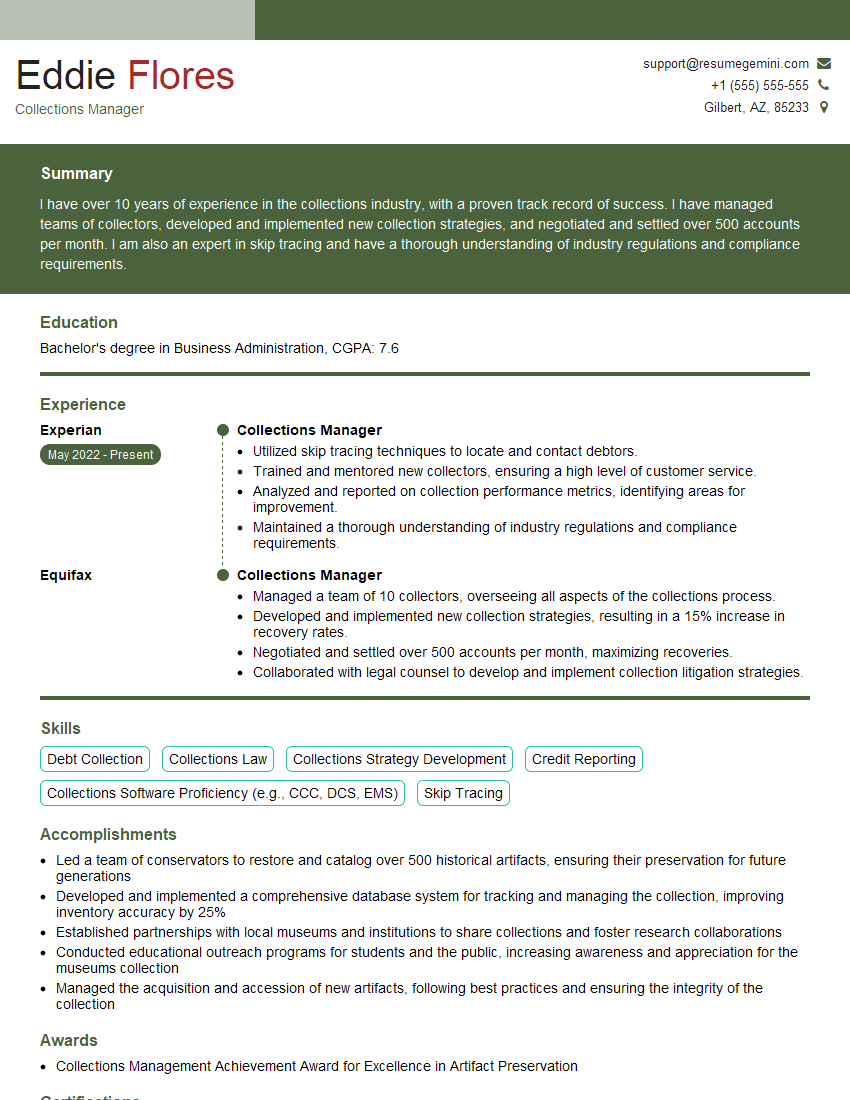
Collections Manager Resume Sample
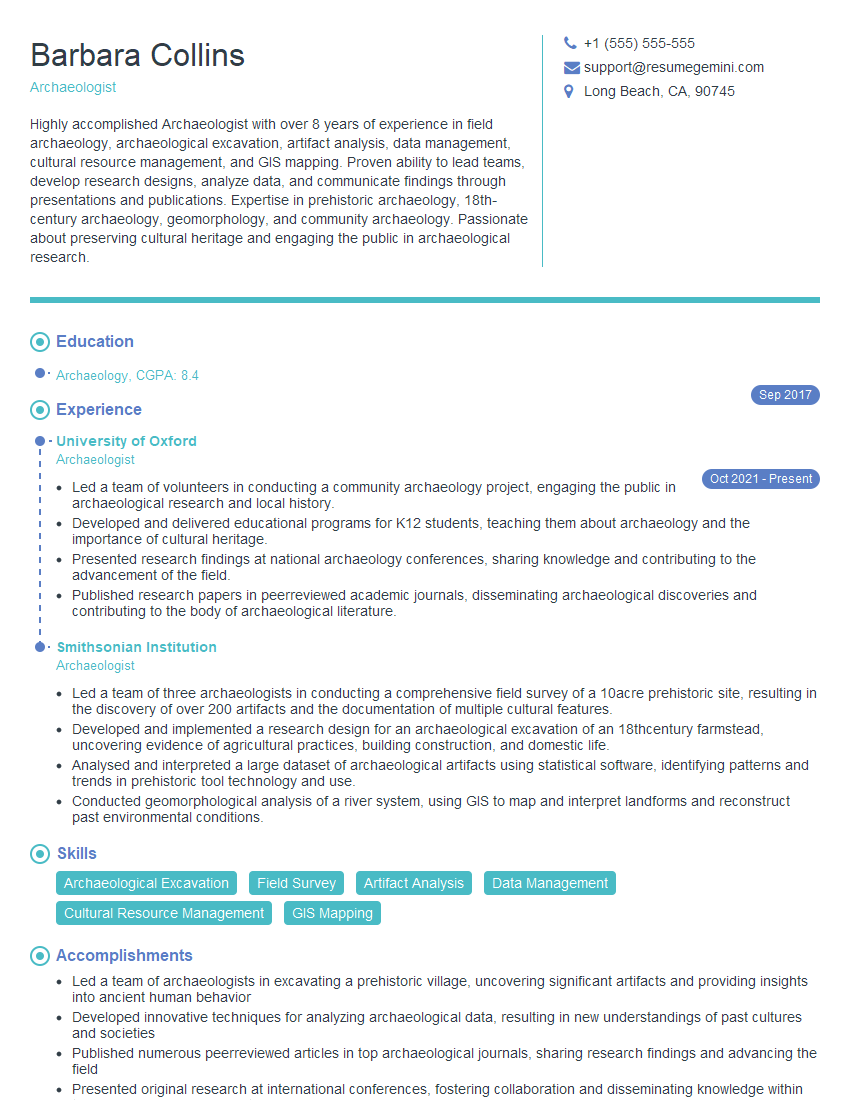
Archaeologist Resume Sample
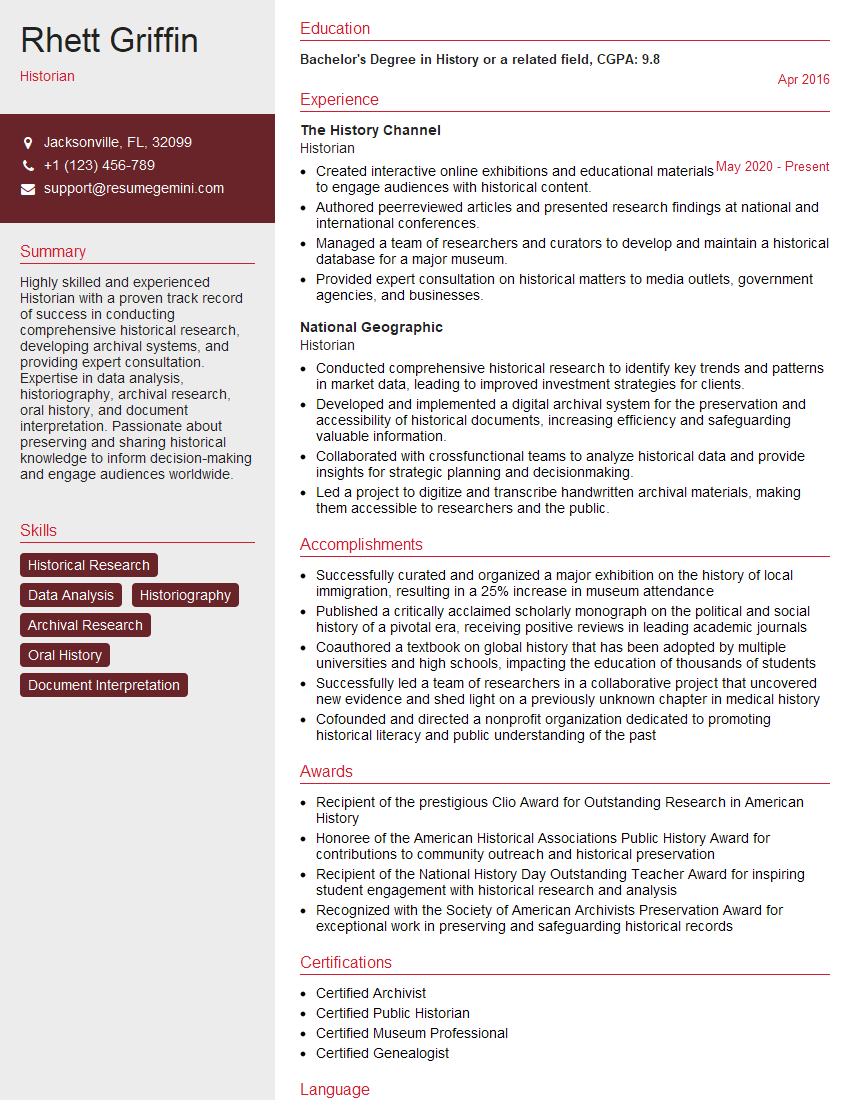
Historian Resume Sample
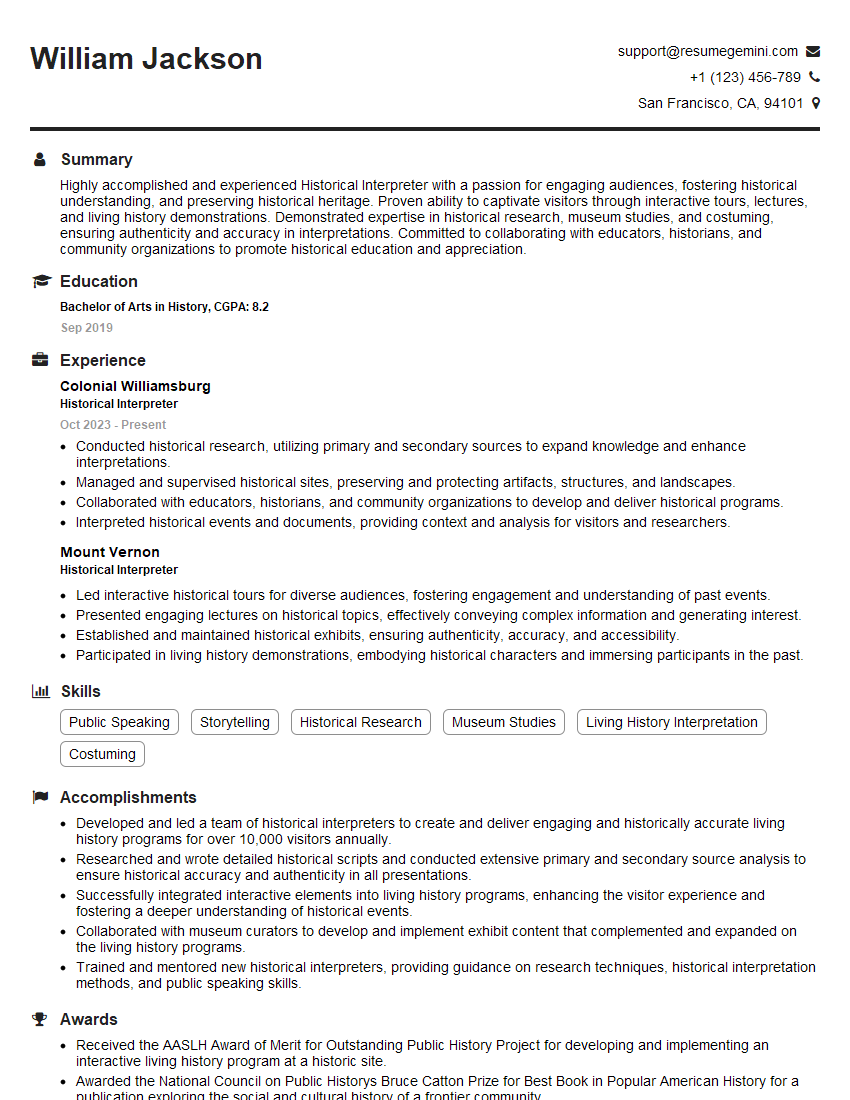
Historical Interpreter Resume Sample
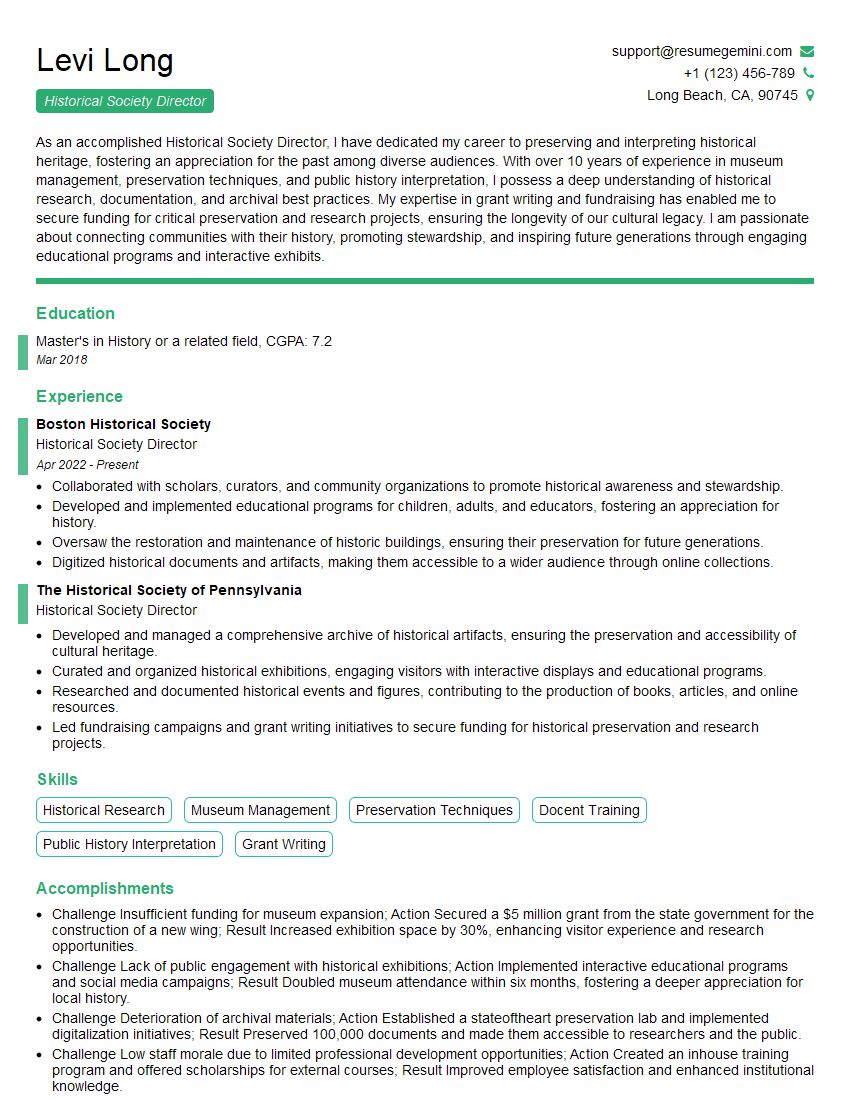
Historical Society Director Resume Sample
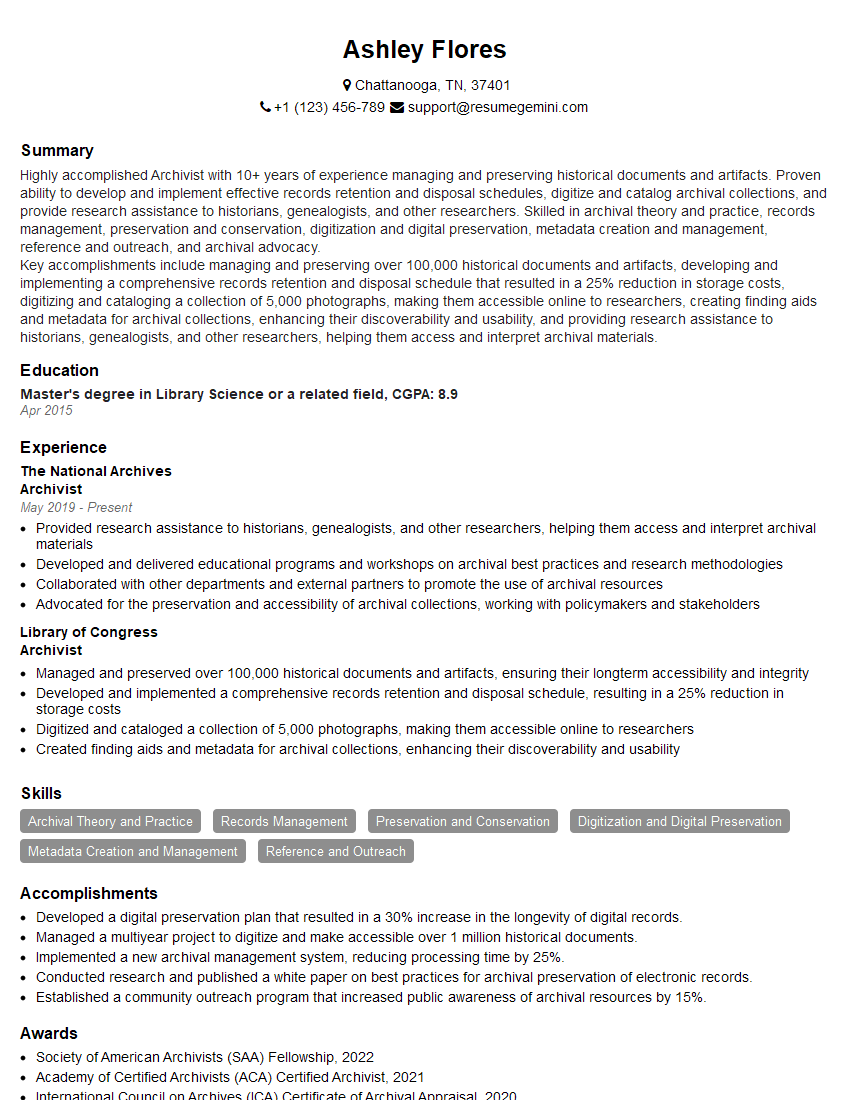
Archivist Resume Sample
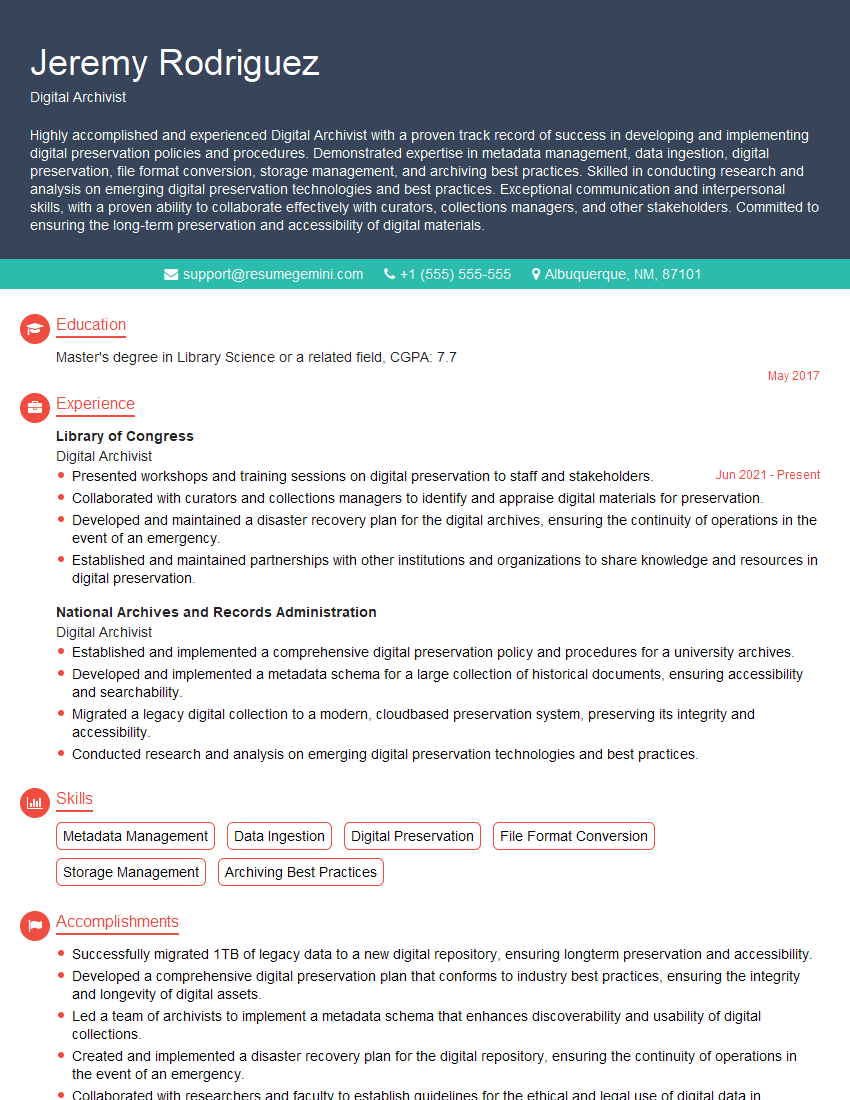
Digital Archivist Resume Sample
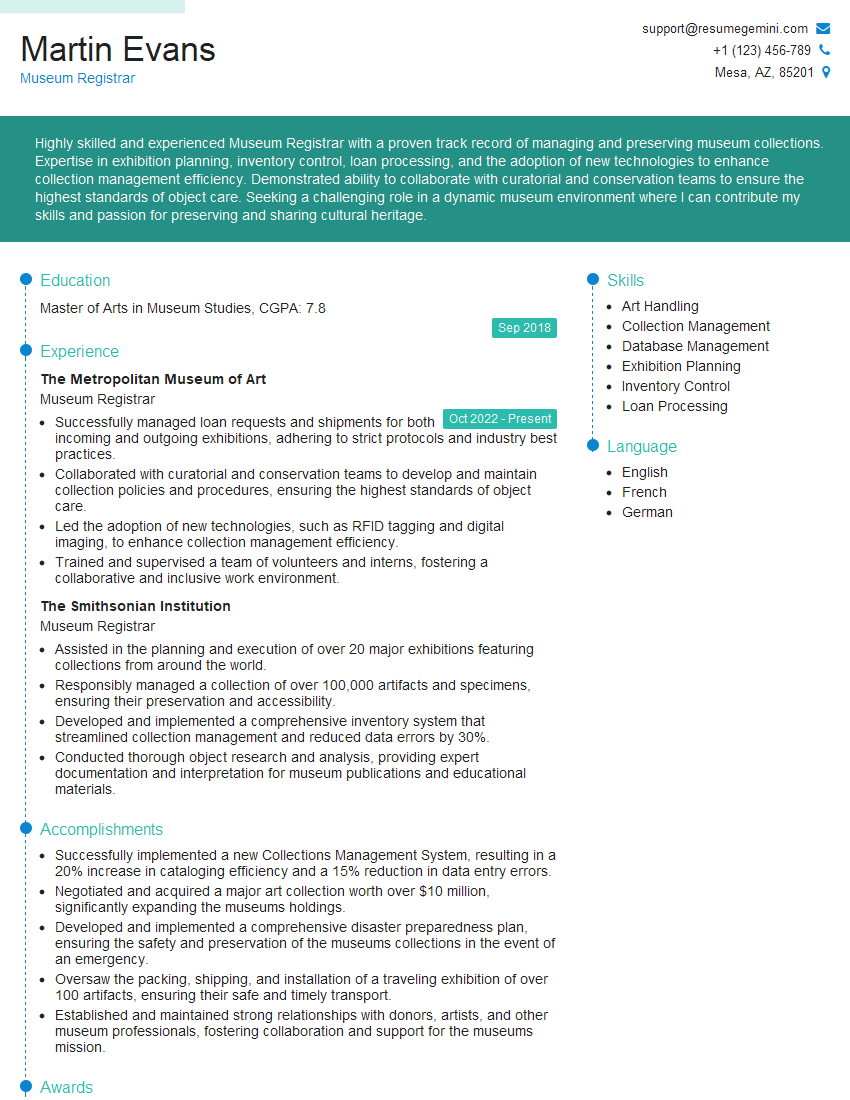
Museum Registrar Resume Sample
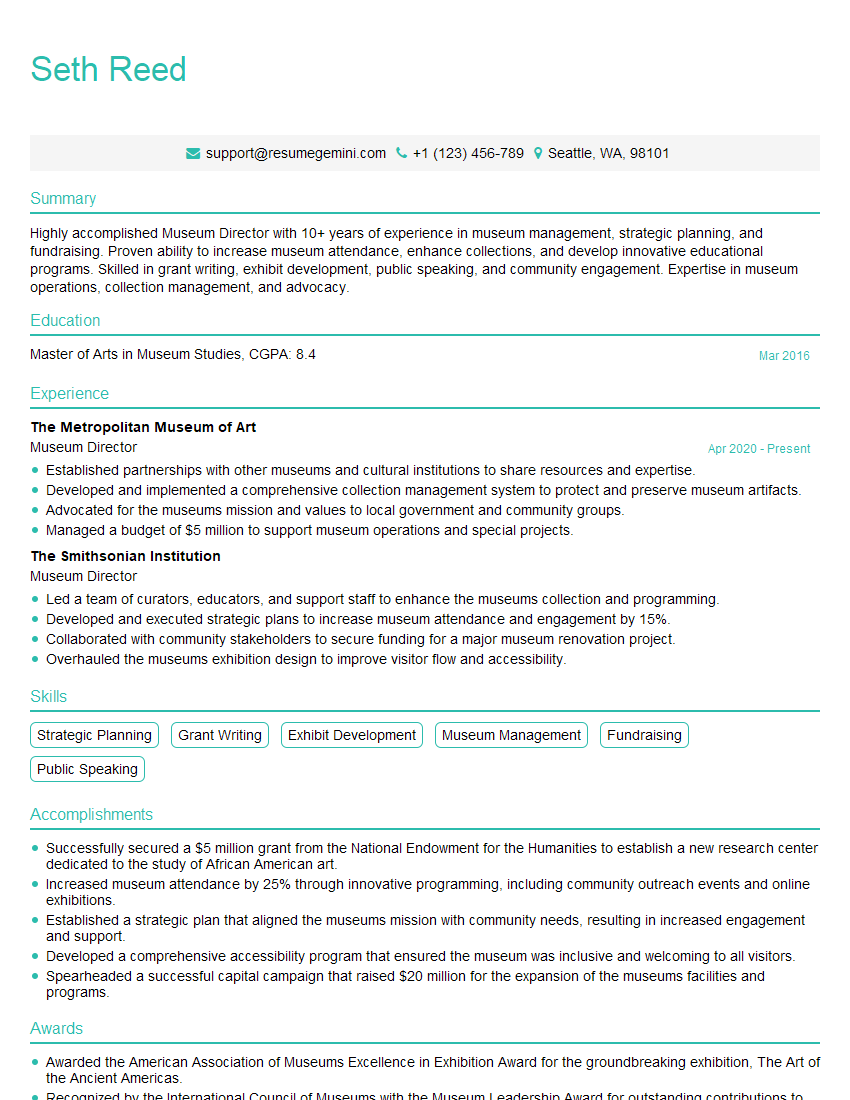
Museum Director Resume Sample
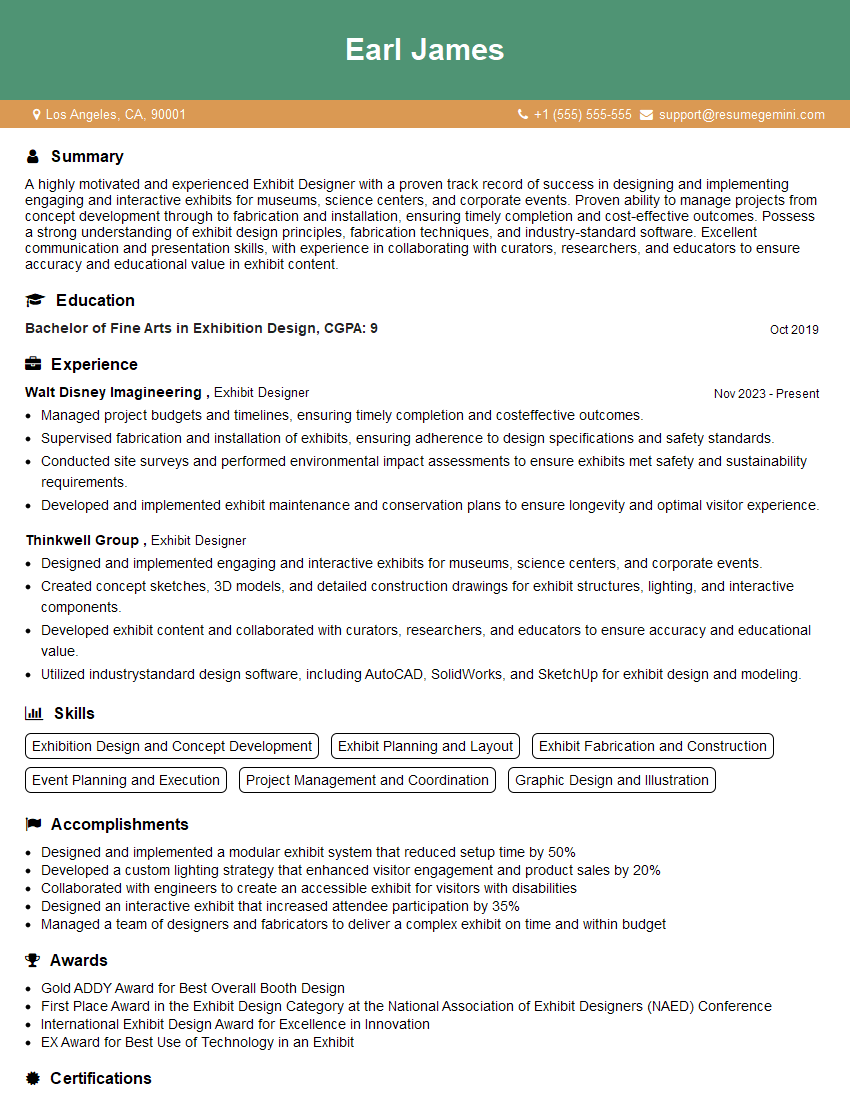
Exhibit Designer Resume Sample
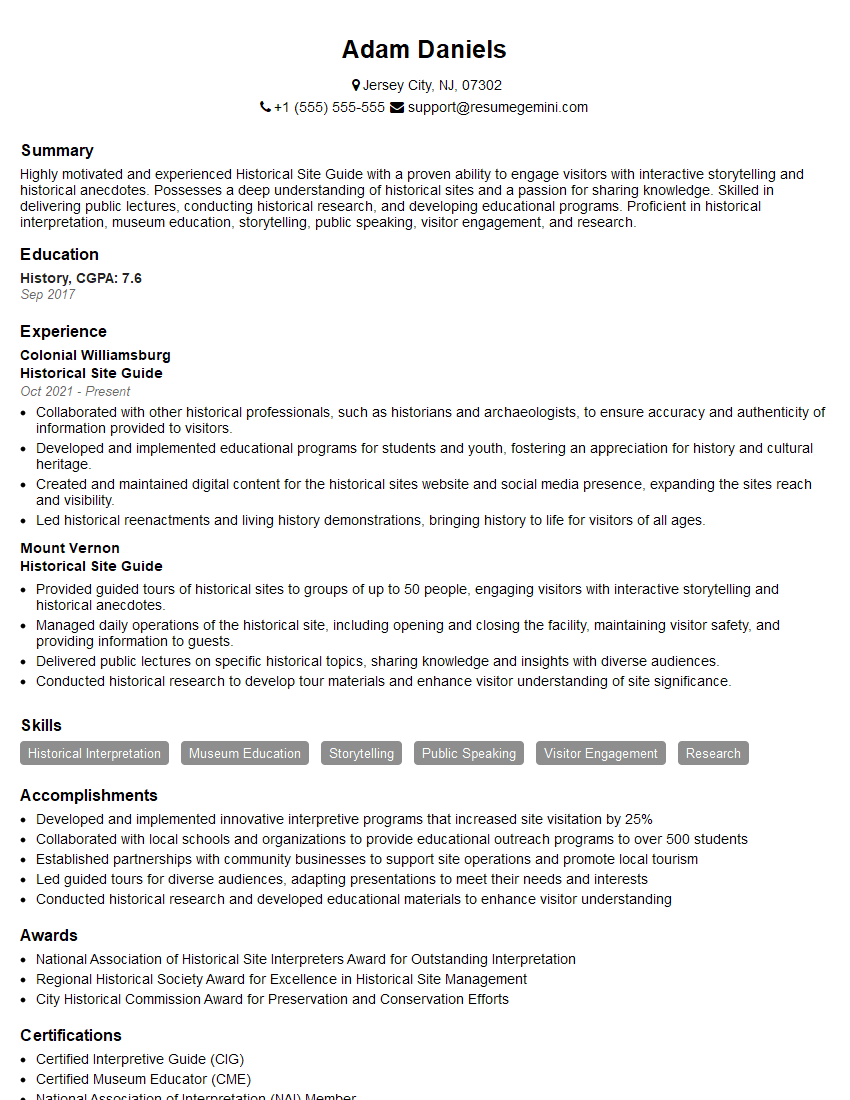
Historical Site Guide Resume Sample
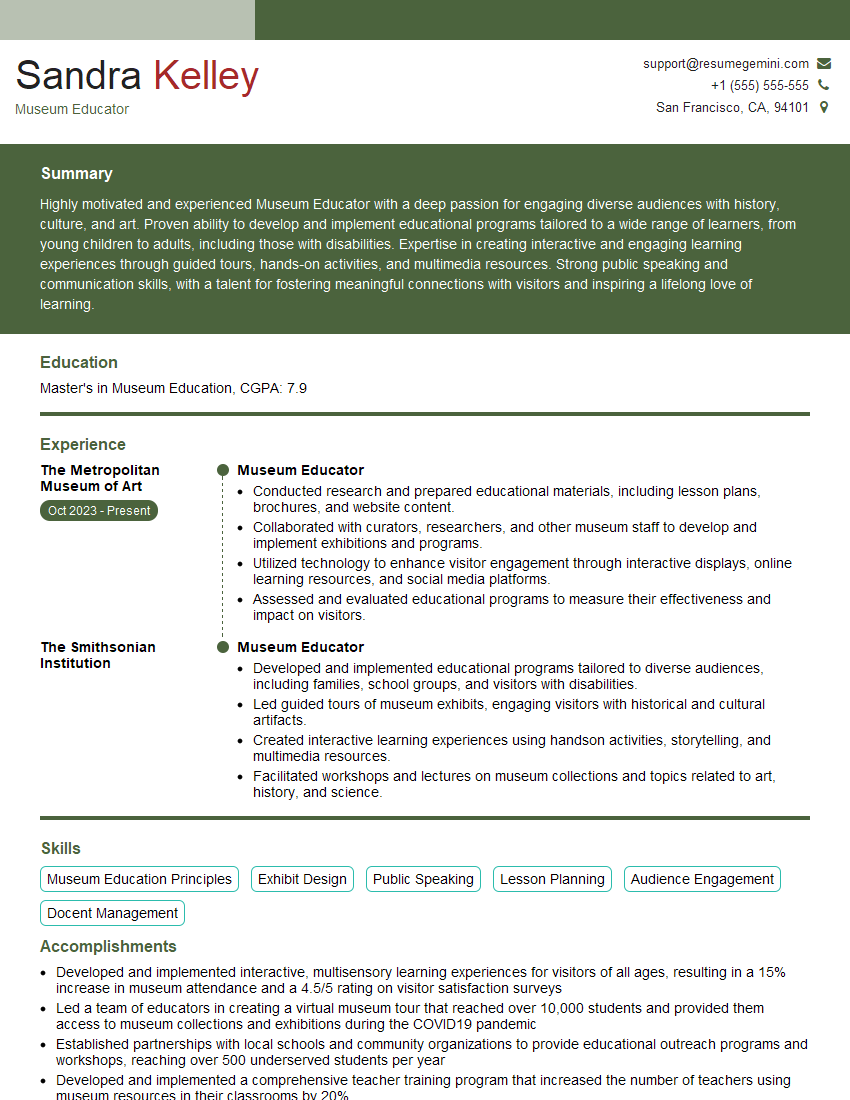
Museum Educator Resume Sample
Explore more articles
Users Rating of Our Blogs
Share Your Experience
We value your feedback! Please rate our content and share your thoughts (optional).
What Readers Say About Our Blog
Very informative content, great job.
good