Interviews are more than just a Q&A session—they’re a chance to prove your worth. This blog dives into essential Hoisting and Rigging Certification interview questions and expert tips to help you align your answers with what hiring managers are looking for. Start preparing to shine!
Questions Asked in Hoisting and Rigging Certification Interview
Q 1. What are the different types of slings used in hoisting and rigging?
Slings are the crucial link between the load and the lifting equipment. Choosing the right sling is paramount for safety and efficiency. Several types exist, each suited to different loads and applications. Common sling types include:
- Polyester Web Slings: Flexible and relatively lightweight, these are popular for general lifting. They’re often color-coded to indicate their working load limit (WLL).
- Nylon Web Slings: Similar to polyester, but offering slightly higher shock absorption. Excellent for applications where unexpected jolts might occur.
- Chain Slings: Durable and strong, chain slings are suitable for heavy-duty lifting and harsh environments. Regular inspection for wear and damage is crucial.
- Wire Rope Slings: High strength-to-weight ratio makes them suitable for heavier loads. They require more careful handling to avoid kinks and damage.
- Round Slings: These offer a 360-degree grip, minimizing load slippage. They’re commonly made of synthetic materials such as polyester or nylon.
The choice of sling depends on factors like the load’s weight, shape, and fragility, the lifting environment, and the lifting method.
Q 2. Explain the importance of load charts and how to interpret them.
Load charts are essential safety documents that provide the safe working load (SWL) for various lifting configurations. They’re critical because they prevent overloading and potential accidents. Understanding and interpreting these charts is a fundamental skill for any rigger.
A typical load chart will specify the SWL for different sling angles, sling types, and number of legs used in the lift. For example, a 3-leg sling will have a higher SWL than a 1-leg sling of the same type and material, at the same angle. The chart usually shows a graphical representation illustrating these various scenarios and their corresponding safe working loads.
Interpreting a Load Chart: First, identify the type of sling being used. Then, locate the section of the chart corresponding to that sling type. Next, determine the sling angle (the angle between the sling legs and the vertical). Finally, find the intersection of the sling angle and the number of legs used. The value at this intersection is the SWL for that specific configuration. Always err on the side of caution and never exceed the SWL stated on the chart.
Q 3. Describe the different types of knots used in rigging and their applications.
Knots play a critical role in rigging, providing secure connections and facilitating various lifting operations. However, it’s vital to choose the correct knot for the specific application, as improper knotting can lead to catastrophic failures.
- Bowline: Forms a fixed loop that won’t slip under load. Ideal for attaching a sling to a load or creating a secure connection point.
- Clove Hitch: Simple and quick to tie, but not suitable for heavy loads or critical applications. Often used as a temporary or secondary securing knot.
- Figure Eight Knot: A stopper knot used to prevent a rope from running through a pulley or other device. It’s a crucial safety knot.
- Bowline on a Bight: Creates two loops from a single rope, useful for creating a bridle (two-legged sling).
It’s important to practice tying these knots correctly and to understand their limitations. Inspect each knot carefully before lifting any load. A poorly tied knot can be a major safety hazard.
Q 4. What are the safety regulations and procedures you must follow when working with hoisting and rigging equipment?
Safety is paramount in hoisting and rigging. Adherence to strict regulations and procedures is non-negotiable. These include:
- Regular Inspections: All equipment (slings, chains, hooks, etc.) must be inspected before each use. Damaged or worn equipment must be removed from service immediately.
- Proper Training and Certification: Riggers must be properly trained and certified to understand safe practices and procedures.
- Load Capacity: Never exceed the safe working load (SWL) of any component in the lifting assembly.
- Use of Fall Protection: Appropriate fall protection measures must be in place to protect workers from potential drops.
- Communication: Clear and effective communication among the rigging team is crucial to ensure a safe lift.
- Environmental Awareness: Be aware of surrounding hazards such as overhead obstructions, power lines, or unstable ground.
- Permit-to-Work Systems: Following a formal permit-to-work system ensures all necessary risk assessments and safety checks are completed before commencing work.
Failure to adhere to these regulations can result in serious injuries or fatalities.
Q 5. How do you calculate the safe working load (SWL) of a lifting assembly?
Calculating the SWL of a lifting assembly is crucial for ensuring a safe lift. It’s not simply the SWL of the individual components. The SWL of the entire assembly is determined by the weakest link and the geometry of the lift.
Factors affecting SWL:
- Type of Sling: Different slings (e.g., chain, web, wire rope) have different SWLs.
- Number of Legs: Multiple-leg slings distribute the load, increasing the overall SWL.
- Sling Angle: As the sling angle deviates from vertical, the SWL decreases significantly. Load charts provide the necessary reduction factors for different angles.
- Component Strength: The weakest component in the assembly (hook, shackle, etc.) determines the SWL of the entire system.
Calculation: The calculation involves considering the SWL of each component and the reduction factors based on the sling angle and number of legs. This calculation is often done using load charts and specialized software.
Example: A 3-leg sling with a SWL of 10,000 lbs at a 60-degree angle would have a reduced SWL according to the chart. This would involve finding the reduction factor in the chart for 3 legs at a 60-degree angle and multiplying it by the 10,000 lbs SWL.
Q 6. What are the signs of a damaged or worn sling, and what actions should be taken?
Regular inspection of slings is critical for preventing accidents. Damaged or worn slings must be immediately removed from service. Signs of damage include:
- Cuts or Abrasions: Any cuts or abrasions, however small, weaken the sling and reduce its SWL.
- Burns or Melting: Exposure to heat can damage synthetic slings, making them brittle and prone to failure.
- Kinks or Crush Damage: Kinks concentrate stress, significantly reducing the sling’s strength. Similarly, any crushing damage compromises the sling’s integrity.
- Excessive Wear: Wear and tear from repeated use gradually reduces the sling’s strength.
- Broken Stitches (for web slings): Broken or loose stitching is a major indication of potential failure.
- Corrosion (for chain or wire rope slings): Rust or corrosion significantly weakens metal slings.
Actions to Take: If any damage is observed, the sling must be immediately removed from service and marked as defective. It should be replaced with a new, undamaged sling. Damaged slings should be properly disposed of to prevent accidental reuse.
Q 7. Explain the importance of pre-lift planning and risk assessment.
Pre-lift planning and risk assessment are crucial steps in ensuring a safe and efficient lifting operation. They prevent accidents and ensure the job is completed correctly.
Pre-lift Planning: This involves:
- Detailed Assessment of the Load: Determining the load’s weight, dimensions, center of gravity, and fragility.
- Selection of Appropriate Equipment: Choosing the right slings, crane, hooks, and other equipment based on the load characteristics and environmental conditions.
- Development of a Lifting Plan: Defining the lifting sequence, personnel roles, and communication protocols.
- Identification of Potential Hazards: Anticipating potential problems, such as overhead obstructions or unstable ground conditions.
- Establishment of Control Measures: Implementing safeguards to mitigate identified risks.
Risk Assessment: This systematic process identifies and evaluates potential hazards associated with the lift. This helps prioritize safety measures and develop appropriate control strategies. This process uses a standard framework like the ALARP (As Low As Reasonably Practicable) principle to manage risk to acceptable levels.
Thorough pre-lift planning and risk assessment significantly reduce the probability of accidents and improve overall safety.
Q 8. How do you select the appropriate lifting equipment for a specific task?
Selecting the right lifting equipment is crucial for safety and efficiency. It’s not a one-size-fits-all process; you need to consider several factors. Think of it like choosing the right tool for a job – you wouldn’t use a hammer to screw in a screw!
- Weight of the load: This is paramount. The equipment’s rated capacity (WLL – Working Load Limit) must exceed the weight of the load, incorporating safety factors.
- Dimensions and shape of the load: Oversized or oddly shaped loads require specialized equipment like spreader beams or customized slings to ensure stability and prevent damage. Imagine lifting a long steel beam – a single sling could cause it to bend, so a spreader beam distributing the weight across multiple points is necessary.
- Type of load: Fragile items need gentler handling and potentially soft slings or vacuum lifters. Hazardous materials necessitate equipment designed for their specific risks.
- Work environment: Indoor versus outdoor, confined spaces, and environmental conditions (e.g., temperature, wind) all influence equipment selection. A crane might be unsuitable for a confined space, requiring a smaller hoist instead.
- Accessibility: Can the equipment reach the load and maneuver it safely? Consider clearances, ground conditions, and potential obstructions.
Always consult load charts and manufacturer’s specifications to ensure the selected equipment is appropriate for the specific task. Failing to do so can lead to accidents and equipment failure.
Q 9. Describe the process of inspecting and maintaining hoisting and rigging equipment.
Regular inspection and maintenance are non-negotiable for hoisting and rigging equipment. Think of it as a car’s regular service; neglecting it can lead to breakdowns and accidents. A thorough inspection should be performed before each use, and more detailed inspections should be scheduled periodically based on usage and manufacturer recommendations.
- Visual inspection: Check for wear and tear, damage to cables, chains, hooks, and slings. Look for fraying, kinks, corrosion, or any signs of deformation.
- Functional testing: Test the equipment’s operation under a lighter load to ensure smooth and proper functionality. For example, operate the crane’s mechanisms, test the hoist’s braking system, and check the smooth operation of the winch.
- Documentation: Maintain detailed records of inspections and any maintenance performed. This ensures traceability and helps identify potential problems before they become major safety hazards.
- Repair and replacement: Damaged or worn-out components should be repaired or replaced immediately by qualified personnel. Never compromise on safety.
Remember: A properly maintained system is a safer system. Regular and thorough inspections are the key to preventing accidents and ensuring the longevity of your equipment.
Q 10. What are the procedures for handling different types of loads (e.g., fragile, oversized)?
Handling different types of loads requires careful planning and specialized techniques. The approach varies significantly based on the load’s characteristics.
- Fragile loads: Use soft slings (e.g., webbing slings) to prevent damage. Consider using protective padding or wrapping. Lift slowly and smoothly, avoiding sudden movements. Proper load distribution using spreader beams is essential.
- Oversized loads: Require careful planning of the lifting path, considering clearances and potential obstacles. Specialized rigging equipment like spreader beams, heavy-duty chains, and multiple slings might be necessary to ensure stability. Experienced riggers and spotters are crucial for guiding and monitoring the lift.
- Hazardous materials: Specialized equipment and procedures are needed to handle these loads safely, minimizing the risk of spills or exposure. This often includes specialized containers and personal protective equipment (PPE).
Each load presents unique challenges. Always assess the risks beforehand, plan the lift carefully, and use the appropriate equipment and techniques to ensure a safe and successful operation.
Q 11. Explain the role of a signal person in a hoisting and rigging operation.
The signal person is a vital member of the hoisting and rigging team, acting as the communication link between the crane operator and the ground crew. They are the eyes and ears of the operator, ensuring safe and controlled movement of the load. Think of them as the air traffic controller for the lift.
Their responsibilities include:
- Communicating hand signals: Using standardized hand signals to direct the crane operator, indicating the direction, speed, and height of the lift.
- Monitoring the lift: Observing the load’s movement and surrounding environment to identify potential hazards.
- Ensuring safety: Keeping the area clear of personnel and obstructions.
- Providing feedback: Alerting the crane operator and ground crew of any issues or problems.
Clear and effective communication from the signal person is paramount for a safe and successful lift. The use of standardized hand signals avoids misunderstandings and improves safety.
Q 12. What are the emergency procedures to follow in case of an accident?
Emergency procedures are vital in case of an accident. A well-defined plan can minimize injuries and damage.
- Immediately stop the operation: Secure the load and equipment. Safety is paramount – all operations cease immediately.
- Assess the situation: Determine the extent of the damage and injuries. Check for any immediate dangers like falling objects or unstable equipment.
- Render first aid: Provide first aid to any injured personnel. Ensure emergency medical services are contacted.
- Secure the area: Isolate the accident site and prevent unauthorized access.
- Report the incident: Notify the appropriate authorities, including supervisors, safety officers, and potentially law enforcement depending on the severity.
- Investigate the cause: A thorough investigation is crucial to determine the cause of the accident and prevent similar incidents in the future.
Emergency response plans should be established, communicated, and practiced regularly to ensure everyone is prepared to react effectively in the event of an accident.
Q 13. How do you communicate effectively with other workers during a lifting operation?
Effective communication is crucial during lifting operations to avoid misunderstandings and prevent accidents. It’s about clarity, precision, and using appropriate communication methods.
- Use clear and concise language: Avoid jargon and ambiguity. Use standardized terminology whenever possible.
- Employ visual aids: Diagrams, checklists, and written instructions can enhance understanding.
- Standardized hand signals: For directing the crane operator, using universally understood hand signals is vital for accuracy and safety.
- Two-way communication: Ensure there is a clear and constant flow of information between all team members, including confirmation of messages.
- Regular briefings: Before operations, provide clear briefings outlining the plan, potential hazards, and roles of each team member.
Open communication, where everyone feels comfortable raising concerns, is key to a safe working environment. Clear communication is not just good practice; it’s a critical safety measure.
Q 14. What are the limitations of different types of lifting equipment?
Different types of lifting equipment have inherent limitations that must be respected to ensure safety. Understanding these limitations is essential for selecting and operating equipment correctly.
- Rated capacity (WLL): This is the maximum weight a piece of equipment can safely lift. Exceeding this limit can lead to catastrophic failure.
- Reach and swing radius: Overhead cranes have a limited reach and swing radius. Lifting outside these limits can lead to instability and tipping.
- Height limitations: The height to which equipment can lift is limited. Attempting to lift beyond this height is unsafe.
- Environmental limitations: Wind, rain, and extreme temperatures can affect the operation and capacity of some equipment.
- Load stability: Certain load configurations might exceed the stability of the equipment. For instance, a crane might tip if the load is too far from the crane’s center.
Always operate within the manufacturer’s specifications and limitations. Failure to do so can compromise safety and cause severe damage.
Q 15. What are the different types of cranes and their applications?
Cranes are essential heavy-lifting equipment, categorized based on their design and operation. Understanding their applications is crucial for safe and efficient lifting operations.
- Tower Cranes: These are tall, freestanding cranes typically used in construction projects for lifting heavy materials to great heights. Think of the towering cranes you see on skyscraper construction sites.
- Mobile Cranes: These are self-propelled cranes mounted on a chassis, offering flexibility in moving around a job site. They are commonly used in various industries, from construction to transportation.
- Overhead Cranes: These are bridge-like structures spanning an area, often found in factories and warehouses for moving materials along production lines. Imagine the cranes used in a car manufacturing plant.
- Gantry Cranes: Similar to overhead cranes, but they run on tracks on the ground instead of being suspended from a structure. They’re excellent for lifting heavy loads over a large area, such as in shipyards or steel fabrication.
- Floating Cranes: These specialized cranes are mounted on barges or ships, used for heavy lifting in ports, offshore platforms, and underwater construction. They are vital for tasks like lifting large ship components.
Choosing the right crane depends on factors like load capacity, reach, maneuverability, and the specific job requirements. Mismatching a crane to a task can lead to accidents and equipment damage.
Career Expert Tips:
- Ace those interviews! Prepare effectively by reviewing the Top 50 Most Common Interview Questions on ResumeGemini.
- Navigate your job search with confidence! Explore a wide range of Career Tips on ResumeGemini. Learn about common challenges and recommendations to overcome them.
- Craft the perfect resume! Master the Art of Resume Writing with ResumeGemini’s guide. Showcase your unique qualifications and achievements effectively.
- Don’t miss out on holiday savings! Build your dream resume with ResumeGemini’s ATS optimized templates.
Q 16. Describe the different types of rigging hardware and their uses.
Rigging hardware forms the critical link between the load and the crane, ensuring safe and controlled lifting. Each piece plays a vital role, and proper selection is paramount.
- Shackles: These are U-shaped metal fasteners with a screw pin or a locking mechanism, used to connect different rigging components.
- Slings: These are made from various materials like wire rope, synthetic webbing, or chains and are used to support and secure the load. Selecting the right sling material for the load and environment is critical.
- Hooks: These are essential for attaching slings to the crane and the load. They come in various designs to accommodate different types of loads and slings.
- Eye Bolts: These are threaded bolts with an eye at the top, used to attach slings to loads with a secure connection point.
- Turnbuckles: These are used to adjust the tension in a rigging system, ensuring the load is evenly distributed and secure.
- Wire Rope Clips (Clamps): Used to secure wire ropes and prevent fraying. They must be installed correctly with the correct number of clips to prevent slippage.
Regular inspection of all rigging hardware is critical for safety. Damaged or worn-out equipment must be replaced immediately to prevent accidents.
Q 17. Explain the concept of center of gravity and its importance in rigging.
The center of gravity (CG) is the point where the weight of an object is evenly distributed. In rigging, understanding the CG is vital because it directly impacts the stability and safety of the lift.
Imagine a seesaw; if you place a heavier weight closer to the center, it balances easier than if the weight is far out on one end. The same principle applies to lifting objects. A load with its CG off-center is much harder to control and more likely to swing or tip during lifting.
Importance in Rigging:
- Stability: Knowing the CG helps determine the best way to lift the load, minimizing sway and preventing tipping.
- Load Distribution: Proper sling placement considering the CG ensures even weight distribution across the slings and the crane’s hook.
- Safety: Incorrect CG assessment can lead to uncontrolled load movement, resulting in accidents and potential injury.
Determining the CG might involve calculations or practical estimations. In complex scenarios, experienced riggers might use specialized software or consult with engineers for complex calculations.
Q 18. How do you prevent load sway during a lifting operation?
Load sway during lifting is a major safety hazard. Several techniques are used to minimize or prevent it.
- Smooth Crane Operations: The crane operator must perform slow, controlled movements, avoiding jerky starts and stops.
- Proper Rigging Techniques: Ensuring the load is properly balanced and secured with appropriate slings minimizes sway. Correct sling angles are crucial.
- Appropriate Sling Length: Too short or too long slings can contribute to sway. The optimal length is critical.
- Tag Lines: These are smaller ropes or straps used by ground personnel to guide the load and mitigate any unexpected movement. They’re essential for preventing uncontrolled sway, especially in windy conditions.
- Avoid Wind: Lifting in windy conditions significantly increases the risk of load sway and should be avoided if possible. Postponing the lift until wind conditions improve is usually the safest choice.
Preventing load sway is a team effort between the crane operator, rigger, and ground crew. Effective communication and coordination are vital for a safe lift.
Q 19. What are the factors that affect the stability of a load?
Several factors contribute to the stability of a load during a lift. Neglecting any of these can result in a dangerous situation.
- Load Distribution: Even weight distribution across all slings and attachment points is critical. Uneven distribution increases the risk of sway and instability.
- Center of Gravity: As discussed earlier, the position of the CG significantly affects stability. A higher CG makes the load more susceptible to tipping or swaying.
- Load Size and Shape: Irregularly shaped or oversized loads require more careful rigging and handling to maintain stability.
- Sling Angle: Using slings at incorrect angles can reduce the load’s stability, leading to sway and potential accidents.
- Weather Conditions: Wind can dramatically impact load stability, and rain or snow can affect the load’s weight and grip.
- Rigging Hardware Condition: Using damaged or worn-out rigging hardware compromises load stability and can cause failures.
A comprehensive risk assessment should be conducted before any lift to identify potential instability issues and implement appropriate mitigation measures.
Q 20. What are the responsibilities of a rigger in ensuring workplace safety?
A rigger’s responsibilities extend beyond just the physical aspects of lifting; workplace safety is paramount. Their role is critical in ensuring that all lifting operations are conducted safely and efficiently.
- Pre-Lift Inspection: Riggers must thoroughly inspect all rigging hardware, crane components, and the load itself before each lift, ensuring everything is in good working order.
- Rigging Plan Development: They develop and implement appropriate rigging plans that include proper sling selection, attachment points, and lifting procedures.
- Communication: Clear communication with the crane operator and ground crew is crucial for coordinating the lift and managing potential hazards.
- Hazard Identification and Mitigation: Riggers must proactively identify potential hazards and implement measures to mitigate risks, such as load sway prevention techniques.
- Compliance with Regulations: Adherence to all relevant safety regulations, codes, and standards is mandatory for all rigging operations.
- Training and Supervision: If supervising others, ensuring they are properly trained and understand their roles in the lifting operation is paramount.
The rigger’s vigilance and commitment to safety directly impact the wellbeing of everyone on the job site.
Q 21. Describe your experience with different types of hoisting equipment.
Throughout my career, I’ve worked extensively with various hoisting equipment, gaining hands-on experience and developing a strong understanding of their capabilities and limitations.
- Electric Chain Hoists: I’ve used these frequently in industrial settings for lifting moderate loads with precision control. Their compact size and ease of use make them versatile for many applications.
- Pneumatic Hoists: These are ideal in environments with high levels of moisture or where sparks are a concern, providing powerful lifting capabilities in challenging conditions.
- Hydraulic Hoists: These offer smooth and powerful lifting, particularly useful for heavier loads where precise control is needed. I’ve used them extensively in construction and manufacturing.
- Overhead Crane Systems: I have extensive experience operating and rigging for various overhead crane systems, from simple single-girder cranes to complex multi-girder systems.
My experience includes not just operation but also maintenance and inspection of these systems, ensuring they are always in optimal working condition. I’m familiar with a range of safety procedures and regulations relevant to each piece of equipment.
One project that stands out involved using a specialized hydraulic hoist to lift a delicate piece of machinery in a sensitive manufacturing setting. Precise control and careful planning were vital to prevent damage to the equipment, and the successful operation of the lift was a testament to a well-executed rigging plan.
Q 22. Explain your knowledge of different types of rigging techniques.
Rigging techniques are diverse, chosen based on the load’s characteristics, the environment, and the available equipment. They can be broadly categorized into several key types:
- Basic Rigging: This involves simple lifts using basic equipment like slings, shackles, and hooks. Think of lifting a small engine with a single chain sling – straightforward but requiring careful attention to weight distribution and angle.
- Complex Rigging: This involves multiple points of attachment, specialized equipment (e.g., spreader beams, load balancers), and intricate calculations to ensure load stability and safety during lifts of larger or unusually shaped objects. Imagine lifting a prefabricated house section – multiple slings and a crane are required, necessitating precise coordination and planning.
- Directional Rigging: This involves controlling the load’s direction during the lift, often using guide systems, pulleys, and winches. A common example is controlled lowering of equipment into a confined space, ensuring it doesn’t collide with anything.
- Specialized Rigging: This category includes techniques specific to certain industries or tasks, such as underwater rigging, helicopter rigging, or high-angle rigging. Each involves specialized equipment, training, and safety protocols.
Understanding the nuances of each technique is crucial for selecting the safest and most efficient method for any given job. Proper training and experience are essential to mitigate risks.
Q 23. How do you handle unexpected problems during a lifting operation?
Unexpected problems during lifting operations require immediate, decisive action. My approach involves:
- Immediate Stop: Halt the operation immediately upon noticing any anomaly. Safety is paramount.
- Assessment: Carefully assess the situation. Is it a equipment malfunction, a load shift, weather interference, or something else?
- Communication: Communicate clearly and concisely with the team, crane operator, and any other relevant personnel. Explain the problem and the proposed solution.
- Problem Solving: Based on the assessment, develop a safe solution. This might involve re-rigging, using alternative equipment, or seeking expert advice.
- Documentation: Thoroughly document the incident, including the problem, the solution, and any lessons learned. This helps prevent similar incidents in the future.
For instance, if a sling shows signs of damage during a lift, I’d immediately stop the operation, inspect the sling, and replace it before resuming, thoroughly documenting the faulty sling’s removal and replacement.
Q 24. What are your strategies for working safely at heights?
Working safely at heights demands a multi-faceted approach:
- Proper Training: Comprehensive training in fall protection techniques, including the proper use of harnesses, lanyards, and anchor points, is mandatory.
- Equipment Inspection: Regularly inspect all equipment, including harnesses, ropes, and anchor points, to ensure they are in good working order. Damaged equipment should be immediately replaced.
- Fall Protection Systems: Employ appropriate fall protection systems, such as guardrails, safety nets, or personal fall arrest systems, depending on the specific task and environment.
- Risk Assessment: Conduct a thorough risk assessment before starting any work at heights, identifying and mitigating potential hazards.
- Safe Work Practices: Adhere to safe work practices, such as maintaining three points of contact when climbing, using appropriate tools, and avoiding distractions.
Imagine working on a high-rise building – a thorough risk assessment might identify wind speed as a critical factor and dictate working only within a specific wind range, or using specialized fall arrest equipment rated for higher wind conditions.
Q 25. Describe your experience working with complex rigging setups.
I have extensive experience with complex rigging setups, including those involving multiple cranes, heavy lifts, and intricate load configurations. These projects demand meticulous planning and precise execution. My experience includes:
- Detailed Load Calculations: Performing accurate load calculations to determine the appropriate equipment and rigging configuration. Software and engineering principles are used to mitigate risks.
- Rigging Diagrams: Creating detailed rigging diagrams that clearly illustrate the equipment, attachment points, and safety procedures. These drawings serve as a critical part of the pre-lift planning and serve as a reference during the lift.
- Coordination and Communication: Efficiently coordinating the efforts of multiple crane operators, riggers, and other personnel to ensure a safe and efficient lift. Clear communication is essential for avoiding mishaps.
- Troubleshooting: Addressing unexpected challenges and implementing contingency plans to maintain safety and efficiency. Adaptability is a key skill in this area.
For example, during the installation of large industrial equipment, I’ve overseen the planning and execution of lifts requiring multiple cranes and sophisticated load-distribution systems, ensuring everything went according to plan and safely.
Q 26. How do you ensure the proper use of personal protective equipment (PPE)?
Ensuring the proper use of PPE is critical. My strategy involves:
- Proper Selection: Selecting appropriate PPE for the specific task, considering potential hazards. This includes helmets, safety glasses, gloves, high-visibility clothing, and fall protection equipment.
- Training: Providing comprehensive training to all personnel on the proper use, inspection, and maintenance of PPE. This ensures all users understand how to correctly use the equipment and when replacement is required.
- Inspection: Regularly inspecting PPE for damage or wear and tear and replacing damaged items immediately. A pre-shift inspection checklist is a valuable tool.
- Enforcement: Enforcing the consistent use of PPE by all personnel. This includes regular monitoring and providing feedback and retraining as needed.
- Proper Storage: Ensuring that PPE is stored correctly to maintain its integrity and prevent damage.
For instance, if a worker is using a damaged hard hat, I would immediately intervene, provide a replacement, and reinforce the importance of regular equipment checks to prevent accidents.
Q 27. What are the legal requirements related to hoisting and rigging in your region?
(Note: Legal requirements vary significantly by region. The following is a general overview and should not be considered legal advice. Always consult local regulations and relevant standards.)
In many regions, hoisting and rigging operations are subject to stringent legal requirements, often encompassing:
- Licensing and Certification: Riggers and crane operators often need specific licenses or certifications demonstrating competency and adherence to safety standards.
- Equipment Standards: Regular inspection and maintenance of hoisting and rigging equipment are mandated, adhering to industry-specific standards. Documentation of these inspections is crucial.
- Safety Regulations: Stringent safety regulations dictate safe work practices, including risk assessments, fall protection measures, and emergency procedures.
- Reporting Requirements: Accidents or near-miss incidents must be reported to the relevant authorities, allowing for investigations and preventative measures.
Ignoring these requirements can lead to significant penalties and, more importantly, jeopardizes worker safety.
Q 28. Describe a time you had to solve a challenging rigging problem.
During a refinery turnaround, we faced a challenge lifting a massive heat exchanger. The access was severely limited, and the exchanger’s unusual shape made traditional rigging methods risky. The initial plan involved a single-point lift, but the risk of instability was too high.
My solution involved designing a multi-point lifting system using spreader beams and multiple slings. We carefully calculated the load distribution to minimize stress on any single point. We also utilized a load monitoring system to continuously track the weight distribution and stability of the lift throughout the operation.
This multifaceted approach required meticulous planning, collaboration among the rigging crew, and precise communication with the crane operator. Successfully completing the lift not only demonstrated problem-solving skills but also reinforced the importance of planning, teamwork, and risk mitigation in complex rigging scenarios.
Key Topics to Learn for Hoisting and Rigging Certification Interview
Ace your Hoisting and Rigging Certification interview by mastering these key areas. Focus on understanding both the theory and practical application of each concept – this will demonstrate a well-rounded understanding crucial for success in the field.
- Fundamental Principles of Mechanics: Understanding concepts like forces, tension, weight distribution, and center of gravity is paramount for safe rigging practices. Consider how these principles apply in real-world scenarios.
- Types of Hoisting Equipment: Familiarize yourself with various types of hoists, cranes, and lifting devices, including their capabilities, limitations, and appropriate applications. Be prepared to discuss their maintenance and safety procedures.
- Rigging Hardware and Techniques: Master the knowledge of different slings, shackles, hooks, and other rigging hardware. Understand proper inspection, selection, and usage for various lifting operations. Practice applying different rigging techniques for diverse loads and environments.
- Safe Work Practices and Regulations: Thoroughly understand relevant safety regulations, procedures, and best practices for hoisting and rigging operations. This includes risk assessment, hazard identification, and accident prevention strategies.
- Load Calculations and Stability: Practice calculating safe working loads, understanding load charts, and ensuring stability during lifting operations. Be prepared to discuss how to compensate for environmental factors impacting stability.
- Troubleshooting and Problem-Solving: Develop your ability to identify and troubleshoot potential problems during lifting operations. Be ready to discuss how you would approach and resolve common challenges encountered in the field.
- Communication and Teamwork: Effective communication and teamwork are crucial in this field. Be prepared to discuss how you collaborate with others to ensure safe and efficient operations.
Next Steps
Earning your Hoisting and Rigging Certification opens doors to exciting career opportunities with significant earning potential and professional growth. To maximize your chances of landing your dream job, it’s crucial to present yourself effectively. Creating a strong, ATS-friendly resume is the first step in showcasing your skills and experience to potential employers.
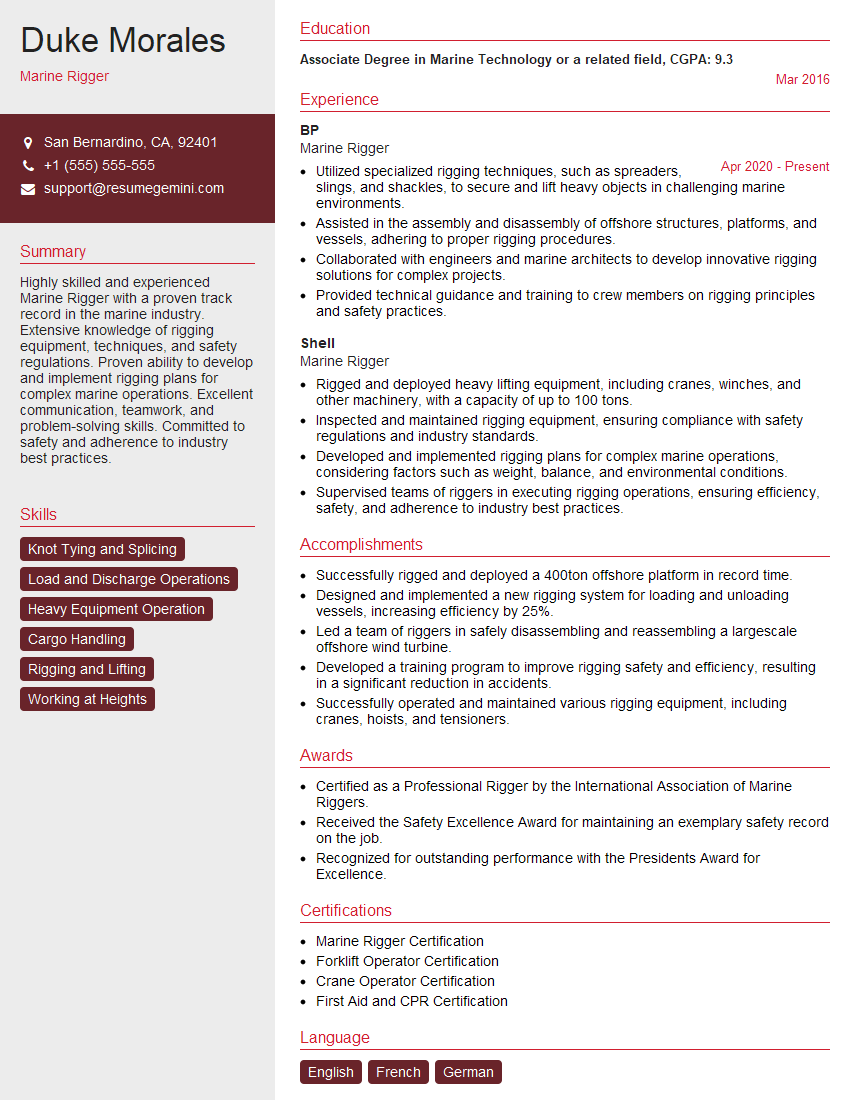
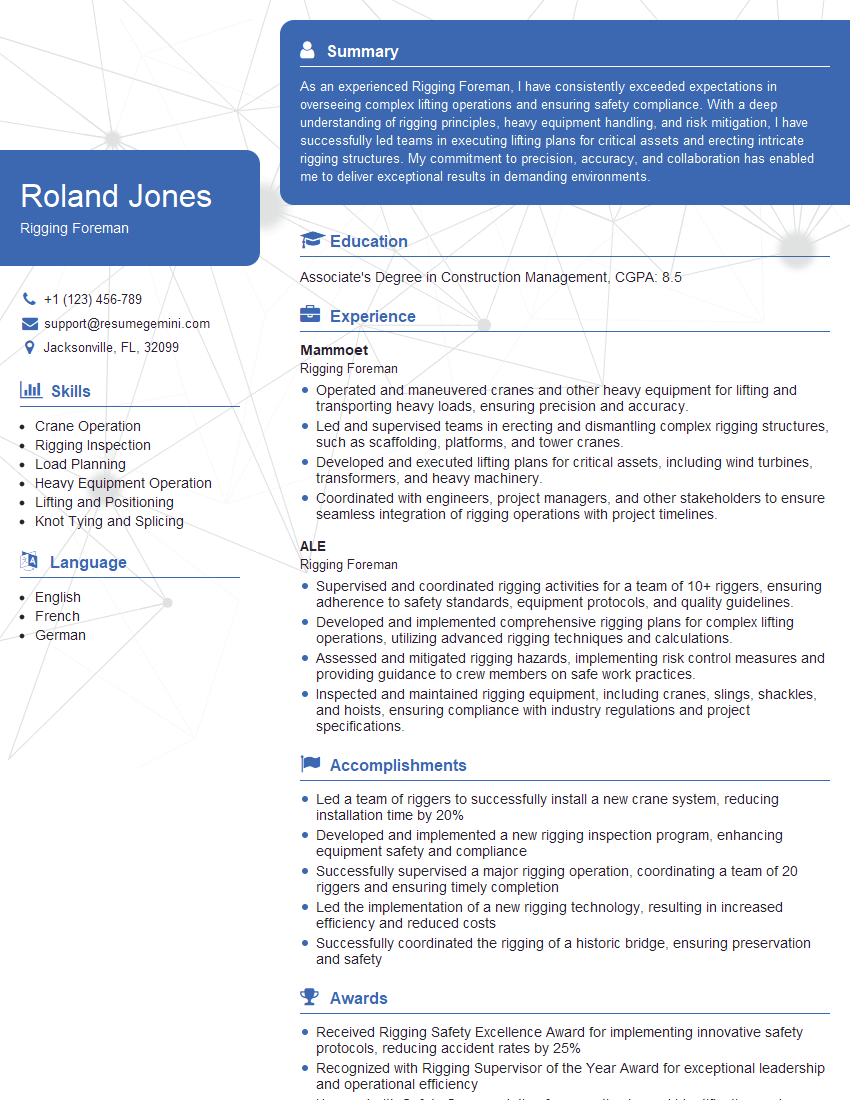
We highly recommend using ResumeGemini to build a professional resume that truly highlights your qualifications. ResumeGemini provides a user-friendly platform and resources to craft a compelling document that gets noticed. Examples of resumes tailored to Hoisting and Rigging Certification are available to guide you. Invest the time to create a resume that accurately reflects your expertise and helps you stand out from the competition.




Explore more articles
Users Rating of Our Blogs
Share Your Experience
We value your feedback! Please rate our content and share your thoughts (optional).
What Readers Say About Our Blog
Very informative content, great job.
good