Every successful interview starts with knowing what to expect. In this blog, we’ll take you through the top HOMER Pro for Renewable Energy Simulation interview questions, breaking them down with expert tips to help you deliver impactful answers. Step into your next interview fully prepared and ready to succeed.
Questions Asked in HOMER Pro for Renewable Energy Simulation Interview
Q 1. Explain the different optimization algorithms available in HOMER Pro and their applications.
HOMER Pro offers several optimization algorithms to find the most cost-effective and reliable microgrid design. The choice depends on the project’s complexity and computational resources.
- Linear Programming (LP): This is the fastest and most commonly used algorithm. It’s suitable for smaller projects with straightforward constraints. Think of it as finding the best solution within a clearly defined set of possibilities. It’s efficient but might miss optimal solutions if the problem is highly nonlinear.
- Mixed Integer Linear Programming (MILP): This extends LP by allowing for integer variables, useful when dealing with discrete choices like the number of generators or the size of battery banks. For instance, you can’t install half a wind turbine, so MILP handles this elegantly. It’s more computationally intensive than LP.
- Dynamic Programming (DP): This approach is better suited for systems with high temporal variability, particularly when the time-dependent behavior of components (like batteries) plays a significant role. It’s powerful but computationally demanding, making it less practical for very large systems.
- Genetic Algorithm (GA): This is a stochastic (randomized) method that explores a wide range of possible solutions. It’s particularly useful for complex problems where the optimal solution isn’t easily identifiable and for non-linear systems. However, it might not guarantee finding the absolute best solution but can often find a good solution quickly.
Choosing the right algorithm is a balance between accuracy and computational time. For smaller, simpler systems, LP often suffices. As complexity increases, MILP or even GA might be necessary for comprehensive optimization.
Q 2. Describe the process of defining load profiles in HOMER Pro for accurate simulation.
Accurate load profiles are crucial for reliable HOMER Pro simulations. They represent the electricity demand over time, influencing the sizing and operation of renewable energy and backup systems. Defining these profiles typically involves the following steps:
- Data Collection: Gather historical load data. Ideally, you’d have a year’s worth of hourly data, representing typical daily and seasonal variations. Sources include utility bills, smart meters, or energy monitoring systems. If historical data is unavailable, you might have to use estimation techniques.
- Data Processing: Clean the data, removing outliers and addressing missing values. You might need to use interpolation or smoothing techniques to fill gaps or smooth out inconsistencies in the data.
- Load Profile Creation: Import the processed data into HOMER Pro. You can directly input the hourly data or use built-in load profile templates (e.g., residential, commercial, industrial) as a starting point. Then, you can adjust these templates based on your collected data or estimates to better reflect your specific needs.
- Validation: Compare your modeled load profiles with actual load data (if available) to assess their accuracy. If the discrepancies are significant, you’ll need to refine your data and repeat the process. This iterative refinement step is essential to ensuring simulation realism.
For example, a hospital might have a relatively constant baseload, with peaks during certain times of the day or year. A residential area would have a more variable profile with higher loads in the evenings.
Q 3. How do you handle uncertainty in renewable energy resource availability within a HOMER Pro model?
Uncertainty in renewable energy resource availability is a major challenge. HOMER Pro addresses this through several methods:
- Probabilistic Modeling: Instead of using single values for resource availability (e.g., average solar irradiance), use probability distributions. This represents the variability and uncertainty associated with weather patterns. For instance, you might input a distribution reflecting the range of solar irradiance values expected at your site.
- Scenario Analysis: Run multiple simulations with different input parameters reflecting various potential scenarios (e.g., high solar, low wind). This allows you to assess the system’s resilience under varying conditions. For example, one scenario could focus on a long period of low sunlight, while another could focus on abnormally high wind.
- Capacity Factors: Instead of using power output directly, use capacity factors. The capacity factor is the ratio of actual power output to the rated power capacity of the renewable generation resource (e.g., a solar panel rarely reaches full output). By providing a range or probability distribution for the capacity factors, you incorporate the uncertainty.
Combining these methods lets you assess the reliability and cost-effectiveness of the microgrid design under uncertain conditions, leading to more robust and informed decision-making.
Q 4. Explain the significance of the ‘Levelized Cost of Energy’ (LCOE) in HOMER Pro analysis.
The Levelized Cost of Energy (LCOE) in HOMER Pro is a crucial metric representing the average cost of generating one kilowatt-hour (kWh) of electricity over the entire lifetime of the microgrid system. It’s a key decision-making tool.
It considers all costs: capital costs (initial investment in equipment), operation and maintenance costs (annual expenses), fuel costs (if applicable), and the replacement costs of components. These costs are discounted to their present values and then averaged over the system’s lifetime (usually 20-25 years). A lower LCOE generally signifies a more economical system.
For example, comparing an LCOE of $0.15/kWh for a system with high renewables and battery storage against an LCOE of $0.20/kWh for a system relying heavily on diesel generators clarifies the economic advantages of the former. The LCOE helps in comparing different design options and choosing the most financially viable solution.
Q 5. What are the key factors influencing the selection of renewable energy resources in HOMER Pro?
Several factors heavily influence renewable energy resource selection in HOMER Pro:
- Resource Availability: The amount of solar radiation, wind speed, hydropower potential, etc. at the site. This is assessed through resource assessments and meteorological data. A location with high solar irradiance is ideal for solar PV, while a consistently windy area is good for wind turbines.
- Cost: The initial capital cost, operational and maintenance costs, and lifetime costs of different renewable energy technologies. Wind turbines, for example, have high capital costs but low operational costs, while solar PV has lower capital costs but might require more frequent maintenance.
- Technology Maturity: The reliability and proven track record of different technologies. Established technologies like solar PV and wind turbines are generally preferred over emerging technologies due to their lower risk.
- Environmental Impacts: The ecological footprint of the chosen renewable energy technologies, including land use, habitat disruption, and visual impact. HOMER Pro doesn’t directly model environmental impacts, but this is a crucial consideration during the decision-making process.
- Grid Connection: The availability and cost of grid connection affect the choice of renewable technologies and their integration strategy. A remote location might favor standalone systems with substantial energy storage.
HOMER Pro’s optimization algorithms consider these factors to determine the optimal combination of renewable resources that minimizes LCOE while meeting reliability requirements.
Q 6. How do you interpret the results generated by HOMER Pro, including key performance indicators?
Interpreting HOMER Pro results involves understanding various key performance indicators (KPIs). The software provides comprehensive reports and visualizations, but understanding these is key.
- LCOE: As discussed earlier, this is the most important economic metric, indicating the cost per kWh over the system’s lifetime.
- Net Present Cost (NPC): The total discounted cost of owning and operating the system over its lifetime. A lower NPC implies a more cost-effective system.
- Renewable Fraction: The percentage of electricity generated from renewable sources. This helps evaluate the environmental impact of the system.
- Loss of Load Probability (LOLP): The probability that the system will fail to meet the demand, indicating system reliability. A lower LOLP means higher reliability.
- Capacity Shortfall Hours: The number of hours during which the system’s capacity is insufficient to meet the demand, reflecting the system’s ability to manage peak loads.
- Emissions: The amount of greenhouse gases emitted by the system, usually measured in tons of CO2 per year. This is critical for sustainability assessments.
HOMER Pro presents these KPIs in tables, charts, and graphs. Analyzing the trade-offs between these KPIs allows you to choose a design that balances cost, reliability, and sustainability goals. For example, increasing the renewable fraction might increase the NPC but lower emissions.
Q 7. Describe the process of modeling energy storage systems in HOMER Pro.
Modeling energy storage systems in HOMER Pro is crucial for improving the reliability and economic viability of renewable-based microgrids. The process involves several steps:
- Storage Technology Selection: Choose the type of storage (batteries, pumped hydro, compressed air, etc.). Each has its own characteristics in terms of cost, efficiency, lifespan, and power/energy ratings. Battery storage is the most commonly modeled type.
- Sizing the Storage System: Specify the storage capacity (kWh) and power rating (kW). These parameters significantly impact the system’s performance. Larger capacities store more energy but are more expensive. Higher power ratings allow faster charging/discharging, improving the ability to handle load fluctuations.
- Defining Storage Parameters: Input parameters like round-trip efficiency, depth of discharge, lifetime, and replacement cost. These parameters reflect the technological characteristics of the storage system and are essential for accurate cost and performance modeling.
- Defining Storage Operation Strategies: HOMER Pro offers different strategies. Common strategies include charging when renewable generation exceeds demand and discharging when demand exceeds generation. The best strategy depends on the specific system configuration and resource availability.
- Integrating with Other Components: Connect the energy storage system to other components in the microgrid model. This includes renewable generation sources, diesel generators, and loads. The software will then optimize the overall system operation, considering the energy storage system’s role in improving reliability and minimizing costs.
For example, modeling a battery storage system with a given capacity and charging strategy will allow you to assess how it improves the capacity to handle peak demands from intermittent renewable sources like solar PV and reduces reliance on more expensive backup generators.
Q 8. How do you incorporate grid connection options within a HOMER Pro simulation?
Incorporating grid connection in HOMER Pro is crucial for analyzing hybrid systems. It’s done by defining the grid as a component within your project. You’ll specify the grid’s voltage, frequency, and importantly, its electricity price (both buying and selling). This price dictates how the system interacts with the grid – selling excess renewable energy when production exceeds demand and buying from the grid when renewable generation is insufficient. HOMER Pro then optimizes the system to minimize the cost of energy (COE) considering both grid interaction and the costs of other components.
For instance, if grid electricity is cheap, HOMER might suggest a smaller renewable energy system, relying more heavily on grid power. Conversely, if grid power is expensive or unreliable, the optimization will favor a larger renewable system with more battery storage to reduce reliance on the grid.
Practically, you’ll find this under the ‘components’ section, selecting ‘Grid’ and entering its relevant parameters. The simulation will then calculate how much energy is bought from and sold to the grid, influencing the final cost analysis.
Q 9. Explain the concept of ‘capacity factor’ and its relevance to renewable energy projects.
The capacity factor represents the actual power output of a renewable energy system over a period, relative to its maximum possible output. It’s essentially a measure of how efficiently a renewable energy resource is utilized. For example, a solar panel with a 20% capacity factor means it only produces 20% of its nameplate capacity on average throughout the year, reflecting factors like sun hours, weather conditions, and system losses. A capacity factor of 100% would imply continuous operation at maximum output, which is rare in reality for renewable sources.
This metric is critical in renewable energy project planning as it directly impacts the economic viability and sizing of a project. A lower capacity factor necessitates a larger system to meet the energy demand, increasing the initial capital cost. It’s also crucial for investors to understand the return on investment, as the actual power production is directly tied to the capacity factor.
For instance, a wind turbine with a capacity factor of 30% needs to be significantly larger than one with a 40% capacity factor to produce the same amount of annual energy, resulting in higher upfront costs but potentially offset by long-term savings.
Q 10. How do you account for system losses in a HOMER Pro simulation?
HOMER Pro accounts for system losses through several parameters that you can configure. These losses can be broadly categorized into:
- Transmission losses: These represent the energy lost in the wires and other equipment connecting the renewable energy sources, storage, and loads. HOMER allows you to specify these losses as a percentage of the power flowing through each component.
- Conversion losses: Losses during energy conversion processes, such as converting DC power from solar panels to AC power for use in the system. The efficiency of inverters and other power electronic devices is typically incorporated here.
- Battery losses: Charging and discharging batteries aren’t 100% efficient; some energy is lost as heat. HOMER uses parameters like the round-trip efficiency of the battery to account for this.
These loss parameters are often provided by manufacturers or can be estimated based on experience and research. By accurately inputting these values, HOMER provides a more realistic representation of the overall system performance and cost.
Neglecting system losses would lead to overly optimistic results, potentially resulting in a system that’s undersized and unable to meet the actual energy demand.
Q 11. Describe your experience with sensitivity analysis in HOMER Pro.
Sensitivity analysis in HOMER Pro is a powerful tool for assessing the impact of uncertainties in input parameters on the system’s performance and cost. I frequently use it to examine the effect of variations in renewable resource availability (solar irradiance, wind speed), equipment costs, fuel prices, and financing options. The software offers different types of sensitivity analysis, allowing me to create scenarios and explore several options.
One approach is to run multiple simulations by altering one parameter at a time across a range of values, which reveals the effect on key output metrics like cost of energy (COE) and renewable energy contribution. Another approach is a more formal statistical sensitivity analysis technique such as Monte Carlo simulation that assesses the probability distribution of COE based on statistical distributions of input uncertainties.
For example, in a recent project, I used sensitivity analysis to determine the impact of variations in wind speed on the optimal size of a wind turbine for a hybrid system. This helped in mitigating risks associated with the uncertainty of wind resource availability and made the project more robust.
Q 12. How do you validate the results of a HOMER Pro simulation?
Validating HOMER Pro simulation results requires a multi-pronged approach. It’s not just about getting the software to ‘run’; it’s about ensuring the model accurately reflects reality. This involves:
- Data Validation: Thoroughly verifying the input data, such as weather data, load profiles, and equipment specifications. Inaccurate input leads to inaccurate results. I often compare HOMER’s input data to those found on official weather sites or from manufacturers’ specifications.
- Comparison with similar projects: If data from similar projects is available, comparing the HOMER results to the real-world performance of these systems helps in validating the model’s accuracy. This comparison would focus on key performance indicators such as COE and renewable energy fraction.
- Sensitivity Analysis: Performing sensitivity analysis helps to identify the parameters that significantly affect the results. This allows one to focus on improving the accuracy of the most impactful inputs.
- Peer review: Having another professional review your model and its assumptions can help to identify potential errors or omissions.
Remember, HOMER Pro is a tool; it’s the user’s responsibility to ensure the input is accurate and representative of the actual project conditions to generate meaningful and reliable results.
Q 13. What are the limitations of using HOMER Pro for renewable energy project analysis?
While HOMER Pro is a powerful tool, it has limitations:
- Simplified Models: HOMER employs simplified models for certain components, potentially neglecting intricate details that can impact performance in the real world. For instance, the battery model might not fully capture all the degradation effects.
- Data Dependency: The accuracy of the results heavily relies on the quality and availability of input data (load profiles, resource data, equipment parameters). Lack of good quality data can significantly impact the simulation accuracy.
- Lack of Site-Specific Details: The software might not always capture extremely site-specific factors such as shading effects on solar panels due to complex topography or the influence of micro-climates.
- Cost estimations: Cost estimations can be sensitive to fluctuating market prices of equipment. Using up-to-date cost data is important for accurate financial analysis.
It’s crucial to remember that HOMER Pro provides an approximation and should be used in conjunction with engineering judgment and site-specific expertise. It shouldn’t replace detailed design and engineering analysis.
Q 14. Explain how you would use HOMER Pro to compare different renewable energy technologies for a specific location.
To compare different renewable energy technologies in HOMER Pro for a specific location, I’d follow these steps:
- Define the location: Input accurate location data to ensure realistic weather data is utilized. This includes geographic coordinates, elevation, and local climate data.
- Specify load profile: A representative load profile reflecting the energy demand of the project is vital. This ensures an accurate representation of energy consumption patterns.
- Define renewable energy options: Include all relevant renewable energy technologies—solar PV, wind turbines, biomass, hydro, etc.—as components in the HOMER model, with their respective specifications and cost information.
- Configure other components: Add other essential components like batteries and generators to create a complete hybrid system to meet energy demands.
- Run simulations: Run HOMER simulations for each configuration and scenario, noting which renewable technologies are employed and their combination.
- Analyze and compare results: Examine the output—primarily the cost of energy (COE), renewable fraction, and other key performance indicators—for each technology or combination. This analysis would also consider aspects such as environmental impact and lifecycle considerations to make a comprehensive assessment.
By comparing these metrics, you can make a data-driven decision regarding the most economically viable and environmentally sustainable renewable energy system for the specific location and energy needs.
Q 15. How do you address different load profiles in a HOMER Pro model (e.g., residential vs. industrial)?
HOMER Pro allows for highly detailed load profile modeling. Instead of using a single, uniform load, you can input multiple load profiles to accurately represent the diverse energy demands of a system. For example, a microgrid serving a residential area will have a distinctly different load profile compared to an industrial facility. Residential loads tend to peak in the evenings, while industrial loads might have multiple peaks throughout the day depending on operational schedules.
To address this, HOMER Pro accepts load data in various formats, including hourly, daily, or even weekly profiles. You can create separate load profiles for each type of consumer (residential, commercial, industrial) and then assign a weight or percentage to each profile to represent its contribution to the overall load. This weighted average creates a composite load profile reflecting the real-world situation. For instance, you might have 60% residential load, 30% commercial, and 10% industrial load. The software then combines these individual profiles to accurately simulate the power demands on your system.
Think of it like baking a cake: each ingredient (load profile) is crucial. Combining them in the right proportions ensures the final product (system simulation) is accurate and representative.
Career Expert Tips:
- Ace those interviews! Prepare effectively by reviewing the Top 50 Most Common Interview Questions on ResumeGemini.
- Navigate your job search with confidence! Explore a wide range of Career Tips on ResumeGemini. Learn about common challenges and recommendations to overcome them.
- Craft the perfect resume! Master the Art of Resume Writing with ResumeGemini’s guide. Showcase your unique qualifications and achievements effectively.
- Don’t miss out on holiday savings! Build your dream resume with ResumeGemini’s ATS optimized templates.
Q 16. How does HOMER Pro handle intermittent renewable energy sources such as solar and wind?
HOMER Pro excels at handling the inherent intermittency of solar and wind power. It does this by using historical weather data – typically in the form of hourly wind speed and solar irradiance data – to create a realistic simulation of renewable energy generation. This means the model doesn’t assume a constant output; instead, it reflects the fluctuating nature of these resources.
The software uses this data to calculate the power output of your chosen renewable energy technologies (solar panels, wind turbines) hour by hour. It then considers how this fluctuating generation impacts the entire system, including the need for backup generation (e.g., diesel generators) to meet the load when renewables are insufficient. This helps you understand the system’s reliability and the necessary capacity of any backup power sources.
Essentially, HOMER Pro doesn’t just look at average generation; it simulates the system’s performance throughout a whole year (or more), taking into account every hour of operation. This granular approach is key to accurate and realistic modeling of renewable energy systems.
Q 17. Describe your experience using different HOMER Pro input data formats.
My experience encompasses several HOMER Pro input data formats. I’ve worked extensively with hourly data files (CSV or TXT), which are commonly used for load profiles, weather data, and generation profiles. I’ve also used daily data files when hourly data wasn’t available. The key is to maintain consistency in the time resolution across all inputs.
Besides these, I’ve utilized the software’s built-in weather data libraries which provide convenient access to pre-processed weather information for various locations. This is particularly useful in early stages of project assessment when detailed site-specific data isn’t immediately available. However, for final design and optimization, using site-specific data is crucial for accuracy.
Furthermore, I’m proficient in handling various component data formats, including those provided by manufacturers. This often involves converting manufacturer specifications into a format HOMER Pro can readily understand, ensuring the model incorporates the most up-to-date and realistic performance characteristics of the system components. The key to success here is meticulously checking and validating the data to avoid errors that could significantly impact the results.
Q 18. Explain the process of creating and interpreting a HOMER Pro cost analysis.
A HOMER Pro cost analysis is a crucial part of any microgrid project. It provides a comprehensive breakdown of all the costs associated with the project, helping to determine the most economically viable system design. The process starts with defining the system’s components (renewables, storage, generators, etc.) and their associated costs. This includes capital costs (initial investment), operating and maintenance costs (annual expenses), and fuel costs (if applicable).
HOMER Pro then simulates the system’s operation over a specified period (typically 20-25 years), considering the operational characteristics of each component and the variation in renewable energy generation throughout the year. The software automatically calculates the total cost of ownership, which includes the initial investment, replacement costs (for components with finite lifespans), and operational expenses. It also calculates the levelized cost of energy (LCOE), which is a useful metric for comparing different system designs and evaluating the cost of electricity generated by each.
Interpreting the results involves examining the LCOE, total cost of ownership, and other economic indicators to determine the most cost-effective configuration. Sensitivity analyses can be performed to assess the impact of various factors (e.g., fuel price fluctuations, component lifespan) on the overall cost. These analyses are essential for making informed decisions about the design, financing, and long-term sustainability of the project.
Q 19. How do you incorporate economic factors, such as fuel costs and financing options, into your HOMER Pro models?
Incorporating economic factors is essential for realistic HOMER Pro modeling. The software allows for specifying various economic parameters, including:
- Fuel Costs: You can input fuel price data (hourly, daily, or annually) for fossil fuel generators. This is crucial for assessing the operating costs of conventional backup generators and comparing them to renewable energy alternatives.
- Financing Options: HOMER Pro can model different financing scenarios, such as loans with varying interest rates and repayment periods. This allows you to assess the impact of financing on the overall cost of the project and determine the optimal financial strategy.
- Discount Rate: This reflects the time value of money, accounting for the fact that money available today is worth more than the same amount in the future. The discount rate influences the present value of future costs and revenues, impacting the overall economic analysis.
- Salvage Value: This considers any residual value of the system components at the end of their lifespan, which can affect the overall cost-effectiveness.
By accurately incorporating these factors, you get a comprehensive financial assessment, enabling you to make sound decisions about project feasibility and return on investment.
Q 20. Describe your experience using HOMER Pro for off-grid systems.
My experience with HOMER Pro for off-grid systems is extensive. Off-grid modeling requires careful consideration of factors such as energy storage capacity, backup generation reliability, and the resilience of the system to periods of low renewable energy generation.
In off-grid scenarios, you typically need a larger amount of energy storage (batteries) to buffer the intermittent nature of renewables and ensure a reliable power supply. HOMER Pro’s ability to simulate the system’s performance over a long period, accounting for the variability of renewable energy generation, is crucial for determining the appropriate size and type of battery system. I’ve used HOMER Pro to optimize the sizing of battery banks in numerous remote communities, ensuring they have sufficient storage to meet their energy needs during periods of low sunlight or wind.
Another crucial aspect is selecting appropriate backup generators. The choice often involves balancing the cost of a backup generator with the desired level of reliability. HOMER Pro allows for modeling different generator types and sizes, assessing the trade-offs between cost and the frequency of generator operation.
Q 21. Explain how you would use HOMER Pro to optimize the size and configuration of a hybrid renewable energy system.
Optimizing a hybrid renewable energy system using HOMER Pro involves a systematic approach. It starts with defining the system’s components (solar PV, wind turbines, batteries, generators, etc.), their technical specifications, and cost parameters.
Next, you input the load profile, weather data, and economic parameters. Then, the core optimization process involves running simulations with different configurations, adjusting the sizes and capacities of the various components. HOMER Pro’s optimization algorithm systematically explores different combinations, aiming to find the configuration that minimizes the LCOE while meeting the reliability constraints. This often involves iterative adjustments.
For instance, you might start by defining a range of sizes for solar panels and batteries, allowing HOMER Pro to test many combinations. Based on the results, you could refine your input parameters, potentially narrowing the search space to improve efficiency. The final result provides a detailed system design, including the optimal sizes of each component, predicted energy production, and a complete economic analysis, facilitating informed decision-making for any hybrid renewable energy project.
Q 22. How do you deal with conflicting objectives in HOMER Pro optimization (e.g., minimizing cost vs. maximizing reliability)?
HOMER Pro’s optimization engine excels at finding the best solution based on a defined objective function, but real-world projects often involve conflicting goals. For example, you might want the cheapest system, but also the most reliable one. This is tackled by using the ‘Weighted Objectives’ feature. Instead of simply minimizing cost or maximizing reliability, you assign weights to each objective, reflecting their relative importance.
Let’s say minimizing cost is 70% important and maximizing reliability is 30%. HOMER Pro will then find a solution that represents a compromise between these two, aiming for a system that is 70% optimized for cost and 30% for reliability. This weighting allows for a nuanced approach, letting you fine-tune the optimization to reflect the project’s priorities. You can experiment with different weightings to explore the trade-off space between cost and reliability, visualizing the Pareto frontier to identify the optimal balance for your specific needs. For example, a hospital might prioritize reliability over cost heavily, while a remote village might emphasize cost-effectiveness more.
Q 23. What are some best practices for building robust and reliable HOMER Pro models?
Building robust HOMER Pro models requires meticulous attention to detail. Here are some key practices:
- Accurate Data Input: Use high-quality, representative data for load profiles, resource availability (solar radiation, wind speed), and component specifications. Inaccurate data leads to unreliable results. I always validate my data sources and ensure consistency across datasets.
- Component Selection: Choose components that accurately reflect the technology you plan to use. Consider factors like efficiency, lifespan, and manufacturer specifications. I often explore sensitivity analysis to assess how different component choices affect the overall system performance.
- Appropriate Sizing: Don’t over- or undersize system components. HOMER Pro’s optimization capabilities will find the optimal sizing, but understanding the underlying principles helps validate the results and make informed decisions.
- Scenario Analysis: Run simulations under various scenarios to account for uncertainty. For instance, consider different load growth projections, resource availability variations (e.g., cloudy days), and potential component failures. This gives a more comprehensive understanding of the system’s resilience.
- Model Validation: Compare the simulation results with real-world data from similar projects whenever possible. This helps ensure the model accurately reflects reality.
By adhering to these practices, I’ve been able to develop HOMER Pro models that consistently produce accurate and dependable results, effectively informing decision-making.
Q 24. Explain your experience troubleshooting HOMER Pro simulations and identifying potential errors.
Troubleshooting HOMER Pro simulations often involves a systematic approach. I start by carefully reviewing the input data for inconsistencies or errors. This includes checking units of measurement, ensuring data formats are correct, and verifying the accuracy of load profiles and resource data. Sometimes seemingly minor errors in data entry can lead to significant deviations in the results.
Then, I examine the simulation’s warning and error messages. HOMER Pro provides detailed messages that often pinpoint the source of the problem. I also check for convergence issues—if the optimization algorithm doesn’t converge, it might indicate a problem with the model’s formulation or input data. For example, an unrealistic constraint or a missing component could cause this.
If the problem persists, I analyze the simulation’s outputs, such as the system’s performance curves and component utilization rates. These can provide clues about potential bottlenecks or inefficiencies in the design. Finally, I consult HOMER’s documentation and online resources, and engage with the support community if necessary.
Q 25. Describe your experience working with different HOMER Pro report outputs.
HOMER Pro generates comprehensive reports, and I’m adept at utilizing several outputs. I frequently use the optimization results to identify the best system configuration based on my defined objectives. The financial reports, which include net present cost, levelized cost of energy (LCOE), and payback period, are crucial for assessing the economic viability of the project. The environmental reports, such as greenhouse gas emissions and avoided emissions, are important for evaluating the environmental impact. I also thoroughly analyze the system performance reports, including capacity factors and loss of load probability (LOLP), to gauge the system’s reliability and efficiency.
The detailed component reports provide insights into individual component performance, allowing me to identify potential bottlenecks or areas for improvement. Visualizations like the capacity curves, load duration curves, and time-series plots provide a rich understanding of the system’s behavior. I tailor my report interpretation to the audience’s technical expertise. I often combine key findings from multiple report sections to create a holistic narrative, effectively communicating the results.
Q 26. How do you use HOMER Pro to assess the environmental impact of renewable energy projects?
HOMER Pro allows for a thorough assessment of the environmental impact of renewable energy projects by estimating greenhouse gas emissions. The software calculates emissions associated with the generation, operation, and end-of-life of different components, including those related to manufacturing, transportation, and disposal. This comparison highlights the environmental benefits of renewable energy sources compared to traditional fossil fuel-based systems.
I also utilize HOMER Pro to estimate avoided emissions by comparing the emissions of the proposed renewable energy system to a baseline scenario (e.g., a grid-connected system relying heavily on fossil fuels). This quantifies the environmental improvements achieved by the renewable project. Additionally, HOMER’s reports on fuel consumption, water usage, and other environmental indicators provide a comprehensive overview of the project’s ecological footprint. These data inform decision-making, especially when comparing different system configurations to choose the most environmentally sustainable solution.
Q 27. Explain your experience in presenting and interpreting HOMER Pro results to non-technical audiences.
Presenting HOMER Pro results to non-technical audiences requires a clear, concise, and visually appealing approach. I avoid technical jargon and use simple language to explain complex concepts. I heavily rely on visuals such as charts and graphs to illustrate key findings, making the data more accessible and engaging. For example, I might use a bar chart to compare the cost of different system configurations or a pie chart to show the breakdown of energy sources in the optimal system.
I focus on the key takeaways and emphasize the practical implications of the results. Instead of delving into technical details, I concentrate on explaining the benefits, such as reduced costs, improved reliability, and environmental advantages. I use analogies and real-world examples to illustrate my points, making the information relatable and memorable. For instance, I might compare the system’s reliability to the reliability of a car or the cost savings to the savings from reducing household energy bills. This communication style ensures the audience understands the project’s value and significance.
Q 28. Describe a challenging project where you used HOMER Pro to solve a complex renewable energy problem.
One challenging project involved designing a microgrid for a remote island community. The island had limited access to the main grid and faced unreliable power supply. The project’s unique constraints included: highly variable wind and solar resources, diverse and fluctuating loads (including a hospital and aquaculture operations), and a limited budget. The project demanded a balance of reliability, cost-effectiveness, and environmental sustainability.
Using HOMER Pro, I modeled several scenarios, incorporating detailed load profiles, resource assessments, and component cost estimations. I considered multiple technologies, including solar PV, wind turbines, diesel generators, and battery storage, and ran numerous optimization runs, adjusting parameters like battery size, generator capacity, and renewable energy penetration. We identified an optimal configuration using a combination of solar, wind, and a smaller diesel generator that significantly reduced reliance on fossil fuels and improved power reliability compared to the existing system. The use of HOMER Pro proved instrumental in navigating the complex interplay of factors to arrive at a practical and sustainable solution.
Key Topics to Learn for HOMER Pro for Renewable Energy Simulation Interview
- System Design & Optimization: Understanding the core principles of designing and optimizing renewable energy systems using HOMER Pro. This includes selecting appropriate components (solar PV, wind turbines, batteries, generators) based on load profiles and resource availability.
- Economic Analysis: Mastering the economic analysis features within HOMER Pro, including Net Present Cost (NPC), Levelized Cost of Energy (LCOE), and sensitivity analysis. Be prepared to interpret and explain these key metrics and their implications for project feasibility.
- Load Modeling & Forecasting: Accurately modeling energy loads and understanding load forecasting techniques to input realistic data into HOMER Pro for accurate simulations.
- Renewable Resource Characterization: Working with solar and wind resource data, understanding data formats, and applying appropriate methods for incorporating resource variability into simulations.
- Sizing Components & System Configuration: Gaining practical experience in configuring and sizing various system components to achieve optimal system performance and cost-effectiveness.
- Results Interpretation & Reporting: Understanding how to interpret HOMER Pro’s simulation results, including power flow diagrams, operational strategies, and key performance indicators. Effectively communicating these results in a clear and concise manner.
- Sensitivity Analysis & Uncertainty: Applying sensitivity analysis techniques to assess the impact of uncertainties in input parameters (e.g., resource availability, equipment costs) on system performance and economics.
- Grid-Connected vs. Off-Grid Systems: Understanding the differences in modeling and analyzing grid-connected and off-grid renewable energy systems using HOMER Pro.
Next Steps
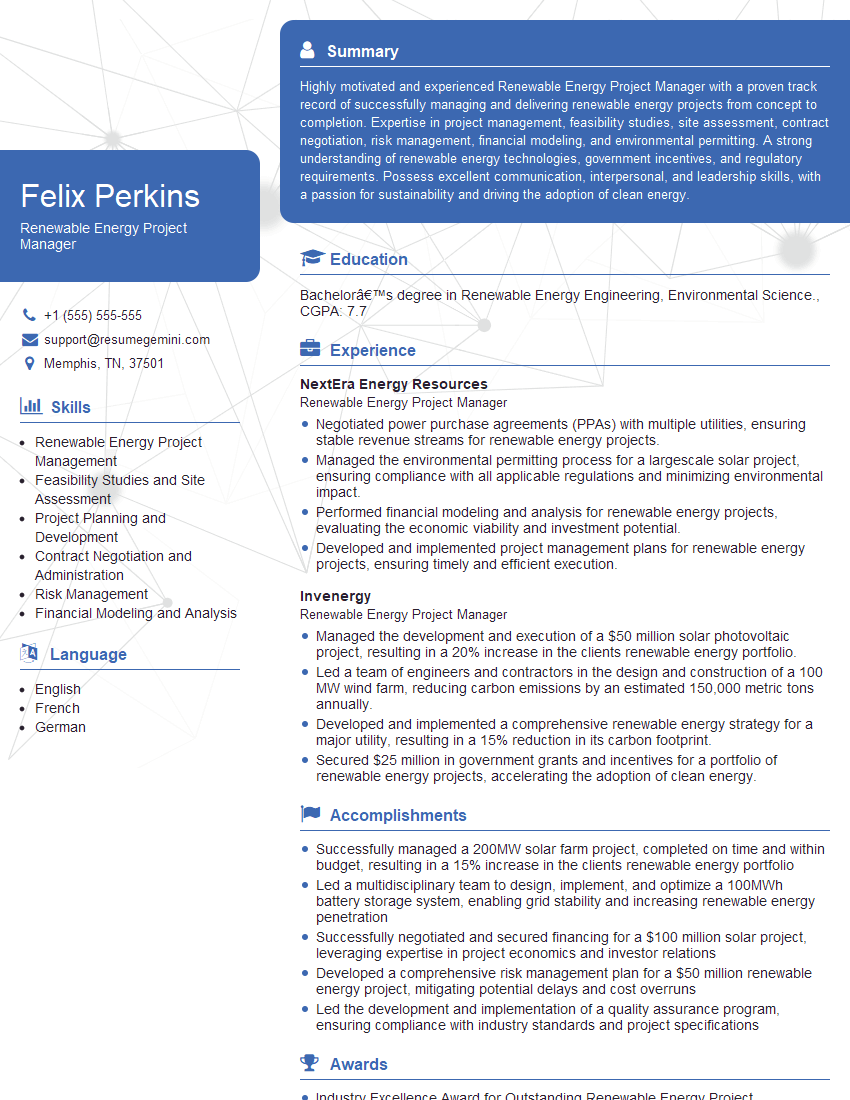
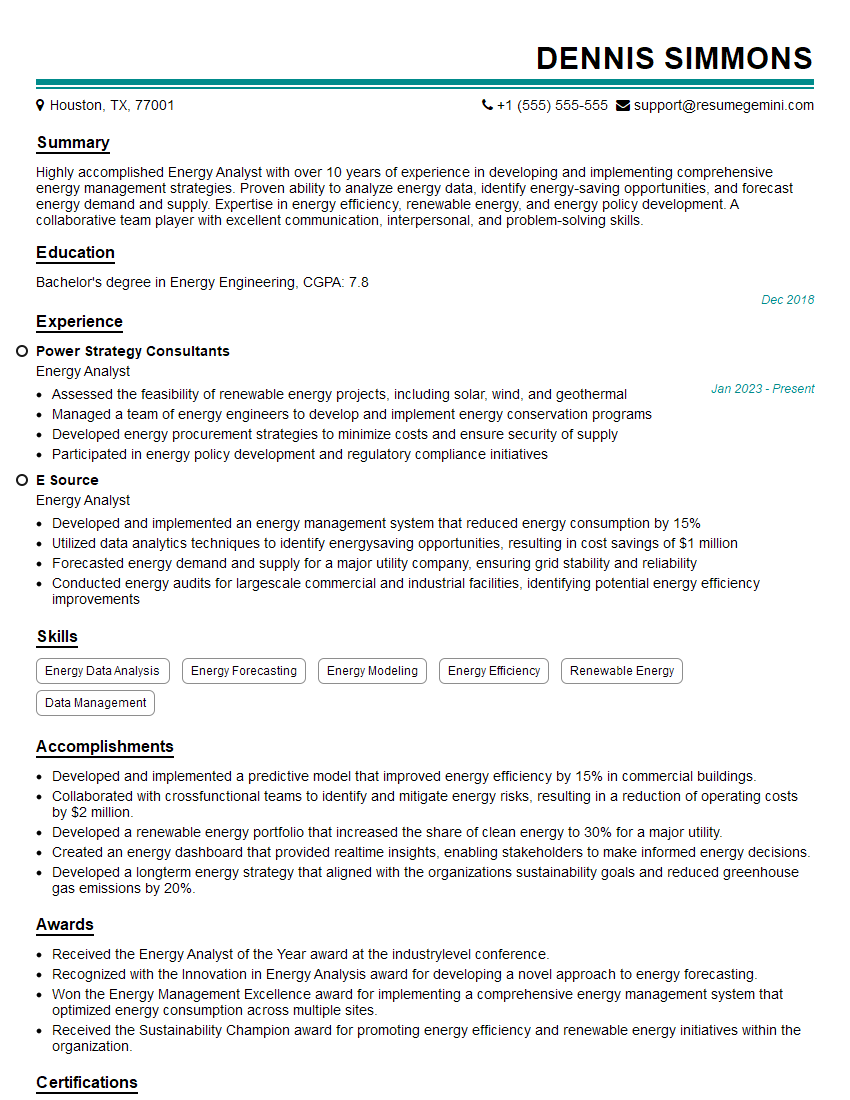
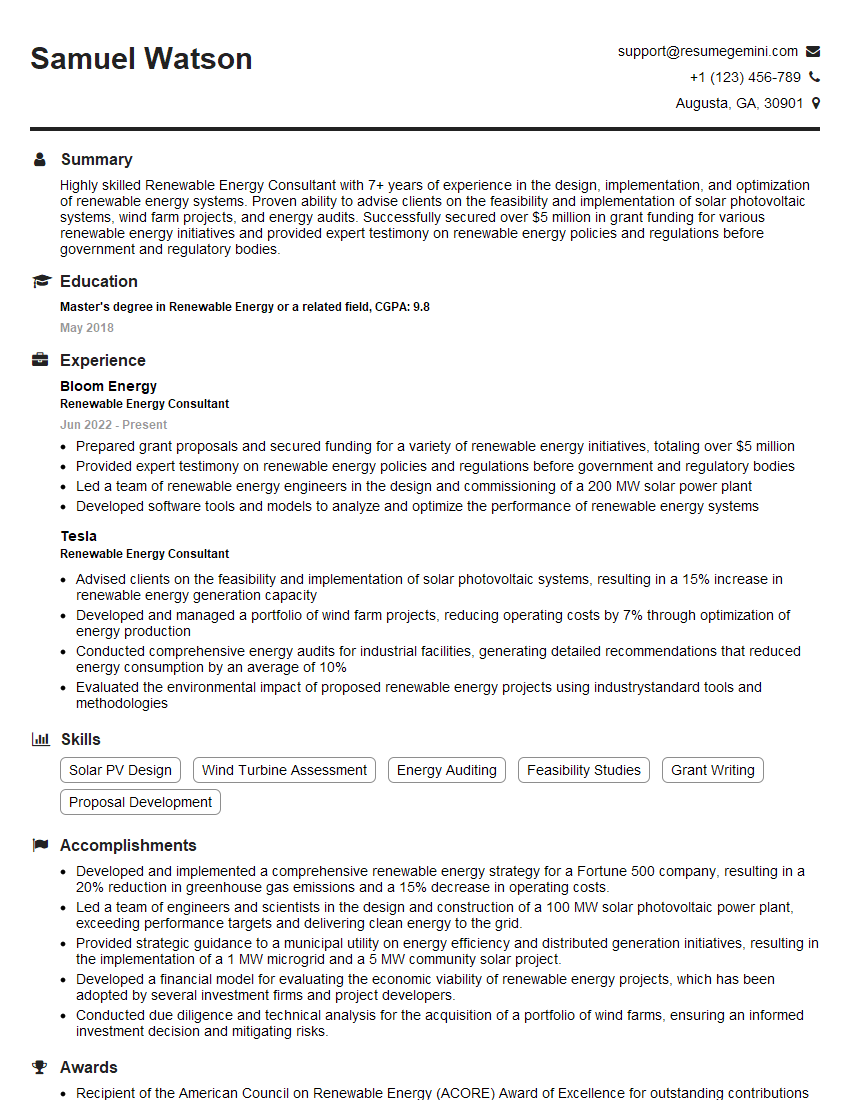
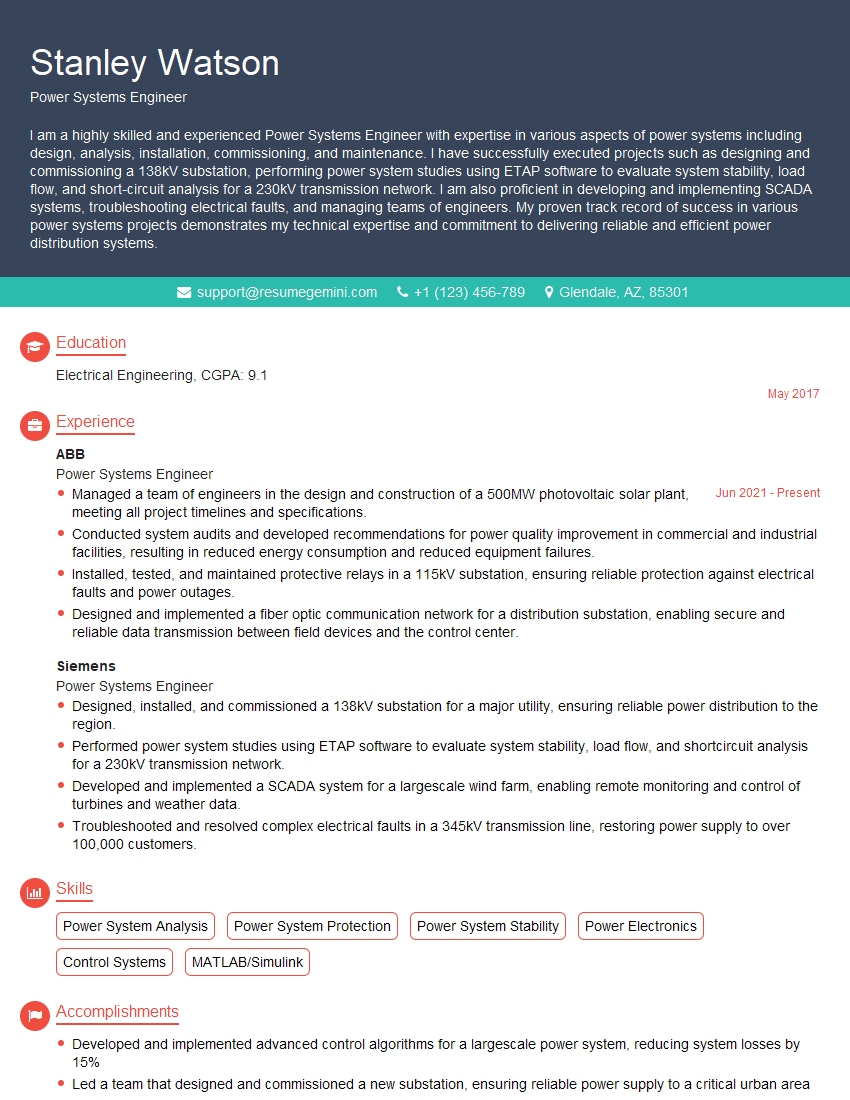
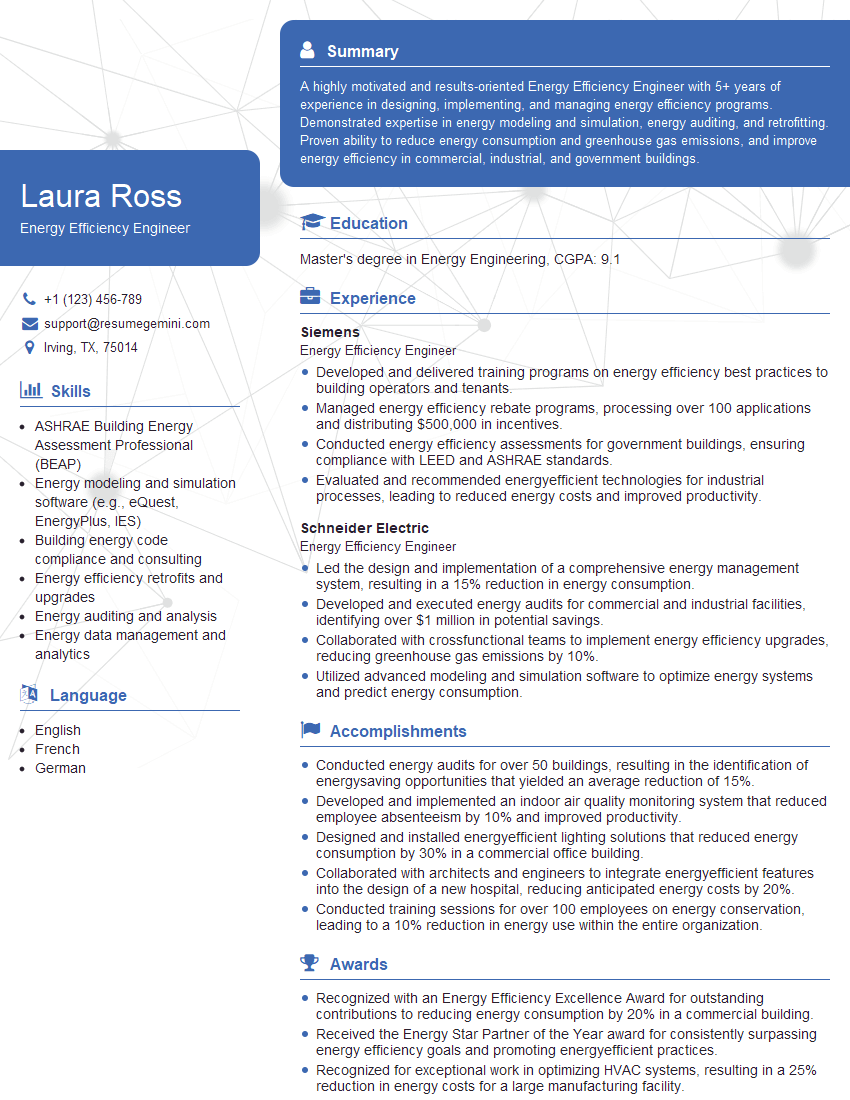
Mastering HOMER Pro is crucial for securing roles in the rapidly growing renewable energy sector. Proficiency in this software demonstrates valuable technical skills and problem-solving abilities highly sought after by employers. To significantly boost your job prospects, create a resume that’s both ATS-friendly and showcases your HOMER Pro expertise. ResumeGemini is a trusted resource that can help you build a professional, impactful resume, tailored to highlight your skills and experience. Examples of resumes tailored to HOMER Pro for Renewable Energy Simulation are available to guide you.

Explore more articles
Users Rating of Our Blogs
Share Your Experience
We value your feedback! Please rate our content and share your thoughts (optional).
What Readers Say About Our Blog
Very informative content, great job.
good