Every successful interview starts with knowing what to expect. In this blog, we’ll take you through the top Honeypot Deployment interview questions, breaking them down with expert tips to help you deliver impactful answers. Step into your next interview fully prepared and ready to succeed.
Questions Asked in Honeypot Deployment Interview
Q 1. Explain the different types of honeypots (low-interaction, high-interaction, etc.).
Honeypots are decoy systems designed to attract and trap attackers, allowing security professionals to observe their techniques and gather intelligence. They’re categorized primarily by their level of interaction:
- Low-Interaction Honeypots (LIHs): These mimic the appearance of a real system but offer limited functionality. They typically respond to common attacks with pre-programmed responses, providing basic information about the attacker’s actions without engaging in complex interactions. Think of them as a meticulously crafted dummy – it looks real but offers nothing to exploit beyond basic probing. An example would be a system running a vulnerable version of SSH, but only allowing a limited number of pre-defined commands.
- High-Interaction Honeypots (HIHs): These provide a more realistic and interactive environment. They offer more functionality, enabling attackers to explore the system more deeply. This allows for richer data collection, revealing more sophisticated attack techniques. They’re like a controlled environment; you let the attacker run around, but everything is monitored closely, allowing you to watch them in action and learn from their methods. Examples include virtual machines running a full operating system, with services like web servers and databases running, carefully monitored and controlled.
- Medium-Interaction Honeypots: These fall somewhere in between LIHs and HIHs, offering a balance between data richness and management overhead.
Choosing the right type depends on your resources and goals. LIHs are simpler to deploy and manage but yield less detailed information. HIHs offer more comprehensive data but require greater expertise and resources to operate safely.
Q 2. What are the advantages and disadvantages of using honeypots?
Honeypots offer several advantages but also come with some drawbacks:
- Advantages:
- Early warning system: Detect attacks before they reach your actual systems.
- Attacker profiling: Learn about attacker techniques, tools, and motives.
- Threat intelligence gathering: Gain insights into emerging threats and vulnerabilities.
- Improved security posture: Identify weaknesses in your security defenses by observing how attackers attempt to exploit them.
- Disadvantages:
- Maintenance overhead: HIHs, especially, require significant management to ensure their continued operational security.
- Resource consumption: HIHs can consume significant system resources.
- Legal considerations: Ensure you comply with all relevant laws and regulations regarding data collection and monitoring.
- Potential for compromise: Although a honeypot’s compromise is expected, it still poses a risk – strong isolation and monitoring are key.
Q 3. Describe the process of deploying a low-interaction honeypot.
Deploying a low-interaction honeypot typically involves these steps:
- Choose a suitable operating system and software: Select an older, vulnerable OS or a virtual machine with limited services, mimicking the systems attackers commonly target.
- Configure the honeypot: Install only the necessary services to make the system look convincing. This minimizes the attack surface and simplifies management.
- Deploy the honeypot: Place the honeypot on a separate, isolated network segment to prevent it from affecting your real systems if compromised.
- Monitor the honeypot: Utilize intrusion detection/prevention systems and log analysis tools to observe activity and collect data on attempts to access and compromise the honeypot.
- Analyze the collected data: Examine the logs for patterns in attackers’ methods to understand their tactics and improve your security defenses.
Consider using tools like Kippo (SSH honeypot) or Cowrie (SSH/FTP honeypot) to simplify deployment. Remember, a well-placed LIH can provide valuable insights without the overhead of a HIH.
Q 4. How do you choose the appropriate honeypot type for a specific environment?
The choice of honeypot type depends heavily on your environment, resources, and goals. Consider these factors:
- Budget and resources: LIHs are cheaper and easier to maintain; HIHs require more investment and expertise.
- Security expertise: HIHs demand advanced security knowledge to manage and interpret results.
- Specific threats: If targeting specific threats (e.g., web-based attacks), tailor the honeypot to those vulnerabilities and services.
- Compliance and legal aspects: Ensure any honeypot deployment adheres to data privacy and other applicable regulations.
For a small organization with limited resources, a few well-placed LIHs can provide a good starting point. Larger organizations with greater resources and security expertise can leverage HIHs alongside LIHs for a more comprehensive security monitoring approach.
Q 5. What are some common tools and technologies used for honeypot deployment?
Numerous tools and technologies facilitate honeypot deployment. Some popular examples include:
- Kippo: A popular low-interaction SSH honeypot.
- Cowrie: A low-interaction SSH and FTP honeypot.
- Honeyd: A low-interaction honeypot that simulates multiple systems.
- Dionaea: A high-interaction honeypot designed to capture malware samples.
- Conpot: A high-interaction honeypot focusing on network protocols.
- Virtualization technologies (e.g., VMware, VirtualBox): Essential for creating isolated environments for honeypots.
- Security Information and Event Management (SIEM) systems: Used to collect and analyze log data from honeypots.
The choice of tools depends on the type of honeypot and the specific security needs.
Q 6. How do you monitor and analyze data collected from honeypots?
Monitoring and analyzing honeypot data involves several steps:
- Log management: Collect logs from the honeypot using centralized logging systems.
- Log analysis: Use tools to parse and analyze logs for patterns indicating intrusion attempts, attack techniques, and malware behavior.
- Security Information and Event Management (SIEM): Integrate honeypot logs into a SIEM system for correlation with other security events, facilitating comprehensive threat detection.
- Visualization: Utilize dashboards and reporting tools to visualize attack trends and identify high-risk behaviors.
- Threat intelligence integration: Correlate honeypot data with known threat intelligence feeds to identify the attackers and their methods.
Tools like ELK stack (Elasticsearch, Logstash, Kibana) or Splunk are often used for log analysis and visualization. Remember, thorough analysis and reporting are crucial for converting honeypot data into actionable security insights.
Q 7. Explain the concept of honeytokens and their role in honeypot security.
Honeytokens are deceptively attractive pieces of data embedded within a system or network to lure attackers and trigger alerts. They act as bait, alerting security personnel to malicious activity. Think of them as tiny, individual traps within a larger honeypot. They’re not entire systems, but rather individual files, accounts, or database entries that appear valuable but are actually monitored for access.
For example, a honeytoken might be a seemingly innocuous file named ‘sensitive_data.txt’ placed in a seemingly accessible directory. If an attacker accesses or attempts to modify this file, it triggers an alert, revealing the intrusion attempt. Honeytokens can enhance the effectiveness of honeypots by providing a granular level of detail about attacker activity, making it easier to pinpoint suspicious behaviors.
Q 8. How do you handle false positives generated by honeypots?
False positives in honeypots are unavoidable. They occur when legitimate network activity triggers alerts designed to detect malicious behavior. Imagine setting a mousetrap; sometimes, something other than a mouse might trigger it. To handle them effectively, we employ a multi-layered approach:
- Alert Threshold Tuning: Carefully adjust the sensitivity of your honeypot’s alert system. Too sensitive, and you’ll be swamped with false positives. Too insensitive, and you might miss genuine attacks. This often involves analyzing historical data to determine appropriate thresholds.
- Correlation and Contextual Analysis: Don’t treat each alert in isolation. Correlate alerts across multiple honeypots and analyze them within the context of your overall network activity. A single suspicious connection from a known good internal IP address to a low-interaction honeypot is more likely a false positive than numerous connections from various IPs to a high-interaction honeypot.
- Rule Refinement: Continuously review and refine the rules governing your honeypot’s alert system. Over time, you’ll identify patterns of false positives and can modify rules to reduce their occurrence. This might involve adding exclusions for specific IP addresses or user agents.
- Whitelisting: Create whitelists of known safe IP addresses or user agents. This prevents legitimate traffic from triggering alerts.
- Machine Learning: Advanced honeypot systems utilize machine learning to differentiate between benign and malicious activity, significantly reducing false positives. They learn from past data to improve their accuracy over time.
For example, a honeypot designed to detect SQL injection might trigger an alert if a legitimate database administration tool attempts to connect. By whitelisting that tool, we eliminate this false positive.
Q 9. What security considerations are crucial when deploying honeypots?
Deploying honeypots introduces unique security considerations. Think of it like setting a decoy – you need to protect the decoy from being compromised and used against you. Key considerations include:
- Isolation: Honeypots should be strictly isolated from the rest of your network. This prevents attackers from using the honeypot as a pivot point to access your critical systems. Virtual machines (VMs) are ideal for this purpose.
- Limited Resources: Allocate only the minimum necessary resources (CPU, memory, storage) to your honeypots. This limits the potential damage an attacker can inflict if they gain control.
- Regular Updates and Patching (Low Interaction Only): While high-interaction honeypots mimic real systems, requiring updates, low-interaction honeypots are typically simpler and can be designed with security in mind to reduce attack surfaces. For High-Interaction Honeypots, patching is crucial but must be handled carefully to maintain their realism. Regular security audits and patching are necessary, however, this requires a fine balance between realism and security.
- Monitoring and Alerting: Implement robust monitoring and alerting mechanisms to detect suspicious activity. This includes monitoring network traffic, system logs, and honeypot-specific events. An intrusion detection system (IDS) can be a valuable asset here.
- Data Encryption: Encrypt all data collected from honeypots, both in transit and at rest. This protects sensitive information from unauthorized access.
- Access Control: Restrict access to the honeypot management system to authorized personnel only.
Failure to properly isolate a honeypot, for instance, could allow an attacker to access other parts of your network, making the honeypot counterproductive.
Q 10. How do you ensure the integrity and confidentiality of data collected from honeypots?
Ensuring data integrity and confidentiality from honeypots is paramount. This involves several strategies:
- Data Encryption: Encrypt all data collected, both during transmission (using protocols like HTTPS) and when stored (using strong encryption algorithms).
- Secure Logging: Use a secure logging system that prevents unauthorized access to logs. This might involve encrypting logs, using a secure logging server, and implementing access controls.
- Data Integrity Checks: Implement mechanisms to verify the integrity of collected data. This might involve using checksums or digital signatures.
- Secure Storage: Store collected data in a secure location with appropriate access controls. Consider using encrypted storage solutions or a secure cloud storage provider.
- Regular Audits: Conduct regular security audits to ensure the security controls around honeypot data are functioning correctly.
Consider this example: an attacker successfully compromises a honeypot and alters its logs. Without data integrity checks, this tampering would go unnoticed, rendering the collected data unreliable.
Q 11. Describe different methods for detecting and responding to honeypot compromises.
Detecting and responding to honeypot compromises requires a proactive approach. Methods include:
- Intrusion Detection Systems (IDS): An IDS can monitor network traffic and system logs for suspicious activity, flagging potential compromises. This is particularly useful for detecting attempts to access or manipulate the honeypot.
- Regular Security Audits: Conduct regular security audits on the honeypot system to identify any unauthorized changes or vulnerabilities. This might involve examining system logs, reviewing configuration files, and running vulnerability scans.
- Honeypot-Specific Monitoring Tools: Many honeypot systems come with built-in monitoring tools that provide alerts on suspicious events. These tools are tailored to the specific capabilities of the honeypot.
- Behavioral Analysis: Monitor the honeypot’s behavior for deviations from its expected baseline. Unexpected activity might indicate a compromise.
- Response Plan: Develop a clear incident response plan to handle honeypot compromises. This plan should outline steps to contain the breach, investigate the attack, and remediate any vulnerabilities.
For instance, if a honeypot designed to mimic a web server suddenly shows signs of unusual file access activity, it might suggest that an attacker has compromised the system.
Q 12. How do you integrate honeypots into a broader security architecture?
Honeypots integrate into a broader security architecture by acting as a forward-deployed sensor. They provide early warning of attacks and valuable threat intelligence, complementing other security controls.
- Integration with SIEM: Integrate honeypot data with your Security Information and Event Management (SIEM) system for centralized monitoring and analysis. This allows you to correlate honeypot alerts with other security events across your network.
- Collaboration with IDS/IPS: Combine honeypots with Intrusion Detection/Prevention Systems (IDS/IPS) to create a layered security defense. Honeypots can lure attackers, while the IDS/IPS can detect and block their attempts to access other systems.
- Threat Intelligence Platform: Feed the data collected from your honeypots into your threat intelligence platform to enrich your understanding of emerging threats and attacker tactics.
- Vulnerability Management: Use honeypots to identify vulnerabilities in your systems by observing how attackers attempt to exploit them.
Imagine a scenario where a honeypot detects a new exploit targeting a specific vulnerability. This information can then be used to patch the vulnerability in your production systems before widespread attacks occur.
Q 13. What are the ethical considerations of deploying honeypots?
Deploying honeypots raises several ethical considerations. It’s crucial to act responsibly and within legal boundaries.
- Legal Compliance: Ensure your honeypot deployment complies with all applicable laws and regulations. This might include obtaining consent for monitoring network traffic (depending on location and specific legal context).
- Transparency: While not always feasible, being transparent about honeypot deployments can help avoid misunderstandings and legal issues. This might involve informing employees or business partners of their presence.
- Data Privacy: Protect the privacy of individuals whose data might be collected by your honeypots. Avoid collecting personally identifiable information (PII) unless absolutely necessary and compliant with relevant regulations like GDPR or CCPA.
- Proportionality: The deployment of honeypots should be proportionate to the risks you face. Overly aggressive deployments might raise ethical concerns.
For example, deploying a honeypot that captures and logs sensitive user data without consent violates privacy laws and is ethically unacceptable.
Q 14. Explain how honeypots can help in threat intelligence gathering.
Honeypots are invaluable for threat intelligence gathering. They provide a unique perspective on attacker behavior and techniques.
- Attacker Tactics, Techniques, and Procedures (TTPs): Honeypots directly observe attackers in action, revealing their TTPs in real-time. This includes identifying malware used, exploitation techniques, and post-compromise activities.
- Zero-Day Vulnerability Detection: Honeypots can detect zero-day vulnerabilities – vulnerabilities that are unknown to the public – by observing attackers successfully exploiting them.
- Malware Analysis: Honeypots can capture and analyze malware samples used by attackers, helping researchers understand and develop countermeasures.
- Threat Actor Profiling: By observing attacker behavior, it’s possible to profile threat actors, understanding their motives, targets, and capabilities.
Imagine a honeypot detecting an attacker using a previously unknown exploit. This information is invaluable for developing security patches and protecting against future attacks.
Q 15. Discuss the challenges of maintaining and updating honeypot systems.
Maintaining and updating honeypot systems presents unique challenges. Unlike typical systems, honeypots are designed to attract attackers, meaning updates need to balance security and authenticity. A poorly maintained honeypot can become a liability, revealing itself as fake and potentially leading to a compromised system.
- Signature Updates: Regularly updating signatures for known vulnerabilities is crucial. Failing to do so means your honeypot is vulnerable and can’t accurately reflect real-world attack patterns.
- Operating System Patches: Keeping the honeypot’s operating system patched is essential, not just for security, but also for maintaining its credibility. An outdated OS might raise suspicion among sophisticated attackers.
- Content Updates: Depending on the type of honeypot (e.g., low-interaction, high-interaction), you might need to update simulated services, data files, or other content to keep them realistic and up-to-date. This could involve regularly adding new files and folders to emulate a real server’s file structure.
- Log Management: Honeypot logs are vital. Regular maintenance ensures log rotation and prevents storage issues. Efficient log analysis is crucial to extract valuable threat intelligence.
- Resource Consumption: Honeypots can consume resources; monitoring their performance and adjusting resource allocation is necessary. A resource-starved honeypot is unreliable.
Imagine a honeypot designed to mimic a web server; if it’s running outdated software, a seasoned attacker would quickly notice inconsistencies, making the whole setup useless. Consistent, proactive maintenance is key to successful honeypot deployment.
Career Expert Tips:
- Ace those interviews! Prepare effectively by reviewing the Top 50 Most Common Interview Questions on ResumeGemini.
- Navigate your job search with confidence! Explore a wide range of Career Tips on ResumeGemini. Learn about common challenges and recommendations to overcome them.
- Craft the perfect resume! Master the Art of Resume Writing with ResumeGemini’s guide. Showcase your unique qualifications and achievements effectively.
- Don’t miss out on holiday savings! Build your dream resume with ResumeGemini’s ATS optimized templates.
Q 16. How do you scale honeypot deployments to accommodate large networks?
Scaling honeypot deployments for large networks requires a strategic approach. Simply replicating single honeypots across the network isn’t efficient. Instead, consider these strategies:
- Honeypot Farms/Clusters: Deploying multiple honeypots in a distributed architecture allows for greater coverage and resilience. You can use virtualization or containerization technologies (like Docker or Kubernetes) to manage many honeypots efficiently.
- Centralized Management System: Using a central system for management (configuration, monitoring, and log collection) streamlines operations and makes scaling easier. Think of a system that can automatically deploy, update, and monitor numerous honeypots.
- Automation: Automating deployment, configuration, and updates via scripting (e.g., Ansible, Puppet, Chef) is essential for handling large-scale deployments efficiently and consistently.
- Low-Interaction Honeypots: For large networks, low-interaction honeypots are often more scalable than high-interaction ones. They require fewer resources and are less demanding to manage.
- Virtualization: Employing virtualization allows creating numerous honeypots on a limited number of physical servers, improving resource utilization.
For instance, a large corporation might use a combination of low-interaction honeypots spread across its network, managed through a central system that collects logs and analyzes threat intelligence. This enables effective detection of attacks across a wide area while minimizing resource overhead.
Q 17. What are some common attack vectors used against honeypots?
Attackers employ various methods to target honeypots, some common vectors include:
- Port Scanning: Attackers use tools like Nmap to identify open ports and services on the honeypot. This is a preliminary step to gauge the system’s potential vulnerabilities.
- Vulnerability Scanning: Tools like Nessus or OpenVAS scan for known vulnerabilities in the honeypot’s software and operating system. This helps attackers identify potential entry points.
- Exploit Attempts: Based on identified vulnerabilities, attackers try to exploit them using malware or other malicious payloads to gain access.
- Brute-force Attacks: Attackers attempt to guess passwords or login credentials through brute-force or dictionary attacks.
- SQL Injection: If the honeypot exposes a database, attackers might try to inject malicious SQL code to gain unauthorized access to the data.
- Cross-Site Scripting (XSS): If the honeypot is a web application, attackers may try to inject malicious scripts to steal session cookies or other sensitive information.
- Denial-of-Service (DoS) Attacks: Attackers might try to overwhelm the honeypot with traffic to render it unresponsive.
Understanding these common attack vectors helps in designing more robust and realistic honeypots capable of identifying and mitigating them.
Q 18. How do you mitigate the risk of honeypots being detected and bypassed?
Mitigating honeypot detection and bypass requires a multi-layered approach:
- Realistic Honeypots: Honeypots should mimic real systems closely. Inconsistencies can lead to detection. This includes realistic file systems, configuration files, and service responses.
- Dynamic Honeypots: Instead of static configurations, use dynamic honeypots that adapt and change their behavior over time, making them harder to identify.
- Layered Security: Use firewalls, intrusion detection/prevention systems (IDS/IPS) to protect the honeypot infrastructure from direct attacks. This protects the system itself, not just the honeypot’s deception capabilities.
- Honeytokens: Incorporate honeytokens (false data or files) to distract and mislead attackers. This provides additional indicators of compromise.
- Randomization: Introduce randomness into the honeypot’s behavior and response times. This makes the system appear less predictable and more difficult to analyze.
- Obfuscation: Obscure the honeypot’s presence through techniques like IP address rotation or using decoy services.
- Regular Updates: Continuously update the honeypot’s software, configurations, and data to maintain its credibility and to keep up with the latest attack methods.
For example, you might use a dynamic honeypot that randomly changes its open ports and services, making it difficult for automated scanners to consistently identify it.
Q 19. Explain the concept of deception technology and its relationship to honeypots.
Deception technology encompasses a broader range of techniques to mislead attackers and gather threat intelligence. Honeypots are a crucial component of deception technology, but not the entirety of it. Deception technology also includes:
- Honeytokens: These are fake credentials or data points designed to lure attackers.
- Honeyfiles: Fake files or documents that appear to contain valuable information.
- Decoy Servers/Networks: Entire decoy networks or servers designed to mimic legitimate infrastructure.
- Decoy Users: Fake user accounts with limited privileges.
Think of it like this: honeypots are like decoy ducks in a pond; they attract the attention of predators (attackers). Deception technology is the entire strategy of creating a deceptive environment, including the decoy ducks and other elements meant to confuse and divert attention.
Honeypots provide a controlled environment to study attackers’ behaviors and gather valuable threat intelligence. The broader use of deception technologies enhances the overall security posture.
Q 20. How can honeypots be used to identify zero-day vulnerabilities?
Honeypots can be valuable tools for identifying zero-day vulnerabilities, which are flaws unknown to the vendor or security community. Because honeypots are often monitored closely, they can detect attacks exploiting previously unknown vulnerabilities. The key here is the careful analysis of logs and system behavior.
When an attacker successfully exploits a vulnerability on a honeypot that isn’t present in the vendor’s known vulnerability database, it can indicate a zero-day. Careful analysis of the attacker’s actions, network traffic, and the changes within the honeypot system can allow for the identification and isolation of the vulnerability. This information can then be shared with vendors to patch the vulnerability and protect broader systems.
However, it’s important to note that identifying zero-days is not guaranteed. The attacker may not successfully exploit a vulnerability, or even if they do, identifying it as a zero-day requires thorough investigation and correlation of the data.
Q 21. Discuss the importance of proper logging and auditing for honeypots.
Proper logging and auditing are critical for honeypots because they are the primary source of threat intelligence. Without thorough logging, the honeypot becomes a passive device, not providing valuable insight into attacker behavior and techniques.
- Comprehensive Logging: Log everything: login attempts, file accesses, network connections, commands executed, etc. The more information you collect, the more effective your analysis will be. Consider using centralized log management systems for easier access and analysis.
- Log Rotation: Implement log rotation to manage log file size and prevent storage issues. You don’t want to lose important data due to full disk space.
- Log Analysis: Invest in tools and techniques for analyzing honeypot logs. Look for patterns, unusual activity, and indicators of compromise. This will help to extract meaningful intelligence from the collected data. Consider using Security Information and Event Management (SIEM) systems.
- Security of Logs: Securely store and protect honeypot logs, ensuring they are not easily accessible to unauthorized personnel or attackers. Cryptographic measures and secure storage solutions are essential.
- Correlation: Correlate honeypot logs with logs from other security devices (firewalls, intrusion detection systems) for comprehensive situational awareness and more effective threat hunting.
Imagine trying to solve a case with only partial evidence – it’s nearly impossible. Complete and well-managed honeypot logs provide the complete picture, helping to understand attacker tactics and develop better defenses.
Q 22. What metrics do you use to assess the effectiveness of a honeypot deployment?
Assessing honeypot effectiveness involves tracking several key metrics. Think of it like setting up a fishing trap – you need to know if it’s attracting the right kind of fish (attackers) and providing valuable information.
- Attack Frequency and Types: This measures how often attackers target the honeypot and what types of attacks they employ (e.g., SQL injection, brute-force, malware). A high frequency of sophisticated attacks suggests a successful deployment attracting realistic threats.
- Attacker Geolocation: Understanding the geographical origin of attacks provides valuable threat intelligence, allowing for better prioritization of security efforts.
- Data Exfiltration Attempts: The number and success rate of attempts to steal data from the honeypot reflect the attacker’s sophistication and goals.
- Command and Control (C&C) Communication: Monitoring communication attempts to external C&C servers reveals attacker infrastructure and potential botnet involvement.
- Exploit Success Rate: Tracking the success rate of exploits used against the honeypot gives insights into prevalent vulnerabilities and evolving attack techniques. A low success rate indicates strong honeypot defenses.
- Honeypot Uptime and Resource Consumption: This ensures the honeypot remains functional and doesn’t consume excessive system resources.
For example, if a honeypot consistently logs numerous attempts to exploit a known vulnerability, it signifies the honeypot is effectively attracting attackers and highlighting a prevalent threat.
Q 23. How do you handle legal and compliance issues related to honeypot deployment?
Legal and compliance are paramount in honeypot deployment. Think of it as setting up a hidden camera – you need to ensure you’re not violating anyone’s privacy. The key is transparency and adherence to relevant laws.
- Informed Consent: While honeypots are typically deployed on internal networks, if they interact with external systems, obtaining informed consent (if possible and relevant) is crucial. This is especially important for low-interaction honeypots that mimic services publicly accessible on the internet.
- Data Protection Laws: Compliance with data protection regulations like GDPR or CCPA is critical, especially when collecting and storing attacker data. Anonymization and data minimization strategies should be implemented.
- Computer Fraud and Abuse Act (CFAA): In many jurisdictions, honeypots are protected under CFAA, providing legal grounds for investigating and prosecuting attackers. However, it is crucial to understand the legal limitations and avoid actions that may lead to legal challenges.
- Internal Policies: A clear internal policy outlining the purpose, scope, and legal considerations of honeypot deployment is necessary to ensure compliance and protect the organization.
Failing to adhere to these guidelines can lead to legal repercussions, reputational damage, and compromise the integrity of the entire security posture. A comprehensive legal review is vital before any deployment.
Q 24. Describe your experience with different honeypot platforms (e.g., Kippo, Cowrie).
I have extensive experience with various honeypot platforms. Each has strengths and weaknesses, much like different tools in a mechanic’s toolbox.
- Kippo: A popular SSH honeypot, Kippo excels at mimicking SSH servers and logging attacker interactions. Its strength lies in its ability to capture detailed information on attempted SSH logins and commands, allowing analysis of attacker techniques. I’ve used it effectively to identify brute-force attacks and custom scripts used for compromise attempts.
- Cowrie: A versatile honeypot that simulates various SSH and Telnet services. Its flexibility and extensibility through plugins are significant advantages. I’ve deployed Cowrie to detect and analyze a broader range of attacks targeting various network services, offering a more comprehensive view of attacker behavior.
- Other Platforms: My experience also extends to other platforms like Honeyd (low-interaction honeypot), Dionaea (network honeypot), and several commercially available solutions, which provide varying levels of sophistication and automated analysis features.
The choice of platform always depends on the specific security goals, available resources, and technical expertise. For example, if the focus is solely on SSH attacks, Kippo might suffice. If a broader range of services needs to be monitored, Cowrie is more suitable.
Q 25. How do you deal with resource exhaustion attacks against honeypots?
Resource exhaustion attacks, like denial-of-service (DoS) against honeypots, are a serious concern. Think of it like someone flooding your mailbox with spam – eventually, it will crash your system. The key is proactive defense.
- Resource Limiting: Restricting resources allocated to the honeypot is a fundamental strategy. Set limits on CPU usage, memory, and network bandwidth. This prevents the attacker from overwhelming the system and affecting other critical resources.
- Rate Limiting: Implementing rate-limiting mechanisms to restrict the number of requests from a single IP address or within a specific time frame is crucial. This limits the impact of flood attacks.
- Traffic Filtering: Employing firewalls and intrusion detection systems (IDS) to filter out malicious traffic targeting the honeypot prevents a significant portion of attack attempts.
- Dedicated Hardware: Utilizing dedicated hardware for the honeypot isolates it from the rest of the network. If the honeypot is compromised, the impact on other systems is minimized.
- Honeytoken Management: Utilizing honeytokens and observing the consumption of honeypot resources can help detect resource exhaustion attacks more efficiently. An unusual increase in honeytoken interactions or rapid resource consumption would raise a warning flag.
Combining these strategies creates a layered defense against resource exhaustion attacks, ensuring the honeypot remains operational while collecting valuable threat intelligence.
Q 26. Explain how you would respond to a suspected honeypot compromise.
Responding to a suspected honeypot compromise requires a systematic approach. Think of it like investigating a crime scene – you need to gather evidence, analyze the situation, and take appropriate action.
- Isolate the Honeypot: Immediately isolate the compromised honeypot from the network to prevent lateral movement and further damage.
- Forensic Analysis: Conduct a thorough forensic analysis of the honeypot system to gather evidence of the attacker’s actions, including network traffic logs, system logs, and any potentially compromised files.
- Threat Intelligence Gathering: Analyze the attack techniques, malware used, and attacker infrastructure identified during the forensic analysis. This provides valuable threat intelligence that can be used to improve future security defenses.
- System Restoration: Restore the honeypot to a clean state, potentially using a previously created backup image. This ensures the honeypot is back in a secure state for further deployment.
- Security Updates: Apply any necessary security updates to the honeypot and the surrounding infrastructure to mitigate any identified vulnerabilities.
- Incident Response Report: Document the entire incident, including the attack methodology, impact, response steps, and lessons learned. Share this report with relevant stakeholders to continuously improve security practices.
By following these steps, you ensure the integrity of your security posture, gather critical intelligence, and take proactive steps to prevent future attacks.
Q 27. How do you balance the detection capabilities of honeypots with the risk of false positives?
Balancing detection capabilities with minimizing false positives is a delicate act. Think of it as tuning a radio – you need to find the right frequency to get a clear signal without interference. The goal is accurate detection without generating unnecessary alerts.
- Fine-tuning Honeypot Configuration: Carefully configuring the honeypot to mimic only essential services and accurately reflect the target environment is key. This reduces the chance of triggering false positives from legitimate system activity.
- Advanced Detection Techniques: Employing advanced techniques like machine learning or anomaly detection can help distinguish malicious activity from normal behavior. These techniques can automatically flag suspicious patterns without requiring explicit rule sets.
- Correlation with Other Security Tools: Correlating honeypot data with other security tools, like intrusion detection systems (IDS) and security information and event management (SIEM) systems, can help validate alerts and reduce false positives. A single alert from a honeypot might be inconsequential, but when correlated with similar events from other systems, it can become a significant indicator.
- Regular Monitoring and Tuning: Continuous monitoring and analysis of honeypot logs are crucial to identify and address potential false positives and optimize detection parameters. This iterative process ensures that the honeypot remains effective while minimizing the noise.
A well-tuned honeypot provides valuable security information without overwhelming security teams with false alarms. Regular review and refinement are essential for maintaining this balance.
Q 28. Describe your experience with automating honeypot deployment and management.
Automating honeypot deployment and management is essential for scalability and efficiency. Think of it like using assembly-line techniques to build a car instead of hand-crafting each one. Automation significantly reduces manual effort and improves response times.
- Infrastructure as Code (IaC): Using tools like Terraform or Ansible, the entire honeypot infrastructure can be defined and managed as code. This allows for consistent and repeatable deployments across multiple environments.
- Containerization (Docker, Kubernetes): Containerization provides a portable and scalable approach to deploying and managing honeypots. It simplifies the deployment process, ensuring consistency across different platforms.
- Automated Monitoring and Alerting: Integrating the honeypot with automated monitoring and alerting systems enables immediate detection of attacks and efficient incident response. This could involve integrating with a SIEM or custom scripting to automatically notify security teams.
- Centralized Management: Using centralized management tools allows efficient monitoring and control of multiple honeypots simultaneously. This helps manage a large-scale deployment effectively.
- Script-based Deployment: For simpler honeypots, well-designed scripts can automate tasks such as installation, configuration, and data collection.
Automating these processes ensures that the honeypots are always up-to-date, efficiently monitored, and ready to provide valuable security intelligence, ultimately enhancing the effectiveness of the security posture. For example, scripts can automatically deploy and update honeytokens based on real-time threat intelligence data.
Key Topics to Learn for Honeypot Deployment Interview
- Types of Honeypots: Understand the differences between low-interaction, high-interaction, and virtual honeypots. Consider their respective strengths and weaknesses in different security contexts.
- Deployment Strategies: Explore various deployment methods, including cloud-based deployments, virtual machine deployments, and network-based deployments. Analyze the pros and cons of each approach.
- Honeypot Monitoring and Analysis: Learn how to effectively monitor honeypot activity, analyze logs, and extract valuable threat intelligence. Practice interpreting various types of attack signatures.
- Data Security and Privacy Considerations: Discuss the ethical and legal implications of deploying honeypots, particularly regarding data privacy and compliance regulations. Understand best practices for responsible data handling.
- Integration with SIEM and SOAR Systems: Explore how honeypot data can be integrated into Security Information and Event Management (SIEM) and Security Orchestration, Automation, and Response (SOAR) systems for improved threat detection and response.
- Evasion Techniques and Countermeasures: Familiarize yourself with common attacker evasion techniques and explore the countermeasures that can be implemented to enhance the effectiveness of honeypot deployments.
- Scalability and Maintainability: Understand how to design and implement scalable and maintainable honeypot deployments that can adapt to evolving threat landscapes.
- False Positives and False Negatives: Learn to identify and mitigate false positives and false negatives, ensuring accurate threat detection and minimizing unnecessary alerts.
Next Steps
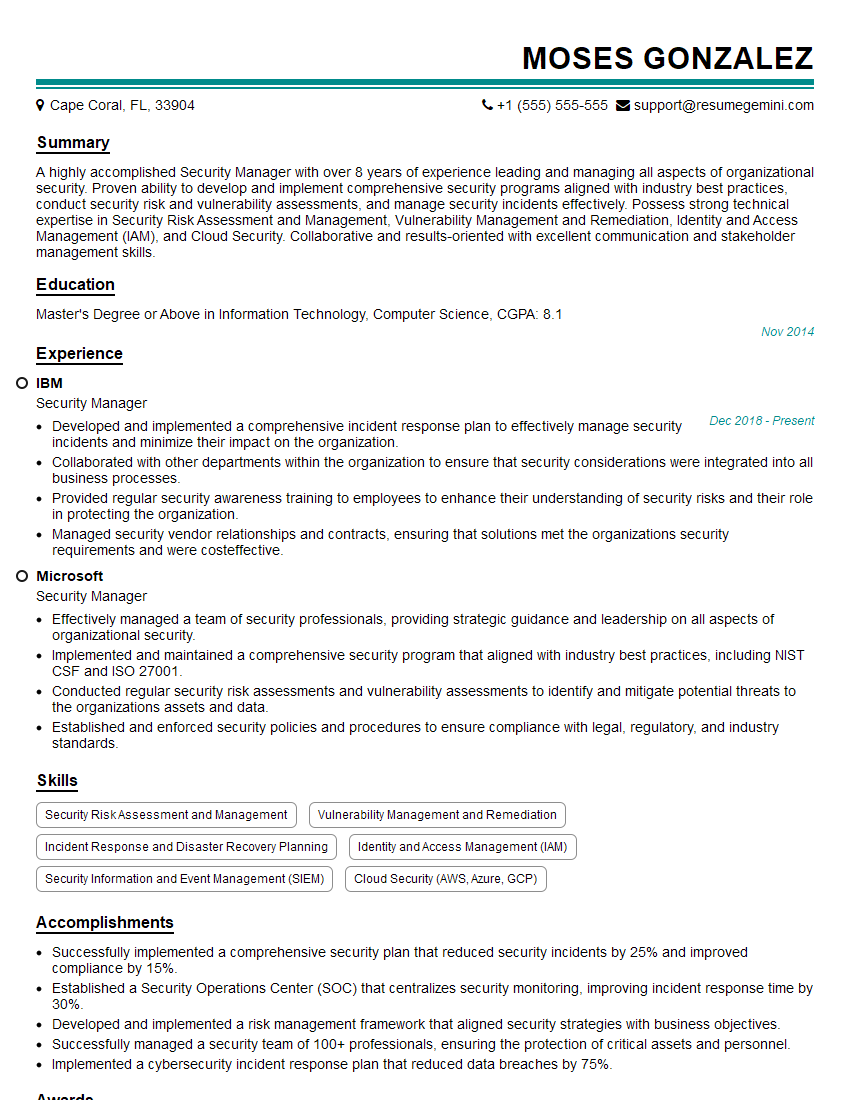
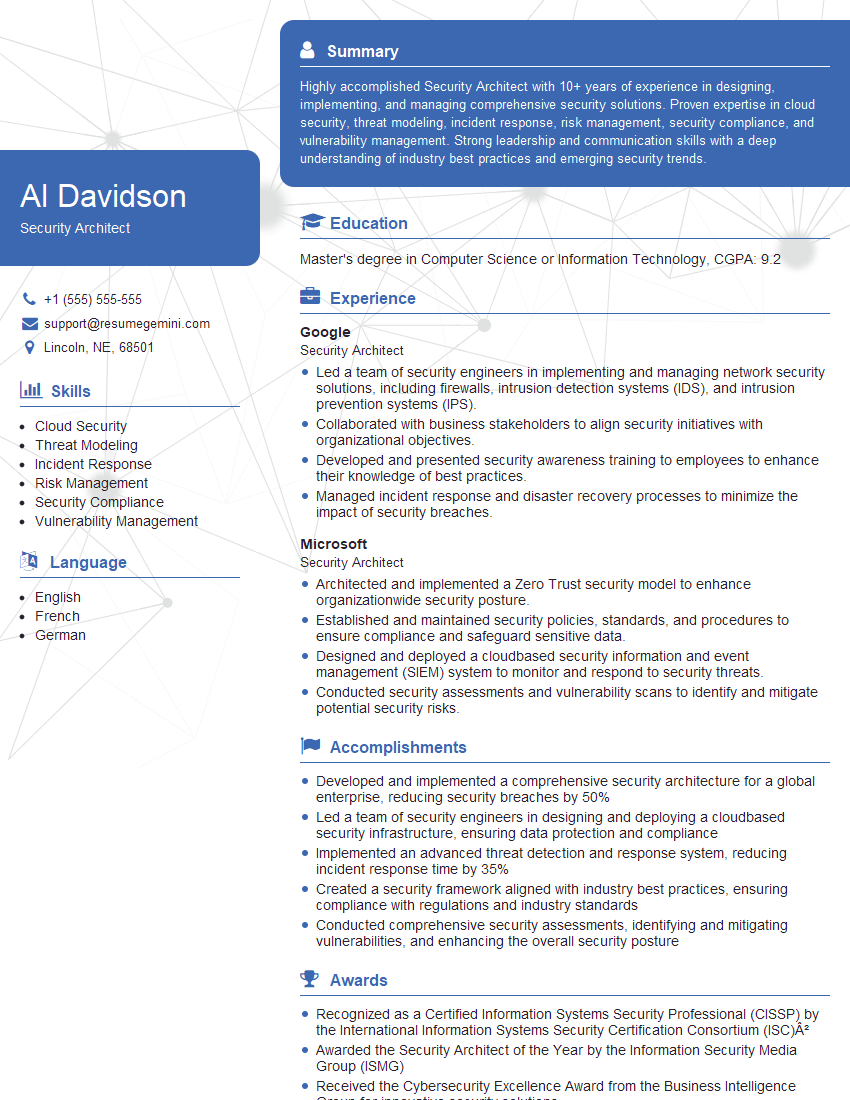
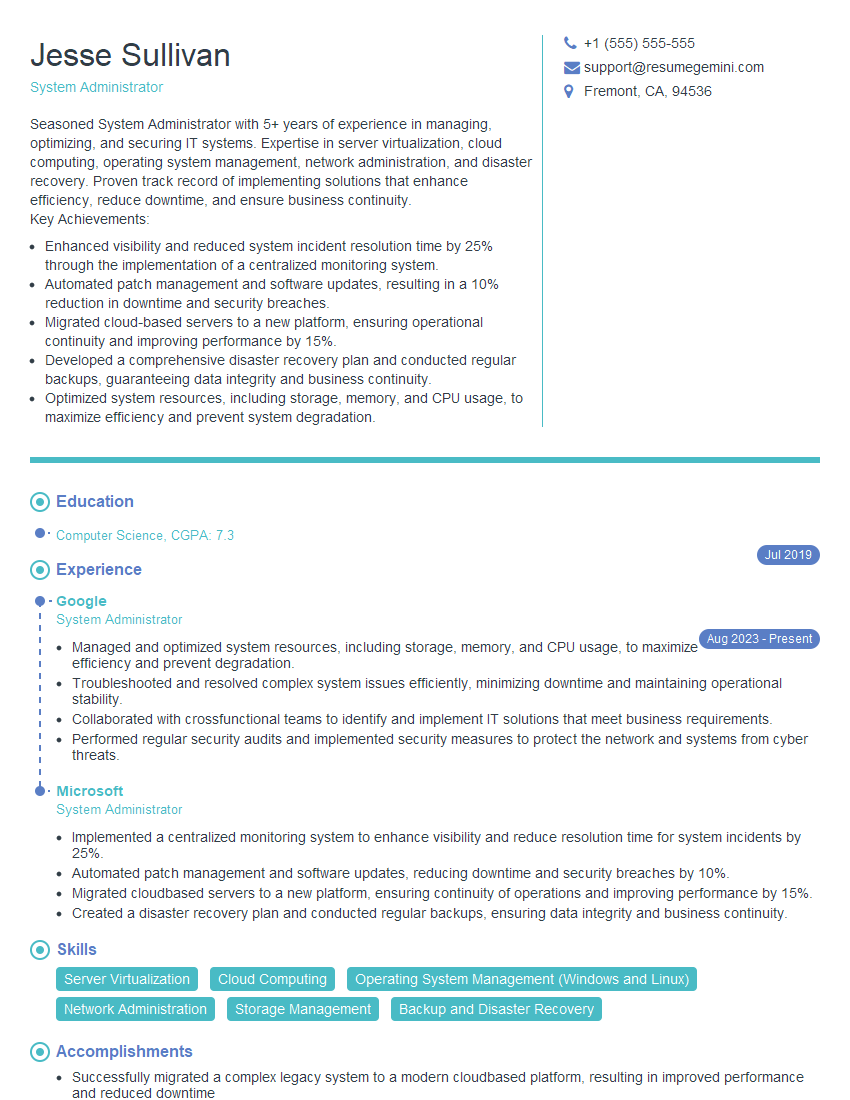
Mastering Honeypot Deployment significantly enhances your cybersecurity skillset, making you a highly sought-after candidate in the competitive job market. To maximize your chances of landing your dream role, creating a compelling and ATS-friendly resume is crucial. ResumeGemini is a trusted resource that can help you build a professional and effective resume tailored to highlight your expertise in Honeypot Deployment. Examples of resumes tailored to this specialization are available to guide you. Invest the time to craft a strong resume – it’s a key element in your job search success.





Explore more articles
Users Rating of Our Blogs
Share Your Experience
We value your feedback! Please rate our content and share your thoughts (optional).
What Readers Say About Our Blog
Very informative content, great job.
good