Every successful interview starts with knowing what to expect. In this blog, we’ll take you through the top Hospitality and Guest Services interview questions, breaking them down with expert tips to help you deliver impactful answers. Step into your next interview fully prepared and ready to succeed.
Questions Asked in Hospitality and Guest Services Interview
Q 1. Describe your experience handling guest complaints.
Handling guest complaints is a crucial aspect of guest services. My approach focuses on active listening, empathy, and finding a resolution that satisfies the guest while protecting the hotel’s interests. I begin by letting the guest fully express their concerns without interruption, ensuring they feel heard and understood. This often involves using phrases like, “I understand your frustration,” or “I’m sorry you had this experience.” I then summarize their complaint to confirm my understanding and avoid misinterpretations. After that, I take ownership of the problem, even if it wasn’t directly my fault, using phrases like, “Let’s see what we can do to make this right.” I present possible solutions, outlining the steps I’ll take and the timeline for resolution. Finally, I follow up to ensure the guest is satisfied and to prevent similar issues in the future. For example, if a guest complains about a noisy room, I might offer to move them to a quieter room immediately, provide a complimentary upgrade, or offer a discount on their next stay. Documenting the complaint and its resolution is also crucial for future reference and training purposes.
Q 2. How would you resolve a conflict between two guests?
Resolving conflicts between guests requires tact, diplomacy, and a neutral stance. My first step is to separate the guests and hear each person’s perspective individually. This allows me to understand the root cause of the conflict without fueling further animosity. I use active listening to ensure I fully grasp both sides of the story, focusing on the facts rather than emotions. Once I have a clear understanding, I guide them towards a mutually acceptable solution, emphasizing compromise and respect. If necessary, I might involve a supervisor or manager for more complex situations. For instance, if two guests are arguing over a shared amenity like a pool chair, I might suggest a compromise like sharing the chair for specific times, or offering alternative seating options. If the conflict is more serious, involving threatening behavior or harassment, I prioritize guest safety and call for security assistance immediately. The key is to de-escalate the situation swiftly, ensuring both parties feel heard and fairly treated.
Q 3. Explain your understanding of excellent customer service.
Excellent customer service, to me, is about exceeding guest expectations and creating a memorable positive experience. It’s a combination of anticipating needs, providing prompt and efficient service, and demonstrating genuine care and empathy. It goes beyond simply fulfilling requests; it involves anticipating problems before they arise, and proactively offering assistance. Think of it as a proactive approach rather than a reactive one. For instance, anticipating a guest’s need for directions or extra towels, proactively offering assistance with luggage, or remembering a guest’s name and preferences from a previous stay – these are all examples of exceeding expectations. Excellent customer service is also about personalization. Recognizing that each guest is unique and tailoring the service to their individual needs is paramount. This may involve remembering dietary restrictions or personal preferences to ensure a customized experience. Finally, it involves consistently exceeding standards, and handling complaints effectively turning negative experiences into positive ones. It’s all about creating a positive association with your business.
Q 4. What strategies do you use to ensure guest satisfaction?
To ensure guest satisfaction, I utilize a multi-pronged strategy that focuses on proactive service, personalized attention, and effective communication. Proactive service involves anticipating guest needs before they articulate them. For example, regularly checking on guests in their rooms, ensuring amenities are replenished promptly, and offering assistance with luggage or directions. Personalized attention involves remembering guest preferences from previous interactions or taking the time to learn about their interests during their stay. Effective communication is crucial – ensuring clear and consistent messaging, promptly addressing guest concerns, and providing updates on any ongoing issues. Regular feedback collection, through surveys or informal conversations, helps identify areas for improvement. This includes monitoring online reviews to identify recurring concerns and address them proactively. Addressing problems immediately is key, because even minor inconveniences can negatively impact the overall experience. A well-trained staff is also crucial; properly trained staff are more likely to anticipate and resolve problems effectively.
Q 5. How do you prioritize tasks in a busy environment?
Prioritizing tasks in a busy environment requires a systematic approach. I use a combination of techniques including prioritization matrices (like Eisenhower Matrix), time management techniques (like Pomodoro), and effective delegation. The Eisenhower Matrix helps categorize tasks based on urgency and importance – allowing me to focus on high-impact, urgent tasks first. The Pomodoro Technique helps manage time effectively by breaking down work into focused intervals. Finally, effective delegation involves assigning tasks appropriately to team members based on their skills and expertise, ensuring nothing falls through the cracks. For example, if I receive several simultaneous requests (e.g., a guest needs help with their luggage, a phone rings, and another guest needs directions), I would prioritize based on urgency and impact: helping a guest with a mobility issue would take precedence over answering the phone, and answering the phone would take precedence over giving directions.
Q 6. How do you handle stressful situations with guests?
Handling stressful situations with guests requires remaining calm, professional, and empathetic. My approach is rooted in active listening, clear communication, and finding solutions that de-escalate the situation. I start by listening without interruption, validating the guest’s feelings, and reframing negative statements into positive suggestions. For example, if a guest is angry about a long wait, I might say, “I understand your frustration, and I apologize for the delay. Let’s see what we can do to make this up to you.” Maintaining composure helps de-escalate the situation; my calm demeanor signals professionalism and competence. Offering options and solutions, even if not immediately perfect, shows that I am actively working towards resolving the issue. If I am unable to handle the situation independently, I escalate it to a supervisor, ensuring the guest understands that their concern is being addressed at a higher level.
Q 7. What is your experience with hotel property management systems (PMS)?
My experience with Property Management Systems (PMS) is extensive. I’m proficient in using several leading PMS platforms, including [mention specific PMS platforms you are familiar with, e.g., Opera, Infor HMS, Guesty]. My skills encompass reservations management, guest check-in/check-out processes, managing room assignments and availability, generating reports, and accessing guest profiles. I understand how to use the PMS to track guest preferences, handle special requests, and manage billing efficiently. I am also familiar with integrating PMS with other hotel systems like point-of-sale (POS) systems, allowing for seamless data flow across the hotel operation. For example, I can use the PMS to quickly identify a guest’s preferences (e.g., allergy information) upon check-in, ensuring their needs are met proactively, or use reporting features to monitor occupancy rates, revenue performance, and identify trends in guest behavior for better decision-making.
Q 8. Describe your experience with reservations management.
Reservations management is the backbone of smooth operations in any hospitality setting. My experience encompasses the entire lifecycle, from initial inquiry to final check-out. This includes utilizing various reservation systems, both Property Management Systems (PMS) like Opera or Guesty and online booking platforms like Booking.com or Expedia. I’m proficient in managing group bookings, handling cancellations and modifications, and ensuring accurate record-keeping.
For instance, at my previous role at the Grand Majestic Hotel, I was responsible for managing a high volume of reservations during peak season. I implemented a system using color-coded spreadsheets to prioritize urgent requests and ensure timely responses. This significantly reduced booking errors and improved guest satisfaction. I also have experience with revenue management strategies, optimizing pricing to maximize occupancy while maintaining profitability.
Beyond the technical aspects, I understand the importance of personalized communication. A simple confirmation email with a personal touch can dramatically improve the guest experience. I always strive to provide accurate information and anticipate guest needs to create a seamless and positive reservation process.
Q 9. How do you ensure the safety and security of guests and property?
Guest safety and security, and the protection of property, are paramount. My approach is multifaceted and involves proactive measures as well as reactive responses.
- Proactive Measures: This includes regular security checks, ensuring all emergency exits are clearly marked and accessible, implementing well-lit pathways, and providing guests with safety instructions upon check-in. We also conduct regular staff training on emergency procedures, including fire safety and handling security threats. We use key card access systems to control access to guest rooms and restricted areas.
- Reactive Measures: In case of incidents, I am trained to follow established protocols. This may include contacting emergency services, assisting guests in a safe manner, and cooperating fully with any investigations. Maintaining a calm demeanor and clear communication are crucial in such situations.
For example, during a power outage at the previous hotel, I calmly guided guests to the designated assembly points, ensuring everyone was accounted for and kept informed of updates. Clear and timely communication reduced panic and enhanced safety.
Q 10. What are your methods for maintaining a clean and organized workspace?
Maintaining a clean and organized workspace is essential for efficiency and professionalism. My methods are centered around a proactive approach and consistent effort.
- Daily Organization: I start each day by prioritizing tasks and organizing my workspace. This includes clearing unnecessary items, arranging paperwork, and ensuring all necessary equipment is readily available. I utilize digital tools such as task management software to keep track of ongoing projects and deadlines.
- Regular Cleaning: I maintain a clean workspace throughout the day. This includes cleaning up spills immediately, disposing of waste properly, and wiping down surfaces regularly. I also take time to declutter at the end of each day to ensure a fresh start the next morning.
- Collaboration: A clean and organized workspace is a shared responsibility. I encourage teamwork by ensuring shared areas are maintained collectively and adhering to company cleaning schedules.
Think of it like preparing for a performance – a clean workspace allows me to focus on guest needs and deliver exceptional service. A cluttered workspace, on the other hand, leads to inefficiencies and mistakes.
Q 11. How do you manage guest expectations?
Managing guest expectations involves a combination of clear communication, realistic promises, and proactive service. It’s about exceeding expectations whenever possible but avoiding over-promising.
- Clear Communication: I ensure all information provided to guests, whether it’s about hotel amenities, services, or policies, is accurate, concise, and easily understandable. I confirm reservations promptly and provide clear instructions regarding check-in and check-out procedures.
- Realistic Expectations: While striving for excellence, I avoid making unrealistic promises. If a request can’t be fulfilled immediately, I explain the reasons clearly and offer viable alternatives. For example, if a specific room isn’t available, I offer similar options or suggest alternative dates.
- Proactive Service: Anticipating guest needs allows for proactive solutions. If I notice a guest is struggling with their luggage, I offer assistance. If a guest has a special request, I strive to fulfill it, or find a suitable solution.
A simple example: If a guest expects a specific view from their room, I will proactively confirm the availability before their arrival, managing their expectations early on.
Q 12. Explain your experience with different types of guest requests.
My experience encompasses a wide range of guest requests, from routine inquiries to complex situations. These include:
- Routine Requests: These include requests for extra towels, directions, recommendations for local restaurants, and assistance with transportation.
- Special Requests: These involve fulfilling specific needs like arranging babysitting services, booking tours, making dinner reservations, or catering to dietary restrictions. I always endeavor to accommodate these requests, and if immediate fulfillment isn’t possible, I strive to provide viable alternatives.
- Complex Requests: These can range from resolving issues related to room malfunctions to handling complaints and managing unexpected situations like flight delays or medical emergencies. In these cases, calm, efficient problem-solving skills are essential.
One memorable experience involved a guest who needed urgent medical attention. I swiftly contacted emergency services, ensuring smooth communication and timely arrival. This highlights the importance of being resourceful and quick-thinking in handling unexpected situations.
Q 13. How do you handle difficult guests?
Handling difficult guests requires patience, empathy, and a calm, professional demeanor. My approach is centered on active listening, understanding their concerns, and finding mutually acceptable solutions.
- Active Listening: I allow the guest to express their concerns fully without interruption, showing genuine empathy. I use paraphrasing to confirm understanding and ensure no miscommunication.
- Empathy and Validation: I acknowledge the guest’s feelings and validate their concerns. Even if I don’t agree with their perspective, I show respect and understanding.
- Problem-Solving: Once I understand the issue, I work towards finding a resolution. I offer options, explaining the possibilities and limitations. If a complete solution isn’t possible, I aim for a compromise.
- Documentation: I meticulously document the interaction, including the guest’s concerns, the steps taken, and the outcome. This is crucial for future reference and ensures accountability.
For example, a guest once complained about noise from a nearby construction site. While I couldn’t stop the construction, I offered alternative accommodations or a discount to compensate for the disruption. The key is to transform a negative experience into a positive one, whenever possible.
Q 14. Describe your experience working with a team.
Teamwork is the cornerstone of success in hospitality. My experience shows a strong ability to collaborate effectively with colleagues across various departments.
- Communication: I believe in open and transparent communication. I actively share information, solicit input, and provide constructive feedback to team members. This ensures everyone is on the same page and contributes effectively.
- Collaboration: I understand the importance of cross-departmental collaboration. I seamlessly work with housekeeping, maintenance, and management to resolve guest issues and ensure smooth operations. For example, when a guest reported a plumbing issue, I worked closely with maintenance to ensure timely repair and kept the guest updated throughout the process.
- Support and Mentorship: I actively support my colleagues and contribute to a positive and supportive work environment. I’m willing to mentor newer team members, sharing my expertise and experience to improve the overall team performance.
At my previous hotel, we consistently exceeded guest satisfaction targets due to our strong teamwork. We all understood our individual roles and supported each other, creating a highly efficient and effective team.
Q 15. How would you promote a hotel’s services and amenities?
Promoting a hotel’s services and amenities requires a multi-pronged approach leveraging both online and offline strategies. It’s about showcasing the unique selling propositions (USPs) that differentiate the hotel from competitors.
Digital Marketing: This is crucial. We need a strong online presence with engaging website content highlighting amenities with high-quality photos and videos. Targeted social media campaigns showcasing specific services, like a luxurious spa or a gourmet restaurant, are essential. Paid advertising on platforms like Google Ads can further boost visibility. Online travel agencies (OTAs) like Booking.com and Expedia should be optimized for maximum reach.
Email Marketing: Targeted email campaigns to past guests or those who have shown interest can promote special offers, packages, or upcoming events. Personalization is key here – tailoring emails to individual preferences based on past bookings significantly improves engagement.
Public Relations: Collaborating with local media and travel bloggers for reviews and features can generate positive publicity. Press releases announcing new amenities or services can further enhance brand awareness.
On-site Promotion: Within the hotel, strategically placed brochures, digital screens showcasing amenities, and staff actively promoting services during check-in and other interactions are crucial. A well-designed welcome package can further emphasize the hotel’s offerings.
For example, if a hotel boasts a stunning rooftop pool with city views, the marketing campaign should heavily feature this amenity with breathtaking visuals. Similarly, if there’s a renowned chef at the hotel restaurant, their culinary skills should be showcased through menus, online descriptions, and possibly even social media cooking demonstrations.
Career Expert Tips:
- Ace those interviews! Prepare effectively by reviewing the Top 50 Most Common Interview Questions on ResumeGemini.
- Navigate your job search with confidence! Explore a wide range of Career Tips on ResumeGemini. Learn about common challenges and recommendations to overcome them.
- Craft the perfect resume! Master the Art of Resume Writing with ResumeGemini’s guide. Showcase your unique qualifications and achievements effectively.
- Don’t miss out on holiday savings! Build your dream resume with ResumeGemini’s ATS optimized templates.
Q 16. What are your strengths in handling guest queries?
My strength in handling guest queries lies in my ability to listen actively, empathize, and find efficient solutions. I believe in treating each query as a unique opportunity to enhance the guest experience.
Active Listening: I always ensure I fully understand the guest’s concern before responding. This involves asking clarifying questions and confirming my understanding.
Empathy and Patience: I approach each interaction with empathy, understanding that a guest’s frustration might stem from various factors beyond the hotel’s direct control. I maintain patience, even in stressful situations.
Problem-Solving: I’m adept at finding practical solutions, even if it means going the extra mile. This could involve making a reservation at a local restaurant, arranging transportation, or escalating the issue to the appropriate department for a quicker resolution.
Clear and Concise Communication: I communicate solutions clearly and concisely, ensuring the guest understands the next steps. I follow up to confirm their satisfaction.
For instance, if a guest is having trouble with their Wi-Fi, I would first confirm the issue, then troubleshoot basic settings. If the problem persists, I’d escalate it to IT, keeping the guest updated on the progress and offering alternative solutions in the meantime, such as offering to use a hotel computer.
Q 17. How do you adapt to different guest needs and preferences?
Adapting to diverse guest needs and preferences is fundamental in hospitality. It involves being observant, proactive, and flexible.
Observation: I pay attention to subtle cues during interactions – body language, tone of voice, and specific requests. This helps me anticipate needs before they are explicitly stated.
Proactive Service: Anticipating guest needs, such as providing extra pillows or offering assistance with luggage, demonstrates attentiveness and improves the guest experience. For example, if I see a guest struggling with a large suitcase, I’d immediately offer assistance.
Customization: I cater to specific preferences where possible. This might involve arranging for a specific type of room, recommending restaurants based on dietary restrictions, or adjusting room service timing to fit the guest’s schedule.
Cultural Sensitivity: I recognize and respect cultural differences in communication styles and preferences. This involves being mindful of language barriers, customs, and expectations.
For example, a business traveler may have different priorities than a family on vacation. A business traveler may value high-speed internet and a quiet workspace, while a family might prioritize amenities like a kids’ club and connecting rooms. Understanding these differences allows me to provide tailored service.
Q 18. Describe your experience with upselling and cross-selling.
Upselling and cross-selling are crucial for revenue generation while enhancing the guest experience. It’s about suggesting complementary services or upgrades that add value for the guest.
Upselling: This involves offering a superior room type, a better view, or additional amenities for a higher price. For example, I might suggest upgrading a standard room to a suite with a balcony overlooking the ocean.
Cross-selling: This involves offering related services, such as a spa treatment, a restaurant reservation, or a tour package, to complement the initial booking. For instance, I might suggest a couples massage after a guest books a romantic getaway package.
Timing and Approach: The key is to present these options naturally and not forcefully. The right timing and approach are essential. I would introduce upselling and cross-selling options at appropriate points during the interaction, such as during check-in or when discussing the guest’s itinerary.
The focus should always be on the guest’s benefit. I always explain how the upgrade or additional service will enhance their stay, rather than simply focusing on the added cost. For example, instead of saying “The suite costs $50 more,” I’d say, “The suite offers stunning ocean views and a private balcony – it’s a perfect way to enhance your romantic getaway.”
Q 19. How do you stay calm and professional under pressure?
Maintaining composure and professionalism under pressure is crucial in hospitality. My approach involves deep breathing, active listening, and a structured problem-solving approach.
Deep Breathing Techniques: Taking a few deep breaths helps me center myself and approach the situation calmly. It allows me to think clearly and respond effectively.
Active Listening: Focusing on the guest’s concerns and understanding their perspective allows me to address the issue effectively, rather than reacting defensively.
Structured Problem-Solving: I follow a structured approach to problem-solving. This involves identifying the issue, exploring possible solutions, choosing the best course of action, and implementing and following up on the solution.
Positive Attitude: Maintaining a positive attitude, even during challenging situations, is essential. It helps de-escalate tension and fosters a more productive interaction.
For example, if faced with a guest who is extremely upset about a delay in their room service, I would apologize sincerely, explain the reason for the delay (if appropriate), and offer a solution, such as a complimentary appetizer or a discount on their next meal.
Q 20. What is your knowledge of local attractions and transportation?
Knowledge of local attractions and transportation is essential for enhancing the guest experience and providing valuable recommendations.
Local Attractions: I have a strong grasp of the area’s key attractions, including museums, historical sites, restaurants, shopping areas, and entertainment venues. I can provide tailored recommendations based on guest interests, including information on opening times, ticket prices, and accessibility.
Transportation Options: I’m familiar with various transportation methods, including public transportation, taxi services, ride-sharing apps, and local bus routes. I can guide guests on the most efficient and convenient ways to get around, providing directions or booking transportation as needed.
Stay Updated: I regularly update my knowledge through local guides, tourism websites, and interactions with locals. This ensures I’m always providing the most current and relevant information.
For instance, if a guest expresses an interest in historical sites, I can recommend specific museums or historical landmarks, providing details on their history and accessibility, and suggesting the best way to reach them via public transport or taxi.
Q 21. How would you handle a guest who is dissatisfied with their room?
Handling a dissatisfied guest regarding their room requires a calm, empathetic, and efficient approach.
Active Listening and Empathy: I would begin by actively listening to the guest’s concerns, showing empathy and understanding their frustration. I would avoid interrupting or becoming defensive.
Apologize Sincerely: A sincere apology is crucial, regardless of who is at fault. This shows the guest that their concerns are valued.
Investigate the Issue: I would investigate the situation thoroughly, checking the room for any issues and verifying the guest’s claims. I would involve maintenance or housekeeping as needed.
Offer a Solution: Depending on the issue, I might offer to change rooms, provide a discount on their stay, offer a complimentary amenity, or a combination of these solutions. The goal is to find a resolution that satisfies the guest.
Follow Up: After resolving the issue, I would follow up with the guest to ensure their satisfaction and to prevent further complications.
For example, if a guest complains about a dirty room, I would apologize, immediately send housekeeping to clean it, and offer a complimentary bottle of wine or a discount on their next stay as a gesture of goodwill.
Q 22. What is your experience using customer relationship management (CRM) systems?
Throughout my career in hospitality, I’ve extensively utilized various CRM systems, including Salesforce, Opera PMS, and Guesty. My experience encompasses not only data entry and management but also leveraging CRM functionalities for strategic guest relationship building. For instance, in my previous role at the Grand Majestic Hotel, I used Salesforce to segment our guest database based on preferences and spending habits. This allowed us to personalize marketing campaigns – offering spa packages to frequent wellness guests or exclusive dining experiences to high-spending clients. I’m proficient in using CRM systems to track guest interactions, manage reservations, and analyze data to improve service quality and increase customer loyalty. I also understand the importance of data security and compliance within these systems.
Q 23. Describe a situation where you went above and beyond for a guest.
During a busy holiday season at the Seabreeze Resort, a family arrived to find their pre-booked suite unavailable due to an unforeseen maintenance issue. Understandably, they were extremely distressed, especially with young children. Instead of simply offering an alternative room, I personally contacted other hotels in the area to find a comparable suite at no extra cost to the family. Once secured, I arranged for complimentary transportation, ensuring they arrived at the new location with minimal disruption. Furthermore, I organized a welcome basket with amenities for their children and a complimentary dinner at a nearby restaurant. This went beyond standard protocol, but ensuring guest satisfaction is paramount. The family’s gratitude was immense, and they left a glowing review, highlighting our exceptional customer service. This situation reinforced the importance of proactive problem-solving and exceeding guest expectations.
Q 24. How do you maintain confidentiality of guest information?
Maintaining guest confidentiality is a cornerstone of ethical hospitality. I strictly adhere to company data protection policies and regulations like GDPR and CCPA. This involves only accessing guest information when necessary for my role, using secure systems to store and transmit data, and never sharing sensitive information with unauthorized individuals. For example, if a guest shares personal information regarding a medical condition, I would only share that information with relevant staff – such as housekeeping – on a need-to-know basis, and always with the guest’s consent. I’m trained on data security best practices and understand the implications of breaches and the importance of regular password changes and secure login practices.
Q 25. What is your understanding of hospitality industry trends?
The hospitality industry is experiencing significant shifts.
- Technology Integration: AI-powered chatbots for guest services, mobile check-in/out, and smart room technology are transforming the guest experience.
- Sustainability: Eco-conscious practices are becoming increasingly important, with guests seeking hotels committed to reducing their environmental impact.
- Personalized Experiences: Data analysis allows for highly personalized service, anticipating guest needs and preferences.
- Experiential Travel: Guests are prioritizing unique experiences over simply accommodation, leading to a rise in curated activities and local partnerships.
- Remote Work and Bleisure Travel: The rise of remote work has fuelled the growth of ‘bleisure’ travel, blending business and leisure trips, demanding hotels to cater to extended stays and workspace needs.
Q 26. How familiar are you with hotel revenue management strategies?
I have a solid understanding of hotel revenue management strategies. This involves optimizing pricing and inventory to maximize revenue and occupancy. I’m familiar with techniques such as yield management, forecasting demand, analyzing historical data, and understanding the impact of seasonality, events, and competitor pricing. For example, I understand how to adjust room rates based on real-time demand and availability, using revenue management software to analyze data and make informed decisions. Proficiently managing overbooking and cancellations is another crucial aspect I’m familiar with, minimizing revenue loss and maximizing occupancy.
Q 27. Describe your experience with POS systems (Point of Sale).
I have extensive experience working with various POS systems, including Micros, Aloha, and Toast. My experience encompasses everything from processing transactions and managing payments to generating reports and reconciling accounts. I understand the importance of accurate data entry for inventory management, sales tracking, and financial reporting. I’m also familiar with POS system integrations with other hospitality software, such as CRM and property management systems. Furthermore, I understand how to troubleshoot common POS system issues and maintain the system’s efficiency and security. In my previous role, I helped to implement a new POS system, streamlining operations and improving staff efficiency.
Q 28. What are your salary expectations for this role?
My salary expectations for this role are in the range of $60,000 to $75,000 per year. This range is based on my experience, skills, and the responsibilities outlined in the job description. I am, however, flexible and open to discussing this further based on a comprehensive review of the compensation and benefits package offered.
Key Topics to Learn for Hospitality and Guest Services Interview
- Guest Relations and Communication: Understanding diverse guest needs, effective communication techniques (verbal and non-verbal), conflict resolution strategies, and handling difficult situations with grace and professionalism.
- Operational Efficiency and Problem Solving: Efficiently managing tasks, prioritizing guest requests, identifying and resolving operational issues promptly, and demonstrating resourcefulness in unexpected circumstances. Example: Handling a sudden influx of guests or a technical malfunction with a reservation system.
- Service Standards and Quality Assurance: Understanding and adhering to high service standards, proactively identifying areas for improvement, and consistently exceeding guest expectations. This includes understanding and implementing quality control measures.
- Teamwork and Collaboration: Effectively collaborating with colleagues, providing support to team members, and contributing to a positive work environment. This includes understanding different roles within a hospitality team and how they interact.
- Technology and Systems: Familiarity with common hospitality technologies like Property Management Systems (PMS), online booking platforms, and point-of-sale (POS) systems. Understanding their practical application and troubleshooting basic issues is crucial.
- Sales and Revenue Management (if applicable): Understanding upselling and cross-selling techniques, contributing to revenue generation, and promoting additional services or packages. This is often more relevant for roles with a sales component.
- Safety and Security Protocols: Knowledge and adherence to safety and security procedures, emergency response protocols, and guest safety regulations. This is vital for maintaining a safe environment for guests and staff.
Next Steps
Mastering Hospitality and Guest Services skills opens doors to diverse and rewarding career paths, offering opportunities for advancement and specialization within the industry. A strong resume is your key to unlocking these opportunities. Creating an ATS-friendly resume is essential to ensure your application gets noticed by recruiters and hiring managers. To enhance your resume-building experience and significantly improve your job prospects, leverage the power of ResumeGemini. ResumeGemini provides tools and resources to create a professional resume that highlights your skills and experience effectively. Examples of resumes tailored to Hospitality and Guest Services are available to guide you.
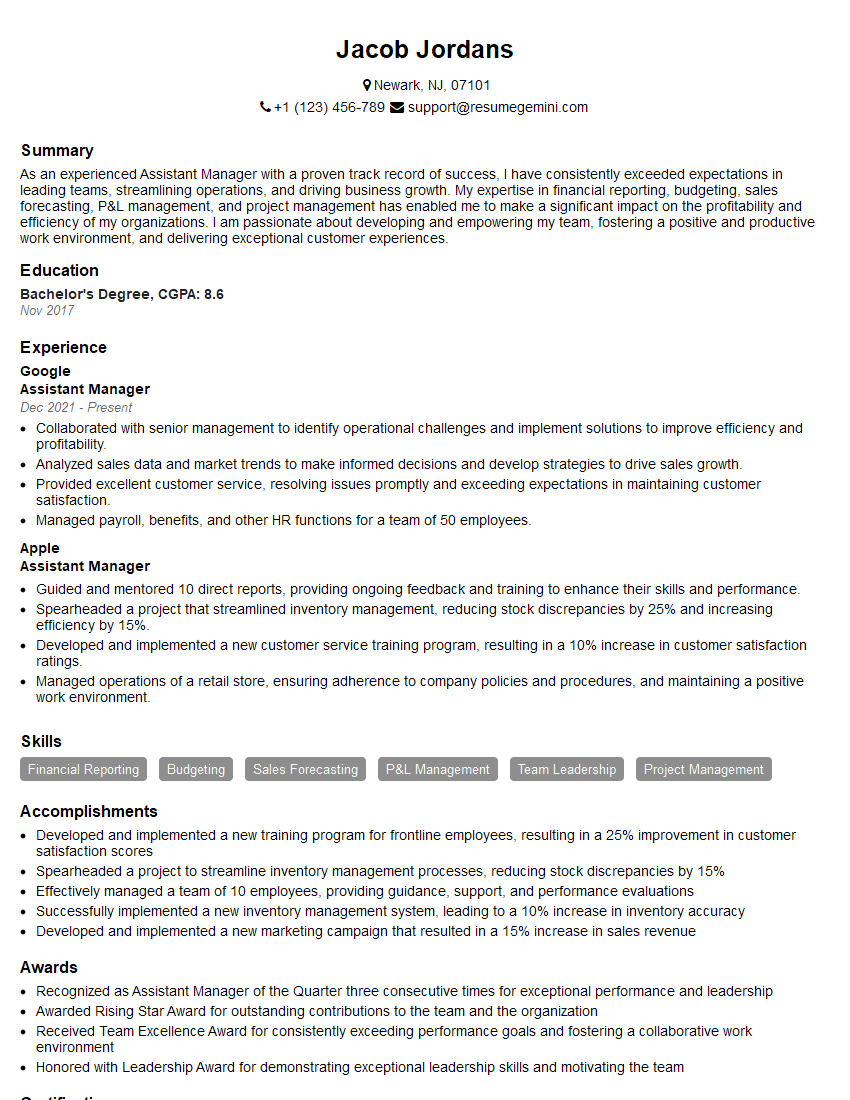
Assistant Manager Resume Sample
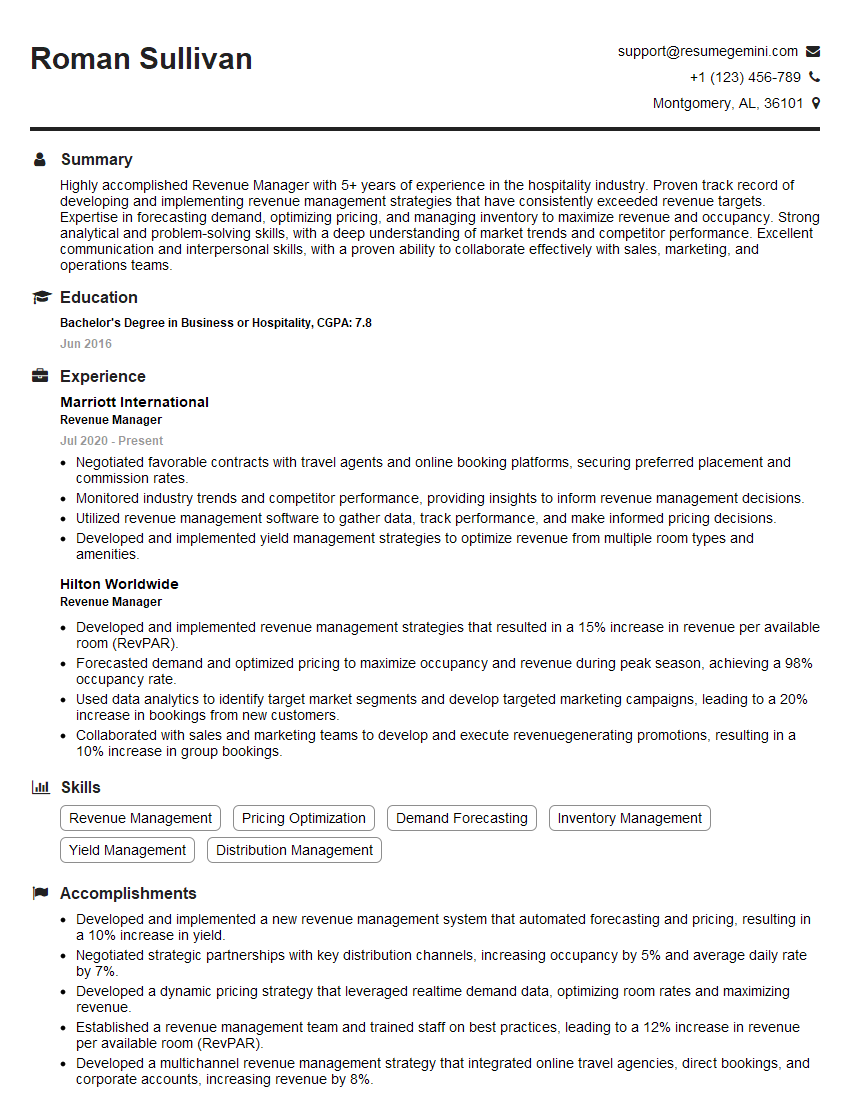
Revenue Manager Resume Sample
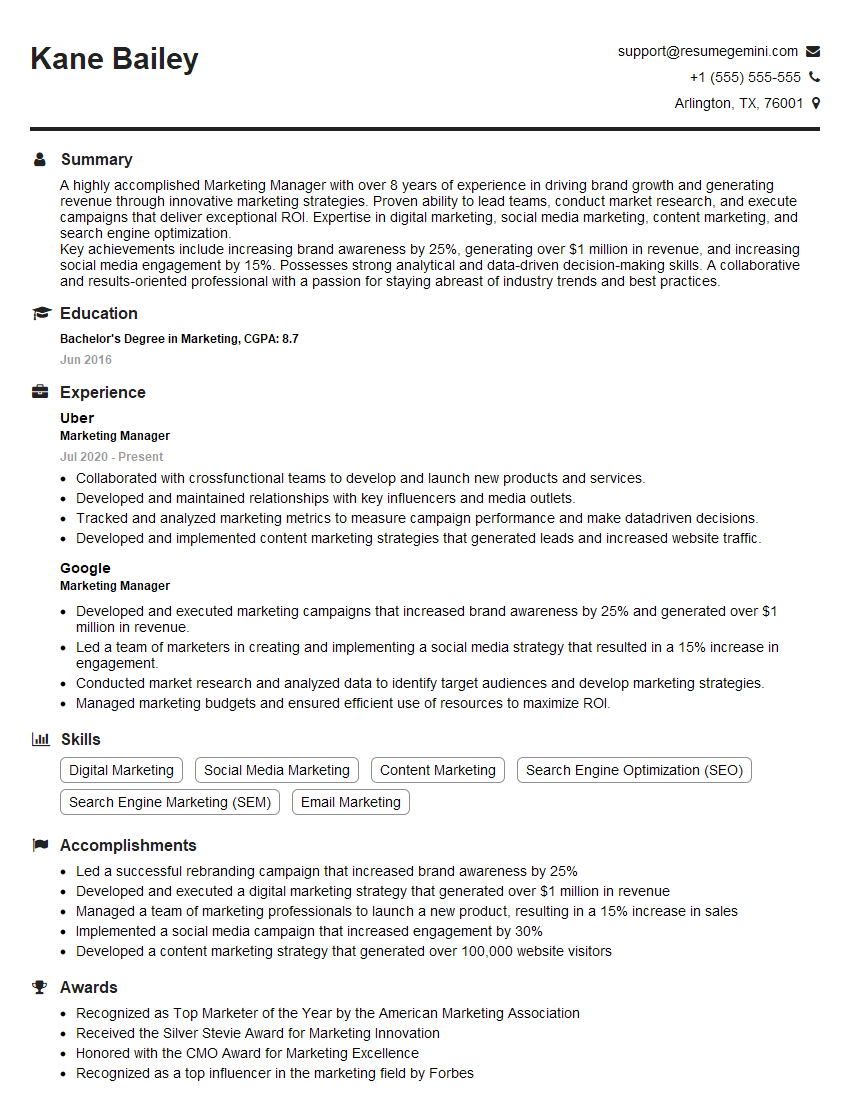
Marketing Manager Resume Sample
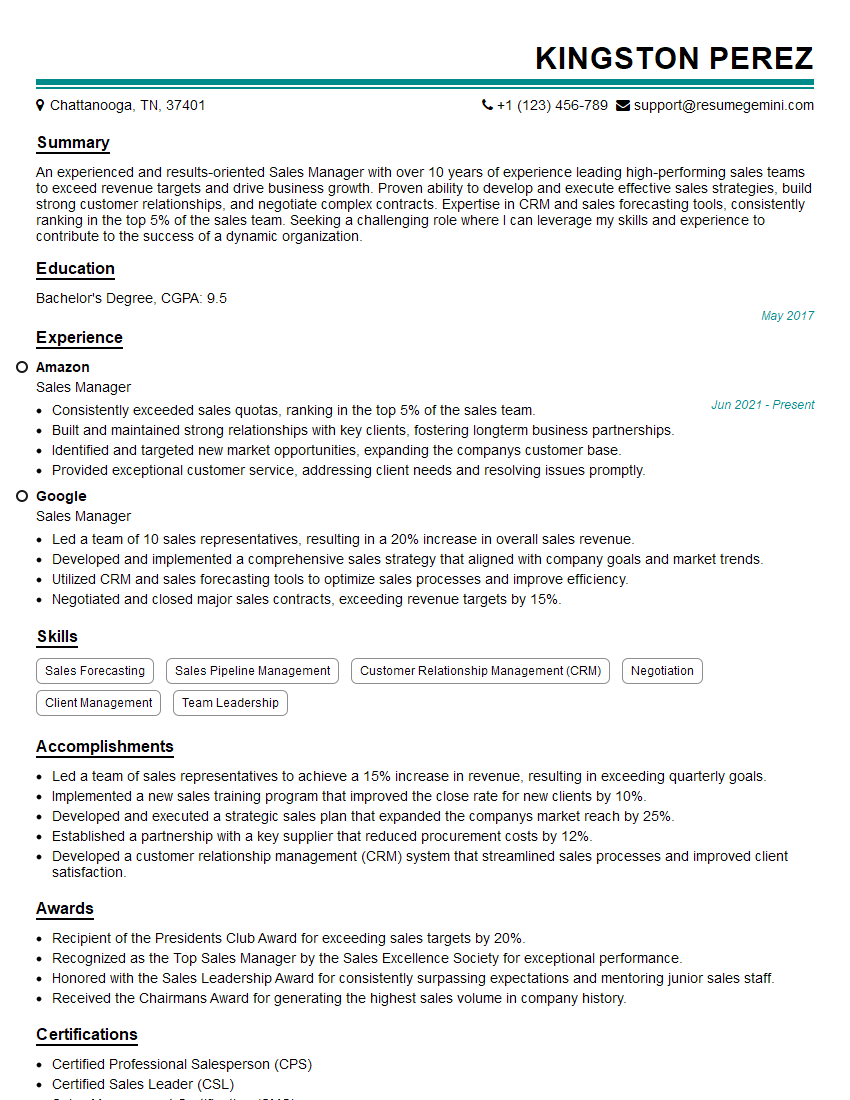
Sales Manager Resume Sample
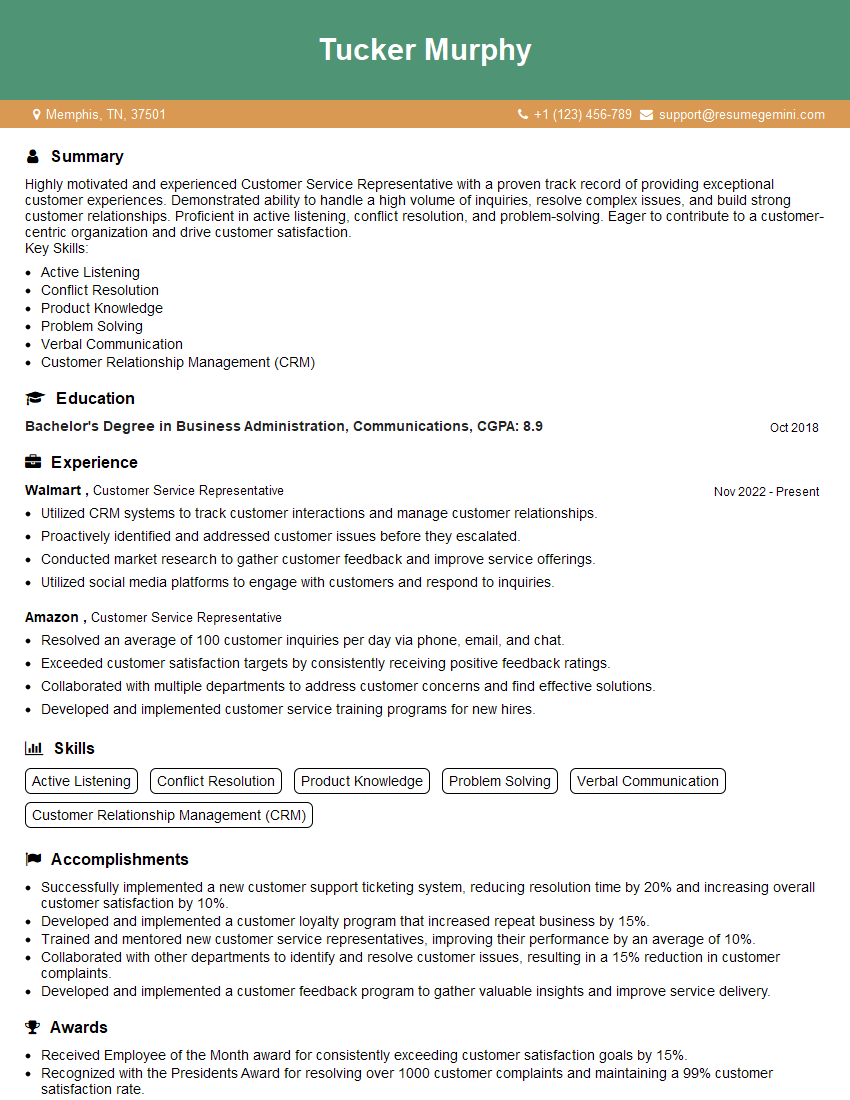
Customer Service Representative Resume Sample
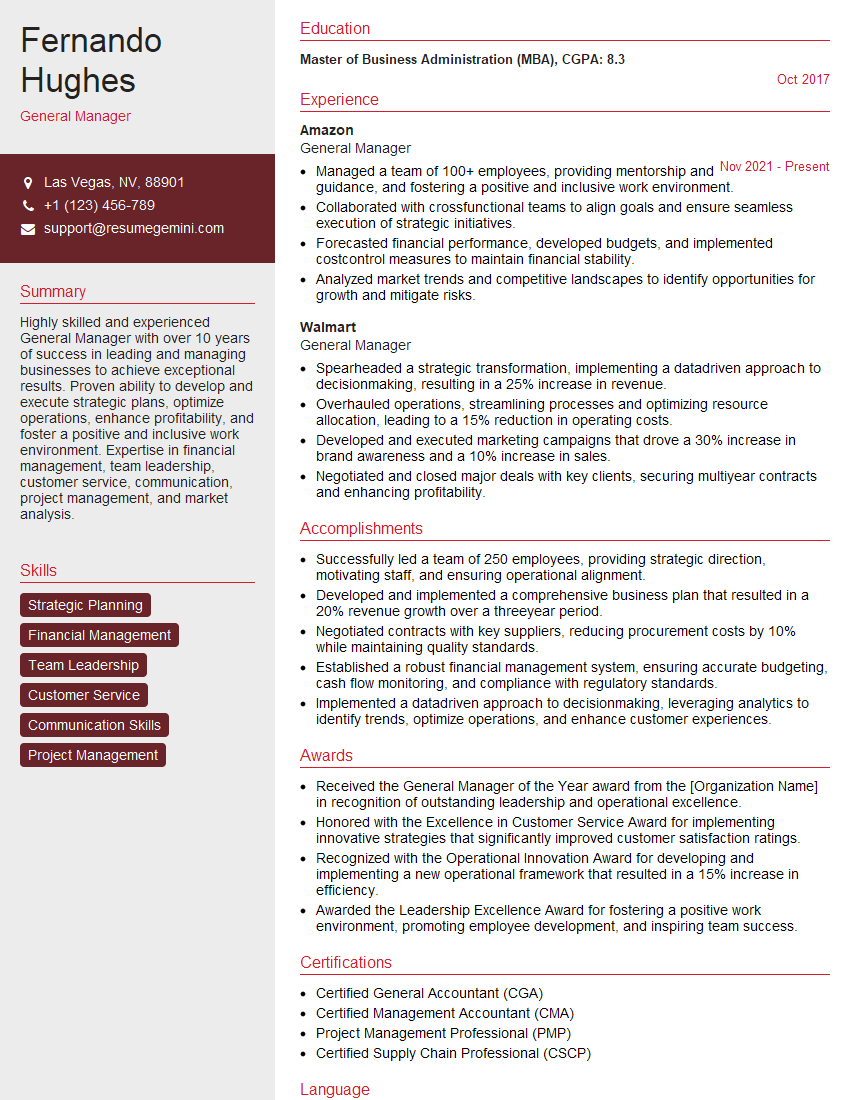
General Manager Resume Sample
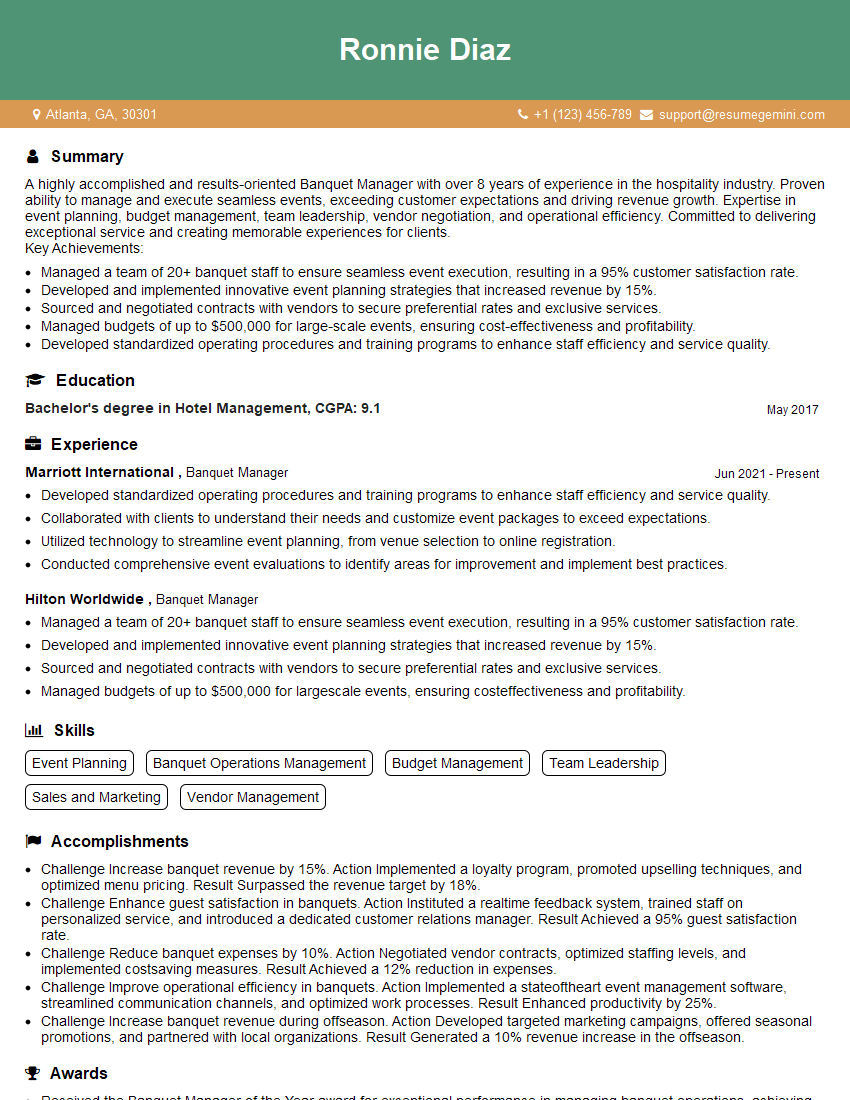
Banquet Manager Resume Sample
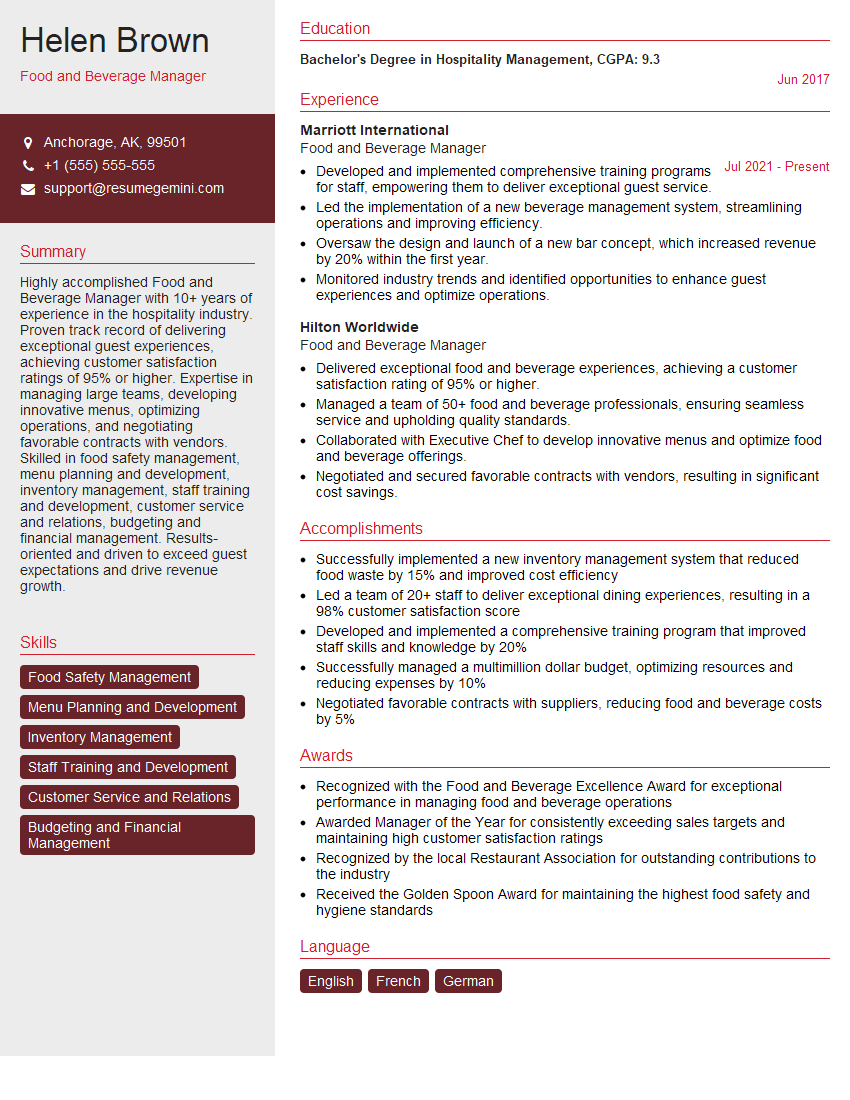
Food and Beverage Manager Resume Sample
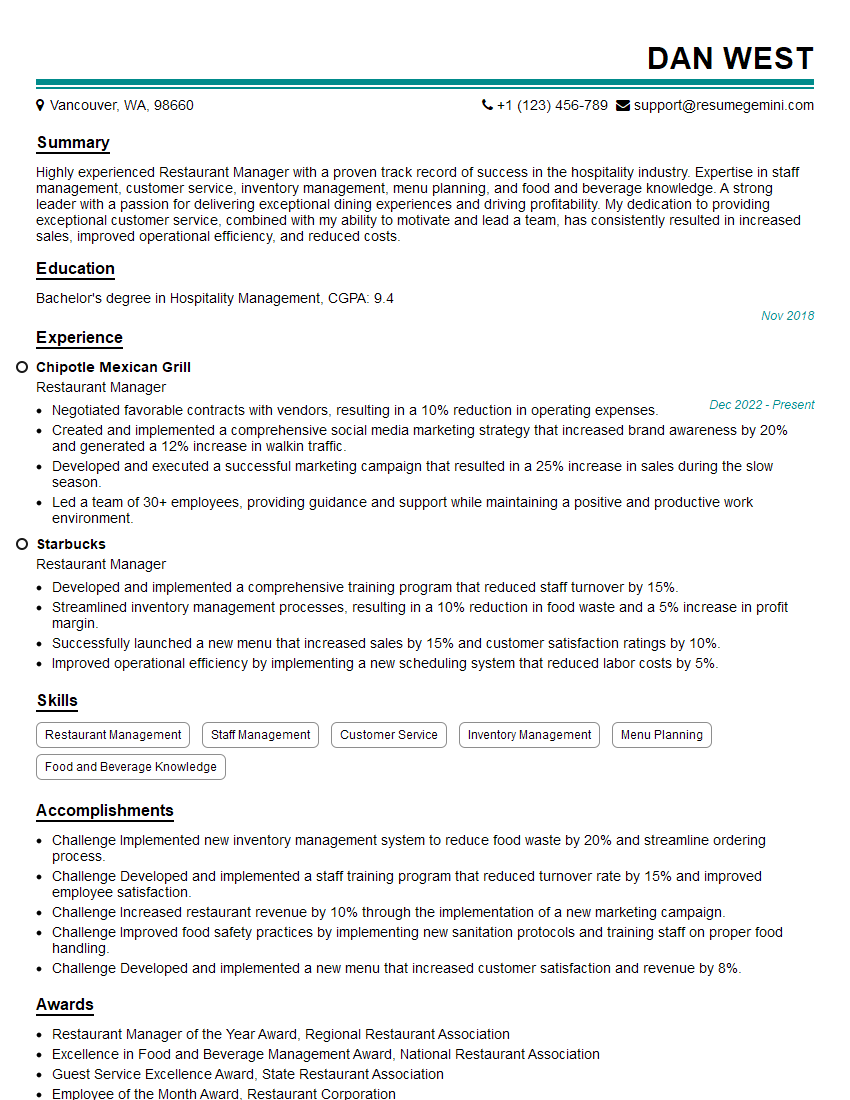
Restaurant Manager Resume Sample
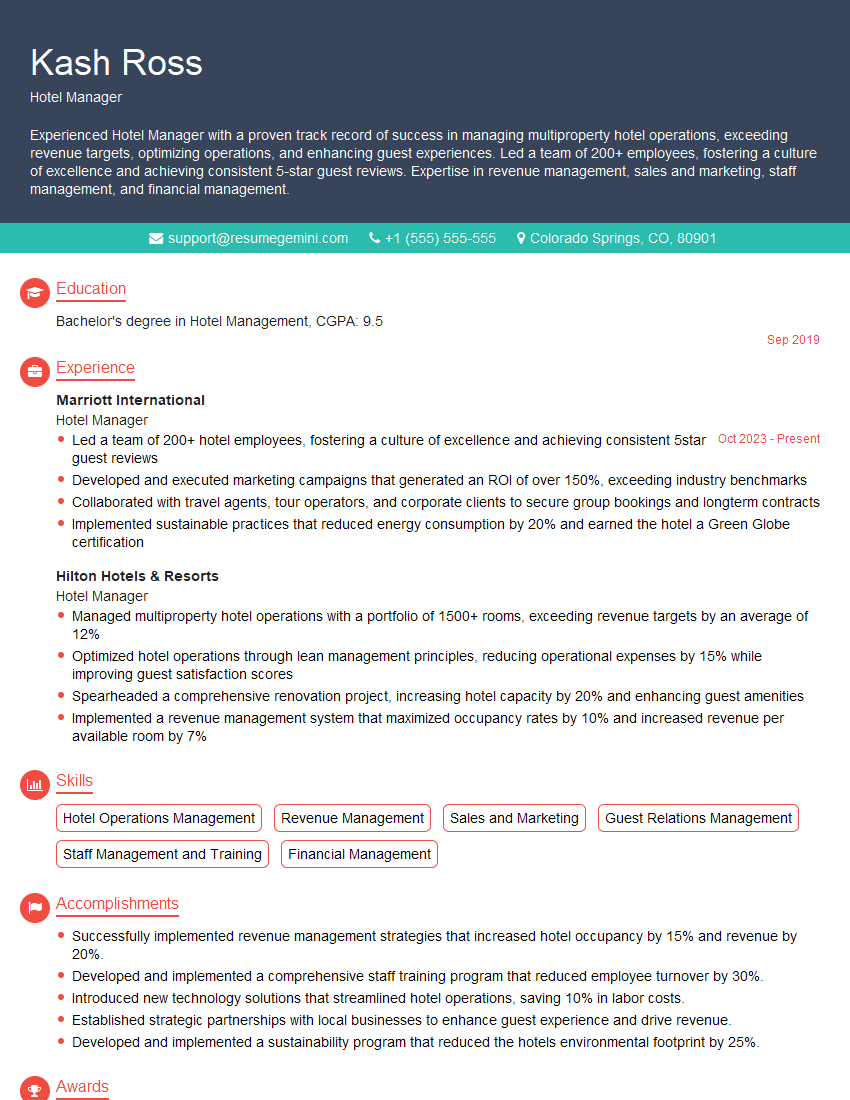
Hotel Manager Resume Sample
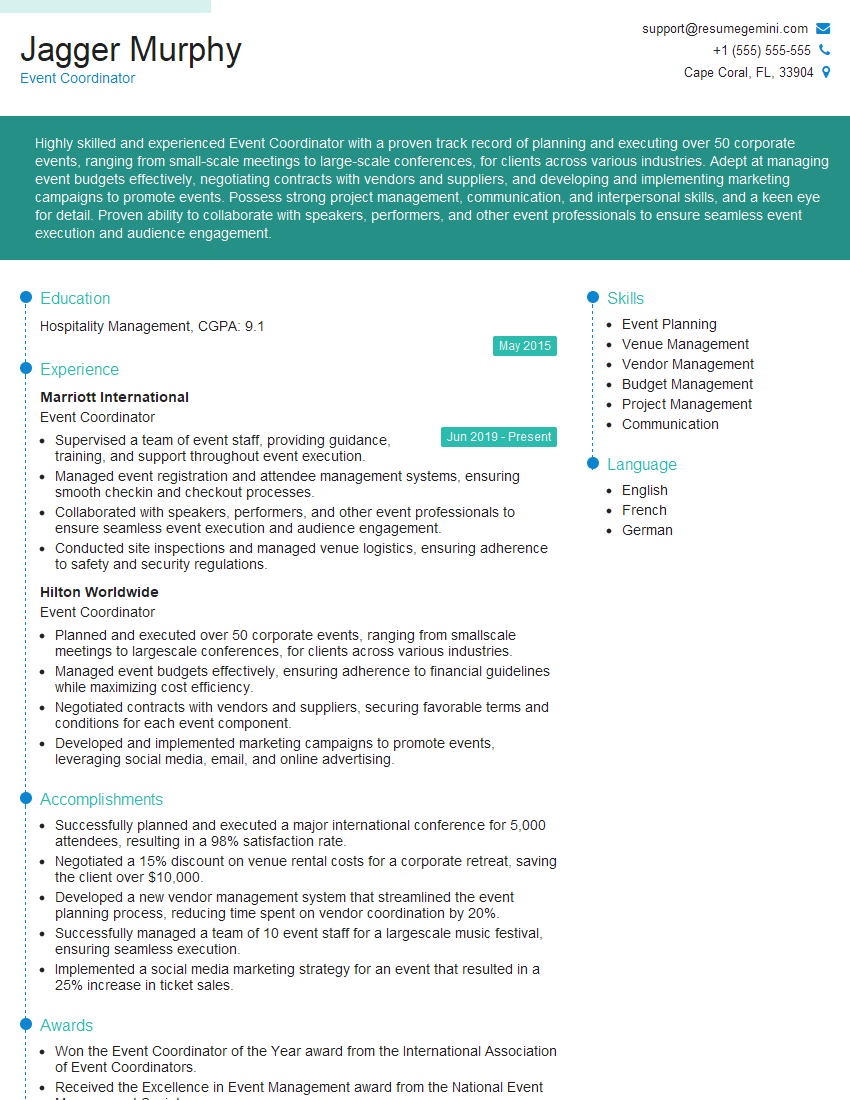
Event Coordinator Resume Sample
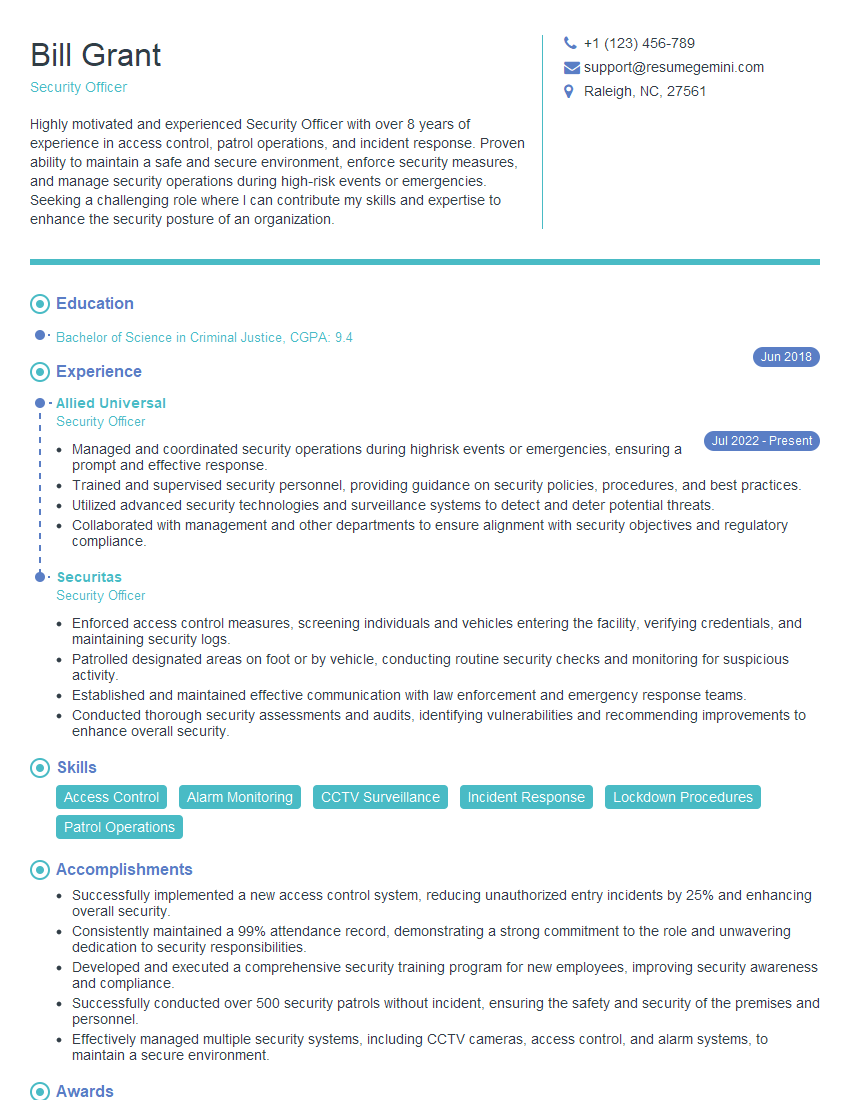
Security Officer Resume Sample
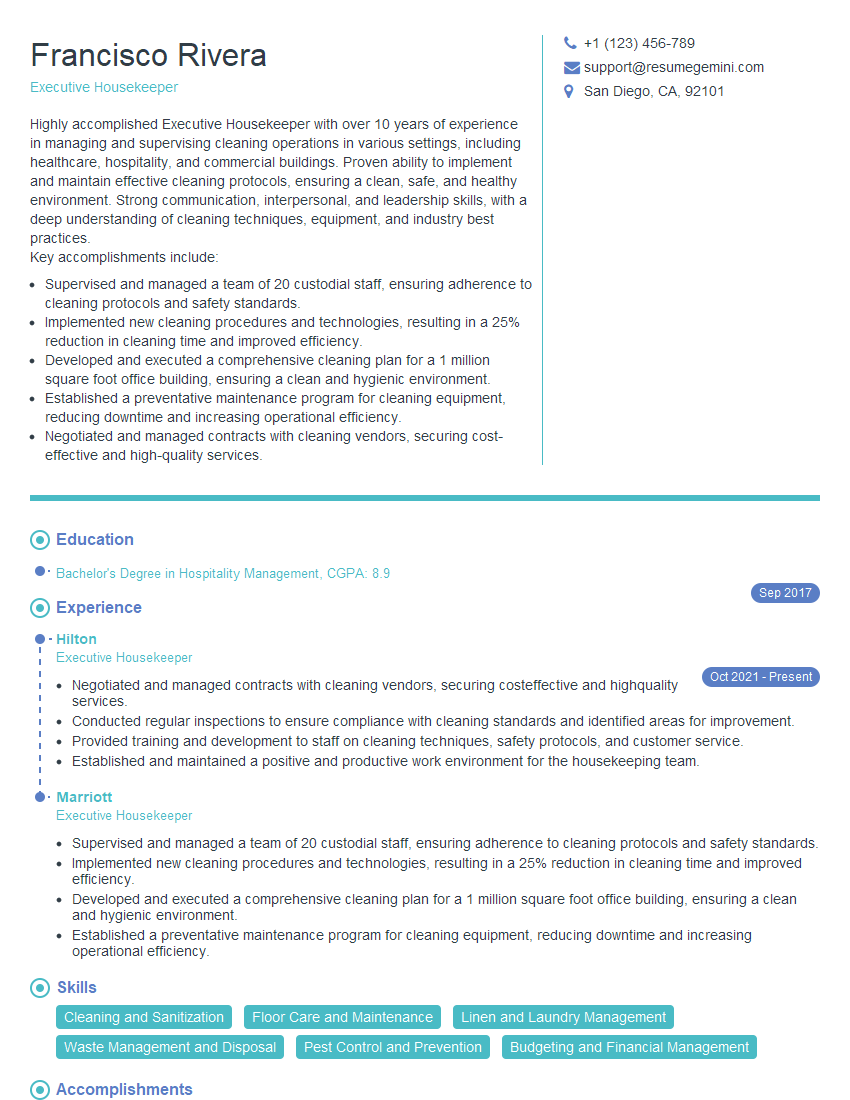
Executive Housekeeper Resume Sample
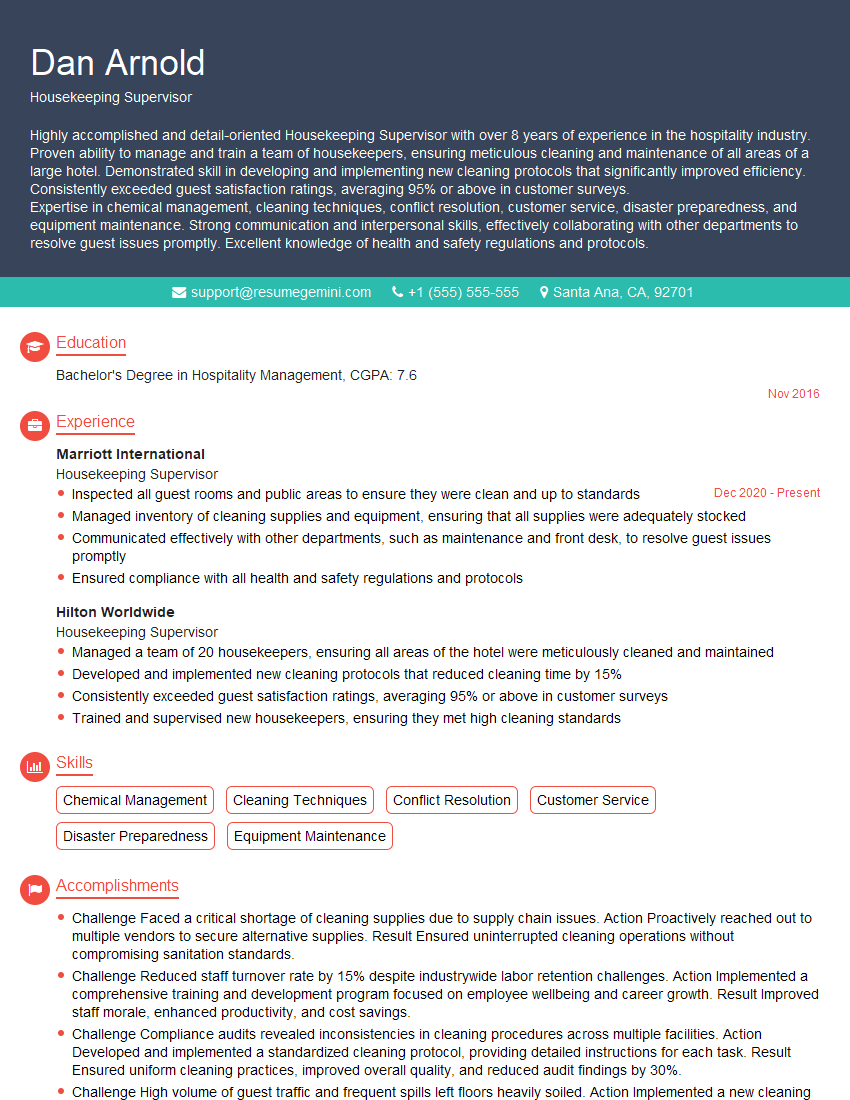
Housekeeping Supervisor Resume Sample
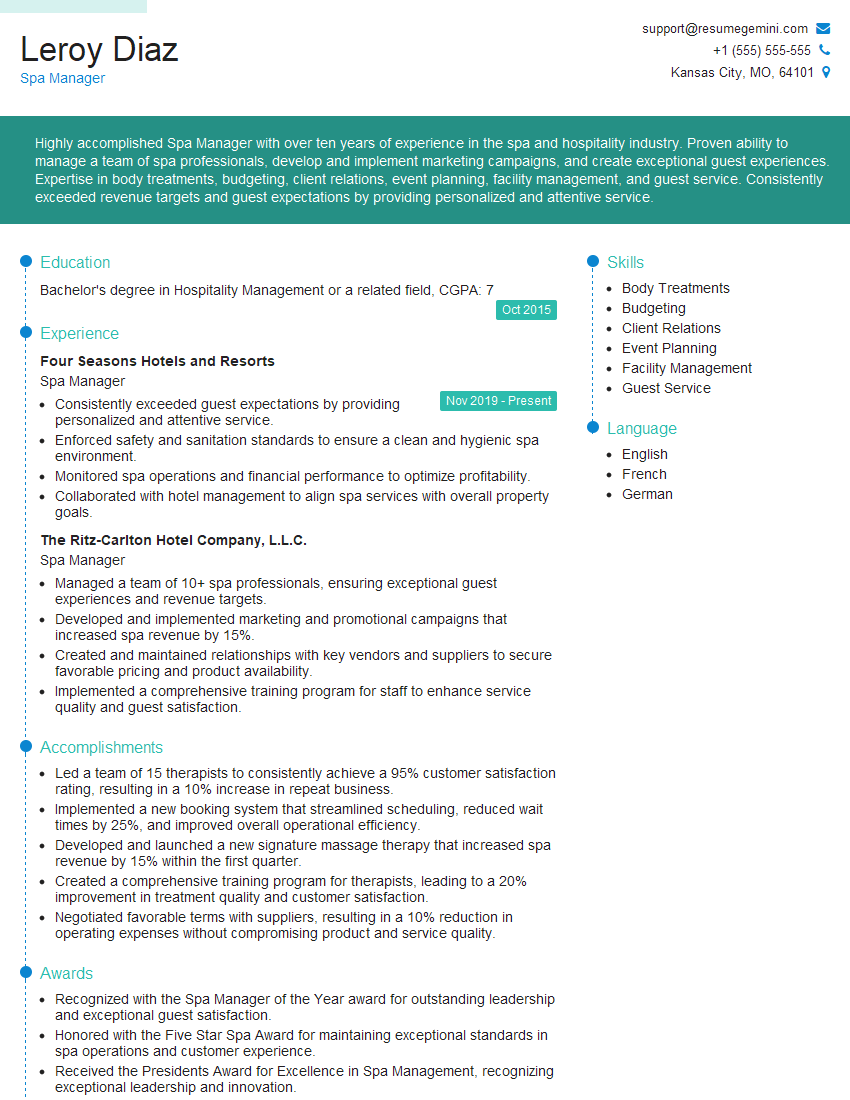
Spa Manager Resume Sample
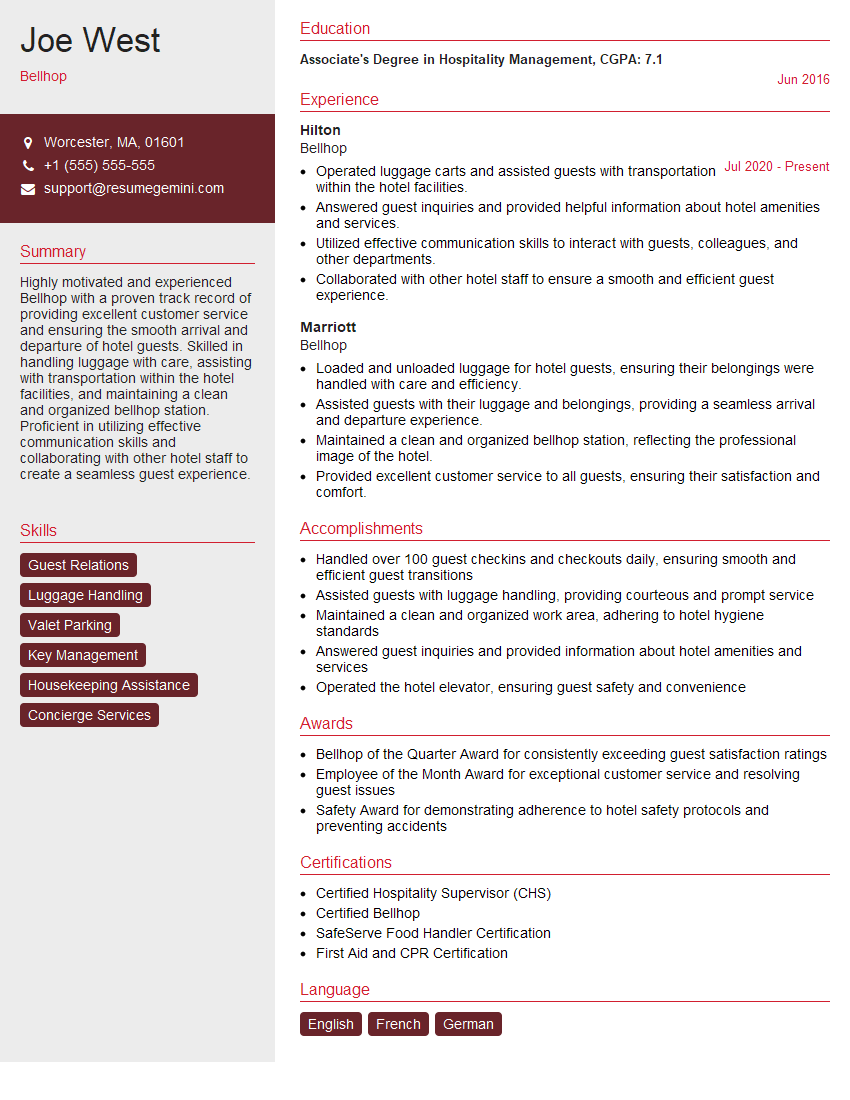
Bellhop Resume Sample
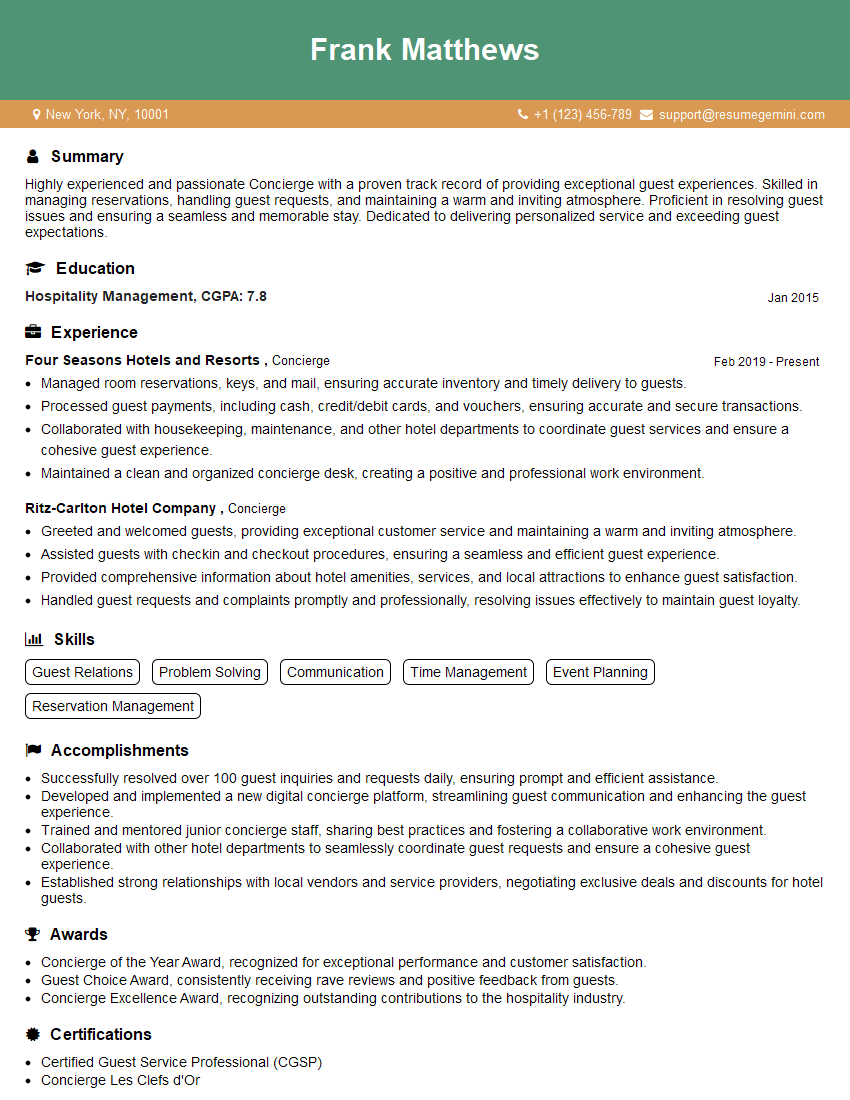
Concierge Resume Sample
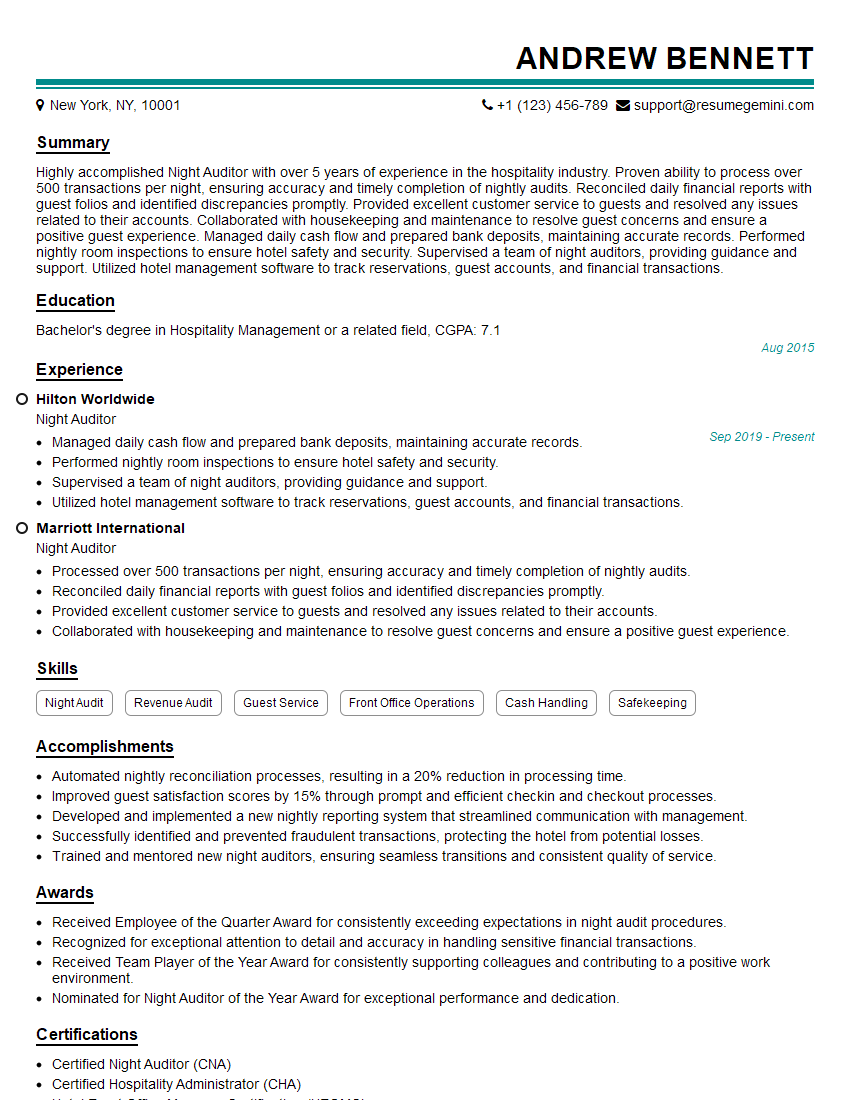
Night Auditor Resume Sample
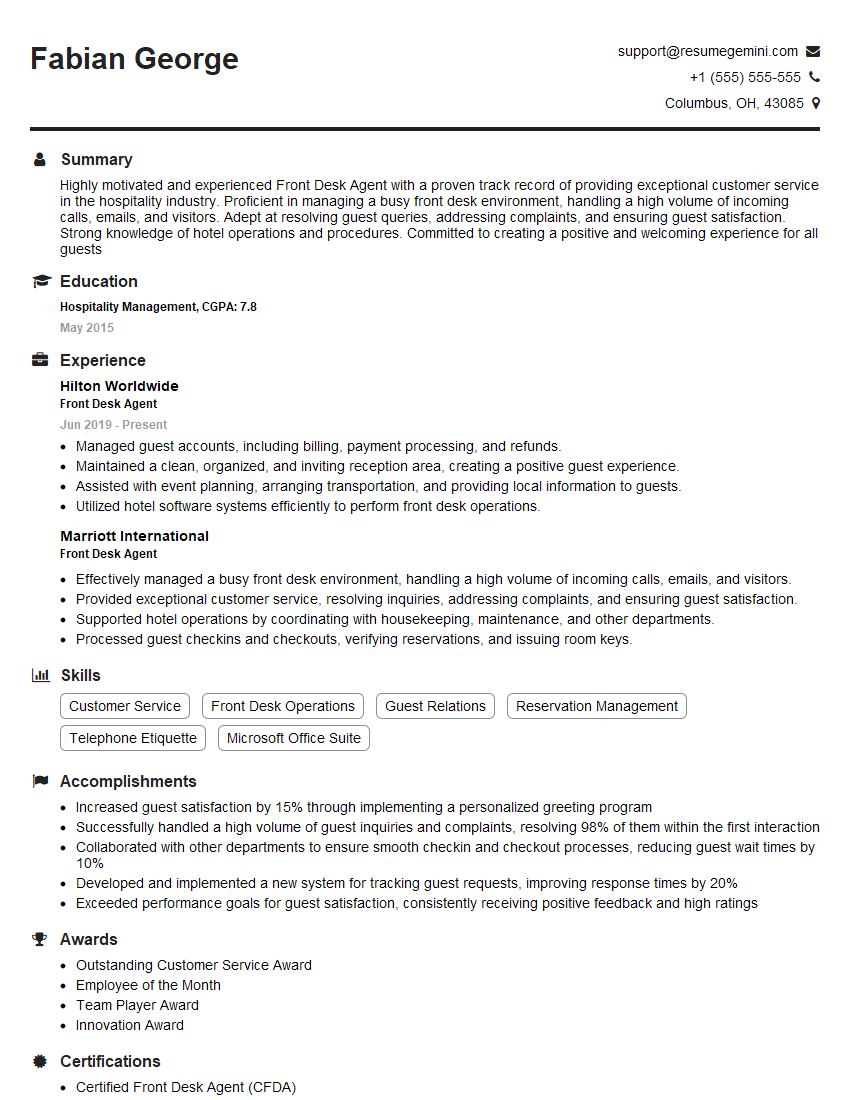
Front Desk Agent Resume Sample
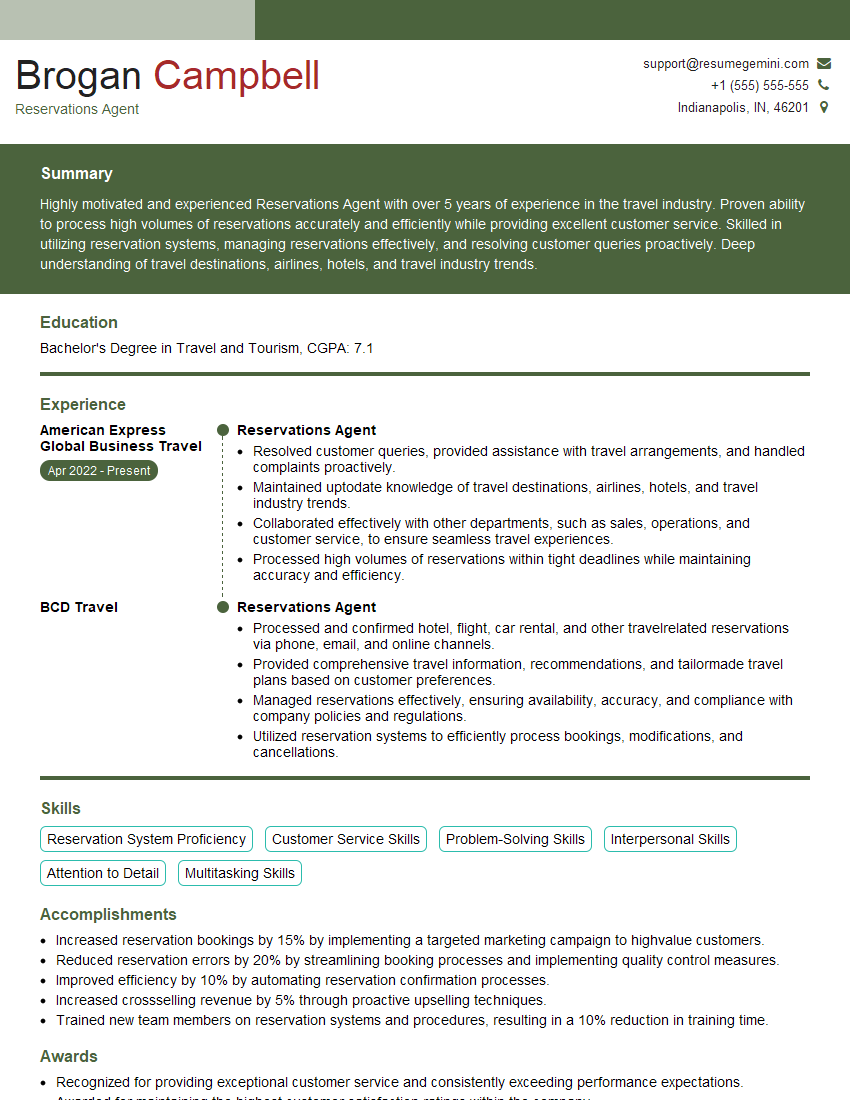
Reservations Agent Resume Sample
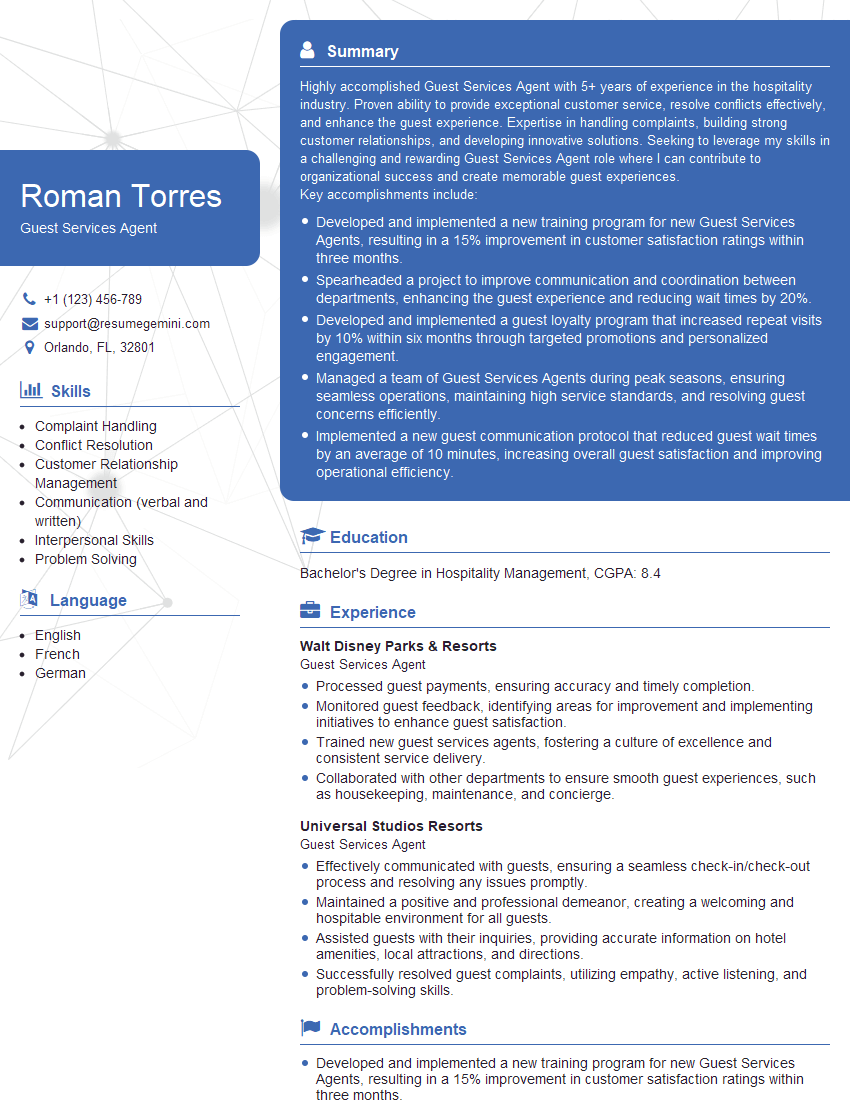
Guest Services Agent Resume Sample
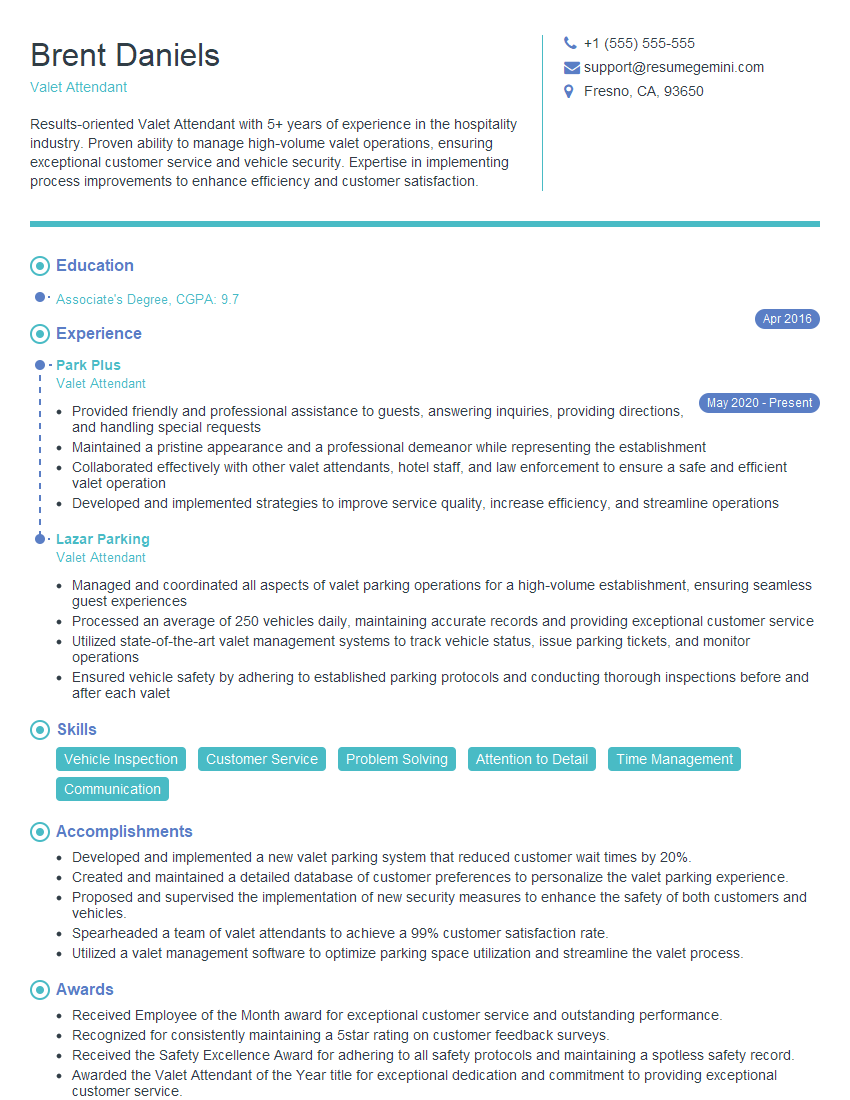
Valet Attendant Resume Sample
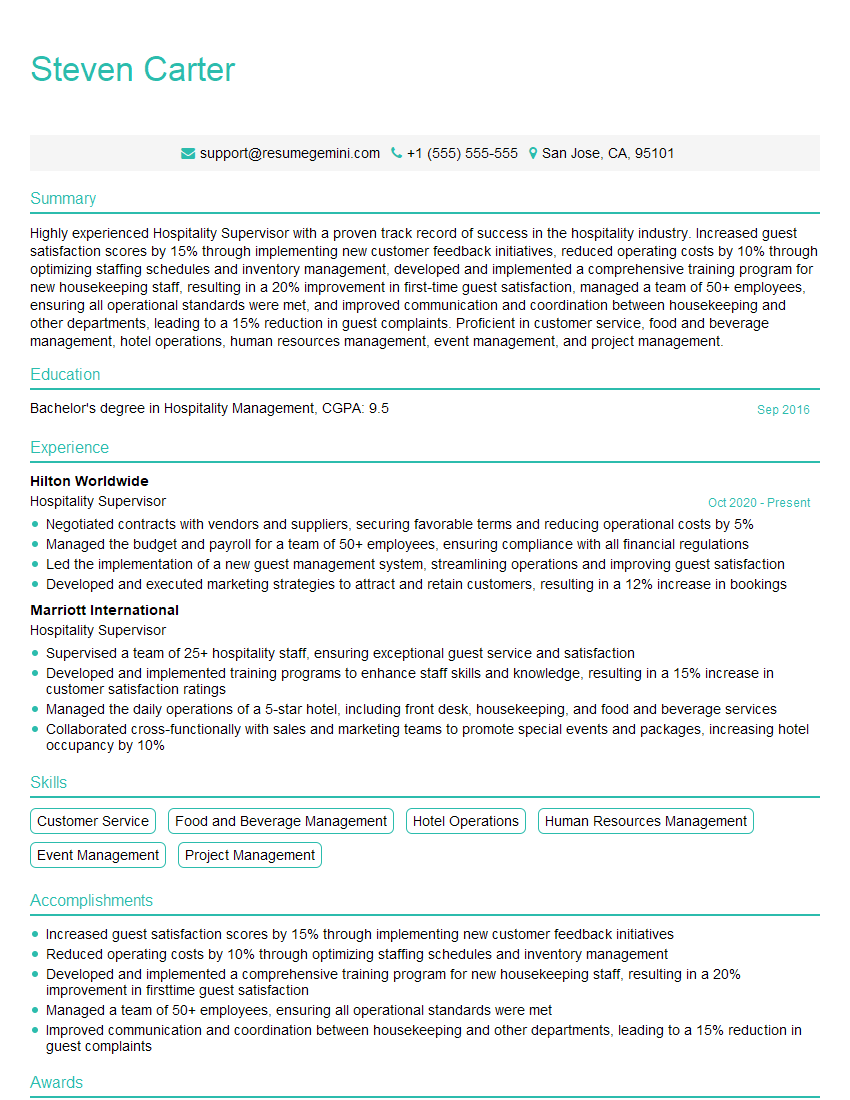
Hospitality Supervisor Resume Sample
- Assistant Manager
- Revenue Manager
- Marketing Manager
- Sales Manager
- Customer Service Representative
- General Manager
- Banquet Manager
- Food and Beverage Manager
- Restaurant Manager
- Hotel Manager
- Event Coordinator
- Security Officer
- Executive Housekeeper
- Housekeeping Supervisor
- Spa Manager
- Bellhop
- Concierge
- Night Auditor
- Front Desk Agent
- Reservations Agent
- Guest Services Agent
- Valet Attendant
- Hospitality Supervisor
Explore more articles
Users Rating of Our Blogs
Share Your Experience
We value your feedback! Please rate our content and share your thoughts (optional).
What Readers Say About Our Blog
Very informative content, great job.
good