Interviews are more than just a Q&A session—they’re a chance to prove your worth. This blog dives into essential Hull and Deck Repair interview questions and expert tips to help you align your answers with what hiring managers are looking for. Start preparing to shine!
Questions Asked in Hull and Deck Repair Interview
Q 1. Describe your experience with fiberglass repair techniques.
Fiberglass repair is a cornerstone of hull and deck maintenance. It involves techniques ranging from simple gelcoat repairs to complex structural laminations. My experience encompasses all aspects, from minor chip repairs to substantial structural restorations. I’m proficient in various methods including:
- Gelcoat Repair: This involves sanding, cleaning, filling, and fairing minor scratches and imperfections in the gelcoat layer. Think of it like patching a small hole in a wall. I use quality fillers, ensuring a smooth, durable finish that matches the existing gelcoat color.
- Laminate Repair: This addresses damage that penetrates beyond the gelcoat, involving the reinforcement layers (fiberglass cloth and resin). For example, a larger impact causing a delamination requires careful removal of damaged material, proper preparation of the surface, and rebuilding the laminate using appropriate resin and cloth layers. This is crucial for restoring structural integrity.
- Blister Repair: Osmotic blisters, caused by water ingress, are common. I address these by carefully drilling small holes to relieve pressure, then grinding away the affected area and laminating a new patch. It’s like carefully removing a boil without causing further damage.
- Stringer Repair: Stringers are vital structural components within the hull. Their repair often involves substantial work, including removing sections of the hull, reinforcing the stringer with new materials, and then carefully reconstructing the surrounding areas. This is often a large-scale job requiring extensive preparation and precision.
I always prioritize careful preparation, proper material selection (choosing resins and cloths appropriate for the specific application and environmental conditions), and meticulous finishing to ensure a long-lasting, aesthetically pleasing repair.
Q 2. Explain the process of assessing hull damage and determining the appropriate repair method.
Assessing hull damage requires a systematic approach. It starts with a visual inspection, noting the extent, location, and type of damage. I’ll then use tools like a moisture meter to check for water ingress and potentially hidden damage. The next step is determining the cause – was it impact damage, grounding, or corrosion? This dictates the repair strategy.
- Minor Scratches and Chips: These often just need gelcoat repair.
- Delaminations: Require more extensive laminate repair, potentially involving removal of damaged layers and reconstruction.
- Structural Damage: This could involve significant repairs, possibly requiring welding or reinforcement of stringers and frames. This often necessitates a detailed structural analysis, potentially involving engineering input.
- Corrosion: Depending on the extent, this may need spot repairs or large scale replacement and anti-corrosive coatings.
The choice of repair method depends heavily on the severity and location of the damage, the material of the hull (fiberglass, aluminum, steel), and the structural implications. For example, a small dent on the side might be a simple repair, but damage near a keel joint would demand a much more cautious and thorough approach.
Q 3. What are the common causes of hull corrosion and how can they be prevented?
Hull corrosion is a significant concern, especially in metallic hulls. The most common causes are:
- Electrolysis: This occurs when dissimilar metals are in contact in the presence of saltwater, creating an electrochemical reaction that leads to corrosion. Think of it like a battery where the hull acts as one electrode.
- Exposure to Saltwater: Saltwater is highly corrosive; its constant contact accelerates the deterioration process.
- Lack of Proper Coatings: Protective coatings, including anti-fouling paints and specialized barrier coats, are crucial to prevent corrosion. If these are not properly maintained, they lose their effectiveness, leaving the hull vulnerable.
- Scratches and Abrasions: These compromise the protective coating, providing entry points for corrosion.
Prevention involves several measures:
- Regular Cleaning and Inspections: Identifying and addressing minor problems early prevents escalation.
- Proper Coatings: Applying and maintaining high-quality marine coatings is essential.
- Cathodic Protection: This involves installing sacrificial anodes that corrode preferentially, protecting the hull.
- Hull Maintenance: Addressing scratches and abrasions promptly minimizes corrosion risk.
Remember, corrosion is a silent thief; proactive maintenance is far cheaper and safer than reactive repairs.
Q 4. How do you identify and address structural weaknesses in a ship’s deck?
Identifying structural weaknesses in a ship’s deck involves a multi-faceted approach. It starts with a visual inspection, looking for signs like:
- Sagging or Deformation: This indicates potential weakening.
- Cracks or Splits: These are clear indicators of stress or damage.
- Corrosion: Especially in metallic decks, corrosion can significantly reduce structural integrity.
- Delamination (in composite decks): Similar to hull delamination, this weakens the deck.
Non-destructive testing methods can also be employed to assess structural integrity. These include:
- Ultrasonic Testing: This detects internal flaws and delaminations.
- Magnetic Particle Inspection: Useful for detecting surface cracks in ferrous metals.
- Radiographic Testing: Provides detailed internal views of the deck structure.
Addressing weaknesses may involve:
- Repairing Cracks and Corrosion: This is often straightforward, involving welding, grinding, or patching as necessary.
- Reinforcement: This could involve adding new structural members (beams, plates) to strengthen weakened areas.
- Replacement: In cases of severe damage, complete or partial deck replacement may be necessary.
My experience allows me to accurately assess the extent of damage, choose appropriate testing methods, and determine the optimal repair strategy, ensuring a structurally sound and safe vessel.
Q 5. What safety precautions do you take when working at heights on a vessel’s deck?
Safety is paramount when working at heights. My approach adheres strictly to safety regulations and best practices. This includes:
- Harness and Fall Protection: A full-body harness and appropriate fall arrest system are always used, ensuring that a fall is prevented or its impact is minimized.
- Proper Scaffolding and Access: Secure and stable scaffolding or other access equipment is essential, ensuring safe access to work areas.
- Safety Lines and Tethers: Tethering tools to the harness prevents them from falling and causing injury or damage below.
- Regular Inspection of Equipment: Before each job, all equipment is carefully inspected for damage or defects.
- Emergency Procedures: Clear communication and emergency procedures are in place, ensuring that help can be summoned quickly in case of an accident.
- Awareness of Environmental Conditions: Wind, rain, and other weather factors can increase risks, so appropriate measures are taken to mitigate these.
I always brief my team thoroughly on safety procedures, ensuring everyone understands and adheres to them. Safety is not just a procedure; it’s a culture, and I am committed to fostering a safe working environment.
Q 6. What experience do you have with welding techniques used in hull repair?
Welding is a critical skill in hull repair, particularly for steel and aluminum vessels. My experience encompasses several welding techniques, including:
- Shielded Metal Arc Welding (SMAW): This is a versatile technique suitable for various applications. I’m proficient in using different electrode types to achieve the desired weld quality.
- Gas Metal Arc Welding (GMAW): Also known as MIG welding, this method is fast and efficient, ideal for continuous welds.
- Gas Tungsten Arc Welding (GTAW): This process, or TIG welding, is used for high-quality welds requiring excellent precision, often used in thinner metals.
My experience goes beyond simply wielding the torch. I understand the importance of selecting the appropriate welding parameters (voltage, amperage, travel speed) based on the material thickness, type, and specific application. I also emphasize pre-weld preparation, including cleaning and beveling the weld joint to ensure a strong, durable, and leak-free repair.
I’m also knowledgeable in post-weld processes like inspection and stress relief to ensure the integrity of the repair.
Q 7. How familiar are you with different types of marine coatings and their applications?
I’m highly familiar with a range of marine coatings and their applications. The choice of coating depends on various factors such as the substrate (steel, aluminum, fiberglass), the environment (freshwater, saltwater), and the intended use of the vessel.
- Epoxy Primers: These provide excellent adhesion to the substrate and corrosion protection.
- Anti-fouling Paints: These prevent marine growth on the hull, reducing drag and improving fuel efficiency.
- Topside Paints: These protect the hull from UV degradation, weathering, and abrasion.
- Zinc-Rich Primers: These offer superior corrosion protection, particularly for steel hulls.
- Polyurethane Coatings: These offer excellent durability and UV resistance.
Knowing which coating is appropriate for a given situation is crucial for long-term protection. For instance, a topside paint designed for freshwater use wouldn’t be suitable for a saltwater environment. My expertise encompasses not only selecting the right coating but also ensuring its proper application, following the manufacturer’s instructions carefully. Proper surface preparation is just as critical as the coating itself; a poorly prepared surface will lead to coating failure regardless of its quality.
Q 8. Describe your experience with composite material repair on hulls and decks.
My experience with composite material repair on hulls and decks is extensive, encompassing a wide range of materials like fiberglass, carbon fiber, and Kevlar. Repairing composite structures requires a thorough understanding of the material’s properties and failure modes. For example, a delamination – where the layers of the composite separate – requires careful removal of the damaged area, followed by proper surface preparation, and finally, the application of new resin and reinforcing material using techniques like wet layup or vacuum infusion, depending on the complexity and size of the repair. I’ve worked on everything from small cosmetic repairs on sailboats to major structural repairs on larger commercial vessels, always ensuring adherence to stringent quality control measures to guarantee a durable and reliable outcome. A successful repair necessitates not just technical skill, but also an artistic eye to ensure a seamless, invisible finish.
One particular project involved repairing a significant impact damage on a carbon fiber racing yacht’s hull. This required specialized skills in identifying the extent of the damage (using ultrasonic testing) and precise application of carbon fiber patches to restore the hull’s structural integrity. The repair was flawlessly executed, and the yacht successfully competed in subsequent races.
Q 9. Explain the process of inspecting and repairing damage to a vessel’s propeller shaft.
Inspecting and repairing a vessel’s propeller shaft is a critical process demanding precision and expertise. The inspection usually begins with a visual assessment, checking for any obvious signs of damage such as cracks, corrosion, or misalignment. More in-depth investigations might involve non-destructive testing methods like ultrasonic testing (UT) or magnetic particle inspection (MPI) to detect hidden flaws. Any corrosion needs to be meticulously removed, often by careful grinding or blasting, ensuring the shaft’s integrity isn’t compromised.
Repairing the shaft might involve welding (for smaller cracks) or even replacing a section of the shaft entirely for severe damage. Alignment is crucial, so specialized tools and techniques are used to ensure perfect alignment with the engine and propeller. Once repairs are complete, the shaft needs to be thoroughly cleaned and inspected again to confirm the repair’s success before the propeller is re-attached and the vessel is sea-trialed.
For example, I once worked on a fishing trawler whose propeller shaft suffered from significant corrosion due to prolonged exposure to saltwater. We used MPI to identify the extent of the damage, meticulously removed the corrosion, and then reinforced the shaft using specialized welding techniques. Post-repair alignment was critical to prevent further damage or vibration issues.
Q 10. How do you manage a complex hull repair project?
Managing a complex hull repair project requires a structured approach. It starts with a thorough damage assessment, involving detailed documentation, photography, and potentially non-destructive testing (NDT) to determine the extent of the damage and necessary repairs. A project plan needs to be developed, outlining tasks, timelines, resource allocation (materials, personnel, equipment), and budget. This plan requires close communication and collaboration with the vessel owner, insurance adjusters, surveyors, and other stakeholders.
Next is the mobilization phase, including arranging for the vessel to be dry-docked or brought into a suitable repair facility. The actual repair work is carried out following established safety procedures and quality control protocols. Throughout the project, regular progress reports are critical for maintaining transparency and managing expectations. Finally, a thorough inspection is carried out to ensure the repair meets all requirements before the vessel is returned to service.
A large project I oversaw involved the repair of a bulk carrier that had suffered significant hull damage due to grounding. It involved multiple teams, specialized equipment, and careful coordination. Detailed planning and clear communication ensured that we completed the repair on time and within budget, returning the vessel safely to service.
Q 11. What are the common types of wood used in deck construction and their properties?
Several types of wood are used in deck construction, each with unique properties. Teak is a popular choice due to its exceptional durability, weather resistance, and attractive appearance. It’s naturally resistant to rot and insects, making it ideal for exterior applications. However, it’s also expensive.
Iroko is another durable hardwood often used, offering similar properties to teak but at a lower cost. Mahogany, known for its beauty and workability, is frequently used but may require more maintenance than teak or iroko. Other woods like cedar or pine might be used for less demanding applications, but they typically require more protection against the elements.
The choice of wood often depends on the budget, aesthetic preferences, and the intended use of the vessel. For instance, a luxury yacht might opt for teak for its superior appearance and longevity, while a working fishing vessel might choose a more cost-effective option like Iroko which is still highly durable.
Q 12. Explain your experience with underwater hull cleaning and repairs.
My experience with underwater hull cleaning and repairs involves the use of specialized diving equipment and techniques. Cleaning typically involves removing marine growth (barnacles, algae, etc.) using high-pressure water jets or specialized brushes. This is important for improving the vessel’s hydrodynamic efficiency and preventing corrosion. Underwater repairs might involve patching small holes or cracks, applying antifouling coatings, and inspecting the hull for any signs of damage.
The safety of the divers is paramount, so all operations adhere to strict safety protocols and regulations. Regular inspections of the diving equipment and adherence to established procedures are critical. We utilize underwater cameras and remotely operated vehicles (ROVs) for detailed inspections, allowing for thorough assessments of hard-to-reach areas. For instance, I’ve overseen many underwater hull cleanings on large cruise ships, where efficiency and thoroughness are crucial in minimizing downtime.
Q 13. Describe your familiarity with marine regulations and safety standards.
Familiarity with marine regulations and safety standards is essential for this work. I’m proficient in complying with various international maritime organizations (IMO) guidelines, as well as national and local regulations. This includes awareness of regulations relating to material specifications, safety procedures during repairs, waste disposal, and environmental protection. A deep understanding of classification society rules (like ABS, DNV, Lloyd’s Register) is vital for ensuring that repairs meet the required standards for the vessel’s continued seaworthiness and certification.
My experience includes ensuring compliance with SOLAS (Safety of Life at Sea) regulations, MARPOL (International Convention for the Prevention of Pollution from Ships), and other relevant international and national maritime codes during hull and deck repair projects. Understanding and following these regulations is critical for maintaining safety and ensuring legal compliance. This is non-negotiable for maintaining a good safety record and avoiding legal issues.
Q 14. How would you handle a situation where a critical hull repair fails?
Handling a situation where a critical hull repair fails requires a swift and decisive response. The first step is to thoroughly assess the extent of the failure, identifying its root cause. This might involve further NDT inspections to pinpoint the area of failure and understand why it happened. Then, a plan for remediation must be developed, focusing on immediate safety measures to prevent further damage or risk. This might include temporary measures to secure the hull, restricting the vessel’s operational capabilities, or even bringing the vessel back to dry dock.
The failed repair must be thoroughly analyzed to understand the reasons for failure and prevent similar incidents. This could lead to revisions in repair techniques, material selection, or even the entire project plan. The necessary steps to mitigate the situation, including any financial or legal consequences, need to be proactively addressed. Thorough documentation of the failure, the analysis, and the remedial actions are essential.
In one instance, a weld on a tanker’s hull failed during initial sea trials. We immediately halted operations, re-examined the weld process, found a flaw in the welding procedure, corrected it, and then re-welded the section. The vessel passed subsequent trials only after complete reevaluation and correction of our procedure.
Q 15. What is your experience with different types of marine fasteners and their applications?
Marine fasteners are crucial for the structural integrity of a vessel. My experience encompasses a wide range, from simple screws and bolts to specialized high-strength fasteners designed for marine environments. The choice of fastener depends heavily on the application and material being joined.
- Stainless Steel Fasteners: These are common for their corrosion resistance, but different grades (e.g., 316 stainless steel) offer varying degrees of strength and resistance to saltwater. I often use these in deck and topside applications where aesthetics and corrosion resistance are paramount.
- Monel Fasteners: These nickel-copper alloys boast superior corrosion resistance compared to stainless steel, making them ideal for underwater applications or areas subject to significant saltwater exposure. I’ve used these extensively in hull repairs below the waterline.
- Aluminum Fasteners: Lighter than stainless steel, these are used in applications where weight reduction is a priority. However, they are less corrosion-resistant and require careful consideration of the environment.
- High-Strength Bolts (e.g., Grade 8): These are essential for critical structural connections where high tensile strength is needed. I use these in areas like bulkheads and structural supports within the hull.
- Self-Tapping Screws: Useful for thinner materials like fiberglass or aluminum, they’re convenient for quick repairs, but often require a pilot hole to prevent cracking.
Selecting the wrong fastener can lead to catastrophic failures. For example, using a low-grade stainless steel fastener in a highly corrosive environment will result in premature failure, requiring costly repairs. My approach always prioritizes selecting the correct fastener for the specific application and environmental conditions.
Career Expert Tips:
- Ace those interviews! Prepare effectively by reviewing the Top 50 Most Common Interview Questions on ResumeGemini.
- Navigate your job search with confidence! Explore a wide range of Career Tips on ResumeGemini. Learn about common challenges and recommendations to overcome them.
- Craft the perfect resume! Master the Art of Resume Writing with ResumeGemini’s guide. Showcase your unique qualifications and achievements effectively.
- Don’t miss out on holiday savings! Build your dream resume with ResumeGemini’s ATS optimized templates.
Q 16. How do you identify and address problems related to deck drainage systems?
Deck drainage is critical for preventing water ingress and rot. Identifying problems often starts with a thorough visual inspection, looking for blockages, damaged scuppers, or improperly sealed joints. I check for water pooling on the deck, especially after rainfall. Then, I’ll investigate the drainage pathways, using a pressure test to check the integrity of the pipes and connections.
Addressing problems involves a systematic approach:
- Locate the blockage: This might involve using a camera inspection system to pinpoint the obstruction.
- Clear the blockage: This could involve using specialized tools to remove debris or unclogging drains.
- Repair damaged scuppers: This may require replacing damaged sections of the scupper or resealing them using appropriate marine-grade sealant.
- Replace or repair deteriorated pipes: This often involves careful removal and replacement, ensuring proper sealing at all joints to prevent leaks.
- Address sealant issues: Old or damaged sealant should be removed and replaced with a suitable marine-grade sealant that’s compatible with the materials used.
For example, I once encountered a yacht with persistent deck drainage problems. Using a camera inspection system, we discovered a large amount of leaves and debris completely blocking the main drain. After clearing the blockage and resealing some cracked pipes, the drainage issue was completely resolved.
Q 17. What is your familiarity with using specialized tools and equipment for hull and deck repair?
My familiarity with specialized tools and equipment is extensive. Effective hull and deck repair demands precision and the right tools.
- Welding Equipment: I’m proficient with various welding techniques, including MIG, TIG, and stick welding, using both aluminum and steel.
- Grinding and Finishing Tools: Angle grinders, disc sanders, and specialized marine-grade sanding tools are crucial for surface preparation before welding or applying coatings.
- Cutting Tools: Plasma cutters, reciprocating saws, and specialized hole saws are used for cutting various materials precisely.
- Measuring and Inspection Tools: This includes precision measuring devices, thickness gauges, and specialized tools for verifying the alignment of repaired sections.
- Hydraulic and Pneumatic Tools: These assist in tasks like riveting, bending, and various other operations that require significant force.
Using the correct tools is crucial for safety and for producing high-quality repairs. For instance, using the wrong welding parameters on aluminum can lead to porosity and weakening of the joint, requiring a rework.
Q 18. Describe your experience with troubleshooting hydraulic systems on vessels.
Troubleshooting hydraulic systems on vessels requires a methodical approach, combining theoretical knowledge with hands-on experience. I begin by understanding the system’s schematic diagrams and operating procedures. My troubleshooting process involves:
- Visual Inspection: Checking for leaks, loose connections, or damaged components.
- Pressure Testing: Using gauges to measure system pressure and identify pressure drops or leaks.
- Fluid Analysis: Checking the hydraulic fluid for contamination or degradation.
- Component Testing: Individually testing components like pumps, valves, and actuators to identify malfunctioning parts.
- Electrical Checks: Checking electrical components like solenoids and sensors if the problem involves electrical control systems.
For example, on a recent job, a vessel’s hydraulic steering system failed. After a thorough inspection, we identified a leak in a hydraulic hose. The faulty hose was replaced, and the system was bled and pressure tested, restoring functionality.
Q 19. How do you maintain detailed records and documentation for repair work?
Maintaining detailed records is paramount for accountability and future reference. My documentation process is thorough and meticulous.
I use a combination of digital and physical records:
- Digital Records: I utilize specialized software to create detailed repair reports, including photos, videos, and diagrams of the damage and repair process. This ensures all the information is easily accessible and searchable.
- Physical Records: I also maintain physical files with original documents, such as inspection reports, material certifications, and invoices. This acts as a backup for the digital records and is essential for insurance claims or audits.
- Repair Logs: A detailed log is kept for each repair, including date, time, materials used, labor hours, and any specific issues encountered. This allows me to track trends and identify potential problems earlier.
This comprehensive approach ensures transparency and enables easy traceability of all repair work. It allows for effective communication with clients, insurance providers, and other stakeholders.
Q 20. Explain your knowledge of different types of hull plating materials.
Hull plating materials vary depending on the vessel’s size, type, and intended use. My knowledge spans a range of materials:
- Steel: Commonly used for its strength and relatively low cost. Different grades of steel offer varying strength and corrosion resistance. Steel hulls often require regular maintenance to prevent corrosion.
- Aluminum: Lighter than steel, making it popular for smaller vessels and high-speed crafts. Aluminum is more corrosion-resistant than steel but susceptible to pitting corrosion in certain environments.
- Fiberglass Reinforced Polymer (FRP): A composite material offering high strength-to-weight ratio and excellent corrosion resistance. Repairing FRP requires specialized techniques and materials.
- Other Materials: Less common materials include wood (typically for smaller or historical vessels), and specialized alloys for high-performance applications.
Understanding the properties of each material is crucial for selecting appropriate repair techniques and materials. For instance, welding aluminum requires different techniques and parameters compared to welding steel, and FRP repairs necessitate the use of resins and fillers.
Q 21. How familiar are you with non-destructive testing (NDT) techniques?
Non-destructive testing (NDT) is crucial for assessing the structural integrity of a hull or deck without causing damage. My familiarity with NDT techniques is substantial, including:
- Visual Inspection (VT): A basic but essential method involving a thorough visual examination to detect surface defects.
- Ultrasonic Testing (UT): Uses high-frequency sound waves to detect internal flaws and measure material thickness.
- Magnetic Particle Inspection (MPI): A method for detecting surface and near-surface cracks in ferromagnetic materials.
- Dye Penetrant Inspection (DPI): A technique used to detect surface-breaking defects in a wide range of materials.
NDT is critical for identifying hidden problems, such as corrosion or fatigue cracking, before they lead to significant damage. For example, UT can be used to assess the thickness of a hull plate and detect areas of corrosion that may not be visible to the naked eye. The results from these techniques are crucial for determining the extent of needed repairs and ensuring the safety and longevity of the vessel.
Q 22. What is your experience with different types of caulking and sealant?
My experience with caulking and sealants is extensive, encompassing a wide range of products suited for various marine applications. I’m proficient in using both traditional and modern materials. For example, I regularly employ polysulfide, polyurethane, and silicone-based caulks, each chosen based on its specific properties and the application’s requirements. Polysulfide, while offering excellent adhesion and flexibility, is better suited for larger joints and areas exposed to significant movement. Polyurethane, known for its rapid curing and high strength, is ideal for smaller gaps and sealing around deck fittings. Silicone, offering good water resistance, is frequently used for sealing around windows and hatches. My selection process always considers factors like the material being sealed (e.g., wood, metal, fiberglass), the expected movement of the joint, and the environmental conditions (sun exposure, water immersion). I also prioritize environmentally friendly options whenever possible, ensuring the long-term health of the vessel and the marine environment.
Beyond the choice of caulk, proper preparation is crucial for a successful, long-lasting seal. This involves cleaning the surfaces thoroughly to ensure proper adhesion, removing any old sealant completely, and ensuring the joint is properly shaped to promote optimal sealant penetration. I meticulously follow manufacturer’s instructions and best practices to achieve the highest quality results.
Q 23. Describe your understanding of the impact of saltwater corrosion on hull materials.
Saltwater corrosion is a significant threat to hull materials, particularly metals like steel and aluminum. The process involves electrochemical reactions where the metal loses electrons to the surrounding saltwater, leading to the formation of metal oxides and hydroxides. This deteriorates the material’s structural integrity, causing pitting, cracking, and weakening over time. The severity of corrosion depends on several factors, including the metal’s composition, the salinity of the water, the presence of oxygen, and the vessel’s exposure to environmental conditions. For instance, steel hulls in areas with high salinity and frequent exposure to wave action will corrode faster than those in sheltered, freshwater environments.
Different hull materials react differently to saltwater corrosion. Steel is prone to rusting, aluminum to pitting, and even fiberglass can degrade due to osmotic blistering if moisture penetrates the laminate. Understanding these mechanisms is crucial in selecting appropriate protective measures and repair strategies. Effective corrosion prevention strategies include using protective coatings (anti-fouling paints, epoxy primers), cathodic protection systems, and regular hull cleaning and maintenance.
Q 24. How do you ensure the structural integrity of a repaired hull section?
Ensuring structural integrity after hull repair is paramount. My approach involves a combination of careful assessment, appropriate repair techniques, and rigorous quality control. Initially, I thoroughly inspect the damaged area to determine the extent of the damage and identify any underlying structural issues. This often involves removing existing coatings to assess the extent of corrosion or delamination. The repair method depends on the material and the type of damage. For example, small fiberglass repairs might involve patching with resin and fiberglass cloth, while larger steel repairs may necessitate welding or the installation of reinforcing plates.
After the repair, I conduct non-destructive testing (NDT) techniques such as ultrasonic testing or visual inspection with a borescope to verify the soundness of the repair. The repaired area is then thoroughly cleaned, primed, and coated with appropriate marine paints and coatings to protect it from further damage. Finally, I always document the entire process, including photos and detailed repair notes, ensuring traceability and accountability.
Q 25. What experience do you have working with different types of marine paints and coatings?
My experience with marine paints and coatings is broad, covering various types suitable for different substrates and applications. I’m familiar with epoxy primers, which are crucial for providing a strong bond between the substrate and subsequent coatings. I regularly use anti-fouling paints to prevent marine growth, and I choose between different types, like ablative or hard anti-fouling, depending on the vessel’s use and environmental conditions. I also have extensive experience with topcoats, which provide UV protection, aesthetic appeal, and durability. I use products designed for optimal performance in harsh marine environments, considering their resistance to abrasion, UV degradation, and osmotic blistering.
Proper surface preparation is critical for optimal paint adhesion and longevity. This includes cleaning, sanding, and priming the surface appropriately before applying any coatings. I always adhere strictly to the manufacturers’ instructions, ensuring proper application techniques and drying times. Furthermore, I stay updated on the latest advancements in marine coating technology to ensure I’m utilizing the most effective and environmentally friendly products available.
Q 26. How would you handle a situation where you discover a hidden structural issue during a routine inspection?
Discovering a hidden structural issue during a routine inspection is a common occurrence that requires a methodical approach. The first step is to thoroughly document the finding, including photographs and detailed descriptions of the location, size, and nature of the problem. Then, I’d carefully assess the extent of the damage and its potential impact on the vessel’s structural integrity. This may involve further investigation, potentially using NDT techniques like ultrasound or X-ray imaging, to fully understand the issue’s scope.
Depending on the severity, I’d then consult with the vessel owner and possibly a naval architect to determine the best course of action. Minor issues might be addressed directly, while more significant problems would necessitate a more comprehensive repair plan, potentially involving temporary shoring or other support measures to ensure the vessel’s safety during the repair process. Safety is always my top priority, and all work would be carried out in accordance with relevant safety regulations and best practices.
Q 27. Explain your experience with working on vessels of different sizes and types.
My experience spans a wide range of vessel sizes and types, from small recreational boats to larger commercial vessels. I’ve worked on fiberglass sailboats, aluminum fishing boats, and steel-hulled cargo ships. The challenges and techniques vary considerably depending on the size and material of the vessel. Working on a small sailboat requires different skills and approaches than working on a large commercial vessel. For instance, a small repair on a sailboat might involve a straightforward fiberglass patch, while a repair on a large steel-hulled vessel might require sophisticated welding techniques and possibly the use of specialized equipment.
Regardless of the vessel’s size or type, my approach remains consistent: thorough assessment, proper planning, meticulous execution, and a commitment to quality and safety. I’ve consistently adapted my techniques and utilized appropriate tools and equipment to successfully tackle diverse repair challenges across a wide range of vessel types.
Q 28. What are your strengths and weaknesses in terms of hull and deck repair?
My strengths lie in my comprehensive understanding of hull and deck construction, my proficiency in various repair techniques, and my meticulous attention to detail. I’m adept at problem-solving and possess excellent diagnostic skills that allow me to identify and address issues effectively. I also pride myself on my commitment to safety and my ability to communicate clearly with clients and colleagues.
As for weaknesses, while I’m continually learning and expanding my skills, I would identify staying abreast of the rapid advancements in materials science and repair technologies as an area for continuous improvement. I actively participate in industry training and workshops to mitigate this and remain at the forefront of best practices within the field.
Key Topics to Learn for Hull and Deck Repair Interview
- Hull Structure and Materials: Understanding various hull materials (steel, aluminum, fiberglass), their properties, and common failure modes. This includes knowledge of structural design principles applied to vessels.
- Damage Assessment and Repair Techniques: Practical experience with identifying and assessing damage to hulls and decks, including corrosion, impact damage, and structural weaknesses. This should encompass various repair methods, from simple patching to complex structural repairs.
- Welding and Fabrication: Proficiency in various welding techniques relevant to hull and deck repair (e.g., MIG, TIG, arc welding) and the ability to fabricate replacement parts. Understanding of welding safety procedures is crucial.
- Composite Repair: Knowledge of fiberglass and other composite materials used in hull and deck construction, and the techniques for repairing damage to these structures. This includes understanding resin systems and lamination techniques.
- Safety Procedures and Regulations: Familiarity with relevant safety regulations and procedures concerning hull and deck repair, including confined space entry, working at heights, and handling hazardous materials.
- Non-Destructive Testing (NDT): Understanding the application of NDT methods (e.g., ultrasonic testing, magnetic particle inspection) to assess the integrity of hull and deck structures.
- Blueprint Reading and Interpretation: Ability to interpret technical drawings and specifications relevant to hull and deck repair.
- Problem-Solving and Troubleshooting: Demonstrating the ability to diagnose and solve complex problems related to hull and deck damage and repair. This includes thinking critically and creatively to find effective solutions.
Next Steps
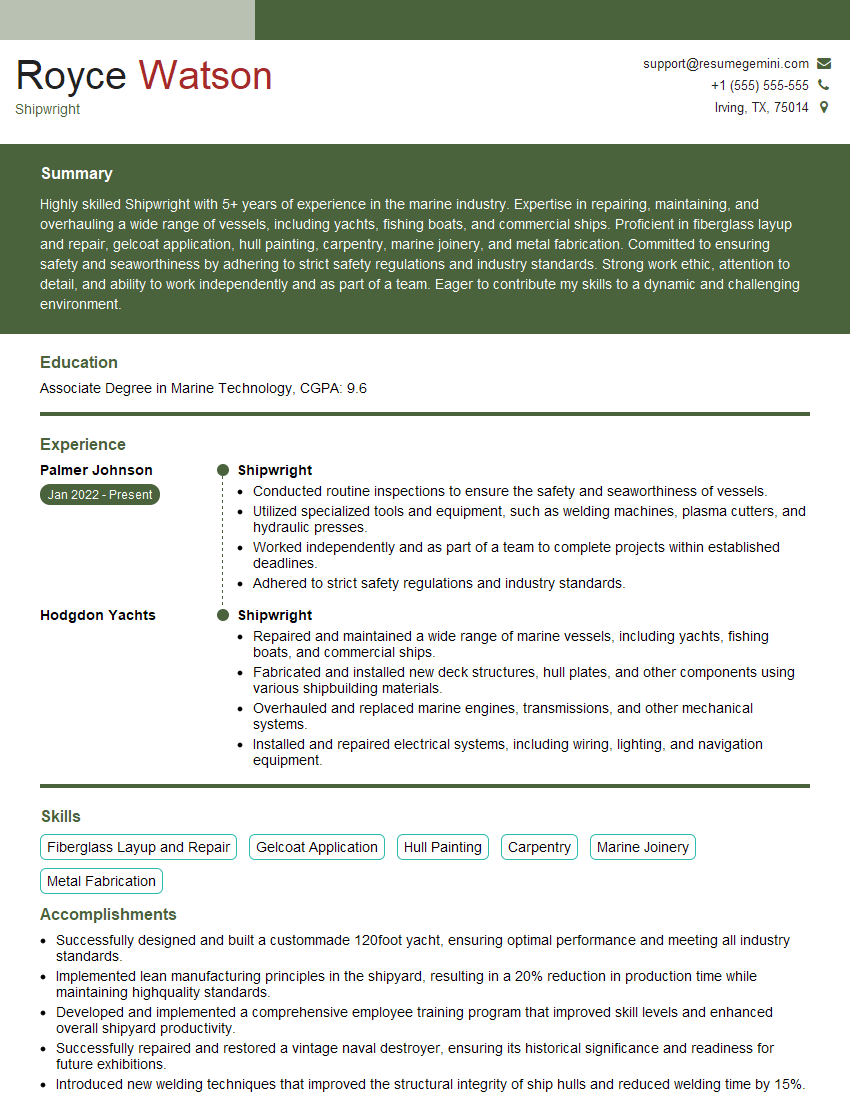
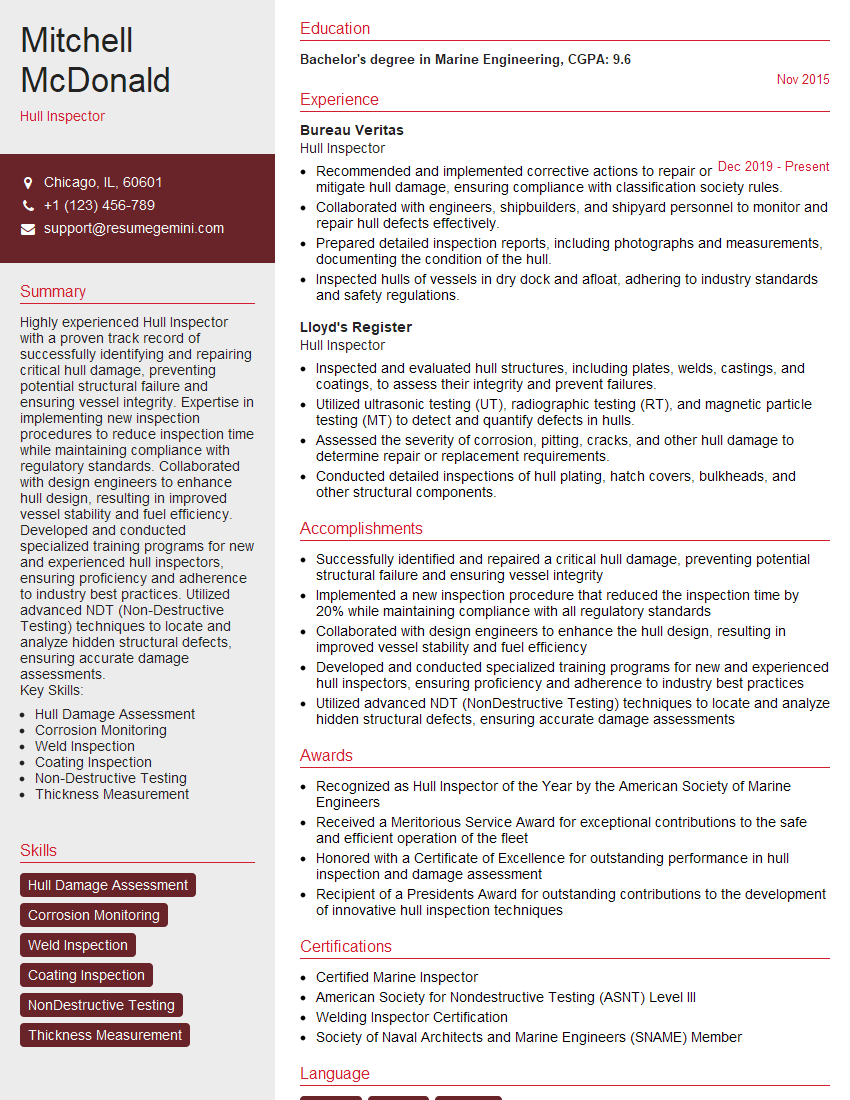
Mastering Hull and Deck Repair opens doors to exciting career opportunities in the maritime industry, offering diverse roles and excellent earning potential. To significantly boost your job prospects, crafting an ATS-friendly resume is crucial. ResumeGemini is a trusted resource to help you build a professional and impactful resume that highlights your skills and experience effectively. ResumeGemini offers examples of resumes tailored to Hull and Deck Repair, enabling you to create a document that truly showcases your qualifications and gets you noticed by potential employers.


Explore more articles
Users Rating of Our Blogs
Share Your Experience
We value your feedback! Please rate our content and share your thoughts (optional).
What Readers Say About Our Blog
Very informative content, great job.
good