Feeling uncertain about what to expect in your upcoming interview? We’ve got you covered! This blog highlights the most important Human intelligence liaison interview questions and provides actionable advice to help you stand out as the ideal candidate. Let’s pave the way for your success.
Questions Asked in Human intelligence liaison Interview
Q 1. Explain the difference between HUMINT and other intelligence disciplines (SIGINT, OSINT, etc.).
Human intelligence (HUMINT) is fundamentally different from other intelligence disciplines because it relies on direct human interaction to gather information. Unlike signals intelligence (SIGINT), which intercepts electronic communications, or open-source intelligence (OSINT), which analyzes publicly available data, HUMINT involves cultivating relationships with individuals who possess valuable information. This requires a unique set of skills, including rapport-building, deception detection, and the ability to manage sensitive relationships. Think of it this way: SIGINT is like eavesdropping on a phone call, OSINT is like reading a newspaper, but HUMINT is like having a trusted insider give you exclusive information.
Here’s a breakdown of the key differences:
- HUMINT: Relies on personal contact and relationships with sources to gather information. Information is often sensitive and not publicly available. Requires careful source handling and protection.
- SIGINT: Intercepts and analyzes electronic signals, such as communications and radar. Focuses on technical aspects of communication and data analysis.
- OSINT: Analyzes publicly available information, such as news reports, social media, and government documents. Requires strong analytical skills and effective information filtering.
- IMINT: Uses imagery, such as satellite photos and aerial photographs, to gather intelligence. Requires image interpretation and geospatial analysis skills.
- MASINT: Uses measurement and signature intelligence, analyzing various physical characteristics such as radiation, acoustics, etc. to gain insight.
Each discipline plays a crucial role, but HUMINT often provides the most insightful and context-rich intelligence, particularly when dealing with intentions, motivations, and future plans.
Q 2. Describe your experience in source recruitment and handling.
My experience in source recruitment and handling spans over a decade. I’ve been involved in identifying, vetting, and managing a diverse range of sources, from low-level informants to high-value assets. The process typically starts with identifying potential sources through network analysis, open-source research, and leveraging existing contacts. A crucial step is building rapport and trust, which involves demonstrating empathy, understanding their motivations, and addressing their concerns. This includes carefully assessing their risk tolerance and tailoring the engagement accordingly.
Once a source is recruited, a comprehensive handling plan is developed, considering security protocols, communication methods, and payment arrangements (if applicable). Regular debriefings are conducted, with careful attention to documenting every interaction, ensuring the protection of both the source and the intelligence gathered. I have consistently followed strict operational security procedures to safeguard sources and sensitive information. For instance, in one case, a source operating in a high-risk environment required the use of encrypted communication channels and secure meeting locations to minimize exposure.
Q 3. How do you assess the reliability and credibility of human intelligence sources?
Assessing the reliability and credibility of human intelligence sources is paramount. It’s a multi-faceted process that begins with a thorough vetting procedure which often involves background checks, corroboration with other sources, and observation of their behavior. I use a combination of methods, including:
- Source validation: Cross-referencing information provided by the source with other intelligence gathered from various channels.
- Behavioral analysis: Observing the source’s demeanor, consistency, and emotional responses during interactions.
- Information triangulation: Comparing information from multiple independent sources to assess the accuracy and completeness of the information.
- Track record analysis: Evaluating the source’s past performance and their history of providing accurate information.
- Motivation assessment: Understanding the source’s motivations for providing information, which may include ideology, financial gain, or self-preservation.
A crucial aspect involves understanding the inherent biases and limitations of human memory and perception. For example, a source might unintentionally omit or misremember details due to stress, fear, or limited perspective. Continuous monitoring and recalibration of assessment are essential to maintain an accurate perception of a source’s reliability.
Q 4. What methods do you employ to develop and maintain a network of human sources?
Developing and maintaining a network of human sources is an ongoing process that requires patience, persistence, and strong interpersonal skills. It involves a combination of proactive and reactive approaches. Proactive approaches include attending relevant events, cultivating relationships with individuals in target communities, and identifying potential sources through network analysis.
Reactive approaches involve responding to incoming information and developing relationships with individuals who approach us with information. Once a network is established, maintaining it necessitates regular contact, demonstrating continued support, and addressing the sources’ concerns and needs. This often involves a degree of personal investment and relationship building. For example, I’ve developed a strong professional network by attending industry conferences, participating in professional organizations, and engaging in online communities relevant to my areas of expertise. Trust and mutual respect form the cornerstone of these relationships.
The use of appropriate communication channels and encryption methods, including the careful handling of sensitive information, are all critical parts of maintaining network security and building trust.
Q 5. How do you handle compromised sources or compromised information?
Handling compromised sources or compromised information requires swift and decisive action to minimize damage and protect other assets. The initial step involves immediate assessment of the extent of the compromise, identifying the source of the leak, and determining any potential consequences. This includes identifying potential damage to ongoing operations and assessing the risks to both the compromised source and other sources within the network.
Depending on the severity of the compromise, this could involve temporarily suspending operations, changing communication protocols, and implementing additional security measures. In cases of severe compromise, it may be necessary to extract the compromised source from their operational environment to ensure their safety and prevent further damage. A detailed post-incident review is always carried out to identify any weaknesses in security protocols and implement appropriate corrective actions. This review helps improve future handling of sensitive information and source protection.
Q 6. Explain your understanding of tradecraft and its importance in HUMINT.
Treadable is the skills and techniques used to gather, handle, and analyze HUMINT. It encompasses a wide range of practices, from secure communications and source recruitment to debriefing and report writing. It is crucial because it directly impacts the safety of sources, the accuracy of intelligence gathered, and the overall success of intelligence operations. Poor tradecraft can lead to compromised sources, inaccurate intelligence, and even the exposure of entire intelligence networks.
Effective tradecraft requires a deep understanding of operational security (OPSEC), which involves identifying, analyzing, and controlling vulnerabilities that could expose intelligence operations. This includes secure communication methods (such as encrypted messaging apps), covert meeting techniques, and the careful handling of sensitive documents and electronic devices. Mastering tradecraft is an ongoing process involving continuous learning, adaptation, and attention to detail. For example, using seemingly innocuous communication methods, like seemingly casual meetings or employing plausible cover stories for interactions, are critical components in protecting sources and operations.
Q 7. Describe your experience with debriefing techniques and elicitation.
Debriefing techniques and elicitation are crucial skills in HUMINT. Debriefing involves systematically questioning a source to obtain information, while elicitation is the art of drawing information out of someone who may not be willing to provide it directly. Successful debriefing requires establishing rapport, creating a safe and comfortable environment, and utilizing various questioning techniques to encourage the source to disclose information openly and honestly.
I use a variety of techniques, including open-ended questions, probing questions, and leading questions, all used strategically depending on the source and the information sought. Active listening is paramount, focusing on both verbal and non-verbal cues to gain a holistic understanding of the situation. Elicitation, on the other hand, requires more finesse. It could involve building trust through subtle conversation, creating a sense of urgency or shared purpose, or employing psychological tactics to extract information while maintaining the source’s cooperation.
For example, I’ve successfully elicited sensitive information from a reluctant source by building a genuine connection, allowing them to feel comfortable enough to share their knowledge. The approach always prioritizes the source’s safety and well-being while seeking to achieve the intelligence objective.
Q 8. How do you manage risk and security concerns in HUMINT operations?
Managing risk and security in HUMINT is paramount. It’s a multi-layered approach focusing on protecting sources, methods, and operations. Think of it like building a fortress; multiple layers of defense against various threats.
- Source Protection: This involves careful vetting of potential sources, minimizing their exposure, employing robust communication security (COMSEC) measures, and providing appropriate counter-surveillance training where necessary. For example, a source might use a secure communication channel like a dead drop rather than a phone call.
- Operational Security (OPSEC): This entails meticulously planning each operation to minimize the risk of detection. It includes planning secure meeting locations, using encrypted communication, and having contingency plans in place to deal with unexpected events. A simple example is using plausible cover stories for meetings.
- Counterintelligence (CI): This is crucial to identify and neutralize threats from hostile intelligence services. This involves actively monitoring for potential leaks, conducting background checks, and maintaining a high level of awareness of potential surveillance. One strategy is using deception techniques to mislead potential adversaries.
- Physical Security: Securing documents, equipment, and locations is crucial. This includes the use of secure facilities, strong encryption protocols, and secure data storage methods.
A failure in any of these areas can compromise the entire operation, potentially putting sources at risk and undermining the intelligence gathered.
Q 9. What is your approach to verifying information obtained from human sources?
Verifying HUMINT requires a rigorous, multi-faceted approach that goes beyond simply accepting information at face value. It’s like solving a puzzle, where each piece of information needs to be cross-referenced and analyzed to form a complete and accurate picture.
- Cross-referencing: Comparing information from multiple independent sources is key. If several sources corroborate a piece of information, its credibility increases significantly. Discrepancies, on the other hand, signal a need for further investigation.
- Source evaluation: Assessing the reliability and motivation of the source is crucial. Consider their past performance, potential biases, and their overall credibility. A source with a history of providing accurate information is more reliable than one with a questionable track record.
- Open-source intelligence (OSINT): Corroborating information from human sources with publicly available information helps establish the validity of the claims. This could involve checking news reports, social media, or official government publications.
- Technical verification: Where possible, employing technical means to validate information is vital. This could involve analyzing images, signals intelligence, or examining physical evidence.
- Pattern analysis: Looking for patterns and consistency within the information gathered over time allows for the detection of inaccuracies or inconsistencies.
The goal is to achieve a high degree of confidence in the accuracy of the intelligence, understanding that absolute certainty is often unattainable in HUMINT.
Q 10. Describe your experience with report writing and intelligence analysis.
Report writing and intelligence analysis are integral parts of HUMINT. My experience encompasses crafting concise, accurate reports that effectively communicate intelligence findings to decision-makers. It’s about clearly presenting complex information in a way that is easily understood and actionable.
- Report Structure: I am adept at structuring reports using a clear and logical format, typically including an executive summary, background information, analysis, and conclusions. This ensures that key information is readily available to the reader.
- Analytical Skills: I possess strong analytical skills, enabling me to synthesize raw intelligence data from various sources, identify patterns and trends, and draw meaningful conclusions. This often involves using various analytical frameworks to structure the reasoning process.
- Data Visualization: I utilize various methods for data visualization, such as charts and graphs, to make complex information easily understandable and more impactful for the audience. This allows decision-makers to quickly grasp the key takeaways.
- Technology Proficiency: I am proficient in utilizing various intelligence analysis software and tools, ensuring efficient data management and analysis. This includes programs for data visualization and report generation.
I have a proven track record of producing high-quality, actionable intelligence reports that have directly contributed to successful operational outcomes.
Q 11. Explain your understanding of the legal and ethical considerations in HUMINT.
Legal and ethical considerations are paramount in HUMINT. Operations must always adhere to both domestic and international law, while maintaining the highest ethical standards. It’s about balancing national security needs with the fundamental rights of individuals.
- Legal Frameworks: A thorough understanding of relevant laws, such as those governing surveillance, data privacy, and the treatment of human sources, is essential. This includes national and international law.
- Ethical Principles: HUMINT operations must be guided by ethical principles, including honesty, integrity, and respect for human dignity. This means ensuring the safety and well-being of human sources, and avoiding actions that could cause undue harm or suffering.
- Consent and Deception: Careful consideration must be given to the use of deception and the issue of informed consent from sources. There are strict limitations on the extent to which deception can be employed, especially in relation to potential harm to the source.
- Accountability: Clear accountability mechanisms are crucial to ensure that HUMINT operations are conducted within the legal and ethical framework. This includes internal oversight and external scrutiny.
Ignoring these considerations can have severe consequences, including legal repercussions, reputational damage, and erosion of public trust.
Q 12. How do you prioritize and manage multiple human intelligence sources?
Prioritizing and managing multiple human intelligence sources requires a systematic approach. It’s like managing a diverse team; each member has unique skills and strengths, and they need to be effectively coordinated to achieve the overall objective.
- Assessment of Value: The first step is to assess the value and reliability of each source. This involves considering the information they can provide, their access to information, and their credibility.
- Prioritization Matrix: A prioritization matrix, based on urgency, importance and reliability of information, is a useful tool to rank sources and allocate resources accordingly. This helps to ensure the most valuable information is gathered first.
- Resource Allocation: Resources, including time, personnel, and funds, should be allocated efficiently to maximize the return on investment. This involves focusing on high-value sources and operations.
- Communication and Coordination: Effective communication and coordination among team members are essential for efficient management of multiple sources. Regular briefings and debriefings are crucial.
- Data Management: A robust system for managing and tracking information from multiple sources is necessary. This could involve using dedicated databases or software tools.
Effective management of multiple sources ensures efficient use of resources and maximized intelligence output.
Q 13. How do you handle conflicting information from different sources?
Handling conflicting information from different sources demands careful analysis and a systematic approach. It’s like investigating a crime scene; you need to weigh various accounts and evidence to establish the truth.
- Source Evaluation: Re-assess the credibility of each source providing conflicting information. Consider their potential biases, motivations, and past performance.
- Triangulation: Seek out additional sources to corroborate or refute the conflicting information. The goal is to find a third, independent source that verifies one account over the other.
- Contextual Analysis: Consider the context in which the information was gathered. This may help explain the discrepancies and allow for a more nuanced interpretation.
- Analysis of Motivations: Try to understand the motivations of the sources. This might reveal biases that explain the differences in accounts.
- Data Reconciliation: In some cases, conflicting information might not be wholly contradictory but rather reflect different perspectives or aspects of the same issue. In those cases, seek to combine the available information into a more comprehensive account.
The process may involve revisiting the sources to clarify ambiguities and gather more information. The goal is to resolve the conflict and arrive at the most accurate assessment possible.
Q 14. Describe your experience with covert operations and clandestine meetings.
My experience with covert operations and clandestine meetings has involved meticulous planning, security protocols, and adherence to strict operational security guidelines. Think of it as a highly specialized form of theatre, where every detail matters to maintain the illusion of normalcy while conducting sensitive activities.
- Secure Communications: Employing secure communication methods, including encrypted channels and dead drops, is vital to prevent the interception of sensitive information.
- Surveillance Detection and Evasion: Proficiency in counter-surveillance techniques, including observation and detection, is necessary to ensure operational safety. This often involves recognizing and avoiding surveillance tactics.
- Meeting Procedures: Clandestine meetings require careful planning, including secure locations, appropriate cover stories, and contingency plans for unexpected events. This ensures operational success.
- Tradecraft: This includes using various techniques like secure communication systems, dead drops, and methods of surveillance detection and avoidance. Effective tradecraft is the key to success in covert operations.
- Risk Assessment: Thorough risk assessment is crucial to identify and mitigate potential threats, while developing comprehensive contingency plans in case things go wrong.
The success of covert operations depends on meticulous planning, exceptional operational security, and the ability to adapt to changing circumstances.
Q 15. How do you build rapport and trust with human sources?
Building rapport and trust with human sources is the cornerstone of successful HUMINT. It’s about establishing a genuine connection based on mutual respect and understanding. This isn’t a quick process; it requires patience, empathy, and consistent effort.
My approach involves several key strategies:
- Active Listening: I focus intently on what the source is saying, both verbally and nonverbally, showing genuine interest in their perspective. This helps build a sense of trust and encourages them to open up.
- Empathy and Understanding: I strive to understand the source’s motivations, concerns, and fears. Putting myself in their shoes allows me to tailor my approach and build a stronger connection.
- Building Common Ground: Finding shared interests or experiences, even seemingly small ones, can create a sense of camaraderie and trust.
- Transparency (where appropriate): When possible and appropriate, I share relevant information about my objectives in a way that doesn’t compromise operational security. Transparency fosters trust, especially if the source feels they are being treated with respect and honesty.
- Consistency and Reliability: Following through on my promises, even small ones, demonstrates reliability and builds confidence in my integrity.
For instance, in one operation, I spent several weeks building rapport with a source who initially was hesitant to cooperate. By actively listening to their concerns and demonstrating genuine interest in their well-being, I eventually gained their trust and access to valuable information.
Career Expert Tips:
- Ace those interviews! Prepare effectively by reviewing the Top 50 Most Common Interview Questions on ResumeGemini.
- Navigate your job search with confidence! Explore a wide range of Career Tips on ResumeGemini. Learn about common challenges and recommendations to overcome them.
- Craft the perfect resume! Master the Art of Resume Writing with ResumeGemini’s guide. Showcase your unique qualifications and achievements effectively.
- Don’t miss out on holiday savings! Build your dream resume with ResumeGemini’s ATS optimized templates.
Q 16. What are your strategies for identifying potential human sources?
Identifying potential human sources requires a multifaceted approach that combines open-source intelligence (OSINT), network analysis, and human intuition. It’s about recognizing individuals who possess valuable information and are potentially willing to share it.
- OSINT Analysis: I utilize publicly available information – social media, news articles, academic publications, etc. – to identify individuals with relevant expertise, connections, or access to information.
- Network Mapping: Analyzing relationships between individuals and groups helps identify key players and potential sources. This involves identifying connections and assessing potential vulnerabilities within the network.
- Developing a Contact Network: Building relationships with trusted individuals within the target environment provides access to information and potential leads to other sources.
- Recognizing Behavioral Patterns: Understanding the motivations, habits, and vulnerabilities of potential sources is crucial. This involves assessing their risk tolerance, their level of loyalty, and any potential leverage points.
- Leveraging Existing Contacts: I regularly utilize existing contacts and networks to identify potential leads and access new sources.
For example, during a counter-terrorism operation, we identified a potential source through OSINT analysis. By carefully analyzing their online activity and social connections, we were able to assess their reliability and potential value as a source.
Q 17. How do you use technology to support HUMINT collection and analysis?
Technology plays a vital role in supporting HUMINT collection and analysis, enhancing efficiency and accuracy. It’s no longer just about pen and paper.
- Secure Communication Platforms: Encrypted messaging apps and secure communication systems protect sensitive information during the collection and dissemination phases.
- Data Analytics and Visualization Tools: These tools help analyze large datasets, identify patterns, and visualize relationships between individuals and events, making the analysis more efficient and effective. For instance, network graphs can illustrate the connections between individuals within a suspected criminal organization.
- Geospatial Intelligence (GEOINT) Integration: Combining HUMINT with GEOINT, such as satellite imagery and maps, allows for precise location identification and situational awareness.
- Database Management Systems: Secure databases store and manage HUMINT data, enabling efficient search, retrieval, and analysis.
- Social Media Monitoring Tools: Tools that track social media activity can help identify potential sources, monitor the flow of information, and assess the credibility of online information.
In a recent investigation, we used a combination of encrypted communication platforms and data analytics tools to manage and analyze information from multiple sources. The visualization tools helped us identify key connections within a complex network, ultimately leading to the successful disruption of an illegal activity.
Q 18. Explain your understanding of deception detection and counterintelligence.
Deception detection and counterintelligence are crucial aspects of HUMINT. It requires keen observation, critical thinking, and a thorough understanding of human behavior.
Deception Detection: This involves identifying inconsistencies, contradictions, or nonverbal cues that might indicate deception. It’s not about finding definitive proof of lying, but rather assessing the credibility of the information received. Techniques include observing body language, analyzing verbal patterns, and cross-referencing information from multiple sources.
CounterIntelligence: This focuses on protecting HUMINT operations from compromise by foreign intelligence services. It involves identifying and neutralizing threats, protecting sources, and maintaining operational security. This includes developing and implementing security protocols, screening potential sources for adversarial ties, and actively countering disinformation campaigns.
For instance, during a meeting with a potential source, I observed inconsistencies in their statements and body language. This alerted me to the possibility of deception, prompting me to verify the information through other channels and employ more stringent counterintelligence measures.
Q 19. Describe your experience in analyzing geopolitical situations using HUMINT.
Analyzing geopolitical situations using HUMINT involves piecing together information from various human sources to understand the intentions, capabilities, and vulnerabilities of different actors.
My experience includes using HUMINT to assess the stability of a particular region. By gathering insights from a variety of sources, including local residents, government officials, and non-governmental organizations, I was able to develop a nuanced understanding of the underlying tensions and potential risks. This allowed me to predict potential conflicts and inform strategic decision-making.
Another example involved analyzing the motivations and capabilities of a non-state actor in a specific region. By leveraging HUMINT insights obtained from various sources, we were able to build a comprehensive profile of the actor’s leadership, funding mechanisms, and operational capabilities, enabling the development of tailored countermeasures.
Q 20. How do you integrate HUMINT with other intelligence disciplines?
HUMINT doesn’t exist in isolation. Its value is significantly enhanced by integrating it with other intelligence disciplines like SIGINT (signals intelligence), IMINT (imagery intelligence), and OSINT (open-source intelligence). This fusion of information provides a more complete and accurate understanding of the situation.
- SIGINT Correlation: Combining HUMINT with intercepted communications can verify or refute information obtained from human sources. For instance, a phone call intercepted by SIGINT could confirm a meeting that was reported through a human source.
- IMINT Verification: Satellite imagery or aerial photography can verify locations, assess infrastructure, or confirm activities reported by human sources.
- OSINT Contextualization: Open-source intelligence can provide context and background information, validating or adding depth to HUMINT reports. It aids in verifying the source’s credibility and the accuracy of the information obtained.
For example, in a criminal investigation, HUMINT provided details about a suspect’s movements. This was then corroborated using cell phone tower data from SIGINT and verified by CCTV footage obtained through OSINT. The combined intelligence provided conclusive evidence.
Q 21. How do you assess the value and impact of HUMINT information?
Assessing the value and impact of HUMINT information requires a structured approach, considering both the quality and timeliness of the intelligence.
- Source Reliability: Assessing the credibility of the source is paramount. This involves analyzing the source’s track record, motivations, and potential biases.
- Information Corroboration: Verifying information obtained from multiple independent sources increases confidence in its accuracy. This reduces the risk of misinformation and enhances the reliability of conclusions.
- Timeliness: The value of intelligence is often directly related to its timeliness. Real-time information is crucial for operational decision-making, and delayed information might become irrelevant.
- Impact Assessment: After verifying the information’s accuracy, I evaluate its potential impact on strategic goals and decision-making. This includes considering potential implications for national security, law enforcement, or business interests.
For example, timely HUMINT about an impending terrorist attack would have a significantly higher value and impact compared to accurate but delayed information about a past event. The impact assessment is made based on how the intelligence is used and the potential consequences of ignoring it. A clear chain of custody and documentation processes ensures that we can track the information’s journey and the final impact of its use.
Q 22. Describe a situation where you had to make a difficult decision regarding a human source.
One of the most difficult decisions I faced involved a human source (HS) who provided crucial information about an imminent terrorist attack, but whose reliability was questionable due to a history of providing inaccurate intelligence. The information, however, contained specific details that corroborated other, less concrete, intelligence fragments. To act on this information meant risking the deployment of valuable resources based on potentially false intel, jeopardizing operational security, and potentially harming innocent civilians if the threat was not real. To ignore it risked potentially catastrophic consequences if the attack was indeed imminent. My decision-making process involved a careful weighing of the risks and potential benefits. I consulted with senior analysts and my chain of command, meticulously verifying the information against other available intel, and cross-referencing the source’s past performance. Ultimately, we decided to act on the information but with carefully planned and limited deployment of resources, while simultaneously running parallel investigations to confirm the credibility of the HS and the imminent threat. The attack was successfully thwarted, and the HS’s intelligence was later confirmed. This situation highlighted the importance of rigorous information verification, decisive leadership in the face of uncertainty, and understanding the potential ramifications of both action and inaction.
Q 23. How do you ensure the confidentiality and security of HUMINT information?
Confidentiality and security of HUMINT are paramount. We employ a multi-layered approach. Firstly, strict compartmentalization is crucial; only individuals with a ‘need to know’ access the information. This involves using secure communication channels, controlled access databases, and robust encryption protocols. Secondly, we adhere to strict handling procedures for sensitive materials, including secure storage, destruction protocols for obsolete documents, and stringent background checks for personnel. Thirdly, the identity of our human sources is protected through the use of code names, pseudonyms, and compartmentalized communication. We continuously monitor for any potential leaks or breaches, proactively implementing security updates and conducting regular audits. Think of it like a bank vault – multiple locks, surveillance, and access controls, all working together to safeguard the assets. Regular training sessions reinforce these protocols, and we constantly evaluate and adapt our security measures to address emerging threats and vulnerabilities. Even seemingly minor details, such as using secure methods to transmit information, can be crucial to maintaining the confidentiality of our sources.
Q 24. Describe your experience with different HUMINT collection methods (e.g., interviews, surveillance, etc.).
My experience encompasses a range of HUMINT collection methods. Interviews are a cornerstone of my work, requiring careful planning and execution, including developing rapport with the source, asking open-ended questions, and actively listening to obtain nuanced responses. I’ve conducted both formal structured interviews with clear objectives and more informal, conversational interviews to build trust. Surveillance techniques, both overt and covert, have been employed ethically and judiciously, always adhering to legal and ethical guidelines. This might involve observing a location, tracking movements, or using technological tools for observation under strict legal and ethical frameworks. Other methods include elicitation, the art of subtly extracting information through casual conversation; and the use of open-source intelligence (OSINT) to validate information received from other sources. The choice of method depends heavily on the context, the type of information sought, and the capabilities and limitations of the source.
Q 25. Explain your understanding of the intelligence cycle and HUMINT’s role within it.
The intelligence cycle is a continuous process comprising planning and direction, collection, processing, analysis, production, and dissemination. HUMINT plays a vital role, primarily in the collection phase. HUMINT sources provide raw intelligence data – often highly valuable, first-hand insights – that are then processed and analyzed, contributing to the production of finished intelligence products. For example, information gathered from a human source about an adversary’s military movements becomes raw intelligence. After processing and analysis (evaluating credibility, context, etc.), it’s integrated with other intel, becoming part of a comprehensive intelligence assessment. This assessment feeds back into the planning stage, influencing decisions and directing further intelligence collection efforts. The cycle is iterative; the insights gained inform future collection efforts and further refine our understanding. It’s a collaborative process; HUMINT works hand-in-hand with other intelligence disciplines (SIGINT, IMINT, etc.) to create a complete intelligence picture.
Q 26. How do you adapt your approach to HUMINT depending on the cultural context?
Adapting my approach to different cultural contexts is essential for successful HUMINT operations. Cultural sensitivity is not just a matter of politeness; it’s about building trust and obtaining reliable information. This means understanding local customs, social norms, communication styles, and power dynamics. For example, in some cultures, direct questioning might be considered rude, while in others, it’s expected. Similarly, the level of formality, personal space, and even non-verbal cues vary significantly across cultures. My strategy involves conducting thorough background research before engaging with sources in a new cultural setting, consulting cultural advisors where necessary, and demonstrating respect and understanding for local customs. I employ culturally appropriate communication techniques, which might involve adjusting language, tone, and body language to effectively build rapport and gain the trust of the source. Flexibility and adaptability are key – a one-size-fits-all approach will rarely be successful in the diverse world of HUMINT.
Q 27. How do you handle pressure and stress in high-stakes HUMINT situations?
High-stakes HUMINT situations inevitably involve pressure and stress. Managing this requires a combination of skills and strategies. Firstly, thorough preparation is crucial. Having a solid plan, understanding the potential risks and challenges, and knowing my objectives helps mitigate stress. Secondly, maintaining composure and clear thinking under pressure is paramount. I utilize stress-reduction techniques such as deep breathing exercises and mindfulness practices to center myself and focus my attention. Thirdly, relying on my training and experience, and maintaining open communication with my team and superiors allows for sharing the burden and seeking support when needed. Finally, maintaining self-awareness and acknowledging my limitations is vital. It’s OK to ask for help or to take a break when necessary. In essence, managing stress effectively is about proactively preparing, responding calmly, effectively utilizing resources, and recognizing personal limits. This isn’t about avoiding stress, but about effectively managing it so it doesn’t impair my judgment or compromise my work.
Q 28. Describe your experience with using psychological techniques in HUMINT operations.
My understanding of psychological techniques in HUMINT operations is centered around ethical and legal considerations. The goal is never to coerce or manipulate but to build rapport, gain trust, and elicit information through persuasive and ethical means. This could involve active listening, empathy, and understanding the source’s motivations and perspectives. Techniques such as rapport-building exercises, establishing trust through demonstrating empathy and understanding, and skillfully framing questions are used to encourage information sharing. However, it’s crucial to understand that any application of psychological principles must adhere strictly to ethical guidelines and international law. Coercive methods are strictly prohibited, and any techniques employed are aimed at facilitating open and honest communication. Furthermore, I regularly review and update my knowledge and understanding of ethical standards and legal frameworks relevant to HUMINT operations. Ethical considerations are paramount – the ultimate goal is acquiring accurate intelligence through respectful and lawful means.
Key Topics to Learn for Human Intelligence Liaison Interview
- Source Selection & Assessment: Understanding how to identify, vet, and cultivate reliable human intelligence sources. This includes analyzing source motivation, reliability, and potential biases.
- Information Gathering & Analysis: Mastering techniques for eliciting information, conducting interviews, and analyzing collected data to identify patterns and actionable intelligence. Practical application involves understanding different interview styles and deception detection.
- Report Writing & Dissemination: Developing clear, concise, and accurate intelligence reports suitable for diverse audiences. This includes understanding the importance of objective reporting and adhering to security protocols.
- Relationship Management: Building and maintaining trust with sources, cultivating long-term relationships, and managing complex interpersonal dynamics within a security context.
- Ethical Considerations & Legal Frameworks: A deep understanding of the ethical implications of human intelligence work, including privacy concerns and adherence to legal guidelines.
- Threat Assessment & Risk Management: Analyzing potential threats and risks associated with human intelligence operations and developing mitigation strategies.
- Technological Tools & Techniques: Familiarity with relevant technologies used in intelligence gathering and analysis (e.g., data analysis software, communication security).
- Crisis Management & Response: Understanding how human intelligence plays a crucial role in responding to and managing crises.
Next Steps
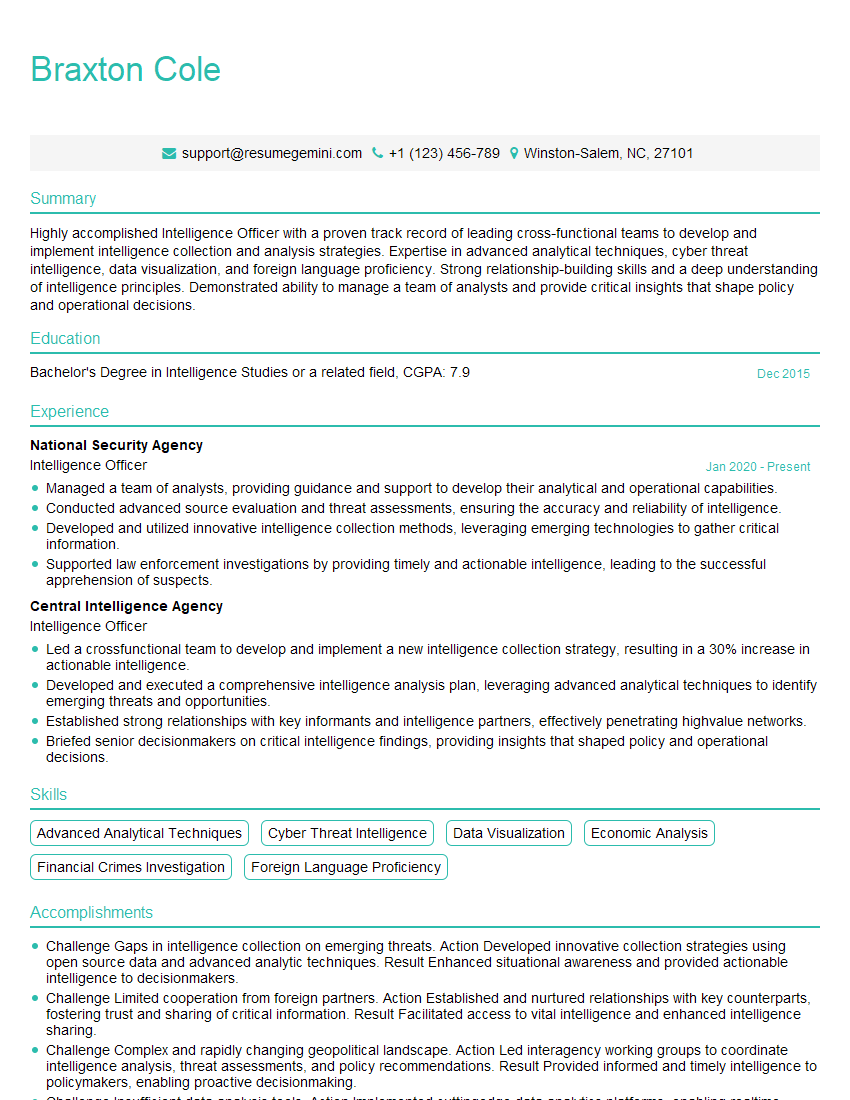
Mastering Human Intelligence Liaison opens doors to a dynamic and impactful career, offering opportunities for growth and contributing significantly to national security or organizational success. To maximize your job prospects, create an ATS-friendly resume that highlights your skills and experience effectively. ResumeGemini is a trusted resource to help you build a professional and compelling resume tailored to the Human Intelligence Liaison field. Examples of resumes specifically designed for this role are available, providing valuable guidance and inspiration as you craft your own.
Explore more articles
Users Rating of Our Blogs
Share Your Experience
We value your feedback! Please rate our content and share your thoughts (optional).
What Readers Say About Our Blog
Very informative content, great job.
good