Interviews are more than just a Q&A session—they’re a chance to prove your worth. This blog dives into essential HVAC Control Sequences interview questions and expert tips to help you align your answers with what hiring managers are looking for. Start preparing to shine!
Questions Asked in HVAC Control Sequences Interview
Q 1. Explain the difference between PID and On/Off control strategies.
On/Off control and PID (Proportional-Integral-Derivative) control are two fundamental strategies for regulating HVAC systems, differing significantly in their precision and energy efficiency. On/Off control is the simplest; it switches the system completely on or off based on a setpoint. Think of a light switch: either on or off. If the temperature drops below the setpoint, the system turns on; if it rises above, it turns off. This leads to temperature cycling – significant swings around the target temperature, resulting in discomfort and energy waste.
PID control, on the other hand, provides a much more nuanced approach. It uses three terms to fine-tune the system’s response. The proportional term adjusts the output in proportion to the error (difference between the setpoint and the actual value). The integral term addresses persistent errors, preventing offset. The derivative term anticipates future changes based on the rate of change of the error, preventing overshoot. Imagine driving a car: the proportional term is like adjusting the gas pedal, the integral term corrects for consistent drifting, and the derivative term helps you smoothly navigate curves. This sophisticated control delivers greater accuracy, stability, and energy efficiency.
In practice, PID control is significantly more efficient for maintaining a stable temperature compared to the crude on/off method. While On/Off might suffice for very basic systems, PID is the preferred method in most modern HVAC applications.
Q 2. Describe the functionality of a BACnet network in an HVAC system.
BACnet (Building Automation and Control Networks) is a data communication protocol used in building automation systems, including HVAC. It allows various devices like sensors, controllers, and actuators to communicate and exchange data over a network. This creates a centralized system for monitoring and controlling an entire building’s HVAC infrastructure.
Imagine a large office building with numerous HVAC zones. Each zone might have its own temperature sensors, dampers, and fan controllers. Using BACnet, these disparate components can communicate seamlessly. A central management system can monitor all zones’ temperatures, adjust setpoints remotely, schedule operations (e.g., turning off AC during off-hours), and receive alerts about malfunctions. This centralized approach improves efficiency, provides comprehensive monitoring, and simplifies troubleshooting.
BACnet supports various network topologies, including Ethernet and MS/TP (Master-Slave/Token Passing), ensuring flexibility in system design. It also features robust error detection and correction mechanisms for reliable data transmission, which is crucial for HVAC applications where precise control is critical.
Q 3. How do you troubleshoot a faulty DDC controller?
Troubleshooting a faulty Direct Digital Control (DDC) controller requires a systematic approach. First, I’d consult the controller’s documentation and alarm logs to identify any reported errors. These logs frequently pinpoint the source of the problem.
Next, I’d visually inspect the controller for any obvious issues like loose connections, damaged wiring, or blown fuses. A multimeter is invaluable for checking voltage, current, and continuity. Then, I would verify communication with other devices on the network using the appropriate software and tools for the specific DDC system. If network connectivity is fine, I’d check the controller’s programming – looking for logic errors, incorrect setpoints, or faulty algorithms. Simulation tools may be helpful for testing the logic without impacting the real system.
If the problem is sensor-related, I’d verify sensor readings against actual conditions. A faulty sensor, providing incorrect input to the controller, can lead to malfunctions. I might replace the sensor temporarily with a known good one to isolate the issue. Finally, if all else fails, I would consider replacing the DDC controller itself. Thorough documentation throughout the process is crucial for efficient troubleshooting and future reference.
Q 4. What are the common types of HVAC sensors and their applications?
HVAC systems rely on a variety of sensors to monitor various parameters. Common types include:
- Temperature Sensors: Thermistors, thermocouples, and RTDs (Resistance Temperature Detectors) measure air and water temperatures, crucial for controlling heating and cooling operations. For example, a thermistor in a supply air duct helps maintain the desired room temperature.
- Humidity Sensors: These measure moisture content in the air, vital for controlling humidification and dehumidification. This ensures optimal comfort levels and prevents mold growth.
- Pressure Sensors: Used to monitor air pressure in ducts, ensuring proper airflow and identifying potential blockages or leaks. A pressure sensor in the air handler allows monitoring of airflow.
- Flow Sensors: Measure the flow rate of air or water, essential for optimizing system efficiency and preventing equipment damage. This is crucial in monitoring the performance of chillers and pumps.
- Air Quality Sensors: Detect levels of CO2, VOCs (Volatile Organic Compounds), and other pollutants to ensure indoor air quality is maintained at healthy levels.
The choice of sensor depends on the specific application and required accuracy. For instance, precise temperature control in a server room might necessitate the use of high-accuracy RTDs.
Q 5. Explain the concept of sequence of operations in HVAC systems.
The sequence of operations in an HVAC system defines the logical order in which components operate to achieve a desired outcome, such as maintaining a specific temperature or humidity level. It dictates how different parts of the system interact, ensuring efficient and coordinated functionality.
For instance, in a simple cooling sequence, the thermostat detects a high temperature. This triggers the compressor to start, the condenser fan to activate, and the evaporator fan to run. Once the temperature drops to the setpoint, the system cycles off. A more complex sequence might include humidification, dehumidification, and even pre-heating or pre-cooling stages depending on the system and building’s requirements.
These sequences are often programmed into DDC controllers, utilizing logic statements and timers. A well-defined sequence minimizes energy consumption, maximizes comfort, and prevents equipment damage. Each step is essential; for example, a failure in the condenser fan to start could lead to overheating and compressor failure.
Q 6. Describe your experience with programming HVAC control systems (e.g., using specific software).
I have extensive experience programming HVAC control systems, primarily using Tridium Niagara AX. I’ve worked on projects ranging from small commercial buildings to large industrial facilities, developing and implementing control strategies using its graphical programming environment. This includes creating custom applications and integrating with various BACnet devices. For example, I once developed a sophisticated energy management system using Niagara AX, optimizing the building’s HVAC operation based on occupancy and weather forecasts, resulting in a significant reduction in energy consumption.
My expertise extends to developing and implementing complex control sequences, incorporating logic, timers, and feedback loops to ensure optimal system performance. I’m also proficient in troubleshooting and debugging code, using the debugging tools provided by the software to identify and resolve any issues efficiently. Furthermore, I have experience with other platforms such as Siemens’ Desigo CC and Schneider Electric’s EcoStruxure Building Operation, allowing for flexibility in addressing various client requirements.
Q 7. How do you ensure the safety of personnel while working on HVAC control systems?
Safety is paramount when working on HVAC control systems. Before commencing any work, I always follow established lockout/tagout procedures to de-energize equipment and prevent accidental start-up. This is vital to prevent electric shock or other injuries. Personal Protective Equipment (PPE), such as safety glasses, gloves, and insulated tools, is always utilized. I also ensure the area is properly ventilated, especially when working with refrigerants, which can be hazardous if inhaled.
Furthermore, I adhere to all relevant safety regulations and company guidelines. Before working on a system, I assess the potential hazards involved, and I communicate clearly with colleagues and other personnel working in the vicinity of the equipment. Regular safety training and updates ensure I am always aware of best practices. Finally, proper documentation of all work performed, including safety measures taken, is crucial for transparency and future reference.
Q 8. What are the common communication protocols used in HVAC control systems?
HVAC control systems rely on several communication protocols to exchange data between various components like sensors, actuators, and controllers. The choice of protocol depends on factors such as distance, speed, and cost.
- BACnet (Building Automation and Control Networks): This is a widely adopted open protocol specifically designed for building automation, including HVAC. It’s robust, supports many device types, and allows for seamless integration across different manufacturers’ equipment. Think of it as the ‘universal language’ of building systems.
- Modbus: A simpler, serial communication protocol that’s widely used for its ease of implementation and low cost. It’s common in smaller HVAC systems and is often preferred for its reliability in industrial settings. Imagine it as a reliable, but perhaps less feature-rich, messenger service.
- LonWorks: A powerful networking protocol featuring a unique, self-configuring network topology. It’s known for its ability to handle large numbers of devices and its inherent security features. It’s like having a highly organized, secure network specifically built for building control.
- Ethernet/IP: An increasingly popular protocol utilizing standard Ethernet networks, offering high bandwidth and speed. It allows for advanced data analytics and system integration. This is like using a high-speed internet connection for the building’s controls.
- Proprietary Protocols: Some manufacturers utilize their own proprietary protocols, limiting interoperability with other systems. While these can offer specific advantages for a given product line, they reduce flexibility and can hinder future upgrades or system expansions.
In practice, you might find a system using a combination of these protocols, depending on the complexity and specific needs of the installation.
Q 9. Explain how to interpret a control sequence diagram.
Control sequence diagrams, often represented using ladder logic or sequential function charts, visually depict the operational logic of an HVAC system. They show how different components interact to achieve a desired outcome, like maintaining a set temperature. Imagine them as a detailed recipe for controlling the climate in a building.
Interpreting these diagrams involves understanding the symbols representing various components (sensors, actuators, timers, etc.) and how they are connected through logic gates (AND, OR, NOT) or sequential steps. For example, a ladder logic diagram might show that the compressor will start (actuator) only if the thermostat calls for cooling (sensor input) AND the system is not in a fault state (sensor input). A sequential function chart might show the steps involved in a start-up sequence, like pre-heating elements before engaging the main equipment.
A good understanding of boolean logic and the specific symbols used in the chosen diagramming method is essential for accurate interpretation. Experience in reading these diagrams is crucial for troubleshooting and modification of existing systems.
Q 10. What are some common issues encountered in HVAC control systems, and how do you resolve them?
Common issues in HVAC control systems span from simple sensor malfunctions to complex network problems. Here are a few examples:
- Sensor Errors: Inaccurate readings from temperature sensors or pressure transducers can lead to improper operation. Troubleshooting involves verifying sensor calibration, checking wiring connections, and replacing faulty sensors.
- Actuator Malfunctions: A stuck damper or a non-functional valve can severely impact system performance. This usually involves checking for mechanical obstructions, power supply issues, and replacing faulty actuators.
- Control Logic Errors: Programmable logic controller (PLC) programming errors can lead to unexpected behaviour. This often requires reviewing the control sequence diagrams, debugging the PLC program, and testing the corrected logic.
- Communication Problems: Network issues such as cabling faults, protocol mismatches, or addressing conflicts can disrupt communication between various system components. This necessitates checking the physical connections, verifying communication settings, and using network diagnostics tools.
- Refrigerant Leaks: In refrigeration systems, leaks can severely impact efficiency and require prompt attention. This involves using leak detection tools to pinpoint the leak location and repairing the damaged components.
Resolution typically involves a systematic approach: check the simplest things first (wiring, power), consult system documentation, and use appropriate diagnostic tools. Sometimes, specialized expertise or external service providers are needed for complex issues.
Q 11. Describe your experience with commissioning HVAC control systems.
Commissioning HVAC control systems is a critical process ensuring that the system meets design specifications and performs optimally. My experience includes verifying the correct installation of all equipment, meticulously checking wiring diagrams, performing functional tests, and documenting the entire process.
I’ve worked on projects ranging from small commercial buildings to large industrial facilities. In one project, we commissioned a new VAV (Variable Air Volume) system in a large office building. This involved testing each VAV box individually, verifying the correct operation of the control valves and sensors, and meticulously documenting the results. Through rigorous testing, we identified a minor programming error in the central control system that would have resulted in inconsistent temperature regulation across different zones. The error was quickly corrected during the commissioning phase, avoiding costly post-installation modifications.
Commissioning isn’t just about testing; it’s about ensuring a system is correctly designed and will operate efficiently for years to come. Thorough documentation and training for building operators are also crucial aspects of the commissioning process.
Q 12. How do you ensure energy efficiency in HVAC control systems?
Energy efficiency in HVAC control systems is paramount. It can be achieved through several strategies:
- Optimized Control Sequences: Implementing strategies like load shedding, economizer cycles (using outside air for cooling when appropriate), and staged heating/cooling reduces energy consumption without sacrificing comfort. This often involves adjusting the PLC program to implement these advanced control strategies.
- Smart Setpoints and Scheduling: Utilizing programmable logic controllers to schedule temperature setpoints based on occupancy and time of day significantly reduces energy use during unoccupied hours.
- Predictive Control: Implementing advanced control algorithms that anticipate building loads and adjust accordingly can further optimize energy use. This involves using weather forecasts and occupancy data to preemptively adjust system operations.
- Regular Maintenance: Routine checks on equipment such as filter replacements, coil cleaning, and sensor calibration minimize inefficiencies caused by accumulated dirt and wear.
- Energy Monitoring and Analytics: Tracking energy consumption data enables identification of areas for improvement and provides insights into the effectiveness of energy-saving measures. This often involves the use of Building Management Systems (BMS).
Achieving optimal energy efficiency requires a holistic approach combining advanced control strategies with regular maintenance and data-driven analysis.
Q 13. Explain your understanding of building automation systems (BAS).
Building Automation Systems (BAS) are integrated control systems for managing all aspects of a building’s operations, including HVAC, lighting, security, and fire protection. They provide a centralized platform for monitoring and controlling various building subsystems. Imagine a BAS as the central nervous system of a building, coordinating all its functions efficiently.
My understanding encompasses the various components of a BAS, including: sensors, actuators, controllers (PLCs, etc.), communication networks, and a supervisory system (the user interface for managing the system). I’m familiar with various BAS platforms and their functionalities. A well-designed BAS optimizes building performance, enhances occupant comfort, and reduces operational costs through effective monitoring and automated control.
In practice, I’ve worked with several BAS platforms, integrating them with HVAC control systems to achieve seamless coordination and data sharing. This involves programming the BAS software to communicate effectively with HVAC controllers and leveraging the data provided by the BAS for energy management and fault detection.
Q 14. Describe the role of a programmable logic controller (PLC) in HVAC control.
Programmable Logic Controllers (PLCs) are the ‘brains’ of many HVAC control systems. They are ruggedized computers designed to control industrial processes, and in this case, manage the complex logic required for HVAC operation. They receive input from various sensors (temperature, pressure, humidity, etc.) and execute pre-programmed logic to activate actuators (valves, dampers, compressors, etc.).
In HVAC applications, PLCs receive setpoints from a thermostat or building management system, monitor the actual conditions, and adjust the equipment accordingly. For example, a PLC might control the operation of a chiller plant by regulating the flow of refrigerant based on the building’s cooling load. They can also manage complex sequences such as startup and shutdown procedures, fault detection, and safety interlocks.
My experience includes programming PLCs using various programming languages (ladder logic, function block diagrams) to implement sophisticated control algorithms for a variety of HVAC systems. This includes debugging existing programs and designing new control strategies for improved energy efficiency and performance.
Q 15. How do you handle conflicting control signals in an HVAC system?
Conflicting control signals in an HVAC system, such as simultaneous heating and cooling commands, are a common issue. Handling them requires a prioritization scheme, often built into the control logic. This prioritization might be based on several factors, such as time of day, occupancy schedules, or even a simple ‘first-come, first-served’ approach. However, a well-designed system avoids these conflicts in the first place. For example, a sophisticated system might use a ‘deadband’ – a small temperature range where neither heating nor cooling is activated – to prevent rapid switching between modes. In scenarios where conflicts inevitably arise, interlocks are crucial. These interlocks essentially prevent the conflicting commands from being executed simultaneously. A clear example is a system where a ‘heating’ signal would override any ‘cooling’ signal if both were received, thus preventing simultaneous operation of the heating and cooling units.
Consider this scenario: a building’s thermostat requests cooling while an outside air damper is still closed. This conflict would result in the system not cooling efficiently, potentially leading to overheating. A properly designed system would prevent this by ensuring that the outside air damper opens before the cooling command is executed. It might be controlled using a sequence of commands in a programmable logic controller (PLC), or via a more sophisticated Building Management System (BMS) that anticipates such conflicts.
Career Expert Tips:
- Ace those interviews! Prepare effectively by reviewing the Top 50 Most Common Interview Questions on ResumeGemini.
- Navigate your job search with confidence! Explore a wide range of Career Tips on ResumeGemini. Learn about common challenges and recommendations to overcome them.
- Craft the perfect resume! Master the Art of Resume Writing with ResumeGemini’s guide. Showcase your unique qualifications and achievements effectively.
- Don’t miss out on holiday savings! Build your dream resume with ResumeGemini’s ATS optimized templates.
Q 16. What is your experience with different types of actuators used in HVAC systems?
My experience encompasses a wide range of actuators commonly used in HVAC systems. These include:
- Electric Actuators: These are popular for their precision and ease of control. I’ve worked extensively with modulating electric actuators for dampers and valves, enabling fine-tuned control of airflow and water flow. Their reliability is generally excellent, particularly in smaller applications. However, they can be more expensive than pneumatic options. I’ve used these extensively in VAV box applications where precise control over airflow is critical.
- Pneumatic Actuators: These actuators use compressed air to drive the mechanical movement. They are often favoured in larger systems due to their robustness and ability to handle higher forces. Maintenance can involve more specialized expertise to address air leaks or pressure issues. I’ve worked with these in industrial chiller plants, controlling large valves.
- Hydraulic Actuators: Used in high-force applications, hydraulic actuators offer immense power. However, they demand considerable maintenance and careful leak prevention. I have limited experience with these, usually confined to situations demanding substantial power to handle significant flow rates or pressure drops.
- Motorized Valves: These are specialized actuators often integrated into valves, offering precise control of fluid flow. They are common in hydronic heating and cooling systems and I’ve utilized these extensively in chilled water plant applications.
Understanding the pros and cons of each type is vital for selecting the right actuator for a specific application. Factor like power requirements, cost, maintenance needs, and the precision needed all play a part in this crucial selection.
Q 17. Explain how to troubleshoot a problem with a VAV box.
Troubleshooting a VAV (Variable Air Volume) box involves a systematic approach. First, I would confirm the problem: is the airflow insufficient, excessive, or completely absent? Then, I’d follow these steps:
- Check the Damper Position: Is the damper opening and closing correctly? This can be verified through visual inspection or by checking the damper’s position signal from the control system. A malfunctioning actuator or a jammed damper are common causes.
- Verify the Control Signal: Is the correct control signal reaching the actuator? I’d use the control system’s interface (e.g., a BMS) to check the setpoint and the actual feedback from the VAV box. Discrepancies indicate a problem in the control signal path.
- Inspect the Airflow Sensor: A faulty airflow sensor provides incorrect feedback to the control system, leading to improper damper control. Cleaning or replacing the sensor is often the solution.
- Examine the Pressure Sensors: VAV boxes typically use pressure sensors to regulate airflow. If pressure readings are incorrect, recalibration or sensor replacement may be required.
- Check for Obstructions: A blocked duct or filter can restrict airflow, regardless of the VAV box’s operation. Remove obstructions to restore the airflow.
- Test the Actuator: Isolate the actuator to test its functionality. This may involve manually operating the damper to check for mechanical issues or using a multimeter to check the actuator’s power supply.
- Inspect the wiring and connections: Loose connections or damaged wires can lead to signal disruptions or electrical issues. This is crucial for both pneumatic and electric actuators.
This systematic approach will often isolate the root cause and allow for quick resolution. The use of trending data within the BMS can be invaluable in pinpointing inconsistencies over time, aiding in faster diagnosis.
Q 18. What is your experience with trending data from HVAC control systems?
Trending data from HVAC control systems is indispensable for performance analysis and predictive maintenance. My experience includes extensive use of trending software, both within dedicated BMS platforms and through external data analysis tools. I can extract valuable information to identify patterns, trends, and anomalies within the HVAC systems’ operational performance. For instance, I’ve used historical temperature, humidity, and airflow data to identify recurring issues, such as equipment cycling too frequently or inconsistent performance across different zones. This allows for a data-driven approach to improvements, moving away from mere reactive maintenance.
I’ve used trending data to:
- Identify equipment failures: By observing gradual performance degradation over time, I can pinpoint impending equipment failures and schedule preventative maintenance before they cause significant disruptions.
- Optimize control strategies: Analysis of temperature swings and energy consumption helps fine-tune the control system parameters for improved energy efficiency.
- Verify equipment sizing: Data analysis helps assess if the system is adequately sized to meet the building’s needs.
- Investigate and resolve performance issues: By reviewing trends, I have effectively diagnosed and fixed issues such as underperforming units or faulty sensors.
My proficiency extends to analyzing both short-term and long-term trends, providing a comprehensive understanding of the HVAC system’s health and performance.
Q 19. How do you utilize data analytics to optimize HVAC performance?
Data analytics plays a pivotal role in optimizing HVAC performance. I utilize various techniques to extract actionable insights from the data gathered by the control system. This includes:
- Statistical Analysis: I use statistical methods to identify correlations between various parameters, such as outside temperature and energy consumption. This helps to understand how different factors impact the system’s efficiency.
- Machine Learning: In more advanced systems, I can use machine learning algorithms to predict future performance, identify anomalies, and optimize control strategies proactively. For example, a machine learning model could predict when a piece of equipment is likely to fail, allowing for scheduled maintenance to avoid costly downtime.
- Data Visualization: Presenting data effectively is crucial. I use dashboards and reports to visualize key performance indicators (KPIs) and identify areas for improvement. This makes complex data readily understandable to stakeholders, from engineers to building managers.
For example, by analyzing historical data on occupancy patterns and temperature setpoints, I can identify opportunities to optimize scheduling and reduce energy consumption during off-peak hours. Furthermore, the analysis of energy consumption data across different zones allows for targeted improvements, focusing on areas where energy wastage is high. The integration of real-time data through sensors helps refine control strategies, leading to more dynamic and efficient operation.
Q 20. Describe your experience with different types of HVAC control panels.
My experience with HVAC control panels spans a variety of types, each with its strengths and weaknesses:
- Basic Control Panels: These are simple, often standalone panels used in smaller systems, offering limited functionality. They provide basic on/off control and rudimentary monitoring capabilities. I’ve used these in smaller residential or commercial applications.
- Programmable Logic Controllers (PLCs): PLCs are the workhorses of many HVAC systems. They offer extensive programmability, allowing for complex control sequences and sophisticated automation. I’ve worked extensively with various PLC platforms, programming control logic for large-scale systems.
- Building Management Systems (BMS): BMS are networked control systems offering centralized monitoring and control of multiple HVAC systems throughout a building or complex. They provide sophisticated data logging, alarming, and remote access capabilities. My expertise includes working with various BMS platforms, configuring and troubleshooting them for optimal operation.
- Graphical User Interfaces (GUIs): Modern HVAC control systems utilize GUIs for easy monitoring and control. These interfaces provide intuitive visualization of system parameters and allow for easy access to system settings. I am experienced in using many different types of GUIs, both those integrated within the BMS and those provided by individual equipment manufacturers.
The choice of control panel depends on the system’s complexity, scale, and budget. Modern systems often utilize a combination of these panel types for seamless integration and maximum effectiveness.
Q 21. Explain your understanding of HVAC control system redundancy and fail-safe mechanisms.
Redundancy and fail-safe mechanisms are critical for ensuring the reliable operation of HVAC control systems. System failures can have significant consequences, from discomfort to significant financial losses. My understanding includes implementing and troubleshooting these vital elements.
Redundancy: This involves implementing backup components or systems to take over in case of failure. Examples include:
- Redundant PLCs: Two or more PLCs working in parallel, with one acting as a backup in case the primary PLC fails.
- Redundant Power Supplies: Ensuring multiple power sources to prevent system shutdown during power outages.
- Redundant Network Connections: Utilizing multiple network paths to maintain communication even if one path fails.
Fail-safe Mechanisms: These are design features that prevent catastrophic failures or minimize their impact. Examples include:
- Automatic Shutdown: The system automatically shuts down if a critical parameter exceeds its limits, preventing further damage.
- Default Operation Modes: The system defaults to a safe operational mode if a component fails, such as maintaining a minimum level of ventilation.
- Alarms and Notifications: Prompt alerts are sent when faults occur or parameters drift outside acceptable ranges, allowing for timely intervention.
Properly implemented redundancy and fail-safe mechanisms are essential to ensuring the safety, reliability, and efficiency of HVAC systems, especially in critical applications such as hospitals or data centers.
Q 22. How do you handle emergency situations related to HVAC control systems?
Emergency situations in HVAC control systems demand immediate action to minimize disruption and potential damage. My approach involves a layered strategy. First, alarm prioritization is crucial. The system should alert operators to critical failures (e.g., high-temperature alarms, refrigerant leaks) before less critical ones (e.g., minor sensor drift). This prioritization uses alarm thresholds pre-defined based on equipment specifications and safety guidelines. Second, I rely heavily on system redundancy. Backup components like redundant chillers or pumps ensure continued operation even if a primary unit fails. Third, remote monitoring and diagnostics allow me to troubleshoot remotely, often resolving issues before they escalate. In one instance, a remote temperature sensor failure was detected, and I was able to remotely switch to a backup sensor avoiding unnecessary downtime. Finally, a well-defined emergency response plan, including contact lists for contractors and building management, is essential to ensure efficient coordination and swift repairs. This plan outlines specific steps for each type of emergency, ensuring a consistent, effective response.
Q 23. What is your experience with integrating HVAC controls with other building systems?
Integrating HVAC controls with other building systems is vital for optimizing energy efficiency and creating a comfortable, safe environment. My experience includes seamless integration with Building Management Systems (BMS). I’ve worked extensively with BACnet and Modbus protocols, allowing HVAC systems to communicate effectively with lighting, security, and fire alarm systems. For example, I’ve implemented schedules that automatically adjust HVAC settings based on occupancy data from security systems, reducing energy waste in unoccupied zones. Similarly, I’ve integrated HVAC systems with fire alarm systems to ensure that HVAC units automatically shut down in case of fire to prevent the spread of smoke or heat. This integration requires a deep understanding of different communication protocols, data formats, and the specific functionalities of each system, along with experience in programming and configuring interfaces. Successful integration ensures smooth operation, improved efficiency, and enhanced building safety.
Q 24. Explain your understanding of various HVAC control algorithms.
HVAC control algorithms are the ‘brains’ of the system, determining how it responds to changing conditions. I’m familiar with several, including:
- PID (Proportional-Integral-Derivative) control: This widely used algorithm adjusts output based on the error between the desired and actual setpoint. The ‘proportional’ component responds to the current error, ‘integral’ accounts for past errors, and ‘derivative’ predicts future errors. It’s effective for controlling temperature and humidity.
- Model Predictive Control (MPC): A more advanced technique that uses a mathematical model of the HVAC system to predict future behavior and optimize control actions. It’s particularly useful for large and complex systems where energy efficiency is crucial. This is more computationally intensive but offers superior performance in complex systems.
- Fuzzy Logic Control: Uses ‘fuzzy’ sets and rules to control the system, handling uncertainty better than traditional methods. It’s valuable in situations with imprecise or noisy sensor data. Imagine setting a comfort zone instead of a precise temperature setpoint – fuzzy logic can handle this ambiguity elegantly.
- Neural Network Control: Employs artificial intelligence to learn and adapt control strategies based on past performance. This is best suited for very complex systems where relationships between inputs and outputs are not well understood.
The choice of algorithm depends heavily on the specific application and system complexity. Each algorithm has strengths and weaknesses, and choosing the right one is critical for optimal performance.
Q 25. How do you stay updated on the latest advancements in HVAC control technology?
Staying current in the rapidly evolving field of HVAC control technology requires a multifaceted approach. I actively participate in industry conferences and webinars, attending events like ASHRAE conferences to learn about the newest technologies and best practices. I regularly read industry publications and journals, including ASHRAE Journal and other peer-reviewed publications, to stay informed about research findings and advancements. I also pursue continuing education courses and certifications to expand my knowledge and stay ahead of the curve. Furthermore, I actively engage with online communities and forums, interacting with other professionals and exchanging ideas. Finally, I’m always looking for opportunities to work with new technologies and to implement innovative solutions in real-world projects. Keeping up-to-date is essential for providing clients with state-of-the-art solutions.
Q 26. Describe your experience working with different types of HVAC equipment.
My experience encompasses a wide range of HVAC equipment, including:
- Air-handling units (AHUs): I’ve worked with various AHUs, from small rooftop units to large central plant systems. Experience includes troubleshooting, programming, and optimizing their operation.
- Chillers: I’m proficient in working with different chiller types (absorption, centrifugal, screw, etc.), including their control systems, and have experience in optimizing chiller plant performance.
- Boilers: My work with boilers includes combustion optimization, safety system integration, and ensuring efficient operation.
- Variable Refrigerant Flow (VRF) systems: I have experience with the design, installation, and commissioning of VRF systems, which provide precise temperature control in individual zones.
- Pneumatic and digital control systems: I am fluent in both older pneumatic and newer digital control systems, able to diagnose and solve issues in both.
This broad experience allows me to effectively troubleshoot and optimize various HVAC systems, regardless of their specific components or configurations.
Q 27. What are the key performance indicators (KPIs) you monitor in an HVAC system?
Key Performance Indicators (KPIs) for an HVAC system are critical for monitoring performance and identifying areas for improvement. I typically monitor:
- Energy consumption (kWh): Tracks the total energy used by the system, enabling identification of inefficiencies and opportunities for energy savings.
- Temperature and humidity setpoint achievement: Measures how well the system maintains the desired conditions, ensuring occupant comfort.
- Equipment runtime: Monitors the operating hours of key equipment (compressors, fans, pumps), allowing for predictive maintenance and preventing unexpected failures.
- System efficiency (COP or EER): Indicates the ratio of cooling output to energy input (Coefficient of Performance) or energy efficiency ratio for air conditioners. This helps in evaluating the system’s overall effectiveness.
- Indoor air quality (IAQ): Monitors factors like CO2 levels, particulate matter, and humidity to ensure a healthy indoor environment. This includes monitoring the functionality of air filters and their replacement schedule.
- Alarm frequency and types: Tracks the number and type of alarms, providing insight into potential system issues and the effectiveness of preventative maintenance.
Regularly monitoring these KPIs is essential for proactive maintenance, improved energy efficiency, reduced operational costs, and enhanced occupant comfort.
Key Topics to Learn for HVAC Control Sequences Interview
- Basic Control Principles: Understanding the fundamental concepts of control loops (open and closed), feedback mechanisms, and setpoint adjustments within HVAC systems.
- Sequence of Operations: Analyzing and interpreting control sequences for various HVAC equipment (e.g., chillers, air handlers, VAV boxes). This includes understanding the timing and interdependency of different components.
- Control System Components: Familiarizing yourself with the function and interaction of various control system components such as sensors (temperature, pressure, humidity), actuators (valves, dampers), and programmable logic controllers (PLCs).
- Troubleshooting and Diagnostics: Developing problem-solving skills to identify and rectify malfunctions within HVAC control systems. This includes understanding common fault codes and troubleshooting methodologies.
- Types of Control Strategies: Exploring different control strategies used in HVAC systems (e.g., PID control, on/off control, predictive control) and their applications in different scenarios.
- Building Automation Systems (BAS): Gaining familiarity with BAS platforms and their integration with HVAC control sequences. Understanding data acquisition, monitoring, and remote control capabilities.
- Energy Efficiency and Optimization: Understanding how control sequences impact energy consumption and exploring strategies for optimizing energy efficiency within HVAC systems.
- Safety and Codes: Awareness of relevant safety regulations and industry codes related to HVAC control system design and operation.
Next Steps
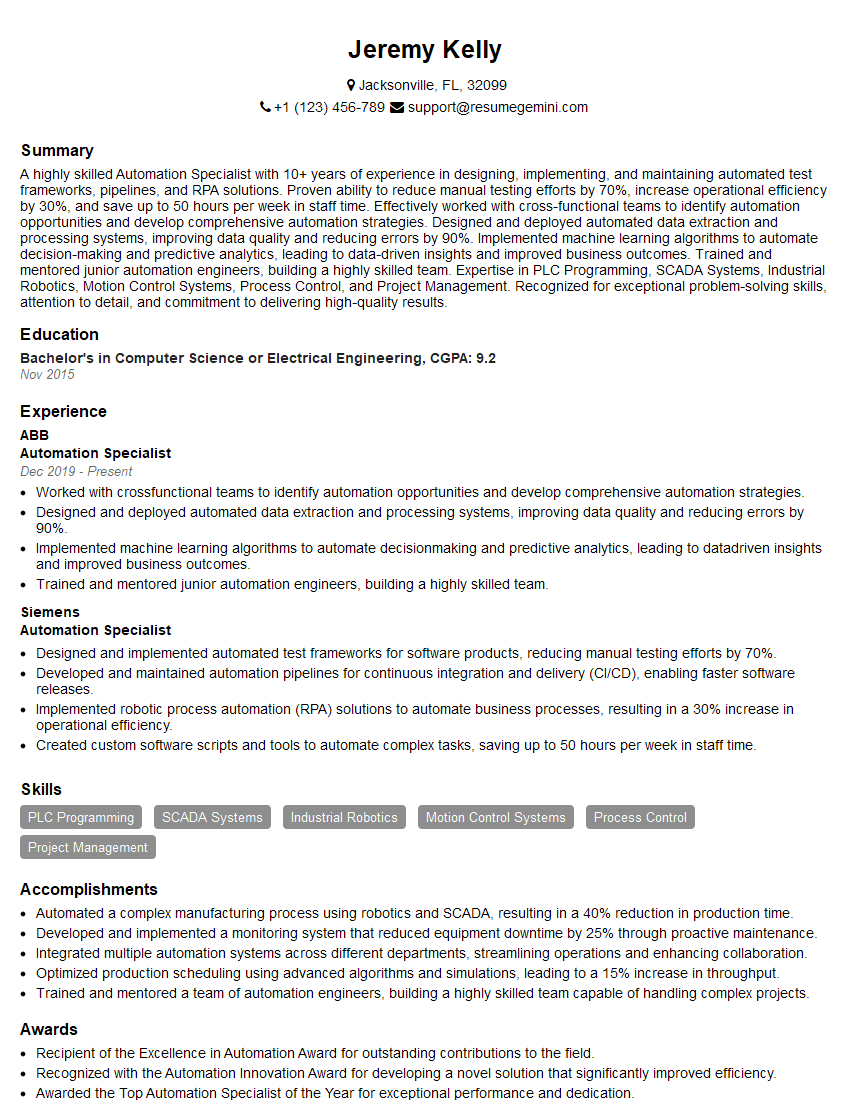
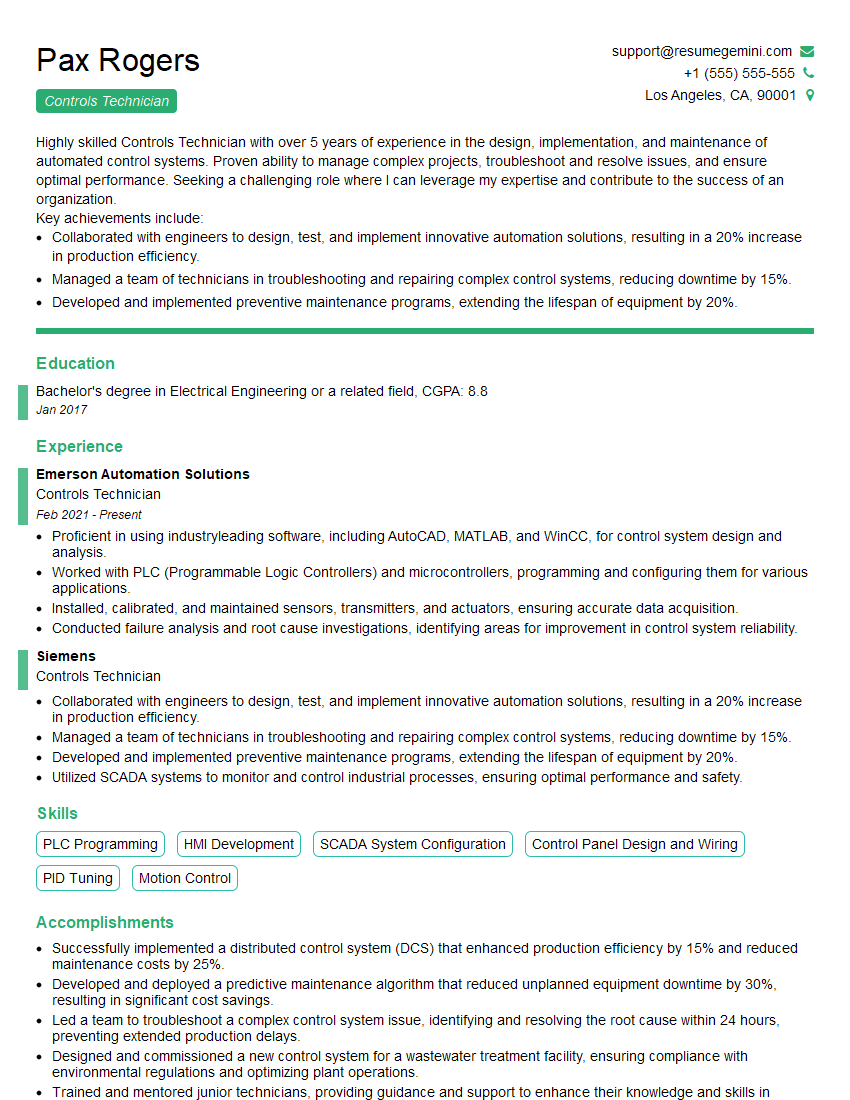
Mastering HVAC control sequences is crucial for career advancement in the building automation and HVAC industries. A strong understanding of these concepts demonstrates a high level of technical expertise and problem-solving abilities, opening doors to more challenging and rewarding roles. To significantly increase your job prospects, focus on crafting an ATS-friendly resume that highlights your skills and experience effectively. ResumeGemini is a trusted resource to help you build a professional resume that stands out. Examples of resumes tailored to HVAC Control Sequences are available to guide you in this process.
Explore more articles
Users Rating of Our Blogs
Share Your Experience
We value your feedback! Please rate our content and share your thoughts (optional).
What Readers Say About Our Blog
Very informative content, great job.
good