Every successful interview starts with knowing what to expect. In this blog, we’ll take you through the top HVAC Controls Design interview questions, breaking them down with expert tips to help you deliver impactful answers. Step into your next interview fully prepared and ready to succeed.
Questions Asked in HVAC Controls Design Interview
Q 1. Explain the difference between a PID controller and a Fuzzy Logic controller.
PID (Proportional-Integral-Derivative) and Fuzzy Logic controllers are both used to regulate HVAC systems, but they differ significantly in their approach. A PID controller uses a mathematical algorithm based on the error between the setpoint (desired temperature) and the actual temperature. It calculates three control actions: proportional, integral, and derivative, to minimize this error.
PID Controller: Think of a thermostat. It measures the current temperature, compares it to the desired temperature, and adjusts the heating or cooling accordingly. The proportional term responds immediately to the error, the integral term corrects for sustained errors (like a slow drift), and the derivative term anticipates future changes, preventing overshoot.
Fuzzy Logic Controller: In contrast, a Fuzzy Logic controller uses linguistic variables and fuzzy sets to handle uncertainty and imprecise information. Instead of precise numbers, it uses terms like ‘cold,’ ‘warm,’ ‘hot,’ allowing for a more intuitive approach to control. It’s particularly useful when dealing with complex systems or situations with incomplete data.
Key Differences Summarized:
- Methodology: PID uses precise mathematical calculations; Fuzzy Logic uses linguistic variables and fuzzy sets.
- Handling Uncertainty: PID struggles with uncertainty; Fuzzy Logic excels in uncertain or imprecise environments.
- Tuning: PID tuning can be complex and requires expertise; Fuzzy Logic tuning is often more intuitive but may require experience with fuzzy logic principles.
- Complexity: PID controllers are generally simpler to implement; Fuzzy Logic controllers can be more complex to design and implement.
Example: Imagine a system with significant delays in responding to control signals. A PID controller might overshoot or oscillate, while a Fuzzy Logic controller, trained appropriately, could manage this more smoothly due to its ability to handle the uncertainty inherent in the delay.
Q 2. Describe your experience with BACnet, Modbus, or other common communication protocols.
I have extensive experience with BACnet and Modbus, two of the most prevalent communication protocols in the building automation industry. BACnet (Building Automation and Control Networks) is an open protocol offering robust features and is particularly well-suited for large, complex systems, offering features like scheduling, alarming, and data logging. I’ve worked on projects integrating hundreds of devices through BACnet, utilizing both IP and MS/TP networks.
Modbus, on the other hand, is a simpler, more readily accessible protocol. Its ease of use makes it ideal for smaller systems or for simple data exchange. I’ve used Modbus extensively in smaller scale projects where cost-effectiveness and ease of implementation were prioritized. My experience includes troubleshooting communication issues on both protocols, implementing network segmentation for enhanced security, and integrating third-party devices that comply with either protocol. I also have familiarity with other protocols like LonWorks and KNX for specific applications.
Q 3. How do you troubleshoot a malfunctioning HVAC control system?
Troubleshooting a malfunctioning HVAC control system is a systematic process. My approach typically follows these steps:
- Gather Information: Start by understanding the nature of the malfunction. Is it a temperature issue, a fan failure, an equipment malfunction, or a control problem? Interview building occupants to get their perspective and understand when the problem started.
- Inspect the System: Visually inspect the equipment, wiring, and control components. Look for obvious signs of damage, loose connections, or incorrect wiring.
- Check the Control Sequence: Review the control sequence of operation. Is the system responding appropriately to inputs? Are the setpoints correct? Are timers and schedules functioning as intended? This often involves checking the control program (if programmable logic controllers are used).
- Utilize Diagnostic Tools: I leverage diagnostic tools provided by the equipment manufacturer and/or the building automation system to identify any error codes or performance indicators. This includes using software to monitor variables in real-time and check historical data.
- Test Components: Test individual components such as sensors, actuators, and valves to isolate the faulty element. Replace components as necessary.
- Review the Communication Network: Check the communication between the control system and the equipment. Are there any communication errors or network connectivity problems?
- Document and Report: Maintain a detailed record of the troubleshooting process, including identified problems, corrective actions taken, and system performance after the repair. Provide a formal report.
For example, if a zone isn’t heating correctly, I would first check the thermostat, then the damper positions, then the heating equipment itself, progressing systematically to identify the root cause.
Q 4. What are the common causes of temperature drift in an HVAC system?
Temperature drift in an HVAC system can be caused by a number of factors:
- Sensor Calibration Issues: Inaccurate temperature sensors are a primary culprit. Over time, sensors can drift from their calibrated values, leading to incorrect readings and subsequent control actions.
- Airflow Imbalances: Incorrectly balanced ductwork or obstructions can cause some zones to be over-cooled or overheated, leading to a drift in the overall system temperature.
- Faulty Valves or Dampers: Leaky valves or sticking dampers may not fully open or close, resulting in insufficient heating or cooling to certain zones, creating an overall temperature drift in the building.
- Changes in Load: External factors such as changes in occupancy, solar gain, or infiltration can affect the heating and cooling load, creating a drift from the setpoint unless the system appropriately adjusts to the changing load.
- Equipment Malfunction: Problems with the HVAC equipment itself, such as a failing compressor or fan motor, can also contribute to temperature drift.
- Control System Issues: Faults within the control system, either software or hardware based, can misinterpret sensor data or send incorrect signals, resulting in temperature drift.
Troubleshooting involves systematically checking these elements, often using diagnostic tools and system analysis to isolate the exact cause.
Q 5. Explain your experience with different types of HVAC sensors (e.g., temperature, humidity, pressure).
My experience encompasses a wide range of HVAC sensors, including:
- Temperature Sensors: I’ve worked with various types including Resistance Temperature Detectors (RTDs), Thermistors, and thermocouples. Understanding their characteristics, accuracy, and limitations is crucial for selecting the appropriate sensor for a specific application. For example, RTDs are known for their high accuracy and stability, while thermistors are more cost-effective but have a more limited temperature range.
- Humidity Sensors: Capacitive and resistive humidity sensors are commonly used. I understand the importance of proper calibration and maintenance to ensure accurate readings, and the impact of condensation and other environmental factors on sensor performance.
- Pressure Sensors: Pressure sensors are critical for monitoring airflow in ductwork and for controlling refrigerant pressures in refrigeration systems. I’m experienced with various pressure sensor technologies, including differential pressure sensors and absolute pressure sensors.
- Airflow Sensors: These include hot-wire anemometers, pitot tubes and vane anemometers. Choosing the right type depends on the application and the required accuracy. For example, vane anemometers are suitable for low-pressure ductwork while hot wire anemometers may be more appropriate for higher velocity applications.
I understand the importance of sensor selection based on application requirements, accuracy, cost, and environmental factors. Proper sensor placement and maintenance are crucial for reliable system performance.
Q 6. How do you ensure the security of a building automation system?
Securing a building automation system (BAS) is critical. My approach to ensuring BAS security involves a multi-layered strategy:
- Network Segmentation: Isolating the BAS network from other building networks prevents lateral movement of malware. This might involve using firewalls and VLANs.
- Access Control: Implementing strong password policies, multi-factor authentication, and role-based access control limits unauthorized access to the system. This involves using secure login protocols and auditing user activity.
- Firewall and Intrusion Detection: Firewalls prevent unauthorized access to the BAS network from outside. Intrusion detection systems monitor network traffic for suspicious activity.
- Regular Software Updates: Keeping the BAS software and firmware up-to-date patches security vulnerabilities.
- Vulnerability Assessments: Periodically performing vulnerability assessments helps identify and mitigate potential security weaknesses.
- Data Encryption: Encrypting data transmitted over the network protects sensitive information from eavesdropping.
- Physical Security: Restricting physical access to the BAS equipment and control panels prevents tampering.
Regular security audits and penetration testing are crucial to identify and address vulnerabilities before they can be exploited. A well-defined security policy, properly implemented and regularly reviewed, is essential.
Q 7. Describe your experience with programming HVAC control systems (e.g., using specific software).
I have extensive experience programming HVAC control systems using various software platforms. My expertise includes:
- Building Automation System (BAS) Software: I’m proficient in programming using industry-standard BAS software packages like Tridium Niagara, Schneider Electric EcoStruxure, and Siemens Desigo CC. This involves creating and modifying control sequences, creating user interfaces, and configuring system parameters.
- Programmable Logic Controllers (PLCs): I have hands-on experience programming PLCs from various manufacturers, including Allen-Bradley (RSLogix 5000), Siemens TIA Portal, and others. This includes creating ladder logic, function block diagrams, and structured text programs to control HVAC equipment.
I understand the importance of structured programming, clear documentation, and robust error handling in my code to ensure the reliability and maintainability of the control systems. I’ve written code for complex HVAC sequences, integrating multiple sensors and actuators, and implementing advanced control algorithms. I am also comfortable working with scripting languages such as Python for automation and data analysis related to HVAC control systems.
For example, I’ve developed programs to optimize energy efficiency by implementing advanced control strategies like model predictive control and demand-controlled ventilation. My code is always well-documented and adheres to best practices for maintainability.
Q 8. What is your experience with commissioning HVAC control systems?
Commissioning HVAC control systems is a crucial process ensuring the system operates as designed and meets the owner’s project requirements. My experience encompasses all phases, from reviewing design documents and witnessing equipment startup to functional testing and system optimization. I’ve worked on projects ranging from small commercial buildings to large industrial facilities, employing various commissioning methodologies like ASHRAE Guideline 0, utilizing tools such as sequence of operations (SOP) verification, and performing functional performance testing (FPT). For example, on a recent hospital project, I meticulously verified the control sequences for the air handlers to ensure proper temperature and humidity control in operating rooms, a critical aspect for patient safety and infection control. This involved not only reviewing the control logic but also witnessing the actual operation of the system and identifying any discrepancies between design and implementation.
Q 9. How do you handle conflicts between different control sequences?
Conflicts between control sequences are common in complex HVAC systems, often arising from overlapping priorities or poorly defined logic. My approach involves a systematic investigation using a combination of techniques. First, I thoroughly review the control logic diagrams and programming to identify the points of conflict. Then, I prioritize the sequences based on critical functions; for instance, safety systems always take precedence over comfort systems. If necessary, I implement interlocks or priority schemes using programmable logic controllers (PLCs) to resolve the conflicts, ensuring a smooth and safe operation. For example, in a data center project, I had to resolve a conflict between the economizer sequence (utilizing outside air for cooling) and the humidity control sequence. By implementing a priority scheme, the humidity control was given precedence when outside air humidity exceeded the setpoint, preventing potential damage to sensitive equipment. Visualizing the sequences using a timeline diagram often helps in identifying and resolving these conflicts.
Q 10. Explain your understanding of energy efficiency in HVAC control design.
Energy efficiency is paramount in HVAC control design. My approach involves integrating strategies that minimize energy consumption without compromising comfort or operational reliability. This starts with selecting energy-efficient equipment, such as variable-frequency drives (VFDs) for fans and pumps, and high-efficiency chillers. Beyond equipment selection, control strategies play a vital role. For instance, utilizing economizers, optimizing schedules based on occupancy and weather forecasts, and implementing demand-controlled ventilation (DCV) can significantly reduce energy use. I also leverage building automation systems (BAS) to monitor energy consumption in real-time, identify inefficiencies, and implement corrective measures. For instance, I once optimized a large office building’s HVAC system by implementing a sophisticated occupancy-based scheduling system, resulting in a 15% reduction in energy consumption without impacting occupant comfort. This involved integrating sensors to detect occupancy levels and adjusting the HVAC system accordingly.
Q 11. Describe your experience with various types of actuators used in HVAC systems.
My experience encompasses a wide range of actuators used in HVAC systems, including pneumatic, electric, and hydraulic types. Pneumatic actuators, known for their robustness and simplicity, are often used for dampers and valves in older systems. Electric actuators, offering precise control and integration with building automation systems (BAS), are increasingly common. I’m proficient in working with various types of electric actuators such as stepper motors, servo motors, and modulating actuators. Hydraulic actuators find application in large systems requiring high force, though they are less common due to their complexity and maintenance requirements. I am familiar with sizing and selecting actuators based on the specific application requirements, considering factors like load, speed, and operating conditions. Proper selection and installation are key to ensure reliable and efficient operation of the HVAC system. For instance, I’ve had to troubleshoot issues with undersized electric actuators, leading to slow response times and increased wear and tear.
Q 12. How do you optimize an HVAC system for energy savings?
Optimizing an HVAC system for energy savings requires a multifaceted approach. It begins with a thorough assessment of the existing system, including its performance, energy consumption patterns, and control strategies. Data analysis using the BAS is critical in this step, revealing areas for improvement. Next, I implement energy-saving measures, which can include upgrading to high-efficiency equipment, optimizing control sequences (as discussed earlier), implementing demand-controlled ventilation, and employing advanced control strategies such as predictive control or model predictive control (MPC). Regular monitoring and adjustments are essential to maintain optimal performance and identify any deviations from the target setpoints. For instance, on a recent project involving a retail store chain, I optimized their HVAC systems by implementing a predictive control strategy based on weather forecasts, leading to a substantial reduction in energy consumption without compromising customer comfort. A key part of optimization includes regularly reviewing the operational data and adapting the control strategies to account for seasonal variations and changes in occupancy patterns.
Q 13. Explain the role of a damper in an HVAC system and how it’s controlled.
Dampers are essential components in HVAC systems, controlling the airflow through ducts. They regulate air distribution to different zones, adjust airflow based on heating/cooling loads, and facilitate outside air intake through economizers. Dampers can be controlled using various actuators, as discussed previously – pneumatic, electric, or hydraulic. The control strategy depends on the system’s requirements and complexity. Simple on/off control might suffice for some applications, while more sophisticated modulating control allows for precise airflow regulation. The damper position is typically monitored using sensors that provide feedback to the control system, ensuring accurate positioning. In sophisticated systems, this feedback is integrated into the control logic to maintain optimal airflow and system performance. For example, a VAV (Variable Air Volume) system utilizes dampers controlled by modulating actuators to maintain the desired room temperature. The damper position is adjusted based on the room’s temperature sensor readings, ensuring individual zone control and minimizing energy waste.
Q 14. How do you handle complex HVAC control system integration challenges?
Integrating complex HVAC control systems involves careful planning and coordination. Challenges often arise from the diversity of equipment and protocols used by different manufacturers. My approach involves developing a comprehensive integration plan, detailing communication protocols, data exchange formats, and system interfaces. I leverage my expertise in various communication protocols, such as BACnet, Modbus, and LonWorks, ensuring seamless data exchange between different system components. Thorough testing and commissioning are essential to validate the integration and identify any potential conflicts. Virtual commissioning using simulation tools can help mitigate integration risks during the design phase. For example, I recently integrated a new energy management system into an existing HVAC system that utilized a diverse range of equipment and protocols. Using a combination of BACnet and Modbus communication protocols and custom-developed software, I successfully integrated the system, resulting in improved energy monitoring and control capabilities. Careful documentation and collaboration with other disciplines are crucial to ensure a successful integration process. The ability to troubleshoot and resolve communication issues quickly is also a vital skill.
Q 15. What are your experiences with different types of VAV systems and their control strategies?
My experience encompasses a wide range of VAV (Variable Air Volume) systems, from simple single-duct systems to complex multi-zone and double-duct configurations. I’ve worked with various control strategies tailored to the specific needs of each project. For example, in a single-duct VAV system, the control strategy often involves a PID (Proportional-Integral-Derivative) controller to maintain the desired room temperature by modulating the air damper position. The proportional component responds to the immediate temperature error, the integral component addresses accumulated error, and the derivative component anticipates future changes. In multi-zone systems, a more sophisticated strategy might involve centralized control with individual zone sensors and actuators, managed via a Building Management System (BMS). This could incorporate features like occupancy sensing, scheduling, and economizer control to optimize energy efficiency. I’ve also worked with VAV systems integrating advanced features like demand-controlled ventilation (DCV) to further enhance energy efficiency and improve indoor air quality.
For instance, in a recent hospital project, we implemented a sophisticated VAV system with individual room temperature control and pressure equalization to maintain infection control standards. The control strategy included tight temperature tolerances, alarm functions for deviations, and integration with the hospital’s central monitoring system. This project required careful consideration of various factors, including redundancy and fail-safe mechanisms for critical areas.
Career Expert Tips:
- Ace those interviews! Prepare effectively by reviewing the Top 50 Most Common Interview Questions on ResumeGemini.
- Navigate your job search with confidence! Explore a wide range of Career Tips on ResumeGemini. Learn about common challenges and recommendations to overcome them.
- Craft the perfect resume! Master the Art of Resume Writing with ResumeGemini’s guide. Showcase your unique qualifications and achievements effectively.
- Don’t miss out on holiday savings! Build your dream resume with ResumeGemini’s ATS optimized templates.
Q 16. Describe your experience with trending and data analysis in HVAC control systems.
Trending and data analysis are crucial for optimizing HVAC system performance and identifying potential issues. I utilize various tools and techniques to analyze data from the BMS, including historical trend data, alarm logs, and real-time sensor readings. This data helps us identify patterns and trends that could indicate equipment malfunction, inefficient operation, or opportunities for improvement. For instance, I might analyze temperature trends over a period of time to identify recurring temperature swings or drifts that might indicate a malfunctioning actuator or a poorly calibrated sensor.
We use this data to create insightful reports and visualizations that help building operators understand system performance and make informed decisions. I’m proficient in using various software packages for data analysis, including building automation system software such as Tridium Niagara or Schneider Electric EcoStruxure Building Operation. A recent project involved analyzing energy consumption data to identify opportunities for energy savings by optimizing the system’s schedule and economizer operation. This resulted in a significant reduction in energy costs for the client. The analysis included visualizing data using graphs and charts to clearly illustrate trends and anomalies to both technical and non-technical stakeholders.
Q 17. What are the key considerations for designing HVAC controls in a new building?
Designing HVAC controls for a new building requires a holistic approach considering several key factors. Firstly, the design must align with the building’s architectural and operational requirements, including zoning strategies, occupancy patterns, and environmental conditions. Secondly, energy efficiency is paramount. The control system should be designed to optimize energy usage through strategies like economizer cycles, demand-controlled ventilation, and advanced scheduling algorithms.
Thirdly, the system should be flexible and scalable to accommodate future changes and upgrades. The selection of equipment and software should be future-proof. Fourthly, ease of operation and maintenance is critical. The system should be intuitive for building operators and technicians to maintain. This includes clear documentation, well-designed user interfaces, and readily available maintenance procedures. Finally, system reliability is of the utmost importance, which entails specifying redundant components where necessary and implementing robust monitoring and alarm systems. A well-designed control system should integrate seamlessly with other building systems (such as lighting and security) to facilitate overall building management.
Q 18. How do you ensure the proper functioning of safety interlocks within HVAC controls?
Ensuring proper functioning of safety interlocks is a critical aspect of HVAC controls design. These interlocks prevent dangerous situations like equipment damage or personal injury. My approach involves a layered approach including: careful design of interlock circuits using appropriate safety relays and PLCs, rigorous testing during commissioning to verify correct operation of each interlock, and detailed documentation of the safety systems for future maintenance and troubleshooting. We often use a combination of hardware and software interlocks to ensure multiple layers of protection. For example, a high-temperature limit switch on a furnace will shut off the gas supply if the temperature exceeds a preset limit, preventing overheating. Software interlocks might prevent a chiller from starting if the cooling tower isn’t functioning properly.
Furthermore, regular inspection and maintenance are crucial for maintaining the integrity of safety interlocks. This includes functional testing of interlocks at scheduled intervals and immediate attention to any reported failures. Clear labeling and readily accessible documentation are also essential to ensure that maintenance personnel understand the system and can maintain and repair the safety interlocks correctly. Failure to address these issues can lead to equipment damage, facility downtime and potential safety hazards.
Q 19. What is your experience with fault detection and diagnostics (FDD) in HVAC systems?
My experience with Fault Detection and Diagnostics (FDD) in HVAC systems is extensive. I’ve implemented and utilized various FDD strategies, ranging from simple rule-based systems to more sophisticated AI-driven approaches. Rule-based systems utilize pre-defined rules to identify faults based on sensor readings and system behavior. For example, a rule might trigger an alarm if a pump runs continuously for an extended period, indicating a potential blockage or malfunction. AI-based FDD approaches use machine learning algorithms to analyze large datasets and identify patterns that are indicative of potential faults. This often allows for early detection and often faster diagnosis than traditional methods.
I’ve used FDD systems to improve the efficiency of troubleshooting and preventative maintenance. By identifying potential problems early, we can minimize downtime and reduce the cost of repairs. In a recent project, we implemented an AI-based FDD system that reduced the number of service calls by 20% and improved the overall operational efficiency of the HVAC system.
Q 20. Explain your understanding of different control strategies (e.g., on/off, proportional, integral, derivative).
Understanding different control strategies is fundamental to effective HVAC control design. On/off control is the simplest type, where the system is either fully on or fully off, based on whether the setpoint is met or exceeded. Think of a simple thermostat switching a heating element on or off. While simple, it often leads to cycling and temperature fluctuations.
Proportional control adjusts the output proportionally to the error between the setpoint and the actual value. For example, a proportionally controlled valve will open wider as the temperature difference increases. However, it may not completely eliminate the error. Integral control addresses this by accumulating the error over time. A larger accumulated error leads to a greater output adjustment, effectively eliminating the persistent error. Derivative control anticipates future changes by considering the rate of change of the error. It dampens the oscillations associated with proportional and integral control, resulting in a smoother response. PID control combines these three elements for optimal performance.
The choice of control strategy depends on the specific application and performance requirements. A simple on/off control might suffice for less demanding applications, while a more complex PID controller is needed for applications requiring tight temperature control and stability. In many cases, we will tune a PID controller to optimize its response to meet the specific requirements of a particular application and system dynamics.
Q 21. Describe your experience with different types of HVAC control panels.
My experience encompasses a variety of HVAC control panels, from simple standalone controllers to sophisticated Building Management System (BMS) interfaces. Standalone controllers are typically used for smaller systems and offer basic functions like temperature control and alarm monitoring. They often have simple displays and limited programming capabilities. I have worked extensively with programmable logic controllers (PLCs) that provide more sophisticated control capabilities and allow for complex control strategies and interlocks to be implemented. These PLCs often form the heart of more complex systems.
Building Management Systems (BMS) provide centralized control and monitoring of multiple HVAC systems and other building systems. They offer advanced features such as trend analysis, scheduling, and remote access. I’m familiar with various BMS platforms and their associated software, which allow for seamless integration and monitoring of all aspects of building operation. The choice of control panel depends on the scale and complexity of the system. For large buildings, a BMS is usually essential, while standalone controllers might suffice for smaller, simpler systems. In recent years, the integration of cloud-based platforms has broadened the scope of possibilities, enabling remote monitoring, diagnostics, and energy management solutions.
Q 22. How do you approach troubleshooting a system with multiple control loops?
Troubleshooting a system with multiple control loops requires a systematic approach. Think of it like detective work; you need to isolate the culprit among many suspects. I begin by carefully reviewing the system’s documentation – sequence of operations, schematics, and equipment manuals – to understand the interactions between the various loops. This provides a roadmap of how the system *should* function.
Next, I employ a process of elimination. I start by observing the system’s behavior, noting which loops are malfunctioning and which are operating normally. This often involves checking key parameters like temperatures, pressures, and airflow rates using sensors and data acquisition tools. I’ll then systematically test each component within the malfunctioning loop, starting with the simplest elements (sensors, actuators) and progressing to more complex ones (controllers, communication networks).
A key strategy is to use trend logs and historical data to identify patterns or recurring issues. This historical perspective often reveals clues that might be missed during a snapshot observation. For example, a consistently high return air temperature might indicate a problem with the supply air damper, or perhaps a faulty sensor. Finally, once the faulty component is identified, I’ll replace or repair it, followed by a comprehensive system test to ensure everything is functioning correctly before leaving the site.
Q 23. Explain your experience with pneumatic versus electronic control systems.
I have extensive experience with both pneumatic and electronic control systems, each with its strengths and weaknesses. Pneumatic systems, using compressed air for signal transmission, are robust and reliable, particularly in harsh environments. Their simplicity can also be advantageous for troubleshooting, as you can often pinpoint issues by simply checking air pressure. However, they are less precise than electronic systems, and their physical limitations (air lines, bulky components) can make them cumbersome in large or complex buildings.
Electronic systems, using electrical signals and microprocessors, are far more versatile, offering advanced features like complex control algorithms, data logging, and remote access capabilities. They are also much more precise and energy-efficient. However, they are susceptible to electrical noise and require more sophisticated troubleshooting skills. I’ve worked with various electronic control systems, including BACnet, Modbus, and LonWorks protocols, and I’m proficient in programming and configuring these systems.
The choice between pneumatic and electronic often depends on factors like budget, building complexity, and environmental considerations. In many modern buildings, electronic systems are preferred due to their advanced capabilities and ease of integration with building management systems (BMS).
Q 24. Describe your experience with sequence of operations programming.
Sequence of operations programming is the heart of HVAC control systems. It defines the logical order in which equipment starts and stops, based on various conditions (temperature, humidity, occupancy, etc.). I’m experienced in developing and modifying these programs using various platforms, from traditional programmable logic controllers (PLCs) to advanced building automation systems (BAS). This involves using ladder logic, function block diagrams, or other programming languages depending on the specific platform.
For example, a simple sequence might be: (1) Thermostat calls for heating; (2) Boiler starts; (3) Circulating pump starts; (4) Heating coils activate; (5) Once thermostat setpoint is reached, boiler and pump shut off. More complex sequences can incorporate multiple equipment, sensors, and control strategies to optimize energy efficiency and comfort.
My experience also includes integrating sequence of operations programming with other building systems, such as lighting and security, to create a holistic and coordinated automation strategy. For instance, the HVAC system might adjust based on occupancy sensors to reduce energy consumption when zones are unoccupied.
Q 25. How do you manage and maintain HVAC control documentation?
Maintaining accurate and up-to-date HVAC control documentation is crucial for efficient operation and maintenance. I employ a digital document management system that centralizes all relevant information in a readily accessible format. This includes:
- System schematics and diagrams: Detailed drawings showing the interconnection of equipment, sensors, and controllers.
- Sequence of operations: Clearly defined steps outlining the functionality of the system.
- Equipment manuals and specifications: Critical data for maintenance and troubleshooting.
- Calibration records: Documentation of sensor and equipment calibration procedures and results.
- Maintenance logs: Records of routine maintenance tasks and corrective actions taken.
- As-built drawings: Drawings reflecting the final installation and any modifications made during construction or operation.
Using a well-organized system ensures seamless handover of projects, minimizes downtime during maintenance, and simplifies troubleshooting when problems arise.
Q 26. What is your experience with HVAC control system upgrades and retrofits?
I have extensive experience in upgrading and retrofitting HVAC control systems, often transforming outdated pneumatic systems into modern, energy-efficient electronic ones. These projects typically involve a careful assessment of the existing system to identify areas for improvement. This includes evaluating the performance of existing equipment, identifying obsolete or failing components, and determining the most cost-effective path towards upgrading the system’s functionality and efficiency.
The process typically involves replacing outdated controllers, installing new sensors and actuators, integrating new building management systems (BMS), and implementing advanced control strategies such as variable-frequency drives (VFDs) and predictive control algorithms. This also requires careful planning and coordination to minimize disruption to building occupants during the upgrade process.
One example involved retrofitting a large office building with a new BACnet-based control system. We replaced the aging pneumatic system, significantly improving energy efficiency and comfort while enabling centralized monitoring and control. This project involved not only the technical aspects of system replacement but also careful project management and communication with building occupants to minimize disruption.
Q 27. Explain your understanding of building codes and regulations related to HVAC controls.
Understanding building codes and regulations related to HVAC controls is paramount. Compliance ensures safety and efficiency. These regulations vary by location but often address aspects such as:
- Safety standards: Regulations ensuring the safe operation of equipment and preventing hazards like leaks or electrical shock.
- Energy efficiency: Standards mandating the use of energy-efficient equipment and control strategies.
- Accessibility: Guidelines ensuring that controls are accessible to people with disabilities.
- Indoor air quality: Regulations specifying minimum air quality standards and requirements for ventilation.
I stay current on these regulations through professional development, attending conferences and workshops, and subscribing to relevant industry publications. Before starting any project, I thoroughly review the applicable codes and standards to ensure the design meets all requirements. This proactive approach avoids costly delays and rework later in the project lifecycle.
Q 28. Describe a time you had to solve a complex HVAC control problem. What was the solution and what did you learn?
I once faced a challenging problem involving a hospital operating room’s HVAC system that was experiencing inconsistent temperature control. The operating room requires extremely precise temperature regulation for patient safety and surgical procedures. Initial troubleshooting pointed to several potential issues: faulty sensors, malfunctioning actuators, or problems within the control algorithm itself. However, the system was highly complex, utilizing multiple redundant sensors and sophisticated control logic.
My solution involved a methodical approach. I first used data logging to monitor the system’s behavior over several days, analyzing the readings from all sensors and actuators. This revealed a pattern of temperature fluctuations that didn’t correlate with sensor readings – hinting at a problem beyond the sensors themselves. Further investigation revealed a subtle issue within the communication network that was causing intermittent data loss between the sensors and the controller. This intermittent data loss was the root cause of the inconsistent temperature regulation.
The solution was to upgrade the communication network and implement error-correction protocols within the control algorithm. This ensured reliable data transfer, solving the temperature inconsistency issue. The key learning was the importance of thorough data analysis and the power of system-wide observation. A simple sensor fault would have been an insufficient diagnosis in this complex, safety-critical environment. This experience emphasized the need for robust communication networks and redundancy in critical systems.
Key Topics to Learn for HVAC Controls Design Interview
- Building Automation Systems (BAS): Understanding different BAS platforms (e.g., Tridium, Siemens, Johnson Controls), their functionalities, and communication protocols (BACnet, Modbus, LonWorks).
- Control System Design Principles: Applying control loops (PID, etc.), sensor selection and placement, actuator choices, and designing for optimal energy efficiency and comfort.
- Sequence of Operations (SOO): Developing and documenting clear and concise SOOs for various HVAC equipment and system functionalities. Practical experience with creating and troubleshooting SOOs is vital.
- DDC (Direct Digital Control) Systems: In-depth knowledge of DDC controllers, their programming, troubleshooting techniques, and integration with other building systems.
- Programming Languages: Proficiency in at least one relevant programming language used in HVAC control systems (e.g., proprietary languages for specific BAS platforms).
- Troubleshooting and Diagnostics: Demonstrating a methodical approach to identifying and resolving issues within HVAC control systems, including utilizing diagnostic tools and analyzing system data.
- Energy Codes and Standards: Familiarity with relevant building codes and energy efficiency standards that impact HVAC control system design (e.g., ASHRAE).
- Data Analytics and System Optimization: Understanding how to leverage data from HVAC systems to improve performance, energy efficiency, and overall building operation.
- Safety and Compliance: Knowledge of relevant safety standards and regulations pertaining to HVAC systems and control designs.
Next Steps
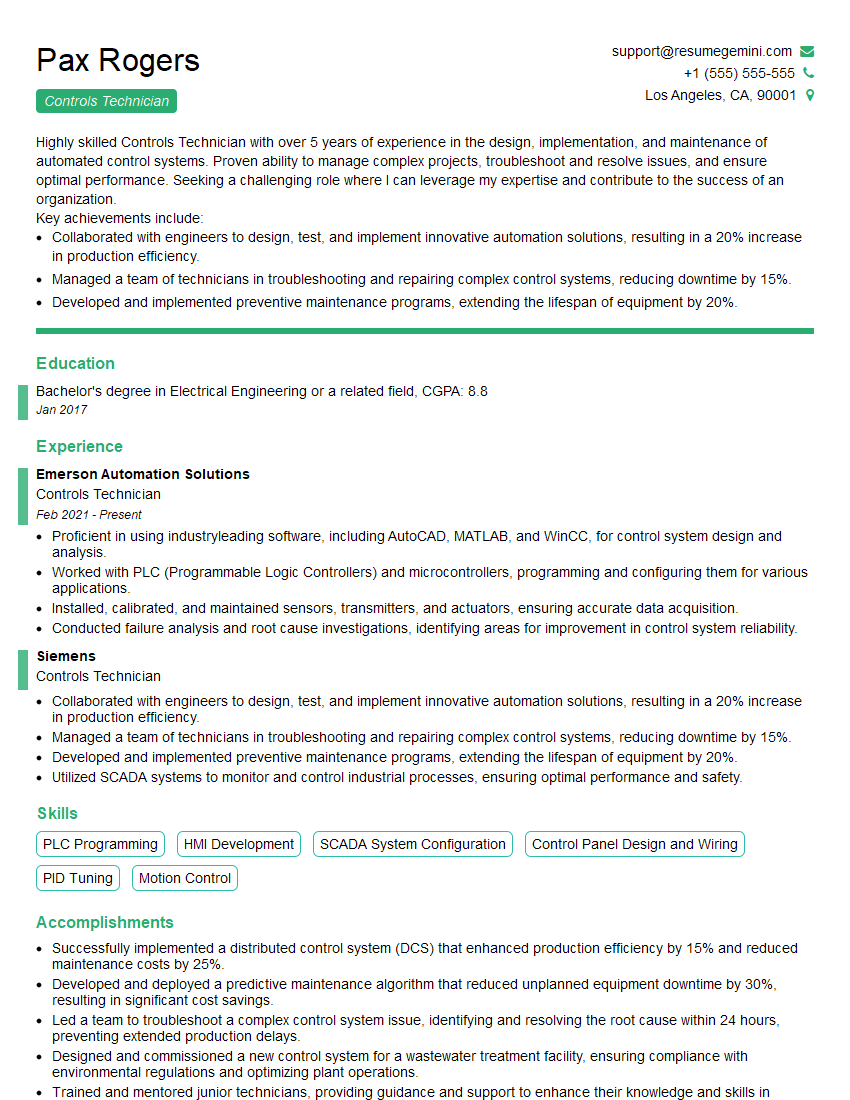
Mastering HVAC Controls Design opens doors to exciting career advancements, from senior design engineer roles to project management and leadership positions. A strong resume is crucial for showcasing your expertise and securing your dream job. Creating an ATS-friendly resume is essential to get your application noticed by recruiters and hiring managers. To build a powerful and effective resume that highlights your skills and experience, we recommend using ResumeGemini. ResumeGemini offers a user-friendly platform and provides examples of resumes tailored to HVAC Controls Design to guide you through the process. Invest time in crafting a professional resume; it’s your first impression and a critical step in your career journey.
Explore more articles
Users Rating of Our Blogs
Share Your Experience
We value your feedback! Please rate our content and share your thoughts (optional).
What Readers Say About Our Blog
Very informative content, great job.
good