The thought of an interview can be nerve-wracking, but the right preparation can make all the difference. Explore this comprehensive guide to HVLP Spraying interview questions and gain the confidence you need to showcase your abilities and secure the role.
Questions Asked in HVLP Spraying Interview
Q 1. What are the advantages of HVLP spraying compared to other paint application methods?
HVLP spraying offers several key advantages over other paint application methods like brush painting, roller painting, or conventional airless spraying. Primarily, it delivers a superior finish with less overspray, resulting in less wasted paint and a cleaner, more professional-looking result. This is due to the atomization process.
- Reduced Overspray: HVLP significantly minimizes paint waste by atomizing the paint more efficiently and directing it precisely onto the surface.
- Superior Finish Quality: The finer atomization leads to a smoother, more even coat with fewer runs, sags, and texture imperfections. This translates to a higher quality finish requiring less sanding and prep work.
- Less Material Waste: The efficient transfer rate means you use less paint to achieve the same coverage.
- Environmentally Friendly: Reduced overspray means less airborne paint particles contributing to better air quality in the work area and less environmental impact.
- Healthier Working Conditions: Less overspray equates to a cleaner work environment, improving the health and safety of the painter.
For example, painting a car with HVLP will result in a smoother, more even finish compared to using a brush or roller. The reduction in overspray is also particularly noticeable in detailed work like trim or furniture painting.
Q 2. Explain the principle of High Volume Low Pressure (HVLP) spray technology.
HVLP, or High Volume Low Pressure, spray technology works by using a large volume of air at a relatively low pressure to atomize the paint. Unlike conventional spray systems that use high pressure to force paint through a nozzle, HVLP utilizes a large volume of air moving at a lower pressure to create a gentle, yet effective atomization.
This process is achieved through a specially designed air cap and nozzle system. The large volume of air creates a powerful suction that draws the paint from the fluid cup and atomizes it into a fine mist. The low pressure minimizes overspray, ensuring most of the paint reaches the target surface.
Think of it like this: Instead of a forceful blast of air, HVLP is like a gentle breeze that carries the paint particles precisely to where you want them. This results in increased transfer efficiency and reduces paint waste.
Q 3. Describe the different types of HVLP spray guns and their applications.
HVLP spray guns come in various types, each suited to specific applications. The differences usually lie in the nozzle size, air cap design, and fluid flow rate.
- Gravity Feed Guns: The paint cup sits above the gun, using gravity to feed paint to the nozzle. These are ideal for smaller projects or when precision and control are paramount, such as automotive painting or furniture finishing.
- Suction Feed Guns: The paint is drawn up from a cup below the gun. These are well-suited for larger projects and using thicker paints but may require more frequent cleaning.
- Pressure Feed Guns: The paint is supplied under pressure from an external tank. These are efficient for large-scale projects requiring high paint flow rates, but require additional equipment.
- Turbine-powered HVLP Systems: These include an integrated turbine unit for air compression, offering portability and often higher transfer efficiency. These are popular for various applications.
For instance, a gravity feed gun with a smaller nozzle would be perfect for detailed work on a model airplane, while a pressure feed gun would be more suitable for spraying a large fence.
Q 4. How do you adjust the fluid pressure and air pressure on an HVLP spray gun?
Adjusting the fluid and air pressure on an HVLP spray gun is crucial for achieving the optimal spray pattern and finish. The specific controls vary depending on the gun model but usually involve adjusting knobs or dials.
Fluid Pressure: This controls the amount of paint flowing through the nozzle. Increasing it leads to a heavier paint coat, while decreasing it results in a lighter coat. You’ll typically find a knob or dial marked ‘fluid’ or ‘material’ adjustment.
Air Pressure: This controls the atomization of the paint. Higher air pressure results in finer atomization, potentially leading to more overspray, while lower pressure may result in a coarser spray pattern. You’ll find a separate control for air pressure, often marked ‘air pressure’ or ‘air cap’ adjustment.
It’s important to consult your specific spray gun’s manual for detailed instructions on pressure adjustment and recommended settings. Starting with low pressure settings and gradually increasing is recommended until you reach the desired spray pattern.
Q 5. What factors influence the spray pattern of an HVLP spray gun?
Several factors influence the spray pattern of an HVLP spray gun, and understanding these is crucial for achieving the desired finish. These include:
- Air Pressure: As previously mentioned, higher air pressure results in finer atomization, leading to a wider but potentially less defined spray pattern. Lower pressure creates a coarser, more concentrated pattern.
- Fluid Pressure: Higher fluid pressure leads to a thicker and wider spray pattern, while lower pressure results in a thinner, more narrow pattern.
- Nozzle Size: Smaller nozzles produce narrower spray patterns, ideal for detailed work, while larger nozzles produce wider patterns for quicker coverage.
- Air Cap Adjustment: Many HVLP guns allow you to adjust the air cap’s position or use different air caps to modify the spray pattern (round, fan, horizontal, vertical).
- Distance from Surface: Maintaining the correct distance from the surface is crucial for a consistent spray pattern. Too close and the pattern is uneven; too far, and the paint becomes weak.
- Paint Viscosity: The thickness of the paint directly affects the spray pattern. Thicker paint can lead to a coarser spray, while thinner paint can lead to a finer spray pattern but requires more coats.
Experimentation is key. Practice spraying on a test piece to perfect your technique and settings before moving to the actual project.
Q 6. How do you determine the appropriate paint viscosity for HVLP spraying?
The appropriate paint viscosity for HVLP spraying is crucial for achieving a smooth, even finish. Paint that’s too thick will lead to a coarse, uneven spray, potentially resulting in runs and sags. Paint that’s too thin may result in excessive overspray and poor coverage.
The ideal viscosity typically depends on the paint type and the spray gun being used. Many manufacturers provide viscosity recommendations on their paint containers. You can use a Zahn cup or similar viscosity cup to measure the flow time of the paint and compare it to the manufacturer’s recommendations. A viscosity chart is also helpful in this process.
If the paint is too thick, thinning it with the appropriate thinner (following the manufacturer’s instructions) is necessary. Always test your paint viscosity on a scrap piece before applying it to your project to ensure optimal flow and finish.
Q 7. What safety precautions should be taken when using an HVLP spray system?
Safety is paramount when using an HVLP spray system. Several precautions must be taken to minimize risks:
- Respiratory Protection: Always wear a properly fitted respirator designed for paint overspray. This is crucial to prevent inhaling harmful paint particles.
- Eye Protection: Wear safety glasses or a face shield to protect your eyes from paint overspray.
- Protective Clothing: Wear long sleeves, gloves, and coveralls to protect your skin from paint contact.
- Ventilation: Work in a well-ventilated area or use an appropriate respirator to remove paint overspray and fumes from the air. This minimizes inhalation hazard and improves air quality.
- Fire Safety: Be aware that many paints and thinners are flammable. Keep away from open flames or sparks. Avoid smoking in the work area.
- Proper Cleanup: Dispose of waste materials and clean up spills according to safety regulations and guidelines.
- Read Safety Data Sheets (SDS): Before working with any paint or thinner, carefully read the SDS to understand potential hazards and necessary safety precautions.
Remember, safety should always be your top priority when working with HVLP spray systems. Following these precautions helps to ensure a safe and productive painting experience.
Q 8. How do you clean and maintain an HVLP spray gun?
Cleaning and maintaining your HVLP spray gun is crucial for its longevity and consistent performance. Think of it like regularly servicing your car – neglecting it leads to problems down the line. The process involves several key steps:
- Immediately after use: Flush the gun with the appropriate thinner for your paint (check the paint manufacturer’s instructions). Run the thinner through the gun until it runs clear. This prevents paint from drying and clogging the delicate internal components.
- Disassemble: Carefully disassemble the spray gun according to the manufacturer’s instructions. This usually involves removing the air cap, fluid tip, and nozzle. Pay close attention to how each part comes apart to ensure correct reassembly.
- Clean thoroughly: Use a suitable brush or cleaning tool to remove any remaining paint from the internal parts. Pay special attention to the nozzle and fluid tip, as these are prone to clogging. You can use a solvent appropriate for the paint type to loosen stubborn residue.
- Inspect for damage: Carefully inspect all parts for any damage or wear. Replace worn or damaged parts immediately to prevent poor performance or potential leaks.
- Reassemble and test: Once everything is clean and dry, reassemble the spray gun, ensuring all parts are correctly seated. Before your next project, perform a test spray with thinner to ensure smooth operation and that there are no leaks.
Regular cleaning, even after short spraying sessions, will significantly extend the life of your HVLP spray gun and ensure consistent, high-quality results.
Q 9. What are the common problems encountered during HVLP spraying, and how do you troubleshoot them?
Several issues can arise during HVLP spraying. Let’s explore some common problems and their solutions:
- Dry Spray: This results in a rough, uneven finish. Causes include insufficient paint flow (check fluid adjustment), low air pressure (check compressor and pressure gauge), or the paint being too thick (thin according to manufacturer recommendations). Solution: Adjust the fluid and air pressure settings, and thin the paint if necessary.
- Runs and Sags: Excessive paint buildup leads to uneven surfaces. Causes include too much paint flow (reduce fluid adjustment), too slow a spraying speed (increase speed), or paint that’s too thin (thicken as needed). Solution: Adjust fluid flow and spraying technique. You might also need to slightly thicken the paint.
- Orange Peel: A textured, bumpy finish, often caused by low air pressure, incorrect spray distance, or paint viscosity issues. Solution: Increase air pressure slightly, maintain a consistent distance from the surface (usually 6-8 inches), and adjust paint viscosity.
- Clogging: The nozzle or fluid tip can become clogged with dried paint. Cause: Insufficient cleaning or using improper thinner. Solution: Thoroughly clean the spray gun according to the instructions, paying close attention to the nozzle and fluid tip. Replace clogged components if necessary.
- Uneven Coverage: Inconsistent paint application. Causes include inconsistent spraying technique, insufficient overlap between passes, or incorrect spray gun angle. Solution: Practice consistent spraying technique with smooth, even passes. Ensure proper overlap (about 50%).
Troubleshooting often involves a systematic approach – checking air pressure, paint viscosity, spray technique, and cleaning the equipment.
Q 10. Explain the importance of proper surface preparation before HVLP spraying.
Proper surface preparation is the foundation of a professional-looking finish, regardless of the spraying method. Think of it as building a house – a weak foundation leads to cracks and structural issues. With HVLP, it’s even more critical because the paint is thinner and will show imperfections more readily.
Key steps include:
- Cleaning: Remove all dirt, grease, dust, and loose particles. A degreaser or suitable cleaner is often necessary.
- Sanding: Sanding smooths the surface and creates better adhesion for the paint. Start with coarser grit and gradually move to finer grit to achieve a smooth finish. Always sand in the direction of the grain for wood.
- Priming (often necessary): Primer provides a uniform base coat, improving paint adhesion and hiding imperfections. It also helps to ensure the final coat adheres evenly.
- Repairing imperfections: Fill any holes or cracks using appropriate filler and sand smooth.
- Masking: Mask off areas you don’t want to be painted using painter’s tape and drop cloths to protect surrounding areas.
Proper preparation prevents costly mistakes and ensures a professional-quality finish. A poorly prepared surface will show through even the most skilled HVLP application.
Q 11. What are the different types of paint suitable for HVLP spraying?
Many paints are suitable for HVLP spraying, but the choice depends on the substrate (material being painted) and desired finish. Here are some examples:
- Latex paints: Widely used for interior and exterior walls, trim, and furniture. Water-based latex paints are often preferred for their low VOCs (Volatile Organic Compounds).
- Acrylic paints: Versatile paints suitable for a variety of surfaces. Often used for crafts, furniture, and walls.
- Alkyd paints (Oil-based): Offer superior durability and weather resistance, often used for exterior projects and trim. They require oil-based thinners for cleaning.
- Lacquer paints: Quick-drying paints providing a hard, durable finish. Often used for furniture and automotive applications.
- Specialty paints: These include epoxy paints, polyurethane paints, and other specialty coatings designed for specific applications.
Always check the paint manufacturer’s recommendations for viscosity and thinners suitable for HVLP spraying. You might need to thin the paint before spraying, ensuring it’s the right consistency for your spray gun and desired finish.
Q 12. How do you achieve a smooth, even finish using HVLP spraying?
Achieving a smooth, even finish with HVLP spraying requires attention to detail and practice. Here are some key techniques:
- Consistent spray distance: Maintain a consistent distance from the surface (usually 6-8 inches). Moving too close or too far will result in uneven coverage.
- Smooth, even passes: Use smooth, overlapping strokes. Avoid stopping and starting in the middle of a pass, which can create build-up.
- Proper overlap: Overlapping each pass by about 50% ensures even coverage and minimizes visible spray lines.
- Correct spray pattern: Adjust the air cap and fluid tip to produce the correct spray pattern. A fan-shaped pattern is usually ideal for large surfaces.
- Proper air pressure and paint viscosity: Maintaining the correct air pressure and paint viscosity is vital for a smooth finish. Too much or too little of either can affect the outcome.
- Multiple thin coats: Applying multiple thin coats is better than one thick coat. This helps to avoid runs and sags, and provides a more even finish.
Practice on scrap material before spraying your final project to perfect your technique and get a feel for the spray gun and paint.
Q 13. How do you control overspray and minimize paint waste during HVLP spraying?
Overspray is a significant concern in HVLP spraying, both environmentally and economically. Here’s how to minimize it and reduce paint waste:
- Proper air pressure: Using the recommended air pressure for your spray gun and paint minimizes overspray. Too high a pressure can cause excessive atomization and more overspray.
- Correct spray technique: Proper technique, including smooth passes and consistent distance, reduces paint waste.
- Use a properly sized nozzle: Select a nozzle size appropriate for the job. A nozzle that’s too large can lead to excessive overspray.
- Proper masking and containment: Use drop cloths, painter’s tape, and other containment methods to prevent overspray on unwanted areas. Consider using a spray booth for larger projects.
- Gun maintenance: A well-maintained gun, free of clogs and leaks, will produce a more efficient spray pattern.
- Practice and refinement: Practice makes perfect. The more you practice, the more efficient and accurate your spraying technique will become, minimizing overspray.
Reducing overspray is good for the environment and your wallet. By following these tips, you can significantly reduce paint waste and improve efficiency.
Q 14. What is the role of air caps and fluid tips in HVLP spraying?
The air cap and fluid tip are crucial components of an HVLP spray gun, working together to atomize the paint and create the spray pattern. Think of them as the precision instruments of the system.
- Air Cap: The air cap controls the airflow around the fluid tip, atomizing the paint into a fine mist. Different air caps provide varying spray patterns (e.g., round, fan). The air cap’s design influences the atomization quality and the amount of overspray.
- Fluid Tip: The fluid tip regulates the amount of paint that flows to the nozzle. Different fluid tips deliver varying paint flow rates. This determines the paint’s volume and consistency in the final spray.
The interaction between the air cap and fluid tip determines the quality of the spray pattern. Choosing the correct combination for your project is essential for achieving a professional finish.
Q 15. Describe the process of thinning paint for optimal HVLP spraying performance.
Thinning paint for HVLP spraying is crucial for achieving a smooth, even finish. Too thick, and you’ll get a lumpy, uneven texture; too thin, and you’ll have runs and drips. The ideal consistency allows the paint to atomize properly, creating a fine mist that adheres evenly to the surface. The process involves adding a paint thinner or reducer specifically formulated for the type of paint you’re using. Never use a generic thinner unless explicitly recommended by the paint manufacturer.
The best approach is to follow the manufacturer’s instructions on the paint can. They usually provide a recommended viscosity range. A simple way to check is by using a Zahn cup or a similar viscosity measuring tool. These cups measure the time it takes for a specific volume of paint to flow through an orifice. Alternatively, you can perform a ‘stir stick’ test; dip a stirring stick into the paint, and if the paint slowly drips off leaving a defined trail, it is at the correct viscosity. If the paint runs quickly and leaves a thick stream, it’s too thin. If it barely drips or leaves a heavy, clumpy trail, it’s too thick.
For example, when spraying automotive lacquer, a little thinner might suffice, whereas thicker enamels might require a more significant addition of reducer. Always add thinner gradually, mixing thoroughly after each addition, to avoid adding too much at once. It’s always better to err on the side of slightly thicker paint and make small adjustments as needed than to have it too thin.
Career Expert Tips:
- Ace those interviews! Prepare effectively by reviewing the Top 50 Most Common Interview Questions on ResumeGemini.
- Navigate your job search with confidence! Explore a wide range of Career Tips on ResumeGemini. Learn about common challenges and recommendations to overcome them.
- Craft the perfect resume! Master the Art of Resume Writing with ResumeGemini’s guide. Showcase your unique qualifications and achievements effectively.
- Don’t miss out on holiday savings! Build your dream resume with ResumeGemini’s ATS optimized templates.
Q 16. How do you adjust the fan pattern of an HVLP spray gun?
Adjusting the fan pattern on an HVLP spray gun is essential for controlling the width and shape of the paint spray. This is typically done by manipulating the air cap. The air cap controls the airflow and the shape of the fan. Most spray guns offer adjustable air caps that allow you to change the shape and width of the spray pattern. You can usually find adjustment knobs or screws on the air cap itself.
A narrower fan pattern is better for detail work, such as spraying trim or intricate designs, while a wider fan pattern is suitable for covering large, flat surfaces more quickly. Turning the air cap adjustment knob often involves rotating it clockwise or counterclockwise depending on the manufacturer and spray gun model to either widen or narrow the fan pattern. Always practice on a test surface to get a feel for the adjustment before applying paint to your project.
For instance, when painting delicate furniture legs, you would use a narrow, vertical fan pattern, whereas spraying a large wall would call for a wider, horizontal pattern. It’s important to note that the adjustment also affects the paint pressure and atomization; you might need to also subtly adjust the pressure settings to complement the desired fan pattern.
Q 17. What is the significance of maintaining proper air pressure during HVLP spraying?
Maintaining the correct air pressure during HVLP spraying is critical for several reasons: it directly impacts the atomization of the paint, the finish quality, and the transfer efficiency. Too low a pressure, and the paint won’t atomize properly, leading to a heavy, uneven coat and excessive overspray. Too high a pressure, and you’ll risk creating a dry, powdery finish and increased overspray, wasting paint and potentially harming the environment.
The ideal air pressure is typically specified by the manufacturer of both the spray gun and the paint being used. You’ll find this information in the product documentation. It’s important to use a pressure gauge to accurately monitor and regulate the air pressure supplied to the spray gun. Most HVLP systems use an air compressor with an adjustable regulator to control the output pressure. The pressure gauge provides a visual confirmation that the air pressure aligns with the recommendations.
For example, using too low a pressure when spraying automotive clear coat could result in a ‘dry’ or ‘orange peel’ finish. Conversely, using too high a pressure with water-based stain could lead to excessive overspray and potential damage to nearby surfaces. Consistent and accurate pressure regulation is key to a quality finish.
Q 18. Explain the concept of transfer efficiency in HVLP spraying.
Transfer efficiency in HVLP spraying refers to the percentage of paint that actually reaches the surface being sprayed versus the amount that’s lost as overspray. HVLP systems are designed to maximize transfer efficiency, typically exceeding 65%, compared to conventional spray guns that often have transfer efficiencies below 50%. This higher efficiency minimizes paint waste, reduces environmental impact, and saves money.
Factors influencing transfer efficiency include the air pressure, the paint viscosity, the spray gun’s nozzle size and design, and the operator’s technique. Achieving high transfer efficiency requires careful adjustment of these parameters and consistent technique. For example, keeping the spray gun at the correct distance from the surface, maintaining a smooth and consistent motion, and using appropriate air pressure are essential for maximizing efficiency.
In a practical scenario, two painters using different techniques might achieve significantly different transfer efficiencies when spraying the same project. One with proper training and a good understanding of the system’s parameters will likely achieve higher transfer efficiency and less paint waste compared to someone who lacks this expertise. This directly impacts profitability for professional painters.
Q 19. How do you handle different paint types, such as lacquers, enamels, and water-based paints, with HVLP equipment?
Handling different paint types—lacquers, enamels, and water-based paints—with HVLP equipment requires adjusting the settings and using the appropriate thinners or reducers. Each paint type has unique properties that influence its atomization and flow characteristics.
Lacquers, known for their fast drying time, usually require less thinning than enamels. They often benefit from a slightly higher air pressure for optimal atomization. Enamels, slower drying, typically need more thinning and may work well with a slightly lower pressure to avoid a dry, orange peel finish. Water-based paints are more sensitive to pressure and require careful adjustment to avoid runs and drips; they usually require specific water-based reducers.
In my experience, each paint requires a separate test application to fine-tune the settings. For example, I might adjust the air pressure and fluid viscosity several times when switching between lacquer and enamel to achieve the best results. Cleanliness is paramount when changing between different paint types to prevent cross-contamination. Always thoroughly clean the spray gun and air lines before switching to a different paint type to ensure that there’s no leftover paint affecting the application of the new type. This prevents issues such as clogging and undesirable color mixing.
Q 20. Describe your experience with different HVLP spray gun manufacturers and models.
Over my career, I’ve used HVLP spray guns from various manufacturers, including Graco, Devilbiss, and Binks. Each brand has its strengths and weaknesses. Graco, for instance, is known for its durability and reliability, while Devilbiss offers a wide range of models suitable for different applications. Binks provides strong and cost-effective options.
Among specific models, I’ve found the Graco Ultra Max 495 to be excellent for larger projects because of its high-volume output and ease of cleaning. The Devilbiss JGA 502 is perfect for precision work and provides exceptional control due to its lightweight construction. My experience highlights the importance of selecting a spray gun that matches the specific needs of the project. A large-scale project needs a different spray gun than a small, detailed piece of furniture.
The choice often comes down to individual preferences as well. Some painters prefer the feel and balance of one brand or model over others. I’ve always emphasized thorough research and testing before committing to a particular brand or model, and I highly recommend the same to others. Reading reviews and gaining practical experience through hands-on testing is invaluable.
Q 21. How do you determine the correct distance between the spray gun and the surface?
The ideal distance between the spray gun and the surface depends on several factors: the size of the spray gun’s nozzle, the type of paint being used, and the desired finish. As a general rule, maintaining a consistent distance of 6-8 inches (15-20 cm) is a good starting point. However, this should be adjusted based on the project and the specific equipment.
Keeping a consistent distance is crucial for achieving an even coat. Holding the gun too close can cause runs and drips, while holding it too far can result in a thin, uneven coat and excessive overspray. The distance is often visually determined by the painter’s experience with that spray gun. It’s akin to learning to feel for the correct distance. Some painters find that maintaining a consistent arm length from the object works effectively.
To determine the optimal distance, I recommend performing test sprays on a scrap piece of the same material as the project. This allows you to see how the paint lays down at various distances. If you see runs or drips, increase the distance; if the finish is uneven or patchy, move closer. Through observation and experimentation, one can refine the technique, resulting in a professionally sprayed surface.
Q 22. What techniques do you use to avoid runs and sags while HVLP spraying?
Avoiding runs and sags in HVLP spraying is crucial for a professional finish. It hinges on understanding paint viscosity, spray technique, and environmental factors. Think of it like baking a cake – if you add too much liquid, it’ll be runny; if you don’t bake it evenly, it’ll be uneven. Similarly, with paint, too much or too little, applied unevenly, will cause problems.
Proper Viscosity: The paint’s consistency is paramount. Too thick, and it won’t atomize properly, leading to heavy deposits; too thin, and it will run. I always check the manufacturer’s recommendations and use a viscosity cup to ensure the paint is at the ideal consistency. It’s like tuning a musical instrument—you need the right pitch (viscosity) for a beautiful sound (finish).
Spray Technique: Maintain a consistent distance from the surface (usually 6-12 inches, depending on the gun and paint), a consistent speed, and a slight overlap between passes. Avoid lingering in one area. Imagine mowing a lawn – you wouldn’t just stay in one spot; you’d move smoothly and consistently across the whole area. The same principle applies here.
Light Coats: Apply multiple thin coats instead of one thick coat. This allows each layer to dry slightly before the next application, reducing the chances of runs and sags. Think of it like building a brick wall – you wouldn’t stack all the bricks at once; you build it layer by layer for stability.
Environmental Conditions: High humidity and temperature can affect drying time and increase the likelihood of runs. Working in a controlled environment, such as a well-ventilated spray booth, is essential.
Q 23. Describe your experience with different spray booth setups and environmental controls.
My experience with spray booth setups encompasses various configurations, from downdraft booths to cross-draft systems. I’ve worked in both large commercial facilities and smaller, more modest setups. Proper environmental controls are critical for consistent results. This includes:
Airflow: Adequate airflow is crucial for removing overspray and maintaining a clean working environment. The air filtration system should be properly sized for the booth dimensions and the volume of spraying being done. Insufficient airflow equals poor finish and health hazards.
Temperature and Humidity Control: These factors directly impact paint drying time and the final finish. Consistent temperature and low humidity are ideal for optimal results. I’ve found that maintaining a temperature between 65-75°F and humidity below 50% is generally good.
Lighting: Proper lighting ensures good visibility of the surface being sprayed, preventing missed spots or uneven application. Even lighting is key to ensure quality.
Safety Equipment: This includes proper ventilation, respirators, and eye protection to mitigate health risks associated with overspray and paint fumes. Safety is paramount, always.
For example, I once worked on a project requiring a highly sensitive automotive finish. The spray booth was equipped with a sophisticated air filtration system and climate control to maintain the optimal spray environment, resulting in a flawless finish.
Q 24. How do you ensure consistent paint coverage and quality?
Consistent paint coverage and quality are achieved through a combination of factors, beginning with preparation and extending to the application process itself.
Surface Preparation: Thorough surface preparation is the foundation of a quality finish. This involves cleaning, sanding, and priming to create a smooth, uniform surface ready for paint. A well-prepared surface is like a blank canvas for an artist.
Gun Settings: Proper adjustment of the HVLP spray gun is critical. This includes air pressure, fluid flow, and fan pattern adjustment. Each paint and substrate combination requires specific settings to achieve optimal atomization and transfer efficiency.
Spray Technique: As mentioned previously, maintaining a consistent distance, speed, and overlap is essential for even coverage. This requires practice and attention to detail.
Multiple Thin Coats: Applying multiple thin coats allows each layer to dry and bond properly, leading to a superior finish compared to one thick coat. This also allows for improved flow and leveling.
Regular Gun Maintenance: Keeping the spray gun clean and properly maintained prevents clogging and ensures consistent performance.
In a recent project, we were repainting a large set of wooden doors. By meticulously preparing the surfaces, adjusting the gun settings for the specific stain, and applying multiple thin coats, we achieved a perfectly uniform and beautiful finish.
Q 25. What are the different types of spray booth filters and their importance?
Spray booth filters are critical for maintaining air quality and capturing overspray. Different types cater to various needs and levels of filtration. I’ve worked with several types, including:
Pre-filters: These are the first line of defense, capturing larger particles like dust and debris, protecting the more expensive HEPA filters.
HEPA (High-Efficiency Particulate Air) filters: These remove 99.97% of particles 0.3 microns in size or larger, minimizing airborne contaminants and ensuring a cleaner environment.
Activated Carbon filters: These adsorb paint fumes and other volatile organic compounds (VOCs), reducing unpleasant odors and improving air quality. They’re very important in locations with strict VOC emission controls.
Bag Filters: These are often used as pre-filters in larger spray booths and are easily replaced.
The importance of these filters cannot be overstated. Regular filter changes are crucial for maintaining optimal performance, preventing clogs, and ensuring a clean, safe working environment. Neglecting filter maintenance can drastically reduce the efficiency of the spray booth and potentially create health hazards.
Q 26. How do you manage and dispose of waste paint and materials responsibly?
Responsible waste management is crucial. My process involves several key steps:
Proper Containment: I always use appropriate containers for leftover paint, thinner, and other materials. These containers are clearly labeled and kept in a designated area.
Waste Segregation: I separate different types of waste, such as paint, solvents, and packaging materials, according to local regulations.
Recycling and Disposal: I utilize local hazardous waste disposal services to ensure proper handling and disposal of paint and solvents. Many paints and materials can be recycled, and I always try to maximize this.
Compliance with Regulations: I strictly adhere to all local, state, and federal regulations regarding hazardous waste disposal.
For example, I recently worked on a project that generated a significant amount of leftover paint. I carefully labeled and stored the waste, following local regulations, and then contacted a certified hazardous waste disposal company to arrange proper disposal.
Q 27. Describe your experience working with different substrates (wood, metal, plastic, etc.) using HVLP spraying.
My HVLP spraying experience spans a wide range of substrates, each requiring a slightly different approach:
Wood: Wood requires careful surface preparation, including sanding and priming, to ensure a smooth finish. The type of wood and the type of finish (e.g., stain, lacquer, paint) will influence the spray technique and paint selection.
Metal: Metal surfaces often require cleaning and possibly degreasing before spraying. The appropriate primer and paint are chosen based on the type of metal and its intended use.
Plastic: Plastics can be tricky because of their surface characteristics and potential for solvent reactions. The right type of paint and primer are essential, and I sometimes use adhesion promoters to ensure proper bonding.
For instance, I recently sprayed a custom-built wooden bar top. I carefully sanded and primed the wood before applying multiple coats of a high-quality lacquer, using a technique that ensured an even and consistent finish. I’ve also successfully sprayed automotive parts and plastic components.
Q 28. How do you adapt your spraying technique to different weather conditions?
Weather conditions significantly affect HVLP spraying. High humidity, extreme temperatures, and wind can all impact the final finish. I adjust my technique to compensate:
Humidity: High humidity slows down drying time, increasing the risk of runs and sags. I work in a controlled environment, such as a spray booth, or adjust my spray technique (thinner coats, slower passes) to account for it.
Temperature: Extreme temperatures (too hot or too cold) can also affect drying time and paint viscosity. I might need to adjust the paint consistency or use a different type of paint altogether depending on the weather.
Wind: Wind can cause overspray and uneven coverage. On windy days, I might need to reschedule or work in a sheltered area. Using windbreaks is sometimes a good option.
Adaptability is key. I always monitor weather conditions before and during the spraying process and make adjustments as needed to ensure a quality finish, regardless of the outdoor environment. It’s about understanding the constraints and working within them.
Key Topics to Learn for Your HVLP Spraying Interview
- HVLP System Fundamentals: Understanding the principles of High Volume Low Pressure spraying, including air pressure, fluid flow, and atomization.
- Spray Gun Operation and Maintenance: Mastering proper techniques for setup, cleaning, and troubleshooting common issues with HVLP spray guns. This includes understanding different nozzle sizes and their applications.
- Material Selection and Application: Knowing which materials are best suited for HVLP spraying (paints, stains, lacquers) and how to adjust techniques for optimal results with each.
- Surface Preparation: The importance of proper surface preparation (cleaning, sanding, masking) to achieve a high-quality finish. Discuss different techniques and their impact on the final result.
- Spraying Techniques: Developing proficiency in various spraying techniques such as distance, speed, and overlap control to achieve even coats and avoid runs or sags.
- Safety Procedures: Understanding and adhering to all safety regulations and best practices related to HVLP spraying, including respiratory protection and proper ventilation.
- Troubleshooting and Problem Solving: Diagnosing common spraying problems such as orange peel, dry spray, and runs, and implementing effective solutions.
- Different HVLP System Types: Familiarize yourself with various HVLP system types and their applications (e.g., gravity feed, pressure feed).
- Environmental Considerations: Understanding the environmental impact of HVLP spraying and best practices for minimizing waste and emissions.
Next Steps
Mastering HVLP spraying opens doors to exciting career opportunities in various industries, from automotive refinishing to woodworking and industrial coating. A strong understanding of these techniques will significantly boost your prospects. To increase your chances of landing your dream job, create an ATS-friendly resume that highlights your skills and experience effectively. ResumeGemini is a trusted resource to help you build a professional and impactful resume. They offer examples of resumes tailored specifically to the HVLP spraying field to help guide your process. Invest the time to create a compelling resume – it’s your first impression!
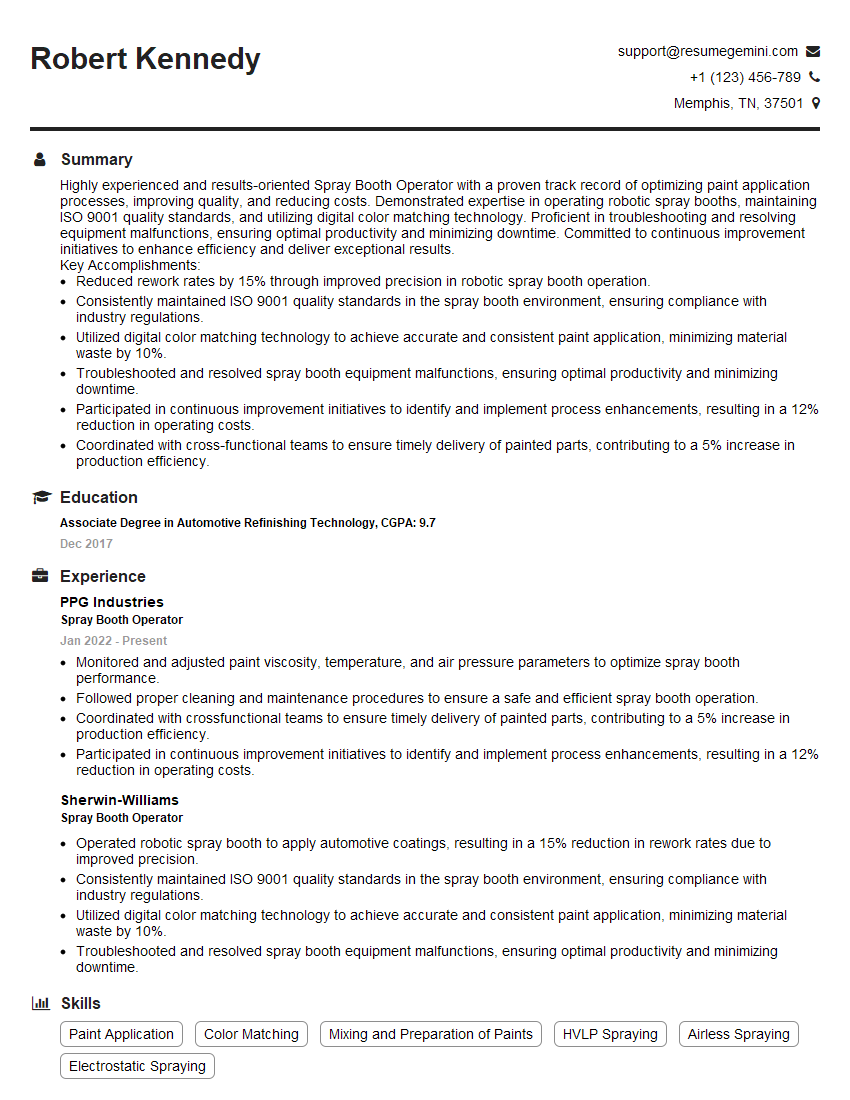
Spray Booth Operator Resume Sample
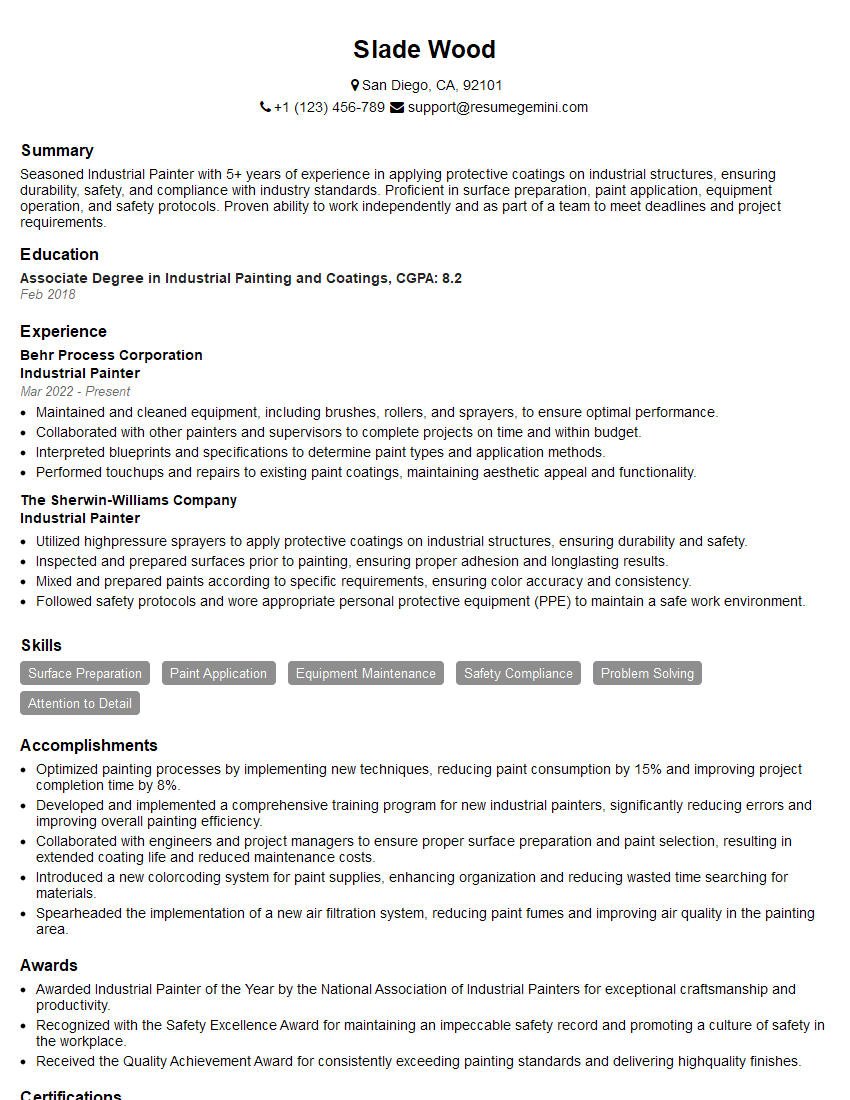
Industrial Painter Resume Sample
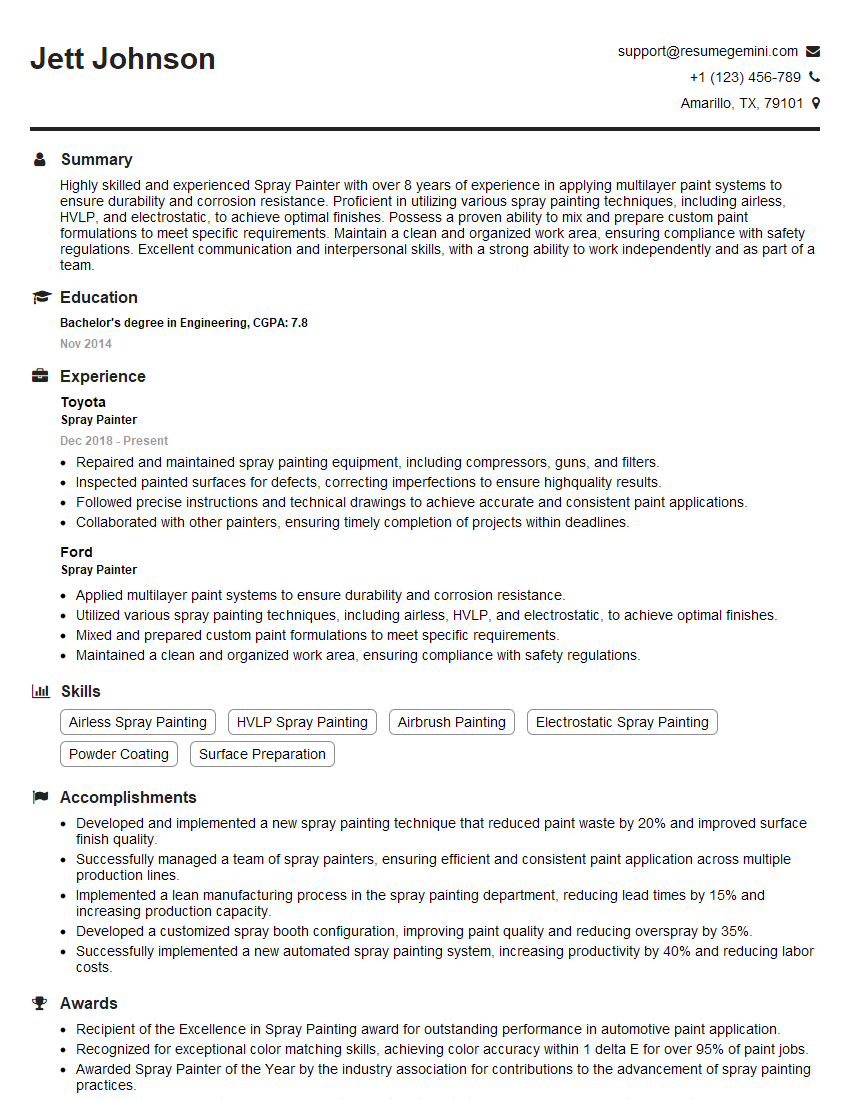
Spray Painter Resume Sample
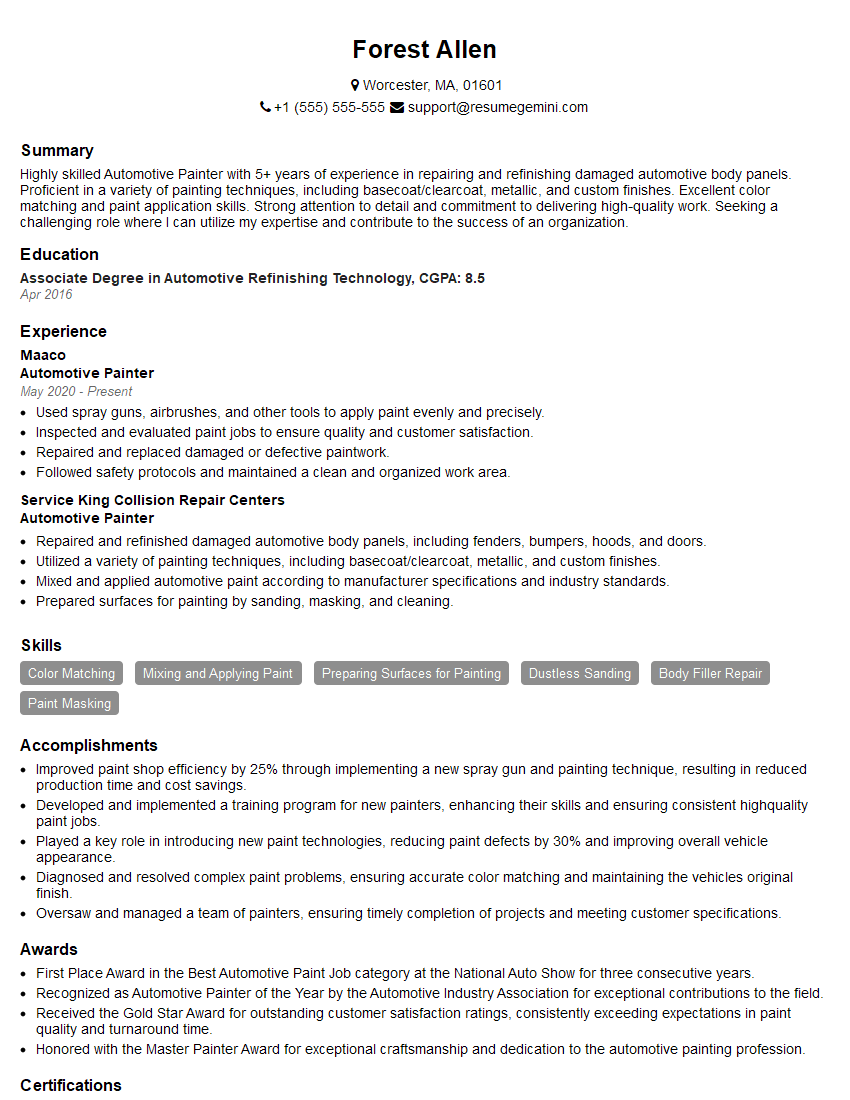
Automotive Painter Resume Sample
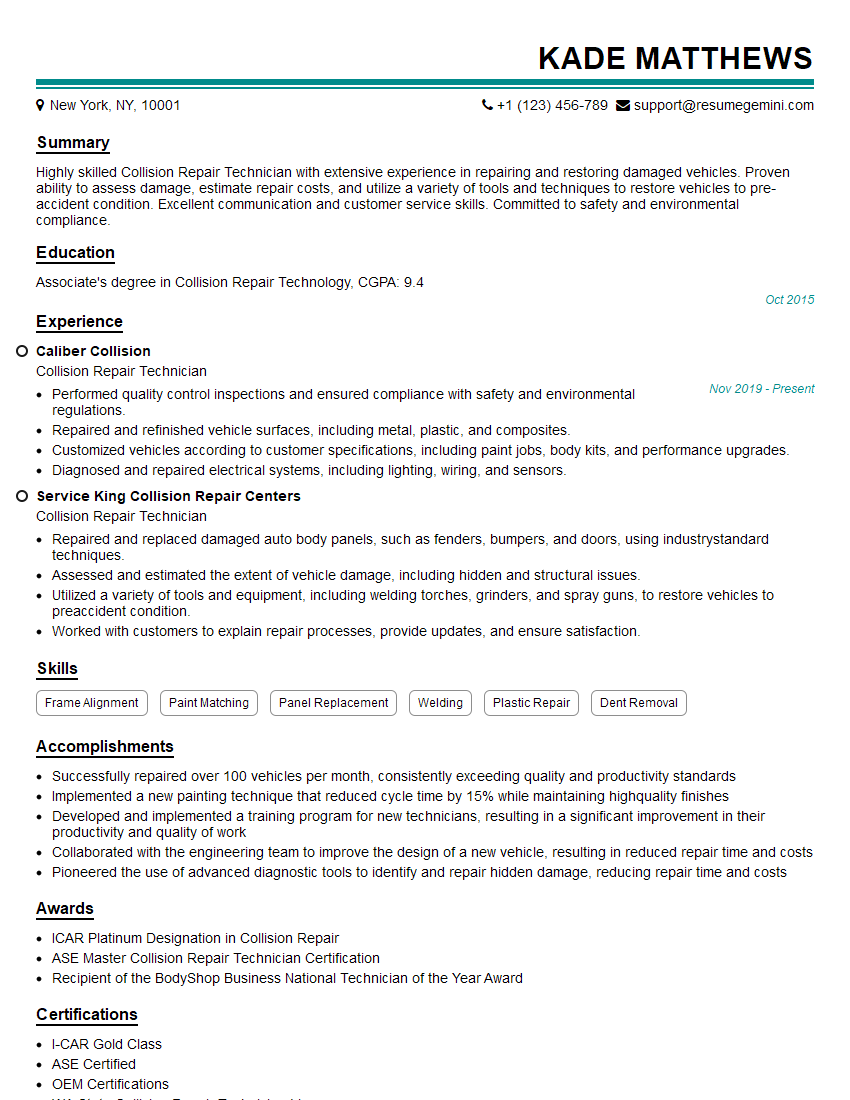
Collision Repair Technician Resume Sample

Finishing Technician Resume Sample
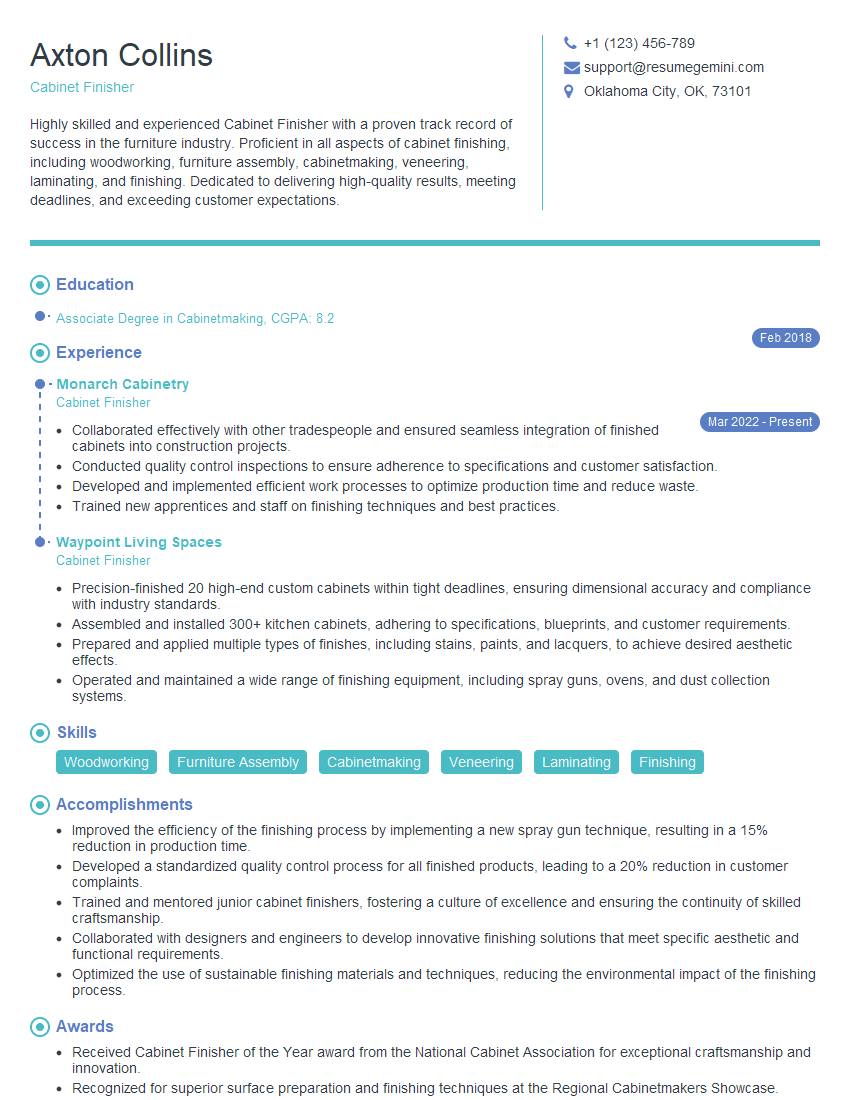
Cabinet Finisher Resume Sample

Furniture Finisher Resume Sample
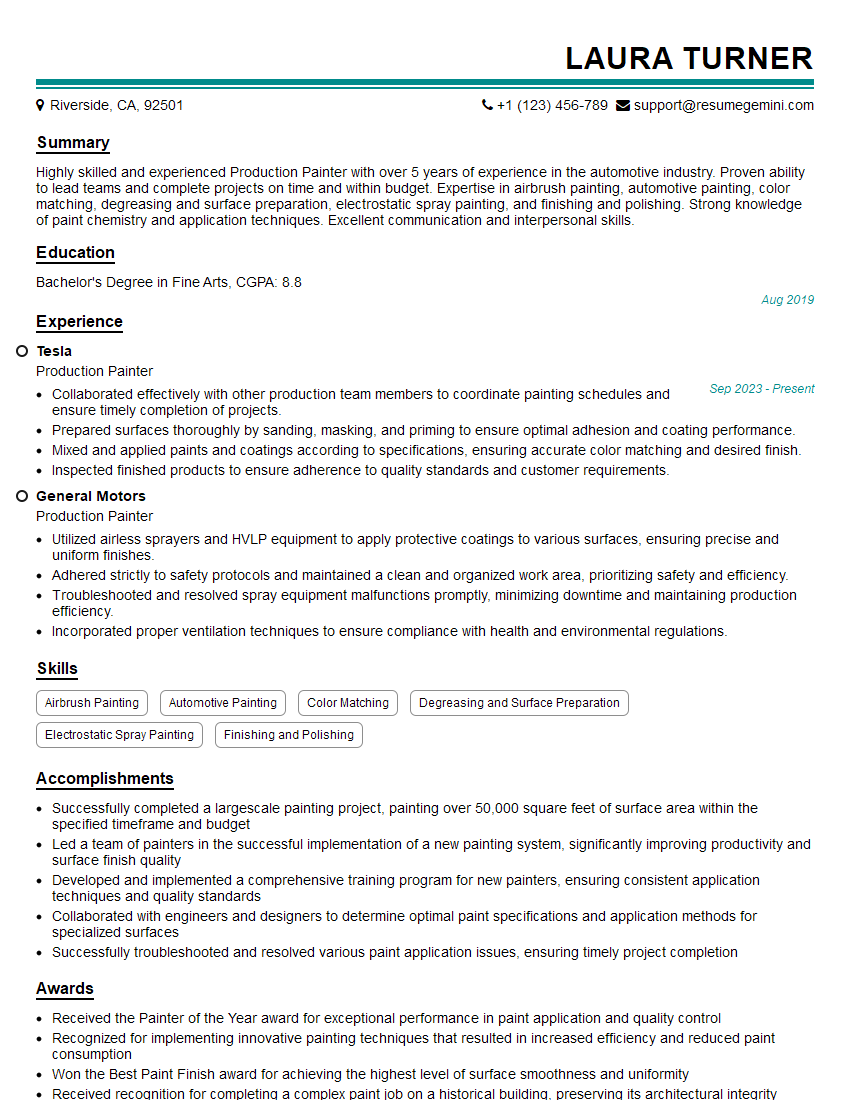
Production Painter Resume Sample
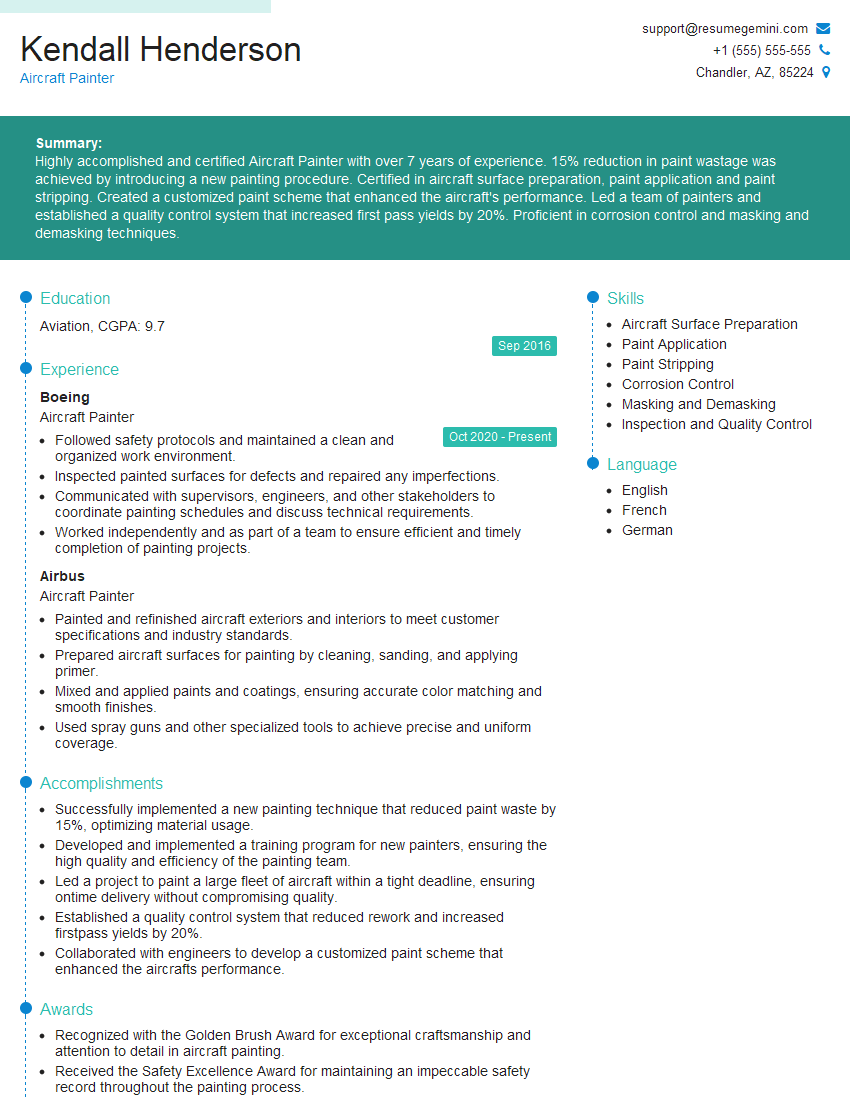
Aircraft Painter Resume Sample
Explore more articles
Users Rating of Our Blogs
Share Your Experience
We value your feedback! Please rate our content and share your thoughts (optional).
What Readers Say About Our Blog
Very informative content, great job.
good