Interviews are more than just a Q&A session—they’re a chance to prove your worth. This blog dives into essential IEC 61400-25 Standard Compliance interview questions and expert tips to help you align your answers with what hiring managers are looking for. Start preparing to shine!
Questions Asked in IEC 61400-25 Standard Compliance Interview
Q 1. Explain the purpose and scope of IEC 61400-25.
IEC 61400-25, titled “Wind turbine generator systems – Part 25: Requirements for grid connection”, defines the technical requirements for connecting wind turbines to electricity grids. Its purpose is to ensure the safe and reliable integration of wind power into the grid, minimizing any negative impacts on grid stability and power quality. The scope encompasses a wide range of aspects, including power quality, dynamic performance, protection, and control functionalities needed for wind turbines to operate harmoniously with the grid.
Think of it like this: Before you can plug your appliances into your home’s electrical system, they need to meet certain safety and compatibility standards. Similarly, wind turbines, being substantial power generators, require standards like IEC 61400-25 to ensure they don’t disrupt the overall grid function.
Q 2. Describe the different types of grid codes and their relevance to IEC 61400-25.
Grid codes are specific technical regulations imposed by Transmission System Operators (TSOs) that detail the requirements for connecting electricity generators, including wind farms, to the transmission grid. These codes vary geographically, reflecting different grid characteristics and operational priorities. IEC 61400-25 doesn’t directly dictate specific grid code requirements but rather provides a framework that underpins many of them. For instance, one grid code might emphasize specific fault ride-through (FRT) capabilities during voltage dips, while another might prioritize reactive power control. IEC 61400-25 helps ensure that wind turbines are designed to be adaptable to these diverse grid code requirements.
Imagine different countries having slightly different plug shapes for their electrical outlets – the underlying voltage might be the same, but the connectors vary. Grid codes are similar; they represent regional variations in grid connection requirements, all built on foundational principles like those found in IEC 61400-25.
Q 3. What are the key requirements for grid connection of wind farms according to IEC 61400-25?
IEC 61400-25 establishes several key requirements for connecting wind farms to the grid. These include:
- Power Quality: Wind turbines must meet stringent limits on harmonic distortion, voltage flicker, and other power quality parameters to prevent disruption of the grid.
- Dynamic Performance: They need to demonstrate stable operation under various grid disturbances, such as voltage dips and frequency deviations.
- Protection and Control: Appropriate protection systems are vital to prevent cascading failures and ensure the safety of both the turbine and the grid. This includes sophisticated control systems to manage power output and respond to grid events.
- Communication: Reliable communication protocols are necessary to allow for remote monitoring, control, and data exchange with the grid operator.
- Fault Ride-Through (FRT): The ability to remain connected to the grid during fault conditions is crucial.
Meeting these requirements ensures a seamless integration, contributing to overall grid reliability and stability. Failure to meet these could result in rejection of the connection or even lead to grid instability.
Q 4. How does IEC 61400-25 address power quality issues related to wind power integration?
IEC 61400-25 addresses power quality issues by specifying limits on various parameters emitted by wind turbines. These limits aim to prevent the wind farm from adversely affecting the quality of electricity supplied to consumers. For example, the standard limits harmonic currents generated by the turbines to prevent distortion of the grid’s sinusoidal waveform. It also addresses voltage flicker, ensuring the wind farm’s output doesn’t cause noticeable fluctuations in voltage that could affect sensitive equipment. These limitations ensure that the wind farm behaves as a ‘clean’ power source, contributing positively to the overall grid health.
Think of it as maintaining the cleanliness of your water supply. You wouldn’t want contaminants affecting the quality of the water for other users, and similarly, wind farms must adhere to power quality standards to avoid affecting the quality of electricity for other consumers.
Q 5. Explain the role of fault ride-through (FRT) capabilities in meeting IEC 61400-25 compliance.
Fault Ride-Through (FRT) is the ability of a wind turbine to remain connected to the grid during transient faults, such as short circuits or voltage dips. IEC 61400-25 mandates specific FRT capabilities to enhance grid stability. If a wind turbine disconnects during a fault, it can exacerbate the problem, potentially leading to a wider grid disturbance. By staying connected, the turbine can help maintain grid voltage and frequency, contributing to faster fault clearance and preventing cascading failures.
The FRT requirements typically specify minimum voltage levels, time durations, and the amount of active and reactive power the turbine needs to maintain during the fault. Meeting these requirements is often tested through simulations and sometimes through real-world grid connection tests.
Q 6. Describe the different methods for assessing the dynamic performance of wind turbines as per IEC 61400-25.
IEC 61400-25 outlines several methods for assessing the dynamic performance of wind turbines, focusing on how they respond to grid disturbances. These methods typically involve:
- Time-domain simulations: Using detailed models of the wind turbine and the grid, engineers simulate different fault scenarios to assess the turbine’s response. This can reveal how the turbine reacts to voltage sags, frequency changes, and other events.
- Eigenvalue analysis: This mathematical technique is used to examine the stability of the wind turbine’s control system. It helps to identify potential instability issues.
- Small-signal stability analysis: This method investigates the response of the turbine to small perturbations around an operating point, assessing its ability to return to stable operation after minor disturbances.
- Hardware-in-the-loop (HIL) testing: This sophisticated method involves connecting a real-time simulator representing the grid to a scaled-down model or a real wind turbine controller. This allows for realistic testing of the turbine’s dynamic response under various grid conditions.
The choice of method depends on the specific requirements of the grid code and the complexity of the wind turbine system. Many times, a combination of approaches is employed to ensure comprehensive validation of the turbine’s dynamic performance.
Q 7. How do you determine the compliance of a wind turbine with specific grid code requirements?
Determining compliance with specific grid code requirements involves a multi-step process. It typically starts with a thorough review of the applicable grid code documents. Next, a detailed model of the wind turbine and its control system needs to be developed. This model is used for simulations to predict the turbine’s behavior under various grid conditions. The results of these simulations are then compared against the grid code limits. Further testing might be required, such as HIL testing or even on-site testing at the actual grid connection point. Finally, comprehensive documentation of all analyses and tests is essential for demonstrating compliance to the TSO.
Think of it like getting a driver’s license. You first need to learn the rules of the road (grid code), then practice your driving skills (simulations and tests), and finally, demonstrate your competence to the licensing authority (TSO).
Q 8. What are the common challenges encountered during the grid integration process of wind farms?
Integrating wind farms into the grid presents several significant challenges. One major hurdle is ensuring the stability of the power system. Wind power is inherently intermittent, meaning its output fluctuates with wind speed. This variability can destabilize the grid if not carefully managed. Another key challenge is the distance of wind farms from substations, leading to increased transmission losses and requiring substantial investments in grid infrastructure. Furthermore, the reactive power characteristics of wind turbines can impact voltage stability, particularly in weak grids. Lastly, ensuring compliance with grid codes and standards, like IEC 61400-25, necessitates rigorous testing and compliance procedures, adding complexity and cost to the integration process. Think of it like adding a new, unpredictable player to a well-orchestrated orchestra – it takes careful planning and coordination to ensure the harmony isn’t disrupted.
- Intermittency: Managing the fluctuating power output.
- Transmission Losses: Distance from substations.
- Reactive Power: Impact on voltage stability.
- Compliance: Meeting stringent grid codes and standards.
Q 9. Explain the role of simulations and testing in verifying IEC 61400-25 compliance.
Simulations and testing are crucial for verifying IEC 61400-25 compliance. Simulations, using software like PSCAD or PowerFactory, allow engineers to model the wind turbine’s behavior under various grid conditions, including fault scenarios and power variations. This predictive approach identifies potential issues before real-world deployment. Testing, on the other hand, involves real-world measurements on a prototype or actual wind turbine connected to the grid, confirming that the wind turbine meets the required performance and compliance standards. This often involves extensive testing of protection and control systems under various fault conditions. Think of simulations as a dress rehearsal and testing as the actual performance – both are necessary to ensure a successful ‘show’.
- Simulations: Predictive modelling of wind turbine behavior.
- Testing: Real-world measurement and validation.
Q 10. Discuss the importance of protection and control systems in ensuring grid stability and compliance.
Protection and control systems are paramount for maintaining grid stability and compliance with IEC 61400-25. They act as the guardians of the wind turbine and the grid, ensuring safe operation and preventing cascading failures. These systems monitor various parameters, such as voltage, current, and frequency, and initiate corrective actions when necessary. For example, a protection system might quickly disconnect a wind turbine from the grid during a fault to prevent damage and maintain overall grid stability. Control systems, on the other hand, optimize the wind turbine’s operation, ensuring it contributes effectively to the grid while complying with grid code requirements for things like voltage regulation and reactive power compensation. They are the sophisticated mechanisms that enable the safe and efficient interaction between the wind farm and the power system.
- Protection Systems: Rapid response to faults and anomalies.
- Control Systems: Optimization of wind turbine operation and grid interaction.
Q 11. What are the key parameters monitored during the grid connection testing of a wind turbine?
During grid connection testing, numerous parameters are meticulously monitored to ensure compliance. Key parameters include active and reactive power, voltage and frequency, current harmonics, power factor, and the response to various grid disturbances. The precise measurements and analysis of these parameters verify the wind turbine’s ability to operate safely and reliably within the grid. For instance, the reactive power measurements ensure that the turbine maintains voltage stability. Detailed harmonic measurements verify compliance with limits to prevent disruption to other grid-connected equipment. This rigorous monitoring is essential for ensuring smooth grid integration and avoiding penalties or operational issues. It’s like a comprehensive health check-up for the wind turbine before it joins the larger power system.
- Active & Reactive Power: Monitoring power output and voltage regulation.
- Voltage & Frequency: Maintaining grid synchronization.
- Current Harmonics: Minimizing distortions in grid waveform.
- Power Factor: Optimizing efficiency and reducing losses.
- Response to Grid Disturbances: Ensuring stable operation under fault conditions.
Q 12. How does IEC 61400-25 address the issue of voltage flicker?
IEC 61400-25 addresses voltage flicker, which is the short-term variation in voltage caused by rapidly changing wind speeds. This can lead to perceptible light flicker in homes and businesses connected to the grid. The standard sets limits on the permissible level of flicker, typically measured using the short-term flicker severity (Pst). Wind turbine control systems are designed to mitigate flicker by implementing strategies like power smoothing algorithms. These algorithms control the turbine’s power output to reduce the rate of change in power, minimizing voltage fluctuations. This is like using a dimmer switch to gradually adjust the brightness of a light rather than abruptly turning it on or off.
Q 13. Explain the concept of reactive power compensation in wind turbines.
Reactive power compensation in wind turbines is crucial for maintaining grid voltage stability. Wind turbines, especially those with doubly-fed induction generators, can absorb or generate reactive power. Without proper compensation, they can lead to voltage fluctuations. Reactive power compensation systems, often employing capacitors or other reactive power sources, are integrated into wind turbines to control the reactive power flow. By injecting or absorbing reactive power as needed, these systems help maintain a stable voltage profile on the grid, preventing voltage sags and swells. This is analogous to a balancing act – the reactive power compensation ensures the system remains stable despite the variable nature of wind energy.
Q 14. How does IEC 61400-25 address the issue of harmonic distortion?
IEC 61400-25 addresses harmonic distortion by setting limits on the amount of harmonic currents injected into the grid by wind turbines. Harmonic distortion, which is the presence of non-fundamental frequency components in the current waveform, can interfere with other equipment connected to the grid, causing malfunction or damage. The standard specifies limits for individual harmonics and total harmonic distortion (THD). Wind turbine designs incorporate filters and control strategies to minimize harmonic generation and ensure compliance with these limits. These filters act like sieves, removing unwanted harmonic frequencies from the output current of the turbine, ensuring a clean signal for the grid.
Q 15. Describe the role of power electronic converters in meeting IEC 61400-25 requirements.
Power electronic converters are the heart of modern wind turbines, playing a crucial role in meeting IEC 61400-25 requirements. These converters manage the energy conversion from the wind turbine’s generator (typically an asynchronous or synchronous generator) into AC power suitable for injection into the grid. They’re essential for:
- Voltage and Frequency Regulation: Converters ensure the turbine’s output voltage and frequency remain stable and within the grid’s acceptable limits, even during fluctuating wind speeds. This is critical for grid stability.
- Reactive Power Control: Wind turbines can be controlled to inject or absorb reactive power, aiding in voltage regulation across the network. Converters facilitate precise control over this reactive power flow.
- Grid Synchronization: Converters synchronize the turbine’s output with the grid’s voltage and frequency, preventing destabilizing oscillations or damaging surges. This involves sophisticated control algorithms.
- Protection and Fault Ride-Through: Converters provide protection against grid faults (like voltage dips or short circuits). They facilitate the turbine’s ability to ride through these faults and avoid tripping unnecessarily, ensuring continuous power supply whenever possible.
For instance, a Full-Scale Converter (FSC) system allows for independent control of active and reactive power, enhancing the turbine’s ability to comply with grid codes’ stringent requirements. Without these converters, integrating wind turbines into the grid would be highly challenging and potentially risky.
Career Expert Tips:
- Ace those interviews! Prepare effectively by reviewing the Top 50 Most Common Interview Questions on ResumeGemini.
- Navigate your job search with confidence! Explore a wide range of Career Tips on ResumeGemini. Learn about common challenges and recommendations to overcome them.
- Craft the perfect resume! Master the Art of Resume Writing with ResumeGemini’s guide. Showcase your unique qualifications and achievements effectively.
- Don’t miss out on holiday savings! Build your dream resume with ResumeGemini’s ATS optimized templates.
Q 16. What are the different types of testing procedures defined in IEC 61400-25?
IEC 61400-25 defines various testing procedures to verify wind turbine compliance. These tests broadly fall into two categories: type tests and site acceptance tests.
- Type Tests: These are performed on a representative turbine in a controlled laboratory environment. They assess the fundamental performance and compliance characteristics of the design. Examples include:
- Low Voltage Ride Through (LVRT): Testing the turbine’s ability to remain connected to the grid during voltage dips.
- Frequency Response: Evaluating the turbine’s response to grid frequency variations.
- Protection System Tests: Verifying the functionality of the various protection mechanisms.
- Harmonic and Flicker Emission Tests: Assessing the turbine’s impact on the grid’s quality.
- Site Acceptance Tests (SAT): These are performed on-site after the turbine is installed. They verify that the specific installation functions correctly within the actual grid environment. They might include:
- Performance Measurement: Verification of actual power output and efficiency.
- Grid Connection Tests: Confirmation that the turbine synchronizes and interacts correctly with the grid.
- Protection System Verification: Ensuring the protection system operates as expected in the site’s specific conditions.
The specific tests required depend on the turbine’s size, technology, and the grid code requirements of the specific location.
Q 17. Explain the importance of documentation and certification in demonstrating compliance.
Thorough documentation and certification are paramount for demonstrating IEC 61400-25 compliance. This establishes trust and transparency for all stakeholders (manufacturers, grid operators, and regulators).
- Documentation: Detailed records of the design, manufacturing process, testing procedures, results, and any deviations from the standard must be meticulously maintained. This provides traceability and allows for verification of compliance at any time.
- Certification: Independent third-party certification bodies perform audits and tests to verify compliance. A certificate from a reputable body provides assurance to grid operators that the turbine meets the required standards. This can be a crucial factor in securing grid connection permits.
Imagine a scenario where a turbine malfunctions, causing grid instability. Without proper documentation and certification, it becomes immensely difficult to identify the root cause, allocate responsibility, and ensure future reliability. A robust compliance process protects all parties involved.
Q 18. How does IEC 61400-25 consider the impact of wind turbines on the overall grid stability?
IEC 61400-25 addresses the impact of wind turbines on grid stability through detailed requirements for their dynamic behavior. The standard aims to ensure that the collective actions of numerous wind turbines do not destabilize the power system. Key considerations include:
- Voltage Support: Wind turbines are required to provide reactive power support to maintain voltage stability, especially during low-voltage events.
- Frequency Support: They should respond appropriately to changes in grid frequency, preventing frequency deviations from exceeding permissible limits.
- Fault Ride-Through: The ability of wind turbines to remain connected to the grid during faults is critical for preventing cascading failures. This minimizes the impact on the overall system’s stability.
- Power Fluctuations: The inherent variability in wind energy requires effective control strategies to minimize the fluctuations in power injection and their impact on grid frequency and voltage.
The standard incorporates various techniques such as participation factors to ensure that the overall aggregate contribution of a wind farm to the grid’s stability is predictable and controllable. Careful consideration of wind farm placement and control strategies are important for minimizing potential negative impact.
Q 19. What is the significance of low voltage ride through (LVRT) capabilities?
Low Voltage Ride Through (LVRT) capability is a critical aspect of IEC 61400-25, emphasizing the ability of wind turbines to remain connected to the grid during voltage dips or sags. This is crucial for maintaining grid stability during fault events.
Without LVRT, a wind turbine might disconnect during a voltage sag, reducing power generation at a time when it is most needed. This can potentially lead to a cascading failure across the power system. LVRT ensures that the turbine can withstand a specified level of voltage reduction without tripping, providing continued power delivery and improving grid resilience. The specific requirements for LVRT vary based on grid codes and local conditions.
Think of it as a car maintaining stability during a sudden skid: LVRT is the wind turbine’s equivalent, ensuring it remains operational and supportive even under stressful conditions.
Q 20. Describe the impact of different wind turbine control strategies on grid compliance.
Different wind turbine control strategies significantly influence grid compliance. The choice of control strategy directly impacts the turbine’s ability to meet the requirements of IEC 61400-25.
- Pitch Control: Adjusting the pitch angle of the turbine blades to regulate power output. This approach can be slower to respond to rapid grid changes.
- Grid-Following Control: The turbine adjusts its output based on the grid voltage and frequency. This ensures tight synchronization and improves grid stability, however, it may respond slightly slower to sudden wind changes.
- Power-Optimized Control: Prioritizes maximizing energy capture from the wind. May need careful consideration to ensure it doesn’t negatively impact grid stability.
- Advanced Control Strategies: Incorporate sophisticated algorithms (such as predictive control, model predictive control) for improved stability and grid support under dynamic conditions.
For example, a grid-following control strategy will generally facilitate better grid compliance compared to a purely power-optimized control strategy that might contribute to increased power fluctuations.
Q 21. Explain the role of grid operators in enforcing IEC 61400-25 compliance.
Grid operators play a crucial role in enforcing IEC 61400-25 compliance. They are responsible for ensuring that all connected generators, including wind turbines, meet the necessary standards for grid stability and reliability.
- Grid Connection Requirements: Grid operators define the specific grid connection requirements, which often incorporate the relevant aspects of IEC 61400-25. These requirements detail the testing procedures and performance criteria that wind turbine manufacturers must meet.
- Enforcement of Standards: They enforce compliance through a process involving verification of documentation, type testing reports, and site acceptance tests. Non-compliant turbines may be denied grid connection or even forced to disconnect if they pose a risk to grid stability.
- Monitoring and Control: Grid operators monitor the performance of connected wind turbines in real-time. This helps identify any anomalies or non-compliance issues promptly.
- Regulation and Policy: Grid operators influence regulations and policies that shape the design and operation of wind turbines, further enhancing compliance with standards like IEC 61400-25.
By establishing and enforcing strict grid codes, grid operators contribute significantly to ensuring the reliable and sustainable integration of renewable energy sources like wind power.
Q 22. What are the key differences between IEC 61400-21 and IEC 61400-25?
IEC 61400-21 and IEC 61400-25 are both standards related to grid connection of wind turbines, but they focus on different aspects. IEC 61400-21 deals with the requirements for measuring and evaluating the performance of wind turbines, covering aspects like power curve measurements and efficiency. Think of it as the testing standard for how well a wind turbine performs individually. IEC 61400-25, on the other hand, focuses on the grid connection requirements for wind power plants. This means it specifies how the wind farm interacts with the power grid, focusing on aspects like voltage and frequency stability, protection, and power quality. It’s essentially the standard that ensures the wind farm plays nicely with the broader electrical system.
- IEC 61400-21: Individual wind turbine performance testing and evaluation.
- IEC 61400-25: Grid connection requirements for wind power plants (entire wind farm).
In short: 61400-21 is about the individual turbine’s performance; 61400-25 is about the entire wind farm’s interaction with the grid.
Q 23. How does IEC 61400-25 address the issue of frequency stability?
IEC 61400-25 addresses frequency stability by setting limits on the contribution of wind power plants to grid frequency deviations. It requires wind turbines and wind farms to have control systems that can respond to frequency changes in a predictable and stable way. For example, the standard might specify the maximum rate of change of active power output (ROCOF) in response to a grid frequency drop. This ensures that if the grid frequency starts to fall (due to a sudden increase in demand or loss of generation), the wind farm won’t exacerbate the problem by suddenly reducing its power output too quickly. Instead, it will react in a controlled manner to help stabilize the frequency.
Imagine a seesaw: The grid frequency is the balanced seesaw. If one side (demand) gets heavier, the frequency drops. IEC 61400-25 ensures the wind farm (like a skilled person on the seesaw) adjusts its weight to help maintain balance, preventing a sudden and dangerous imbalance.
The standard achieves this through several mechanisms including:
- Frequency Containment (FC): Fast response to changes in frequency.
- Frequency Restoration (FR): Contribution to restoring frequency to the nominal value.
- Low Frequency Ride Through (LFRT): Ability of the plant to stay connected during low frequency events.
Q 24. Describe your experience with the application of IEC 61400-25 in a real-world project.
In a recent project involving a 100 MW onshore wind farm in northern Europe, I was responsible for the IEC 61400-25 compliance assessment. We utilized specialized simulation software to model the wind farm’s interaction with the grid under various fault conditions and scenarios. This included simulating different grid disturbances and verifying that the wind farm’s control systems maintained compliance with the standard’s requirements, particularly regarding frequency response, voltage ride-through, and protection coordination. We conducted extensive testing, analyzing the results to identify potential areas of non-compliance and implemented necessary modifications to the wind farm’s protection and control system. This involved close collaboration with the wind turbine manufacturers, grid operators, and protection relay engineers.
A key challenge was ensuring the seamless integration of the wind farm’s protection system with the existing grid infrastructure. This required careful coordination and detailed communication between all stakeholders. Successful implementation led to the wind farm’s smooth and safe connection to the grid, showcasing the importance of meticulous planning and rigorous testing in adherence to IEC 61400-25.
Q 25. Explain your understanding of the certification process related to IEC 61400-25.
The IEC 61400-25 certification process typically involves several stages. It’s not a single test but a comprehensive assessment of the wind power plant’s design, construction, and operation to ensure compliance.
- Design Review: This involves examining the design documents and ensuring that the system is capable of meeting the requirements of the standard.
- Testing: Extensive testing is carried out to verify compliance under various operating conditions and fault scenarios. This may involve factory acceptance testing, site acceptance testing, and grid connection testing. This often uses sophisticated simulation tools and real-world grid measurements.
- Documentation: Comprehensive documentation of the design, testing, and results is crucial for certification. This includes technical reports, test procedures, and data analysis.
- Third-Party Certification: A designated certification body, independent of the project developers, performs audits and reviews of the documentation and test results. They assess if the project meets the IEC 61400-25 standards and issue a certificate of compliance upon successful verification.
The whole process requires a deep understanding of the standard and significant investment in testing and documentation. The certification body often conducts on-site inspections to validate the testing and installation.
Q 26. What are some of the future trends and challenges related to grid integration of wind energy?
Future trends in wind energy grid integration involve increasing the share of renewables within power systems, which presents both opportunities and challenges.
- Increased Penetration of Variable Renewable Energy (VRE): Integrating higher proportions of wind energy into grids demands more sophisticated grid management strategies to account for the intermittent nature of wind power. This often involves integrating more smart grid technologies and improved forecasting capabilities.
- Advancements in Grid Technologies: Technologies like high-voltage direct current (HVDC) transmission and advanced control systems are crucial for effectively managing the flow of power from remote wind farms.
- Grid-Forming Inverters: These inverters are capable of contributing to grid stability in ways traditional inverters cannot, which significantly improves the integration of renewable energy sources.
- Digitalization and AI: Utilizing AI and machine learning for improved forecasting, grid management, and fault detection. This allows for better prediction and management of wind power fluctuations.
Challenges include ensuring grid stability with higher levels of intermittent generation, developing cost-effective solutions for large-scale grid integration, and adapting grid infrastructure to accommodate the increasing capacity of wind power plants. Cybersecurity threats are also a major concern, and standards are continuously evolving to meet them.
Q 27. How would you troubleshoot a non-compliance issue identified during grid connection testing?
Troubleshooting a non-compliance issue during grid connection testing requires a systematic approach.
- Identify the specific non-compliance: Pinpoint precisely which requirement of IEC 61400-25 is not met. This involves analyzing the test results and identifying the deviation from the specified limits.
- Analyze the test data: Examine all relevant data logs, waveforms, and measurements to understand the root cause of the non-compliance. This might involve looking at voltage sags, frequency dips, or power oscillations.
- Investigate potential causes: Consider factors like wind turbine control systems, protection settings, grid characteristics, or even external factors. This might involve simulating the issue using dedicated software or reviewing the plant’s protection logic.
- Verify the testing process: Ensure the testing process itself was accurate and followed the appropriate procedures. Were the test setups and measurement equipment calibrated and functioning correctly?
- Implement corrective actions: Based on the root cause analysis, develop and implement appropriate solutions. This could involve adjusting protection settings, upgrading control systems, or modifying the plant’s design.
- Retest and verify compliance: After implementing the corrective actions, repeat the relevant tests to confirm that the issue is resolved and that the wind power plant now complies with IEC 61400-25.
A structured approach, good documentation, and collaboration with all involved parties are essential for efficient troubleshooting.
Q 28. Describe your familiarity with relevant software and tools used for IEC 61400-25 compliance assessment.
My experience encompasses several software tools and platforms crucial for IEC 61400-25 compliance assessment. These include:
- Power System Simulation Software: Packages like PSCAD, PSS/E, and DIgSILENT PowerFactory are widely used for modeling wind farms and simulating their interactions with the grid under various scenarios, including faults and disturbances.
- Protection Relay Software: Specialized software from manufacturers such as ABB, Siemens, and GE is used for setting and testing the protection relays within the wind farm and ensuring they are properly coordinated with the grid protection scheme.
- Data Acquisition and Analysis Systems: Hardware and software systems for collecting and analyzing data during testing, often involving oscilloscopes, phasor measurement units (PMUs), and dedicated data logging systems. This data is crucial for verifying compliance with the standard’s requirements.
- Specialized Wind Turbine Simulation Tools: These tools help model and simulate the behavior of individual wind turbines within the wind farm. This often includes software provided by the wind turbine manufacturers.
Proficiency in these tools and platforms is essential for effectively designing, testing, and certifying wind farms for grid connection compliance in accordance with IEC 61400-25.
Key Topics to Learn for IEC 61400-25 Standard Compliance Interview
- Grid Integration Requirements: Understand the key requirements for connecting wind turbines to the grid, including voltage and frequency control, power quality, and protection schemes. Consider practical scenarios involving grid codes and compliance testing.
- Protection and Safety Systems: Master the design and functionality of protection systems within wind turbines, focusing on fault detection, isolation, and the safety of personnel and equipment. Be prepared to discuss real-world examples of malfunction and mitigation strategies.
- Power System Modeling and Simulation: Familiarize yourself with the different models and simulation tools used to analyze the behavior of wind turbines and their interaction with the grid. This includes understanding transient stability studies and harmonic analysis.
- Measurement and Data Acquisition: Understand the role of SCADA systems and data analytics in monitoring wind turbine performance and compliance with IEC 61400-25. Be ready to discuss data interpretation and troubleshooting techniques.
- Control Systems: Deepen your understanding of the control algorithms that govern the operation of wind turbines, including pitch control, reactive power control, and power curtailment. Consider the impact of different control strategies on grid stability.
- Testing and Certification Procedures: Be familiar with the different testing procedures and certification standards associated with IEC 61400-25 compliance. Understand the process of verifying that a wind turbine meets the necessary requirements.
- Harmonics and Flicker Mitigation: Understand the sources of harmonics and flicker in wind turbine systems, and the techniques used to mitigate these issues. Be ready to discuss relevant mitigation technologies and their effectiveness.
Next Steps
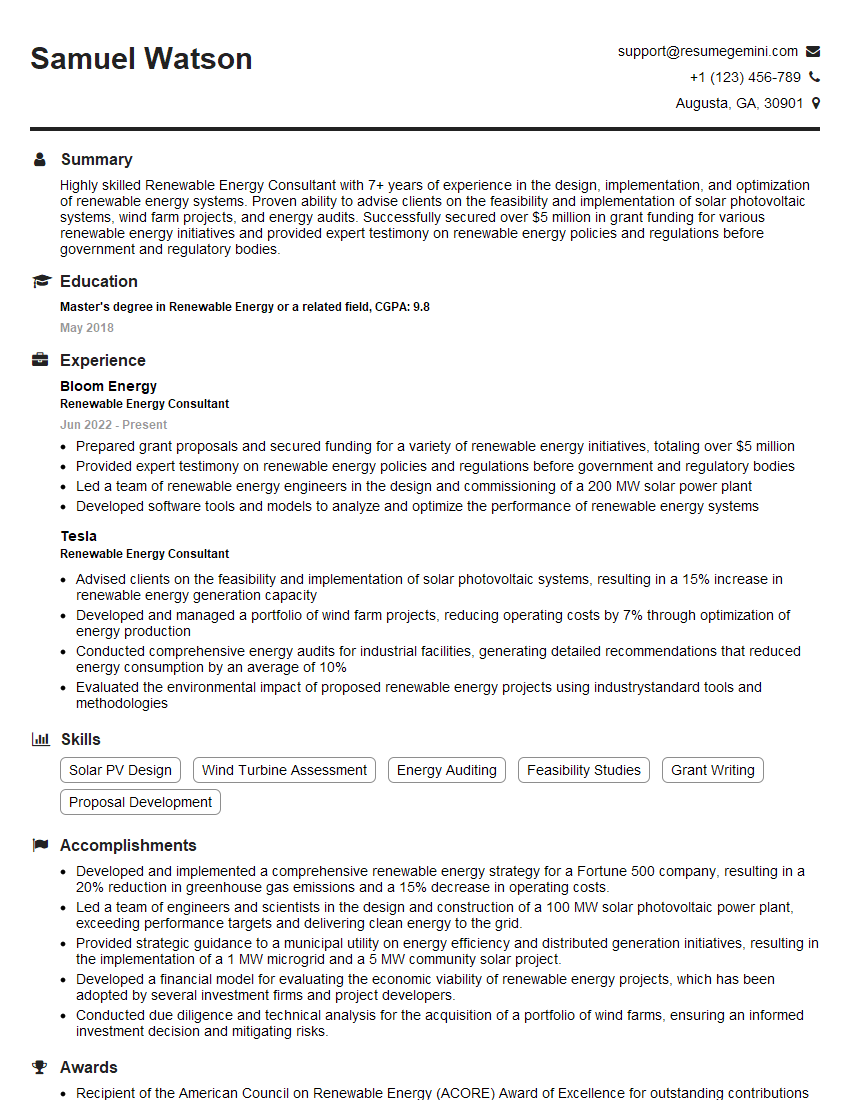
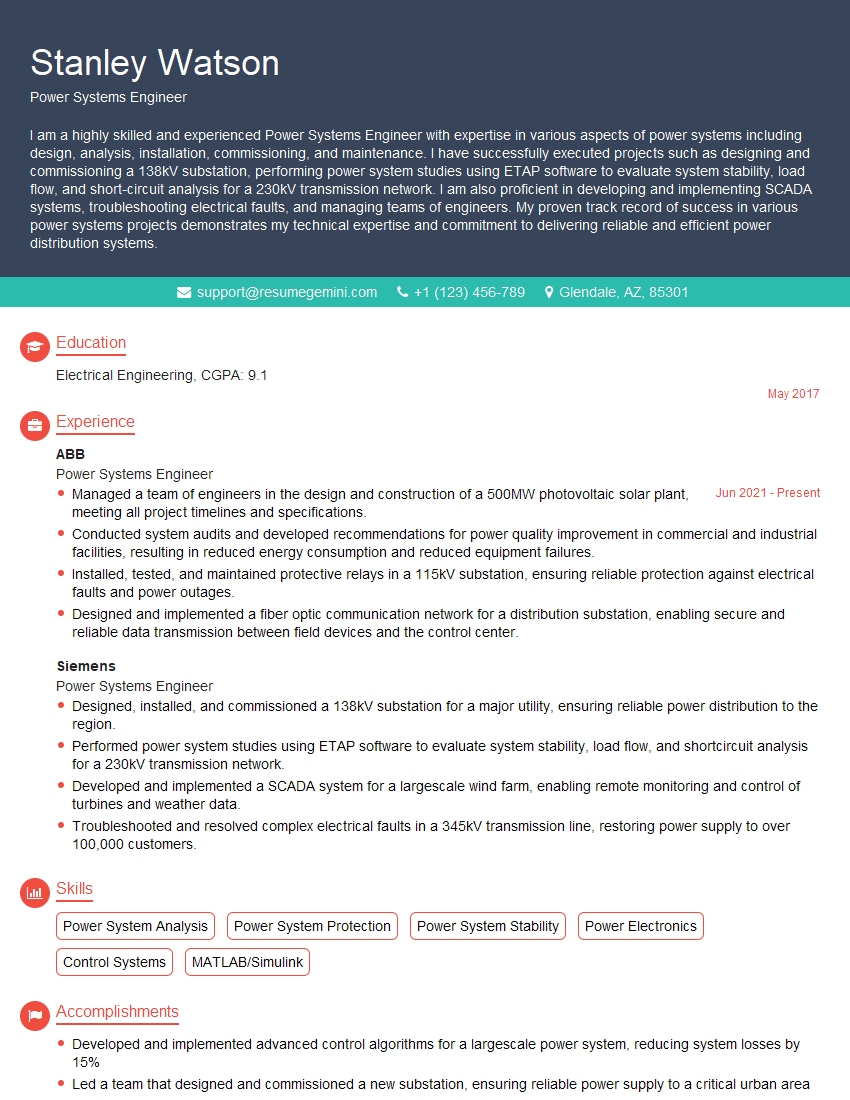
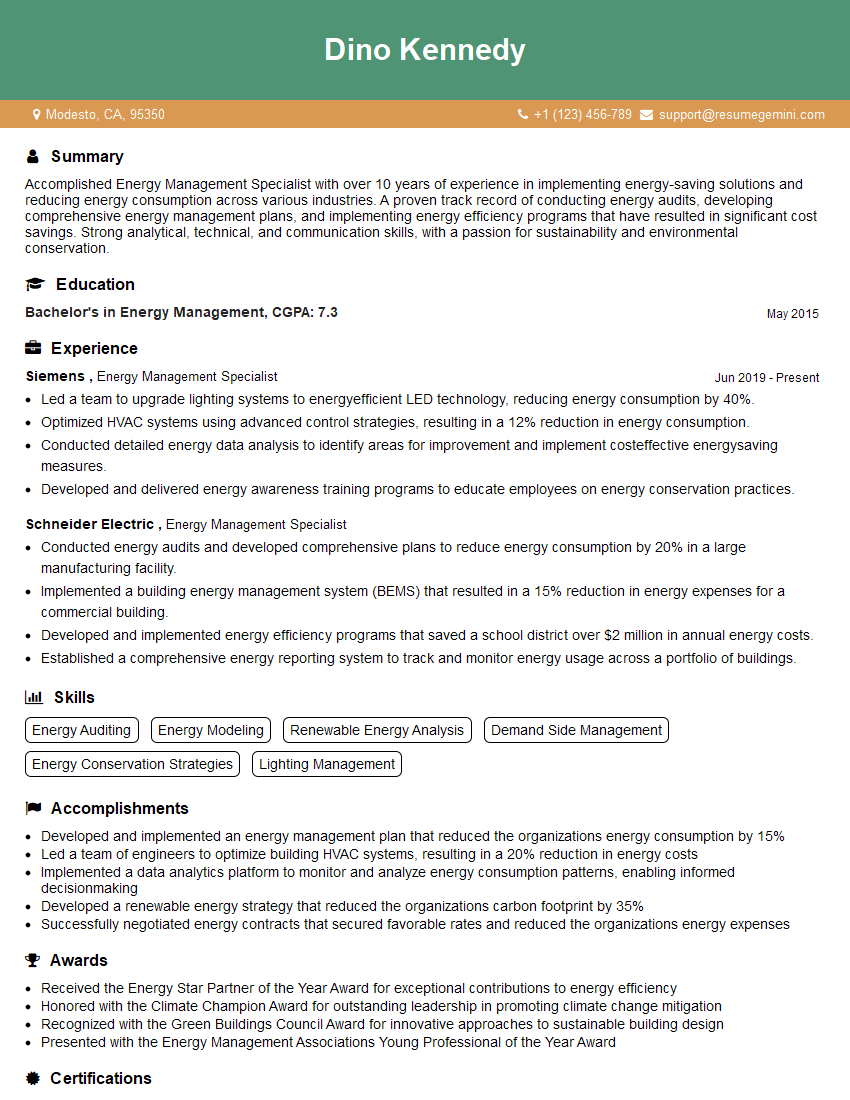
Mastering IEC 61400-25 Standard Compliance is crucial for career advancement in the renewable energy sector, opening doors to exciting opportunities in design, testing, and operation of wind energy systems. To maximize your job prospects, create an ATS-friendly resume that clearly highlights your skills and experience. ResumeGemini is a trusted resource that can help you build a professional and impactful resume. Examples of resumes tailored to IEC 61400-25 Standard Compliance are available to further assist you in showcasing your expertise effectively.


Explore more articles
Users Rating of Our Blogs
Share Your Experience
We value your feedback! Please rate our content and share your thoughts (optional).
What Readers Say About Our Blog
Very informative content, great job.
good