Are you ready to stand out in your next interview? Understanding and preparing for IEC 62368-1 Audio/Video, Information and Communication Technology (AVICT) Equipment interview questions is a game-changer. In this blog, we’ve compiled key questions and expert advice to help you showcase your skills with confidence and precision. Let’s get started on your journey to acing the interview.
Questions Asked in IEC 62368-1 Audio/Video, Information and Communication Technology (AVICT) Equipment Interview
Q 1. Explain the key differences between IEC 62368-1 and its predecessors.
IEC 62368-1 represents a significant departure from its predecessors, IEC 60950-1 (Information Technology Equipment) and IEC 60065 (Audio/Video Equipment). Instead of separate standards for different types of equipment, IEC 62368-1 provides a single, harmonized standard for Audio/Video, Information and Communication Technology (AVICT) equipment. This unification simplifies compliance for manufacturers and reduces redundancy.
Key differences include a risk management approach replacing the prescriptive approach of the older standards. IEC 62368-1 focuses on hazard analysis and risk assessment, determining the appropriate level of protection based on the identified hazards. The older standards primarily focused on specific safety requirements and tests without such a comprehensive risk analysis. This shift means manufacturers need to demonstrate a thorough understanding of their product’s potential hazards and implement appropriate safety measures, rather than simply meeting a checklist of tests.
Furthermore, IEC 62368-1 incorporates advancements in technology and takes into account modern electronic design practices, such as switching power supplies and new materials. This resulted in updated testing procedures and safety requirements reflecting current technological advancements and potential hazards.
Q 2. Describe the hazard analysis process according to IEC 62368-1.
The hazard analysis process in IEC 62368-1 is a systematic approach to identifying potential hazards associated with AVICT equipment. It’s iterative and starts with understanding the intended use and foreseeable misuse of the product. This process typically involves:
- Hazard Identification: A brainstorming session with engineers, designers, and potentially users to identify all possible hazards. This could include electric shock, fire, mechanical injury, chemical hazards, and more.
- Hazard Analysis: Evaluating each identified hazard to determine its severity, probability of occurrence, and potential for exposure. This often involves using risk matrices.
- Risk Evaluation: Assessing the overall risk associated with each hazard. The risk level guides the selection of appropriate protection measures.
- Risk Reduction: Implementing measures to reduce or eliminate hazards. This may involve design changes, protective measures, warnings, or instructions.
- Risk Review: Regularly reviewing the risk assessment to ensure its continued effectiveness as the product evolves or is updated.
Think of it like a detective solving a case – systematically looking for clues (potential hazards), assessing their significance, and devising a plan (risk reduction) to prevent the crime (harm to users).
Q 3. What are the different hazard classes defined in IEC 62368-1?
IEC 62368-1 categorizes hazards based on their severity, which directly impacts the level of protection required. The severity levels are:
- Danger: Indicates a hazard that can cause death or serious injury.
- Warning: Indicates a hazard that can cause injury.
- Caution: Indicates a hazard that can cause minor injury or property damage.
These classifications are not absolute and are assessed in context of the specific hazard and exposure conditions. For example, a high voltage internally may only be classified as a ‘Warning’ hazard if its access is sufficiently protected. However, if accessible, it might be classified as ‘Danger’.
Q 4. How do you determine the required level of protection for a given AVICT product?
The required level of protection for an AVICT product is directly linked to the risk evaluation. Once hazards are identified and their severity and probability determined, the risk is assessed. This assessment guides the choice of protection measures. The higher the risk, the higher the level of protection needed. This is not simply selecting a particular safety class but rather involves a combination of approaches:
- Inherent Safety: Designing the product to minimize hazards inherently. For example, using low voltages where possible.
- Protective Measures: Adding safety features like insulation, barriers, or interlocks.
- Information for Safety: Providing clear warnings and instructions to users.
The process is iterative: After implementing protection measures, the risk is reassessed. This iterative process ensures the chosen level of protection is adequate and justified.
Q 5. Explain the concept of ‘means of protection’ in IEC 62368-1.
‘Means of protection’ in IEC 62368-1 refers to the specific methods employed to reduce or eliminate hazards. These methods are categorized and selected based on the risk assessment. They include:
- Basic insulation: The primary insulation preventing electric shock.
- Reinforced insulation: Additional insulation providing enhanced protection against electric shock.
- Double insulation: Two separate systems of insulation.
- Protective earthing/grounding: Connecting exposed conductive parts to earth to prevent electric shock.
- Safety interlocks: Mechanisms that prevent operation under unsafe conditions.
- Warning notices: Clear instructions and warnings informing users of potential hazards.
The selection of appropriate means of protection is crucial in achieving the required safety level and depends on the hazard’s severity, probability, and exposure.
For example, a low voltage appliance might only require basic insulation, while a high-voltage device would need a combination of protective earthing and reinforced insulation. The choice isn’t arbitrary but is dictated by a proper risk assessment.
Q 6. Describe your experience with risk assessment methodologies used in conjunction with IEC 62368-1.
My experience includes extensive use of Failure Mode and Effects Analysis (FMEA) and Fault Tree Analysis (FTA) in conjunction with IEC 62368-1. FMEA systematically identifies potential failure modes within each component or system, evaluates their severity, and proposes corrective actions. FTA, on the other hand, works backward from a top-level undesired event (e.g., electric shock) to identify the underlying causes.
In practice, we often combine these methods. FMEA helps identify potential component failures, while FTA helps understand how these failures might lead to a hazardous situation. These analyses are documented meticulously and are regularly reviewed and updated during the product’s lifecycle. This provides a traceable and auditable record of the safety engineering process. I’ve also utilized Bow-Tie analysis to visually represent the hazards, their causes, and consequences and mitigation strategies.
Q 7. What are the key safety requirements for power supplies in AVICT equipment?
Power supplies in AVICT equipment are critical for safety. IEC 62368-1 specifies rigorous requirements, including:
- Isolation: Adequate isolation between the mains voltage and the low-voltage circuits to prevent electric shock.
- Leakage current limits: Strict limitations on leakage current to minimize the risk of electric shock.
- Overcurrent protection: Fuses or other overcurrent protection devices to prevent overheating and fire hazards.
- Overvoltage protection: Circuits and components to protect against overvoltage conditions that could damage the equipment or cause a fire.
- Dielectric strength testing: Rigorous testing to verify the insulation’s ability to withstand high voltages.
- Temperature rise limitations: Limits on the temperature rise during operation to prevent thermal hazards.
Compliance with these requirements is crucial, as power supply failures are a common source of accidents in AVICT equipment. The testing and certification processes related to power supplies are particularly stringent to ensure public safety.
Q 8. How do you verify the effectiveness of safety measures implemented in a design?
Verifying the effectiveness of safety measures in an AVICT design requires a multi-faceted approach combining design reviews, testing, and analysis. It’s not enough to simply implement a safety feature; we must rigorously demonstrate its efficacy in preventing hazards.
Hazard Analysis and Risk Assessment (HARA): This forms the foundation. We identify potential hazards (e.g., electric shock, fire, mechanical injury) and assess the associated risks, considering severity, probability, and exposure. This informs the selection and design of appropriate safety measures.
Design Reviews: Peer reviews and expert scrutiny of the design are crucial. We examine schematics, circuit diagrams, and mechanical drawings to identify potential weaknesses and ensure safety measures are correctly implemented and integrated.
Testing: This is the most critical step. We conduct a range of tests, including:
- Safety testing: This verifies the effectiveness of protective measures against electrical hazards (e.g., dielectric strength tests, insulation resistance tests, creepage and clearance tests), thermal hazards (e.g., thermal cycling tests, flammability tests), and mechanical hazards (e.g., drop tests, impact tests).
- EMC testing: Ensures the product doesn’t emit or is susceptible to electromagnetic interference that could cause malfunction or safety hazards.
- Environmental testing: Verifies the product’s safety and reliability under various environmental conditions (e.g., temperature, humidity, vibration).
Verification and Validation: We document the results of all tests and reviews to demonstrate compliance with IEC 62368-1 and other relevant standards. This includes creating test reports, analyzing data, and generating a comprehensive safety case file.
For example, if a design incorporates a protective earth connection as a safety measure, testing would involve verifying the continuity of the connection and ensuring its low impedance to effectively divert fault currents. Any failures or deviations from design specifications would be meticulously investigated and addressed before product release.
Q 9. Explain your experience with testing and certification processes for IEC 62368-1 compliance.
My experience with IEC 62368-1 testing and certification spans over [Number] years. I’ve been involved in numerous projects, from small consumer electronics to complex professional audio-visual equipment. This includes the entire process, from initial hazard analysis to final certification.
I’ve worked closely with various notified bodies (NBs) and testing laboratories, preparing and submitting the necessary documentation, overseeing testing, and addressing any identified non-compliances. This involves navigating the complex requirements of the standard, interpreting its clauses, and ensuring a robust safety case is built. I’m familiar with various test methods, and proficient in analyzing test reports and interpreting results, identifying any potential areas for improvement or design modifications. For instance, I once identified a potential hazard during a creepage and clearance test which prompted a redesign, preventing a potential safety issue.
My experience also extends to maintaining regulatory compliance throughout the product lifecycle, including addressing any post-market safety issues and engaging in corrective action processes as required. This often involves interacting with regulatory authorities and keeping abreast of any changes in standards or regulations.
Q 10. Describe your understanding of the different types of tests required for IEC 62368-1 compliance.
IEC 62368-1 compliance necessitates a comprehensive suite of tests, categorized broadly by the hazard being addressed. The specific tests will vary based on the product’s design and intended use. It’s not simply a checklist; it’s a risk-based approach.
Electrical Safety Tests: These include dielectric strength tests (measuring insulation’s ability to withstand voltage), insulation resistance tests (checking for leakage currents), creepage and clearance tests (assessing distances to prevent arcing), and earth leakage current tests (measuring the current flowing to earth under fault conditions).
Mechanical Safety Tests: These may involve drop tests, impact tests, and strength tests to ensure the product’s mechanical integrity and prevent injuries from sharp edges, moving parts, or structural failure.
Thermal Safety Tests: These assess the product’s ability to withstand various temperatures and prevent overheating or fire hazards. Examples include thermal cycling tests, flammability tests, and temperature rise tests.
EMC (Electromagnetic Compatibility) Tests: These evaluate the product’s susceptibility to and emission of electromagnetic interference, crucial to prevent malfunction or safety hazards.
Environmental Tests: These verify the product’s functionality and safety under various environmental conditions such as humidity, temperature extremes, vibration, and pressure.
The selection and execution of these tests are dictated by a robust HARA (Hazard Analysis and Risk Assessment), which guides the risk mitigation strategy and ensures that the necessary and sufficient tests are performed.
Q 11. What are your experiences with different testing laboratories and their accreditation?
I’ve worked with numerous internationally recognized testing laboratories, accredited to ISO/IEC 17025. The choice of laboratory depends on several factors, including their expertise in specific test areas relevant to the product, their geographical location, their turnaround time, and their accreditation scope. Accreditations are crucial for ensuring the reliability and international recognition of the test results.
My experience includes working with labs specializing in electrical safety testing, EMC testing, and environmental testing. I’ve witnessed variations in the quality of service, testing equipment, and reporting standards between different labs. Selecting a reputable and accredited laboratory is paramount to ensure the credibility of the test results and ultimately, product safety. I carefully review a lab’s accreditation certificates to ensure they are appropriately accredited for the specific tests required.
Furthermore, communication with the testing lab is key. Open lines of communication facilitate efficient problem-solving and address any technical queries that arise during the testing process. This proactive communication can significantly reduce delays and ensure a smooth certification process.
Q 12. How do you handle discrepancies between different interpretations of IEC 62368-1?
Discrepancies in interpreting IEC 62368-1 arise occasionally, often due to the complexity of the standard and its broad application to diverse product categories. Resolving such discrepancies requires a methodical and documented approach.
Consult Relevant Documentation: Start by carefully reviewing the specific clauses of IEC 62368-1 and any relevant supporting documentation, including technical reports and interpretative guides published by standardization bodies.
Engage with Experts: If the discrepancy persists, seek clarification from experienced engineers, notified bodies, or industry experts familiar with the standard. Discussions with peers can often lead to a shared understanding.
Consult Notified Bodies: Notified bodies are designated organizations authorized to assess conformity to standards. They can provide authoritative interpretations of the standard, particularly regarding complex or ambiguous clauses.
Document the Discrepancy and Resolution: Thoroughly document the initial discrepancy, the steps taken to resolve it, and the final interpretation adopted. This meticulous record-keeping is crucial for traceability and audit purposes.
For example, differing interpretations of what constitutes ‘sufficient’ insulation may arise. In such cases, supporting data from simulations, analysis, and testing would be essential to justify the chosen approach and demonstrate compliance. Open communication and a commitment to evidence-based reasoning are crucial to navigating these challenges.
Q 13. Explain your understanding of the different levels of risk and associated safety measures.
IEC 62368-1 uses a risk-based approach to safety. This means that the level of safety measures implemented is directly proportional to the level of risk associated with potential hazards. Risk is determined by considering the severity of the potential harm and the likelihood of that harm occurring.
Risk Levels: While the standard doesn’t explicitly define specific risk levels with numerical values, the underlying principle is to mitigate risks to an ‘acceptable’ level. This ‘acceptable’ level is often determined by considering legal requirements, industry best practices, and the intended use of the product. For instance, a toy intended for young children will necessitate a higher level of safety precautions than a professional audio device intended for adults in a controlled environment.
Associated Safety Measures: The choice of safety measures directly reflects the assessed risk level. For example:
Low Risk: Might involve simple protective measures like warning labels or mechanical guards.
Medium Risk: Could necessitate more robust protection, such as insulation barriers, fuses, or circuit breakers.
High Risk: May require multiple layers of protection, including interlocks, emergency stops, and redundant safety systems.
Risk assessment is iterative. It’s not a one-time activity but should be revisited throughout the design and development process, even post-market, to identify and address any emerging risks.
Q 14. What are your experiences with creating safety documentation?
Creating comprehensive safety documentation is a critical aspect of ensuring compliance with IEC 62368-1. It forms the basis for demonstrating due diligence and justifies the safety measures implemented.
My experience involves creating various safety-related documents, including:
Hazard Analysis and Risk Assessment (HARA) Report: This document details the identified hazards, the assessed risks, and the implemented mitigation strategies.
Safety Case File: This is a comprehensive collection of documents demonstrating compliance with the standard. It usually includes the HARA report, design documentation, test reports, and other relevant information.
Technical Files: Detailed technical specifications, schematics, and design documents that support the safety case file.
Safety Instructions and User Manuals: These documents communicate essential safety information to users, clearly explaining safe operating procedures and potential hazards.
These documents are meticulously organized and easily accessible, facilitating internal audits and regulatory inspections. Creating effective safety documentation is not just a regulatory requirement but a crucial element in safeguarding users and demonstrating a commitment to product safety.
In my experience, clear, concise, and well-structured documentation is crucial. Using templates, numbering systems, and cross-referencing helps maintain consistency and improves readability.
Q 15. How do you ensure traceability throughout the product lifecycle regarding safety?
Ensuring traceability of safety throughout a product’s lifecycle is paramount for compliance and consumer safety. Think of it like building a detailed family tree for every safety-critical component and process. We achieve this using a robust system of documentation and version control.
- Requirements Traceability Matrix (RTM): This matrix links safety requirements from the initial design phase all the way through testing, manufacturing, and even post-market surveillance. Each requirement is uniquely identified and linked to the specific design elements, test cases, and verification evidence that demonstrate its fulfillment.
- Design History Files (DHFs): These comprehensive documents record all design changes, modifications, and justifications. Each change is meticulously documented, including the rationale, impact assessment, and verification activities performed to ensure the change didn’t compromise safety.
- Version Control Systems: Using software like Git, we manage all design files, test plans, and reports, allowing us to track changes over time and easily revert to previous versions if necessary. This helps us identify the root cause of any safety issues and ensures that corrective actions are properly implemented.
- Auditable Trails: Every action related to safety is logged and auditable, including design reviews, testing results, and corrective actions. This ensures transparency and accountability throughout the entire process.
For example, if a safety issue arises post-market, we can quickly trace back through our documentation to pinpoint the root cause, potentially to a specific design decision made years earlier, and implement corrective actions efficiently and effectively.
Career Expert Tips:
- Ace those interviews! Prepare effectively by reviewing the Top 50 Most Common Interview Questions on ResumeGemini.
- Navigate your job search with confidence! Explore a wide range of Career Tips on ResumeGemini. Learn about common challenges and recommendations to overcome them.
- Craft the perfect resume! Master the Art of Resume Writing with ResumeGemini’s guide. Showcase your unique qualifications and achievements effectively.
- Don’t miss out on holiday savings! Build your dream resume with ResumeGemini’s ATS optimized templates.
Q 16. What are your experiences with managing safety-related change requests?
Managing safety-related change requests is a critical aspect of maintaining product safety. Every change, no matter how seemingly insignificant, must undergo a rigorous evaluation process. We utilize a structured approach based on risk assessment.
- Impact Assessment: First, we assess the potential impact of the change on the safety of the product. This involves analyzing the change request against the existing safety requirements and identifying any potential hazards or risks.
- Risk Analysis: We employ risk assessment methodologies such as Failure Mode and Effects Analysis (FMEA) to determine the likelihood and severity of potential hazards introduced by the change. This helps to prioritize the change requests and allocate resources effectively.
- Verification and Validation: After the impact assessment and risk analysis, the necessary verification and validation activities are defined and implemented to ensure the safety of the modified product. This might involve additional testing, simulations, or analysis.
- Documentation Update: All relevant documentation, including design history files and RTMs, are updated to reflect the change. This maintains the traceability and auditability of the safety-related changes.
For instance, if a customer requests a change to the power supply, we don’t simply implement it. We thoroughly assess the potential risks of a different power supply to things like EMI, overcurrent, and surge protection. We might conduct additional testing to ensure the change complies with all safety standards before approving and implementing it.
Q 17. Explain your approach to resolving safety-related design issues.
Resolving safety-related design issues requires a systematic approach that combines engineering expertise, risk assessment, and thorough documentation. We use a structured problem-solving methodology.
- Problem Definition: Clearly defining the safety issue is the first step. We gather data, analyze reports, and review test results to understand the root cause of the problem.
- Root Cause Analysis: Techniques like the “5 Whys” or fishbone diagrams help us delve into the issue to understand the underlying causes. This avoids simply addressing symptoms.
- Corrective Action: We develop corrective actions to eliminate the identified root causes and prevent recurrence. This might involve design modifications, improved manufacturing processes, or additional safety measures.
- Verification and Validation: Once the corrective action is implemented, we perform verification and validation activities to ensure the effectiveness of the solution and verify the product now meets the required safety standards.
- Documentation Update: All documentation is updated to reflect the changes, including the corrective actions taken and their verification results.
For example, if testing reveals a potential shock hazard, we wouldn’t just add a warning label. We’d meticulously investigate the circuitry, identify the source of the hazard (perhaps a faulty component or inadequate insulation), and implement a robust corrective solution, thoroughly testing the fix before releasing it to the market.
Q 18. Describe your understanding of the impact of environmental factors on safety.
Environmental factors significantly impact the safety of AVICT equipment. Extreme temperatures, humidity, altitude, and even dust can affect performance and introduce potential hazards. We account for this through rigorous environmental testing and design considerations.
- Environmental Stress Screening (ESS): We subject the product to simulated extreme conditions (high and low temperatures, humidity, vibration, etc.) to identify weaknesses and potential failures before they occur in the field.
- Design for Reliability: We select components and materials that are robust and resistant to environmental degradation. This includes using corrosion-resistant materials, protective coatings, and thermally stable components.
- Ingress Protection (IP) Rating: For equipment exposed to harsh environments, we incorporate appropriate IP ratings to protect against dust and water ingress.
- Altitude Compensation: For products used at high altitudes, we account for the impact of reduced air pressure and oxygen levels on performance and safety.
For example, a device designed for use in a desert environment would require different design considerations than one for a temperate climate. Components must withstand high temperatures and potential dust accumulation, and the housing might need improved sealing to prevent ingress of sand.
Q 19. What are your experiences with working with international safety standards?
Extensive experience working with international safety standards like IEC 62368-1 is fundamental to my role. It’s not just about compliance; it’s about understanding the nuances and implications of these standards to ensure the highest levels of safety.
- Harmonization of Standards: I’m familiar with how IEC 62368-1 harmonizes and replaces the older IEC 60950-1 and IEC 60065 standards, simplifying the process for manufacturers by addressing both information technology and audio-visual equipment safety.
- Risk Management: The standards emphasize a risk-based approach to safety. I’m proficient in applying various risk assessment methodologies, including FMEA, to identify and mitigate potential hazards throughout the product lifecycle.
- Testing and Certification: I understand the testing procedures and certification requirements associated with IEC 62368-1 compliance. This includes familiarity with the relevant test labs and certification bodies.
- Keeping Abreast of Updates: Safety standards are constantly evolving; I maintain a close watch on any updates, amendments, or interpretations to ensure our products remain compliant.
For example, understanding the specific requirements for creepage and clearance distances, as detailed within the standard, is critical for designing safe high-voltage circuits.
Q 20. Describe your understanding of the legal and regulatory implications of IEC 62368-1 compliance.
IEC 62368-1 compliance has significant legal and regulatory implications. Non-compliance can result in serious consequences, including product recalls, legal action, and reputational damage.
- Product Liability: Manufacturers are legally responsible for the safety of their products. Failure to meet IEC 62368-1 requirements can lead to product liability lawsuits if a product causes harm.
- Regulatory Compliance: Many countries and regions mandate compliance with IEC 62368-1 or equivalent standards as a condition for selling or importing AVICT equipment. Non-compliance can result in fines or even market bans.
- Insurance: Product liability insurance premiums are significantly affected by a company’s safety record and compliance with relevant standards. Demonstrating compliance with IEC 62368-1 is crucial for obtaining favorable insurance terms.
- Consumer Confidence: Compliance with safety standards builds consumer trust and confidence in the product’s safety and reliability. This translates to improved brand reputation and market success.
Therefore, compliance is not just a matter of technical compliance but a crucial aspect of managing legal and business risk. A strong safety program that demonstrates commitment to compliance is essential.
Q 21. What are the main challenges in applying IEC 62368-1 to complex AVICT systems?
Applying IEC 62368-1 to complex AVICT systems presents unique challenges due to the integration of multiple subsystems and functionalities.
- System-Level Risk Assessment: Conducting a comprehensive risk assessment for a complex system requires careful consideration of interactions between different components and subsystems. The risk is not simply the sum of individual component risks.
- Integration Testing: Ensuring the safety of the integrated system requires rigorous testing that covers all possible operational modes and scenarios. This can be complex and time-consuming.
- Software Safety: Many modern AVICT systems have significant software components. Addressing software safety according to IEC 62368-1 requires careful consideration of software development lifecycle processes and verification techniques.
- Power Management: Complex systems often involve multiple power sources and power management strategies, requiring careful design to ensure safety and compliance with the standard’s requirements for power supply and energy hazards.
- Electromagnetic Compatibility (EMC): Complex systems are more susceptible to electromagnetic interference, requiring thorough EMC testing and design to prevent hazards caused by electromagnetic fields.
For example, a smart television with integrated Wi-Fi, Bluetooth, and streaming capabilities demands a very thorough approach to safety due to the complex interactions between its numerous electrical, mechanical, and software components.
Q 22. How do you stay updated on changes and revisions to IEC 62368-1?
Staying current with IEC 62368-1 is crucial for maintaining compliance. I achieve this through a multi-pronged approach. Firstly, I subscribe to the IEC’s official updates and newsletters, ensuring I receive notifications of any revisions or amendments. This proactive approach allows me to immediately assess the impact of any changes on existing projects and future designs. Secondly, I actively participate in industry conferences and workshops focused on safety standards in AVICT equipment. These events provide invaluable opportunities to network with other experts, learn about best practices from real-world applications, and gain insights into the interpretation and application of the standard from leading authorities. Finally, I maintain a professional network with other engineers and safety experts, engaging in regular discussions and knowledge sharing to stay abreast of any emerging issues or interpretations of the standard. This collaborative approach ensures that my understanding remains comprehensive and up-to-date.
Q 23. Explain your approach to identifying potential hazards in the design of AVICT equipment.
Identifying potential hazards in AVICT equipment design requires a systematic and thorough approach. I begin by conducting a comprehensive hazard analysis, often utilizing a Failure Modes and Effects Analysis (FMEA) or a Hazard and Operability Study (HAZOP). This involves breaking down the equipment into its constituent parts and analyzing each for potential failure modes. For example, consider a smart TV: we’d analyze the power supply for risks of electric shock, the screen for risks of glass breakage and potential eye injuries, and the software for risks of unintended operations or malfunctions. Each identified hazard is then assessed based on its severity, probability of occurrence, and detectability. This allows for prioritization of mitigation efforts. This process is iterative, continuously refined throughout the design process, as new information emerges and designs evolve. We also involve various teams like mechanical, electrical, and software engineers, creating a collaborative environment that leverages diverse perspectives.
Q 24. Describe your experience with using safety analysis tools and techniques.
I have extensive experience employing various safety analysis tools and techniques. FMEA, as previously mentioned, is a staple in my workflow. I’m proficient in using specialized software tools that automate the FMEA process and aid in tracking and managing risks throughout the product lifecycle. Beyond FMEA, I’m experienced with Fault Tree Analysis (FTA), which helps visualize the combination of events that lead to a system failure, and Bow-Tie Analysis, which expands upon FTA to include preventative and mitigating controls. In addition, I frequently use risk matrices to visually represent the severity and probability of hazards, allowing for effective prioritization of safety measures. My experience extends to using software specifically designed for safety analysis, enabling the management of identified hazards, tracking corrective actions, and ensuring compliance documentation is effectively maintained. A recent project involved using such software to successfully navigate the complex safety analysis required for a new line of high-power audio amplifiers.
Q 25. What is your experience with conducting safety audits?
My experience with conducting safety audits is significant. I’ve led and participated in numerous audits, both internal and external. The process typically involves a thorough review of design documentation, manufacturing processes, testing procedures, and risk assessment reports. I employ checklists based on the requirements of IEC 62368-1 and other relevant standards to ensure a systematic and comprehensive evaluation. During audits, I focus on identifying potential non-compliance issues, verifying the effectiveness of implemented safety measures, and assessing the overall safety culture within the organization. Crucially, I approach audits with a collaborative mindset, aiming to work with the team to improve safety practices rather than simply identifying shortcomings. For example, in a recent audit, I identified a weakness in the testing protocol for a new projector. Collaborating with the testing team, we implemented improved procedures that enhanced the efficacy and reliability of their safety checks.
Q 26. How do you handle non-compliance issues during the product development lifecycle?
Handling non-compliance issues demands a structured and proactive approach. Upon identifying a non-compliance, a thorough investigation is immediately launched to determine the root cause. This typically involves reviewing design documents, testing data, and manufacturing records. Once the root cause is understood, a corrective action plan is developed and implemented. This plan may include design modifications, updated testing procedures, or changes to manufacturing processes. Effective communication is essential throughout this process. All stakeholders, including design engineers, manufacturing personnel, and management, are kept informed of the situation and the corrective actions being taken. The effectiveness of the corrective actions is verified through repeat testing and monitoring. Furthermore, rigorous documentation is maintained throughout the entire process, demonstrating compliance with the regulatory requirements and ensuring traceability.
Q 27. Describe your understanding of the different types of protective measures used in AVICT equipment.
IEC 62368-1 outlines various protective measures categorized as basic and supplementary protection. Basic protection refers to inherent design features, such as double or reinforced insulation in power supplies, ensuring safety even with a single fault. For instance, a Class II power supply eliminates the need for an earth ground, reducing the risk of electric shock. Supplementary protection includes additional measures such as fuses, circuit breakers, and over-current protection devices that act as a backup to basic protection. These are intended to mitigate risks in the event of a basic protection failure. In addition to electrical protection, mechanical protective measures such as enclosures, guards, and interlocks are employed to prevent access to hazardous parts and to mitigate risks of injury from moving parts. Warning markings and user instructions further contribute to safety by providing clear information to users about potential hazards and safe operating procedures. The selection and application of protective measures is determined by the hazard assessment and risk analysis performed during the design stage.
Q 28. Explain your experience with collaborating with other engineers and stakeholders to ensure safety compliance.
Collaboration is absolutely essential for ensuring safety compliance. I’ve consistently worked effectively with diverse engineering teams, including mechanical, electrical, software, and test engineers, as well as with regulatory affairs and manufacturing personnel. Effective communication is key. Regular meetings, design reviews, and risk assessments provide opportunities for open dialogue and collaborative problem-solving. Using shared platforms and tools enables efficient information sharing and tracking of progress on safety-related issues. I believe in a culture of shared responsibility, where every member of the team understands their role in ensuring product safety. For instance, on a recent project developing a smart speaker, I worked closely with the software team to identify and mitigate potential software vulnerabilities that could lead to unexpected operation or safety hazards. This collaborative approach led to a much safer and more robust end product.
Key Topics to Learn for IEC 62368-1 Audio/Video, Information and Communication Technology (AVICT) Equipment Interview
- Hazard Analysis: Understand the process of identifying potential hazards associated with AVICT equipment, including electrical, thermal, and mechanical hazards. Learn how to apply risk assessment methodologies.
- Safety Requirements: Become familiar with the specific safety requirements outlined in IEC 62368-1 for various AVICT equipment types. Practice applying these requirements to different scenarios.
- Protection Measures: Study the various protection measures employed to mitigate identified hazards, such as insulation, creepage distances, and protective devices. Be ready to discuss their effectiveness and limitations.
- Testing and Verification: Understand the different testing methods and procedures used to verify compliance with IEC 62368-1. Familiarize yourself with relevant test standards and equipment.
- EMC Considerations: Explore the electromagnetic compatibility (EMC) aspects of AVICT equipment and how they relate to IEC 62368-1. Be prepared to discuss potential interference issues and mitigation strategies.
- Risk Management: Grasp the principles of risk management within the context of IEC 62368-1. Practice applying risk reduction techniques and documenting risk assessments.
- Practical Application: Be ready to discuss practical applications of IEC 62368-1 in product design, testing, and certification processes. Use examples from your experience to showcase your understanding.
- Problem-Solving: Develop your ability to identify and solve safety-related problems using the principles and requirements of IEC 62368-1. Practice troubleshooting hypothetical scenarios.
Next Steps
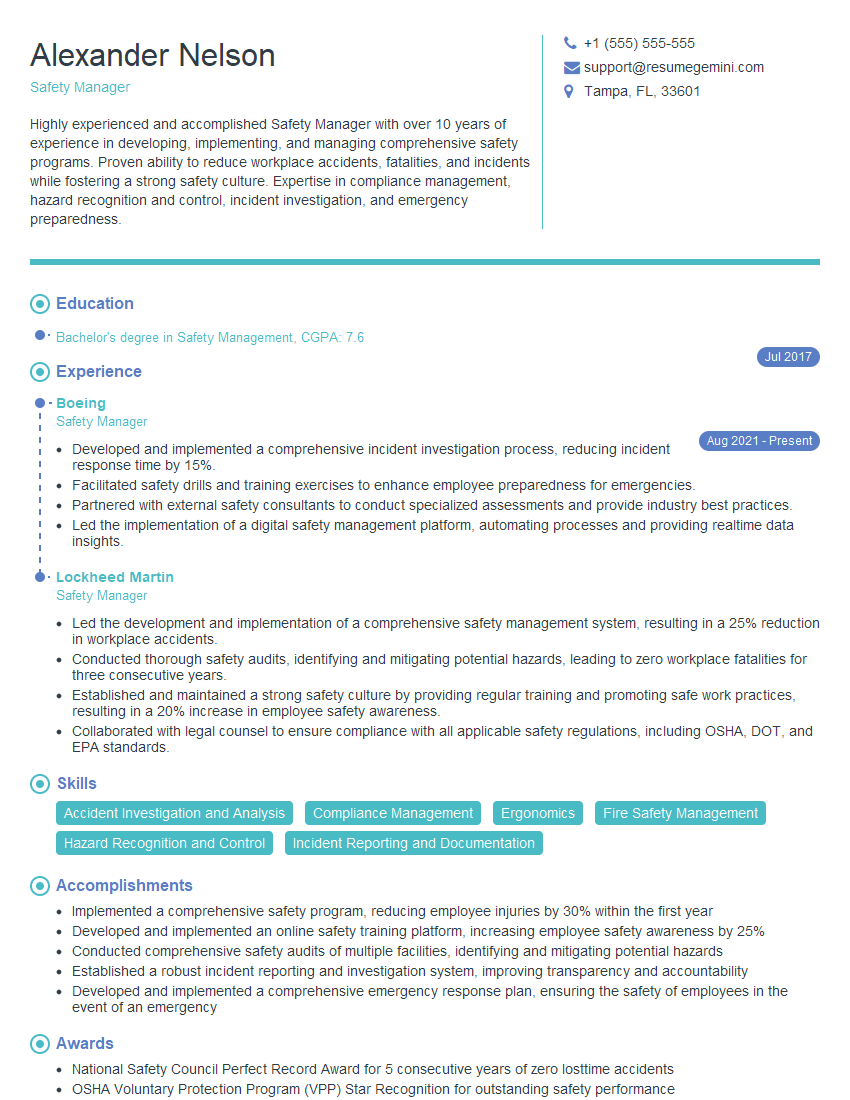
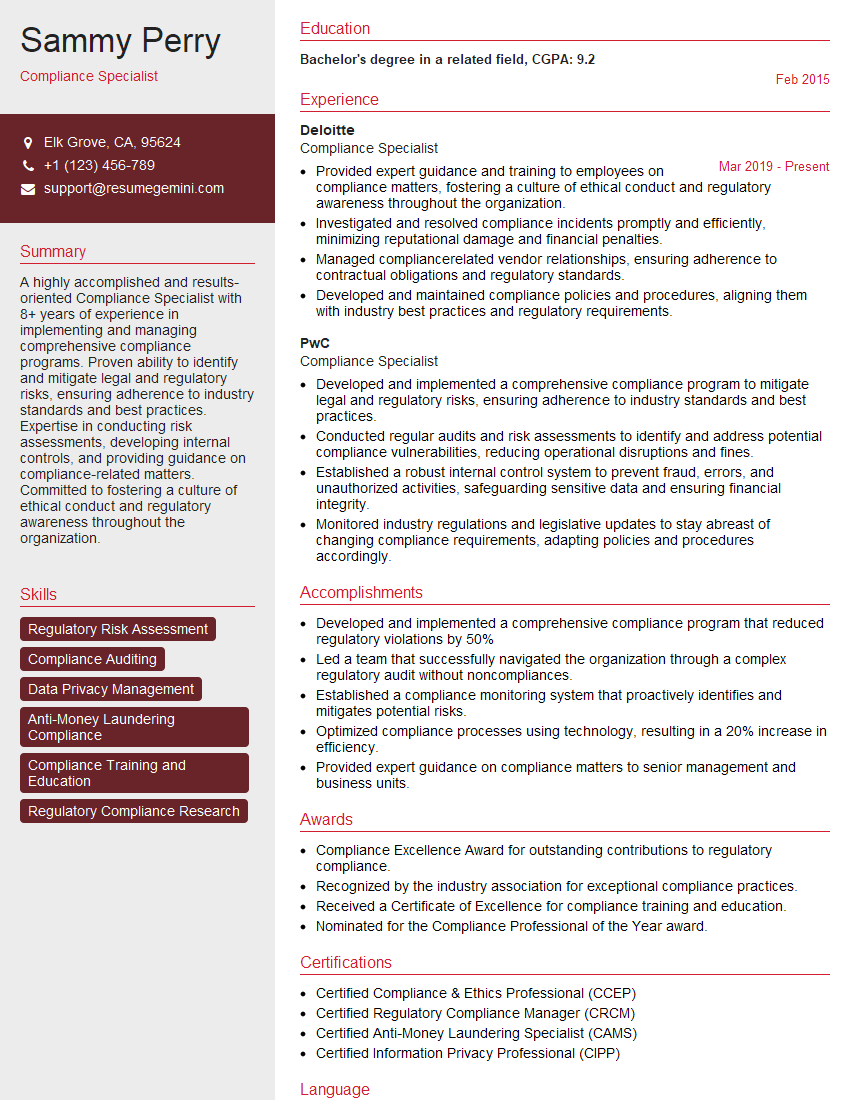
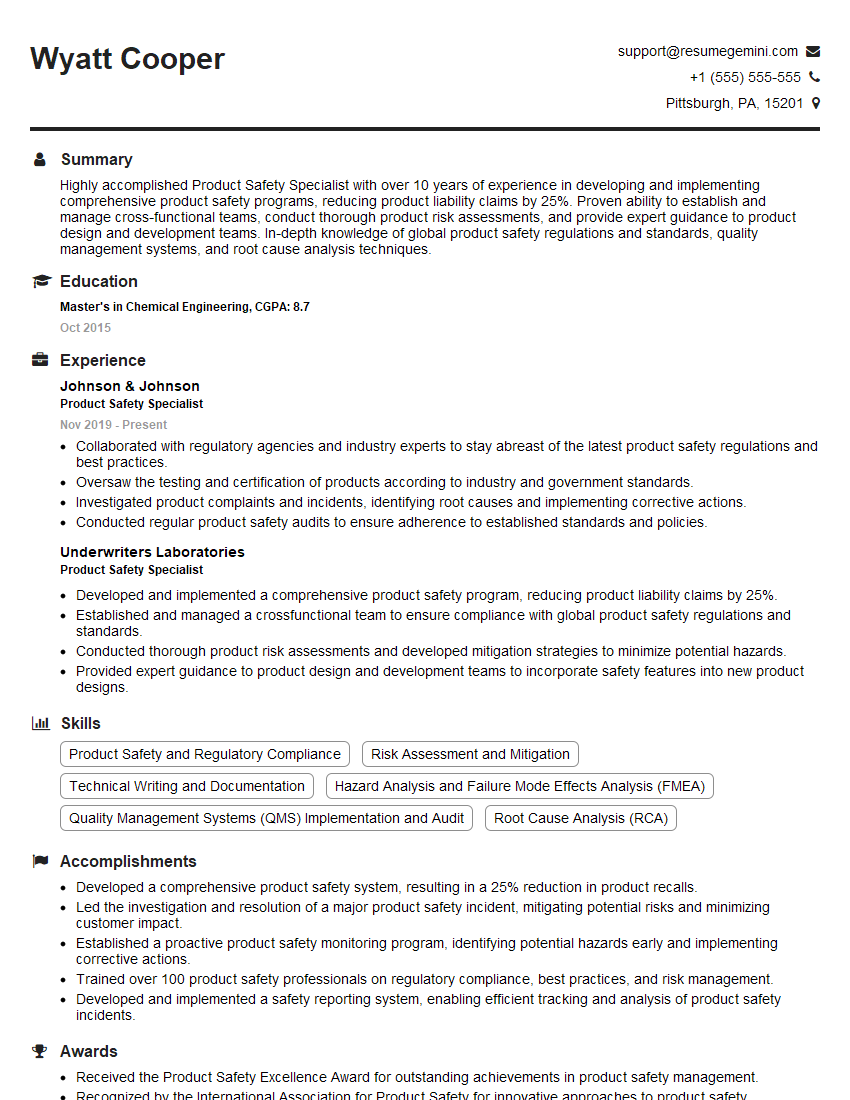
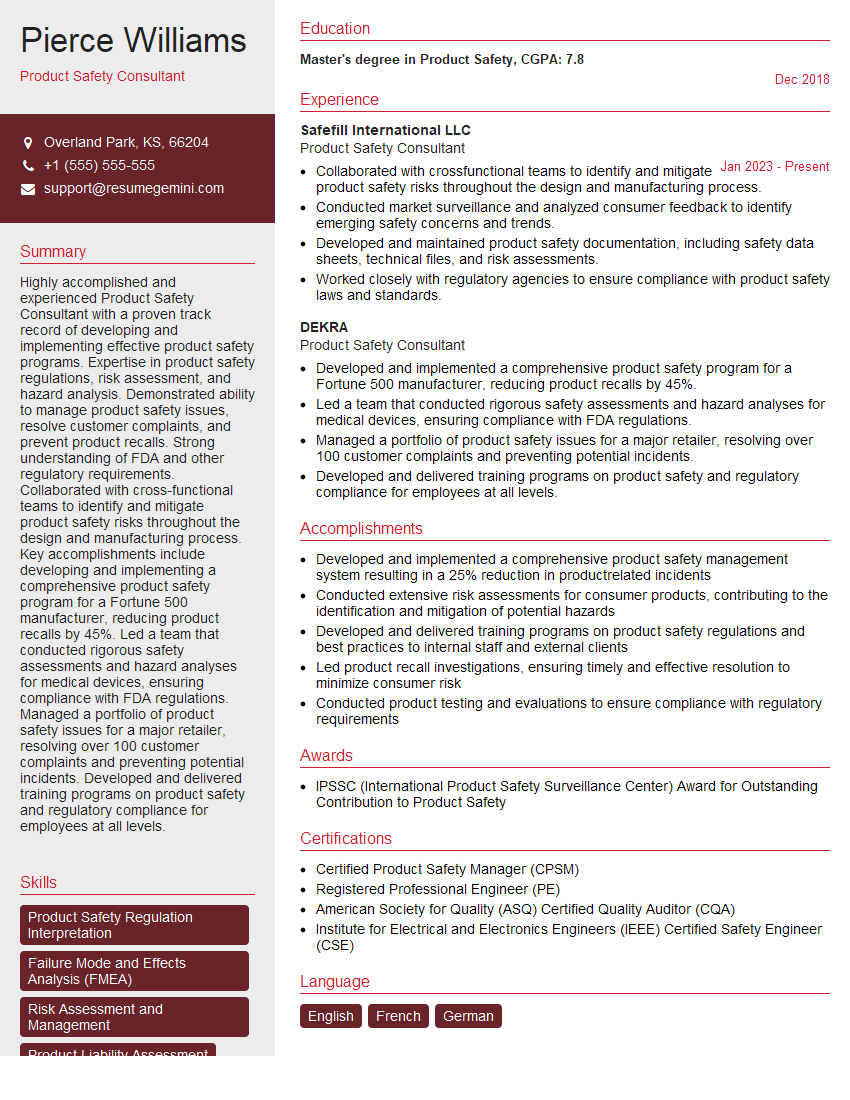
Mastering IEC 62368-1 for AVICT equipment significantly enhances your career prospects in the electronics and technology industries. Demonstrating a strong understanding of this standard opens doors to roles with higher responsibility and greater compensation. To maximize your job search success, focus on creating an ATS-friendly resume that highlights your relevant skills and experience. ResumeGemini is a trusted resource that can help you build a professional and impactful resume. We provide examples of resumes tailored to IEC 62368-1 Audio/Video, Information and Communication Technology (AVICT) Equipment roles to help you get started.
Explore more articles
Users Rating of Our Blogs
Share Your Experience
We value your feedback! Please rate our content and share your thoughts (optional).
What Readers Say About Our Blog
Very informative content, great job.
good