Preparation is the key to success in any interview. In this post, we’ll explore crucial IEEE Standards for Wind Turbine Systems interview questions and equip you with strategies to craft impactful answers. Whether you’re a beginner or a pro, these tips will elevate your preparation.
Questions Asked in IEEE Standards for Wind Turbine Systems Interview
Q 1. Explain the significance of IEEE 1547.1 in the context of wind turbine grid integration.
IEEE 1547.1, formally titled “IEEE Standard for Interconnecting Distributed Resources with Electric Power Systems,” is crucial for wind turbine grid integration because it establishes the technical requirements for connecting these distributed generation (DG) resources to the power grid. Think of it as the rulebook ensuring wind turbines play nicely with the existing electricity network. Without standards like this, integrating wind energy would be chaotic, potentially leading to instability and grid failures. It standardizes how wind turbines interact with the grid, addressing critical aspects like voltage and frequency control, protection, and safety.
Q 2. Describe the key requirements of IEEE Std 1547.1-2018 related to interconnection of wind turbines.
IEEE Std 1547.1-2018 outlines numerous interconnection requirements for wind turbines. Key among them are:
- Power Quality: Wind turbines must maintain acceptable voltage and frequency within specified limits, minimizing disturbances to the grid. This involves sophisticated control systems to regulate power output and respond to grid events.
- Islanding Prevention: The standard mandates mechanisms to prevent the turbine from continuing to operate and potentially supply power if the grid goes down (islanding). This is critical for worker safety and preventing accidents.
- Protection and Safety: Wind turbines must have protection schemes to isolate themselves from the grid in fault conditions, safeguarding both the turbine and the grid. This includes overcurrent, overvoltage and undervoltage protection.
- Communication Protocols: The standard often references communication protocols for exchanging data between the turbine and the grid operator, enabling monitoring and control. This ensures seamless communication.
- Testing and Compliance: The standard specifies testing procedures to verify that the wind turbine meets all the requirements before connection to the grid. This ensures consistent quality across the board.
Failure to meet these requirements can lead to rejection of the interconnection application and delay or prevent the integration of the wind farm.
Q 3. How does IEEE Std 519-2014 affect the design and operation of wind turbines?
IEEE Std 519-2014, “IEEE Recommended Practices and Requirements for Harmonic Control in Electrical Power Systems,” impacts wind turbine design and operation by dictating limits on harmonic currents and voltage distortion injected into the grid. Wind turbines, especially those with power electronic converters, can generate harmonic currents, which can interfere with other grid equipment and cause problems such as overheating and equipment malfunction. Therefore, wind turbine designers must incorporate harmonic mitigation techniques, such as filters, to meet the requirements of IEEE 519. Meeting these requirements leads to smoother operation and better power quality for all grid users.
For example, a wind turbine’s power converter might need specific filters designed to reduce harmonic distortion. Failure to comply could result in penalties or even disconnection from the grid.
Q 4. What are the main aspects of IEEE Std 80.00-2021 concerning wind turbine measurements?
IEEE Std 80.00-2021, “IEEE Standard for Measurement, Instrumentation, and Sensor Calibration,” provides guidance on measurement practices crucial for wind turbine operation and maintenance. It doesn’t specifically focus on wind turbines but establishes best practices applicable to the industry. This standard addresses accuracy, reliability, and traceability of measurements. For wind turbines, this means ensuring accurate measurements of:
- Power Output: Accurate power measurement is vital for energy production monitoring and billing.
- Wind Speed and Direction: These measurements are essential for operational control and performance optimization.
- Generator Temperature: Essential for preventing overheating and potential damage.
- Gearbox Condition: Monitoring vibration and temperature can prevent catastrophic failures.
Adhering to this standard ensures the data used for decision-making is reliable and helps in predictive maintenance, reducing downtime and improving overall system reliability.
Q 5. Discuss the role of IEEE standards in ensuring the reliability of wind turbine systems.
IEEE standards play a vital role in ensuring the reliability of wind turbine systems by providing a common framework for design, testing, and operation. This consistency reduces the risk of failures due to incompatible components or inadequate design. Imagine a scenario with no standards; different manufacturers might use different communication protocols, making integration and maintenance a nightmare. The standards minimize these risks by providing a common language and a set of best practices.
Specifically, standards like IEEE 1547.1 ensure grid stability by defining grid-connection requirements. Adherence to safety standards prevents accidents and improves the overall lifespan of the wind turbine.
Q 6. How do IEEE standards address the safety aspects of wind turbine operation and maintenance?
IEEE standards address safety aspects through multiple avenues. They define safety requirements during design, installation, operation, and maintenance. For example, standards like IEEE 1547.1 include requirements for protective relays and fault detection to prevent accidents. The standards also outline safety protocols for personnel working on or near wind turbines, emphasizing lockout/tagout procedures to prevent unexpected energy releases.
Compliance with these standards ensures safe operation and reduces risks to workers and the public. This is paramount in an industry dealing with high voltages and moving parts.
Q 7. Explain the importance of IEEE standards in facilitating interoperability between different wind turbine components and systems.
IEEE standards are instrumental in promoting interoperability by defining common interfaces and protocols for different components within a wind turbine system, as well as between the turbine and the broader grid. This allows components from different manufacturers to work seamlessly together. For instance, a standardized communication protocol allows the wind turbine controller to communicate effectively with the generator, the pitch control system, and the grid operator.
Without these standards, integrating components from various vendors would be incredibly complex and expensive, hindering the development and widespread adoption of wind energy technology. It ensures a robust and efficient renewable energy sector.
Q 8. What are the implications of non-compliance with relevant IEEE standards for wind turbine projects?
Non-compliance with relevant IEEE standards for wind turbine projects carries significant implications, impacting safety, reliability, grid integration, and legal liability. Imagine building a house without following building codes – it’s risky! Similarly, ignoring IEEE standards can lead to:
- Safety Hazards: Failure to adhere to standards related to electrical safety (e.g., IEEE 1547) can result in electrical shocks, fires, or even fatalities. Proper grounding and insulation, as mandated by the standards, are crucial for safety.
- Grid Instability: Wind turbines are major contributors to the power grid. Non-compliance with standards concerning grid interaction (e.g., IEEE 1547) can cause voltage fluctuations, harmonic distortion, and potentially blackouts, impacting the entire grid’s stability.
- Equipment Malfunction and Reduced Lifespan: Ignoring standards related to testing, manufacturing, and operation (e.g., IEEE Std C37.100) can lead to premature equipment failure, requiring costly repairs and replacements, and shortening the overall project lifespan.
- Legal and Insurance Issues: Non-compliance can make it difficult to obtain insurance, and in case of accidents or malfunctions, could lead to significant legal liabilities and penalties.
- Certification Challenges: Most certification bodies require adherence to relevant IEEE standards for wind turbine projects. Non-compliance automatically disqualifies the project for certification.
Therefore, meticulous adherence to IEEE standards is not merely a suggestion but a fundamental requirement for responsible and successful wind energy projects.
Q 9. How do IEEE standards influence the certification process for wind turbines?
IEEE standards play a pivotal role in the certification process of wind turbines. Certification bodies, like those for IEC (International Electrotechnical Commission) standards, often use IEEE standards as a benchmark to evaluate the safety, performance, and reliability of wind turbine systems. Think of it like a recipe – following the recipe (IEEE standards) increases the likelihood of a successful outcome (certification). These standards provide a common framework, ensuring that all turbines undergo similar rigorous testing procedures and meet predefined performance criteria.
Specifically, certification processes often involve:
- Testing against specific IEEE standards: The turbine manufacturer needs to demonstrate that the design and components comply with applicable standards through rigorous testing programs.
- Documentation review: Certification bodies examine design documentation and manufacturing processes to ensure adherence to standards.
- On-site inspection: On-site inspections of the wind turbine during installation and operation are carried out to verify compliance.
In essence, IEEE standards provide the technical foundation upon which certification is built, ensuring that the certified wind turbine meets agreed-upon levels of quality, safety, and performance.
Q 10. What are the differences between IEEE 1547 and IEEE 1547.1?
IEEE 1547 and IEEE 1547.1 are both crucial standards concerning the interconnection of distributed resources (like wind turbines) to the electric power system, but they focus on different aspects:
- IEEE 1547 (Standard for Interconnecting Distributed Resources with Electric Power Systems): This standard focuses on the fundamental requirements for connecting distributed generation, including wind turbines, to the grid. It addresses topics like voltage and frequency requirements, protection mechanisms, and power quality.
- IEEE 1547.1 (Conformance testing procedures for distributed resources that interconnect with electric power systems): This standard complements IEEE 1547 by defining the testing procedures to verify that distributed resources, including wind turbines, meet the requirements outlined in IEEE 1547. Think of 1547 as the rules of the game and 1547.1 as the referee’s handbook for ensuring fair play. It outlines specific test methods for verifying performance and safety.
In short, IEEE 1547 sets the rules, while IEEE 1547.1 provides the methods for ensuring compliance. Both are essential for the safe and reliable integration of wind turbines into the power grid.
Q 11. How does IEEE Std C37.100-2021 relate to wind turbine protection?
IEEE Std C37.100-2021, the standard for power system relaying systems, is highly relevant to wind turbine protection. Wind turbines, being complex electromechanical systems, require robust protection schemes to prevent damage and ensure safe operation. This standard provides comprehensive guidelines for designing, testing, and applying protective relays that are crucial for the safety and reliability of wind turbine systems.
Specifically, IEEE C37.100 addresses aspects relevant to wind turbine protection such as:
- Relay communication protocols: Ensuring seamless communication between protective relays and other parts of the wind turbine system is crucial for swift and effective fault detection and isolation.
- Fault detection and clearing: The standard defines the criteria and methods for detecting faults, like short circuits, and rapidly disconnecting the affected equipment to minimize damage and ensure grid stability.
- Relay performance requirements: This standard lays out detailed performance requirements, like accuracy, speed, and reliability, for the protective relays used in wind turbine systems.
- Testing methods: It prescribes methods for testing the protective relays to ensure they function as intended under various fault conditions.
By adhering to IEEE Std C37.100, designers and operators can ensure the wind turbine’s protection system is reliable, contributing to the overall safety and longevity of the system.
Q 12. Describe the role of IEEE standards in mitigating harmonic distortion in wind power plants.
IEEE standards play a crucial role in mitigating harmonic distortion in wind power plants. Harmonic distortion, essentially unwanted frequencies superimposed on the fundamental power frequency, can cause various issues, including equipment overheating and malfunction. IEEE standards help manage this by addressing aspects such as:
- Filter design and specifications: IEEE standards offer guidelines for designing effective filters that remove harmonics from the output of wind turbines. These filters, often passive or active, are crucial for maintaining power quality.
- Harmonics limits: The standards specify acceptable limits for harmonic current and voltage levels injected into the power grid by wind turbines. Adherence to these limits prevents harm to other grid-connected equipment.
- Power quality monitoring: IEEE standards promote the implementation of monitoring systems to detect and measure harmonic distortion levels, allowing for proactive measures to be taken if limits are exceeded.
Imagine a musical orchestra; each instrument plays its designated notes (fundamental frequency). Harmonic distortion is like unwanted sounds from instruments playing outside their assigned notes. IEEE standards help ensure a harmonious (pun intended!) power grid by minimizing these unwanted frequencies.
Q 13. Explain the different testing procedures defined in relevant IEEE standards for wind turbines.
IEEE standards define various testing procedures for wind turbines, encompassing different aspects of their design and performance. These tests are crucial for verifying that the turbine meets the required safety, reliability, and performance standards. Consider it like a thorough medical checkup for the turbine. Some key testing procedures include:
- Mechanical testing: This covers tests on the gearbox, blades, and tower to verify their strength, fatigue resistance, and structural integrity under various operating conditions (e.g., wind speed, temperature). Think stress tests for the physical components.
- Electrical testing: This includes tests on generators, converters, and the overall electrical system to evaluate performance, insulation resistance, and compliance with electromagnetic compatibility (EMC) standards. Ensures the electrical components work flawlessly under diverse conditions.
- Environmental testing: This assesses the turbine’s ability to withstand various environmental conditions, such as extreme temperatures, humidity, icing, and lightning strikes. Crucial for the long-term operational reliability of turbines in real-world environments.
- Grid interconnection testing: This verifies compliance with standards like IEEE 1547 to ensure the seamless and safe integration of the turbine with the power grid. Ensures a stable and safe power supply for the grid.
- Performance testing: This involves measuring the turbine’s power output, efficiency, and other key performance parameters under various operating conditions. Measures the turbine’s real-world effectiveness in generating energy.
These tests are not only critical for individual turbine certification but also play a significant role in building public confidence in the safety and reliability of wind energy.
Q 14. How do IEEE standards address the electromagnetic compatibility (EMC) of wind turbine systems?
IEEE standards address the electromagnetic compatibility (EMC) of wind turbine systems to prevent electromagnetic interference (EMI) and ensure their reliable operation within the electromagnetic environment. EMC refers to the ability of a device to function correctly in its electromagnetic environment without causing unacceptable interference to other devices. Imagine a busy city – everyone needs to behave to prevent traffic jams and accidents. Similarly, wind turbines need to ‘behave’ electromagnetically to avoid interfering with other systems.
IEEE standards achieve this by:
- Specifying emission limits: These standards define the maximum levels of electromagnetic emissions allowed from wind turbines, preventing them from disrupting communication systems, radars, or other sensitive electronic equipment.
- Defining immunity requirements: Standards set immunity levels for wind turbines, ensuring they can tolerate electromagnetic disturbances from external sources, such as lightning strikes, without malfunctioning.
- Prescribing testing procedures: The standards provide detailed testing procedures to verify that wind turbines meet the specified emission and immunity requirements. These tests are crucial for ensuring real-world compatibility.
By adhering to these standards, the risk of electromagnetic interference from wind turbines is significantly reduced, leading to improved system reliability and grid stability.
Q 15. What are some of the challenges in implementing IEEE standards for offshore wind turbines?
Implementing IEEE standards for offshore wind turbines presents unique challenges compared to onshore installations. The primary difficulties stem from the harsh marine environment and the logistical complexities of offshore operations.
- Environmental Factors: Salt spray, high winds, and wave action significantly impact the durability and reliability of components. IEEE standards addressing corrosion protection, lightning protection, and structural integrity become paramount, demanding rigorous testing and verification in simulated and real-world conditions. For example, meeting the stringent requirements of IEEE Std 1220 for lightning protection on an offshore platform is more demanding than for a land-based system due to the greater risk of direct lightning strikes.
- Accessibility and Maintenance: Repairing or replacing components on an offshore turbine is significantly more costly and time-consuming than onshore. Therefore, adherence to standards emphasizing preventive maintenance, remote diagnostics (as defined in relevant IEEE standards for communication networks), and robust design for extended operational life is crucial. This often involves implementing sophisticated condition monitoring systems to minimize downtime and maximize the lifespan of the turbine.
- Grid Connection: Connecting an offshore wind farm to the onshore grid introduces additional challenges in terms of power quality and stability. IEEE standards for power system protection, control, and interconnection need to be meticulously followed to ensure the safe and reliable operation of the entire system. For instance, adhering to IEEE Std 1547, regarding interconnection of distributed generation, is crucial for ensuring grid stability and seamless integration.
- Safety: The offshore environment presents inherent safety risks to personnel. IEEE standards related to safety procedures, risk assessment, and emergency response are vital in minimizing hazards during construction, operation, and maintenance. For example, strict adherence to IEEE standards for electrical safety is essential given the presence of high voltage equipment in a challenging environment.
Career Expert Tips:
- Ace those interviews! Prepare effectively by reviewing the Top 50 Most Common Interview Questions on ResumeGemini.
- Navigate your job search with confidence! Explore a wide range of Career Tips on ResumeGemini. Learn about common challenges and recommendations to overcome them.
- Craft the perfect resume! Master the Art of Resume Writing with ResumeGemini’s guide. Showcase your unique qualifications and achievements effectively.
- Don’t miss out on holiday savings! Build your dream resume with ResumeGemini’s ATS optimized templates.
Q 16. How do IEEE standards contribute to the lifecycle management of wind turbines?
IEEE standards play a crucial role in the lifecycle management of wind turbines, from design and manufacturing to operation and decommissioning.
- Design & Manufacturing: Standards like IEEE Std 1656 provide guidelines for the design and testing of wind turbine generators, ensuring interoperability and reliability of components. This helps reduce design flaws and manufacturing defects.
- Installation & Commissioning: Standards define procedures for safe and efficient installation, ensuring that the turbine is correctly integrated into the power system and meets performance requirements. This minimizes risks during setup and ensures the turbine operates as intended.
- Operation & Maintenance: Standards guide preventive maintenance practices, diagnostics, and fault detection, extending the turbine’s operational life and reducing downtime. This ensures the turbine operates efficiently throughout its lifecycle and prevents premature failure.
- Decommissioning: Standards dictate safe and environmentally responsible procedures for dismantling and recycling the turbine at the end of its life. This ensures environmental protection and responsible resource management at the end of the turbine’s lifespan.
By following these standards, wind turbine owners and operators can manage risks, optimize performance, extend the lifespan of their assets, and reduce overall costs.
Q 17. Discuss the use of IEEE standards in the design of wind turbine control systems.
IEEE standards significantly influence the design of wind turbine control systems, primarily focusing on safety, reliability, and efficient energy production.
- Safety Standards: IEEE standards define requirements for safety-related systems, including emergency shutdown mechanisms and protection against overspeed, overcurrent, and other faults. This ensures the safe operation of the wind turbine in various conditions.
- Communication Protocols: Standards such as IEEE 802.3 (Ethernet) and other relevant protocols ensure seamless communication between various components within the control system and with remote monitoring systems. Reliable communication is vital for efficient control and fault detection.
- Power Quality: IEEE standards related to power quality management ensure that the wind turbine operates within acceptable limits regarding voltage and frequency, protecting both the turbine itself and the connected power grid. This also enhances grid stability and minimizes disturbances.
- Data Acquisition & Processing: IEEE standards dictate data formats and communication protocols, enabling the efficient acquisition, processing, and analysis of data from the various sensors within the wind turbine. This allows for advanced control strategies and predictive maintenance.
By employing appropriate IEEE standards, designers ensure that the control system is robust, reliable, and capable of managing the complex dynamics of wind turbine operation, optimizing energy production while maintaining a high level of safety.
Q 18. Explain the importance of documentation and compliance according to IEEE standards.
Documentation and compliance with IEEE standards are critical for several reasons:
- Safety: Proper documentation ensures that all safety-related systems are designed, tested, and maintained according to standards, preventing accidents and protecting personnel.
- Liability: Complete and accurate documentation protects manufacturers, operators, and owners from legal liabilities arising from failures or non-compliance.
- Certification & Insurance: Compliance with IEEE standards is often a prerequisite for obtaining necessary certifications and insurance coverage. This is a vital step for securing funding and gaining project approval.
- Interoperability: Standardized documentation facilitates easy integration and interchangeability of components from different manufacturers. This avoids compatibility issues and makes maintenance more efficient.
- Auditing & Traceability: Thorough documentation allows for efficient auditing of the system and enables traceability of all changes and modifications made throughout the lifecycle. This is essential for maintaining accountability and ensuring consistent compliance.
Failure to maintain proper documentation and compliance can lead to costly delays, legal issues, safety hazards, and reputational damage.
Q 19. How do you ensure compliance with IEEE standards throughout the project lifecycle?
Ensuring IEEE standards compliance throughout a wind turbine project lifecycle requires a proactive and multi-faceted approach:
- Early Planning: Integrate IEEE standards into the project plan from the outset. This involves identifying all applicable standards early in the design phase.
- Design Reviews: Conduct rigorous design reviews involving experts familiar with relevant IEEE standards to identify potential compliance issues early.
- Testing & Verification: Implement a comprehensive testing and verification program to demonstrate compliance with all applicable standards. This should include both laboratory and field testing.
- Documentation Control: Maintain a robust documentation control system to track all relevant documentation, including design specifications, test reports, and maintenance logs. This ensures consistency and aids in audits.
- Training: Provide thorough training to all personnel involved in the project on relevant IEEE standards and compliance procedures. This enhances awareness and reduces the risk of errors.
- Regular Audits: Conduct regular audits throughout the project lifecycle to ensure continuous compliance and identify any potential deviations early on.
- Corrective Actions: Establish a process for addressing any non-compliance issues promptly and effectively, documenting all corrective actions taken.
This structured approach minimizes risks, ensures compliance, and leads to a safer, more efficient, and reliable wind turbine installation.
Q 20. Describe a situation where you had to solve a problem related to IEEE standards compliance.
In a previous project, we encountered a problem related to the grounding system of an offshore wind turbine. During the initial design review, we found a discrepancy between the specified grounding resistance according to IEEE Std 80-2000 and the actual measured resistance at the site. The measured resistance was significantly higher than the allowable limit, posing a significant safety risk.
To solve the problem, we followed a systematic approach:
- Investigation: We conducted a thorough investigation to identify the cause of the high grounding resistance, which involved analyzing soil resistivity, the grounding electrode design, and the quality of the connection.
- Analysis: We used specialized software to model the grounding system and simulate different scenarios to determine the optimal solution.
- Design Modification: Based on the analysis, we modified the design of the grounding system by adding additional grounding rods and optimizing their placement. We also improved the connection between the rods and the turbine foundation.
- Retesting & Verification: After implementing the modifications, we re-tested the grounding resistance, confirming that it met the requirements of IEEE Std 80-2000.
- Documentation Update: Finally, we updated all relevant documentation to reflect the changes made to the grounding system and the verification of compliance.
This experience underscored the importance of thorough planning, rigorous testing, and comprehensive documentation in ensuring compliance with IEEE standards and maintaining the safety and reliability of the wind turbine system.
Q 21. What are the key performance indicators (KPIs) related to IEEE standards compliance?
Key Performance Indicators (KPIs) related to IEEE standards compliance can be categorized as follows:
- Compliance Rate: The percentage of systems, components, or processes that meet all applicable IEEE standards requirements. This provides an overall picture of compliance levels.
- Number of Non-Compliance Issues: The total number of identified deviations from IEEE standards. Tracking this indicates areas needing improvement.
- Time to Remediation: The average time taken to resolve identified non-compliance issues. This metric reflects the efficiency of the compliance process.
- Cost of Non-Compliance: The total cost associated with rectifying non-compliance issues, including rework, testing, and potential penalties. This highlights the financial impact of non-compliance.
- Audit Score: The score received during internal or external audits, providing an independent assessment of compliance levels. This provides a valuable external evaluation.
- Safety Incident Rate: The number of safety incidents related to non-compliance with IEEE standards. This measures the impact of non-compliance on safety.
- Downtime Due to Non-Compliance: The total downtime experienced due to failures or malfunctions resulting from non-compliance. This quantifies the operational impact of non-compliance.
Regular monitoring and reporting of these KPIs enable proactive identification of compliance issues, process improvements, and ultimately, a reduction in risks and costs associated with non-compliance.
Q 22. How do you stay up-to-date with the latest revisions and updates to IEEE standards?
Staying current with IEEE standards for wind turbine systems requires a multi-pronged approach. Firstly, I subscribe to the IEEE Xplore digital library, which provides immediate access to the latest revisions and updates. This allows me to receive notifications of any changes to standards I frequently use, such as those related to grid integration or safety. Secondly, I actively participate in IEEE working groups and conferences. This direct engagement allows me to learn about upcoming revisions from the experts who are developing them, often before the official release. Finally, I regularly review industry publications and news sources dedicated to renewable energy and power systems. These resources often highlight significant changes and their implications for compliance.
Think of it like staying updated with any evolving technology – you need multiple sources to get a comprehensive picture. It’s not enough to just read the final document; active participation ensures you grasp the nuanced changes and their practical applications.
Q 23. Compare and contrast the requirements of two different relevant IEEE standards.
Let’s compare IEEE Std 1547TM (Standard for Interconnecting Distributed Resources with Electric Power Systems) and IEEE Std 519TM (Recommended Practices and Requirements for Harmonic Control in Electrical Power Systems). Both standards are crucial for grid integration of wind turbines, but focus on different aspects.
- IEEE Std 1547TM primarily deals with the interconnection requirements of distributed energy resources (DERs), including wind turbines, to the power grid. It specifies technical requirements for protection, control, and performance to ensure grid stability and safety. This includes aspects like voltage and frequency regulation, power quality, and fault ride-through capabilities.
- IEEE Std 519TM focuses on harmonic control. Wind turbines, especially those using power electronic converters, can introduce harmonic currents into the grid. This standard provides limits and recommendations to minimize harmonic distortion and its impact on other grid-connected equipment.
While seemingly distinct, they are interconnected. A wind turbine must comply with both standards. IEEE 1547 ensures reliable and safe grid connection, while IEEE 519 addresses the quality of that connection by limiting harmonic emissions. Failing to meet either would lead to grid instability or equipment damage.
Q 24. What tools and techniques do you use to verify compliance with IEEE standards?
Verifying compliance with IEEE standards involves a combination of tools and techniques. The first step involves a thorough review of the relevant standard to fully understand its requirements. This is crucial for tailoring the compliance process.
- Testing and Simulation: I utilize specialized software for simulating the behavior of wind turbines under various grid conditions. This allows us to verify compliance with performance standards and identify potential issues before actual deployment.
- Hardware-in-the-Loop (HIL) testing: This advanced testing technique simulates the real-world grid environment, allowing us to test the wind turbine’s control systems and protection mechanisms against various scenarios (e.g., grid faults).
- Data Acquisition and Analysis: During testing and operation, we acquire detailed data on wind turbine performance and grid interaction. This data is then analyzed to check for compliance with relevant limits and requirements specified in the standards.
- Third-Party Audits: Independent verification through certified testing laboratories provides an objective assessment of compliance and adds confidence for stakeholders.
The choice of specific tools and techniques depends on the complexity of the project and the specific standard being considered. A robust compliance program utilizes a combination of these methods to provide comprehensive verification.
Q 25. How do IEEE standards relate to other relevant industry standards (e.g., IEC, UL)?
IEEE standards, while highly influential, don’t exist in isolation. They often interact with and complement other industry standards, notably IEC (International Electrotechnical Commission) and UL (Underwriters Laboratories) standards. For example, IEC 61400 series covers wind turbine design, testing, and operation, providing more specific technical requirements, while IEEE standards focus more on grid integration and interoperability.
Think of it as a jigsaw puzzle: IEC standards provide the detailed pieces of the wind turbine itself, while IEEE standards define how those pieces fit into the larger grid. UL standards, on the other hand, address safety aspects, making sure the complete puzzle is safe to use. Often, a wind turbine project needs to comply with a blend of these standards to ensure global market access and safe operation.
Harmonization efforts between these organizations are underway to minimize overlaps and conflicts, resulting in a more streamlined and efficient process for manufacturers and developers.
Q 26. Describe your experience with using IEEE standards in a practical application.
In a recent project involving the integration of a 5MW offshore wind turbine, we extensively used IEEE Std 1547TM and IEEE Std 519TM. The initial design phase involved using simulation software to model the turbine’s behavior according to the requirements of IEEE 1547, including the verification of its fault ride-through capability under various grid disturbances. This helped us identify and mitigate potential issues early in the design process.
During testing, we used HIL testing to simulate various grid fault conditions and verify that the wind turbine’s protection system responded as expected and within the guidelines outlined by the standards. Data analysis showed that harmonic emissions of the wind turbine were well below the limits stipulated in IEEE Std 519TM. Finally, we engaged an independent testing laboratory to verify our findings and issue a compliance report, essential for obtaining regulatory approvals.
Q 27. How do you handle conflicts or inconsistencies between different IEEE standards?
Conflicts or inconsistencies between different IEEE standards are rare but can arise. When such situations occur, a hierarchical approach is usually adopted, prioritizing the standard most relevant to the specific application. A thorough understanding of each standard’s scope and purpose is crucial. Often, a careful reading will clarify apparent inconsistencies, highlighting the specific situations each standard addresses. In some cases, the conflict might be apparent due to different versions of the standards.
If the conflict remains, we consult relevant IEEE documentation and seek clarification from experts within the organization or the relevant working groups. In exceptional cases where definitive resolution isn’t available, it’s necessary to document the conflict, justify the selected approach, and potentially involve regulatory bodies to ensure compliance.
Q 28. What are your views on the future of IEEE standards in the wind energy industry?
The future of IEEE standards in the wind energy industry is bright, but also faces several challenges. The increasing penetration of renewables necessitates more sophisticated standards to address issues such as grid stability with high shares of variable renewable energy, efficient integration of energy storage systems, and cybersecurity in smart grids. I envision a future where IEEE standards incorporate advanced concepts like artificial intelligence for optimized grid management and advanced communication protocols for seamless integration of DERs.
A key challenge will be adapting standards to the rapid technological advancements in the sector. This will require closer collaboration between IEEE, other standards organizations, industry players, and research institutions. The emphasis will also shift towards more flexible, modular standards that can adapt to the diverse landscape of future wind energy systems.
Key Topics to Learn for IEEE Standards for Wind Turbine Systems Interview
Ace your interview by mastering these crucial areas of IEEE Standards for Wind Turbine Systems. Understanding both the theory and practical application will set you apart.
- Safety Standards: Understand the key safety requirements and protocols defined in relevant IEEE standards. This includes emergency shutdown systems, protection against electrical hazards, and maintenance procedures.
- Grid Integration: Learn about the standards governing the connection of wind turbines to the power grid. This includes power quality, voltage regulation, and harmonic distortion mitigation techniques.
- Testing and Certification: Familiarize yourself with the testing procedures and certification processes outlined in IEEE standards. Understand the significance of compliance and the implications of non-compliance.
- Communication Protocols: Explore the various communication protocols used in wind turbine systems and their role in data acquisition, control, and monitoring. Consider the implications for system reliability and maintainability.
- Data Acquisition and SCADA Systems: Understand how data is acquired, processed, and utilized for monitoring and control in wind turbine systems. This includes the role of SCADA systems and their adherence to relevant standards.
- Reliability and Maintainability: Explore the standards related to the reliability and maintainability of wind turbine systems. Discuss strategies for improving system uptime and reducing maintenance costs.
- Lifecycle Considerations: Understand the implications of IEEE standards throughout the entire lifecycle of a wind turbine, from design and manufacturing to operation and decommissioning.
Next Steps
Demonstrating a strong understanding of IEEE Standards for Wind Turbine Systems is crucial for career advancement in this rapidly growing field. It showcases your commitment to safety, efficiency, and best practices. To maximize your job prospects, creating a strong, ATS-friendly resume is essential.
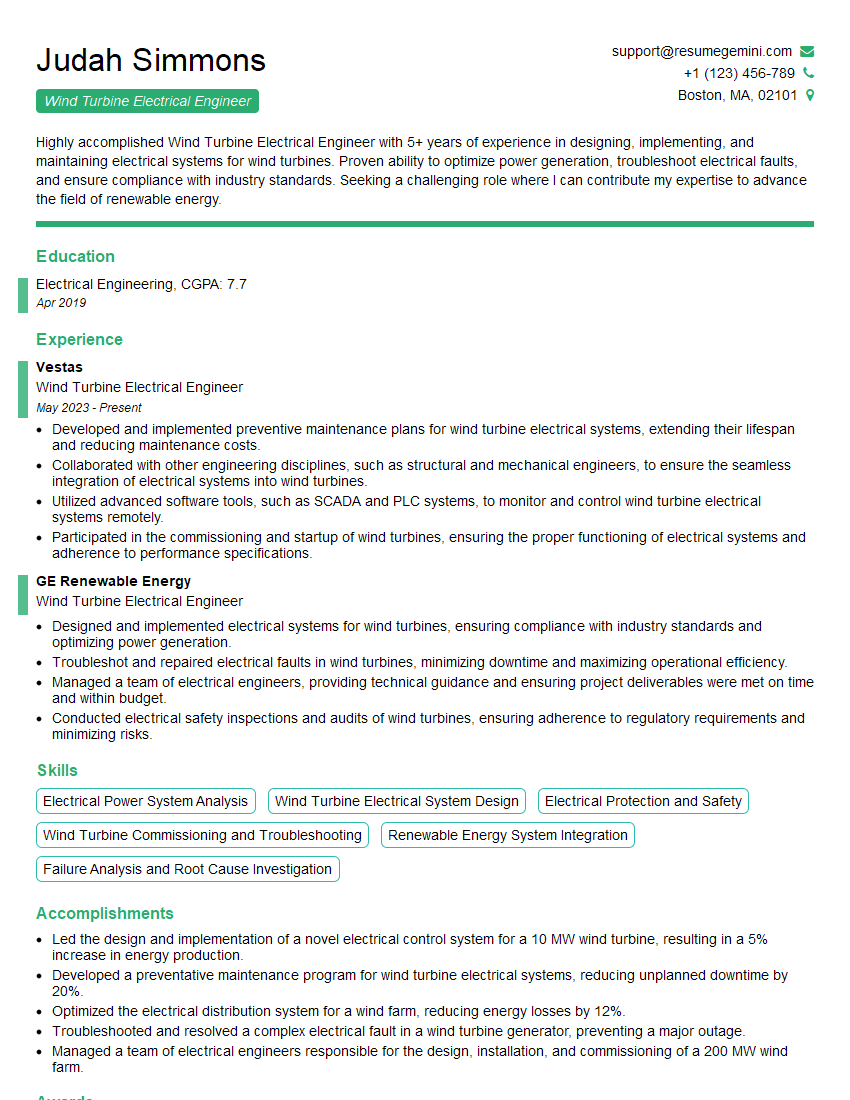
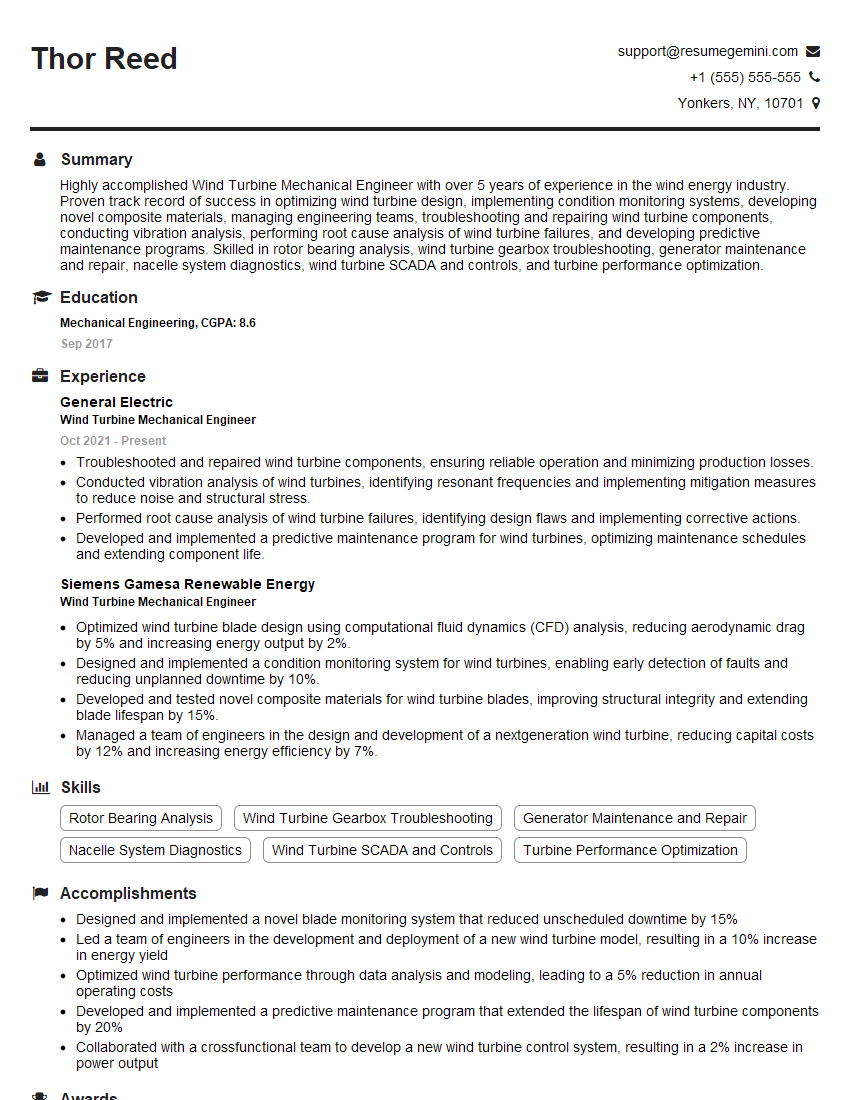
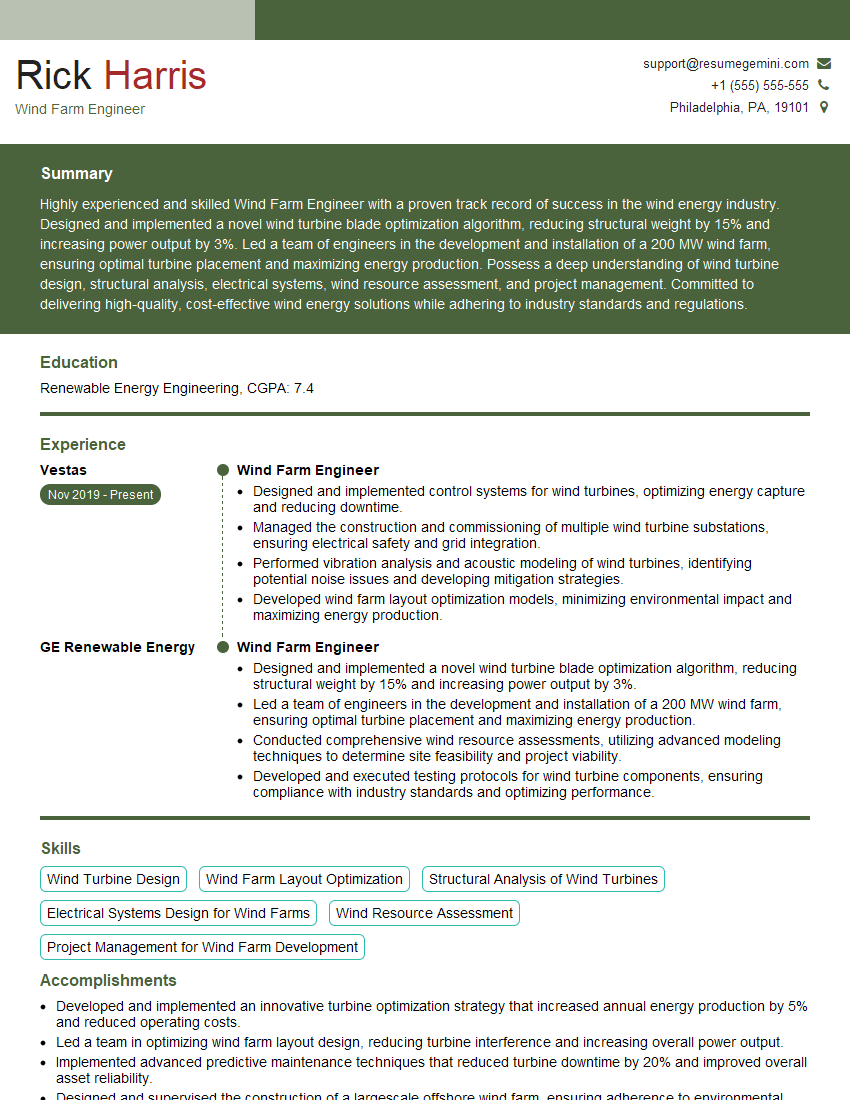
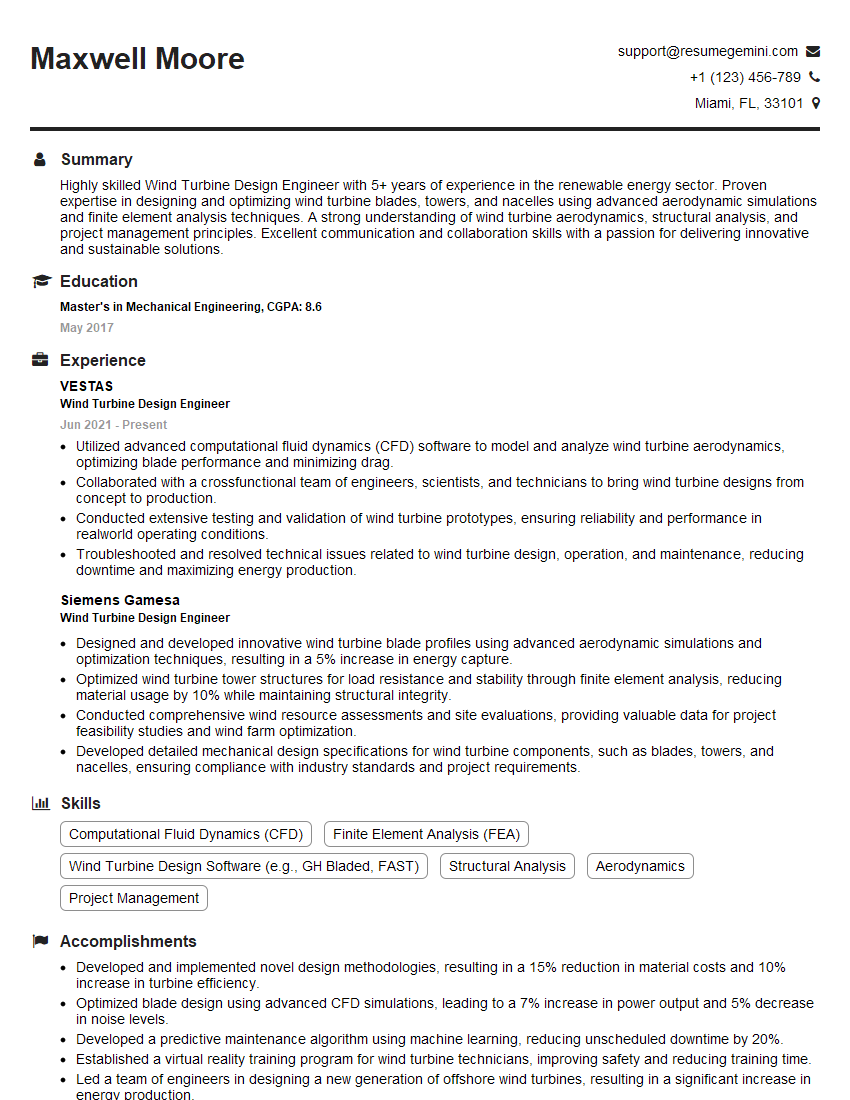
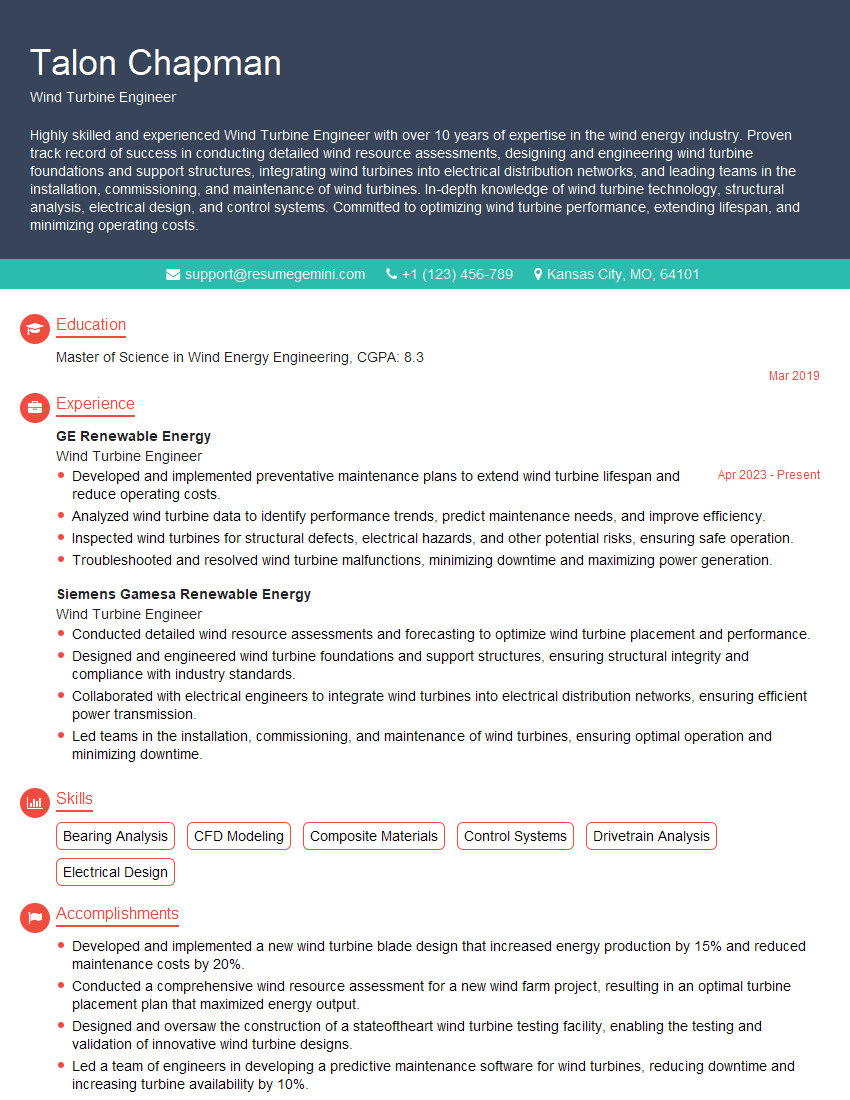
ResumeGemini can help you build a compelling resume that highlights your skills and experience effectively. Use their intuitive tools to craft a professional document that showcases your expertise in IEEE Standards for Wind Turbine Systems. Examples of resumes tailored to this specific area are available on ResumeGemini to provide inspiration and guidance.
Explore more articles
Users Rating of Our Blogs
Share Your Experience
We value your feedback! Please rate our content and share your thoughts (optional).
What Readers Say About Our Blog
Very informative content, great job.
good