The right preparation can turn an interview into an opportunity to showcase your expertise. This guide to Improvisation and Stagecraft interview questions is your ultimate resource, providing key insights and tips to help you ace your responses and stand out as a top candidate.
Questions Asked in Improvisation and Stagecraft Interview
Q 1. Explain the difference between long-form and short-form improvisation.
The core difference between long-form and short-form improvisation lies in their structure and overall objective. Short-form improv consists of a series of short, self-contained games, each with a specific set of rules and a relatively quick payoff. Think of games like ‘One-Word Story,’ ‘Scene Stealing,’ or ‘Whose Line Is It Anyway?’ – these are all examples of short-form improv, focused on quick wit and comedic punchlines.
Long-form improv, on the other hand, builds a narrative arc over a longer duration. It often uses a structure like ‘The Harold,’ which features a series of connected scenes exploring a central theme or idea that develops organically over time. The goal isn’t just a series of jokes but a cohesive and engaging story, often with character development and dramatic weight. Think of a fully improvised play or a comedic narrative that stretches for 20-30 minutes or more; this is the realm of long-form.
Q 2. Describe your experience with various improv games and techniques (e.g., Harold, Yes, And…).
My experience spans a wide range of improv games and techniques. I’ve extensively worked with the Harold format, which requires a deep understanding of group dynamics and narrative structure. Mastering the Harold means understanding how to build upon others’ suggestions, establish clear characters, and develop a compelling plot from seemingly random starting points. The ‘Yes, And…’ principle is foundational to my approach; it’s not just about agreement, but about building upon each idea to create something greater than the sum of its parts. I’ve also extensively explored various short-form games, including ‘One-Word Story,’ ‘Scene Work’ focusing on character development, and ‘Improvised Musicals,’ showcasing my adaptability and quick thinking under pressure. These games demand immediate responsiveness and an understanding of audience engagement. My skillset also extends into incorporating physical comedy, emotional depth, and character-driven narratives in improvisation.
Q 3. How do you handle unexpected events or mistakes during an improv performance?
Unexpected events or mistakes are inevitable in improv, and they present opportunities for creative problem-solving, not crises to be avoided. My approach is based on the ‘Yes, And…’ principle, even when faced with a stumble or an unexpected interruption. For instance, if an actor forgets a line, I might use it as a springboard for a new comedic beat or an unexpected plot twist. If a prop breaks, I integrate the mishap into the narrative, perhaps as a source of conflict or a funny situation. The key is to remain adaptable, embrace the unexpected, and trust my fellow improvisers to work collaboratively to salvage the situation. We’ve even incorporated audience interruptions as part of the story, thereby turning potential problems into unexpected comedic gold.
Q 4. Explain your understanding of stage lighting techniques and their impact on a production.
Stage lighting is more than just illumination; it’s a powerful storytelling tool. I understand the use of various lighting instruments – from spotlights to wash lights – to create mood, highlight key moments, and guide the audience’s eye. For instance, a spotlight can dramatically isolate a character experiencing a moment of intense emotion, while a wash of cool blue light can set a somber or mysterious tone. Understanding color temperature, intensity, and the effective use of shadows is crucial. I also value the art of creating dynamic lighting cues that enhance the pace and emotional impact of a scene. For example, a quick shift from warm light to a stark, cold light can mirror a sudden change in a character’s emotional state. Ultimately, effective lighting design needs to be unobtrusive yet impactful, serving the narrative without overshadowing the performance.
Q 5. Describe your experience with sound design and mixing for a theatrical performance.
My experience with sound design and mixing encompasses both pre-recorded and live sound elements. I understand the importance of balancing sound effects, music, and dialogue to achieve a cohesive soundscape. I am proficient in using sound mixing consoles and digital audio workstations (DAWs) to create a mix that is both clear and immersive. For instance, I would carefully select sound effects that accurately enhance the realism of the scene and would utilize layered sounds to create depth and atmosphere. In live performances, I’m adept at reacting to unexpected events and adjusting the sound mix accordingly. For example, I can quickly adjust the microphone levels or introduce sound effects to respond to unscripted moments or to compensate for unforeseen technical difficulties.
Q 6. What are your preferred methods for creating a believable and immersive set design?
Creating a believable and immersive set design requires understanding the relationship between the environment and the narrative. I begin by carefully analyzing the script, identifying key locations and moods. I then explore various design elements – from props and furniture to lighting and color schemes – to create a setting that authentically reflects the story’s time period, location, and emotional tone. I might use realistic props to create a sense of verisimilitude or employ stylized elements to convey a specific artistic vision. Moreover, I consider the practical aspects of the set, ensuring that it’s functional and safe for actors and crew. The overall aim is to create a space that is both visually compelling and effectively supports the storytelling process, enabling the audience to lose themselves in the world of the play.
Q 7. How do you incorporate the principles of ‘Yes, and…’ into collaborative theatre work?
The ‘Yes, And…’ principle is the cornerstone of collaborative theatre. It’s about building upon each other’s ideas rather than dismissing them. In practice, this means actively listening to my fellow actors and seeking opportunities to build upon their contributions. If someone suggests an unexpected action, instead of rejecting it, I find a way to incorporate it organically into the developing scene. For instance, if an actor suddenly introduces a character with a unique quirk, instead of contradicting it, I might build a scene around that quirk and develop the character further. This requires a high level of trust and mutual respect among the actors, but it leads to richer, more surprising, and more engaging collaborative work.
Q 8. Describe your experience managing and solving conflicts within a collaborative theatre team.
Conflict is inevitable in collaborative environments like theatre. My approach focuses on proactive communication and a collaborative problem-solving framework. I start by creating a safe space where team members feel comfortable expressing their concerns. This often involves establishing clear communication channels and ground rules from the outset of a project. When conflicts arise, I employ active listening to understand each perspective, emphasizing empathy and seeking common ground. I then facilitate a discussion that moves beyond assigning blame to identifying the root cause of the conflict. For example, during a production of ‘Hamlet’, a disagreement arose between the lighting designer and the set designer regarding the placement of a key lighting fixture. Instead of siding with either party, I facilitated a meeting where both individuals could discuss their concerns and explore alternative solutions. We collaboratively found a compromise that satisfied both the artistic vision and the technical requirements. This collaborative approach often leads to innovative solutions that wouldn’t have emerged from a top-down approach. Finally, I ensure that a plan of action is agreed upon and documented to prevent future conflicts of a similar nature.
Q 9. Explain your understanding of different stage configurations (e.g., proscenium, thrust, arena).
Understanding stage configurations is crucial for effective staging and audience engagement. The three main configurations – proscenium, thrust, and arena – each offer distinct advantages and challenges. A proscenium stage is the traditional setup, resembling a picture frame with the audience facing one side. It allows for complex set designs and special effects but limits audience interaction. Think of a Broadway musical – the grand scale and elaborate sets are perfectly suited to this format. A thrust stage extends into the audience on three sides, creating a more intimate experience. This style encourages a stronger connection between actors and audience, though it may limit the scope of elaborate set pieces. Shakespearean plays often benefit from this configuration. An arena stage, also known as ‘in-the-round,’ places the audience on all four sides. It fosters a sense of immediacy and involvement, demanding that actors maintain awareness of all angles. A smaller, more intimate play would be well-suited to this. Choosing the right configuration depends on the play’s themes, style, and the director’s vision.
Q 10. How do you ensure that your costume designs are both aesthetically pleasing and functional?
Costume design is a delicate balance between aesthetics and functionality. Aesthetically pleasing costumes support the character’s persona and the overall production design, while functional designs allow for ease of movement and comfort for the actors. For instance, when designing costumes for a fast-paced action scene, I prioritize durable fabrics that allow for a full range of motion, perhaps using stretchy materials or reinforced seams. For a period piece, I carefully research historical accuracy, ensuring the fabrics, silhouettes, and accessories reflect the time period while still remaining practical for the actor. I always consult with the actors throughout the process to ensure the costumes fit correctly, are comfortable to wear, and allow them to perform at their best. For example, in a production of ‘A Midsummer Night’s Dream’, I designed ethereal, flowing costumes for the fairies, using lightweight fabrics that would move gracefully on stage. However, I also ensured that these fabrics were strong enough to withstand movement and weren’t prone to snagging.
Q 11. What is your experience with prop design and construction?
My experience with prop design and construction spans from simple hand-crafted pieces to more complex, mechanically involved props. I’m proficient in a range of materials and techniques, from woodworking and metalworking to sculpting and painting. The process begins with a thorough reading of the script to understand the prop’s function within the narrative. Then, I work closely with the director and set designer to ensure that the prop’s design and construction align with the overall aesthetic and practical needs of the production. For instance, in a production of ‘Macbeth’, I designed and constructed a realistic-looking dagger that was both visually striking and safe to handle on stage. This involved careful consideration of materials (to avoid overly sharp edges) and construction techniques (to ensure durability during handling). For more complex props, I often collaborate with specialists like model makers or technicians, drawing on their expertise to realize my vision. Creating detailed sketches and plans is essential throughout this process, ensuring all construction aspects are well-defined before any construction begins. The final product is always rigorously tested for safety and functionality before its use in a performance.
Q 12. Explain your understanding of stage safety protocols and procedures.
Stage safety is paramount. My understanding of safety protocols encompasses several key areas, starting with risk assessment. Before rehearsals or performances, I conduct a thorough assessment of the stage, identifying potential hazards like uneven surfaces, loose wires, or inadequate lighting. I ensure all equipment is properly inspected and maintained, adhering to relevant safety regulations and industry best practices. Furthermore, I develop and implement clear safety procedures for actors, technicians, and crew, including emergency evacuation plans and the proper handling of potentially hazardous materials like pyrotechnics or props with sharp edges. Comprehensive training for all personnel is a crucial component of this. Regular safety checks throughout the production period are essential to prevent accidents. Open communication and a culture of safety awareness are instilled from day one, promoting a safe and productive work environment. Using clear signage, color-coded safety zones, and regular safety briefings keeps everyone informed about potential hazards and procedures. This comprehensive approach ensures a safe and productive theatre environment.
Q 13. Describe your experience with various theatrical software (e.g., QLab, Vectorworks).
I’m proficient in several theatrical software packages, including QLab and Vectorworks. QLab is invaluable for managing lighting, sound, and other cues during a performance. I use it to create complex sequences, ensuring smooth transitions and precise timing. For instance, I’ve used QLab to coordinate lighting changes synchronized with sound effects and actor movements for particularly demanding scenes. Vectorworks is essential for set design, allowing for detailed modeling and visualization of sets and props before construction begins. This software allows us to accurately plan stage layouts, design complex set pieces, and create realistic renderings for the production team. My ability to utilize these programs effectively allows for increased efficiency, greater control over production elements, and streamlined collaboration among team members. Through precise cueing in QLab, we can avoid issues like unexpected light spillovers or audio overlaps, while accurate set designs in Vectorworks help to prevent construction challenges.
Q 14. How do you manage multiple tasks simultaneously in a fast-paced theatre environment?
Managing multiple tasks in a fast-paced theatre environment demands effective organization and prioritization. I utilize project management techniques like task breakdown and time blocking. I begin by breaking down large tasks into smaller, manageable steps, assigning deadlines and responsibilities to different team members. This detailed task breakdown allows for better tracking of progress and quick identification of potential bottlenecks. I use time-blocking to allocate specific time slots for different tasks throughout the day. This approach helps to maintain focus and avoid getting overwhelmed by the sheer volume of work. Regular team meetings and communication are crucial to ensure everyone stays on track and any issues are promptly addressed. Prioritization is crucial. I focus on critical path tasks first, ensuring that essential elements are completed on time. Furthermore, I’m adept at delegating tasks effectively, trusting my team to handle their assigned responsibilities. This is all about team work, trust, and efficient communication. This balanced approach to organization allows me to manage even the most demanding theatre projects.
Q 15. Explain your process for creating character backstories and motivations in improvisation.
Creating compelling characters in improvisation relies less on pre-written backstories and more on reactive character development. Instead of detailed biographies, I focus on establishing a character’s core desires, motivations, and a single defining characteristic. This allows for spontaneous and believable reactions to the unfolding scene. For example, if a scene begins with a character needing a ride to the airport, I might quickly decide that this character is intensely afraid of flying and desperately wants to avoid the flight. This core fear shapes every choice they make: they’ll likely be nervous, overly polite, and potentially even try to sabotage their own journey. This ‘fear of flying’ acts as a potent narrative engine guiding my improvisational choices.
I often utilize a simple question-and-answer technique: What is my character’s main objective? What is preventing them from achieving this objective? What are their strengths and weaknesses? These questions quickly help build a believable foundation on which to improvise. If I’m playing a villain, for example, the answers might highlight their wounded ego or insatiable greed, driving their actions within the scene.
Career Expert Tips:
- Ace those interviews! Prepare effectively by reviewing the Top 50 Most Common Interview Questions on ResumeGemini.
- Navigate your job search with confidence! Explore a wide range of Career Tips on ResumeGemini. Learn about common challenges and recommendations to overcome them.
- Craft the perfect resume! Master the Art of Resume Writing with ResumeGemini’s guide. Showcase your unique qualifications and achievements effectively.
- Don’t miss out on holiday savings! Build your dream resume with ResumeGemini’s ATS optimized templates.
Q 16. Describe your experience working with diverse casts and crews.
Working with diverse casts and crews has been a cornerstone of my career. I firmly believe that the richness of a performance is directly proportional to the diversity of perspectives involved. This diversity isn’t just about race and ethnicity but also about experience, age, and professional backgrounds. In one memorable production, we had a mix of seasoned Broadway actors alongside recent drama school graduates. While this presented logistical challenges initially, the collaboration yielded stunning results. The young actors brought fresh energy and innovative ideas, and the seasoned professionals offered valuable guidance and mentorship. It is crucial to establish clear communication channels and encourage open dialogue to create a supportive environment where everyone feels heard and valued. This involves actively listening to diverse viewpoints, respecting differing approaches to craft, and ensuring equitable contribution opportunities within the production team.
Q 17. How do you adapt your performance style to different audience demographics?
Adapting to different audiences requires careful observation and intuition. Before a performance, I try to gather as much information as possible about the expected audience demographic. This might involve talking to the event organizer or researching the venue’s regular patrons. For a younger audience, I might lean into more physical comedy and relatable situations they can quickly connect with. With older audiences, I might prioritize slower pacing, more nuanced character work, and perhaps even incorporate some classic comedic tropes they would recognize. A corporate event demands a different tone and style compared to a fringe festival performance. This adaptation isn’t about compromising artistic integrity but about finding the most effective way to connect with the audience and make them enjoy the experience. It’s about finding a bridge between what I want to communicate artistically and what the audience is receptive to.
Q 18. What are your methods for developing and refining a stage script?
Developing and refining a stage script is an iterative process that involves several key stages. I typically begin with a strong initial concept, outlining the main plot points, character arcs, and overall thematic message. Once the initial draft is ready, rigorous workshops and collaborative sessions are crucial. We focus on dialogues, character interactions, plot structure, pacing, and overall dramatic impact. The script is then further refined through rehearsals, incorporating actors’ feedback and observations. We often use methods such as table reads, character exploration exercises and improvisational games to uncover new depths and possibilities in the material. Throughout the process, we are constantly striving for clarity, emotional resonance, and theatrical effectiveness. A successful script is a living document; it evolves with the creative team.
Q 19. How do you handle technical difficulties during a live performance?
Handling technical difficulties during a live performance demands quick thinking and a calm demeanor. I’ve learned to anticipate potential problems and develop contingency plans. This could include having backup props, alternative sound cues, or even pre-planned jokes to address unexpected glitches. A crucial element is clear communication with the technical crew. We maintain constant contact during the performance through a designated communication system. This enables quick problem-solving if equipment fails or if a lighting cue is missed. It also helps maintaining audience engagement during any brief interruptions. My strategy is always to minimize disruption to the performance flow and, if necessary, to incorporate the technical issue humorously into the show to make it part of the performance instead of a damaging interruption.
Q 20. Describe your experience in creating and maintaining a theatrical budget.
Creating and maintaining a theatrical budget requires meticulous planning and careful tracking of expenses. I begin by creating a detailed breakdown of all anticipated costs, including set design, costumes, lighting, sound, marketing, venue rental, and cast and crew fees. I then explore different funding sources such as grants, sponsorships, ticket sales, and crowdfunding. Throughout the production process, I meticulously track all income and expenditures using specialized software. This allows me to monitor our financial health, identify potential overspending, and make informed adjustments to the budget if necessary. Regular budget reviews with the production team are essential to ensure transparency and accountability.
Q 21. How do you ensure the smooth running of rehearsals and performances?
Ensuring the smooth running of rehearsals and performances hinges on clear communication, organization, and collaboration. Before rehearsals begin, I establish clear goals and expectations for the production, scheduling regular meetings to track progress, address concerns, and keep everyone informed. The rehearsal space should be well-organized and equipped with necessary materials. I encourage actors to actively participate in the creative process, valuing their input and feedback. During rehearsals, I create a supportive atmosphere where experimentation is encouraged, allowing for creative exploration and problem-solving. On performance days, a detailed schedule, clear communication protocols, and pre-show checks ensure a smooth execution. This involves meticulous attention to detail in all aspects of production. A well-organized and prepared team is the key to a successful production, regardless of the scale.
Q 22. Explain your understanding of theatrical style and conventions.
Theatrical style and conventions are the established methods and techniques used to create a specific aesthetic and communicate meaning on stage. They encompass everything from acting style and set design to lighting, sound, and costume choices. Think of it as the ‘grammar’ of theatre.
- Acting Styles: Naturalism strives for realism, while absurdism embraces the illogical. Method acting involves deep character immersion, contrasting with commedia dell’arte’s use of stock characters and improvisation.
- Set Design: A minimalist set might use only essential elements, while a maximalist approach creates a highly detailed environment. The style chosen directly impacts the audience’s perception of the story’s setting and mood. For instance, a stark, white set might suggest isolation, while a cluttered, Victorian-era set could convey opulence and social commentary.
- Lighting: Lighting can shape mood, highlight action, and even create symbolism. Chiaroscuro (strong contrasts between light and dark) adds drama, while a uniform wash can create a sense of calm. A single spotlight might draw attention to a specific character, emphasizing their significance in the scene.
- Sound: Sound effects and music greatly influence the atmosphere and pacing. Diegetic sounds (those originating within the play’s world) enhance realism, while non-diegetic sounds (like underscoring music) shape the audience’s emotional response. For example, a sudden crash of thunder during a tense scene intensifies the drama.
Understanding these conventions allows for deliberate choices that effectively communicate the playwright’s intentions and create a cohesive theatrical experience.
Q 23. Describe your experience using various stage makeup techniques.
My experience with stage makeup spans various techniques, from simple character enhancements to complex creature creations. I’m proficient in applying foundation for even skin tone, contouring and highlighting to sculpt features, and applying different types of eye and lip makeup to express character personality and emotional state.
- Character work: I’ve used age makeup to transform actors into older versions of themselves, creating realistic wrinkles and age spots using stippling and shading techniques. For example, I created a believable 70-year-old character using latex appliances, crepe hair, and careful blending of foundation and powder.
- Special Effects: I have extensive experience applying prosthetics – from simple scars and wounds to intricate full-face transformations. This involves careful preparation of the skin, adhering the prosthetic with adhesives, and blending the edges for a seamless look. Creating a realistic wound using liquid latex and tissue paper, then carefully coloring and adding details, is one example of my skillset.
- Fantasy/SFX makeup: I’ve worked on productions requiring fantastical makeup, employing techniques such as airbrushing to create smooth, even textures, and using different color palettes to depict otherworldly creatures or fantasy characters. Working with a team, we’ve created convincing alien makeup by sculpting with foam latex, applying prosthetics and then adding intricate detailing with paint and other materials.
The key is understanding the needs of the production and adapting my skills to achieve the desired aesthetic, whether it’s subtle realism or bold, fantastical transformations.
Q 24. What are your methods for effective communication and collaboration within a production team?
Effective communication and collaboration are paramount in theatre. My approach centers around clear, proactive communication, active listening, and respect for diverse perspectives.
- Pre-production meetings: I participate actively, contributing ideas and offering solutions. I believe in clarifying roles and responsibilities upfront to avoid conflicts and ensure everyone understands the overall vision. We often use shared documents or project management tools to track progress and assign tasks.
- Open dialogue: I foster an environment where team members feel comfortable expressing their ideas and concerns. I actively listen to understand their viewpoints, even if they differ from my own. Constructive feedback, given and received with respect, is vital.
- Problem-solving: When challenges arise, I encourage collaborative brainstorming sessions. We identify the problem, explore potential solutions together, and weigh the pros and cons of each before making a decision. We document our decisions and any changes to the plan.
- Regular check-ins: Throughout the production process, I maintain regular communication with the team, using email, instant messaging, or in-person meetings to share updates, address issues, and ensure everyone is on track.
My experience has shown that a well-communicating, collaborative team can overcome almost any obstacle and deliver a successful production.
Q 25. Explain your understanding of the importance of audience engagement.
Audience engagement is crucial for a successful theatrical experience. It’s not just about entertaining; it’s about creating a connection and leaving a lasting impact.
- Storytelling: A compelling narrative that resonates with the audience is the foundation of engagement. I focus on clarity, pacing, and emotional depth in storytelling. The narrative should be easy to follow and emotionally resonant. Good storytelling is a skill developed over time through practice and understanding your audience.
- Character development: Relatable and well-developed characters draw the audience in. Their struggles, motivations, and relationships must be clear and believable. The character’s arc should be fulfilling for the audience to connect with.
- Interactive elements: Depending on the production, incorporating interactive elements (within reason and without disrupting the flow) can boost engagement. This might involve addressing the audience directly, using audience participation as part of the storyline, or having characters interact with audience members.
- Immersive experience: Using creative set design, lighting, sound, and special effects creates a sensory experience that draws the audience into the world of the play. This is a great way to add an element of surprise and create memories for the audience.
Ultimately, audience engagement comes from creating a shared experience—a story that moves them, characters they care about, and a production that resonates on multiple levels.
Q 26. How do you integrate technology into your stagecraft processes?
Technology plays an increasingly important role in stagecraft. I integrate it strategically to enhance the production’s visual appeal, improve efficiency, and create innovative theatrical experiences.
- 3D Modeling and Design: Software like SketchUp or Blender enables me to create detailed 3D models of sets and props, facilitating precise planning and collaboration with the design team. This allows for the early detection and solving of potential problems, thus reducing wasted time and resources.
- Lighting and Sound Control: Digital consoles and lighting control software enable sophisticated lighting and sound designs, with precise control over cues and effects. This allows for greater flexibility and precision during performances and can lead to more dramatic and emotionally-resonant scenes.
- Projection Mapping: This technique transforms any surface into a dynamic display screen, offering incredible creative possibilities for set design and special effects. It allows us to create incredibly dynamic and engaging visuals.
- Virtual and Augmented Reality: Emerging technologies like VR and AR are opening up exciting new avenues for audience interaction and immersive storytelling, allowing for unique and unexpected audience experiences.
My approach is to leverage technology where it enhances the artistic vision, without letting it overshadow the core theatrical experience.
Q 27. Describe your experience working with special effects.
My experience with special effects encompasses a wide range of techniques, from simple pyrotechnics to complex illusions and automation.
- Pyrotechnics: I’m familiar with using controlled pyrotechnics, such as sparks, flames, and smoke, to enhance dramatic scenes, ensuring safety and compliance with all relevant regulations. Safety is paramount, so we always have a dedicated pyrotechnics operator who understands the proper procedures and equipment.
- Illusions and Trickery: I’ve designed and implemented stage illusions, involving quick changes, trap doors, and other techniques to create moments of surprise and wonder. This often involves detailed planning, precise timing, and close collaboration with the actors and stage crew. For example, I worked on a show where a character seemingly vanished from a locked box.
- Automation and Robotics: I’ve integrated automated systems for lighting, sound, and even set pieces, creating dynamic and precisely timed effects that add to the overall production. This involves programming the automated systems to work in synchronization with the action on stage.
- Projection mapping: As mentioned above, projection mapping can create impressive special effects, transforming static sets into dynamic environments.
In each case, safety and functionality are my top priorities. Careful planning and testing are essential to ensure the smooth and safe execution of special effects.
Q 28. How do you manage your time effectively during a high-pressure production schedule?
Managing time effectively during a high-pressure production schedule requires meticulous planning, prioritization, and effective delegation.
- Detailed Schedule: I create a comprehensive production schedule, breaking down tasks into smaller, manageable units with clear deadlines. This allows me to visualize the workflow and allocate sufficient time to each task.
- Prioritization: I focus on critical path tasks – those that must be completed before others can begin. This ensures that the production stays on track and prevents delays.
- Delegation: I effectively delegate tasks to team members based on their skills and abilities, empowering them to take ownership and responsibility. This involves clear communication and follow-up to ensure tasks are completed on time and to the required standard.
- Contingency Planning: Unexpected issues always arise. I build buffer time into the schedule to address potential problems and maintain flexibility. This involves anticipating potential issues and creating solutions in advance.
- Regular Check-ins: I conduct regular meetings with the team to monitor progress, identify potential roadblocks, and make necessary adjustments. Communication is key to address unforeseen challenges.
By combining meticulous planning with proactive problem-solving and effective communication, I can manage the pressures of a high-pressure production schedule and ensure a successful outcome.
Key Topics to Learn for Improvisation and Stagecraft Interview
- Improvisation Fundamentals: Understanding core principles like “Yes, and…”, active listening, character development, and scene work. Practical application: Prepare examples showcasing your ability to build upon others’ ideas and create compelling scenes from simple prompts.
- Stagecraft Techniques: Mastering elements like blocking, pacing, physicality, vocal projection, and audience engagement. Practical application: Discuss experiences where you’ve successfully utilized these techniques to enhance a performance or overcome a challenge on stage.
- Character Development & Storytelling: Explore creating believable and engaging characters, crafting compelling narratives, and utilizing comedic timing and dramatic tension. Practical application: Prepare a brief summary of a character you’ve developed, highlighting your creative process and the choices you made.
- Collaboration & Teamwork: Demonstrating effective communication, trust, and responsiveness within an ensemble. Practical application: Share examples of successful collaborations and how you contributed to a group’s overall performance.
- Problem-Solving in Performance: Discuss strategies for adapting to unexpected situations, recovering from mistakes, and maintaining audience engagement during unforeseen circumstances. Practical application: Describe a time you had to improvise or problem-solve during a performance and the outcome.
- Technical Aspects of Stagecraft (if applicable): Depending on the role, you may need to discuss set design, lighting, sound, or costume design. Prepare to discuss your knowledge and experience in these areas.
Next Steps
Mastering Improvisation and Stagecraft opens doors to diverse and exciting career paths, from acting and directing to teaching and event planning. A strong resume is crucial for showcasing your skills and experience to potential employers. Crafting an ATS-friendly resume is key to maximizing your job prospects. To help you build a truly compelling and effective resume, we recommend using ResumeGemini, a trusted resource for creating professional resumes. ResumeGemini provides examples of resumes tailored to the specific needs of Improvisation and Stagecraft professionals, offering valuable guidance and templates to help you present your skills in the best possible light.
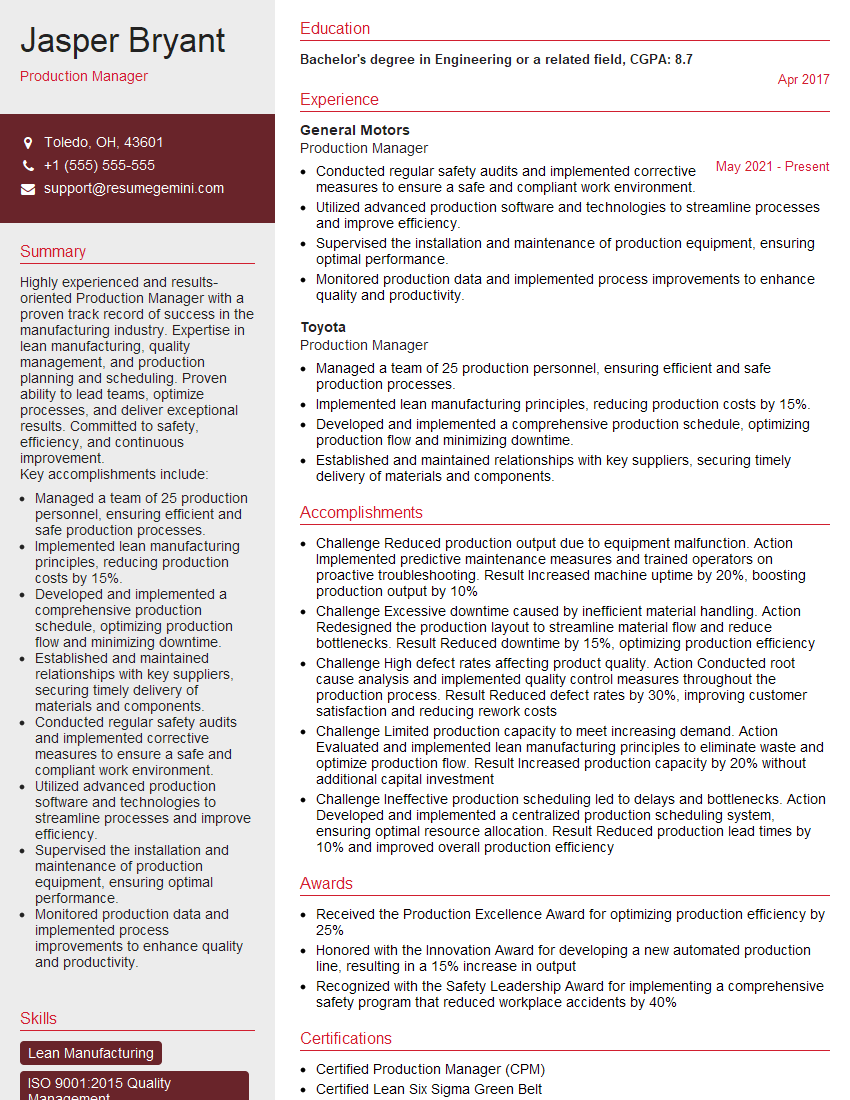
Production Manager Resume Sample
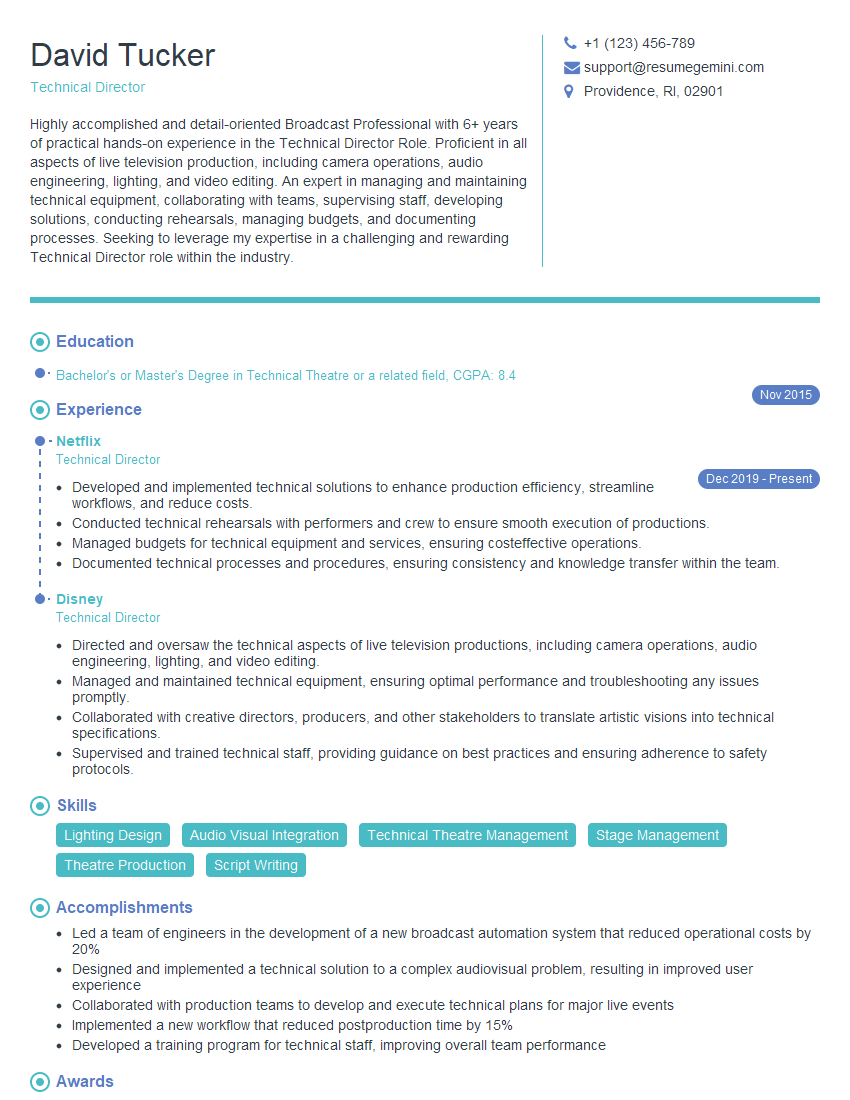
Technical Director Resume Sample
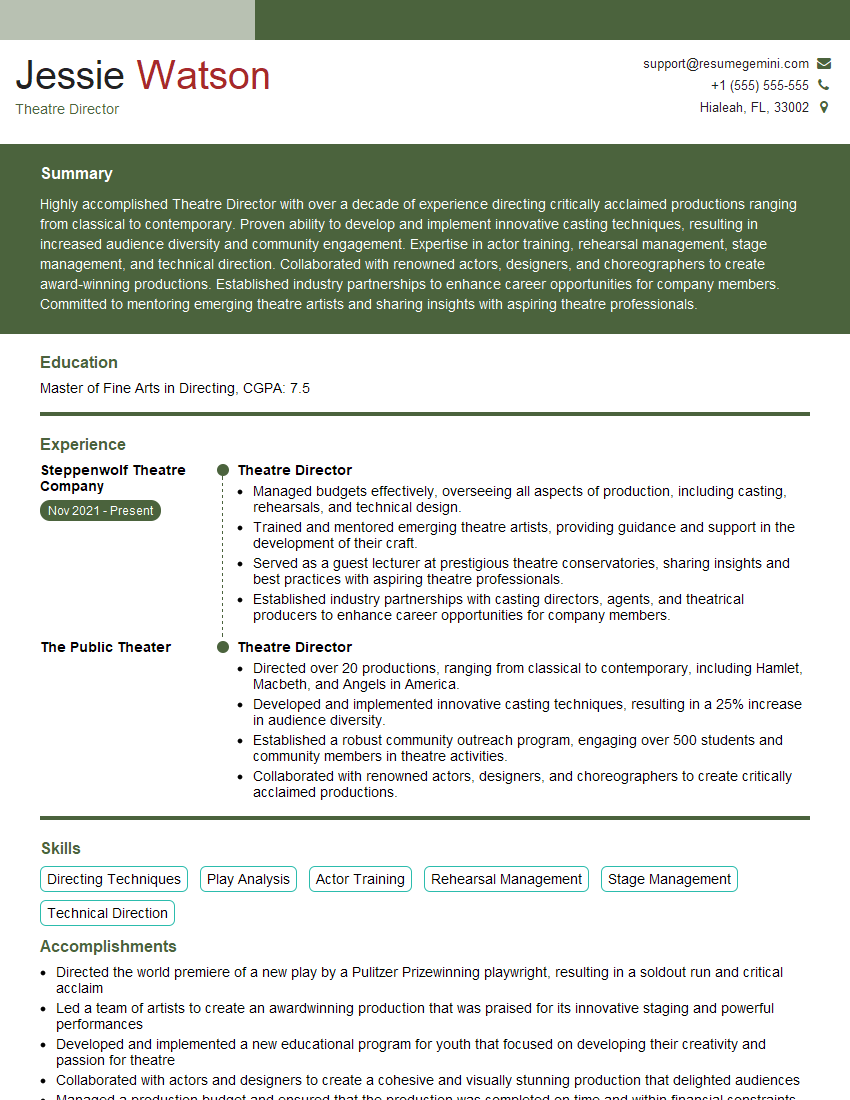
Theatre Director Resume Sample
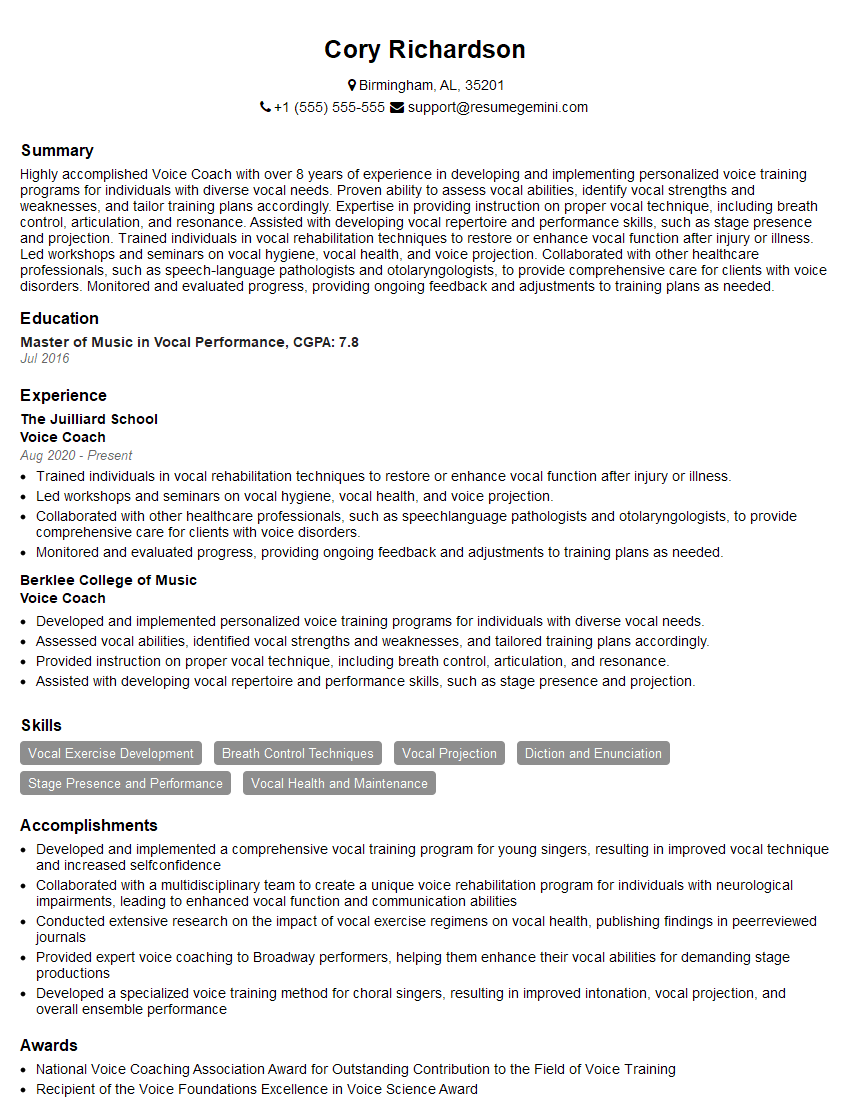
Voice Coach Resume Sample
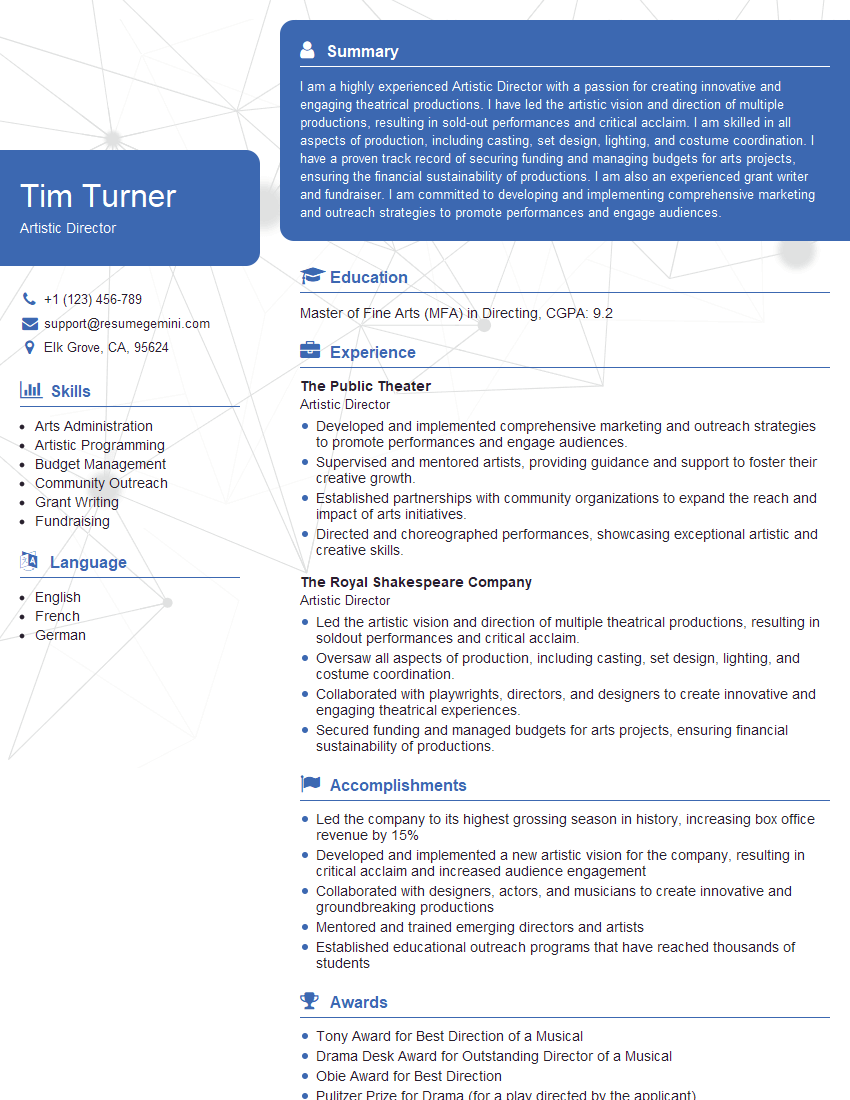
Artistic Director Resume Sample
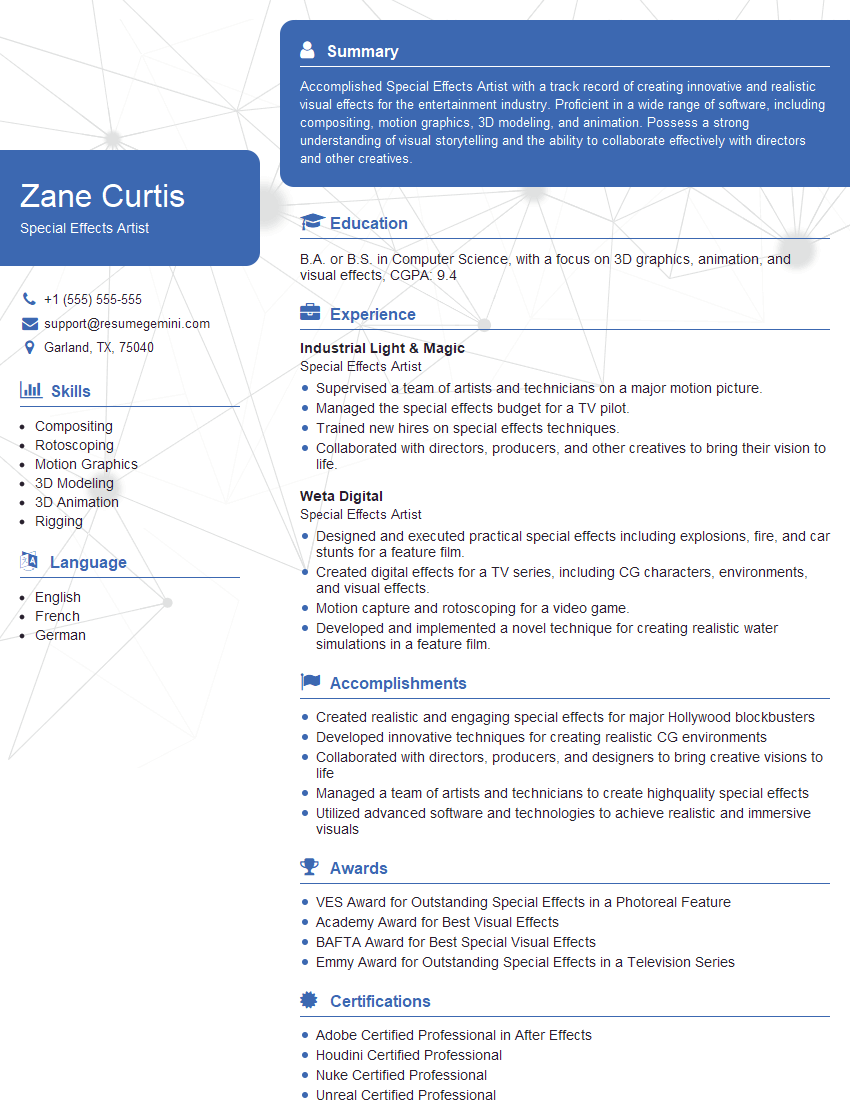
Special Effects Artist Resume Sample
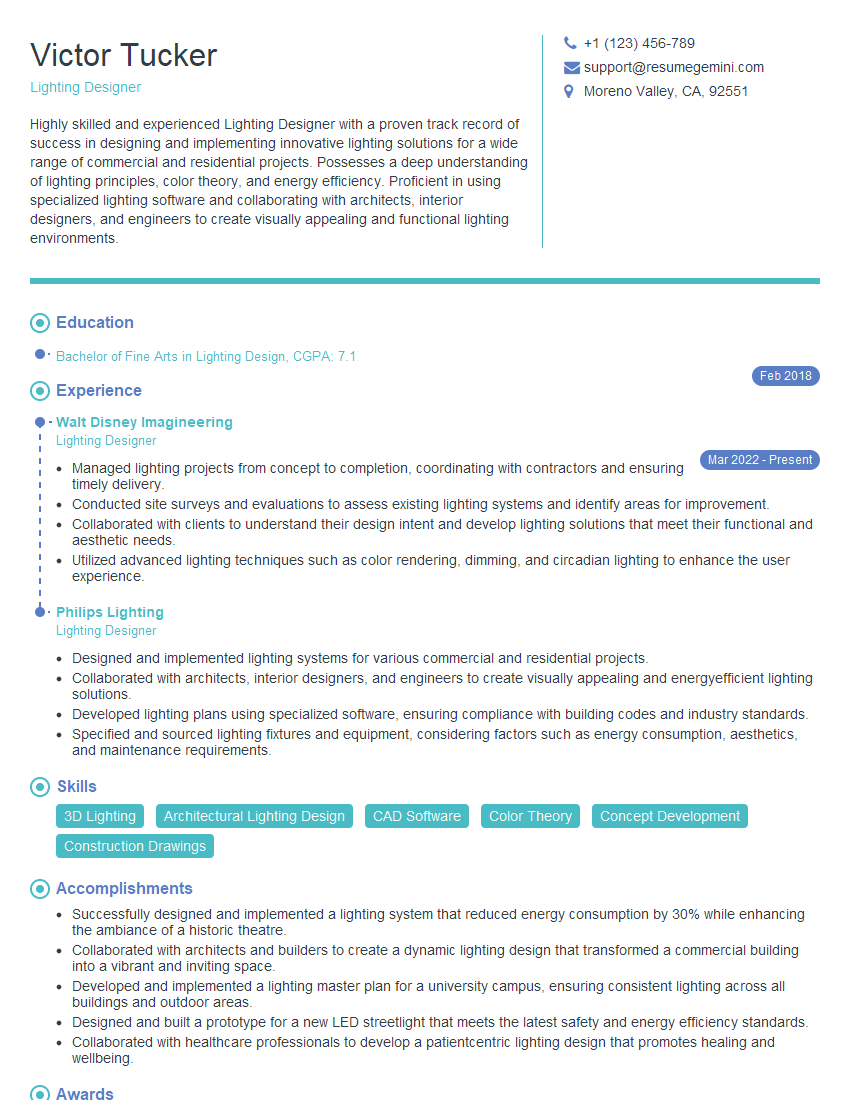
Lighting Designer Resume Sample
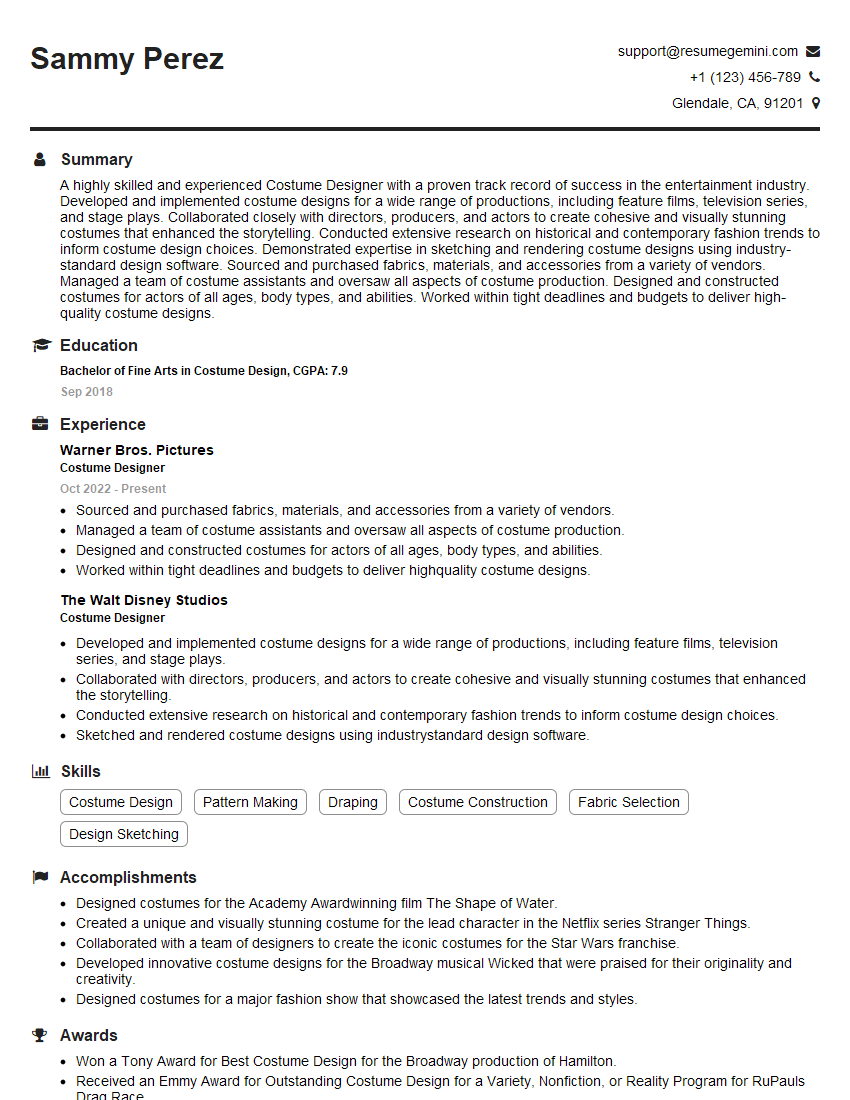
Costume Designer Resume Sample
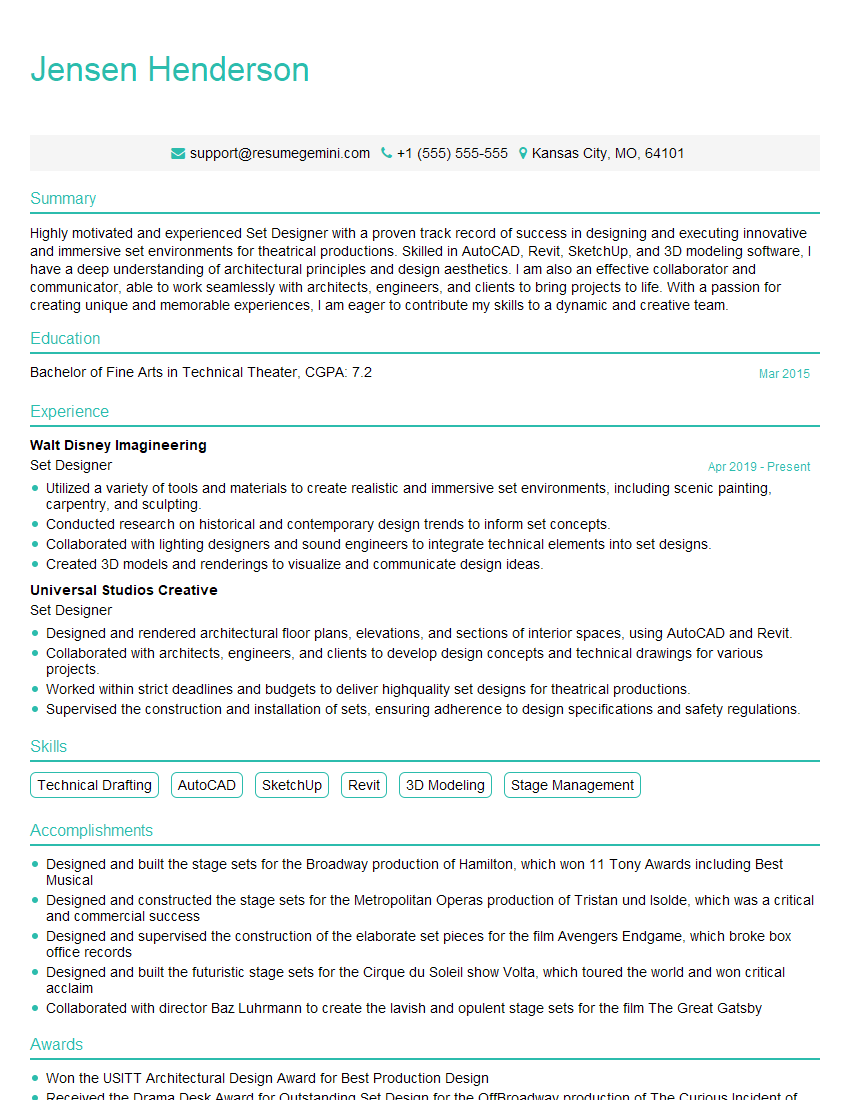
Set Designer Resume Sample
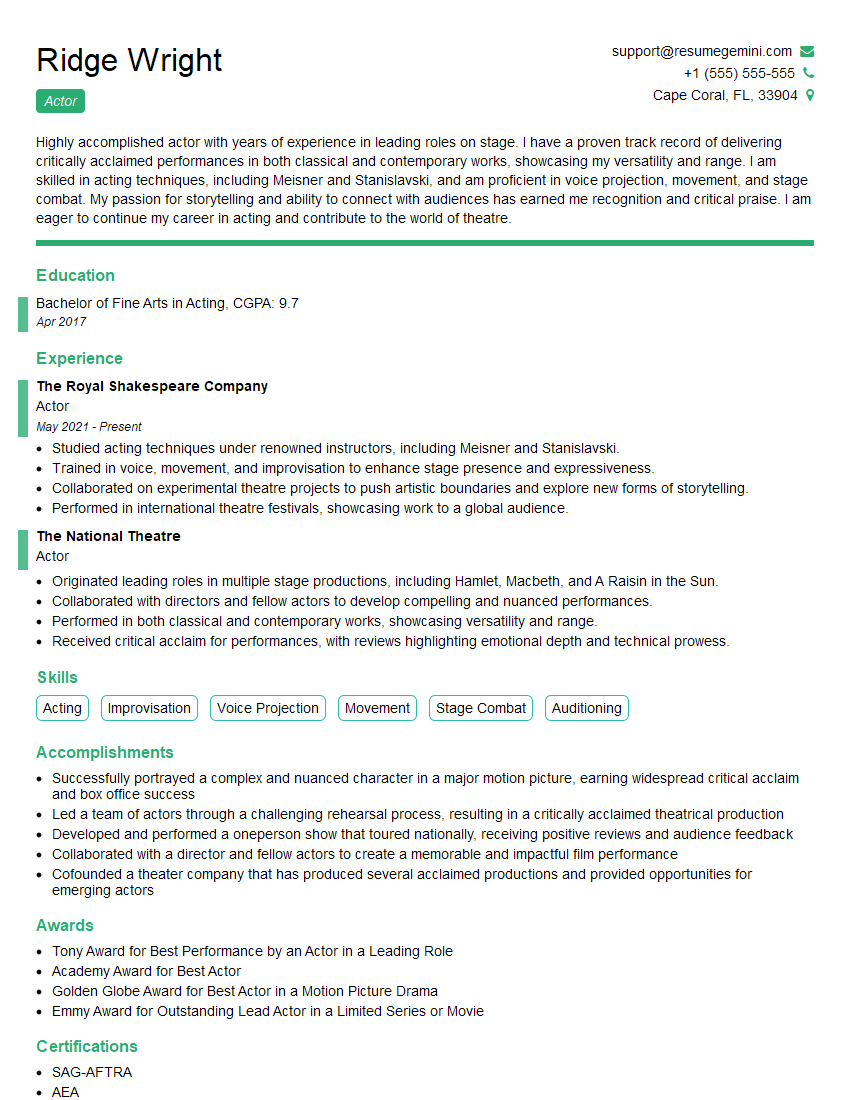
Actor Resume Sample
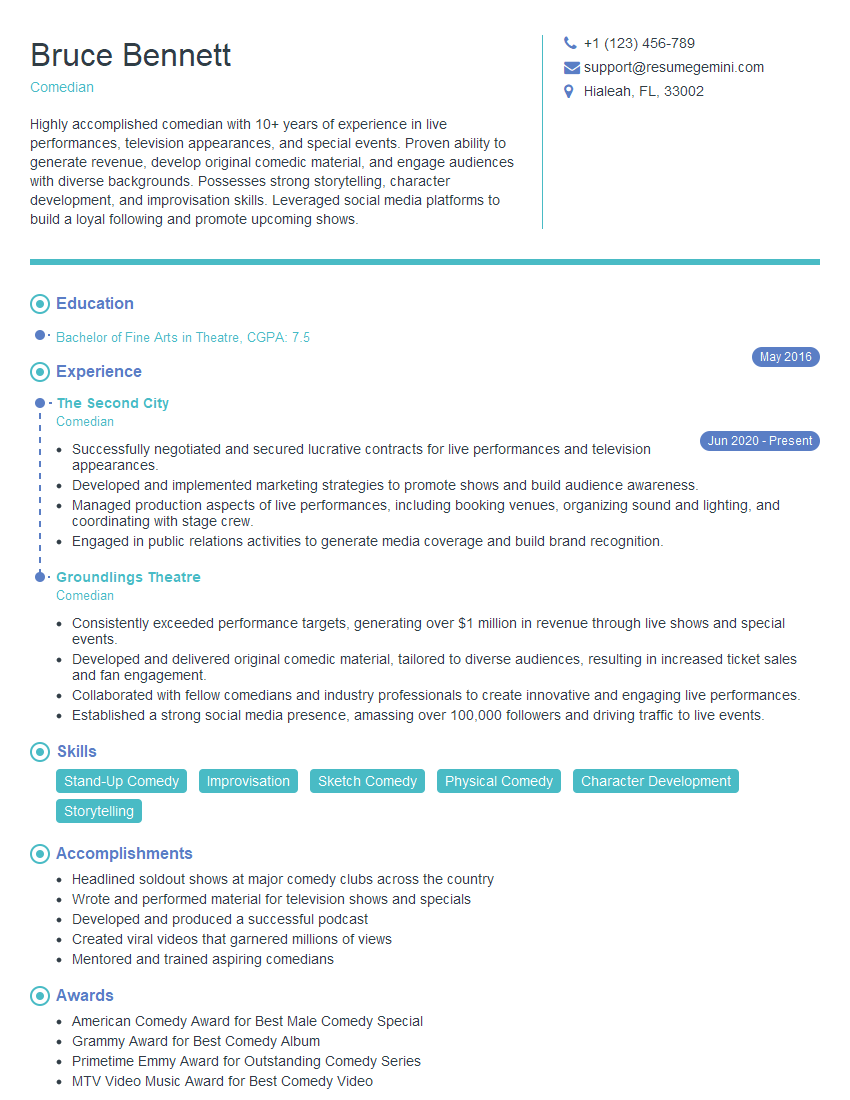
Comedian Resume Sample
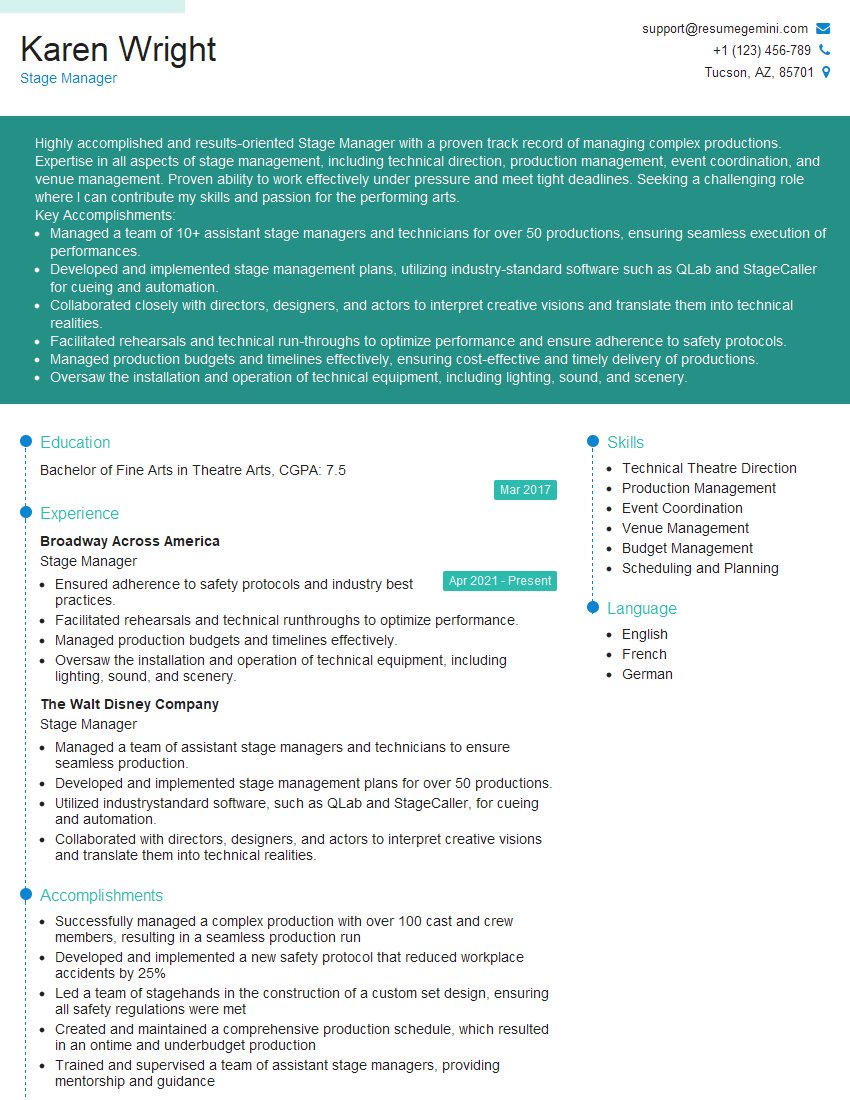
Stage Manager Resume Sample
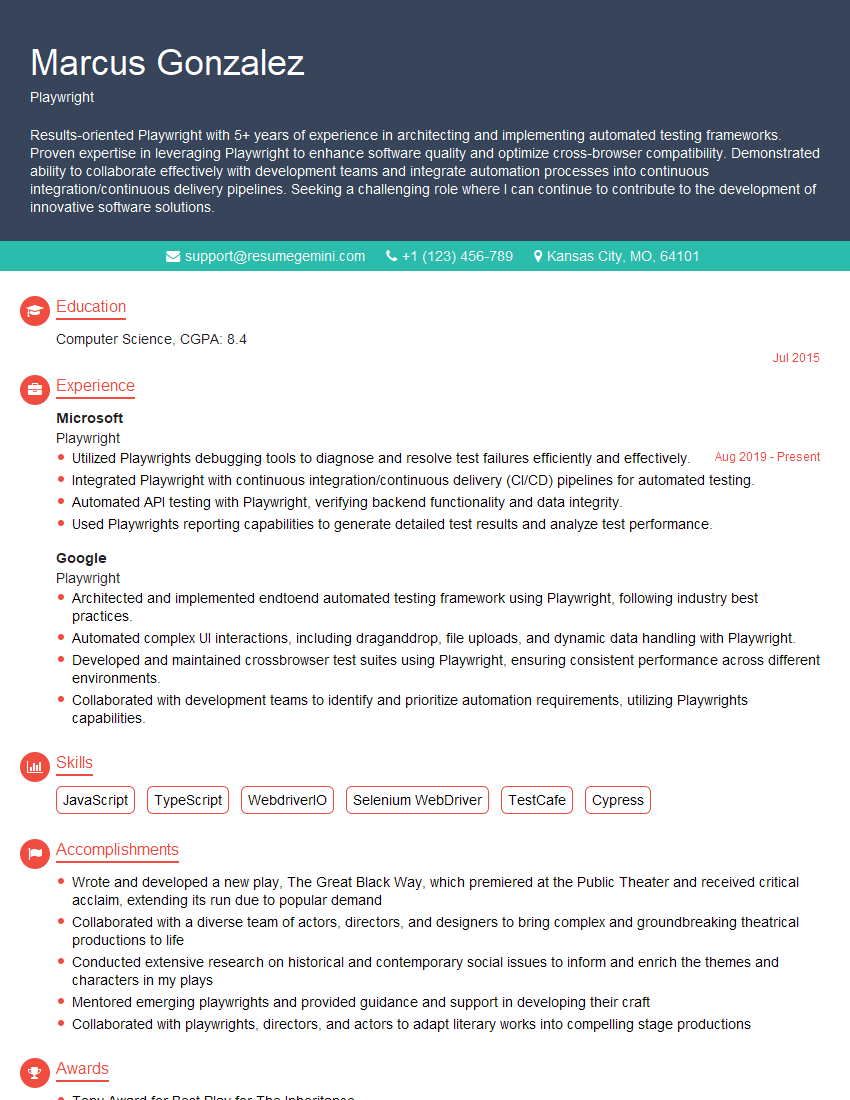
Playwright Resume Sample
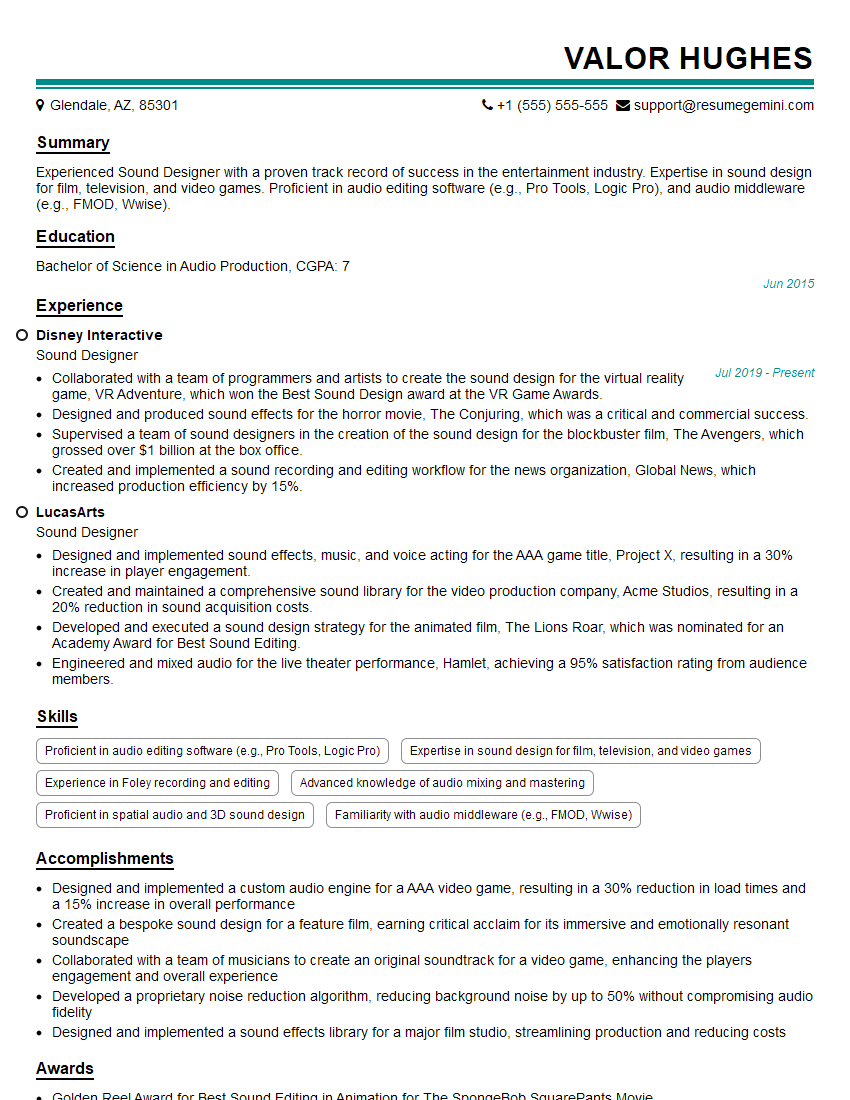
Sound Designer Resume Sample
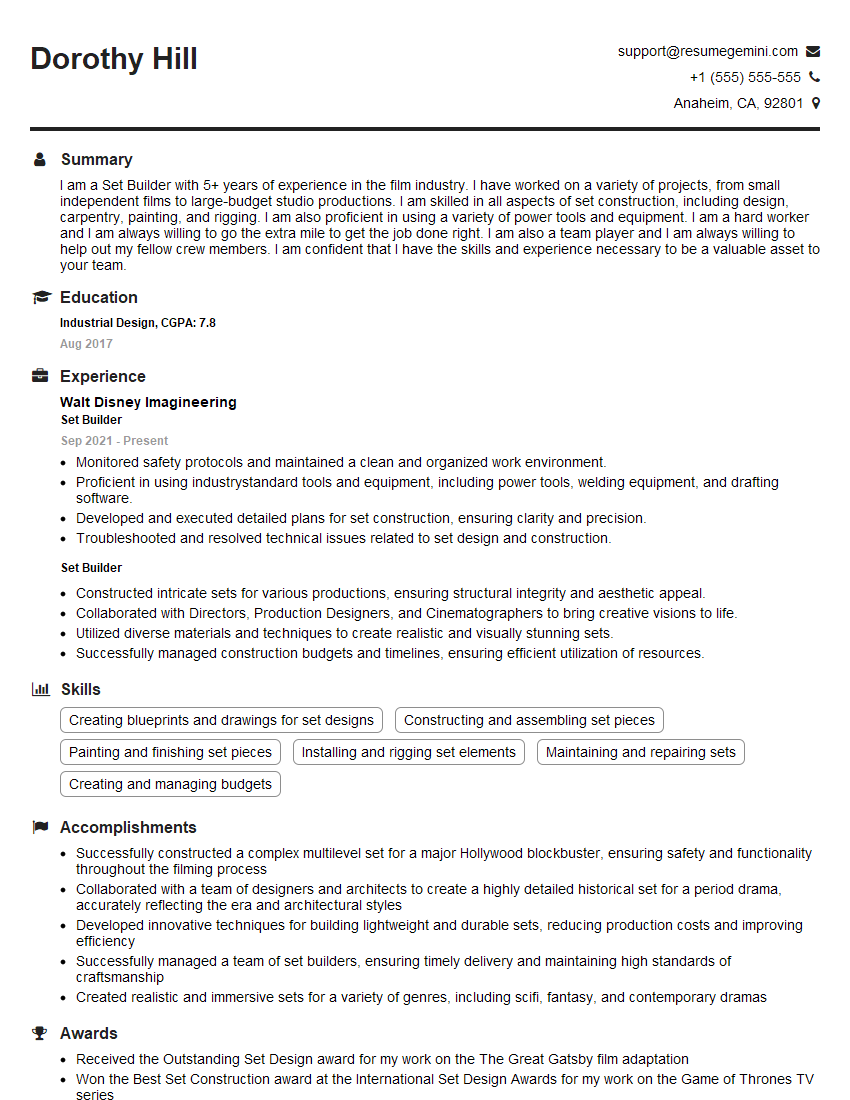
Set Builder Resume Sample
Explore more articles
Users Rating of Our Blogs
Share Your Experience
We value your feedback! Please rate our content and share your thoughts (optional).
What Readers Say About Our Blog
Very informative content, great job.
good