Interviews are opportunities to demonstrate your expertise, and this guide is here to help you shine. Explore the essential In-Store Branding and Promotion interview questions that employers frequently ask, paired with strategies for crafting responses that set you apart from the competition.
Questions Asked in In-Store Branding and Promotion Interview
Q 1. Describe your experience developing and implementing in-store promotional campaigns.
Developing and implementing in-store promotional campaigns involves a strategic process that begins with understanding the brand’s objectives and target audience. It’s like creating a theatrical production – you need a compelling script (the campaign message), a strong cast (the promotional materials), and a great stage (the retail environment).
My experience encompasses all stages, from initial concept development and creative briefing to execution and post-campaign analysis. For example, for a major coffee chain, I spearheaded a campaign centered around a new seasonal blend. This involved creating eye-catching point-of-sale materials (posters, shelf talkers, wobblers), developing interactive displays showcasing the brewing process, and coordinating staff training to ensure consistent messaging and product knowledge. We also implemented a social media component encouraging in-store photo sharing with a branded hashtag to extend the reach beyond the physical space.
Another project involved a revitalization strategy for a struggling clothing retailer. We conducted thorough market research to understand the target demographic, then redesigned the store layout to enhance product visibility and customer flow. This was coupled with a strategic promotional offer – a tiered discount system linked to customer loyalty programs – that increased purchase frequency and average transaction value. The key to success in both cases was a meticulous blend of creative design, strategic planning and effective execution.
Q 2. How do you measure the success of an in-store branding initiative?
Measuring the success of an in-store branding initiative requires a multifaceted approach, going beyond simply tracking sales. It’s about evaluating the overall impact on brand perception and customer engagement. Think of it as assessing the performance of a play – you need to evaluate the audience’s reaction (sales, brand awareness), the critics’ reviews (customer feedback, social media sentiment), and the box office numbers (return on investment).
Key metrics include sales lift (comparing sales before and after the campaign), foot traffic analysis (tracking the number of people visiting the store), customer satisfaction surveys, and brand awareness studies. We also leverage digital tools like QR codes or near-field communication (NFC) tags to track campaign interaction and customer journeys. For instance, tracking the scan rate of QR codes leading to exclusive online content provides valuable data on consumer engagement with the in-store campaign. Ultimately, successful measurement requires a predefined set of Key Performance Indicators (KPIs) against which results are evaluated, allowing for accurate assessment and informed future planning.
Q 3. Explain your understanding of visual merchandising principles and their impact on sales.
Visual merchandising is the art and science of presenting products in a retail environment to maximize sales. It’s about creating an aesthetically pleasing and engaging space that encourages customers to browse, discover, and purchase. Imagine it as window dressing for your product line – the way you showcase it dramatically impacts its appeal.
Effective visual merchandising relies on principles like color psychology (using colors to evoke emotions and attract attention), strategic product placement (highlighting bestsellers and new arrivals), and creating compelling visual displays (using props, lighting, and signage). For example, placing impulse buy items at checkout counters is a classic visual merchandising technique. Similarly, using mannequins to showcase outfits or creating themed displays for seasonal promotions can significantly boost sales. The impact on sales is demonstrable – a well-executed visual merchandising plan enhances product visibility, improving customer experience and ultimately driving sales. Poor visual merchandising, on the other hand, can lead to confusion, reduced engagement, and lost sales.
Q 4. What strategies do you employ to create a cohesive brand experience across multiple retail locations?
Creating a cohesive brand experience across multiple retail locations requires a standardized approach to design, messaging, and customer service. It’s like ensuring every performance of a play is identical, no matter which theatre it’s in.
This involves developing comprehensive brand guidelines that dictate everything from store layout and signage to staff uniforms and in-store music. These guidelines provide a framework to ensure consistency across locations, regardless of size or location. Regular store visits and training programs for store managers and staff are critical to maintain brand standards and address potential inconsistencies. Technology also plays a crucial role: using digital displays, interactive kiosks, and centralized point-of-sale systems helps ensure consistent messaging and promotional offers across all stores. A robust communication plan facilitates seamless implementation of the branding strategy across all stores, keeping everyone informed and working towards a unified brand experience.
Q 5. How do you adapt branding and promotional strategies to different target audiences?
Adapting branding and promotional strategies to different target audiences requires a deep understanding of their demographics, psychographics, and shopping habits. It’s akin to tailoring a play to different audiences – adjusting the language, tone, and themes to resonate with each group.
This might involve using different imagery, messaging, and promotional offers in different stores or regions. For example, a youth-oriented brand might use bold colors and edgy graphics in its urban locations, while a more mature brand may opt for a more sophisticated and understated approach in suburban stores. Data analysis plays a vital role in identifying and segmenting these audiences, allowing for focused campaign targeting and maximizing campaign effectiveness. For instance, utilizing customer relationship management (CRM) data can help personalize promotions and offers based on individual preferences, further enhancing engagement and increasing sales.
Q 6. Describe your experience managing budgets for in-store marketing campaigns.
Managing budgets for in-store marketing campaigns necessitates meticulous planning and allocation of resources. It’s like managing the budget for a play – every element, from set design to actor salaries, needs careful consideration.
My experience involves creating detailed budget proposals that outline anticipated costs for various aspects of the campaign, including design and production, printing and distribution, installation and staffing, and campaign measurement. I use project management software to track expenses, ensuring the campaign stays within budget. Effective budget management involves prioritizing initiatives based on their potential return on investment (ROI) and flexibility in adjusting the budget based on real-time performance data. For example, I’ve successfully utilized cost-effective alternatives like digital signage instead of traditional print materials when appropriate, optimizing budget allocation without compromising campaign effectiveness.
Q 7. How do you collaborate with retail store teams to ensure effective brand implementation?
Collaborating with retail store teams is crucial for effective brand implementation. Think of it as coordinating the various departments in a theater production – everyone needs to work together to ensure a smooth and successful show.
My approach involves establishing clear communication channels, providing comprehensive training programs for store staff, and fostering a collaborative environment. Regular meetings and feedback sessions are essential to address concerns, clarify expectations, and ensure alignment on campaign objectives. Utilizing a collaborative project management platform enables easy sharing of information and tracking progress. Building strong relationships based on trust and mutual respect is key to securing buy-in from store teams and achieving successful brand implementation. Actively soliciting and incorporating feedback from store staff often leads to innovative solutions and improved campaign execution.
Q 8. Explain your approach to analyzing sales data and its relationship to in-store branding.
Analyzing sales data is crucial for optimizing in-store branding and promotions. My approach involves a multi-stage process: First, I identify key performance indicators (KPIs) relevant to the campaign, such as sales lift, conversion rates, and average transaction value. Then, I segment the data—by product, location, demographic, and promotional period—to pinpoint areas of success and underperformance. For example, if a particular product display in one store location significantly outperforms others, I’d analyze why. Was it placement, the use of promotional materials, or perhaps a combination of factors? This data-driven approach allows me to understand the direct impact of branding choices on sales and fine-tune strategies for future campaigns. I often visualize this data using tools like Tableau or Power BI to easily identify trends and patterns.
The relationship between sales data and in-store branding is symbiotic. Strong branding attracts customers, but effective data analysis ensures the branding resonates and drives sales. I use A/B testing to compare different branding elements—for example, two variations of a point-of-purchase display—to see which generates higher sales. This allows for continuous improvement and ensures the branding investments are maximizing their return.
Q 9. Describe a time you had to overcome a challenge in executing an in-store promotional campaign.
During a back-to-school promotional campaign for a major stationery brand, we faced a significant challenge: a last-minute supplier issue that delayed the arrival of key promotional materials (custom-designed backpacks). Our initial plan relied heavily on these backpacks as a premium giveaway. Instead of panicking, I quickly convened a meeting with the team and the client. We brainstormed alternative solutions, focusing on what we *could* control. We prioritized immediate actions:
- Reprioritized existing assets: We increased the prominence of other promotional materials, such as in-store signage and shelf-talkers, highlighting the remaining deals.
- Developed a contingency plan: We negotiated with a local print shop for a rush job on smaller promotional items (notepads and pens) to offer as consolation prizes.
- Communicated transparently: We kept the client updated throughout the process and worked collaboratively to manage expectations.
The modified campaign wasn’t identical to the original plan, but we minimized the negative impact. We learned valuable lessons about contingency planning and the importance of flexible strategies in dynamic retail environments. The rapid response and transparent communication helped us maintain a positive relationship with the client despite the setback.
Q 10. How do you stay up-to-date on the latest trends in retail branding and promotion?
Staying current in retail branding and promotion is vital. My approach is multifaceted:
- Industry Publications and Websites: I regularly read publications like Retail Dive, Chain Store Age, and Visual Merchandising & Store Design. I also follow industry influencers and blogs.
- Trade Shows and Conferences: Attending events like NRF (National Retail Federation) Big Show provides firsthand exposure to the latest trends and innovative solutions.
- Competitor Analysis: I actively monitor competitors’ in-store strategies, noting their successes and failures. This helps identify emerging trends and understand best practices.
- Networking: I regularly connect with peers in the industry through professional organizations and online communities. This facilitates knowledge sharing and the exchange of insights.
By combining these methods, I ensure I remain informed about innovative technologies, emerging consumer trends, and evolving best practices in retail branding and promotion.
Q 11. What software or tools are you proficient in for designing and managing in-store displays?
I’m proficient in several software and tools for designing and managing in-store displays. My core skills include:
- Adobe Creative Suite (Photoshop, Illustrator, InDesign): For designing high-quality visual assets, from promotional banners to shelf-talkers.
- SketchUp or similar 3D modeling software: To create virtual prototypes of displays, allowing for visualization and optimization before production.
- Project Management Software (Asana, Trello): To manage timelines, deadlines, and project collaborations effectively across multiple teams and vendors.
- Data Visualization Tools (Tableau, Power BI): To analyze sales data and effectively communicate insights related to display performance.
My familiarity with these tools allows me to manage all aspects of the design and implementation of in-store displays—from concept to final execution and ongoing performance monitoring.
Q 12. How do you ensure brand consistency across various in-store marketing materials?
Maintaining brand consistency across in-store materials is paramount. My approach focuses on establishing a clear and detailed brand style guide that serves as a single source of truth for all materials. This guide includes:
- Logo usage and variations: Specifies acceptable logo sizes, placements, and color variations.
- Color palettes and fonts: Defines primary and secondary colors, font families, and sizes to ensure uniformity.
- Imagery guidelines: Sets standards for photography and illustrations, ensuring a consistent visual tone.
- Messaging and tone of voice: Establishes clear guidelines for language and messaging, maintaining a consistent brand voice.
This guide is then shared with all internal teams and external vendors involved in creating in-store materials. Regular check-ins and quality control processes ensure everyone adheres to these guidelines, maintaining a consistent brand identity throughout all customer touchpoints.
Q 13. Explain your experience working with external vendors or agencies for in-store marketing.
I have extensive experience collaborating with external vendors and agencies. My approach emphasizes clear communication, collaborative partnerships, and robust project management. Before engaging with a vendor, I carefully evaluate their capabilities, experience, and alignment with the brand’s values. The process typically involves:
- Detailed brief development: A comprehensive document outlining project scope, objectives, timelines, and brand guidelines.
- Regular communication: Maintaining consistent communication throughout the project, using tools like email, video conferencing, and project management software.
- Thorough review and feedback: Providing timely feedback on designs and deliverables to ensure alignment with the brand standards and project objectives.
- Clear contract and payment terms: Establishing clear expectations regarding deliverables, timelines, and payment terms.
This structured approach fosters strong working relationships and ensures projects are completed successfully and within budget. For example, I successfully managed a large-scale installation of custom displays across a national retail chain, working closely with a design agency and a network of installation contractors.
Q 14. How do you handle unexpected issues or setbacks during in-store promotional events?
Unexpected issues are inevitable in in-store promotions. My approach centers around proactive planning, contingency strategies, and effective communication. When an issue arises, I follow these steps:
- Assess the situation: Quickly determine the nature and severity of the issue.
- Develop solutions: Brainstorm multiple potential solutions, prioritizing those that minimize disruption and maintain brand integrity.
- Communicate effectively: Keep all stakeholders informed, including internal teams, clients, and vendors. Transparency is crucial in managing expectations.
- Implement the solution: Execute the chosen solution swiftly and efficiently.
- Document and learn: After the event, document the issue, the solution implemented, and lessons learned for future planning and improvement.
For instance, if a planned in-store event is impacted by inclement weather, I would immediately explore alternative locations or reschedule the event, ensuring clear communication to participants and adjusting the promotional plan to minimize losses.
Q 15. Describe your understanding of retail analytics and its role in optimizing in-store branding.
Retail analytics is the science of collecting, analyzing, and interpreting data from various retail sources to gain actionable insights. In the context of in-store branding, it plays a crucial role in optimizing strategies. We use data to understand what’s working and what’s not. For example, by tracking sales data linked to specific promotional displays, we can determine which designs or offers are most effective. Customer traffic patterns captured via cameras or sensors can inform optimal placement of signage and products. Analyzing customer demographics and purchase history helps personalize branding efforts, such as tailoring messaging to specific customer segments. Ultimately, retail analytics provides a data-driven approach to optimize the impact of in-store branding, maximizing return on investment and improving the overall customer experience.
For instance, imagine a clothing retailer analyzing data from its loyalty program. They find that customers aged 25-35 are particularly responsive to visually appealing displays featuring bold colours. This insight would guide future branding choices, encouraging the use of brighter colours and eye-catching designs in areas frequented by this demographic.
Career Expert Tips:
- Ace those interviews! Prepare effectively by reviewing the Top 50 Most Common Interview Questions on ResumeGemini.
- Navigate your job search with confidence! Explore a wide range of Career Tips on ResumeGemini. Learn about common challenges and recommendations to overcome them.
- Craft the perfect resume! Master the Art of Resume Writing with ResumeGemini’s guide. Showcase your unique qualifications and achievements effectively.
- Don’t miss out on holiday savings! Build your dream resume with ResumeGemini’s ATS optimized templates.
Q 16. How do you balance brand consistency with the need to adapt to local market conditions?
Balancing brand consistency with local market adaptation requires a strategic approach. Think of it like this: your brand is the core recipe, but local preferences are the spices you add. A global brand’s core visual identity – logo, colour palette, fonts – should remain constant to maintain recognition and trust. However, messaging and specific promotional offers can be tailored. For example, a coffee shop chain might maintain its core logo and brand colours globally but adjust its menu items to reflect local tastes. In one market, they might feature a specific local coffee bean, while in another, they could offer unique pastries popular in that region. This adaptation resonates with consumers, increasing engagement without diluting the brand’s overall image. It’s a balancing act achieved through careful planning and market research.
A successful example is McDonald’s. They maintain a consistent global brand identity but adapt their menu based on local tastes and cultural preferences. In India, they offer vegetarian options, while in Japan, they feature unique regional menu items.
Q 17. How do you measure the return on investment (ROI) for in-store promotional activities?
Measuring the ROI of in-store promotional activities requires a multi-faceted approach. It’s not just about tracking immediate sales. We use a combination of quantitative and qualitative methods. Quantitative methods include comparing sales lift before, during, and after the promotion; tracking website traffic or app engagement linked to in-store displays; and analyzing foot traffic data. Qualitative methods include customer surveys, focus groups, and in-store observations. By comparing the cost of the promotion with the resulting increase in sales or other key performance indicators (KPIs), we determine the return. We also need to consider the longer-term impact, like increased brand awareness or customer loyalty. The data allows us to refine future campaigns and optimize spending.
For instance, we might track sales of a specific product before and after a promotional display is implemented, comparing this sales lift against the cost of creating and installing the display and associated marketing materials. A positive difference indicates a successful ROI.
Q 18. Explain your experience in creating compelling point-of-sale (POS) materials.
Creating compelling point-of-sale (POS) materials is about grabbing attention and driving sales. My approach begins with a deep understanding of the target audience and the marketing objectives. The design must be visually striking, easy to understand, and consistent with the overall brand identity. I consider the placement of the POS materials within the store – considering lighting, traffic flow, and proximity to related products. For instance, a large, eye-catching banner might be used at the entrance to announce a sale, while smaller shelf talkers provide more detailed product information near the item itself. I always use high-quality images and clear messaging to ensure the materials are effective. Interactive elements like QR codes linking to online content or augmented reality experiences can further enhance engagement.
I’ve worked on several projects where using vibrant colors, concise messaging, and high-quality product imagery on POS displays significantly increased sales. In one instance, we redesigned a POS display for a new product line, resulting in a 25% increase in sales within the first month.
Q 19. What are your preferred methods for gathering customer feedback on in-store branding and promotions?
Gathering customer feedback is essential for iterative improvement. We employ various methods, both passive and active. Passive methods include analyzing customer purchase data, observing customer behavior in-store (ethically, of course), and reviewing online reviews. Active methods include in-store surveys, feedback kiosks, online questionnaires, and focus groups. The choice depends on the goals and budget. In-store intercepts, short surveys administered by staff to customers, are great for quick feedback, while focus groups offer deeper insights into specific aspects of branding or promotions. Analyzing data from various sources provides a holistic view.
For example, we might use short surveys on tablets at checkout, or place QR codes on promotional displays linking to online feedback forms. We analyze the sentiment and identify recurring themes to inform future decisions.
Q 20. How do you leverage technology to enhance the in-store customer experience?
Technology is transforming the in-store experience. Interactive digital displays, augmented reality applications, mobile apps offering personalized promotions and loyalty programs, and smart shelves that track inventory and optimize replenishment all enhance customer engagement. Digital signage allows for dynamic content updates, tailoring messaging to time of day, day of the week, or even weather. Personalized mobile offers can push promotions relevant to a shopper’s past purchases or current location in the store, improving the overall shopping experience. Data analytics from these technologies provide valuable insights into customer behavior and preferences, allowing for continuous improvement.
For example, a retailer could use beacon technology to send personalized offers to shoppers’ smartphones as they approach specific areas within the store, increasing engagement and sales.
Q 21. Describe your understanding of different retail formats and how branding adapts to them.
Different retail formats demand distinct branding approaches. A luxury boutique requires a vastly different approach than a discount store. Luxury brands emphasize high-end materials, minimal design, and exclusive experiences. Discount retailers focus on value, clear messaging, and efficient space utilization. Grocery stores might use vibrant colors and promotional aisle displays, while a pharmacy might emphasize cleanliness and professional imagery. The design needs to be tailored to the overall shopping experience and the target customer profile. However, maintaining brand consistency is paramount across formats. This is achieved by using a consistent brand voice, logo, and color palette even as the style and approach adapt to the context.
For instance, a clothing brand might use sophisticated, minimalist designs for its flagship store but adopt a brighter, more playful style for its outlet stores, always maintaining its core brand identity.
Q 22. How do you ensure compliance with brand guidelines during in-store implementation?
Ensuring brand compliance during in-store implementation is paramount. It’s about meticulously translating the brand’s visual identity, messaging, and overall experience into the physical retail space. This involves a multi-step process. First, we create a comprehensive brand guideline document, a bible of sorts, outlining every aspect from logo usage and color palettes to font selections and photography styles. This document is then shared with all stakeholders involved in the implementation, including designers, merchandisers, and store personnel. Second, we conduct thorough training sessions, explaining the rationale behind the guidelines and demonstrating their correct application. Third, we utilize detailed design templates and mockups, providing clear visual references to avoid any misinterpretations. Fourth, during the implementation phase, regular site visits and quality checks are crucial to catch any deviations early on. Finally, we establish a feedback loop for continuous improvement and refinement. For instance, if a particular store location faces challenges in adhering to a specific guideline, we analyze the issue and adapt the strategy to ensure brand consistency without compromising practicality. Think of it like baking a cake – you have the recipe (brand guidelines), the ingredients (materials), and the baker (implementation team). Without following the recipe precisely, the final product (in-store experience) won’t represent the brand accurately.
Q 23. What are your strategies for managing inventory and logistics for in-store promotional materials?
Managing inventory and logistics for in-store promotional materials is a complex but crucial aspect of successful in-store branding. It requires careful planning and execution, combining efficient warehousing, timely delivery, and robust tracking systems. We start by forecasting demand based on historical data, sales projections, and planned promotional campaigns. This allows us to determine the optimal quantity of materials to procure. Next, we select appropriate warehousing solutions, considering factors like proximity to stores, security, and environmental conditions. A well-structured inventory management system, whether a dedicated software or a spreadsheet, helps us track stock levels, monitor expiry dates (for perishable items), and anticipate replenishment needs. Effective logistics involve choosing the right transportation methods – from direct delivery to a central distribution center – depending on factors such as cost, speed, and geographical location. Finally, we establish a system of regular inventory audits and reporting to identify potential issues early and ensure materials reach the intended stores in optimal condition and in a timely manner. This prevents stockouts during crucial promotional periods and avoids unnecessary waste or damage. Imagine a well-oiled machine – every part has its place and function, ensuring smooth operation. Similarly, efficient inventory management and logistics are the backbone of successful in-store promotions.
Q 24. How do you use storytelling to connect with consumers through in-store branding?
Storytelling is a powerful tool for connecting with consumers through in-store branding. Instead of simply displaying products, we create immersive narratives that resonate with the target audience. This involves identifying the brand’s core values and translating them into engaging stories. For example, a sustainable fashion brand might use storytelling to highlight the journey of its materials, from sustainable sourcing to ethical manufacturing. The narrative can be conveyed through various means: compelling visuals, interactive displays, engaging signage, and even QR codes that link to online content. The key is to create an emotional connection, allowing consumers to relate to the brand on a deeper level. This isn’t just about selling a product; it’s about sharing a brand’s journey and inviting customers to become part of it. Think of it as creating a mini-movie within the store, capturing the attention and imagination of shoppers and creating a memorable experience that fosters brand loyalty.
Q 25. Describe your experience with competitor analysis and how it informs your in-store branding strategies.
Competitor analysis is integral to developing effective in-store branding strategies. We begin by identifying our key competitors, examining their in-store presence, and analyzing their strengths and weaknesses. This involves visiting competitor stores, observing their layouts, studying their promotional materials, and assessing customer interactions. We analyze their pricing strategies, product placement, and overall brand messaging. Based on this analysis, we identify opportunities to differentiate our brand. For instance, if a competitor relies heavily on aggressive discounting, we might focus on building a premium brand experience that emphasizes quality and exclusivity. By understanding the competitive landscape, we can tailor our in-store strategies to capture market share and stand out from the crowd. In essence, competitor analysis allows us to learn from their successes and mistakes, sharpening our own approach and ensuring our in-store branding is both effective and impactful.
Q 26. How do you integrate sustainability considerations into your in-store branding and promotion plans?
Integrating sustainability considerations into in-store branding and promotion is increasingly important. This involves making conscious choices across various aspects of the design and implementation process. We prioritize eco-friendly materials for promotional displays, choosing recycled cardboard, sustainable wood, or biodegradable plastics wherever feasible. We minimize waste by opting for reusable display units and minimizing packaging. We focus on digital signage to reduce the use of printed materials. Furthermore, we highlight the brand’s sustainable practices through clear and concise messaging in-store, perhaps showcasing certifications or highlighting the environmental benefits of products. Consumers are becoming more environmentally conscious, and incorporating sustainability into in-store branding not only demonstrates corporate responsibility but also resonates with a growing segment of the market, enhancing brand image and attracting environmentally conscious shoppers. Think of it as building brand reputation alongside a greener planet.
Q 27. How would you approach designing an in-store experience that enhances customer engagement?
Designing an in-store experience that enhances customer engagement requires a holistic approach. It starts with creating a welcoming and visually appealing environment. This includes thoughtful store layout, appropriate lighting, and engaging visual merchandising. Interactive elements, like touchscreens, digital displays, or augmented reality experiences, can capture attention and offer personalized product information. Experiential zones, allowing customers to try products or interact with the brand in unique ways, can be a powerful engagement tool. Personalized recommendations based on customer preferences, perhaps delivered through mobile apps or in-store kiosks, can make the shopping experience more relevant and satisfying. Finally, providing excellent customer service, through well-trained staff who are knowledgeable and helpful, completes the engagement equation. The goal is to create an enjoyable and memorable experience that encourages customers to stay longer, explore more, and ultimately, make a purchase. A well-designed store is not just a place to buy products but a destination where customers feel valued and engaged.
Q 28. What are your thoughts on the future of in-store branding and the role of digital technology?
The future of in-store branding will be increasingly intertwined with digital technology. We’ll see a rise in personalized and interactive experiences, powered by data analytics and AI. Imagine stores using facial recognition to offer tailored product suggestions or employing smart mirrors that allow customers to virtually try on clothes. Augmented reality apps will enable customers to visualize products in their own homes before purchasing. Digital signage will become more dynamic and interactive, responding to real-time data to showcase relevant products and promotions. However, the human element will remain crucial. The challenge lies in seamlessly integrating digital technologies with a human touch, creating an environment that is both technologically advanced and emotionally engaging. The future is about creating a seamless omnichannel experience, blurring the lines between online and offline shopping, making the physical store a compelling destination in its own right, even in the age of e-commerce.
Key Topics to Learn for In-Store Branding and Promotion Interview
- Visual Merchandising: Understanding principles of visual merchandising, including planograms, product placement, and creating impactful displays to enhance brand perception and drive sales.
- Branding Consistency: Maintaining brand consistency across all in-store elements, from signage and displays to staff uniforms and promotional materials. Practical application: Analyzing existing in-store branding and identifying areas for improvement.
- Promotional Strategies: Developing and implementing effective in-store promotional strategies, including discounts, bundles, contests, and loyalty programs. Example: Designing a promotion to boost sales of a specific product line.
- Consumer Psychology & Behavior: Applying knowledge of consumer psychology to influence purchasing decisions within the retail environment. Consideration: How store layout and product placement impact customer behavior.
- Data Analysis & Measurement: Tracking key performance indicators (KPIs) such as sales conversion rates, customer traffic, and promotional effectiveness. Practical application: Analyzing sales data to optimize promotional campaigns and merchandise displays.
- Budget Management & ROI: Understanding and managing budgets for in-store branding and promotion initiatives, and demonstrating the ability to measure return on investment (ROI).
- Collaboration & Teamwork: Working effectively with cross-functional teams, including marketing, sales, and operations, to ensure successful execution of in-store branding and promotional campaigns.
- Adaptability & Problem Solving: Demonstrating the ability to adapt to changing market conditions and solve problems creatively and efficiently within the retail environment. For example, addressing a sudden drop in sales of a particular product category.
Next Steps
Mastering In-Store Branding and Promotion is crucial for a successful career in retail, opening doors to leadership roles and higher earning potential. A strong resume is your key to unlocking these opportunities. Building an ATS-friendly resume increases your chances of getting noticed by recruiters and landing an interview. We strongly recommend using ResumeGemini to craft a compelling and effective resume that highlights your skills and experience. ResumeGemini offers examples of resumes tailored specifically to In-Store Branding and Promotion to guide you in building a standout application.
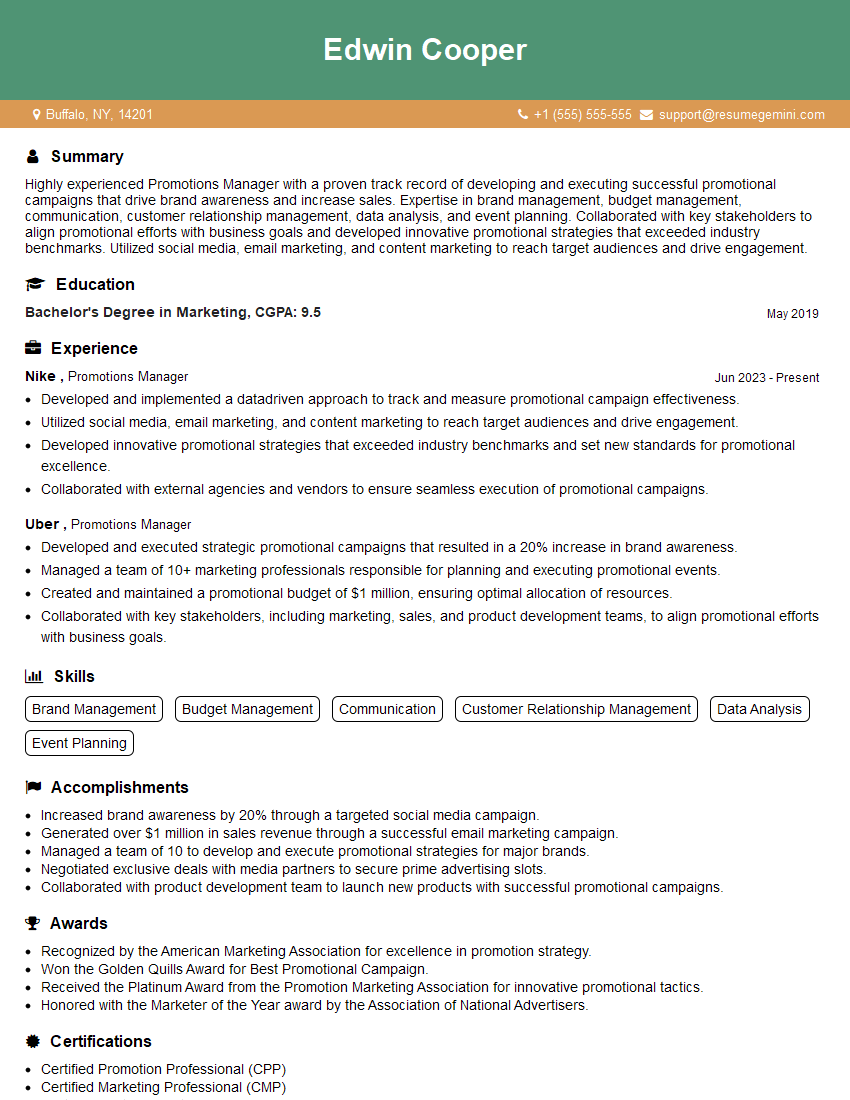
Promotions Manager Resume Sample
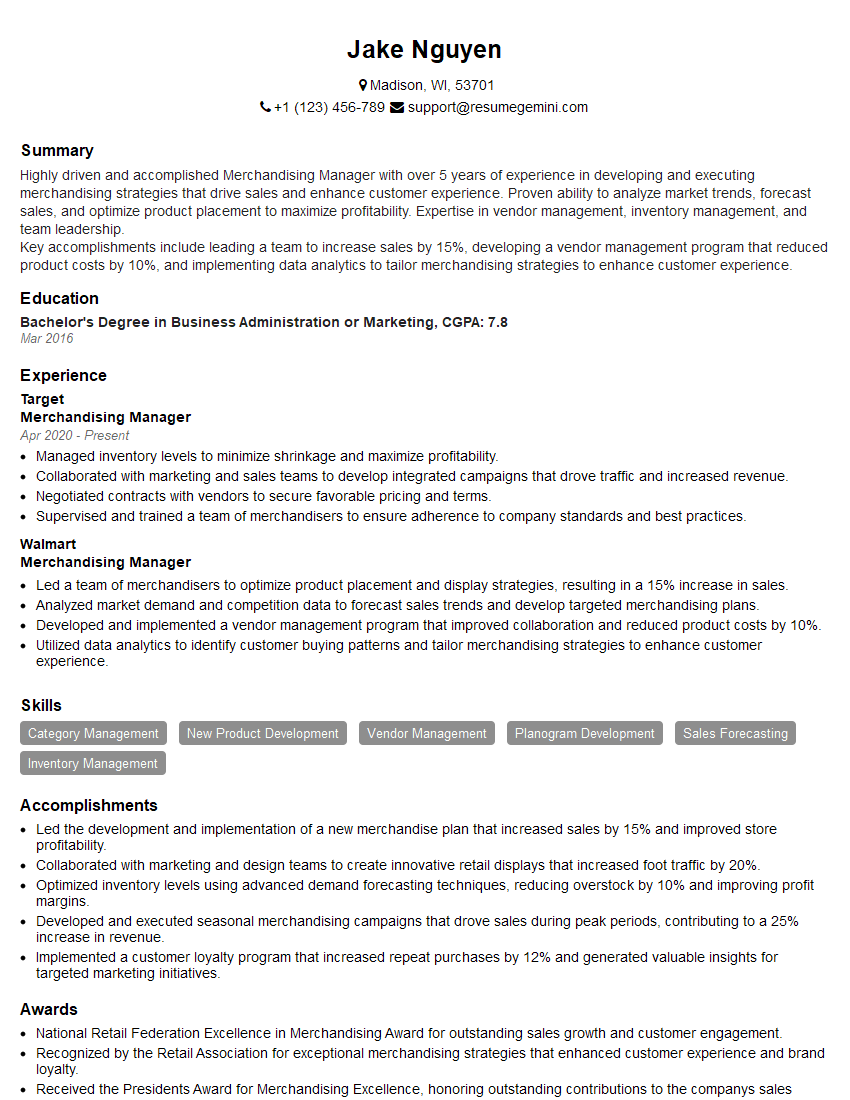
Merchandising Manager Resume Sample
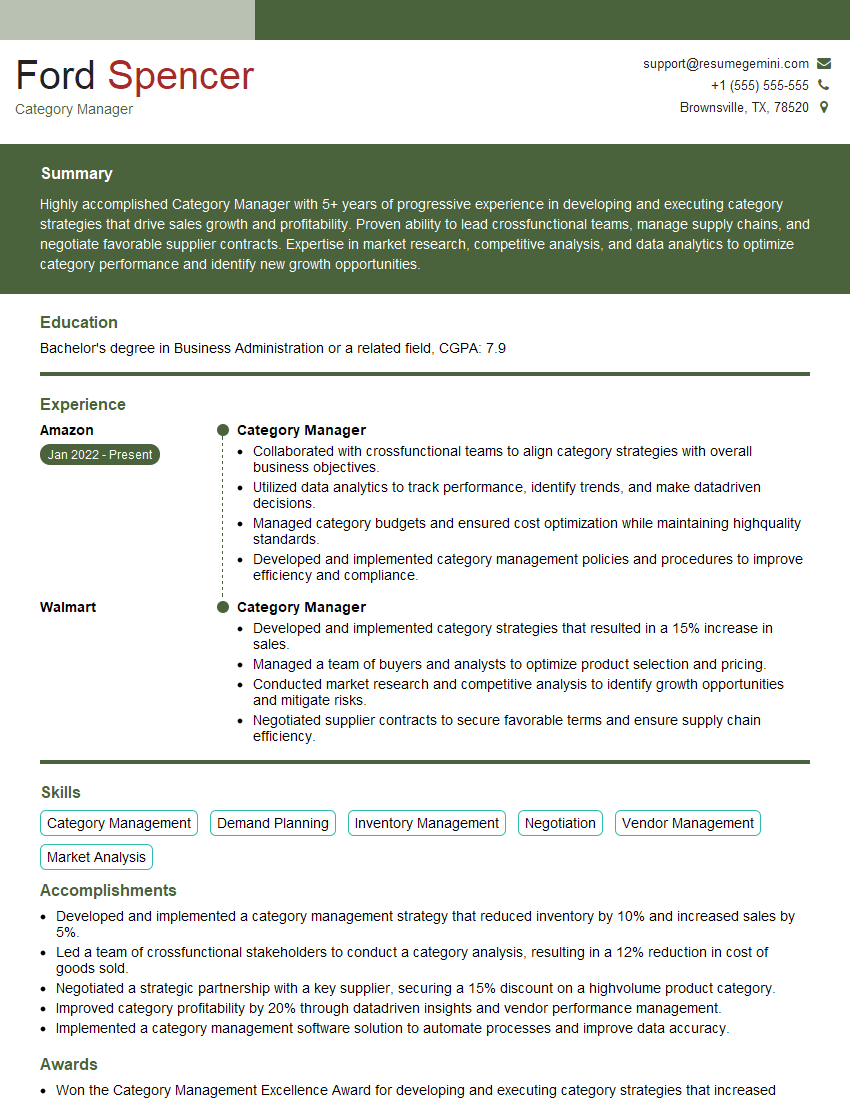
Category Manager Resume Sample
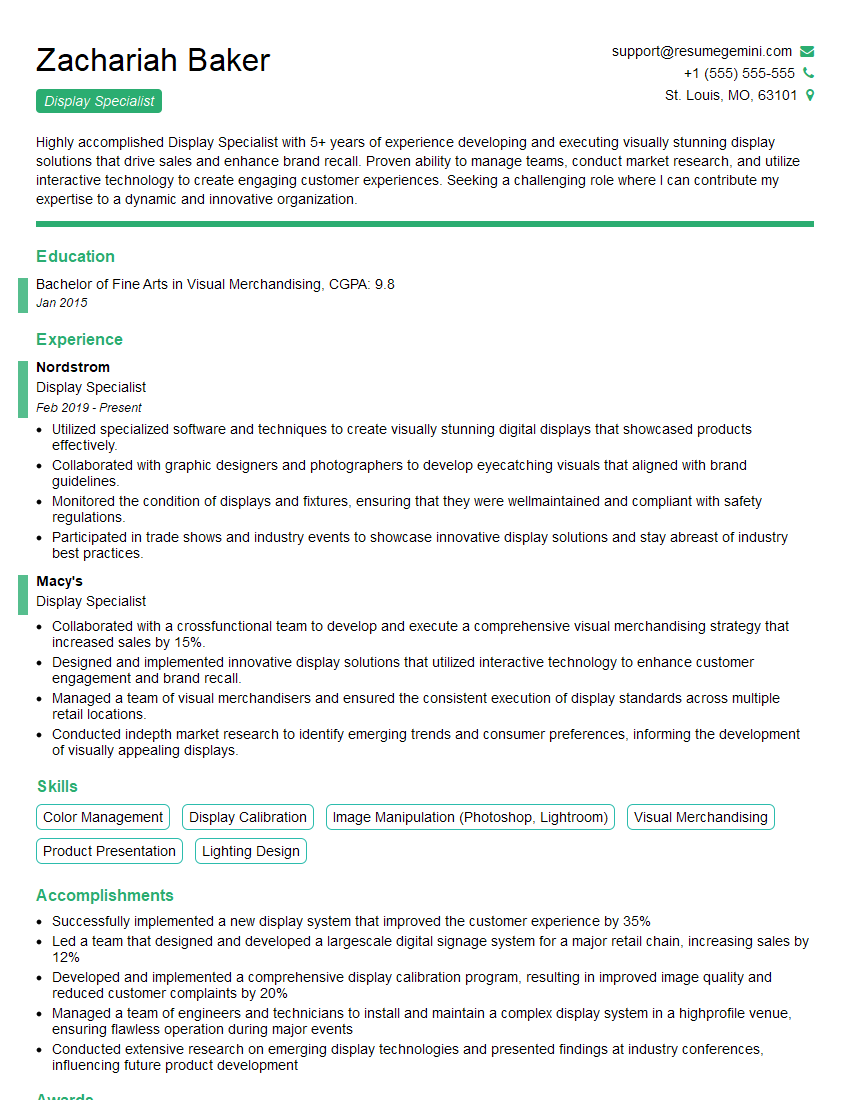
Display Specialist Resume Sample
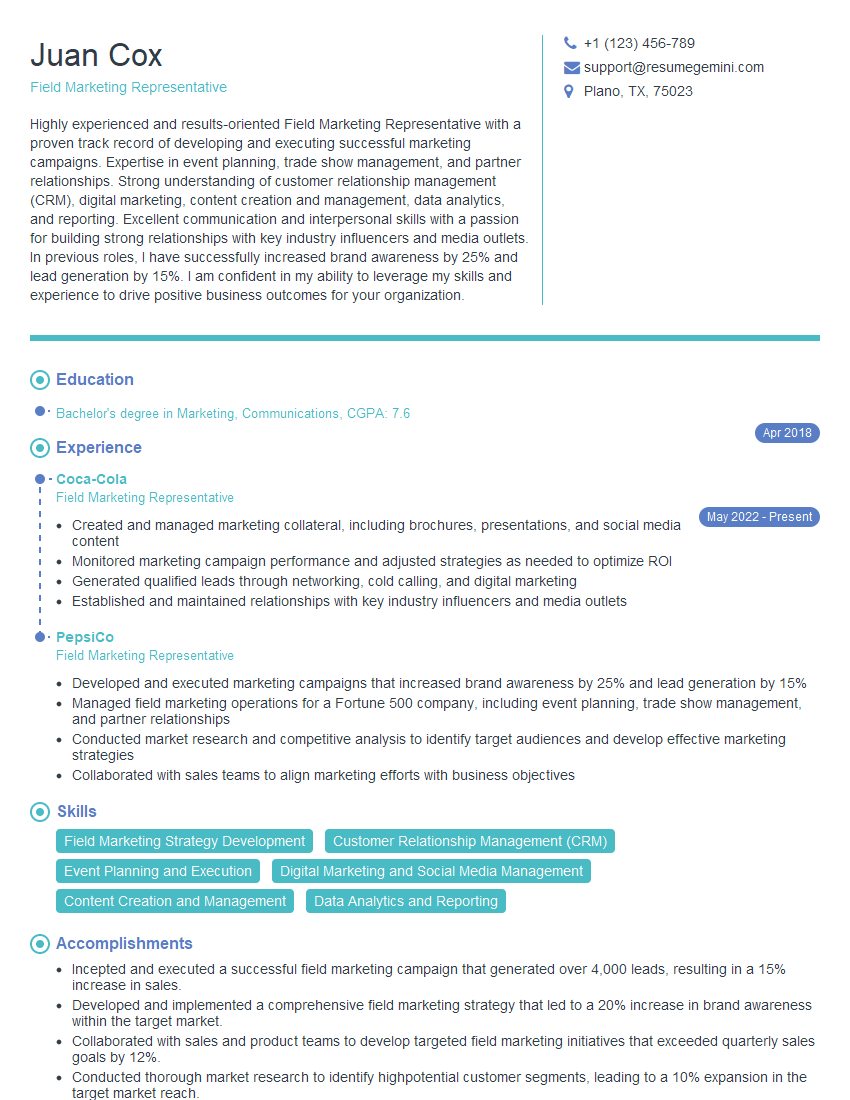
Field Marketing Representative Resume Sample
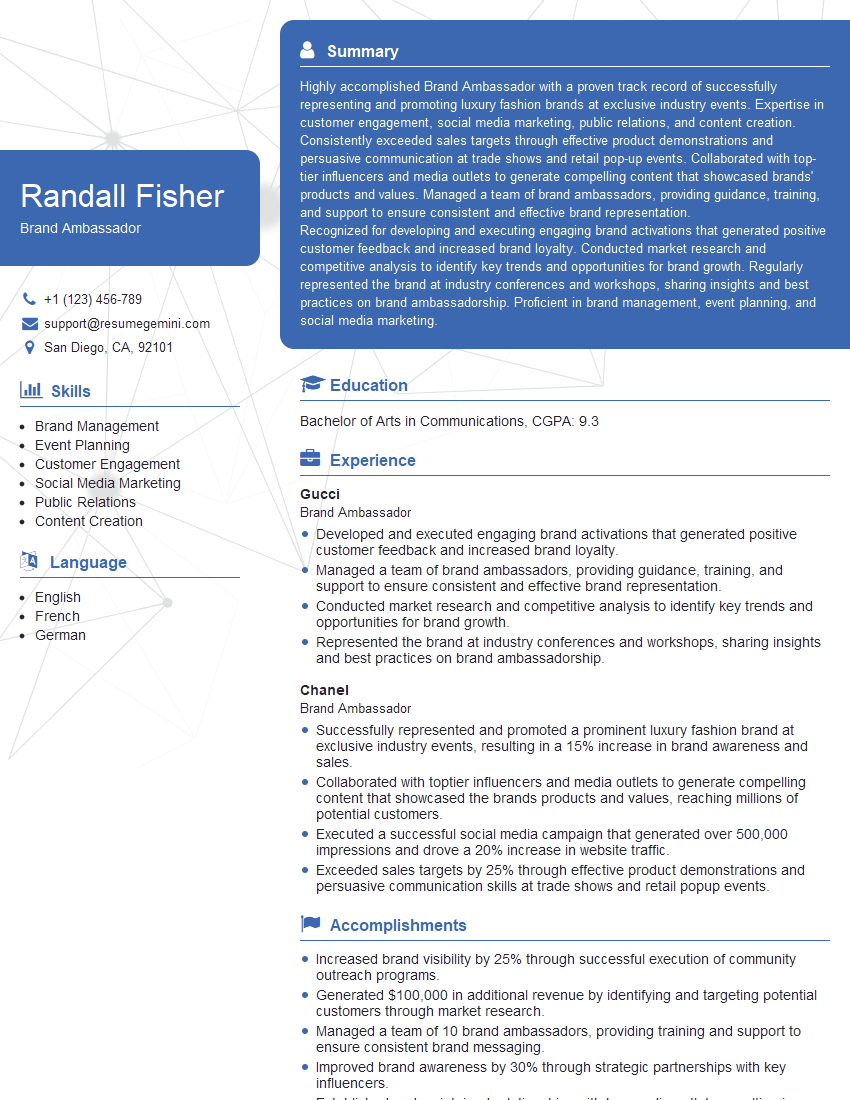
Brand Ambassador Resume Sample
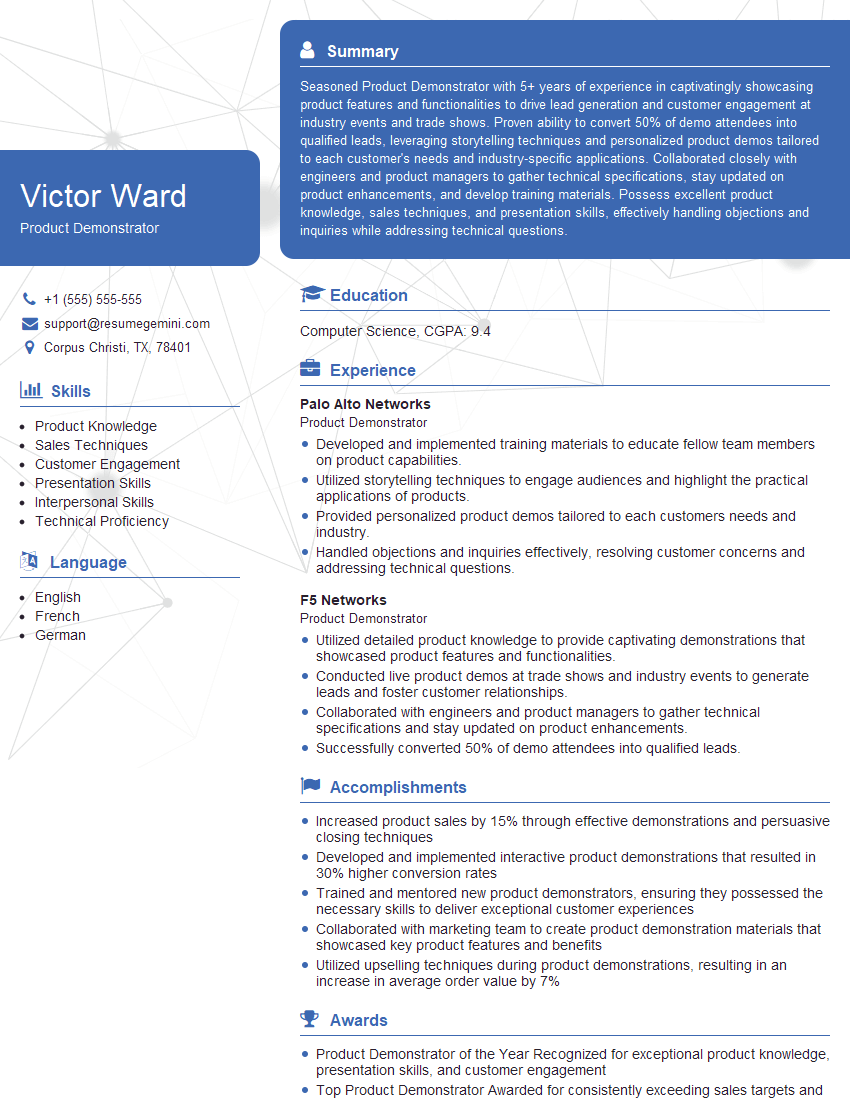
Product Demonstrator Resume Sample
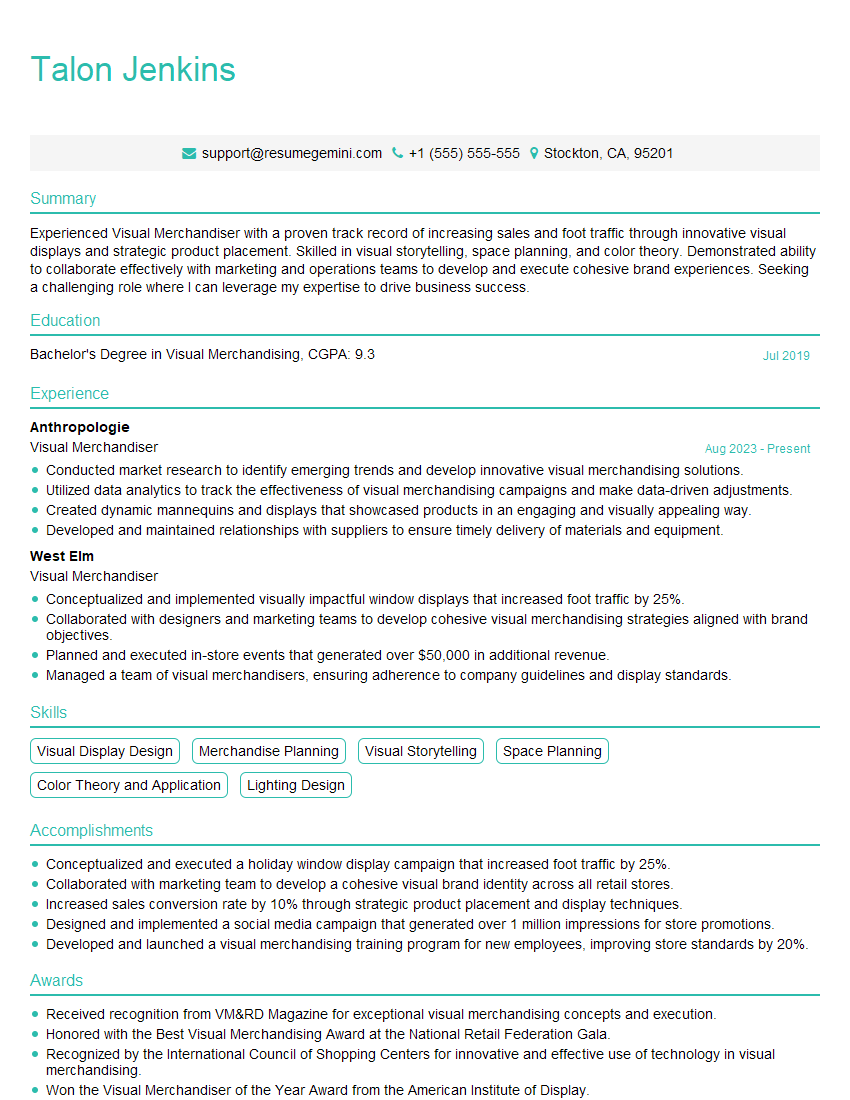
Visual Merchandiser Resume Sample
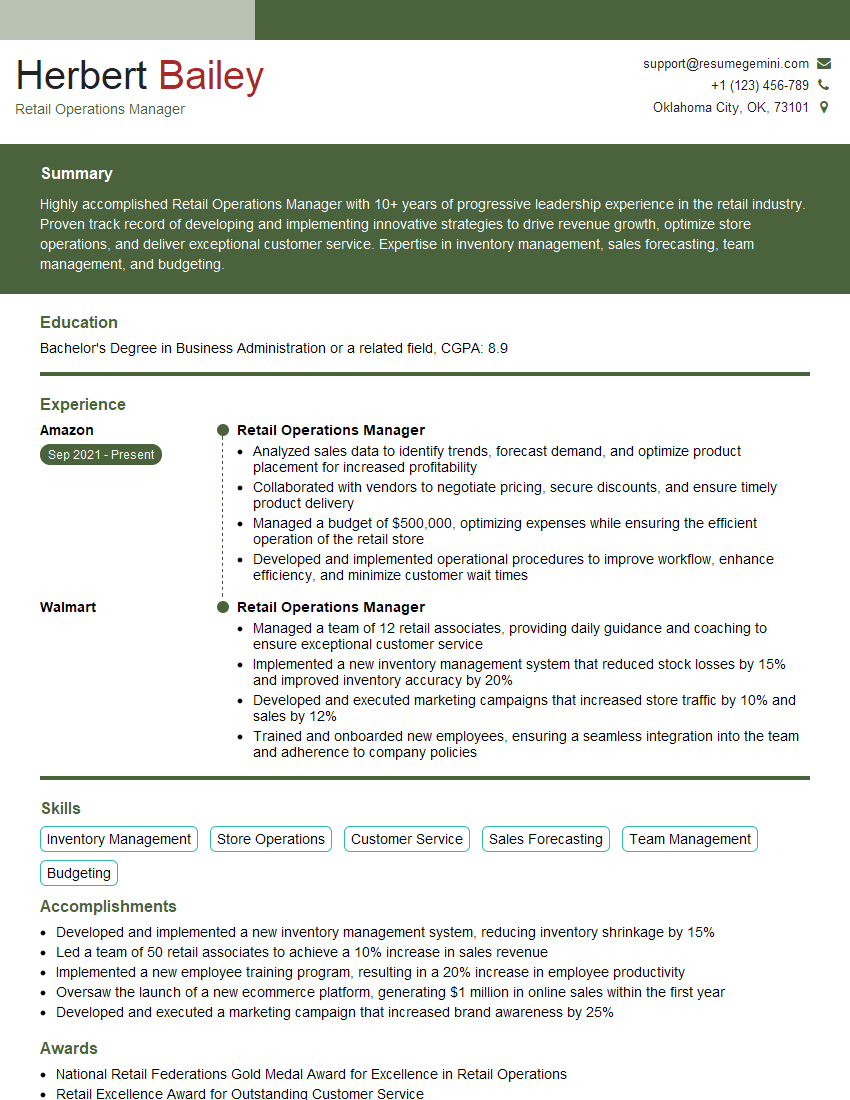
Retail Operations Manager Resume Sample
Explore more articles
Users Rating of Our Blogs
Share Your Experience
We value your feedback! Please rate our content and share your thoughts (optional).
What Readers Say About Our Blog
Very informative content, great job.
good