Feeling uncertain about what to expect in your upcoming interview? We’ve got you covered! This blog highlights the most important Information Management and Data Exchange interview questions and provides actionable advice to help you stand out as the ideal candidate. Let’s pave the way for your success.
Questions Asked in Information Management and Data Exchange Interview
Q 1. Explain the differences between ETL and ELT processes.
ETL (Extract, Transform, Load) and ELT (Extract, Load, Transform) are both data integration processes used to move data from various sources into a data warehouse or data lake. The key difference lies in when the data transformation occurs.
In ETL, data is first extracted from source systems, then transformed (cleaned, standardized, aggregated, etc.) before being loaded into the target system. This approach is beneficial when dealing with large volumes of data needing significant transformation. The transformation process happens before the data is stored, reducing storage needs for the transformed data. Think of it like preparing ingredients (extracting, transforming) before cooking (loading) a meal.
ELT, on the other hand, extracts data and loads it into the target system (often a data lake) before transformation. The transformation is then applied to the data within the target system, leveraging the target system’s processing power. This is advantageous when dealing with complex transformations or when you need the raw data readily available. Imagine ordering groceries (extracting, loading) then prepping them (transforming) to make a meal.
In short: ETL transforms data before loading; ELT transforms data after loading. The choice depends on factors such as data volume, transformation complexity, and the capabilities of your target system.
Q 2. Describe your experience with data warehousing techniques.
My experience with data warehousing encompasses the entire lifecycle, from requirements gathering and design to implementation and maintenance. I’ve worked with various data warehousing architectures, including star schemas and snowflake schemas. I’m proficient in using dimensional modeling techniques to design efficient and scalable data warehouses.
For instance, in a recent project for a retail company, I designed a star schema data warehouse to analyze sales data. The central fact table contained sales transactions, linked to dimension tables representing products, customers, stores, and time. This allowed for efficient querying and reporting on sales trends and customer behavior. I also implemented data quality checks and implemented ETL processes using Informatica PowerCenter to ensure data accuracy and consistency. We optimized query performance through techniques such as indexing and partitioning. My experience also includes working with cloud-based data warehouses, like Snowflake, leveraging their scalability and performance benefits.
Q 3. How would you handle inconsistent data during a data migration?
Handling inconsistent data during a migration requires a multi-step approach focusing on identification, resolution, and prevention. The first step involves identifying the inconsistencies through data profiling and data quality checks. This might reveal duplicate records, missing values, or data type mismatches. Then, I utilize a combination of techniques to address these problems.
- Data Cleansing: This involves correcting or removing inaccurate or incomplete data. For example, standardizing address formats or using algorithms to impute missing values. For example, I’d use fuzzy matching to identify and merge duplicate records with slightly different names.
- Data Transformation: I would transform the data into a consistent format. This might involve converting data types, mapping values to standard codes, or creating new variables based on existing ones.
- Data Validation: I would implement robust validation rules both before and after transformation to prevent new inconsistencies from occurring.
- Reconciliation and Auditing: This involves careful tracking of changes during the migration process, ensuring a clear record of all actions taken to address inconsistencies.
The choice of approach depends on the nature and extent of the inconsistency. For minor inconsistencies, I might automate the correction; major inconsistencies might require manual intervention and careful review.
Q 4. What data modeling techniques are you familiar with?
I’m familiar with several data modeling techniques, including:
- Relational Model: This uses tables with rows and columns to organize data, enforcing relationships between tables using primary and foreign keys. It’s the foundation for most relational database management systems (RDBMS).
- Dimensional Modeling: This is a technique specifically designed for data warehousing and business intelligence, using fact tables and dimension tables to represent data in a way that’s easy to query and analyze. Star schemas and snowflake schemas are common examples of this model.
- Entity-Relationship Model (ERM): This uses entities (objects) and relationships (connections between objects) to represent data graphically. It’s often used in the initial stages of database design to visualize the structure of data before implementation.
- NoSQL Data Modeling: I have experience working with NoSQL databases and their various data models, such as document, key-value, graph, and column-family databases. The best approach depends heavily on the specific use-case.
My experience enables me to choose the most suitable technique based on the specific needs of the project, considering factors such as data volume, query patterns, and performance requirements.
Q 5. Explain your understanding of data governance and its importance.
Data governance is the set of processes, standards, and policies that ensure the quality, integrity, and accessibility of an organization’s data. It’s crucial for maintaining trust in data-driven decisions and supporting compliance with regulations.
A robust data governance framework covers aspects such as data definition, data quality, data security, data access control, and metadata management. Its importance cannot be overstated because it:
- Enhances Data Quality: Improves accuracy and reliability of data.
- Reduces Risk: Minimizes data breaches and regulatory violations.
- Improves Decision-Making: Provides decision-makers with trustworthy and relevant data.
- Increases Efficiency: Streamlines data management processes.
- Supports Compliance: Ensures adherence to regulations like GDPR and CCPA.
In my experience, a successful data governance program requires strong leadership, clear accountability, defined roles and responsibilities, and the use of appropriate technologies.
Q 6. How do you ensure data quality throughout the data lifecycle?
Ensuring data quality throughout the data lifecycle requires a proactive and iterative approach. This starts with data quality assessment, understanding what constitutes ‘good’ data for various applications. Key steps include:
- Data Profiling: Analyzing data to understand its characteristics, including data types, distribution, completeness, and consistency.
- Data Cleansing: Correcting or removing inaccurate or incomplete data.
- Data Validation: Implementing rules and checks to prevent bad data from entering the system.
- Data Monitoring: Continuously tracking data quality metrics to identify and address potential problems proactively.
- Data Governance Policies: Defining clear standards and policies for data handling and management.
I often employ automated data quality tools and integrate them into ETL processes. I also promote a culture of data quality awareness amongst data users and stakeholders. For example, providing clear data entry guidelines and regular training on data quality best practices.
Q 7. What experience do you have with data visualization tools?
I have extensive experience with various data visualization tools, including Tableau, Power BI, and Qlik Sense. I’m adept at using these tools to create interactive dashboards and reports that effectively communicate insights from data.
For instance, in a previous project for a financial institution, I used Tableau to create interactive dashboards that displayed key performance indicators (KPIs) such as customer churn rate, loan delinquency, and investment returns. These dashboards enabled executives to monitor business performance in real-time and make data-driven decisions. My visualizations prioritized clarity and simplicity, ensuring that the insights were readily understandable to a non-technical audience. I also have experience with creating custom visualizations using programming languages like Python with libraries like Matplotlib and Seaborn when the standard features of the tools didn’t meet our specific requirements.
Q 8. Describe your experience with different database management systems (DBMS).
My experience spans a range of database management systems, encompassing both relational and NoSQL databases. With relational databases, I’m proficient in SQL and have extensive experience with systems like Oracle, MySQL, and PostgreSQL. I’ve worked on projects ranging from designing normalized schemas for enterprise-level applications to optimizing query performance for large data warehouses. For example, I once optimized a slow-running query in a large Oracle database by identifying and resolving inefficient joins and leveraging indexes, resulting in a 70% reduction in query execution time. In the NoSQL space, I have practical experience with MongoDB and Cassandra, using them for applications requiring high scalability and flexibility, such as real-time analytics and large-scale data storage. Choosing the right DBMS is critical; the selection depends heavily on the specific needs of the project, considering factors such as data structure, scalability requirements, and transactionality needs.
Q 9. How do you handle data security and privacy concerns?
Data security and privacy are paramount in my work. My approach is multi-layered and encompasses several key areas. First, I ensure adherence to relevant regulations like GDPR and CCPA, implementing appropriate controls to manage personal data. This involves understanding data classification, access control mechanisms, and data retention policies. Secondly, I utilize strong encryption techniques both in transit and at rest, protecting data from unauthorized access. I’m familiar with various encryption algorithms and have experience implementing them in different database systems. Thirdly, regular security audits and penetration testing are crucial, enabling early identification and mitigation of vulnerabilities. Finally, I promote a security-conscious culture through training and awareness programs for all stakeholders involved in data handling. For instance, in a previous project, I implemented multi-factor authentication and role-based access control to restrict access to sensitive data based on the individual’s role and responsibilities.
Q 10. What are your preferred methods for data cleansing and transformation?
Data cleansing and transformation are crucial for ensuring data quality. My preferred methods involve a combination of automated and manual techniques. Automated techniques leverage tools and scripts to identify and correct inconsistencies, such as handling missing values, standardizing data formats, and removing duplicates. For example, I frequently use Python libraries like Pandas and data manipulation tools like SQL to cleanse and transform large datasets. Manual techniques are equally important, especially for complex issues requiring human judgment. I employ data profiling to understand the data’s characteristics, identify potential problems, and devise appropriate solutions. This often involves using a combination of data quality rules, statistical analysis, and visual inspection to verify the accuracy and consistency of the cleaned data. A real-world example involves a project where I used regular expressions in Python to clean inconsistently formatted addresses, improving data quality and enabling accurate geocoding.
Q 11. Explain your experience with different data integration tools.
My experience with data integration tools includes working with both ETL (Extract, Transform, Load) tools like Informatica PowerCenter and cloud-based solutions like Azure Data Factory and AWS Glue. The choice of tool depends heavily on the project’s scale and complexity. For smaller projects, I might use scripting languages like Python with libraries such as Pandas and SQLAlchemy to perform ETL tasks. For large-scale enterprise data integration, tools like Informatica offer robust features such as data transformation, scheduling, and monitoring. Cloud-based solutions provide scalability and flexibility, particularly suitable for handling big data volumes and integrating data from various cloud-based services. In one project, I used Azure Data Factory to build a scalable and reliable ETL pipeline for integrating data from various sources, including on-premise databases and cloud-based services, into a centralized data warehouse.
Q 12. Describe your experience working with large datasets.
Working with large datasets is a significant part of my experience. Techniques for efficient processing include leveraging distributed computing frameworks like Hadoop and Spark, which enable parallel processing of large data sets across multiple machines. I also have experience with data warehousing techniques, including designing star schemas and snowflake schemas to optimize query performance. Data sampling and aggregation techniques are also vital to manage computational complexity when dealing with large volumes of data. For instance, I worked on a project where we used Spark to process terabytes of log data for real-time analytics, leveraging its distributed computing capabilities to achieve fast and efficient processing. Understanding the tradeoffs between accuracy and performance is critical when working with such large datasets; often, carefully chosen approximations provide faster insights that are sufficient for the intended purpose.
Q 13. How do you manage data versioning and control?
Data versioning and control are essential for maintaining data integrity and facilitating collaboration. Version control systems like Git are commonly used for managing code, but similar principles can be applied to data. Techniques include using database transactions for atomic operations, implementing change tracking mechanisms, and employing data lineage tools to track data transformations and origins. For complex data projects, dedicated data versioning tools or techniques are employed. This might involve creating snapshots of the data at different points in time, or using specialized database features to track changes and revert to earlier versions if needed. In one project, we used a combination of Git for metadata and a database’s built-in versioning features to manage changes to the data schema and content, ensuring traceability and facilitating rollback in case of errors.
Q 14. Explain your experience with metadata management.
Metadata management is critical for understanding, managing, and governing data assets effectively. My experience encompasses developing and maintaining metadata repositories, designing metadata schemas to capture relevant information about data, and implementing metadata governance policies. I’ve used both commercial and open-source metadata management tools. Metadata is crucial for data discovery, ensuring data quality, and enabling data integration efforts. For example, in a recent project, I implemented a metadata repository to document data sources, their structure, data quality rules, and lineage, allowing stakeholders to easily discover and understand available data and its relationships. This significantly improved data accessibility and reduced time spent on data discovery and validation.
Q 15. How do you approach data profiling and analysis?
Data profiling and analysis is the process of examining data to understand its characteristics, quality, and potential for use. It’s like taking an inventory of your data warehouse before you start building something with it. My approach involves a structured methodology:
- Data Discovery: I start by identifying the data sources and understanding the business context. What is this data supposed to represent? What questions are we trying to answer?
- Data Profiling: I then use tools and techniques to automatically assess the data’s quality. This involves checking for completeness (are there missing values?), consistency (are data types uniform?), validity (do values adhere to expected ranges?), and uniqueness (are there duplicate records?).
- Descriptive Statistics: I calculate summary statistics (mean, median, standard deviation, percentiles) to understand the distribution and central tendency of the data. Histograms and box plots are helpful visual aids.
- Data Visualization: I create charts and graphs (scatter plots, bar charts, etc.) to identify patterns, outliers, and anomalies. This often reveals insights that are hidden in raw data.
- Data Quality Assessment: Based on the profiling and analysis, I produce a report that documents the data’s quality, identifies potential problems, and makes recommendations for data cleaning or transformation.
For example, in a recent project, data profiling revealed inconsistencies in customer addresses, leading to the identification and correction of duplicate records and improved accuracy of marketing campaigns.
Career Expert Tips:
- Ace those interviews! Prepare effectively by reviewing the Top 50 Most Common Interview Questions on ResumeGemini.
- Navigate your job search with confidence! Explore a wide range of Career Tips on ResumeGemini. Learn about common challenges and recommendations to overcome them.
- Craft the perfect resume! Master the Art of Resume Writing with ResumeGemini’s guide. Showcase your unique qualifications and achievements effectively.
- Don’t miss out on holiday savings! Build your dream resume with ResumeGemini’s ATS optimized templates.
Q 16. Describe your experience with API integration.
API integration is crucial for seamless data exchange between different systems. I have extensive experience integrating various APIs, from RESTful to SOAP-based services. My process generally involves:
- Understanding API specifications: Thoroughly reviewing the API documentation to understand the endpoints, request methods (GET, POST, PUT, DELETE), required parameters, and response formats (JSON, XML).
- Authentication and authorization: Implementing secure authentication mechanisms (e.g., OAuth 2.0, API keys) to access the API.
- Data mapping: Mapping data fields between the source and target systems, handling data type conversions and transformations as needed.
- Error handling: Implementing robust error handling mechanisms to manage network failures, API errors, and data validation issues.
- Testing and deployment: Rigorously testing the integration using unit tests, integration tests, and end-to-end tests, followed by careful deployment into the production environment.
For instance, I integrated a CRM system’s API with a marketing automation platform to automate lead nurturing processes. This involved using Python with libraries like requests to make API calls, handle authentication, and parse JSON responses. requests.get('https://api.example.com/customers', headers={'Authorization': 'Bearer is a basic example.
Q 17. How do you ensure data integrity and consistency across different systems?
Maintaining data integrity and consistency across multiple systems requires a multi-faceted approach. Key strategies include:
- Data governance policies: Establishing clear policies and procedures for data entry, validation, and update processes. This ensures consistency in data definitions and formats.
- Data standardization: Implementing standardized data formats (e.g., using a common data dictionary) and enforcing data quality rules. This reduces ambiguity and increases the reliability of data.
- Master data management (MDM): Implementing an MDM system to create a single, authoritative source of truth for critical data elements, reducing data redundancy and ensuring consistency across the organization.
- Data validation rules: Implementing data validation checks within each system to prevent inconsistencies at the point of data entry. These checks can be simple data type checks or more complex business rules.
- Data reconciliation and deduplication: Regularly reconciling data between systems and using deduplication techniques to identify and resolve duplicate records.
- Data lineage tracking: Tracking the origin, movement, and transformations of data to enable better understanding of data flow and to aid in troubleshooting inconsistencies.
For example, in a retail setting, ensuring consistent product information across the website, inventory management system, and point-of-sale system is vital. MDM plays a crucial role here, ensuring accurate product descriptions, pricing, and inventory levels across all channels.
Q 18. What is your experience with master data management (MDM)?
Master Data Management (MDM) is the practice of managing the most important data of an organization—its master data—as a centralized, consistent, and authoritative resource. My experience with MDM includes:
- Implementation and configuration of MDM systems: I’ve worked with various MDM solutions, including both commercial and open-source options, configuring them to meet specific business needs.
- Data modeling and data governance: Defining the MDM data model, defining data quality rules, and establishing data governance processes to ensure data accuracy and consistency.
- Data migration and integration: Migrating existing master data into the MDM system from disparate sources and integrating the MDM system with other enterprise applications.
- Data quality monitoring and improvement: Implementing monitoring processes to identify and resolve data quality issues, continuously improving the quality and reliability of master data.
In a recent project, I helped a manufacturing company implement an MDM system for managing its product catalog. This improved data accuracy and reduced costly errors in manufacturing and supply chain operations. The improved consistency led to better reporting and streamlined decision-making.
Q 19. How would you troubleshoot data quality issues?
Troubleshooting data quality issues requires a systematic and investigative approach. My strategy typically involves:
- Identifying the issue: Clearly defining the data quality problem. Is the data inaccurate, incomplete, inconsistent, or duplicated?
- Root cause analysis: Investigating the source of the problem. Is it due to data entry errors, system glitches, or flawed data integration processes?
- Data profiling and analysis: Using data profiling techniques to gain a deeper understanding of the data and identify patterns or anomalies related to the issue.
- Data validation and cleansing: Implementing data validation rules and using data cleansing techniques (e.g., deduplication, standardization) to correct or remove erroneous data.
- Testing and verification: Thoroughly testing the implemented solutions to ensure the data quality issue has been resolved.
- Prevention: Implementing preventative measures to avoid similar issues in the future. This may include improved data entry processes, data validation rules, or system enhancements.
For example, if customer records are missing phone numbers, I would first check the data entry process to determine if there’s a missing field or validation rule. I might then profile the data to see if certain customer segments are more likely to be missing phone numbers, hinting at a systemic issue in data collection.
Q 20. Explain your understanding of different data formats (e.g., CSV, JSON, XML).
Understanding different data formats is fundamental in information management. Here’s a comparison of common formats:
- CSV (Comma Separated Values): A simple text-based format where values are separated by commas. It’s widely used for exchanging tabular data but lacks schema definition, making it less suitable for complex data structures.
- JSON (JavaScript Object Notation): A human-readable, lightweight format based on key-value pairs. It’s widely used for web APIs and data interchange because of its flexibility and support for nested structures.
{ "name": "John Doe", "age": 30 } - XML (Extensible Markup Language): A markup language that uses tags to define data structures. It’s more verbose than JSON but provides better structure and validation capabilities.
<customer><name>John Doe</name><age>30</age></customer>
The choice of format depends on the specific application. JSON is preferred for its simplicity in web APIs, while XML might be better suited for applications requiring strong data validation and schema definition. CSV is convenient for simple tabular data.
Q 21. Describe your experience with data mining techniques.
Data mining techniques involve discovering patterns, anomalies, and insights from large datasets. My experience includes using various techniques, such as:
- Classification: Assigning data points to predefined categories. For example, classifying customers as high-value or low-value based on their purchase history (using algorithms like decision trees or support vector machines).
- Regression: Predicting a continuous variable based on other variables. For example, predicting house prices based on size, location, and other factors (using linear regression or other regression models).
- Clustering: Grouping data points based on their similarity. For example, segmenting customers into different groups based on their demographics and purchase behavior (using k-means clustering or hierarchical clustering).
- Association rule mining: Discovering relationships between variables. For example, identifying products frequently purchased together in a supermarket (using Apriori algorithm).
I have used tools like R and Python (with libraries like scikit-learn and pandas) to implement these techniques. In a retail setting, data mining was crucial in identifying customer segments with specific needs and customizing marketing campaigns, leading to increased sales conversion rates.
Q 22. How do you measure the success of a data exchange project?
Measuring the success of a data exchange project goes beyond simply completing the technical implementation. It requires a multi-faceted approach, focusing on both quantitative and qualitative metrics. We need to establish clear, measurable goals upfront – what are we hoping to achieve? Increased efficiency? Improved decision-making? Enhanced customer experience? Then, we track progress against those goals.
Quantitative Metrics: These are easily measurable and often involve numbers. Examples include the number of records successfully transferred, the speed of data transfer, the reduction in data processing time, and the decrease in manual effort. For example, if we aimed to reduce manual data entry by 50%, we’d track the hours spent before and after the implementation.
Qualitative Metrics: These are harder to quantify but equally important. We could assess user satisfaction through surveys, measure improvements in business processes, or analyze the impact on decision-making quality. Did the improved data lead to better strategic choices? Did it enhance collaboration across departments?
Data Quality: A critical success factor is the accuracy and completeness of the exchanged data. We need to implement thorough data validation and cleansing processes before, during, and after the exchange to ensure data integrity. Monitoring error rates and the number of data corrections needed provides valuable insights.
Ultimately, successful data exchange projects deliver measurable improvements to the business, enhance data quality, and provide a solid foundation for future data initiatives. It’s about aligning technical achievements with tangible business benefits.
Q 23. What is your experience with data encryption and security protocols?
Data encryption and security protocols are paramount in any data exchange project. My experience spans various methods, from symmetric encryption (like AES) to asymmetric encryption (RSA) and hashing algorithms (SHA-256). I’m proficient in implementing and managing these protocols within different contexts, such as securing data in transit (using HTTPS and TLS) and data at rest (using disk encryption and database-level encryption).
I have extensive experience working with security protocols such as TLS/SSL, SSH, and SFTP to ensure secure communication between systems. I understand the importance of access control mechanisms, such as role-based access control (RBAC), to restrict data access to authorized personnel only. I’ve also worked with various key management systems to securely store and manage encryption keys.
In a recent project involving the exchange of sensitive patient data, we implemented end-to-end encryption using TLS 1.3 and AES-256, coupled with strong access control measures and regular security audits. This ensured compliance with relevant regulations, such as HIPAA, and protected sensitive patient information. This involved meticulous planning, careful selection of encryption algorithms, and robust key management practices.
Q 24. How do you stay up-to-date with the latest trends in data management?
Staying current in the dynamic field of data management is crucial. I employ a multi-pronged approach:
Industry Publications and Conferences: I regularly read publications like Datamation, Information Week, and attend conferences like the Data Management Association International (DMAI) events. These provide insights into emerging technologies and best practices.
Online Courses and Webinars: Platforms like Coursera, edX, and LinkedIn Learning offer valuable courses on advanced data management techniques and tools. Webinars from industry leaders provide updates on current trends.
Professional Networks: Engaging with professional networks such as data management communities on LinkedIn provides opportunities for knowledge sharing and learning from others’ experiences.
Hands-on Experience: The best way to stay updated is through practical application. I actively seek opportunities to work with new technologies and tools, ensuring my skills remain relevant and cutting-edge.
This combination of formal and informal learning ensures I remain at the forefront of data management advancements.
Q 25. Explain your understanding of NoSQL databases.
NoSQL databases are non-relational database management systems that offer flexible data models, allowing for scalability and high performance. Unlike relational databases (SQL) that use tables with predefined schemas, NoSQL databases offer various models, including key-value stores, document databases, graph databases, and column-family stores.
Key-Value Stores: Simple, fast, and ideal for storing unstructured data. Think of a dictionary – each key maps to a value.
{ "name": "John Doe", "age": 30 }Document Databases: Store data in documents, typically JSON or XML, which are self-describing and schema-less. This allows for flexibility in data structure.
Graph Databases: Ideal for representing relationships between data points. Think social networks or knowledge graphs. They excel at traversing complex connections.
Column-Family Stores: Store data in columns, making it efficient to query specific attributes. Useful for big data analytics and time-series data.
The choice of NoSQL database depends on the specific needs of the application. For example, a key-value store might be suitable for caching frequently accessed data, while a document database might be better for applications requiring flexible schemas, and graph databases for social networks.
Q 26. Describe your experience with cloud-based data storage solutions.
I have extensive experience with cloud-based data storage solutions, including AWS S3, Azure Blob Storage, and Google Cloud Storage. I understand the benefits and challenges associated with migrating data to the cloud, including scalability, cost-effectiveness, data security, and disaster recovery.
In a previous project, we migrated a large on-premises data warehouse to AWS S3 using a phased approach. This involved careful planning, data cleansing, and the implementation of robust security measures. We used AWS services like Glacier for archiving less frequently accessed data and S3 lifecycle policies for efficient storage management. This resulted in significant cost savings and improved scalability.
I’m also experienced with various cloud-based data management tools and services, including cloud-based data lakes and data warehouses. I understand the importance of data governance and compliance in the cloud environment and have experience implementing security protocols and access control mechanisms to protect data.
Q 27. How would you design a data governance framework for an organization?
Designing a data governance framework requires a systematic approach. I would follow these steps:
Define Scope and Objectives: Clearly articulate the goals of the framework. What are the organization’s data management challenges? What are the desired outcomes? This involves identifying key stakeholders and their data needs.
Data Inventory and Classification: Catalog all organizational data assets, classifying them by sensitivity, value, and criticality. This allows prioritization of data governance efforts.
Define Data Policies and Standards: Establish clear policies on data quality, security, access control, and retention. Define standards for data naming conventions, metadata management, and data modeling.
Roles and Responsibilities: Define the roles and responsibilities of data stewards, data owners, and other key personnel involved in data governance. Clearly outline accountabilities.
Technology and Tools: Select appropriate technologies and tools to support data governance processes. This may include data quality tools, data cataloging tools, and data security solutions.
Implementation and Monitoring: Implement the framework incrementally and monitor its effectiveness. Regular reviews and adjustments are needed to ensure its ongoing relevance and effectiveness.
Training and Awareness: Provide training and awareness programs to educate employees about data governance policies and procedures.
The framework should be tailored to the specific needs and context of the organization, and it’s crucial to involve key stakeholders throughout the design and implementation process. Regular audits and reporting are also essential to ensure ongoing compliance and continuous improvement.
Q 28. What are your strengths and weaknesses in data management?
Strengths: My strengths lie in my ability to analyze complex data problems, develop practical solutions, and effectively communicate technical concepts to both technical and non-technical audiences. I possess a strong foundation in data modeling, data warehousing, and data exchange technologies. I am highly proficient in SQL and various NoSQL databases, and have considerable experience with cloud-based data storage and management solutions. My problem-solving skills are a significant asset, allowing me to address challenging data issues creatively and efficiently. My experience managing large-scale data projects is a significant strength.
Weaknesses: While I have a broad range of skills, my expertise is more focused on the technical aspects of data management. I am always working to improve my skills in areas such as project management and change management, particularly in the leadership aspects of driving organizational change around data strategy. While I am comfortable explaining complex technical concepts, I recognize that refining my communication skills to be even more concise and engaging for non-technical audiences is an area for continuous improvement.
Key Topics to Learn for Information Management and Data Exchange Interview
- Data Modeling and Database Design: Understanding relational and NoSQL databases, ER diagrams, normalization, and schema design. Consider practical applications like designing a database for a specific business scenario.
- Data Governance and Security: Explore data quality management, data security best practices (encryption, access control), compliance regulations (GDPR, HIPAA), and data loss prevention strategies. Think about real-world examples of data breaches and how they could have been prevented.
- Data Warehousing and Business Intelligence: Learn about ETL processes (Extract, Transform, Load), data warehousing architectures (star schema, snowflake schema), and common BI tools. Practice building simple data visualizations and interpreting key performance indicators (KPIs).
- Data Integration and Exchange: Master different data integration techniques (API integrations, ETL processes, message queues), data formats (XML, JSON, CSV), and data exchange protocols. Consider scenarios involving integrating data from disparate sources.
- Metadata Management: Understand the importance of metadata for data discovery, data quality, and data governance. Explore different metadata standards and best practices for managing metadata.
- Data Migration and Transformation: Familiarize yourself with strategies for migrating data between systems, including data cleansing, transformation, and validation. Consider the challenges and best practices for large-scale data migrations.
- Information Architecture and Knowledge Management: Explore how information is structured and organized within an organization, and how knowledge management systems facilitate information access and sharing.
Next Steps
Mastering Information Management and Data Exchange is crucial for a successful career in today’s data-driven world. These skills are highly sought after, opening doors to exciting opportunities and career advancement. To maximize your job prospects, it’s essential to present your skills effectively. Creating an ATS-friendly resume is key to getting your application noticed. ResumeGemini is a trusted resource to help you build a professional and impactful resume that highlights your expertise in Information Management and Data Exchange. We provide examples of resumes tailored to this field to guide you. Invest the time to craft a compelling resume – it’s your first impression and a crucial step towards your dream job.

Knowledge Manager Resume Sample
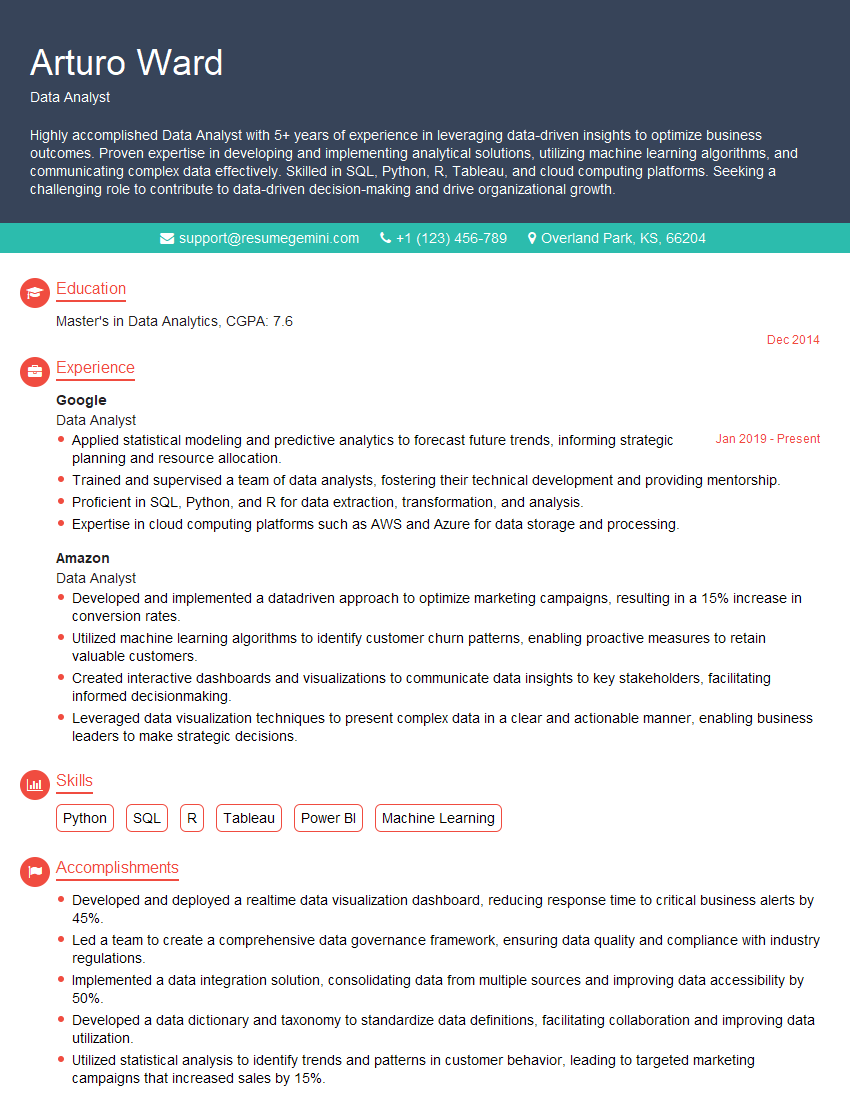
Data Analyst Resume Sample
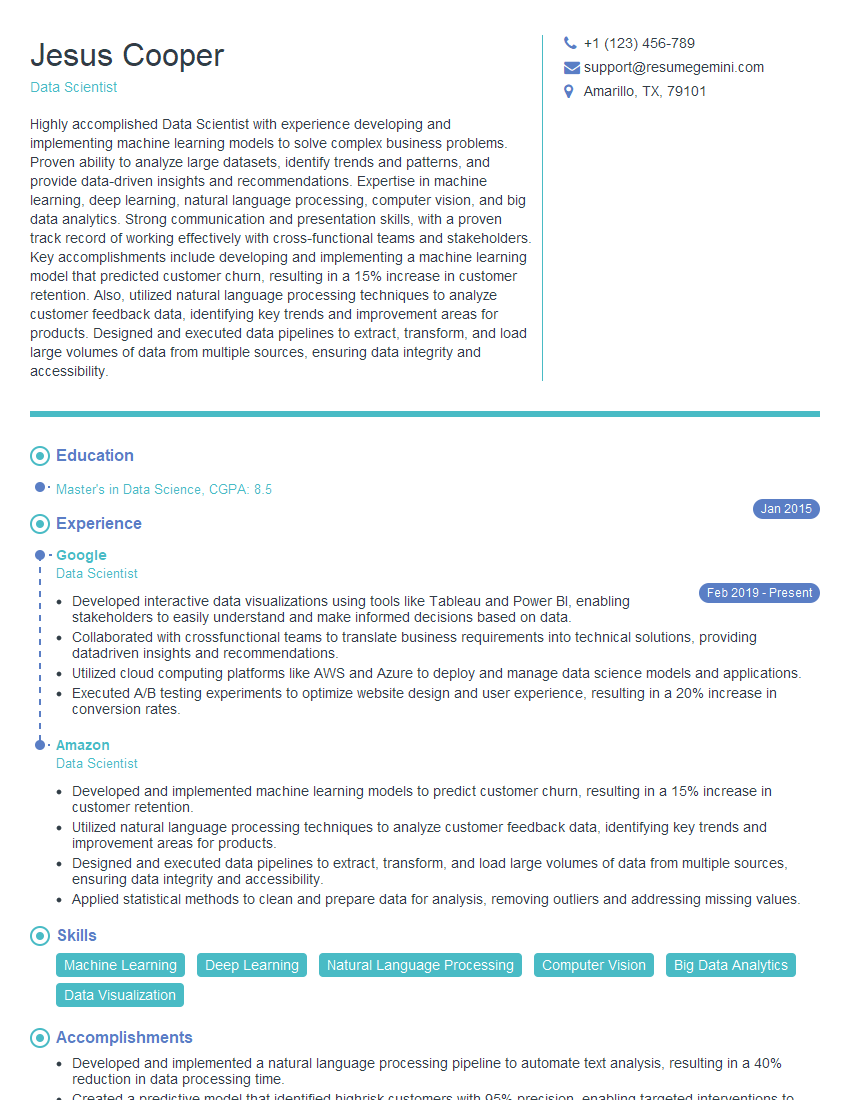
Data Scientist Resume Sample
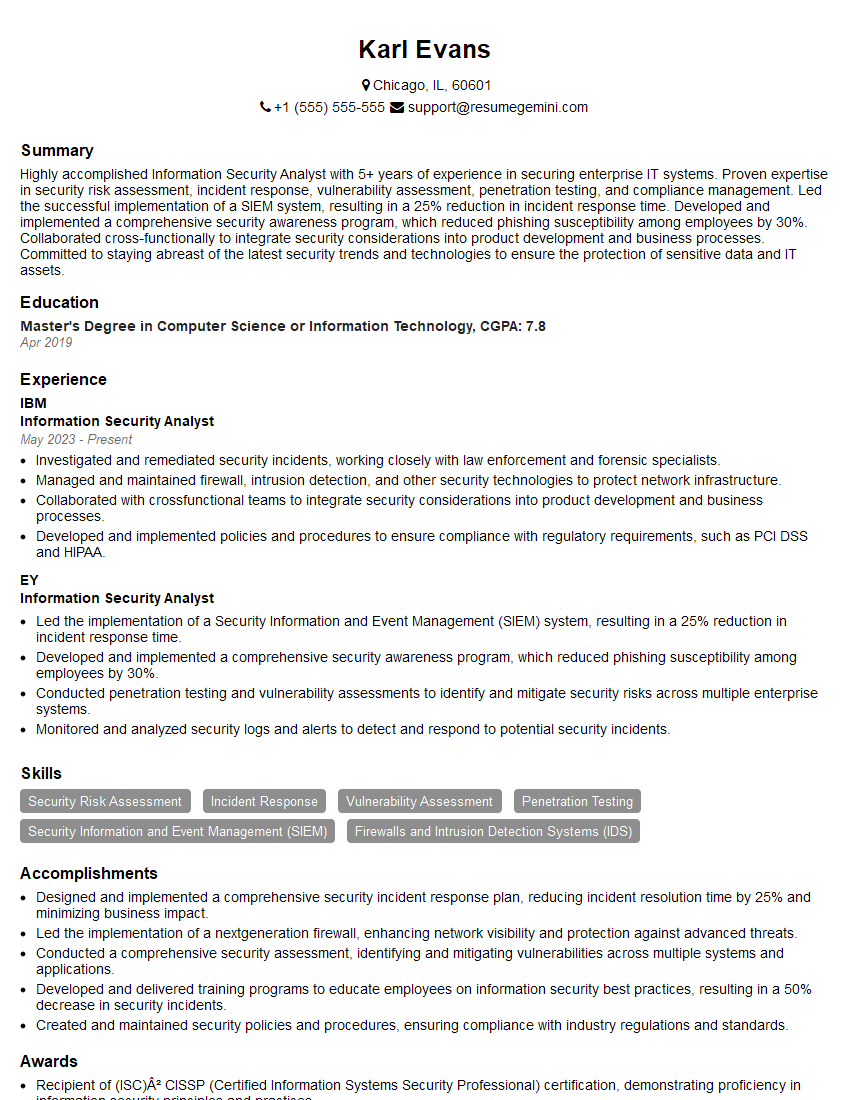
Information Security Analyst Resume Sample

Information Architect Resume Sample
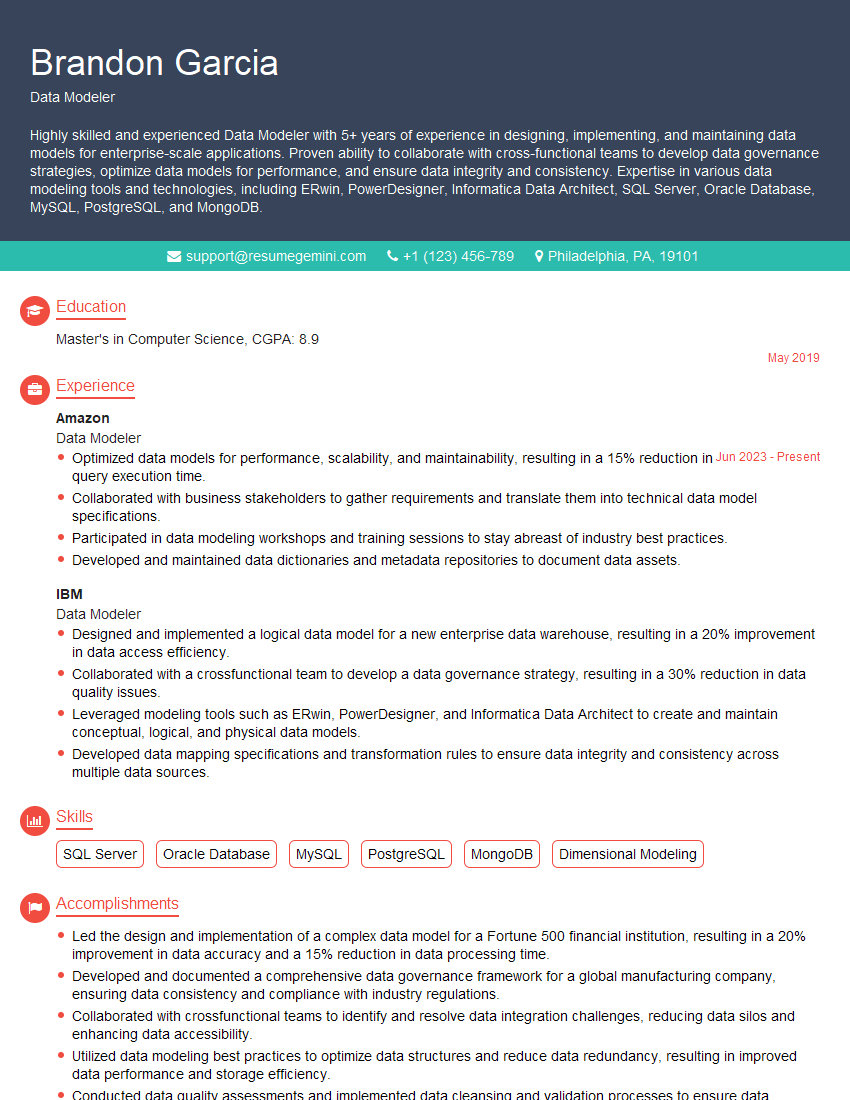
Data Modeler Resume Sample
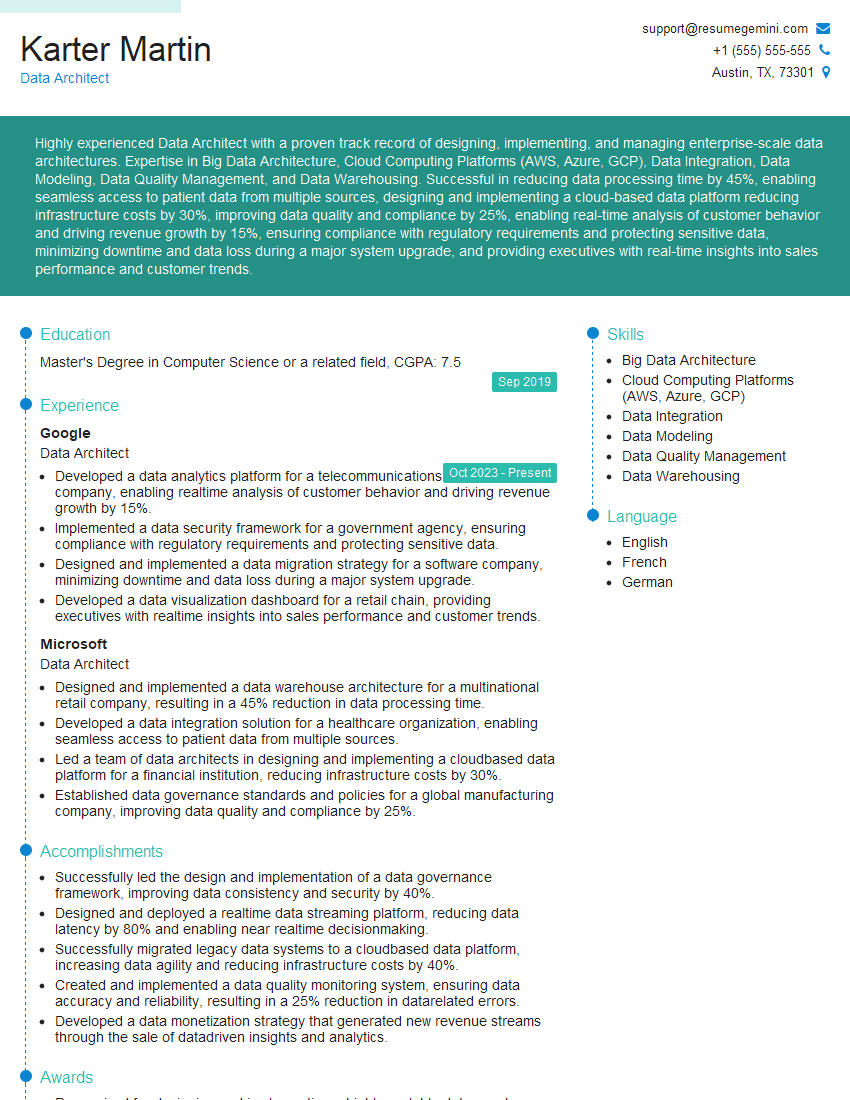
Data Architect Resume Sample
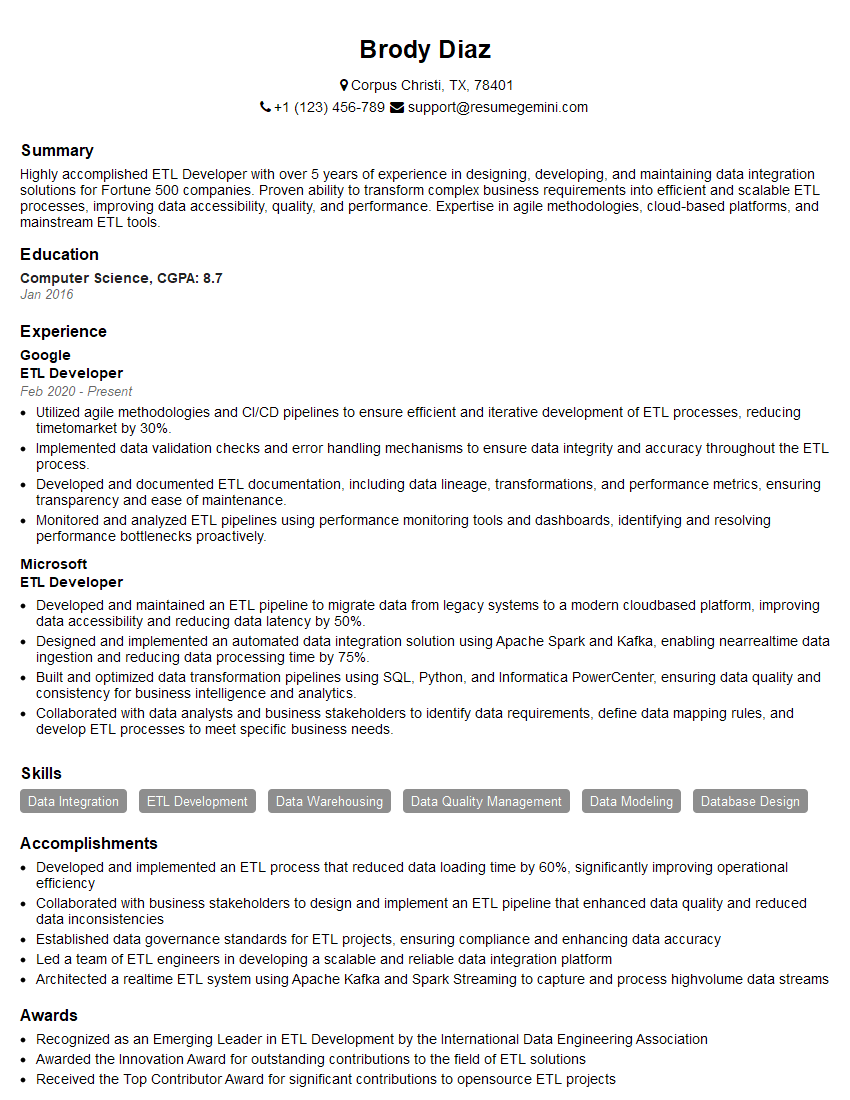
ETL Developer Resume Sample
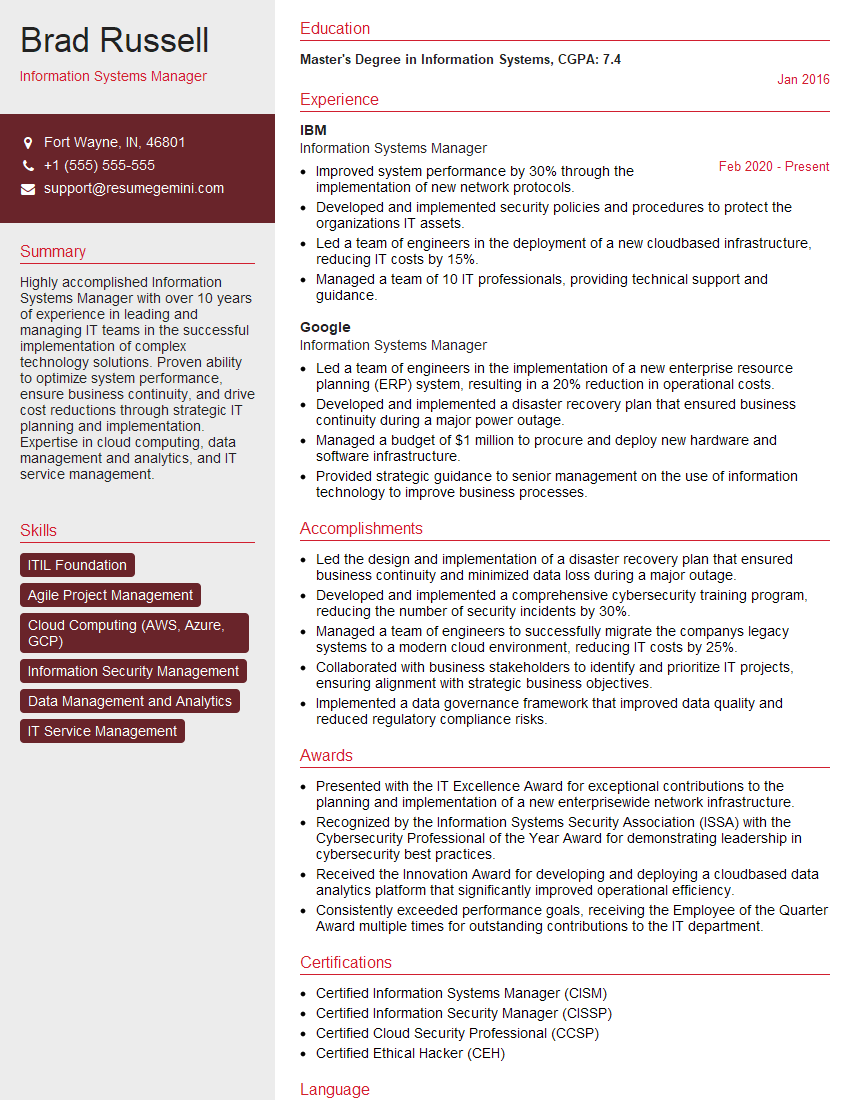
Information Systems Manager Resume Sample
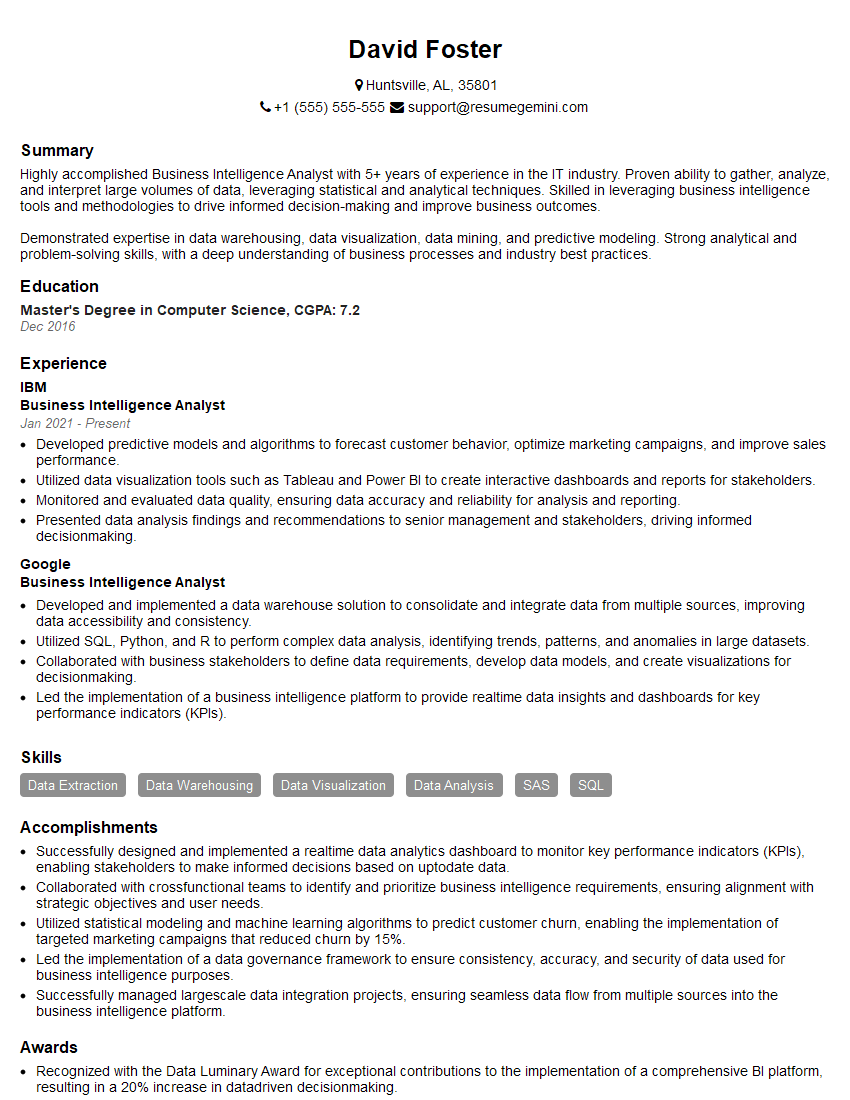
Business Intelligence Analyst Resume Sample
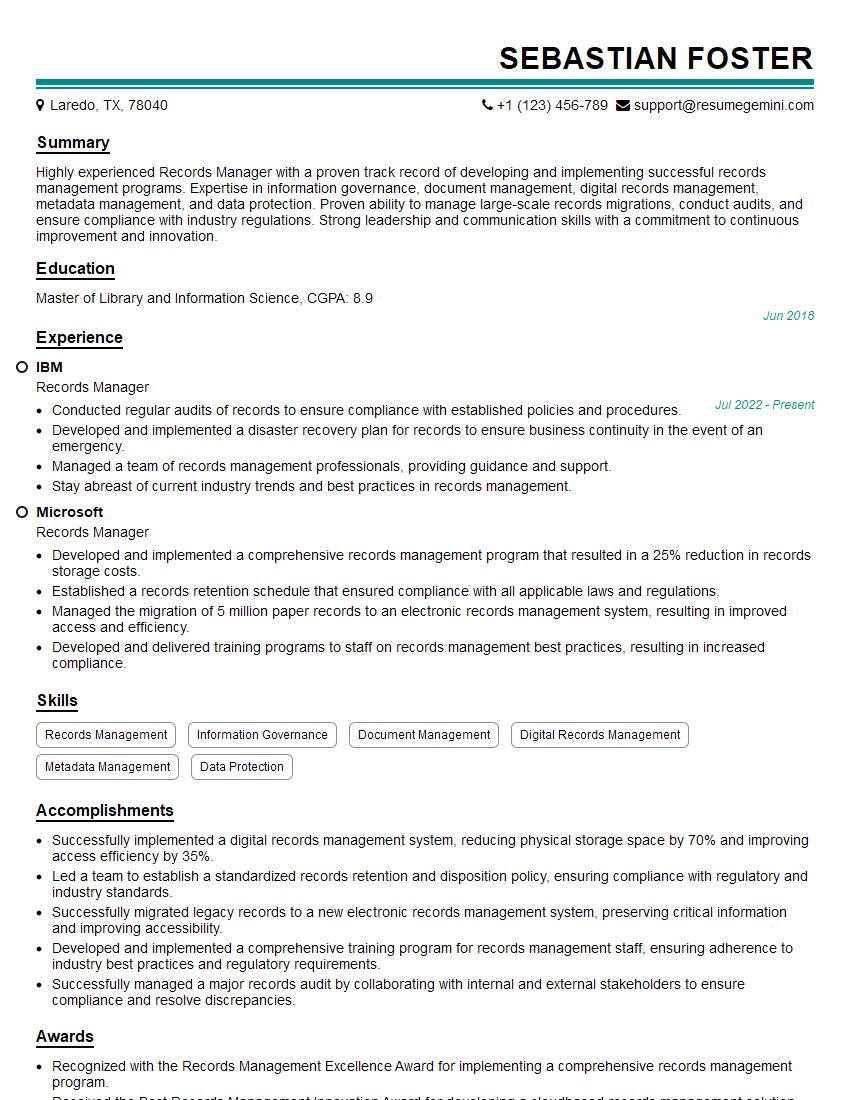
Records Manager Resume Sample
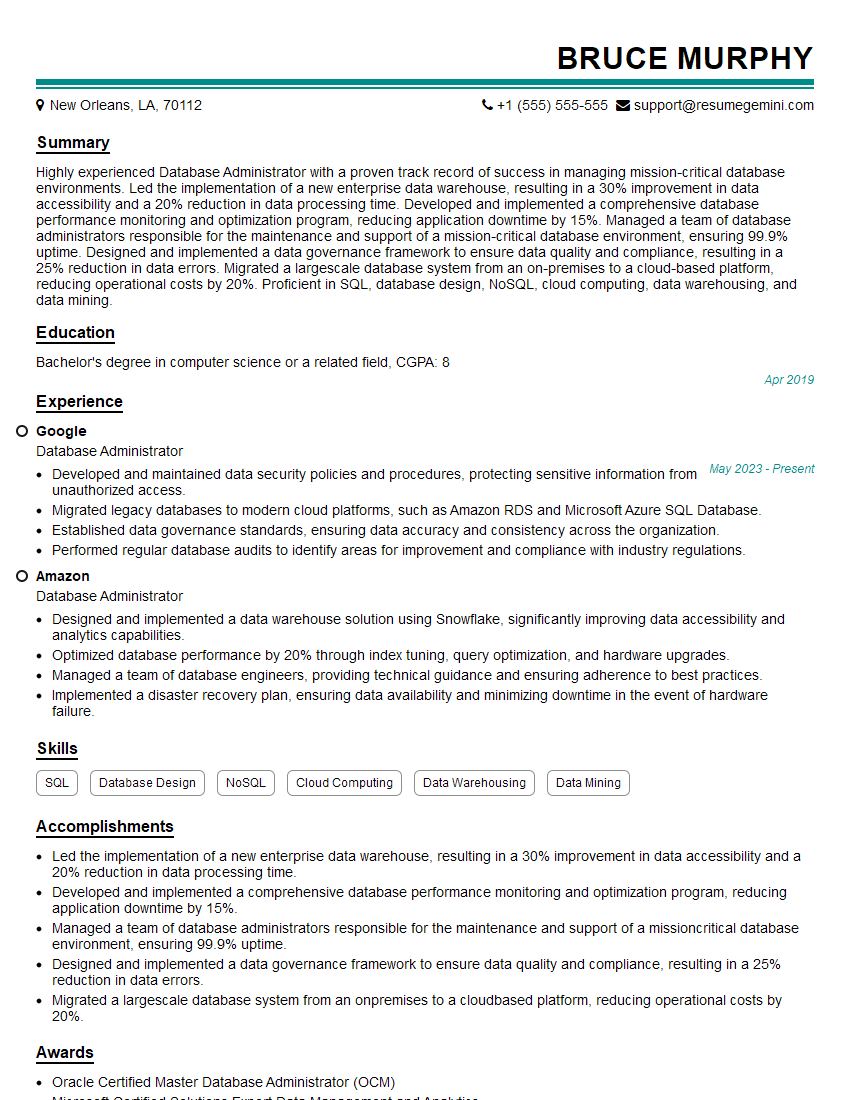
Database Administrator Resume Sample
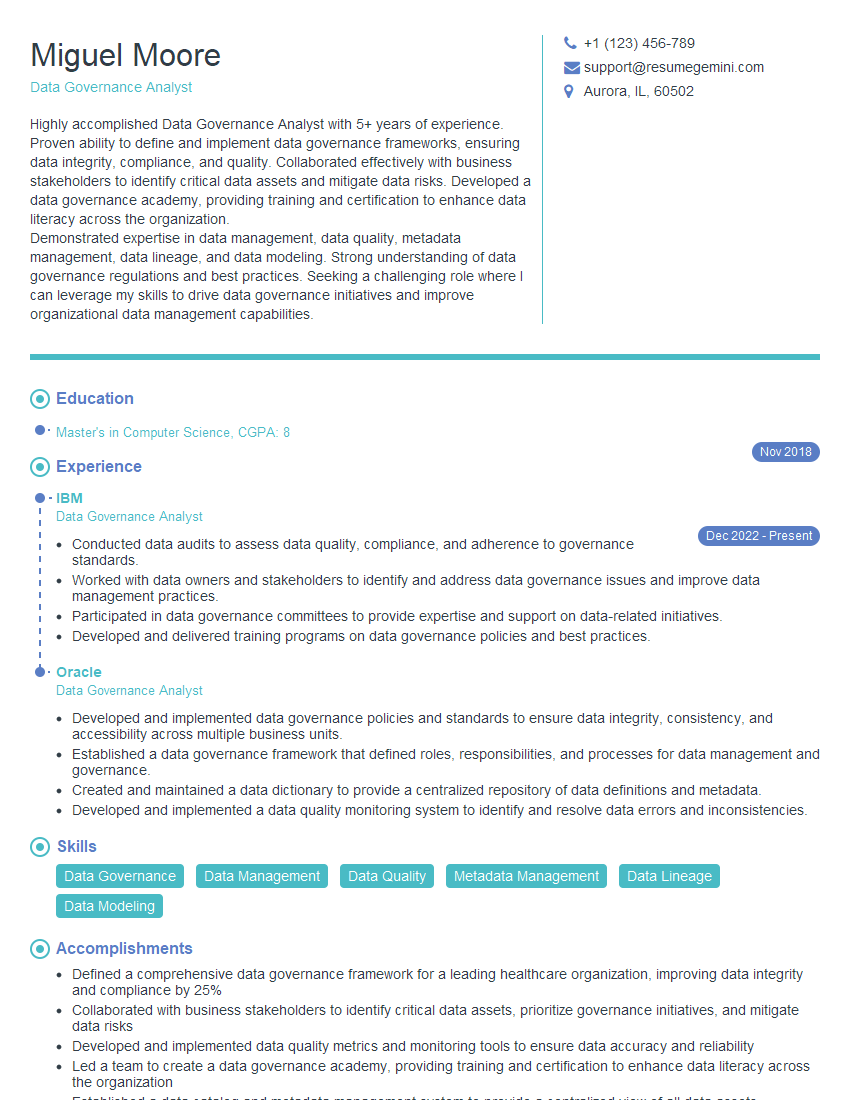
Data Governance Analyst Resume Sample
Explore more articles
Users Rating of Our Blogs
Share Your Experience
We value your feedback! Please rate our content and share your thoughts (optional).
What Readers Say About Our Blog
Very informative content, great job.
good