Preparation is the key to success in any interview. In this post, we’ll explore crucial InfraredLeakDetection interview questions and equip you with strategies to craft impactful answers. Whether you’re a beginner or a pro, these tips will elevate your preparation.
Questions Asked in InfraredLeakDetection Interview
Q 1. Explain the principles of infrared thermography.
Infrared thermography, or thermal imaging, relies on the principle that all objects emit infrared (IR) radiation. The amount of radiation emitted is directly proportional to the object’s temperature. Infrared cameras detect this emitted radiation and convert it into a visual image, where different colors represent different temperature levels. Hotter objects appear brighter (often in red, orange, or yellow), while cooler objects appear darker (often in blue or purple). This allows us to visualize temperature variations, even those invisible to the naked eye.
Think of it like a night-vision camera, but instead of visible light, it detects heat. A warm hand against a cold wall, for example, will show up clearly as a warmer area in the image.
Q 2. Describe the different types of infrared cameras and their applications.
Infrared cameras vary in features and capabilities, impacting their applications. Some key types include:
- Microbolometer cameras: These are the most common type, using a sensor array that measures the heat generated by the infrared radiation. They are robust, relatively inexpensive, and suitable for a wide range of applications.
- Cooled cameras: These cameras utilize a cryogenically cooled detector for higher sensitivity and better image quality, especially in detecting smaller temperature differences. They are used in specialized applications like research and military settings where extremely precise temperature measurements are necessary.
- InGaAs cameras: These cameras are sensitive to shorter wavelengths of infrared light, making them ideal for certain industrial applications or gas detection where specific spectral signatures are important.
Applications depend on the camera’s capabilities and the task at hand. Microbolometer cameras are frequently used for building inspections (detecting thermal bridging, insulation problems, and leaks), while cooled cameras might be used for detecting minute flaws in electronic components. InGaAs cameras find applications in gas leak detection (methane, for instance) or even medical diagnostics.
Q 3. What are the advantages and limitations of infrared leak detection?
Infrared leak detection offers several advantages: it’s non-invasive, allowing for inspections without damaging structures or systems; it’s relatively quick, providing results in real-time; and it can detect leaks in hard-to-reach areas. It’s also useful for preventative maintenance, identifying potential problems before they escalate into costly repairs.
However, there are limitations. The accuracy of the readings depends heavily on environmental factors such as ambient temperature, wind, and sunlight. Surface emissivity (how readily an object emits IR radiation) and reflectivity also play a crucial role. Also, interpretation of the images requires specialized training and experience to avoid misinterpreting the thermal patterns.
Q 4. How do emissivity and reflectivity affect infrared readings?
Emissivity and reflectivity are crucial factors influencing infrared readings. Emissivity describes how efficiently a material emits infrared radiation. A perfect blackbody has an emissivity of 1, while highly reflective surfaces have emissivity close to 0. If the emissivity of a surface is unknown, the temperature reading will be inaccurate. For example, a highly reflective metal pipe might appear cooler than it actually is because it reflects a lot of IR radiation instead of emitting it.
Reflectivity is the opposite of emissivity. A highly reflective surface reflects a lot of IR radiation from its surroundings, affecting the accuracy of the readings. This can lead to false positives or negatives if not properly accounted for. To address these issues, special emissivity settings in the thermal camera software can often compensate for differences, and knowledge of materials and surfaces is crucial for accurate interpretation.
Therefore, understanding and accounting for emissivity and reflectivity is essential for accurate temperature measurements during infrared leak detection.
Q 5. Explain the concept of thermal bridges and how they are identified using infrared.
Thermal bridges are areas in a building’s envelope where heat flows more readily than in surrounding areas. These are often caused by discontinuities in insulation, such as where studs break through walls or where windows are improperly installed. In infrared imaging, thermal bridges appear as colder areas on the surface of the structure during heating seasons and warmer during cooling.
Infrared thermography is effective at identifying thermal bridges because it visually highlights these areas of increased heat transfer. A consistent, relatively homogeneous temperature across the wall is the desired state. Areas of differing temperatures might indicate issues with insulation or improper construction.
For example, imagine inspecting an exterior wall. A consistent, cool surface would indicate good insulation. However, if there is a noticeable line of warmer temperatures following the pattern of studs inside, it signifies a thermal bridge, indicating heat is escaping through the studs, reducing efficiency and increasing energy costs.
Q 6. How do you interpret infrared images to identify leaks or defects?
Interpreting infrared images requires experience and understanding of the thermal patterns. Look for areas of consistently warmer or cooler temperatures that deviate significantly from their surroundings. When identifying leaks, look for localized areas of increased warmth on pipes, ducts, or other systems. The location and intensity of these thermal anomalies will help determine the severity and nature of the leak.
Careful consideration must be given to environmental conditions, emissivity, and reflectivity. It’s often helpful to compare images taken under different conditions or use techniques like controlled heating or cooling to isolate the potential leak areas and understand the thermal gradient involved. Professional-grade thermal camera software usually allows for enhancements, such as creating isotherms (lines of equal temperature) to highlight temperature differences more effectively. Proper documentation and record keeping of environmental conditions and image parameters are important for accurate reporting and analysis.
Q 7. What are the safety precautions associated with using infrared cameras?
Safety is paramount when using infrared cameras. Always follow the manufacturer’s instructions and take necessary precautions depending on the environment and application:
- Eye Safety: Never look directly at the sun or other intense light sources through the camera’s lens. Although IR radiation is not visible, damage to the eye could still occur with sufficiently intense sources. Most thermal cameras will have filters or safety measures for direct sunlight.
- High Voltage Equipment: Never point the camera at high-voltage equipment, and follow all safety protocols for working with electrical systems.
- Hazardous Environments: Wear appropriate personal protective equipment (PPE) when working in hazardous environments, such as confined spaces or areas with potential chemical exposure.
- Weather Conditions: Avoid using the camera in extreme weather conditions (heavy rain, snow, strong winds) unless equipped with appropriate weather protection.
Remember, always prioritize safety and follow established safety procedures. Proper training is crucial for safe and effective use of infrared cameras.
Q 8. Describe your experience with various infrared camera software and analysis tools.
My experience with infrared camera software and analysis tools is extensive. I’m proficient in several leading software packages, including FLIR Tools+, IRBIS, and ThermaCAM Researcher. These tools allow for much more than just image capture; they facilitate sophisticated analysis crucial for accurate leak detection.
For instance, FLIR Tools+ offers features like isotherm creation, which helps visually identify areas of consistent temperature deviation, indicative of a leak. IRBIS provides robust reporting capabilities, essential for documenting findings and communicating them to clients. ThermaCAM Researcher allows for advanced image processing, like noise reduction and thermal sensitivity adjustments, leading to clearer and more accurate interpretations. I’m also comfortable with various data export formats to integrate thermal data with other building management systems.
Beyond the software, I understand the importance of image settings, including emissivity adjustments and reflected temperature compensation, to ensure accurate readings. This involves understanding the material properties of the surfaces being inspected and making the appropriate calibrations within the software.
Q 9. How do you calibrate and maintain an infrared camera?
Calibrating and maintaining an infrared camera is crucial for accurate readings. Calibration ensures the camera accurately measures temperature. This usually involves using a known temperature source, like a blackbody calibrator, and adjusting the camera’s settings accordingly. The frequency of calibration depends on the camera’s model and usage but should be done regularly according to manufacturer guidelines—typically before each major inspection or at least annually.
Maintenance includes regularly inspecting the camera lens for dirt or damage. A dirty lens can significantly affect image quality and accuracy. Proper storage in a climate-controlled environment protects the camera from temperature fluctuations, moisture, and dust that might damage the internal components. Regular software updates are also important to benefit from bug fixes and improved functionality.
Think of it like maintaining a precision instrument – consistent calibration and care ensure accurate and reliable results, preventing misinterpretations that could lead to unnecessary repairs or missed critical issues.
Q 10. Explain the difference between qualitative and quantitative infrared analysis.
Qualitative infrared analysis focuses on identifying the presence of temperature differences – the ‘where’ of heat variations. It’s a visual inspection, primarily aimed at locating potential problem areas. A simple example would be identifying a warm spot on a wall, suggesting possible insulation issues or a leak. It helps in quickly pinpointing areas needing further investigation.
Quantitative analysis goes a step further, measuring the actual temperature difference and often calculating heat loss or flow rates – the ‘how much.’ This involves precise temperature measurements and often requires additional sensors and more sophisticated software analysis. For example, accurately determining the rate of heat loss through a window to assess its energy efficiency, or measuring the precise temperature of a pipe to detect the exact location of a leak and its severity. It allows for precise measurements and informs decision-making related to repair and efficiency.
Q 11. How do environmental factors (temperature, humidity, wind) influence infrared readings?
Environmental factors significantly impact infrared readings, introducing potential errors if not properly accounted for. High ambient temperatures can mask smaller temperature differences, making it difficult to detect subtle leaks. High humidity can impact the emissivity of surfaces, leading to inaccurate readings. Wind can cause temperature fluctuations, making it harder to pinpoint the exact location of a leak.
To mitigate these issues, readings should be taken under relatively stable conditions, ideally with low wind. If this isn’t possible, multiple readings should be taken and averaged. Accurate emissivity values for the target surfaces must be entered into the infrared camera’s software. If significant wind is present, windbreaks may be used during the inspection. The time of day (avoiding direct sunlight) and recent weather history should also be considered when interpreting the thermal images.
Q 12. What are the common causes of leaks in plumbing, HVAC, and electrical systems?
Common causes of leaks vary across different systems. In plumbing, these include corrosion, pipe material degradation, loose connections, and cracks. HVAC leaks often result from condensation, refrigerant leaks in the lines, or faulty seals around ducts and components. Electrical system leaks aren’t usually liquid leaks, but rather, heat leaks due to poor connections or faulty insulation leading to energy loss and potentially fire hazards.
For instance, a corroded copper pipe might have pinhole leaks that are difficult to detect visually but readily apparent with infrared imagery. Similarly, poor insulation around electrical wiring might appear as hot spots in the wall, detectable as warmer areas in a thermal scan.
Q 13. How do you differentiate between a true leak and a false positive in an infrared image?
Differentiating between a true leak and a false positive requires careful analysis of the infrared image. False positives can be caused by numerous things: differences in material properties (e.g., a metal pipe against a wooden wall), sunlight reflections, or even the thermal signature of an electrical fixture.
Several strategies are helpful: consider the context of the image alongside other observations; are there other signs of a leak (moisture, staining)? Use multiple readings at different times to eliminate transient temperature changes. If unsure, a closer visual inspection of the area or additional investigative methods may be necessary. Knowing the building’s system, construction details, and potential heat sources are crucial to filter out irrelevant thermal signatures. For example, a consistently warm section of a wall near a radiator is likely due to the radiator’s heat and not necessarily a leak.
Q 14. Describe your experience in generating and presenting infrared inspection reports.
My infrared inspection reports are detailed and comprehensive, aiming to provide clear and actionable information. They typically include:
- A summary of the inspection purpose and scope.
- High-resolution infrared images with clear annotations highlighting areas of concern.
- A detailed description of the findings, including the location, severity, and potential causes of any detected leaks or problems.
- Recommendations for repairs and preventive maintenance.
- Quantitative data, where applicable, such as temperature measurements and heat loss calculations.
- Supporting documentation, including relevant photos and diagrams.
I use a combination of textual descriptions and visual aids to create reports that are easy to understand for both technical and non-technical audiences. I tailor the report’s language and level of detail to the client’s needs, ensuring the information is readily accessible and valuable. A clear and well-organized report is crucial for effective communication and ensuring corrective actions are taken.
Q 15. What are the different types of infrared lenses and their applications?
Infrared lenses for leak detection come in various types, each optimized for different wavelengths and applications. The choice depends on factors like the target material, distance to the target, and the expected temperature differences.
- Germanium Lenses: These are excellent for mid-wave infrared (MWIR) and long-wave infrared (LWIR) imaging. Germanium transmits infrared light effectively and is highly durable, making it ideal for harsh environments. I’ve used them extensively in detecting leaks in underground pipelines, where the ground temperature contrast needs to be effectively resolved.
- Zinc Selenide (ZnSe) Lenses: ZnSe lenses are also suitable for MWIR and LWIR, offering good transmission and resistance to scratches. They are a cost-effective alternative to germanium, particularly useful in building inspections where less demanding environmental conditions prevail. For instance, I used ZnSe lenses when inspecting a large warehouse for HVAC leaks.
- Silicon Lenses: These lenses are mainly used in short-wave infrared (SWIR) applications. While less common in general leak detection, they are useful when working with materials that have unique spectral signatures in the SWIR range. This might include some specialized industrial processes or detecting leaks involving specific polymers.
- Sapphire Lenses: Sapphire is exceptionally hard and scratch-resistant, making it useful in harsh conditions or for applications where the lens might be subjected to physical contact. However, its infrared transmission is limited compared to germanium or ZnSe.
The selection process involves considering the specific needs of each inspection, balancing factors like cost, durability, and optimal wavelength transmission for the target material.
Career Expert Tips:
- Ace those interviews! Prepare effectively by reviewing the Top 50 Most Common Interview Questions on ResumeGemini.
- Navigate your job search with confidence! Explore a wide range of Career Tips on ResumeGemini. Learn about common challenges and recommendations to overcome them.
- Craft the perfect resume! Master the Art of Resume Writing with ResumeGemini’s guide. Showcase your unique qualifications and achievements effectively.
- Don’t miss out on holiday savings! Build your dream resume with ResumeGemini’s ATS optimized templates.
Q 16. How do you choose the appropriate infrared camera settings for a specific inspection?
Selecting the right infrared camera settings is crucial for accurate leak detection. This involves adjusting parameters based on the specific environment and the materials being inspected.
- Emissivity: This setting accounts for how efficiently a material emits infrared radiation. Different materials have different emissivity values; for instance, a polished metal surface has a low emissivity, while a rough surface has a higher one. An incorrect emissivity setting can lead to inaccurate temperature readings. I always consult material property tables to ensure accuracy.
- Reflected Temperature Compensation: This compensates for ambient temperature reflections. In sunny conditions, for example, a surface might appear warmer due to reflected sunlight, leading to false positives. This setting ensures that I’m measuring the actual temperature of the target, not the reflected temperature.
- Distance to Target: The distance influences the resolution and clarity of the thermal image. For detailed inspections, I maintain a closer distance, while for larger areas, a longer distance may be necessary. The settings must be adjusted accordingly to avoid blurring.
- Palette: Choosing an appropriate color palette (like Ironbow, Rainbow, or Gray) greatly improves the visibility of temperature differences. I often switch between palettes depending on the scene and the desired level of contrast.
- Gain and Level: These settings control the sensitivity and the range of temperatures the camera displays. These settings are often adjusted to optimize image contrast and highlight temperature variations.
Often, I’ll start with a default setting and then iteratively adjust these parameters based on the initial image captured, ensuring the temperature variations are clearly visible and that I have appropriate context.
Q 17. Explain your experience with different types of infrared sensors (e.g., microbolometer, cooled MCT).
My experience encompasses both cooled and uncooled infrared sensors. Each type offers unique advantages and disadvantages.
- Microbolometer (Uncooled): These are the workhorses of many infrared cameras, offering a good balance of cost, sensitivity, and robustness. They don’t require cryogenic cooling, making them portable and easy to maintain. I frequently use microbolometer-based cameras for building inspections due to their convenience and affordability. While their sensitivity might be slightly lower than cooled sensors, for most building inspections, they’re perfectly adequate.
- Cooled MCT (Mercury Cadmium Telluride): Cooled MCT detectors offer superior sensitivity and higher resolution compared to uncooled sensors. This is crucial when detecting subtle temperature differences, such as in high-precision industrial applications or when dealing with long-range inspections. The cooling requirement, however, increases the complexity and the cost. I’ve used cooled MCT cameras in situations requiring exceptional accuracy, like identifying minute leaks in high-pressure systems or long-range inspections of power lines.
The choice between these sensor types depends heavily on the application’s demands in terms of sensitivity, resolution, portability, and budget constraints. Understanding the strengths and limitations of both types allows me to select the most appropriate tool for each inspection.
Q 18. How do you troubleshoot issues with an infrared camera or its associated equipment?
Troubleshooting infrared camera issues requires a systematic approach.
- Camera Malfunction: I first check the obvious – power supply, connections, and camera settings. If there’s a display problem, I might check the camera’s internal diagnostics or try a different cable or monitor. A complete system shutdown and reboot can also resolve many issues. If problems persist, a calibration might be necessary, or the camera may need servicing.
- Image Quality Issues: Poor image quality can be due to improper settings (emissivity, reflected temperature compensation, etc.), environmental factors (fog, dust), or lens issues (dirt, scratches). I systematically check each of these, cleaning the lens if needed and readjusting settings based on the environment.
- Software Problems: Issues with image processing software often stem from incorrect installation, outdated software, or file corruption. I typically start by checking the software’s log files for error messages. Updating to the latest version of the software or reinstalling it are often effective solutions. In case of file corruption, I might try recovering the images using data recovery tools.
Maintaining a thorough understanding of the camera’s operational parameters and the associated software is key to rapid and effective troubleshooting.
Q 19. Describe your process for conducting a thorough infrared inspection.
My infrared inspection process involves several key steps:
- Pre-Inspection Planning: This includes reviewing blueprints or schematics, understanding the system’s operation, and identifying potential leak areas. This helps to optimize the inspection route and target specific areas of interest.
- Environmental Considerations: I assess environmental factors like ambient temperature, wind, and sunlight. These factors can significantly influence thermal images and need to be accounted for to ensure accuracy.
- Data Acquisition: I systematically capture thermal images of the target area, ensuring complete coverage and appropriate overlap. I use appropriate settings as described earlier, documenting all parameters for later review.
- Image Analysis: I analyze the thermal images using specialized software, identifying temperature anomalies that indicate potential leaks. I use my experience to distinguish between true leaks and artifacts that could be caused by reflections or other environmental factors.
- Reporting: Finally, I generate a detailed report that includes thermal images, highlighted areas of concern, and recommendations for repair. This report often includes quantitative data on temperature differences and potential heat losses.
Throughout the process, meticulous documentation and attention to detail are paramount to ensure the accuracy and reliability of the results.
Q 20. How do you prioritize repairs based on the findings of an infrared inspection?
Prioritizing repairs based on infrared inspection findings involves assessing the severity and potential impact of each identified issue.
- Safety Hazards: Leaks posing immediate safety risks (e.g., steam leaks near electrical equipment or flammable materials) are always the top priority.
- Energy Efficiency: Leaks leading to significant energy loss are also high priority, especially in areas where energy costs are considerable. A quantitative assessment of heat loss helps to prioritize these repairs based on their financial impact.
- Structural Damage: Leaks causing structural damage (e.g., water leaks leading to wood rot or mold growth) need prompt attention to prevent more extensive and costly repairs.
- Operational Efficiency: Leaks affecting the functionality of equipment or processes should be addressed to maintain operational efficiency.
I often use a risk matrix to prioritize repairs based on severity and urgency. This matrix considers the potential consequences of inaction, helping stakeholders make informed decisions regarding repair schedules.
Q 21. What software do you use to analyze infrared images and generate reports?
I typically use several software packages for infrared image analysis and report generation, depending on the project’s complexity and specific needs.
- FLIR Tools/FLIR Reporter: These are frequently used for their intuitive interface and features for annotating thermal images, creating reports, and performing basic analysis.
- IRISS Software: This software provides more advanced analysis tools, enabling quantitative analysis of heat losses and detailed report generation.
- Other specialized software: Depending on the specifics of the project, other specialized software might be used for more complex analysis, such as thermographic modeling or integration with building management systems.
The choice of software depends on the level of detail needed in the analysis and the report requirements. The software must provide tools for accurate measurement, annotation, and clear presentation of the findings in a professional report.
Q 22. Describe a challenging infrared leak detection situation you encountered and how you resolved it.
One of the most challenging situations I encountered involved a large, historic building with suspected leaks in its complex, multi-layered roof system. The building’s age and intricate design made access difficult, and the presence of multiple materials (slate, copper flashing, and various roofing membranes) complicated thermal imaging analysis. The initial infrared scan revealed several potential hot spots, but differentiating between true leaks and simply areas of differing thermal mass proved extremely difficult.
To resolve this, I employed a multi-pronged approach. First, I conducted a thorough pre-inspection, carefully documenting the building’s construction and material types. This allowed me to anticipate areas of potential false positives. Next, I used a combination of high-resolution infrared cameras with varying thermal sensitivities. By taking scans at different times of day and under varying weather conditions, I was able to isolate true leaks from anomalies. I also complemented the infrared data with a moisture meter check in areas of suspicion. Finally, careful image processing and analysis were crucial; using specialized software, I enhanced the thermal images to better highlight temperature variations and identify patterns.
Through this meticulous process, we were able to accurately pinpoint the specific locations of the leaks, allowing for targeted repairs and preventing significant and costly water damage.
Q 23. How do you ensure the accuracy and reliability of your infrared inspections?
Ensuring accuracy and reliability in infrared inspections is paramount. It’s a combination of meticulous preparation, sophisticated equipment, and thorough analysis. My process starts with a thorough site survey to understand the building’s construction, environmental conditions, and potential sources of interference. This is crucial because factors like sunlight, wind, and even the building’s internal temperature can affect the accuracy of the readings.
I use calibrated, high-resolution infrared cameras with a wide range of thermal sensitivities, selecting the optimal equipment based on the specific project requirements. Before each inspection, I perform a rigorous equipment check – verifying its calibration, focusing capabilities, and thermal accuracy. During the inspection, I maintain a consistent distance from the target surface, adhere to appropriate scan protocols, and take multiple images under various conditions to avoid anomalies. I use specialized software to enhance and analyze the thermal images, and always cross-reference the findings with visual inspections.
Finally, a comprehensive report clearly documenting the methodology, findings, and limitations is crucial for ensuring the reliability and defensibility of my inspection.
Q 24. Explain your knowledge of relevant building codes and standards related to infrared inspections.
My understanding of building codes and standards related to infrared inspections is extensive, particularly those concerning building envelopes, moisture intrusion, and energy efficiency. I am familiar with standards such as ASTM E1186 (Standard Test Method for Infrared Scanning of Building Envelopes), and I regularly review and stay updated on relevant international codes and regulations. This is essential for producing reports compliant with industry best practices and for effectively communicating potential health and safety risks related to moisture and structural damage.
For example, the International Energy Conservation Code (IECC) and other energy codes often require infrared inspections to identify thermal anomalies indicative of energy losses. Understanding these codes allows me to tailor my inspection approach and deliver reports that meet regulatory compliance.
Q 25. Describe your experience working with clients or stakeholders to communicate infrared inspection findings.
Communicating infrared inspection findings clearly and effectively to clients and stakeholders is a critical part of my role. I believe in a transparent and collaborative approach. I begin by ensuring they thoroughly understand the process and limitations of infrared technology, making sure to avoid any technical jargon that may confuse them. My reports are detailed but user-friendly, utilizing high-quality thermal images, annotated diagrams, and simple explanations.
I often provide a verbal briefing after the inspection to address any immediate questions and concerns. I will clearly highlight areas of concern, prioritizing critical findings and presenting potential remediation strategies. I adapt my communication style to the audience, using simpler language for less technical stakeholders, and more detailed explanations for engineers or building professionals. This approach fosters trust and ensures that clients have a clear understanding of the findings and the necessary steps to address identified issues.
Q 26. What are your professional development goals related to infrared leak detection?
My professional development goals focus on staying at the forefront of infrared leak detection technology. I aim to obtain advanced certifications in advanced infrared thermography techniques like Level III certification. I also plan to expand my expertise in the use of drone-based infrared inspection, which offers significant advantages in terms of access and efficiency for large or hard-to-reach areas. Finally, I would like to further develop my skills in data analysis and reporting to maximize the value and insight we glean from the thermal image data we collect.
Q 27. What are the limitations of infrared technology, and how do you address them?
While infrared technology is incredibly powerful, it does have limitations. One major limitation is its inability to detect leaks behind opaque materials like solid concrete or thick metal walls. Infrared can only identify temperature differences on the surface; hidden leaks may not register. Another limitation is the influence of environmental factors like direct sunlight or strong winds, which can create false positives. Finally, the accuracy of infrared detection can be affected by the thermal properties of the materials being inspected.
To address these limitations, I employ several strategies. I use a combination of infrared imaging with other non-destructive testing methods, like moisture meters, to validate findings. I carefully consider environmental conditions during the inspection and take multiple scans under varying conditions. Furthermore, I always clarify the limitations of the technology in my reports, highlighting where further investigation may be needed.
Q 28. How do you stay current with advancements in infrared leak detection technology?
Staying current with advancements in infrared leak detection is vital. I actively participate in professional organizations like the American Society for Nondestructive Testing (ASNT), attending conferences, workshops, and training sessions to learn about new technologies and techniques. I also subscribe to industry-specific journals and publications, and I regularly review manufacturers’ updates on infrared camera technology and software. Furthermore, I engage in continuous professional development through online courses and webinars, ensuring my skills and knowledge remain up-to-date with the latest advancements in the field.
Key Topics to Learn for Infrared Leak Detection Interview
- Infrared Physics Fundamentals: Understanding the principles of infrared radiation, emissivity, and its interaction with different materials.
- Infrared Camera Operation and Calibration: Familiarize yourself with various camera types, their functionalities, and the importance of proper calibration for accurate readings.
- Leak Detection Techniques: Mastering the practical application of infrared cameras to identify leaks in various systems (HVAC, plumbing, electrical).
- Image Analysis and Interpretation: Learn to interpret thermal images, identify temperature anomalies, and differentiate between true leaks and other heat sources.
- Data Acquisition and Reporting: Understand the process of documenting findings, generating reports, and presenting your analysis to clients or supervisors.
- Safety Procedures and Regulations: Familiarize yourself with safety protocols associated with infrared equipment and working in various environments.
- Troubleshooting and Problem Solving: Develop skills in identifying potential issues with equipment, interpreting ambiguous results, and proposing solutions.
- Different Types of Leaks and their Thermal Signatures: Understand how different types of leaks (e.g., gas, water, steam) manifest thermally and how to differentiate them.
- Software and Data Analysis Tools: Gain proficiency in using software for thermal image analysis and report generation.
Next Steps
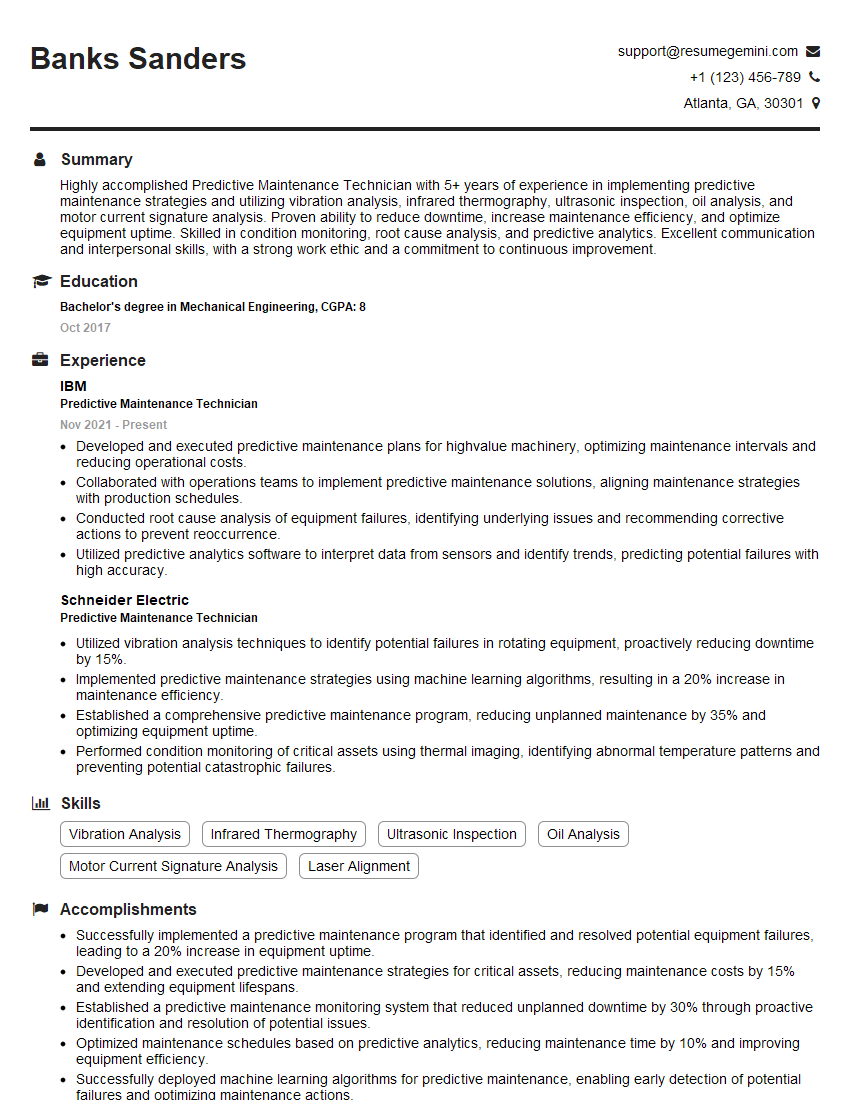
Mastering infrared leak detection opens doors to exciting career opportunities in various industries, offering excellent growth potential and high demand for skilled professionals. To maximize your job prospects, it’s crucial to create a compelling and ATS-friendly resume that highlights your skills and experience effectively. ResumeGemini is a trusted resource that can help you build a professional and impactful resume. Take advantage of their tools and resources to craft a resume that showcases your expertise in Infrared Leak Detection. Examples of resumes tailored to this field are available for your review.

Explore more articles
Users Rating of Our Blogs
Share Your Experience
We value your feedback! Please rate our content and share your thoughts (optional).
What Readers Say About Our Blog
Very informative content, great job.
good