Are you ready to stand out in your next interview? Understanding and preparing for Inking and Fountain Solution Control interview questions is a game-changer. In this blog, we’ve compiled key questions and expert advice to help you showcase your skills with confidence and precision. Let’s get started on your journey to acing the interview.
Questions Asked in Inking and Fountain Solution Control Interview
Q 1. Explain the role of fountain solution in offset printing.
The fountain solution in offset printing plays a crucial role as a wetting agent on the plate cylinder. Think of it as the ‘anti-ink’ – it keeps the non-image areas of the printing plate damp, preventing ink from sticking to them. This ensures that only the image areas, which are inked, transfer to the blanket and then to the substrate (paper, etc.). Without the fountain solution, the ink would stick to the entire plate, resulting in a solid, black print instead of the intended image. The fountain solution’s composition is carefully balanced to achieve the correct balance between wetting and preventing image smearing.
Q 2. Describe the different types of inks used in offset printing.
Offset printing utilizes various ink types, each tailored to specific needs. The most common is conventional (oil-based) ink, which consists of pigments, vehicles (oils), and additives. These inks provide vibrant colors and excellent print quality but require careful control of the ink-water balance due to their oil-based nature. Then there are vegetable-based inks, increasingly popular due to their eco-friendliness. They offer similar print quality to conventional inks but are made from renewable resources. Lastly, UV (ultraviolet) curing inks are used in specialized applications. These inks cure instantly when exposed to UV light, offering quick drying times and superior scratch resistance. The choice of ink significantly affects printing characteristics and needs appropriate fountain solution adjustments.
Q 3. How do you adjust the ink-water balance on a printing press?
Adjusting the ink-water balance is a delicate process, often involving several press controls. The primary controls typically include ink rollers, dampening rollers, and the fountain solution itself. First, you visually assess the print quality – are there areas with too much or too little ink? Then, you adjust the ink supply by altering the ink roller pressure and spacing. Too much ink? Reduce pressure and/or spacing. Too little? Increase them. Simultaneously, you fine-tune the fountain solution using controls like the dampening roller pressure and the solution’s flow rate. Remember it’s an iterative process – make small adjustments, print a test sheet, and observe the results before making further changes. Finding the perfect balance often involves a trial-and-error approach, where experience plays a big role. Modern presses offer sophisticated electronic controls for precise adjustment and data logging.
Q 4. What are the signs of improper ink-water balance?
Improper ink-water balance manifests in several ways. Too much water leads to ‘mottle’ (uneven ink distribution), ink scumming (ink on non-image areas), and color fading. The printed image might appear dull and washed out. Too much ink causes ‘hilling’ (ink buildup on image areas), smudging, and slow drying times. The print could be heavy, sloppy, and prone to set-off (ink transferring to the back of the sheet). Identifying the specific problem guides the adjustments to the ink-water balance. For example, mottle suggests too much water, whereas hilling points to excessive ink.
Q 5. How do you troubleshoot common inking problems?
Troubleshooting inking problems requires a systematic approach. First, carefully examine the printed sheet to identify the nature of the problem. Then, systematically check the ink itself: is it the correct viscosity? Are the ink rollers properly inked and functioning correctly? Are they dirty or worn? Next, inspect the fountain solution: is the pH correct? Is the water supply clean and free from contaminants? Check the dampening system: are the rollers in good condition? Is there proper dampening solution distribution across the plate? If the issue persists, carefully check the plate itself for any damage or contamination. Finally, document your findings and adjustments to prevent recurrence.
Q 6. What are the effects of incorrect fountain solution pH?
The fountain solution’s pH is critical. An incorrect pH can negatively impact both the printing quality and the press itself. A low pH (acidic) solution can corrode the printing plate and press components, leading to premature wear and tear. It can also cause the ink to emulsify (mix with the water), leading to poor ink transfer and image quality issues like mottle. A high pH (alkaline) solution can cause problems with the ink’s drying time and might lead to plate degradation over time. The ideal pH range is usually between 4.5 and 5.5, but this can vary based on the specific ink and plate type. Regular pH monitoring and adjustments are essential for optimal performance and press longevity.
Q 7. Explain the importance of maintaining the correct viscosity of ink.
Maintaining the correct ink viscosity is paramount for consistent print quality. Low viscosity ink is too thin and can lead to poor ink transfer, resulting in weak and faded images. It can also increase the risk of ink drying too quickly on the rollers, causing clogging. High viscosity ink is too thick, leading to hilling, slow drying, and difficulty in transferring to the substrate. It can also cause ink smudging and set-off problems. Viscosity is usually measured using a viscometer and adjusted by adding thinner (for high viscosity) or an appropriate viscosity modifier to achieve optimal flow and transfer characteristics. Regular viscosity checks are vital, particularly during long print runs or when using newly received ink.
Q 8. How do you identify and resolve problems with ink drying?
Ink drying issues on a printing press can manifest in various ways, from slow drying leading to set-off (ink transfer to the next sheet) to rapid drying causing clogging in the ink train. Identifying the root cause requires a systematic approach.
- Check the Ink Viscosity: Too thick an ink dries too quickly, while too thin an ink leads to slow drying and poor print quality. We use viscometers to measure and adjust the ink consistency using appropriate thinners. For example, if the ink is too thick, we carefully add the recommended thinner, mixing thoroughly to maintain uniformity.
- Assess the Environment: High temperatures and low humidity accelerate drying. Conversely, low temperatures and high humidity can slow drying significantly. We monitor temperature and humidity using environmental sensors and adjust the pressroom conditions or, in some cases, the ink formulation to maintain optimal parameters.
- Inspect the Ink Ductor Rollers: These rollers transfer ink to the form rollers. Worn or incorrectly set ductor rollers can cause uneven ink distribution, leading to some areas drying faster than others. Proper maintenance, including regular cleaning and replacement when necessary, is vital. Imagine these rollers as the ‘sponges’ transferring ink. If the sponge is damaged, it can’t transfer the ink evenly.
- Examine the Fountain Solution: An improper balance or excessive fountain solution can dilute the ink, slowing down the drying process. Regular monitoring and adjustment of the fountain solution pH and concentration are essential. We use titration to ensure optimal values.
- Check the Press Speed: High press speeds can increase the rate of ink evaporation, leading to faster drying. A slight reduction in speed can often resolve the issue.
Resolving the problem requires addressing the specific cause identified. For example, if the viscosity is the issue, adjustment is straightforward; however, if multiple factors contribute, a comprehensive approach incorporating all the above points might be necessary.
Q 9. Describe the different methods for cleaning a printing press.
Cleaning a printing press is critical for maintaining print quality and preventing ink buildup that can lead to press downtime. The method depends on the type of press and the ink used, but generally involves several steps:
- Initial Wash-up: This typically involves running a wash-up solution through the ink system. This solution breaks down the ink, making it easier to remove. We use specialized cleaning solutions formulated for the specific inks used. Each ink requires a compatible cleaning solution.
- Roller Cleaning: Ink rollers are carefully cleaned using appropriate solvents and brushes, ensuring thorough removal of residual ink. This is important to prevent contamination and maintain the rollers’ integrity. Dirty rollers are like using a dirty brush to paint – the result is uneven and unprofessional.
- Dampening System Cleaning: The fountain solution system is flushed with water and then a specialized cleaning solution to remove any built-up residue. Neglecting this step can lead to poor ink-water balance.
- Plate Cleaning: The printing plates are cleaned to remove residual ink, ensuring that there is no ink left to affect the next print job. The method will differ depending on the plate material.
- Final Rinse: A final rinse with clean water is performed to remove any residual cleaning solutions. This ensures there are no chemical residues to affect the next print run.
- Drying: Allowing sufficient time to dry prevents corrosion and other problems.
In some cases, automated cleaning systems are used, further streamlining the process and minimizing environmental impact. The choice of cleaning methods depends on many factors, including the press type, ink characteristics, available resources, and environmental regulations.
Q 10. What safety precautions should be taken when handling inks and fountain solution?
Handling inks and fountain solutions requires stringent safety precautions due to their chemical composition. These precautions include:
- Personal Protective Equipment (PPE): Always wear appropriate PPE, including gloves, eye protection, and respiratory protection. The specific type of PPE will depend on the chemicals involved. This is paramount to prevent skin irritation, eye damage, and inhalation of harmful fumes.
- Ventilation: Ensure adequate ventilation in the pressroom to minimize exposure to airborne particles and fumes. This might involve using exhaust systems or working in well-ventilated areas.
- Skin Contact: Avoid direct skin contact with inks and fountain solutions. If contact occurs, immediately wash the affected area with soap and water. Severe reactions may require medical attention.
- Ingestion: Keep inks and fountain solutions away from food and drinks. Accidental ingestion can have serious consequences. In case of ingestion, seek immediate medical assistance.
- Waste Disposal: Follow proper procedures for waste disposal. Used inks and fountain solutions should be handled according to local environmental regulations. Improper disposal can lead to severe environmental damage.
- Safety Data Sheets (SDS): Always consult the SDS for each chemical used to understand the specific hazards and appropriate safety measures.
Regular safety training for press operators and maintenance staff is essential to ensure compliance with safety regulations and promote a safe working environment. A safe working environment is not just a suggestion; it’s a necessity.
Q 11. How do you monitor and maintain the fountain solution system?
Maintaining the fountain solution system is crucial for consistent print quality. This involves regular monitoring and adjustments:
- pH Monitoring: The pH level of the fountain solution is regularly checked using a pH meter. Optimal pH levels ensure effective ink-water balance, preventing issues such as scumming or mottling. For example, if the pH is too high, we use a pH adjuster to bring it down to the ideal level.
- Concentration Monitoring: The concentration of the fountain solution is also regularly monitored. An appropriate concentration helps control the ink-water balance. This often involves using a refractometer.
- System Cleaning: Regular cleaning of the fountain solution system is critical to prevent the build-up of deposits, which can affect ink transfer and print quality. This includes cleaning the rollers, ducts, and the fountain solution tank.
- Solution Replacement: Fountain solution should be replaced regularly, typically daily or at shorter intervals depending on usage and the type of solution used. Stale fountain solution can contribute to poor print quality and increased maintenance.
- Temperature and Humidity Control: The temperature and humidity in the pressroom are also important factors influencing the performance of the fountain solution. Keeping these parameters within the ideal range can prevent problems.
The specific methods and frequencies of monitoring and maintenance will depend on various factors such as press type, ink used, environmental conditions, and print volume. A proactive approach to fountain solution maintenance minimizes downtime and improves print quality.
Q 12. What are the environmental considerations related to ink and fountain solution disposal?
Environmental considerations related to ink and fountain solution disposal are paramount. Improper disposal can lead to soil and water contamination.
- Waste Segregation: Separate waste inks and fountain solutions from other waste streams. This helps streamline the recycling or disposal process.
- Recycling Programs: Participate in ink and fountain solution recycling programs wherever possible. Many ink manufacturers offer take-back programs for their products.
- Hazardous Waste Disposal: Dispose of hazardous waste materials according to local regulations. This often requires specialized handling and transportation by licensed waste disposal companies.
- Waste Minimization: Implement practices to minimize ink and fountain solution waste. This can involve using optimized ink formulations, efficient cleaning techniques, and careful press operation.
- Compliance: Ensure strict adherence to all local, regional, and national environmental regulations.
The ultimate goal is to minimize environmental impact, promoting sustainable printing practices. Choosing environmentally friendly inks and solutions is also a significant step towards reducing the ecological footprint of printing operations.
Q 13. Explain the impact of temperature and humidity on ink and fountain solution.
Temperature and humidity significantly impact both ink and fountain solution performance.
- Ink: High temperatures accelerate ink drying, potentially causing clogging and uneven ink transfer. Low temperatures can increase ink viscosity, leading to slow drying and poor print quality. High humidity can slow ink drying, potentially causing set-off. Low humidity can speed up drying, resulting in clogging. We adjust our ink formulations and pressroom conditions to offset these effects.
- Fountain Solution: Temperature affects the viscosity and performance of the fountain solution. Too high a temperature can lead to excessive evaporation, while too low a temperature can reduce its effectiveness. Humidity also affects the evaporation rate, altering the ink-water balance. Maintaining ideal temperature and humidity levels is critical for consistent fountain solution performance.
To mitigate these effects, we monitor both temperature and humidity using precision instruments. We take corrective measures such as adjusting the pressroom environment (using air conditioning or humidifiers), modifying the ink formulations slightly, or adjusting the fountain solution concentration to maintain optimal printing conditions. For example, on a particularly hot day, we might slightly reduce the press speed to give the ink more time to set.
Q 14. Describe your experience with different types of ink rollers and their maintenance.
Different types of ink rollers are used in printing presses, each with its own characteristics and maintenance requirements.
- Rubber Rollers: These are common and relatively inexpensive. They need regular cleaning and occasional reconditioning to maintain their surface integrity. Regular cleaning removes ink buildup; reconditioning restores the roller’s surface to ensure even ink transfer. Worn rollers need to be replaced.
- Synthetic Rollers: These are more durable and resistant to wear than rubber rollers. They require less frequent reconditioning but still benefit from regular cleaning to prevent ink buildup. The choice between rubber and synthetic rollers often depends on the type of ink used and the budget.
- Ceramic Rollers: Used in high-quality printing, they provide excellent ink transfer but require careful handling to avoid damage. They are less susceptible to wear than rubber or synthetic rollers but require meticulous cleaning.
Maintenance involves regular inspection for wear and tear, proper cleaning procedures, and storage in a controlled environment to prevent damage and extend their lifespan. Roller care is fundamental; improperly maintained rollers can directly impact print quality and press efficiency. Imagine rollers as the brushes of a painter; using damaged brushes results in a poor painting, similarly damaged rollers result in a poor print.
Q 15. How do you ensure consistent color throughout a printing run?
Maintaining consistent color throughout a printing run is crucial for achieving high-quality results. It requires a multi-faceted approach focusing on ink, fountain solution, and press control. Think of it like baking a cake – if your ingredients aren’t consistent, neither will your final product.
- Ink Management: Regularly monitor ink viscosity and ensure consistent ink feed to each printing unit. This involves using accurate ink metering systems and regularly checking the ink supply for any inconsistencies. A sudden change in ink viscosity, for instance, could easily lead to color variations.
- Fountain Solution Control: Maintaining the correct pH and concentration of the fountain solution is essential. Fluctuations can impact ink transfer and color density. We regularly check and adjust the fountain solution using specialized instruments to ensure optimal performance throughout the run.
- Press Control: Precise adjustments to the press, such as maintaining consistent impression pressure and roller settings, are critical. Small variations in these parameters can lead to significant color shifts. Regular monitoring and fine-tuning throughout the run are necessary. We also use color control strips, printed periodically throughout the run, to monitor color consistency.
- Temperature and Humidity Control: Environmental factors influence both ink and fountain solution behavior. Maintaining a stable temperature and humidity in the pressroom helps ensure predictable results and prevents color inconsistencies.
For example, in a recent project printing high-quality brochures, we implemented a rigorous quality control system involving hourly color checks and real-time adjustments to the ink and fountain solution, ensuring consistent color across the entire print run of 10,000 copies.
Career Expert Tips:
- Ace those interviews! Prepare effectively by reviewing the Top 50 Most Common Interview Questions on ResumeGemini.
- Navigate your job search with confidence! Explore a wide range of Career Tips on ResumeGemini. Learn about common challenges and recommendations to overcome them.
- Craft the perfect resume! Master the Art of Resume Writing with ResumeGemini’s guide. Showcase your unique qualifications and achievements effectively.
- Don’t miss out on holiday savings! Build your dream resume with ResumeGemini’s ATS optimized templates.
Q 16. What is the difference between alcohol-based and alcohol-free fountain solutions?
The main difference between alcohol-based and alcohol-free fountain solutions lies in their composition and their impact on the printing process. Alcohol-based solutions have traditionally been the industry standard, while alcohol-free solutions are gaining popularity due to environmental concerns and stricter regulations.
- Alcohol-based: These solutions typically contain isopropyl alcohol (IPA) as the main component. IPA helps to quickly evaporate from the printed sheet, facilitating quick drying and preventing smearing. However, alcohol-based solutions can be harsh on printing plates, lead to increased volatile organic compound (VOC) emissions, and contribute to environmental concerns.
- Alcohol-free: These solutions utilize alternative components, often a blend of water-based chemicals, to achieve similar functionality. They generally provide better plate life and are more environmentally friendly, reducing VOC emissions and waste. However, they might require slower drying speeds and may need careful adjustments to the press settings to ensure proper ink transfer.
The choice depends on the specific printing needs and environmental considerations. For instance, in high-volume commercial printing where speed is critical, an alcohol-based solution might be preferred. For environmentally conscious projects or when working with sensitive printing plates, an alcohol-free solution might be a better choice. We carefully assess the project requirements and select the solution accordingly.
Q 17. How do you manage ink density and dot gain?
Managing ink density and dot gain is critical for achieving accurate color reproduction. Ink density refers to the concentration of ink on the printed sheet, while dot gain is the increase in the size of printed dots during the printing process. These two are intimately linked and impact color accuracy and print quality.
- Ink Density Control: This is primarily achieved through adjustments to ink supply, fountain solution balance, and press settings. We utilize densitometers to measure the ink density and make adjustments as needed to maintain consistency throughout the run. This ensures that the colors are not too light or too dark.
- Dot Gain Control: Dot gain is influenced by factors like paper type, ink properties, and press settings. We carefully select papers that minimize dot gain and calibrate the press settings to control the dot size. Using appropriate screen rulings and ink formulations also helps mitigate this.
For example, if we encounter excessive dot gain, resulting in muddy colors, we might adjust the impression pressure or use a different ink formulation that reduces the tendency for dot spreading. Conversely, if the ink density is too low, we’d increase the ink supply while monitoring the dot gain to prevent over-inking.
Q 18. How do you troubleshoot problems with ink trapping?
Ink trapping refers to the ability of one ink color to properly lay over a previously printed color. Problems with ink trapping often manifest as color misregistration or blotchy areas. Troubleshooting involves a systematic approach.
- Examine the Paper: Porous or absorbent paper can absorb ink unevenly, leading to poor trapping. Switching to a different paper stock can often resolve this issue.
- Check Ink Viscosity: If the ink is too thick or too thin, it can prevent proper layering. Adjusting the ink viscosity to the optimal level is a crucial step.
- Verify Ink-Fountain Solution Balance: An imbalance in the ink-fountain solution ratio can cause poor ink transfer and trapping. Maintaining the correct ratio is key. Incorrect pH levels in the fountain solution can also interfere with ink trapping.
- Inspect Press Settings: Incorrect impression pressure, roller settings, or inking unit adjustments can affect the ink layer’s uniformity and adherence. Precise adjustments to these settings are often required to improve trapping.
- Review Ink Compatibility: Some inks might have incompatibility issues, especially when using different manufacturers’ inks. Using consistent inks from the same manufacturer is recommended.
I once encountered a trapping problem during a four-color print job. After systematically checking each factor, I discovered that the ink viscosity for the cyan ink was too high. Adjusting the viscosity resolved the issue, resulting in perfect ink trapping and a successful print job.
Q 19. Explain your experience with different types of printing presses.
My experience encompasses a wide range of printing presses, including sheet-fed offset presses (both smaller format and large format), web offset presses, and digital printing systems. Each has its own nuances in terms of ink and fountain solution control.
- Sheet-fed Offset Presses: I have extensive experience in managing ink and fountain solution on various sheet-fed presses, from smaller format presses used for short runs to larger format presses for high-volume projects. The key here is meticulous attention to detail in maintaining consistent ink flow and fountain solution balance across all printing units.
- Web Offset Presses: These high-speed presses require even more precise control of ink and fountain solution. Maintaining consistent viscosity and preventing fluctuations is crucial due to the continuous printing process. Understanding the intricacies of web press mechanics and optimization is vital.
- Digital Printing Systems: Although digital printing uses different ink and doesn’t involve fountain solution in the same way, managing ink density and color consistency is still important. Understanding the digital ink’s properties and the unique challenges associated with digital printing is necessary.
My experience with these different press types allows me to adapt my approach and troubleshoot effectively, regardless of the printing method used.
Q 20. Describe your experience with color management software.
My experience with color management software is extensive. I’m proficient in using industry-standard software such as GMG ColorProof, X-Rite i1Profiler, and other similar applications. These tools are integral to achieving color accuracy and consistency.
- Color Profiling: I regularly create and maintain ICC profiles for various substrates and printing conditions, ensuring accurate color reproduction. This helps bridge the gap between the digital design and the final printed output.
- Color Matching: I utilize color management software to accurately match colors between different print runs and devices. This minimizes variations and ensures consistency across different batches or projects.
- Proofing: I’m familiar with soft proofing and hard proofing techniques, using color management software to generate accurate proofs that closely represent the final printed output. This aids in avoiding costly reprints due to unexpected color discrepancies.
For instance, in a recent project involving a complex multi-color design, I used GMG ColorProof to create a detailed soft proof that precisely mirrored the final printed colors. This allowed us to address any color discrepancies before proceeding to the actual printing, saving both time and resources.
Q 21. What are the advantages and disadvantages of different fountain solution formulations?
Different fountain solution formulations offer various advantages and disadvantages, impacting factors like print quality, press performance, and environmental impact.
- Alcohol-based solutions:
- Advantages: Fast drying, excellent ink transfer, generally high print quality.
- Disadvantages: High VOC emissions, potentially harsh on printing plates, flammability concerns.
- Alcohol-free solutions:
- Advantages: Lower VOC emissions, often more environmentally friendly, can extend printing plate life.
- Disadvantages: May require slower drying times, potentially less efficient ink transfer (requiring adjustments), might not be suitable for all types of paper or inks.
- Bio-based solutions:
- Advantages: Environmentally friendly, sustainable, often derived from renewable resources.
- Disadvantages: Can be more expensive, might require specific press adjustments, their efficacy may vary depending on the printing conditions.
The selection of an optimal fountain solution necessitates careful consideration of various factors. We weigh the advantages and disadvantages of each formulation based on the project’s specific requirements, environmental considerations, and budget constraints. For example, a high-speed commercial printing job might prioritize an alcohol-based solution for its speed and efficient ink transfer, while an environmentally focused project might favor a bio-based or alcohol-free option.
Q 22. How do you calculate the correct ink and fountain solution concentrations?
Calculating the correct ink and fountain solution concentrations is crucial for achieving optimal print quality. It’s not a simple formula, but rather a process of balancing several factors. We start with the manufacturer’s recommendations as a baseline – they provide a starting point for ink viscosity and the ideal fountain solution pH and concentration. However, these are just guidelines. The actual concentrations depend heavily on the specific printing press, the paper type, the ambient temperature and humidity, and the ink itself.
The process usually involves these steps:
- Initial Mixing: Begin with the manufacturer’s recommended concentrations. For instance, the instructions might suggest a 1:10 ratio of fountain solution to water.
- Monitoring and Adjustment: After an initial print run, we assess the print quality. Is the ink too dry, resulting in poor color density or mottle? Is it too wet, causing smearing or offsetting? We monitor the ink tack (stickiness) – using a simple tack meter – and the water balance on the press.
- Iterative Refinement: Based on the initial assessment, adjustments are made. If the ink is too dry, we might increase the fountain solution concentration slightly, or adjust the fountain roller settings. If it’s too wet, we’ll reduce the fountain solution or make adjustments to the ink viscosity.
- Testing and Fine-tuning: We consistently monitor the print output, making small incremental adjustments to find the optimal balance. This requires patience and experience; the process can take several test runs to achieve the desired results. We document each adjustment to maintain consistency across different print jobs.
Example: Let’s say we start with a 1:10 fountain solution concentration. If we see too much ink drying, we might increase it incrementally – perhaps to 1:9 or 1:8 – observing the results after each change. We’d also check the ink durometer readings to make sure the ink is the right consistency. If smearing occurs, the opposite is true; we’d reduce the fountain solution.
Q 23. How do you perform a press wash-up procedure?
The press wash-up procedure is critical for maintaining print quality and preventing ink contamination. It’s a detailed process that must be followed meticulously to avoid damaging the press or causing future print issues. The specific steps may vary slightly depending on the type of printing press, but the overall goal remains the same: to thoroughly clean all ink and fountain solution from the inking and dampening systems.
A typical wash-up procedure includes:
- Initial Cleaning: Start by removing excess ink and fountain solution from the rollers and plates using appropriate cleaning solutions. Different solutions are used for different types of ink (e.g., UV, vegetable, etc.).
- Roller Cleaning: Each roller needs to be thoroughly cleaned – often using a specialized roller wash-up system. The objective is to remove all residual ink and avoid any cross-contamination.
- Plate Cleaning: The printing plates require careful cleaning to prevent ink build-up. A specialized plate cleaner will be used here.
- Dampening System Cleaning: Thoroughly clean the dampening system including rollers, ducts, and the fountain solution tank. This step ensures that the next print run does not start with a compromised fountain solution.
- Final Rinse: A final rinse with clean water is crucial to eliminate any traces of cleaning solutions. This step prevents the cleaning agents from interfering with the next print job.
- Inspection: After cleaning, a thorough inspection should be carried out to ensure everything is clean and ready for the next print job.
Example: When washing up after a UV ink job, we must use a UV-specific cleaner as some cleaners can damage UV ink plates.
Q 24. What are some common causes of ink smearing or offsetting?
Ink smearing and offsetting are common printing defects that significantly reduce print quality. They occur when wet ink transfers from the printed sheet to another sheet or to other surfaces. Several factors contribute to these issues:
- Excessive Ink: Too much ink on the plate leads to an uneven transfer, resulting in smearing and offsetting. It happens when the ink key is set too high or the fountain solution is insufficient.
- Insufficient Fountain Solution: Inadequate fountain solution results in dry ink, increasing its tendency to smudge or transfer.
- Incorrect Ink Viscosity: If the ink is too thick, it doesn’t properly transfer to the paper, causing smearing. Conversely, if it’s too thin, it might spread.
- High Ink Tack: Highly tacky inks are more prone to offsetting, sticking to other surfaces.
- Paper Issues: Smooth, coated papers tend to transfer less ink, and often require a slightly different fountain solution balance. Porous papers might absorb the ink too slowly, which may lead to smearing.
- Improper Press Settings: Incorrect roller settings, incorrect impression pressure, or improperly adjusted dampening system can exacerbate smearing and offsetting.
- Temperature and Humidity: High temperatures and low humidity increase ink drying and might lead to smearing or sticking. Conversely, excessive humidity makes inks less receptive to drying, increasing offsetting.
Example: In a situation with significant offsetting, we might start by checking the ink key settings and reduce the ink amount. If this doesn’t work, we might evaluate the fountain solution – increasing the concentration. We’d then review the paper characteristics, and ultimately may need to use a different paper stock for an optimal print.
Q 25. Describe your experience with troubleshooting ink drying issues on different substrates.
Troubleshooting ink drying issues on various substrates is a regular challenge. The approach varies depending on the substrate (e.g., coated paper, uncoated paper, cardboard), the type of ink (e.g., UV, vegetable-based), and the environmental conditions. My experience involves a systematic approach.
Steps I usually follow:
- Substrate Analysis: The porosity and absorbency of the substrate play a crucial role. Highly porous substrates absorb ink quickly, potentially leaving a dry feel. Less porous substrates might require a longer drying time. We would check the paper specification.
- Ink Type Assessment: Different inks have different drying characteristics. For instance, UV inks dry almost instantly under UV light, whereas vegetable-based inks require more time.
- Environmental Factors: Temperature, humidity, and airflow significantly influence ink drying. Higher temperatures and low humidity generally accelerate drying.
- Ink Viscosity: The ink’s viscosity plays a critical role. Thicker inks tend to dry more slowly than thinner inks, which could lead to smearing.
- Press Settings: Incorrect press settings, such as ink key settings and dampening roller settings, can also affect ink drying and might impact the absorption rate.
- Testing and Adjustment: Once the possible causes are identified, adjustments are made systematically. We may start by optimizing the press settings, adjusting the fountain solution concentration, or even changing to an ink with faster drying properties.
Example: I encountered an issue where a vegetable-based ink was drying too slowly on uncoated paper, leading to smearing. We adjusted the press settings, which helped a little, but the main solution was to utilize a more absorbent paper stock and to decrease the ambient humidity. In another case, a UV-cured ink wasn’t fully curing, and further investigation revealed that the UV lamps weren’t functioning at peak efficiency. These issues highlight the need for a multi-faceted approach.
Q 26. How do you maintain accurate ink key settings?
Maintaining accurate ink key settings is paramount for consistent print quality. The ink key refers to the amount of ink transferred to the paper. Inaccurate settings lead to variations in color density and other print defects.
Strategies for maintaining accurate ink key settings:
- Regular Calibration: The ink keys should be regularly calibrated using a densitometer, which measures the optical density of the printed ink. This helps ensure that the ink transfer remains consistent throughout a long print job. This calibration process is usually conducted at regular intervals or when a significant variation is noticed.
- Monitoring Ink and Fountain Solution Balance: Maintaining an optimal balance between ink and fountain solution is crucial for correct ink transfer. Monitoring the ink tack and the water balance on the press using appropriate instruments helps fine-tune the ink key accordingly.
- Temperature and Humidity Control: Environmental conditions affect ink viscosity and thus, ink transfer. Maintaining stable temperature and humidity is essential for consistent ink key settings.
- Regular Cleaning: Clean ink rollers and dampening rollers help maintain consistent ink transfer. Ink build-up can significantly alter the amount of ink transferred to the paper, impacting the ink key settings.
- Documentation: Keeping detailed records of ink key settings, paper characteristics, and environmental conditions helps to reproduce results across different print jobs or to troubleshoot issues quickly.
Example: Before a large print job, we’ll establish a baseline ink key setting with the densitometer, ensuring the color density is correct according to the print specification. During the run, we’ll continue to monitor the density and adjust settings if necessary; keeping records of all changes made and the reason for each change.
Q 27. Explain how the dampening system influences ink transfer.
The dampening system plays a vital role in the overall process, influencing ink transfer in several key ways. It’s not simply about wetting the paper; it’s about balancing the ink and water on the printing plate.
The dampening system’s influence:
- Ink-Water Balance: The dampening system’s primary function is to create a balance between ink and water on the printing plate. The water helps to keep the ink from sticking to non-image areas, preventing smearing and improving the sharpness of the printed image. An optimal balance is key for achieving a sharp and clean print.
- Ink Emulsification: The dampening solution helps emulsify the ink on the plate, reducing ink tack (stickiness). This promotes proper ink transfer to the paper and reduces offsetting. Proper ink emulsification contributes to reducing the likelihood of ink transfer issues.
- Ink Viscosity Control: The amount of water applied by the dampening system can indirectly affect ink viscosity. While not directly controlling it, this subtle influence contributes to achieving proper ink transfer and enhances print quality.
- Plate Cleaning: The dampening system also helps to keep the printing plate clean, which enhances ink transfer, especially for longer runs.
Example: If the dampening system isn’t working correctly (e.g., too much water), the ink might be diluted, leading to pale colors and increased drying time. Conversely, insufficient water can cause the ink to become too thick and tacky, increasing the chances of smearing and offsetting. A well-functioning dampening system maintains a delicate balance, ensuring the ink is transferred correctly and efficiently.
Q 28. What are some ways to reduce ink waste?
Reducing ink waste is crucial for environmental responsibility and cost-effectiveness. Several strategies can be implemented to achieve this.
Methods for reducing ink waste:
- Precise Ink Key Settings: Accurate ink key settings ensure that the correct amount of ink is used, minimizing waste. This precise transfer reduces excess ink that would otherwise be wasted.
- Optimized Fountain Solution Management: Properly managing the fountain solution helps minimize waste by optimizing the ink-water balance. This prevents excessive ink dilution or excessive use of fountain solution itself.
- Efficient Wash-up Procedures: Following thorough but efficient wash-up procedures minimizes the amount of ink and cleaning solutions required. This involves employing practices that conserve cleaning agents and time.
- Regular Maintenance: Regular maintenance of the printing press prevents issues such as ink leaks and malfunctions that could lead to wasted ink. A well-maintained press will be a more efficient and cleaner operation.
- Proper Ink Storage: Storing inks correctly, keeping them covered and in a cool, dry place prevents spoilage. Correct ink storage ensures maximum lifespan of inks and reduces the need to replace damaged ink.
- Training and Education: Training press operators on best practices for ink management is crucial. This includes everything from measuring ink amounts to washing the press and efficient storage practices. An informed press operator is an efficient press operator.
- Waste Recycling: Explore options for recycling used ink and cleaning solutions. Some companies offer specialized recycling programs that can help minimize environmental impact.
Example: We implemented a system of regularly measuring and recording our ink usage per print run. We then analyzed this data, which helped us pinpoint and resolve small leaks that were previously undetected, resulting in a significant reduction in wasted ink.
Key Topics to Learn for Inking and Fountain Solution Control Interview
- Understanding Ink Properties: Viscosity, tack, and surface tension; their impact on print quality and press performance.
- Fountain Solution Chemistry: pH levels, conductivity, and the role of various additives; troubleshooting common fountain solution issues.
- Ink-Water Balance: Achieving optimal ink-water balance for consistent color density and print stability; methods for adjusting and maintaining balance.
- Press Operation and Control: Understanding the relationship between press settings (e.g., ink keys, dampening rollers) and ink/fountain solution interaction.
- Color Management and Consistency: Maintaining consistent color across different print runs; using color measurement tools and techniques.
- Troubleshooting Print Defects: Identifying and resolving common printing problems related to ink and fountain solution, such as mottle, slur, and color variations.
- Environmental Considerations: Understanding and implementing environmentally friendly practices in ink and fountain solution management.
- Waste Management and Disposal: Safe and responsible handling and disposal of inks and fountain solutions according to regulations.
- Data Analysis and Reporting: Tracking and analyzing key performance indicators (KPIs) related to ink and fountain solution usage and efficiency.
Next Steps
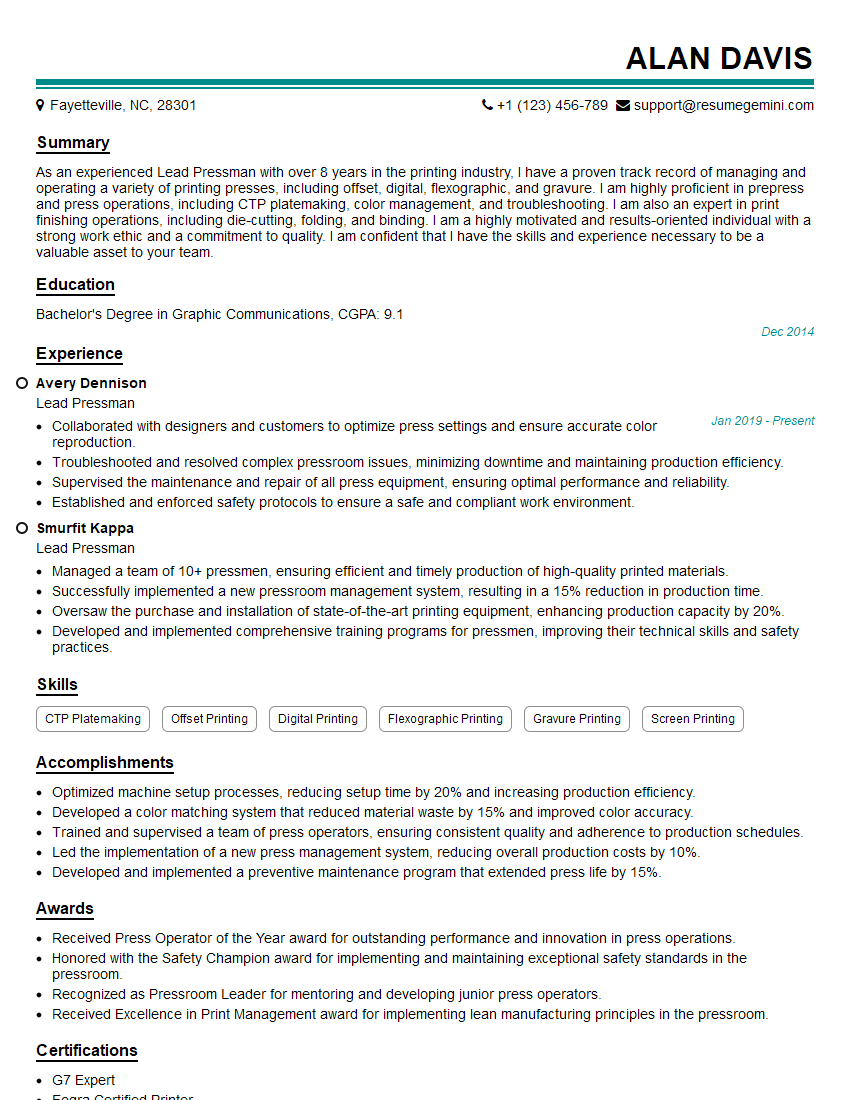
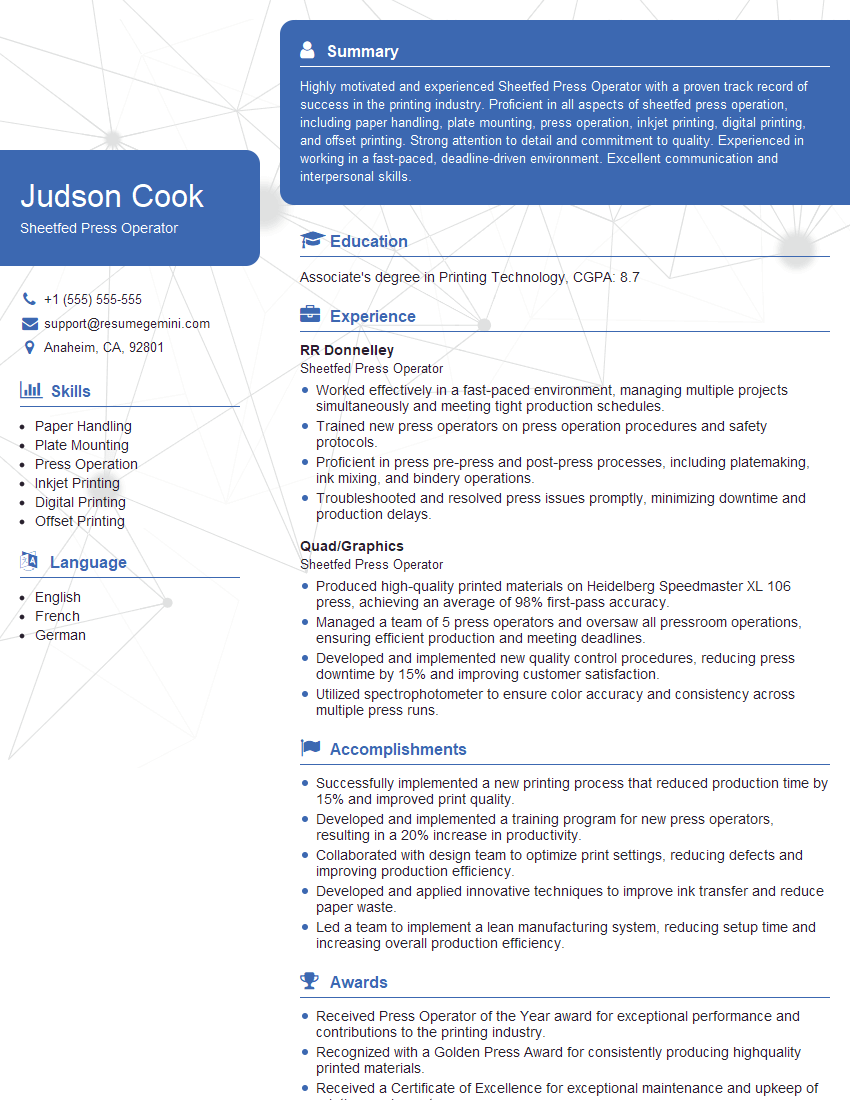
Mastering Inking and Fountain Solution Control is crucial for career advancement in the printing industry, opening doors to specialized roles and increased earning potential. A strong resume is your key to unlocking these opportunities. Creating an ATS-friendly resume that highlights your skills and experience in this area is essential for getting your application noticed. ResumeGemini is a trusted resource to help you build a professional and impactful resume that showcases your expertise. We offer examples of resumes tailored to Inking and Fountain Solution Control to guide you in crafting a compelling application. Take the next step in your career journey – build a winning resume with ResumeGemini today!




Explore more articles
Users Rating of Our Blogs
Share Your Experience
We value your feedback! Please rate our content and share your thoughts (optional).
What Readers Say About Our Blog
Very informative content, great job.
good