Are you ready to stand out in your next interview? Understanding and preparing for Telephone Cable Testing interview questions is a game-changer. In this blog, we’ve compiled key questions and expert advice to help you showcase your skills with confidence and precision. Let’s get started on your journey to acing the interview.
Questions Asked in Telephone Cable Testing Interview
Q 1. Explain the difference between TDR and OTDR testing.
Both Time Domain Reflectometry (TDR) and Optical Time Domain Reflectometry (OTDR) are used to locate faults in cables, but they work with different types of cables. TDR is used for metallic cables, like twisted-pair telephone lines, while OTDR is used for optical fiber cables. Think of them like this: TDR uses electrical pulses to ‘see’ reflections from faults, much like sonar uses sound waves. OTDR uses light pulses to do the same, but in fiber optics.
TDR sends an electrical pulse down the cable. Any impedance mismatch (like a break, short, or water ingress) causes a reflection. The time it takes for the reflection to return indicates the distance to the fault. The magnitude of the reflection gives an indication of the severity of the fault.
OTDR works similarly, but with light pulses. An OTDR sends a light pulse down the fiber and measures the amount of light backscattered. A significant decrease or absence of backscatter indicates a fault like a break or splice. OTDR provides a visual trace showing signal strength along the fiber’s length, making fault identification precise.
In short, TDR is for copper cables, OTDR for fiber optics. TDR shows reflections of electrical signals, OTDR shows backscattering of light signals.
Q 2. Describe the process of testing a twisted-pair cable for continuity.
Testing a twisted-pair cable for continuity involves verifying a complete electrical path exists between two points. A simple continuity tester, often a multimeter set to the continuity function (usually a diode symbol or a ‘beep’ function), is used.
Process:
- Connect one lead of the continuity tester to one end of the cable pair.
- Connect the other lead to the other end of the same cable pair.
- Observe the tester. A continuous tone or illuminated light indicates continuity – a complete circuit. No tone or light means an open circuit; there’s a break in the cable.
This process is repeated for each cable pair in the bundle. It’s crucial to identify pairs correctly to ensure accurate results and prevent miswiring during subsequent installations or repairs. Imagine testing a telephone line – if one pair fails continuity, you’ve identified the faulty part of the communication path.
Q 3. How do you identify and troubleshoot a short circuit in a telephone cable?
A short circuit in a telephone cable occurs when two or more conductors unintentionally make contact, creating a low-resistance path. This can drastically affect signal transmission, causing signal loss, noise, or complete signal failure.
Identification and Troubleshooting:
- Visual Inspection: Carefully examine the cable for any physical damage, cuts, or exposed wires that might cause a short. Look for signs of corrosion or water damage.
- Continuity Testing: Use a multimeter in continuity mode to check for unintended connections between cable pairs. A short will show a continuous tone or light between pairs that shouldn’t be connected.
- TDR Testing: A TDR can pinpoint the exact location of the short circuit along the cable length. The reflection from the short will appear as a sharp spike on the TDR trace.
- Fault Locator: A cable fault locator can be used to isolate the short circuit. It will usually pinpoint the location with an audible signal.
Once the short is located, repair involves carefully isolating and separating the shorted conductors, often requiring replacing a section of the cable.
Q 4. What are the common causes of attenuation in telephone cables?
Attenuation, the reduction in signal strength over distance, is a natural characteristic of any transmission medium, including telephone cables. Several factors contribute to attenuation in telephone cables:
- Conductor Resistance: The inherent resistance of the copper conductors causes power loss, leading to signal attenuation. Thinner conductors experience higher resistance and thus greater attenuation.
- Skin Effect: At higher frequencies, the current tends to flow more on the outer surface of the conductor (skin effect). This increases effective resistance, leading to increased attenuation at higher frequencies.
- Dielectric Losses: The insulating material between the conductors (dielectric) absorbs some energy, causing attenuation. The quality and type of dielectric significantly impact attenuation.
- Cable Length: Longer cables inherently experience more attenuation due to the cumulative effects of resistance and dielectric losses.
- Environmental Factors: Temperature and humidity can affect the dielectric’s properties and conductor resistance, influencing attenuation.
Understanding these factors is crucial for proper cable selection and system design to minimize signal loss and ensure reliable communication.
Q 5. Explain the significance of cable pair identification during testing.
Cable pair identification is crucial throughout the testing process because telephone cables typically consist of multiple twisted pairs. Misidentification can lead to incorrect diagnoses and potentially costly mistakes during installation, troubleshooting, and maintenance.
Significance:
- Accurate Fault Isolation: Identifying the specific pair with a fault enables targeted repairs, preventing unnecessary replacement of the entire cable.
- Proper Wiring: During installation, correct pair identification ensures proper connections at both ends, facilitating flawless communication.
- System Optimization: Correct pair identification allows for optimized cable configurations to minimize crosstalk and noise interference.
- Troubleshooting Efficiency: Knowing the specific pair under test directs the troubleshooting efforts, saving valuable time and resources.
Imagine a building’s internal telephone system. Incorrect pair identification during installation or repair could lead to phones being connected incorrectly or pairs being entirely unused.
Q 6. What are the safety precautions you take when working with telephone cables?
Safety is paramount when working with telephone cables. Several precautions must be taken:
- Power Isolation: Before working with any cables, ensure the power is completely disconnected to prevent electrical shocks. This includes both the main power supply and any associated equipment.
- Lockout/Tagout Procedures: Implement lockout/tagout procedures to prevent accidental power restoration during work.
- Personal Protective Equipment (PPE): Wear appropriate PPE, including safety glasses, gloves, and potentially insulated tools to prevent injury from sharp edges, electrical shocks, or chemical exposure.
- Awareness of Underground Utilities: Always be aware of the potential presence of underground utilities to prevent accidental damage during excavation or cabling work. Use cable locators where necessary.
- Working at Heights Safety: If working at heights, use appropriate fall protection equipment and follow safe work practices.
Following these safety precautions is critical to protect both the technician and prevent damage to equipment.
Q 7. How do you interpret the results of a cable fault locator?
A cable fault locator typically uses a combination of signal tracing and impedance measurement techniques to identify and locate faults. Interpretation of results depends on the type of fault locator but generally involves:
Visual Indicators: Many fault locators display a visual trace of the cable, showing signal strength and impedance changes. A sudden drop in signal strength or a sharp impedance change indicates a fault.
Audio Indicators: Many locators emit an audible tone whose intensity varies with signal strength. The intensity increases as the locator approaches the fault.
Distance Measurement: The fault locator provides a distance measurement from the starting point to the fault location. This allows for precise pinpointing of the problem area.
Interpreting Different Fault Types: The locator’s response varies depending on the type of fault (open circuit, short circuit, high impedance). The display and audio cues will differ, requiring understanding of the device’s specific indicators.
For example, a sharp peak on the visual trace and a strong, localized audio signal indicate a short circuit. A complete absence of signal could indicate a break or an open circuit.
Q 8. What are the different types of telephone cable connectors and their applications?
Telephone cable connectors are crucial for establishing reliable connections. The most common types include RJ11, RJ14, and RJ25, all variations of the Registered Jack standard. They differ primarily in the number of conductors they support.
- RJ11: This is the most ubiquitous connector, typically featuring two or four conductors, used for single or dual-line phone connections. Think of your home phone line – it likely uses an RJ11 connector.
- RJ14: This connector has six conductors, enabling two independent phone lines. It’s often used in business settings or homes with multiple phone lines.
- RJ25: With eight conductors, this connector supports more complex configurations. While less common in residential applications, it can handle multiple lines and potentially data transmission alongside voice.
The choice of connector depends entirely on the application. A standard home phone only needs the two-conductor RJ11, whereas a business PBX system might require the greater capacity of RJ25 to support numerous extensions and features.
Q 9. Explain the process of terminating a telephone cable.
Terminating a telephone cable involves preparing the cable ends for connection. This typically involves these steps:
- Stripping the outer sheath: Carefully remove the outer protective layer of the cable, exposing the individual wire pairs. Be cautious not to nick the wires themselves.
- Identifying the wire pairs: Telephone cables use color-coded pairs. Proper identification is critical for correct termination. Common color codes include white/blue, white/orange, etc.
- Separating the pairs: Gently untwist the wire pairs and arrange them according to the termination standard (e.g., 66 block).
- Crimping the connectors: Using a suitable crimping tool, attach the RJ connectors firmly to the individual wires. Ensure proper alignment to prevent loose connections.
- Testing the termination: Verify the termination with a cable tester to ensure continuity and proper pairing.
Incorrect termination can result in poor voice quality, no connection, or crosstalk. A properly terminated cable ensures a clean, reliable signal transmission.
Q 10. How do you test for crosstalk in a multi-pair cable?
Crosstalk is unwanted signal interference between different wire pairs in a multi-pair cable. Testing for crosstalk involves using a cable tester capable of measuring signal leakage between pairs. The process typically involves sending a test signal through one pair and measuring the level of the signal detected on the other pairs.
The tester will quantify crosstalk in decibels (dB). Lower dB values indicate higher levels of crosstalk, implying a problem. A good cable will exhibit very low levels of crosstalk.
Many modern cable testers use a swept frequency method to accurately assess crosstalk across a range of frequencies, providing a more comprehensive assessment of cable integrity.
For example, a test might show that pair 1 exhibits -50dB crosstalk to pair 2. This is generally acceptable; but -30dB crosstalk would indicate a significant issue requiring further investigation – potentially a fault in the cable insulation or a poor termination.
Q 11. Describe your experience with different cable testing equipment (e.g., Fluke, Ideal).
Throughout my career, I’ve extensively used various cable testing equipment from manufacturers like Fluke and Ideal. Both offer a range of capabilities, catering to different testing needs.
Fluke testers are known for their robustness and accuracy, particularly in more demanding environments. I’ve used Fluke’s DSX CableAnalyzer Series extensively for complex testing and certification of cabling systems, including thorough crosstalk analysis. They provide detailed reports that facilitate efficient troubleshooting.
Ideal testers, while often more budget-friendly, are reliable for basic continuity and wiring checks. I often use Ideal’s network testers for quick on-site checks of basic cabling integrity. Their ease of use is beneficial for fast diagnostics.
The choice of equipment depends on the specific job requirements. For critical network installations, Fluke’s precision is crucial, while Ideal’s devices are well-suited for simpler tasks or preliminary diagnostics.
Q 12. What are the limitations of Time Domain Reflectometry (TDR)?
Time Domain Reflectometry (TDR) is a powerful technique for locating faults in cables. However, it has some limitations:
- Resolution limitations: TDR’s resolution is limited by the rise time of the test pulse. Very short faults or discontinuities may be difficult to detect accurately.
- Impedance mismatch challenges: Accurate TDR measurements require proper impedance matching between the cable and the testing equipment. Mismatches can lead to inaccurate fault location.
- Difficult interpretation with multiple faults: In cables with multiple faults, interpreting the TDR trace can be complex. Overlapping reflections can obscure the precise location of individual faults.
- Cable type dependence: The accuracy of TDR is affected by the cable’s dielectric constant and other physical characteristics. Calibration may be needed for different cable types.
Despite these limitations, TDR remains a valuable tool for cable fault diagnosis, particularly for locating short circuits, open circuits, and other significant discontinuities.
Q 13. How do you troubleshoot a cable with intermittent connectivity?
Troubleshooting intermittent connectivity requires a systematic approach. Here’s how I typically handle it:
- Visual Inspection: Begin with a thorough visual inspection of the cable and its connections. Look for physical damage, loose connectors, or stress points.
- Testing with a Cable Tester: Use a cable tester to check for continuity and identify any intermittent breaks or shorts. Observe the readings closely; if the issue is intermittent, you may need to repeat the test multiple times or apply some stress (gentle bending) to the cable to trigger the fault.
- Environmental Factors: Consider environmental factors. Temperature fluctuations or moisture can impact cable performance. For instance, cold weather may cause cracks in the insulation that manifest as intermittent problems.
- Systematic Tracing: If the problem isn’t immediately apparent, systematically trace the cable, section by section, using the tester to pinpoint the fault location. This might require disconnecting and testing various sections.
- Advanced Techniques: In complex scenarios, techniques like TDR can provide more precise fault location. If the problem is within a connector, replacement is often the solution.
Patience and methodical testing are key to successfully resolving intermittent connectivity issues. Remember to document your findings for future reference.
Q 14. Explain the concept of impedance matching in cable testing.
Impedance matching is crucial in cable testing and signal transmission. It refers to the condition where the impedance of the cable is equal to the impedance of the connected devices (e.g., transmitter and receiver). This ensures that maximum power is transferred from the source to the load, minimizing signal reflections and losses.
Think of it like trying to fill a bucket with water. If the bucket (load) and the hose (cable) are perfectly matched in size, you’ll fill the bucket efficiently. If the hose is too big or too small, you’ll either spill water (reflections) or it’ll take a very long time to fill (signal loss). Mismatched impedance results in signal reflections, reducing signal strength and potentially distorting the signal.
In cable testing, impedance mismatches can lead to inaccurate measurements and difficulties in fault location. Cable testers often incorporate impedance measurement capabilities to ensure proper matching and optimal performance. A typical telephone cable has a characteristic impedance of around 100 ohms. Ensuring your equipment and connections also match this is very important.
Q 15. How do you document cable testing results?
Documenting cable testing results is crucial for maintaining records, troubleshooting issues, and ensuring compliance. I use a standardized, detailed approach. My documentation typically includes a header with the date, time, cable identifier (location, length, type), and tester model used. Then, I meticulously record the key parameters for each test performed. This usually includes:
- Test Type: (e.g., TDR, continuity, NEXT, PSNEXT, Return Loss)
- Measured Value: The numerical result of each test.
- Limits/Standards: The acceptable range for each parameter based on the cable standard (e.g., TIA-568).
- Pass/Fail Status: A clear indication of whether the cable met the required specifications.
- Faults Detected (if any): A concise description of any identified faults, their location (if possible), and the type of fault (e.g., short, open, crosstalk).
- Technician Signature/ID: Ensuring accountability and traceability.
I often utilize a combination of digital test equipment that automatically generates reports, and also maintain a separate hand-written log for quick notes and sketches if the equipment malfunctions or requires further explanation of an issue. These reports are stored securely and are easily retrievable for future reference.
Career Expert Tips:
- Ace those interviews! Prepare effectively by reviewing the Top 50 Most Common Interview Questions on ResumeGemini.
- Navigate your job search with confidence! Explore a wide range of Career Tips on ResumeGemini. Learn about common challenges and recommendations to overcome them.
- Craft the perfect resume! Master the Art of Resume Writing with ResumeGemini’s guide. Showcase your unique qualifications and achievements effectively.
- Don’t miss out on holiday savings! Build your dream resume with ResumeGemini’s ATS optimized templates.
Q 16. What is the significance of NEXT and PSNEXT measurements?
NEXT (Near-End Crosstalk) and PSNEXT (Power Sum Near-End Crosstalk) are crucial measurements for evaluating the performance of twisted-pair cables, especially in high-speed data networks. They quantify the amount of unwanted signal interference (crosstalk) between adjacent pairs within the cable. Think of it like this: imagine two conversations happening simultaneously in adjoining rooms – NEXT and PSNEXT measure how much of one conversation bleeds into the other.
NEXT measures the crosstalk at the near end (the end where the signal is injected). A lower NEXT value is better, indicating less crosstalk. PSNEXT takes NEXT measurements across multiple frequencies and adds them up to represent a worst-case scenario. It’s a more robust indicator of a cable’s real-world performance and is frequently used for compliance testing.
High NEXT and PSNEXT values result in signal degradation, data errors, and reduced bandwidth. This is particularly problematic for high-speed applications like Gigabit Ethernet or 10 Gigabit Ethernet, where even a small amount of crosstalk can significantly impact data transmission. Understanding these parameters is key to selecting cables suitable for a specific application’s bandwidth and data rates.
Q 17. What are the different types of cable faults you have encountered?
Over the years, I’ve encountered various cable faults. These can range from simple to complex:
- Opens: A break in the conductor, causing a complete loss of signal. Imagine a broken wire in a lamp – no light.
- Shorts: An unintended connection between two or more conductors, resulting in signal distortion or complete failure. Think of it as a short circuit in an electrical system.
- Ground Faults: A connection between a conductor and ground, leading to signal loss or noise.
- High Resistance: Increased resistance in the conductor, causing signal attenuation (weakening). This is like a clogged water pipe, reducing water flow.
- Crosstalk: Unwanted signal coupling between adjacent pairs, as discussed earlier in relation to NEXT and PSNEXT.
- Capacitance Issues: Excessive capacitance (charge storage) affecting signal integrity, particularly at higher frequencies.
- Wire Breaks within the Jacket: Difficult to detect without specialized equipment like TDR. This usually causes intermittent connectivity problems.
Identifying the exact location and type of fault is critical for efficient repair. I use a variety of testing methods (TDR, OTDR, etc.) to pinpoint the fault’s precise location within the cable.
Q 18. How do you determine the appropriate testing methods for different cable types?
Selecting the right testing methods depends on several factors, primarily the cable type and the application. For example:
- CAT5e/CAT6/CAT6a: For these structured cabling systems used in data networks, I typically employ Time Domain Reflectometry (TDR) to check for shorts, opens, and impedance mismatches. Frequency domain testing including NEXT and PSNEXT measurements are essential to validate performance standards.
- Coaxial Cables: Often require OTDR (Optical Time Domain Reflectometer) testing, especially for longer runs, to identify attenuation, breaks and other issues.
- Older Telephone Cables: Might involve simpler tests like continuity checks and basic insulation resistance measurements using a multimeter. The approach will also differ depending on whether this is a trunk line or subscriber line.
The testing standards, like TIA-568, will also define the necessary tests and acceptable limits. The application (e.g., voice, data, video) influences the level of testing required. High-bandwidth applications will need more stringent testing than low-bandwidth ones. My experience allows me to quickly assess the appropriate test methods given the specific cable and application.
Q 19. What are the industry standards and regulations related to telephone cable testing?
Industry standards and regulations related to telephone cable testing vary depending on the geographical location and application, but some common ones include:
- TIA-568 (Telecommunications Industry Association): This is a widely recognized standard for commercial building cabling, defining requirements for various cable types (CAT5e, CAT6, etc.) and testing procedures. This includes detailed specifications for testing parameters like NEXT, PSNEXT, Return Loss, and attenuation.
- ISO/IEC Standards: International standards related to cabling and network infrastructure. These are important for global projects.
- National Regulations: Many countries have their own regulations and codes regarding cabling installation and testing, particularly for public safety systems.
- Industry Best Practices: While not strictly regulations, these guidelines (e.g. BICSI standards) provide helpful recommendations for installation and testing methodologies to ensure reliable network performance.
Compliance with these standards is crucial for ensuring that the installed cabling meets performance requirements and for safety reasons.
Q 20. How do you handle a situation where testing equipment malfunctions?
Equipment malfunction is a real possibility in this field. My first step is to perform basic troubleshooting: check power supply, cable connections, and verify that the equipment is properly calibrated. If the problem persists, I attempt to use a different test set if available. I always have backup equipment in my work vehicle.
If the problem isn’t easily solved, I document the malfunction, including timestamps, error messages (if any), and any observations. The next step is contacting the equipment manufacturer’s technical support, or if it’s under warranty, initiating a repair claim. In the meantime, I may need to resort to alternative methods (e.g., using a different testing methodology that is less sophisticated but can still confirm basic functionality, pending complete equipment repair). Thorough documentation is crucial to ensure accountability in such scenarios, including reports of the temporary alternative testing undertaken.
Q 21. Describe your experience with different types of telephone cables (e.g., CAT5e, CAT6).
I have extensive experience working with various telephone cable types, including:
- CAT5e: This is an older standard, commonly used for Gigabit Ethernet and other applications requiring speeds up to 1 Gbps. Its performance limitations made newer standards necessary. I’ve worked on many installations, troubleshooting connectivity issues and ensuring compliance with TIA-568-B standards.
- CAT6: A significant improvement over CAT5e, CAT6 supports speeds up to 10 Gbps. Its superior performance is due to enhanced specifications like tighter twist rates, smaller diameter, and improved conductor materials. My experience with CAT6 includes installing and testing cabling in office environments and data centers.
- CAT6a: An enhanced version of CAT6, CAT6a offers better performance at higher frequencies, enabling it to support 10 Gbps over longer distances. I’ve worked with this category in high-performance networking environments, ensuring flawless connectivity in high bandwidth applications.
- Fiber Optic Cables: While not strictly telephone cables in the traditional sense, I’m also proficient in testing and troubleshooting fiber optic cables, which are increasingly used for high-bandwidth data transmission. My experience includes fusion splicing, OTDR testing and power measurements.
My experience extends to both installing and troubleshooting various cable types, ensuring they meet the appropriate standards for their intended application.
Q 22. How do you ensure accurate and reliable cable testing results?
Ensuring accurate and reliable cable testing results hinges on a multi-faceted approach. It starts with using calibrated and well-maintained test equipment. Regular calibration against traceable standards is crucial; think of it like regularly servicing your car to ensure optimal performance. Beyond equipment, meticulous testing procedures are paramount. This includes properly preparing the cable under test – ensuring clean connections, avoiding kinks or damage, and using appropriate adapters. Thorough documentation of the testing process, including environmental conditions and equipment settings, is essential for repeatability and troubleshooting. Finally, comparing results against established industry standards and tolerances helps identify potential anomalies and ensures the accuracy of the findings. For instance, a consistent deviation from expected attenuation values could indicate a developing fault within the cable.
Q 23. Explain the importance of proper grounding and bonding in cable testing.
Proper grounding and bonding are fundamental to accurate and safe cable testing. Grounding eliminates stray voltages and noise that can interfere with test results, producing inaccurate readings or even damaging equipment. Imagine trying to listen to a radio with static; grounding removes that static. Bonding connects different metallic parts of the testing system to the same ground potential, preventing voltage differences that can cause sparks or erroneous measurements. This is especially critical when working with high-voltage test equipment or in environments with potential electrical hazards. Failure to properly ground and bond can lead to inaccurate measurements, equipment damage, and even personal injury. Always consult safety regulations and best practices before commencing testing.
Q 24. What software or applications are you familiar with for cable testing data management?
I’m proficient in several software applications for cable testing data management. These include Fluke’s DMS (Data Management Software), which allows for efficient storage, analysis, and reporting of test results. I’m also experienced with specialized cable testing software integrated with OTDR (Optical Time Domain Reflectometer) units, often used for fiber optic cable testing. This software facilitates visual representation of cable characteristics, allowing for easy identification of faults. Finally, I have experience using general-purpose data management tools like spreadsheets (Excel) and databases (Access or SQL) to organize and analyze large datasets from multiple cable testing projects. The choice of software depends heavily on the specific testing needs and available infrastructure.
Q 25. Describe a time you had to troubleshoot a complex cable fault.
I once encountered a complex fault on a long-distance telephone cable that exhibited intermittent signal loss. Initial tests revealed no obvious breaks or shorts. The problem, however, only manifested during periods of high humidity. Using a combination of TDR (Time Domain Reflectometer) and signal tracing techniques, we systematically isolated the problem to a specific section of the cable. Further investigation revealed that water ingress at a poorly sealed splice was causing the intermittent signal interruptions. The moisture acted as a conductor, creating a high-resistance path and resulting in signal degradation. We addressed the issue by resealing the splice, ensuring proper moisture protection. Thorough retesting confirmed the resolution of the fault. This experience highlighted the importance of thorough investigation and considering environmental factors when troubleshooting cable issues.
Q 26. How do you stay updated with the latest technologies and best practices in telephone cable testing?
Staying updated in this rapidly evolving field requires a multi-pronged approach. I actively participate in industry conferences and webinars, such as those hosted by organizations like BICSI or TIA. This allows me to network with peers and learn about the latest technologies and best practices. I also subscribe to relevant industry journals and publications, keeping abreast of new equipment and testing techniques. Furthermore, I regularly review manufacturer’s documentation and training materials for the equipment I use, ensuring I’m proficient in their functionalities and capabilities. Finally, I actively participate in online forums and communities, engaging in discussions with other professionals to exchange knowledge and best practices.
Q 27. What is your experience with fiber optic cable testing?
My experience with fiber optic cable testing is extensive. I’m proficient in using OTDRs to identify faults, measure attenuation, and characterize fiber optic cable performance. I’m also familiar with optical power meters, light sources, and various fiber optic connectors and terminations. This experience encompasses testing both single-mode and multi-mode fibers. I’m adept at interpreting OTDR traces to pinpoint faults such as fiber breaks, macrobends, and connector issues. My experience further extends to testing the performance parameters of optical components like splitters and couplers.
Q 28. How do you prioritize multiple cable testing tasks with tight deadlines?
Prioritizing multiple cable testing tasks with tight deadlines requires a structured approach. I typically begin by creating a detailed schedule outlining each task, its duration, and dependencies. This involves classifying tasks based on urgency and importance using methods like the Eisenhower Matrix (urgent/important). Tasks critical for ongoing operations or those with immediate deadlines take precedence. I communicate clearly with stakeholders to manage expectations and ensure alignment on priorities. Efficient time management, including effective allocation of resources and potential parallelization of tasks, is also key. Flexibility and adaptability are essential for handling unexpected issues or delays. For instance, if a critical task encounters unforeseen problems, I reallocate resources to ensure it’s addressed swiftly, potentially delaying less critical tasks.
Key Topics to Learn for Telephone Cable Testing Interview
- Cable Types and Properties: Understanding different types of telephone cables (twisted pair, coaxial, fiber optic), their characteristics (impedance, attenuation, capacitance), and appropriate applications.
- Testing Equipment and Procedures: Familiarity with common testing equipment (TDR, OTDR, cable testers), and proficiency in performing various tests (continuity, insulation resistance, attenuation measurement, fault location).
- Fault Isolation and Troubleshooting: Developing systematic approaches to identify and resolve common cable faults (opens, shorts, grounds, noise), utilizing testing results and technical documentation.
- Testing Standards and Regulations: Knowledge of relevant industry standards and regulations (e.g., TIA, ISO) pertaining to telephone cable testing and installation.
- Safety Procedures: Understanding and adhering to safety protocols when working with electrical equipment and cables.
- Data Interpretation and Reporting: Ability to accurately interpret test results, generate comprehensive reports, and effectively communicate findings to colleagues and supervisors.
- Practical Application: Understanding how testing procedures ensure voice quality, data transmission reliability, and overall network performance.
- Troubleshooting Complex Scenarios: Preparing for scenarios requiring the application of multiple testing techniques and problem-solving skills to diagnose and rectify faults in intricate cable systems.
Next Steps
Mastering telephone cable testing opens doors to rewarding careers in telecommunications, networking, and infrastructure maintenance. A strong understanding of these concepts significantly increases your employability and allows you to contribute meaningfully to critical infrastructure projects. To maximize your job prospects, creating an ATS-friendly resume is crucial. ResumeGemini is a trusted resource that can help you build a professional and impactful resume, ensuring your qualifications stand out to potential employers. Examples of resumes tailored to Telephone Cable Testing are available within ResumeGemini to guide you in crafting your own compelling application materials.
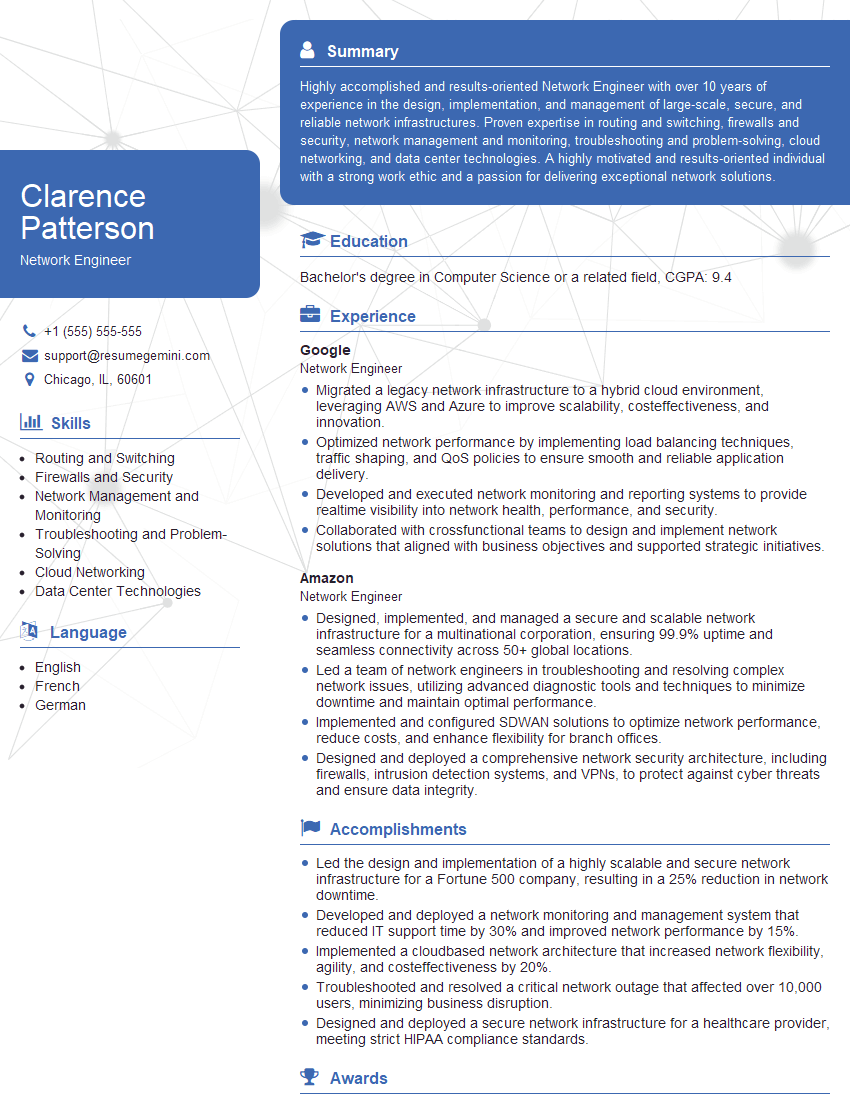
Network Engineer Resume Sample
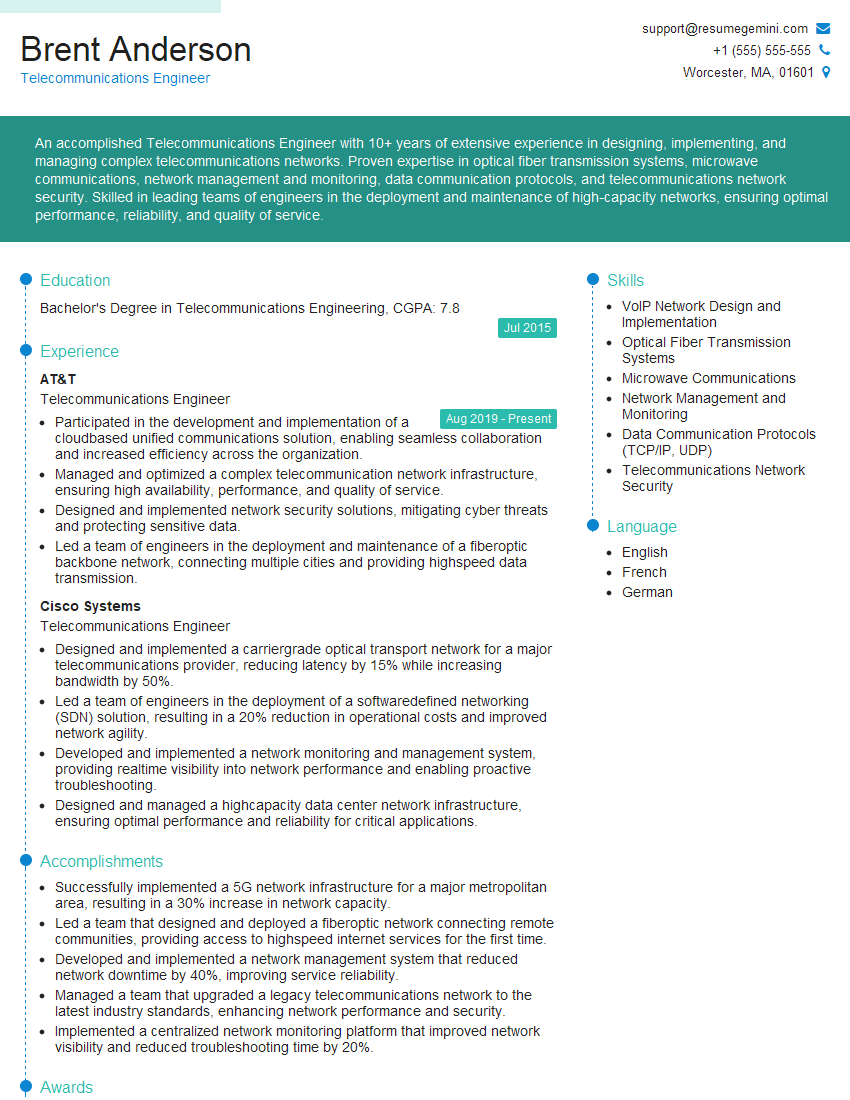
Telecommunications Engineer Resume Sample
Field Service Technician Resume Sample
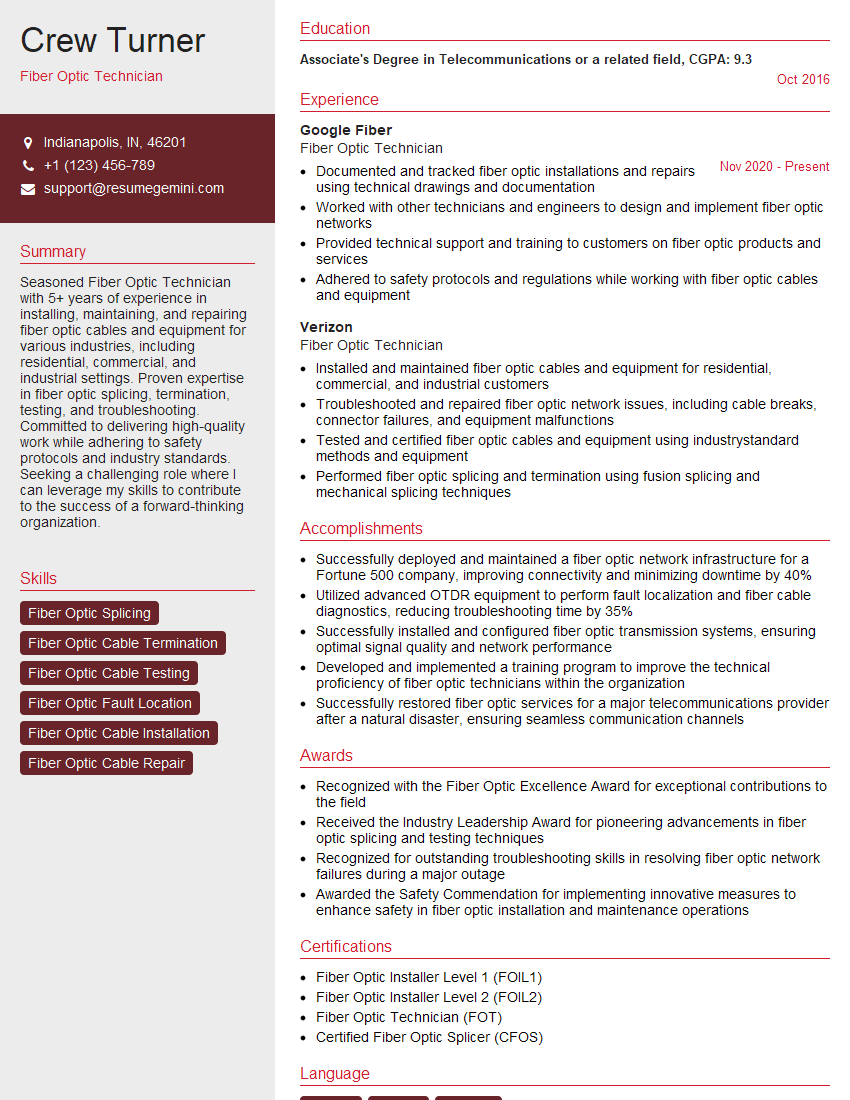
Fiber Optic Technician Resume Sample
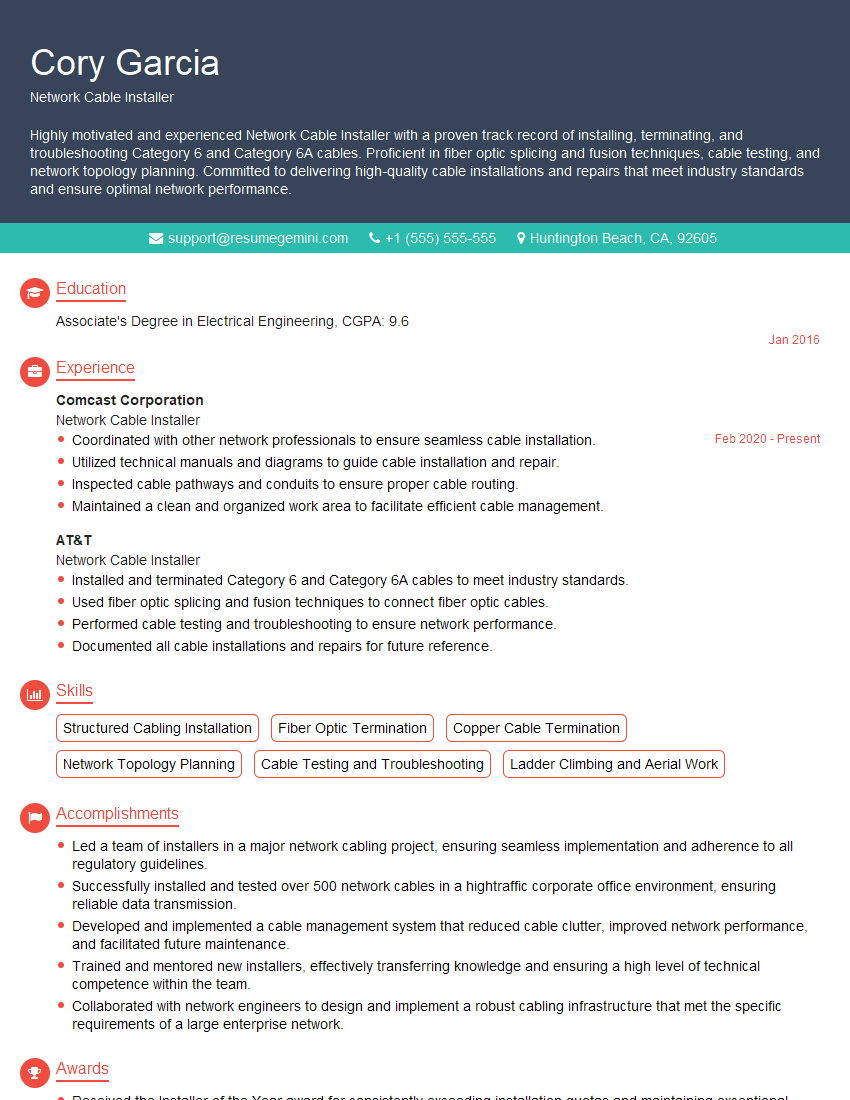
Network Cable Installer Resume Sample
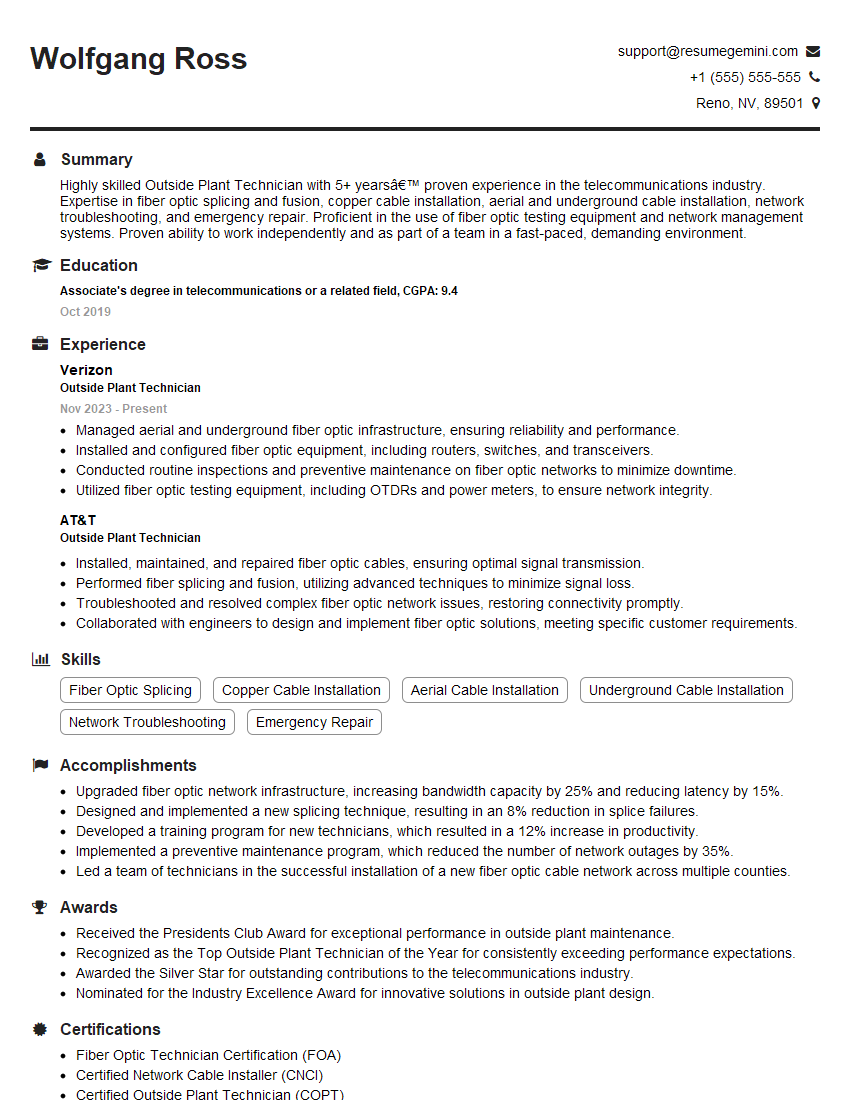
Outside Plant Technician Resume Sample
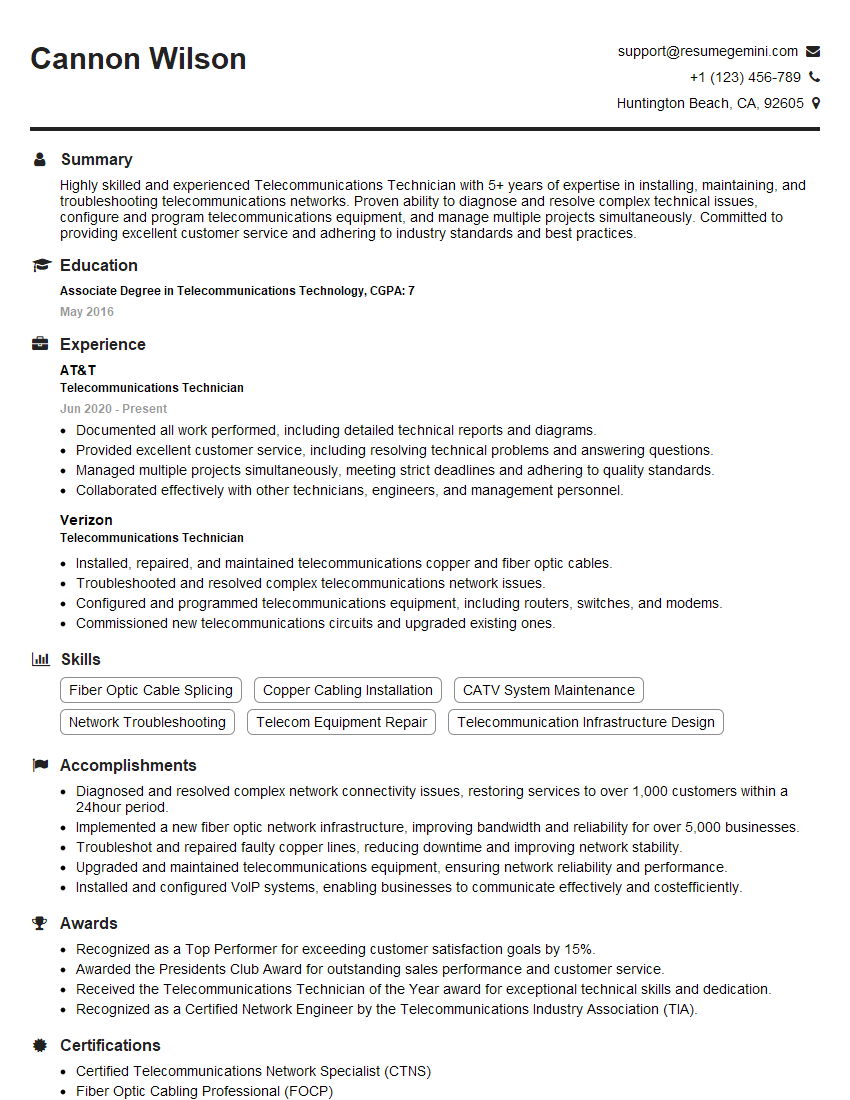
Telecommunications Technician Resume Sample
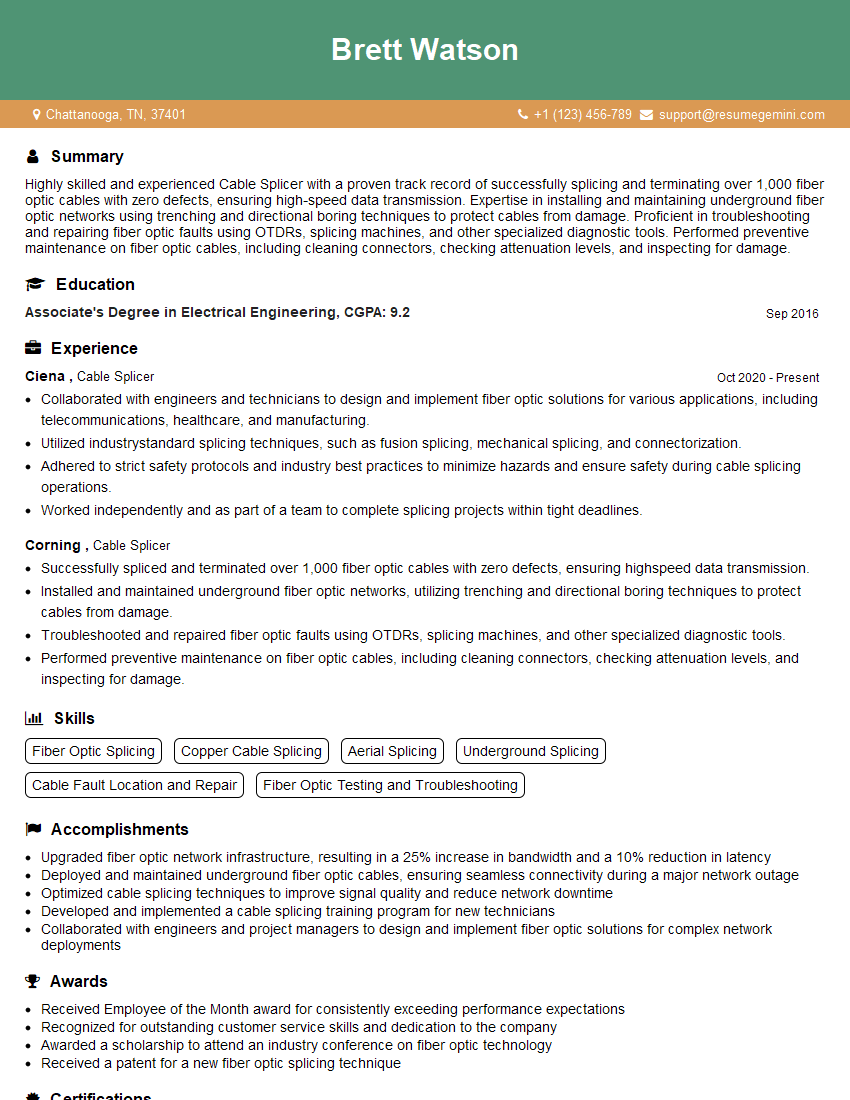
Cable Splicer Resume Sample
Explore more articles
Users Rating of Our Blogs
Share Your Experience
We value your feedback! Please rate our content and share your thoughts (optional).
What Readers Say About Our Blog
Very informative content, great job.
good