Are you ready to stand out in your next interview? Understanding and preparing for Instrumental Performance interview questions is a game-changer. In this blog, we’ve compiled key questions and expert advice to help you showcase your skills with confidence and precision. Let’s get started on your journey to acing the interview.
Questions Asked in Instrumental Performance Interview
Q 1. Describe your experience with different performance venues and their unique acoustic challenges.
My experience spans a wide range of performance venues, from intimate recital halls to large concert auditoriums, each presenting unique acoustic challenges. Intimate spaces often have a very direct, close sound; a slight change in dynamics can have a huge impact. Conversely, large halls can be reverberant, meaning the sound bounces off the walls and ceiling, creating delays and potentially muddying the sound. This requires careful consideration of phrasing, articulation, and even the instrument’s volume.
For example, in a small recital hall, I might play with a more delicate touch to avoid overwhelming the space. The clarity of individual notes becomes paramount. In a larger hall, I might use a slightly broader vibrato or increase my dynamic range to project my sound, carefully considering the reverberation time to avoid phrases overlapping unpleasantly. Outdoor performances present yet another set of challenges – wind, ambient noise, and unpredictable sound reflection all demand careful adjustment.
Understanding the acoustics of a space is crucial, and I usually take some time to ‘listen’ to the hall before a performance – testing the sound and adjusting my playing accordingly.
Q 2. Explain your approach to sight-reading unfamiliar music.
Sight-reading is a crucial skill for any instrumentalist. My approach involves a combination of strategic scanning, rhythmic awareness, and an understanding of musical grammar. I start by quickly scanning the entire piece to grasp its overall structure, key signature, and time signature. This provides a framework for understanding the harmonic progression and rhythmic patterns.
Next, I focus on the melodic line, paying attention to note values and phrasing. I internalize the rhythm first before worrying about the precise fingering. It’s like building a house – you establish the foundation (rhythm) before adding the details (melody and articulation). Once I have a general idea of the melody and rhythm, I break down the passage into smaller, manageable sections. I’ll practice each section individually, gradually increasing speed and accuracy. This allows me to correct errors in a focused manner rather than tackling the entire piece at once.
Finally, I play the sections together, connecting them smoothly to build a coherent musical interpretation. The key is to avoid perfectionism during the initial read-through; the goal is to understand the music and achieve a basic execution, which can be refined with subsequent repetitions.
Q 3. How do you manage performance anxiety?
Performance anxiety is a common experience for musicians. My approach involves a multi-pronged strategy that includes physical and mental preparation. Physically, I focus on relaxation techniques like deep breathing exercises and progressive muscle relaxation. This helps to calm my nervous system and reduces the physical manifestations of anxiety such as trembling or rapid heartbeat. Mentally, I build confidence through thorough preparation. The more familiar I am with the piece, the less anxious I feel.
I also utilize visualization techniques, mentally rehearsing the performance in a positive and successful scenario. Positive self-talk, focusing on my strengths and past successes, also plays a significant role. Finally, I remember that a certain level of nerves is actually beneficial – it keeps me alert and focused. Managing anxiety is about finding a balance between control and acceptance; the goal is to channel that nervous energy into an engaging and powerful performance.
Q 4. Describe your process for practicing a challenging piece of music.
Practicing a challenging piece is a systematic process that goes beyond simply playing through the music repeatedly. It begins with a thorough analysis of the score, identifying technical difficulties and musical challenges. I break down the piece into smaller sections, focusing on problem areas individually. I will use slow practice to develop accurate fingerings and bowings, paying close attention to intonation and articulation.
Once I have mastered a section technically, I focus on musical interpretation, considering dynamics, phrasing, and articulation. I work on connecting sections smoothly and creating a unified musical narrative. I use recordings and listen critically to pinpoint areas for improvement. I also incorporate rhythmic exercises and scales to enhance my technical proficiency and improve my overall musicality. The process is iterative, going back and forth between technical and musical elements until the piece is fully realized.
Regular practice sessions are crucial, and I vary my routine to avoid boredom and maintain focus. Regular breaks are essential to prevent fatigue and maintain efficiency.
Q 5. What methods do you use to maintain consistent intonation and tone quality?
Maintaining consistent intonation and tone quality is fundamental to effective instrumental performance. This requires a combination of ear training, technical exercises, and mindful playing. I regularly practice scales and arpeggios in various keys, focusing on accurate intonation. I use a tuner frequently to detect and correct any inconsistencies. I also incorporate interval training exercises to develop my ear’s sensitivity to pitch differences.
Developing a good tone involves focusing on proper breath support (for wind instruments) or bow control (for string instruments). It also entails attention to the instrument’s setup and regular maintenance. Mindful listening is paramount – continuously monitoring my sound and making adjustments to maintain a consistent and beautiful tone. This requires constant self-assessment and self-correction, which improves with consistent practice and attention to detail.
Q 6. How do you adapt your playing style to different musical genres or ensembles?
Adapting my playing style to different genres and ensembles requires flexibility and a deep understanding of musical styles. Each genre has its unique rhythmic, melodic, and harmonic characteristics. For example, playing jazz requires a different approach than playing classical music. Jazz often emphasizes improvisation, syncopation, and a looser rhythmic feel, whereas classical music prioritizes precision, articulation, and adherence to the written score.
Playing in an ensemble requires collaboration and a willingness to adjust my playing to fit the group’s dynamic and musical goals. This involves listening attentively to my fellow musicians, adjusting my volume, and phrasing to create a balanced and cohesive sound. It also involves understanding the role of my instrument within the larger ensemble. The key to successful adaptation is actively listening, observing, and learning from others, while maintaining my own artistic voice.
Q 7. Discuss your understanding of music theory and its application to your instrumental performance.
My understanding of music theory is deeply intertwined with my instrumental performance. Music theory provides the framework for understanding musical structure, harmony, and counterpoint. This knowledge allows me to interpret a piece of music more effectively, understanding the composer’s intentions and creating a more nuanced and expressive performance.
For example, understanding chord progressions helps me anticipate harmonic changes and adjust my phrasing and dynamics accordingly. Knowledge of counterpoint allows me to understand the interplay of different melodic lines and create a richer sonic tapestry. Analyzing the form of a piece (e.g., sonata form, rondo form) helps me to understand the overall structure and create a cohesive and compelling narrative. Music theory is not just a set of rules, but rather a tool that enhances my musicality and enables me to communicate effectively through my instrument.
Q 8. Describe your experience collaborating with other musicians in a group setting.
Collaboration is the cornerstone of successful ensemble playing. My experience spans various group settings, from chamber music ensembles to large orchestras. In chamber music, effective collaboration involves active listening, a willingness to compromise, and a shared understanding of the musical goals. We often engage in detailed discussions about phrasing, dynamics, and articulation, ensuring a unified interpretation. For instance, in a recent performance of a Brahms string quartet, we spent several rehearsals refining the balance between the inner voices and the melody, making sure each part contributed equally to the overall effect. In orchestral settings, collaboration is more about responding to the conductor’s interpretation while maintaining individual musicality and blending seamlessly with the other sections. A key element is the ability to follow the conductor’s cues precisely, adapting to their stylistic choices and maintaining focus while playing complex parts.
- Active Listening: Carefully attending to other musicians to ensure balanced sound and unified expression.
- Open Communication: Clearly articulating musical ideas and actively engaging in discussions to achieve consensus.
- Mutual Respect: Valuing the contributions of each musician and fostering a supportive environment.
Q 9. How do you handle constructive criticism from a conductor or teacher?
Constructive criticism is vital for growth. I approach it by actively listening, seeking clarification if needed, and reflecting on the feedback without becoming defensive. I see criticism not as a personal attack but as an opportunity to improve my performance. For instance, if a conductor suggests I soften my tone in a particular passage, I wouldn’t simply dismiss it. Instead, I’d analyze the passage, experiment with different approaches, and try to understand the conductor’s intentions behind the feedback. I’d then incorporate their suggestions into my practice, experimenting with dynamics and articulation to achieve the desired effect. This process ensures my technique aligns with the overall musical vision.
Specifically, my approach includes:
- Note-taking: Jotting down specific points of feedback to remember them for future practice.
- Self-analysis: Evaluating the feedback to understand its validity and relevance to my playing.
- Targeted practice: Focusing practice on addressing the areas identified for improvement.
- Follow-up: Seeking further guidance or clarification if necessary.
Q 10. Explain your approach to memorizing music.
Memorization is a multi-stage process that goes beyond simply repeating notes. It involves understanding the music’s structure, harmonic implications, and narrative arc. I begin by thoroughly analyzing the score, breaking it down into smaller, manageable sections. I then work on each section individually, focusing on technical aspects (fingering, bowing, etc.) and musical expression. I use a combination of techniques, including:
- Chunking: Breaking the piece into smaller segments to avoid overwhelming myself.
- Visual Memory: Carefully studying the score to create a mental image of the music.
- Aural Memory: Regularly playing through sections from memory to reinforce the muscle memory and internalize the musical lines.
- Kinesthetic Memory: Focusing on the physical movements involved in playing to enhance muscle memory.
- Contextual Understanding: Connecting the music to its historical context, the composer’s intent, and the overall narrative to create a richer interpretation.
Regular spaced repetition and performance practice under varied conditions are crucial for solidifying the memory.
Q 11. How do you maintain your instrument and ensure it is in optimal playing condition?
Maintaining my instrument is paramount. Regular cleaning and maintenance prevent damage and ensure optimal playing condition. This includes daily cleaning after playing, ensuring that any moisture or residue is removed. More intensive cleaning and adjustments are done periodically, sometimes requiring professional help. For example, I have my instrument serviced by a qualified technician annually. This involves cleaning, lubricating moving parts, and ensuring that the instrument’s intonation and responsiveness are optimal. I also closely monitor the condition of strings, replacing them as needed. Proper storage in a stable environment is also crucial to prevent damage. A hard case provides protection during transport, while a controlled humidity level in storage prevents excessive dryness or moisture. These regular checks prevent bigger issues down the line. Proactive maintenance saves money and time compared to dealing with unexpected repairs.
Q 12. What are your strengths and weaknesses as a performer?
My greatest strengths lie in my technical proficiency and musicality. Years of dedicated practice have honed my skills, allowing me to execute challenging passages with precision and control. I also pride myself on my ability to connect with the audience through expressive and compelling performances. I strive to convey the emotion and narrative of the music effectively.
However, I’m always striving to improve, and a weakness I am addressing is stage fright, particularly in high-pressure solo performances. While I can manage it effectively, I’m working on techniques like mindfulness and visualization to enhance my confidence and reduce anxiety. Another area for continual improvement is broadening my repertoire, especially exploring contemporary works outside my comfort zone.
Q 13. Describe your experience performing solo and as part of an ensemble.
Both solo and ensemble performances offer unique challenges and rewards. Solo performances demand a high level of self-reliance and interpretive freedom, allowing for personal expression and connection with the audience. For example, a recent solo recital showcased a diverse program, enabling me to highlight my versatility as a musician. The experience honed my ability to communicate complex musical ideas without the support of an ensemble. Ensemble playing, however, emphasizes collaboration and responsiveness to other musicians. The dynamic interplay between performers creates a unique musical experience. A recent performance of Beethoven’s Symphony No. 5 with a renowned orchestra, for instance, highlighted the collaborative energy and excitement of large-scale performance. Both experiences contribute to my growth as a musician, each providing valuable skills and perspectives.
Q 14. How do you interpret musical notation and express the composer’s intent?
Interpreting musical notation requires a deep understanding of music theory, harmony, and the composer’s style. It’s more than just reading notes; it involves deciphering the composer’s intentions embedded within the score. I begin by carefully studying the score, analyzing its structure, harmony, and dynamics. I pay close attention to markings such as phrasing, articulation, and tempo indications. I also research the historical context of the piece, gaining insight into the composer’s influences and intentions. For example, understanding that a particular composer favored a specific style of ornamentation can significantly influence how I interpret their music. Ultimately, the goal is to create a performance that is both faithful to the score and expressive of the composer’s vision, allowing the music to speak to the audience in a meaningful way.
This involves:
- Understanding musical theory: A strong grasp of harmony, counterpoint, and form is crucial for comprehending the composer’s musical language.
- Analyzing the score: Paying attention to every detail, including dynamics, tempo markings, articulation, and phrasing.
- Historical context: Researching the composer’s life, style, and influences.
- Personal interpretation: Balancing fidelity to the score with personal expression.
Q 15. What is your preferred method for learning new musical pieces?
My approach to learning new pieces is multifaceted and deeply systematic. It begins with a thorough analytical phase, where I dissect the score, identifying key structural elements like form, harmony, and melodic motifs. I’ll often create a detailed analytical outline, marking phrases, cadences, and harmonic changes. This helps me understand the composer’s intent and overarching narrative.
Next, I focus on technical mastery. This involves slow, deliberate practice, breaking down complex passages into smaller, manageable sections. I use techniques like finger exercises, scales, and arpeggios to build the necessary dexterity and control. I also pay close attention to articulation, dynamics, and phrasing, ensuring each note contributes to the overall musical expression.
Finally, I engage in expressive interpretation. This is where I bring my own personality and understanding of the music to life. This involves experimenting with different tempos, dynamics, and articulations to discover the most effective way to convey the composer’s emotions and intentions. I may listen to recordings of other musicians’ interpretations for inspiration but always strive to develop a unique, personal expression.
For example, when learning a challenging Beethoven sonata, I’d meticulously chart the harmonic progressions, then practice individual passages slowly, gradually increasing the tempo as my fingers gain confidence. Finally, I’d experiment with phrasing and dynamics to convey the drama and emotional depth of the piece.
Career Expert Tips:
- Ace those interviews! Prepare effectively by reviewing the Top 50 Most Common Interview Questions on ResumeGemini.
- Navigate your job search with confidence! Explore a wide range of Career Tips on ResumeGemini. Learn about common challenges and recommendations to overcome them.
- Craft the perfect resume! Master the Art of Resume Writing with ResumeGemini’s guide. Showcase your unique qualifications and achievements effectively.
- Don’t miss out on holiday savings! Build your dream resume with ResumeGemini’s ATS optimized templates.
Q 16. Describe a time you had to overcome a technical challenge in your performance.
During a performance of Rachmaninoff’s Piano Concerto No. 3, I faced a significant technical hurdle in the notoriously difficult cadenza of the first movement. A particularly challenging passage involved a series of rapid, arpeggiated chords that demanded immense finger dexterity and precision. Initially, I struggled to play these chords cleanly and at the required tempo without tension.
To overcome this challenge, I employed a systematic approach. I first slowed the passage down drastically, focusing on accurate finger placement and relaxed hand position. I used metronome practice, gradually increasing the tempo by tiny increments. I also incorporated targeted finger exercises designed to strengthen and improve the coordination of the fingers involved. Furthermore, I incorporated mental imagery, visualizing myself playing the passage flawlessly, which helped to build confidence and reduce performance anxiety.
The solution wasn’t just about physical practice; it involved meticulous attention to detail, consistent and patient work, and a psychological element of visualization. This experience taught me the importance of breaking down complex challenges into smaller, achievable goals and the power of focused, deliberate practice.
Q 17. How do you incorporate improvisation into your performance?
Improvisation is a crucial aspect of my performances, particularly in jazz and contemporary styles. My approach is grounded in a deep understanding of harmony, rhythm, and melody. I don’t see improvisation as random note-playing but rather as a structured exploration of musical ideas within a given harmonic framework.
Before incorporating improvisation, I usually establish a strong harmonic foundation. I analyze the chord progression of the piece and identify potential melodic and rhythmic variations. I then utilize techniques like chord scales, arpeggios, and melodic sequences to create spontaneous, yet coherent musical phrases.
During a performance, I listen intently to the other musicians, responding to their musical ideas and contributing to the overall musical conversation. This collaborative aspect of improvisation is paramount. It’s about creating a shared musical experience and building a dynamic, engaging performance. For example, in a jazz trio setting, I might start with a simple melodic phrase, then elaborate on it using chromatic passing tones or rhythmic variations, responding to the drummer’s groove and the bassist’s harmonic choices.
Q 18. Discuss your understanding of different musical styles and periods.
My understanding of musical styles and periods spans a wide range, from the Baroque period with its ornate counterpoint and terraced dynamics to the contemporary era with its diverse and often experimental approaches.
- Baroque (1600-1750): I’m familiar with the works of Bach, Handel, and Vivaldi, understanding their use of counterpoint, ornamentation, and basso continuo.
- Classical (1730-1820): My knowledge extends to the elegant and balanced structures of Haydn, Mozart, and early Beethoven, with an emphasis on clarity, form, and thematic development.
- Romantic (1820-1900): I’m well-versed in the expressive and passionate works of Chopin, Schumann, Liszt, and Brahms, appreciating their use of extended harmonies, rubato, and expressive dynamics.
- 20th and 21st Centuries: This includes understanding the diverse styles of Debussy, Stravinsky, Schoenberg, and contemporary composers, encompassing serialism, minimalism, and experimental techniques.
This broad knowledge allows me to approach different musical styles with sensitivity and understanding, adapting my technical and interpretative approaches accordingly. For instance, while playing a Bach fugue requires meticulous attention to counterpoint, performing a Romantic nocturne necessitates a focus on emotional expressiveness and rubato.
Q 19. How do you prepare for auditions?
Audition preparation is a rigorous process requiring careful planning and focused execution. It starts with a thorough understanding of the repertoire requested. I analyze the pieces, noting technical challenges and expressive nuances. This involves slow practice, focusing on accuracy and clean execution before building up speed and dynamics.
Beyond technical proficiency, I prioritize musical interpretation. I explore different phrasing, dynamics, and articulations to create a compelling and personal interpretation. I often seek feedback from trusted mentors or colleagues, incorporating their suggestions to refine my performance.
Beyond the musical aspect, I also meticulously prepare the practical elements of the audition. This includes selecting appropriate attire, preparing my instrument meticulously, and practicing performance under timed conditions to simulate the audition environment. Managing pre-performance nerves is also crucial; I utilize relaxation techniques like deep breathing and visualization to maintain focus and composure.
Q 20. What are your long-term goals as an instrumental performer?
My long-term goals encompass a multifaceted career as an instrumental performer. I aim to establish myself as a versatile and sought-after musician, performing in a variety of settings, including orchestral concerts, solo recitals, chamber music ensembles, and possibly even cross-genre collaborations.
Beyond performance, I aspire to contribute to the musical community through teaching and mentoring. I believe in nurturing future generations of musicians, sharing my knowledge and passion for music. I also aim to explore avenues for musical innovation, perhaps through commissioning new works or experimenting with interdisciplinary collaborations. My ultimate goal is to make a meaningful contribution to the musical landscape, both as a performer and as an educator.
Q 21. Describe your experience with recording techniques and studio work.
My experience with recording techniques and studio work is extensive and spans various recording environments, from small home studios to professional recording facilities. I understand the importance of microphone placement, signal processing, and audio editing in achieving a high-quality recording.
I’m familiar with different types of microphones (condenser, dynamic) and their applications, and I’m proficient in using Digital Audio Workstations (DAWs) like Logic Pro X and Ableton Live for editing and mixing. My experience includes working with sound engineers to optimize the recording process and achieving the desired sonic result. I understand the nuances of audio editing, including noise reduction, equalization, compression, and effects processing, all aimed at enhancing the quality and impact of the final recording. I have experience in both solo and ensemble recordings for various platforms, including commercial releases and online distribution.
Q 22. What software or technology are you proficient with in relation to music performance or production?
My proficiency in music technology spans a range of software and hardware. For music production, I’m highly skilled in Digital Audio Workstations (DAWs) like Ableton Live and Logic Pro X. I use these for recording, editing, mixing, and mastering my performances. These DAWs allow for intricate control over every aspect of the sound, from individual instrument tracks to overall sonic balance. For notation, I utilize Sibelius and Finale, enabling me to create professional-quality scores and parts. I’m also comfortable with various virtual instruments (VSTs) and effects plugins, allowing for creative sound design and manipulation. Finally, I’m proficient in audio editing software such as Audacity for quick fixes and basic audio manipulation.
For example, in a recent project, I used Ableton Live to record a live jazz ensemble, then utilized its powerful arrangement tools to edit and refine the performance. Later, I employed several VST instruments to add layers and texture to the piece before mixing and mastering in Logic Pro X.
Q 23. How do you handle technical difficulties during a performance?
Handling technical difficulties during a performance requires a combination of preparedness and quick thinking. My approach is threefold: prevention, mitigation, and adaptation. Prevention involves meticulous pre-performance checks of all equipment – instruments, microphones, sound system – ensuring everything is functioning correctly. This includes having backup equipment readily available, such as spare cables and instrument parts. Mitigation involves having a plan for common issues. For example, if a microphone malfunctions, I know instantly how to switch to a backup or adjust the sound system accordingly. This involves understanding the basic wiring and connectivity of the audio equipment.
Adaptation involves improvising creatively when things go wrong beyond simple fixes. If a significant part of the equipment fails, I might have to adjust the program on the fly, simplify a passage, or even engage the audience with an impromptu spoken word interlude. The key is to remain calm, assess the situation rapidly, and find a solution that maintains the integrity of the performance to the best of my ability.
Q 24. Explain your experience with different types of music notation software.
My experience with music notation software is extensive. I’m highly proficient in both Sibelius and Finale, two leading industry-standard applications. Sibelius, known for its intuitive interface and powerful scoring features, is my primary choice for complex orchestral arrangements. Finale, on the other hand, excels in its engraving capabilities and is useful for detailed typesetting and fine-tuning the final score presentation. I’ve used both to create scores for various ensembles, from solo piano pieces to full orchestras. My expertise extends beyond simple inputting notes; I’m adept at utilizing advanced features such as creating custom instrument libraries, utilizing different scoring styles (e.g. classical, jazz), and implementing complex notation techniques such as articulations and dynamics.
For instance, when creating a score for a contemporary chamber ensemble, I leveraged Sibelius’s flexibility to incorporate non-standard notations and unusual rhythmic patterns. In contrast, when preparing a classical score for publication, I utilized Finale’s engraving tools to achieve the highest level of accuracy and visual appeal.
Q 25. How do you adapt your performance to diverse audiences?
Adapting to diverse audiences requires understanding the context of the performance. This includes considering factors such as the age range, cultural background, and musical experience of the listeners. For instance, a performance for children will require a different approach than one for seasoned concert-goers. I achieve adaptation in several ways. Firstly, I select the repertoire carefully. A more accessible program might be selected for a younger audience, while a more challenging program might be suitable for a sophisticated audience. Secondly, my stage presence and communication style are adapted. I might incorporate more interaction and explanations for a less experienced audience, whereas a more sophisticated audience might appreciate a more subtle approach. Thirdly, I might adjust my interpretation of the music. A more emotional performance might resonate better with some audiences, while a more analytical and technically precise performance might suit others.
For example, during a performance for a young audience, I incorporated visual aids and storytelling into my presentation to enhance engagement and understanding of the music. In contrast, for a more seasoned audience, I focused on the nuanced aspects of the composition and offered insights into the historical context.
Q 26. How do you approach music from different cultures and backgrounds?
Approaching music from different cultures and backgrounds requires deep respect, understanding, and sensitivity. It’s essential to avoid cultural appropriation and instead engage with the music authentically. My approach involves comprehensive research into the historical, social, and musical contexts of the music. This includes studying the stylistic conventions, rhythmic patterns, melodic structures, and instrumental techniques specific to that cultural tradition. I make an effort to learn from musicians and scholars who are knowledgeable in the specific style I am studying. This often includes learning about the instruments used in the tradition and mastering their techniques. Furthermore, I always strive for respectful interpretation, ensuring that my performance avoids any misrepresentation or trivialization of the cultural heritage.
For instance, before performing a traditional Indian raga, I spent considerable time studying its historical and cultural significance, and learning from a master musician of that tradition. My performance aimed to reflect the subtleties of the raga while respecting its spiritual and emotional depth.
Q 27. Describe your experience with teaching or mentoring other musicians.
My experience in teaching and mentoring encompasses both formal and informal settings. I’ve worked with students of varying ages and skill levels, from beginners to advanced performers. My teaching philosophy centers on fostering a supportive and challenging learning environment. I adapt my methods to the individual needs of each student, emphasizing both technical proficiency and artistic expression. I use a combination of structured exercises, performance analysis, and collaborative learning to help students develop their musical skills and understanding. I also encourage independent learning and self-reflection. I often incorporate peer learning techniques so students can learn from each other.
For example, I worked with a young pianist struggling with technical challenges. By breaking down complex passages into smaller, manageable units and focusing on proper hand positioning and finger techniques, I helped her achieve significant progress in her technical skills, leading to a greater artistic understanding of the pieces she played.
Q 28. How do you stay current with trends in the music industry?
Staying current with music industry trends requires a multi-pronged approach. I regularly attend industry conferences, workshops, and masterclasses to network with other professionals and learn about new technologies and performance techniques. I actively follow music blogs, journals, and online publications to stay informed on emerging trends and developments. Furthermore, I constantly seek out new musical experiences by attending concerts, listening to a wide range of music, and exploring diverse genres. This keeps me inspired and informed about innovative approaches and emerging styles. I actively engage on social media platforms that are relevant to the music industry and use online resources for collaborative learning. The use of targeted online search strategies allow me to learn about specific instruments, compositional techniques and styles.
For example, recently, I attended a conference on immersive audio technologies, which broadened my understanding of spatial audio and its potential applications in live performance. This expanded my knowledge of modern technologies available to enhance and elevate live musical experiences.
Key Topics to Learn for Instrumental Performance Interview
- Technical Proficiency: Demonstrate mastery of your instrument through scales, arpeggios, and etudes relevant to your chosen repertoire. Be prepared to discuss your technical approach and problem-solving strategies for overcoming challenges.
- Musicality and Interpretation: Articulate your understanding of phrasing, dynamics, articulation, and expression. Prepare examples showcasing your ability to convey emotion and meaning through your performance.
- Repertoire Knowledge: Discuss your chosen repertoire in detail, highlighting stylistic nuances and historical context. Be ready to explain your choices and demonstrate a deep understanding of the pieces.
- Sight-Reading and Improvisation: Practice sight-reading exercises to demonstrate your ability to quickly interpret unfamiliar music. If applicable to your instrument and the position, prepare examples of your improvisational skills.
- Ensemble Skills (if applicable): If applying for ensemble positions, be prepared to discuss your experience collaborating with others, listening skills, and contribution to a group’s cohesive performance.
- Pedagogical Approach (if applicable): If applying for teaching positions, articulate your teaching philosophy and methods. Be prepared to discuss how you adapt your approach to different learning styles.
- Professionalism and Work Ethic: Highlight your dedication, work habits, and ability to meet deadlines and collaborate effectively. Be ready to discuss your experience with professional settings and performance expectations.
Next Steps
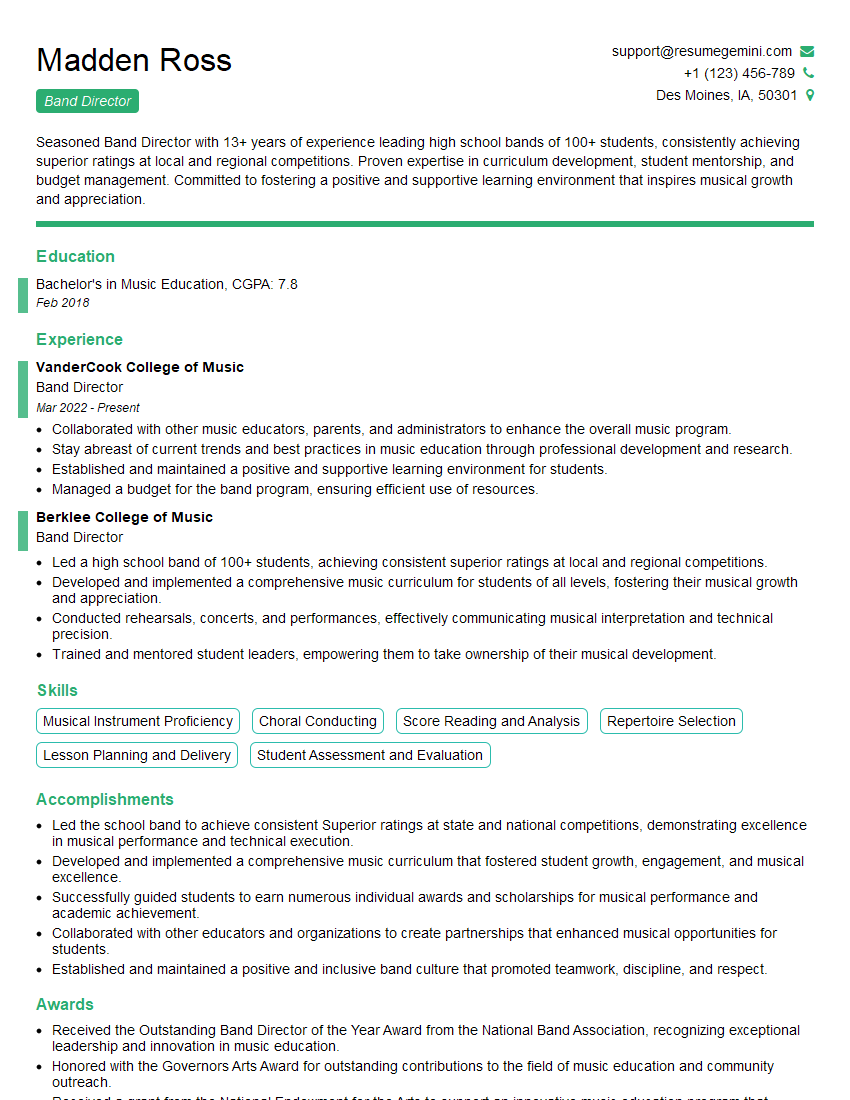
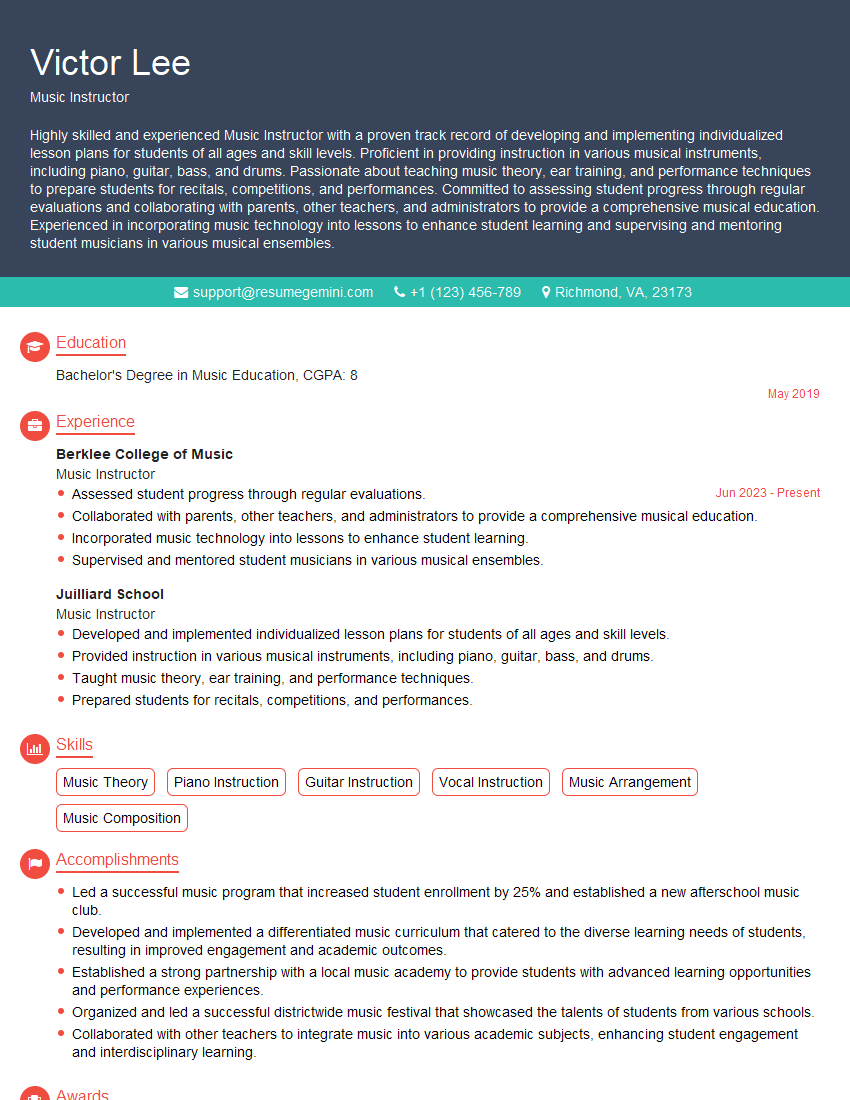
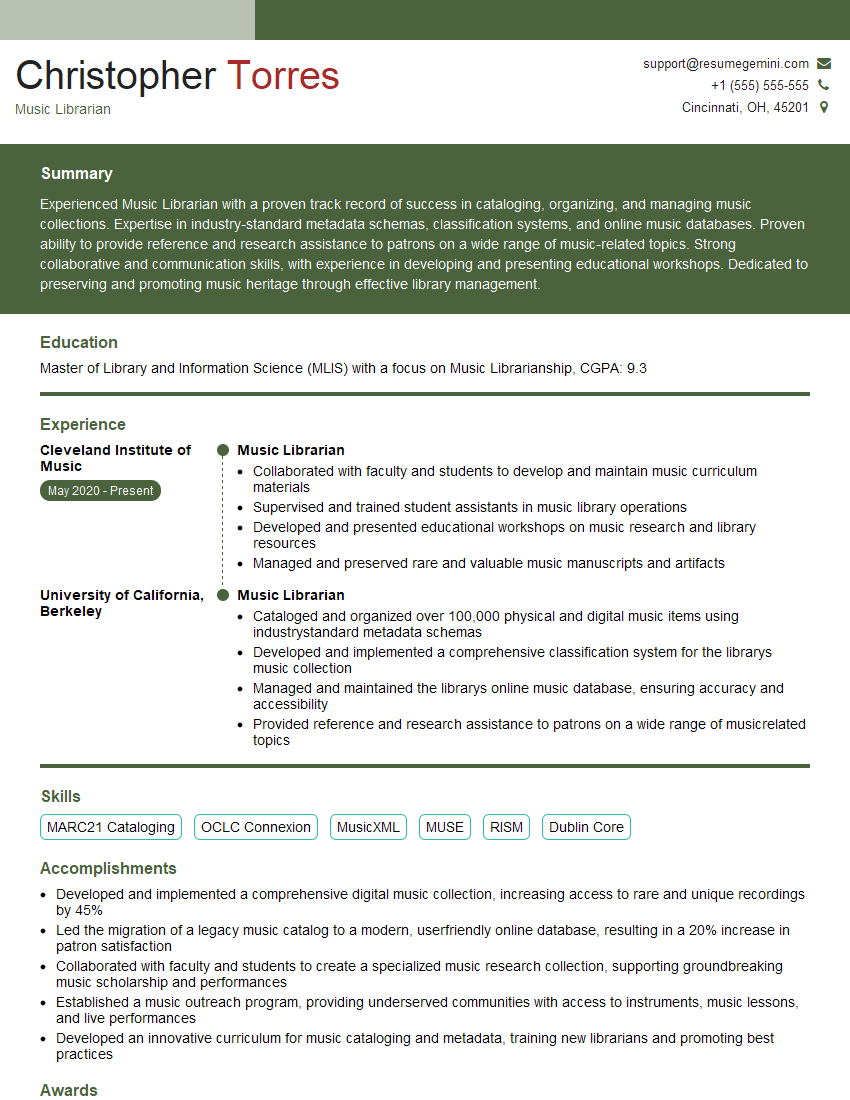
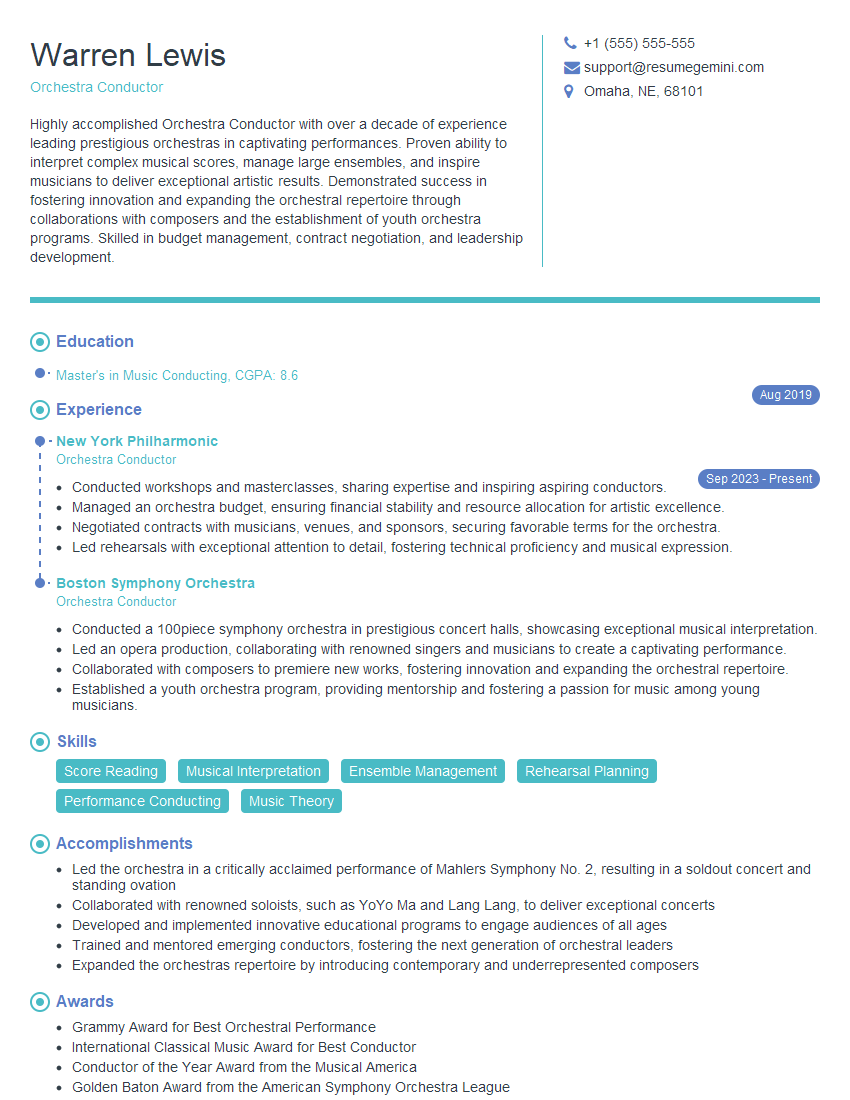
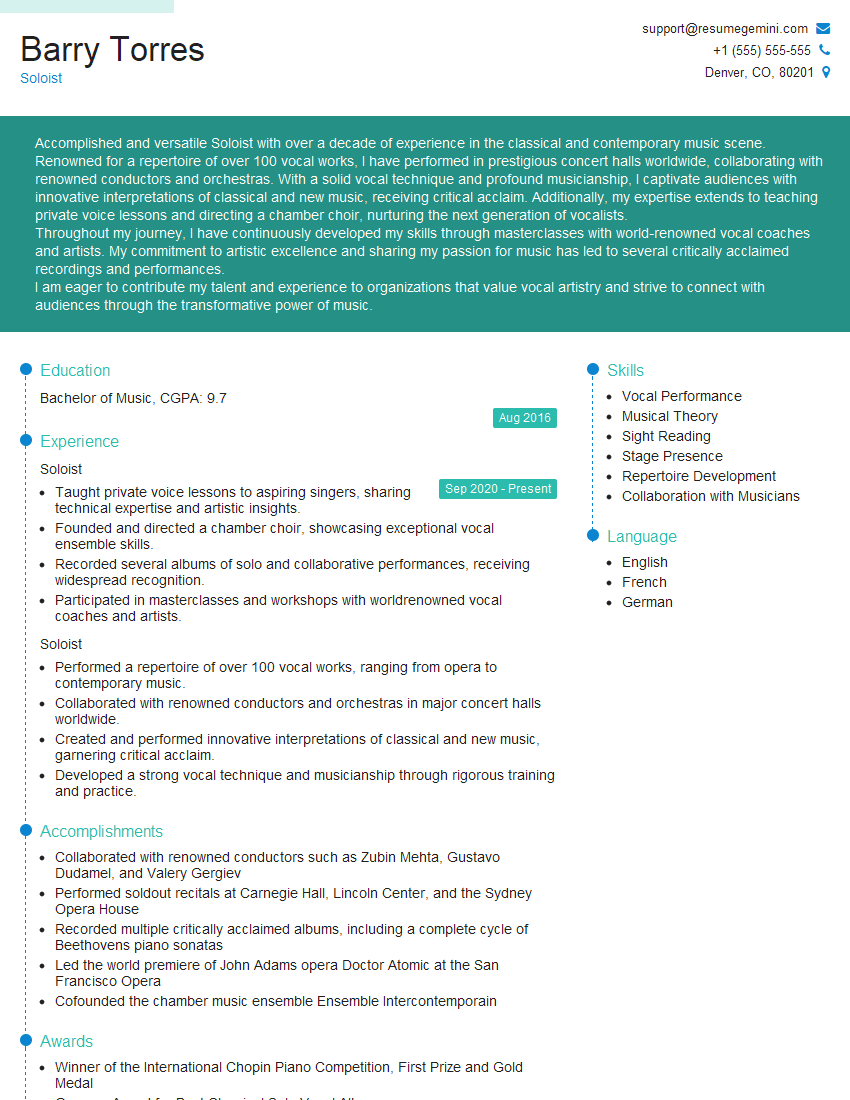
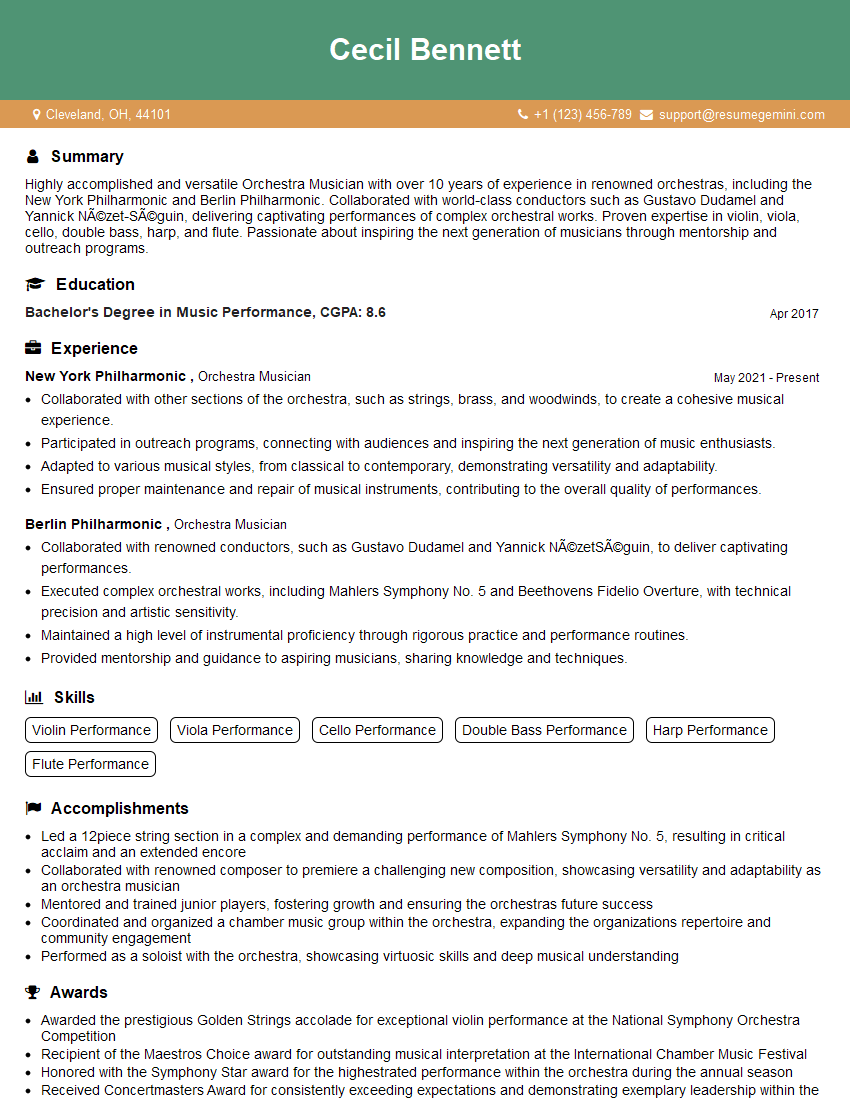
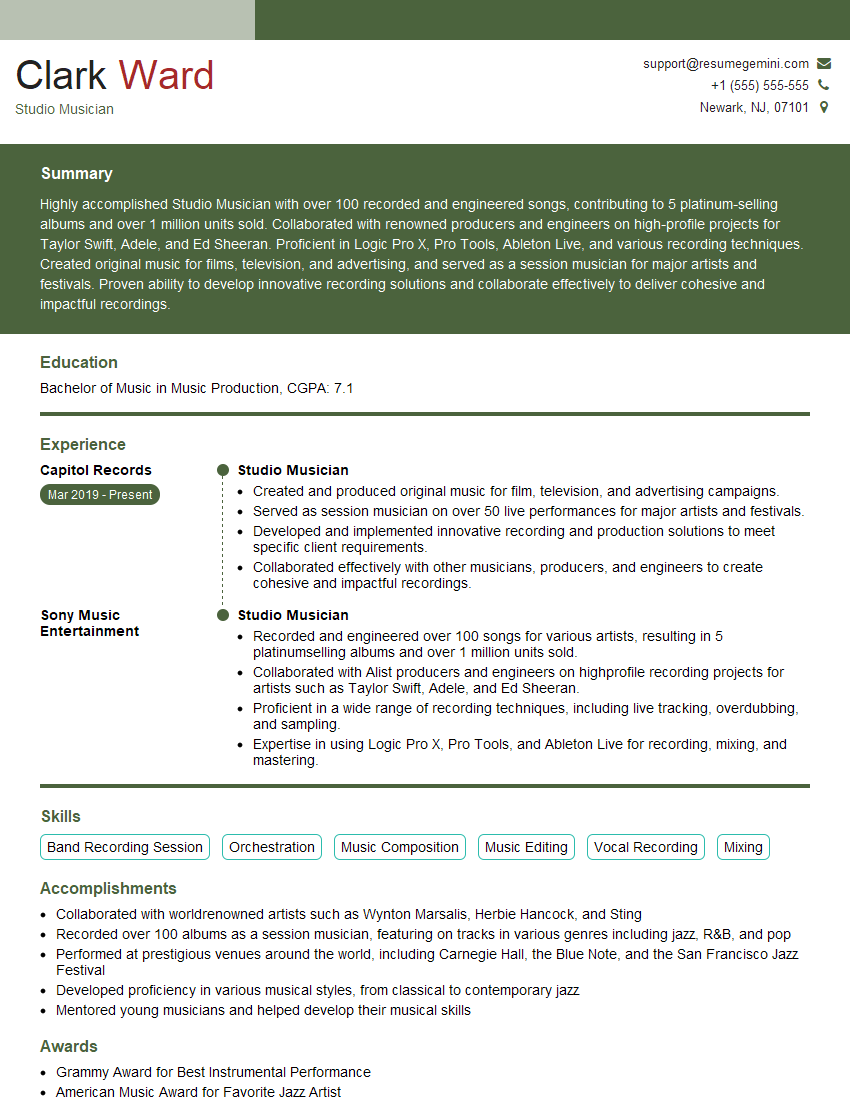
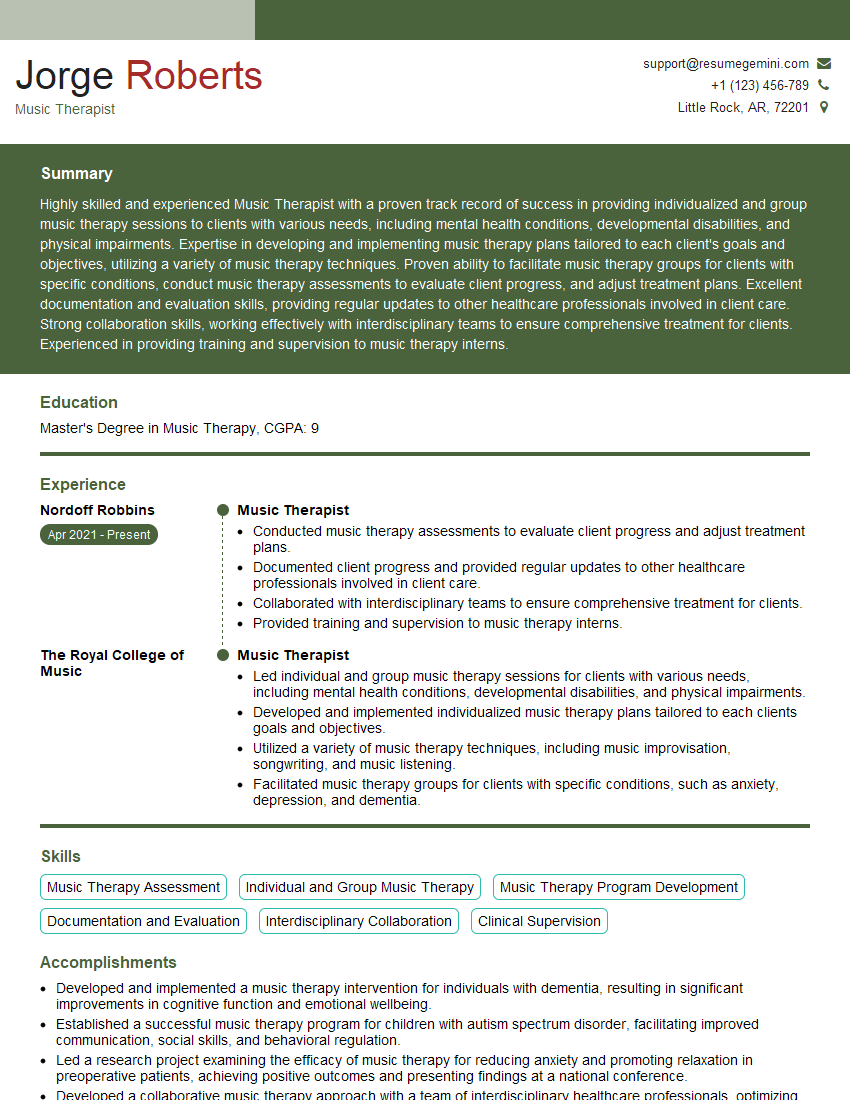
Mastering instrumental performance opens doors to diverse and fulfilling careers, from solo performance and orchestral positions to teaching and music therapy. To significantly boost your job prospects, invest time in crafting an ATS-friendly resume that showcases your skills and experience effectively. ResumeGemini is a trusted resource that can help you build a professional and impactful resume, ensuring your application stands out. Examples of resumes tailored to Instrumental Performance are available to guide you through the process.
Explore more articles
Users Rating of Our Blogs
Share Your Experience
We value your feedback! Please rate our content and share your thoughts (optional).
What Readers Say About Our Blog
Very informative content, great job.
good